Back to Network



11
Shared Docs
11
Same-Page
11 / 19
Mentions
Document Mentions (11 shared documents)
4 mentions1 same-page
Page ?Same page
area. This meant that, for the first time, I would be in charge of one of Israel’s three regional military commands, and we were based on the edge of Jerusalem, with security responsibility for the West Bank. This was my first direct exposure to the combustible mix of restive Palestinians and the growing nu
Amir Drori, the head of the northern command. They had set up a rooftop observation post just a few hundred yards in from where I had landed with my Sayeret Matkal team a decade earlier for the Rue Verdun operation. It overlooked a pair of Palestinian refugee camps: Sabra and, a couple of hundred yards closer to
tment to the values of an open, tolerant democracy. But in at least one important way, I approached my new role as if it was one of our operations in Sayeret Matkal, or the need to reshape our armed forces when I was chief-of-staff. My first priority was to put in place the practical foundations for a successful
ion about our enemies, and make sure it got to the commanders and field units that needed it. And while the details of many operations I approved for Sayeret Matkal and other units remain classified, we did succeed in doing that — to take just one example, by finding an entirely new way to get intelligence from i
4 mentions1 same-page
Page ?Same page
area. This meant that, for the first time, I would be in charge of one of Israel's three regional military commands, and we were based on the edge of Jerusalem, with security responsibility for the West Bank. This was my first direct exposure to the combustible mix of restive Palestinians and the growing num
Amir Drori, the head of the northern command. They had set up a rooftop observation post just a few hundred yards in from where I had landed with my Sayeret Matkal team a decade earlier for the Rue Verdun operation. It overlooked a pair of Palestinian refugee camps: Sabra and, a couple of hundred yards closer to
tment to the values of an open, tolerant democracy. But in at least one important way, I approached my new role as if it was one of our operations in Sayeret Matkal, or the need to reshape our armed forces when I was chief-of-staff. My first priority was to put in place the practical foundations for a successful
ion about our enemies, and make sure it got to the commanders and field units that needed it. And while the details of many operations I approved for Sayeret Matkal and other units remain classified, we did succeed in doing that - to take just one example, by finding an entirely new way to get intelligence from i
3 mentions1 same-page
Page ?Same page
iting and wondering. I borrowed a Jeep from an army friend, with the idea that Nili and I could spend three or four days together, driving south from Jerusalem into the Negev and the Judean desert: to be alone, to talk, to see whether we actually had a future. I wrote her a note, took the bus to Tel Aviv whi
advancement in Jerusalem. Though he would eventually return to Israel, he was teaching at Cornell when his sons became officers under my command in Sayeret Matkal. So there was a physical distance between father and sons. But what struck me was how large the father loomed in both of their lives. There was an al
ons within the PLO were ready to step into the breach if Arafat faltered. Israel needed to find an answer for all these threats. Uzi Yairi’s term as Sayeret Matkal commander had by now ended, but his successor was someone I knew well. Menachem Digli was the officer on whom I’d bestowed my stolen Syrian Mercedes
Sponsored
3 mentions1 same-page
Page ?Same page
an assurance of confidentiality through Ne’eman. The first of about a half-dozen meetings came a few days later at the Prime Minister’s residence in Jerusalem. Then, we shifted venue, meeting at a Mossad-owned villa north of Tel Aviv. I brought along Bougie Herzog, a bright young lawyer, and Labor Party mem
he summit’s collapse. My main concern was the possibility of violence. Even before returning home, I’d phoned Shaul Mofaz and Avi Dichter, the former Sayeret Matkal officer who was now head of the Shin Bet. “Let’s hope the violence doesn’t come,” I told them. “But if it does, make sure we are ready.” Though there
eer by training, he was a reserve army general who, when I was chief of staff, had been in charge of the logistics branch of the military. I gave him Sayeret Matkal backup as well, in the person of Danny Yatom, my longtime friend and former sayeret deputy. But all that was process. Winning or losing would come d
3 mentions1 same-page
Page ?Same page
iting and wondering. I borrowed a Jeep from an army friend, with the idea that Nili and I could spend three or four days together, driving south from Jerusalem into the Negev and the Judean desert: to be alone, to talk, to see whether we actually had a future. I wrote her a note, took the bus to Tel Aviv whi
c advancement in Jerusalem. Though he would eventually return to Israel, he was teaching at Cornell when his sons became officers under my command in Sayeret Matkal. So there was a physical distance between father and sons. But what struck me was how large the father loomed in both of their lives. There was an al
ions within the PLO were ready to step into the breach if Arafat faltered. Israel needed to find an answer for all these threats. Uzi Yairi's term as Sayeret Matkal commander had by now ended, but his successor was someone I knew well. Menachem Digli was the officer on whom I'd bestowed my stolen Syrian Mercedes
3 mentions1 same-page
Page ?Same page
an assurance of confidentiality through Ne'eman. The first of about a half-dozen meetings came a few days later at the Prime Minister's residence in Jerusalem. Then, we shifted venue, meeting at a Mossad-owned villa north of Tel Aviv. I brought along Bougie Herzog, a bright young lawyer, and Labor Party mem
he summit's collapse. My main concern was the possibility of violence. Even before returning home, I'd phoned Shaul Mofaz and Avi Dichter, the former Sayeret Matkal officer who was now head of the Shin Bet. "Let's hope the violence doesn't come," I told them. "But if it does, make sure we are ready." Though there
eer by training, he was a reserve army general who, when I was chief of staff, had been in charge of the logistics branch of the military. I gave him Sayeret Matkal backup as well, in the person of Danny Yatom, my longtime friend and former sayeret deputy. *** But all that was process. Winning or losing would com
Sponsored
2 mentions1 same-page
Page ?Same page
ry aid if necessary. Unconditional Solidarity "A German politician must establish a relationship of mutual trust with Israel, so that criticism of Jerusalem is not misunderstood," says Ruprecht Polenz, a member of Merkel's Christian Democratic Union (CDU) and chair of the Foreign Policy Committee in the
being called back into service," says Shlomo Avineri, a veteran Israeli analyst. Amir Mizroch, an Israeli journalist and blogger, calls it "a truly Sayeret Matkal-like operation -- uncanny, unpredictable, with little or no chance of success, but if pulled off, extremely brilliant." Mizroch explains: "By exiti
2 mentions1 same-page
Page ?Same page
order to end it. At issue were rival claims on security, final borders, Israeli settlements, Palestinian refugees, and the future of ancient city of Jerusalem. None of these could be resolved without painful, and politically perilous, compromises. Entering the summit, despite the pressures ahead, I was con
awn in Private Benjamin. The main misunderstanding, however, went deeper. The assumption appeared to be that my military achievements, especially in Sayeret Matkal, were down to a mix of brute force and raw courage. Courage, of course, was a requirement: the willingness to take risks, if the rewards for success,
2 mentions1 same-page
Page ?Same page
ministers convinced that would make things worse, I held off doing anything else until there seemed to me no choice, after Talansky gave evidence in Jerusalem’s District Court. Though he genuinely seemed not to have expected anything specific in return, he said he had given Olmert something like $150,000 in
the generals of our attack plan. There was still a core of ministers opposed: chiefly Dan Meridor and Benny Begin, but also Boogie Ya’alon, a former Sayeret Matkal commander and chief of staff who Minister of Strategic Affairs. But the confidence and detail with which the plan was laid out, and the fact that Bib
Sponsored
2 mentions1 same-page
Page ?Same page
order to end it. At issue were rival claims on security, final borders, Israeli settlements, Palestinian refugees, and the future of ancient city of Jerusalem. None of these could be resolved without painful, and politically perilous, compromises. Entering the summit, despite the pressures ahead, I was con
awn in Private Benjamin. The main misunderstanding, however, went deeper. The assumption appeared to be that my military achievements, especially in Sayeret Matkal, were down to a mix of brute force and raw courage. Courage, of course, was a requirement: the willingness to take risks, if the rewards for success,
Sponsored
Mutual Connections (976)
Entities connected to both Jerusalem and Sayeret Matkal
Benjamin Netanyahu
PERSON160 w/ Jerusalem·11 w/ Sayeret
Barack Obama
PERSON159 w/ Jerusalem·7 w/ Sayeret
George W. Bush
PERSON139 w/ Jerusalem·9 w/ Sayeret
United States
LOCATION127 w/ Jerusalem·6 w/ Sayeret
Fatah
ORGANIZATION116 w/ Jerusalem·10 w/ Sayeret
Lebanon
LOCATION110 w/ Jerusalem·11 w/ Sayeret
Bill Clinton
PERSON109 w/ Jerusalem·9 w/ Sayeret
Bashar al-Assad
PERSON95 w/ Jerusalem·9 w/ Sayeret
Mahmoud Abbas
PERSON101 w/ Jerusalem·2 w/ Sayeret
West Bank
LOCATION88 w/ Jerusalem·9 w/ Sayeret
Tehran
LOCATION94 w/ Jerusalem·3 w/ Sayeret
the West Bank
LOCATION85 w/ Jerusalem·11 w/ Sayeret
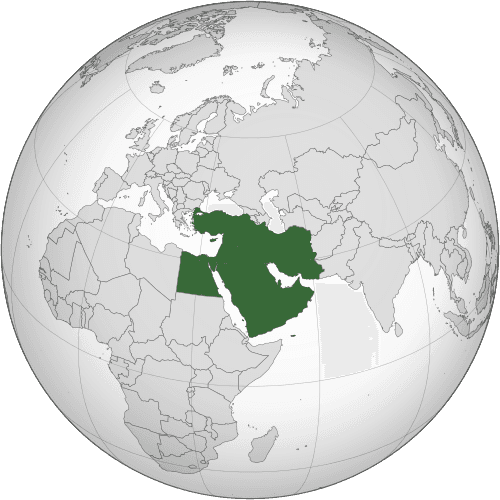
Middle East
LOCATION88 w/ Jerusalem·5 w/ Sayeret
Marc Rich
PERSON89 w/ Jerusalem·2 w/ Sayeret
Cairo
LOCATION83 w/ Jerusalem·6 w/ Sayeret
Saddam Hussein
PERSON73 w/ Jerusalem·8 w/ Sayeret
Ehud Barak
PERSON70 w/ Jerusalem·11 w/ Sayeret
Michael Cohen
PERSON72 w/ Jerusalem·8 w/ Sayeret
Tel Aviv
LOCATION77 w/ Jerusalem·3 w/ Sayeret
LB
Leon Black
PERSON75 w/ Jerusalem·4 w/ Sayeret