Back to Network
















5
Shared Docs
5
Same-Page
5 / 5
Mentions
Document Mentions (5 shared documents)
2 mentions1 same-page
Page ?Same page
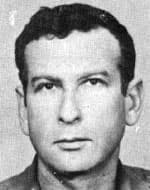
cially upset. This was one of the last operations during his period in command of the unit. He was about to hand over to a veteran paratroop officer, Uzi Yairi. Yet our aborted Sinai mission turned out not to matter. What saved our eavesdropping network was the very thing which I was confident would not hap
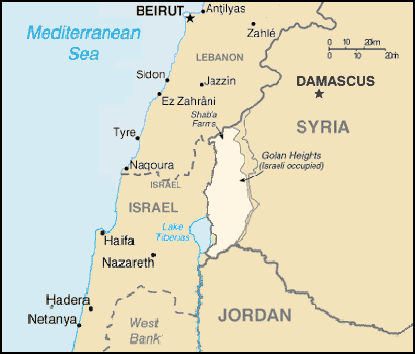
ldiers crossed the border on an intelligence mission. It had happened in 1954, and it ended in a failure even more serious than Rotem. The target was the Golan Heights, inside Syria. The special technology unit attached to military intelligence had developed a bugging device designed to be placed on a telephone pole
2 mentions1 same-page
Page ?Same page
n more radical factions within the PLO were ready to step into the breach if Arafat faltered. Israel needed to find an answer for all these threats. Uzi Yairi’s term as Sayeret Matkal commander had by now ended, but his successor was someone I knew well. Menachem Digli was the officer on whom I’d bestowed m
urprise attacks by Syria and Egypt — armies we’d not just defeated, but humiliated, six years earlier — had pinned down and pushed back our forces on the Golan Heights and in the Sinai. Without any advance call-up, many reservists were only now reaching the front lines. As hundreds of people pressed for seats on th
2 mentions1 same-page
Page ?Same page
earlier than usual, to visit the graves of the men who had lost their lives in my battalion in the Yom Kippur War. I also went to pay my respects to Uzi Yairi, killed when he’d rushed from his desk in the kiryva to join the Sayeret Matkal attack at the Savoy Hotel. Then Nava and I drove to Jerusalem. At Isr
ade with him. The substance in any agreement, though politically difficult, was also more straightforward. We knew what Assad wanted: the recovery of the Golan Heights, in return for the absolute minimum level of political normalization with Israel. We knew what we wanted: security guarantees and assurances regardin
Sponsored
2 mentions1 same-page
Page ?Same page
cially upset. This was one of the last operations during his period in command of the unit. He was about to hand over to a veteran paratroop officer, Uzi Yairi. Yet our aborted Sinai mission turned out not to matter. What saved our eavesdropping network was the very thing which I was confident would not happ
ldiers crossed the border on an intelligence mission. It had happened in 1954, and it ended in a failure even more serious than Rotem. The target was the Golan Heights, inside Syria. The special technology unit attached to military intelligence had developed a bugging device designed to be placed on a telephone pole
2 mentions1 same-page
Page ?Same page
earlier than usual, to visit the graves of the men who had lost their lives in my battalion in the Yom Kippur War. I also went to pay my respects to Uzi Yairi, killed when he'd rushed from his desk in the kirya to join the Sayeret Matkal attack at the Savoy Hotel. Then Nava and I drove to Jerusalem. At Isra
ade with him. The substance in any agreement, though politically difficult, was also more straightforward. We knew what Assad wanted: the recovery of the Golan Heights, in return for the absolute minimum level of political normalization with Israel. We knew what we wanted: security guarantees and assurances regardin
Sponsored
Mutual Connections (582)
Entities connected to both Uzi Yairi and the Golan Heights
Bashar al-Assad
PERSON4 w/ Uzi·29 w/ the
Benjamin Netanyahu
PERSON5 w/ Uzi·27 w/ the
Lebanon
LOCATION5 w/ Uzi·26 w/ the
George W. Bush
PERSON3 w/ Uzi·26 w/ the
Jerusalem
LOCATION5 w/ Uzi·24 w/ the
Damascus
LOCATION5 w/ Uzi·23 w/ the
Bill Clinton
PERSON4 w/ Uzi·24 w/ the
Hosni Mubarak
PERSON5 w/ Uzi·23 w/ the
Barack Obama
PERSON2 w/ Uzi·26 w/ the
Fatah
ORGANIZATION5 w/ Uzi·20 w/ the
Sinai
LOCATION5 w/ Uzi·20 w/ the
Yasser Arafat
PERSON5 w/ Uzi·16 w/ the
Golan
LOCATION5 w/ Uzi·16 w/ the
Yitzhak Rabin
PERSON5 w/ Uzi·16 w/ the
Saddam Hussein
PERSON5 w/ Uzi·16 w/ the
Mediterranean
LOCATION3 w/ Uzi·17 w/ the
Ehud Barak
PERSON5 w/ Uzi·15 w/ the
Michael Cohen
PERSON5 w/ Uzi·15 w/ the
Yemen
LOCATION2 w/ Uzi·17 w/ the
the West Bank
LOCATION5 w/ Uzi·14 w/ the