Back to Network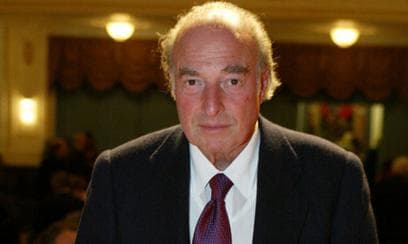


9
Shared Docs
9
Same-Page
10 / 12
Mentions
Document Mentions (9 shared documents)
3 mentions1 same-page
Page ?Same page
horn the make arse at art eh to Pineal Owes re sot, Cade-Mies 0 * whole arm may be held m yaw scare drum rolled lo a partial 'AI as a renal of a &Aland peened or ~yea. the rem mR ether set panel unit al nude pace a nape at anon deteernimd by a koVertel csesma perky. ordaedo yoke scone Intranet eb
orceatife nod wont • Walter nada debit Matt Calf Alan) MVO en tore. mat Int, that rare bares • Casfen
ct on your accost es nos mended to felled sty stlMt . proclact, reCOrrirkediten. antennae **tee a net profile aslecuted wit par marls. and a not a Fermat Or 4..344.0 that wrath or sty Inmial nrstits. <rice wet be xhoned Ali tintanatt nada Kra of lat. et dug to na of loss of the rat rwegment Youcandu
3 mentions1 same-page
Page ?Same page
How Alan Turing invented the computer, helped win World Wa
sense of free will and creativity is an illusion. In Dennett’s worldview, Andrew Wiles is a special purpose machine that was always destined to solve Fermat’s Last Theorem. I believe this model is flawed. It is my aim in this book to show you why. Indeed I am going to go further and argue all human creati
s. Some things are simply not computable. Computers can do many useful things, but they cannot discover new mathematical theorems, such as a proof of Fermat’s Last Theorem. In 1996, Andrew Wiles succeeded in finding a solution to this problem. This presents a paradox, solved only if we conclude Andrew Wil
3 mentions1 same-page
Page ?Same page
E_OVERSIGHT_015898 Chapter 10 TURING’S MACHINE Alan Turing HOUSE_OVERSIGHT_015899 ‘A computer would
could be used as an oracle, capable of answering almost any question imaginable. I could, for example, write a program that says: for every index in Fermat’s puzzle try every number and halt if you find a solution greater than 2. Now if I run my halt program on this program and it states ‘will crash; I w
ery number and halt if you find a solution greater than 2. Now if I run my halt program on this program and it states ‘will crash; I will have solved Fermat’s Last Theorem! Do you see why? If we give ‘Halt’ an input: a program we are interested in, along with some data, it will tell us if the program fin
Sponsored
3 mentions1 same-page
Page ?Same page
Brain. Reprint. Picador, 2008. Singh, Simon. The Code Book: The Secret History of Codes and Code-Breaking. (Reissue). Fourth Estate, 2002. Turing, Alan. “Checking a Large Routine?’ In The Early British Computer Conferences, 70-72. MIT Press, 1989. http://dl.acm.org/citation. HOUSE_OVERSIGHT_016079
ms of Logic Based on Ordinals.” Proceedings of the London Mathematical Society 2, no. 1 (1939): 161-228. Wiles, Andrew. “Modular Elliptic Curves and Fermat’s Last Theorem.” Annals of Mathematics-Second Series 141, no. 3 (1995): 443-552. Chapter 12 Burgin, Mark. Super-Recursive Algorithms. Springer, 200
analysis 84 eyes 108 color perception 110 fovea centralis 112 resolution of 112 F Facebook 71, 271 face-to-face interaction 83 false paradox 155 Fermat’s Last Theorem xi, 225, 241, 242, 251, 253, 254, 259, 261, 275, 278, 351, 368 Fermat's puzzle 225 Fermilab 293 Feynman, Richard 58, 70, 157, 239,
2 mentions1 same-page
Page ?Same page
uch further forward in understanding creativity. Alan Turing described his thoughts on the science behi
e in a Universe where information comes into existence through the creative endeavors of human beings. When Andrew Wiles discovered his solution to Fermat’s Last Theorem, he did something a computer cannot do and demonstrated non-computational thought. But there is an alternative explanation put forward
2 mentions1 same-page
Page ?Same page
Aldous Huxley to our seminar. He also brought us Alan Watts and several lecturers from the Jung Institu
a rigid two-dimensional surface like the earth, results in it taking the shortest route possible from its initial to final position. The related 1650 Fermat’s “principle of least time” is about light. As Feynman explains in his Lectures in Physics, “...out of all possible paths that light might take from
Sponsored
2 mentions1 same-page
Page ?Same page
ok an interest in evolutionary biology. My friend Alan Rogers, a population geneticist | didn’t know all
amples as inane as that one from Gertrude Stein. All of math is derived as logical certitude. Its proof comes from analysis, not experiment. Proof of Fermat’s last theorem eluded some of the finest minds in the world for three centuries until Andrew Wiles published the solution in 1995. Philosophy is prec
2 mentions1 same-page
Page ?Same page
ed journal, and remains uncited as far as I know. Alan Rogers, a biologist at University of Utah, publis
no sense. Are we supposed to find that a rose is not a rose? Or that all reasoning from definition is as transparent as that example? Wiles’ proof of Fermat’s last theorem ended a search that took some pretty bright minds three centuries. My best guess would be that Popperians confuse the concepts of logi
2 mentions1 same-page
Page ?Same page
/Seaurant lYNInrynt •nrin. %Ann .4 16 Gamma rah Tax Fa Iona. Foot In nt4JPMerpo Sant Moen .4th. Nes km" Dane Murotral lama- fool. tin me ea ton of Alain, nuts. tin JI•Nktpu funny ul Mona fwd. RI‘i TAN Ihstanni. low uut Nut & Tug And XI/awn. LP ...fat usaiSlouni mob ITSA‘opn. sr An Nub &roam.. somo
d each rnorVA yes pay You we pay oil the balanre at*" On One slabaervonl in aboa And you we end e P.70.17 an ovhOlatal foul 0 0* Me nwernun Fermat 2 yeare 5264 a you woad Ma nfonnabon atom clot counieelev moncee oa/ I-0664974MA YOUR ACCOUNT MESSAGES Your next AumPaymard lot 5216 CO be dol
Sponsored
Mutual Connections (322)
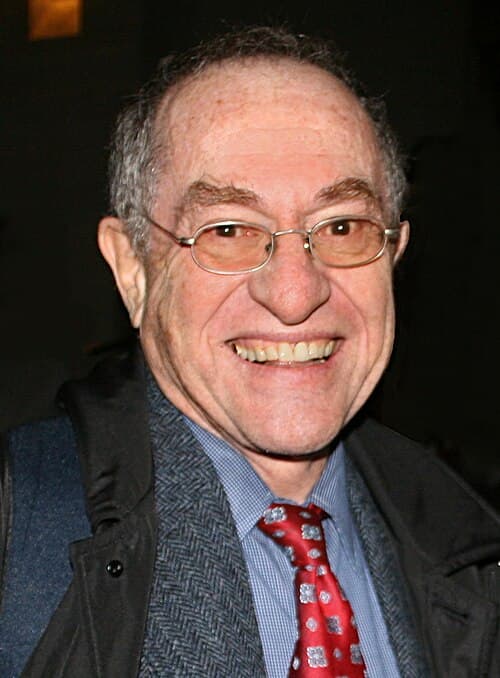
Entities connected to both Alan Dershowitz and Fermat
LB
Leon Black
PERSON1,236 w/ Alan·5 w/ Fermat
Marc Rich
PERSON1,198 w/ Alan·7 w/ Fermat
Bradley Edwards
PERSON1,179 w/ Alan·2 w/ Fermat
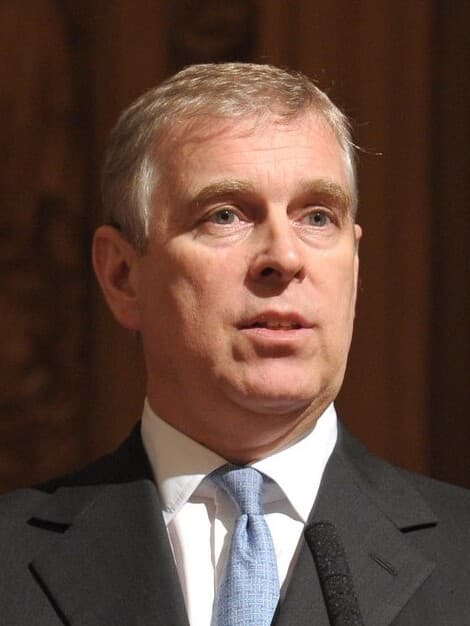
Prince Andrew
PERSON982 w/ Alan·7 w/ Fermat
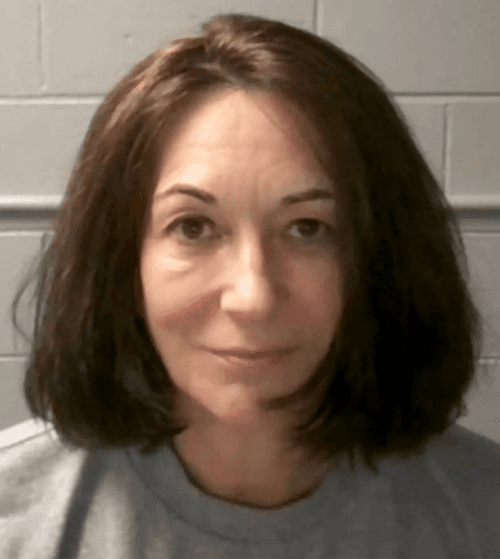
Ghislaine Maxwell
PERSON966 w/ Alan·7 w/ Fermat
United States
LOCATION875 w/ Alan·4 w/ Fermat
George W. Bush
PERSON865 w/ Alan·10 w/ Fermat
Richard Kahn
PERSON750 w/ Alan·3 w/ Fermat
Kenneth Marra
PERSON709 w/ Alan·2 w/ Fermat
Donald Trump
PERSON675 w/ Alan·4 w/ Fermat
MW
Martin Weinberg
PERSON588 w/ Alan·5 w/ Fermat
MF
Maria Farmer
PERSON515 w/ Alan·4 w/ Fermat
Woody Allen
PERSON494 w/ Alan·2 w/ Fermat
Brad Wechsler
PERSON488 w/ Alan·2 w/ Fermat
Joe Biden
PERSON479 w/ Alan·3 w/ Fermat
Virginia Giuffre
PERSON457 w/ Alan·3 w/ Fermat
Prince Charles
PERSON405 w/ Alan·5 w/ Fermat
Julie K. Brown
PERSON384 w/ Alan·4 w/ Fermat
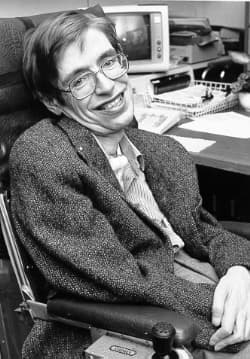
Stephen Hawking
PERSON372 w/ Alan·6 w/ Fermat
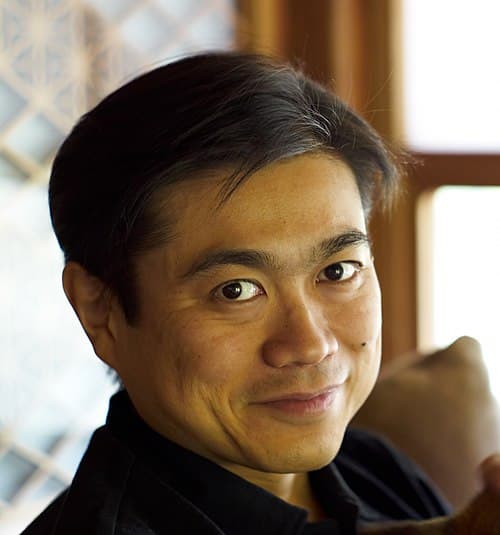
Joi Ito
PERSON353 w/ Alan·4 w/ Fermat