Back to Network















11
Shared Docs
11
Same-Page
11 / 11
Mentions
Document Mentions (11 shared documents)
2 mentions1 same-page
Page ?Same page
h 2015, and Israel would have EFTA00705797 gone ahead with the release of Palestinian prisoners and slowed down building of Jewish settlements in the West Bank. Aaron David Miller, a longtime Middle East peacemaker who is now at the Woodrow Wilson International Center for Scholars, said the injection of M
In fact, the key initiatives of Sisi's campaign to emerge so far are Gulf-financed economic megaprojects (one in housing, another in development of the Suez Canal zone) with extensive military involvement. There is every indication that Sisi will continue to depend on infusions of cash and/or energy of roughl
2 mentions1 same-page
Page ?Same page
ain people on both ends of the political spectrum. Beinart frames his book as a passionate polemic on the fatal threat that Israel's occupation of the West Bank poses to that country's liberal democratic ideals. The object of his jeremiad is not Israeli rightists or Palestinian terror groups but the America
he historian David Nichols put it, during a "perfect storm." Britain and France had invaded Egypt under the guise of bringing to a halt fighting in the Suez Canal between Egypt and Israel, and the Soviet Union had deemed this the right time to crush a Hungarian bid for freedom. Ours is a different world. Bara
2 mentions1 same-page
Page ?Same page
nd judiciary branch, so long as Hamas did not control the recipient. It also permitted funding to nongovernmental organizations that provide aid to the West Bank and Gaza relating to humanitarian needs and democracy promotion. Ultimately, the dilemma over funding the PA resolved itself in 2007, when Hamas b
n by peaceful relations -- or less tense relations -- with Iran." Just weeks after the downfall of Mubarak, Egypt allowed Iranian warships to cross the Suez Canal, provoking uproar among Israelis and even Americans. In succeeding months, the diplomatic flirtation between the two countries took an even more i
Sponsored
2 mentions1 same-page
Page ?Same page
EFTA01964448 It could serve to strengthen President Mahmoud Abbas of the Palestinian Authority and his more moderate Fatah faction that dominates the West Bank just as Washington-orchestrated peace talks get under way. It also adds another volatile element to the rapidly changing landscape across the regio
benefits for U.S. national security, starting with maintaining the Camp David Accords but also including U.S. overflight rights and priority use of the Suez Canal for U.S. warships—both critical elements of America's ability to rapidly project power in the region. At the same time, the army's crackdown on pr
2 mentions1 same-page
Page ?Same page
ground on every issue we possibly could, without facing full-scale political rebellion at home. We had proposed an Israeli pullout from nearly all of the West Bank and Gaza. A support mechanism for helping compensate tens of thousands of Palestinian refugees from the serial Arab-Israeli conflicts of the past hal
but arming and training them and helping organize cross-border attacks. Then, in 38 HOUSE_OVERSIGHT_011509 the summer of 1956, Nasser nationalized the Suez Canal, which had been owned by the British and French. Ben-Gurion was emboldened to go war by the fact that both Britain and France wanted to retake the c
2 mentions1 same-page
Page ?Same page
early a thousand men just across the Jordan River, in a town called Karameh. From early 1968, they had been launching hit- and-run raids, not just on the West Bank but into the Negev. Eshkol’s cabinet was initially divided on whether to attack his base in Jordan, in both an act of retaliation and a signal to Kin
t of the intelligence base our military engineers had built after the war into a 2,400-feet-high mountain called Gebel Um-Hashiba, 20 miles back from the Suez Canal. When I radioed in to tell him I’d decided to abandon the operation, I could hear the surprise in his voice, and what seemed reluctance as well. “If
Sponsored
2 mentions1 same-page
Page ?Same page
would be in charge of one of Israel’s three regional military commands, and we were based on the edge of Jerusalem, with security responsibility for the West Bank. This was my first direct exposure to the combustible mix of restive Palestinians and the growing number of Jewish settlers. Our main brief was to p
the alternative scenario: that Sadat might strike with more limited territorial objectives and, under cover of his SAM batteries on the other side of the Suez Canal, advance into the Sinai. In the Lebanon war, the inquiry suggested, Yehoshua Saguy did try to warn the generals, and the government, about major ris
2 mentions1 same-page
Page ?Same page
ground on every issue we possibly could, without facing full-scale political rebellion at home. We had proposed an Israeli pullout from nearly all of the West Bank and Gaza. A support mechanism for helping compensate tens of thousands of Palestinian refugees from the serial Arab-Israeli conflicts of the past hal
but arming and training them and helping organize cross-border attacks. Then, in 38 HOUSE_OVERSIGHT_027886 the summer of 1956, Nasser nationalized the Suez Canal, which had been owned by the British and French. Ben-Gurion was emboldened to go war by the fact that both Britain and France wanted to retake the c
2 mentions1 same-page
Page ?Same page
early a thousand men just across the Jordan River, in a town called Karameh. From early 1968, they had been launching hit- and-run raids, not just on the West Bank but into the Negev. Eshkol's cabinet was initially divided on whether to attack his base in Jordan, in both an act of retaliation and a signal to Kin
t of the intelligence base our military engineers had built after the war into a 2,400-feet-high mountain called Gebel Um-Hashiba, 20 miles back from the Suez Canal. When I radioed in to tell him I'd decided to abandon the operation, I could hear the surprise in his voice, and what seemed reluctance as well. "If
Sponsored
2 mentions1 same-page
Page ?Same page
would be in charge of one of Israel's three regional military commands, and we were based on the edge of Jerusalem, with security responsibility for the West Bank. This was my first direct exposure to the combustible mix of restive Palestinians and the growing number of Jewish settlers. Our main brief was to pr
the alternative scenario: that Sadat might strike with more limited territorial objectives and, under cover of his SAM batteries on the other side of the Suez Canal, advance into the Sinai. In the Lebanon war, the inquiry suggested, Yehoshua Saguy did try to warn the generals, and the government, about major risk
Sponsored
Mutual Connections (974)
Entities connected to both the West Bank and the Suez Canal
Barack Obama
PERSON91 w/ the·15 w/ the
Benjamin Netanyahu
PERSON89 w/ the·14 w/ the
Lebanon
LOCATION76 w/ the·18 w/ the
Jerusalem
LOCATION85 w/ the·8 w/ the
George W. Bush
PERSON75 w/ the·16 w/ the
United States
LOCATION69 w/ the·15 w/ the
Bashar al-Assad
PERSON65 w/ the·17 w/ the
Bill Clinton
PERSON64 w/ the·13 w/ the
Middle East
LOCATION56 w/ the·14 w/ the
Hosni Mubarak
PERSON47 w/ the·20 w/ the
Tehran
LOCATION57 w/ the·9 w/ the
Cairo
LOCATION51 w/ the·14 w/ the
Fatah
ORGANIZATION53 w/ the·11 w/ the
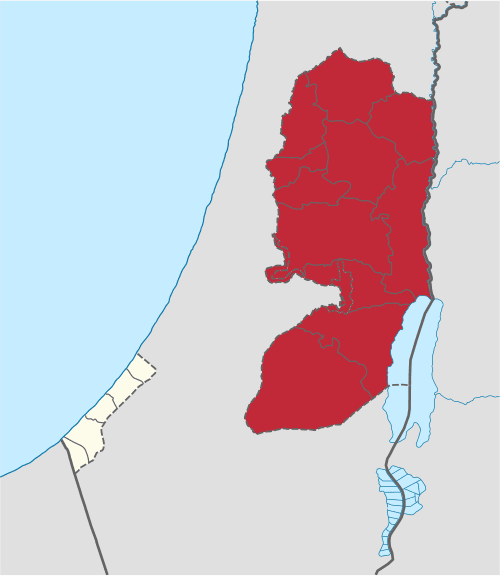
West Bank
LOCATION54 w/ the·9 w/ the
Terje Rod-Larsen
PERSON51 w/ the·10 w/ the
Damascus
LOCATION44 w/ the·15 w/ the
Marc Rich
PERSON44 w/ the·11 w/ the
Jeffrey Epstein
PERSON42 w/ the·10 w/ the
Mahmoud Abbas
PERSON43 w/ the·7 w/ the
Saddam Hussein
PERSON35 w/ the·14 w/ the