Back to Network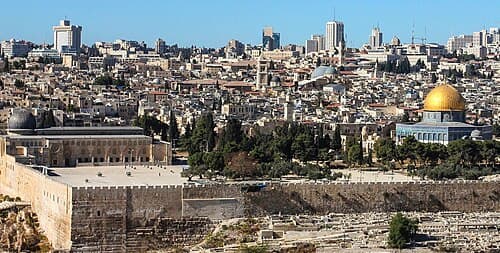




6
Shared Docs
6
Same-Page
12 / 6
Mentions
Document Mentions (6 shared documents)
3 mentions1 same-page
Page ?Same page
be at stake for Damascus, I certainly couldn’t see the Phalangists being able to drive them out by force. The more immediate, open question involved Arafat and the Palestinians. Our other two invasion forces had driven almost all the PLO fighters out of south Lebanon, though not without costs and casualt
s, and at the dinner held at one of King Juan Carlos’s palatial estates, and, for me, a first opportunity to meet not only Arab foreign ministers but Yasir Arafat. My first, brief encounter with Arafat began a bit embarrassingly. I’d arrived a few minutes early for the conference dinner and was led into an imp
as attended by dozens of leaders from around the world. My role was to escort King Hussein and Queen Noor. On our drive into Jerusalem, we passed the Old City walls. We were barely a mile from the stone terrace, above the Western Wall of our ancient temple, where the golden Dome of the Rock and the Al-Aqsa
3 mentions1 same-page
Page ?Same page
test prospect of movement on Oslo. In October, Bibi did finally try to seize the initiative. He wrapping up the redeployment details in a summit with Arafat and Clinton and Arafat in Wye River. But as soon as he got back home, he started backtracking, rather than risk facing down his right-wing critics in
attraction in getting a deal with Syria first: it would increase our negotiating leverage with the Palestinians. That would certainly not be lost on Yasir Arafat — one reason that I realized the importance of an early meeting with him, to convey my commitment to keeping the Oslo process alive, and, if possible
wn red line was the same as Amnon Lipkin’s: “sovereignty over the site of our First and Second Temples.” Even shared sovereignty elsewhere within the Old City seemed to me a step too far at this stage, but I didn’t rule it out as part of a full peace. “Without disengagement from the Palestinians, without an
3 mentions1 same-page
Page ?Same page
test prospect of movement on Oslo. In October, Bibi did finally try to seize the initiative. He wrapping up the redeployment details in a summit with Arafat and Clinton and Arafat in Wye River. But as soon as he got back home, he started backtracking, rather than risk facing down his right-wing critics in
54 Chapter Twenty-One President Clinton and I met the next morning. My aim was to persuade him that the time had come for a make-or-break summit with Yasir Arafat. I suspected it would not be easy to convince him, and it wasn't. But I made the argument that if we were to have any hope of moving Oslo forward, we
wn red line was the same as Amnon Lipkin's: "sovereignty over the site of our First and Second Temples." Even shared sovereignty elsewhere within the Old City seemed to me a step too far at this stage, but I didn't rule it out as part of a full peace. "Without disengagement from the Palestinians, without an
Sponsored
3 mentions1 same-page
Page ?Same page
or did I doubt that President Clinton, whom I had come to view not just as a diplomatic partner but a friend, would rise to the occasion. But as for Arafat? There was simply no way of knowing. That was why I had pressed President Clinton so hard to convene the summit. That was why, despite the misgiving
deeply, and was more determined to help us end it, than any other president before him. It was a moment of truth for the leader of the Palestinians, Yasir Arafat. The Oslo Accords of 1993, groundbreaking though they were, had created a peace process, not peace. Over the past few years, that process had been l
b attackers had lost. Jordan did end up in control of the West Bank, as well as the eastern half of a divided city of Jerusalem, including the walled Old City and the site of the ancient Jewish temple. The new Israel remained, at least geographically, vulnerable. It was just 11 miles wide around Tel Aviv an
3 mentions1 same-page
Page ?Same page
or did I doubt that President Clinton, whom I had come to view not just as a diplomatic partner but a friend, would rise to the occasion. But as for Arafat? There was simply no way of knowing. That was why I had pressed President Clinton so hard to convene the summit. That was why, despite the misgiving
deeply, and was more determined to help us end it, than any other president before him. It was a moment of truth for the leader of the Palestinians, Yasir Arafat. The Oslo Accords of 1993, groundbreaking though they were, had created a peace process, not peace. Over the past few years, that process had been l
b attackers had lost. Jordan did end up in control of the West Bank, as well as the eastern half of a divided city of Jerusalem, including the walled Old City and the site of the ancient Jewish temple. The new Israel remained, at least geographically, vulnerable. It was just 11 miles wide around Tel Aviv an
3 mentions1 same-page
Page ?Same page
be at stake for Damascus, I certainly couldn't see the Phalangists being able to drive them out by force. The more immediate, open question involved Arafat and the Palestinians. Our other two invasion forces had driven almost all the PLO fighters out of south Lebanon, though not without costs and casualt
s, and at the dinner held at one of King Juan Carlos's palatial estates, and, for me, a first opportunity to meet not only Arab foreign ministers but Yasir Arafat. My first, brief encounter with Arafat began a bit embarrassingly. I'd arrived a few minutes early for the conference dinner and was led into an impr
as attended by dozens of leaders from around the world. My role was to escort King Hussein and Queen Noor. On our drive into Jerusalem, we passed the Old City walls. We were barely a mile from the stone terrace, above the Western Wall of our ancient temple, where the golden Dome of the Rock and the Al-Aqsa
Sponsored
Mutual Connections (828)
Entities connected to both Yasser Arafat and Old City
Jerusalem
LOCATION49 w/ Yasser·12 w/ Old
George W. Bush
PERSON47 w/ Yasser·11 w/ Old
Barack Obama
PERSON41 w/ Yasser·12 w/ Old
Benjamin Netanyahu
PERSON39 w/ Yasser·11 w/ Old
Fatah
ORGANIZATION43 w/ Yasser·7 w/ Old
Bill Clinton
PERSON37 w/ Yasser·11 w/ Old
Lebanon
LOCATION39 w/ Yasser·8 w/ Old
West Bank
LOCATION35 w/ Yasser·8 w/ Old
United States
LOCATION34 w/ Yasser·9 w/ Old
Bashar al-Assad
PERSON35 w/ Yasser·8 w/ Old
Mahmoud Abbas
PERSON38 w/ Yasser·4 w/ Old
Jeffrey Epstein
PERSON32 w/ Yasser·5 w/ Old
Damascus
LOCATION29 w/ Yasser·7 w/ Old
Saddam Hussein
PERSON29 w/ Yasser·6 w/ Old
Hosni Mubarak
PERSON30 w/ Yasser·5 w/ Old
Ehud Barak
PERSON28 w/ Yasser·7 w/ Old
Michael Cohen
PERSON21 w/ Yasser·13 w/ Old
Marc Rich
PERSON29 w/ Yasser·4 w/ Old
Ramallah
LOCATION28 w/ Yasser·4 w/ Old
Middle East
LOCATION23 w/ Yasser·8 w/ Old