Back to Network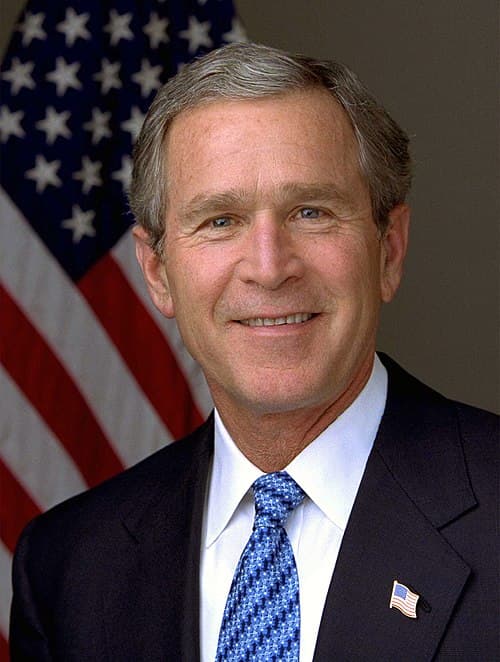


11
Shared Docs
8
Same-Page
17 / 16
Mentions
Document Mentions (11 shared documents)
4 mentions1 same-page
Page ?Same page
be at stake for Damascus, I certainly couldn’t see the Phalangists being able to drive them out by force. The more immediate, open question involved Arafat and the Palestinians. Our other two invasion forces had driven almost all the PLO fighters out of south Lebanon, though not without costs and casualt
s, and at the dinner held at one of King Juan Carlos’s palatial estates, and, for me, a first opportunity to meet not only Arab foreign ministers but Yasir Arafat. My first, brief encounter with Arafat began a bit embarrassingly. I’d arrived a few minutes early for the conference dinner and was led into an imp
HOUSE_OVERSIGHT_011754 votes: one for a party list and one for a directly elected Prime Minister. This would be a personal test, an opportunity for Shimon to build on the still-tenuous achievement of Oslo and finally secure the endorsement of the Israeli people. It seemed, for a while, I might even hav
had made Foreign Minister, Shimon Peres. Though the two men had grown to respect each another over the years, Rabin neither trusted, nor much liked, Shimon. In fact, though Peres’s support inside Labor had secured him the foreign ministry, Rabin had stipulated that all peace talks would remain under his
4 mentions1 same-page
Page ?Same page
test prospect of movement on Oslo. In October, Bibi did finally try to seize the initiative. He wrapping up the redeployment details in a summit with Arafat and Clinton and Arafat in Wye River. But as soon as he got back home, he started backtracking, rather than risk facing down his right-wing critics in
attraction in getting a deal with Syria first: it would increase our negotiating leverage with the Palestinians. That would certainly not be lost on Yasir Arafat — one reason that I realized the importance of an early meeting with him, to convey my commitment to keeping the Oslo process alive, and, if possible
’d agree on a unity government. To my amusement, if not altogether to my surprise, I got word that Bibi was putting out separate political feelers to Shimon Peres. But before long, it became clear there was a specific political motivation behind his approaching me. It was indeed the peace process. But it
And while I did make a brief attempt to return as party leader later in the year, when it was clear I wasn’t going to win, I threw my support behind Shimon and against the other challenger, the longtime labor- union leader Amir Peretz, who was running on a platform to take Labor out of Sharon’s governmen
4 mentions1 same-page
Page ?Same page
test prospect of movement on Oslo. In October, Bibi did finally try to seize the initiative. He wrapping up the redeployment details in a summit with Arafat and Clinton and Arafat in Wye River. But as soon as he got back home, he started backtracking, rather than risk facing down his right-wing critics in
54 Chapter Twenty-One President Clinton and I met the next morning. My aim was to persuade him that the time had come for a make-or-break summit with Yasir Arafat. I suspected it would not be easy to convince him, and it wasn't. But I made the argument that if we were to have any hope of moving Oslo forward, we
'd agree on a unity government. To my amusement, if not altogether to my surprise, I got word that Bibi was putting out separate political feelers to Shimon Peres. But before long, it became clear there was a specific political motivation behind his approaching me. It was indeed the peace process. But it
GHT_028163 / BARAK / 30 I'd tried not to pay too much attention to newspaper polls during the campaign, perhaps because even the "good" ones, to use Shimon's phrase, had me with just a narrow lead, with Yitzhik Mordechai's 10 or 11 percent still likely to prevent outright victory in the first round. But
Sponsored
4 mentions1 same-page
Page ?Same page
be at stake for Damascus, I certainly couldn't see the Phalangists being able to drive them out by force. The more immediate, open question involved Arafat and the Palestinians. Our other two invasion forces had driven almost all the PLO fighters out of south Lebanon, though not without costs and casualt
s, and at the dinner held at one of King Juan Carlos's palatial estates, and, for me, a first opportunity to meet not only Arab foreign ministers but Yasir Arafat. My first, brief encounter with Arafat began a bit embarrassingly. I'd arrived a few minutes early for the conference dinner and was led into an impr
HOUSE_OVERSIGHT_028131 votes: one for a party list and one for a directly elected Prime Minister. This would be a personal test, an opportunity for Shimon to build on the still-tenuous achievement of Oslo and finally secure the endorsement of the Israeli people. It seemed, for a while, I might even have
had made Foreign Minister, Shimon Peres. Though the two men had grown to respect each another over the years, Rabin neither trusted, nor much liked, Shimon. In fact, though Peres's support inside Labor had secured him the foreign ministry, Rabin had stipulated that all peace talks would remain under his
3 mentions1 same-page
Page ?Same page
1967 war had turned out to be hollow words. It was time for a new generation, and a new, more direct, form of confrontation with the "Zionist enemy." Arafat had set up camp with nearly a thousand men just across the Jordan River, in a town called Karameh. From early 1968, they had been launching hit- and-
rces, it was critical to keep him in the picture. I told them all that we'd be working through the night, and that I had to be able to tell Motta and Shimon by the morning whether we really could mount a rescue mission. I still thought I'd end up having to tell them no. However difficult the obstacles we'
inly Ben-Zion and Bibi, would expect me to say. Not only was Yoni being mourned across Israel after Entebbe. He was being elevated - in the spirit of Shimon's words at the funeral -to something approaching sainthood. I did not want to detract from his evolving status as national hero, or his importance as
2 mentions1 same-page
Page ?Same page
en less interested than we were in assuming responsibility for the more than one-and-a-half million Palestinians who lived there. I doubted that even Arafat would have been ready to do so. But relations had only worsened, since his death in 2004, between the Fatah old guard in the Palestinian Authority on
I told a television interviewer that the government had every right to respond and was doing so effectively. Olmert phoned to thank me. When he, like Shimon, asked what I thought the government should do next, I was straightforward: “Do your best to bring things to an end as soon as you can.” I said that
Sponsored
2 mentions1 same-page
Page ?Same page
en less interested than we were in assuming responsibility for the more than one-and-a-half million Palestinians who lived there. I doubted that even Arafat would have been ready to do so. But relations had only worsened, since his death in 2004, between the Fatah old guard in the Palestinian Authority on
I told a television interviewer that the government had every right to respond and was doing so effectively. Olmert phoned to thank me. When he, like Shimon, asked what I thought the government should do next, I was straightforward: "Do your best to bring things to an end as soon as you can." I said that
2 mentions1 same-page
Page ?Same page
967 war had turned out to be hollow words. It was time for a new generation, and a new, more direct, form of confrontation with the “Zionist enemy.” Arafat had set up camp with nearly a thousand men just across the Jordan River, in a town called Karameh. From early 1968, they had been launching hit- and-
inly Ben-Zion and Bibi, would expect me to say. Not only was Yoni being mourned across Israel after Entebbe. He was being elevated — in the spirit of Shimon’s words at the funeral —to something approaching sainthood. I did not want to detract from his evolving status as national hero, or his importance as
Page HOUSE_OVERSIGHT_029698
, analytical chops, and capacity to write in English that would make him so indispensable to the only Palestinian who really counted in those days -- Yasir Arafat. Erekat was a unique figure -- neither a fighter (no nom de guerre for him), nor a PLO insider, nor an organization man from Tunis. Rather, he was a
Page: HOUSE_OVERSIGHT_029698 →Page HOUSE_OVERSIGHT_029700
ortunity? Saeb Erekat: Though I was not the chief negotiator at that moment, the connection between [then Prime Minister Yitzhak] Rabin and President Arafat made everyone around them, including myself, feel that peace was possible. There was significant progress in all tracks until Rabin's assassination b
Page: HOUSE_OVERSIGHT_029700 →Page HOUSE_OVERSIGHT_029705
hed his consultations with the country's political parties and charged Benjamin Netanyahu with forming a new coalition, Israel's respected President, Shimon Peres, is once again very much in the news. In his speech inviting Netanyahu to form the next government, the President spoke forcefully about peace a
Page: HOUSE_OVERSIGHT_029705 →Sponsored
Page HOUSE_OVERSIGHT_029785
, analytical chops, and capacity to write in English that would make him so indispensable to the only Palestinian who really counted in those days -- Yasir Arafat. Erekat was a unique figure -- neither a fighter (no nom de guerre for him), nor a PLO insider, nor an organization man from Tunis. Rather, he was a
Page: HOUSE_OVERSIGHT_029785 →Page HOUSE_OVERSIGHT_029787
ortunity? Saeb Erekat: Though I was not the chief negotiator at that moment, the connection between [then Prime Minister Yitzhak] Rabin and President Arafat made everyone around them, including myself, feel that peace was possible. There was significant progress in all tracks until Rabin's assassination b
Page: HOUSE_OVERSIGHT_029787 →Page HOUSE_OVERSIGHT_029792
hed his consultations with the country's political parties and charged Benjamin Netanyahu with forming a new coalition, Israel's respected President, Shimon Peres, is once again very much in the news. In his speech inviting Netanyahu to form the next government, the President spoke forcefully about peace a
Page: HOUSE_OVERSIGHT_029792 →Sponsored
Mutual Connections (867)
Entities connected to both Yasser Arafat and Shimon
George W. Bush
PERSON47 w/ Yasser·12 w/ Shimon
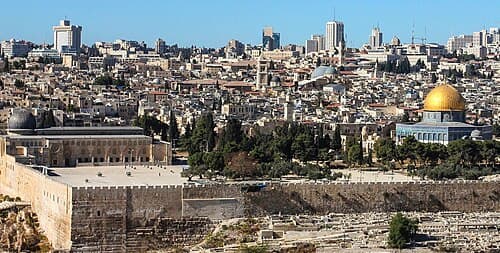
Jerusalem
LOCATION49 w/ Yasser·9 w/ Shimon
Fatah
ORGANIZATION43 w/ Yasser·11 w/ Shimon
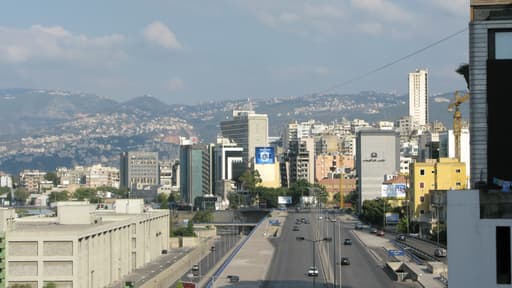
Lebanon
LOCATION39 w/ Yasser·11 w/ Shimon
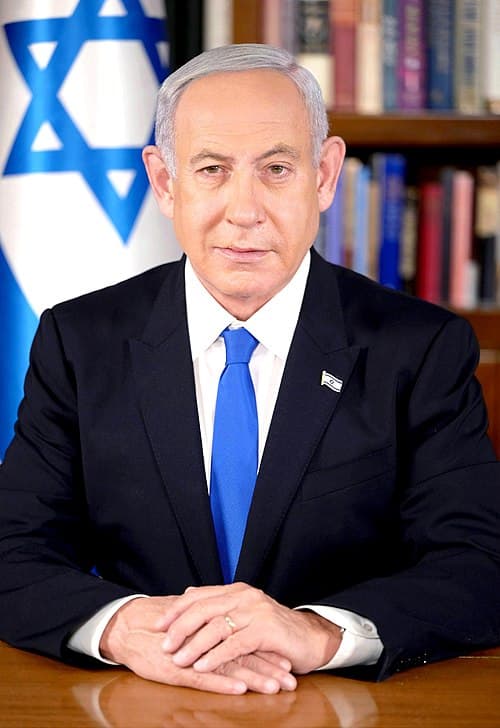
Benjamin Netanyahu
PERSON39 w/ Yasser·11 w/ Shimon
Barack Obama
PERSON41 w/ Yasser·7 w/ Shimon
United States
LOCATION34 w/ Yasser·10 w/ Shimon
Bill Clinton
PERSON37 w/ Yasser·7 w/ Shimon
West Bank
LOCATION35 w/ Yasser·9 w/ Shimon
Bashar al-Assad
PERSON35 w/ Yasser·7 w/ Shimon
Jeffrey Epstein
PERSON32 w/ Yasser·9 w/ Shimon
Mahmoud Abbas
PERSON38 w/ Yasser·3 w/ Shimon
Ehud Barak
PERSON28 w/ Yasser·11 w/ Shimon
Damascus
LOCATION29 w/ Yasser·9 w/ Shimon
Saddam Hussein
PERSON29 w/ Yasser·9 w/ Shimon
Hosni Mubarak
PERSON30 w/ Yasser·7 w/ Shimon
Ramallah
LOCATION28 w/ Yasser·9 w/ Shimon
Shimon Peres
PERSON22 w/ Yasser·12 w/ Shimon
Cairo
LOCATION26 w/ Yasser·7 w/ Shimon
Marc Rich
PERSON29 w/ Yasser·4 w/ Shimon