Back to People & Entities


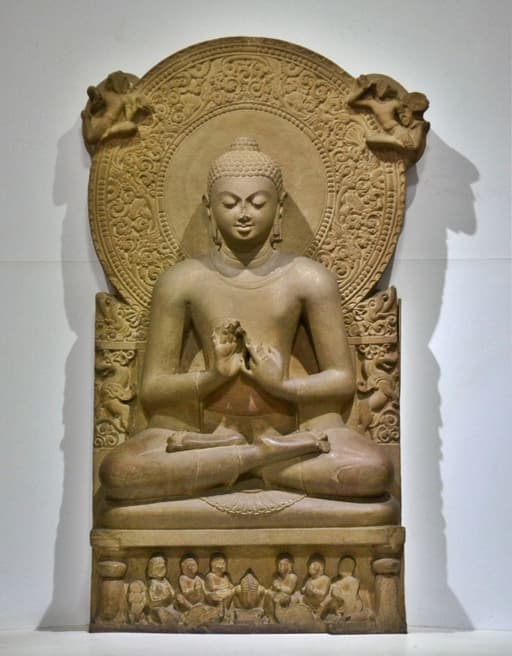



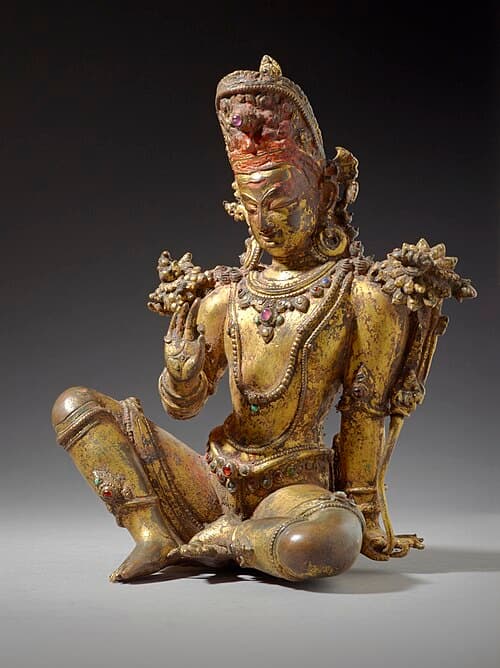
Dhamma
Organization
13
Total Mentions
5
Documents
60
Connected Entities
Organization referenced in documents
Document Mentions (5)
EFTA00286476.pdf
3 mentionsEFTA00286476_sub_001 - EFTA00286476_100
p could hardly be called friends. 6. When free joining up to talk and eat together. When the wise have free time they come together to discuss the Dhamma and to clear up their doubts (not to gossip about the neighbours). 7. Reflection on Dhamma and Getting Down to Earnest Practice. This is one of th
tep, you cannot call it true association. Also, if you do none of the first six but do the seventh one, it is as good as true association, because Dhamma always has the same flavour — it always gives rise to self discipline [sEla]: it always gives rise to concentration [samAdhi]: and it always gives
mmediate environment or neighbourhood- but the more distant environments of his locality or country also have a part to play. A.1 Amenability in Dhamma practice The sort of location to be examined in this Blessing is the location amenable to refining the mind or put another way, the location that
EFTA00286476.pdf
3 mentionsEFTA00286476_sub_003 - EFTA00286476_300
nities pass you by, to train yourself spiritually. A3 Three Characteristics of the reckless The usual way in which a person's recklessness in the Dhamma expresses itself is to overlook the importance of putting in the appropriate effort in order to get the hoped-for results. Here are some examples o
ail of this particular Blessing, let us examine the nature of the Dhamma, so that we can orientate ourselves in a non-reckless way towards it. The Dhamma can be compared to the spire of a pagoda. A flag attached to the top of the pagoda of the Dhamma could be marked 'non-recklessness' or equally well
ich you maintain the whole of the time. It is also like being constantly 'awake' to one's proper priorities. B.2 Importance of non-recklessness in Dhamma as a whole We have already mentioned the preciousness of opportunities to cultivate oneself — and the Dhamma, or teaching of the Buddha, is the s
EFTA00286476.pdf
3 mentionsEFTA00286476_sub_005 - EFTA00286476_425
end of defilements: analytic insight into consequences [attha- paEisambhidA]: the masterful wisdom allowing one to enlarge upon any subject of the Dhamma; 2 analytic insight into causes [dhamma- paEisambhidA]: the masterful wisdom al lowing one to summarize any subject of the Dhamma without losing
e fruits which body, enlarging or shrinking oneself or making oneselfnay accrue to a greater or lesser extent to those earnest in invisible; their Dhamma practice. It is for this reason that all of us 2 supranormal audition [dibbasota]: being ablcltauld try to put all thirty-eight blessings into prac
will know for oneself. B.2.3 The Fourfold Analytical Insights [pati- sambhidA] (A.it 160) These are mental abilities concerned with the teaching of Dhamma to others. They are attained by those who have reached an end of defilements: analytic insight into consequences [attha- paEisambhidA]: the master
Sponsored
EFTA00286476.pdf
2 mentionsEFTA00286476_sub_002 - EFTA00286476_200
transform that theory into practice allowing you to earn your living. If you have learned Dhamma theory, you have to transform that knowledge into Dhamma practice. It is like someone who reads a manual of swimming who can memorize every page of the manual. He knows how many types of swimming styles
ver, the Brahmin didn't know how to pay respect to the Dhamma which seemed more abstract.The Buddha replied that if you want to pay respect to the Dhamma, you should pay respect to those who are learned in the Dhamma. The Brahmin asked around to find which of the monks was the most learned and every
EFTA00286476.pdf
2 mentionsEFTA00286476_sub_004 - EFTA00286476_400
noticeable from the way a monk's accommodation is furnished (excessive luxury or with a television or radio — which are not for helping to practice Dhamma — and accumulating lot of things in their kuti beyond any already outlined for academic teachings in Blessing Seven §E. [The Learning Process]). In
n (A.i.61) what is in fact not the case." This is in addition to what has already been men- tioned in Blessing Three (§D.2) about joking about the Dhamma; 3. to acquire wisdom: Dhamma discussions are in- tended as a way of cultivating wisdom. Above all other things the Buddha praised `wisdom'. Most p
Sponsored
Connected Entities(20 of 60)
Nirvana
PersonSurname reference in documents
5 docs5 co-mentions
Condoleezza Rice
PersonAmerican diplomat and political scientist (born 1954)
5 docs5 co-mentions
Buddha
PersonSurname reference in Epstein-related documents
4 docs4 co-mentions
SU
Sutta
PersonSurname or name fragment in documents
4 docs4 co-mentions
Marc Rich
PersonAmerican commodities trader (1934–2013)
4 docs4 co-mentions
KA
Kassapa
PersonName reference in documents
3 docs3 co-mentions
SA
SAriputta
PersonName reference in documents
3 docs3 co-mentions
BO
Bodhisattva
PersonSurname or name fragment in documents
3 docs3 co-mentions
Knowledge
OrganizationOrganization referenced in documents
3 docs3 co-mentions
CW
Courtney Wild
PersonAmerican victim/survivor of Jeffrey Epstein who led legal battle for victims' rights
3 docs3 co-mentions
Right View
OrganizationOrganization referenced in documents
3 docs3 co-mentions
Blessings
OrganizationOrganization referenced in documents
3 docs3 co-mentions
Earth
LocationThird planet from the Sun in the Solar System
3 docs3 co-mentions
Paknam
OrganizationOrganization referenced in documents
3 docs3 co-mentions
Indra
PersonSurname reference in documents
3 docs3 co-mentions
VisAkhA
OrganizationOrganization referenced in documents
3 docs3 co-mentions
Abhidhamma
OrganizationOrganization referenced in documents
3 docs3 co-mentions
Benares
LocationLocation referenced in documents
3 docs3 co-mentions
Dhammakaya
LocationLocation referenced in documents
3 docs3 co-mentions
TavatiOsa
LocationLocation referenced in documents
2 docs2 co-mentions