EFTA00286476_sub_003 - EFTA00286476_300
Document Information
Bates Range
EFTA00286476_sub_003 - EFTA00286476_300
Pages
100
Original Filename
EFTA00286476.pdf
Document Content
Page 201 - EFTA00286476_201
unwholesome course of action? If I had not been here today, your blood would have been flowing like this river by now. You are living with hatred, but I live free from hatred. You are ailing with moral defilements, but I am free from moral defilements. You are striving to develop selfishness and enmity, but I don't strive for the development of selfishness." Both sides then became ashamed of their foolishness and thus bloodshed was averted. The Buddha was also to help his extended family, the Sakyans by prohibiting VilElabha from massacring them out of anger, as many as three times (See Blessing Thirty-Three §D.6) D.4 Er. Kukkura JAtaka (J.22) Because his carriage straps, left in the rain, are gnawed by his own dogs, the king of Benares orders all dogs except his own to be killed indiscriminately. The Bodhisattva, who was the leader of the pack of dogs in the cemetary, visited the king and pointed out to him his iniquity, and reveals the truth by causing an emetic to be administered to the king's own dogs. In this way the Bodhisattva cared for his "extended family" by making sure justice was delivered to all of his kind. Having convinced the king, the Bodhisattva taught him the The Ten Virtues of a King and to avoid the Four Forms of Bias. Great are the benefactions thereafter made to dogs in the kingdom. D.5 Ex. Buddha tends the sick monk himself (DhA.L3I9ff) Once the Buddha happened to see the sorrowful state of a certain monk called 'Tissa'. The monk had been meditating diligently until becoming afflicted with a disease of stinking open sores covering his whole body. Because of the smell, he had been abandoned by his fellow monks.The Buddha knew that Tissa would soon attain Arahanthood. so he proceeded to the fire-shed, close to the place where the monk was staying. There, he personally boiled some water, went to the place where the monk was lying down, and took hold of the edge of the couch. It was only then that the other monks also gathered round him, and as instructed by the Buddha, they carried him out where he was washed and bathed.While he was being bathed his robes were washed and dried. After the bath, the monk became fresh in body and mind and soon developed one-pointedness of concentration. Standing at the head of the couch, the Buddha told him that this body when devoid of life would be as useless as a log and would be laid on the earth. At the conclusion of the sermon. Tissa attained Arahanthood. Soon after, he passed away into ParinibbAna.The Buddha then directed some hhikkhus to cremate his body and enshrine his relics in a sttpa. Subsequently, the Buddha taught, Thikkhus! You do not have your mother or father here who can tend to you. If you do not tend to one another, who will be there to tend to you? Tend a sick fellow monk as if you were tending me.' EFTA00286676
Page 202 - EFTA00286476_202
Blessing Eighteen: Blameless Work A. INTRODUCTION A.l Blessing Eighteen in the Sequence of the Blessings The workplace is somewhere we have already been familiar with since Blessing Fourteen — but last time we visited, we were interested in work only as a means to earn the salary we needed to support the close family (as covered in Blessings Eleven, Twelve and Thirteen). Now we have matured a little further in the sequence of the Blessings, we return to our work, not as simply something which needs to be completed, but to be completed well! Within the context of this Fifth Grouping of Blessings, 'Becoming a pillar of society', it matters not simply that we finish ow work, but also how well we do it and how beneficial it is to society too! In this Blessing we are to learn about the quality and the ethicality of the work we do — important factors in being the sort of person others in society can look up to. A.2 Buddhist Economics 'Economics' is not a term native to Buddhism. "Bud- dhist Economics" is a phrase coined by E.F. Schumacher — but the concepts involved (especially Right Livelihood at the mundane [lokiya] level) are very relevant to explaining a second visit to the workplace is necessary. Like the diligent but shoddy and corrupt worker tolerated by Blessing Fourteen, contemporary western economics tries to measure social well-being by financial transactions alone. Western economists try to avoid involvement of values when considering the 'economics' of different actions — and their approach is thus radically different from that of Buddhism. To give some examples of iniquities in the modem economic analysis, transactions which are considered ... : • Economic non-events: Any work which doesn't get paid a wage is a non-event to an economist — so much for voluntary work in the temple! • Economically equal activities: The purchase of a bottle of whisky and or a sack of rice to feed a village of hungry refugees have the same economic value • 'Negligible' economic by-products: That vices are by-products of attending night-clubs, rampant consumerism the result of advertising, temptation towards unethical business practices the result of competition — have no place in the economic equation. Costs given consideration in the Buddhist economic equation: To Buddhism, by contrast, the economics of livelihood has a human face (i.e. it acknowledges values). Below are listed some of the factors to be encouraged in the equation of Buddhist economics: • Physical health and security of the population: If the public are made ill by unethical business practices, the medical costs it is the victims who end up paying the bill through EFTA00286677
Page 203 - EFTA00286476_203
their own taxes! When consumerism exacerbates crimes, guess who has to pay for police investigations and prosecution of the offenders? 2. those who finish their work to the best of their quality; 3. those who care that the result of their work is beneficial to society; Spiritual Health: the ravages of over-consum-The Buddha taught that anyone who wants to be a pillar ption and over-production reflect unhealthy mental processes in the population generated by the superficial of society must pay attention to the quality of every emotions of want, choice and material satisfaction piece of work they do as well as finishing it. emotions which Buddhism does not encourage; • Quality of work: Shoddy work is produced by 4.4 Three types of work shoddy minds. Buddhism foresees a working environm 'ork in Buddhism, as already discussed in Blessing where workers are enthusiastic to give their best, becauTourteen (a source of food both for body and mind) is a in so doing, apart from job satisfaction, workers will ha Yerrn which relates to a much wider scope of activities the chance to train and better themselves and refine theifhat that implied by our 40-hour week! Thus, before minds through their working experience; ing into further detail as to which sort of work is • Job satisfaction: If workers enjoy their work itmeworthy and which not, it is important to are industrious, productivity will be high. On the other hand, if they are dishonest, disgruntled or lazy, this willrecognize the scope of this analysis. The term 'work' . have a negative effect on the quality of production and tr ues' amount of productivity. • Respect for individual human dignity: To be ethically sound, economic activity must take place in a way that is not harmful to the individual, 1. physical work (e.g. cooking or governing the country); 2. verbal work (e.g. training ow children or grandchildren, business negotiation or chanting) • Respect for interpersonal human dignity: To be (most of the details of this sort of work have already ethically sound, economic activity must take place in a been discussed in Blessing Ten); way that does not encourage one individual to take advantage of another; • Respect for fair economics/human dignity of society at large: society or the natural environment. In 3. mental work (adjustment and development of our own thoughts to overcome the inbuilt tendency of our thoughts to degenerate into preoccupation with sensuality [kAmavitaldca], vengefulness other words, economic activity should not cause problems [byApAda-vitakIca] or aggression [vihiOsavitakka].; for oneself, agitation in society or degeneration of the ecosystem, but rather enhance well-being in these three spheres. The principles of 'blame' discussed in relation to work, A.3 Three types of Worker Workers in the world have many styles and qualities, but in conclusion you can divide successful workers into three major kinds: I. those who finish what they do without being interested in the quality; although mostly dealing with the context of physical work here, can in fact equally be applied to verbal and mental work too. B. JUDGING THE ETHICAL VALUE OF WORK Often when people am looking to measure the standard of the work they are doing they rely too heavily on the amount of praise or criticism they receive from others (see example §E. I below). The Buddha warned us that to use such an arbitrary measurement as our standard is not foolproof. In the world there are so many people of different viewpoints that you could never please all of the people all of the time. Some people cannot find a EFTA00286678
Sponsored
Page 204 - EFTA00286476_204
word of praise for anyone. Thus whatever the task you do, you cannot listen simply to the criticism of others — because some people's criticism is possibly without any foundation. You have to measure the quality of work based on reason. Therefore whatever work you are doing, never base your decisions on the criticism of others. What then can you base your decisions on? The Buddha taught that we should make sure any work we do is: ter. Not breaking the Five Precepts: This en- sures that you don't compromise the human dignity of others or of yourself (as already described in Blessing Nine). 2 Not compromising your Five Virtues Ipaticadhammap This ensures that you don't fall into unwholesome ways which compromise virtue or justice (in the ways Not illegal: this is the grossest filter of blame in already described in Blessing Seventeen) work — but it is too gross to cover all eventualities, anAnint if in the future, you want to be a pillar of society, this is why we need to resort to the other three criteria then give things careful consideration before you do too; them. You have to do things well — not just finish 2 Not breaking with tradition: Some things do om. tn If you want to know if there is going to be any break the law, but because they are out of keeping with oad side-effects occurring as the result of something we local customs or traditions, they may bring you into do, check by using these four principles. Check the law, conflict with others. Supposing a man wears women's clothes — will the police arrest him? Probably not, butcustoms, Precepts and virtue. it is certainly not very good. Or when you are eating, thee. AVOIDING WRONG LIVELIHOOD is a division made between sweet and savoury food. The Buddha taught that we should earn our living by Some countries eat savoury food before they eat sweecorking for it and by working honestly too — desserts. Some, like Japan, eat their sweet food first. erwise the economy and society cannot truly all customs are universally good. They may be applic I8sper. Of course earning your living by thieving, only to the particular locality or climate in a place. So op-lifting or pick-pocketing is not supported by uddhism — these forms of work have already been how can you tell if a custom is worth respecting or no Supposing you want to choose what W wear to go to the ruled out in our consideration of the ethical value of temple. You know that it certainly won't break the law. work above. But there is a grey area of what constitutes As for customs, you know that in different places, the ei fair profit, which the Buddha charted for us with the way people dress is not the same — to go to the mark you dress in a cosmopolitan way, to go to the cinema fecept of Right and Wrong Livelihood. Those who ake a success out of Right Livelihood in business will dress in a fun-loving way, to go to the seaside you dreN to the minimum — but if you go to the temple, becaust2ave a positive effect on the economic situation of their the atmosphere must be peaceful, you should dress mcfi€untry too — but those involved in Wrong Livelihood modestly and conservatively. It is customary to dress ifirderprises, whether directly or indirectly are modest colour like white to go to the temple because undermining the well-being of their country by so doing so forces you to be careful of your own level of doing. The Buddha said that a person who earns their cleanliness and such mindfulness aids you to meditate Wing by Wrong Livelihood is like someone who intentionally advises a traveller to take a dangerous road, saying that it is safe, but when travelling themselves, will always take another (safer) route. The main ways people earn a living are in either in the public or in the private sector — and we will look at the specific considerations of Right and Wrong Livelihood for each in turn: Cl Private Enterprise Most work in private enterprise can be simplified EFTA00286679
Page 205 - EFTA00286476_205
down to trading a product or a service. For Right Livelihood in the trading scenario the Buddha taught us to avoid five specific types of Wrong Livelihood: I. Dealing in slaves [sattavaAijjA]: This means buying people at a low price and selling them at a higher price and supporting oneself from the profit made — or running a brothel where you are making a profit out of the loss of another person's dignity. Taking on such an occupation will change the quality of your mind — it will cause you to see people as something inanimate. You will eventually lose your sense of humanity because you will no longer be able to appreciate others' human dignity. 2. Dealing in weapons [satthavaAijjA]: This means weapons for killing animals or people and supporting oneself from the profit made — selling weapons will make you see the world in a strange way. The quality of the wares you are selling all depend on the efficiency with which the weapons can kill men or animals — eventually it will cause your own Precepts to suffer. 3. Dealing in flesh [maOsavaAijjA]: This means rearing live animals (like buffalos, pigs, ducks and chickens) to slaughter oneself or have someone else slaughter for us and supporting oneself from the profit made — most people see animals with compassion, but if you kill them or trade with those in the abattoir, instead of seeing the nice side of animals, you will see animals as nothing more than a walking meat counter. Even though you might not be directly involved in such a trade, your ap- preciation of the preciousness of life will disappear. If ever you lose your temper there will be an increased intention for you to threaten people with the same murderous intentions that belong inside the abattoir. 4. Dealing in alcohol [majjavaAijjA]: This means selling alcohol (or any other sort of substance causing heedlessness) and supporting oneself from the profit made — it doesn't break the law or customs — but it does break with Right Livelihood. If you sell alcohol you know that it will lead to the drunkenness of the customer - it will destroy their reputation, their wealth, their health etc. etc. — however, you don't feel any compassion for such a person or responsibility for their human dignity. You know all the damaging consequences of buying our alcohol for the customer, but you look beyond these in your search for profit. Loving kindness becomes a stranger to your heart. The more evil of this sort you collect for yourself, in this lifetime or in future lifetimes, if ever you find yourself in difficulties yourself, your evil will prevent others from having any compassion for you — even those you have helped before — even your own children. The karma will block out the reality and you won't be able to blame them. 5. Dealing in poisons [visavaAijjA]: This means selling poisons for killing animals (e.g. insecticide) and supporting oneself from the profit made. In many places where mosquitos are not even the vectors of malaria (like in Bangkok) people are dying not of malaria, but of self-poisoning from the DDT they spray on the mosquitoes. People think that insecticide will become benign again within a few hours but actually it takes about fifteen to twenty years to break down. If a bottle of such poison smashes on the floor, even if you clean up thoroughly, the smell still remains for two or three weeks. If you work in the poison trade, there are broken bottles and spillages nearly every day. Even if you never use the poison, you are inhaling it every day. Those in the trade die of respiratory disease and blood cancer almost without exception. Those who do any of these trades, will find themselves increasingly unable to cultivate an `Emotional Bank Account' [salgahavatthu] with anyone else. Furthermore, those who work in commerce but who are dishonest (by for example fixing their weights and measures) also fall into the category of Wrong Livelihood. Another variety of Wrong Livelihood are the forms of deception used by forg EFTA00286680
Page 206 - EFTA00286476_206
ers — for example, they provide the first batch of their work all in solid gold — however, as soon as the order is placed, the remainder of their work will be in gold-plated brass. C.2 Public Sector It would be impossible for Wrong Livelihood en- terprises to exist, whether on the large or small scale, without some form of cooperation from a corrupt Public Sector — whether it be the "soft drug" industry, gun running, casinos, forgery, prostitution, or assassination. Any such involvement shows that those implicated are devoid of any sense of responsibility for human dignity in the fairness of the economy of their own country. Usually the enemy of Right Livelihood in the Public Sector is bribery or corruption — for example surveyors in charge of measuring land for a buyer, if they are dishonest or corrupt and don't get paid protection money, will over-measure the land. However, if they are bribed, will undermeasure it. Judges who can be bribed to come to a verdict are no better. All come under the heading of Wrong Livelihood. C.3 Special Occupations C.3.1 Military In addition to the work categories already explained, special mention should be given to the work of the professional soldier which comes into strong disagreement with any form of Buddhist practice. In the time of the Buddha there was a soldier who thought that soldiers who fought bravely for their king and country would have heaven as their afterlife destination. However, the Buddha explained that: `those who kill will be killed in return' Dutiya KAmavatthu Sutta (S.i.83) And that there are only two possible afterlife desti- nations even for those who (only) consider killing others — and those are hell and the animal realms — whether they be soldiers, cavaliers or soldiers mounted on elephants. [YodhAjEva Sutta (S.iv.308), AssAroha Sutta (S.iv.310), HatthAroha Sutta (S.iv.310)] C.3.2 Doctors and Nurses On the contrary, to be a doctor or a nurse can be a profession which can bring great merit if it is done well. If it is done badly, it can bring serious demerit. It was therefore for this reason that the Buddha gave guidelines on the abilities of those prerequisite for making a good doctor or nurse (in his particular context to look after sick monks): I. Must have the ability to prescribe the appropriate medicine; 2. Must know the difference between what is for the comfort and discomfort of patients, being able to increase the comfort and decrease the discomfort of the patient by his or her actions; 3. Not just interested in the payment received from the treatment — healing should be done out of the prime motivation of compassion 4. Does not object to the removal/excretion of the patient's excrement, urine, vomit and saliva; 5. Able to cheer up the patient with timely Dhamma teachings Dutiya UpaEEhAka Sutta (A.iii.144) C3.3 Devious Customers Even customers can do it! Supposing a butcher has two deer for sale, a big one and a small one. He asks $20 for the big one and $10 for the little one. A devious customer comes up and buys the little one for $10. Some time later he comes back and says he changed his mind and he wants the big one. The butcher asks $20 for the big deer, but the customer says that he already gave the hunter $10 and that the small deer he is returning is also worth $10. Together they are worth $20, the price of the big deer. The customer therefore exchanges the big deer for the small one. Meanwhile the butcher is not smart enough to keep up with the customer's trick and is thereby cheated. On this occasion, the customer is guilty of Wrong Livelihood even though he might say the butcher deserved it. Therefore, if you aim to be a pillar of society who is beyond criticism by any reasonable person in the world, measure your work carefully by the standard of Right Livelihood. Apart from avoiding criticism, all tasks which you do will be done to the EFTA00286681
Sponsored
Page 207 - EFTA00286476_207
best of your ability. Others will regard you as an elder in society not only because of your advancing age, but also because of your wisdom and example to upcoming generations. D. RELATIONSHIPS IN THE WORKPLACE Apart from the ethicality of work, a second area of problems in the work we do may come from personal conflicts arising at work. Irrespective of the nature of the work, we need to cultivate good human relationships in the workplace otherwise we might risk blame and undermine our job satisfaction. We have to be able to get along with our colleagues whether they are true friends or false. Our relationship with this group of co-workers (whether they be ow boss, employees, servants, inferiors or slaves!) are covered in the fifth grouping of relationships mentioned in the SilgalovAda Sutta. From this teaching we find out about the reciprocal relationship between the boss and the employee. D.1 Duties of an employer The Buddha laid down five responsibilities of a boss to his employees as follows: L Delegating appropriate work: Work given to an employee should be chosen as appropriate to that person's age and gender and disposition and capability in order that they can work efficiently; 2. Give food and remuneration: A decent wage should be given which is not less than the legal minimum. There should be wage increase with time and bonuses. Employees who live "on site" should be provided with regard to appropriate food — not left hungry! A boss with such caring behaviour will be able to relinquish the effects of both bias and defilements of action; 3. Take care of employees in time of illness: Employees should be allowed to take leave if sick and enquiries should be made about their recovery to show the features of a "true friend" of the boss; 4. From time to time give delicacies: organize celebration for special occasions for the employees etc. — and this will give them the encouragement which will keep the boss-em- ployee relationship an amicable one; 5. Allow holidays on occasion: employees should be allowed holidays according to the usual working calendar and national festivals Employers and bosses who take responsibility for their employees in these five ways will in such a way cultivate a mind of loving-kindness and compassion instead of simply thinking to take advantage of others. A boss with all the features of a true friend — but such an attitude doesn't occur by accident — it needs for the boss to have been instilled with such responsibility since an early age, whosoever fulfil their duties to the "nadir" in these ways. D.2 Duties of an employee The Buddha also laid down five responsibilitiesan employee ought to have towards his employee: 1. Start work before him; 2. Finish work after him: If any employee who can practise both of these duties, it shows that they have a strong degree of responsibility towards their employer — a sincere respect, love and gratitude towards their employer — rather than having the hidden intention that their behaviour be conditional on their employer raising their salary; 3. Taking only the things (expressly) given to them by the employer: an employee who can have the control of himself to avoid the defilements of action will not help themselves to the things 'left lying around' in the workplace or steal the boss's belongings; 4. Doing their work better: Means giving their all to fulfil their duties for the greatest benefit — without having conditions to negotiate salary increases from their employer — such behaviour shows that the employee really has the generosity befitting a "wise one". 5. Maintaining and defending the boss's good reputation: employees with such behaviour do so because of their loyalty to their employers — they see their boss as similar to the ways they would regard a kindly relative or parent. EFTA00286682
Page 208 - EFTA00286476_208
In general, it is the employer who controls the benefits and disadvantages coming to an employee. That an employee fulfils these five responsibilities towards an employer means that the employer must have treated the employee well in the first place — to want to show these responsibilities to repay his debt of gratitude. D.3 Reciprocal Relationship between Boss It Employer If the boss does not fulfil his duties but the employee does, the boss does not deserve such a good employee — in the end harm will come to that workplace because seeing the boss's attitude, before long the employees will imitate his example. If the boss fulfils his duties, but the employee doesn't — the employee does not deserve such a good employer — the workplace will not prosper because the boss cannot control the employees. If both boss and employees fail to fulfil their duties, the workplace will go bankrupt because it will become a den of thieves — having dire consequences for society at large. However if both boss and employee fulfil their responsibilities, the workplace will prosper — both boss and employee will enjoy happiness and peace and society will benefit too. D.4 Possible Harm coming from unfulfilled duties between boss and employee I. When employees have no sense of responsibility for their own human dignity — if a boss or employer lacks the self-discipline according to the teaching of the Buddha, the first disaster coming to him is that his employees will have no sense of responsibility for their own human dignity, producing at least the following three character traits: I. Chronic false view: Mostly employees come from an unwealthy and uneducated background and if they come into contact with an undisciplined boss who is a false fiend, the employee will be discontent and will resist against the boss — an emotion which may exacerbate False View in the employee's mind. 2. Breaks the Five Precepts: Those of False View also tend to break the Five Precepts. Employ ees might deteriorate into the Four Defilements of Action in order to fight back against the employer, without any fear of the legal consequences 3. Brings disadvantage to the employer: in order to avoid breaking the law, employees band together to strike in order to claim rights and benefits for themselves. Any form of strike will disadvantage the employer. 2. When employees have no sense of responsibility for the human dignity of others — if a boss or employer lacks the self-discipline according to the teaching of the Buddha, the second disaster coming to him is that his employees will have no sense of responsibility for the human dignity of others, producing at least the following three character traits: I. Looking for ways to take advantage of the employer: When bias arises in the mind of the employee — they will want to put the employer at a disadvantage — something they can do in many ways, e.g. by "going slow" (ljpaid by the hour) or producing shoddy work (ifpaid for productivity). 2. Mistreats employer: In order to get revenge for the resentment they feel, they produce shoddy goods or feign quality; 3. Ruin the employer: Sometimes the employee divulges trade secrets to competing companies etc. 3. When employees have no sense of responsibility for the human dignity of economic fairness — if a boss or employer lacks the self-discipline according to the teaching of the Buddha, the third disaster coming to him is that his employees will have no sense of responsibility for the human dignity for economic fairness, producing at least the following three character traits: I. Addiction to the `Sir Roads to Ruin': because of working to express animosity towards the employer, they will feel insecurity about working in that enterprise and immerse themselves in 'Roads to Ruin' to forget their woes by drinking alcohol or lialighliMplinal in expenditure: When they are EFTA00286683
Page 209 - EFTA00286476_209
addicted to 'roads to ruin', they will lose the intelligence to use their earnings beneficially; 3. Consequent debt problems: The combination of addictions and lack of discipline in expenditure will lead them to indebtedness — producing problems not only for themselves but eventually for the employer too! E. ILLUSTRATIVE EXAMPLES E.I Er. The Father, the Son and the Donkey Once there were a father and a son who went to the market in a distant town and bought a donkey. They led the donkey back towards their home on a rope. On the way back from the market, they passed through the first village and all the villagers exclaimed, "What a stupid father and son, they have spent good money on a donkey and now they lead it along the road instead of riding it". The father and son thought, "What they say is true," and so the father sat the son on the donkey and they went on their way. They passed through the second village and all the villagers exclaimed, "What an un- grateful son to ride the donkey and leave his poor father to walk — if the son were to walk and let his father ride, it would show that the son at least repays his debt of gratitude to his father". The father and son thought, "What they say is true," and so the father sat on the donkey and the son walked and they went on their way. They passed through the third village and all the villagers exclaimed, "What a cruel father! He has hardly any more years of life in him, and he lets his poor son walk along the road in his place". The father and son consulted one another, "What they say is true," and so both the son and the father sat on the donkey and they went on their way. They passed through the fourth village and all the villagers exclaimed, "What a cruel father and son! Both of them together weigh more than the donkey itself and they are both riding the donkey — they're not interested even if they break the donkey's back". The father and son consulted one another, "What they say is true," — if they ride the donkey singly, together or lead the donkey, they get criticized — what can they do? They found a rope and tied the donkey so that it hung on the pole by its feet. The father took one end of the pole and the son the other and they went on their way. They passed through the fifth village and all the villagers exclaimed, "This father and son must be mad. What could be the reason they have bought a donkey to carry around like that. Wouldn't it be better just to walk empty-handed?" This story only goes to show that if you want to find something to criticize, you can always find something. However, unfortunately, those who spend their whole time criticizing others are very numerous in the world. The moral of the story is that you cannot rely on others' criticism to tell you the truth of a situation — you must have principles which are tried and tested to use as a rule of thumb. £2 Ex. Seriv a Atoka (13) The bodhisattva was once a hawker of Seriva and was called SerivA. Once, in the company of a greedy merchant of the same name, he crossed the TelavAha and entered Andhapura. In that city was a family who had fallen on hard times, the sole survivors being a girl and her grandmother. The greedy merchant went to their house with his wares. The girl begged her grandmother to buy a trinket, and suggested that they should give the hawker the golden bowl from which they ate. The bowl was a valuable heirloom, but it had lost its lustre and the woman didn't know its value. The hawker was called in and shown the bowl. He scratched it with a needle and knew it was solid gold, but wishing to have it for nothing, he bluffed saying it was not worth half a farthing — so he threw it aside and left. Later, the bodhisattva came to the same street and was offered the same bowl. He told them the truth, gave them all the money he had and his stock too, leaving only eight pieces of money for himself. These he gave to the boatman and boarded the boat to cross the river. Meanwhile, the greedy merchant went again to the old woman's house, hoping to get the bowl in exchange for a few trinkets. When he heard what had happened, he lost command of himself, and throwing down all he had, ran down to the river to find the bodhisattva's boat in mid-stream. He shouted to the boatman to return, but the bodhisattva urged him on. The merchant, realizing what he had lost through his greed, was so upset that his heart burst and he fell down dead. EFTA00286684
Sponsored
Page 210 - EFTA00286476_210
E.3 Ex. Seci J Eitaka The bodhisattva Week a very clever smith of Kasi, but was very poor. The principal royal smith had a beautiful daughter and the bodhisattva, wishing to win her, made a needle so delicate that could pierce anvils and float on water. For this needle, he made seven sheaths. He then went to the village of the head smith, stood outside the house and sang the praises of the needle. The smith's daughter, who was fanning her father, told the bodhisattva to go elsewhere as no-one in that village wanted needles. The bodhisattva answered that his were no or dinary needles and the head-smith asked him to show them. The bodhisattva suggested that all the smiths be summoned and in their presence, he gave the needle-tube to the head-smith. He thought it was the needle itself, because he could find no end or tip. The tube was handed back to the bodhisattva who took out the first sheath. In this way the seven sheaths were re- moved and when the needle was at last revealed, he made it pierce an anvil and float on water. The whole assembly was filled with envy and admiration and the head-smith gave his daughter to the bodhisattva. EFTA00286685
Page 211 - EFTA00286476_211
The Sixth Group of Blessings "Preparation of Mind" The first eighteen blessings form the first half of the Mangala Sutta. They are all concerned with transforming our lives. It is only upon the foundation of security in life achieved in the first half of the Blessings of Life, that one can go on, in the second half of the Sutta to cultivate purity of mind in earnest by following Blessings nine- teen to thirty-eight. When we come to the start of the sixth group- ing we are concerned with the preparation of the mind. EFTA00286686
Page 212 - EFTA00286476_212
Blessing Nineteen: Abstaining from Unwholesomeness A. INTRODUCTION A.I Introduction to the Nineteenth Blessing The mind is fickle and easily influenced. A person who is virtuous today can easily relapse into bad behaviour tomorrow if his mind has not been cultivated to the point of steadfastness. When you realize the weakness of the mind it immediately implies that we have work to do in the constant upgrading of the mind towards something better. If you really want to be sure that you will never do unwholesome deeds again, then at the least you have to attain enlightenment at the level of 'stream-enterer' lsotApanal. For those who still fall short of this initial degree of enlightenment — although you can always praise and encourage their good intentions — you can never entirely trust the working of the remaining defilements in their mind. Cultivating virtue can be compared to climbing a tree. Trees have no branches at the lowest level. The lowest branches are several metres above the ground. Therefore if you want to start climbing a tree you have to shinny up the trunk before you can sit to rest on the lowest branch. If you don't make it to the first branch, whenever you get tired you will slide back down to the bottom of the tree again. Only if you are on the first branch can you be sure you will not backslide and can you be sure that you have a chance of eating the fruit from the tree. In the same way, in the pursuit of virtue, no matter how many years you have been cultivating good deeds, if you have still not managed to attain the body of enlightenment (DhammakAya) inside yourself, you cannot be assured that one day, if you are short of encouragement you will not fall back to your old unwholesome ways. For most people in the world, unfortunately it is much easier to do unwholesome (wicked) things rather than wholesome (good) ones. To do unwholesome deeds is like going with the flow — but in fact is is the tide of defilements in the mind. Instead of being ourselves, we become like a puppet to the defilements or demons DitAra) in our minds — in the beginning it might seem easy, but in the long-term suffering and regret is the path to which it leads. By comparison to do good deeds is like travelling against the flow — it needs much more patience and precision to go against the tide of temptation and defilement in one's mind. However, although it may seem more difficult in the beginning, in the long term, it has true happiness as its destination. Thus to gain the steadfastness of mind and resist the temptation of slipping into the convenience of unwholesome ways, we have to study Blessing Nineteen concerning the avoidance of all unwholesomeness. It is the first step in adjusting our quality of mind. Adjustments to quality of mind will continue in a way that becomes increasingly refined all the way to Blessing Thirty-Eight. EFTA00286687
Sponsored
Page 213 - EFTA00286476_213
B. MORAL APPROACHES TO UNWHOLESOMENBBBier three headings: When comparing different systems of ethics, usually you will not find much disagreement in the discussion of what constitutes a good deed — however, when you come to the morality of avoiding evil, suddenly there is a lot more controversy. People like to do what they feel comes naturally and if you look at man to try to find out what appears to be the natural state of man you will come across a lot of surprises. If you were to describe what ought to happen to a rock when you drop it, it falls to the ground every time, so it is easy to make up a rule. However, if you try to make up a rule to describe what man ought to do in any situation, even if you expect the best of intentions from man, you will often be disappointed. Even if you take the most crude system governing morality, such as the law, you will find that many people disobey it. Even though people know perfectly well what is right and wrong, they still do misdeeds, and you might argue that if the nature of man is to be disinterested even in the most basic of morality, that it is not man that is the measure of morality, but it must lie elsewhere. Indeed, according to the rationale of Phramonkolthepmuni, the Great Abbot of Wat Paknam: "Force needs to be applied to improve peoples' virtues. The mind is like water which tends to sink to its own depth. Without effort, the mind's virtue, like water, will fall to the lowest level — that is the performance of evil deeds. If normal people are to develop their minds to the level of the arahant, then efforts need to be made. The mind has to be brought under control until it comes to a standstill. Thus, to govern others, there need to be rules. There needs to be something to force people to become better — and there need to be penalties for breaking the rules." If the rules are to be better than man himself, to make him better, then the question arises where they should come from. The answer to the question is different in different ethical systems depending on what each takes as its ideal. In general, you can summarize the origin of these rules I. Artificial Morality: artificial morality where the Law court decides what is right or wrong and retribution is man-made; 2. Theistic Morality: where decisions about what is useful or unuseful behaviour are attributed to a supreme supernatural being. In deified religions such as Christianity or Islam, sin originates from displeasure or disloyalty to the will of this supreme being and can also be nullified by confession and penance to that being. Supposing the Creator ordered Christians always to think of God and never to take His name in vain — if they were to blaspheme or use God as a swearword — because that is against God's will, it is a source of sin. Because God and not the perpetrator is the source of the sin, this logic can lead to strange beliefs such as that sin can be transmitted from parents to their children. Adam and Eve ate the forbidden fruit in the Garden of Eden and so committed the primordial sin. As a result of that action all subsequent generations down to the present day all have to suffer as the result. 3. Natural Morality: This does not mean doing 'whatever comes naturally'! It refers to guidelines for morality which are not attributed to any supernatural source, but which are passed down from a time when men were wiser, more insightful, perceptive and shameful than in the present day. The men did not make the rules but observed the long term consequences of the behaviours — thereby coming up with recommendations for how to behave in order not to risk regret at a later time. It is just like a person who vainly tries to wear shoes that are two sizes too small for them. No-one says such behaviour is good or bad — but the truth is that by wearing them, later they will suffer from pain as a result. Thus, natural morality is not a system of judgements, but a description of the likely consequences of behaviours in the long term. As we shall see, the Buddhist understanding of EFTA00286688
Page 214 - EFTA00286476_214
wholesomeness andunwholesomeness accords to natural morality. C. UNWHOLESOMENESS The translation of the Pali word 'pApa' (which we translate glibly as 'unwholesomeness') in fact has very broad scope of meaning. The implication of the word is one of 'malfunction'. If you consider any other malfunctioning object such as a rundown house or a broken-down car or rotten food you might have a better idea of the unpleasant qualities of 'pApa'. However the important malfunctioning implied by the term is the malfunctioning of the mind. When the mind malfunctions it takes on the unpleasant qualities of cruelty, impurity and low quality. Anything that detracts from the quality of the mind is 'unwholesome' for the purposes of our understanding of the word 'pApa'. Cl Origin of 'unwholesomeness' in Buddhism The Buddha taught that sin will not arise for those who do no unwholesome deeds. Unwholesomeness will only arise if you do unwholesome deeds, as we can see from the proverbs: Natthi pApaO akubbato No unwholesomeness accrues to those who do no unwholesome deeds Dh. v. 124 and AttanA pakataO pApaO attanA attanA akataO pApaO attanA 'va visujjhati Unwholesomeness accrues personally to those who do unwholesome deeds. Those who do no unwholesome deeds remain pure. Nd.32 If you don't do any unwholesome deeds, there will be no unwholesome consequences. If you do un- wholesome deeds you will receive unwholesome consequences. You don't find that one person does unwholesome deeds and another person receives the consequences. If a father eats a meal, he will be full. His son will be left hungry. It is never the case that the father eats a meal and his son has his appetite satisfied thereby! Thus in Buddhism unwholesomeness arises for a person as a result of the un wholesome deeds they do. Unwholesomeness arises in the mind of that person (not in their feet or hands etc.) Unwholesome will attach itself to the mind of the doer and will stain the mind of that person making the mind dull and clouded. Unwholesome for Buddhists is produced by action of body, speech or mind which leads to unwholesomeness in the mind. The result of practising discipline until attaining self-discipline is to remove oneself from the influence of the Tenfold Path of Unwholesomeness [akusaladhammapatha] (see Blessing Nine p.2). The Buddha analysed unwholesome states in a very detailed way, because he wanted us to be able to keep up with the changes occurring in our own minds. He expected us even to be able to recognize vengefulness arising in our own minds and withdraw from a situation before it worsens to anger, cruelty or aggression. C2 Characteristics of Unwholesomeness In fact many of the dynamics of unwholesomeness are the same as for merit but they take their action in the opposite way. It is the residue of unwholesome karma which can be done with body, speech or mind. They are like poisons for the mind where merit is a food. Unwholesomeness will tend to cloud the mind, worsen the quality of the mind, it can be accumulated, it belongs to the person who did its originating evil deed, as it gives its fruits it will be exhausted, the amount of demerit depends on the strength of intention, amount of effort and the amount of ingratitude of the originating deed, and it will attract misfortune at four levels: mind, personality, lifestyle and society. I. Level of mind: The first level of description at which unwholesomeness brings retribution is at the level of the mind. The retribution includes clouding the mind, decreasing the quality of the mind, bringing unease of mind, making the mind more unstable, making the mind less flexible, making the mind less radiant, decreasing the potential of the mind, obstructing decision-making, obstructing in- sightful analysis of any situation, make thinking less thorough and comprehensive, obstructing thought that is noble or deep; EFTA00286689
Page 215 - EFTA00286476_215
2. Level of Personality: Damage to the quality of the mind brings about the following general changes in personality — physical awkwardness, bringing ignorance, crudeness and clumsiness, causing a decay of tastes and val ues, deterioration of character and personality, lack of skill in speech, deterioration of behaviour, more impatience, less control over temper, worsened personal appearance, more anxieties. 3. Level of Lifesryle: Unwholesomeness will take its effect on ow mind and our personality immediately whenever we perform an unwholesome action. At the third level, that of the lifestyle, however, we cannot be sure how quickly the damage will be manifested because ow quality of lifetime arises as the result of both present and past deeds. General disadvantages include failure, condemnation, vulnerability to misfortune, lack of attainment, disappointment in the things we wish for. 4. Level of Society: Beyond the level of lifestyle, accumulated collective results of the unwhole- someness of many people together will give rise to: Sorrow, disharmony, injustice, aggression, lack of progress, hardship at the social and family levels C.3 Purifying oneself from unwholesomeness In Buddhism unwholesomeness arises as the residue of our own unwholesome deeds. Unwholesomeness which we have accrued for ourselves will stay with us until it gives its retribution. To do good deeds does not even out the bad ones we have done — they are like two separate bank accounts. However, if we would like to reduce the effect of un- wholesomeness you have accrued for yourself in the past is to do as many good deeds as you can, thereby to dilute the relative amount of unwholesomeness in your karmic history (as already mentioned in Blessing 16, §A. 1, A.2). D. ABSTAINING FROM UNWHOLE-SOMENESS D.I Definitions This blessing uses two words to describe the way in which unwholesomeness can be eradicated from the mind. `Arad' means giving up any unwholesome habits which we have picked up in the past — i.e. eradication:Viral(' means not picking up any further types of unwholesome habit — i.e. by avoid- ance. D.2 Strategies for abstinence The way we practice eradication and avoidance of unwholesomeness depends on the exact type of unwholesomeness. Even medicine needs to be sepa- rated into different classes such as internal, external, vitamins etc. for convenience in using them to cure illnesses. In the same way if we understand the different sorts of unwholesomeness, we will be thorough in our giving up and avoidance of unwholesomeness behaviours and practice will be more convenient for us. Unwholesomeness is categorized according to its refinement and the appropriate way to avoid such unwholesomeness depends on their refinement. D.2.I Gross unwholesomeness Gross unwholesomeness includes physical and verbal misdeed such as killing, stealing, committing adultery and lying. No-one stops doing evil by accident. One has to start with the intention to avoid evil. It is like the person who wants to give up smoking has to start with the intention to give up smoking first of all. The intention to avoid evil is called "virati" in the Pali or "veramaAE" which you will recognize from the requesting of the Precepts. In fact there are three ways in which people avail themselves of the intention to avoid evil (DA.i.305, KhA.142). I. Situational avoidance [sampattavirati]: This means avoidance of evil on a situational basis. There is no public declaration that a person will avoid evil in advance — he decides on the spur of the moment when confronted with the situation. If you see a fish washed up on the beach and you decide on the spur of the moment to throw it back into the water out of compassion, rather than killing it — this is the sort of avoidance which we call sampattavirati. Perhaps you would turn in a lost wallet with all of the money instead of keeping it for yourself, for fear of being ac EFTA00286690
Sponsored
Page 216 - EFTA00286476_216
cused of stealing. Such avoidance of evil occurs as the result of the important ability to teach oneself i.e. the fear and shame of evil or the consequences of evil [hiri-ottappa]. 2. Planned Avoidance [samAdAnavirati]: This means avoidance of evil by formally requesting the giving of the precepts by a monk. Some people simply make a vow to keep the Precepts each day in front of the shrine. Even if someone were to give you a bottle of beer, not because you are ashamed to do so, but because you have taken the Five Precepts that day, you will turn down the offer for fear of breaking your vow. 3. Transcendental Avoidance [samuccheda- virati]: This is absolute avoidance of evil of the type achieved by those who have attained the stages of Buddhist sainthood. Their mind is on such a high level, that even the intention to do the evil doesn't enter into the mind, let alone the outcomes of evil thought like speech or action. Although there are different ways of abstaining from unwholesomeness, in practice, keeping the Precepts is the most workable. The Precepts are the means by which gross unwholesomeness can be avoided. Thus we use the Five Precepts, the Eight Precepts, the Ten Precepts and the 227 Precepts. D.2.2 Medium unwholesomeness Unwholesomeness at the medium level is anything that causes the mind to wander away from the centre of the body. The further the mind wanders from the centre of the body, the more damaging will be the things which the mind will think about — and the amount of unwholesomeness will increase in proportion.This is the reason why we must practice meditation as the way to bring the mind back from all those negative thoughts to the centre of the body. Supposing you are walking along and stub your toe on a step. When you are angry, your mind will go to the step. If you can bring the mind back to the centre of the body again, then the anger disappears. Even if you are not able to bring the mind back immediately, the sooner you can bring the mind back the sooner will you recover from the anger. If you are slow in bringing your mind back, before long your thoughts will elaborate onto who to blame and how to get your revenge. The same principles apply to greed. Whenever you see something as beautiful, it will cause your mind to be pulled away from the centre of the body to be with the beautiful thing. If your mind is away from the centre of the body for long enough, the thoughts that follow on will be thoughts of envy and how to obtain the thing for yourself, even if it is by dishonest means. If you see something as beautiful, if you want to maintain your quality of mind, then you should quickly bring your mind back to the centre of your body, repeat the mantra SammA-Arahao to yourself and be quickly on your way. Therefore, when we talk about unwholesomeness at this level, we mean the distancing of the mind from the centre of the body andthe associated negative thoughts. These negative ways of thinking can be categorizedas five sorts of mental hindrance [nivaraAa]. Most people overlook the damage of them. In fact they seriously impede your opportunity to do good deeds 1. Sense-desire [kAmachanda]: 2.1111011 [byApAda]: 3. Sloth and Torpor [thEnamiddha]: 4. Absent-mindedness [uddhacca-kukkucca] 5. Doubt [vicikicchA]: Hindrances can be overcome by the practice of meditation until one-pointedness [ekaggatA] of mind can be achieved. Some days we meditate well. Other days we have to compete with many obstacles. All this is part of the fight against impurities in the mind. Thus don't think that if your meditation still seems to have many obstacles it is of no merit. In fact it is a fight against the unwholesome in the mind. One day in the future you achieve total victory. D.23 Subtle unwholesomeness Subtle unwholesomeness is yet harder to observe. These fetters [anusaya] (D.iii.254, A.iv.8, Vbh.383) are like habits that stop us achieving the path to Nirvana: EFTA00286691
Page 217 - EFTA00286476_217
I. Sensual grasping [IcAmarAga]: 2. Irritability [paEigha] 3. Wrong View [diEthi] 4. Doubt [vicikicchA]: 5. Looking down on others [mAna] 6. Grasping for existence [bhAvarAga] 7. Ignorance [avijjA] You have to overcome such defilements by attaining the DhammakAya and using the DhammakAya for insight meditation to uproot them. D.3 Developing Conscience as Protection from Unwholesome Behaviour Sometimes we know that ow behaviour is unwholesome, but we carry on doing it nonetheless. In order to strengthen one's conscience, the Buddha recommended the cultivation of two additional virtues — that of being ashamed of unwholesomeness [hid] and fear of the consequences of unwholesomeness [ottappa]. Shame of unwholesomeness can be developed by recollecting: L Your own human status. You have to think that you are a human being and not a savage — having attained such a noble birth how can we stoop to killing, stealing or adultery? 2. Your own family. You have to remind yourself that your family has been doing good deeds for generations — so how can you bear to be the one to destroy the family name. 3. Your own age. If you remind yourself that at your age you ought to know better than to mess around with various sorts of immorality. 4. Your own past good deeds You have to think how can you bear to spoil your track record 5. Your own knowledge. You have to think how you can be so stupid to do bad things in spite of all you have learned. 6. Your own teachers. You have to think of your spiritual teachers and academic teacher and think how they would feel about what you are doing. Another way of thinking is to remind yourself that there are no secrets in the world. If others don't see what we are doing, the angels will. Even if the an gels don't see, we are still witness to our own deeds. Similarly, fear of the consequences of unwhole- someness can be developed by recollecting: Later Regret. If we were to do an unwhole- some thing like this, it is not worth it because we will only regret it later. 2 Criticism: If we were to do an unwholesome thing like this, it is not worth it because others will criticize us for it. 3 Retribution: If we were to do an unwholesome thing like this, it is not worth it because we will only be punished later or receive the bad karma. 4 Hell Realms: If we were to do an unwhole- some thing like this, it is not worth it because we will only be born in hell. In conclusion we can say that unwholesomeness is not just breaking the Precepts but it is what happens to the mind whenever the mind is distanced from the centre of the body. To avoid unwholesome we have to train the mind to return and establish itself permanently at the centre of the body. In the beginning we have to keep the Precepts, at an intermediate level we have to train ourselves in meditation until we can attain the DhammakAya. When we attain DhammakAya we can meditate oninsight and uproot the refined defilements from the mind too. In order to inspire yourself to train in keeping the Precepts and meditate conscientiously you should cultivate these hand-in-hand with your con- science. E. ILLUSTRATIVE EXAMPLES £1 Metaphor: Just as we must freshen ourselves up... Just as we have to freshen ourselves up thoroughly before dressing up smart, before we avail ourselves of the higher virtues we have to make sure we are completely free of remaining unwholesomeness. E.2 Er. Cakkana and the Rabbit SAiLl12, MA.LI65, DhsA.103 There is a story of a young man whose mother was ill with a bad back. The doctor said the only way to cure the disease is to treat it with fresh rabbit blood. Because he wanted his mother to be cured he went out hunting for rabbits. He caught a rabbit but when EFTA00286692
Page 218 - EFTA00286476_218
he was about to wring its neck, he saw its sad eyes and couldn't bring himself to kill it. He let the rabbit go and returned home empty handed. His brother asked him, "Where's the rabbit?" The boy said, he had let the rabbit go so his brother shouted at him, "Do you think the life of a rabbit is worth more than the life of your own mother?" The boy didn't say anything but went and bowed at the feet of his mother and said, "Mother I wanted to kill a rabbit to make medicine for you but I couldn't bring myself to do it. I thought to myself that your illness is only due to the karmic retribution of such killing for many lifetimes. Even if I were to have killed the rabbit, there is no guarantee that its blood would help you to survive. Whether the medicine worked or not, the killing would just make for more unwholesome karma so we would come across the same predicament in future life times " - The young boy made an act of truth, saying, "May the power of never having killed an animal since I was born cause my mother to be cured". Because of the boy's virtue and sincerity, miraculously the mother was cured. Thus if you keep the Precepts properly, when it comes to situations of hardship, your resolution will also be effective. This isan example of abstinence from unwholesomeness by situational avoidance. E.3 Er. The Man and the Python (Maigaladtpant 2./158/129) There was once a young man who used to go to the temple regularly and request his Precepts from an arahant. He didn't have any special virtue except for the Precepts he had requested. One day he went to work in the forest. On the way a python captured him and coiled round him with the intention to crush him. Normally, forest travelers will keep a dagger on them for such an eventuality. Every time you breath out, the python will tighten its coils, but if the victim puts the knife between themselves and the coils normally the snake will release them.The young man immediately pulled out his dagger with the thought to stab the python in the head. Then he thought, it is such a rare opportunity for me to be born at a time when Buddhism is still known and practiced. It is so rare for me to be able to meet an arahant. If I were to die, I don't know how many more lifetimes it would take before I would have a similar chance again. If I were to kill this snake then there would be no end to the vicious circle of karma. It would also break my Precepts. It is also equivalent to lying to an arahant. He had to think to himself which was more important to him — Precepts or his own life. Finally he decided his Precepts were more important so he threw away his knife and concentrated at the centre of his body. The merit filled his mind. A strange thing happened. The snake, even though it was a humble beast, suddenly felt sorry for the man and let him go. This is an example of abstinence from unwholesomeness by planned avoidance. E.4 Er. Kukkutamina the Hunter (DhA.iii.24ff) In the time of the Buddha there was a woman who had been going to the temple with her mother since the age of seven. At that time she had already become a stream-enterer. A stream-enterer keeps the Precepts automatically the whole of the time and is unable to break their Precepts. Sense-grasping is still in the mind of a stream-enterer, however. Thus even though she was a stream-enterer, she still had subtle desires. As the daughter of a millionaire she had her own castle and each day she would look down from the castle at the people coming and going in the market place (because she had nothing better to do). One day she saw a hunter coming to sell the animals he had killed in the market place. She fell in love with him on first sight, and in the end eloped with him. Even though she could no longer bring herself to kill, steal, commit adultery, lie or drink alcohol, she could not help herself falling in love. Be- fore long she had seven sons. When they married, she had another seven daughter in-laws. The Buddha saw that the time had come when the family could profit from his teaching so he passed by the home of the hunter. The Buddha spread loving-kindness so that no animals in the area got caught in any of the hunter's traps. The Buddha sat in the forest and meditated. When the hunter couldn't catch any- EFTA00286693
Sponsored
Page 219 - EFTA00286476_219
thing he thought that someone must be stealing the animals out of the traps, so he looked for the culprit. He saw the footprints of the Buddha and followed them to where the Buddha was. The hunter aimed an arrow at the Buddha but was unable to shoot and stuck there at the spot. All the seven sons came out looking for the father, and tried to shoot the Buddha and ended up the same as the father, frozen to the spot. Later in the day, the woman came out looking for the rest of the family along with her daughters in-law. When the woman saw the Buddha and what her husband was trying to do she called, "That's my own father. Don't harm him!" When the sons and father heard their mother's voice they thought that the Buddha was really her father and so laid down their bows. The Buddha was able to teach them until all of them could attain stream-entry in that family. From that time onwards no-one in the family could kill any more. This is an example of abstinence from unwholesomeness by transcendental avoidance. EFTA00286694
Page 220 - EFTA00286476_220
Blessing Twenty: Restraint from Drinking Intoxicants A. INTRODUCTION A.1 Western values concerning alcohol Alcohol in the West is a substance primarily associated with relaxation and celebration. Most westerners would shrink from any hint that alcohol is an agent of mass destruction. However, consider some of the following national statistics from the USA summarized in a Scientific American report in June 1998 (p.67): In the West before the popularity of tea and coffee in the late eighteenth century, alcohol was claimed to be one of the only hygenic drinks available. Although Judeo-Christian teachings prevalent in the west have never supported drunkenness, they have portrayed alcohol consumption as a necessary coping mechanism in the face of social hardship: Alcohol consumption contributes annually to 100,000 deaths in the USA alone. • Alcoholism is the third most common preventable cause of death alter smoking and obesity. • 14-20 million Americans have some history of thdWine has even been incorporated into the most sacred lives being disrupted by their relations with alcohol. of Christian ceremonies — the Mass. Historically • An estimated 40% of Americans have been inti- speaking, the escalation in the seriousness of alcohol mately exposed to the effects of alcohol abuse through a problems has been accelerated as the distilled liquor family member. products have become more readily available on the • As many as 12,000 children born annually to market. Research as early as 1813 established the drinking mothers in the US have mental and physical connection between alcohol consumption and liver deficiencies as a result of their exposure to alcohol in utertmiscasc, jaundice, wasting and mental disfunction. "Give strong drink unto him that is ready to perish, and wine unto those that be of heavy hearts. Let him drink, and forget his poverty, and remember his misery no more." (Proverbs 31) The mores and traditions of ow era form a veil of self-satisfying myths which often blind us to the damage alcohol consumption actually brings to modern society — and perhaps by understanding how deeply alcohol is woven into Western culture, can we take care not to have the wool pulled over our eyes too! Indeed, alcohol consumption has not gone completely unopposed in the West — however, in Christian circles such opposition has mostly come in the form of temperance rather than abstinence. It was Methodist values backed by clinical research which led to the American Prohibition from 1920 to 1933. Because of its long history of acceptance in Judeo-Christian culture alcohol remains deeply rooted in the Western idea of respectability. Thus, as we pur- EFTA00286695
Page 221 - EFTA00286476_221
sue our path of the Manual of Peace, whether in a Buddhist context or otherwise, we need to take care to make ourselves truly open to alternative approaches to intoxicants like alcohol — westerners reading the content of this blessing need (perhaps more than for other blessings) to have particular conviction in the wisdom of `Restraint from drinking intoxicants' to adopt standards concerning the consumption of alcohol based on the Buddha's teachings rather than the current social norms. A.2 Why Buddhists consider abstinence from alcohol indispensable Abstaining from alcohol is a virtue we have already encountered several times on our journey through the Manual of Peace — as a 'road to ruin' in Blessings Six, Seven, Thirteen and Fourteen, as the Fifth Precept in Blessing Nine and as a substance which is not to be sold for one's livelihood in Blessing Eighteen. The Buddha devotes an entire blessing to 'Restraint from Drinking Intoxicants' in Blessing Twenty, not simply because of the damage alcohol does to one's physical health, but because if one doesn't abstain from alcohol definitively by this point in the Manual of Peace, one will have no chance to upgrade oneself in the direction of Blessing Twenty-One (Avoiding recklessness in the Dhamma) and beyond. If you consider self-discipline based on the Five Precepts, you will find that each of the Five Precepts are more or less independent from one another — except for the fifth. If you break the any of the first four precepts, normally it will not cause any other of the Precepts to be broken. However, if the Fifth Precept is ever broken, it subsequently increases the risk of breaking all the other four Precepts. When you drink, you say more than you mean to, some is true, the rest breaks the fourth Precept. If you have some latent adulterous tendencies, they will manifest themselves when you are drunk. If you have tendencies to steal then you will find it hard to keep your hands to yourself when you are drunk. If you are normally bad-tempered, when you are drunk you will be uninhibited in your violence. Alcohol may be the single reason why you break all the Precepts. Without alcohol, when our conscience is fully-functional, we cannot do anything harmful, because we still feel shy of wicked deeds — especially for our reputation. Thus alcohol is something about which we have to be extremely wary. For most of us, no matter how bad we may start out, if we don't go to the lengths of drinking alcohol, we still have the opportunity to change ourselves for the better. Supposing someone is a ruffian who likes to pick fights, usually such habits will only last for as long as he is a teenager. When he is more mature he will stop by himself. Thieves who have been stealing since they were young, as they grow up will start to think, "Am I going to keep on stealing like this until the day I die?" Even the Casanovas of the world, as they get older will become reflective about their own condition — they will become self-conscious about being seen by others as a 'dirty old man'. Liars too will eventually become bored of lying. However, if any of these four types of people are still drinking alcohol as well, they will be unable to stop their old ways. The thought of stopping might cross their minds, but as soon as they start drinking, their behaviour will regress into its old ways. The fifth Precept is thus the most crucial. If you ever hear anyone boasting that they can keep all the Precepts except the last, take their claims with a pinch of salt — all five of their Precepts are at risk. A.3 How alcohol affects the mind The problem with alcohol is that it worsens the latent weaknesses and unwholesome tendencies that already exist in the mind.The Buddha taught that the untrained mind tends to have the following four weaknesses: I. It is habituated to unwholesomeness: The mind will squirm like a fish out of water: being so used to negative moods as soon as you start to take the mind away from these negative states it will struggle. 2. It will change continuously: You will tend to change your mind about any decision you have made 3. It will wander: It is hard to keep the mind on a single thing 4. It is hard to pacifr. EFTA00286696
Sponsored
Page 222 - EFTA00286476_222
Under the influence of alcohol, all these bad features of the mind have the chance to manifest themselves to the full. A.4 Drunkenness even without alcohol Even if we are sober it is difficult enough to perceive the true nature of life and the world around us. The Buddha taught that, even if we don't smoke, drink alcohol or abuse drugs, we are already drunk the whole of the time — especially concerning the following three things: I. we are drunken concerning our youth (we tend to think "I am still young — I can still go out every night. I am still beautiful — I can still turn the heads of young men") 2. we are drunken concerning our freedom of dis- ease. Those who are healthy are wont to think that they will be healthy like that forever and that abuse of their health doesn't matter. 3. we are drunken concerning the length of our lives. We think that the likes of us doesn't die so easily. We tend to think we are still strong and that our time has not come — in fact we are fooling ourselves. The Buddha called such attitudes 'drunkenness'. Even without drinking alcohol, people still think like this. If we drink alcohol as well, there will be many more forms of drunkenness which will be attracted to us as the result. B. DEFINITIONS B. I Definition of 'intoxicants' Intoxicants [majjhapAna] in this blessing refer to anything absorbable by the body that clouds the mind. In general this means alcohol, but it also refers to other substances such as addictive drugs. It can mean liquids that are drunk or injected or dry substances like tobacco that are smoked. B.2 Definition of 'drinking' The Pali word `saiiiiamos used in relation to alcohol in this Blessing usually means 'being careful with regard to'. In our context, however, `being careful' of intoxicating substances doesn't just mean using these things with care, in normal circumstances it means total abstention. It is only in excel) tional circumstances such as medical use that careful use of alcohol may be considered. Some religions which prohibit alcohol per se will not even allow their followers to use alcohol to clean a wound or to preserve a corpse — however, Buddhism allows intoxicants to be used for medical purposes (e.g. where alcohol must be used to extract the active ingredients of some medicines). This excuse should not, however, be abused by those who put a teaspoonful of medicine in a bottle of alcohol to drink instead of putting a teaspoonful of alcohol in a bottle of medicine. Similarly, we know that such drugs like opium are damaging to smoke, but they may be used for medicinal purposes. However to use them for non-medicinal purposes is prohibited. This is the only reason why `being careful in the use of is used instead of `abstain from'. If your sense of discretion is good, and your mind is clear, then you will be able to know for yourself what is the appropriate use of these substances. Thus we abstain completely from the general use of these substances and we use these substances with care in the case of medicinal use. C. DAMAGE FROM DRINKING ALCOHOL C.1 Damage arising from drinking alcohol (visible this lifetime) In brief the Buddha taught (D.iii.182-4) that, even without waiting to see what will happen to us as the result of drinking alcohol in the next life, the damage alcohol does is as follows: I. It destroys your wealth: it will start eating into your income from the day you start to drink. 2. It destroys friendship — in the beginning people look like they are drinking to be sociable, but at the end of the night they may be breaking bottles over one another's heads 3. It destroys your health 4. It destroys your respectability 5. It destroys your honour 6. It destroys your intelligence. These are all dangers of alcohol visible in the present lifetime. EFTA00286697
Page 223 - EFTA00286476_223
C.2 Damage arising from drinking alcohol (visible next lifetime) If we take a longer term view, drinking alcohol this lifetime stores up countless forms of retribution for future lifetimes: 1. Speech impediments: Some people are born mute, and it turns out that such people passed away while drunk, while they were so drunk they couldn't say anything coherent. Even after a long time in hell, they may still not be able to throw off their speech impediment. A lesser form of the same retribution is to suffer from a stammer, 2. Madness: Some people are born mad or mentally incompetent as a result of having drunk a lot of alcohol in their past. The hallucinations experienced when drunk become a permanent state of mind in a future birth. Some experience paranoia. Lesser forms of the same sort of retribution are to lack steadfastness and self-confidence or to be gullible. Some people hear only a few words of praise from the opposite sex and elope with them — or hear a few words of criticism and hang themselves. Some are incapable of doing anything more than sitting around all day and daydreaming — 'building castles in the air'. 3. Mental Deficiency: Some are mentally retarded having been so drunk in previous existences that they were unable to think straight — in a later existence this becomes a permanent state of being. 4. Arising as a Crawling Animal: Even the crawling animals like snakes and lizards have drunkenness in previous lives as their causes — previously they were drunks who had been rehearsing crawling on all fours since they were still human. The difference between poisonous snakes and non-poisonous snakes is the difference between vengeful drunks who create suf- fering for others and those who get drunk and remain benign. It is because the long-term effects of drinking are so difficult to control that when we come to the task of adjusting the quality of the mind, the Buddha had to teach us to avoid alcohol repeatedly. D. BENEFITS OF NOT DRINKING ALCOHOL The Buddha taught that if we don't drink alcohol, it will pave the way for the higher blessings ahead on the path — with advantages such as: • knowing events in the past, present and future without delay • mindfulness in all situations (rather than the mind wandering continuously) • non-recklessness • lack of envious enemies • respect from others happiness appreciating the virtue of others [katafilE] repaying one's debt of gratitude to others [katavedE] generosity purity of precepts wisdom worldly wealth heavenly wealth the ability to be a true refuge to oneself • the wealth of Nirvana Furthermore the purity by which we can avoid the Tenfold Path of Unwholesomeness will be avoided together with the Subtle Defilements of mind. We will have less tendency to engage in: • lies • malicious gossip • insults or swearing idle chatter deviousness ill-temperedness lack of shame of evil [hiri] • lack of fear of (the retribution) of evil [ottappa] • wrong view. E. PRACTICALITY OF GIVING-UP DRINKING BEWITLiffikti the harm brought by consuming alcohol, if you decide to kick the drink habit, prepare yourself for a struggle! It is not so easy to change an addiction and you are liable to experience withdrawal symptoms. However, for those who dare to train themselves in this way, here are a few words of advice to help pave the way to your eventual freedom from alcohol: EFTA00286698
Page 224 - EFTA00286476_224
I. The first thing you have to do is see through to the danger of alcohol. 2. Once you have seen the danger, you need to make up your mind to give up. 3. The third thing is to avoid contact with anything that will remind you of drink any more (such as collections of old bottles). Don't allow any of these sort of things into your house. 4. Fourthly, think of your own self-respect. Think of the things that will create a sense of conscience for yourself. 5. The fifth thing you need to do is not to associate with your drinking friends any more. F. ILLUSTRATIVEEXAMPLES F.1 Metaphor: Just as one match can burn a town down Just as a single match can burn down an entire town — even a little alcohol can cause a lapse of mindfulness that may ruin your whole life. F.2 Metaphor: The elephant's trunk In one metaphor told by Phramonkolthepmuni (1885.1959) — the Great Abbot of Wat Paknam: "abstaining from alcohol is the most important single Precepts because it ensures the reliability of all the other four. For this reason you must strictly abstain from all alcohol. If you cannot abstain from alcohol then no single one of your Five Precepts is safe. This precept prohibits the consumption of any substance which causes people to lose their sense of responsibility. The enlightened ones never think to touch even a drop of such substances and you should follow their example too if you really want to keep the Precepts. If the substance is one that causes heedlessness, you have the intention of consuming it, you make the effort to consume it and it goes inside your body (e.g. down your throat) then the Fifth Precept will be broken. The Buddha compared the first four Precepts to the feet of an elephant and the Fifth Precept to its trunk. The whole of an elephant's quality of life depends on the intactness of its trunk. With its trunk it can earn its living and feed itself. Without a trunk it cannot stoop down and eat grass like a buffalo — because its so tall. It would have to endure the difficulty of lying down in order to eat. That's why the trunk is important. In the same way abstaining from alcohol is the important part of the Five Precepts. If you consume substances that make you heedless then before you realize it, you will break the other four Precepts. Thus the Fifth Precept is the important one. This is because of greed, hatred and ignorance in the mind, ignorance is the most damaging. This is why the Fifth Precept is so important. All the benefits of the good things in the whole of the Buddhist Canon hinge upon our responsibility towards practising them. If you are reckless then you will estrange yourself from all these good things and furthermore do evil things instead. Alcohol and drugs that dull the mind causing one to slip into recklessness. Thus only when you are able to abstain strictly from all such substances will you set yourself upon a foundation of non-recklessness." F.3 Er. BhagraghaEa JAtaka J.H.43Iff Once the banker AnAthapiAlika had a nephew who had squandered 40 million by his drinking habits, leaving him penniless. The nephew therefore came to AnAthapiAlika's home asking for some financial help. The nephew said he would use the money to invest in business — to set himself up in life. AnAthapiAiika was pleasantly surprised to hear his drunken nephew wanted to earn his living. lie gave him 1,000 and taught him a few tricks of the trade. The nephew thanked AnAthapiAlika and wasted no time in going out with his friends at spending all the money on booze. Later he came back to AnAthapiAlika saying he had lost all his money in business due to lack of experience and asked for money again. AnAthapiAlika pretended he didn't know what was going on and this time gave the nephew only 500, again telling him to invest it wisely. The shameless nephew spent all 500 on the alcohol again. For a third time, the nephew returned to ask for more. AnAthapiAlika gave him two pieces of coarse cloth instead of money, knowing he would EFTA00286699
Sponsored
Page 225 - EFTA00286476_225
be more likely to make an effort to sell it. The nephew did sell the cloth but again he spent all he had earned on alcohol. He came back to AnAthapiAlika for a fourth time with an outstretched palm. This time AnAthapiAlika had his nephew thrown out into the street. The nephew was destitute and lodged at this person's house or that, until eventually the nephew died in poverty. AnAthapiAlika felt somehow blameworthy for his nephew's death. Was there something more he could have done? He sought audience from the Buddha telling him the whole story. The Buddha said that it was not only this life that the nephew had been beyond help. In a previous lifetime when the nephew had been given a wishing cup, it still couldn't help him. It still couldn't satiate his appetite — so it is no surprise that with AnAthapiAlika's limited means weren't enough to help him. The Buddha concluded briefly, but AnAthapiAlika invited him to give more detail. The Buddha thus revealed the story of the past as follows: In the past, when King Brahmadatta reigned in Benares, the Bodhisattva was born as a millionaire, inheriting a fortune of 40 million from his father. Ile had only one child — a son. The Bodhisattva liked to perform acts of charity regularly, giving alms and pursuing other forms of virtues until the end of his life. When he passed away the Bodhisattva was reborn as Indra, the king of heaven. The only son inherited the fortune of 40 million, but instead of investing it in business, he had a huge pavilion built — not as a place of worship but as a drinking place. There he whiled away the time drinking with friends, hiring dancers and singers and gave them extravagant prizes for their performances. He did the same things every day — this and nothing else — living a life of drink and recklessness. Eventually his wealth was exhausted. He had to sell-up everything he owned. He was left destitute, wearing only rags and wandering the streets. Indra surveyed the world and saw his former son destitute — his inheritance squandered on alcohol. Out of mercy, Indra appeared to the son saying "Now you are in great hardship. I feel sorry for you, so I'm giving you this magic pot — take good care of it. Never drop it. If it breaks, it will lose its magic powers. It will produce whatever you wish for." The son accepted the cup and Indra gave him a sermon before returning to heaven, re-iterating that he should never let the cup break. The son promised to take good care of it. "Good,- said Indra, "Because its your last chance to liberate yourself from hardship and poverty!" As soon as Indra was gone, he made a wish for all types of wealth and spent all the wealth on alcohol. lie drank alone or in company singing and dancing merrily, holding the wishing cup in one hand and a bottle of liquor in other. He felt more and more incapable. Ile came to the point where his merit had tun out — because the alcohol had uprooted the last of his merit. He started to play with the wishing cup for fun, throwing it in the air and catching it. Eventually it fell to the ground and broke — irreparably. And so he returned to his former hardship, with a begging bowl, a burden on society to the end of his days." "AnAthapiAlika! As it was in the past, so it is now — this man has not changed his ways." Thus for an alcoholic even the gift of a wishing cup is still unable to bring happiness or prosperity. From their foolishness drinkers even destroy the luck they already have. Even though he had had the chance to help himself with a magic pot even more powerful than any money, as a drunk he could not do anything to help himself. He was beyond help. Therefore before helping someone, look to see whether they are going to use the money you give them to buy alcohol. Sometimes you pay labourers more wages — instead of the work they do improving, it gets worse because they have more money left at the end of the week to spend on drink. Make sure that before you help someone, they stop all forms of the Six Roads to Ruin, even if they are your own family or parents. F.4 Ex. Putting your land in a whisky bottle There was an old uncle who loved to drink liquor. His wife and children warned him again and again EFTA00286700
Page 226 - EFTA00286476_226
but he would not listen. He sold all his land to buy liquor. One day the son came home tired from the fields and saw his father drinking and thought, "How can I teach my father to see through his stupidity?" The boy took a goad and beat a buffalo trying to force the buffalo into an earthenware pot. The father said, "Stop that at once! How can you expect to force a buffalo into a tiny jar like that?" The boy said, "Father it's no more illogical than what you do every day — you have managed to put all of the land on this farm in your whisky bottle!" Then the father managed to see what his son was teaching him — if his son was doing something crazy, then he was the crazier of the two of them. F.5 EzMahAdhana: a millionnaire reduced to rags (Db./tilt129ff) In the time of Lord Buddha there was a family of bankers who had 80 million to their name. The son was bore with a silver spoon in his mouth and his parents loved him so much that when they got older they pleaded with him just to live off the family inheritance and never to earn his living. They said, "You are our only child. Even if you were to spend the money all your life, there is so much you would surely never manage to use it all up. So just take it easy. It would be much better then the stress of earning a living." The son didn't like working for a living anyway, so he agreed wholeheartedly. He settled down to the onerous task of spending his parents' fortune and passed the time playing the guitar or singing songs. In another nearby town them was a daughter born to another bankers' family and her parents loved her so much that when they got older they pleaded with her in just the same way, just to live off the family inheritance and never to earn her living. They said, "You am our only child. Even if you were to spend the money all your life, them is so much you would surely never manage to use it all up — so please take it easy. It would be much better then the stress of earning a living. You could live nearby us so we won't get lonely in our old age." The daughter agreed and whiled away her time spend ing her parents' fortune. When both the daughter and the son came of age, both families looked for a worthy partner for their child. They found a worthy partner in each other and so their marriage was arranged. This couple was amply provided for but they had no idea how to manage their wealth. At the time when the parents on both sides of the family passed away the couple had been left with a total inheritance of 160 million — the millionaire boy would seek audience with the king three times a day. In that town there was a group of drunkards. They would get drunk and chatter idly and dream of ways to be able to get free drinks their whole life long, because they thought alcohol was the greatest drink in the world. One day, they came up with the idea of persuading some wealthy person to become an alcoholic like themselves — then they would be able to manipulate that millionaire's wealth. They did their homework and found out how rich the millionaire boy was. They found out that he went for royal audience three times a day and what route he took on the way back from the palace with his retinue. The next day the drunkards waited nearby the millionaire boy's usual route and acted like they were having tremendous fun. When they saw the millionaire boy they toasted him shouting, "May you live to be a hundred years old". The millionaire asked his man-servant (who was a drunk himself) what the group was doing. The manservant said, "the men are drinking a drink called 'alcohol' (which at that time was not well known)". The millionaire asked what alcohol was. The man-servant replied, in the manner of alcoholic, "It is the most delicious drink in the world. If you were to have just a sip of alcohol, you would feel very lively. You will be a new person. It'll reduce cholesterol. If you have high blood pressure, it will reduce your blood pressure. If you have low blood pressure, it will raise your blood pressure. It's good for you in every way." The millionaire boy said, "If that is the case, bring some alcohol for me to try!" He thought he would only have a sip, but the taste was so seductive he felt intoxicated. All the drunkards gathered around him cheering him on to drink EFTA00286701
Page 227 - EFTA00286476_227
more and that is exactly what he did. He drank more and more until he wasn't himself any more. The drunkards smirked to themselves. The millionaire boy kept on paying for more drinks — drinks for himself and drinks for all the other cronies too — because it's no fun to drink all alone. You have to have company when you arc drinking, so that you can chat and boast and tell tall stories. And just getting drunk wasn't enough — he would go out buying expensive flower garlands and would invite musicians and dancers to perform for him and would always reward them with lavish prizes. He would do the same thing every day. Before long all that was left of his fortune were empty treasure chests. The treasurer came to advise the millionaire boy that there was not nothing left of his fortune of 80 million. The millionaire boy asked "Doesn't my wife have some money to her name?' The treasurer answered, "Yes sir! She does still have some wealth." Therefore as soon as the millionaire boy got his hands on his wife's fortune he continued his drunken extravagance as before, until eventually the fortune was exhausted again. Now in order to raise some cash, he was reduced to selling all his beautiful estates. To slake his thirst, he sold off his orchards, his coach and horses, trinkets around the house and eventually the house itself. In the beginning they asked the permission of the new owner to stay on in their former house. Their handsome looks became forlorn. In their old age they were driven from the house by the new owners. So they had to wander from one house to another looking for refuge. Eventually they had to resort to a begging bowl to feed themselves. One day the Lord Buddha, with/rtanda as his attendant, passed through that town and seeing the husband and wife begging for the monks left-overs by the monk's refectory, the Buddha smiled to himself. Seeing the Buddha smile, /nanda asked the reason. The Buddha replied, "/panda! Look at this millionaire son formerly rich, but who has squandered 160 million and who must now take his wife around begging for a living in the city." "If this millionaire's son hadn't squandered his wealth, but in his youth had invested in business, he would be the richest man in the city by now, because he has a lot of merit in his past. If he had renounced the world in his youth he would have become an arahans. If his wife had renounced the world as a nun in her youth. She would have become a non-returner [anAgAmi]." "If this millionaire's son had squandered his wealth only in his youth, but in middle age had invested his wealth in business, his previous merits would have caused him to become the second richest man in the city. If he had decided to renounce the world in the middle age he would have become a non-returner (anAgAmi), and his wife if she had ordained as a nun, would have become a once-re- turner [sakEdAgAmi)." "If this millionaire's son had squandered his wealth in his youth and his middle age, but had invested his wealth in his old-age, his previous merit would have caused him to become the third richest man in the city and if he had decided to renounce the world in his old age, he would have become a once-returner (sakEdAgAmil. If his wife had ordained as a nun, she would have become a "stream-enterer (sotApana)." "Unfortunately, this couple have completely squandered their wealth and have lost their opportunity to cultivate to path for Nirvana. ihanda! Foolish people who fail to cultivate virtue in their lives, and who fail to earn their living when they are young, will become forlorn like an aging heron, living in a dried-up pond with no more fish to prey upon. They hadn't cultivated virtue in their youth — nor earned their living either. In their old age all they can do now is reminisce with regret about their former wealth like an arrow that falls to earth when its momentum has run out. Therefore the harm of alcohol apart from it destroying the drinker also ruins the lives of the rest of the drinker's family, destroys our wealth and security and obscures the pathway to Nirvana. This is the harmfulness of alcohol — therefore if you have alcohol in your possession stop drinking it, pour it away and discard the bottles. Make sure your home is alcohol free. EFTA00286702
Sponsored
Page 228 - EFTA00286476_228
F.6 a Choice of which Precept to break There were once a man and a wife who lived near the mountains. One day the husband left home and went to live in a cave in the mountains to keep the Five Precepts. After a while, his wife began to miss him and went to him in his cave, threatening to kill herself if he continued with the 'Five Precepts nonsense'. The man found the threat rather worrisome, so offered to break one of the Precepts in order to save the life of his wife. The wife brought him a cow, a young woman and a bottle of liquor and told him to take his pick of which Precept to break. The man thought that to kill the cow would be destructive — and equally to rape the young woman— so he settled for drinking the liquor because it didn't seem to bring harm to anyone else. After one sip of the liquor he found it good and drank the whole bottle. Inebriated, he killed the cow and raped the young girl too. The moral of the story is that abstaining from alcohol serves to preserve the intactness of all the other four Precepts! F.7 a Kumbha JAtaka (1512) Long ago before alcohol was produced industrially, it occurred by accident far away, deep in a forest in Kasi in India. In the forest there was a certain tree with a cleft between its branches. Rainwater collected in the cleft. Fruit like myrobalans and peppercorns from the surrounding trees fell in the water. At the foot of the tree was a rice plant and the birds in the forest would collect the rice seeds and perch to eat them in the bough of the tree. Some of the seeds fell in the water in the cleft of the tree too. The water, the fruit and the rice in the tree cleft were warmed by the heat of the sun until it fermented into alcohol, changing its colour, taste and smell. It became red in colour and the smell attracted birds to drink it. The birds drank some of the rotgut without realizing its danger — they only drank it to slake their thirst, mistaking it for water. After only a taste the birds fell out of the tree un- conscious — and the pile of birds under the tree did not escape the eye of a forester called Sura who happened to be passing by. He taught "that's good luck for me today — I don't have to catch birds and set my traps or spread my nets!" As he watched the birds continued to fall out of the tree one by one. In fact the birds were asleep and when then eventually woke up, they could fly away as normal. The hunter was curious and realized there must be something special up the tree. He climbed the tree and found the special liquid in the cleft with a tempting aroma. He tasted a little fluid — not knowing its dangers however by the time he had climbed down the tree he started to feel dizzy, unlike he had ever felt before — intoxicated. He picked up some of the unconscious birds from the foot of the tree and started to roast them on the coals of a bonfire he had built, and ate them as an appetizer with cup after cup of alcohol from the top of the tree. He felt like dancing and singing all by himself in the forest. Then he remembered a friend of his called Varuna who had become a hermit. He thought, "I ought to share discovery with my friend." Thinking this, he took a flask of the alcohol for his friend to try. When Sura arrived at Varuna's hermitage, he was sitting for meditation. Sura tapped on his shoulder, "Hey friend! Don't waste your time meditating. Drink this instead — it's more fun!" You'll feel intoxicated and relaxed." Varuna the hermit tasted it and laughed out loud. He felt more lively than usual and decided to give up being a hermit to see if he could make a living out of selling the liquor. Sura led the way back into the forest saying, "We'll start by offering some to the king." Eventually they brought a sample of alcohol of offer to the king. They explained, "Your majesty, we have found the most wonderful, the most delicious drink in the world. A drink so amazing that you have never before tasted since the day you were born — won't your majesty just try a sip?" The king tasted it and liked it — and ordered more. Therefore Sura and Varuna were in and out of the forest all day long bringing alcohol from the tree for the king. Later the MO got tired of making the journey so often, so they contrived a synthetic process to produce the alcohol. The produced many barrel of the liquor. They reserved some of the liquor for the king but they sold the rest to citizens of the kingdom. In the beginning the citizens asked what sort of drink it was — they replied, "It's a delicious drink and call it `Sura' after the discoverer." EFTA00286703
Page 229 - EFTA00286476_229
The citizens drank more and more. The more they drank, the less inclined the felt to work for a living. When they were drunk they would sleep all day. When they got sober they would drink more because it was so tasty. In the end, the whole kingdom went bankrupt — eventually going to rack and ruin. Sum and Varuna realized their market had collapsed so they moved to another kingdom, namely Benares, where the king and the citizens were still unaware of the side-effects. They brought Benares to rack and ruin in exactly the save way and moved on to the next kingdom, that of Saketa. The same thing happened there, so they moved to SAvatthE. In that kingdom, King Sabbamitta ordered 500 barrels of alcohol without even tasting it However as they were pouring the alcohol into the barrels some split over the brim. A cat licked some of the spillings out of curiosity. The cat's curiosity was not easily abated and eventually it got so drunk that it fell down unconscious. It lost all it's cat-like dignity when the mice came out and nibbled its whisker and ears. Someone discovered the incapacitated cat and reported to the king that 'curiosity had killed the cat' — it had be poisoned to death by the alcohol. The King had Sura and Varuna up for treason and sent them for execution. However before their heads were chopped off The cat came round and wandered around dizzily. The king realized that alcohol was not poisonous and pardoned the two alcohol merchants — having preparation made for the launch of the new product. The impending doom caused Indra, the king of heaven's throne to show signs of heat. Indra realized that if he did not intervene and this major kingdom got addicted to alcohol in the same way as the lesser kingdoms before it, alcohol would spread unabated throughout the subcontinent... Indra therefore appeared to King Sabbamitta in the guise of young Brahmin holding a 'gold pot' floating in the air before the throne. The king marvelled, "0! Brahmin! — How come you can float in the air like that you are surely no ordinary being! What is that you have in your hand?" The Brahmin replied, "This is a magic pot. In this pot is a fluid which is exceptionally delicious. Anyone who drinks this fluid will be so drunk they could fall head first in a pond, abandon their reason, sing in the street, run around naked and encourage their friends to do same. They will be shameless, sing raucously, walk back and forth all night each friend taking it in turn to see the other home. They will fall asleep so drunk that they won't even notice if the house is burning down around them. Anyone who drinks this won't even care about eating dog food off the floor, go around clumsily, unsuitably dressed in public, vomiting in the street or sleeping face down in their own vomit Some have delusions of their own grandeur, or become hideously aggressive. Drinking such a fluid can kill you, it will consume all your wealth if you drink it. It will make you so shameless that you won't think twice about insulting your parents, flirting with your daughter-in-law, shouting at your in-laws or having an affair with the maid. You will be capable of all this if you drink this fluid. You will think nothing of harming clergy, getting in arguments and fighting. Children will have no respect for their elders, adults will squabble, chatter aimlessly and tell lies, when they drink this fluid — they will forget to do the work they promised. The intelligent are reduced to fools. People forget to eat and nourish themselves properly, falling asleep in inappropriate places — anyone who drinks this fluid is like someone who has drunk poison. If your princes drink this they will elope with the court dancers. Even angels who drink this fluid fall out of heaven and become Titans [asEra]. This gold pot contains no butter, cheese or honey — it contains the fluid with all the side-effects I have been speaking of — does your majesty want some?" "I certainly wouldn't touch it with a bargepole — let alone drink it," said the king and rewarded the Brahmin by granting him five estates, with a great deal of other riches. The king wanted the Brahmin to be his minister. The Brahmin said, "You may keep your wealth and estates because I am already king of my own estate in heaven. It is out of anxiety that I have come here to warn your majesty. I am afraid otherwise that the whole subcontinent will come to rack and ruin. May your majesty be established in justice. May you practice in accordance with the Buddha's teaching so that you too may gain heaven at the end of your life!" EFTA00286704
Page 230 - EFTA00286476_230
Blessing Twenty-One: Non-Recklessness in the Dhamma A. INTRODUCTION A.1 Looking a spiritual gift horse in the mouth In the previous blessings we have started to set the foundation for the cultivation of higher virtues by closing the door definitively on any unwholesome behaviours that might deviate us from our spiritual quest. We have seen specifically the dangers of 'unwholesomeness' and alcohol towards our path of cultivation. However, in this grouping there still re- mains one possible danger for us on our path of cultivation — that we miss or overlook the opportunities which come our way to cultivate ourselves in earnest. Such opportunities are precious and few — and given our short lifespan, if we miss the golden opportunity to work on ourselves, we can never be sure if there will be a second chance. The irony of self-cultivation is that the impurities in our mind may lead us to 'look a gift horse in the mouth'. Because the untrained mind is full of weaknesses — it spends the whole time mulling unsystematically over thoughts about the world — in distinct contrast to the thinking of the Lord Buddha who had a systematic way of thinking. We spend our whole time drunk with the desires of life (even when we are sober) — our thinking is more like a boat cast adrift without a rudder — than that of someone pursuing a spiritual quest! Whenever the mind is without direction it will almost always fall under sway of the five forms of sensual desire: l.visual images; 2.melodious sounds; 3.tasty food; 4.perfumes, and; 5.things soft to the touch. All we care about is beautiful houses, beautiful clothes — our desires are without end. When such thoughts as these dominate the mind, there is no remaining space for our spiritual vocation. There is only selfishness and even the thought to take advantage of others. When our thoughts are negative, negative speech starts to escape from our mouths and bad action start to manifest themselves for the rest of the world to see. Even when we set our mind on doing good things, our good intentions become discontinuous. Allowing our mind to succumb to such unsystematic thinking is a condition the Lord Buddha called 'recklessness' and because of all the harm such recklessness brings, the Buddha advo- cated non-recklessness at every opportunity. A.2 Things for which we cannot afford to be reckless One might think that there is no harm in a little 'recklessness' — but the opportunity to cultivate ourselves spiritually is so precious that we cannot afford to be reckless about anything leading us in the direction of self-improvement. Such resources upon which our opportunity to better ourselves depend are in limited quantity — consider these: EFTA00286705
Sponsored
Page 231 - EFTA00286476_231
L Time. We cannot afford to overlook the passing of time. The Buddha taught that "he who is not reckless will habitually reflect that days and nights are passing us by, what are we doing with our lives?" Some people sit and gossip all day or sit and boast about this or that all day or sit and look at fashion magazines or rehearse dancing. We are always competing with time. Time waits for no man and once it has passed it has gone. 2. Youthfulness: We cannot afford to overlook the value of the 'best years of our life'. Some people spend their life thinking that they will wait until retirement before getting religious — however, in reality, even if you are lucky enough to reach retirement age, you will lack the former health and strength necessary for spiritual striving. 3. Health: We cannot afford to overlook the value of strong health. Some people think they will be healthy the whole of their lives — some even abuse their health — if you see the robustness of your health in the context of spiritual striving, you will realize the importance of preserving it! 4. Long-life: We cannot afford to overlook the tran- sience of human life. Some people think that they have plenty of time to do good deeds — but everyone knows someone younger than themselves who has already passed away — couldn't they just have easily been us? 5. The opportunity to train oneself in working skills: We cannot afford to overlook the opportunity to train ourselves in working skills. Make sure that every task that comes your way is done to the best of your ability. Make it your personal rule always to do things to the best of your ability no matter what the situation around you. At the very least it will build up good habits for yourself. 6. The opportunity to train oneself in knowledge: We cannot afford to overlook the opportunity to train ourselves in knowledge. When you get older, your memory starts to falter. If there is anything which you need to study and memorize get it done since you are young. You don't need to wait until you are in the mood! 7. The opportunity to further oneself spiritually: We cannot afford to overlook the opportunity to train ourselves spiritually. In a single lifetime, we can expect only to overcome 10% of the weaknesses in our mind at the most — and that is only if we try our hardest. Therefore, you can very easily make no improvement to yourself at all or even backslide if you let opportunities pass you by, to train yourself spiritually. A3 Three Characteristics of the reckless The usual way in which a person's recklessness in the Dhamma expresses itself is to overlook the importance of putting in the appropriate effort in order to get the hoped-for results. Here are some examples of the attitudes of those caught up in recklessness: 1. Those who don't do anything good but who expect good results [kusEta]: Some people expend no effort when studying but expect to pass their examinations. Some do no work but expect promotion. Some never help anyone else but they expect to be popular. Some don't keep the Precepts — they practice neither generosity nor meditation — and yet they expect to attain heaven and Nirvana ... 2. Those who do only wicked things but expect for- tunate outcomes from their actions [ducarita]: Some do their work badly or harmfully but expect to receive a wage rise. Some spend their whole time gossiping behind others' backs but expect everyone to like them. 3. Those who do negligable amounts of good deeds but who expect significantly good results [sithila]: Some do nothing more than light sticks of incense on the shrine and expect an afterlife with a heavenly mansion and a retinue of thousands. Some spend only an hour doing serious revision for an exam but expect to be the top of the class. Some do others a small favour like giving someone a meal but expect loyalty for the rest of their lives. In conclusion, any of these three types of recklessness are caused because the doer underestimates the importance of investing effort in doing good deeds. EFTA00286706
Page 232 - EFTA00286476_232
virowa lar tilsii;Opea MAC3CE KLESSNESS of non-recklessness tons' means being in control of oneself the time, no matter whether one is • king or doing overt actions — never self slip into complacency, and never 79portunity to do good deeds pass by ' ou need to be focussed on the things Le to do and things which you need to ve to be aware and responsible for your duties — working in earnest with the effort to seek for spiritual progress the whole of the time. Non-recklessness is thus like a feeling of responsibility towards yourself which you maintain the whole of the time. It is also like being constantly 'awake' to one's proper priorities. B.2 Importance of non-recklessness in Dhamma as a whole We have already mentioned the preciousness of opportunities to cultivate oneself — and the Dhamma, or teaching of the Buddha, is the system which explains these opportunities and how they can be benefitted from. Before exploring the detail of this particular Blessing, let us examine the nature of the Dhamma, so that we can orientate ourselves in a non-reckless way towards it. The Dhamma can be compared to the spire of a pagoda. A flag attached to the top of the pagoda of the Dhamma could be marked 'non-recklessness' or equally well with the words 'freedom from defilements' or 'Nirvana' or 'arahanthood' or 'freedom from suffering'. TABLE 21.1 If you are ultimately non-reckless, then you will manage to attain all of these other things i.e. an end of defilements, an end of suffering, Nirvana and arahanthood. The pagoda is made of 84,000 bricks — which are the symbolic number of teachings attributed to the Buddha. Just below the flag on the top, there are three special bricks engraved with the words 'avoid evil' (Precepts), 'do good' (meditation) and 'purify the mind' (wisdom). These three teachings are expansions upon the concept of not being reckless as mentioned in the "OvAdapAtimokkha". Avoiding evil is further expanded as the following three bricks: • Right Speech [SammA VAcA]; • Right Action [SammA Kammanta], and; • Right Livelihood [SammA4Evo]. The 'meditation' brick is also further supported by the following three bricks: • Right Effort [SammA VAyAmo]; • Right Mindfulness [SammA Sati], and; • Right Concentration [SammA SamAdhi]. Wisdom' has two supporting bricks: • Right View [SammA DiEEhi], and; • Right Intention [SammA Salkappo]. This line of bricks all on the same level as the Noble Eightfold Path. Beneath the Eightfold Path there is a further expansion of detail in each of the three original categories, rather like a base to the whole structure. On the side of 'Precepts' there is a gradual expansion to 'Five Precepts', 'Eight Precepts', 'Ten Precepts' and '227 Precepts'. Finally it expands to 21,000 items that are the content of the Vinaya.The bricks Right Effort, Right Mindfulness and Right Meditation are further ex- panded to a base of 42,000 items which are called the Suttanta. The bricks Right View and Right Intention are further expanded into 21,000 items known as the Abhidhamma. Thus when you see the structure of all the teachings, you can see that the Teachings of the Buddha originate from 'non-recklessness' and anyone who does not want to be reckless needs to train themselves in Precepts, meditation and wisdom. EFTA00286707
Page 233 - EFTA00286476_233
We might easily overlook the importance of 'nonrecklessness' at this particular point in the thirty-eight blessings because it seems like nothing more than a vague instruction to 'be careful'. 'Being careful' — we might think— means nothing more than taking a torch with us when we go outside in the dark or not going out of the house during a storm — or if you are a drunkard, it might mean making sure that there is always enough stock of whisky in the house! However, when we come to study what 'being careful' means according to the Buddhist meaning, we have to make a study that has its own individual identity. It is a teaching that is particularly deep, not just a teaching that is 'vaguely useful'. It is a teaching that is at the heart of Buddhism and even Buddhists, even if they have 'known Buddhism' all their lives, might not un- derstand -non-recklessness if they have never given it due consideration. If it was an easy blessing to apprehend, it would surely not have been put a S number twenty-one in the sequence of thirty eight. Another point which reminds us of the importance of this teaching is that it is contained in the ParinibbAna Sutta which is the last teaching of the Lord Buddha to his disciples. In His last days, instead of going back and revising any particular teaching from the forty-five years of his dispensation, the Buddha talked of non-recklessness. He said: "0! Monks! Our aggregates have the nature of impermanence — therefore all of you must arouse `non-recklessness'." These were His last words before passing away. `Non-recklessness' is therefore sure to be a major issue. You cannot afford to overlook it. B.3 Definition of non-recklessness in the Dhamma Non-recklessness in the Dhamma, refers particularly to "being careful" concerning the performance of particular "causes" that will lead to the "effects" — rather than superstitiously believing that `everything will turn out fine' even if we are too lazy to make things better. B.4 Components of non-recklessness in the Dhamma When we apply the cause and effect of non-reck- lessness to the spiritual path, it points to a total of five things we should be particularly 'careful' about: I. Being careful to remind ourselves to abstain from the three modes of evil action (evil of body, speech and mind) the whole of the time. It is like a conscience which reminds you not to kill or steal or speak in an aggressive way or think about things that are going to upset your mind without due cause. 2. Being careful to remind ourselves to do the three modes of good actions (goodness of body, speech and mind) the whole of the time. It is like a conscience which reminds you to do good deeds at every opportunity 3. Being careful to remind ourselves of the suffering of the hell realms that awaits us in the case we do evil. We cannot be reckless, because even though we may be a good person these days, in our childhood, when we didn't know the difference between wholesome and unwholesome behaviours, we surely have amassed a not insignificant toll of bad karma for ourselves... 4. Being careful to remind ourselves of the suffering that arises from birth, sickness, old age and death. Mindfulness reminds us `at our age' we can no longer afford to be reckless any more. If we are a child of ten, we cannot afford to be reckless because we must study. If we are teenagers we cannot afford to be reckless because we need to get the skills we need to help our parents nun their business. If you are thirty and you are still unable to set yourself up in life you cannot afford to be reckless. If you are thirty-five or forty, even though you have already set yourself up in life, you cannot be reckless because you have still not done many good deeds in life — the same principle of non-recklessness applies throughout our lives. 5. Being careful to recall our object of meditation the whole of the time. Apart from keeping your mind focussed on your chosen object of meditation throughout your waking hours, this means EFTA00286708
Sponsored
Page 234 - EFTA00286476_234
the mindfulness to keep your mind free from the bias of greed, hatred, delusion and fear the whole of the time. These are the virtues maintained continuously in the mind by those who are cultivating 'non-recklessness'. If you regard yourself as someone in the face of impending death the whole of the time, it will inspire you not to neglect these tasks of non-recklessness. Treat each day as if it were your last and by this recollection of death, your mind remain focussed on the task of self-cultivation. Such an ability to focus comes from a mental attribute we call 'mindfulness' — a virtue discussed in more detail in the following section. C. MINDFULNESS Cl Definition of mindfulness Mindfulness is recollection and discernment of good or bad, right and wrong, together with the motivation to think, speak and act in the proper way without forgetting oneself, without distraction and with wise reflection — not letting our mind become caught up in sensory stimuli than come into contact with us. C2 Properties of mindfulness The properties of mindfulness can be analyzed as follows: I. Not allowing the mind to wander: They are at work here but their mind is thinking about things on the other side of the world. 2. Not allowing moods and feelings to take over the mind: Not like those who smoke opium or maruana or even actors who make no effort to control their feelings. 3. Not allowing the mind to elaborate one thought after another without end. 4. Constantly reminding yourself not to forget yourself. C3 Benefits of mindfulness The benefits of mindfulness can be analyzed as fol- lows: I. Mindfulness controls the state of mind to make sure our mind remains in the state we require — keeping only the sorts of things we want to think and cutting out the things we don't want to think. 2. Allows the body and mind to be independent. Sometimes when we feel ill or in bad shape, our body feels heavy and sluggish. This also happens when our business is not going so well, or there are problems in the family. It is as if the world is weighing heavy on our shoulders. However, if we have good mindfulness, even though the things around us may be challenging they are unable to weigh us down it will not 'get through' to your state of mind. 3. Mindfulness will allow our thoughts to enlarge outwards without limits. You will see things as they really are. You will be able to spread loving kindness without limits because you have no limiting anxieties. 4. Mindfulness will allow us to consider things with wisdom and follow them up with clarify. Thus mindfulness augments wisdom because it will allow you to get to the root of every matter. 5. Will purify allall actions of body, speech and mind The Buddha taught that non-recklessness can be brought about by the simultaneous cultivation of five virtues at all times. See if you possess all of these virtues or whether some are missing. Can you manage to maintain them continuously all of the time or can you only maintain them from time to time. In this way we will know the degree of our recklessness CA Functions of mindfulness The functions of mindfulness can be analyzed as follows: I. It allows us to be careful of ourselves. It will protect us from falling into ways of evil or deterioration — by being suspicious of things worthy of suspicion and to be careful to protect yourself from dangers. Mindfulness is something that has the ability to stay with us wherever we are, whatever posture we are in. If you go out of the house and there is the sound of distant thunder, instead of simply being oblivious, you might EFTA00286709
Page 235 - EFTA00286476_235
think, "Today it may rain heavily" (suspicious of things that deserve it) therefore I'd better take along my umbrella" (care to protect yourself from potential dangers). If you see a friend of the same age who is usually stronger than yourself fall down faint in the street, maybe you would instantly think of food poisoning and besides helping them, be especially careful of the sort of food you eat. 2. Tells us where to draw the line: when one must share activities with those who might a different aim in life from our own, to know to what extent one can join in with the activity without compromising one's spiritual path. 3. Gives us a timely reminder: To wake us up and get us doing useful things with our lives instead of lying around all day. 4. Acts as a catalyst: Stimulates us to huny us up instead of allowing us to drag our feet in certain situations which require haste — an attribute lacking for those who arc already thirty years old but who are still playing around in life as if they were teenagers. 5. Makes us aware of our reponsibilities: It will remind us of our responsibilities — to know what and should not be done. If you are young and you wear lively colours, no-one will criticize your for it, but if you are old and you still do the same, your mindfulness might remind you about your duty at your particular time of life. It will tell you that old people don't belong in discotheques any more. 6. Engenders Thoroughness: Thoroughness relies on experience — if you know the sort of mistakes you or the employees in your care tend to make, you will be more cautious when assessing the quality of work done. C5 Metaphors for mindfulness There are many metaphors for mindfulness: I. Supporting Pillar: The people of old compared mindfulness to the main supporting pillar. Wherever you put the main pillar, everything around will be firm and strong. In the same way wherever there is mindfulness, you will always manage to consider issues until you get to the bot tom of things. (No other virtue can be cultivated without awareness). 2. Doorkeeper: Mindfulness has also been compared to a doorkeeper/guard in a large house or palace. A doorkeeper will let familiar people pass, but must stop strangers. In the same way mindfulness must always question as to what to investigate and what to let pass by. Whether to adjust or whether to start all over again (especially concerning sensory filtering). 3. Treasurer: Others say that mindfulness is like a treasurer who must by fussy. They must make sure that the income and outgoings are balanced or else they will not let go of the issue. In a hank sometimes they have to stay late to midnight if there is an irregularity in the accounts — even if it is a profit — because they cannot afford to have even the slightest mistake in the accounts. Even if the amount of money in question is only a small fraction of the extra wages that must be paid to all the staff who have to check the accounts. 4 Ship's Rudder: Mindfulness has also been compared to the rudder of a ship which will steer to port or starboard. Whether the ship will complete its voyage or collide with another object along the way will depend on the rudder. Without a rudder a ship will go in circles — it uses up all its fuel but gets nowhere. D. CULTIVATING NON-RECKLESSNESS IN THE BibIddiMstcultivate non-recklessness in the Dhamma, one needs to make the cultivation of wholesomeness a regular daily activity — without exception or excuses. Be generous, keep the Precepts and meditate on a daily basis. Any morning when you have not get given alms, don't dare to take breakfast. Any day you have no intention to keep the Precepts, don't dare to leave the house. Any day you haven't done your chanting and meditation, don't yet dare to go to bed. If you have the opportunity find time for temporary ordination or to keep the Precepts at the temple — keep your mind on your object of meditation throughout your waking hours and remind yourself of impending death in order to keep yourself focussed on the priorities of your spiritual vocation. EFTA00286710
Page 236 - EFTA00286476_236
E. ILLUSTRATIVE EXAMPLES E./ Proverbs AppamAdo amataO padaO Non-recklessness is the pathway to immor tality. PamAdo maccuno padaO Recklessness is the pathways to death. Dh. v21 When the wise remove recklessness by non-recklessness; it is as entering upon the castle of wisdom; free of sorrow, they are able to see people; still caught up in their stupidity. Those still caught up in sorrow, like those standing upon a mountain peak. E.2 Ex. MakhAdeva JAtaka (J.9) Once there was a king called MakhAdeva who ascended the throne. On the day of his coronation he summoned his barber and said, "From now on my work will be much more busy — I will look after the country, but you also have your job, to tell me on the day you see the first grey hair appearing on my head." The bather smiled at such an easy job. One day a few years later, the barber saw the first hair on the king's head turn grey. When he told him, the king's face turned sheet white. The king had all the subjects in the kingdom summoned together in an assembly and announced, "Today, after many years of ruling this country, the first sign of deterioration has appeared on my body. It has therefore come to the time for me to seek good deeds for myself. Thus I give up the throne, and my son will reign in my place." The king then went into the forest and became a hermit. That was the Buddha himself in one of his previous lifetimes as the Bodhisattva. For most people, instead of thinking of impending death when their hair turns grey, they are still thinking of hair dye. This is more a case of lack of mindfulness. Wouldn't it be better to donate the price of the hair dye to a good cause? (J.i.137ff., also M.ii.74ff.) E.3 Es CakkhupAla Thera DhAd.15ff40/32 There was a monk called CakkhupAla in the time of the Buddha. He ordained in his old age. Once he had learned the principles of meditation, he went into the forest to practice with another thirty monks. Before the beginning of the rainy season, the monks had a meeting to decide how to practise in keeping with having become Buddhist monks. Some monks said they wanted to meditate for an hour a day. Others said they would learn chanting or read books. CakkhupAla disagreed and said that they were all still reckless. He said that such practice was no more challenging than the household life. He said that for himself, he would restrict himself to the three positions of sitting, standing and walking to meditate throughout the rainy season. He would not lie down even for the fear of death. All the other monks agreed with him so they all practiced like this for two months. At that time, CakkhupAla's eye got an infection. He developed opthalmia and needed medicine. He went to see a doctor who gave him eye drops. To administer the drops, you needed to lie down. Thus CakkhupAla didn't use the medicine because he didn't want to break his vow of not lying down. He thought at his advancing years, he didn't know when death would come. He was more afraid that his mind would be blind to the Dhamma than that his eyes would be blind to the light. The doctor abandoned him. CakkhupAla thought to himself that he no longer had any refuge so he sat for meditation with a fervour, to try to find a real refuge for himself — the DhammakAya inside. On the last day of the rainy season, he attained DhammakAya and used the DhammakAya to consider the Noble Truths and was able to become an arahant, but by that time he was already blind. All of the thirty monks were able to become arahants. Some asked the Buddha why after doing so many good deeds CakkhupAla could go blind. CakkhupAla had been an optician in a previous life and had a female patient who was blind. The girl had made a contract that if she got her sight back she would pay him a certain amount. When she really recovered her sight, she didn't want to pay what she had agreed, so she pretended not to have recovered. The doctor wondered how she knew it EFTA00286711
Sponsored
Page 237 - EFTA00286476_237
was him if she could not see. When he found out she was just evading payment, in anger he made her a new eye medicine with acid, saying that when she used this medicine, she would be cured for life. This time the girl really did go blind. The karma of that action was to plague him in every future lifetime. To advocate meditation even to the point of damaging one's health might sound extreme. If we were still considering the pursuit of virtue in Blessings One to Eighteen, perhaps we would consider compromising spiritual practice with our worldly needs, however, now that we are in the second half of the Manual of Peace concerning higher virtue, given that we have the knowhow and the opportunity, having come thus far, we should strive without compromise in every way that we know will bring progress to our practice. E.4 Er. Subhadda Them 148ff, DhA.iii.376ff. When the Buddha knew that he was approaching the time when he must enter ParinibbAna, he made an announcement that anyone with any remaining doubts concerning the Dhamma should come and ask their questions within three months. Everybody was so sad and cried with grief. One monk Subhadda however, did not cry, but withdrew into the forest to intensify his own practice. He practiced meditation walking, standing and sitting — never allowing himself to lie down. He trained himself in mindfulness the whole of the time. Someone went to the Buddha and accused the monk of disrespect saying that even though that monk knew the Buddha must pass away soon, he had still not come to pay his respects. The Buddha summoned the monk in question and asked, "Why have you abandoned the community?' "I considered myself that I have still not attained any higher virtue as the result of my practice. If this is how I am even when the Buddha is still with us, what will I be like when you are gone? Therefore, I am practising to my utmost in the hope that the Buddha will be able to help with any obstacles that may crop up in the course of my practice during this three months." The Buddha agreed with the answer and said, "Other monks should take this monk as their example. He has done correctly and is an exemplar of non-recklessness." The monk was able to become an arahant before the Buddha entered ParinibbAna — he was the last to become enlightened before the passing of the Buddha. This might seem like a very high level of practice which surely could not apply to us, but even on meditation retreats, when retreatants know for themselves that they are close to making a breakthrough in their meditation, they would be wrong to waste time chattering and joking with their fellows — instead, maybe they need more time to themselves, more solitude and practice until they can secure progress in their meditation and only then to return to being their usual gregarious self. EFTA00286712
Page 238 - EFTA00286476_238
The Seventh Group of Blessings "Instilling oneself with Basic Virtues" In the sixth grouping we have already removed the weeds from the soil of the mind ready for the sowing of higher virtues. At this point in our pursuit of higher virtues we still need to fill and seed the ground of our mind before sowing the higher virtues we want to cultivate. There is no seed that grows well on stony ground and accordingly the first four of the five blessings in this Group, pa- tience, humility, contentment and gratitude are concerned with sof- tening up the mind and making it more receptive to the seeds of Dhamma to be sown in Blessing Twenty-Six (Regularly listening to Dhamma teachings). EFTA00286713
Page 239 - EFTA00286476_239
Blessing Twenty-Two: Respect A. INTRODUCTION A.1 Introduction to Blessing Twenty-two In recent years, a new term has become fashionable in the vocabulary of management science — that word is 'knowledge management'. The term refers to ameliorating the atmosphere of knowledge sharing in a working or educational context. The problem is that knowledge in the working enviroment consists of more than just academic knowhow. Many of the skills which a craftsman can show by example, but can't put into words, will be lost on an apprentice if he has a bad rapport with his trainer. Discretion especially, can be learned only through example — an apprentice needs to rely upon his master's experience especially when it comes to steering clear of the pitfalls implicit in every body of knowledge. Some types of knowledge such as acting or singing for entertainment are useful sorts of knowledge in themselves, but when entertainers don't know where to draw the line, then they may run the risk of becoming promiscuous simply because they don't know how much is too much in their quest for fame or fortune. Some doctors are very skilled in their medical skills, but if they are not close to a good exemplar of medical ethics (which are often not contained in the textbooks) they will end up becoming immoral doctors who will find any excuse to do operations because they know that the more operations they do, the more money they can earn. Without a good rapport with a teacher who is a good exemplar, with all professions, new practitioners run the risk of de- generation into the vices of alcohol, prostitution, corruption etc. Moreover, researchers have found that in many working environments where expertise consists of more than just academic knowledge, there is often little sharing of knowledge between employees, because many bathers arise which impede the spreading of good ideas in a workplace. Those who should be on the receiving end of knowledge waste time 'reinventing the wheel', they don't learn from oth- ers' mistakes or their own, they have a reduced ability to absorb knowledge, learning only overt aspects of knowledge, competing with one another instead of co-operating, and not giving sufficient time or interest to new ideas to improve their work performance. In turn, those who have the knowledge to share are often unaware of what the less knowledgable wish to know and thus they communicate their ideas ineffectively or may be disinclined to share their knowledge at all. In the academic situation the same principles apply. For all the knowledge a lecturer may have if he is confronted day-in-day-out by inconsiderate, fault- finding students who have no genuine interest in their studies eventually he will be tempted to teach only half of what he knows. He will take the other half with him to the grave. The next generation will know only 50% and teach only 25%.Within only a few generations for the whole body of knowledge once so well known, will completely disappear. EFTA00286714
Sponsored
Page 240 - EFTA00286476_240
Looking for ways to rectify the situation in working and educational contexts, the researchers recognized a set of behaviours found to act as an antidote to the problems mentioned above — behaviours which work as a sort of lubricant in the student-teacher relationship — allowing the knowledge to flow. Such behaviours include being open, having the courage to admit failings, asking if one doesn't understand, looking for good points in the people one wishes to learn from and in the knowledge itself (rather than finding fault) and showing enthusiasm. In a nutshell, these sort of behaviours help to transform passive transfer of knowledge into an active and enthusiastic search for knowledge. Just as in the world of business and education, obstacles to the transfer of knowledge need to be overcome, it may come as no surprise that the same is all the more true in the world of spiritual teaching and learning. Many of the behaviours just described which help a student to learn actively instead of passively, are just as essential to the spiritual learning process. However, far from being a new discovery, these behaviours are grouped together under an ancient virtue by the name of 'respect'. Respect is vitally important to the spiritual learner. In its business context, the worst that can happen if respect is lost is the bankruptcy of the company — but in the spiritual world the stakes are much higher. All of us are familiar with the rise and fall of different Empires in the world, whether they may be the Roman Empire, the Ancient Egyptian civilization or the Aztec Empire to take a few examples. All of them are established upon a particular vision which unifies a sufficient number of people and is of benefit to satisfy the human need to reach out to a cause that is larger or greater then their own self interest. Civilization can last for only as long as there is still a unifying vision to inspire people to share what they know with those of the next generation. The civilizations of the world prosper or founder depending on the vitality of visionary scholarship in their day and age. The Great Wall of China and the Pyramids which even today's modern technology cannot replicate are concrete proof of the knowledge of the ancient ones — but nowa days Egypt's empire is but desert, and ruins are all to tell us of civilizations past. Empires prosper as the arts and scholarship grow, bringing more and more comfort to peoples' lives. Peoples' appetites are never satiated though, and in the race to personal pleasure man becomes less considerate of his fellow man. At this point as the market grows for those sort of pleasures that make men antisocial — the vices of gambling, prostitution, alcoholism and drugs — pleasures of which no-one can ever get enough. However, neither vice nor materialism per se are reasons for the fall of civilizations. It is man's lack of respect for his fellow man and especially towards the knowledge he relies upon for his wellbeing, that is the critical factor in the downfall of bodies of knowledge and their dependent civilizations. Without respect, whole bodies of knowledge quickly die because neither student nor teacher are willing to go out of their way to help each another. The death of knowledge is the death not just of altruism, but of civilization. Thus respect needs to be cherished by all who wish to see such a crucial body of knowledge such as the way to enlightenment, perpetuated throughout our generation and for many generations to come.Thus we must ask ourselves how both on the level of the individual and the level of civilization how we can promote and preserve a learning environment which promotes spiritual maturity. A.2 Virtue that opens our eyes to the qualities of people The key value which we need to develop in order to activate our spiritual learning is the ability to look deep enough into the personality of others to identify the good qualities from which we can learn. To know the uses of things, whether it be the healing properties of plants or the applications of minerals, is the characteristic of a wise man — contrary to those who think that nothing is a greater gift to the world than themselves. Anyone blind to the usefulness of the objects or people around them lose any opportunity to benefit from the things around them. Unfortunately, without practice we tend not to see others as they really are. When we see someone, we tend to be caught up in appearances in EFTA00286715
Page 241 - EFTA00286476_241
stead of being able to tell what virtues that person really has. The only way we have any chance of seeing through to the real value of people is if we make a specific effort to look for the good qualities in people. However, we have a tendency not to do this. Because we have a certain arrogance, thinking that we will always be better than others, often we overlook the good in anyone else. If we are not even able to see the goodness in others, what chance do we have to emulate that goodness for ourselves? Some people are blind to the goodness in others because they do not look for it — or they assume themselves to be superior — or the goodness in others is often not manifest — and even when their virtues are manifest, they are veiled from our own perceptions by the impurities in our minds. In order to overcome possible blindness in the mind we therefore need to focus on respect and how to cultivate it. B. RESPECT B.1 Definitions Respect means to open up sincerely to the ways in which others are (in truth) more valuable or important than yourself and by expressing sincere and humble praise deserved by others with body, speech and mind — whether you are in their presence or not — as a way of showing that the person expressing respect appreciates and is cognizant of the good deeds of another — voluntarily without being forced to show such respect. Respect is easy to understand if we say that is is the opposite of finding fault with others. If you look at the epistemology of the word 'respect' you will find that it is made up of two parts "re" and "spect"."Spect" means 'to look'. "Re" means 'to do something again'.Thus the meaning of the word 'respect' is 'to look at something a second time' — but specifically to find the good qualities of something. Such a definition helps us not to confuse 'respect' with its near neighbour 'expressing respect'. Such behaviours as bowing may be sincere but often they are not. A soldier's salute, for example, doesn't mean he has respect for the person he salutes — the key factor which makes respect useful in the cultivation of virtue is the attitude behind the re spectful behaviour. Having emphasised so much on the attitude of respect, the reader might be tempted to think it is superfluous to bow or express respect — in fact many think that having respectful thoughts is good enough. However, expressing respect is also useful in itself (see objectives below for further details) — because it helps to reduce ones' selfish views, cultivates humility and lends value to the cultivation of virtue in any society. For a young child taught from an early age to bow in respect to monks, parents, elders and teachers — in the beginning it might be an automatic response out of a child's blind faith or obedience. However, when expressing such re- spect becomes habitual, later when the child is older and more reflective, it will start to ask itself the ques- tion, "what's so great about my parents or teachers or spiritual teachers that makes them worthy of such respect?" and at that time the child will start to look for the virtue in those people — which is the fully-fledged attitude of respect. B.2 Objectives of expressing respect The reasons we show respect are in order to: 1. To show that we have real respect for that person both in body and mind 2. To reinforce the goodness of that person: When you pay respect to someone it forces the person on the receiving end of the respect to reflect whether they are worthy or not of such respect — if they feel embarrassed by the respect because of their lack of virtue, before long they will feel motivated to improve themselves. Teachers, for example often forget that their duty consists of both parts, both of which he need to be fulfilled in order to qualify for the respect of their students: I. The duty to explain (i.e. teach a subject in theory) 2. The duty to exemplify (especially the moral useage of the subject he teaches) 3. To perpetuate humane culture 4. To reduce your own selfish views 5. To train yourself in human relations 6. To publicize the goodness of yourself and the person who is object to your respect. EFTA00286716
Page 242 - EFTA00286476_242
Those who express respect have the wisdom to seek for goodness in others. If someone shows you respect you will know that that person is someone of developed virtue — they have at least the makings of wisdom. If you too are smart, when someone treats you with respect, you will treat them with respect too. It is a foolish person who ignores or patronizes someone else who shows them respect. Not to acknowledge another's respect is as good as saying, "I'm so dumb and devoid of wisdom that I can see no good in you!" The fear to express respect to others or to acknowledge the respect shown to one is usually rooted in the assumption that it will belittle one's grandeur or allow others to appear more important than oneself. Such hankering after self-importance and hunger for deference by others unfortunately blinds one's mind to the goodness in others. C. OBJECTS OF RESPECT Cl Spiritual objects of respect The Buddha taught (AppamAda Sutta A.iv.27; Kimmila Sutta A.iv.84; Saklcacca Sutta A.iv.I20) that there are seven objects of respect in the spiritual world which are so full of virtues that even if a person is unable to appreciate the value of virtue at the outset, the effort to show respect will soon be rewarded by an appreciation of virtue (a process already described in the Third Blessing). These are spiritual objects of respect which are so valuable to the world that no-one can afford to overlook the good they exemplify: I. the Buddha (a personality) 2. the Dhamma (a phenomenon) 3. the Salgha (personalities) 4. education (a phenomenon) 5. meditation (a practice) 6. non-recklessness (a practice) 7. hospitality (a phenomenon) All of these things have such a decisive influence over our own well-being that we cannot afford to overlook them. If we have no respect for these things it is hard to appreciate any lesser virtue. CLL The Lord Buddha We need to have respect for the Buddha, because he has nothing but goodness, we can really look as deep as we like and we will find no end to his virtue. If anybody is able to instill themselves with the virtues which the Buddha had, they will themselves be worthy of respect. Anyone whose mind is blind to the virtues of the Buddha will find it very difficult to achieve success or happiness in life. There are different ways of expressing one's respect to the Buddha which depend on whether the Buddha is still alive or has already passed away. When the Lord Buddha was still alive, disciples would pay respect by: I. going for audience with the Buddha three times a day — or if lay Buddhists, would pay respect to the Buddha by going for audience with the Buddha regularly; 2. not wearing shoes when the Buddha was barefoot; 3. not walking in a place higher than where the Buddha was standing; 4. not sitting in a place higher than where the Buddha was sitting; 5. (for monks) not wearing one's robe in a manner as to cover both shoulders when the Buddha was robed with one shoulder open. (to cover both shoulders in the time of the Buddha was the manner of dressing of a leader — thus if the Buddha was already sitting as president in any particular place with one shoulder 'open' it would not be suitable for others to keep both shoulders covered). 6. not putting up an umbrella or parasol within the Buddha's sight if the Buddha had not already done so; 7. not passing water or defecating within the Bud dha's sight. When the Buddha had entered ParinibbAna, different ways of paying respect became applicable: I. respecting the pagoda containing the Buddha's relics; 2. paying respect at the four holy sites of Buddhism [saOvejanEyaEEhAna] the places as which the Buddha was born, enlightened, gave his first sermon and passed away into ParinibbAna; 3. paying respect to Buddha images or anointing EFTA00286717
Sponsored
Page 243 - EFTA00286476_243
the Buddha image with water on the appropriate occasion; 4. paying respect before the main shrine of a temple when arriving and before leaving; 5. not wearing shoes in pagoda grounds; 6. not putting up an umbrella or parasol in the pagoda grounds; 7. not chattering while walking in the pagoda grounds; 8. taking down one's umbrella or parasol and removing one's shoes when entering the grounds of a temple (or for monks to change one's manner of robing from that of covering both shoulders to that of exposing one shoulder when entering the temple) and maintaining modesty and composure from the time one enters the temple compound; 9. practising what the Lord Buddha taught. C.1.2. The Dhamma The Dhamma is the collective name for all that the Buddha taught about the nature of life and the world. It is also a pathway which if followed will lead to an end of suffering. Even the Lord Buddha himself paid respect to the Dhamma. He respected the teaching so much that his final words were to declare, not a person, but the Dhamma (together with the monastic code of conduct [vinaya]) as successor to Buddhism after his passing. I. never missing opportunity to listen to Dhamma teachings 2. listening to Dhamma teachings attentively, peacefully and with composure — rather than falling asleep or picking one's fingernails during the teaching 3. taking respectful care of books containing Dhamma teachings — not shoving them in trouser pockets, putting them on the floor or in places where they will get dirty or wet and not putting other things (like cups of coffee) down on top of them; 4. You should not make fun of the Dhamma — and if one has the opportunity to teach the Dhamma to others, it should be taught accurately. C.1.3. The Salgha The Salgha were those who have trained themselves and help to teach others to follow in their footsteps. We can pay respect to the Salgha by: I. Bowing and saluting with composure in the pres- ence of monks; 2. Sitting with composure when in the presence of monks (rather than sitting hugging one's knees, for example); 3. Not putting on shoes or putting up umbrellas in the middle of the monastic community; 4. Not making exaggerated gestures (such as waving one's arms and legs immodestly) when in the presence of monks; 5. Not standing, walking, lying or sitting in a way impedes or encroaches upon monks; 6. Not boasting of Dhamma knowledge or answering questions on Dhamma unless specifically invited to do so by the most senior monk; 7. looking after the monks needs with a faithful heart; 8. receiving monks hospitably with appropriate gifts of requisites. C.1.4. Education Education in both spiritual and worldly ways is necessary for one's welfare doesn't mean bowing to your pencil and jotter. It means being sincere in your studies (not reckless). You must not take the attitude that you already know it all. If you study then try to get to the core of the thing you are studying. C.J.S. Meditation People might be very respectful towards the Triple Gem and education, but they can never expect to attain enlightenment unless they get down to the practice of meditation too. It is necessary to remind oneself constantly of the benefits of practising meditation and express one's respect by practising meditation regularly for as long as one can. Meditation is vital to the cultivation of virtue. It is the last and most important link of the Eightfold path that will bring the mind to successful attainment in meditation. It is irreplaceable for all who wish to know the real meaning of the Dhamma as explained by EFTA00286718
Page 244 - EFTA00286476_244
the Threefold Training [ti-sikkhA] — the heart of the Buddhist teaching consisting of self-discipline [sEla], meditation [samAdhi] and wisdom [patulA] — which will lead to the liberation of Nirvana. We cultivate self-discipline in order to avoid the evil that might otherwise cloud the mind and impede our mind from entering upon meditation. Meditation is in turn the foundation of wisdom. Thus meditation is the prime principle in the cultivation of all sons of virtue, especially removing defilements from the mind and entry upon Nirvana. Some people refuse to meditate, but try to attain enlightenment exclusively by reading about it. Unfortunately, no matter how much they read, they have no chance of coming closer to enlightenment, because all their theoretical knowledge, can do nothing to help an inner sphere of knowing to arise in the mind unless the mind is directed inwards ... Thus don't go believing anyone who tells you that meditation is superfluous to Buddhist practice. It contradicts the Buddha's own words and it does not correspond which the example set throughout his life by the Buddha himself. C.1.6. Non-recklessness Those who are not reckless will habitually be mindful of: I. Abstaining from evil 2. Doing good deeds 3. Remind ourselves of the suffering of the hell realms that awaits us in the case we do evil. 4. Recall the suffering that arises from birth, sickness, old age and death. 5. Recall our object of meditation the whole of the time. All of these things are equivalent to having respect for yourself. C.1.7. Hospitality Hospitality is helping to fill the gaps. Sometimes when we are taking care of other people, it is hard to please them in every respect. However, if guests come to our own house and the reception we provide for them is still lacking, then we may well be criticized for it. We must try to fill the gaps so that there is no remainingthing which others could criticize us for as being inhospitable. This doesn't just mean being friendly to guests, but it means training everybody in our circle of influence who might receive guests in our place (e.g. sons & daughters, subordinates or housemaids). Hospitality is very important if you want to be a pillar of society. Hospitality means (A.i.93, Vbh.360): 1. Material Hospitality [Amisa-paEisanthAra]: re- ceiving people with the material things they need. Even if they have come to your house to borrow your money don't refuse them completely (but might not give as much as they ask). 2. Spiritual Hospitality [dhamma-paEisanthAra]: talking about thngs that are useful for the guest's spiritual transformation instead of talking about things which they don't want to hear — or useless things. If we are able to cultivate respect for these seven objects (of §C. 1), before long we will gain the ability to see the virtue not only in these objects, but in everybody around us in the world — whether they are spiritually inclined or not. The habit of finding fault with others will gradually recede. C2 Secular Objects of Respect In daily life, it is not only the seven objects of §C.l which we should show our respect towards. Virtue exists in many places, even the mundane world, and the Buddha advised us also to have respect for the following secular personages. Such personages are especially worthy of respect if in turn they have respect for the seven objects already mentioned: I. Kings or national leaders who are established in the Ten Virtues of a Monarch (see Blessing 16, §C.2): 2. Parents (for the part of them that is virtuous): Sup- posing they are robbers and get put in jail, maybe you will send food for them. 3. Teachers and Preceptors (who have virtue) 4. Elders 5. Older brothers or sisters should be respected by younger brothers or sisters 6. Younger brothers and sisters (who have exceptional virtue) For these secular objects of respect, the following are appropriate ways in which respect can be expressed: EFTA00286719
Page 245 - EFTA00286476_245
I. Clearing the way for that person to pass. 2. Standing up to receive the person 3. Holding your hands in a gesture of respect 4. Bowing D. ILLUSTRATIVE EXAMPLES D. I Metaphor: Cavemen frozen for their ignorance Arthur C. Clarke once observed that cave dwellers froze to death on beds of coal. Coal was right under them, but they didn't notice it, or have the knowledge to mine it or use it. Not knowing the beneficial qualities of a resource can cost you your life. In the same way, without the respect to wake you up to the virtues latent in the people standing right next to you might cost you your the path of spiritual progess. D.2 Er. Tittira Atoka (J.37) There were three animals a pigeon, a monkey and an elephant which lived in a banyan tree. They showed no respect or consideration for each other. The elephant thought it was the best because it was the biggest. It would scratch itself against the tree so roughly that all the other animals would fall out of the tree. It would trumpet so loudly that it would wake up all the others. The monkey was no less inconsiderate. It thought it was the best because it was fast and could climb the tree more quickly than the others. It would throw a red-ant's nest down on the elephant if it was dissatisfied. If it was bored it would destroy the pigeon's nest just for fun. The pigeon said nothing but did a dropping on the mon- key's head. Also the pigeon would coo loudly whenever it felt like it. In the end, none of the three animals could get a proper night's sleep. The three animals met together to decide what to do because, if they carried on being inconsiderate like this indefinitely, they would surely all die. They decided to respect each other according to age. They didn't have a way of counting the years so they all compared themselves to the history of the tree. The elephant said that his first memory of the tree was when the tree was only as high as his navel (a metre high). The monkey's first memory of the tree was when it could sit on the ground and nibble the top of the tree (six inches high). The bird said that he could remember the tree since it had still not sprouted. Therefore the bird was oldest followed by the monkey followed by the elephant. Now each animal could put its own goodness to work. The bird would get up in the morning and fly up high into the sky to see which part of the forest where the fruit was ripe. Now the elephant and monkey didn't have to guess where the fruit was any more. The monkey and the bird would sit on the back of the elephant and go to where the fruit was ripe. Now instead of the elephant having to wait for the fruit to drop, the monkey would climb the tree and collect the fruit for the other two. They would pick so much fruit and put it on the back of the elephant that they could store fruit at the bottom of the banyan tree so that the next day they wouldn't have to go looking for food any more. Because of the benefit of respect according to seniority in bringing forth the goodness in every person, even in the monastic community, monks respect one another according to seniority and the older monks have the duty to teach the younger. D.3 Er. SAriputta jumping canals The elder monk SAriputta, who was second only to the Buddha for wisdom, still had certain faults remaining even though he was already an arahant. When he led the other monks on almsround, instead of using bridges to cross canals in his path, he would jump across the canal. If he led a group of monks for dhutaiga practice, he would like to hang up his umbrella not at ground level, but at the top of a tree. Some people asked the Buddha, "With all these strange habits, is it true that SAriputta is really an arahant?" The Buddha confirmed that SAriputta was really an arahant. They asked, "Then why does he still jump across canals and camp at the top of trees?" The Buddha replied, "SAriputta is really an arahant, but even so,there are some deeply engrained aspects of his character that being an arahant has not changed — because he has spent many lifetimes as a monkey." D.4 a Pilindavaccha says 'peasant' There was another arahant Pilindavaccha who, EFTA00286720
Sponsored
Page 246 - EFTA00286476_246
whenever he met someone, would call them with the words, "you peasant" [vasala]. If you didn't deserve such a title and you got called 'a peasant' every day, it would surely become very irritating, even for the most patient of people. To him, whether they were aristo- crats or kings they were all 'peasants' to him. A large number of people asked, if Pilindavaccha was really an arahant or not, with such disrespect for everyone he met. The Buddha confirmed that he was really an arahant, but that again he had certain engrained aspects of his character, too deep to change — because Pilindavaccha had been born only as a king and as an emperor continuously for many lifetimes. Even as an am hant, it is still possible to have faults — so what about the humble likes of ourselves who have still not made much progress in our Dhamma practice? EFTA00286721
Page 247 - EFTA00286476_247
Blessing Twenty-Three: Humility A. INTRODUCTION A.I Introduction to Blessing Twenty-Three There are many obstacles which may stand in the way of our acquisition of higher virtue. As already mentioned, virtue does not exist unpackaged, but comes as part and parcel of the people who are endowed with them. If we are unable to see deeply enough into the qualities of people — if we judge them only on superficial appearances, we might overlook their deeper worth. By overlooking their qualities, we tend to assume they have less than us — and when we assume ourselves to be superior, arrogance becomes our normal state of mind. A.2 Things which people tend to measure their worth in terms of Arrogant people tend to measure their worth in terms of superficial things (a completer list of twelve items is available at Nti.80]) such as: I. Their family: Some are born with a silver spoon in their mouths and thus tend to think, "I come from a large and influential family. I am descended from celebrities. I can get away with anything I want. No-one else can even compare with me." Thinking such, a person tends to look down on everyone else. However, in reality coming from an influential family does nothing to guarantee a bright future for oneself. It is often even harder than for an `unknown person' for someone from a famous family to learn to stand on their own two feet or establish an independ ent reputation. It has been said that the children who are constantly namedropping or using their parent's importance as an excuse to do devious things will eventually come to grief. Eventually when they listen to no-one's advice, they will be beyond help; Z Their wealth: Some tend to think, "I am exceedingly wealthy. There is nothing I can't afford to buy or do. There is no reason why I should show any deference to anyone else — or show anyone any consideration." Thinking such, a person tends to look down on everyone else. In reality wealth does nothing to guarantee a bright future for oneself. Just by making a few slip-ups in their accounts today's rich can become tomorrow's paupers and debtors. Even if you manage to keep your riches until the end of your life, you cannot take them with you when you go. If you don't appreciate applying your wealth for the cultivation of good deeds, even though you may be wealthy, it will not help you to escape from suffering in life. The richer you are, the more worries you will have — out of fear your riches will disappear or be stolen. 3. The beauty of their appearance: Some people tend to think, "I am more attractive than anyone else. No-one comes close to me in beauty — my skin is so fine, my nose shows breeding, my eyes are rounded — even Miss Universe would be jealous." Thinking such, a person tends to look down on everyone else. However, in reality an EFTA00286722
Page 248 - EFTA00286476_248
attractive appearance does nothing to guarantee a bright future for oneself. People may be attracted to one for the wrong reasons and even if you live to seventy you can be sure your beauty won't! 4. Their knowledge and experience: Some people think, "I am so smart I have a Masters' Degree. I have obtained even the degrees that everyone says are so tough to obtain. I am cleverer than anyone else." Thinking such, a person tends to look down on everyone else. In reality academic knowledge does nothing to guarantee a bright future for oneself — because knowledge in the hands of a fool can lead to disaster. 5. Their rank or position: Some tend to think, I hold such a high rank in the armed forces or have a managerial position in the civil service therefore everyone else should listen to me! Thinking such, a person tends to look down on everyone else. However, in reality rank does nothing to guarantee a bright future for oneself. Positions come with responsibilities and if we don't have the virtues requisite for fulfilling those duties, those ranks or titles can be our downfall — mining our reputation. Moreover, there is nothing to guarantee security of our position forever. 6. The number of followers: Some tend to think, "I have so many friends and followers that no-one would dare to mess with me!" Thinking such, a person tends to look down on everyone else. However, in reality the number of our friends and followers does nothing to ensure a bright future for oneself. If we don't know how to choose wise friends and are interested in nothing more that popularity — those friends can become our downfall. Furthermore, even if we have many friends and followers in the present day, there is nothing to guarantee that we will be able to keep them for ever. We tend to measure our worth in terms of these six factors while at the back of our mind, common sense tells us that none of these six things can stay with us permanently. All of these things are impermanent — and they don't really belong to us. Many are just conceptual phenomena which happen to have value in the eyes of society in this particular day and age. They are assets which can be of benefit to us only as long as we practise a particular duty in the social structure. If you examine what we can actually call our own — you will eventually find that all we can call our own are the good virtues we have cultivated in our hearts. You should ask yourself what you actually improve in yourself by looking down on the other people. Does it make others appreciate us more? — or does it irritate other people so that they will never want to do anything to help us a second time? It is like a person who wants to wants to be praised for their wealth and who behaves like a 'big-spender' in spite of the fact they cannot really afford to do so — because of their frivolous spending they go further and further into debt day-by-day as the price of their pretentiousness. Those who are really endowed with virtues will maintain their humility even when praised by others. Thus they will not allow self-pride to cause them to look down on others — for fear that they will lose the opportunity further to improve themselves. A3 Isn't humility just the same as respect? Respect and humility sometimes look as if they are the same virtue, but in fact there are many differences. Respect, as we have seen from the previous blessing, has already taught us to be active in our search for the virtues contained in others Respect is a virtue basedon the way we see others — a respectful person is someone who actively looks for the good things about other people instead of finding fault with them — and who expresses respect in their thoughts, words and deeds. They would be a person who is able to estimate peoples' worth according to reality rather than superficial appearances. Humility, by contrast, is a virtue based on the way we see ourselves — to be a humble person is to reflect on one's own weaknesses, finding fault with oneself and to estimating one's own worth according to reality rather than superficial appearances. A humble person is not someone to boast, but one who is able to show deference to others in order to maximize the amount of goodness absorbed from EFTA00286723
Sponsored
Page 249 - EFTA00286476_249
them. A humble person does not overestimate themselves in terms of their good qualities in relation to others — to give ourselves the chance to learn from them. A respectful person is not necessarily a humble one. A person may be observant enough to see the good qualities exemplified by others (i.e. they have the quality of respect) but they might not be able bring themselves to show any deference to such a person in order to learn from them (i.e. they are not humble). Instead they always like to compare themselves to that person they respect in an unrealistically favourable light. They say to themselves, "even though you're the best at this, I'm the best at that — so I'm as good as you!" If they were a little less arrogant, even though they may already be good at one thing, they will always be looking to improve themselves at things they have not yet mastered — instead of complacently sitting on their laurels. Thus, not to overestimate ourselves together with avoiding the arrogance of looking down on others (for whatever reason) is the subject to be dealt with by this Blessing. A.4 Damage from arrogance When we lose our humility, judging ow worth in superficial terms and arrogantly looking down on others, there are three sorts of harm it will bring to ourselves, others and society at large: I. Damage to yourself: You lose your opportunity to absorb goodness from others — estimating yourself too highly — you will tend to think you are already good enough and have no room for improvement. Looking at others you see no-one who matches your own talents. 2. Damage to others: Often people's arrogance starts with good intentions. However their haughty discrimination will degenerate into being touchy about trivial things and they become the subject of disagreements which break up friendships. Like a pagoda with a narrow base which cannot be built very tall without toppling, arrogant people will not get far in teamwork. Because of the conflicts they always have, they will always prefer to work alone, so their life's achievements will never amount to much. In the words of the famous Buddhist master of meditation, Luang Phaw Wat Paknam: "to look down on others, even without realizing it, seeing others as weaker than oneself, speaking irreverendly to them, is like the gables of a house being burned by a fire which has spread from the lower storeys. Even in the smallest house fire will spread to the gables — and in the same way, the resentment of juniors can destroy the person who governs them unless he is compassionate and wishes only happiness to those around him, especially those less privileged than himself" 3. Damage to society at large: Arrogant people have many negative consequences for society, namely: I. breakdown allow and order: Arrogant people don't tend to respect the rules and always expect to be treated as the exception to the rule. Society will break down if it supports such people. 2. disharmony, social instability and vulnerability to colonization: in a society where arrogance prevails, it will be difficult for any lasting harmony to come about. (see §D2, Like sandy broken soil even after the rain). The caste system in India in the olden days tended to make each caste arrogant and even when enemies were at the door such as the British colonists, instead of thinking to unite to defend the independance of their country, the superior castes all thought themselves too superior to deal with the practicality of national affairs — meanwhile the lower castes and the untouchables, although they saw the danger, shrugged their shoulders and reflected that if the worst came to the worst, it would teach the arrogant superior castes a good lesson. The castes were so busy arguing amongst themselves they failed to defend themselves against invaders who were many thousands of times less numerous than themselves. In dynastic China arrogance was often expressed EFTA00286724
Page 250 - EFTA00286476_250
in terms of vengeance wrought by one family on another often many generations after the original provoking incident. In countries such as Thailand where humility is more well-regarded as a social virtue, although there may disagreements on a national level — even coup d'itat from time to time — the transitions usually take place with a minimum of bloodshed. In any community or society where humility prevails — even when a conflict should arise — before long people will be re-united again in harmony (see §D2, like a clay soil after the rain). These are all good reasons why we should cultivate humility. B. HUMILITY & ARROGANCE B./ Definition: Humility The word for humility in the Pali, 'nivAta' used in this blessing, actually means someone who is without ('ni') air ('vAta'). The word is applicable to someone who is not inflated by their own self-importance. B.2. Characteristics of Humility If you were able to see into the mind of a humble person, you would see the following characteristics: 1. Freedom from false views: False views are ground assumptions about the nature of life and the world so negative or out of keeping with reality that they obscure any intention to cultivate oneself for the better. 2. Freedom from self-pride and self-importance: Self-pride is the belief that you are always superior to others. Some people who are born in the aristocracy don't believe that the normal man-in the street can ever be his equal. Rich people look down on poor people. Town dwellers look down on 'country bumpkins' — in a nutshell people tend to be proud of themselves for the wrong reasons; 3. Freedom from stubborness: The mind of a humble person is soft like greenwood (§D1) or like a piece of soft workable clay (¢D2). Not like a deadwood (§D1) or like a clod of sandy soil (§D2). This is the result of I and 2 above. 4. Workableness of mind: whether the mind is soft or hard will be adapted appropriately to the situation. B.3 Characteristics of a humble person A humble person tends to behave as if they are of no importance. Their virtues speak for themselves — they don't need to advertise them. It is like a diamond which will always be a diamond whether you advertise it or not. A humble person doesn't need to show-off their strengths — to be stubborn or make a fuss. Because humble people know their own worth according to reality, they are characterised by three identifying features: 1. Humility of action: a humble person is not arrogant in their body language or their manners — but at the same time they are not obsequious. They know how to make themselves endearing to others by their behaviour but at the same time they have confidence in themselves. It is someone who is always ready to mould themselves to the convenience of others like a piece of soft clay. They will be the person who can get along with everybody and fill the gaps in situations of social disharmony. They will be good-mannered to seniors and subordinates alike. They give things due respect rather than pretending that they are the equal of others out of their league. They are careful always to be consistent in their cultivated manners no matter what walk of society they are dealing with. They mould themselves favourably to any situation that will give rise to virtue or reduce bad habits. This is in stark contrast to the body language of arrogant people. Arrogant people will often be physically unable to bend their body to express humility (such as bowing or even lowering their head in deference). 2. Humility of words: a humble person is not arrogant in the way they speak. Their words express the purity and good intention in their heart. Their words are soft rather than being provocative or boastful. They do not use their verbal skills to 'put others down'. If they should be responsible for a mistake, they will be quick to say 'sorry'. If they receive praise from others they will be quick EFTA00286725
Page 251 - EFTA00286476_251
to thank them for the complement. They don't make threats or tease others for making mistakes. If they see the good someone else has done, they will be quick to congratulate them for it. Because their thoughts are pure, the words that come from their mouths are only those which have already been well filtered and considered. The manner of their speech is gentle but not weak. They refer to people by their appropriate titles. Their speech is therefore endearing to all who hear it. This is in stark contrast to the rigid speech of arrogant people characterised by patronizing comments about others. They will never let others forget how they are related to the royal family or have a high rank in the civil service.The words they say are nauseating to all who hear them. 3. Humility of mind: a humble person is not arrogant even in the way they think. They may be soft and gentle in their approach to all things, but it doesn't mean that they are weak or indecisive. Never complacent about their abilities, they will always be looking for ways to improve on them. They don't assume that they are always right — they are open to others' opinions. They don't get angry if they don't get their own way, but look for ways to adapt their thinking to the needs of others (within the limits of scrupulousness laid down by the Lord Buddha). This is in contrast to the untrained mind of an arrogant person which will tend to be subject to 'views' — especially those concerning 'self-importance' In any situation where they must forgo their individual whims in order better to work as a team, they will often find it hard to adapt. They will always want to be the leader of a group — even if they don't have the capability. C OVERCOMING ARROGANCE Cl Useful ways to train yourself Everyone has tendencies towards arrogance — even children. Children are known to gangfight with others simply because they go to a rival school. A crying child will stop crying as soon as they hear the magic words, "Oh aren't you the bravest little boy in the world?" When our arrogance is engrained from such an early age, we need to make a special effort to cultivate humility in its place — and in practice this can be done by: 1. Avoiding flatterers: If we have the feeling that we have a tendency towards arrogance or if we know that our own family is one of influence — the person who has the most danger for us is the flatterer. Instead of succumbing to popularity with flatterers we need to seek out those who can wake us up to ow delusions on a regular basis. Such people may be found amongst our teachers or elders, but they might even be responsible friends or those who have a lot of virtue. Such friends will influence us to be thorough and detailed in assessing all that we do, never overlooking our habits irrespective of the situation (see Blessing Two). 2. Being thorough and think carefully before you do things: You have to think things through thoroughly before doing them. For example, you should wisely reflect whether dressing so lavishly is appropriate to one's social position. You should wisely reflect whether driving such a large car is appropriate if your boss drives a much smaller one. If, even uninintentionally, you are constantly doing things that might be interpreted as arrogant by others you will eventually find yourself surrounded by enemies. Be careful when you express opinions. Remember that an idea doesn't have to be yours to be good! You get your merit even if you make your good idea appear to belong to someone else! Don't become reckless when you have success. Never forget that you are never the best, there is always better. Think of death and remind yourself that there are still a lot more good deeds to do. Don't become enamoured by superficial qualities of your personality — and try to remember that no matter how good you think you may be, you are still subject to all the weaknesses of a human — whether it be old age, sickness or death. C.2 The tradition of paying respect to one's teacher Humility is one of the virtues heavily emphasised along with 'patience' and 'self•discipline in the ceremony of respect for one's teacher practised in the EFTA00286726
Sponsored
Page 252 - EFTA00286476_252
Buddhist tradition by schools and educational in- stitutions annually throughout Thailand. At this ceremony called ' Wai Kru', there are three symbolic gifts whichhave been used traditionally in the ceremony to pay respect to the teacher — aubergine flowers, coarse grass and popped rice: 1. The aubergine flower is a symbol of humility be- cause each flower that will give rise to a fruit must bow its head towards the ground. Flowers which hold their head high will give no fruit and in the end will wither. In the same way, humility is quality of every student who will receive a teacher's knowledge to the full. Just as water must flow down to a lower level, the student who is humble will receive the most knowledge the most quickly. 2. Coarse grass is a symbol of patience. This sort of grass can endure being parched during the dry season. It can endure treading and crushing by countless feet at the side of a footpath where other plants might have withered and died. In the same way, only the student with patience will endure the full duration of the course — doing whatever is needed to succeed in their studies. 3. Popped rice is a symbol of self-discipline. When by exposure to heat upon the stove, only the rice which can stay in the cooking pot without jumping out before time will be sweet and tender ready to eat. In the same way, the one who can stay within the discipline they have set themselves in studying will succeed in their studies. The one who cannot stand the discipline and has to give-up half way can be compared to rice which is charred but not popped and ready to eat. These are the three qualities of the effective learner — humility is the first and the two others are covered in Blessings Nine and Twenty-Seven with also Sensitivity to Self-improvement (willingness to hear out criticism of oneself) at Blessing Twenty Eight. D. ILLUSTRATIVE EXAMPLES D.1 Metaphor: Deadwood v. Greenwood Deadwood is tough and brittle. It will stand unyielding in the wind. If the wind gets stronger, it will remain unmoving. However, if there is a gale, it will break in two. Pushed to its limits, the damage to deadwood is irreparable. No matter how much more water or fertilizer you give it, it will not come back to life. This can be compared to an arrogant person who will never show any deference to anyone else and thereby forgoes the opportunity to absorb virtue from others. By contrast, greenwood is soft and flexible. In a breeze it will bend and twist with the wind. If the wind gets strong, then it will bend double — or even parallel with the ground. When the wind has passed, then it will stand up as straight as it was before. If you give it a little water after the dry season, it will soon break into leaf. This can be compared to a humble person who will adapt themselves favourably to any situation or person from which they can absorb virtue. D.2 Metaphor: Clay earth v. windy earth Sandy soil becomes fragmented into individual clods in the drought of the dry season — but even when the rains come, although the ground is wetted, the soil will still remain rigidly cracked into its individual clods. In a similar way when differences arise in a group of arrogant people, even though they have the opportunity to reconcile them, vengeful thoughts keep prevent them from coming back together again. Clay earth also becomes cracked in the dry season — however, all it takes is a shower of rain, and it will soon be back to normal with no remaining cracks. In a similar way, when differences arise in a group of humble people, as soon as they have the opportunity to reconcile themselves, they will soon be back to harmony again. D.3 Metaphor: the low-lying ocean The ocean is the lowest lying of all the waterways in the world — as such all the waters of the all the rivers of the world must flow towards it. In the same way the deference shown by a humble person will lead all the virtues exemplified in other people in the world to flow towards him. D.4 Metaphor: Half-full bottle A bottle that is full of water makes no noise when shaken like a person full of virtue who doesn't need EFTA00286727
Page 253 - EFTA00286476_253
to boast about it. But a bottle that is half-full is noisy when shaken like a person lacking in virtue who feels compelled to boast about what little they have. D.S. Er. Humility of SAriputta (Vuithi Sutra) A.iv.373, DIRA.itl 78 Once in a monastic assembly presided over by the Lord Buddha, a monk accused SAriputta saying that in spite of being one of the two chief disciples of the Buddha, he was clumsy enough to have bumped into him. The Buddha thus asked SAriputta whether the accusation was true or not. SAriputta explained to the Buddha, "I am a person who is steadfast in mindfulness — I am careful of everything I do. I am mindful of the body with just the same care that a man would carry a tray filled to the brim with oil if stalked by a sword-brandishing guard threatening to cut off his head should he spill a single drop. I am wont to behave with the humility of a wiping rag, a bull with broken horns, like an untouchable child who blunders into the village of another caste — all of whom have no opportunity to indulge in their self-importance" Even before renouncing the world, SAriputta was already so gifted that he had attained no less that eighteen scholastic degrees before renouncing the world. After ordination he had attained arahantship. He was the right-hand chief disciple of the Buddha —yet look at how humble he could be — comparing himself to a rag, a broken-horned bull or an untouchable child. SAriputta had no trace of self-importance or arrogance. If such gifted monks in such an elevated position can be so humble — then who are we to look down on others? D.6 Er. VidEdabha & MahAnAma, DhAl.346 Although the SAkya clan were the ancestors of the Lord Buddha, they had one weakness— their arrogance about the long history of their clan led them to look down on everyone else. Normally they would not even deign to many outside their own dynasty. Thus when King Pasenadi of Kosala, hoping to secure good relations with the SAkyans, asked for the hand of a SAkyan maiden in marriage they had a difficult decision to make. In the end they succumbed to their normal arrogant ways and instead of sending a real princess, sent an illegitimate, half-caste daughter born out of a relationship between SAkyan King MahAnAma and a slave-girl. The child was therefore an untouchable. King Pasenadi didn't know, so he had a huge State marriage organized. Later a prince was born called Prince VidEdabha. He was very clever (because of hybrid vigour). He wanted to know about his maternal relatives. When he grew up and went to visit hismatemal city of Kapilavastu, he was still looked down upon by all the SAkyans and he was given reluctant hospitality. On the way home after such an inhospitable visit, one of VidEdabha's generals found he had forgotten something important at Kapilavastu. He returned and found the SAkyans scouring the palace with milk. When he asked the reason why, they told him that VidEdabha was an untouchable — and they must disinfect every place he had trodden or sat. When Pasenadi heard the news he removed both the queen and the prince from their positions and was going to invade Magadha. The Buddha prohibited him. The Buddha explained that whether Pasenadi attacked them or not, the SAkyans would receive the fruits of their own karma. The Buddha also advised Pasenadi to reinstate the queen, saying that the paternal blood was more important than the maternal. Pasenadi followed the Buddha's advice but VidEdabha found it less easy to forgive the SAkyans. He made the vow that whenever he became king, he would seek his revenge and scour the earth of Kapilavastu with the blood of the SAkyans. Before long VidEdabha ascended to the throne and marched against the SAkyans. The Buddha knew what would happen and appeared to VidEdabha at a sand heap on the road between SAvatthE and Kapilavastu. The Buddha appealed to VidEdabha to stop and the first time, he turned around and returned to SAvatthE. However, he couldn't forget his anger. He set out with his troops a second time. Again, the Buddha appealed to him to be forgiving. A second time he turned his troops homeward. This happened in all three times — but VidEdabha was not cured of his EFTA00286728
Page 254 - EFTA00286476_254
anger. The fourth timehe marched on Kapilavastu, the Buddha didn't stand in his way. He saw that it was karma that was unavoidable to the SAkyans because of their past arrogance. Even though many of the SAkyans had ordained, many had attained degrees of enlightenment, and all of them kept the Five Precepts, they still maintained their arrogance. The SAkyans all came out in defense of their kingdom, but they were more scared of breaking their Precepts than they were of death. They shot arrows harmlessly into the turbans of the Kosalans, into flags and into the wagon wheels. They were too afraid to hit any living target. VidEdabha conquered the SAkyans easily and had the throat of every SAkyan slit — washing the floor with their blood. He spared only the life of King MahAnAma. He said that he would have one last meal with his grandfather. MahAnAma was still so arrogant, that he would not even eat at the same table as his untouchable grandson. He threw himself into the water and drowned himself. This is an example of the damage done when people are arrogant. D.8 Ex. King Rama V. abolishes slavery In most countries when slavery is going to be abol- ished, it will present major difficulties for that coun try. In America it caused a civil war between the North and the South. However, for the abolition of slavery in Thailand in the reign of King Rama V, nota single drop of blood was spilled. How did he manage to do it? He went to his advisors in the palace, and they advised him to use the tactic of 'getting their foot in the door'. They knew that slaves were the most important convenience to all the most influential people in the country. Ninety-nine percent of them would instantly refuse if the king were to change the Law. He sent his spies out into society and asked them to find out what people's attitude was to slaves. The king found out that many of the old slaves had been slaves since they were children. Some were sixty or seventy years old. Even if they were to be released, they wouldn't be able to support themselves any longer. What should they do? The king was very humble. He made a simple law: that any child born since his coronation should be liberated from slavery. Ten years later, all the old slaves had passed away. The slave masters looked for new slaves but the young teenagers were protected by the law. As that generation grew up into the next, slaves became extinct and not a single drop of blood was spilled — all because of the humility of the King. EFTA00286729
Sponsored
Page 255 - EFTA00286476_255
Blessing Twenty-Four: Contentment A. INTRODUCTION A.l Blessing Twenty-Four's place in the order of things Before starting to discuss the twenty-fourth step on the stairway of Buddhist practice let us take stock of the place of Blessing Twenty-four in the Seventh Group of Blessings "Cultivating Basic Virtues" — so we can see how they integrate. In our pursuit of basic virtue we started by opening up the channel by which we can transfer the virtues of others into our own heart. The respect of Blessing Twenty-Two helps us overcome the tendency to find fault with others — allowing us to target the virtues and strengths to learn from them. The humility of Blessing Twenty-three helps us to avoid overestimating ourselves so that we don't look down on others — so that we can keep the flexibility of mind necessary to avoid becoming complacent about further improving ourselves. However there is one more virtue which we need to acquire for ourselves — owing to the elusive nature of the virtues we are trying to cultivate for ourselves. Virtue is strangely unlike worldly phenomena. For worldly phenomena, often we have to rush and struggle to achieve our ambitions — often we have to make sure that our performance doesn't fall short of the target we have set for ourselves — only in such a way can our ambitions be fulfilled. For worldly phenomena, it is always with an eye on the outcome that we invest the necessary effort. However, for spiritual phenomena it is very differ ent — sometimes the more we hanker after results, the more elusive they will be. Spiritual phenomena are like trees where you must add the water and fertilizer at the roots, but the blossoms and fruit for which we wish for will appear in another place altogether — high above our head! However if we spend the whole day gazing into the branches to the neglect of our watering — we will never get the fruits and blossoms for which we long. For meditation too, we have to do ow daily practice without undue interest in what the results will be — although in the long run, we would like to make a breakthrough in our meditation, if we sit for meditation worrying about when the breakthrough will be, such expectations will only impede our progress. Not only for personal virtues, but also for social virtues, we have to concentrate on ow cultivation and not worry about the results. If you imagine a person who whines incessantly all day long, "How come no-one ever listens to a word I say?"— do you think his complaints ameliorate or worsen his situation? If he were instead to ask himself how he could make himself into the sort of person people want to listen to and to get down to cultivate those virtues instead of complaining — his effort would be better spent. In this respect the cultivation of virtue is like a tennis trainee who concentrates their attention on 'technique' rather than results. Some tennis players make the mistake of worrying constantly where EFTA00286730
Page 256 - EFTA00286476_256
in the opposite side of the court, the ball is going to land. However, instead of projecting one's anxieties over the net, trainers always recommend their students to concentrate instead on how they hit the ball. If they hit the ball correctly, then the ball will go where it is meant to whether the player worries about it or not! Thus instead of getting caught up in expectations and comparing ourselves to others, we need to cultivate a virtue which will allow us the acceptance and enthusiasm to work on ourselves as we really are — instead of wasting our time daydreaming as to how we would like to be. That virtue is contentment — a key aspect of our personality, which apart from being important for self-development also has a social role in allowing people to pool their strengths instead of competing with one another. A.2 Why it is necessary to know where you stand A.2.I Personal Potential When cultivating ourselves we have a certain number of strengths and weaknesses — and through our cultivation, we hope to further the strengths and diminish the weaknesses. Before we can do that, we need to evaluate ourselves honestly and accurately — we need to accept ourselves as we are — only then will we have the pride in ourselves to have the encouragement to make the necessary improvements. The strengths and influence which people bring to bear on improving themselves is different from person to person — the more strengths and influence one has, the more one will immediately be able to improve about oneself, others and society. If there are limitations to one's strengths, however, there will be many things at which one will fail in one's efforts to change — and even to try will cause great discouragement to your one's career of self-development. To avoid such unnecessary discouragement and to be realistic about yourself as you stand, the Buddha taught a total of six characteristics which am benchmarks forus to 'know ourselves', comparable to a mirror which allows us to look deeply at the latent potential within ourselves. I. Inspiration [saddha]: the degree to which you believe in what you're doing. Believe that the good deeds you are doing are really having an effect; 2. Self-discipline [sEla]: this is the purity with which you are able to keep your Precepts; 3. Experience [bahtsEta]: this is the extent of the experience you have under your belt and also how many teachings you have heard and can remember, 4. Generosity [cAga]: this is the extent of your own generosity and the ability to let go of the things to which you are attached; 5. Wisdom [pailliA]: this is the extent of the knowl- edge, common sense and insight you possess; 6. Quick wittedness [patibhAnzt]: the extent of your ability to answer questions on your toes without having the chance to go away and prepare beforehand. One's health can also be a big factor in determining one's personal potential to change things. Try seeing how you measure in relation to the fol- lowing virtues — note your strengths and your shortfalls — accept them, and then get down to making the necessary improvements. Thus contentment in the context of personal development means both accepting the reality of yourself and putting in the necessary effort to make an improvement. A.2.2 Social Potential Besides measuring yourself up personally against these benchmark virtues, when working for progress in a social context it is necessary to know your place in society. Sometimes to a westerner, having a 'place in society' might seem to imply encouragement of segregation of society into classes and castes — with all their hereditary rigidity. When we talk of a 'place in society' we mean something more akin to one's 'function' in society — and it should be hastily added that there is nothing per se to hinder mobility from one function in society to another. A realistic appreciation of one's 'place' or 'function' in society will prevent one from wasting one's efforts being pretentious or hankering after something that one has not yet attained instead of 'putting one's back' into the work needed to im EFTA00286731
Page 257 - EFTA00286476_257
The Buddha never taught his disciples to be lazy, backsliding or to avoid work — or to be inert or unresponsive in a way that impedes progress and prosperity, as is often misunderstood. On the con prove one's lot in society. Even if you don't like your place in society, you need to start by accepting where you stand, and in that way the enthusiasm and willing [chanda] will arise which will allow you to make a success of whatever you doing (it Ls the first of the "Foundations of Success (ddhipada/ already met in Blessing Fourteen, §D.2) and thereby to achieve success. It is by this success, not by our hankering that promotion and progress will come.Thus contentment in the context of social progress means both accepting the reality of your place in society and putting in the necessary effort to make an improvement. B. CONTENTMENT B.1 Definitions The Pali word from which the word `contentment' in this blessing is derived, is `santuEEhE'which can be broken down into the syllables `san-' which means 'oneself and '-tuEEhE' which means `happy'. Thus, in its entirety, the word means `happiness with oneself and one's possessions' — in other words knowing moderation or knowing enough. B.2 What Contentment is not 'Contentment' is a concept widely misunderstood. Some blame the idea of `contentment' for standing in the way of economic progress, or claim it makes people too lazy to change or to improve themselves and their situation. They think it means being content to do nothing or being content to remain in isolation from others. In fact these other concepts already have their own words in the Pali language which are different from the `samosa' which we refer to by 'contentment' for the purposes of this Blessing: teary, this Blessing emphasises that when each person understands their own strengths and weaknesses and their place in society — that contentment will arise of its own accord. Such contentment will ensure that everyone will be content with what they have, what they receive and what is appropriate to them — in such a way that the tendency to fight over luxuries will be reduced — and along with it, the jealousy and mudslinging that is often common between those of influence in society. B.3 Types of contentment Being happy with oneself as one stands has three different characteristics: 1. contentment with what you already have [sakena santosa]: In the words of the Lord Buddha (Dh.103): SalAbhaO nAtimaiiiieyya "Never look down on your own wealth" this might mean being content with one's parents, one's spouse and children, our work or one's nationality. Even if there are faults with these things, it is necessary to cultivate the `pride' for them (note: not arrogant pride which has already been dispensed with since Blessing Twenty-three) that will make it seem worthwhile gradually to make the necessary improvements rather than to attempt to solve the problem by stealing away someone else's (spouse, work etc.) There are many examples of even the humblest of shoe-menders working in the gutter who have taken pride in their work (even though they might not have liked it at first) until eventually managing to build up a prospering shoe busi- ness for themselves. If a person is contented with something, they tend to progress in that thing because being contented to do nothing is called 'kosajja' in contentment, properly understood gives Pali otherwise translated as 'laziness'; us the encouragement to expend effort on the things we • being contented to be alone is called `pavivitta' income into contact with. Thus `contentment' in our Pali, otherwise translated as `seclusion'; meaning of the word is something which helps to vanquish laziness. You need to accept how you are and use what you have to the very best of your ability. It is not like some people who think to themselves, "My father is only an ignorant fool, what hope have I of doing anything worthwhile? Why couldn't I have the EFTA00286732
Sponsored
Page 258 - EFTA00286476_258
president for my father?" Some people blame their parents for being so poor, thinking, "What have they wasted their time doing all these years instead of amassing riches? Why couldn't I have been born with a silver spoon in my mouth?" Some people are not content with their nationality. Some people are not content with their own wife, thinking that other people's wives are all so much better. Some people wonder how their own children could ever have grown up with such a monstrous personality — without ever thinking to ask themselves where those children got their bad habits from! It's no use wasting your energy being discontent — instead you ought to be rechanneling our energy into improving the situation. 2. contentment with what you get fsantena santosa/: in the words of the Lord Buddha (I.i.476): YaO laddhaO tena tutthabbato "You should be content with whatever you receive" when we are working on a task, this sort of con- tentment means contentment with the outcome. Sometimes the results don't reach the targets of beauty, quantity or craftsmanship we had set for ourselves — but if we can be content, instead of losing sleep about it or revelling in the suffering of it we can go on cheerfully to make the necessary adjustments. Some who lack this sort of contentment will tend to assume that they are destined to misfortune. One tends to revel in the shortcomings of one's work instead of concentrating on the successful part of what one has achieved. A fisherman lacking such contentment will always think that the fish that escaped his net are larger than the ones he has caught. In the end he spends his whole life eating fish he is disappointed with. Thus he never enjoys his food to his dying day. If your parents can only afford to give you 1,000 or 10,000 you should be thankful — it's better than being given a debt to service. By contrast someone who is contented will be happy with whatever they are endowed with instead of always looking to see what their neigh bour has that might be better. If you already have something and you feel that it is in some way inappropriate, then if you decide to make some adjustments then that is another matter. If someone gives you a small piece of land to build a house, and you can build only a small house — you should be thankful that you don't have to waste money renting for many years — but at the same time, you should work diligently, building up your financial position, so that you can expand the house to your full requirements at a later date. Supposing you are in business and you expect to make a profit of a million. You work as hard as you can but can manage a profit of only 500,000. You have to learn to live with that. Don't be like some people who immediately go into chronic depression. Instead of being upset about the small size of your profit, you should be thankful that you haven't made a loss. Some people take an entrance exam hoping to be ac- cepted to study medicine — but when they are turned down, they commit suicide. Why can't they look on the bright side and find something else to study instead? Some people fall in love with a girl who shows no interest in them — so they hang themselves with a broken heart. People of such stupidity deserve no sympathy. If they didn't have their love returned, why couldn't they learn to be content with living alone? You can be content with what you have or what you are given. If you are content with what you are given, supposing when it comes to time for promotion, the boss gives it to someone else who is lazy, even though you have been working hard all year, maybe you can be con- tent with that. However if it happens every year, maybe you need to do something about it. 3. contentment with what is appropriate for you [samena santosa]: In practice this means that we don't keep in our possession things that arc surplus to what is appropriate for us. Supposing someone comes along and offers you something that is unbefitting of your ability or social status it is better to be content with what you already have. If someone comes along one day and of EFTA00286733
Page 259 - EFTA00286476_259
fers to make you president, if you were to accept, it might just be the death of you. If you were just a newly ordained monk and someone came along and offered to make you the abbot of a temple, again it might not be fitting because you are not yet well trained enough. Monks have to think carefully before they accept certain offerings. Supposing someone were to come along and offer a monk a jade Buddha or a huge Buddha image made of gold — it might be better to refuse it otherwise you might have to be a security guard for the rest of his life. There was once a tramp who bought a lottery ticket and miraculously got the first prize. When the tramp heard the news of how much he had won, he had a heart attack and died. A second person went to collect the money, but as they had never had any experience of looking after the money before, they died in the ensuing quarrels between various friends and relatives who thought they were entitled to a share of the money. You have to know what is appropriate or inappropriate for yourself. When considering what is appropriate for one, there are three deciding factors: I. whether it is appropriate to our status [yathA lAbha]: we should consider what our socio-eco- nomic status is — are we a monastic, a householder, a senior, a subordinate, a teacher, a student, a military general, an infantryman, a faculty head, an odd-job man — and the things which we use and consume ought to be appropriate to the socio-economic status we occupy instead of being pretentious things inappropriate to our status. If you are a manual worker maybe you should be contented to furnish your house with plain furniture rather than the upholstered 'reception furniture' more fitting to the office of the primeminister! If you are a monk and someone offers a female maidservant to attend to all your domestic needs — then in spite of their good intentions, you would be better to turn them down, because that would not be fitting a monk — or perhaps not building a huge air-conditioned house you cannot afford, having to take out loans to do it; 2. whether it is appropriate to our potency [yathA bola]: If one knows and accepts the level of one's own potential, one will be better able to know what is appropriate for one. You should not over- or under-estimate oneself. You should look at oneself deeper than surface features such as gender, size or beauty. Don't go comparing yourself to others out of your league — thinking that just because you know them or can speak to them, that you you deserve the same treatment as them. If you know your capabilities are only enough to take the responsibilities of a minister in parliament, don't go coveting the title of primeminister. If your capabilities are only enough to be a hand-servant, don't go dreaming of being an employer — e.g. not choosing status-symbols inappropriate to our actual status — like a high-backed director's chair if one is not capable of being a director; 3. whether it is appropriate to our level of morality [yathA sarupaj: Even if something is appropriate to our status and potential, if it is something inappropriate to the level of Precepts we have set for ourselves — or if it will discredit us or compromise our dignity to receive it — then we should not be contented to receive that kind of thing. For example, we should not accept goods we know to be stolen or salary earned by illegal employment — in order that possessions don't become more important to us than our virtues — and so that we don't become a puppet to the accumulation of more and more possessions without end — if something is over or beneath one's social status, it is inappropriate to accept it or own it. C. HAPPINESS & POVERTY Cl The Two son's of happiness The key issue which will become obvious to us if we are endowed with contentment is that happiness exists in (at least) two different forms (A.i.80): L Happiness dependent on external stimuli [sAmisa sukha]: Such happiness is dependent on sense-pleasure coming to us via our eyes, ears, EFTA00286734
Page 260 - EFTA00286476_260
nose, mouth or by our sense of touch. It also in- cludes thoughts of desire from which superficial pleasure can also be derived. This sort of happiness tends to be gross because it is mixed up with suffering and has the following characteristics: I. the objects of happiness can be obtained only as the result of considerable effort and difficulty because they are rare and limited in quantity; 2. the objects of happiness, once obtained have to be closely guarded for fear of being parted from them; 3. being hindered in one's access to such objects of happiness, can cause aggression and acts of vengeance; 2. Inner happiness [nirAmisa sukha]: Such happiness is independent of external stimuli and arises directly from inside whenever the mind has the characteristics of being: TuEEhE sukhA yA itarEtarena "contentment with the requisites you have and those you receive will bring you happiness" C.2 Two sorts of poverty Those who lack happiness succumb to poverty — and just as there are two sorts of happiness, there are two corresponding sorts of pauper: I. Material paupers: Such people suffer from lack of resources because they really lack the wherewithal' to earn enough to keep themselves from the poverty line. Such people are temporarily poor because if they find an appropriate way to earn their living, before long they will be able to help themselves out of poverty. 2. Spiritual paupers: Such people suffer from lack of resources because they spend more than they earn. Their problem is not one of resources but one of attitude because they know no moderation in their spending. Such people can be counted amongst the 'permanent poor' because even if they inherit a fortune, they will pure: occurs when the mind is free of defilemellBt be able to stay out of debt until the day they die peaceful: occurs when the mind is free from (unless they learn contentment in the meantime). movement and grasping; free: occurs when the mind breaks free of vari°fflus 'contentment' means 'knowing moderation' —it is a encroachments, becoming light and limitless; miraculous virtue which can stop people from competing • radiant: occurs when the mind is suffused by mercilessly with one another, stop extravagence, stop wisdom [pailla] — seeing things according to reality; pretentiousness, stop wars, making people self-sufficient • fulfilled: occurs when the mind has no further in happiness irrespective of their position in society and it feeling of lacking or missing anything, and with no allow the rich to be real millionnaires, because in the residual feeling of even the slightest loneliness — becatall the happiness of the mind is self-sufficient in itself. words of the Buddha (Dh.57): SantuEEhE paramaO dhanaO "Contentment is the ultimate wealth" Inner happiness is true happiness — it is happiness that creates no conflicts of interest. It is a happiness that helps to diminish other problems. However, those who are to find inner happiness must first cultivate a state of mind that is peaceful and free from discontent. The more one can cultivate contentment with relation to the happiness dependent on external stimuli, the easier it will become to touch instead upon inner happiness — as with the Buddhist proverb (Dh.93): D.SOCIAL CONSEQUENCES OF CONTENTMENT When contentment is lacking: • competition tends to grow up between those who are influential in society to the degree that one tries to discredit another or cut corners in amassing wealth instead of applying their skills and influence for the public benefit. Unfortunately such behaviour is becoming more and more prevalent in our society. • there is no respect for ethics in the business world — nothing is left but flagrant profiteering with EFTA00286735
Sponsored
Page 261 - EFTA00286476_261
out any thought of the negative repurcussions for others in society or the harm brought by fanning the flames of greed. No matter how much is earned, even in unscrupulous ways, it is never enough to satisfy the appetites of those addicted to materialism. Expenditures exceed spending power and when the businessmen concerned cannot earn money fast enough by scrupulous methods then they will soon resort to dishonest ones — like puppets dancing on the strings of the de- filements of greed in the mind. As such one goes through life distancing oneself further and further from all reasonableness and moderation — for one key reason — the lack of contentment. Social progress requires both contentment and the investment of effort. Effort needs to be regulated by contentment just as a powerful car needs to have a good set of brakes. Without contentment, efforts made will tend to be excessive, misplaced and vulnerable to risk-taking. Thus contentment is one of the most vital virtues contained in the Blessings. It is for progress at individual, family and even national levels. The mind of someone versed in contentment will always be ripe for the fruition of other higher virtues instilled there. Those who know contentment will be able to cultivate all manner of virtues without risking 'burnout'. Virtue will always be cultivated with the most honest of intentions. When society fails to make progress or progresses slowly, it is not because people are content, but on the contrary because of those lacking in contentment who constantly undermine the fair economic system. D. I Danger of discontentment The trouble with discontent is that it develops from an insignificant emotions in the mind into more and more serious attachments — until it becomes wanting without end. The point of studying about the symptomology of greed is that you can more easily learn to catch yourself before the symptoms become too serious. You can observe your own tendencies by examining the symptoms of greed as they develop in your own mind. This is the nature of the escalation of greed in the mind. In what follows we will examine the way in which greed progresses from subtle emotions to powerful and damaging temptation. In essence greed has many components and as it gets worse, more and more components become involved: • attraction (or preference) [rati]; • attachment (wanting it for ourselves) [icchA]; • losing our consideration for others [mahicchA]; • losing our scruples about how to earn the money to pay for what we want (pApicchA]; • losing our scruples about exploiting others [lobha]; • getting down to out and out stealing [adinnadAna]. The last involves a total loss of conscience in this matters again undermining our discretion in the manner of the recklessness we studied in the most recent lecture. In conclusion, from someone who likes something, we become someone who is attracted to it — from being attracted to it, we want to own it — from wanting to own it, we want own it so strongly that we are not interested in anyone else's feelings concerning it — from being interested in nothing else but owning it, we would even do evil to own it — making people suffer throughoutthe neighbourhood. This is how something seemingly benign like discontent dete- riorates into a serious social evil. D.2 Objects of Discontent In general there are four types of things that are the objects of peoples discontent: 1. greed for power: those who get elected as a member of parliament and they are not content, wanting to be prime minister. Z greed for possessions: those who have pearls and want diamonds, they get diamonds and want rubies etc. etc.. Someone who used to live in a hovel and wants to get a house. When they get a house they want to get a mansion. When they get a mansion they want a palace. When they get a palace, they still want to be king of the world. 3. greed for food (overeating): some people are not interested in power or possessions as long as they can get their hands on delicacies to eat. 4. promiscuity: they have a family in every new town they visit. All of these things can be the source of discontent. EFTA00286736
Page 262 - EFTA00286476_262
D.3 Acquisition with and without discontent If we want to have something that belongs to someone else, but by honest means, for example if you want a new Mercedes and it costs a million so you save up to buy it (such a feeling is not succumbing to discontent) — however, if you have a salary of a million per month, but you think to cheat someone else in order to get the Mercedes you want, instead of paying for it (discontent is at work in the mind for sure). Wanting to obtain things is not wrong in itself, if it doesn't lead us to lose our scruples about exploiting others. If you really want to buy a Mercedes and you save up your salary to buy it, that is not discontent. However, if you can't wait and get involved in corruption to boost your earnings, then that is submission to the discontent. And eventually it will lead to greed for things without end. aspects of career progress will come to us automatically by the fact one is devoted and enthusiastic about ow present position. Similarly, if one feels as if one's married relationship is going badly, before harbouring discontentand thinking that a new spouse would fix the problem, one should try cultivating contentment with one's present spouse by practising one's duties (see Blessing 13) towards them to the best of one's ability. E.2 Principles for administering one's possessions Principles concerning assets I. Acquisition: When acquiring assets, you should earn them in a scrupulous way without having to take advantage of other people to do so — not breaking the law, breaking with custom, breaking one's Precepts or breaking with virtue. 2. Expenditure: When using your wealth, you should E. CULTIVATING CONTENTMENT IN EVERY AM stingy — but you should also not be extravagent. EIFEarning one's living contentedly You should not be reluctant to use what you have In Buddhism, the purpose of earning one's living is earned for your own welfare and the welfare of those nothing more than to procure sufficient of the basic closest to you — while at the same time practising requisites of life to support one's physical needs, so generosity, sharing with others and for good works. that one can use one's time, strength and ability to do what is really important in life — namely to cultivate the maximum possible virtues in the space of one's life. Buddhism has never seen the working life or the accrual of material assets as an end in itself. Thus Buddhists define the economic and social prosperity of a country as being in inverse proportion to the number of people on the poverty line rather than in proportion to the amount of money in the national treasury, in keeping with the saying: "the absence of poverty is a better measure of a nation's success than the number of wealthy people" To cultivate happiness and progress one should start by contentment for what one already has — doing one's duties to the best of one's abilities without hankering unduly after other things. For example, if one has the position of 'head of department' at work, and would like to experience both job satisfaction and progress in one's career, one should start with contentment for one's own position and doing one's duty to the best of one's ability. Apart from being happy at work, promotion and other 3. Attitude: One should not worship money but should see it as a means or a tool by which one can live one's life. E.3 Cultivating Contentment I. Daily Reflections: There is a habitual reflection contained in the Evening Chanting: We are of a nature to age, we have not yet gone beyond aging — we are of a nature to sicken, we have not yet gone beyond sickening — we are of a nature to die, we have not yet gone beyond dying." If we think habitually of the limited nature of our life it will help to reduce the time we waste greedily chasing after desires for things that are ultimately unimportant to our real well-being 2. Moderation in eating: Train yourself to know moderation in eating. Eat to live rather than living to eat! If you can appreciate moderation in simple things, it will be easier to know contentment in more complex ones. 3. Generosity: If we often give things to others it will help us to overcome greed. EFTA00286737
Page 263 - EFTA00286476_263
4 Keeping Eight Precepts: Keeping the Eight Precepts, especially the Third Precept of abstaining from sexual relations, will directly train us to overcome greed concerning the opposite sex. The Sixth Precept of not taking food in the evening will help us to overcome our interest in food. The Seventh Precept of not wearing jewelry or make-up will train us to be content with ourselves as we are. The Eighth Precept of not sleeping on a luxurious bed will train us not to be overcome with desire for comfort. 5. Meditate every day: When the mind becomes more refined, our temptation to hunger for power and fame will be reduced. If you have a good friend, never ask them for the thing they love the most, it may cost you your friendship — unless they give it to you without your asking. E4 Monastic Life as training in contentment Since ancient times, Thai society has had a way of training in contentment which has always been very efficient in instilling contentment in its people — this ancient training is the tradition of temporary ordination. There is a tradition in Thailand for young men to take temporary ordination as a monk at the age of around twenty-years old. Usually the ordination is no longer than three months, however it gives the ordinands the chance to experience inner happiness first hand, and especially the happiness that comes from knowing contentment. Those who ordain as monks are allowed to use only the bare minimum of material requisites, namely three robes and a bowl — one's living is earned by almsround — such a simple life without worries about material wealth easily facilitates the freedom of mind which gives rise to the subtle states of inner happiness — allowing those with the chance to ordain to understand the importance to their happiness of attaining contentment in life. F. ILLUSTATIVE EXAMPLES F.1 Metaphor: A drop can fill a glass but a river cannot fill the sea ... Even the smallest drop of water can make the dif- ference between whether a bottle is full is not. On the other hand no much water you may have you cannot cause the ocean to overflow. In the same way, even a small amount of money can make a difference to a person who knows contentment. On the other hand, no matter how much wealth you may have, for those who don't know contentment, it will only add to that person's discontent. F.2 EL Happy beggar, discontent businessman There was a minister of commerce who told the story of two events he came across in the same day which had impressed him from that day to this. He left his home one day and passed a beggar in the street. In his family there was a tradition that they would never pass a request for help unanswered — how much they helped someone in need depended — but they would never refuse someone help. To give a beggar a cent would normally be a lot, but that day in his pocket there was no loose change. He had to open up his wallet where the smallest note was a five-dollar bill. He gave the five dollar bill to the beggar. The beggar was so happy that he bowed down on the pavement at the feet of the minister. The beggar said that he had been a beggar since he was a child and today was the first time in his life he had met someone so generous as to give him five dollars. The beggar's eyes shone with appreciation.The beggar's delight gave the minister a certain cheerfulness to start his day. When the minister reached the ministry, he met a bank manager with a pained expression of woe on his face. The minister asked whether the banker was ill. The banker said,"I am so upset I haven't slept for a week. I told my son to order a certain product that was bound to be missing from the market, right from early in the year. The son didn't believe me at first so he made his order a little late. Only the first order had been ahead of the competitor. For the second and third lots, there had been sales competition from other companies. The son should have had a profit of 100 million this year, but because he didn't believe me, he could only manage a profit of 60 million. We have lost 40 million we could have had." The minister expressed his condolences and entered his office and that day, could hardly get any work done, because of his musing about the ways EFTA00286738
Sponsored
Page 264 - EFTA00286476_264
of the world — a beggar who is happy all day with a five dollar bill and a banker who cannot sleep because he only got a profit of sixty million. He sat and wondered whether even if he managed to achieve miracles as the minister of commerce whether anyone would be happier as the result. F.3 Ex. AsitAbhu JAtaka (1.234) There was a prince in the time of the Buddha who already had a wife, but he wasn't content with her. If his father wasn't vigilant he would mess around with the maids in the royal court. One day the king discovered his son's evil ways so he banished him into the forest. If it had been anyone else he would have had them executed. The prince escaped into the forest with his wife and the two of them lived in a hovel. Instead of realizing the peril of non-contentment with one's own spouse, one day the prince saw some female kinnarees in the forest so he left his wife in the hovel and ran after the rees trying to catch one as a wife. The wife despaired and went to a hermit in the forest, asking him to teach her how to meditate. With the determination and lack of attachments in the world, before long the wife was able to meditate so well she was able to float in the air and flew away from the forest leaving the prince to his ignorance. The prince couldn't catch any kinnarees . When he returned to the hovel, even his old wife hadn't waited for him. So he sat in his hovel and cried like a drowned and helpless rat. Even today, them are people with the same tendency. You ask them if they would like a wife. They think having a wife would satisfy them. But when married if they could have another mistress or two, they would certainly feel that it would add a little more spice to life — and if they had four or five mistresses — the more the merrier. They are not content with what they receive. Even if you were to give them a mountain of gold they would not be content. F.4 Er. Kumbhaghosaka DhAj.321ff In the time of the Lord Buddha, there was an outbreak of an infectious disease. In the home of a millionaire, the two parents decided they were too old to escape the infection, but they told their son to run away as far as he could to save his own life. Before the son went, the father pointed out where all the family treasure was buried. The son cried to think that he had to leave his parents to die, but all the same he fled despite being only 12.13 years of age at that time. In ten years time he returned to his home- town. The disease had long subsided. He thought of digging up the treasure, but he decided that it was not yet appropriate for him to obtain a fortune. He thought that if anyone saw him with a fortune, they would think that he had stolen it, so he might be caught by the po- lice. He also reflected that he had nowhere to store the fortune even if he did get it — because he still had no house of his own — so to have the fortune would put his own life at risk. Therefore he waited and took a job working as a guard in the house of a wealthy family, ringing the bell to tell the family the time of day. One day King BimbasAra heard the sound of the man ringing the bell in the morning and could tell at once that the person ringing the bell was no ordinary person but a rich man. The king sent a courtier to see the man and she came back to the king to report that the guard ringing the bell was no rich man, but just a guard employed in a rich household. The king would not believe her therefore the courtier found ways of finding out the background of the man until she found out that he was the owner of a fortune. King BimbasAra thus summoned the man curious to find out why he lived like a poor man even though he was heir to a treasure. The man told the king the reason why he was waiting for the appropriate time to take advantage of his fortune. The king told him that the time had now come to dig up the treasure. The young man dug up his fortune and the king made him the treasurer of the kingdom as the result of his wisdom and patience in the use of his savings. The wisdom of this man has a useful message especially for ladies who are tempted to wear expensive jewelry beyond their means and even for ladies who dress provocatively. EFTA00286739
Page 265 - EFTA00286476_265
F.5 Er. Paticuposatka Atoka (J.490) There was once a hermit that had a pet bear. One day the bear was bored of the food it was given so it decided to go into the town to look for delicacies to eat. The bear disappeared into town, but before it could get its paws on anything to eat, the town dwellers chased the bear away with arrows and spears. The bear returned covered in blood to the dwelling of the hermit and had no more discontent. The bear learned from its hard lesson, and decided to take the Eight Precepts and would no longer take an evening meal even if the hermit offered it food at that time. When the hermit asked why the bear didn't accept food, the bear said it had decided to keep Eight Precepts to learn to be content with the food it was given. The same JAtaka told the story of a past life of Devadatta when he was born as a greedy fox. The fox found the carcass of an elephant recently died and licked its lips. It made its way inside the body of the elephant through one of the openings and started to eat the soft inner organs of the elephant. When the fox was full it fell asleep where it lay, inside the elephant, for a day or two. In the sun, the carcass of the elephant started to dry out and the bodily openings all closed trapping the fox inside. The fox was trapped there for seven days until the fox was thin. Only then did it rain and when the bodily openings loosened, the fox was able to escape with its life, but it was so shocked by the whole experience that it wanted to overcome its attach- ment to food and so kept the Eight Precepts from that day forth. F.6 Ex. SuraAAahat5sa JAtaka(J.136) There was a greedy bhikkhuAi who was the origin for the Vinaya rule for bhikkhuAis not being allowed to eat garlic. The bhikkhuAi called TulAnandA loved to eat garlic and one day she became acquainted with a garlic farmer. The farmer thought that a bhikkhuAi should know moderation in eating so he pointed to the garlic field saying, whenever you want any garlic, just go to the field caretaker and tell him I gave you permission to help yourself. The bhikkhuAi picked cartloads of garlic and the neighbours gossiped and spread it about that the bhikkhuAi was shameless. The farmer himself didn't know what to say. The news reached the Buddha so the Buddha made the simple rule that bhikkhuAis may no longer eat garlic. The Buddha looked at the past lives of the bhikkhuAi and caused pictures of those previous lives to manifest themselves for the bhikkhuAi and others to see. TulAnandA had been a female Brahmin with a husband and a daughter. The Brahmin died but because of not understanding the working of merit had done both good and bad deeds. The Brahmin was born as a golden goose. The goose was able to recognize his former wife and daughter in their poverty and shed its golden feathers for them to ameliorate their poverty, feather by feather. In that lifetime, TulAnandA had also been greedy. She wanted more than just a few feathers and a few days later plucked the goose bare and shut the goose away in a coop. From that day forth, the goose could no longer produce golden feathers. With its new conventional plumage the goose flew away and did not return. The mother and daughter thus returned to poverty and starvation. A clear message from such stories is that if you are going to help someone, you have to observe first whether they know moderation first or not. F.7 Er. A stray dog grown fat If you notice the habits of a mangy, starved dog — if you give it a bowlful of offal it will be glad of even this and will finish the whole plate. However, if you feed it offal for seven days, if after a week there is no meat in its bowl it will start to refuse food. If you continue to give it better food, in no time it will be climbing on the table competing with the master for the food on his plate. If you meet this sort of stray dog, you have no alternative but to chase it away, because it is a dog of the sort that never knows enough. Not only animals are like this — even some people, although they may not be at all poor, never know enough of a good thing. The richer they get, the richer they want to be. Even when they are quite comfortable in their own lifestyle, they will still go out of their way to take advantage of others to EFTA00286740
Page 266 - EFTA00286476_266
widen their own profit margin. There have been society in all cases. The illness such people suffer such people in every period of history and they from is that they `never know enough' of something have brought only suffering and degradation to or to be more specific, they lack contentment. EFTA00286741
Sponsored
Page 267 - EFTA00286476_267
Blessing Twenty-Five: Gratitude A. INTRODUCTION A.I Blessing Twenty-five in the order of things This blessing is the twenty fifth step on the stairway of Buddhist practice. In fact we have already come across much of the material in this unit already in the preceding units — such as Blessing Three 'Paying Respect to those worthy of respect', Blessing Twelve 'Cherishing One's Parents, Blessing Thirteen 'Cherishing One's children and Blessing Seventeen 'Cherishing One's extended family.' Sometimes it looks as if much of the material is repeated but in fact there are new things to study which go beyond the mundane household situations already discussed — because in this Blessing, gratitude is considered particularly in the context of the learning of virtue. This is why the Lord Buddha chose to give special consideration to this virtue for the purposes of Group VII of the Blessings. A.2 The Rarity of Altruism In the words of the Lord Buddha, there are two very rare sorts of people [dullabha-puggala] in the world (A.i.87): I. those who initiate favours to others [pubbakArE] — whether they be our parents, relatives, elders, monks, the Lord Buddha or the King — it is no accident for someone to mature into a person who values virtue and who is dedicated to the cultivation of virtue; 2. those who are grateful and repay the benefits they receive from others [katafiliEmkatavedt]. Such altruism is hard to find amongst people in general because it requires a high degree of spiritual maturity. According to the research of psychologist Lawrence Kohlberg (late 1950's), ow wish to help others around us is a form of maturity that we acquire with age, we tend to start out in life selfish, but become less self-centred as we mature. From birth to age eleven children tend to be motivated mainly by self-interest — being mainly interested in avoiding punishment and maximising rewards from their parents and teachers. During the teenage years, motivation shifts to give more credance to social approval — they need to be liked by their peers or else to conform to social order such as staying on the right side of the Law. Only those who manage to extricate themselves from the mind frame of a teenager does a person's ethical motivation move onto considerations of social contract such as not doing something because of being obliged not to or Universal Rights such as those characterized by the spiritual traditions. Altruism belongs to this final category of abstract ideals. From such research we learn two things: • that an altruist is rare and that without an attitude of gratitude from those on the receiving end of such altruism it will surely become still harder to find; • that we cannot underestimate the role of social contract in bolstering our efforts to do good deeds; EFTA00286742
Page 268 - EFTA00286476_268
A.3 Gratitude in the Cultivation of Virtue This second observation is borne out by experience. Although by this stage in the Blessings we ought to be beyond the self interest of 'reward' and 'punishment', we are not yet at a level where our patience is at the level of abstract ideals unaffected by emotions. Therefore we still have to use social approval (especially the approval of those to whom we owe a debt of gratitude) to give ourselves extra moral leverage. Somehow if left to our own devices we can succumb all too easily to temptation. Harder than simply doing good deeds, is to keep one's en- couragement for the cultivation of good deeds going indefinately — rather than giving up at the first obstacle to come along. It is the nature of cultivating virtue that one must always come up against obstacles and hindrances — sometimes problems from our associates or our immediate surroundings, sometimes inner problems from the working of our defilements. Not to succumb to discouragement in the face of such hardships needs special strategies which we can use to help us overcome our tendencies to backslide in the cultivation of goodness: L patience [khanti]: Such patience particularly needs development of 'shame of evil' [hiri] and 'fear of the consequences of evil' [ottappa] — and can eventually allow us to be a good teacher to ourselves [yonisomanasikAra]. When we are not sufficiently definitive in our own mind to keep to our own principles, sometimes we need to give ourselves some extra moral leverage by thinking of the other people who our behaviour affects. Patience will be developed to the full in Blessing Twenty-Seven. 2. respect [gArava]: Sometimes, even though we know full well that something is wrong, we still do it, because we lack the patience. Because our patience is not yet fully developed (we didn't complete Blessing Twenty-seven yet), it will reach a dead-end or a ceiling if we don't develop the virtues of respect and gratitude (together with the wish to repay the debt of gratitude) in relation to our spiritual teachers too. Respect doesn't just mean bowing or expressing reverence towards one's teacher, it means using our sincer est effort and ability to ensure the transfer of the virtues of the teacher towards ourselves — and to rid ourselves of our remaining bad habits — to the point that all their goodness becomes ours and they become a part of us — while avoiding the temptation to dwell on any faults the teacher may still have — and avoiding the temptation to answer back whenever the spiritual teacher delegates work or gives advice.If we recall our debt of gratitude to them, sometimes, even if we couldn't be bothered to make the effort for ourselves, we would still do it "just for them". 3. gratitude [katafiftE]: Sometimes what our teacher asks of us exceeds the threshold of our patience, and even our respect cannot bolster our morale enough to keep us going. Sometimes it is because of our limited understanding, that we cannot understand by reasoning why a teacher has asked us to do one thing or another. Such limited understanding is often exactly the same reason why we are unable to make any progress in our spiritual practice. However if we think to ourselves that: "before I got to where I am today I was like the majority of other people in the world, up to my neck in water, drowning a slow death in the shark-infested sea of sense-pleasures [saOsAra]. However my teacher came along in his boat, and hoisted me to safety. After coming aboard and helping to row the boat so that it can go around helping to rescue others like my former self who are still adrift in the ocean. Although such rowing is undisputably hard work, it is a thousand times better than being eaten up by sharks. No-one has forced my teacher to work his fingers to the bone, day-in-day-out to perform this great act of altruism in helping other people — my teacher could just as easily opt for the quiet life of meditation — without having to bother about anyone else — thus I owe my life to the pure compassion of my teacher. Therefore even if I feel tired now and then and would prefer to take a rest, out of gratitude I realize that for as long as my teacher EFTA00286743
Page 269 - EFTA00286476_269
doesn't rest from our mission, it is not my place to protest "How much longer do we have to wait before we can take a rest," or worse than that to go about persuading other oarsmen to take a rest too." We will begin to realize that the difficulties we are facing in our personal cultivation are very minor when compared to the huge debt of gratitude we have to our teacher for ameliorating the course of our destiny! Thus gratitude is a form of social approval which can be used to give leverage in elevating the usual threshold of our patience in cultivating virtue to the level of the ideal — even beyond the bolstering effect of respect. But something which remains of the utmost importance in the cultivation of virtue is that we must train ourselves a great deal in the regular practice of meditation — especially at times when we must 'weather out' conflicts or when we are feeling demoralized — we must be quick to sit for meditation, because otherwise hesitation can cost us our career of virtue cultivation. Schoolchildren persevere in their studies, often not because of their own intent, but out of gratitude to their parents and teachers. Similarly spiritual practitioners,who in spite of their good intentions often succumb to petty quibbling with their fellow practitioners, can keep themselves on track to self-betterment by reminding themselves of their gratitude to the Lord Buddha and their spiritual teachers, even when their own vocation might be weak. Thus gratitude is one of the most important virtues which will act as a catalyst to allow even higher virtues to be developed in the future. B. GRATITUDE AND INGRATITUDE B.1 Definitions The Pali word for 'gratitude', katafifiE, used in this Blessing means recognizing benefit or virtue (in Pali the same word `guAa' is used for both commodities). It is similar to the western notion of `loyalty' — but loyalty to those people or things that have done favours for us or brought us benefit in the past. For our purposes in this blessing, `katalifiE means: L Recognizing benefit brought to us by others: Such benefit usually comes to us as the result of an intentional effort on behalf of benefactor. In this context, the word 'gratitude' is a reasonable translation. Z Recognizing the latent benefit: sometimes benefit comes to us not by any intentional action, but simply by the presence of a personage or a thing with latent virtue. An example of this is a paccekabuddha who is enlightened and has rid himself of all defilements — but because he lacks teaching skills is unable to transform his latent virtue into benefit for others who want to learn from him. It also applies to the benefit of things like merit in our mind accumulated by our past actions. This second meaning is something we have not yet met in the preceding Blessings — and it is not quite the same as respect either. B.2 Degrees of Gratitude When we categorize any sort of thing in the world, we have to choose the standards by which we judge them. Some people divide up people according to the colour of their skin, or their nationality or the level of their knowledge, or maybe you can divide them into fools and wise men as we have done since the earliest Blessings. However, using gratitude as your standard, you can divide people into three different types: L Able to appreciate favours received front others [kataftftu]: This might be compared to virtue at the primary school level. Even some animals have virtue at this level of development so any person who still lacks this virtue should seriously question their own level of maturity. If you can already practice virtue at this level you can congratulate yourself that you are already more advanced than some dogs! Z Able to appreciate the favours received front others and repays his debt of gratitude to others too [katafiftE-katavedE]. This might be compared to virtue at the secondary school level. 3. Being able to appreciate the favours received from others and repays his debt of gratitude to others such a person also honours the goodness of the person who has done that favour [pEjA]. This might be compared to virtue at the EFTA00286744
Sponsored
Page 270 - EFTA00286476_270
• univer.earlpunlrhkatiscEIL ithheatIattbighly de- 3. Treacherer: Such a person goes further than the • velopefflarricaohosis(zningigdatitadfa4omeone just forgoing — they will not only fail to recognize the • thinks,VirtjaisaschaitlarcitkaseadigallusaniF655) benefits they have received from others — they bite the • bringinkiritecup Iddnailille(aen tiab ElvenryiLpIdcdcidggehand that feeds. They will not stop short of killing those estiblithinohheroma4gdhairmajscanitigEbts4C2)to whom they have a debt of gratitude. Such a person at the secondary school level. If the person is truly might grow up as adopted child in someone's house, and as soon as they are old enough, run off with the householder's daughter. virtuous he will not only repay his debt of gratitude to his parents — he will also honour them in some of the ways already discussed in Blessing Eleven (§D. & E.). If you remember, you can honour people in two ways — with gifts [amisapEjA] and also by putting into practice what they have taught and exemplified for your benefit [paEipatipEjA]. You can see the distinction clearly in the case of a person who looks after their parents in their old age, but they never listen to any advice their parents give — they do whatever they feel like doing — they never think what they might do to keep up the parent's inspiration to take concern for their child's well-being. B.3 Degrees of Ingratitude Similarly using ingratitude as your standard, you can divide people into three different types: L Low-down people: Even though you know that a person has done you favours in the past, you don't even attempt to repay your debt of gratitude. The Buddha didn't go as far as to cause such people wicked but he called them 'lowdown' people. Such people often try to forget the good things that people have done for them in the past. Even a pet dog will help the owner guard the house, but if human being doesn't even recognize the debt of gratitude they have to another, there is something seriously wrong. 1. Wicked people: Such people are unable even to recognize the benefits or favours brought to them by others. In the olden days, even a robber wouldn't touch the possessions in a house where he had been given a free meal. However, the robbers of today are different. When they have finished the food they have been given, they will steal everything in the house and even hurt the householders too. Doing a favour for such a person is lost on them. Ungrateful people find it very difficult to integrate in society because they cannot accept the thinking of anyone else. If you are ever on the receiving end of a new acquaintance, employee, spouse etc. then always examine the degree to which they have or lack gratitude. If they have no gratitude and are unable to develop it, especially for their own parents, never shelter them in your house — no matter how tempting it may be to have someone who is very skilled or talented close at hand. You may find otherwise, it is like letting a cobra into your house. If you find your own children have such a tendency, quickly reeducate them from an early age, otherwise when they grow up there will be no limit to the evil they will be capable of. Don't go thinking that they will understand for themselves when they get older. You have to take responsibility for guiding them from the earliest possible age. C. OBJECTS OF GRATITUDE Cl Comparison between Respect and Gratitude There are many parallels between the list of people and things worthy of gratitude and those worthy of respect already discussed in Blessing Three. Gratitude is elicited not merely by a person or a thing that has latent virtue — but by the good that person or thing has done us. Thus the objects of gratitude tend to be more concrete than the corresponding list for 'respect'. Thus to avoid repetition, in this Blessing we cover the details only of the objects of gratitude not shared with the list of objects of respect — with the following list serving as a rough-and-ready comparison: Personages • Lord Buddha (see BL Three §C1) • Community of Enlightened Monks (see M. Three §C2) EFTA00286745
Page 271 - EFTA00286476_271
Animals • Beasts of Burden Inanimate Objects • Educational Objects (see BL Three §D3) • Dhamma Scriptures (see BL Three §D2) Pagodas (see BL Three §DI) Homeland Shade-giving Trees Goodness • Merit Yourself • Your own health C2 Gratitude to Animals The people of old were grateful to their beasts of burden by which they earned their living. They would not use their water buffaloes to plough in the heat of the midday sun when it would be torture to the beasts. They would find only the best of soft grass and pastures for their beasts to graze during their time of rest. They would never kill an old beast when it was beyond its working life — out of gratitude for all it had helped them with. They would maintain the buffalo to the end of its days. Some people loved their buffalos and felt their debt of gratitude so strongly that they would hardly ever beat them and some would even put up a mosquito net for the buffalos at night! When the buffalo passed away of natural causes, the owner would divide up the meat with his neighbours. People in the old days would even choose new employees based on the level of gratitude they displayed towards their old buffalos. If anyone didn't keep buffalo beyond their working age, they would not be accepted into a company. C3 Gratitude to Inanimate objects In the old days, those who took their rest under a tree for many years, even though the tree is inani mate (it has no mind) people would still be grateful for the shade and shelter they had had from it. Maybe they will take care of the tree as a result so that others might get the same benefit. They might not make a mess under such a tree or cut it down. You will miss the forests and realize the forests when they're gone. If you have gotten benefit even from your meditation centre or temple you ought to treat that place with respect. Some people might even go as far to reflect as to the value they have taken from their homeland, home country or even the territory fought for and won by one's ancestors, where one has grown up in peace. You would know the value of your own country ifyou were ever made a refugee and had to leave your own country. You will miss it when its gone. C4 Merit Just as electricity works invisibly to bring us many benefits and conveniences, the Lord Buddha discovered that there is another force which brings benefit to all of our lives, but about which (in general) we understand little of the workings — and that is merit — which had brought all forms of success and happiness into ow lives. It gives us life and strength and protects us from handicap at birth. It brings us material comfort and intelligence. Most of us are new to meditation so we are still not particularly versed in the real value of merit, but if you meditate further until you attain the DhammakAya, you will be able to start to understand the workings of merit in the same way that a scientist understands the workings of electricity. This is why merit deserves our gratitude CS Yourself None of the forgoing forms of gratitude are of any great surprise to anyone — but something which is many times more miraculous is gratitude to yourself. Your physical body is a vital piece of equipment for you to use in the pursuit of goodness. You can't have anyone else do it for you. Those who use their body for doing evil things such as breaking the Precepts: killing, stealing, committing adultery, lying or taking intoxicating drugs and alcohol. It is as good as destroying your own body. The EFTA00286746
Page 272 - EFTA00286476_272
demerit of all these activities will follow you like a shadow. However, if you use your body to perform generous actions, keep the Precepts and meditate — the merit which arises as the result will nourish the mind and when it comes to time to leave this world, our physical body will go to the graveyard but ow merit will be collected by our astral body and angelic body, leading us to take new life in heaven. When the power of that merit is exhausted then you return to be born as a human again. You will be the sort of person they invite to be born human — not the sort who has to compete to be born as a human. The proportions and characteristics of your body will be better than before — not excessively fat or thin, or white or black — everything will be in equilibrium. Eventually you will be able to advance you meditation until you are able to overcome all the defilements in the mind and you can enter upon Nirvana in the footsteps of the Buddha. You have to rely on your own body to do this. Thus everybody should be grateful to their own body which is their vehicle on the path to Nirvana. and unconditional love (described in Blessing Seven- teen §A.2) which will allow you to size up your debts in a way that allows you to set your priorities without conflicting loyalties. If someone has done you a favour, be quick to repay your own debt of gratitude (without them having to ask) — not just once but many times until your dying day. Don't go thinking like some children, "I lived in my parents' house for fifteen years — therefore I will look after may aging parents for only fifteen years, no more than that." If a person has done both good and bad things to you in the past, try to remember that person for the good things they have done, and be grateful for those good things. If you are to remember the bad things they have done, don't remember thinking only of vengeance, but remember in order to protect yourself from further such situations. Don't allow a few faults on the part of another person to obscure the good favours you have received from them. If you can manage to do this the whole of the time, you will be able to maintain a joyous heart and a happy face. You will not get old before your time with D. DEVELOPING GRATITUDE IN EVERYDAY LIFtlivwn established on your face. If all you can think of D.1 Repaying a Debt of Gratitude is the bad you have received at the hands of others, then this world will not appear a very pleasant place to live. How large or small does a debt of gratitude have to be You will fail to see any value in life. Some final hints for putting gratitude into practice in everyday life are as follows: before it is worth recognizing? Sometimes it is impossible to put a price on a favour one has received. If you are dying and someone donates a bottle of blood to save your life, how can you put a price on that blood you have received? The blood is worth your life. You cannot put a price on the milk you have suckled at your mother's breast. If your mother had refused to feed you since you were small, you would have died. That milk is worth as much as your life also. For some things it is likely that you will never be able fully to repay the debt of gratitude you owe. The best we can do is to do what we can to repay ow debt of gratitude until our dying day. Thus if not entirely necessary, stand on your own feet rather than accepting the help of others — but in case you cannot do without their help, then don't forget that debt of gratitude for the rest of your life. As a practical guideline, however for how a debt of gratitude can be repaid appropriately, bear in mind the definitions of conditional I. Build up the roots of gratitude in the younger generation: The people of old used to have a way of developing gratitude in the younger generation. Children would be trained to use only the very highest of words to greet and speak of their parents. They would bow to their parents every night before going to bed. When children get older, instead of just going through the motions of bowing they start to look for the virtues in their parents that make them worthy of respect. Once one can see the benefits received from one's parents one will be able to identify the goodness in others such as the Buddha or one's teachers. If we are unable to see the goodness received from our parents it is unlikely to be able to identify the goodness in anyone else. EFTA00286747
Sponsored
Page 273 - EFTA00286476_273
2. Be grateful to your own body: by using it only for good deeds. Don't go destroying your health with alcohol. Don't abuse your mouth by lying or gossiping with the neighbours. Don't go using your handsomeness to become a womanizer. Everyone has the opportunity to go to Nirvana so why don't you hurry up and use your entitlement? Thus you should use your own body with gratitude. D.2 Words of Warning concerning Gratitude It should be noted that gratitude needs be moderated by 'equanimity ' [upekkhA) (i.e. not allowed to be influenced by bias [Agati) or by familiarity rvisAsa) or else can lead to corruption. Thus the importance of understanding Blessing Sixteen (§C) before moving on to this blessing. Secondly, supposing you have done someone a favour in the past. In fact they owe you a favour in return. However if you are to openly claim a favour in return, then it makes you look like a manipulator instead of a benefactor in others' estimation. Thus if you ever do someone a favour, never go ask for that favour back! If you ask for money back that you have lent someone, that is alright — but when it is a favour you have given someone, asking for the favour back is not at all appropriate — because you often cannot put a price on a favour. E. ILLUSTRATIVE EXAMPLES El Metaphor: Sunlight is lost on a blind man In the same way that the light of the sun is blind man no matter how brightly it shines, the favours and compassions of a benefactor are lost on an ungrateful person no matter how much help they may give. E.2 Ex. One ladleful of rice DMA l04ff Besides being the right-hand disciple of the Lord Buddha who was wise in teaching second to the Buddha himself. SAriputta was also unsurpassed in the virtue of gratitude. He would not let even the smallest favour pass by unnoticed. There was one day in the town of RAjagaha, the Lord Buddha was staying at VeOuvana Temple and SAriputta was there also. An aged brahmin called RAdha who had been shunned by his wife, family and in-laws because he was not very wealthy. They abandoned RAdha instead of looking after him in his old age. He didn't want to bother anyone unduly so he thought of becoming a Buddhist monk for the final days of his life. None of the monks in the temple were interested to take responsibility for his ordination because they saw that he was already old and would only be a burden on the temple. No-one would give him ordination. The Buddha asked if there was not a single monk in the temple who had received benefit from this Brahmin in the past. SAriputta spoke up and said that once a long time ago RAdha had given him a ladleful of rice when he was on alms round. The Buddha therefore asked SAriputta to help out RAdha on this occasion. SAriputta ordained RAdha and allowed him to stay in the same lodging teaching him meditation and the teachings of the Buddha. RAdha practised hard and before long was able to become an arahant. SAriputta certainly showed his gratitude and the Buddha revealed that it was not only in that lifetime that he had been grateful. Even in previous lifetimes, he had been grateful and this had built up the habits that allowed him to absorb the Dhamma to the point of mastery. E.3 EX. GuAa/SEha JAtaka (1.157) A second disciple of the Buddha well known for his gratitude was /nanda. /panda had his own disciples to look after — five-hundred of them — according to the duty of senior monks. There was a young monk who attendcd/nanda in every way — washing his robes, sweeping the lodging and massaging his feet because/nanda himself had many other responsibilities to attend to, especially as secretary to the Buddha. Even though/nanda did not have much time to spare to look after his charges, he thought of his junior monks with gratitude. One day when/nanda went to teach in the palace he was offered 500 sets of robes./nanda offered all 500 to that faithful student of his. Some people wondered why/nanda was biased towards this particular student and whether he was really a stream-enterer [sotApanzt] as others claimed. Why didn't he divide up the robes equally? In any case the faithful student divided up the five-hundred EFTA00286748
Page 274 - EFTA00286476_274
robes equally amongst the other 499 monks and kept only a single robe for himself. There were still tell-tale monks who went to ask the Buddha about what /nanda had done. The Buddha explained that/nanda had not given all the robes to a single monk because of bias because of three reasons: I. He recognized with gratitude the benefits he had received from that student; 2. He knew that that particular monk possessed true virtue; 3. That monk had made himself endearing. The Buddha praised/nanda for doing the right thing. If he had praised all the five-hundred monks equally, it would have obscured the special good deeds possessed only by a single monk. E.4 Er. Cullapaduma JAtaka (J.192) When the Lord Buddha was still pursuing Perfections as the Bodhisattva, he was born as a prince called Paduma. His father the king was suspicious of his young and handsome son because he was afraid that his son might compete with him for his own wives and consorts. He banished his son from the kingdom and told him to come back only after the death of the king. Prince Paduma lived in the forest with his wife. One day the prince came across a prisoner who had had his arms, legs, nose and ears cut off in punishment but who was nevertheless still alive and who had been cast away on a raft. The prince attended to the health of the prisoner even though the princess shunned him at first. Later, when the prisoner had recovered his health, somehow a love grew up between himself and the princess and the two of them had an affair. The princess was afraid she would be discovered so she lured the prince to the edge of a cliff and pushed him over. The prince survived by clinging to a branch below and re- turned to his home kingdom, in time to become king. He was fed up with marriage and ruled the kingdom in justice doing only good deeds throughout his life. As for the princess, she put her lover in a basket and would carry him here and there begging for a living. They made up a story that they had been married only out of respect for the wishes of their parents. Everyone was sorry for them, thinking that the wife had gratitude towards both her parents and her husband so they gave their donations of food and money. One day, the princess crossed into the kingdom of King Paduma and that day the king himself was there making donations to the poor with the others. Of course he remembered the couple and was angry because he had still not come to an end of defilements. He ordered the execution of both the princess and the prisoner, but after a few moments, his temper cooled down and reduced their punishment to banishment. Thus you may trust a person but never trust their defilements — even if they are an invalid. Ingratitude has deep roots which can even be communicated from one lifetime to the next — therefore to get rid of ingratitude right from the present lifetime is the safest bet. E.5 Ex. AlavanAga JAtaka (.1. 72) In another lifetime the Lord Buddha was born as a white elephant in the forest. Devadatta was born a hunter. The hunter had lost his way in the forest so the elephant showed him the way home. The hunter left marks on the trees as he went and later found the opportunity to return to the same place in order to get the tusks of the white elephant. The first time the hunter came, the elephant gave him the tip of his right tusk. The second time the hunter came he gave him the tip of his left tusk. Each time the hunter came, the tusks of the elephant were cut a little shorter. As the tusks got shorter, sawing the tusks became very painful for the elephant. When only stumps were left, the hunter no longer used a saw. He cut into the flesh of the elephant's face to get the tusks out by their roots. The Bodhisattva elephant thought to itself,"It is not that I don't love my tusks, but I love them less than the prospect of pursuing perfection towards Buddhahood. The elephant thought of its giving as the perfection of giving. In the end the hunter took the life of the el- ephant — it's final gift to the world. As the hunter was cutting the tusks from the carcass of the elephant, the earth split in two where the hunter stood and sucked him directly into hell, without having to wait for him to die. EFTA00286749
Page 275 - EFTA00286476_275
E6 F.x. JavasakuAa JAtaka (1308) Once upon a time in the Himavanta forest a mountain lion was devouring his prey under a tree near his den. A piece of bone got stuck in his throat causing the lion extreme pain. A woodpecker perched above heard the lion's cries and asked what had happened to make him look so pained. The lion replied, "A piece of bone has stuck in my throat" "I can take it out," offered the woodpecker. "Please hurry up and remove it, my friend — you will be saving my life," roared the lion. "... but this is not going to be easy ..." ... I don't see what is so difficult?" . . . the problem is I don't dare to go inside your mouth," said the woodpecker. "I am afraid you will eat me up!" "Oh! I wouldn't do that," said the lion. "Hurry up and save my life!" Thus the woodpecker accepted to help the lion — but not without circumspect. He used a stout branch to prop the lion's jaws open first and only then did he enter the lion's mouth and pull the bone from the lion's throat with his beak. Only then did he re-emerge from the lion's mouth, knock away the branch and retreat hastily to a nearby tree. The lion's pain subsided. Later, fit and well again, the lion caught a wild buffalo and returned to sit under the same tree to devour his prey. The woodpecker learned of the lion's success in his hunting and tested the lion asking: "I have heard you've been successful in your hunting — could you spare a little of the meat to share with me?" "Be off with you," growled the lion. "You don't deserve anything from me — think yourself lucky that I granted you your life when you were between my jaws!" The woodpecker criticized the lion for his selfishness and ingratitude and then flew away never to return. EFTA00286750
Sponsored
Page 276 - EFTA00286476_276
Blessing Twenty-Six: Listening Regularly to Dhamma Teachings A. INTRODUCTION A.1 The Place of Blessing Twenty-six in the order of things We come to the twenty-sixth step of the staircase of Buddhist practice entitled 'Regular hearing of Dhamma Sermons'. Only once we have availed ourselves of the first four virtues of Group VII of these Blessings is it useful for us to go on to listen to Dhamma Teachings regularly. If we have done the requisite groundwork for the mind, when we come to listen to the Dhamma, it we can use what we learn as a mirror to evaluate ourselves in order to know which virtues we possess and those we lack, the weaknesses we have, and those we have overcome — so that we know in which areas we have room for improvement. A.1 Objectives of listening to the Dhamma Of course the point of listening to a sermon is to depthen one's wisdom. However wisdom in not an instant commodity. There are some things we don't understand immediately when we hear them, but that doesn't mean that listening to the Dhamma is a waste of time. Therefore listening to Dhamma sermons has objectives at many levels of complexity: I. To arouse faith in the Triple Gem: without a foun- dation of faith it is unlikely that you will see the value of the teachings to the extent that you will want to reflect on them. Thus faith is like a sword which helps you to cut away the unnecessary doubts and fears. People are potentially so full of suspicions and doubts that they could write a list of hundreds. However, if you can put these doubts on one side to the extent that a few items of the Dhamma start to wake you up to reality, often these problems will be overcome. If at least you can see some value in the Buddha, the Dhamma and the Salgha, then you begin to open your heart to the benefits which you can absorb from Buddhism. Z To wake you up [saOvega] to the reality of life Most of the time our mind wanders about aimlessly. If you can point your finger at something that allows the mind to wake up to the real nature of mind (such as the imminence of death) it can stimulate people really to get down to practice of the Dhamma. It is like matches and a matchbox which may lie together throughout their lives but they never break into flame unless one is struck against the other. In the same way, people co-exist with the cruel reality of life for years but it is not unless people receive some sort of transformative shock that they will get down to earnest practice to improve their lot. This form of transformative shock is the function of Dhamma teaching. The Lord Buddha taught that whether Dhamma practice gives its fruit quickly or slowly, we still need to do it because at the very least such practice will start to engrain itself as a positive disposition [upanissaya] in oneself. EFTA00286751
Page 277 - EFTA00286476_277
B. LISTENING THAIGILINtra The meaning of the title of this particular blessing is to seek out opportunities to hear Buddhist teachings and make time to listen to them from knowledgeable teachers in order to transform onc's mind for the better — and having heard teachings in theory, to use the virtues learned as a mirror to examine the presence or absence of those virtues in ourselves and to see whether the virtues we already have can be improved upon. For example, having heard a teaching about 'patience' one should use one's new knowledge to examine one's own heart to see the level of patience in oneself. If you have some degree of patience in you, you should be honest about yourself about how much — are there some things which still make you impatient? Can you put up with unpleasant things. but find it hard to say 'no' to temptations? Listening to a Dhamma sermon, you will know instantly where you have mom for improvement. The main point of this particular blessing is the choice of appropriate things to listen to and secondly the choice of appropriate time to listen to them too. REGULARLY The word 'Dhamma' means (also defined in Blessing Sixteen) Buddhist teachings as found in the TipiEaka. We need to find the time to listen to such teachings — because the teachings of the Buddha are without a shadow of a doubt beneficial — because if anyone can really understand them and practice them for themselves, they will certainly manage to avoid hardship in the long or short term. Sometimes we hear that there are 84,000 headings of Dhamma in the Buddha's teachings. Do you think you know as many of these as 10,000 yet? Or perhaps 1,000? People in general know 10.200 headings of Dhamma from the Teachings. Sometimes, we only know such subject matter but we have still not got round to practising it for ourselves. Thus if you are to ask yourself which of the 84,000 headings of Dhamma it would be useful to listen to, the answer is 'as many as possible'. B.2 Appropriate times to listen to the Dhamma There are four main appropriate times to listen to the Dhamma teachings. The Buddha taught: TO DHAMMIk Quarter-Moon Days (the Buddhist Holy Days): These are the full-moon days, new-moon days and half-moon days. Such days are about seven-days apart. You will find a similar rhythm of holy days in almost every religion. Christians observe their Sabbath every Sunday. Moslems observe the Sabbath on Fridays and Jews on Saurday. Why should all religions have such a seven-day periodicity for listening to religious teachings? Usually even if someone is impressed or inspired by a teaching, they will remember such a teaching for only a few days. Most people have so many other things on their minds, that within seven days will forget spiritual teachings they have learned and at the end of seven days they will return to their bad old ways. If you listen to a teaching which recommends that you study conscientiously, maybe you will become a conscientious student for a few days, but by the end of the week you will be back to your old lazy ways. Supposing your parents have given you some strong advice about a matter. Maybe you will remember what they have taught you for a few days, but by the end of the week you will start to forget again. It is the same for practically every good habit we set out to build for ourselves — if we are absent from our spiritual teacher for more than seven days, we start to revert to our old behaviour. Thus it is no coincidence that there is teaching every seven days no matter what the religion. It is like recharging your batteries every seven days — topping up your morale. 2. Whenever there are unskilful states arising in the mind: If unskilful states arise in your mind, you should be quick to listen to a Dhamma teaching. It doesn't matter what day of the week it is, if your mind has fallen into unskilful states — that is the right time to listen to the Dhamma. It doesn't matter where or from whom you listen to such Dhamma — from a monk in a temple or from a layperson or even from your parents or elders — the important thing is that you cannot just allow your mind to 'run riot' — you have to do something immediately to solve the problem EFTA00286752
Page 278 - EFTA00286476_278
of the mind that you are experiencing. If you are feeling slighted or sorry for yourself, don't allow that state of mind to continue, but you should listen to some Dhamma teachings or else you might get so negative that you feel suicidal. Supposing that you are particularly angry with the neighbours, then you should go and listen to the Dhamma before you do something you will regret later. If ever the feeling that you would like to respond to any of these three sorts of unwholesome mental preoccupations [akusalavitakka] (A.iii.446) arises in the mind to make it unskilful, then find the opportunity to listen to the Dhamma without delay: I. preoccupation with sense-pleasures [kAma- vitakka]: when your mind is overcome with desire (especially sensual temptation); 2. preoccupation with vengefulness [byApAda- vitakka]: (when you feel that you would like to steal from people, or damage their reputation or even when you are angry), 3. preoccupation with violence or cntelty [vihiOsA- vitakka]: when you want to hurt or take advantage of others 3. When in Doubt: An appropriate time to listen to the Dhamma is when doubts arise in your mind — for example, when you feel there is something about your meditation practice or what you have heard that you don't understand or if you find something seemingly inconsistent in the Dhamma teachings you have heard. If you have doubts, then go to find a teaching monk or someone more experienced in the Dhamma practice than yourself— so you can put your mind at rest. 4. Whenever there is a sermon being given: If you hear that there is a sermon on Dhamma being given and you know that the person or monk giving the sermon is someone who has real knowledge, it doesn't matter what day of the week it is, or what time of the day it is, you should not hesitate to go and listen to such a ser- mon. It is a very difficult thing for anyone able to understand the Dhamma to arise in the world. To study the Dhamma to the point of under standing takes time and it requires that they study from the Buddha Himself or someone who is as adept as the Buddha. Not only that, but they must also be able to communicate what they have learned in a way that others can understand. If there is such a person arisen in the world, you should not delay — go and listen to what they have to teach without hesitation. If you hear that there is someone who is enlightened then you should see what they have to teach — but beware of those who make false claim to being enlightened such as the many people who have to advertise themselves. However, if someone is knowledgeable, has a good manner of practice and has a gift for making Dhamma easy to understand — be quick to make yourself one of the audience whenever you hear news that they are teaching. The Buddha even went further to enumerate the virtues of those who teach the Dhamma and those who listen to the Dhamma. B.3 Marks of a good Dhamma Teacher Those who are good at teaching the Dhamma should have the following characteristics (A.ii.184Xyou can use these characteristics as quality control for any Dhamma teacher about whom you have your doubts): 1. Expounds Dhamma sequentially: This means the speaker must teach the Dhamma in way that becomes gradually more profound (not someone who skips over important subject matter vital for the listener's understanding). To be sequentially profound requires that the speaker: I. has a real understanding of their own subject matter; 2. has skill in communication 3. must have prepared and planned what he is going to teach. It is not good enough just to speak 'off the top of one's head'. 2. Gives reasons for the Dhamma taught: It is not good enough just to repeat what you have memorized from a textbook or even from the Scriptures. It is unacceptable for a teacher who has not done any preparation simply to take the same textbook which the students already have EFTA00286753
Sponsored
Page 279 - EFTA00286476_279
and read it aloud to than. You have to be able to explain the causes and effects in any relationship, be able to categorize, analyze, generalize and distinguish. When teaching virtue, it is only possible to explain something thoroughly if one has practiced such a virtue for oneself. How can you expect to teach meditation if you have never practised for yourself? How can you expect to teach about the Five Precepts or Eight Precepts, if you are unable even to keep a single Precept yourself? If you are giving a description or an example and there are only the examples of what others have done, but you can never pay witness to your own good deeds, who will be convinced by what you have to say? 3. Teaches out of sincere compassion for the listener: The goodwill of loving kindness and compassion are the basic foundation of a good teacher. Supposing someone is very virtuous and can practice many virtues for himself (like a paccekabuddha) but lacks compassion for his fellow man — supposing he gives up teaching as soon as someone doesn't understand a few words of what he has said — then it may be that he lacks sufficient compassion to teach others. 4. Teaching without the motive of gaining something (material) in return: A good teacher must not teach with a wish for something material (e.g. wealth, praise or fame) in return. Some monks lose their interest in giving sermons if they are offered insufficient donations. Such thinking is more worthy of a mercenary Dhamma teacher. Some are not interested in the income from their sermon, but will be disappointed if their audience is small. If there is a large audience, they will rise to the occasion — but if there are only a few in the congregation, they don't really bother what they teach and try to finish as early as possible. This is wrong. Thus if you can be pleased no matter how many or few come to listen to your teaching, that is one of the signs of a successful Dhamma teacher. The Great Abbot of Wat Paknam taught: "If a thousand come, we teach a thousand: (its tiring but a few words can change the lives of many, so the speaker accrues a lot of merit — so that's good). If a hundred come, we teach a hundred: (its not so tiring — so that's also good). If a handful of people come, we teach a handful: (so we don't have to speak so loudly, and the atmosphere can be a little more informal — so that's also good). If no-one comes, we sit for meditation and teach ourselves (so that's also good)" 5. Teaching without bringing conflict to yourself or others: Sometimes when someone is teaching, they are not firmly established in the virtues they teach — when they see someone they don't like in the audience, they take the opportunity to insult that person in the course of their teaching (bringing yourself into conflict with others). Others use giving sermons as the opportunity to boast about themselves (bringing yourself into conflict with yourself). This is a very important distinguishing feature of how the teachings of Buddhism have always been spread — the Buddha laid down guidelines for his monks so that they never teach in a way that brings Buddhism into conflict with other religions — but that doesn't mean Buddhism is a religion of laissezfaire' — it means that when teaching, one should choose one's explanations and subject matter with care. If you ever hear that someone who has all five of these qualities who will give a sermon, then if you can take leave from work, go and listen to them without delay and without worrying what day of the week it is. B.4 Marks of a Good Listener to the Dhamma The person who is a good listener to the Dhamma also should have five qualities (MNidA.8): I. Doesn't look down on the subject matter: Never look down on the subject matter being taught that it is too basic 'for the likes of yourself. The Buddha taught that each and every item of Dhamma that he taught has the quality that if it is practised to the full it can lead to enlightenment in the end — but some people fail to see the teachings in sufficient depth because they EFTA00286754
Page 280 - EFTA00286476_280
look down on the subject matter and thus miss the real value. Some people, for example, think that the First Blessing (not associating with fools) just means being choosy about one's friends — and conclude that it is too simple to waste their time with. They have their own preconceived ideas about what fools are like so they don't want to waste time hearing a sermon about such a subject! But looked at through the eyes of the initiated, even this single subject practised properly can allow us to enter upon Nirvana! — however a person needs to look at the teaching sufficiently deeply to realize that they must also give up associating with the fool in themselves — the part of themselves that is stingy, undisciplined and too lazy to meditate. Thus don't go thinking any item of the Dhamma is too simple to bother learning or revising. Thus those who appreciate Dhamma teaching never look down on the materials they are taught. 2. Doesn't look down on the level of knowledge of the teacher: Don't go thinking that a monk is young, therefore there is probably nothing you can learn from him. Don't go thinking that as an older person you have to hear the Dhamma from and old monk to be a match for your own level of experience. It is therefore a great mistake to look down on the knowledge of a Dhamma teacher. In order to help remind the people not to look down on the knowledge of a teacher, in the olden times, people would hold their hands in a gesture of prayer throughout the sermon they were listening to. However in the present day, you can sit however you like, but don't fall asleep or chat with your friends during the sermon or else that is showing that you are looking down on the knowledge of the teacher. You close the door on your own possibility of spiritual progress. The Buddha warned (Dahara Sutra 5.1.68) that there are four small things which you should never underestimate the importance of: I. a small fire: even a small fire can grow to burn down an entire city 2. a small poisonous snake: you can die from the bite even of a small snake 3. a young king: some kings have reigned since they were not yet thirty (e.g. Alexander the Great) 4. a young monk: some have become arahants since the age of seven. 3. Never look down on yourself: Don't go thinking that you have no chance of being able to understand anything as profound as the Dhamma. In fact, even the most unlikely of people have benefitted from Dhamma teachings to the degree they could become arahants. See the story oft CElapanthaka §D.2 below). Some people think that they have no chance of being able to trans- form themselves for the better so they give up even before they start. They think to themselves that success in the study of the Dhamma may take years even for an enthusiastic person — so what hope does a lazy person like them have? 4. Keeping the mind in meditation (concentration) when listening: Your mind should be in meditation while listening to sermons — you shouldn't distract yourself during a sermon by chatting or picking your fingernails etc.. The better your mind is concentrated in meditation as you hear a talk the more you will understand of the subject being taught. In the time of the Buddha, when He needed to teach a very subtle subject, he would sit with his eyes closed in meditation to teach and the listeners would do the same in order to be able to follow the subtleties of his teaching. In this way, many people were able to attain the path and fruit of Nirvana. Thus we too, should keep a mind of meditation when listening to Dhamma teachings in keeping with this age old Buddhist tradition. 5. Reflects wisely [yonisomanasikAra] on everything learned: You should reflect further on the things you have learned from a sermon — turning the subject matter over in your mind and examining it from different angles. Such a habit will allow you a fast and quick mastery of the subject matter. Thus both the teacher and the listener each have five points of practice which they need to apply if a sermon of the Dhamma is to give its maximum benefits. EFTA00286755
Page 281 - EFTA00286476_281
C. OUTCOMES OF LISTENING TO THE DHAMMA C.! Fruits of listening to the Dhamma (A.iii.248) I. Hearing things never before heard [assutaO suAAti]: Because a Dhamma teacher will always put in the effort to find new items of Dhamma for the listener (see Blessing Three 1C2), if we attend a Dhamma sermon, we will almost always be hearing something we have never heard before; 2. Clartfring things already heard [sutaO pariyodapeti]: If it happens that the subject to the sermon is something we have already heard before, at the very least, it will allow us to revise and depthen what we already know and raise our mastery to a new level allowing us to remember more; 3. Dispelling one's doubts [ka]khal5 vihanati]: If after hearing teachings in the past, it is still with some reluctance that we give up old bad habits and strive for new better ones, as a result of hearing a Dhamma sermon, some of that doubt and reluctance will be dispelled; 4. Straightening one's views [Atha!) ujuO karoti]: In the course of our everyday life as we journey in pursuit of virtue, we may come up against many obstacles from inside and outside which might conspire to infiltrate our thinking with 'false views' [micchA diEEhE]. Such false views if left to their own devices can eventually lead our spiritual cultivation to go in circles or else to deviate from the objectives we have set ourselves. One advantage of regularly hearing Dhamma teachings is that we will be able to identify the workings of False View in our mind and to uproot these, cultivating Right View [sammA diEEhE] in their place. 5. Calming the mind and bringing happiness [cittamassa pasEdati]: Hearing Dhamma sermons will 'wake us up' to the reality of life and the world, shaking our mind out of distraction with sensuality, vengeance and aggression while making clearer to us where our weaknesses lie, and to raise up our morale giving us the means by which to definitively overcome those weak- nesses — ultimately attaining the path and fruit of Nirvana. C2 Predispositions acquired through listening to the Dhamma By listening to Dhamma sermons, even though we might not understand everything of what we hear, something which we will gradually acquire in our personality through our perseverence are certain sorts of pre-disposition. Such deeply rooted habits become like bedrock for the mind. Even though we might not understand everything we hear when we listen to the Dhamma, before long, we will start to build up a vocabulary of technical terms associated with the Dhamma — even if we are not sure of the meaning, we have a familiarity with them. Sometimes we don't know the meaning of chanting, but before long we have a passing acquaintance with the Pali words. Such predispositions will be like 'capital' that will be a downpayment making cultivation of good deeds by us easier in future in four different ways: I. Quicker attainment of wisdom: in subsequent existences one will attain wisdom quickly and with ease. One will be able to recall and apply items of Dhamma with ease allowing one to attain the path and fruit of Nirvana quickly: 2. Ability to teach: in subsequent existences, once one has a knowledge of Dhamma, it will be easy for one to teach it and explain it to others; 3. Recognition of the Dhamma message: in subsequent existences, even if one cannot remember items of Dhamma oneself, but upon hearing Dhamma teaching from others, one will be able to attain the path and fruit of Nirvana quickly and one's understanding will be thorough and without any shadow of a doubt. Like a person who has heard the sound of a drum once before even much later, after a journey of many miles if they are to hear the sound of a drum for the second time, they will recognize it instantly for what it is. It would be hard for anyone to persuade such a person that what they are listening to is not a drum. 4. Easily re-awakened to the value of Dhamma teachings: in subsequent existences, even if one can no longer remember the Dhamma one has EFTA00286756
Sponsored
Page 282 - EFTA00286476_282
learned, and even if there is no-one to teach it, but on hearing only a few words of advice from others, or perhaps even overhearing such advice — it will bring back one's former knowledge of Dhamma easily allowing one to attain the path and fruit of Nirvana with ease. Even those who regularly perform their Morning and Evening Chanting, even though they might not know the precise meaning of the Pali vocabulary — it is certainly not a waste of time because at the very least it will bring peace of mind and a familiarity with the Pali turns of phrase so that in a future existence even just overhearing the sound of someone else chanting, it will attract one to investigate more closely and have the opportunity to hear Dhamma teachings — and having heard them, to understand them with ease as the result of the past disposition we have built up for ourselves, so that we can attain the path and fruit of Nirvana with ease. D. ILLUSTRATIVE EXAMPLES D. I Proverb: Those who see the danger in the cycle of existence (S.v.94-6) "O! You who see the danger in the cycles of existence [saOsAra], in whatsoever era the Noble Disciples hear the Dhamma, listen to the marrow of their bones, listen to the innermost part of their mind, and who muster all of their encouragement, bending their ears to listen in earnest — in that era their Five Hindrances will be overcome and their Seven Factors of Enlightenment [bojjhalga] will be brought to completion through the power of their meditation." D.2 EL CElapanthaka DhA.L239ff There was one monk in the time of the Lord Buddha called CElapanthaka who had ordained for ten years but was so inert that after all that time he could not even remember four lines of verse (one vagga). His elder brother (already an arahant) despaired. He thought, "My younger brother is so dumb he cannot even remember four lines of verse so what chance would he have of learning the chant ing or any of the longer suttas of the Buddha?" CElapanthaka was chased out of the temple and shunned because he wasn't considered worth his almsfood. CElapanthaka left the temple in despair and met with the Buddha. CElapanthaka informed the Buddha that he was going to disrobe. The Buddha asked him, "When you ordained, did you ordain to offer your life to Buddhism or did you ordain for the benefit of your big brother?" CElapanthaka agreed he had ordained to offer his life for Buddhism so he renewed his interest to continue with the ordination. The Buddha looked back into the previous lifetimes of CElapanthaka to see what was the problem impeding his progress in the apprehension of Buddhism. In past lives he had been very intelligent but he had become arrogant as the result of his intelligence and had regularly teased a fellow monk who was not so gifted so often that the other monk despaired and disrobed. That evil had made him as stupid as his victim in every subsequent lifetime. The Buddha realized that to memorize any scriptures would be fruitless so he found another way to teach the monk. He taught the monk the word 'rajoharaAa& (meaning sullied) and gave the monk a piece of white cloth with which to wipe his own head. He gave the monk the practice of reciting the word while at the same time wiping his head with the cloth. The white cloth was blackened by sweat and dirt and eventually CElapanthaka, seeing that the impurity of his own body had sullied the white cloth to make it black, lost attraction for his own body, his mind was able to enter the centre of his body and attain the DhammakAya inside. He became an arahant where he stood. His elder brother could not believe he was enlightened until his younger brother performed a feat of mental power by replicating thousands of images of himself [manomayiddhi]. D.3 Er. JanasAna Ascetic (MahAvaOsa-EEkA 190ff) In the time of Kassapa Buddha, there was a python which had dug a burrow just next to a cave where monks regularly chanted the Abhidhamma. The monks often chanted the verses concerning the sense doors [Ayatana] and how they should be re- EFTA00286757
Page 283 - EFTA00286476_283
strained. The python heard the chanting every day but because it was a snake, of course it could not understand the meaning. It could only remember the word 'Ayatana' and the pleasant personality of the monk chanting the verses. It was these things that the snake remembered at the last moments of its life. Usually animals will only think of food, mating and fear of death — but this snake thought only of Dhamma and was reborn as an angel. It lived in heaven for a hundred years. The ex-snake was reborn in about 300 li.C. as JanasAna and his former familiarity with the chanting attracted him to ordination, even from teenage. He became an ascetic who was able to become versed in the Y edas.Thew[rr.M*rMn Masi M we Ak breinewOcemicetn. At that time the Queen who would be mother to the Emperor Asoka conceived. Usually when women become pregnant, they have morning sickness which leads them to have some strange compulsions. Some would like to eat strange things such as sand or human blood. Some feel compelled to shout at the neighbours. For the mother of Asoka, her compulsion was to have the moon and the sun at her feet and to eat stars and clouds. The young ascetic heard the strange desires of the queen and was able to tell her that he child would be no ordinary son. lie told her that wanting to stand on the sun and the moon was a sign that her son would rule the whole of the subcontinent. Wanting to eat the stars was a sign that Asoka would kill some of his own brothers and sisters and wanting to eat clouds was a sign that he would destroy heretic sects which got in the way of the truth (like the clouds which hide the sun). The life of Emperor Asoka proved all the prophecies of the ascetic to be true, so Asoka sent his men with a golden palanquin to invite the ascetic to the palace. However, on the way, the ascetic visited Vattaniya Hermitage and met with an arahant Assagutta who taught about the sense doors. Just hearing the word 'Ayatana' woke him up to the value of Buddhism to the extent that he asked to I. The Vedas arc Hindu scriptures in which some of the prophetic materials share elements of the Buddhist scriptures from a time when Buddhism has almost disappeared from the world and which is passed down to the next era. ordain at that very moment and could become an arahant himself in the reign of Asoka. Thus even listening to the Dhamma without understanding the meaning can have implications to the extent of enlightenment in the future. D.4 EL Saccake Nigantha M.i.234ff, MA.i.469ff In the JAyamaigalagAthA chanting which recollects the victories of the Buddha achieved without aggression — there was one example in that chanting of a dialogue with a leading philosopher in contemporary India. Both his parents were also philosophers. In his own right, he was renowned for his skill in dialogue. He was not contented when many of his supporters became followers of the Buddha so he planned to defeat the Buddha in debate to descredit Him. He went to see the Buddha with a huge congregation of supporters (who loved debates). That morning the Buddha had seen in his meditation that Saccaka Nigantha was ripe for progress in Dhamma that day, but not to the extent of attaining the Path and Fruit of Nirvana (the reason for this was because he lacked sufficient engrained familiarity with the Dhamma). However, as a result of their debate, Saccaka Nigantha would absorb the Dhamma he had learned as an engrained familiarity that would help him towards enlightenment in a future lifetime. The philosopher was defeated in the discussion and listened to the teaching of the Buddha. He invited the Buddha to take a meal in his own house and again heard a repetition of the same sermon, but still was unable to understand it. He could manage no more than faith. In the next lifetime he was born in Sri Lanka and became a monk known as KAOa-Buddharakkhita at an early age. He knew all the Teachings by heart, but the engrained habits of a philosopher rendered him unable to practice any of them. He knew only the theory. One day his teacher warned him to practice himself or else all his students would be arahants before him. The monk realized his mistake, practised for himself and was soon able to become an arahant himself. At that time, with his old ability in dialogue together with the sermon in his mind, received from the Buddha in a previous life EFTA00286758
Page 284 - EFTA00286476_284
time, he was soon able to become a valuable Buddhist missionary. D.5 EL KAOE KuraragharikA (DhA.iv.103ff) KAOE KuraragharikA was the mother of SoAa-KuEikaAAA Thera. On one occasion, SoAa passed through his home town. On his return from the Jetavana monastery, his mother met him and organised a grand charity in his honour. Having heard that her son could expound the Dhamma very well, she requested him to give a discourse. SoAa complied with her request and so she built a pavilion for the purpose. A large crowd, including his mother, turned up to listen to the Dhamma expounded by SoAa. While she was at the pavilion, some thieves broke into her house. However the leader of the thieves went to the pavilion to keep an eye on her. His intention was to kill her should she return home early on learning about the theft at her house. Her maid, left behind to guard the house, went to the pavilion to inform her about the theft, but the lady only said, 'Let the thieves take all my money, I don't care. But don't come and disturb me while I am listening to the Dhamma!' Having reprimanded her, she sent the maid home. The leader of the thieves, who was sitting closeby, overheard everything. Her words also made him think, 'If we take away the property of this wise and noble lady, we will surely be punished. We might even be struck by lightning.' The leader got alarmed, hurried back to her house and ordered his thieves to return all the things they had taken. The gang of thieves then went to the pavilion to listen to the Dhamma. SoAa finished his exposition of the Dhamma at the crack of dawn. Then, the leader and all the thieves admitted their mistakes and requested for her forgive- ness. Being a kind and devout lady she pardoned them all. Realising the evil of their ways, all the thieves joined the Holy Order. After receiving instructions from SoAa, the new hhikkhus went into the forest to practise meditation. The Buddha knowing their mental attitudes sent forth his radiance and exhorted them on the way to gain Purity EFTA00286759
Sponsored
Page 285 - EFTA00286476_285
7- The Eighth Group of Blessings "Instilling Oneself with Higher Virtues" Having acquired the basic virtues in Group VII culminating in regu- lar listening to the Dhamma (Blessing Twenty-Six) — to cultivate oneself further on the Buddhist path of progress, it is necessary to instill ourselves with higher virtues such as patience, openness to criticism, the sight of a true monk and regular dicussion of the Dhamma. There is a major distinction between the basic virtues described in Group VII and the higher virtues described in Group VIII. The basic virtues of Group VII are concerned with making ourselves receptive to what we hear during a Dhamma talk — and this is the major purpose of the virtues of respect, humility and gratitude. However the culmination of Group VIII is more demand- ing. Even after the explanation of various items of Dhamma in Group VII we may not understand them until we see them exem- plified. We might be able to understand the Precepts [site] from a Dhamma sermon, but we might not be able to comprehend how they can bring happiness until we see the happiness of a monk who keeps the Precepts well in Group VIII. Thus the 'higher' virtues of Group VIII are more demanding because they are 'interactive' vir- tues — namely patience and openness to criticism — which make us ready before we see a monk and discuss the Dhamma with him. Without these two major 'interactive' virtues, if the monk should attempt to point out a profound truth to us which conflicts with the defilements still lurking in our mind, if too much is demanded of us, instead of improving ourselves, we might flounce away in a huff — the 'fool' re-appearing in us because our patience and open- ness to criticism is insufficient. EFTA00286760
Page 286 - EFTA00286476_286
Blessing Twenty-Seven: Patience A. INTRODUCTION A.1 The Place of Blessing Twenty-seven in the order of things Patience is necessary as an interactive virtue because we need to be prepared to overcome many possible obstacles, especially conflicts and temptations, in order to acquire the higher virtues. Patience is one of the most important qualities of mind we can possess. We do meditation the whole of our lives to give rise to the wisdom that will allow us to identify and overcome the defilements in the mind — but you could never attain wisdom without a foundation of patience. In fact patience is not only the foundation of wisdom — it is the foundation of every sort of virtue in the world. Thus if we already have a mirror with which we can examine the quality of the mind, the first thing we should be looking for is 'patience' in the mind. No matter what task we undertake, our success relies not only upon our level of wisdom, but also ow patience to apply our wisdom to its intended conclusion. Patience is the virtue allowing us to overcome the temptation to backslide or become dejected instead of being diligent. Instead of seeing obstacles with trepidation, with patience we wel- come them as challenges — thus every success both in spiritual and worldly ways is a monument to the virtue of patience. The Buddha praised patience as one of the greatest virtues, second only to wisdom. B. PATIENCE B.I Definition: Patience The root meaning of the Pali word for patience, "khanti" literally means maintaining one's normal state — and this would be true no matter whether shaken by tempting or unpleasant stimuli — in the face of such obstacles, a patient person remains steadfast. B.2 Characteristics of Patience The characteristics of authentic patience are as fol- lows: I. We can put up with things: If insulted by a fool, one pretends one has not heard. If you are reprimanded for something that is not true or if you are provoked, you pretend not to hear. Some have just given up drinking alcohol and knowing that a colleague might intentionally order some liquor and sit down at the same table with the intention of making your mouth water — if you pretend not to see, that is the practice of patience. Patience is to do all the good things you normally do with restraint of speech and mind. It applies especially when someone has done you a favour in the past, but later does something annoying to you. Patience is to continue to treat them well without forgetting your debt of gratitude to them. Supposing you have always been someone with very strong false views, by patience you will keep your mouth shut, not allowing your views to express themselves in your EFTA00286761
Page 287 - EFTA00286476_287
speech and by continuing to work on yourself — until there am no further traces of such false views even in your thoughts. 2. Avoiding being cruel: One is able to keep one's temper under control — rather than getting angry, violent or threatening. Those who lose their temper easily show a lack in their development of patience. There is a proverb coined by Indra that: "Those angry in response to the angry provocation of others are the worse of the two; Those who don't respond angrily to angry provocation have won the battle which is hard indeed to win." (S.i.157) At a more subtle level, avoiding cruelty even means avoiding allowing other things to irritate you — whether it be extravagant people, or working in the hot weather — irritation would be a sign that your level of patience is still lacking.There should not even be thought of getting your own back on others who have hurt you in the past. 3. Not bringing tears to others: One avoids bringing suffering or mental hurt to others because of any hatred we might bear towards them. 4. Maintaining joyousness of mind the whole of the time: One should not allow one's mind to fall away from contentment — rather than being vengeful or putting the blame on the weather, fate or scapegoats, we should try to do all sorts of work with a mind that is blythe. You look on the bright side of the world, instead of thinking who to blame for hardships — instead of grinding your teeth whenever you are ill thinking, "Why is it always me? Why do others never get ill like me?" In addition to all of these you should be interested only to mind your own business — instead of nosing into the affairs of others which don't concern you. Instead of going for instant solutions from fortune tellers, one should get down to hard and honest work to ameliorate the situation through your own abilities. Keeping the Precepts no matter whether others laugh at you or not, would count as patience. Supposing you have never meditated before, or you have meditated but have still not attained the Sphere of Dhamma or you are still not able to maintain the Sphere of Dhamma the whole of the time or you are still unable to attain the Dhammakaya — then getting on with our daily practice in spite of what anyone else says, can be counted as patience. B.3 Misunderstandings concerning patience Some may be familiar with effigies of three monkies often seen in Asia — one monkey with its hands over his eyes, the second with his hands over his ears and a third with a hand over his mouth. This is a symbol of the ancient proverb advocating patience: "See no evil, hear no evil, speak no evil" Even though this proverb is well known, even the meaning of the three monkies has been twisted in the modem day by those who misunderstand patience. They say: "Even if you see evil behaviour turn a blind eye; even if you hear evil speech, pretend you haven't heard; even if you know something evil is going on, keep your mouth shut" Thus various evil actions such as corruption continue unabated as a result of the pseudo-patience of its witnesses. Thus if we are really to understand patience, we have to look carefully at its guiding principles instead of succumbing to widespread misunderstandings. Supposing a child is too lazy to study or help around the house. If his mother reprimands him and he is unmoved and indifferent, is that patience? Indeed, it is maintaining one's normal conduct in the face of unpleasant stimuli, but it is not the cultivation of patience. In this case it would be better referred to as stubbomess. Supposing some hooligans are normally troublemakers and they ignore someone who tells them to stop, carrying on with their normal troublemaking — is that patience? They may say it is the cultivation of patience, but in fact it is more likely to be insensitivity to advice. Supposing someone is so poor that he is about to starve, but instead of helping himself by going out EFTA00286762
Sponsored
Page 288 - EFTA00286476_288
and earning money, he puts up with the situation — calling it patience — In fact, he could show a lot more patience in striving hard to do the necessary to ameliorate his situation. By contrast, patience should be the saving grace that allows one to extricate oneself from truancy, delinquence or poverty. The important characteristic of patience is for as long as you are truly patience it should be on the basis of a radiant mind not a clouded one! True patience is thus: the patience to extract oneself from and avoid all eviPaYir18, "Don't attend to the patients who cry out loudly — allows you to endure until you can extract yourself from first, because they are still a long way from death. Take the clutches of evil behaviour care of the ones who have no strength to cry out any more • the patience to continue to do all manner of virtuous - because we have no way of knowing how much longer deeds — allows you to persevere in doing good deeds they will be with us. • the patience to maintain one's mind, not allowing it to become clouded — allows you to keep your mind pure and radiant from a cut in their finger they will scream and cry as if they were going to die. In a hospital there were three patients. One was crying out as if in agony and it was discovered that she had lost her ring finger. She couldn't accept her own bad luck because she thought, "I'll never be able to wear a wedding ring any more." The second bed had a patient who was just moaning now and then. She had lost her arm and both legs. At the third bed, all was quiet because the patient had a broken neck. It was because of many similar situations that the people of old had the B.4 Levels of patience Patience exists at at least four different levels: I. Patience in the face of hardship: This means en- durance of hardships caused by the environment around us — such as the heat of the sun, or the rain. We were born with the sky over our heads and not a roof, so if it rains or the sun is hot then we have to accept it and carry on with our work in the rain or the sun. 2. Patience in the face of physical suffering: Eve- rybody has physical feelings in their body. All you need to do is sit without moving for a few minutes and you will start to feel stiff. However, some people sit around a gambling table or sit watching a movie all night without moving or complaining — but why when you sit for meditation for a few minutes is it such a grueling experience (?) — only because you lack patience in the face of suffering. This category of patience also includes toleration of the suffering implicit in illness. If a person has an illness and they exaggerate their suffering by reveling in it, it is as if they are twice as ill than they need to be. Some people can tolerate all sorts of hardship, but if they see their own blood 3. Patience in the face of conflict (mental suffering.): This refers to patience we have when confronted by anger, discontent and denial that comes from hearing insulting words, unpleasant treatment or manners, being put under pressure by one's boss or by one's subordinates and various sorts of injustice in society. People in our society are very diverse in their dispositions — thus don't expect everyone to be as you would want in every respect — thus once you start to develop the social dimension of your life, if you want to get along with other people, you need to prepare plenty of this sort of patience for yourself. Everybody in the world loves to do exactly whatever they want without taking any notice of any regulations — but in fact it just shows that you are lacking this third form of patience. The more people live in a community together, the more occasions there will be for conflict. People have different hab- its, needs and backgrounds and if they don't have the capacity to be tolerant of others' differences then conflicts will soon break out. Even if you possess all the forms of patience already discussed, but you lack patience in the face of conflict, you cannot make a success of life — supposing you resign from a place of work every time you get a little bit of criticism? EFTA00286763
Page 289 - EFTA00286476_289
4. Patience in the face of temptation: This means patience to avoid succumbing to attractive or distractive things which maybe you would like to do but which are inappropriate e.g. the patience not to succumb to the temptation of touring night clubs, gambling, addictive drugs, bribery, corruption, promiscuity, drunkenness concerning rank or power or boasting etc. This is resistance towards the things that distract us from our real work or purpose — for example, to resist the attraction of going on outings, gambling, smoking, drinking or taking drugs. Before you had experience of any of these things, you would have found it easy to resist any of them because you regarded all of them in a negative light — but whenever you have had your first taste, your capacity to refuse is significantly weakened. Before you knew the rules of poker the whole game seemed very tedious but as soon as you knew how to play, it began to feel more like a way of strengthening friendship, or an aid to mental calculation. Before trying heroin, like the rest of the world you would condemn it, but once you become more familiar with it, it suddenly seems more acceptable as a way of enhancing your strength. It might take patience not to accept a bribe. If someone offers you a bribe of a 1,000 or 10,000, you might find it easy to refuse, saying, "What do you think I am — a mercenary?" But what if they offer you 100,000 to keep your mouth shut? You might say, "Per- sonally, I don't have the need of your money, but sometimes, I have to help out my employees and their families ... but both my self-respect and those of my employees are worth more than your money!" When offered a million, there is only one response left — "I'll take it!" As soon as you are put in a position of responsibility, there will be things to tempt you. The sort of patience that you need to overcome this sort of temptation is even more difficult to master than patience against conflict. Most people who are already temple-goers already feel indifferent if anyone comes up and insults them — it is not much different than listening to a dog barking. We often congratulate ourselves for being so patient — not getting angry when insulted. However, are you patient enough not to smile when someone praises you? Flattery is specially dangerous for young ladies who run away with the first spotty youth to chat them up. This final type of patience is the hardest of all to develop — as in the words of the ancient saying: "Not to be angry when insulted is hard enough — but not to be elated by flattery is harder still" Thus obstacles on all four levels can be overcome by patience. C. CULTIVATING PATIENCE Cl Training oneself in patience Training oneself in patience when one is put in situ- ations of hardship can be easier if one bears the fol- lowing tips in mind: I. Reflect regularly on one's sense of conscience: When we are fully ashamed of evil [hiri] and fear the consequences of evil [(mapped, patience will automatically arise; 2. Transform negative emotions into positive ones: In the case we are maltreated, by relativizing, and reminding ourselves that things could be worse, we can elevate our level of patience in the face of hardship. If they insult you, remind yourself it is better than being beaten by them. If you are beaten by them, remind yourself that it is better than dying at their hands. Some people only like to meditate when they feel it is easy for them to do so. On days when it doesn't seem to be going very well, often they make no attempt to carry on with the practice. Such people will be unlikely to make progress, because they refuse to meditate at exactly the time when they need to sit for meditation the most. If you sit for meditation and find it is not going as well as you expected, don't give up. Think instead, "Today all I can see in meditation is pitch darkness — well at least that is better than feeling dizzy." And if some days you sit for meditation and you feel dizzy, think instead, "today I feel dizzy in meditation — well at least that is better than feeling stiff." And if EFTA00286764
Page 290 - EFTA00286476_290
some days you sit for meditation and feel stiff, think instead, "Today I feel stiff in meditation — well at least that is better than having a headache." And if some days you sit for meditation and have a headache, think instead, 'Today I have a headache when meditating — well at least that is better than having a fever." Such an attitude is equivalent to the attitude of a boxer who dodges punches to avoid the painful blows they are intended to cause. 3. Practice meditation regularly: Meditation is the foundation of all sorts of patience. Patience allows our meditation to deepen. As our meditation deepens, our ability to be patient is improved. This is why no matter what part of Buddhism you want to study you have to meditate first to prepare the mind. Train yourself in meditation continuously. Patience and meditation are complementary virtues — for patience to be good, there must be a good quality of meditation as its foundation. For meditation to progress, it needs patience as its springboard. Patience is like the left hand and meditation like the right. If the left hand gets dirty, it can be washed with the right. If the right hand is dirty it can be washed with the left — and if both are dirty, one can be rubbed against the other to get them both clean. C2 Turning a blind eye to provocation The Great Abbot of Wat Paknam taught how patience is invaluable for the cultivation of meditation. He taught that you need to: "do as if your eyes are blind like bamboo; do as if your ears are as deaf as frying pans; do as if your body is as humble as a doormat-rag; do as if your mind was as steadfast as the earth" The conclusion of his advice is in the order of the above verses: I. don't go looking at the inappropriate things — for example, don't go looking at the other people who go to the same temple who might annoy you 2. don't go listening to the things that are inap- propriate — for example, don't go listening to gossip 3. don't look down on even the humblest of work 4. don't allow your mind to be upset by elation or disgust: your mind needs to be like the earth which doesn't recoil no matter whether unpleasant refuse or the most exotic perfume is poured onto it and a mountain remains unshaken in the face of the winds from the four directions. If you can follow these four practices, you will soon be able to cultivate patience and other virtues will follow. C.3 Practising patience in the face of injustice Similarly the Great Abbot of Wat Paknam gave a path of practice to victims of injustice. Sometimes you know that you are being maligned — but to lose your temper about it would do nothing to help the situation. Usually such injustice is the end product of a longer train of contributing factors which are better dealt with cooly and calmly by such means as new legislation — thus if you find yourself the victim of the end products of injustice rather than letting it spoil your day, you can cultivate patience as follows: L Never fight back For example if they insult you, don't insult them in return. If there is a fight there is always a winner and a loser. In our case that is never enough because we will settle for nothing less than outright victory. If they put an article of lies about you in the paper, don't go giving an interview to the newspapers instantly. Maybe you should just have a private talk with your boss to let him know the real situation. Don't engage in mud-slinging. Even if you publicize your response in the papers, they may twist your words to their own advantage. Z Never run away. By running away it is like ad- mitting your guilt. 3. Do good deeds continuously. This is the transformative part of our patience. Don't give up but maintain your quality of mind. Don't leave weak spots for your opponents to attack further. The initial accusation is only like the first punch of a boxing match — to see how the opponent will open himself up to further attacks. 'Good' in the worldly sense means carrying on EFTA00286765
Sponsored
Page 291 - EFTA00286476_291
with `business as usual'. Do everything according to the book, in case someone looks for fault with your practice. In spiritual ways, don't go relying on others but rely on the merit you have done. Merit is really the thing that helps people win or lose. Thus any morning when you haven't given done something generous, don't dare to take breakfast. Any day when you don't intend to keep the Precepts, don't dare to leave the house. Any evening when you haven't done your meditation and chanting, don't dare to go to bed. In that way your goodness will accumulate making you less vulnerable to injustice. If you can manage to follow this advice, before long you will win a victory without bloodshed. It will be outright victory and the public sympathy will fall on your side. D. ILLUSTRATIVE EXAMPLES D.1 Metaphor: Grass is Patient Despite its small size, the tenacity of grass has allowed it to spread to every corner of the world. In the same way, despite a person's lack of wealth, knowledge or ability, their patience will allow them to train themselves towards happiness and success in life. D.2 Er. KhantirAdE JAtaka (J.313) At a time when the Lord Buddha was still pursuing Perfections as the Bodhisattva, he was born as a hermit. lie was meditating in a royal park. That day the king was drunk and came through the forest with his retinue of court ladies. The king fell asleep in the forest, so all the courtiers became bored and instead of attending the king, they went to listen to the teachings of the hermit nearby. When the king woke and found himself alone he lost his temper. When he found the courtiers, instead of being angry with his courtiers for leaving him, he became jealous of the hermit for having become the centre of the courtiers' attention. He shouted at the hermit saying, "What's so good about you? — Speak up for yourself if you have any particular virtues to speak of!" The hermit said, "I have the habit of not being driven to anger. I train myself in patience." The king said, "That's all I wanted to hear. We'll soon find out where your patience lies!"— and had his attendants whip the hermit a thousand of times. The hermit remained indifferent. He said, "Your majesty, patience is not to be found my skin but in my mind. Even if you were to strip all my skin off you would not find it." The king said, "That's all I wanted to hear. We need waste no further time with whipping," and proceeded to cut off the ears, nose, arms and legs of the hermit. The hermit remained indifferent. Of course it would have been agony, but the hermit maintained the quality of his mind, and in spite of the pain he was not angry. Normally, if something hurts our body, it hurts us to our mind, but not in the case of this hermit. Instead of the hermit being angry, it was the king who got angry because he couldn't manage to upset the hermit. He stamped on the ground in anger and turned his back on the hermit to leave the park. As he turned, the earth opened up beneath his fret and swallowed him directly into Aveci Hell. The hermit remained alive, but covered in his own blood. The courtiers attended to the hermit's wounds and redressed him. They were afraid the hermit would be angry with them — they all said that they only did what they did because the king had ordered them to do so. The hermit replied, "Long live the king and anyone else who decides to cut off my arms, legs, ears and nose. People of the likes of me have no anger left for anyone." D.3 Er. PuAAovAda Sulfa Miii.267 In the time of the Buddha there was a man called PuAAa who lived in the town of SunAparanta in the south of India. At that time the south of India was less developed than the rest of the country. There were even cannibals living in the forests and all the inhabitants had a reputation for their cruelty. Murder was a daily occurrence. PuAAa had been a merchant travelling with his brother to trade in the town of SAvatthE. He had the chance to hear the teaching of the Buddha and was so inspired that he asked to ordain. He tried his best in meditation but the foreign climate and the environment was not amenable to his meditation — and he could EFTA00286766
Page 292 - EFTA00286476_292
make no progress. One day he came to take his leave of the Buddha in order to return to his home country and to try meditating there instead. The Buddha disagreed with his idea reminding him, "Have you forgotten the cruelty of the people in your homeland? Will you be able to tolerate the people there?" PuAAa replied, "I can." The Buddha asked, "What will you do if they insult you?" "I will consider that being insulted is better than their beating me with their hands." "And what if they beat you?" "I will consider that being beaten is better than their throwing clods of earth, sticks and stones at me." "And what if they stone you?" "I will consider that being stoned is better than their stabbing me with spears and knives." "And what if they stab you with knives and spears?" "I will thank them because some people who want to die have to waste considerable time looking for effective means to take their own lives." The Buddha thus allowed PuAAa to make the journey. Meditating in favourable surroundings, he was able to attain arahantship before long, and made an important contribution to spreading Buddhism in that province of cannibals. D.4 Et Temiya the Mute J.vi. 11): When the Buddha was still pursuing perfection as the Bodhisattva, he was born as a prince called Temi. Because the king wanted Prince Temi to grow up into a king who was able to take decisions in his place, from the age of six or seven, he would be taken to sit on the king's lap when the king had to make serious decisions in court. One day when the prince was eight or nine, he was present in court when the king sentenced a murderer to death by live burning at the stake. Because of the Perfections which the Bodhisattva had cultivated over the course of many lifetimes, the power of his patience and meditation was very well developed. He knew that in his past he had been a king who had or- dered the death of robbers in exactly the same way and as the result he had spent many lifetimes in hell. He considered that if he grew up to be king again in this lifetime then he would have to order the death of people again in the same way and he would risk going to hell again. Therefore he decided to train himself further in patience. He decided that he would not fall for the temptation of the power of kingship and that he would pretend to be mute from that day forth so that he would not be made king by his father and the people of the kingdom. He pretended to have no strength whenever he was in public. He would show no interest either in toys or in sweets that people used to tempt him to co- operate. When he grew up a little more, the king brought young princesses to tempt him. He felt tempted, but relied on the power of meditation he had built up for himself since he was young. Eventually, the king and the people lost all hope that he would be king and sentenced him to death. However, at the moment he was to be executed, he demonstrated to the executioner that he had no disability and he had been faking all along — and escaped to become an ascetic instead. When the people of the town found out what had happened, they followed his example and all left the home life to become ascetics in the same way. This is the power of the perfection of patience. D.5 Et CY ilea MAAavika During the lifetime of the Buddha, he was falsely accused many times by those who didn't agree with what he was doing. At that time the Buddha overcame his rivals accusations through the use of patience. There once was a woman called Ciiica MAAavika who supported ascetic sects. She was also a very beautiful woman — the local beauty of SAvatthE and also a competitor of VisAkhA. VisAkhA supported Buddhism throughout her life. In that time, they would always invite celebrities to do the opening ceremony for local events. Buddhists would always invite VisAkhA to open their ceremonies.The naked ascetics would always invite Cif= MAAavika to do their openings. One day, because the naked ascetics were losing many followers to the Buddha, they enlisted the help of Citica MAAavika to spread gossip about the Buddha. In EFTA00286767
Page 293 - EFTA00286476_293
the evening, when supporters of the Buddha were returning from listening to His teachings at the temple she would pass them in the opposite direction and make it look like she was about to sleep in the kid! of the Buddha. When they asked where she was going, she would say, "To bring pleasure to the Buddha." In the morning Cifica MAAavika would pass the supporters who came to offer food in the morning. When they asked where she had been, she would say, "Bringing pleasure to the Buddha."She pretended to be on intimate terms with the Buddha. She faked that she had become pregnant, by wearing a concealed lump of wood over her stomach. Gossip started amongst some people who were still unsure of the virtue of the Buddha. Some believed that he had made Cifica MAAavika pregnant. After nine months, many supporters had been put off going to the temple. Cifica MAAavika stood up in the middle of a sermon and asked, "Are you only interested in teaching others rather than paying attention to our unborn child?" If any woman in India made an accusation like this, she would be instantly believed. Many people walked out of the temple. The Buddha continued to use patience as his weapon. He said, "Only the two of us know the truth of the situation." He didn't deny or accept the accusation and he was not angry. Cifica MAAavika didn't know what to do. She strode about irritably and somehow the lump of wood slipped out from under her dress. Everyone knew the truth of the situation. "Have you given birth to a lump of wood?" some asked — but others were not so forgiving — they were going to kill her. She ran out of the gate of the temple, but as soon as she escaped the temple, the Earth split open between her feet and swallowed her straight into Aveci Hell. In India there are still two holes in the ground close to the historic sight of Jetavana Tem pie. One where Cifica MAAavika was swallowed up — the second belonging to Devadatta. Even to the present day, the soil of those two holes remains infertile to any crops planted on them. D.6 Er. MAgandiyA In another place, a Queen MAgandiyA hired people to accuse the Buddha because in the past she had been presented to the Buddha as gift and as a monk he was unable to accept the gift. She had felt slighted and later vengeful. When she became queen she used her authority to destroy his reputation. Wherever he went, there were hired men by the hundred waiting to insult him. They would follow him wherever he went, insulting him, until his secretary,/nanda could not stand it any more. Ile suggested to the Buddha that they go to another town. The Buddha asked /nanda, "And what happens if in the next town there are also people coming to insult us?" 4tanda replied, "We should move on to another town." The Buddha said, "If you think like that, we will be moving for the rest of our lives. Better, when we find the get to the root of the problem and solve the problem at its roots. The roots of our problem are right here in this town. If we do good deeds and nothing but good deeds, within seven days the problems will sort themselves out." After seven days, the hired insulters went to get paid. They were supposed to keep their work secret, but when they were paid they spent their money on drink. They were no longer able to keep their silence and started to boast where they had got their money from. When the 'cat was out of the bag', the people of that country wanted to execute the MAgandiyA — and that was the end of the story. EFTA00286768
Sponsored
Page 294 - EFTA00286476_294
Blessing Twenty-Eight: Openness to Criticism A. INTRODUCTION A.1 The place of Blessing Twenty-Eight in the order of things We need to be open to criticism because many of our faults are less apparent to ourselves than to other people. As in the words of the Buddhist proverb (Dh.252): SudassaO vajjam alifiesal5 attano pana duddasaO ParesaO hi so vajjAni opuAAti yathAbhusaO Attano pana chAdeti kaliO va kitava saEho Easily seen are the faults of others but one's own are difficult to see Like chaff one winnows another's faults but tends to hide one's own Even as a crafty fowler hides behind sham branches — just like a fish born and raised in the water might never know what `water' is — we are sometimes so used to our faults that we fail to notice them. Thus we need to rely upon outsiders to offer their criticism to us in order that we can know the weaknesses we must improve upon. In this respect, we start to appreciate that the acquisition of higher virtues requires more than just the four levels of pa tience described in the Blessing Twenty-seven, namely: 1. Patience in the face ofphysical hardship: working on normally despite rain, hot or cold weather; 2. Patience in the face ofphysical suffering: working on normally despite illness or pain; 3. Patience in the face of conflict: working on nor- mally despite having to avoid conflict; 4. Patience in the face of temptation: working on normally despite the ever-present temptation of things like bribes which we might like but know are not good for us; — indeed, what we need to bring the higher virtues to their fruition is the additional sort of patience that allows us to receive (instead of refusing) the criticism offered to us by others. In fact, the openness to criticism (or not being stubborn) which is the subject of this Blessing, is like another subtle form of patience — but is patience in the face of criticism. Some people can tolerate all forms of physical hardship, physical suffering, mental anguish and temptation, but if anyone gives them a piece of advice they will turn their back on the person who gives them it. When it is close to examination time, a parent might warn their child, "Son! Isn't it about time you started doing your revision?" The son turns round and says, "Why don't you say such things before I dress up to go out?" If his little brother gives him advice, even if it is useful advice, EFTA00286769
Page 295 - EFTA00286476_295
he will not listen— why? — because how can someone younger than him have the cheek to talk in such a way? In this respect, the Buddha taught: "Those who tolerate criticism from superiors do so out of fear; those who tolerate criticism from equals do so to compete; but those who tolerate criticism from subordinates; the Noble ones praise as the ultimate of patience." Sarabhalga lAtaka (J.522) who has given them the advice in return. Some answer back with the words, "And are you so superior as to expect to criticize me in that way?" Or "How come you are the only person to say such a thing?" If someone doesn't accept advice in such a way, it doesn't make any difference to the person who gives the advice. They only bothered to say it out of compassion for the listener! Facilitate further teaching: they will follow the Who is the most stubborn person in the world? In fact advice, acting on what they have been told in a way that will everybody in the world has the seeds of stubbomess in give the advisor the encouragement to pass on further advice them, but it's just a question of degree. The sound of to them, if the need arises, in the future. advice seems to singe their ears so badly that they never 2 Having the highest respect for what they have been listen to such things. Thus we come to `openness to taught and for the person who has given the advice: Some criticism' as the twenty-eighth step on the staircase of people follow the advice they have been given with Buddhist practice. reluctance. However, if someone is really open to criticism, B. OPENNESS TO CRITICISM they will not even show reluctance because they will be afraid of showing disrespect towards what has been taught and the B.1 Definition: Openness to Criticism person who has given the advice. In fact, anyone who had In the original Pali, openness to criticism uses the word come to give us advice, is taking a big risk because they know `sovacassata' — literally, someone who learns easily that they might not meet with a favourable response if they and is gentle in response to teaching. When a person of give someone a piece of personal advice — and yet they still knowledge teaches them something useful out of give it. When someone is criticized, usually they have not compassion, they will follow the advice given with even thought whether the criticism is true or false, they must respect and humility — without `ifs' or `buts' or first express some resistance to the criticism. This is the sign answering back. Thus if they are taught something, they of an untrained mind. Thus a well trained person will pause to start by listening — then they do what they have been consider the value of teachings received instead of advised without showing reluctance but thinking of the immediately thinking, "How dare they criticize me?" or compassion of that person to have taken the trouble to "Who are they to criticize me?" If they are even better trained, give a piece of advice. not only will they consider whether what they have been taught is true or not — they will show their enthusiasm to hear criticism, no matter whether the criticism received is true 8.2 Characteristics of those open to criticism or not. They think instead, "What a great risk this person has The characteristics of someone who is open to criti- taken in giving me some criticism — look at how they have cism are as follows: singled me out for special attention — so I had better be quick Doesn't answer back when warned or given advild'thank them for their good intention." Some people will immediately criticize someone back as sgon Will show the greatest humility: They will re as they hear a few words of advice. If a person is really sensitive to self-improvement, they will not protest in return or make excuses when they are given advice, but accept that advice with humility. 2 Hill not turn a deaf ear when given advice. Some say they are practising patience when they remain inert to advice given! 3. Has no intention to find fault with the person EFTA00286770
Page 296 - EFTA00286476_296
spond to criticism without expressing stubbornness and without pretending as if they already knew better. 7. They will express their happiness and gratitude at having received advice: In the time of the Buddha, they would express appreciation with the word 'SAdhu'. For people really interested in training themselves, receiving criticism is like an elixir for the mind. They feel really thankful to the critic to the degree that they will thank that person immediately. However for a stubborn person, when they receive criticism which is correct and they know it, the words 'thank you' seem to get stuck in their throat. 8. Follow the advice to an appropriate extent Supposing someone points out the reality of a situation. "Why at your age and your time of life are you still unable to support yourself? Why are you still gambling every day? When your children grow up and see you like this, what will they think?" Really, what that person has said is out of goodwill for the listener — but if they are stubborn they will respond, "And what about you then — and who are you to speak when you drink alcohol every day?" Even if what the critic says is not 100% true, if we are on the receiving end of the criticism must temporarily forget their bad points in order to help ourselves open up to their advice. Rather than continuing to err just to prove our point, once we know we are in the wrong, we accept this and do what is right according to the Dhamma. 9. Has acceptable and polite behaviour: Anyone who is open to criticism must resist the temptation to burst into a tantrum or be unpleasant to the person giving the advice; M. Must listen with intent to all sides of advice given without answering back and should even go so far as to invite that person to speak up again if ever they notice anything else in their behaviour which needs improvement They will not be afraid of being embarrassed by knowledge of their faults — because the character of a wise man is never to suffice as to new knowledge. Thus if someone gives you some advice you could think to yourself, 'thank you' because it has been worthwhile keeping friendship with you, or paying respect to you as an elder member of my family etc. etc. 11. Tolerant even to advice that comes in the form of unpleasant speech: we have to accept that we have not yet come to an end of defilements. Sometimes someone has already carefully explained something to us, but we are unable to follow what they have said. Sometimes we are not smart enough to grasp what they mean. Sometimes, the person who gives us the advice might already be irritated or in a bad mood. Sometimes they might speak a little harshly or use comparisons that are a little direct. If any of the case, then you should still be patient and not be angry as a result. B.3 Characteristics of those open to criticism For ease of remembering, these eleven headings can be summarized down to three main characteristics of those open to criticism — being able to: 1. Hear out criticism: Someone who doesn't even hear out others have to say is very stubborn. 2. Follow advice: Some people pay attention to listen to criticism without expressing any resistance, but they never follow the advice given. Such a person is fairly stubborn. 3. Appreciate the goodwill of the person who has given the advice: No matter what the relative social standing of the person who gives the advice. Some people appreciate criticism from a person more senior than them but will be irritated if criticized by a peer or someone like their husband or wife. Such a person is not entirely open to criticism. Some people accept and follow advice given to them by seniors and peers but if someone younger or subordinate offers them advice, it is too much for them. They lose face and so cannot accept advice. If you are put in such a situation and you still feel irritated, try biting your lip instead of criticizing them in return. You will build up a habit of being a good listener to such advice which will start to become part of your personality. At first, if you prevent yourself from criticizing them in return but EFTA00286771
Sponsored
Page 297 - EFTA00286476_297
can still not bring yourself to follow their advice — at least you keep the channel open to improvement in the future. At first you may have no inkling of appreciation for the goodwill of that person. However, if over the course of time, you can prevent yourself criticizing them in return and can follow their advice too, before long you will start to see through to the goodwill of that person too. 8.4 Ulterior motives for being open to criticism It is rare to find someone who can genuinely take criticism on board. However, saying that, that someone accepts criticism doesn't automatically mean that they are motivated by self-improvement — they may have an ulterior motive. Not to be able to distinguish between the openness to criticism and `pseudo' openness to criticism can potentially be very misleading. Thus when dealing observing our own or others' responses to criticism, we should make a clear distinction between the negative and positive sorts of openness to criticism: L Materially-motivated: some people make themselves very obsequious because they seek for something material in return. Why are some children so obedient? You will see why after they receive the legacy from their parents. Once received if they lose their original obsequiousness, it is a sign that they were only obedient for the money. Some people are stubborn by nature, but they will change their tune whenever they are close to influential people (but only for as long as they have the chance of being promoted). Really such people are not open to criticism — they are only compliant to your face but behind your back they will behave differently. 2. The gullible: Such people look compliant and obedient but the reason is not through intention. They are obedient because they lack any intelligence to think for themselves. Usually they lack any initiative of their own and will do anything they are told to do. You might chase them off to school, and they will obediently listen to the teacher for hours at a time without understanding a word. If you tell them to go to school they go. If a friend tells them to skip school then they play truant. They will do whatever the last per son they meet has told them to do. They tend to lack any aim in life because they lack the wisdom to see the need for one — in fact they lack any confidence in themselves. 3. Spiritually motivated: only this last category are such people who want to improve themselves without limit. Thus any criticism is taken as treasure that will help them towards the goal of perfection. Only this last category is open to criticism for purposes corresponding to the Manual of Peace. Thus in practice, if you have those close to you, or subordinates who seem to be compliant and obedient, you need to ask yourself what motivates them to be so. Is it because they want to run off with your daughter? If this is the case, as soon as they get her hand in marriage, they might never lift a finger to help you again. So be careful not to be fooled by such behaviour. C. STUBBORNNESS Cl Categories of stubbornness There are basically three categories of stubborn people in the world: I. stubborn because of ignorance: their intelligence doesn't allow them to see the value of the advice they are being given. Sometimes, they might not only be ignorant — they may be too lazy to change. For such people it is not worth devoting too much effort to encouraging them to change. Such people are stubborn without realizing it. 2. stubborn because of intransigent views: In fact they are very intelligent people, but only intelligent in the materials they have studied. There may be many more things that they do not yet know or understand. They don't realize the limits of their knowledge or the gaps in their experience. They think they already know everything there is to know. Many such people have high IQ and always get the best results in the class. Such success gives rise to the feeling that 'I'm the cleverest and beyond criticism'. Such people get their first class honours degree, but when they try to apply their talents in the workplace may die in the effort. They are unable to accept advice from anyone else so those who have the EFTA00286772
Page 298 - EFTA00286476_298
potential to help them leave them to their ignorance'. They leave them to learn from their own mistakes. Such people will meet with disaster, as the result of their own inability to listen to others. 3. stubborn because short-tempered: these will lose their temper upon hearing the slightest thing they disagree with. It is very hard to eke any sort of cooperation from such people. They are likely to cause disharmony in any group. We will further examine the practical ways of dealing with the first two sorts of stubbornness in §D.3 below. C2 Reasons for stubbornness Some people think that training oneself to be sensitive to self-improvement should be simple. All you have to do is to stop being stubborn — but that is easier said than done. You have to ask yourself what is the root of the damage in a stubborn person. What is the reason for stubborness in people (so that we can get rid of it)? MahAmoggallAna Them taught in the AnumAna Sutta how sixteen possible sorts of traits can create stubbornness in the face of criticism (M.i.95.7): Vengefulness [kodhano hoti kodhAhetu upanAhE]: Not only angry with others — but even long after the event still harnessing a grudge for that person even though it is so long ago you cannot even remember who that person is. Thus, if you are angry, never let it last overnight. To be angry for no longer than it takes to drink a glass of cool water. 2 Inability to control oneself when angry [kodhano hoti abhisalgEj: Not being able to control your gestures with your angry. e.g. stamping or tearing one's hair out, or spitting or slamming doors. If you meet anyone like this don't waste time giving them advice. 3 Those who have to have the last word if aid- cized [kodhano hoti kodhasAmantaO vAcaO nicchAretA]: unable to control what they say when criticized. 4 Those who have an excusefor everything [cudito codakena codakaO paEippharati]: a person who is asked to sit politely when in the temple will find an excuse for doing whatever they like, for example "If you want to learn the Dhamma you have to be comfortable in body and mind, so if I want to stretch my legs however I want, don't come interfering in something that is none of your business." If you meet such people, don't waste time trying to change their ways — however, if you recognize the same habits in yourself, get rid of such habits without delay. Determination to do evil [pApiccho hoti pApikArfaO Those who give others the brush-off [cudito icchAnaO]: Some people will wish for success in the mostcodakena codakaO apasAdeti]: Whenever someone tries evil things (like stealing Buddha images from temples or to give such a person advice, they chase them away saying smuggling heroin). Such determination to do evil will makthat they have no time to listen to such talk. them evil for the whole of their life. It sounds very extreme Those who find a callous way of answering but even normal people suffer from it now and then when 'bock [cudito codakena codakassa paccAropeti]: who will think `just this once we'll make them sorry'. At that time thilways find a way of answering back to the person who seeds of stubborness are creeping into the mind. gives them advice in a way that will hurt them. They will 2 Overestimation of oneself [attukaO sako hoti say something like, "Don't go worrying about me — use paravambhi]: When we think we are superior to everyone your time more usefully and worry about the state of your else, then again it is a root of stubborness. Again you will own husband." Instead of accepting advice and showing listen to no-one enthusiasm to follow it — they ignore the advice and go 3 Losing one's temper easily [kodhano hoti kodhAbhibhEto]: If you know you have this tendency then you must bite your lip if ever you are criticized in case you lose your temper with the person giving you advice — or else you will have no second chance of a helping hand. EFTA00286773
Page 299 - EFTA00286476_299
further by using the advice as the excuse to hurt the person who has helped them with the best of intention. Or maybe, "I may have my weaknesses and faults but at least I manage to keep control of my own husband...". 10. Those who change the subject to avoid speaking about the matter [cudito codakena arifien' aillia0 paEicaroti bahiddhA kathaO apanAmeti, kopailca, dosarica appaccayalica pAtukaroti]: They cannot refuse the accusation so they change the subject instead. 11. Those who become suspicious of the person who advises them [cudito codakena apadAne na sampAyati] 12. Those who persecute anyone who tries to advise them in order to hide their faults [makkhE hoti paoAsE]: In Buddhism monks have to confess their faults so that there is nothing left secret. Suspicion will not arise in a community. If faults are kept hidden the perpetrator will end up with anxious neuroses. 13. Those who like mudslinging [issukE hoti maccharE]: or glossing over favours received from others in order to make themselves look superior. 14. Those who are jealous [saEho hoti mAyAvE]:this extreme form of selfishness makes one narrow minded to the extent that you are unable to receive advice from anyone else in case they look better than you when you admit your faults 15. Those who are boasting and arrogant [thaddho hoti atimAnE]: because they feel they are already superior to others. They bring a needle to offer the monks and boast about it until it becomes a crate of needles or Cleopatra's Needle. .16. Someone who has views which deviate severely from reality [sadiEEhiparAmAsE hoti AdhAnagAhEduppaEinissaggE]: They might think, "Our parents ought to be thanking us for all we have done for them. If it wasn't for us, they would have died of loneliness in their old age" or else "Generosity just makes the recipients lazy." With such thoughts in mind, they will not be able to benefit from advice all their lives — as if the compass in their minds has malfunctioned. Like all of these qualities, all of these are the starting point of stubbomess that will make us unable to correct our weaknesses. D. CULTIVATING OPENNESS TO CRITICISM D. I Correction of stubborn habits for monks The Buddha taught that monks should improve themselves by inviting others [pavaraAa] to give their criticism, whatever their relative rank or status. In the rainy season, when Buddhist monks stay in the same place for three months when travel is inconvenient. At the end of the rainy season retreat (lent) the Buddha made it monastic discipline that all the monks in the temple should meet together and make the invitation to one another to invite the other monks to correct each others behaviour out of goodwill for one another and for the rest of the community. The words of the ceremony areas follows: "If any of you have seen, heard or suspected any behaviour of mine that is unpleasant in any matter, please inform me of such errors out of compassion, so that I might realize my own faults and be more careful of my behaviour in future." Every monk from the abbot of the temple to monks newly ordained that day must participate in the ceremony. D.2 Correction of stubborn habits for laypeople If you are not a monk, but a layperson, there are nonetheless many ways in which you can help to make yourself more open to criticism: 1. Reflect on the harm you bring to yourself by your obstinacy: If you realize that you are closing the door on useful advice others might have for you like a paralytic person surrounded by useful objects, none of which he can reach. Even if a person is surrounded by the wise he can gain nothing from any of them. 2. Reflect that criticism is hidden treasure: Reflect upon the Buddhist proverb that 'he who gives us personal advice and criticism is he who points the way to treasure.' 3. Train yourself in respect so that you try to see the good points about others instead of the bad EFTA00286774
Sponsored
Page 300 - EFTA00286476_300
points. Whatever criticism you might receive from others, extend a heart of gratitude towards them, because the trouble they have taken to criticise us shows that they have high expectations of us — think like this even if you don't agree 100% with what they have criticised you for — hear out their criticism instead of rushing to answer them back or pick a fight with them. 4. Open the opportunity for others to criticise you: In the same way as monks invite others to criticize one another, members of the same family can invite criticism from one another from time to time. If children are trained in such a way from an early age, then they can avoid collecting the sixteen damaging traits before they develop and they can avoid the disadvantages of stubbornness in later life. 5. Meditate often and regularly: If we can train our mind to the point of radiance and steadfastness, it will allow us to reflect wisely on the advice given to us by others seeing how such advice can be applied to improve our personal weaknesses. D.3 Dealing with the stubbornness of other people If you have to work with stubborn people, never forget that the stubborn come in more than one category: I. Those who are stubborn through ignorance: such people prefer to be ordered to do things rather than to hear reasons for things. Don't bother giving reasons for things which are not appreciated because it is about as much use as playing a flute for the benefit of a buffalo; 2. Those who are stubborn because of their views: such people prefer not to be ordered around — but rather to be given reasons, explanations and choices for the things you would like them to help with. If they are not too entrenched in their own views, given a good reason, before long they will want to comply — but if their views are extremely rigid, you will have to let them do what they insist and be there to give compassionate advice when they start to realize their own mistakes.As for the 'stubborn by view' in fact they are already quite clever, but only in the limited areas they know. They are like a frog at the bottom of a well that thinks it knows the whole of the world because it already knows the bottom of a well. If you are a boss with stubborn people if this type working for you and even after ordering them and teaching them they still do not respond, you may have to punish them (e.g. by reducing their salary). Failing that you might use the punishment of shunning them known in Buddhist tradition as the 'BrahmadaAIa treatment'. Thus now that we know the qualities of a person sensitive to self-improvement, we can examine ourselves for these qualities so that if ever we receive advice or criticism from someone else, we will get benefit from them: listening without criticism in return; reflecting on the criticism; following the advice; getting an appropriate benefit from following the practice and eventually appreciating the good- will of that person. From someone who never managed to pass an examination, you will be able to develop yourself into someone who passes more than fails. The people of old said that advice to a person stubborn by stupidity is like watering a tree stump. (i.e. useless) but you might at least get a few mush- rooms to eat as the result. However, advice to a person stubborn because of false views is like pouring water on a dog. The dog doesn't get wet but will shake itself until everyone around it is wet instead. Such a stubborn person will accept no advice and instead they will turn the criticism back on the person giving the advice, by answering back. E. ILLUSTRATIVE EXAMPLES E.I Proverb: Criticism like hidden treasure (Dh.76) NidhEnaO' va pavattAraO yaO passe vajjadassinaO, niggayhavAdiO medhAviO, tAdisaO paAlitaO bhaje, tAdisaO bhajamAnassa, seyyo hoti na pApiyo Should one find a man, who points out faults and who reproves, let him follow such a wise and sagacious person, as one would a guide to EFTA00286775
Entities Mentioned
/P
/panda
PERSON
Name reference in documents
AJ
AlavanAga JAtaka
PERSON
Name reference in documents
Alexander the Great
PERSON
Name reference in documents
AR
Arahanthood
PERSON • 2 mentions
Surname or name fragment in documents

Arthur C. Clarke
PERSON
British science fiction writer, inventor, and futurist (1917–2008)
AS
Asoka
PERSON
Name reference in documents
AS
AssAroha Sutta
PERSON
Name reference in documents
AY
Ayatana
PERSON
Name reference in documents
BJ
BhagraghaEa JAtaka
PERSON
Name reference in documents
BO
Bodhisattva
PERSON • 2 mentions
Surname or name fragment in documents
Buddha
PERSON
Surname reference in Epstein-related documents

Casanovas
PERSON
Name reference in documents
CE
CElapanthaka
PERSON • 2 mentions
Name reference in documents
CM
Cif= MAAavika
PERSON
Name reference in documents

Condoleezza Rice
PERSON
American diplomat and political scientist (born 1954)
CW
Courtney Wild
PERSON
American victim/survivor of Jeffrey Epstein who led legal battle for victims' rights
CJ
Cullapaduma JAtaka
PERSON
Name reference in documents
CC
Cultivating Contentment
PERSON
Name reference in documents
DE
D.S. Er
PERSON
Name reference in documents
DS
Dahara Sutra
PERSON
Name reference in documents
DB
Doug Band
PERSON
American presidential advisor
DU
Dutiya
PERSON
Name reference in documents
DS
Dutiya KAmavatthu Sutta
PERSON
Name reference in documents
EI
Eightfold
PERSON
Name reference in documents
EN
EL Saccake Nigantha
PERSON
Name reference in documents
EL
ElvenryiLpIdcdcidggehand
PERSON
Name reference in documents
FI
F. ILLUSTRATIVEEXAMPLES
PERSON
Name reference in documents
GA
Great Abbot
PERSON
Name reference in documents
HS
HatthAroha Sutta
PERSON
Name reference in documents
IS
I. Sensual
PERSON
Name reference in documents
Indra
PERSON
Surname reference in documents
JJ
JavasakuAa JAtaka
PERSON
Name reference in documents
JT
Jetavana Tem
PERSON
Name reference in documents
KA
Kammanta
PERSON
Name reference in documents
KA
Kapilavastu
PERSON • 2 mentions
Name reference in documents
KB
Kassapa Buddha
PERSON
Name reference in documents
KS
Kimmila Sutta
PERSON
Name reference in documents
KB
King BimbasAra
PERSON
Name reference in documents
KS
kitava saEho
PERSON
Name reference in documents
KO
Kosala
PERSON
Name reference in documents
KJ
Kukkura JAtaka
PERSON
Name reference in documents
K(
Kukkutamina the Hunter (DhA.iii.24ff
PERSON
Name reference in documents
KJ
Kumbha JAtaka
PERSON
Name reference in documents
KU
Kumbhaghosaka
PERSON
Name reference in documents

Lawrence Krauss
PERSON
American particle physicist and cosmologist
MA
MahAnAma
PERSON • 2 mentions
Name reference in documents
MA
Maigaladtpant
PERSON
Name reference in documents
MJ
MakhAdeva JAtaka
PERSON
Name reference in documents

Marc Rich
PERSON
American commodities trader (1934–2013)

Marks
PERSON
Ambiguous surname - refers to multiple people in Epstein documents

Nirvana
PERSON • 2 mentions
Surname reference in documents
PA
Pasenadi
PERSON • 2 mentions
Name reference in documents
PA
Paticuposatka Atoka
PERSON
Name reference in documents
PI
Pilindavaccha
PERSON
Name reference in documents
PT
Prince Temi
PERSON
Name reference in documents
PV
Prince VidEdabha
PERSON
Name reference in documents
RA
Rainwater
PERSON
Name reference in documents
RV
Rama V.
PERSON
Name reference in documents
RO
Roads
PERSON
Name reference in documents
SA
Sabbamitta
PERSON
Name reference in documents
SA
SAdhu
PERSON
Name reference in documents
SA
Saketa
PERSON
Name reference in documents
SS
Saklcacca Sutta
PERSON
Name reference in documents
SN
SalAbhaO nAtimaiiiieyya
PERSON
Name reference in documents

Sandy
PERSON
Brazilian singer and actress
SL
Sarabhalga lAtaka
PERSON
Name reference in documents
SA
SAriputta
PERSON
Name reference in documents
SA
Saurday
PERSON
Name reference in documents
SP
spect"
PERSON
Name reference in documents
SU
Sutta
PERSON
Surname or name fragment in documents
TA
the Great Abbot
PERSON
Name reference in documents
TD
the Subtle Defilements
PERSON
Name reference in documents
TD
Thera DhAd.15ff40/32
PERSON
Name reference in documents
TA
Tittira Atoka
PERSON
Name reference in documents
VI
VidEdabha
PERSON • 2 mentions
Name reference in documents
VS
Vuithi Sutra
PERSON
Name reference in documents
WK
Wai Kru'
PERSON
Name reference in documents
WP
Wat Paknam
PERSON
Name reference in documents
YE
Yerrn
PERSON
Name reference in documents
YS
YodhAjEva Sutta
PERSON
Name reference in documents
Abhidhamma
ORGANIZATION
Organization referenced in documents
American Prohibition
ORGANIZATION
Organization referenced in documents
Ancient
ORGANIZATION
Organization referenced in documents
Andhapura
ORGANIZATION
Organization referenced in documents
AppamAdo
ORGANIZATION
Organization referenced in documents
Assagutta
ORGANIZATION
Organization referenced in documents
Attano
ORGANIZATION
Organization referenced in documents
B.3 Characteristics
ORGANIZATION
Organization referenced in documents
B.4 Components
ORGANIZATION
Organization referenced in documents
BL Three §D3
ORGANIZATION
Organization referenced in documents
Blessings
ORGANIZATION • 2 mentions
Organization referenced in documents
Buddhist Economics
ORGANIZATION
Organization referenced in documents
C. HAPPINESS & POVERTY
ORGANIZATION
Organization referenced in documents
CakkhupAla
ORGANIZATION
Organization referenced in documents
Cleopatra's Needle
ORGANIZATION
Organization referenced in documents
D.5 Et CY
ORGANIZATION
Organization referenced in documents
D.6 Er
ORGANIZATION
Organization referenced in documents
D.8 Ex
ORGANIZATION
Organization referenced in documents
Developing Conscience as Protection
ORGANIZATION
Organization referenced in documents
DhA.iii.376ff
ORGANIZATION
Organization referenced in documents
DhA.iv.103ff
ORGANIZATION
Organization referenced in documents
Dhamma
ORGANIZATION • 3 mentions
Organization referenced in documents
Dhamma Teachings
ORGANIZATION
Organization referenced in documents
DhammakAya
ORGANIZATION
Organization referenced in documents
E.2 Ex
ORGANIZATION
Organization referenced in documents
EIFEarning
ORGANIZATION
Organization referenced in documents
Fifth Precept
ORGANIZATION
Organization referenced in documents
Foundations of Success
ORGANIZATION
Organization referenced in documents
greenwood (§D1
ORGANIZATION
Organization referenced in documents

House of Representatives
ORGANIZATION
Lower house of the United States Congress
I. Acquisition
ORGANIZATION
Organization referenced in documents
I. Build
ORGANIZATION
Organization referenced in documents
I. Clearing
ORGANIZATION
Organization referenced in documents
I. Daily Reflections
ORGANIZATION
Organization referenced in documents
I. Inspiration
ORGANIZATION
Organization referenced in documents
I. Kings
ORGANIZATION
Organization referenced in documents
I. Mindfulness
ORGANIZATION
Organization referenced in documents
I. Must
ORGANIZATION
Organization referenced in documents
JanasAna Ascetic (
ORGANIZATION
Organization referenced in documents
JAtaka
ORGANIZATION
Organization referenced in documents
kAmachanda
ORGANIZATION
Organization referenced in documents
KhA.142
ORGANIZATION
Organization referenced in documents
KhantirAdE JAtaka
ORGANIZATION
Organization referenced in documents
King Brahmadatta
ORGANIZATION
Organization referenced in documents
MA.LI65
ORGANIZATION
Organization referenced in documents
MakhAdeva
ORGANIZATION
Organization referenced in documents
Masi M
ORGANIZATION
Organization referenced in documents
Material Hospitality
ORGANIZATION
Organization referenced in documents
Paduma
ORGANIZATION
Organization referenced in documents
Paknam
ORGANIZATION
Organization referenced in documents
Perfections
ORGANIZATION
Organization referenced in documents
Phramonkolthepmuni
ORGANIZATION
Organization referenced in documents

Python
ORGANIZATION
General-purpose programming language
RAdha
ORGANIZATION
Organization referenced in documents
Reciprocal Relationship
ORGANIZATION
Organization referenced in documents
Right Livelihood
ORGANIZATION
Organization referenced in documents
S.iv.310
ORGANIZATION
Organization referenced in documents
SamAdhi
ORGANIZATION
Organization referenced in documents

Scientific American
ORGANIZATION
American popular science magazine
Seriv
ORGANIZATION
Organization referenced in documents
Social Potential
ORGANIZATION
Organization referenced in documents
sons &
ORGANIZATION
Organization referenced in documents
Spiritual Hospitality
ORGANIZATION
Organization referenced in documents
SunAparanta
ORGANIZATION
Organization referenced in documents
Sutta A.iv.27
ORGANIZATION
Organization referenced in documents
the Aztec Empire
ORGANIZATION
Organization referenced in documents
the Dhamma (A.iii.248
ORGANIZATION
Organization referenced in documents
The Eighth Precept of not
ORGANIZATION
Organization referenced in documents
the Manual of Peace
ORGANIZATION
Organization referenced in documents
the Seventh Group
ORGANIZATION
Organization referenced in documents
the Sphere of Dhamma
ORGANIZATION
Organization referenced in documents
Unwholesome
ORGANIZATION
Organization referenced in documents
Varuna
ORGANIZATION
Organization referenced in documents
VidEdabha & MahAnAma
ORGANIZATION
Organization referenced in documents
VilElabha
ORGANIZATION
Organization referenced in documents
VisAkhA
ORGANIZATION
Organization referenced in documents
Atoka
LOCATION
Location referenced in documents

Bangkok
LOCATION
Capital of Thailand
Benares
LOCATION
Location referenced in documents
Deadwood
LOCATION • 2 mentions
Location referenced in documents
Dhammakaya
LOCATION
Location referenced in documents

Earth
LOCATION
Third planet from the Sun in the Solar System
Himavanta
LOCATION
Location referenced in documents
JanasAna
LOCATION
Location referenced in documents
L Happiness
LOCATION
Location referenced in documents
L Time
LOCATION
Location referenced in documents
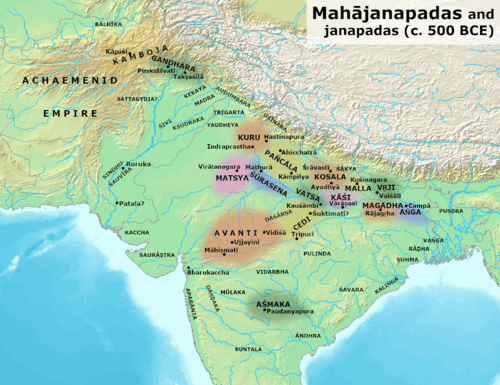
Magadha
LOCATION
Kingdom in ancient India
Methodist
LOCATION
Location referenced in documents

North
LOCATION
1994 comedy film by Rob Reiner
RAjagaha
LOCATION
Location referenced in documents
SAkyans
LOCATION
Location referenced in documents

South
LOCATION
Directional region of the United States

Sri Lanka
LOCATION
Island country in South Asia
the Garden of Eden
LOCATION
Location referenced in documents
the Rabbit SAiLl12
LOCATION
Location referenced in documents
the Roman Empire
LOCATION
Location referenced in documents
the Third Blessing
LOCATION
Location referenced in documents
Tissa
LOCATION
Location referenced in documents
Vattaniya
LOCATION
Location referenced in documents
Statistics
Pages:100
Entities:179
Sponsored