EFTA00286476_sub_001 - EFTA00286476_100
Document Information
Bates Range
EFTA00286476_sub_001 - EFTA00286476_100
Pages
100
Original Filename
EFTA00286476.pdf
Document Content
Page 1 - EFTA00286476_001
a manual of peace: 38 Steps towards Enlightened Living EFTA00286476
Page 2 - EFTA00286476_002
A Dhammakaya Foundation Paperback First Edition 2005 Published by the Dhammakaya Foundation Department of International Relations 23/2 Moo 7., Khlong Sam, Khlong Luang Patumthani 12120 Thailand Tel. (+66 02) 524 0257-63 Copyright 2005 by the Dhammakaya Foundation All Rights Reserved. No portion of this book may be reproduced, stored in a retrieval system or transmitted, in any form or by any means, electronic, mechanical, photocopying, recording or otherwise, without the prior and express written consent of the publisher National Library of Thailand Cataloging in Publication Data Dhammakaya Foundation A Manual of Peace: 38 Steps towards Enlightened Living Bangkok: Dhammakaya Foundation, 2005 466p. 1. Buddhism I. Title 294.315 ISBN 974-93135-5-0 Printed in Thailand by : Craftsman Press Co.,Ltd 487/42 Soi Wattanasilp, Rajprarop Road, Makkasan, Rajthevee, Bangkok, Thailand Tel: +66-2-2533009, 2533298 EFTA00286477
Page 3 - EFTA00286476_003
May the meritorious fruits accruing from the study of this book be dedicated for the benefit of George, Annie, Alice, Lilian, Richard, Harry, Alfred George, Arthur, Norman, Ivan (née Lee) & Evelyn Ayre, Ellen Mary Stokell, Hannah Can; George & Charles F. Lee, Elizabeth, John & Margaret Curry, Anne Fen wick, Annie Jarman, Dennis George, Dennis Arthur & Malcolm Woods, Emily Maly Casbon, William Jabez & Ethel Dawes, Moses Edmund, Gladys, Hilda, Cecil, Reginald and Marie Heaton wherever they have been reborn. EFTA00286478
Sponsored
Page 4 - EFTA00286476_004
EFTA00286479
Page 5 - EFTA00286476_005
Contents Preface to the First Edition 7 The Manual of Peace in Action 10 Abbreviations 18 Orientation 19 BLESSING GROUP I.: TURNING YOUR BACK ON UNWHOLESOMENESS 25 1. Not Associating with Fools 2. Associating with the Wise 3. Expressing Respect to those worth of respect 27 37 51 BLESSING GROUP II.: TURNING TOWARDS WHOLESOMENESS 65 4. Living in an Amenable Location 67 5. Having done Good Deeds in one's past 77 6. Setting Oneself up properly in life 91 BLESSING GROUP III.: SETTING ONESELF UP IN LIFE 101 7. Artfulness in Knowledge 103 S. Artfulness in Application 113 9. Artfulness in Usage 119 10. Artfulness in Speech 131 BLESSING GROUP IV.: HARMONY IN THE FAMILY LIFE 139 II. Cherishing our parents 141 12. Raising our children 153 13. Cherishing our husband or wife 165 14. Not Leaving one's work undone 177 BLESSING GROUP V.: BECOMING A PILLAR OF SOCIETY 183 15. Generosity 185 16. Dhamma Practice 197 17. Looking after one's extended family 205 IS. Blameless Work 213 EFTA00286480
Page 6 - EFTA00286476_006
BLESSING GROUP VI.: PREPARATION OF MIND 19. Abstaining from Unwholesomeness 20. Restraint from Drinking Intoxicants 21. Non-recklessness in the Dhamma BLESSING GROUP VII.: INSTILLING ONESELF WITH BASIC VIRTUES 225 233 243 223 251 22. Respect 253 23. Humility 261 24. Contentment 269 25. Gratitude 281 26. Listening Regularly to Dhamma Teachings 291 BLESSING GROUP VIIL: INSTILLING ONESELF WITH HIGHER VIRTUES .301 27. Patience 303 28. Openness to Criticism 311 29. The Sight of a True Monk 321 30. Regular Discussion of the Dhamma 331 BLESSING GROUP IX.: PRACTICE FOR THE ERADICATION OF DEFILEMENTS .345 31. The Practice of Austerities 347 32. Practising the Brahma-Faring 357 33. Seeing the Four Noble Truths 371 34. The Attainment of Nirvana 385 BLESSING GROUP X.: THE FRUITS OF HAVING PRACTISED UNTIL REACHING AN END OF 35. A Mind Invulnerable to Worldly Wa litag NTS 393 395 36. Sorrowlessness 403 37. Freedom from Subtle Defilements 411 38. The Blissful Mind 421 INDICES I. General Index 425 II. Pali Index 449 III. Index of Similes 454 IV. Index of Illustrated Examples 456 EFTA00286481
Sponsored
Page 7 - EFTA00286476_007
Preface to the First Edition How this book should be used I Doing that virtue so regularly that it becomes our Most problems in the world can be traced back to the habit habits of the people inhabiting the world — the things 2 train up the people around you to practise the we do, say and think until having become used to it. thirty-eight blessings as their habits. The important These habits can either be good or bad. Supposing you conclusion we get from this three-stage process of have good habits, the sort of things which you do, say acquiring the thirty-eight blessings of life is that we and think again and again will be the things that bring need to look deeply at ourselves to see how many of you happiness in life — especially the habit of being the virtues we have accrued for ourselves first. We responsible for human dignity on a personal level, should regard ourselves as still in our infancy as far as human dignity of others in society and responsibility for the spiritual teachings go, and make the appropriate fair economics. All the thirty-eight virtues discussed in adjustments. Only when we've mastered ourselves can this Manual of Peace need to become our habits if they we have something to offer to the world, to reach out to are to be of any use to us — simply to know `about' the others as a good friend to build up a network of virtue virtues is of no use to us. The aim in studying this Manual for students of all levels should be to in society. incorporate the virtues as their habits following the Sources used for this book following four stage plan: This book draws primarily on translated transcripts of eighty hours of lectures entitled Monkol Jivit given by in the short term to learn rules and regulations thaihe Most Ven. Phrabhavanaviriyakhun (Luang Phaw protect us from behaviours contrary to the virtues of the Dattajeevo), acting abbot of Dhammakaya Temple in blessings; Thailand in the mid-seventies to those of undergraduate 2 in the medium term to educate ourselves accordinggte The beauty of this lecture series was abundant use the information on each blessing in the text to get answers Br examples from the Buddhist scriptures and also from three questions about the virtue, namely: his own life experiences. A second major source used for this book, which was supposed to summarize materials from the first source into a short book • `what' they are (concept and definition); • `why' the Buddha taught them (why a particalignated for schoolchildren to do revision for their Path of Progress Ethics Quiz Contest was Ven. Maha behaviour was either prohibited or advocated) and; • in eve `how' they can be put into practice . Somchai Thanavuddho's Monkol Jivit: Path of ry life Progress edition (1982). This latter gives no exam- EFTA00286482
Page 8 - EFTA00286476_008
pies, but offers a more structured version of the Mangala Sutta materials, simplified in a way Asian people can understand. This text misses nothing of the core content of either these two sources. However, after teaching these materials to a group of western Buddhist newcomers in Belgium, there were still many questions in the audience's minds left unresolved. Things like respect and gratitude don't come as second nature to westerners. Not drinking alcohol requires more than a fleeting explanation in a western culture. The long lists of meritorious fruits of various virtues had to be replaced as far as possible by `why' rationale and where possible examples of the damage which can happen when certain virtues are neglected. The Most Ven. Phrabhavanaviriyakhun's Kamphi Gu Wikrit Chart (2000) helped to illustrate many social ills from the neglect of the Six Directions in this respect. Ven. Maha Dr. Somchai Thanavuddho's Nippon hen atta rear anatta (1999) almost completely replaces the explanation of Nirvana originally given in Blessing Thirty-four. Also some of the illustrative examples have been replaced if repeated. Some have been supplemented by western anecdotes. Where sets of Dhamma headings are repeated, they are usually described in MI at the first appearance and cross-referenced in subsequent appearances. Finally, wherever possible, illustrative examples and Dhamma headings have been traced back to their scriptural reference in the PTS Pali Buddhist Scriptures to allow students to cross-reference to other mainstream and academic Buddhist works. In finding the references and fuller illustrative examples, heavy use was made of Ven. Paiboon Dhammavipulo's Dachanee Thamm Chabab Monkola Soot (1997, 2000, 2002). The resulting version of the Manual of Peace, dubbed the theatsheet version' in its homepage form has been better received by western audiences, has had a good web readership and is currently being translated into other western languages Who should use this book This book discusses key practical virtues in a sequential path of Buddhist practice. As such it offers more than just a dry, theoretical approach to Buddhist study, but can actually form the basis of subjective practice by students. The level of difficulty of this book is designed for: • students of Buddhist studies in the upper secondary. In the U.K. curriculum this book would be suitable for students studying at Key Stages 4 + 5. In Scotland, for Scottish Levels SG + HS. Al- though study of Buddhism at Key Stage 4 is time-limited, use of the index can help students to look in depth on selected aspects of the agreed sylla- bus. At Key Stage 5, the text can be used for re- search on project work. students of Buddhist Studies or Comparative Religion at Bachelors' or Masters' level of university. • • This book is useful supplementary reading for the GB102 course of the Dhammakaya Open University. • overseas students of the Path of Progress Ethics Quiz Contest • Buddhists or those interested in Buddhism wishing to supplement or consolidate their knowledge of lifestyle-related Buddhist teachings What does it offer to lecturers teaching these courses? Lecturers will find this book has a good range of illustrative examples and metaphors to support their teachings or assemblies. Scriptural references are given for nearly every example. Student learning features In each chapter: Definitions Links to other chapters References At the end of each chapter: Metaphors Illustrative Examples At the end of the buofteral index Pali index index of similes index of illustrative examples EFTA00286483
Page 9 - EFTA00286476_009
Acknowledgements The publication of this book was made possible only by the special efforts of many staff and volunteers at the Dhammakaya Foundation in Thailand. This includes most importantly the source works in the Thai language already mentioned by the Most Ven. Phrabhavanaviriyakhun, Phra Maha Dr. Somchai Thanavuddho and Phra Paiboon Dhammavipulo. Thanks also to Phra Nicholas Thanissaro who has translated, compiled and field tested this version of the text in English. That to Phra Jessadah Kittithano for help in tracking down references, to Lalita Prasertnopakhun, Peungpit Poopornanake & Chalom Srijarus (administrative assistance), Anant Kittitawesin (cover design), the Dhammakaya Foundation's still photography volunteers (colour photography), Tassin- Sipang-Pangbaramee-Pangboon Boontang, Manop-Vararat-Dhitinand Kawmark, Suwachara S.-Thanachapom Nishiyama & Sukultra-Sabrina Cants (cover shoot). EFTA00286484
Sponsored
Page 10 - EFTA00286476_010
The Manual of Peace in Action Education on inner peace in the style laid before us in this Manual of Peace, is a must for humanity today. Modem day education has many shortcomings as illustrated ironically by the fact that the majority of today's disasters, come from supposedly the best educated being on this planet — namely the human being. The trouble with much of the curriculum materials taught in schools nowadays is that they ignore the concept of peace completely. The higher one goes in education, the narrower one's knowledge becomes and the further it becomes estranged from the concepts fundemental to peace. Many of the violent acts committed in the world are perpetrated by highly educated persons and often the victims are those who have received little education. Education for peace needs to start by imparting awareness of the consequences of one's own actions to young people — because every action, whether good or bad, has an effect on the doer's life and others' lives as well. One cannot afford to be complacent or irresponsible about one's actions. This is why any form of education which advocates certain actions by a student has to have considerations of the peacefulness of those actions built into it, in order to prevent the sort of misdeeds done intentionally or unintentionally that upset society. The sort of education that provides awareness of peace issues is known as `Inner Peace Education' (IPE). It is a form of education that helps us know ourselves better and know how to manage life properly. As a result, it is the key success factor behind the world peace that we are striving for. Provision of IPE is not as straightforward as conventional curriculum content. However, as compared with usual spiritual provisions in school, it has the advantage of not being based on belief or faith — but rather experience and evidence. It is based on practical knowledge. It's applied knowledge that offers each person an individual approach to true happiness regardless of race, nationality, religion, culture or occupation. It is knowledge that can form a firm foundation to any other form of academic knowledge to guarantee that the applications of that knowledge are for peace. It is self-education that you can start upon anytime, anywhere (for as long as you are still a human being!) — and can be practised throughout the day alongside our regular daily activities in order to increase our efficiency and effectiveness. It maximises the efficiency of our time management, rather than being a burden on our time — if a certain period of time each day is allocated to it. It needs no formal classroom, and demands no tuition fees either! However, more than conventional education, it demands time, concentration, perseverance, tolerance and goodwill. These are qualities which are too easily eroded away by materialism. It is only students who are determined and motivated who can succeed in their studies of IPE. IPE is not yet EFTA00286485
Page 11 - EFTA00286476_011
of it are not it is evaluated icult to for pioneering of expertise in pie who realize .e and who are ) 2 obstacles that e of peace and bias which are tnd religion — can really start Thus although :mphasizes key iffercnces. It is every child's idea of IPE is be erased by ild's character, han emotional a sense of rogress% Teachers =tot and dearest, Teachers' round of the 'Path of P become familiar with IPE materials & Issues before beingnment. To be able to communicate peace values before being able 10:d into learning communicate them effectively to their students. 715padailafast-have made no small contribution to peace in the world community — I activities urviractict tit pacer. Dying tomtits children too &MI pil sApet &te sisal apt? micistaxithentaiiyndfaifehmenhe vibitalogrebtalfrigaiiiiceneoccs, celebratin similarities an omsysghualt c cact roatjnrcisr pfiarisis c in life. become familiar with IPE materials ee issues before being able ei ' co communicate peace values before being abk to communicate them effectively to their students. Youngsters, parents and teachers alike like to participate actively in peace education projects as participants and organizers and also form an active network of peace volunteers throughout Thailand down to the present day, generation by generation through word-of-mouth. It is important that before becoming organizers and teachers of such programs that they first understand peace and means of nonviolent conflict resolution themselves — under this proviso, the organizers can even be older children organizing activities for their younger fellows. During the history of the 'Path of Progress' Ethics Quiz Contest, the scale of participation has grown from one person to a small team then a larger and larger one. Over the last thirty years, the lives of total of over twenty million young people in Thailand have been touched by the IPE curriculum PATH OF PROGRESS ETHICS QUIZ CONTEST The main learning activity for implementing IPE amongst young people is the so-called 'Path of Progress' Ethics Quiz Contest which has been held nationwide every year in Thailand since 1982. The aim of the project is to bring children's ethical development to higher levels resulting in positive behavioral changes in a way that is relevant to those EFTA00286486
Page 12 - EFTA00286476_012
Interreligious participation in the 'Path of Progress'. Christians, Buddhists tt Moslems take the teachers round of the 'Path of Progress' so that they can accurately pass on the IPE concepts to their schoolchildren. Interreligious participation in the 'Path of Progress'. Christians, Buddhists & Moslems take the teachers' round of the 'Path of Progress' so that they can accurately pass on the IPE concepts to their schoolchildren. of all nationalities, races and religions. The 'Path of Progress' shares the same curriculum of the Thirty-Eight Blessings of Life described in this Manual of Peace. The number of participants started with 382 in 1982 and rose in 2002 to four million from 13,000 educational institutes — ranging from kindergartens, universities, police and military colleges — students and teachers alike from all over Thailand. The winners of the contest receive plaques of distinction from H.M. the King of Thailand and representatives of many international organizations. Besides honorary plaques, winners are granted scholarships and certificates for their success in each category. Case Histories of Schools Participating in the Path of Progress IPE Scheme Suteetorn Kindergarten, Nakorn Prathom, Thailand. "We find that the teachings of the 'Path of Progress' programme eminently suitable to the curriculum at our school. The 'Path of Progress' program helps students realize the value of morality. Students can also adapt these morals to practice in their daily lives. The Home of Peace program (see p.16) focuses more on the practices of the learners, so students can really practice what they have learned. This is the reason why both programs are so beneficial for our school. At the beginning, we taught the Manual of Peace to small groups of students. As years went by, more students got interested, so we had to change the workshop format into assemblies. We had such an assembly each day for the students from first to sixth grade. Furthermore, our school has many activities that are involved with morals and ethics. For example, the school will let the students meditate along to an audio cassette of meditation instruction. The students usually attend Buddhist services and practise meditation afterwards. Later, the students have their own group discussions to analyze and comment about how they can improve their virtues. Kindergarten infants, do not join the assembly, but they will have a homeroom teacher. Most of the time, the teacher focuses on meditation practice. The teaching for them makes heavier use of illustrations to overcome their reading difficulties. Also, they seem to enjoy looking at the pictures too. We once had a boy named Pruchya. He had received an 'Olympic' gold medal for winning a math contest. In all his interviews, Pruchya said that he always wishes to be a virtuous person rather than being merely a smart one. From listening to his interview, it made us really proud to see that he had lived up to our ideals of a good student. In my opinion too, to be a virtuous child is more important than to be an intelligent one because at least virtuous people can co-exist peacefully in the world. If a person is endowed with self-discipline, they have the potential to develop intelligence and have a successful future. When the youth have morality in their hearts, they can differentiate what is right or wrong. They have awareness of the consequences of every action they do. Therefore they perform good deeds for the benefit of themselves, society and the world." Headmistress EFTA00286487
Sponsored
Page 13 - EFTA00286476_013
School Track Record: to Grade 6 have• 3,800 high school students from Grade 7-12 Contest every yejoining the `Path of Progress' Ethics Quiz Contest every year from 1983 to present; school category for first prize in the team category for seven years running from 1993-9; earn category for first prize in the individual and team categories for the 19th contest. of Education as • first prize in the secondary school team dents' category in 2002. Thailand `Path of valuate the 'ng the our students ver, when I , the Manual y with ter teaching uddha's teachings. I felt that 1 had become a better person morally as well as spiritually. ' I think one of the reasons has to do with the fact that I am teaching Manual of Peace to the students. I mean, can you imagine a person managing to teach Manual of Peace without understanding moral or ethics themselves? I couldn't be like that. So I felt like my attitude towards life has completely changed because of this book. The most rewarding thing I have witnessed is to be able to transfer my knowledge about how to conduct good deeds to my students. I try to put the basic teaching from Manual of Peace into all of my mainstream lessons." One single teacher's effort, inspired senior students to organize a tutorial activity of peace for their juniors. Finally it became the most popular club amongst ow students." Sompong Hunsadee: Coordinating Teacher Recovery of a former drug-addict "Ever since I was born, the person I remembered seeing the most is my mother. She always taught me to be a good person and to do good things to others as well. Well, you may think I would probably turn out to be just like Qualified teachers instruct their students. Teachers need to be role models of IPP.. and knowledgable of its concepts to instil virtuous habits in their students. EFTA00286488
Page 14 - EFTA00286476_014
Student 'Path of Progress' Examinations take place throughout Thailand. Each year more than four million students throughout 'Thailand participate in the qualifying round of the 'Path of Progress' Ethics Quiz Contest at countless provincial centres supeniscd by I BS volunteers. other kids but it's not so. It started when I was in high school. I had a big argument with my teacher and therefore, I decided to drop-out. I thought school was not necessary any more. Instead of helping my mother, I started to go out every night with my friends. I knew my mother worried about me but I thought I could take care of myself. One night when I went to a friend 's house, one night, he showed me a small pill that looked like a painkiller. Curious and ignorant as I was, I decided to have my first contact with drugs. After that, I became addicted to drugs and had to steal money in order to buy them daily. At last, I became the drug dealer myself. At that time, I had no choice. However, I was caught by police and was sent to a juvenile court. My mother then bailed me out from the juvenile prison. The first thing I asked her was, "Why did you help me, Mom?" My mother did not say much. Just the sight of tears in her eyes had already killed me. All she said was, "I love you. I can forgive and will always do so, son." After that day, I decided to stop doing all the bad things and avoided getting back into the vicious circle again. I decided to go back to school in order to avoid probation. Though I knew that I didn't want to hurt my mother's feelings any more, my subconscious still tempted me to sell drugs to my classmates. There was a big fight in my mind between the good and bad sides. I did not know what to do. Fortunately, when I was at the point of relapse, my teacher persuaded me to join ethics quiz contest called 'The Path of Progress'. At first, I saw no point in participating in such a program. Then she gave me a reference book EFTA00286489
Page 15 - EFTA00286476_015
I -. - yself for a s!`A- . )ugh it. mr re content the ; point of my , my teachers, ve way. I was ;. to choose 'self in and to ,ople. attempted to ad things. I my mother in other and I at school and in the various t you' to the ny life. They . I will try to L :epic in my pie who are Interreligious participation in the 'Path of Progress'rot know how Christians, Buddhists & Moslems take the teachers' round of the 'Path of Progress' so that they can accurately pass on tete light at the In concepts to their schoolchildren. I ho ilia% day, the IBS is an umbrella organization of university students all over 1 who sacrifice thihetketil!WafiaatihteilticliVANVINATIor youth.IlibeictigurasvialicipsotheofrthhcdalirtatitArcImmialeork and devotion o all-volunteer staff, many of whom are former participants in IBS activitia19104.1S ihttltnitraft Mo:tihalerltilitttlititSelSetiftirrgttft4O19. 5,000 activt members in 2003. Most IBS activities are based on the concept of promagiathRfecaUeheloikEcY can accurately pass on the Mr. Visarut Komkaew Bang wirconcepts to their schoolchildren. Luang Vithaya High School Dhammakaya Foundation — a United Nakorn Pathom, Thailand Nations-accredited Non-Governmental Organization This is the true testimony written by one participant of the Path of Progress Ethics Quiz Contest. After receiving this letter in 2000, the IBS interviewed him when he was in Grade 12 and had been elected as president of the student committee. THE INTERNATIONAL BUDDHIST SOCIETY The main coordinator of IPE in Thailand is the International Buddhist Society (IBS). IBS was established by a 1960 Alumni of Kasetsart University, Bangkok. After graduation, he took ordination as a Buddhist monk. At present, he is the Most Venerable Phrarajabhavanavisudh (Chaiboon Dhammajayo), President of the (NGO) associated with the Department of Public Information (DPI). The founder's compassionate mission in setting up the IBS was to further public awareness of ethical issues, particularly in the youth. EFTA00286490
Sponsored
Page 16 - EFTA00286476_016
Thai royalty a International organizations award plaques. Whiners of 'Path of Progress' championships in the various categories receive plaques and scholarships from the King of Thailand and numerous international organizations. IBS has become through a variety of peace education programs in Thai society. IBS ACTIVITIES IBS activities are divided into two major levels — the elementary and the advanced. On the elementary level, it aims to instill the normal inner peace core values in a child's mind. In order to prepare them for more advanced levels of study when they grow up. Such standards will translate into a child's behaviours and become his own second nature. It's a self- generated rather than an imposed discipline. That's why IPE has long tenn beneficial effects on its students. On the advanced level, meditation by students consolidates the process of IPE in the long run. Meditation is a good catalyst, because it helps youth see and understand themselves better, know their own needs and serve those needs in a more productive way. The IBS see IPE as lifelong education. The main learning activities at the elementary level, used by the IBS is the 'Path of Progress' Ethics Quiz Contest' and the Home of Peace' (HOP). These two projects have about 4 million students participating annually throughout Thailand and receive cooperation from 13,000 schools and educational institutions. The 'Path of Progress' provides students with a peace manual for students to study as an extracurricular activity and an annual contest to compete in. Winners in each category receive honorific plaques, certificates and scholarships to motivate and stimulate their interest. By reading the Manual of Peace different topics will capture each student's imagination according to their disposition. It will guide them to see the good and bad sides of their own character and motivate them to want to improve themselves become more productive. They transform by means of internally derived discipline, rather than discipline needing to be imposed from 94iler ThsfrFilmitvytiiilfi EffeelbiblifflitsalAciffenitile in promoting more responsible person. The 'Path of Progress' is complemented by a second project called the 'Home of Peace' — especially to supplement younger childrens' understanding of peace — to see if they differentiate peace and non-peace in their daily lives. The project provides a 'diary of peace' for the children to write down their own good deeds and good deeds done toward their parents, teachers and extended family. Since any deeds done every day can become habits, the IBS seeks to value to overlook a child's seemingly insignificant good deeds because these might be the root cause of their success in the future. Every child tends to have his or her own hero. If their hero is a worthy role model, it will inspire them to become a virtuous global citizen. On the contrary, with a negative role model, they can become public enemy no. 1. In this respect, adults play an important role in presenting a model of peace to the young people around them. By reading, writing and practising peace every day, with the co-operation of parents and school, IPE will eventually become a child's second nature allowing them to respond to every situation by peaceful means. For young people who show their readiness to EFTA00286491
Page 17 - EFTA00286476_017
learn at the advanced level, there are a father three study and practice spiritual values incorporated into their projects: daily routine to make sure that improved habits are • Leadership Training Program: this scheme attracts properly instilled and that those habits will survive the young people by providing advanced IPE training in transfer back to daily life when they return to their personality enhancement, public speaking, meditation and everyday life. social affirmation — and it is these young people who go on to become `supervisor' volunteers who organize the 'Path of Ladies, Dhammadayada Training Scheme: the Progress' throughout Thailand annually. Ladies version of the Dhammadayada training is as • Dhammadayada Ordination Scheme: During theintensive in IPE concepts as that of the gentlement, but Ordination Scheme, the IPE used includes Buddhist teachiM 'riciparits are not required to ordain as nuns. made relevant to the needs of young men in Thai society. This activity is rooted in the Thai tradition that when a man reaches the age of twenty he should take temporary ordination as aAt the advanced level, IPE projects seek to train Buddhist monk for a period to learn spiritual values first heersitY students who can act as organizers of IPE This course comprises two months of intense study of IPE Project managers themselves. It is because of the Participants trainees of these sort of courses that the IBS has managed to run activities such as the 'Path of Progress' continuously now for more than twenty years. The unifying feature of the advanced projects for IPE is an increased emphasis on meditation. EFTA00286492
Page 18 - EFTA00286476_018
Abbreviations A. Alguttara NikAya (PTS Edition) AA. ManorathaptraAE Alguttara NikAya Commentary (PTS Edition) Ap. ApadAna (PTS Edition) D. DEgha NikAya (PTS Edition) DA. Sumaigala VilAsinE - DEgha NikAya Commentary (PTS Edition) Dh. Dhammapada (PTS Edition) DhA. Dhammapada Commentary (PTS Edition) DhSA. AtthasAlinE DhammasalgaAE Commentary (PTS Edition) It. Itivuttaka (PTS Edition) J. JAtaka (PTS Edition) KhpA. KhuddakapAEha Commentary (PTS Edition) M. Majjhima NikAya (PTS Edition) MA. Papatica StdanE - Majjhima NikAya Commentary (PTS Edition) MT. MahAvaOsa-TEkA Milindapailha (PTS Edition) MNidA. MahA Niddesa Commentary (PTS Edition) Nd MahA Niddesa (PTS Edition) 2 [gala Niddesa (PTS Edition) Nd'A. CEla Niddesa Commentary (PTS Edition) PsA. PaEisambhidAmagga Commentary (PTS Edition) PTS Pali Text Society of London S. SaOyutta NikAya (PTS Edition) SA. SAratthappakAsinE - SaOyutta NikAya Commentary (PTS Edition) SadS. Saddhammasalgaha (P.T.S. Journal 1890) SN. Sutta NipAta (PTS Edition) SNA. Sutta NipAta Commentary (PTS Edition) ThagA. TherAgathA Commentary (PTS Edition) Ud. UdAna (PTS Edition) Vbh. Vibhanga (PTS Edition) Vin. Vinaya (PTS Edition) Vism. Visuddhimagga (PTS Edition) Vv. VimAnavatthu (PTS Edition) VvA. VimAnavatthu Commentary (PTS Edition) EFTA00286493
Sponsored
Page 19 - EFTA00286476_019
Orientation A. INTRODUCTION Welcome to the Manual of Peace. This orientation deals with the principles of ethical study and the value of the Thirty-Eight Blessings contained in this manual. The Manual of Peace contains subject matter which is not difficult — indeed it is very popular in Thailand especially amongst school children where over 4,000,000 annually take examinations in it. In schools where vocational subjects rob the curriculum of more and more time previously dedicated for spiritual studies, the Thirty-Eight Blessings have been forming an extra-curricular recompense in spiritual studies for children in Thailand since 1982. A.1 Why mud). spiritual knowledge ? The first question that comes to mind for many people studying this book is to ask why academic or material knowledge is not sufficient to get by in the world. If a full stomach and a place to sleep were enough to keep the human happy then we wouldn't have to go to the trouble of studying about ethics or about spirituality. However, for every human being, there is something deeper inside us which is always searching for the answers to questions on a deeper level — something which seeks for purpose and meaning in the life we live and the world around us. If supporting yourself were all there was to life then certainly millionnaires would be the happiest people on earth. Unfortunately wealth can only buy physical comfort — money cannot buy the means to nurture or nourish the mind. For all our qualifications and diplomas we might have, none of them can guarantee us against hunger of the mind. On the contrary, the irresponsible people may use their cunning to do more heinous crimes than they would do if they weren't educated. Thus worldly education cannot guarantee us a happy life or guarantee that we will not end up in jail. This is why we make the distinction between worldly and spiritual knowledge — because spiritual knowledge properly studied can guarantee that we will not be put in jail — it is not only something to fill up our brains — it has transformative power to upgrade the way we think, speak and act. In the ideal world, our system of education would give us the answers we need to the questions inside ourselves, but in practice, the secular education doesn't manage to fill this gap — and maybe, even if it were to try, it could not — because in some way the personal quest is part of the process of acquiring knowledge.Thus we are forced to look for the answers from alternative sources. A.2 Fashion and Universal Values Many things can affect our spiritual progress. Some- times it can be people, objects, attitudes, situations or experiences we come across in the world. However, for most things, the worth or uselessness of an experience is just a matter of opinion. Are there things then that have a universally uplifting effect on people's lives — that are more than just a mat- EFTA00286494
Page 20 - EFTA00286476_020
ter of opinion? Take present day trademarks which are accepted as status symbols by everyone as an example — Mercedes, Adidas — really such companies should pay us to advertise their products, but on the contrary we pay more for a T-shirt with the trademark for the privilege of associating ourselves with the trademark. Why should this be? We feel that associating ourselves with such a symbol somehow improves our own worth. Sometimes we feel that the worth of these things is unchanging, but in fact from age to age these values change according to fashion. In times gone by, people thought in the same way. but they didn't call these things 'brand marketing'. or 'trademarks, they called them 'lucky charms' — but again they liked to associate with them as a way of improving their worth or fostering progress in their lives. We still have lucky charms in the present day — things like lucky horseshoes or four-leaf clovers, but their role is diminished if compared to olden times. In olden times the role of charms was much more significant. Systems of spiritual knowledge are attempts by men to model the values of the world in a way according to unchanging universal values — ways to recognize the things that improve our worth in ways that are eternal and don't differ from person to person. Many bodies of knowledge exist in the world to help us in this respect. They differ in their degree of comprehensiveness. The ideal body of knowledge for us to leant from would perhaps be one with the following characteristics: Facilitating Practical Outlook giving a clear place to start with problems — not just theory or philosophy; • Transcending Values allowing us to rise above mundane and petty values; • Highlighting Opposites giving us clear "curses" to avoid as well as positive things to aim for. There are many systems of spiritual values which fall short of these criteria. Some systems lead to spiritual exclusivity and even wars against those of other beliefs which are values no longer suitable for an age of globalization and tolerance. Some systems lead their practitioner to shut themselves away from the world and to ignore social problems. Some systems confine themselves to their own culture or language. B. THE MANUAL OF PEACE B.1 Historical Origins of the Manual of Peace The Blessings of Life which make up the Manual of Peace are interesting because they seem to answer to all the characteristics specified above. They grew up in response to just the same type of debate over universal values mentioned in the introduction. In fact, even from ancient times, men had values — but at a certain time in the past 2,500 years ago in India a group of people started to wonder whether there was anything deeper behind the fashions — were there symbols of worth that transcended fashion? What sort of charms could possibly allow one to live without obstacles'. Supposing one wanted wealth, honour, praise and happiness, how could one ensure that one received just Progressive & Sequential something which leadsthat? There was such a debate ensuing from this you step by step from simple to more complex; question, over which everybody seemed to have a Self-Catalysing creating its own motivation and different point of view. To generalize the debators enthusiasm to pursue it as you go along; divided themselves into three main camps: • Exhaustive being applicable to all aspects of life; • Holistic perhaps dealing with problems not just by symptoms but in their entirety; • Multi-level working on personal, interpersonal, family, social and global levels equally well; • Non-discriminatory being equally applicable to those of all cultures; • Multi-Factorial being able to deal not just with simple problems but with those with many contributing factors; The first group believed that the thing to make one's life a blessing was to see something that was `pleasing'. 2. The second group believed that the thing to make one's life a blessing was to hear something that was 'pleasing'. 3. The third group believed that the thing to make one's life a blessing was the mood in the mind EFTA00286495
Page 21 - EFTA00286476_021
which arose whenever you saw or heard something that was 'pleasing'. Each group disagreed with the others because it was obvious that an image pleasant to one person may not be pleasant to another. A sound pleasant to one person might not be pleasant to another. Something that creates a pleasant mood today might cause an unpleasant mood tomorrow. Thus there is nothing to make anything discussed a 'blessing' without doubt. The debate went on and on without any sign of coming to an end. It is just like people in the present day can still not agree as to what is truly a 'lucky charm'. Eventually the problem was only resolved by taking audience with the Buddha. A representative asked the Buddha the nature of blessings and his reply is what is now know as the Mangala Sutta — thirty-eight blessings divided into ten groupings. R2 Definitions: The Word `Blessings' Some may still wonder about the meaning of the word 'blessing' [ma]gala]. Some people think a blessing must be an object or an action — but by ow technical understanding of the word, we translate it as 'a cause of prosperity, progress and happiness'. If you want to know the definition, you could say that the progress towards happiness that a `maigala' will bring is four-fold: B.3 Principles of Ethical Learning A working computer has two important parts: hardware and software. The hardware of the computer is the wiring and the circuitry. The software is the programming that we install on the computer. The hardware of a computer is neutral, but what makes the difference between a beneficial and a degrading computer is the type of software installed. If you install working programs, the computer can be useful. However if you install violent games, viruses or pornography then the computer becomes a source of degradation. The worth of the computer thus depends on the software. A drinking glass is also neutral. What makes the difference between a beneficial and a degrading glass is the sort of drink you put in it. If you put a nourishing drink in the glass such as milk then the glass will be an uplifting one welcomed by every I. progress through acquired wealth (worldly treasure, heavenly treasure and the treasure of Nirvana). 2. progress through wisdom, which is the means by which obstacles in life and evil are abated. 3. progress through virtue through the channels of body, speech and mind, at the basic, intermediate and advanced levels 4. progress through the three benefits: benefit in this lifetime, the next lifetime and in the hereafter. A blessing is a sign that positive development is about to take place (to a person, society or the world). Unlike such principles as that of deserved fate, the logic of blessings is fonvard looking, signifying that something good is about to happen. EFTA00286496
Sponsored
Page 22 - EFTA00286476_022
the blood, bones, muscles and organs accnriated with the physical body — even the brain, which is a physical organ. By mind, we mean the knowledge and attitudes that constitute ow consciousness. The mind is like "the ghost in the machine". The physical components of the human being are also neutral. The difference between a human who is uplifting and one who is degrading depends not on the body, but on the mental component. Unfortunately, the software of the human mind is not pre-installed from the factory! When we are born we are born along with an ignorance about all aspects of life. From the time we are children, we spend ow life learning in order to fill the gap in our knowledge — to provide ourselves with the knowledge we need for life. The path of our subsequent destiny depends on the sort of knowledge we fill ourselves with. We can fill ourselves with either: one. However, if you put alcohol or poison in the glass, then the glass is immediately eyed with sus-picion. The worth of a drinking glass thus depends on its content. In the same way, a human being has two impor-tant parts: body and mind. By body we mean all EFTA00286497
Page 23 - EFTA00286476_023
PIMPLE BEHINDINEIHIRTY-EIGHT BLESERCA OF LWE !Iran bangs ae tom led* kratlex* Comm -Heide.. 4 Dzilvare 14..."~ • Mei • AIM Ins/Sing Strae ha ccmFular aging lowai•Ird: te nt4 I 363113101704031) » 'prvangpttsor wAng prognms > > Ssc e6:11 compiler num an )» tEnehaS 911SS a CV* 1 -rurAraia mcww9o»> 3vong paw clarinn9 Plogard &gad% cairn pawl)» Gnat° 9018 01 dant • Coal tango; En•ronmest I Hya Undirtanlic ROI Deccorrnaktg Ri/l4cati fbritActon EFTA00286498
Page 24 - EFTA00286476_024
even of following thefts/ blessing — what more will be the benefit of practising all of the blessings in their entirety. The benefits will be not only to ourself, but to society and to the world as well. The second group (see p.65) concerns consolidating upon the goodness of the discretion you already have through the environment which we inhabit, from the habits we have built up for ourselves in the past and by setting a proper aim in life. This style of teaching is characteristic of the Buddha who taught virtue in a way that becomes successively more complex. The third group (p.139) concerns how we can make a contribution to society by our skilfulness, so that we ourself do not become a burden on society and can at the same time be a refuge to ourself in terms of earning our living. The fourth group (p.139) progresses from being able to help ourselves to being able to help other people as well. accurate knowledge: positive knowledge which is The first people who we must help are those to whom we creative and uplifting for ourselves and others, or; are indebted: our parents. If we have new people to whom • inaccurate knowledge: negative knowledge (comWe owe our efforts towards virtue, such as our children parable to lies to the soul) which is harmful to ourselves ared our spouse. Furthermore, we have to be able to divide others. our time so that neither our responsibilities in the work and in the home are neglected. Our knowledge increases as a result of influences in ow surroundings. The first and most fundamental influence on our learning is the sort of people that make up ow environment. The second most important influence is the environment in general. Together, these two influences have the potential to instil us with Right View about the world (effectively our core values and assumptions about the world and our attitude to it). The first group (see p.25) which concerns the acqui- sition of discretion concerns our understanding of what is wrong and what is right. Even if someone is knowledgable,if their discretion is faulty, their future is unlikely to be bright. On the contrary those with good discretion but who lack education, at least they will not become a burden on society. It is the basis of Right View [sammA diEEhi]. Simply avoiding associating with fools will bring us wealth, because we have no risk of spoiling our reputation, our wisdom is also not at risk and may be improved — virtue of all sorts will start to flow in ow direction. This is the result The fifth group (p.183) builds on the strength of virtue we have built up for ourselves in the home, expanding the scope of our virtue wider into societywith generosity, public works. If you have already got your life under control, you will be able to do something for the benefit of society with some sort of efficiency. Those who try to help social works when they have not yet got their own personal affairs under control, may create disasters rather than helping others. Those who want to give advice to others but who are unable to speak politely, may make enemies instead of improving the quality of society. Higher groups of blessings deal with the more subtle aspects of training the qualities of the mind in purity. B.4 38 Blessings as an ethical system We find that the Manual of Peace lives up to the de- mands of an ethical system as follows: 1Progressive Sequential: The thirty-eight bless ings are arranged according to the degree of dif EFTA00286499
Sponsored
Page 25 - EFTA00286476_025
ficulty in practice: the easier ones come before the harder ones. The sequence of blessings begins with external practices, i.e., dealing with gross social behaviours but gradually leading up to the more internal and subtle ones. Following these sets of virtues gives one an impression of climbing up a flight of stairs leading to salvation. If you don't associate with the society of the fools, then you enhance the process of associating with the wise. When you are dealing with the first Blessing, you are creating conditions to fulfill the second one. One can say that at the same time you respect those who are worthy of respect. It starts with number one. While you are working to develop number one, it is already doing the groundwork for number two and number three — it's progressive. One blessing conditions the next progressively. By doing the first Blessing, you are committing yourself to many subsequent Blessings thereby. By associating with the wise, it is opening you up to many good things; you learn from the wise, you progress — all good things come from associating with other people. So, by practicing one Blessing, it will eventually lead to practicing all of the Blessings. And by doing one, you prepare for the other; they are inter-related. This logic is very beautiful, it leads you ownwards step-bystep. It allows you to improve, socially and spiritually, hand in hand with each other. It is like a self-catalysing process in chemistry or a positive feedback process in physics. This makes salvation via the thirty-eight blessings a kind of upward spiral, where you move upwards to Nirvana, the highest goal in Buddhist spiritual cultivation, starting from the simplest blessings, and gradually perfecting yourself. 2 Self-Catalysing: When one kind of living bless- ing comes into existence or is practiced, it will support other kinds of virtues to manifest themselves, and the manifestation of any one blessing will lead to development of the next higher blessing in the sequence. 3 Erhaustive: Other mechanisms of spiritual values can easily be accommodated within it. 4 Holistic: Blessings assume the presence of a deeper unseen network of causes and effects which interact together in cycles of positive feedback for the ethical development of society. Blessings can be used as a non-subjective socio-ethical checklist, that cuts through self-centred ness that might otherwise lead to superficial social changes (an individual's prosperity, for example, being misunderstood as a sign of social development) because social development that is unethical is by this philosophy, a contradiction in terms. It also provides a holistic mirror to view one's own personality and development. 5 Multi-level: It covers the full spectrum of human relations from the interpersonal, through the familial, occupational and communal levels to the social. It offers a holistic perspective of a world governed by interrelating conditions. 6 Non-discriminatory: This philosophy makes no distinction between men and women, lay practice and monastic practice. The set of virtues is not restricted to a particular sort of person or society, but it can be treated as the common good that is shared in a particular community or even by the whole of mankind. 7 Multi-Factorial: The Thirty-Eight blessings are a means-ends model of ethics. The ethics of the Blessings escapes the rigid linear dimension of 'means' and 'cnds' in favour of a multi-factorial causality model. The weakness of consideration in terms of 'means' and ends' is seen when trying to establish definitions in a complex multifactorial situation. With the lighting of a match, for example, can we say that the match is the means to the production of fire? Are not oxygen, friction and a striking surface also means to the production of fire? If the friction is not sufficient to cause ignition, can it still be considered a means? Is a match struck in a vacuum still a means? Is not Oxygen also an end for the process of photosynthesis too? ... but simultaneously the means for ignition? How would linear ethics tackle the problem of 'auto-catalytic' phenomena (better known as vicious circles). If defini- tions of means and end are so difficult to pin-down in such a simple scientific situation, it is hardly surprising that ethics based on 'means' EFTA00286500
Page 26 - EFTA00286476_026
and 'ends' are virtually impossible to apply in multi-factorial social scenarios. Unfortunately, the problems found in society are almost always the vicious circles that make application of ethics so difficult. To the question of whether blessings are 'means' or 'ends', it must be answered that they are both. Putting any one of the thirty-eight blessings into action will contribute towards social development At the same time, the existence (or coming into existence) of any of the thirty-eight blessings is itself an indicator of social progress. Blessings also help to avoid the dilemma of justifying unwholesome means by wholesome ends. 8 Facilitating Practical Outlook: The practice of blessings are effective through reversal of positive feedback loops of decay through the setting in motion of positive feedback loops of development: firstly, to check the downward spiral and, secondly, to turn the spiral upwards. Action for social problem solving can start by the effort to replace any one of the thirty-eight counterparts of the blessings by a blessing. Problem solving can start with the local application of any bless- ing. The blessings encourage personal commitment instead of passing the buck. Once the first blessing comes into being, then it will cause an upturn in society, which will ease the accumulation of the next blessing in the sequence. The end-point, said to be the biggest blessing of them all, is to bring all thirty-eight blessings into being in society. 9Transeending Values: The Manual of Peace does not focus merely on the values of action based on moral principles or intention for the actions, but rather on the modes of our relationships in society, environment, family relations, education, communication and spirituality. Yet, the scope of application of blessings can even expand to cover the whole of the human race, with all lives sharing their pan in the single commonwealth of morality—the Global Community. 10 Highlighting Opposites: Blessings also reveal the flipside of blessings — the 'Bad Omen' or 'social curse', which are the sign that something bad is about to happen (omens of forthcoming decay). Where there is no development, there must be decay, and to this end the opposites of the thirty-eight blessings are representedby a set of thirty-eight identifiers, like tips-of-the-iceberg, which signal thepresence of a nest of much deeper-rooted but invisible social problems. The nature of such problems is, again, that of negative feedback loops or 'vicious cycles' which lead toward decay. Unsolved, such curse will spread, into ever broadening circles of repercussions with their own vicious cycles. A comparable example in science might be the thermodynamic model of loss of entropy through the dissipation of heat. These are characteristics of the Manual of Peace. In the chapters that follow, each of the thirty-eight Blessings of Life will be explained in turn. EFTA00286501
Page 27 - EFTA00286476_027
The First Group of Blessings "Turning your back on unwholesomeness" Goodness doesn't come unpackaged. It comes as part and parcel of the person who does good deeds and and who exemplifies those good deeds. Goodness is transmitted between people by the exam- ple a good person sets for others and by a good person's teaching and criticism of the behaviour of a person whose level of goodness is lesser. Goodness is like the food which we eat. It strongly influ- ences of our view and understanding of life and the world.To begin with we have no idea what goodness is. Some people tell us that such and such a thing is good. Others tell us that something com- pletely different is good. Who should we believe? And when we ask them why they consider such and such a thing to be good, no- one seems to know the answer. Thus if we want to learn how to do good deeds, we have to start making decisions about our lives even from the time we are still unable to tell the difference between good and evil. Although we cannot tell the difference between good and evil, there are certain indicators that allow us to tell the difference between people who habitually do good and people who habitu- ally do evil. The first step on this path is the identification of the people who habitually do evil and we make our first step towards goodness by avoiding such people. Our next step towards good- ness is to associate with people who are habitually good. The third step is to honour those who are habitually good so that we can start to observe the faults in ourselves, by comparison with the higher virtue of those who are worthy of respect. Thus, the first group of blessings is thus almost entirely concerned with being selective about our friends. EFTA00286502
Sponsored
Page 28 - EFTA00286476_028
Blessing One: Not Associating with Fools A. INTRODUCTION A.1 First Step on Journey the Most Important For the Manual of Peace, although all of the blessings are important, all of the latter thirty-seven hinge on the first. Thus you could say that of all the blessings the first is the most important. It is like the first tread of the steps leading into a house. If you cannot climb this first step, you will spend the rest of your life at the foot of the staircase with no way of getting into the house. You can also think of this blessing "Not Associating with Fools" as being like the first step on a long journey, without which the voyage can never begin. criminal doesn't particularly want to live his life dishonestly, but he thinks that being a criminal is good enough. Although everyone seeks success (in their various ways), in the long run they may be left with regrets in their mind. If you ask why a difference of definition of success in life can make such a difference to one's destiny, it is because this "common sense" about the world dictates the decisions we make about the world — and these decisions drive all that we say and do. In the Manual of Peace we call such common sense "discretion" — it is the basic understanding by which we judge each experience and situation in the world to know whether it is likely to be beneficial for us or harmful. B. DISCRETION: THE IMPORTANCE & FORMATION B.1 The importance of calibrating discretion No-one wants to make a mess of their lives. Everyone wants to feel that they are profiting from the years that pass them by — to give them a sense of success and achievement in their lives. However, the way each person defines "success", "profit" or achievement in their life will dictate what they channel their efforts into. A businessman defines profit in life in monetary terms so he devotes his time and effort into earning as much as he can. A criminal might define achievement in life by "cracking the most impenetrable safe in the world" or "cutting the most corners possible" to maximise the amount of stolen goods he can a mass — so he spends all his waking hours planning his next robbery. A B.2 Discretion doesn't come unpackaged Discretion is a personal quality we acquire, test and calibrate as a result of the experiences we meet in life. It is not a quality we can get by reading about it, buying it, downloading it or memorizing it. It can only come as the result of ow transactions with real people. It is a quality often unspoken, but easily learned by example. Thus discretion doesn't come loose, but is part and parcel of the exemplary people who possess it. B.3 Two Formative Influences on our discretion There are two major influences on the formation of discretion in a person. The first major influence is EFTA00286503
Page 29 - EFTA00286476_029
the example of those people we are closest to, such as our family and friends. The second major influence on our formation of discretion is ourselves. Sometimes we call it the ability to be a good teacher to ourselves [yonisomanasikAra]. Even if you have been listening to advice for good or bad friends, you always have to consider advice and justify it to yourself before getting down to following the advice. If you have accurate discretion when you consider things, even given faulty data, you will have the common sense to see through the discrepancies and come out with the right decision required by the situation — unlike the man with unreliable discretion, who even when given reliable data, will come to the wrong conclusion. Usually we have to learn discretion from the example of other people by transactions with them first, before we can calibrate our "auto-didactic" discretion and come to accurate conclusions independently — because in the beginning we have no idea what constitutes a sensible decision and what constitutes neglect. Thus when we are learning discretion, at first we are very vulnerable to the example set by others. The example they set us may calibrate the way we think for the rest of our life. Thus a correct example has the power to correctly calibrate our thinking for the rest of ow lives — but conversely, a faulty example may damage the way we think for the rest of our life. C. PROCESS OF ACQUIRING DISCRETION C/ Benefiting from others without catching their bad habits Every time we have a transaction with a person it is like a negotiation or tug-of-war between us to see whose discretion will brush off who. In a situation where people are unable to recognize good or bad examples of discretion, then the exchange of "discretion" will be like osmosis — flowing from a point of high concentration to a point of low concentration. If Person A has a lot of good discretion and Person B less, then Person A's good discretion will tend to brush off on Person B. If Person C has a lot of bad discretion and Person D less, then Person C's bad discretion will tend to brush off on Person D. In practice though, as adults with a degree of life experience, we don't passively let others' habits brush off on us. If we are able to recognize good habits and good discretion then we will open ourselves up especially to absorb them. However, if we recognize bad habits and bad discretion, then we will try to protect ourselves from picking those habits up. Thus, normally we are selective— and try (to the best of our ability and discretion) to pick up good habits while avoiding the bad ones. In this way, we can have transactions with others without losing our own virtues under their influence. You can compare it to visiting someone in hospital who has a fever. You can visit them, talk to them and console them — you can do all these things without catching their fever, but you would try to avoid having them sneeze over you. There are some sorts of patients and some sorts of illness, however, that are so dangerous that we cannot afford to have any transaction with that person. Such diseases like the plague are so contagious, that it is not safe for healthy people to transact (specifically come into physical contact) with them. Such patients, by the nature of their diwnw need to be nursed in an isolation ward with no visitors. If they were animals, they would be put in quarantine. When considering the transmission of discretion, there are some cases of those so contagiously infected with faulty discretion that despite our immunity or our efforts to be selective, we will nonetheless be infected by their faulty discretion. Even if we started with healthy discretion, it would be un- dermined by the strength of negative discretion of those people — what more the danger if we are still inexperienced and impressionable (perhaps still children or lacking world experience) and don't even know what it means to be selective? These quarantine victims of faulty discretion, whether intentionally so or not, are the first and most fundemental obstacle we will meet as we try to acquire blessings — in the Manual of Peace we call such people by the technical name of "fools". EFTA00286504
Page 30 - EFTA00286476_030
D. FOOLS: BEARERS ISIVIMPtEff BASKIN A fool is someone wicked, or weak, or feeble. They are made feeble by the fact they habitually think, say and do things that are unwholesome. The root of the lack in common sense by which they can justify such unwholesome behaviour is the fact that they don't have their mind centred or under their control. To call such a dangerous person a "fool" might seem like an understatement — because some fools might look like a proverbial giant punching sandbags, a frightening prospect for a rhinocerii, let alone a fragile human being. Thus, how come we use the term "feeble" for a fool? A fool is made weak like a person made weak by a serious disease — we do not fear him on the basis of his strength or knowledge or ability to think — but because his disease is dangerous. D.2 Four Human Strengths Human beings have four different sources of power. I. Physical Strength: different people are endowed with different degrees of physical strength. Anyone with plenty of muscles and no disabilities is endowed with the first storehouse of power. 2. Strength of Knowledge: derived from one's back- ground of education and the experience of passing years. Having the ability to apply educated reasoning in useful subjects is the second storehouse of power. 3. Strength of Thought: Some people go through the same number of classes together. They have an equal amount of knowledge, but their ability to think through things using their knowledge may not be equal. Some people know so much, but it is of no use to them when they come to think things through. Someone may know how to mend an engine but sits idle all day long. Why don't they offer their services as a mechanic? Or earn their living in the engine business? Sitting around all day long, waiting for someone to come along and find work for them...? We can blame this on their having knowledge but not using the knowledge as part of their thinking. Thus, if anyone uses both their strength of knowledge and OF CONTAGIOliar strength of thought, they are at great advantage because they are endowed with the third storehouse of power. 4 Strength of virtue: strength of thought and doing, when one is using one's knowledge and thought to perform good service to oneself and others, one is endowed with the fourth storehouse of power: strength of virtue. When one has both the mindfulness of what one is The human being has the potential to be endowed with all four storehouses of power: physical strength, strength of knowledge, strength of thought and strength of virtue. Even if someone is endowed with (some of) these storehouses of power, if their judgment is faulty, they will not be able to put their power to full use. If, for example, a foolish guy is physically strong, and may be qualified as a professor with a Ph.D., with plenty of knowledge, but without the ability to think properly, he will be want to apply his mastery of chemistry for dishonest purposes (e.g. distilling heroine). Thus even if you arc endowed with only. ome of the four powers, you can still be classified with the fools — and those powers arc not used to their full potential. At the most a fool can use only three of the storehouses of power. They can use only three of the four. Like a four-cylinder car in which only three of the spark plugs fire — it is of no use to anybody. If you have a four-cylinder car, all four need to work in order to gel benefit from any one of the four. Thus, if you know your 'cylinders' am damaged, you don't need to wait until none of them are left firing before you go for mending! In conclusion, when we define the meaning of a fool as someone weak or feeble, we can see more clearly now that it means that they are weak or feeble in doing good deeds. Now that we know about the risk they present to our discretion and know a little about the reason for a fool's weakness, the next challenge that faces us is how to protect ourselves from them. As we shall see, we first need to be able to recognize fools — if we can rec- ognize them, we can more easily protect ourselves from their influence. EFTA00286505
Sponsored
Page 31 - EFTA00286476_031
E. RECOGNIZING FOOLS El You cannot tell a fool by external appearances When identifying whether someone is a fool or not, we cannot base our judgement on external appearances — we must base our judgement on internal features. The things we should avoid basing our judgement on include gender, age, lineage, nationality, connections, knowledge, job or wealth. Although fools are characterized by their habitually evil actions of their body, speech and mind, because all of these three come from within they might not be obvious to us, especially if we are still at a stage in our spiritual maturation when our discretion is still inaccurate. Appearances, gender, age, lineage, nationality, connections, knowledge, job and wealth are only indirectly connected with the quality of the mind. When we want to identify a fool, we need to look for behaviours that betray their underlying quality of mind. The sort of behaviours that are most clearly identifiable are those that come out in the context of our interaction and friendship with them. E.2 How to Tell a Fool We are not mind readers who can observe how others think. All we can observe are the things which others express openly — that is others' words and actions. Even fools have chinks in their armour which will be revealed as we interact with them — in fact there are five in all: L They like to persuade others to do evil things: Not only does a fool persuade others to do evil. He will also exemplify those evil deeds for others to follow. He might skip work on the slightest trivial pretext and persuade his colleagues to do the same. 2. They like to interfere with things that are none of their business: A cleaner has the duty simply to keep the office clean, but if instead of doing her duty, she leaves her work undone and spends her time rummaging in the wastepaper baskets for trade secrets, already you should be suspicious that she is a fool. A student has the duty to study, but if instead of studying their subject they waste their time on protests against the government — then again they might be a fool mas- querading as intelligentia. 3. They like anything that is improper: Fools have a dislike for anything that is right and proper. They like playing with fire. They like taking drugs. They like gambling. They like fighting fish. They like the opportunity to put a spanner in the works. You can be sure that anything they like has someone on the receiving end of their suffering. Even if they take the chance to ordain as a monk, they will end up being the one to cause a schism in the order. Their predicament is the same as the one illustrated in the ancient tale of the angel and the worm. (See 5G.1 below) 4 They get angry even when spoken to decently: Suppose a mother warns her daughter to dress modestly before leaving the house in case the neighbours gossip. The daughter might reply angrily that this is how modern people dress. Her mother gave her a perfectly reasonable piece of advice but her own daughter answers back with the verbal equivalent of a slap in the face. Suppose a father advises his son that he should be revising instead of going on outings so close to his examinations. "How can you say that?" might shouts the boy. "Didn't you go for outings when you were younger?" Often the other person knows that they are in the wrong, but when they are found out and their fault is discovered, they lose their temper — the mark of a fool. A fool is like a person covered in open wounds. If he bumps into something even only lightly, it hurts. For a fool, his mind is covered in wounds, and when confronted with the truth, it hurts. Sometimes even just a glance is enough to provoke him to aggression. 5. They refuse to comply with rules and regulations: Fools heeds neither the laws of the country nor the local customs. If you meet someone who refuses to comply with the regulations, you can be 99% sure that you are dealing with a fool. If it wasn't for the law, there would be a lot more opportunity for fools to express themselves through the performing of evil deeds. The law forces fools to have to express themselves less freely or in secret. The law will thus obscure from the public eye the real nature of a fool's mind. It is for this reason that we have to notice the marks EFTA00286506
Page 32 - EFTA00286476_032
of a fool from the first four sorts of behaviour mentioned above. If you come across any of these five features, then it should already be ringing warning bells in your head. E.3 The sixteen ways a fool might treat you Some people who may appear on the surface to be friendly, might be fools masqueradingas friends. The Lord Buddha called such people false friends [mittapaEirEpalca] and categorized them into four types each with four characteristics — giving a total of sixteen forms of behavioural characteristics to look for. With friends like these, who needs enemies? I. The Mercenary [afthadatthuhara] 2. The Man of Empty Promises [vacEparama] 3. The Flatterer [anuppiyabhAAE] 4. The One who Leads you down the Road to Ruin [apAyasahAya] I. a mercenary is one who: I. tries to appropriate your possessions; 2. sacrifices little in the hope of gaining much; 3. helps others only when threatened by the same danger; 4. only makes friends to serve his own interest; 2. a man of empty promises who: I. tells you how sad he is not to have been able to share with you something that has already run out; 2. promises to share with you things they don't yet have; 3. tries to win your favour with empty promises; 4. has excuses every time called upon to help; 3. a flatterer who: I. toadies to your evil-doing, 2. toadies to your doing of good; 3. sings praises to your face; 4. gossips about you behind your back. 4. leads you down the road to ruin by: I. being your loyal drinking companion; 2. being at your side when you roam the streets at unseemly hours; 3. frequenting games and shows with you; 4. joining you at the gambling table. Such behaviours illustrate sixteen ways in which a fool will unwittingly reveal his lack of responsibility. Besides leading us to ruin, such people lead society unfalteringly in the direction of deterioration in a way which is hard to remedy. If you come across any of these sixteen features, then it should already be ringing warning bells in your head. F. AVOIDING THE INFLUENCE OF FOOLS F. I Putting fools in quarantine In the words of the old Thai proverb: "Always keep a safe distance — give a hound an armslength, give a monkey six feet but for a fool a hundred thousand miles may not be enough." Just as mentioned earlier, when a person has such a dangerously contagious disease as faulty discre- tion, we have no alternative but to isolate them. However, as we shall see it is not physical distance which we use to isolate a fool — it is more on the level of interaction. We have to be careful getting to familiar with them — that is effectively how we keep "psychological distance". F.2 Association Defined When we talk of associating with others, what are the limits of our definition? In fact there are seven different ways in which it is possible to associate with others: 1. Meeting up with fools. This can be called associating with fools but it is only association in its most rudimentary form. Of course such association might not lead to anything. After all it is just our visiting them and their visiting us. We may not even particularly enjoy each others company. Z Getting closer. This is once you start getting more familiar with the fools you meet up with, start lending things to one another, talking on subjects of common interest, and following common pastimes. 3. Feeling a liking for one another. This is once you EFTA00286507
Page 33 - EFTA00286476_033
start to get more familiar, you start to believe that you have common tastes. You start to believe that you yourself like anything that they like. 4. Respecting them. After a while, you start to find that you respect that fool for his particular skills: (e.g. his skill in gambling) and you start to think what good luck it is to have this fool as your ac- quaintance and an example to follow. 5. Moral Support. After having admired the fool for a long time from a distance, you start to believe anything they think. 6. Joining in. After sharing the same opinions for a long time, you start to join in with their activities and follow the same way of life. 7. Influencing and instilling behaviour to one an- other. In the final stages of association, it is impossible to tell the difference between the fool and his associates. It has also come to the stage when it is impossible to reverse the effects of the fool on his associate. Thus for any reader who realizes that they are under the influence of a fool they should realize too the danger of even casual contact with the personality of someone who is a fool. There will be an unavoidable escalation of intimacy even without realizing it. F.3 Practising non-association in everyday life If you want to avoid associating with fools in your everyday life, apart from avoiding social contact with fools as already mentioned, it will be necessary to give special attention to the following issues: I. Prohibit yourself from every sort of evil and from all of the roads to ruin: Don't go thinking that the odd game of poker amongst close friends, or just to keep your hand in, can surely be of no harm to anybody. Prohibit yourself right from the start. This way you will save yourself from tears in the long run. Even if you are someone with weak tendencies in the direction of being a fool, such as liking to get up late and ignoring the alarm clock you have set for yourself, you should get tough with yourself right from the start. Prohibit yourself from doing even the most minor unwholesome deeds. 2. Make the break from any evils you may have committed in the past: It doesn't matter what sort of bad habits you might have had in the past — don't give yourself even the smallest chance to relapse. Don't even speak of those things any more. 3. Make Your performance of good deeds continuous There is no need to think over your past failures or entangle ourselves in the guilt of your past bad deeds. Starting from today, you must practise generosity, keep the Precepts, meditate and do the daily chanting — continuously. In this way the scars left by ow old way of life will gradually heal leaving only good behavior in its place. 4 In the case you have to associate with a fool be especially carefuL Sometimes we are put in the situation where we have to associate with fools, even though we don't want to. Sometimes, for example, we find out that even our own boss is involved in corruption. If we refuse to have any part in his dealings, we might get sacked. What should we do in such a situation? If we do everything he orders, in the end we will pick up his bad habits. Our ancestors had a simile for warning us in such a situation. They said you should be as careful `as if you were warming yourself before the fire. If you stay too close to the fire for too long, you will get burned. If you keep too much distance, then you will be left shivering in the cold'. Thus, just as with the fire, you need to keep the appropriate distance from the fool — not too near and not too far. 5. You can associate with a fool only in the case that you are sure you have the capability and steadfastness to help them. Jumping into the water to save a drowning person is only sensible if you are able to swim — otherwise you get two drowning people! Whether you can really help a fool or not depends whether your own virtue is sufficiently steadfast to allow you to help them unscathed. If you are not yet sufficiently steadfast then keep your distance — even EFTA00286508
Sponsored
Page 34 - EFTA00286476_034
if they are your own relatives! If you come across a friend who takes no heed of your warnings, however many times you might tell him, you have to resign yourself to helping him out instead when the suffering from their own mistakes starts to sink in — when the circumstances make him a little more ready to listen. However, if he is not such a bad guy, and you are able to make some impression on him, then try to help him — try to keep him from going under. It's not that you should be hard hearted, but you have to know our own limits and if helping a fool is beyond your capability, you have to withdraw our help and keep our distance in order to survive. F.4 Interaction without Transaction Some texts summarize the functions of association as two fold. Others summarize association as a pathway as follows: joining, receiving, and giving. Joining means eating, sleeping and investing to- G.ILLUSTRATIVE EXAMPLES gethen • Receiving means taking someone on as one's spoiriti, The Angel and the Worm (traditional) one's child, one's employee or as one's extended family. -Mice upon a time there were two young men who were point where we start to associate with them is the point whiff ends. How they came to be friends no-one knew, we take them on. because one was found of doing meritorious deeds, while • Giving means that after joining them and taking the other did only evil deeds all his life — like them on, we give something to them. Such giving includescockfighting, fish fighting, taking drugs and alcohol. giving them consideration, praise, encouragement, lodging, food or payment. All of these are included in the definitionWhen he was working as a merchant, he would sell association. only fake goods and stolen goods.When he was a teacher, he wouldn't teach normal subjects to his pupils — he would teach all the shortcuts and loopholes in the law. If you are associating with fools on any of these three Even with such different tastes, the two friends levels you should be warned to withdraw yourself managed to maintain both their identity and their before sustaining any further damage. friendship until they both passed away. When the good guy died, he was reborn as an angel in heaven. The bad guy was reborn as a worm in a lavatory. One day the angel was wondering what had become of his friend. The angel checked every level of heaven but could not find his friend. He checked the human realm, but again his friend was no where to be found.The angel made a further check and was surprised to see that his friend had been born as a worm in a lavatory. The angel wondered what the world — the fool in the outside world and the inner fool. The inner fool is the little"devil" that seems all too ready to justify your doing the things for which you should know better. They are the erroneous discretion that creep into our heads, and it is our task to put an end to the arising of such fools in the mind. ES The Varieties of Fools Some people think that they already have enough discretion to choose their friends and thus overlook the importance ofthe first blessing. In fact, even though we may be experienced and adult there is a fool with whom we have to associate cautiously throughout ow life — that is our "inner fool". In conclusion, there are two different types of fool in Further to the temptation to be complacent about our ability to recognize fools, it should be added that parents have a special responsibility to their exemplar-sensitive children to be cautious about the sort of friends they associate with — and even to choose a school and teacher for their children to help them to avoid associating with fools. This subject is dealt with in more detail in Blessing Thirteen — nevertheless a little extra attention on this front right from the beginning of our study of the blessings can help to ensure a bright future for them — preventing tears when it's too late to reverse the problems (like drug-addiction). EFTA00286509
Page 35 - EFTA00286476_035
he could do to help his friend, and tolerated the revolting smell of the lavatory out of compassion in order to stand at the edge of the toilet bowl and make himself known to his friend. Standing at the rim of the toilet bowl, he changed himself into his old human form. "Old friend do you remember me?"asked the angel. "Of course," said the worm."We used to be friends a long time ago." "O! Worm! Now I am an angel. Today I have come to do you the biggest favour of your life. I have come to invite you to join the heavenly host. However, there is one condition. If you want to be an angel you have to keep all the precepts without breaking any of them from this day onwards. You must think only meritorious thoughts and do meritorious deeds and before long we'll be able to abide in the same heavenly host." "What's so great about being an angel?' asked the worm. "You can get whatever you wish instantly simply by thinking of it. As soon as you think of angelic sustenance, ambrosia manifests itself. If you think of clothing then instantly you are clothed in angelic apparel. If you think of a heavenly mansion, then a heavenly mansion arises instantaneously. All you have to do is have the intention and hundreds of good things will come your way. "In that case I don't want to be an angel. I'm better off as a worm thank you." "What do you mean?" asked the angel. "If you are an angel you have to make the wish before you get what you want. As a worm I don't even have to make the effort to think. Excrement in the toilet just keeps on flowing into my mouth. Just leave me alone because I'm better off as a worm." In such a case it is obvious that he is so used to his foolish ways that in the end he is beyond help. G.2 Metaphor: Leaves wrapping a stinking fish Another parable used by the Lord Buddha is that of the leaves wrapping a putrid fish taking on the same putrescant smell of the fish itself. 6.3 Metaphor: Burning hovel next to a palace Our ancestors had a parable. They said that to associate with a fool, no matter how good we might originally be, is like building a palace next door to a hovel. Whenever the hovel catches fire, no matter how safe the palace is from fire, as soon as the hovel goes up in flames the palace bums down as well, just like the virtuous person destroyed by association with fools. G.4 MahAkassapa's Kuti Burned Down by Foolish Student (KuEidEssaka JAtaka J.iii.71) In the time of the Lord Buddha, there was an elder monk of unblemished virtue named Kassapa. He was respected by all of the enlightened monks and other members of the monastic community. Even the Lord Buddha's closest discipleinanda, had great respect for Ven. Kassapa. It was the norm for the elder monks of the community to accept newly-ordained monks as their disciples, in order that those new monks could receive training. Some of the elders accepted more than others in keeping with their ability as teachers. Ven. Kassapa accepted three or four disciples but it turned out that among their number was a stubborn monk, Ululkasaddaka who would listen tono-one's advice. On winter evenings it was the duty of the disciples to boil water for the elder monks for them to take a bath in comfort. The stubborn disciple would never boil water for Ven. Kassapa in accordance with his duty. lie would always leave the chore of boiling the water to his fellows while going himself to invite Ven. Kassapa to wash as if he had boiled the water himself. Everything else the stubborn disciple did was in the same vain. Instead of going on alms round, if he fancied something special to eat the stubborn monk would claim to temple supporters that Yen. Kassapa wanted such•and-such to eat and when they brought such•and-such a food to offer, he would eat it himself. Ven. Kassapa knew what was going on and warned the stubborn monk; to be so lacking in respect is not in keeping with having ordained as a monk. You must train yourself better than this in EFTA00286510
Page 36 - EFTA00286476_036
future."Kassapa warned the stubborn monk con- tinuously, but the only effect of the criticism was to make him feel as if his master was singling him out unfairly for criticism.The more advice he received from his master, the more victimized he felt. Instead of feeling grateful for all the special attention his master had given him, he planned on getting his revenge. He planned the following day instead of going out on almsround with the rest of the disciples for the master's breakfast, he'd stay behind, let the master go for almsround himself and burn down the master's kuti while he was gone. In this case it is clear to see the behaviour of a fool who repays a master's advice given with the best of intentions, by burning down his master's house. Ven. Kassapa came back from his almsround to find only ashes where his kuti had stood. The disciple had run away. The Lord Buddha heard the story and disclosed to Ven. Kassapa that the stubborn disciple had been a fool causing damage not only in this lifetime, but in previous lifetimes as well: In that previous lifetime, Kassapa had been born as an oriole while the stubborn monk had been born as a monkey. The two inhabited the same tree. The oriole wanted to waste no time in building a nest to protect itself from sun, rain and dust — but at the same time the oriole warned the monkey, he ought to build himself a nest against wind and rain, sun and dust, because he had perfect gripping hands like a man, and could build a nest even more easily than the bird with her beak. The oriole told the monkey to build its own nest again and again. but the monkey never took any notice. When it came to the monsoon, the oriole ducked into the shelter of its nest whenever it rained, while the monkey sat out in the rain sobbing. The oriole felt sorry for the monkey and thought the time had come to tell the monkey to build a nest. Perhaps now that he'd had a good soaking he'd see the value of the advice. Thus the oriole poked its head out of its nest and told the monkey ,"you ought to build yourself a nest against wind and rain, sun and dust, because you have perfect gripping hands like a man, you can build a nest even more easily than I can with my beak. As soon as the rain stops build yourself a nest !" The monkey replied,"If I wanted to build a nest I could build one easily — but even though my body is like that of a man, my intelligence is the lesser." "You're a strange case," said the oriole. "Some days you go around destroying the nests of others but when it comes to the monsoon, you're the only one without a roof over your head. This is the destiny of one ungrateful for the generosity of others. You had better stars improving your- self?" The monkey was stirred to anger by the criticism. Soaked to the skin by rain and only insulted further by a bird from inside the comfort of a dry nest, the monkey climbed up the tree to the oriole's nest and pulled the nest to pieces. As a monkey he had pulled the oriole's nest to pieces. As a human, he put his own master's kwi to the flame, even though his master had spoken only kind words.These are the identifying features of a fool and are the reason why we have to beware of this type of person. EFTA00286511
Sponsored
Page 37 - EFTA00286476_037
Blessing Two: Associating with the Wise A. INTRODUCTION The second Blessing of the Thirty-Eight, concerns how in our self-cultivation we can successfully close the door on unwholesomeness in our lives, to prevent ourselves from slipping any further back on the slippery slope of spiritual entropy. At this point, when our discretion and sense of conscience is still not very accurate, we are not yet sufficiently versed in spiritual ways to become a Wise One ourselves. However, what we can start by doing is to learn how to recognize others who are, and to associate with them so that some of their discretion may brush off on us. A. I Difference between knowledge and wisdom A wise one is distinguished by his or her wisdom. Before starting this blessing it is important to define this wisdom clearly because being 'wise' is not the same as being 'educated'. 'Wisdom' as intended in this blessing is the discretion as to what is real 'profit' in our lives as outlined by omission in our description of fools in Blessing One. In fact, being educated is also a blessing, but its details can be found in Blessing Seven. The word "wise one" of this Blessing comes from the Pali word "paMita" better known in our language as "pundit". Some people believe that you can become a "pundit" simply by getting yourself a graduation certificate from a reputable university. In fact if you get yourself a good degree and set yourself up in business and make a success of it, you will earn praise and respect from many other people. However, there are no small number of the more unscrupulous amongst these who find themselves behind prison bars inspite of all their academic knowledge. Thus in spite of all their good intentions it is reasonable to assume that such graduates are not truly wise but are only wise in the ways of the world. The sort of wisdom we are interested in, in this section, is the sort of wisdom that will, at the very least, keep you out of jail and ensure wholesome profit for the owner both this lifetime and in the here after. This sort of wisdom is called spiritual wisdom. The best example of the wise man in the present day must have both wisdom of the ways of the world and spiritual wisdom to a true example of a wise man. B. THE DIFFERENCE BETWEEN A FOOL & A WISE ONE We are all people alike, equipped with a body and a mind, so what can be blamed for the different amounts of success people meet with as they go through their lives? Why is it advantageous to associate with one sort of person and not another? If you look at people just on the surface, the reason is not obvious. You have to look deeper. B.1 People distinguished by quality of mind In these days of human rights, we do all we can to make people equal, but it is not always so easy. EFTA00286512
Page 38 - EFTA00286476_038
When it comes to differences of wealth or access to education, it makes sense to give people the maximum of opportunities to help themselves. But where the system of rights breaks down is when people no longer want to help themselves any more — or when people don't even want to live their lives by the rules of decency that bind society together. Of course there are some people who claim that even criminals should be given full human rights and who spend their time feeling sorry for sentenced murderers. However, for the most part we accept that when a person's behaviour deviates into violence or vengefulness or cruelty so far as that of a wrong-doer, no matter whether the police catch him or not, that they are no longer dealing with a person like you or me any more. There is a "screw loose" somewhere in the thinking of such people. Even though they might have two arms, two legs and a head just like you or me, but there is a difference of mind so great that it makes that person dangerous. Whets more the deviation of thinking of such people is (as discussed in Blessing One) so contagious that it brushes off on the people who associate with them. B.2 Effect of differences in the quality of mind It is differences of mind' that distinguish such people from the rest of the world whose lives are governed by discretion.To pinpoint why a fool suffers from faulty discretion, is hard to explain to a person who has never tried meditation. The difference between the mind of a fool and the mind of a wise one is a difference of quality. The mind of a fool is one where the thoughts are confined — a mind which is unyielding and blind. Such a mind is dull and cannot think constructively about any subject. Such a mind is blind to reality. If you were to compare such a mind to glass, you could compare it to opaque or frosted glass.Whatever you look at through glass of this type will appear distorted, dark and formless. By contrast, the mind of a wise man is like crystal clear glass. Everything viewed through the glass is crystal clear. Like a clear mirror, you can even see yourself as you really are. I. The terms 'mind' or 'mental' are used in the Asian sense meaning the abstract phenomena of 'spirit' or 'awareness' rather than the western concept of 'brain' or 'nervous system'. You might doubt that the mind, as an abstract phenomenon, could have such a powerful influence on our destiny — but the mind is in fact of utmost importance because every dealing we have with the world must pass through the channel of our mind. Consider looking al the world in the minor. What ever is situated in front of the minor will show its reflection instantly. Furthermore, a minor only the size of the palm of your hand is large enough to show the reflection of an entire mountain! All it needs is for the minor to be really clear, that's all, in order to be able to show instantly the reflection of any object, indiscriminable from the real object itself. In the same way, all it takes is for the mind to be really clear and it too can instantly hold, examine and understand anything and everything as it really is. All of this is by contrast with the man who has a clouded mind (who we have compared to a dull or frosted minor) which can do nothing to facilitate clear understanding, who cannot comprehend clearly because his own mind is clouded. Because the mind of a fool is distorted, he sees the world in a distorted way. When everything he sees is distorted, how does he interact with the world? The answer to this question is, —in the way he thinks is appropriate" — namely, according to thought, speech and action which arc distorted from the norm. On the contrary, because a wise man has a mind that is crystal clear like a diamond he secs the world clearly — as it really is. Thus, he can deal with the world in a way that is appropriate on a more cosmic level than the fool who is locked up in his own selfish view of the world. Meditation is the main means by which we can upgrade the quality of our mind. Once we realize the peril of having a mind which is dull, clouded and of generally low quality, we can start to appreciate why meditation is so important in the prevention and cure of problems in our lives. B.3 The Ups and Downs of the Mind from Day-to-Day Very few people are out and out murderers and plunderers. At the same time very few people are completely pure in mind. The ones who are already "arahants" have no need to waste time reading a book like this. EFTA00286513
Page 39 - EFTA00286476_039
An example of ups and downs in the quality of mind of someone like you or me, who lies between the extremes, is the man who gets up in the morning with the best of intentions and enthusiastically prepares almsfood to offer to the monks. At the time he is preparing the food his mind is as clear as that of a wise man. However, even before the monks have arrived on almsround, he has lost his temper, shouting at his children and his state of mind has been reduced to that of a fool. When the monks arrive, his mind is back to a state of clarity as he gives the alms and pours water from the vessel to transfer the merit — he has recovered for himself the clear mind of a wise man. But as he is leaving for work he spoils his state of mind again, shouting at his kids for being late for school. As soon as he leaves the house, he gets his temper back. In the best of moods he makes the intention to do the very best he can at work that day — to make every penny of the wage he receives from his employer worthwhile. The black clouds in his mind go over the horizon and he's back in the frame of mind fitting for a wise man. But alas, another car cuts in in front of him, someone overtakes him on the inside and thoughts of revenge stir up a storm of road rage in his mind spoiling his quality of his mind and the rest of his day. Don't worry this man is not something special. When talking about such imperfection of mind it is not the same as mental illness — merely inefficiency in our quality of mind. Most of us have the same ups and downs in the course of making our way through life in the real world. R4 Varieties of people If we were to divide people according to the quality of their minds, being very simplistic we can divide people into a minimum of three different types: I. Those whose mind is usually clouded — the fools; 2. Those whose mind is usually clear — the wise; 3. Those half way in between whose mind is not entirely clear, but at the same time their mind is not completely obscured by clouds. This third category represents the majority of good intentioned people in the world. We're not yet free of mental defilements and for this reason we earn the special name of kalyAAabAla. "KalyAAa" means beautiful or good. "BAla" means the fool. Together the two words mean the good-intentioned fool. Sometimes a fool, sometimes a wise man — but not a 100% accomplished example of either of the two. Another term often used in Buddhism for this sort of person is tputhujana'. The root meaning of "puthu" is Thick'. The root of 'liana" means person. Such a thick person doesn't mean that he lacks intelligence, but conveys instead that he has a thick rind or peel — and the thing that makes it thick is the defilements in the mind. In the case of those whose layer of defilements is not so thick that they can still listen to reason, they can be referred to as kalyAAaputhujana, because they still have some hope of scrubbing through those defilements to reach the innate wisdom that lies within. The first step for a kalyAAaputhujana in working his way towards his own inner wisdom is to be able to recognize the wise men amongst his acquaintances so that he can pick up on the good character possessed by a wise man as his standard in elevating the quality of his own mind. C. DEFINING THE WISE ONE We can define the Wise One in any one of four ways. In effect, the definitions overlap — they differ only in emphasis: Cl Defined in terms of discretion A Wise One is one who has the discretion to dis- criminate what behaviour is wholesome and what behaviour is unwholesome, specifically: • knowing what constitutes good and what con- stitutes evil; • knowing what constitutes right and what con- stitutes wrong; • knowing what constitutes merit [putitia] and what constitutes demerit [pApa] C.2 Defined in terms of behaviour A Wise One is someone who habitually thinks, speaks and acts in a good way. All of the features of EFTA00286514
Sponsored
Page 40 - EFTA00286476_040
a wise man discussed so far have all been his external characteristics — but on closer inspection it turns out that the wise man has several spiritual features that distinguish him from the ordinary fool: I. The wise one is wont to think habitually in a good way: His habitual way of thinking comprises at minimum: non-greed, non-hatred and right view. Going beyond this, his thoughts are downright wholesome and include loving kindness (in place of non-hatred), generosity (in place of non-greed) and right view (in place of wrong view). 2. The wise one is wont to speak habitually in a good way: The wise man is apt to be well spoken in diametric opposition to the fool who has only a babble of insults to decorate his intelligence. There are four ways in which the wise speak good words: I. He avoids telling lies. The wise one will always speak the truth. He is always a man of his word. 2. He avoids divisive speech. The wise man by contrast will always be the one to mend the differences between others by his words. He will be the one to forge harmony within a group. 3. He avoids the use of swear words and harsh words. No matter how angry the wise man is, he will not even consider insulting others. The wise man gives careful thought to the every word that escape his lips. 4. He avoids idle chatter. If the wise man knows what he has to say is without use, he will keep it to himself — he will maintain 'noble silence'. 3. The Wise One is wont to do only good deeds: The wise one likes to perform physical good deeds with an emphasis on being compassionate [mettAlkarunA], getting down to earning an honest living [sammA AjEva] and marital fidelity. The fool by contrast is continually killing, stealing and committing adultery. C.3 Defined in terms of virtues A Wise One is wont to demonstrate the following four virtues: I. Gratitude [katalifiE]: He recognizes the debt of gratitude he may have to others 2. Self-Purifying [attasuddhi]: He purifies himself of all evil 3. Purity [parisuddhi]: He purifies others of all evil 4. Endearing [salgaha]: makes himself useful to society C.4 Defined in terms of the profit sought from life In Blessing One we have already seen that the dis- cretion concerning the nature of profit in life for a fool is different from that of a Wise One. In Buddhism we have two definitions of profit in life: profit in the short-term and profit in the hereafter. C.4.1 Material profit defined (A.iv.281) The Lord Buddha taught four ways in which the wise one accrues benefits in the present lifetime (in Pali the diEEhadhammikatthapayojana). In Thai culture they are colloquially referred to as the 'four chambers of the millionaire's heart' or more simply, the way to set yourself up in life. As we have said, sitting idle will do nothing to ensure your comfort in life. Comfort doesn't come unearned.Thus comfort in one's old age must come from hard work in one's youth, when one is still physically strong enough to be productive in one's work. The wise will, while they are young, store up the means to live comfortably in their old age when they are no longer able to earn. There are four virtues for ac- cruing benefit in the present life. These are: I. Diligent Acquisition [uEEAnasampadA] i.e. not being too lazy to go out and earn a living. Wise is the man who applies himself to the task in hand (not sitting around all day and waiting for money to appear magically) 2. Stewardship [ArakIchasampadA] means both saving and protecting what you have earned 3. Associating with Good Friends [kalyAAamittatAJ means the same as associating with the wise — that is the title of this Blessing — and to avoid associating with the evil — especially the sort that are always trying to persuade you to go and gamble or go down to the pub. EFTA00286515
Page 41 - EFTA00286476_041
4. Appropriate Spending: [samajtvittA]. This means being thrifty in spending your earnings. Anyone who has already expended so much effort in earning a day's wage should get full benefit from their own earnings without being extravagant and also without being so stingy they don't allow themselves to use their money for any material comfort. C.4.2 Spiritual profit defined (A.iv.284) The wise man recognizes that he cannot live by bread alone and that for all the material wealth he might earn, it cannot buy him spiritual fulfilment. Thus a second important form of profit in life is spiritual profit — better known as profit in life for the hereafter. This again consists of four virtues to be cultivated during one's lifetime [sampAyikattha-payojana]. I. Faith or Confidence means faith that doing good deeds will lead to good outcomes (for the doer) and that doing evil will lead to bad retribution and giving rise to the commitment to perform the maximum of good deeds throughout one's life. Faith is the first step upon the road to striving to do so many good deeds. Sometimes the clarity of peoples' minds is insufficient for their mind to be faithful continuously. They may be faithful when they wake up but later on in the morning the inspiration fades away. The Lord Buddha referred to such faith as `turtle-head faith' because sometimes the faith shows itself like the head of a turtle, but just as often it will disappear out of sight inside its shell! This is not the nature of the faith of a wise man whose faith is steadfast and commitment continuous. 'Turtle-head faith' is not so hard to find — like the man who takes the Precept in the morning not to kill any living being but as soon as the tiniest of mosquitos tries to bite him he is slapping it as if his good intentions are all forgotten — but the mosquito disposed of he thinks, "Oh! I'm taking the Precepts today, all you mosquitos had better get out of my way before I change my mind!" Such 'turtle-head faith' is no use to a wise man. With a mind that is crystal clear, a promise even to oneself, is a promise to be kept. Z The Precepts. You must keep the minimum of Five Precepts as the baseline of one's virtue because the Precepts measure the degree to which you are a person as opposed to being a savage. Any time you want to find out to what extent you are human, you can use the Five Precepts as your benchmark. If all five of the Precepts have been perfectly kept, you can conclude that you are 100% human that day. If only four of your Precepts remain intact, you can conclude that you are only 80% human. If only three remain you are only 60% human, your fangs are beginning to show. If only two remain you are only 40% human, your fangs are longer and traces of a tail are visible. If only one remains you are only 20% human and the remainder of you is 80% savage. If none of your Precepts remain intact, nothing human remains about you. Try swapping yourself fora dog in anyone's house but no-one will accept the trade in. The dog is worth more than you are. You can fairly say that keeping the Five Precepts is the thing that closes the doors of hell. Because Five Precepts are the only thing that underpin our status in the human realm. Thus for the wise man, there is no doubt as to maintaining the Five Precepts and his hu- manness for the whole time, throughout his life. 3. Generoshy: That we are still alive and well today on the long path since our birth is only because we have relied upon the generosity of others all along the way. If on the day we were born, our mother had refused us her milk, our first day of our life would have been our last. If all throughout our childhood, our mother, father and relatives had refused us their care and attention, where would we be today? The fact that we have managed to learn to read and write and master knowledge of the world is only because our teachers have given their time and energy to educate us all through our schooldays [vidhayadAnaJ. Whenever we have made mistakes, in our childhood and maybe only been punished for it and then forgiven (rather than being put to death for our errors) is because others have been prepared to forgive us our tres- EFTA00286516
Page 42 - EFTA00286476_042
passes [abhayadAna]. When you grow up and many, again you can only get by as a result of the time and energy your spouse gives to support you, sharing mutual earnings. Without such giving the marriage would certainly be on the rocks within the space of seven days. Ultimately, even the pavilion where you go to listen to sermons and the chairs you sit on to listen to it, all originate from the charity of others and that there is a monk with the time and energy to give you the sermon is another sort of giving [dhammadAna]. Thus, in addition to faith and keeping the Precepts, it is necessary to be generous too if you are to number amongst the wise. 4. Wisdom [paiiiiA]: To be specific, anyone who is diligent in studying the teachings of the Lord Buddha will attain wisdom — the mark of a wise man. Anyone who lies around in bed all day has no chance of accruing wisdom. For the wise man, simply developing the four chambers of the millionaires' heart is not enough. He must seek out wisdom too. When it comes to a holiday instead of lying around in front of the TV or going to the cinema, he is already on his way to the temple in the early morning to study what the Buddha taught. This is what we call seeking out wisdom. The fool is one whose understanding of profit in life conforms neither to material nor spiritual profit in life. Thus we can say that the wise man is one who understands and works towards profit both in this lifetime and the here after — i.e. both material and spiritual profit in life. C.5 Defined in terms of quality of mind The wise man is one whose mind is habitually pure. A person could be completely unqualified. He could even be completely illiterate — but if his mind is habitually pure, he is a wise man. The reason for this is that just the fact that the mind is pure has a snowball effect because it sets his standards of judgement and discretion and this alone will ensure that wisdom is invested in everything he does — whether it may be thought, speech or action. D. RECOGNIZING A WISE ONE D.I Tell-tale Behaviours (5) Many of the characteristics of a Wise One mentioned above may not be immediately apparent to us because they are not external features. Thus we may have to look at the following five characteristics which will betray the wholesome inward qualities of someone who is wise: I. The wise like to shepherd others to live their lives in a proper way. Asked where one can go on a Sunday, he will reply, "to the temple of course — don't waste your time going to the cinema." Or passing him in the street, "it looks like rain, you ought to get the harvest in before it spoils." If you were to meet a fool in the same circumstances, he'd give you altogether different advice — "it looks like rain, if you're feeling aches & pains you'd be better off down at the bar with a stiff whisky down your throat!" Both the fool and the wise man are persuaders but their persuasion leads to different results indeed. 2. The wise take full responsibility for the things that are their own business. Apart from being responsible, they will influence those around them to be responsible in the same way. What the wise won't do is interfere with other peoples' business. They know where to draw the line in order to avoid nosing into others' affairs. The fool by contrast is often more interested in interfering in other peoples' business than he is about taking responsibility for what he's meant to be doing. 3. The wise favour the honest and the decent. Its no use trying to persuade him to be dishonest or unscrupulous, because he is above those sort of things. The fool by contrast is proud of the fact that he can get away with anything. Nothing is too low for him. 4 The wise man is not easily angered. He is grateful for criticism from others. The fool, by contrast, even if criticized in the politest of ways will lose his temper. Even if someone offers him criticism with the best of possible intentions, he'll turn round with a scowl and answer back, "you've been constantly picking on my faults". EFTA00286517
Sponsored
Page 43 - EFTA00286476_043
If you smile at him, he'll interpret your smile as teasing and turn his back on you. Even just speaking to a fool can make him low his temper. Sometimes you don't even need to say anything. Just seeing you look at him can upset him — -What are you looking at me like that for?" The fool is constantly on the lookout for a fight. The wise man by contrast is hard to stir to anger. Thus if you recognize yourself as hot-tempered, you ought to associate with the wise and this will gradually cool down your flay temper. However, you shouldn't confuse the cool-tempered wise man with the inert and irresponsive char- acter of the sort of guy who sleeps all day and seems to do everything in slow-motion. These dopey sorts are irresponsive to nearly everything around them, but don't think they're free of all defilements. They am another breed of person altogether from the wise men we aim to associate with. 5. The wise favour self discipline and orderliness. When we live together in society with a huge number of other people, if we don't comply with the laws laid down in society, we end up as misanthropes. The regulations say that when you are at the temple, at the appropriate time you must come to sit in the main pavilion and sit in neat lines, without encroaching on the people sitting next to you, that way there is enough space for everyone and everyone has an equal area to sit in. The fool, however, doesn't respect the rules. He doesn't like obeying anyone or anything. He'll be the only one to sit out of line, sticking out like a sore thumb. He's like a spanner in the works. For temples in general, people go to the temple with the best of intention to accrue as much merit as possible but when it comes to mealtimes, they end up fighting to get to the front of the queue like vultures. In the morning they are like angels walking on the Earth, but when lunchtime comes, they are like hungry ghosts! In conclusion, the good thing about associating with the wise is that it will develop our discretion to be that of the wise with whom we associate — or to come to the real point — it will allow our mind to become bright and clear like that of the wise man. D.2 Qualities of a Wise One's Friendship Alternatively, the Wise One can also be noticed by his characteristics of being a true friend who exhibits all three sorts of responsibility: responsibility for his own personal dignity responsibility for the human dignity of others responsibility for a fair economic system In our association with such Wise Ones, we will be able to recognize their level of responsibility from the quality of their friendship. If we are a good friend to them, then we should see the following characteristics in the friendship which is returned. However, even amongst True Friends, the respon- sibility can be manifested in different ways. The Buddha subdivided True Friends into four groups. He identified each group by four examples of be haviours — giving a total of sixteen characteristics to look for in a good friend. I. The Helpful Friend [upakaraka] 2. The Constant Friend [samanasukhadulckha] 3. The Friend of Wise Counsel [atthakkhayi] 4. The Sympathetic Friend [anukampaka] I. a helpful friend is one who: I. protects you even when you are off your guard; 2. helps protect your property even when you neglect it; 3. is your refuge in times of danger; 4. always provides you with twice as much as you asked for; 2. a constant friend is constant in bad times and good: I. they confide in you; 2. they don't go spreading your secrets around; 3. they don't abandon you when you fall on hard times; 4. they would even die in your place; 3. they give you good counsel: I. they warn you against unwholesome behaviour 2. encourage you towards wholesome behaviour; 3. save up new things to tell you; EFTA00286518
Page 44 - EFTA00286476_044
4. point you in the direction of heaven. 4. they empathize with you: I. they don't laugh at your misfortunes; 2. they congratulate you on your good fortune, 3. they speak out against anyone who maligns you, 4. they stand up for those who speak well of you As you can see, all sixteen characteristics of the True Friend are characteristics that lead to the creation of positivity. E. ASSOCIATION E.I How to associate with the wise (7) The Lord Buddha taught seven features of behaviour which counts as association with the wise. If your association misses out on any of these seven factors, it cannot be counted as fruitful association. The seven features are as follows: I. Frequently meeting up with them. If you know that someone has the characteristics of a wise man, you ought to seek him out and visit him regularly. If you hear that such and such a temple has wise people going to it, then that should be the temple you are visiting regularly. This is the first step to true association. Without it no association can come about. 2. Make yourself known to them. What this means is that when you have gone out of your way to seek out a wise man, you should make yourself known to them, not sit just out of their line of vision round the corner. Whenever they go to the boxing or the fashion show they are right at the ringside or up against the catwalk, but when they go to the temple and see one of the monks coming, they will disappear to the back row of the pavilion. In such a case, even though they have come as far as the temple where the wise are to be found, they cannot be said to have associated with the wise. 3. Sincerely towards them. If there is any affection in your association, you must be sincere to one another — with nothing behind your back. There is no secret which your other half can't ask about and get a straight answer. Loyalty means that there is no hidden agenda concerning your as- sociation. But even this is not enough. 4. Loyalty towards them. Where in sincerety, your association is bound through affection, in loyalty the association is bound through respect. Thus to make for the best of possible associations you should do nothing to diminish either the love or respect that bonds the relationship. Also you should do nothing to interrupt the train of thought of the wise man with whom you have chosen to associate whether it be through careless speech or otherwise. This is what we call loyalty. 5. Help them in times of need. Whenever we notice that our associate (the wise one) is busy with something we could help with, we should offer our help without reluctance. However, if we know that our associate has something that we could help with and we keep our silence instead of offering our assistance, we can hardly call our association a friendship. Just imagine if a group of so-called friends all come together at meal time but cannot be found when it comes to time for work. Such a group could hardly be called friends. 6. When free joining up to talk and eat together. When the wise have free time they come together to discuss the Dhamma and to clear up their doubts (not to gossip about the neighbours). 7. Reflection on Dhamma and Getting Down to Earnest Practice. This is one of the most important headings. Even if you have diligently followed the previous six steps but omit this seventh step, you cannot call it true association. Also, if you do none of the first six but do the seventh one, it is as good as true association, because Dhamma always has the same flavour — it always gives rise to self discipline [sEla]: it always gives rise to concentration [samAdhi]: and it always gives rise to wisdom [paiiiiA]. Thus even if you have never met your wise associate before, even on your first meeting you will feel as if you have been friends for a thousand years, or for many lifetimes — because both of you have Dhamma in your hearts — it is Dhamma that binds your association. EFTA00286519
Page 45 - EFTA00286476_045
The behaviour that we refer to as association means that that whatever happens you will do things in togetherness. If there is work you will work together. Accept each others' help, accept the same identity, accept the same place of abode, accept work in the same place. If you possess anything, you will be willing to lend it to them or give it to them, giving them possessions or respect. In conclusion the operant parts of the process of association with the wise are sharing, accepting and giving. If you expand upon these three then you arrive at the seven steps described at the beginning of this section. £2 Principles of Association Like all the groups of people closest to us in the world, the best way we can get the virtues of the wise to brush off on us is associate with them as 'good friends'. The Buddhist teaching most relevant to the cultivation of a fruitful friendship is the 'northern quarter' of the SilgalovAda Sutta which gives us the following practical advice about how good friends should treat each other: The Buddha laid down five examples of duties we ought to practice in order to express our responsibility towards ow friends: I. generosity: anyone possessed of Right View [sammA diEEhi] is bound to moved to compassion when seeing others experiencing hardship or suffering — and generosity is the way in which he can ameliorate the lot of friends caught in such a situation, while at the same time strengthening his bond of friendship to that person; 2. kind words: if a person is able to relinquish the Four Defilements of Action, and has the altruism of a Good Friend [kalyAAamitta] he will be of the habit of speaking only words that are polite and true; 3. helping and acting for their welfare: endowed with the characteristics of a True Friend, one will have the altruism to want to do things for the benefit of one's friends; 4. being consistent: however well one has treated one's friends in the past, one will not suddenly change to treat them better or worse because of force of circumstances. Just because one gets a promotion in rank which is better than that of one's old friend, one will not subsequently look down on him; £ never telling them lies: as good friend what one says will never deviate from the truth. It is only possible to fulfil the demands of these five duties if one has already had the qualifies of a true friend instilled by effective upbringing at the hands of one's parents, teachers and employers. In turn those wise friends should practice the following five duties towards us in order to express their sense of responsibility towards us: 1. protect us when we are off our guard: learning that we are in the midst of problems as a result of our own recklessness, if it happens that such recklessness is not in our nature, if a friend is true, they will intervene and help — if they leave us to our recklessness you can know that they are an enemy in a friend's guise; Z help protect our property even when we neglect it: such is the behaviour of a true friend; 3. be our refuge in times of danger: willingness to let us rely on them is the sign of a true friend; 4. not abandoning us in times of trouble: this is the sign of a Good Friend [kalyAAamitta]; 5. show due respect to other members of our family: friends who not only show us respect, but also respect those to whom we have debts of gratitude, our children and grandchildren as if they were part of their own family — are indeed true friends. All five duties of a friend are identifying features of a truly Good Friend — if we ever have the luck to come across such a genuine friend, we must take care to associate closely with them, treating them with respect, in keeping with the Buddha's advice: "associate with them respectfully, like a mother to her sons" It is pertinent to observe that such a genuine friend could only arise in the world as the result of an amenable environment (see forthcoming Blessing Four), especially those in whose company they grew up, in order for the good habits of those people to EFTA00286520
Sponsored
Page 46 - EFTA00286476_046
have brushed off on him and been preserved in his own personality. It is such people that society and nation alike are crying out for — because such a person has tremendous power of virtue stored up inside them — sufficient power to channel the tide of society and economics around him down the same virtuous path. E.3 What are the consequences when there are no Wise Ones to be found? If there are no genuinely wise ones to be found in society or if those posing as 'wise' fail to cherish others according to the advice of the Buddha, many sorts of harm arise on individual, interpersonal and social levels. Many of the potential problems can be extrapolated to the relationship between government and the citizens it is supposed to be a refuge too. If the government fails to be a Wise Friend toils citizens, it the false friendship brings serious problems on a national level. In conclusion, the harm that arises when there is lack of association with the wise manifests itself on three levels: 1. Losing a sense of responsibility for their own human dignity: If friends lack self-discipline and don't fulfil their duties towards one another as prescribed by the Lord Buddha, the first level of disaster which will happen to them is that they will lose their sense of responsibility for their own human dignity — this loss giving rise (at the minimum) to the following three undesirable symptoms: 1. Breaking the Five Precepts: Because there is an atmosphere of mutual suspicion, former friends will deceive and lie to each other. The pledges of allegiance they formerly kept to one another will be nullified in the way often seen in political circles; 2. Chronic False View: Lacking discretion as to right and wrong, virtue and misdeed, appropriate and inappropriate and the Law of Karma, there is nothing they will not do as a means to procure power, money and personal profit; 3. Mistreats Friends: They might resort to back stabbing of former friends in order to procure personal ends; 2. Losing a sense of responsibility for the human dignity of others: If friends lack self-discipline and don't fulfil the duties towards one another prescribed by the Lord Buddha, the second level of disaster which will happen to them is that they will lose their sense of responsibility for the human dignity of others — this loss giving rise (at the minimum) to the following three undesirable symptoms: I. Harbours bias: They will lose their sense of fair- ness and will be continually biased in favour of their own cronies — not with altruistic thoughts for even their own people, but in order to pave the way to personal profit; 2. Disloyalty to homeland: Out of selfishness and False View, they will become narrow-minded and unrefined in their thinking. All they will think about is how to maximize the profits they can procure for themselves and their cronies — to the point they will no longer have any sense of loyalty to their own country, religion or nationality — they wouldn't feel any scruples about making a profit, even if they have to destroy the national heritage to do so; 3. Misuse of rank or position: When they lack any accurate sense of justice, they will attempt to make illegal dealings look legal or outlaw legal things, if it suits them to do so. 3. Losing a sense of responsibility for economic fairness in society at large: If friends lack self-discipline and don't fulfil the duties towards one another prescribed by the Lord Buddha, the third level of disaster which will happen to them is that they will lose their sense of responsibility for economic fairness in society at large — this loss giving rise (at the minimum) to the following three undesirable symptoms: I. Corruption: When false view and selfishness get the better of their thinking, they will worship money alone — because they understand that the more money they have, the more power they can gain. Money will be the means that they can secure the any position of authority they hold (through bribery). EFTA00286521
Page 47 - EFTA00286476_047
2. Implicated in dealings with the Six Roads to Ruin: When money becomes important above all else, they will have no scruples about taking shortcuts to find it. Of course the most profitable forms of trading are dealing in drugs, forgeries, arms smuggling or casinos — the fact that they are illegal or exploit the poorest sectors of society — considerations which mean nothing to those so far alienated from thoughts of fairness in economics; 3. Betrays homeland: if such people find themselves in positions of legislation, because of selfishness and False View, if they can make a `quick buck' from foreign investors, they will not think twice about waiving laws which formerly protected their country from foreign exploitation. The problems of lack of association with the Wise can be summarized down to two main points: I. Obvious social problems: In countries such as Thailand, social problems which are out of hand are high-level corruption, partiality of the legal system, degeneration into vice and widespread prostitution; 2. Coven social problems: The covert social problems exist in the form of False Friends in positions of influence — whether it be positions in politics, the civil service, government utilities — who have less than scrupulous behaviour. Unfortunately what the people see of such public figures — an image of respectability and chivalry — often belies illicit dealings behind the scenes. Such false friendship has its origins in undisciplined parental upbringing, undisciplined schooling and eventually, having become a fool, seeking the company of other fools is the final nail in the coffin of true friendship. Possible solutions to these problems are: I. In the short term are to avoid voting those with the character traits of 'false friends' into positions of authority; 2. In the long term are to use the nets of 'sixteen characteristics of true friends' and 'sixteen char- acteristics of false friends' to identify and replac ing the weaknesses in yourself with virtues starting with yourself — associating with the wise so that their good virtues can brush off on you too. F. VARIETIES OF WISE ONES F.I Inner teacher, outer teacher Broadly speaking, there am two categories of the wise — the outer wise ones and the inner wise ones. The outer wise ones can be subdivided into the wise who are truly wise and those who are not truly wise. The truly wise are start with the Lord Buddha, the arahants and those who have attained the various levels of Buddhist sainthood. The wise who am not truly wise arc those who arc as wise as or wiser than us. Examples of these are monks who truly train themselves in meditation. Even though such monks may not be arahants, they come up to the standard of a wise man. You should seek him out for association and familiarize yourself with his virtues. You can only gain from such association. As for your own parents, given that we arc their chil- dren, we ought to do our best to associate with them. Sometimes we encounter difficulties however. Sometimes our parents have the character of fools. If this should be the case then we have the duty to live in the same household, but with the utmost care not to let those foolish habits rub off on ourselves. If your parents drink alcohol, don't go prohibiting them from such behaviour. It is not your place to do so. However, at the same time you shouldn't go joining them in their drinking. If your mother loves playing poker, it's no good telling her to give up. Let her carry on with her gambling — but don't go joining in with her. Even though we know these arc the habits of a fool, they arc our own mother and father. We can't just ditch them. We must carry on living in the same household while taking care not to be infected by their foolish habits. The wise also extend to our friends and relatives who are a good example to us by their behaviour. Even if they might not be right all the time, or they may not be as wise as an arahant, to associate with them is still to our benefit. In the case of associating with the wise who are not yet perfect, the Buddha taught that we should EFTA00286522
Page 48 - EFTA00286476_048
concentrate on observing only their good points and mimic only these good behaviours. If that person has his faults, don't waste your time criticising them for these, because for as long as one hasn't come to an end of all defilements, faults and weaknesses will always remain. Don't go looking for peoples' faults. Look for their strengths and make the effort to instil these strengths in ourself. In the end we will be like an ocean full of all types of virtue. Don't go letting someone's minor fault blind you to all their virtues. If you are only interested in peoples' faults, by the time you have picked out everyone's weaknesses, there will be only one good person left in the world — yourself. Thus the wise in the outside world are of two types: the permanently wise who have rid themselves of all defilements and the sporadically wise who still have defilements remaining. Both types of wise ones are beneficial to associate with. You may have noticed that sometimes when we think of doing something evil there will be a little voice inside that warns us not to do it. Have you wondered where that little voice inside comes from? Usually we cannot see whose voice it is, but if we meditate until our mind is much clearer, we will be able to see the wise one inside who is the owner of the voice. Information, whether it be in the form of knowledge as a voice or the content of a dream or sixth sense, is transferred down the line from deep inside ourselves, like a baton between the runners of a relay race. G. THE PRACTICALITY OF CULTIVATING ASSOCIATION WITH THE WISE It is for this reason that we must do two things— try to find the wise in the outside world and find the best ways to associate with them. If we know that anyone is a good example then we should make sure we get to know that person. That way the good character that makes that person a wise one will begin to brush of on us as well. Secondly, once we have seen the nature of those who are a good example to follow, we should start to cultivate an inner self which has the same good qualities so that the self which is wise will manifest itself inside ourselves. If we already have an inner self that is wise, even if we don't meet any more wise people ever again, it will not matter to us, because we have ow inner source of wisdom from which we can draw the knowledge of our inner teacher. H. ILLUSTRATIVE MATERIALS H. I Metaphor: Leaves wrapping a perfumed fish A parable used by the Lord Buddha is that of the leaves wrapping a perfumed fish taking on the same perfume as the fish itself. K2 Red-Bearded Erecutioner saved by Association with the Wise (Dhitii.203) TambadAEhika who was a former thief had served the king as the public executioner for fifty-five years; and had just retired from that post. One day, he went to the river for a bath, intending to take some specially prepared food on his return home. As he was about to take the food, Venerable SAriputta, who had just arisen from sustained absorption in concentration [jhAna samApatti], stood at his door for almsfood. Seeing the monk, TambadAEhika thought to himself, "Throughout my life, I have been executing thieves; now I should offer this food to the monk." So, he invited SAriputta to come in and respectfully offered the food. After the meal, SAriputta taught him the Dhamma, but TambadAEhika could not pay attention, because he was extremely disturbed as he recollected his past career as an executioner. This mental disturbance did not allow him to concentrate properly. SAriputta knew this, and in order to put him in a proper frame of mind, he asked TambadAEhika tactfully whether he killed the thieves because he wished to kill them out of anger or hate, or simply because he was ordered to do so. TambadAEhika answered that he was ordered to kill them by the king and that he had no ill will or wish to kill. 'If that is the case,' SAriputta asked, 'What wrong did you do?' Thus re-assured, his mind became calmer and he requested SAriputta to continue his sermon. As he listened to the EFTA00286523
Sponsored
Page 49 - EFTA00286476_049
Dhamma attentively, his mind became tranquil and he developed the virtues of patience and understanding. After the discourse, TambadAEhika accompanied SAriputta for some distance and then returned home. On his way home he died due to an accident. When the Buddha came to the congregation of the hhikkhus in the evening, they informed him about the death of TambadAEhika. When asked where TambadAEhika was reborn, the Buddha told them that although TambadAEhika had committed evil deeds throughout his life, because he comprehended the Dhamma, he was reborn in the Tusita deva world. The hhikkhus wondered how such an evil-doer could have such great benefit after listening to the Dhamma just once. To them the Buddha said that the length of a discourse is of no consequence, for one single sentence of the Dhamma, correctly understood can produce much benefit. EFTA00286524
Page 50 - EFTA00286476_050
Blessing Three: Expressing Respect to Those Worthy of Respect A. INTRODUCTION A.1 People Differentiated by their discretion As seen in the previous blessings, the brightness of a person's future relies on his ability to judge the difference between good and evil. If his judgement is faulty, there is no way he can make a success out of his life. Even though people may look superficially similar, their standards of judgement can be so different. As human beings we are born equal — we all have a pair of hands and ten fingers — but some people use their hands to perform works that are useful to society while others think that their hands will become more famous as fists and go around punching up the neighbours for a living. In this Blessing we look at the third of three major influences on our development of sound discretion — having the right sort of "role model" in our hearts. This blessing doesn't imply that we model ourselves on anyone or anything at all — but if we want to develop sound discretion we need to model ourselves (recognize and pay respect to) only those worthy of our respect. A.2 Effect of one's "hero" on one's discretion Hearing such terms as "paying respect", "expressing respect" or "people worthy of respect", the casual reader might come to the premature conclusion that this blessing is irrelevant to our day and age. However, if we rephrase what we mean in modem terms, asking "Who is the hero of your heart — which celebrity do you model yourself on or dream of emulating?", the pertinence of this blessing will become much more immediate. When we are children and the horizons of our experience do not extend beyond the walls of our house, maybe our own parents represent all that we want to achieve in our lives. We try to play at being "grown-up" like our parents, imitating them in our play. If we are exposed to a good parental example, our idea of what we perceive as normal or ethical will develop quite accurately from an early age. Ilowever, if, for example, parents lie to their children often or beat them out of anger, then that comes to be what the child perceives to be the standard of "justice" in life. During one's teen years, when one's horizons extend beyond the home, the influence of constructive or destructive role models becomes stronger and stronger. These role models are over and above the influence of good or bad friends as studied in the previous two blessings. Look at some of the role models celebrities set for the youth of today and you can imagine some of the problems facing our impressionable youth of today. Supposing you plan to model yourself on Vincent Van Gogh, Kurt Cobain, Marilyn Monroe, Janis Joplin, Dylan Thomas, Jimi Hendrix, Elvis Presley, Jim Morrison, Keith Moon, F. Scott Fitzgerald, Ernest Hemingway or Brian Jones all of whom killed themselves at an early age, you might come to the conclusion that truly creative people are "too beautiful for this world". You might come EFTA00286525
Page 51 - EFTA00286476_051
to the conclusion that creative writers drank because they had to — or it was the "pressure of fame". Or that killing yourself is how to earn fame or emotionally blackmail others. We can overlook the insecure, grotesquely boring reality of these peoples' lives. We can rationalize away the brutal and banal nature of their addictions. We can forgive our heroes and we come to be able to forgive ourselves as well. It gives us an instant excuse to be irresponsible and indecent. We can say we're too beautiful for this world too. We can act like drugged children, crash our lives and drop out. The truth about someone like Vincent Van Gogh is that when he painted he was beautiful, but in other matters he was not. He was always encouraging his emotions to work their dark magic. It's true that he ought to be admired while he had his paintbrush in his hand, but to be admired for his whole sorrowful life and to make a legend out of it is to confuse oneself. The problem for us as beginners on the initial steps of the Manual of Peace, as debutante only just beginning to pick up an inkling of what is good for our spiritual development and what is not, we don't yet have the ability to distinguish between the creative and destructive aspects of someone's behaviour — therefore, when you are starting out on your sojourn of spiritual discovery, it's better to choose a role model who you can rely upon as an exemplar in all aspects of life. If you can choose a reliable role model for yourself: B. EXPRESSING RESPECT AND ITS PURPOSE If you ask yourself what you automatically do, when you have a "hero" in your heart, on analysis, you find that you devote all your waking thoughts to them. We put their picture on the wall. When we speak about them, we only speak praise of them. we take every opportunity to learn their opinions and share them. Given the opportunity we try to meet with them and imitate what they do in their lives. Some people even go to the lengths of dress like them. All these are random components of an attitude we call "respect". Many of the behaviours are ways of "paying respect" or "expressing respect". B. I What do we mean by "respect"? Respect means the attitude of looking for the positive aspects of a person or an object and the effort to instill oneself with those same virtues. Such respect, in context of the Manual of Peace is for the aim of furthering one's spiritual development — it must not have any ulterior motive. It mustn't be like a judo player who raises someone up (in his own self esteem by flattering them) only to drop him onto the floor more easily. Some bosses blindly believe their subordinates' flattery is respect to the extent that they overlook the real state of affairs and end up getting fired. This latter case of expressing respect does not come from a mind of pure innocence which expects or demands nothing material in return. you will accelerate your acquisition of Right Ware respect arises in response to someone's virtues. and Wisdom. Something else which may look like respect but which you will become less vulnerable to the influenft Sif fact an imposter is the intention to help someone in the expectation of gaining something material in return. you will more easily be able to avoid associatigarst comes the flattery, then comes the unrefusable with fools request for this or that favour. Boyfriend praises • you will facilitate the spread of virtue in societv_zirifriend, saying how pretty she is, because he wants and the world. her to love him. He has an ulterior motive to get • it will prevent you from becoming self-centredar ething in return. He's not interested per se in either arrogant about your own virtues. her goodness or her prettiness. • it will facilitate the development of mindfulness that is the precursor of wisdom. • it will add to your enthusiasm for self-devel- opment fools B.2 What do we mean by "expressing respect"? Expressing Respect means any polite and inten EFTA00286526
Sponsored
Page 52 - EFTA00286476_052
tional action towards someone or something, both in their presence or behind their back, that is the device that demonstrates that one is really recollecting the virtues of that person or thing. R3 Purpose of Respect The reason behind paying homage to those worthy of homage is an extension of the reason for associating with the wise. We have already said that we associate with the wise in the hope that they will help us to develop accurate discretion in things concerning virtue. It is to help us overcome the weakness in our make-up, that we tend too easily to forget all the good and valuable things taught to us by our teachers and masters and parents or the mo- nastic community, the Lord Buddha, or from books we read. When you are taught how to meditate for half-an-hour per day (or to do any other good deeds), however, your memory doesn't seem to be so reliable. The first day, you sit for meditation for exactly half-an-hour — no more, no less. On the second day, you sit for only fifteen minutes — well, that's better than nothing. On the third thy, you think that while you am chanting is actually a sort of meditation, so five minutes of true meditation is enough. On the fourth day it is especially humid, so you think that chanting is enough, no meditation today — after all, thousands of other people don't meditate, and they seem no worse off for it. By the fifth day you have entirely forgotten how to meditate for half an hour. It is for the reason that doing good deeds is so easy to forget that is the real reason for the need to pay homage. On the contrary, when it comes to being devious, or doing mischievous things, we remember the from the first time we're taught and never need to be taught again for the rest of our lives! We never forget how to play poker. We never forget how to shuffle a deck of cards. The real reasons behind paying homage areas follows: I. To give us a firm connection with the virtues of that person. Connecting up ow thoughts with a person of virtue will elevate our own minds to the higher level of virtue of that person. 2. To practice expressing virtues so that in the future we might have the chance to gain a real appreciation of the virtues of that person. Whether we are an adult or a child, if ow appreciation of the real depth of virtue of a does not really do justice to the depth of their virtue, expressing homage can help us to appreciate it. When we were only five or six years old and our parents took us to the temple they would make sure that we paid respect to the Buddha images. For the child, he cannot see beyond the clay or the brass of the image and might wonder what all the fuss is about. A child that is so young can have no appreciation of the real depth of the virtues of the Lord Buddha. Taken to the home of their old uncle, they are told to pay respect to their uncle. The child cannot distinguish the goodness of their uncle's character, but pays respect because he has been told to. At school, the child is told to pay respect to their teachers. The child might not be able to tell the real virtue of the teacher, because the child's ability to comprehend is only limited. However, sometime in the future when we become so used to expressing our respect that we become used to it, the thought will eventually occur to us to look for the reason. B.4 Three Types of Bowing Sometimes people confuse respect with expressing respect. However, if you express respect when your attitude is wrong you will not succeed in furthering your spiritual progress. Consider the following examples: 1. Bowing out of obsequiousness: Some people bow just because everyone else does. Usually they bow reluctantly. They have no attitude of respect in their mind. Therefore, all they get for their efforts is a stiff feeling in their muscles. Z Bowing out of peer-pressure: Some people only show respect in order to please the person they pay respect to, so that they can ask favours from that person, often for things which are not entirely honest or noble. 3. Bowing in search of wisdom: This refers to those who have an attitude of respect and who also EFTA00286527
Page 53 - EFTA00286476_053
express their respect with the determination to practice themselves all the virtues exemplified by the object of their respect. An example of the sort of attitude in mind of someone who benefits from expressing respect is — supposing we bow three times to express respect towards the Buddha: L When we bow the first time: to reflect on the supreme wisdom of the Buddha which allowed him to see the existence of suffering, know the origin and the cessation of suffering and find a Path to the Cessation of Suffering — wisdom arising from the Buddha's extended meditation mind until his mind had become sufficiently clear and bright to eradicate all defilements of the mind. Following his example, we should also determinedly meditate until we can achieve the same wisdom as that of the Buddha. 1. When we bow the second time: to reflect on the supreme compassion of the Lord Buddha that instead of just keeping his wisdom to himself, he spent all his life teaching Dhamma to others so that they could become enlightened in his footsteps. Following his example, we should also find ways of being generous as a way of expressing our compassion to others. 3. When we bow the third time: to reflect on the supreme purity of the body, speech and mind of the Lord Buddha cultivated through his extended practice of self-discipline. Following his example, we should also find ways of finding better ways to extend our own self-discipline so that we too can attain full purity of mind. B.5 Two sorts of Respect However, all four of these can be summarized under just two headings, that is: L Homage through gifts: [AmisapEjA]: this refers to all material forms of paying homage — whether it be putting your palms together in a gesture of respect or even speaking words of praise about a person. 2. Homage through practice: [paEipatipEjA] this means paying homage by doing as one is taught — for example, we pay respect to the Lord Bud dha by doing as he taught. Thus, in practice, expressing respect has two major components. B.5.1 Relative importance When we pay respect to the Lord Buddha, we should emphasise homage through practice, while homage through gifts should play only a supporting role. As for paying respect to teachers who are still concerned with worldly matters (ie. king, parents, teachers, elders and boss, we have to emphasise homage through gifts) while homage though practice plays only a supporting role. To give an example, if we are to meet up with our teacher and when we meet up with them all we have for them is the words, - I have put into practice everything you have taught me". This would hardly impress the teacher. It would have been appropriate to have some sort of gift to give the teacher as well. Others go abroad and on the way back thinkof their teacher. They don't know what to get as a present for the teacher and so they get a bottle of liquor. In the end the result is that the teacher and the pupil sit down and drink liquor together. The more they drink, the more irritated they feel and end up fighting one another. When it gets to this point, that gift can hardly be counted as a token of respect any more. It is an unwelcome gift resulting from false view. C PERSONAGES WORTHY OF RESPECT The person worthy of respect, in its simplest terms is the wise one (as defined in the previous Blessing). The wise one in this context is someone whose status or position or level of existence is so high that it would be completely inappropriate for us to associate with them on equal terms or as peers. Examples of such people include: Cl Buddha The Lord Buddha (who is truly wise), EFTA00286528
Page 54 - EFTA00286476_054
C1.1 Three worthy qualities of the Buddha For example, why we consider the Lord Buddha to be worthy of respect, and we find that it is because: I. His wisdom is so great that he could singlehandedly attain enlightenment. 2. His Compassion is so great that He sacrificed the rest of his life to teach the way for others to reach enlightenment as he had done. 3. His body, speech and mind were so pure (because of the immaculateness with which he had kept the Precepts) that no one else in the world can compare — and for that reason we hold him in the highest of respect. To begin with we might not be able to appreciate the degree of his virtue, but after paying respect more and more, it makes our own mind more refined, gives us the ability to consider things in a constructive way and in the end, opening to us the innate wisdom that will allow us to appreciate that virtue. In any place, there are many things that are worthy of respect and many more things that are not worthy of respect. Thus, when deciding about the type of people who are worthy of respect, the subject of this Blessing, it is important to be able to distinguish one thing from the other. C2 The monastic community and other clergy The monastic community [Salgha] (who can be divided into those who are devoid of all defilement [ariyasalgha] such as the arahants, the non-returners [anagAmi], the once-returners [sakatagAmi] and the stream-enterers [sotApana]; and the general monastic community who are striving to train themselves towards an end of all defilements [sammutisa]gha]. Although the latter may not yet have purged themselves of all defilements, they are abundant in virtue to a degree that it is innappropriate to associate with them as if they were ow equals. If we associate with them, we should treat them as ow superiors — i.e. with respect — at all times. Monks or clergy worthy of respect are those who exemplify, teach and discern virtue for us by fulfilling the following six duties: 1. restrain their congregation from Aril; encourage them to establish themselves in virtue: these two responsibilities are also the domain of parents and teachers; 3. minister to them in kindness: this means spreading loving-kindness towards the congregation without exception for their happiness. They might also visit their supporters, together with their monastic fellows, in order to give those congregation members the chance to hear Dhamma teachings and have the opportunity to practice to practice generosity; 4. teach them new or beneficial things: One of the most important functions of the clergy is to en- courage study of the spiritual teachings amongst their congregation. Monks should have a large repertoire of teachings to give to the congregation, teaching without repeating themselves, so that the congregation can have a broad knowledge of Dhamma knowledge, reinforcing their Right View and ability to be a teacher to them- selves [yonisomanasikAra] in relation to finding the highest happiness in their lives; 5. clarify things they already know: if monks give Dhamma teachings they have already give to a particular group from the congregation, they should enlarge the subject in more detail than before, giving additional meaning to materials or explaining in further detail how the Dhamma can be applied for problem solving in everyday life; 6. show them the way to heaven: this monastic duty is particularly special in the system of the `Six Directions' because no-one in any of the other social groups can do it in the monks' place. Those who are able to enter heaven must be those who live their lives in accordance with the noble code of Self-Discipline. This group consists of all forms of clergy who have an exclusively spiritual (rather than material) aim in life — namely monks in Buddhism, or priests, pastors or ministers for other religions. We hold them in respect, because they maintain their status through their high level of virtue. In conclusion, the responsibility of the clergy consists of training the EFTA00286529
Sponsored
Page 55 - EFTA00286476_055
lay congregation to become Wise Ones or virtuous people — a noble duty indeed! Monks who are able to practice all six of these duties to their completion are of inestimable value to society and the world — they are worthy of respect both by men and angels alike. C.3 Virtuous monarchs Monarchs worthy of respect are those established in the Tenfold Virtues of a Monarch; CA Our Parents Our Parents and upstanding members of society. Our parents are wise ones. We should treat them with respect. Anything less would be inappropriate. C.5 Our Teachers Teachers and masters established in right view. In this context we should mention the two identifying features of a teacher's duties, both of which he needs to fulfil in order to qualify for the respect of his students. These two duties are: I. The duty to explain (i.e. teach a subject in theory) 2. The duty to exemplify (especially the moral usage of the subject he teaches) If he fails to perform either of these duties his teaching is no more than daylight robbery of his pupils. If he gives good explanations but his personal behaviour is no example for his students to follow (for example he teaches 'do as I say not what I do' and tells the class that liquor is evil while spending all his spare time inebriated at the bar, he is nothing more than a mercenery teacher. If he both explains the theory well and is a good example to his students, he is a person worthy of respect. C.6 Virtuous employer Virtuous employers are also worthy of respect. It is hard to find bosses with virtue, so when we find one, we should not hesitate to pay them respect. We may still be unable to be as virtuous as them, so we ought to pay them respect, in order that their virtues might never be far from our minds — instead of being tempted to do something devious, we will be less tempted because we feel ashamed after the seeing the good example set by our boss. Also we will be more ashamed that anything we do wrong might reflect badly on our boss's good reputation. This is the value of having a virtuous boss. It keeps us on the straight and narrow until such time that we have reliable discretion for ourselves. D. OBJECTS WORTHY OF RESPECT There are certain classes of objects identified by the Lord Buddha as worthy of respect, and these are objects associated with people worthy of respect i.e. the Lord Buddha, the Saigha, monarchs, parents, teachers and bosses. There are two categories of such objects, pagodas (and their contents) and teachings: D.I Pagodas D.I.I Four Types of Pagoda The Buddha enumerated four types of pagoda worthy of respect: I. A relic pagoda: this is a pagoda containing the relics of a Buddha, a paccekalmddha. an arahant or a universal monarch. After the cremation of a truly virtuous person there are pearl-like relics left behind in the ashes. In keeping with the teaching of the Buddha, these are collected by the faithful and are paid homage to, by Buddhists, not only with candles and incense, but by enshrining them in small pagodas. 2. Paribhoga Cetiya: These include the Four Holy Sites connected with the life of the Lord Buddha: the place where He was born, enlightened, where He gave His first sermon and where He passed away into Parinirvana. The Lord Buddha called these four places His Paribhoga Cetiya and taught that all Buddhists of following generations should visit these holy sites if they had the chance because it would awaken them to the urgent need to get down to practice. Many people who have been to visit the Holy Sites have discovered that their inspiration to practice has EFTA00286530
Page 56 - EFTA00286476_056
is strengthened from the feeling of going back to a time when they were in the presence of the Lord Buddha himself. This is the reason why these four sites are worthy of worship. 3. Dhamma Cetiya: This is a Cetiya that contains Dhamma teachings such as books of the Tipitaka or other Scriptures. 4 Uddesika Cetiya: This is a Cetiya that contains Buddha Images or images of His Noble Disciples. Objects worthy of respect in this category also include the requisites belonging to monks — whether it be robes or bowl, all of the monks' requisites arc worthy of respect. D.2 Dhamma Teachings A fifth sort of object worthy of respect are spiritual teachings and their sources. These may include the Teachings of the Lord Buddha, of members of the monastic community, of kings, of our parents and elders, of our teachers and masters, of our boss and the teachings of the wise with whom we associate. The teachings of all six categories of the wise men- tioned above are the manifestation of the virtue of those people and should never be taken in vain. Making a mockery of such teachings will undermine our earnestness in putting those teachings into practice. If we lack earnestness in putting the teachings into practice, we reduce our chance of ever un- derstanding those teachings. In the absence of understanding, there remains only ignorance and false view. Thus any of the objects mentioned above should not be used for mockery or for fun. To treat these things without reverence robs them of their sanctity and when we come to study them we will overlook their depth or subtlety. An example of this might be the man who goes to receive Five Precepts from the monk at the temple and keeps the Precepts so well for the first few days. Later he joins in with one of his friends makes fun of the Precepts and says,"Oh the Precepts? Aren't they for keeping one for each day of the week and weekends off'?" Even if he still keeps his Precepts, the effect of these words is to gradually undermine the man's inspiration to keep them. The same principle goes for photographs or pictures of the Buddha, of monks, of the king, of our parents or teachers. Such photographs should not be left lying about or used without reverence. Chanting books shouldn't be left lying about either or folded up and shoved in the back pocket of one's trousers. They shouldn't be put down on a dusty surface and other things should not be placed on top of them. In conclusion, those worthy of respect are the wise who are established in virtue, or those who by their social standing are too high up for us to be able to associate with personally or as peers. Apart from these six categories of person, objects which should be treated with respect include the requisites they use as a way of recollecting the virtues of that person. Even though that person may already have passed away, treating their belongings with respect will help us to maintain high-mindedness and Right View concerning that person. D.3 Educational Objects Also we shouldn't forget that all books which contain Dhamma should be treated with respect. The ancients would be very particular even about the notebooks in which we have taken note of Dhamma sermons. They forbade us from throwing such notebooks, stepping over them, putting them in low down places or tearing out pages — because all of these things would constitute disrespect to the teachings themselves. If we were to lack respect towards the Dhamma, then when we come to consider Dhamma Teachings for which the meaning is very subtle, we will be unable to fathom the meaning and our understanding of the Dhamma will be destroyed and we will be left with nothing more than our own ignorance. D.4 Objects not worthy of respect Correspondingly, we must be careful not to pay respect to things not worthy of respect. In brief, there are four categories of things we should avoid idolising or paying respect to: 1. People not worthy of Respect: This means not idolizing fools, and not supporting them or praising them — no matter how high in rank they might be. EFTA00286531
Page 57 - EFTA00286476_057
2. Objects not worthy of respect: This means not idolizing pictures, sculptures, works, possessions or tools of fools. 3. Objects which lead to foolishness: This means not idolizing things like pictures of models, singers or sportsmen who lack virtue or advertising for "roads to ruin" such as alcohol. We shouldn't use these sort of things to decorate our homes. 4. Objects which lead to gullabilhy: This means not idolizing things which promote superstition such as "holy trees", "holy mountains", "spirit houses" etc. E. THE PRACTICALITY OF PAYING RESPECT E.I Expressing respect with body, speech and mind Respect can be paid through the channels of body, speech or mind. I. Physical Respect: Physically paying respect means the various polite manners that we demonstrate towards someone in their presence, such as standing up when they come into the room, or sitting politely when in front of them. Even if you are not in their presence, you should still show physical respect towards those worthy of virtue even if you are not in their presence but are in the presence of their photograph, their sculpted image — such as a Buddha Image or a photograph of your teaching master. We should show our respect by not pointing our feet towards such an image, and even if we are lying down to sleep — pointing our head towards the image instead of our feet; 2. Verbal Respect: Homage through the channel of speech includes the speaking, chanting or singing of praises of one worthy of homage, rather than gossipping maliciously about them; 3. Mental Respect: Homage through the channel of the mind means recollecting the teachings of one worthy of homage to the degree that they inspire us. We might recollect what that person has taught us in the way of good deeds. We might also consider the good character and virtues exemplified (but not taught) by that person. Both of these are homage through the channel of the mind; £2 How to Express Respect Many people misunderstand paying respect as bundling together a lotus, candles and incense, laying it before the object of respect and bowing down three times. Paying respect in this way is not incorrect, but it is not the whole story. Paying respect that is complete in all respects must exhibit four factors: I. Physical token of respect [sakkAra]: This refers to a gift which is an expression of respect. It is something we must prepare in advance and which is presented during the act of paying respect. Such a token of respect differs for different situations and different categories of persons worthy of respect — for example, flowers, incense and candles are worthy tokens of respect for paying respect to the Buddha, monks or teachers. Clothes or bedclothes might be more worthy tokens of respect for your parents. Neither of these tokens of respect are suitable as the sort of gift you might take with you when visiting distinguished persons of social standing. Nor would they be suitable as the sort of gift you bring back with you for your friends when you have been away on holiday. Even money can be a token of respect. If your teacher has been putting in extra hours out of the kindness of his heart, giving up his time to give you tutorials at home, giving him money as a gift would not be out of place, and in this respect would be considered a token of respect, not a payment. Another consideration for tokens of respect is that they should be prepared in advance. To leave a bucket of cut flowers, no matter how big the bucket is, in the middle of the main temple pavillion would hardly be considered an act of respect. Any token of respect should be prepared with care and precision and be both clean and well organized. 2. Gesture of respect [vandanA]: this refers to gestures which express respect such as bowing or prostration or praise or chanting praise. Morning and evening chanting can be counted as vandanA. Even recollection of what one has been taught by the wise or one's teacher can be EFTA00286532
Sponsored
Page 58 - EFTA00286476_058
counted as vandanA. 3. Attitude of respect [mAnanA]: This refers to an attitude of respect. Respect consists of the stems 're' which means again and 'spect' which means to re-examine a person (for their good points). Given that all people except the Buddha are made up of a mixture of both good and bad then we have to look for the good points in people. Taking these good points, apart from noticing these good points, part of respect is to praise them for these good points and use them as a good example to model ourselves upon. 4. Concern for the object of respect [garulcAra]: this refers to an attitude of concern about the wellbeing of the person who is worthy of respect and recollection of the good deeds and virtues of that person. All of these four components comprise the way of paying respect. E.3 Consequences of Not Paying Respect to those worthy of homage If those held in high respect do not behave in a fitting way, many sorts of harm arc brought on the individual, interpersonal and social levels. To take the clergy as an example, if members of the monastic community are undisciplined and do not cherish their congregation according to the advice of the Buddha, the harm that will come to the congregation can be concluded on three levels: I. Losing a sense of responsibility for their own human dignity: If clergy lack self-discipline and don't fulfil their duties towards their congregation as prescribed by the Lord Buddha, the first level of disaster which will happen to them is that the congregation will lose their sense of responsibility for their own human dignity — this loss giving rise (at the minimum) to the following three undesirable symptoms: I. Breakdown of self-discipline: Society will degen- erate to the point where the majority of people do not keep the Five Precepts and do not even understand what keeping the Precepts means. This will increase the incidence of so ciety of people taking advantage of each other. When taking advantage of each other becomes the the norm, especially for those in positions of authority, the effects will have repurcussions on a national scale — therefore, citizens must unite in preventing those who don't respect the Five Precepts from being put in positions of power; 2. Those seeking ordination are of low quality: Low-quality ordinands burden their preceptors with problems — it is hard to train them at all. If clergy are unable to develop purity of body, speech and mind, they will undermine the existing faith of the congregation — ultimately destroying the religion; 3. Transcendental attainment becomes becomes in- creasingly inaccessible: The highest aim of those who ordain is to attain Nirvana. However, if those who ordain are of low quality and are difficult to train, there will be a continuous deterioration in the capability of the monastic community to the point where they will no longer be able to reach any sort of transcendental attainment. When there are no re- ligious exemplars to look up to, the congregation will become more and more firmly entrenched in False View — more and more ignorant of Dhamma teachings, self-discipline — with some of the most serious repurcussions for social chaos; Losing a sense of responsibility for the human dignity of others: If clergy lack self-discipline and don't fulfil the duties towards their congregation as prescribed by the Lord Buddha, the second level of disaster which will happen to them is that the congregation will lose their sense of responsibility for the human dignity of others — this loss giving rise (at the minimum) to the following three undesirable symptoms: I. Verbal abuse of clergy and monks: Once the con- gregation no longer realize the value to society of clergy and monks, misunderstanding the duty and lifestyle of the clergy, the public will abuse the clergy shamelessly (as is happening currently in Thailand); EFTA00286533
Page 59 - EFTA00286476_059
2. Lack offinancial support for clergy and monks: Swayed by the often unjustified abuse of clergy in the media, the faith of the public deteriorates, and with it the support with which they should provide the clergy — religions such as Buddhism can only survive through the voluntary support of the congregation, and without it, there will soon be no clergy left, and consequently no-one to perpetuate the religion; 3. Congregation is left without any true refuge: Having dismantled their religion by their own ne- glect, when the public find themselves in dire straits, they will be without a refuge, lacking the ability to be a teacher to themselves, they will resort to superstition or animism. 3. Losing a sense of responsibility for economic fairness in society at large: If clergy lack self-discipline and don't fulfil the duties towards their congregation as prescribed by the Lord Buddha, the third level of disaster which will happen to them is that the congregation will lose their sense of responsibility for economic fairness in society at large — this loss giving rise (at the minimum) to the following three undesirable symptoms: 1. Total enfatuation with the Six Roads to Ruin: In a society of deteriorating morals, it will become more and more common for people either to eke out their living via, or be enslaved by the consequences (such as debt and disease) of Roads to Ruin such as drugs, gambling, prostitution, entertainment and underground lotteries. 2. Desecration of religious property and establish- ments: The Roads to Ruin are part of the vicious circle of poverty. Some people try to alleviate their poverty by theft — and religious property is an easy target of plunder. Some encroach on temple grounds in pursuit of their livelihood. In Thailand this practice is becoming more and more widespread, especially because it has been legally condoned by biased legislators; 3. Embezzlement of religious donations: Some peo pie like to extract some sort of `commission' from the funds they manage to raise for the temple (in accordance with the phrase "half for the temple, half for the temple committee'!) In the present day, however, some legislators try to go further than this by giving the government the right to control temple funds directly! Problems concerning not paying respect to those worthy of respect can be summarized down to two main points: I. Obvious social problems: Easily seen is public deterioration in morality as a result of ignorance of virtue. Such people like to say they have lost interest in virtue because they see so many examples of hypocrisy. For the same reasons they withhold financial support for spiritual causes and some go further, overtly making legislative changes necessary for the dismantling of the religious establishment; 2. Coven social problems: The covert social problems mostly originate from the hypocrisy amongst those who should be behaving as exemplars of virtue. Considered with wise reflection, the problems might be analyzed as such: I. Good exemplars are sometimes unable to pass on their knowledge to others because I. the public are not interested to learn from the clergy— all they want are the material trappings of spirituality and virtue such as holy water and amulets; 2. the public undervalue the teachings on virtue they receive because they think they are already highly qualified in academic subjects — so thinking, they consider their ability in vocational subjects makes earning money more important than knowing spiritual teachings. F. ILLUSTRATIVE EXAMPLES In order to illustrate the results of paying respect to those worthy of respect here are five examples, the second of which is an example of homage through gifts: EFTA00286534
Page 60 - EFTA00286476_060
F.1 Metaphor: Small sapling with supporting stake When a new grown tree is still a flimsy sapling, it needs a supporting stake to protect it against strong winds — otherwise it will be blown down or torn up by its roots. Similarly, one who hopes for spiritual progress in one's life needs to express respect to those worthy of respect — to keep a place for those people in one's heart — so that those people can be a guiding light and an example, and a protection against False View and unwholesomeness which might otherwise reappear in one's life. R2 Ex Sumana the Garland-Maker In the time of the Lord Buddha, within the walls of the palace the workers divided themselves up into different sections and one of the sections was specifically for flower arranging. The section head was called Sumana and his duty was to arrange flowers to decorate the palace, to decorate the throne and even decorate the royal bed chamber of the king, to give all of these places a delightful fragrance. Sumana fulfilled his duty to the satisfaction of all in the palace every day, year in year out without ever slipping up. One day, in the season where flowers were the hardest to find, Sumana travelled to every part of the city and wherever there were flowers to be bought, he would buy them all. No-one else in the city had any flowers left to use for themselves. Every last flower in the city had to be used for the decoration of the palace. Even though Sumana had exclusive rights to all the flowers in the city, because the dry season had caused a drought, he could hardly find any flower — even food was scarce let alone flowers. One day the flowers were so scarce that in the whole of the city all Sumana could find were eight (coconut shell) measures of jasmine flowers. Really, this wasn't enough to decorate the palace, but it was better than nothing. That day, as Sumana was bringing the eight measures of jasmine flowers to the palace, he met with the Lord Buddha along the way. The Lord Buddha was on almsround. Sumana regularly attended the Buddha's sermons but he had never really had the chance to make a decent offering to the Buddha, partly because of his poverty and partly because his faith was not very profound. That day, as Sumana saw the Lord Buddha he felt that the Buddha looked particularly resplendent and worthy of faith. The deportment of the Buddha seemed so perfect in every respect that he felt that it was only fitting to bow down before Him. Sumana's next thought was that all he had was eight measures of flowers. If he used them to honour the king, all the king could give him was income, food and clothing to see him through the present lifetime. Ilowever, that day he was going to pay respect to the Lord Buddha to create for himself the positive karma that would bring him benefits not just in this lifetime but in many lifetimes to come. Even if the king were to execute him, it wouldn't affect the good results of these deeds. Sumana raised the flowers to his forehead and when he had made his resolution, sprinkled the jasmine flowers on the path ahead of the Lord Buddha with the intention that the Buddha would walk upon his fragrant offering. The Lord Buddha saw the strength of Sumana's faith — to the degree that he was prepared to lay down his life in order to make this offering. Thus the Lord Buddha created a miracle in order to bring Sumana real joy, to allow him to gain the full merit of his generous deed and lead him to attain enlightenment in the future. Thus as soon as the flowers were released from Sumana's hand, the flowers floated up as a net of flowers above where the Lord Buddha stood and this net would follow the Lord Buddha wherever He went. At both sides of the path all of the householders came out of their houses to see the miraculous sight and were inspired by the sight of the flowers which seemed to have a life of their own in honour of the Lord Buddha. Through Sumana's faith together with the power of the perfections of the Lord Buddha, the jasmine flowers sent their scent throughout the whole of the city. The scent followed the Lord Buddha wherever he went and this attracted everyone out of their houses to see the sight of the Lord Buddha. EFTA00286535
Sponsored
Page 61 - EFTA00286476_061
Many of the householders had seen the Lord Buddha before, but they had never been inspired by Flint. But that day the sight of the Lord Buddha was so impressive that many of the householders were inspired to faith. Those who were only slightly faithful put their hands together in a gesture of prayer. Those who were more inspired raised their hands in a gesture of prayer and offered words in praise of the Lord Buddha. Those whose faith was even greater prepared food to offer into the Buddha's bowl and followed him around to see what would happen to the flowers. The Buddha's almsround took him all over the city and eventually brought Him to the front of the palace. The king heard the news and came to give alms himself. Then the king invited the Buddha to take his breakfast in the palace. As the Buddha was taking his meal, the ceiling of flowers remained above Him — while the Buddha gave His blessing and until he returned to Jetavana Temple. As He entered the temple the flowers fell down in a pile at the temple gate. This only added to the faith of the followers and even Sumana thought,"If the king is to execute me for failing in my duty, it has certainly been worth it!" By contrast, Sumana's wife thought the opposite. Shc wondered how her husband could have been so incredibly stupid. If he had given the flowers to the king at least he would have got money in return. By giving the flowers to the Buddha, he got no money in return. All he got was faith and how was that going to feed his hungry children? And if the king were disatisfied about not getting his flowers and decides to execute Sumana and decide to execute his wife and children too, they'd all suffer because of his stupidity. And if the king seized Sumana's belongings, he would just take Sumana's possessions — he would take the possessions of everybody in the household. She didn't want that to happen. The wife went straight to the king and disowned all responsibility for her husband's ac- tions. She demanded divorce from her husband there and then, and swore before the king that if her husband was to suffer for his actions let him suffer alone. The king asked her if she was sure of what she was doing. The wife asserted that she was quite sure of her actions. Instead of being angry with Sumana, the king felt intrigued and inspired by the flower-man's example and decided to give Sumana a prize for his virtues. In the end Sumana received the prize alone because his former wife had already disowned him. When the story reached the ears of the Lord Buddha, the Venerable Atanda asked the Lord Buddha about the fruits of Sumana's faith on that occasion. The Lord Buddha taught that with a strength of faith that someone is prepared to lay down his life, such as that of Sumana, faith is very deeply rooted in someone's mind, making the mind of Sumana very radiant and that for at least a hundred-thousand aeons [kappa]. However many rebirths Sumana took, he would be born in only the human and the heaven realms. Ile would never be born in the neither realms of hell, animals, hungry-ghosts or asEras. After the appropriate length of time, Sumana would become enlightened as a paccekabuddha. Thus from the power of faith in the Buddha,the resulting brightness and clarity of mind will stay with one throughout the course of many lifetimes. One's discretion will be impeccable and because one's judgement is sound, one will be a wise one in every lifetime. This is the fruit of paying respect to those worthy of respect — radiance of mind, which ultimately will lead to Right View in every lifetime. DhA.ii.40ff. F.3 a SudhApiAlaya helps build pagoda Another illustratory tale is that of Ven. SudApiAliya Thera. When he became enlightened as an arahant he recollected his previous lives to see how he had come to attain arahantship and meditating to recollect his previous lives he discovered that he had made an offering of only a handful of lime. SudApiAliya Thera was born in the era of one of the previous Buddhas, at the time when that Buddha had already entered Parinirvana. The people of the country were building a cellya in which to inter the relics of that Buddha. SudApiAliya Thera was a man of faith despite his poverty, he thought, EFTA00286536
Page 62 - EFTA00286476_062
"I have relied on the Teachings and virtue of the Lord Buddha all along. Now that the people are all building a cetiya as a memorial to the generations of the future to take the same opportunity as the Lord Buddha to do good deeds all their life. It is only fitting that I should make some contribution to the building of the cetiya on this occasion." With this thought in mind, SudApiAtiyaThera felt strong faith in the Buddha and wanted to take a part in paying homage to the Lord Buddha along with the other people. As a pauper, he had no possessions to give as an offering. He went and bought a handful of lime and took this lime as his contribution to the building of the cetiya. But on this occasion, although the contribution was small, but his faith profound. The fruit of SudApiAliya Thera's faith made his mind so radiant that from that lifetime onwards to his final rebirth, he was born only in the human and the heaven realms. He never descended into hell throughout 94 aeons and attained arahantship in his final lifetime. In the opposite respect if we cultivate anger or vengefulness for 94 aeons this will lead us to do no end of hateful acts and the resulting extra interest of bad karma will ensure that you never get born in the human realm again. Ap.i.133 F.4 Ex. KosAtakE pays homage at pagoda Another example is that of KosAtakE. Her name means `loofah'. There are many species of loofah. Some can be eaten. Some are inedible and have to be thrown away. At the time when the Lord Buddha had already passed away and his disciples were organizing a grand cremation, King AjAtasattu enshrined the relics of the Lord Buddha in a cetiya and when the ceremony was over, there was a festival. At that time there was a woman who was pitifully poor who had had faith in the Lord Buddha since the time when he was alive. When the people of the country were holding their festival to celebrate the completion of the new cetiya, this woman wanted to join in the celebration by honouring the cetiya with flowers.The woman wasn't discerning enough to buy beautiful flowers like the rest of the people. She went and collected four loofahs from the edge of the forest — golden yellow in colour. These loofahs were priceless — because no•one would pay good money for something inedible. She took the four such fruits and set off in the direction of the cetiya with the full intention to offer them in homage to the Lord Buddha. She was in such a rush that she didn't look where she was going, so fixed was her mind on making her offering at the ceajn. In her path were a cow and calf. The cow saw the determination of the woman and misunderstood that she wanted to harm her calf and responded by goring the woman to death, before she could reach the ceajn. Even so, even though the woman never reached the cetiya, her mind had such a determination to accomplish her good deed that with the collated potential of a mind with shame and fear of evil, virtue and the wisdom to appreciate the good deeds of the Lord Buddha, meant that as she was gored to death she was reborn immediately as an angel — her clothes became immediately refined as angelic raiment of the same golden colour as the loofah and the angelic mansion that arose as the result of her merit was also the colour of the loofah. Indra, the king of heaven saw the new arrival in heaven and asked what merit she had performed to cause the arising of a golden coloured mansion. The angel smiled shyly and replied that she had done only something very insignificant — just taking four loofahs to pay respect to the cetiya containing the relics of the Lord Buddha but she had been gored to death by a cow on the way and regretted not having reached her goal or else the golden col-our of her raiment and the mansion would surely have been even more striking than this! On hearing this, Indra exclaimed,"Paying respect to the Lord Buddha with a mind of faith, even though He has already entered parinibbAna in no way lessens the fruits of good karma. Whether the Lord Buddha is alive or passed away gives fruits of merits equally." For this reason, even though we have been born in a time after the Lord Buddha has already passed EFTA00286537
Page 63 - EFTA00286476_063
away, it should in no way lessen our diligence in paying respect to the Lord Buddha. PEtavimAnavatthu, Vv.iv.9, VvA.200ff. F.5 Er. PalicapApA pays homage with resentment There is one more illustratory example — that of PaficapApA. This name means `five types of evil' and is the name give to this particular woman by her father. The reason for such an inauspicious name was that the child was born defective with knarled hands, lame feet, a squint mouth, squint eyes and a crooked nose. None of her bodily organs were in symettry. Her hands went one way and her feet went another. Although the child was repulsively ugly, she had one attractive point — her skin was soft like that of an angel. Because of her one good point, PaficapApA was to become the queen of the country late life. When she was in the royal palace as one of the royal consorts, her skin was so soft that the king forgot all the other women the palace. The other consorts were so jealous that they framed her so that the king had to float her away on a raft downstream. But as soon as she reached the next kingdom, all it took was one touch for the king there to take her as his queen. Everybody was so astonished that a woman so physically deformed could come to be the queen of two kingdoms that someone asked the Lord Buddha how this could come to be. The Lord Buddha looked back at her previous life times and discovered that the woman had made an offering to a paccekahuddha but the offering was made out of anger. On that day, the woman was shoring up the wall of her house with mud. A paccekabuddha also needed mud to build his kuti and seeing that the woman had more than enough mud came bowl in hand to ask for some of the mud. The woman was reluctant to give away any of her mud, but gave the paccekabuddha some anyway. Out of anger, she threw a clod of mud into the paccekabuddha's bowl. At the time she was scowling, with her eyebrows knitted together, her feet stamping the ground and shaking a fist at the paccekahuddha. The result of her reluctant gooddeed in future rebirths was that her stamping feet were lame, the hand which threw the mud was knarled and her scowling face was deformed beyond recognition. The good part of her deed, the generosity, still gave its fruit — because the mud which built the kuti which helped shelter the paccekabuddha from the rain gave her angelic complexion. But this could not diminish the bad part of the deed that was not being polite to those worthy of respect. J.v.440ff., KuAala lAtaka (3.536) Thus in conclusion, not paying respect to those worthy of respect, or not having faith in those who ought to inspire faith clouds the mind and the extension of this ultimately to become a fool. EFTA00286538
Sponsored
Page 64 - EFTA00286476_064
The Second Group of Blessings "Turning towards wholesomeness" It is rare to find a system of spiritual wisdom that has environmen- tal considerations built into its metaphysics. The possible exception is the Chinese Feng Shut" system which probably has its roots in Buddhism anyway. In science by contrast, them is always a great debate in developmental biology about the relative influence of the genetic component and the formative experience — the so- called 'nature v. nurture' debate. For science, of course it is mostly considerations of the development of physical features like a col- our, or a size which might have an influence in the 'survival of the fittest', but for spiritual wisdom, we are more interested in the de- velopment of spiritual maturity. However, no less than with sci- ence the Blessings of Life recognize that there is influence both by our internal dispositions (nature) and our environmental influences (nurture). The fourth blessing on "amenable location" is the first blessing of the second grouping of blessings which deals with "turn- ing towards wholesome discretion". If we have practised the first three blessings successfully, we will already have" turned our back on negative discretion". In this set of three blessings, the first (Bless- ing Four) deals with "nurture" influences of the environment on the development of our discretion. The second (Blessing Five) deals with the "nature" influences on the development of our discretion and the sixth deals with having a clear aim or purpose in one's life. All three together are necessary if we want to set ourselves on the path of development of spiritual maturity. Thus, in Buddhism, it is acknowledged that the environment must be good if people are to become good. If the environment lacks virtue, it will hinder peo- ples' spiritual growth. 1 EFTA00286539
Page 65 - EFTA00286476_065
TABLE 4.1 AMENABLE LOCATION ON DIFFERENT LEVELS OF DESCRIPTION AMENABLE LOCATION National Level Local Level Neighbourhood Level Household Level Amenable Location Unextreme Cli- mate, not too rug- ged, accessible from other coun- tries Ease of earning an honest living, good social infrastruc- Lure, no infectious diseases. Good water & electricity supplies, good roads, no traffic jams, good communications, no natural disasters Well planned house. sufficient spaces, good ventilation, trees for shade, parks nearby, no distur- bane from noise k m ena hie tood Self-sufficient in food Supply of good all year round Proximity of mar- ket A cottage garden, a good cook in the house Amenable Neighbours Righteous mon- arch or govern- ment, population honest, no terror- ists or anarchists who threaten soli- darity Lack of criminals, outlaws and mafia Access to doctors, patrons/benefac- tors, wise men, no dens of vice nearby Heads of the house- hold must be virtu- ous and not engage in roads to ruin Amenable Dhamma Teach- ings Just law and cus- toms Good educational system in worldly and spiritual mat- ters Monks pass on almsround, temples and schools in area Atmosphere of learning and teaching Dhamma in the home, having at least one communal meal daily EFTA00286540
Page 66 - EFTA00286476_066
Blessing Four: Living in an Amenable Location A. INTRODUCTION A.1 Amenability of Location in general Generally speaking, an appropriate or amenable location is one which facilitates success in what we set out to do. If we are a fisherman then it might be a place on the coast closest to the fish breeding grounds. If we are in business then it might be a place with all the hustle and bustle of the crowds where our business will prosper. And what if we are monks? Monks need a place with special characteristics — a place that is both peaceful and quiet but not too far from the homesteads of the village. For soldiers, an amenable location is a strategic one. In conclusion, each and every profession and activity has its own appropriate location for facilitating success. The word `location' can equally well be applied to the microcosm the setting of a par- ticular activity as it can to the macrocosm. Even if you are sitting at a dining table, sitting at one side of the table might be more or less amenable than sitting at the other. The location that most concerns a person or his activities is his immediate environment or neighbourhood- but the more distant environments of his locality or country also have a part to play. A.1 Amenability in Dhamma practice The sort of location to be examined in this Blessing is the location amenable to refining the mind or put another way, the location that facilitates the depth by which we can understand the Teachings of the Lord Buddha. In such an amenable location, even though a person may initially lack wisdom, he can make a success of his life. On the contrary, in an unamenable location, even though he may have a high IQ and be capable, given no support, them is no way for him to achieve his full potential. Even though someone might get a PhD., if he is marooned on a desert island, all his knowledge goes to waste. You might be the world's greatest tactician, but if you are forced to live in the forest with primitive tribal people, all you knowledge will go to waste. The factors that mark an amenable location also apply to appropriate areas to live. The Lord Buddha highlighted four factors which make a location amenable — these are: I. Amenable location 2. Amenable food 3. Amenable neighbours 4. Amenable Dhamma teachings A.3 Amenable is not the same as materially prosperous In many materially prosperous countries, life can be physically convenient. Often the infrastructure is well developed. Employment is easy to find and it is easy for residents to save up their wealth. On the surface, such a country might look attractive to live in, but one is wont to forget that although ma- EFTA00286541
Sponsored
Page 67 - EFTA00286476_067
terial poverty might be hard to find, spiritual poverty might be rife (see 5.8.4 below). In such a country, the opportunity and the means to develop spiritual maturity might be very hard to find. The chance to accrue merit might be almost nonexistant. Residents in such countries think only of work from the time they get up in the morning to the time they go to sleep at night. Thoughts of generosity, self-discipline or meditation might be the last thing on their minds. Even for those who have some spiritual calling, often they can find no-one to give them useful advice. To live in such a country might be life wasted from the point of view of spiritual development. It would be better to make some sacrifices of material convenience in choosing the place you want to live, in order to live in an environment of spiritual richness — which is truly an amenable environment for one's spiritual progress. B. Components The components of amenable location cannot be defined globally because they mean different things at different levels of explanation (see diagram p.66): B.I Amenable Location B. L I National Level At the geographical level, it may mean an amenable climate that is not too hot and not too cold. It might mean that the landscape is not too rugged or liable to flooding — but at the same time with convenient communications towards the rest of the world. B.L2 Local Level At a more local level, an amenable climate means ease for the populace in earning a decent living, good communications, proper social infrastructure and a plentiful supply of clean drinking water. B.1.3 Neighbourhood Level On the level of the neighbourhood, the things that make the environment amenable are a proper water and electricity supply, a good road system to avoid traffic jams, good communications and no flooding in the wet season. B. L4 Household Level On the level of the household, the things that count for making the environment amenable are a properly planned house with sufficient space, good ventilation, enough trees round and about to give shade, nearby open areas or parks and no disturbance from noise. Applying the same principles to a temple, amenable temple grounds is sufficiently spacious for the number of templegoers, with enough shade to allow the congregation to meditate in comfort and without disturbance from the hustle and bustle of urban life. B.2 Amenable Food B.2.1 National Level On a national level, amenable food means being self-sufficient in one's food supply, not having to rely on neighbouring countries for one's food supply, or drinking water. B.2.2 Local Level On local level, amenable food might mean the prox- imity of a market for foodstuffs. It might also mean being able to grow home-produce. In any case, anyone who lives in an area liable to flooding should try to be self sufficient with their own cottage garden. It doesn't matter how you go about growing the vegetables. For some villages, when the floods come, if the government doesn't send in supplies by helicopter for two or three days, the whole village will starve. These are always the villages which are too lazy to grow their own vegetables. If they had grown their own vegetables, even though the floods come, it doesn't particularly bother them. By contrast, those places that plant only cash crops like maize, lose everything they have as soon as the floods arrive. Just having a few vegetables like onions in the garden allows one to survive for over a month even when the floods come. B.2.3 Neighbourhood Level Amenability of food at the neighbourhood level might mean the proximity of the market. 8.1.4 Household Level An amenable food supply at the household level EFTA00286542
Page 68 - EFTA00286476_068
can be summarized with just a few brief hints: I. You should have a supply of vegetables used around the kitchen in reserve in your cottage garden in case of times of need. 2. Your house should be located close to the market. If it is too far from the market, this will become an obstacle to obtaining food. 3. Your house ought to have a good cook. A good cook is the heart of a successful kitchen. There was once an army general who commented in front of his wife (whether he meant to praise her or criticize her is uncertain) saying, "the only reason that I've been able to put up with her all these years, is her only single good point — apart from this point there is nothing good about her. She neglects the children. She is useless at receiving guests. She takes little care of the household finances — I have to do the accounts myself. The only reason that I've been able to put up with her all these years, is that she makes a tasty meal. If it wasn't for her being a good cook, we would have gone our separate ways years ago." Anybody who thinks they can rely on instant foods, convenience foods and take-aways should think again. Everybody should attempt to learn how to cook. If ever you have to take care of someone who is ill or lonely or anxious, who have lost their appetite, and you can't get out to the market — that will be the time when your ability to make a proper meal will really make a difference. For as long as we still have defilements in the mind, we still have an appetite and we still have our favourite foods. Were not all like crocodiles which can survive on gravel. For as long as we're still human, we are still choosy about the food we eat. Too sweet or sour, salty or oily and the food loses its attraction. Thus if the food we eat is to be amenable there is no harm in food being tasty. B.3 Amenable Neighbours B.3.1 Definitions The various characteristics of a location or a neigh- bourhood, whether good or bad, are only general characteristics. Even if the general characteristics of a location are abysmal, but the place is inhabited by virtuous people, then the drawbacks of the location can be overcome. On the other hand, in a good location with good housing and employment prospects, if the inhabitants are dishonest, however beautiful the buildings, it can be no better than a den of thieves. If the inhabitants are peaceful and well mannered, like monks, then the buildings are a refuge as good as a temple. B.3.2 National Level At the national level, amenable personnel means a population who eke out their existence by honest means. It means a population that lacks criminals, terrorists or anarchists who threaten the solidarity of the country. B.3.3 Local Level At the local level, if the populace are interested in nothing more than earning their living, society will not be a happy one. B.3.4 Neighbourhood Level At the neighbourhood level, in addition to a hardworking populace there must be those who make a direct contribution to the well-being of the society. I. Doctors are necessary in any society. Without them, every illness will entail death. Even if a location is the most profitable of marketplaces, without doctors in the background, it can never become an amenable society. Z Patrons and benefactors. Patrons and benefactors arise in a society where there is trading. Those who live in a mercantile society reap the benefits of having capital and such a society breeds rich benefactors and millionaires. Compare a society of people where there are only paupers and beggars and you will see how hard it is for such a society to become amenable to the study of Dhamma. In the time of the Lord Buddha, if a king decided to establish a new city, even if he had sufficient labour, craftsmen, without being granted a benefactor or patron from a neighbouring city, to be the patron of the new city, the king wouldn't dare to build a new town. EFTA00286543
Page 69 - EFTA00286476_069
(see 5.D.2 below) The reason that having a patron was so important, apart from being a capitalist who would stimulate trade and growth, he would act as the economist who would help the king with his financial policy-making so that the new city would be able to keep its financial head above water. 3. Wise men. Many of the reasons for the importance of the wise have already been covered in Blessing Two. In brief, the wise have a special discretion which allows them to distinguish between what is right and what is wrong, what's appropriate and what's inappropriate, what is meritorious and what is downright evil. Even if you're illiterate, but you can tell the difference between right and wrong, you can still be considered a wise one. Thus if you are choosing a place to live, avoid choosing a place where no wise ones live, because in such a place society is not amenable to the study of Dhamma. 4. Righteous Monarch who is established in the Ten Virtues of a Monarch. Without going into detail, it can be said that a qualifying monarch must be just and moral. Of course the country's leader doesn't have to be a king to make it an amenable place to live. The same virtues in a president will make his country as amenable as a country governed by a virtuous king. 8.3.5 Household Level Amenable personnel at the level of the household means the leader of the household must be virtuous. The husband should abstain from drinking alcohol, the wife from gambling. Both should be earnest in earning an honest living. Their children should be earnest in their studies and should be obedient to their parents' command. In this way the household will be united as the smallest unit of an amenable society. 8.4 Amenable Dhamma B.4.1 Definitions Dhamma is the culture or principles which governs the lifestyle of a society that lives in an amenable location. At the most basic level amenable Dhamma in a society means the governing principles of law and order that the society abides by. Amenable Dhamma is lacking from countries where outlaws run amok. At a deeper level, amenable Dhamma equates with culture and tradition that is one of virtue. The law protects society only from acts of violation through the channels of body and speech, but has no effect on the quality of peoples' minds.The minds of a nation can be shaped for the better only by culture or traditions that raise the quality of mind. Examples of this might be the attitude of respect that a child should have towards his parents or a student towards his master. For as long as such traditions are still perpetuated and passed down from one generation to the next in a particular society, that society is still an amenable place to live. By contrast, you should avoid going to live in a barbaric society where man has no respect for his fellow man. An example of this would be the primitive society which idolize the man who is able to kill his own father — seeing him as the epitomy of hard-heartedness and fit to be the leader of the tribe. At a yet deeper level, amenable Dhamma in a society means a good educational system which allows the citizens to make a thorough study of both worldly and spiritual matters — where both schools and temples form the educational infrastructure of society — and all citizens are equipped with sufficient rationale not to be credulous. Deeper still, Buddhism should be well rooted in that country. The Lord Buddha taught that some people are born empty-handed and die empty handed — because they cannot distinguish between good and bad deeds. They just do whatever they feel like doing. When they are young, their parents bring them up. When they are full-grown, they get married and have a family — and their children get married and have their own children and the family name is perpetuated for another generation. In the end they pass away and they have no merit or demerit to take with them when they go. It is this sort of person that Buddhism recognizes as being born empty-handed and dying empty-handed. Put another way, life has been fruitless for them. EFTA00286544
Sponsored
Page 70 - EFTA00286476_070
Even though some people are born on the doorstep of Buddhism, they still leave the world empty-handed — so what chance do people who have never even come across Buddhism stand? The Lord Buddha thus laid down guidelines for life, teaching that having taken human birth, you must seek benefit both for this lifetime and the next. Benefit can only accrue if you use your body and mind for positive good deeds that will give worthwhile returns on our having been born human. The Lord Buddha taught that at the very least, you ought to be able to set yourself up in life. If you are in debt or still have to rely on others for the roof over your head, you have not yet suceeded in even the most rudimentary of human duties. If you are a man (and not a mouse) you must be able to stand on your own two feet. This is what we call benefit for the present lifetime. From our description so far of the features of an amenable location, whether the inhabitants know Buddhism or not, they will manage to succeed in fulfilling benefit for the present lifetime. Where those who don't know Buddhism miss out, is through not knowing how to fulfil benefits for the next lifetime. Without a knowledge of Buddhism, you can do no better than use up the merits accrued from previous lifetimes. No additional merits are accrued this lifetime and at the end of this life, your after-life destination will be one of suffering. Those who accrue benefit for future lifetimes, when they die will not go to hell or be born as animals. Whatever the proportion of good and bad deeds they may have done, at the very least they will take human birth again — even though they may be handicapped in one way or another. 84.2 National Level Amenable Dhamma Teachings at National Level means having just laws and customs as the national identity. R43 Local Level Dhamma for the children means having a good school. If our children have the chance to study at a decent school, it will give them a head start in life because there is such a great variety of quality in the teaching given at different schools. Dhamma for the adults means having a good temple near at hand. At the very least, if there is a temple near to our house there will be monks who pass near to our house on their almsround and we will have the opportunity to make merit every morning. If we want to listen to a sermon, we won't have to go far. If a site is close to both the school and the temple it will earn plenty of points for amenable Dhamma. B.4.4 Neighbourhood Level Amenable Dhamma Teachings at the Neighbourhood Level means that monks pass on almsround and having temples and schools in the vicinity. B.4.5 Household Level This means an atmosphere of enthusiasm for Dhamma learning and teaching in the home. B.4.6 Profit in for next life (A.iv.284) The special characteristic of Dhamma teaching that prevents a person from "leaving the world empty-handed" are the sort of teachings that lead to "profit in the hereafter". The Lord Buddha taught that the minimum of virtue required is the four virtues for benefit in the hereafter as follows [sampAyikattha- payojana] (see detail from B1.2 §C4.2). I. Faith [saddha]: means confidence in things you ought to have faith in — being a person of discretion especially in the operation of the laws of karma — that doing good deeds will lead to good outcomes and that doing evil will lead to bad retribution. Without such well-founded faith you have little chance of well-being kiniSts [sEla]: You must keep the minimum of Five Precepts as the baseline of one's virtue because the Precepts measure the degree to which you are a person as opposed to being a savage. 3. Self-sacrifice [cAga]: Self-sacrifice has many levels of meaning from the superficial to the deep. At its simplest, it means avoiding being so stingy that you cannot bear to see anyone else sharing your possessions or getting any benefit from them. It means the habit of liking to sham with EFTA00286545
Page 71 - EFTA00286476_071
others. At its deepest level it means giving up even the destructive feelings we might feel towards other people or more generally, letting go of anything that encroaches on our quality of mind — i.e. all thoughts of evil and unseemly habits until none remain. 4. Wisdom [pafulA]. To be specific, diligence in studying both worldly and spiritual knowledge — so that we can earn a decent living efficiently and at the same time know the difference between good and evil — in order to win the path to heaven. Once people are able to identify what is merit and what is demerit, they will gain the inspiration to do only good deeds. Thus knowledge paves the pathway to heaven. C. PRACTICAL CONSIDERATIONS Cl Choosing the location of a new home Having studied the four main principles of a location which is amenable to the spreading of the Dhamma, we have at the same time discovered a recipe for success in choosing the location of a new house. In the olden days, no-one would dare to build a new house without first seeking the advice of a teaching monk or at the very least of a fortune teller. They would always advise the oracle in question to look at the lie of the land. In fact, the most successful oracles were not interested in the lie of the land at all, but were interested in how many of the four principles of amenable location were present at the proposed site of the new house. If you want to tell as much about the potential site of a new house as the oracles of old did, start by drawing up a grid with five rows as follows: Site 1 Site 2 Site 3 Site 4 1. Location 2. Food 3. Neighbours 4.Dhamma Once you have drag n up the grid, supposing you wanted to build a house and you have a choice of four or five locations, but cannot decide which to choose, then award points to each of the different locations according to the four principles of an amenable location: location, food, neigbours and Dhamma. Give each principle points out of twenty-five. When we add up the total points for each different location, we will be able to choose the most amenable location by choosing the site with the highest point rating. Use the following guidelines for giving points: I. Amenable location: We should look at the neigh- bourhood and give points if the place has good facilities including access, running water, electricity and a telephone line. If there is already a house on the site, the more spacious the better. The quality of the construction work will also guide you as to your awarding of points. Look at the subdivision of rooms to see whether it is habitable or not. Give the location points accordingly. 2. Amenable food supply: Consider that if you should choose a particular site for your home, you will be living there for a long time and therefore should give adequate thought to the availability of food. Make sure that the location isn't too far from the market or from a shop selling food and various other 'perishables'. If any of these sources of food are close at hand, you can award that site plenty of points for the food supply. 3. Amenable neighbours: Inspect the location to see whether it is near to or part of a slum. Do people gamble there or nearby? Is it close to a liquor factory? Is it a den of thieves? If it is any of these things, then keep your distance. Choose somewhere else. If on the contrary, all the neighbours are respectable, socially distinguished and of Right View (such as doctors or teachers) of good social standing and of good conduct, then this should attract us to live nearby. At the very least, those good neighbours will give us peaceful sur- roundings and in times of need they will be able to help us. Give the neighbours the appropriate point rating. 4. Amenable Dhamma: In order to give points for this particular factor, it is necessary to divide the EFTA00286546
Page 72 - EFTA00286476_072
factor into two contributing parts: Dhamma for the children and Dhamma for the adults. When you add up the total points for each site, you should choose the location with the maximum points as the site for your new house. Next time you move house there is no need to call in the fortune teller — or a monk either, because armed with an understanding of the factors that make a site amenable for habitation, you can choose the site for new house without anyone else's help. This is certainly a good example of Dhamma that is immediately applicable to everyday life. C2 Making your present home amenable For those who do not ordain and leave the home life, usually, the home and family form the hub of life. In this connection, what should be done to the home to make it amenable to the prospering of the Dhamma? According to Thai tradition, even though we might have three meals a day, there should be at least one of those meals when the whole of the family is together (See Blessing 12, ,§B.3.1 heading 3.2). Some people claim that they are overburdened with work. However if you consider that the only reason that you spend so much time at work is to be a breadwinner for your family to send your child to a private school — then think again. If you are left with no time to bring up your children properly and your child gets addicted to heroin because of your negligence, a million dollars would be insufficient to rectify the problem. If on the contrary, you can get by while still finding sufficient time to give run attention to your child's upbringing, then you will be rewarded when your child grows up into a virtuous example of a human being. Many parents have been reduced to tears by dis- appointment. They're upset that their child cannot go to university because of becoming a junkie. They cry about their awful child — but it would be more fitting to cry about having been such an awful parent who didn't take the trouble to bring up their own child properly! Therefore, remember that bringing up a child means more than just seeing that there is food on their plate. You need to instil your child with vir tue and to this end, both children and parents should see each others' faces across the dining table at least once a day, and discuss Dhamma, instruct one another and comment on the habits which each should be improving upon. If you can't manage to meet at mealtimes, you should make sure that the family come together before bedtime, perhaps for Evening Chanting — but even bedtime cannot beat mealtimes. A child will never miss a meal, and a good telling off before dinner will stay in his mind for a long time. Thus if you are to give a good example of Dhamma which is amenable to the household, then a family being together at mealtimes will certainly fit the bill. C.3 Relative importance of the Four Amenable Location Factors In conclusion, an amenable location has four char- acteristics: an amenable location, amenable food supply, amenable personnel and amenable Dhamma. If you put these four characteristics in order of importance, you will find the following: Amenable Dhamma is the most important, followed by amenable personnel, followed by amenable food supply and an amenable location is the least important of the four. Even though the location may not be ideal, but the food is plentiful or neither the location or the food supply are ideal, but the inhabitants are amenable, they can soon improve the quality of the location and the food. However, the thing that makes the inhabitants amenable is having Amenable Dhamma it that location. This is the reason why Amenable Dhamma is the most important attribute of the four. C.4 Amenable Location outside, Amenable Location inside There are two different types of amenable location: I. Amenable Surroundings: the quality of location which is determined by the four factors already discussed. Z Amenable Location within: This is the most im- portant influence on the quality of our well being — i.e. a healthy body and mind — a body EFTA00286547
Sponsored
Page 73 - EFTA00286476_073
and mind that are in no way disabled or infected by disease. Some people are born with a silver spoon in their mouths. They are brought up properly by their parents, but when they grow up, instead of feeling grateful for all the efforts made by their parents, they inflict illness upon themselves by turning alcaholic. There are a myriad diseases that come as a result of drinking alcohol. Even lying can be the source of disease (see Blessing Nine, $C.I.4)causing your memory to become blurred and eventually leading to senile dementure as the result of the bad karma you have accumulated throughout the course of your life. Thus as we have seen from the examples of breaking the Precepts of lying or drinking alcahol, all of the Precepts, if broken, will be the source of illness. Thus you need to protect your internal environment. If you pollute the quality of your internal environment, success will elude you for the rest of your life and your future lifetimes will be even worse. Take care of your Precepts and they will take care of you. Now that you know the four factors of an amenable location if you are still a child you should look for a location that is going to be amenable to your own education. If you are an adult then you should try to make your location into an amenable location, wherever you go. As an adult, it isn't good enough simply to go looking for amenable locations, you should be working actively to improve the quality of the environment. D. ILLUSTRATIVE EXAMPLES D.1 Metaphor: Bonsai Bodhi Tree It is said that if you plant a tree in fertile soil, it will grow until it is many metres in diameter. If you take the same tree and plant it in a flower pot or a barrel, it will end up as a root-bound bonsai tree instead. Even if it is watered and carefully tended for several generations it will never grow higher than a few inches. Asked why a thousand-year old tree reaches only a few inches in height, we come back to the conclusion that it has been planted in an unamenable location. Even though it doesn't grow tall, it doesn't die. D.2 EL Establishing Saketu (DhA.L386) When King Pasenadi built the new city of Saketu in the time of the Lord Buddha, he sent a letter to King BimbAsara to ask for permission to move one of the patrons from that kingdom to live in the new city. King BimbasAra sent VisAkhA's father as patron to the new city. Before long, the patron got all the finances of the city properly organized and Saketu became one of the most prosperous city-states in India at that time. This goes to show that an amenable city doesn't just consist of buildings but it needs the presence of amenable neighbours such as benefactors and patrons. D.3 EL Ariya the fisherman (DhA.iii.396ff) Even though some people in the time of the Lord Buddha had no worldly knowledge — they were completely illiterate and were of the lowest trades — but they had the good fortune to be born in an amenable location (i.e. in the same time and place as the Buddha) and because of this fact alone, were able to attain enlightenment to level of a stream enterer [sotApana]. There was a fisherman called"Ariya" (lit. "noble one") who lived during the time of the Buddha. As a fisherman, he caught and killed fish every day. One day in meditation, the Buddha saw Ariya's potential to attain the fruit of stream-entry [sotApattiphala] and went, with a number of othcr monks to where Ariya was fishing. Seeing the Buddha approaching, Ariya became ashamed of his action and hid his fishing line. When the Buddha arrived, while standing in front of the man, he asked SAriputta his name. "SAriputta", replied SAriputta. The Buddha then proceeded to ask the name of each of the monks and overhearing, the man wondered whether after asking all the monks' names, the Buddha would ask his. The Buddha knew what he was thinking and asked the man his name. "Ariya" replied the man. In fact, the Buddha didn't need to be told the man's name. The Buddha gave Ariya a teaching that anyone who still harmed other living beings could not be called 'noble' on account of his actions. He said that one's nobility comes from not harming other living be EFTA00286548
Page 74 - EFTA00286476_074
ings. Hearing the Buddha's teaching, Ariya attained stream-entry and from that day onwards never killed a living being again, having transcended the very intention to kill — in spite of the fact that he was illiterate. He lived in the depths of poverty, but he had one auspicious advantage in his life, and that was to live in a time and place where there was the opportunity to come face-to-face with the Lord Buddha — and this alone allowed him to become enlightened to the level of a stream-enterer. D.4 Ex. Ghosaka's lifetime as a dog (DhA.i.169, PsA.504ff) Another example of a similar phenomenon happened in a time before the Lord Buddha. At that time, the only Buddhas in existence were paccekabuddhas who although enlightened, were unable to teach for the benefit of the manyfolk. These paccekabuddhas came on almsround in the city. Having collected alms, they would return to the forest to take their meal. This would be his normal daily routine. Seeing that the paccekabuddha had to walk such a long way each day, one of the more faithful supporters invited the paccekabuddha to dwell nearby his own house and would bring food for the paccekabuddha every for every morning and midday meal. Any day when the householder was not free to make the offering himself, he would send his well-trained dog to carry a tiffin set of food to offer to the paccekabuddha at his place. As the dog grew more familiar with the paccekabuddha it took a liking to Him because the deportment and manner of the paccekabuddha was so gentle. If the dog was at home and failed to mind firewood for its master it would be beaten. However, in the dwelling of the paccekabuddha it was a different story. When the dog came close he could listen to the chanting of the paccekabuddha. There was no risk of being beaten and the paccekabuddha would even divide part of the food to give to the dog as well. The dog became more and more familiar with the gentle manner of the paccekabuddha. At the end of the rainy season, the paccekabuddha bid the householder farewell and returned to the forest. The paccekabuddha made his journey by floating through the air. The dog watched the paccekabuddha go with regret and howled as loudly as it could because there was nothing else for it to do. It was a sad farewell for the dog who still had the paccekabuddha on its mind. The dog was so sad that as it came to the end of its howling, it dropped dead. However, as the result of the faith of this dog in the paccekabuddha and from howling at the departure of the paccekabuddha, the dog was reborn immediately as an angel called Ghosaka — whose duty was to be a spokesman for the rest of the an- gels. In the time of the Lord Buddha, Ghosaka was reborn in the human realm as Ghosaka the Millionnaire and was one of the greatest patrons of Buddhism. The result of living in an amenable location and taking the chance to be an attendant to a paccekabuddha led him to become an angel on dying from rebirth as a dog and from his rebirth as an angel to be reborn as an important patron of Buddhism. D.5 Et Monk and Five-Hundred Bats (Vagguli Vatthu SadS. 8Iff) Another example comes from the time of a previous Buddha. There was a monk who had retired to a cave in order to train himself. The monk would rise early each moming and chant the Abhidhamnta.The monk shared the cave with five-hun- dred bats. During the day the bats would return to the cave but at night they would fly outside to feed. Thus the bats would hear the chanting of the Abhidhamma every day. Even though the bats had no way of knowing the meaning of the chanting, they became familiar with the sound of the monk's chanting and became inspired with faith. When it came to time for the bats to pass away, they died with faith in their hearts and were all reborn as angels. Passing away from their existence as angels, they were reborn as men in the time of the present Buddha. All five hundred men became ordained as monks and hearing the chanting of the Abhidhamma only once, unlike normal people who might remain indifferent to the chanting, could re- EFTA00286549
Page 75 - EFTA00286476_075
member the words of the Abhidhamma which were cried as arahants. still impressed in their minds from that previous Thus, it is easy to see that simply living in an amelifetime, and recollecting the words of the nable location is not just advantageous for people Abhidhamma were soon able to become enlight— even lowly animals can experience the benefits! EFTA00286550
Sponsored
Page 76 - EFTA00286476_076
Blessing Five: Having done good deeds in one's past A. INTRODUCTION With Blessing Five we are still exploring the virtues which comprise "turning towards wholesomeness" as exemplified by the second grouping. Last blessing we have already mentioned the "naturenurture" dichotomy of scientifically understood de- velopment. Last blessing already covered the "nurture"aspect of the environment — and so this Blessing we come to the factor of "nature" — the aspects of our character and personality which we bring with us into the world. In this Blessing we attempt to explain the variety of material and spir- itual success between different people in the world — differences which are not accountable in terms of the Blessings we have already studied up to this point. How for example can we explain the differences in disposition and life success of identical twins (with the same genetic components), brought up by the same parents in the same environment? How about newborn children, who far from being a clean slate have different personalities, different potentials and different speeds of learning. Science would attribute these things to genetic differences behveen their grandparents. This might work out for some things such as how people look or their physical strength, but I think you would agree that there are many other things that genetics cannot explain. No scientist has ever found a gene for intelligence for example. All that are found are the abberations that make people handicapped — and these are in spite of the fact that neither their parents or their grandparents were handicapped in such away. Thus it must be something about the child himself brings with him into the world. This Blessing attempts to account for the disparity in terms of the residue of life experience picked up by individuals in their past — particularly the positive life experiences. In order to understand the rather lengthy matter of having done good deeds in one's past, it is necessary to study the subject of merit in general and to touch also upon the subjects of retribution and mind quality. Some people study the Manual of Peace from Blessing One (Not Associating with Fools) through Blessing Two (Associating with the Wise), Blessing Three (Paying Respect to those worthy of Respect). They are able to accept all the reasoning of these first three Blessings, and are able to follow them in their everyday life. They even find that Blessing Four (Living in an Amenable Location), makes sense in their everyday lives — because in any case they have to choose the location for their home and the place where they go to school, col- lege and university. However, they may have difficulty with the claim that the sort of deeds we have done in the past can affect our quality of life and even the quality of society. It is obvious that with with this Blessing we are starting to deal with more subtle phenomena than before. Al. Success and Failure in Life Success and failure might appear on many different levels — on the level of society, the level of lifestyle, the level of personality or the level of the mind itself — but basically it comes down to quality of mind on four levels A person blessed with success on the level of the mind will have a quality mind — that is a mind that EFTA00286551
Page 77 - EFTA00286476_077
is stable and unwavering, hard to distract, pure and radiant, spacious and light, adaptable to any sort of task and implicitly happy and peaceful. Those who are less lucky might have a mind that is dull, inert and easily distracted. A person blessed with success on the level of the personality might may find that people believe every word of what they say. Those who are less lucky might find that even if they tell the truth solidly for a month, no-one will believe them. A person blessed with success on the level of the lifestyle might seem to be born smart. Their discretion is reliable. Those who are less lucky might have such bad judgement that they become too afraid to make any decisions, always hesitating or provaricating instead — and they miss life's opportunities as a result. Even though they might do their best at work and take painstaking care never to make any error — they may be disliked and discriminated against by their boss. A society blessed with success can muster all its human and natural resources to become a world leader. Less lucky countries, even those with educated citizens and abundant natural resources can be reduced to deserts by corruption and civil strife. B. DEFINITIONS 111. "Merit": Definitions and Characteristics This residue of positivity or strength of mind which we have built up for ourselves in their past, is called by the technical term, `merit'. The Pali word `putdiA' from which we derive the word 'merit', can be translated in different ways according to context just like the word `well' can mean `healthy' or `properly' depending on the context. Thus, the word `puntiAl has many meanings — it can mean goodness, purification, cleansing, happiness or full. This spectrum of definitions, tell us not only the characteristics of merit, but also something of the func- tion of merit too. The word `merit' in English fpuilliA] can sometimes be confusing because it makes us think of being honoured or praised or approved of by another person. However, all that is intended in this case is that it is `deserved'. It occurs spontaneously without needing a third party to award it to us. A general definition of merit is: 'the result of doing a good deed'. It has the following characteristics: I. It is distilled in the mind as soon as we perform a good deed; 2. Is the agent by which the quality of the mind is improved; 3. It can be accumulated; 4. Merit belongs to the one who performed its origi- nating deed; 5. As we use it, normally it will become exhausted; 6. The amount of merit depends on strength of in- tention, amount of effort and amount of gratitude and ingratitude of the producing action. 7. Gives effects attracting favourable circumstances at four levels: mind, personality, lifestyle and society. If you are an advanced meditator you can use your meditation to see what merit is like. However, the most that a normal meditator can see of the merit is like its shadow. We see its effects and so deduce that it must be present. We can compare merit to electricity (i.e. something which we cannot see or feel because it is nothing more than a source of power which cannot be observed with the naked eye). Normally, we cannot see electricity, only the effects it causes such as the heat from an iron when electricity is connected, or the electric shock which ensues if one grasps a live wire; it enters a light bulb and gives us the light by which we can read in the evening; it goes into a radiator and brings us warmth; it enters a refrigerator and stops our food from decaying and it enters a motor and makes it to spin. In the same way that we can use electricity without really ever having seen it, most of us have to be able to content with accruing merit without seeing it for ourselves. Merit cannot be observed with the naked eye, nevertheless we have the feeling that when we perform a meritorious deed, that the mind is refreshed and loses any sense of irritation or crampedness leaving the mind spacious, light and content. Most people in the world have never seen the real nature of merit itself, and thus have their doubts as to whether doing good deeds EFTA00286552
Page 78 - EFTA00286476_078
really creates merit or not. However, those with more experience of meditation, who have seen the real nature of the merit for themselves, will see the merit as clearly as others see the rain falling from the heavens. R2 "In the past": Defined At this point we have to examine the meaning of the merits that we have performed in the past — and this may apply to anything in your past whether it means yesterday or many years ago. In fact our past can be divided into two periods: I. Our Recent Past: which means the time from which we were born from our mother's womb, and opened our eyes for the first time to look at the world right up to yesterday. 2. Our Distant Past: which means all of our existences and experiences up to the time when we entered the womb in the most recent lifetime. To describe both of these periods of our past in a simpler way we can say that the merit in our recent past is all the good deeds we have done this lifetime since our childhood onwards. Examples of such good deeds might include helping our parents wash the dishes when we were young. We might have helped with the family business as we became older. Eventually, when we completed our education, and got down to a steady career, we have divided our time between earning a living and accruing good deeds for ourselves. All these good deeds right from the time when we were born can be referred to as merit in our recent past. As for the merit in our distant past, this refers to the merits that we have accrued in ow previous lives, whether it may be last lifetime or a hundred lifetimes ago. B3. Quality of Merit Apart from categorizing merit according towhen it was accrued merit can be categorized according to its quality: mundane merit [lokiyaputulA] and tran- scendental merit [IokuttaraputiiiA]. L Mundane merit is the merit that people are generally familiar with — that is to say for people for whose mind is not completely pure at the time they do the good deed. Such merit can run out. When the merit is used up, it will no longer give its benefits — just like a tank full of petrol which has a limited range. 2. Transcendental Merit is the merit that arises in the pure mind. Such merit is steadfast and will never diminish or be exhausted. Thus the purity of the mind also has an important role to play in dictating the quality of the merit we are able to accrue for ourselves. C. ACCRUING MERIT Cl. Three Major ways to Accrue Merit There are Ten Major Ways to Accrue Merit. As mentioned in the preceding sections, merit arises as the result of doing good deeds. Unfortunately, simply knowing that "good" is "meritorious" doesn't explain how to go about doing good deeds. "Goodness" or "merit" can become meaningless and cliched if they are not defined in the context of practice, and for this reason that Buddhism summarizes the different ways of practice of good deeds into a collection of ten types of practice in three categories through which merit canbe accrued. For the benefit of such people, the three categories of ways to accrue merit [pulitiAkiriyavatthu] are — generosity, keeping the precepts and meditation. L Generosity includes merit generated through generosity, merit generated through service, merit generated through the transfer of merit to others and merit generated through rejoicing in the merit of others. 2. Keeping the Precepts includes merit generated through keeping the Precepts. 3. Meditation includes merit generated through meditation, merit generated through humility towards those of high virtue, merit generated through listening to Dhamma sermons, merit generated through giving a discourse on the Dhamma and merit generated through correcting our assumptions about the world. EFTA00286553
Sponsored
Page 79 - EFTA00286476_079
CZ Ten Major Ways to accrue merit If you expand these three categories into their ten types of practice we get the following: 1. Generosity: this means merit generated through generosity [dAnamaya]. Some may wonder why merit can be accrued as the result of giving. Merit arises in the mind as explained above. The mind in its natural state takes the form of a clear sphere of diamond brightness, however, when polluted by defilements, these reduce the sparkling mind to dullness and weakness, lowering the potential of the mind. If a person does something generous, giving away some part of that wealth which is the source of their anxiety, the mind becomes more at ease. Merit arises and this merit lights up the mind for a while. The radiance gradually accrues in the mind. The brightness, or the merit accumulates in the mind as generous deeds are performed regularly. The merit that arises from generosity is generated by two actions of the mind: firstly, the removal of the defilement of greed from the mind — something which immediately upgrades the quality of the mind and of our character too; secondly, as a result of the benefit obtained from the gift by the recipient — the more benefit is obtained by the recipient, especially from a gift that is hard-wearing, the more merit will be accrued by the giver.There are many different forms of generosity. 1. Giving useful material objects to others, whether it is food, clothing, shelter or medicine, will generate merit for the giver. The most basic act of generosity is the gift of something that is beneficial to the recipient [vatthudAna]. 2. Giving worldly knowledge [vidhayadAna] Merit is also generated if you give the gift of knowledge that is beneficial to the recipient. of benefit to any recipient. Knowledge may be vocational skills — such as how to set oneself up as a tailor. 3. Giving spiritual knowledge [dhammadAna] of benefit to the recipient is knowledge of the Dhamma such as the advice contained in this book. 4 Forgiving: There is also a way of giving where you don't have to make any physical effort at all — when you are angry with Mr. A, Mr. B and Mr. C. All of them have at some time or other contributed trouble to your life. Suppose that one day, you decide to put an end to all the anger and forgive them for all the upsets they have caused you in the past — and start afresh. In such a case, as soon as the thought crosses you mind to forgive them, merit will arise in your mind. Even though you haven't expended even the slightest physical effort, you have managed to earn yourself merit though giving 'forgiveness' [abhAyadAna]. Even giving others a smile instead of a scowl will bring you merit according to the same principle of forgiveness! 2. Humility: This means merit generated through Humility towards those of High Virtue [apacAyanamaya]. You may be surprised that even without expending any physical effort, simply possessing the attitude of humility can cause one to accrue merit. The person who, instead of finding fault with others is both humble and respectful, has a virtue that will allow him to find the good in each and every person he meets. He will put others' faults to one side. Such humility will lead the owner to accrue merit, because at the very least, they will always see the world in a positive light, allowing them to remain in a pleasant mood the whole day long. If they are perceptive they will have the wisdom to see the virtues in the hearts of others and instil themselves with those virtues which they see in others — accruing even greater merit for themselves. 3. Service: This means merit generated through Service [veyyAvaccamaya]. This is the domain of those who immediately rush to assist others who they see doing good deeds. For example, if they find out that their neighbour is preparing a meal to offer the monks, they will prepare all the seasoning needed for the meal and and give that to the neighbour making the meal. 4. Transfer of Merit: Merit generated through the transfer of merit to others [pattidAnamaya]. EFTA00286554
Page 80 - EFTA00286476_080
Whenever someone does a good deed and his mind is full of merit as the result of his goodness, and he transfers some part of his merit to another person, or to his deceased relatives, these are all counted as ways of generating merit through the transfer of merit. 5. Rejoicing in the Merit of others: Merit generated through rejoicing in the merit of others [pattAnumodanAmaya]. This sort of merit is accrued by those who, whenever they see that someone else has done a good deed, is pleased for them and rejoices with them in the merit that they have made. Even if they are unable to contribute anything more to that person's merit making, by rejoicing with them or congratulating them on doing their good deed, they will earn a part of the merit for themselves too. It is in this connection that you often hear the word `Sadhu!' in Buddhist circles. 6. Keeping the Precepts: Merit generated through keeping the Precepts [sEla]. Keeping the Precepts ensures that we never take advantage of others through our physical or verbal actions — and at the same time we bring no harm to ourselves. You might wonder how keeping the Precepts can possibly give rise to merit. When we abandon all thoughts of taking advantage of others, in their place arises the radiance of merit that has accrued in the mind. This will have the effect of quenching heart-felt troubles. 7. Meditation: This means merit generated through meditation [bhAvanAmaya]. Meditation is a way of training the mind to become wiser. There are many different subdivisions to what can be considered as mind training and these include reading books on Dhamma, chanting and meditation itself. Meditation has the effect on the mind of causing the arising of radiance and distancing the mind from disturbance by anxiety, limiting its habitual wandering, bringing peace. Whenever the covering of defilements is banished from the mind, especially the defilement of ignorance which usually imprisons the mind in darkness and undermines its true potential, wisdom will arise in the mind as the brightness of merit. 8. Listening to Dhamma Sermons: This means merit generated through listening to Dhamma sermons [dhammassavanamaya]. Listening to Dhamma lectures or sermons on the Dhamma will enhance our wisdom. Before, we might have had only a rudimentary understanding of the real nature of the world, but now as a result of hearing Dhamma Teachings, we know how to tell the difference between good and evil. Such an improvement in the level of our wisdom will result in our accruing merit for ourselves. 9. Giving a discourse on the Dhamma: This means merit generated through giving a Discourse on the Dhamma [dhammadesanAmaya] Teaching the Dhamma by giving a sermon will bring merit to the preacher in the following ways: I. Preaching will rid the mind of reluctance to teach others. Some people are reluctant to share their wealth with others. Others are reluctant to share their knowledge with others. Giving a sermon, instructing others about to lead their lives virtuously, will help to uproot the trait of keeping valuable knowledge to oneself. 2. Preaching helps you to revise the different groups of dhammas. As you preach, you are able to revise the different groups of dhammas, increasing your mastery of them. As you recollect those dhammas, you will be inspired by them and this will bring radiance to the mind. Mastery also comes through the necessity to revise from the Dhamma texts, sometimes two to three weeks in advance of actually giving the sermon, in order to obtain a profound understanding of the Dhamma topic in hand before having to teach it to others. 10. Straightening One's Views: This means merit generated through Straightening out one's views: [diEEhujukammamaya]. As the result of listening to a good sermon, the listener will have the discretion to tell good from evil, right from wrong. They will no longer doubt that doing good deeds gives good results or that doing evil will bring bad results. Before long the mind is steadfast in the pursuit of good deeds and in the avoidance of evil. This process is what we mean EFTA00286555
Page 81 - EFTA00286476_081
by correcting our understanding of the world. Once our understanding is proper, then the deeds of mind, speech and body will be good and proper too. The determination will arise in the mind that you will pursue good deeds for evermore — no longer being sidetracked into evil or unproductive ways. Thus if you it hard to remember all ten categories of meritorious deeds, you can summarize them down to three major categories: generosity, keeping the Precepts and meditation. D. FUNCTIONS OF MERIT Dl. Level of mind The first benefits that merit will bring when it arises are benefits at the level of the mind. This is one of the most important benefits because there is no need for one to wait for the after-life in order to see the results. Whenever we perform a good or meritorious deed, merit will arise immediately. If you do a good deed at night, merit will arise at night. If you do a good deed by day, merit will arise by day. If you do a good deed on an aircraft in mid-air, then the merit will arise in our mind there in mid-air. Wherever you are, if you perform a meritorious deed, the effect will arise in the mind instantaneously — it doesn't need much expenditure of energy for such merit to arise — even just thinking to do a meritorious deed will cause merit to arise and will put the mind at ease. There is no need to wait a long time in order to see the results at the level of the mind of your meritorious deeds. You don't even need to wait for someone to admire you for doing such a good deed. The results of merit will arise automatically in the mind without you having to do anything more than good deeds — and the benefits that arise are as follows: I. Merit cleanses the mind: When the mind is clean it is ready to pursue even greater degrees of good deeds. In the days before we started accruing merit, we considered that our mind was already pure. However, as soon as we start doing meritorious deeds, we realize that our mind has become purer than we ever expected. Before our mind was as bright as the morning star — but now our mind is even brighter, with the radiance of the full moon. No matter how clouded and dull the mind might be beforehand, when merit arises in the mind will clarify the mind just like soap or detergent cleans the dirt out of a cloth leaving it pristine and white. 2. Merit raises the quality of the mind: Merit that arises in the mind helps to filter out defilements which might otherwise operate in the mind. Merit will neutralize such negativity in the mind, not allowing them to affect the spaciousness and lightness or to slow down the operation of the mind — and having filtered the mind in this way, the mind is left ready to serve us in all types of task. The meritorious deeds we do therefore upgrade the quality of our minds. 3. Merit brings us happiness: When the mind is purified and filtered by the arising of merit, it gives rise to radiance and refreshedness of mind which is the precursor of happiness. Such happiness is not fleeting, superficial happiness. It is an overflowing of happiness like on the days we make an offering or a donation at the temple and we feel refreshed by the goodness of our action, as if our heart was so big that it filled the whole of our being. 4. Merit will make the mind more stable: Merit will make our mind more stable in the face of the worldly vicissitudes such as being praised or insulted. 5. Merit will make the mind more flexible: The mind will have increased potential for success with the task in hand, whether the task be large or small, gross or refined — whatever the nature of the task, the mind made flexible will be ready for all eventualities. 6. Merit will make the mind more radiant: it will increase the potential of the mind to gain insight to overcome all manner of obstacles that arise in the course of performing any task. 7. Merit will increase the potential of the mind: You will begin to notice the difference whenever you apply your mind to any task. You might overcome the tendency to lose your temper easily. The mind that is free from anxiety and EFTA00286556
Sponsored
Page 82 - EFTA00286476_082
cloudedness, that is spacious and pure and steadfast will be the mind of the highest potential. 8. Merit will allow better decisions to be taken: Decisions can be made quickly and accurately without hesitation. 9. Merit will allow a more insightful analysis of any situation: Thoughts will be 'on the ball' and a correct analysis of the situation every time.The mind dwells only on subjects that are skilful. You find yourself unable to think over anything potentially damaging to your high state of mind. IO.Merit will make your thinking thorough and comprehensive: You will not allow your thought to be dragged down into shoddiness. II. Merit will help to make your thought both noble and deep: Merit will incline your mind towards the higher things of life and away from the baser side of life. All of these features illustrate the general beneficial effects of merit at the level of the mind. They are effects that take place equally no matter which of the ten ways you use to generate merit. However, the benefits of merit go further than this. They are more than just a feeling in the heart — leading to rebirth in more fortunate realms live to come. D2. Level of Personality This level of the effects of merit is easier to observe than the effects on the mind. As we accrue more and more merit, the general benefits, no matter which way in which we accumulate merit, will spread to the level of our personality and will gradually change it for the better. The changes in our character originate from the changes mentioned above in the quality of the mind. I. Merit will bring you physical grace: from your complexion to your voice and even your physical proportions — all are attractive and appropriate to the task of pursuing perfection. 2. Merit will bring knowledge, wisdom and mastery: because the illumination whch merit brings will awaken us to the nature of the world as it really is. Anyone who has set their heart on being smart should start by cultivating merit. 3. Merit will help to upgrade our tastes and values: As the mind dwells on matters that are only virtuous and leaves aside evil thought, thinking things through thoroughly and in depth, our tastes and values will change in favour of virtue and morality. 4. Merit will develop our character and personality: These changes of attitude and and discretion will express themselves in changes of character and personality. £ Merit causes our speech to become skilful: skilful thought becomes habitual and this causes our speech to be skilful too. 6. Merit causes our behaviour to improve: Good speech has its effect on our physical actions and we find that our behaviour gradually changes for the better. The way that we express ourselves, our deportment when in company, no matter where we mix socially, will be impeccable instead of being vulnerable to all forms of temptation. 7. Merit strengthens our patience: We no longer drool over others' possessions. In the olden days, others might have been suspicious even at the sight of us, worrying about when we were going to rob them of their beloved possessions — but now that there is no more drooling, they can enjoy their wealth in peace. 8. Merit causes us to have more control over our temper: You certainly wouldn't let yourself be drawn into a conflict any more. This is another way in which one's personality changes as the result of upgrading the quality and potential of the mind. 9. Merit improves our personal appearance: Per- sonality includes your personal appearance. Merit accrued will cause our complexion to be soft and radiant — so much more refreshing than before when you weren't interested in merit. IO.Merit will reduce our anxieties: All your mis- givings and bones you had to pick with others, which before used to keep you awake at night, will now be forgiven. D3. Level of Lifestyle Merit will take its effect on our mind and our per- sonality immediately whenever we perform a meri- torious deed. At the third level, that of the *style, EFTA00286557
Page 83 - EFTA00286476_083
however, we cannot be sure how quickly the benefits will be manifested because ow quality of lifetime arises as the result of both present and past deeds. The effects of good and bad deeds are mixed together inseparably. When there are so many contributing factors, it becomes very complex to determine the exact source of the merit that has given particular benefit in a particular lifetime. It is just the same as looking at a particular cell in our body and not knowing which item of food we ate has nourished that cell. This is part of the reason why we are often hesitant to believe that doing good deeds brings good results or that doing bad deeds brings bad results. Some of the general results of our merit are as follows: L Merit will attract success: We will be successful whatever we turn our hand to. 2. Merit will bring us praise: You will be praised (at least by the wise); 3. Merit is like a protective armour: which protects us from dangers and misfortunes like a guardian angel. 4. Merit can lead us to attainment: allow you to make continuous progress in your meditation. 5. Merit brings us the things that we wish for: Merit acts like a wish-fulfilling gem. Another thing which makes the results of merit difficult to understand at the level of the personality is that apart from the general benefits, there are also differences in the way the outcome of merit manifests itself, rather like different `flavours' associated with the ways by which merit has been performed. All Examples of Merit Outcomes D.3.1.1 Generosity and KAlyanamittata The benefits that merit brings to different people differs according to the differences the merits they have performed. To take a good example — that of generosity, the likely results of the merits they have done are as follows: I. Those who make lonely donations without en- couraging their friends will be born rich in future lives, but won't have many friends. They will have to look hard to find anyone to give them their friendship or even understand them; 2. Those who make donations themselves and encourage others to join them in making merit too will be born rich in future lifetimes and will have plenty of friends; 3. Those who don't make donations, but they encourage their friends to make donations will have plenty of rich friends, but they will be poor themselves. If any of your friends are in need, you will be able to tell them how to solve their problems instantly — but if you are in need you can do nothing to help yourself; 4. Those who don't make donations and don't encourage others to make donations either have a begging bowl waiting for them in their next life. They will have no friends either. D.3.L2 Long life: Long life versus short life Some people are long-lived because in previous lives they avoided killing or harming animals. Long life is useful because it allows one plenty of time to perform good deeds. D.3.I.3 Illness: Freedom from illness versus sickliness Some people are always in good health. They seem invulnerable to disease and hardly even know their doctor. Again good health is the result of having not been cruel to animals in previous lifetimes. D.3.1.4 Complexion: Radiant versus dull complexion Some people never seem to lose their temper. They seem to be happy the whole of the time. Such people have a radiant complexion. By contrast, those who are moody and whose faces are always in a frown will have a dull and rough complexion like that of a frog, however many lifetimes they are born. Thus if you know yourself to be moody by nature, then try to improve your character as soon as you can — try doing the chanting and meditation before you go to bed each day. If you are angry with anybody in particular, try to find a way to forgive them and spread loving EFTA00286558
Page 84 - EFTA00286476_084
kindness towards them. If you are angry with anybody, don't let the anger last overnight. It's bad enough to be angry all day — don't let it last to the next morning. D.3.1.5 Power: Powerful versus powerless Some people are born to rule. Wherever they go others treat them with the utmost respect because in the past they have always been quick to express their congratulations [muditA] whenever they have seen anyone else achieving success andgiven them their support. As for those who are born powerless and cowering, the real reason for this is because of their jealous habits in previous lifetimes. Even if they are born king, they will be king of a mere vassal state or if they are born queen, they will be no more than a secondary consort. If you have the luck to receive a gift it will be second hand! D.3.L6 Riches: Rich versus poor Some are born with a silver spoon in their mouth. Some are born into a wealthy family. Others families are poor but start to prosper as soon as they are conceived so that by the time they are born, their family is already rich. Others' families are poor but they start to prosper as soon as the baby is born. Such occurrences can only happen to someone who has been generous in his previous lifetimes. Whatever one chooses to do, it will make one rich. By contrast, if one has lived by robbery in previous lifetimes then this lifetime, they will have a begging bowl waiting for them. D.3.L7 Social Standing: High v. low social standing Some people are born with high social standing — such as being born king or a member of the royal family or as member of a house of high standing. By contrast, some are born a beggar's son. They are on the lowest rung of the social ladder. The Lord Buddha taught that those who are humble and respectful of the virtuous will be born in a family of high social standing. If in this lifetime you pay respect of high virtue and listen to their teachings, you will be born in a family of high social standing next lifetime and others will have the chance to pay respect to you. The Iva son why some people are born with low social standing is that they have lacked humility and reverence in their dealings with the virtuous in their previous lifetimes and have been stubborn and unyielding instead. D.3.1.8 Intelligence: Intelligent v.s ignorant Some people are born clever. As soon as they have the chance to study, all it takes is a single lesson and they are able to stand up and teach in the teacher's place. For others, the teacher teaches them the same thing two or three times and still they can make no sense of it. They have to rely on their friends to explain it to them outside lesson time. Even after so much trouble, they have only a superficial grasp of what they have learned. They will have to read through the lesson another ten times if they are to understand it as well as their peers. D.4 Level ofSociety This is the next level at which merit takes its effect. The result of having done only good deeds all our life together with the good deeds or merit accumulated over course of a long time will certainly bring peace, happiness, harmony, justice, progress and prosperity to themselves and the people around them. This happens especially as the result of the collective merit accrued by the majority of people in society. Merit takes its effect instantly at the level of the mind (if we are observant enough to notice it), however the time the effects take to filter successively though to the levels of personality, lifestyle and society take proportionally longer. E. CONSIDERATIONS El. Speed of Merit Taking Effect All we have talked about are basically the principal forces. In fact, as with the dynamics of the karma which we studied in the previous lesson, all are to some extent modified by supplementary factors or concomitants, especially with reference to the speed with which they give their fruits. The degree to which meritorious deeds will give their benefits in our lifestyle depends on four factors which wecall the Four Accomplishments or Catalysts [samapatti]. EFTA00286559
Sponsored
Page 85 - EFTA00286476_085
The Accomplishments arc the factors favourable to the ripening of good karma just like catalysts which facilitate a chemical reaction — there arc four of these in all: I. Catalytic Circumstances [gatisampatti] and means that you are born in favourable circumstances or amenable surroundings in terms of a place to live, a birthplace or a neighbourhood which will affect us for the better. To give an example suppose you are born as someone who is not particularly clever, but fortunately for you, you are born amidst catalytic circumstances — born in a prospering community with a good standard of education available to everyone. Thus with the application of a little effort in your studies, you can make up for your lack of innate cleverness with cleverness learned from your surroundings — the clear result of the catalytic circumstances.Those in possession of such circumstancses make it easier for themselves to further their good deeds during their life — and this is one way by which merit is self-catalytic. 2. Catalytic Gift of Wellbeing [upadhisampatti] These refer to the characteristics of one's physical and personal makeup that facilitate the arising of good karma. Examples of such "gifts" might be a golden voice which makes everybody want to listen to what you have to say (no matter whether it be good or bad!), a good singing voice (that sounds good even if you cry!), a beautiful or handsome physique (which can make you Miss Universe without having to do anything more than be born and grow up!) Someone who is gifted in this way, but who instead of sitting on his laurels, continues to do good deeds all his life will find that good deeds give their results instantly, before their very eyes. 3. Catalytic Timing [kAlasampatti] To be at the right place at the right time in the same way that we talked about the era of a world cycle when people are born. In an era where people value virtue manifest themselves right from the time you are born. You will associate with the wise right from your childhood. You need never come under the influence of fools. Throughout your life, no matter whether you are generous, keep the Precepts, meditate or do chanting, you will hear only words of encouragement from the people around you, making it easy for us to excel at any of these practices. Thus the results of one's meritorious action will be much quicker to see. 4. Catalytic Discretion [payogasampatti]. To be born with good discretion and more importantly, the moral fibre to keep to one's principles and apply one's discretion to one's lifestyle will facilitate the ripening of good karma. This catalyst is centred on the ability to teach yourself to improve in all aspects will make you a born leader never having to wait for others to persuade you or force you to do beneficial things. Besides being able to discriminate between right and wrong, good and bad you will be able to put your ethics into practice. Such a personal endowment will quicken the speed with which you see the fruits of your meritorious actions at the level of the lifestyle. In conclusion, performing merits will give the fruition of good deeds instantly at the level of the mind and the personality. There is no need to waitfor the afterlife for these things. However, at the level of the lifestyle, you may have to wait much longer if you have accrued only a small amount of merit in your past. However, for those who have a lot of merit in their past lives, they will see the fruition of merits very quickly in the present lifetime. Thus those who are still skeptical about whether doing good deeds will really bring benefits to us at the level of our lifestyle, should study the mechanism of catalysts and inhibitors to the fruition of good karma as outlined in this section. E2. Why is care needed in the study of merit? Merit is difficult to understand because the effects of merit thatwe can see are the result of compounded causes. Some of the good luck or good coincidences that we see come from the merit we have stored up for ourselves from long ago. Some of the good luck will come from the acts of merit which we have done recently and which remain in mind. Thus we need to have an understanding of EFTA00286560
Page 86 - EFTA00286476_086
merit otherwise, looking at the outcomes we might come to the misunderstood conclusion that good deeds don't give rise to merit and might give up too easily. The other aspect is to understand correctly how to do the sort of good deeds that accrue merit otherwise, again, we might come to the conclusion that our efforts to do good deeds have nothing but a disastrous effect on our future. Some people have such a strong conviction in merit that they think that merit and demerit is the only valuable way of evaluating actions in the world. However, such a narrow view can lead to some shortcomings of understanding. To take merit seriously, can inspire you to do good deeds, avoid evil and purify the mind. However, as one of the main characteristics of merit is that it accrues exclusively to the doer of a good deed, it tends to make Buddhists disinterested in what the people around them are doing. They may become interested only in their own personal destiny without thinking to try and upgrade the state of society or show concern for the destinies of those around them. Thus, the benefit of understanding merit is to make the best of our present to ensure a bright future. E3. Overcoming shyness to accrue Merit It is obvious from the examination of our present circumstances that we are living in a time when the circumstances of society are not very catalytic anymore. Because of the difficulty in discerning the fruits of meritorious action, the majority of people in the world today: I. don't know the importance of merit; 2. know the importance of merit but don't know how to go about accruing it; 3. know how to accrue merit, but because they have not made merit making an implicit part of their lives, they are not particularly motivated to accumulate merit. Some people want to do meritorious deeds, but are too shy. Some people know that it is good to bow down in respect to one's parents, but because they didn't make bowing to their parents part of their everyday life since they were children, by the time they are old enough to realize they are too shy to start something new. The important thing to overcome the shyness we might feel in accruing the merit in our lives is to make it a part of our daily routine so that we don't lose touch with merit or become unfamiliar. In this respect there are three important pieces of advice for the practitioner coined as mottos for those attending Wat Phra Dhammakaya: 1. Any morning when you have not given alms, you shouldn't allow yourself to take breakfast: You should get up in time to give alms to the monks on their almsround at dawn every day. If there is no monk on almsround you can always collect up small donations on a daily basis in a piggy-bank and offer them at the temple the next time you go. If you can manage to achieve this, you will avoid poverty in the long-term. Even if you are not particular), well off in the present lifetime, you can be assured that if you give alms every day, eventually you will put an end to the hardship of financial insecurity. Z Any day when you don't intend to keep the Precepts you shouldn't dare to leave the house: Once you have taken the precepts, you should revise the intention to keep them every day for the Five Precepts. At the very least you will always be within the protection of the Five Precepts — like an armour of morality. This merit is the second major investment we have to make in our life to ensure our enduring wellbeing. 3. Any evening when you haven't done your chanting and meditation, don't dare to go to bed: If you can manage to do your chanting and meditation every day, no matter how tired you are, you will be like the warrior who is ever ready for battle, with his sword already sharpened by his side. If you start today and train yourself in all three of these ways, you will be like a soldier ready for battle with strength, a supply of provisions, a suit of armour and a weapon already sharp and ready for battle. However many times you go to war, you will be victorious every time. If you start living a lifestyle by which you accrue merit today, you will start EFTA00286561
Page 87 - EFTA00286476_087
to get the benefits today. There's no need to wait for next lifetime before starting your good deeds because whether you will have the chance to do good deeds or not in your next life is dictated by the amount of good deeds you do in this lifetime. Thus start doing good deeds today, this very how, at this very second. In addition to the merit you cultivate as a matter of course in your everyday life, you should look for opportunities to increase your store of merit on special occasions such as offering saIghadAna (offering a meal to the monastic community), go for a longer meditation retreat, ordain temporarily for the course of the rainy season. Don't go thinking that you already have plenty of merit stored up from your past. You may be wrong. If you really had a lot of merit in your past, you would be able to sit comfortably for the whole of the hour long meditation session. If you still feel uncomfortable when you meditate or feel that you have to change posture, that is the sign that you still have room for improvement in the merit you have stored up for yourself. You need to use the precious life of yours to rectify your faults and weaknesses — and the best way to do this is to do as many good deeds as you can. Otherwise the hunger of the mind will go on unabated F. ILLUSTRATIVE EXAMPLES FL Metaphor: Merit in the Past - Pedigree The nature of the differences is not the same as the pot-bound bonsai of the previous Blessing. It is not caused by the environment— the difference lies within the person himself — it is a personal attribute which differs in strength from one person to another. Compare a wild strawberry with a domestic breed of strawberry. You can water and fertilize a wild strawberry all you like, but in the end it will only produce a lot of leaves and a few tiny bitter fruits. By contrast, a domestic strain, even if neglected will produce numerous and succulent fruits. The difference is factor which belongs to the plant itself. With plants it is the pedigree, but with people it is the residue of the behaviours they have built up for themselves in the past — not a reputation because that needs a third party to remember it — it is something they build up inside them whether they have witnesses for their behaviour or not. F2. Metaphor: Merit - Food for the Mind All dynamic things in the world have fuel on which they feed. Fire burns on brushwood. A tree needs food, but the food that nourishes it is sucked up through the roots. The body burns on physical food. To get the food we need for our body we must find ourselves a job or a career. A light bulb burns on electric current. Sometimes the energy is stored up in the object itself at a previous time (like the bulb of a daffodil or a car battery), sometimes the energy is used as it is obtained. All of these things must be provided with the fuel they need or else one day if the energy they have stored is exhausted, they will become useless or even die. All of these objects have their own food or fuel to nourish them, but as meditators, the object we are most interested in is the mind. The mind too, must have a food which can fuel its efficient activity, but what could possibly function as a sort of energy which the mind could store or use? Indeed, the personal residue we are talking about has the special quality of being like food which nourishes the mind — so that the mind can, to itsfull potential attract good opportunities and things on all four levels of success mentioned above. If mind is well fed it has repurcussions for all the other levels too — sooner or later. F3. Ex. Siri JAtaka(J.284) The bodhisattva was once an ascetic and had an elephant trainer as a patron. A stick-gatherer, sleeping at night in the hermitage, heard two roosting cocks abusing each other. In the course of the quarrel, one cock boasted that whoever ate his flesh would be king, his skin commander in chief or chief queen and his bones, royal treasurer or king's chaplain. The man killed the cock and his wife cooked it, then taking it with them, they went to the river to bathe. They left the meat and rice on the bank, but as they bathed, the pot holding the food was blown into the river. It EFTA00286562
Sponsored
Page 88 - EFTA00286476_088
floated downstream where it was picked up by the elephant-trainer. The bodhisattva saw everything with his divine-eye and visited the trainer at meal-time. There he was offered the meat and divided it, giving the flesh to the trainer, the skin to his wife and keeping the bones to himself. Three days later, the city was beseiged by enemies. The king asked the trainer to don royal robes and mount the elephant, while he himself fought in the ranks. There the king was killed by an arrow and the trainer, having won the battle, was made king, his wife being queen and the ascetic his chaplain. The story was told in reference to a brahmin who tried to steal AnAthapiAlika's good fortune [ski]. He perceived that the good fortune was embodied in a white cock for which he begged. AnAthapiAlika gave it to him, but the good fortune left the cock and settled in a jewel. He asked for that also, but the good fortune went into a club. The club was also asked for, and AnAthapiAlika giving it, asked the brahmin to take it and be gone. However, the good fortune now settled on AnAthapiAlika's wife. The brahmin thereby admitted defeat and confessed his intentions to AnAthapiAlika who told the story to the Buddha. EFTA00286563
Page 89 - EFTA00286476_089
Blessing Six: Setting oneself up properly in life A. INTRODUCTION Al. Place of Blessing Six in the order of things This sixth blessing is the last of the second grouping of blessings concerned with "turning towards virtue". It builds upon what has gone before with the "nurture" of Blessing Four and the "nature" of Blessing Five — bringing spiritual development to a point where the third grouping "making oneself useful" can start to become meaningful. A2. Objectives of the Sixth Blessing Studying this Blessing can be considered to have fulfilled its true purpose if after reading it, the reader feels: I. inspired to stand on their own two feet: that is, to promise themselves that this lifetime they will never again lower themselves to relying on anyone else as their refuge — no longer using others as crutches for their own weaknesses. The people of old used to say 'Even a bird builds its own nest — even a mouse digs its own hole — so who is a man not to stand on his own two feet? It is not fitting always to be leaning on others, borrowing from them or living in someone else's house. Othenvise one is no better than a sparrow living in the rafters of someone else's house. If you are the sort of person who is not ashamed of being dependent but who is on the other hand proud that there are always others who wants to help them, it will probably be a long time before you realize the reality of the world. It's no problem if you happen to live in your big sister's house, but what happens if one day her husband has a disagreement with you and wants you out of the house? You will find it hard to speak up in your own defense. Even if you have a disagreement with their children or grandchildren or friends, you would never dare to say anything to contradict them because you depend on their parents or grandparents for the roof over ow head. You end up being someone who will not even dare to stand up for yourself - therefore, if at all possible, try to avoid depending on others — try to be self-sufficient. No matter whether you are male or female, you have to try to be independent. If you are put in the position where you are abused as a dependent, you have no choice but to put up with it. When you have put up with it until such abuse becomes engrained in your mind, you can no longer think of anything meritorious any more. All you can think of is getting your revenge. Better then, to build up your own standard of living by becoming self-sufficient in your earnings. Z inspired never to provaricate about accruing merit henceforth. If after studying this Blessing the reader gains anything more in addition to these two advantages, it can be considered as a profit. For anyone to understand about the importance of being your own ref- EFTA00286564
Page 90 - EFTA00286476_090
uge and to see the value of accruing merit, you need a foundation of experience, and that foundation is specifically one's aim in life. Al Definition: Setting oneself up properly in life Setting yourself up in the proper way refers to setting up both of the inseparable parts of our being — setting up our body and setting up our mind. As the mind governs the setting up of the body, to set ourselves up in life means setting up our mind cor- rectly. Setting up yourself means setting up your mind. If your mind can be properly set up, then the body will follow suit. For example if your mind is overcome with laziness, the body will be overcome by laziness too, lying around in a post-prandial sleaze. If the mind has a clear idea about what it is aiming for in spiritual development, then the body will comply with the mind's ambitions. Thus to set yourself up properly in life, you must set up your mind properly, and that means specifically making up your mind to pursue a pathway of self-perfection. is because we give them too much importance and put them too high on our list of priorities that they rob us of our time — the reason in turn, why we are unable to set our priorities as we mean to, is because we lack a clear perspective of our own priorities. With meditation, we are dealing with a practice and a tradition, which has lifelong consequences for us. Therefore, for the practice of meditation and for the setting of complimentary priorities in life, we cannot afford to overlook a clear perspective of our own lives. We call such an overview our 'aim in life'. If as meditators, we have a clear aim in life, as intelligent human beings, we will be able to use our wisdom to lead our own lives according to ow principles. If we have no principles and no direction, more often than not, instead of leading our lives, ow lives tend to lead us! AS. Everyone has an aim in life Life seems to vary in its perceived value fromperson to person. Some people have had the ambition since primary school to become a millionaire. Some have always wanted to become primeminister. Some want to sbe a soccer champion. Aim in life seems to be different for different people, however, if you look at the deeper nature of all people, ultimately all people aim improve themselves. Some people want to improve themselves to the utmost by purifying their mind within the space of their lifetime to a point where they can enter upon Nirvana. Others might not be in so much of a hurry — but it doesn't mean that their spiritual path will not pass the same way some day. A4 Aim in life helps us set priorities, overcome obstacle Did you ever feel that you would like to achieve more from life but you never seem to have to the time — or you never seem to get round to doing them? Sometimes you have so many great plans in mind, but when you come round to doing them, there is always something else to help others with. There is always something else more urgent or seemingly more important? Do you find yourself exhausted at the end of the day with no strength left to do your meditation? All of us know that meditation makes a significant difference to the quality of ow minds, but even though we know it, it is sometimes difficult to find the time to meditate each day. Part of the reason for this is that our priorities and aims in life are not clear. Sometimes there are urgent things in life which are urgent but not important, like a ringing telephone or interruptions and they can upset the whole pace of our lives. They can be the things that make us unable to organize our time as we would like to. Sometimes these interruptions are really unavoidable, but usually, it A6. Virtues for creating purpose in everyday life Anyone who wishes to create and maintain focus and purpose in their life needs to train themselves in the following five virtues called 'core virtues' [sAradhamma] by the Lord Buddha: I. Faith or Confidence [saddha]: This means believing in the appropriate things. It means training yourself to be reasonable — not to be gullible. The difference between being faithful and being gullible is that the latter has no reason for their confidence. Thus wisdom is always an im EFTA00286565
Sponsored
Page 91 - EFTA00286476_091
portant component of faith. From the Buddhist point of view, the basis of faith is: I. the existence of the Buddha 2. the working of the Law of Karma — that doing good deeds really gives rise to good results (with the proviso of doing those good deeds properly, sufficiently and not in excess) 3. that the result of one's good or bad karma will follow one until it gives its retribution. 2. The Precepts [sEla]: You must keep the minimum of Five Precepts (for more explanation see Blessing Nine). 3. Having heard much [bahEsEta]: be specific, this means being diligent in the acquisition of knowledge both spiritual and worldly by listening to many teachings. 4. Being a person of self-sacrifice [cAga]: This means being able to sacrifice and let go both of material possessions (given to others) and also to let go of our grudges and bad temper by forgiving others 5. Training Oneself in Meditation [samAdhi]: We need to train ourselves in meditation if we are to have any chance of attaining wisdom. Wisdom is the most essential element in having a well-planned aim in life and being able to keep ourselves to it. If the mind is trained in meditation it will have the determination to remain unscathed in the face of temptations to "lower our sights" and settle for less ambitious aims in life. B. THREE LEVELS OF AIM IN LIFE I. Exclusively Materialistic Aim In Life: Everybody comes into the world with nothing, but everyone has the same basic needs for survival whether it be the food on their plates, the clothes on their backs, the roof over their head or the medicine they need to keep them healthy in times of illness. If any one of these things are lacking from people's lives, they cannot survive. Man can only go for a single day without water. He can only go for seven days without food. Thus it is only natural that the very least that people should aim for in their lives is to fulfill these basic physical needs. If their aim in life is any lower that this they cannot survive. Of Course some people want more that this. Some people are not satisfied with the basics of survival. They want to be millionaires, they want luxury, they want the freedom in life to choose what they buy. In fact however much you want, whether it is just to fulfill their physical needs or to satisfy their physical wants, their aim in life is only quite short term. It is based on immediate rewards. They think of no further requirement of life beyond death. In their youth they seek experience, in their middle age they amass wealth. Towards the end of their lives they try to find an heir for their wealth. Thus we call such aims in life "earthly" because they extend no further than this world and this existence. Those who entertain only such an aim in life will usually (but not always — some people cut corners) want to earn their living in an honest way, by earning, saving, using their earnings in a responsible way and entrusting honest people to look after common wealth. Z Spiritual/Material Aim In Life: At the same time in the world, there are those who recognize that they must fulfill the physical needs of the body, but their aim in life runs deeper than that. They recognize that they need to earn their living, but earning that living is only a means to an end. They recognize that there exists not only a physical hunger, but the hunger of the spirit or the mind too. They realize that if the mind is left hungry it will tempt them to do things they don't want them to do. They need to find time in their lives to reach for a higher spiritual dimension. 3. Exclusively Spiritual Aim In Life: Last of all in the world there are those who realize the hunger of the body and the mind — the body for physical needs and the mind in its hunger for a higher spiritual dimension to life. For such a group of people the sensitivity towards the hunger in the mind is so great that they find that they have the vocation to deal with source of the hunger at its root. So great is the intensity of their calling that they will see the need to devote themselves full time to the pursuit of spirituality. To purify themselves completely so that hunger may be completely extinguished. They have the EFTA00286566
Page 92 - EFTA00286476_092
time to devote to spiritual study without having to compromise their time in order to earn a living. They will spend their time learning the spiritual way and teaching it to the best of their ability so intensively that the life of the householder and the family no longer holds any attraction for them. We call such an aim in life ultimate because is seeks to come to an end of all further suffering and to help others to do the same. B1. Exclusively Materialistic Setting yourself up in a proper way for those with an exclusively materialistic aim in life consists of two conwslesniffig evil 2. standing on your own two feet The Buddha's short teaching of the way to set yourself up in the proper way is probably too short for the reader to know how to practice it so we have to expand a little further on the subject matter 81.1 Avoiding Evil Avoiding evil means specifically to avoid the six `roads to ruin' [apAyamukha]. We must avoid them in order to avoid falling into any of the unfortunate realms in future existences. 'Ruin' [apAya] here means 'low- down', 'dirty', 'decaying' and 'lacking prosperity'. The word 'road' [mulcha] means 'path', 'front' or 'face'. There are six different types of 'roads to ruin': 1. Drinking alcohol or taking intoxicating drugs: like opium or heroin; I. Nightlife: such as frequenting brothels; 2. Frequenting shows: that have content that is romantic or frivolous; 3. Gambling: and lotteries 4. Associating with evil companions 5. Being too lap, to work We will not go into further detail of these'roads to ruin' here. In some places only four 'roads to ruin' are referred to instead of six as mentioned already in Blessing One (§E.3) as the sort of thing that fools like to persuade you to do. B1.2 Standing on you own two feet In the time of the Buddha, there was someone who asked the way to set himself up in life. The four practices he taught are sometimes called the four chambers of the millionaire's heart. They are the prerequisite virtues for accruing benefit in the present life (in Pali the diEEhadhammikatthapayojana). For revision take a look back at Blessing Two (§C4.1). In conclusion, anyone who is diligent in acquisition of wealth, in stewardship of their earnings, who associates only with good friends and who uses their earnings to support themselves in a modest way will before long achieve riches. All of this hard work will only be of benefit to us in the present lifetime however. If you also want benefits in future lifetime, you need to know how to accrue merit too. B2. Material/SpiritualAim Setting yourself up in a proper way for those with a spiritual/material aim in life consists of three com- ponents: I. avoiding evil 2. standing on your own hvo feet 3. cultivating virtuous speech and action Avoiding evil and standing on your own two feet are the same as for those with the exclusively materialistic aim in life. However, on this level we have the addition of virtuous speech and action. This means immersing our mind filly in meritorious speech and action. The way this is achieved is to practice the Ten or the Three Major Ways to Accrue Merit [pulifiakiriyavatthu] already discussed in Blessing Five (§C2). The guiding principles for accruing merit are the prerequisite virtues to accruing benefit in future lives [sampayikattha payojana]. For revision take a look back at Blessing Two (§C4.2) and Blessing Four (§B4.6). B2.I Warnings about prevarication On the subject of setting oneself up in life, there are several common misconceptions which you ought to avoid: I. Don't wait until you are old before getting spiritual: You should devote yourself to spiritual practice starting from the time when you are still young and healthy. In fact even to start temple-going from the time you are twenty is still too late. If you start temple-going from the age of EFTA00286567
Page 93 - EFTA00286476_093
five or six, like RAhula in the time of the Buddha, it is your advantage. You should start studying the spiritual side of yourself early in life so that you don't make grave moral errors. How many of us spend many years drinking alcohol and damaging our minds before we realize what we are doing to ourselves? You can bypass the problem completely if you attend the temple from your youth. 2. Don't prevaricate about setting yourself up in life: You should work hard to make yourself self-sufficient in life at the earliest possible opportunity — anyone who is still a parasite living in someone else's house should be quick to make yourself independent. 3. Don't prevaricate about paying off your debts: Don't let your debts be something you carry with you to your next life! The interest on loans that span into the afterlife are too high to be worth risking slow repayment. Thus pay off your debts and make sure that you don't put yourself in debt any more. You should build up your own financial reserves before making an investment, not rely on borrowing from others or from the bank. If you die before you have paid back your loan, next lifetime you will have that debt hanging round your neck like a dead albatross. Suppose you borrow a dollar but die before you can pay it back — supposing you are an angel for a thou- sand years — just think what the compound interest will add up to during that time! You might never manage to pay it back. 4. Don't prevaricate about improving on your bad habits: If you know anything about yourself is a bad habit, give up doing it immediately. Check your own behaviour as a regular part of your practice and improve on yourself instead of wasting time finding fault with others. 5. Be careful of bad deeds in the guise of good ones: When you have done a good deed, don't go wishing for things that are irresponsible. B3. Exclusively spiritual Even the Bodhisattva himself needed an aim in life when pursuing perfections in preparation for Bud dhahood. Thus it comes as no surprise that on the exclusively spiritual level of aim in life, it is still important to have an aim in life, in order to waste no time in pursuing the goal of purifying the mind to a point where it can enter upon Nirvana. On this level, even material convenience is sacrificed in order fully to cultivate spiritual development. B3.I Human Realm as the crossroads of existence The clearer one's aim in life, the more clearly one will understand the preciousness of human life — and that we cannot afford to waste a moment. Even if you look around your house, of which you pride yourself as being the owner, if you count the number of fleas, mosquitos, ants and mice, you will realize that you are in the minority — even though it's your house! This is intended to give you an inkling of how rare it is to be born human and what a precious opportunity our human lifespan is in forging our destiny. In our human company there are basically four sorts of pathway of human destiny forged during a lifespan (A.ii.85): 1. Out of the darkness into the darkness: Born with all the disadvantages of nature and nurture, they did what came naturally and made a worse mess out of their lives; 2. Out of the darkness into the light: In spite of ample disadvantages of nature and nurture, they struggled against hardship until being able to make some sort of success out of their lives; 3. Out of the light into the darkness: In spite of all the advantages of nature and nurture, they became complacent and made a mess out of their lives. 4. Out of the light into the light: Avoiding the trap of complacency, they built on the advantages of nature and nurture they brought into the world, storing up a yet brighter future for themselves. The human realm is like a crossroads where destiny can be transformed for the better or for the worse. For sure, transforming one's destiny for the better means going against the tide. Spiritual cultivation is often hard in the beginning, but pays off in the long-term — something that may not be immediately obvious to someone who sees everything EFTA00286568
Sponsored
Page 94 - EFTA00286476_094
in the short-term. Therefore a proper aim in life is vital for anyone navigating the human crossroads who wants to make a success in forging a brighter destiny. B12 Prerequisites for fulfilling the Highest Aim in Life In a Buddhist context, fulfilment of Highest Aim in Life, the fruition of all levels of cultivation is to purify the mind completely or to enter upon Nirvana. In order to fulfil this goal six conditions must be fulfilled— without these six prerequisites, all our effort in setting an aim in life will be in vain. These six prerequisites are: I. You have to have been born in an amenable location i.e. Blessing Four 2. You must have done good deeds until used to them i.e. Blessing Five 4 - 6. The Four Accomplishments already met as catalysts determining the speed with which merit can take its effect as described in Blessing Five These six factors go together as a set of conditions known as the Six Catalysts or Accomplishments: I. Catalytic Circumstances [gatisamapati] 2. Catalytic Timing [kAlasampatti] 3. Catalytic Location [padesasampatti] 4. Catalytic Family [kulasampatti] 5. Catalytic State of Well-being [upadhisampatti] 6. Catalytic View [diEEhisampatti] If you find that you are hampered in setting yourself up in life in the way you would wish, perhaps you have to consolidate Blessing Four and Blessing Five to contribute sufficient Accomplishments to your spiritual quest to give you the 'escape velocity' you need to forge your destiny to the full! C. ILLUSTRATIVE EXAMPLES Cl Metaphor: Boat must have a rudder If the ship that must struggle to make way in the ocean waves is to reach the far shore, its captain must have a clear destination in mind and keep the ship firmly on course, not allowing the ship to drift — no less important is an aim in life to those wishing to achieve success and profit in their lives. C2 Metaphor: The one-eyed sea turtle (Sv.455) The Lord Buddha taught that the birth of someone as a human is as rare as the chance of a blind turtle in the ocean which surfaces for air once a century popping its head through the middle of the only flower garland which happens to be floating in the sea. The chance of a being which is a denizen of hell, an animal, a ghost or a demon attaining human birth is even slighter still.Therefore having obtained yourself a human birth make sure you make the best of your life. C3 Metaphor: Saving for the Future Just as a wise merchant must keep aside someof his money for investment in the future, the wise man must keep aside some of his time for the practices that will allow him to renew his merit for future lifetimes. Just as the wise fanner keeps aside some of his rice crop for next year's sowing, the wise man will take the opportunity while his old merit is still giving its fruit, to accrue new merit for use in future existences. C4 Er.: The Retribution of Kapila Bhikkhu DIktiv.37ff In the time of the Lord Buddha named Kassapa, there was a gang of five hundred thieves who were bringing misery to the whole of the kingdom. The householders, together with the police and the army thus hunted down the gang and when the thieves saw that they could no longer defend themselves, they escaped into the forest. The vengeful householders did not give up chase and so the thieves went deeper and deeper into the forest until they came to a clearing in the heart of the forest. There they met a monk, and seeing the monk, they started to see the error of their ways. They were receptive to what the monk had to say, and the monk taught them that they must keep the Precepts even if it cost them their lives. In any case, if they were to be caught, no-one would spare their lives be EFTA00286569
Page 95 - EFTA00286476_095
cause they had already murdered so many people. The thieves took the Five Precepts and didn't try to escape any more. They concentrated all their attention on keeping the Precepts pure. They would not hurt even a mosquito or a leech. Even if the soldiers were to catch up with them and attack them with swords and knives, they swore not to put up a fight. Before long, the soldiers discovered the thieves and attacked. The thieves kept their word and put up no resistance — they were so devoted to keeping their Precepts pure. All five hundred thieves were executed, but through the power of keeping the Precepts to the degree they would sacrifice their lives, their bad deeds didn't have the chance to catch up with them. They were born instantly as angels. The evil of their past did not disappear, however, but was waiting for the opportunity to give its retribution. When they were reborn from the celestial world into the human realm, the influence of the killing they had done in the past still affected them. All five hundred were born as fishermen in the same village. However, even though their livelihood was to kill fish, through the power of their good deeds in the past, they all still had faith in Buddhism. Even so, the fishermen continued to collect demerit as a result of their habitual killing. One day a group of fishermen caught a giant, golden-coloured fish — as big as a boat. No-one had ever seen such a fish in their lives. They captured the fish and took it to offer to King Pasenadi of Kosala — who in turn took the fish to the Buddha. As soon as the fish opened its mouth, a foul smell spread all around the Jetavana monastery. The king then asked the Buddha why such a beautiful fish should have such a foul smell. The Enlightened One then revealed that in one of his past existences, the fish had been a learned bhikkhu named Kapila during the time of Kassapa Buddha. Because of his deep knowledge of the Dhamma, he had gained much fame and honour. He also became very conceited and looked down upon the other bhikkhus. When the other bhikkhus pointed out to him what was proper or not proper, he invariably retorted, 'How much do you know?' implying that he knew much more than those bhikkhus. In the course of time, most of the bhikkhus avoided him. On one occasion,the bhikkhus did not join him when he was reciting the Fundamental Precepts for the bhikkhus (i.e., the PAEimokkha). Observing that the bhikkhus remained silent, Kapila said, 'There is no such thing as Sutta, Abhidhamma or Vinaya..lt makes no difference whether you listen to the PAEimokkha or not' and left the congregation. He had taught the Dhamma to others in a way that was biased in the monk's self interest — in a way that made his teaching deviate from the truth. His misrepresentation of the Dhamma was thus perpetuated amongst his followers. There were many others including his teacher and arahants who had warned that monk of the danger of his misrepresentation of the Dhamma — however he would not listen. He insulted them in return for their advice. As a result he developed False View and when he passed away, these False Views dragged him down into the Unfortunate Realms for a long time. Only then could he be born as a fish. The Precepts of a monk gave their fruit as the beautiful golden appearance of the fish but the retribution from insulting arahants and his teacher gave him his stinking mouth. Hearing the previous karma of the fish, the five-hundred fishermen considered all the evil deeds they had done as a result of their livelihood since their youth. They realized that their time in hell would certainly be no less than the fate of the fish they had caught — so they decided collectively all to become monks and to devote themselves to Dhamma practice. From the power of having sacrificed their lives for their Precepts in a previous existence — i.e. having set themselves up properly in life — before long they could all become arahants and were no longer subject to the retribution of the evil karma of their past. EFTA00286570
Page 96 - EFTA00286476_096
CS Ex. Akkosaka BhAradvAja Vatthu DhAdv.161ff In the time of the Buddha there was a Brahmin couple. The husband called BhAradavAja was very strict in his Brahmin observances. He had never shown any interest in Buddhism. By contrast, his wife was a person with no further doubt in Buddhism because she had heard one of the teaching of the Buddha and had become enlightened as a stream-enterer as the result. One day the husband wanted to hold a feast for all the most high standing Brahmins — worshipped as 'arahants' in their religion. Thus the husband and wife started their elaborate preparations for the feast, but when it came close to the 'big day', because it was the habit of the wife always to exclaim 'Buddhof whenever something surprised her, her husband appealed to her on the day of the feast not to mention anything about Buddhism or to say anything in praise of the Triple Gem. The wife said, "My mind is unified with the Dhamnta, therefore whatever I say will also be Dhamma — there is nothing you can do to stop my mind from being that way!" "And what about if I take a sword and cut you into small pieces — will that help you to educate your mind?' "Even if you were to make mincemeat of me," said the wife, "I could not help myself from having the Dhamma as my refuge!" The husband didn't know what more to say — so they got on with the work of providing the feast. Everything went well until the wife slipped over on a pile of spilled rice. She exclaimed, "Namo tassabhagavato arahato sammA sambuddh-assa!" Everyone present heard the wife's exclamation. The assembled Brahmins were angered by what they heard. When they had received the invitation, they understood that the wife had respect for them. Now they had found out that she respected not them but the Buddha. They were specially angry because they were opposed to everything the Buddha did. Those who had finished their meal immediately stood up and shouted insults at the couple. Those who had not finished eating overturned every plate of food on the table. They stamped their feet and walked out on the couple. The husband was so angry he didn't know what to say. He couldn't do anything to punish his wife — so he thought to take out his anger on his wife's teacher — the Buddha himself. lie buckled on his sword and turned in the direction of Jetavana monastery with the intention to put an end to the Buddha and his teachings. The husband walked straight up to the Buddha without paying respect and in his anger shouted the rhetorical question at the Buddha, "Do you know what a man has to kill in order to get a good night's sleep...?" The Brahmin thought that putting an end to the Buddha was the only way he could save face and sleep soundly that night. Without waiting for an answer, the Brahmin continued, "... and what a man has to kill to cure his sorrow? .. .". And still without waiting for an answer, the Brahmin asked the Buddha, ". . . and so what form of killing would you support?" The Buddha knew what was on the mind of the Brahmin and coolly answered the first question with the words, "A man must kill his anger in order to get a good night's sleep. If you don't kill your anger, you will do things that you regret later, being put in prison or punished — but if you kill your anger, you don't need to undergo the sorrowful consequences of your angry deeds. The Noble Ones praise the killing of anger — whose root is poison and whose crown is sweet." When the Buddha said that the root of anger is poisonous, he meant that anger has suffering as its result. When he said that the crown is sweet, he meant that we get a strange, twisted satisfaction out of expressing our anger to others or losing our temper. After hearing only these few words, BhAradavAja was impressed. He was impressed that the Buddha was not angry in response to his anger. He had prepared his sword to chop the Buddha to pieces at the first unwelcome EFTA00286571
Sponsored
Page 97 - EFTA00286476_097
word, but instead of hearing anything to irritate him further, the Brahmin had been impressed by every one of the Buddha's reasoning. He threw away his sword and invited the Buddha to teach him further. In the end, he was motivated to practise the Dhamma further and ended up ordaining as a monk. Killing your anger is one way of setting yourself up in life. To ordain as the result of a teaching is to set yourself up in faith, in the Precepts, in Wisdom or in Meditation. It was in this intense way that BhAradavAja set himself up in life, and before long could practice until attaining arahantship EFTA00286572
Page 98 - EFTA00286476_098
f The Third Group of Blessings "Setting Oneself up in Life" The third group of the blessings of life is often referred to as "mak- ing yourself useful". This doesn't just refer to making oneself a citi- zen who can contribute something positive to society, it means be- ing able to be of independent means — to earn one's own living without having to rely on outsiders for help. The principle of "be- ing a refuge to yourself" is one very important to Buddhism — not just a virtue to oneself in spiritual ways but in worldly ways as well. Not burdening oneself on society is seen not only as the basis of self-confidence, but also as a positive virtue to be encouraged. Earning one's living requires both knowledge and skills (found in Blessings Seven and Eight respectively) but as usual to earn one's living in an unscrupulous way to the detriment of others is not ac- ceptable. Sociable application of our knowledge and skills is taught in action and word respectively in Blessings Nine and Ten respec- tively to make sure that we don't make ourselves self-sufficient at society's expense. This foundation of lack of worry concerning one's daily bread will serve as a foundation for a harmonious family life and public works to be found in subsequent Groups of the Bless- ings. All of the previous six Blessings we have studied, have con- cerned the adjustment of our quality of mind. The first few Bless- ings have concerned protecting our mind from damage and find- ing the most bask virtue of discretion with which to instil the mind. In the sixth blessing we already set our sights on the aim in life we require — now in the third grouping we start to walk toward that goal. EFTA00286573
Page 99 - EFTA00286476_099
TABLE 7.1 COMPARISON OF QUALITIES FOR THE LEARNED & THE WISE The Learned The Wise much knowledge maybe not much virtue maybe do not apply knowledge to do good deeds must have good memory must be educated no guarantee that they will not make a mess out of their life maybe not much knowledge much virtue use what knowledge they have to do good deeds not necessary to have good memory irrespective of literacy or education will not make a mess of his life EFTA00286574
Sponsored
Page 100 - EFTA00286476_100
Blessing Seven: Artfulness in Knowledge A. INTRODUCTION In fact the subject matter of the seventh Blessing also concerns our mind but it deals with the way we can find knowledge to instil in the mind. Knowledge has many implications both for our own life and for the quality of life in society. Without worldly knowledge we could not set ourselves up in life by earning our own living. Without spiritual knowledge, we would leave the thirst of the unanswered spiritual questions in life unquenched. For society, knowledgeable people contribute to the quality and standard of living in general. If students are demotivated or inefficient in their efforts to study, the repurcussions can bring damage to the whole educational sector and the youth in particular. Incidence of gang-fighting between schools, student drug-addiction and `hanging out' on the street in search of trouble are all signs of social problems originating in an incapacity to study properly. Even the depreciation of the credability of the teaching profession has something to do with an inability to inspire children to enjoy learning. The problem is not entirely to be blamed on schools however — as we have seen in preceding blessings, a negative parental role model or a bad home environment can damage a child's character so severely, even before starting school — to an extent that the best of teachers can do nothing to rectify the situation. A.1 Problems & risks facing students in general The ideal student is someone who never tires of learning new things either about worldly or spiritual matters. It is not enough just to be curious — to learn in depth, a student needs to have a real respect for the knowledge they are learning. The reality of student life is that there are many things to interfere with the students' enthusiasm to learn. The student's disillusionment can be summarized into three different groups: loss of sense of responsibility towards their own sense of human dignity; loss of sense of responsibility towards the sense human dignity of others, and; loss of sense of responsibility towards a fair economy: 1. Loss of responsibility towards own sense of human dignity may lead to: I. Early Signs of False View: Not bothering to keep the Five Precepts, ignorance of the Five Precepts or even going so far as to protest against the keeping of the Five Precepts — as a result of the example or persuasion of teachers; 2. Expression of the Defilements of Action: Taking the lives or being cruel to people or animals, stealing, committing adultery or sexual intercourse outside marriage and telling lies. 3. Loss of 'aim in life': leading to a general lack of motivation to study or develop oneself and consequent lack of preparation to learn new skills, fit into society or work for a living. EFTA00286575
Entities Mentioned
AI
a Buddha Image
PERSON
Name reference in documents
AF
a True Friend
PERSON
Name reference in documents
AN
A. Alguttara NikAya
PERSON
Name reference in documents
AJ
AjAtasattu
PERSON
Name reference in documents
AG
Alfred George
PERSON
Name reference in documents
AD
Amenable Dhamma
PERSON
Name reference in documents
AK
Anant Kittitawesin
PERSON
Name reference in documents

Angel
PERSON
First name reference to multiple individuals in the documents
AF
Anne Fen
PERSON
Name reference in documents
AF
Annie Farmer
PERSON
American psychologist and Epstein survivor who testified at the Ghislaine Maxwell trial
AJ
Annie Jarman
PERSON
Name reference in documents
AP
ApadAna
PERSON
Name reference in documents
AT
Atanda
PERSON
Name reference in documents
BL
Blessing
PERSON
Name reference in documents
BN
Blessing Nine
PERSON
Name reference in documents

Bob Dylan
PERSON
American singer-songwriter (born 1941)
BO
Bodhisattva
PERSON
Surname or name fragment in documents
BO
Bonsai
PERSON
Surname or name fragment in documents
BO
Boontang
PERSON
Name reference in documents
BJ
Brian Jones
PERSON
Name reference in documents
Buddha
PERSON
Surname reference in Epstein-related documents
CE
Cecil
PERSON
First name reference to multiple individuals in the documents
CD
Chaiboon Dhammajayo
PERSON
Name reference in documents

Condoleezza Rice
PERSON
American diplomat and political scientist (born 1954)
CW
Courtney Wild
PERSON
American victim/survivor of Jeffrey Epstein who led legal battle for victims' rights
DT
Dachanee Thamm
PERSON
Name reference in documents
DA
Dennis Arthur
PERSON
Name reference in documents
DG
Dennis George
PERSON
Name reference in documents
DC
Dhamma Cetiya
PERSON
Name reference in documents
DS
Dhamma sermons
PERSON
Name reference in documents
DH
Dhammadayada
PERSON
Name reference in documents
DH
Dhammapada
PERSON
Name reference in documents
DH
Dhamnta
PERSON
Name reference in documents
DI
Differentiated
PERSON
Name reference in documents
DT
Dylan Thomas
PERSON
Welsh poet and writer (1914–1953)

Elizabeth II
PERSON
Queen of the United Kingdom from 1952 to 2022
ES
Ellen Mary Stokell
PERSON
Name reference in documents

Elvis Presley
PERSON
Person referenced in documents
EC
Emily Maly Casbon
PERSON
Name reference in documents
ED
Ethel Dawes
PERSON
Name reference in documents
EA
Evelyn Ayre
PERSON
Name reference in documents

F. Scott Fitzgerald
PERSON
Person referenced in documents
FS
Feng Shut
PERSON
Name reference in documents
FL
Flatterer
PERSON
Name reference in documents
GM
G.4 MahAkassapa's
PERSON
Name reference in documents
GE
Generoshy
PERSON
Name reference in documents
GA
George, Annie, Alice
PERSON
Name reference in documents
GH
Ghosaka
PERSON
Name reference in documents
GL
Gladys
PERSON
Surname or name fragment in documents

Hannah
PERSON
First name reference to multiple individuals in Epstein-related documents
HI
Hilda
PERSON
First name reference to multiple individuals in Epstein-related documents
HU
Hya Undirtanlic
PERSON
Name reference in documents
Indra
PERSON
Surname reference in documents
IT
Itivuttaka
PERSON
Name reference in documents
JJ
J. JAtaka
PERSON
Name reference in documents

Janis Joplin
PERSON
American singer (1943–1970)
JJ
JAtaka J.iii.71
PERSON
Name reference in documents
Jimi Hendrix
PERSON
American guitarist (1942–1970)
KG
Kamphi Gu
PERSON
Name reference in documents
KA
Kapila
PERSON • 2 mentions
Name reference in documents
KA
Kassapa
PERSON
Name reference in documents
KB
Kassapa Buddha
PERSON
Name reference in documents
KM
Keith Moon
PERSON
Name reference in documents
KS
Khlong Sam
PERSON
Name reference in documents
KL
KuAala lAtaka
PERSON
Name reference in documents
KC
Kurt Cobain
PERSON
Name reference in documents
KB
Kuti Burned
PERSON
Name reference in documents
LI
Lilian
PERSON
First name reference to multiple individuals in the documents
LP
Luang Phaw
PERSON
Name reference in documents
MS
Mangala Sutta
PERSON
Name reference in documents

Marc Rich
PERSON
American commodities trader (1934–2013)
MC
Margaret Curry
PERSON
Name reference in documents
MH
Marie Heaton
PERSON
Name reference in documents

Marilyn Monroe
PERSON
American actress and model (1926–1962)
MJ
Monkol Jivit
PERSON
Name reference in documents
ME
Moses Edmund
PERSON
Name reference in documents
NP
Nakorn Prathom
PERSON
Name reference in documents
NL
née Lee
PERSON
Name reference in documents

Nirvana
PERSON
Surname reference in documents
NO
Norman
PERSON
Ambiguous first name - refers to multiple Normans including Norman Romero
PC
Paribhoga Cetiya
PERSON
Name reference in documents

Peace
PERSON
Surname reference in documents
PK
Phra Jessadah Kittithano
PERSON
Name reference in documents
PM
Phra Maha
PERSON
Name reference in documents
PT
Phra Nicholas Thanissaro
PERSON
Name reference in documents
PD
Phra Paiboon Dhammavipulo
PERSON
Name reference in documents
PH
Phrabhavanaviriyakhun
PERSON • 2 mentions
Name reference in documents

Prince Charles
PERSON
King of the United Kingdom and other Commonwealth realms since 2022 (born 1948)
PR
Pruchya
PERSON
Name reference in documents
RE
Reginald
PERSON
Name reference in documents
SA
S. Artfulness
PERSON
Name reference in documents
SC
Sabrina Cants
PERSON
Name reference in documents
SA
Sadhu
PERSON
Surname or name fragment in documents
SA
Saketu
PERSON • 2 mentions
Name reference in documents

Samantha Power
PERSON
Irish-American academic, author and diplomat
SA
sambuddh-assa
PERSON
Name reference in documents
SA
SAriputta
PERSON
Name reference in documents
SJ
Siri JAtaka(J.284
PERSON
Name reference in documents
SW
Soi Wattanasilp
PERSON
Name reference in documents
SO
Somchai
PERSON
Name reference in documents
ST
Somchai Thanavuddho's
PERSON
Name reference in documents
SH
Sompong Hunsadee
PERSON
Name reference in documents
SD
Subtle Defilements
PERSON
Name reference in documents
ST
SudApiAliya Thera
PERSON
Name reference in documents
SV
Sumaigala VilAsinE
PERSON
Name reference in documents
ST
Sumana thought,"If
PERSON
Name reference in documents
SU
Sutta
PERSON
Surname or name fragment in documents
TE
The Man of Empty
PERSON
Name reference in documents
UD
UdAna
PERSON
Name reference in documents
UL
Ululkasaddaka
PERSON
Name reference in documents

Vicky Ward
PERSON
British investigative journalist
VK
Visarut Komkaew
PERSON
Name reference in documents
WP
Wat Phra
PERSON
Name reference in documents
WJ
William Jabez
PERSON
Name reference in documents
Abhidhamma
ORGANIZATION • 2 mentions
Organization referenced in documents

Adidas
ORGANIZATION
Sportswear company
Amenability
ORGANIZATION
Organization referenced in documents
Amenability of Location
ORGANIZATION
Organization referenced in documents
Amenable Food
ORGANIZATION
Organization referenced in documents
Ariya
ORGANIZATION • 2 mentions
Organization referenced in documents
B. Components
ORGANIZATION
Organization referenced in documents
B.3 The Ups and Downs of the Mind
ORGANIZATION
Organization referenced in documents
B.3.2 National Level
ORGANIZATION
Organization referenced in documents
B.4.6 Profit
ORGANIZATION
Organization referenced in documents
BimbasAra
ORGANIZATION
Organization referenced in documents
Buddha Images
ORGANIZATION
Organization referenced in documents
Buddhist Studies
ORGANIZATION
Organization referenced in documents
C.4.2 Spiritual
ORGANIZATION
Organization referenced in documents
Case Histories of Schools Participating
ORGANIZATION
Organization referenced in documents
Catalytic Gift of Wellbeing
ORGANIZATION
Organization referenced in documents
Catalytic Location
ORGANIZATION
Organization referenced in documents
Cetiya
ORGANIZATION
Organization referenced in documents
CS Ex
ORGANIZATION
Organization referenced in documents
CZ Ten Major
ORGANIZATION
Organization referenced in documents
DEFILEMENTS
ORGANIZATION
Organization referenced in documents
DhA.L386
ORGANIZATION
Organization referenced in documents
Dhamma
ORGANIZATION • 3 mentions
Organization referenced in documents
Dhamma Teachings
ORGANIZATION • 2 mentions
Organization referenced in documents
Dhammakaya Foundation A Manual of Peace
ORGANIZATION
Organization referenced in documents
diEEhadhammikatthapayojana
ORGANIZATION
Organization referenced in documents
Dzilvare
ORGANIZATION
Organization referenced in documents
Earnest Practice
ORGANIZATION
Organization referenced in documents
EL Ariya
ORGANIZATION
Organization referenced in documents
Fools
ORGANIZATION
Organization referenced in documents
George & Charles F. Lee
ORGANIZATION
Organization referenced in documents
Good Deeds
ORGANIZATION
Organization referenced in documents
Good Friends
ORGANIZATION
Organization referenced in documents
Highest Aim
ORGANIZATION
Organization referenced in documents
I. Catalytic Circumstances
ORGANIZATION
Organization referenced in documents
I. Diligent Acquisition
ORGANIZATION
Organization referenced in documents
I. Doctors
ORGANIZATION
Organization referenced in documents
I. Faith
ORGANIZATION
Organization referenced in documents
I. General
ORGANIZATION
Organization referenced in documents
I. Harbours
ORGANIZATION
Organization referenced in documents
I. Merit
ORGANIZATION
Organization referenced in documents
I. Nightlife
ORGANIZATION
Organization referenced in documents
I. Physical Strength
ORGANIZATION
Organization referenced in documents
I. Preaching
ORGANIZATION
Organization referenced in documents
Ilowever
ORGANIZATION
Organization referenced in documents
International Buddhist Society
ORGANIZATION
Organization referenced in documents
IPE materials & Issues
ORGANIZATION
Organization referenced in documents
IPE Project
ORGANIZATION
Organization referenced in documents
Jetavana Temple
ORGANIZATION
Organization referenced in documents
John &
ORGANIZATION
Organization referenced in documents
kalyAAaputhujana
ORGANIZATION
Organization referenced in documents
KAlyanamittata
ORGANIZATION
Organization referenced in documents
Kasetsart University
ORGANIZATION
Organization referenced in documents
King Pasenadi
ORGANIZATION
Organization referenced in documents
King Pasenadi of Kosala
ORGANIZATION
Organization referenced in documents
kiniSts
ORGANIZATION
Organization referenced in documents

Knowledge
ORGANIZATION
Organization referenced in documents
KosAtakE
ORGANIZATION
Organization referenced in documents
L Generosity
ORGANIZATION
Organization referenced in documents
L Merit
ORGANIZATION
Organization referenced in documents
L Mundane
ORGANIZATION
Organization referenced in documents
Lalita Prasertnopakhun
ORGANIZATION
Organization referenced in documents
Luang Vithaya High School
ORGANIZATION
Organization referenced in documents
M. Majjhima NikAya
ORGANIZATION
Organization referenced in documents
Merit - Food for the Mind
ORGANIZATION
Organization referenced in documents
National Library of Thailand Cataloging
ORGANIZATION
Organization referenced in documents
Niddesa
ORGANIZATION
Organization referenced in documents
Niddesa Commentary
ORGANIZATION
Organization referenced in documents
NikAya
ORGANIZATION
Organization referenced in documents
Nippon
ORGANIZATION
Japanese industrial conglomerate
Non-Governmental Organization
ORGANIZATION
Organization referenced in documents
P.T.S. Journal 1890
ORGANIZATION
Organization referenced in documents
PAEimokkha
ORGANIZATION
Organization referenced in documents
Parinirvana
ORGANIZATION
Organization referenced in documents
Progress IPE Scheme
ORGANIZATION
Organization referenced in documents
Progressive & Sequential
ORGANIZATION
Organization referenced in documents
PTS Edition
ORGANIZATION
Organization referenced in documents
Publication Data
ORGANIZATION
Organization referenced in documents
Rajthevee
ORGANIZATION
Organization referenced in documents
Right View
ORGANIZATION
Organization referenced in documents
Right Ware
ORGANIZATION
Organization referenced in documents
rogress% Teachers
ORGANIZATION
Organization referenced in documents
S.-Thanachapom Nishiyama & Sukultra-
ORGANIZATION
Organization referenced in documents
sApet &te
ORGANIZATION
Organization referenced in documents
sAradhamma
ORGANIZATION
Organization referenced in documents
SAratthappakAsinE - SaOyutta NikAya
ORGANIZATION
Organization referenced in documents
Scottish Levels
ORGANIZATION
Organization referenced in documents
Self-Discipline
ORGANIZATION
Organization referenced in documents
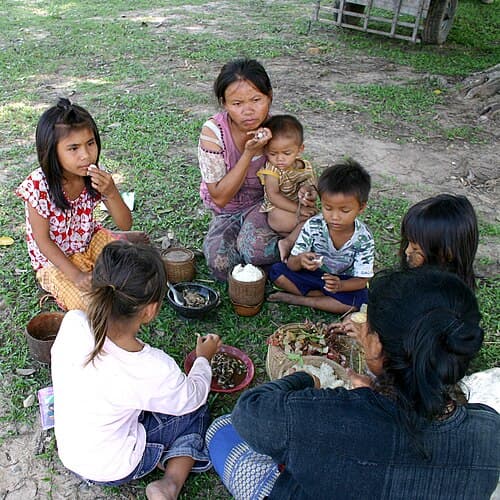
Society
ORGANIZATION
Organization referenced in documents
Straightening
ORGANIZATION
Organization referenced in documents
SudApiAliya Thera's
ORGANIZATION
Organization referenced in documents
Sumana
ORGANIZATION • 3 mentions
Organization referenced in documents
Suteetorn Kindergarten
ORGANIZATION
Organization referenced in documents
Sutta NipAta Commentary
ORGANIZATION
Organization referenced in documents
the 'Home of Peace'
ORGANIZATION
Organization referenced in documents
the Blessings of Life
ORGANIZATION
Organization referenced in documents
the Dhammakaya Foundation
ORGANIZATION
Organization referenced in documents
the Dhammakaya Open University
ORGANIZATION
Organization referenced in documents
the Global Community
ORGANIZATION
Organization referenced in documents
the Highest Aim in Life
ORGANIZATION
Organization referenced in documents
the Path of Progress Ethics
ORGANIZATION
Organization referenced in documents
The Practice of Austerities
ORGANIZATION
Organization referenced in documents
The Retribution of Kapila Bhikkhu
ORGANIZATION
Organization referenced in documents
the Six Catalysts
ORGANIZATION
Organization referenced in documents
TherAgathA Commentary
ORGANIZATION
Organization referenced in documents
Tipitaka
ORGANIZATION
Organization referenced in documents
True Friends
ORGANIZATION
Organization referenced in documents
VimAnavatthu
ORGANIZATION
Organization referenced in documents
VimAnavatthu Commentary
ORGANIZATION
Organization referenced in documents
VisAkhA
ORGANIZATION
Organization referenced in documents
Wikrit Chart
ORGANIZATION
Organization referenced in documents
Z Patrons
ORGANIZATION
Organization referenced in documents
Abhidhamnta
LOCATION
Location referenced in documents
Amenable Location
LOCATION
Location referenced in documents
Bangkok
LOCATION
Capital of Thailand

Belgium
LOCATION
Country in western Europe
Bless-
LOCATION
Location referenced in documents
Buddhof
LOCATION
Location referenced in documents
Dhammakaya
LOCATION
Location referenced in documents
Dhammakaya Temple
LOCATION
Location referenced in documents

Earth
LOCATION
Third planet from the Sun in the Solar System
Enlightened Living
LOCATION
Location referenced in documents
Flint
LOCATION
Seat of Genesee County, Michigan, United States of America
Khlong Luang
LOCATION
Location referenced in documents
Majjhima NikAya
LOCATION
Location referenced in documents
Makkasan
LOCATION
Location referenced in documents
Millionnaire
LOCATION
Location referenced in documents
Neighbourhood Level
LOCATION
Location referenced in documents
Saigha
LOCATION
Location referenced in documents
Sipang
LOCATION
Location referenced in documents
the Holy Sites
LOCATION
Location referenced in documents
the King of Thailand
LOCATION
Location referenced in documents
Unwholesomeness
LOCATION
Location referenced in documents
Statistics
Pages:100
Entities:247
Sponsored