Back to People & Entities











LA
Landgraf
Person
41
Total Mentions
32
Documents
610
Connected Entities
Surname reference in Epstein-related documents
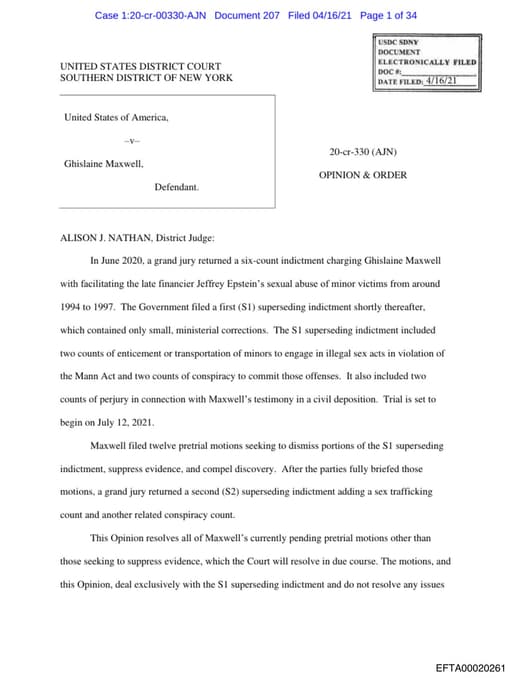
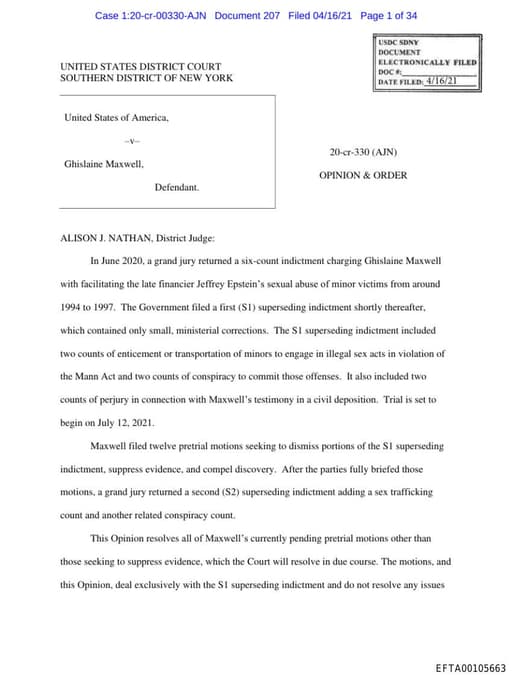
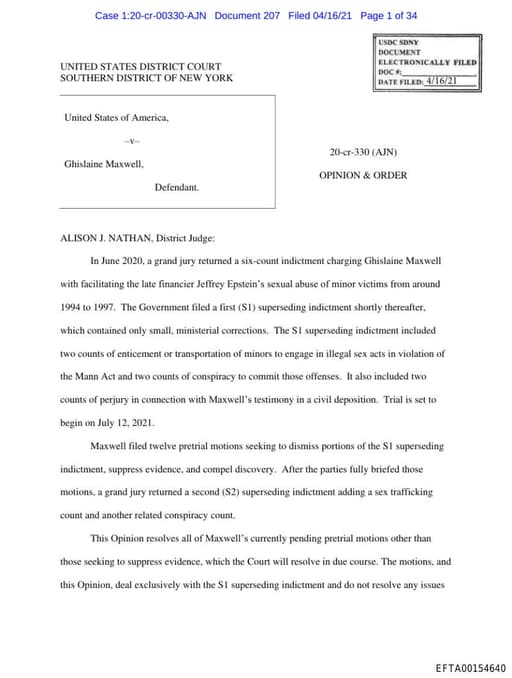
Landgraf is referenced in several court documents related to Jeffrey Epstein and Ghislaine Maxwell, specifically in legal arguments regarding the retroactive application of statutes. The citations refer to the Supreme Court case *Landgraf v. USI Film Products* (1994).
Landgraf appears in court filings and legal opinions primarily as a citation to the Supreme Court case *Landgraf v. USI Film Products*, which provides a framework for determining whether a federal statute applies retroactively. The documents discuss legal arguments related to statutes of limitations and whether certain laws apply to past conduct in the context of Epstein and Maxwell's cases. The mentions are therefore related to legal procedure rather than direct involvement of a person named Landgraf.
Key Highlights
- •The mentions of Landgraf all refer to the Supreme Court case *Landgraf v. USI Film Products*.
- •The case is used in arguments about the retroactive application of laws in the context of Epstein and Maxwell's legal proceedings.
- •The mentions do not indicate a personal connection between anyone named Landgraf and Epstein or Maxwell.
Frequently Asked Questions
Related Links
Books for Further Reading
Perversion of Justice: The Jeffrey Epstein Story
Julie K. Brown
Investigative journalism that broke the Epstein case open
Filthy Rich: The Jeffrey Epstein Story
James Patterson
Bestselling account of Epstein's crimes and network
Relentless Pursuit: My Fight for the Victims of Jeffrey Epstein
Bradley J. Edwards
Victims' attorney's firsthand account
Document Mentions (20 of 32)
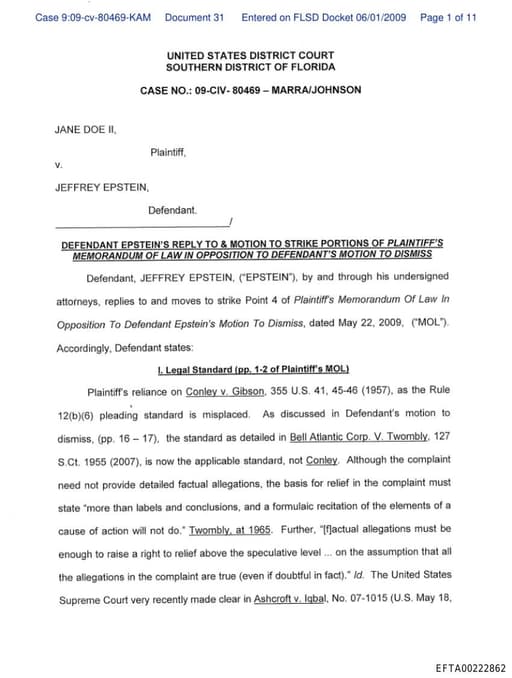
EFTA00222862.pdf
2 mentionsEFTA00222862
ly retroactively. Congress may prescribe the temporal reach of a statute by stating that it applies to pre-enactment conduct, the first step in the Landgraf analysis, or a statute may be silent regarding temporal reach, in which case courts apply the judicial presumption against retroactivity. This pres
ng on or commenced after the date of enactment of this Act,' " "might possibly have qualified as a clear statement for retroactive effect" (quoting Landgraf, 511 U.S. at 260, 114 S.Ct. at 1494)); Rivers v. Roadway Express, Inc., 511 U.S. 298, 307-08, 114 S.Ct. 1510, 1517, 128 L.Ed.2d 274 (1994) (noting
2 mentions
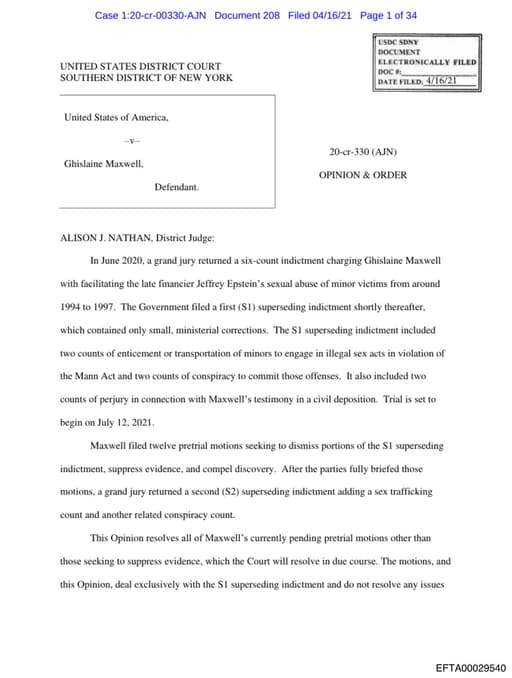
d 920, 924 (9th Cir. 2006). The Supreme Court has set out a two-step framework to determine whether a federal statute applies to past conduct. See Landgraf v. USI Film Products, 511 U.S. 244, 280 (1994). Courts look first to the language of the statute. If the statute states that it applies to past cond
Page: EFTA00029552 →imposes a new duty, or attaches a new disability, in respect to transactions or considerations already past.'" Weingarten, 865 F.3d at 56 (quoting Landgraf, 511 U.S. at 290). Thus, applying a new statute of limitations to previously time- barred claims has an impermissible retroactive effect. Enter. Mort
Page: EFTA00029555 →2 mentions
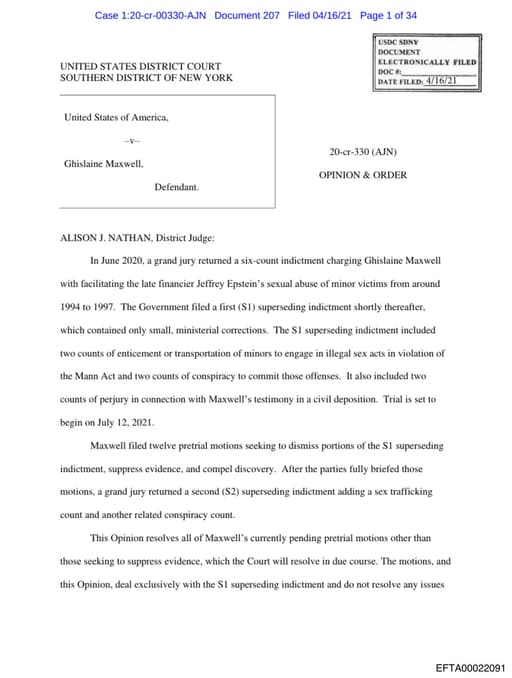
d 920, 924 (9th Cir. 2006). The Supreme Court has set out a two-step framework to determine whether a federal statute applies to past conduct. See Landgraf v. USI Film Products, 511 U.S. 244, 280 (1994). Courts look first to the language of the statute. If the statute states that it applies to past cond
Page: EFTA00022103 →imposes a new duty, or attaches a new disability, in respect to transactions or considerations already past.'" Weingarten, 865 F.3d at 56 (quoting Landgraf, 511 U.S. at 290). Thus, applying a new statute of limitations to previously time- barred claims has an impermissible retroactive effect. Enter. Mort
Page: EFTA00022106 →Sponsored
2 mentions
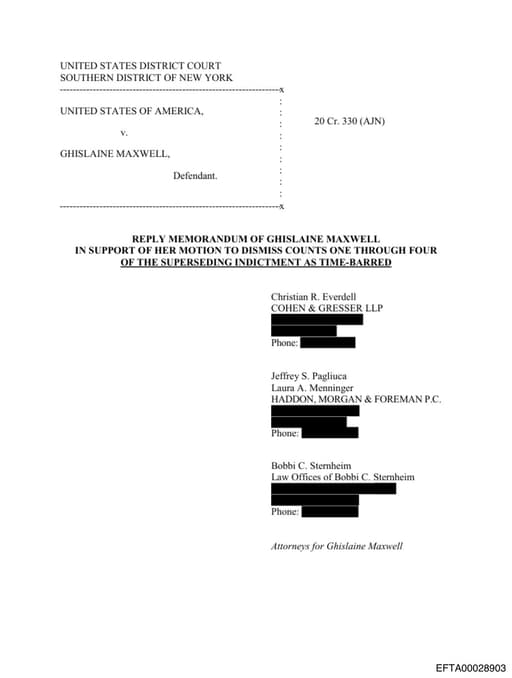
., 391 F.3d 401 (2d Cir. 2004) 6, 9 Kaiser Aluminum & Chem. Corp. v. Bonjorno, 494 U.S. 827 (1990) 3 Kawashima v. Holder, 565 U.S. 478 (2012) Landgraf v. USI Film Products, 511 U.S. 244 (1994) Leocal v. Ashcroft, 11 passim 543 U.S. 1 (2004) 11 Martin v. Hadix, 527 U.S. 343 (1999) 6 Nijhawa
Page: EFTA00028905 →ejection of a retroactivity provision ends the inquiry at step one in Ms. Maxwell's favor. "[W]here the congressional intent is clear, it governs." Landgraf, 511 U.S. at 264 (quoting Kaiser Aluminum & Chem. Cap. v. Bonjorno, 494 U.S. 827, 837 (1990)). As Ms. Maxwell's opening memorandum demonstrated, co
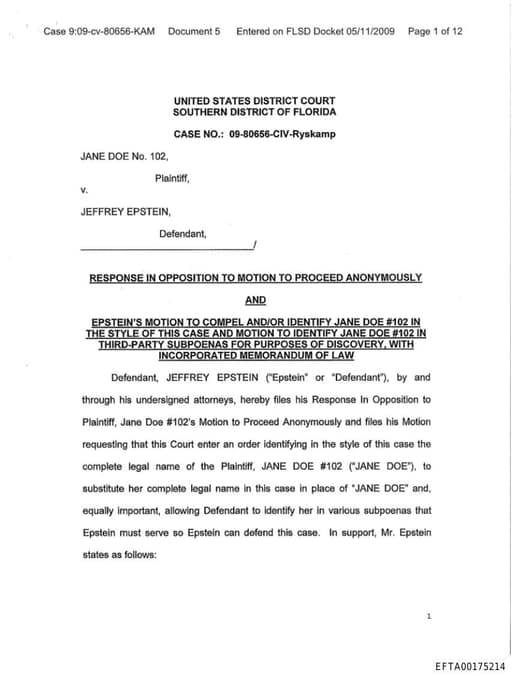
Page: EFTA00028910 →EFTA00175214.pdf
2 mentionsEFTA00175214_sub_001 - EFTA00175214_100
ly retroactively. Congress may prescribe the temporal reach of a statute by stating that it applies to pre-enactment conduct, the first step in the Landgraf analysis, or a statute may be silent regarding temporal reach, in which case courts apply tho judicial presumption against retroactivity. This pres
ng on or commenced after the date of enactment of this Act,' " "might possibly have qualified as a clear statement for retroactive effect" (quoting Landgraf, 511 U.S. at 260, 114 S.Ct. at 1494)); Rivers v. Roadway Express, Inc., 511 U.S. 298, 307-08, 114 S.Ct. 1510, 1517, 128 L.Ed.2d 274 (1994) (noting
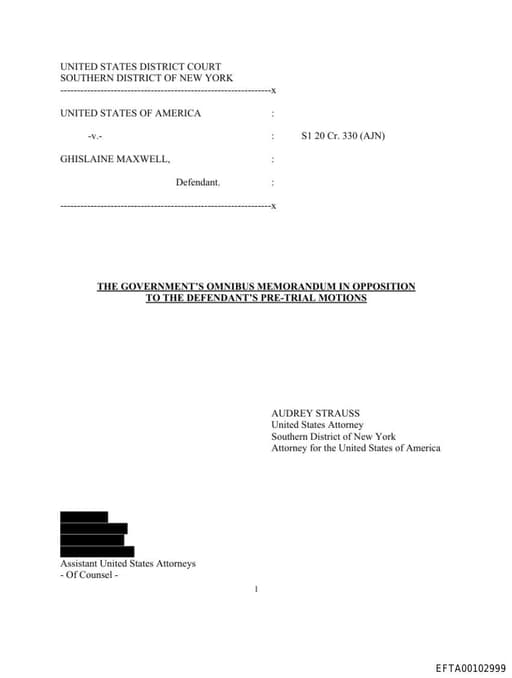
EFTA00102999.pdf
2 mentionsEFTA00102999_sub_001 - EFTA00102999_100
Timely 23 A. Statutory Background 24 B. The 2003 Amendment to Section 3283 Applies Retroactively 26 1. The 2003 Amendment Satisfies Step One of Landgraf 28 2. The 2003 Amendment Satisfies Step Two of Landgraf 32 C. The Defendant's Crimes Involved the Sexual Abuse of Minors 36 III. The Defendant'
new duties with respect to transactions already completed." Vernon v. Cassadaga Valley Cent. School Dist, 49 F.3d 886, 890 (2d Cir. 1995) (quoting Landgraf, 511 U.S. at 280). Applying Section 3283 here would have none of those effects. Maxwell's rights, liabilities, and duties were governed by the subst
Sponsored
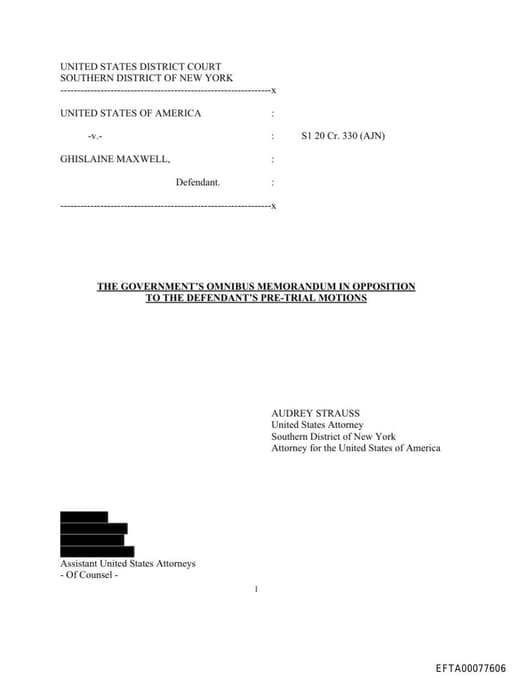
EFTA00077606.pdf
2 mentionsEFTA00077606_sub_001 - EFTA00077606_100
Timely 23 A. Statutory Background 24 B. The 2003 Amendment to Section 3283 Applies Retroactively 26 1. The 2003 Amendment Satisfies Step One of Landgraf 28 2. The 2003 Amendment Satisfies Step Two of Landgraf 32 C. The Defendant's Crimes Involved the Sexual Abuse of Minors 36 III. The Defendant'
new duties with respect to transactions already completed." Vernon v. Cassadaga Valley Cent. School Dist, 49 F.3d 886, 890 (2d Cir. 1995) (quoting Landgraf, 511 U.S. at 280). Applying Section 3283 here would have none of those effects. Maxwell's rights, liabilities, and duties were governed by the subst
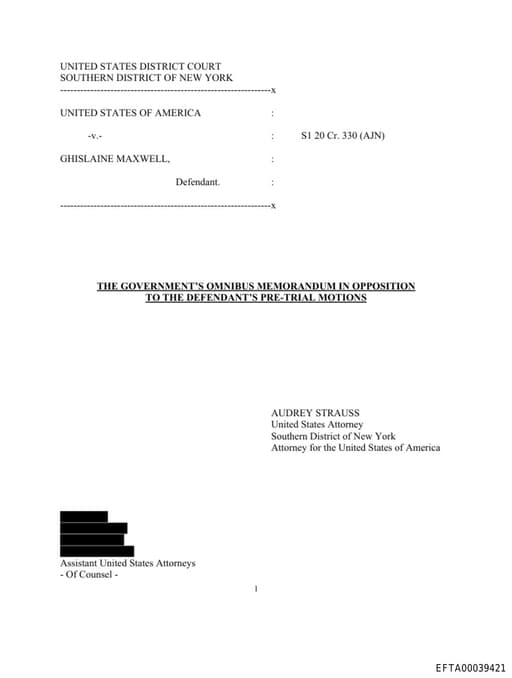
EFTA00039421.pdf
2 mentionsEFTA00039421_sub_001 - EFTA00039421_100
new duties with respect to transactions already completed." Vernon v. Cassadaga Valley Cent. School Dist, 49 F.3d 886, 890 (2d Cir. 1995) (quoting Landgraf, 511 U.S. at 280). Applying Section 3283 here would have none of those effects. Maxwell's rights, liabilities, and duties were governed by the subst
Timely 23 A. Statutory Background 24 B. The 2003 Amendment to Section 3283 Applies Retroactively 26 1. The 2003 Amendment Satisfies Step One of Landgraf 28 2. The 2003 Amendment Satisfies Step Two of Landgraf 32 C. The Defendant's Crimes Involved the Sexual Abuse of Minors 36 III. The Defendant'
2 mentions
d 920, 924 (9th Cir. 2006). The Supreme Court has set out a two-step framework to determine whether a federal statute applies to past conduct. See Landgraf v. USI Film Products, 511 U.S. 244, 280 (1994). Courts look first to the language of the statute. If the statute states that it applies to past cond
Page: EFTA00020273 →imposes a new duty, or attaches a new disability, in respect to transactions or considerations already past.'" Weingarten, 865 F.3d at 56 (quoting Landgraf, 511 U.S. at 290). Thus, applying a new statute of limitations to previously time- barred claims has an impermissible retroactive effect. Enter. Mort
Page: EFTA00020276 →Sponsored
EFTA00103238.pdf
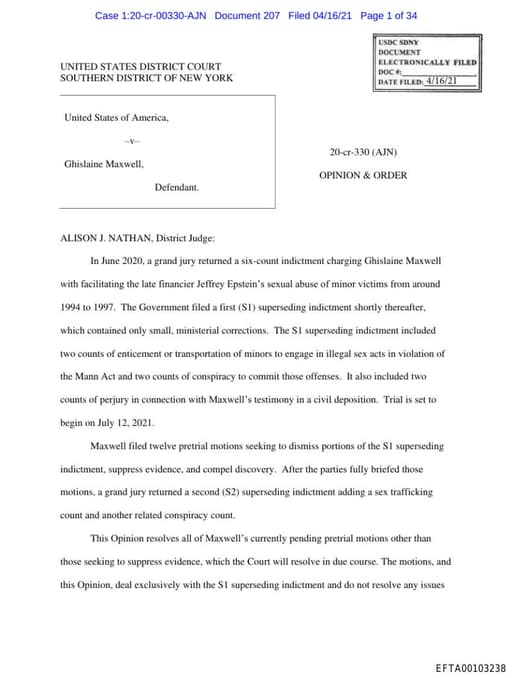
1 mentionEFTA00103238
.3d at 54. Otherwise, the statute applies to past conduct unless doing so would create impermissible retroactive effects. Id. The Court begins with Landgraf s first step. To assess a statute's meaning here, courts must consider the text of the statute along with other indicia of congressional intent, inc
EFTA00103709.pdf
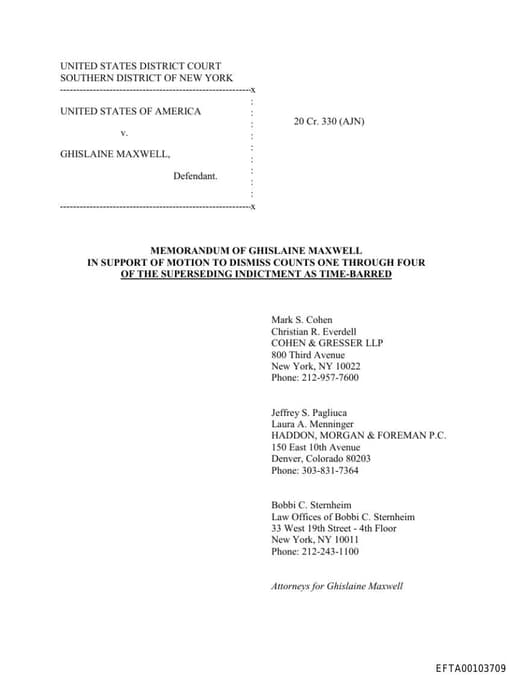
1 mentionEFTA00103709
ecome obscured by the passage of time and to minimize the danger of official punishment because of acts in the far-distant past." Id. at 114-15. In Landgraf, the Supreme Court articulated a two-step framework to evaluate the proposed retroactive application of a statute to a particular case: [T]he court
EFTA00104652.pdf
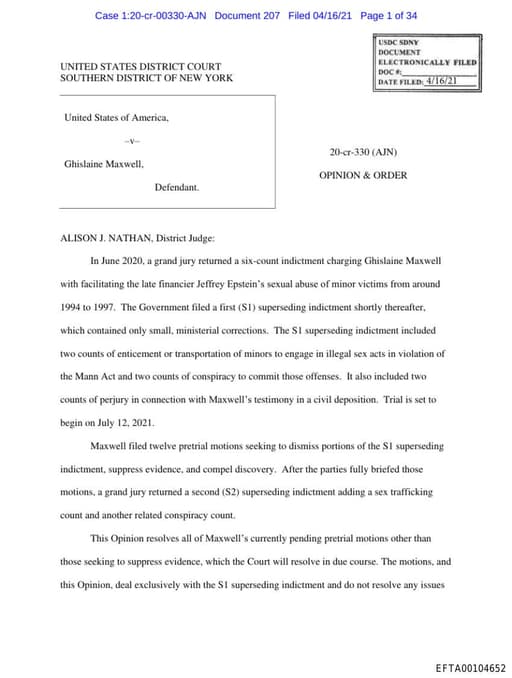
1 mentionEFTA00104652
.3d at 54. Otherwise, the statute applies to past conduct unless doing so would create impermissible retroactive effects. Id. The Court begins with Landgraf s first step. To assess a statute's meaning here, courts must consider the text of the statute along with other indicia of congressional intent, inc
Sponsored
EFTA00105663.pdf
1 mentionEFTA00105663
.3d at 54. Otherwise, the statute applies to past conduct unless doing so would create impermissible retroactive effects. Id. The Court begins with Landgraf s first step. To assess a statute's meaning here, courts must consider the text of the statute along with other indicia of congressional intent, inc
EFTA00154640.pdf
1 mentionEFTA00154640
.3d at 54. Otherwise, the statute applies to past conduct unless doing so would create impermissible retroactive effects. Id. The Court begins with Landgraf s first step. To assess a statute's meaning here, courts must consider the text of the statute along with other indicia of congressional intent, inc
EFTA00207722.pdf
1 mentionEFTA00207722
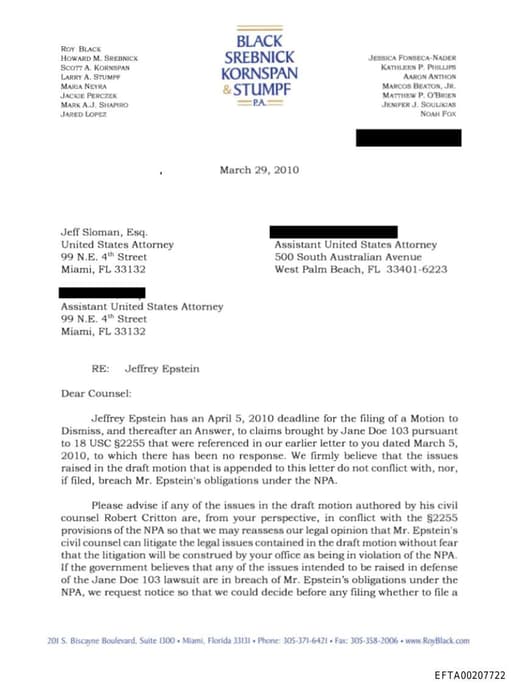
n. It is an axiom of law that "retroactivity is not favored in the law." Bowen, 488 U.S., at 208, 109 S.Ct., at 471 (1988). As eloquently stated in Landgraf v. USI Film Products, 114 S.Ct. 1483, 1497, 511 U.S. 244, 265-66 (1994): ... the presumption against retroactive legislation is deeply rooted in ou
Sponsored
EFTA00213246.pdf
1 mentionEFTA00213246
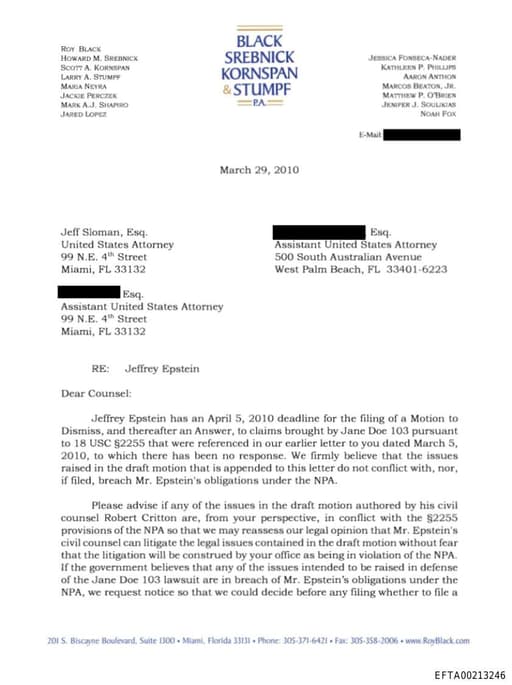
n. It is an axiom of law that "retroactivity is not favored in the law." Bowen, 488 U.S., at 208, 109 S.Ct., at 471 (1988). As eloquently stated in Landgraf v. USI Film Products, 114 S.Ct. 1483, 1497, 511 U.S. 244, 265-66 (1994): ... the presumption against retroactive legislation is deeply rooted in ou
EFTA00285631.pdf
1 mentionEFTA00285631
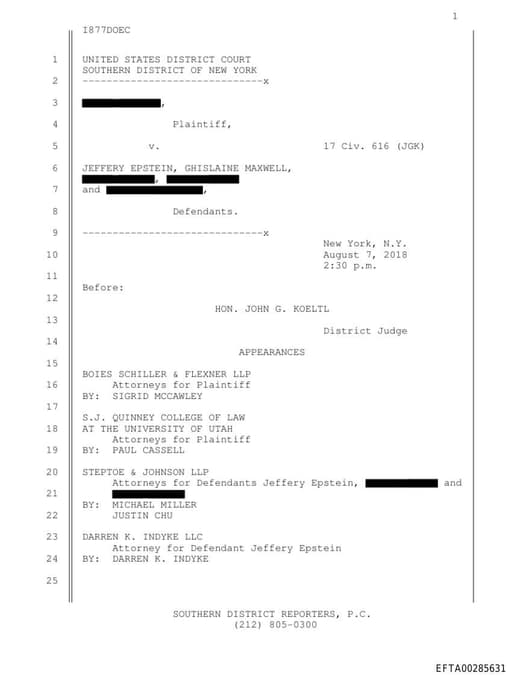
t has already occurred versus creating a new cause of action or a new civil remedy. The support for that, your Honor, is the U.S. Supreme Court in Landgraf v. USI Film Products, which I cited in my papers for a different proposition, but it's found at 511 U.S. 244. In that case, your Honor, the U.S. S
EFTA00725525.pdf
1 mentionEFTA00725525
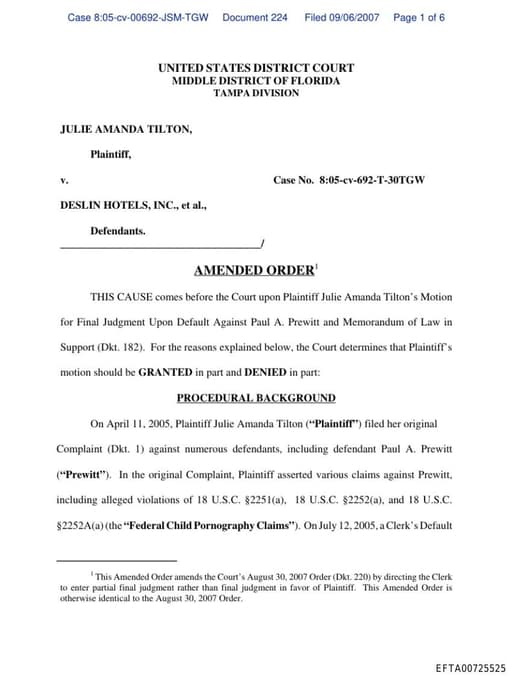
it does not govern absent clear congressional intent favoring such a result. Landgraf v. USI Film Products, 511 U.S. 244, 280 (1994). The Court in Landgraf cited the Hastings court for the proposition that "[rjetroactive modification" of damages remedies may "normally harbo[r] much less potential for m
Sponsored
EFTA00611602.pdf
1 mentionEFTA00611602
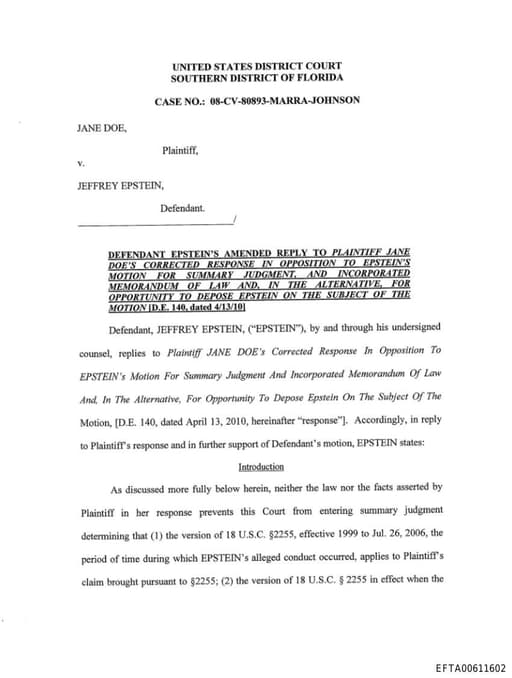
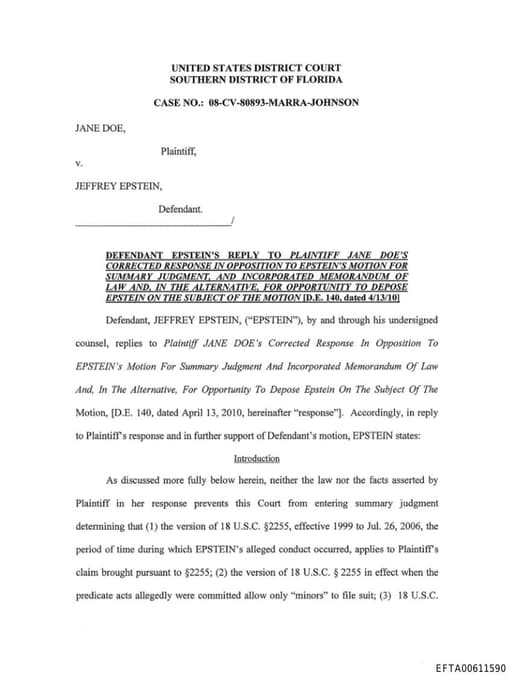
ional principles against retroactivity. Further supporting the argument set forth by Defendant, Plaintiff describes the following language from the Landgraf decision as "a two step process for resolving retroactivity issues," (Response, p. 13): When a case implicates a federal statute enacted after the
EFTA00611590.pdf
1 mentionEFTA00611590
th by Defendant, Plaintiff describes EFTA00611594 Jane Doe v. Epstein Case No. 08-CV-80893-Marra-Johnson Page 6 the following language from the Landgraf decision as "a two step process for resolving retroactivity issues," (Response, p. 13): When a case implicates a federal statute enacted after the
Sponsored
Connected Entities(20 of 610)
Jeffrey Epstein
PersonAmerican sex offender and financier (1953–2019)
31 docs31 co-mentions
United States
LocationCountry located primarily in North America
29 docs29 co-mentions
USI Film Products
OrganizationAmerican manufacturer of specialty packaging films
25 docs25 co-mentions
Ghislaine Maxwell
PersonBritish socialite and sex trafficker, daughter of Robert Maxwell, accomplice of Jeffrey Epstein
22 docs22 co-mentions
Supreme Court
OrganizationHighest court of jurisdiction in the US
21 docs21 co-mentions
Reid Weingarten
PersonAmerican white-collar criminal defense attorney at Steptoe & Johnson, represented Jeffrey Epstein and other high-profile clients
21 docs21 co-mentions
FBI
OrganizationFederal Bureau of Investigation, domestic intelligence and security service of the United States
21 docs21 co-mentions
Eric Holder
PersonUnited States Attorney General from 2009 to 2015
20 docs20 co-mentions
Leahy
PersonSurname reference in Epstein-related documents
20 docs20 co-mentions
Bridges
PersonSurname reference in Epstein-related documents
20 docs20 co-mentions
Vernon
PersonAmbiguous name reference in legal citations and Epstein documents
19 docs19 co-mentions
Napolitano
PersonReference to Janet Napolitano, former DHS Secretary
19 docs19 co-mentions
JO
Josephberg
PersonSurname reference in Epstein-related documents
19 docs19 co-mentions
BO
Bortnovsky
PersonSurname reference in Epstein-related documents
19 docs19 co-mentions
AN
Annabi
PersonSurname reference in Epstein-related documents
19 docs19 co-mentions
SA
Salameh
PersonLegal case citation: United States v. Salameh (misclassified as PERSON)
19 docs19 co-mentions
SC
Schneider
PersonAmbiguous surname - refers to multiple people in Epstein documents
19 docs19 co-mentions
ET
Emmy Taylor
PersonFormer assistant to Ghislaine Maxwell, appeared in Epstein flight logs and court documents
19 docs19 co-mentions
RU
Russo
PersonSurname reference in Epstein-related documents
18 docs18 co-mentions
TH
Thompson
PersonSurname reference in Epstein documents
18 docs18 co-mentions