Back to People & Entities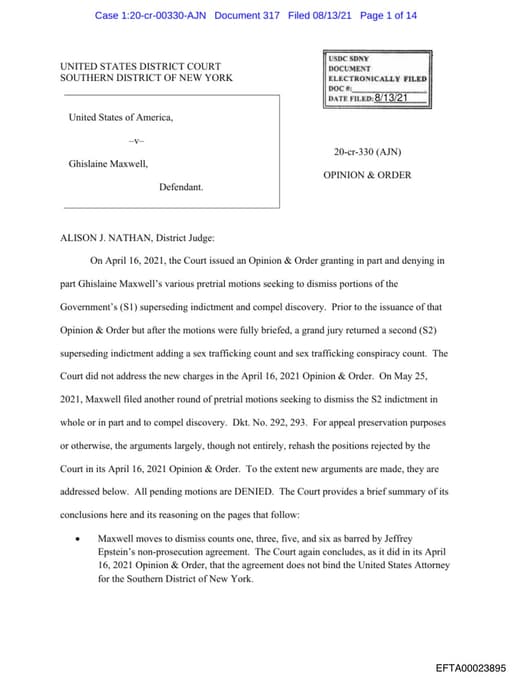





AN
Annabi
Person
62
Total Mentions
59
Documents
707
Connected Entities
Surname reference in Epstein-related documents
Annabi is not a person connected to Jeffrey Epstein, but rather a legal precedent—United States v. Annabi—that is frequently cited in court documents regarding the jurisdictional limits of plea and non-prosecution agreements.
All 15 mentions of 'Annabi' appear in legal documents as citations to the 1985 Second Circuit case United States v. Annabi. The case is used to argue that plea agreements only bind the specific U.S. Attorney's Office that entered into them, not the entire federal government. This legal principle is central to discussions about whether agreements involving Epstein's associates could shield them from prosecution in other districts.
Key Highlights
- •Annabi is a legal case, not an individual connected to Epstein's activities.
- •The case is cited 15 times across 12 documents, primarily in legal arguments about plea agreement jurisdiction.
- •It is most frequently referenced in documents from the Second Circuit and U.S. Attorney's Office.
Frequently Asked Questions
Books for Further Reading


Document Mentions (20 of 59)
2 mentions
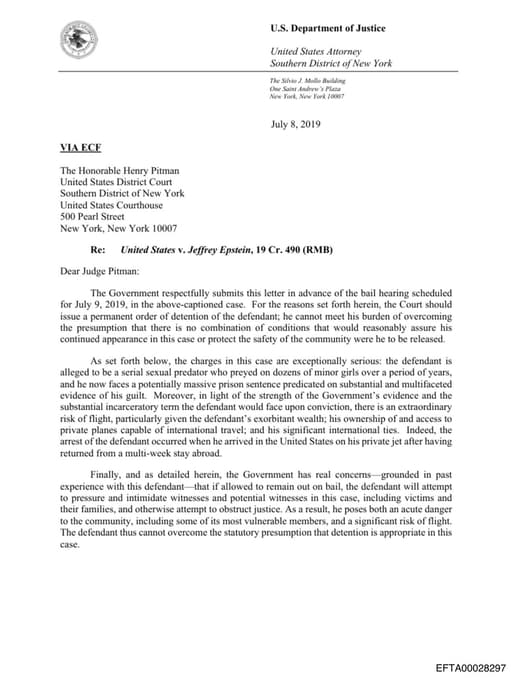
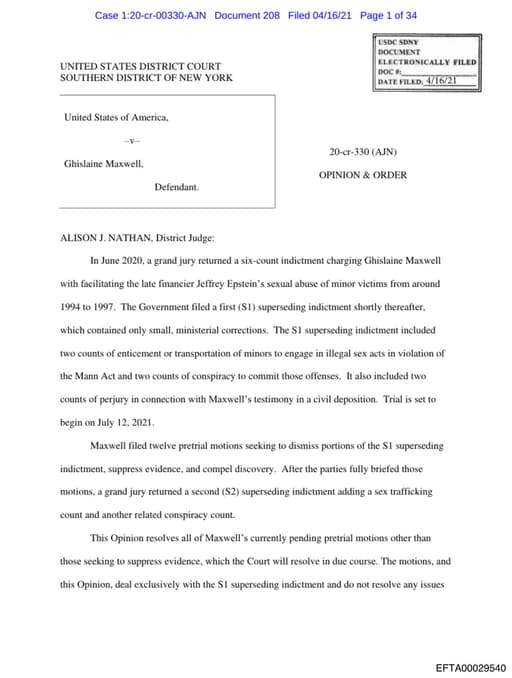
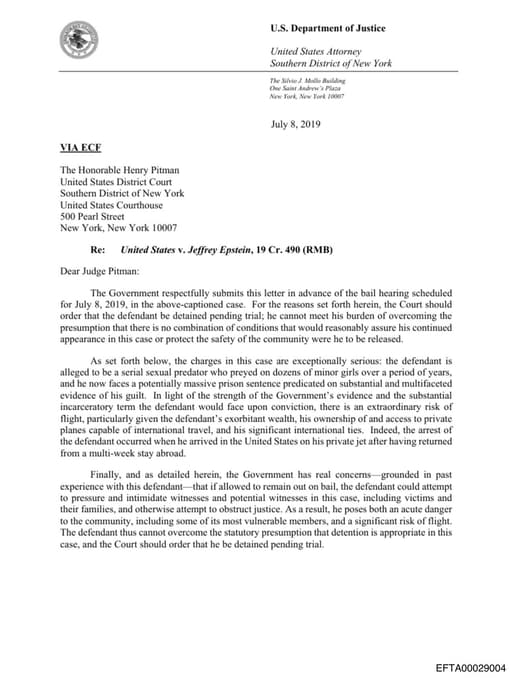
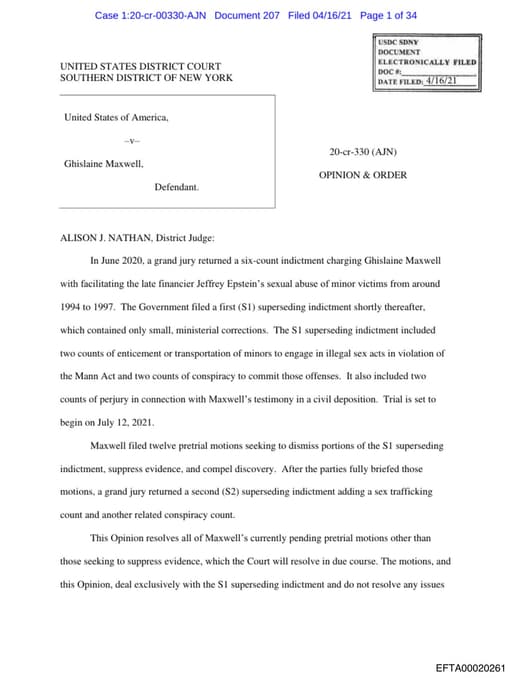
PA does not bar the charges against her. As the Court explained in its April 16, 2021 Opinion & Order, the Second Circuit held in United States v. Annabi that "[a] plea agreement binds only the office of the United States Attorney for the district in which the plea is entered unless it affirmatively a
Page: EFTA00023897 →s not apply if later charges in another district are sufficiently "identical" to the dismissed ones, and no subsequent Second Circuit case applying Annabi has so held. Annabi applies squarely to the facts of this case and binds this Court. The Court also disagrees that Cosby mandates a different resul
Page: EFTA00023898 →2 mentions
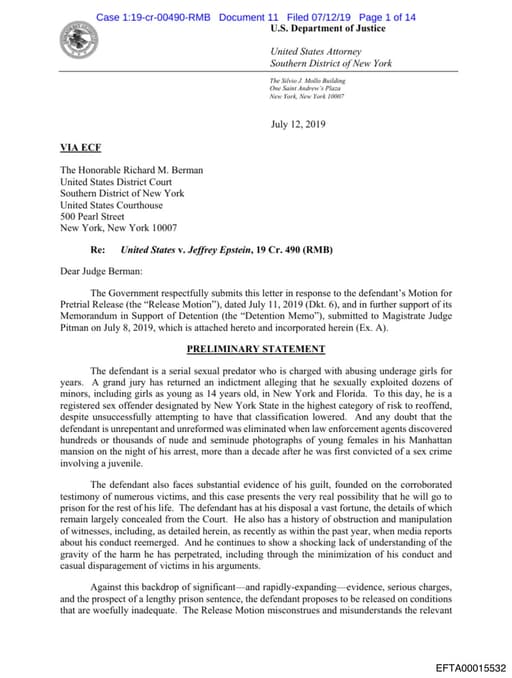
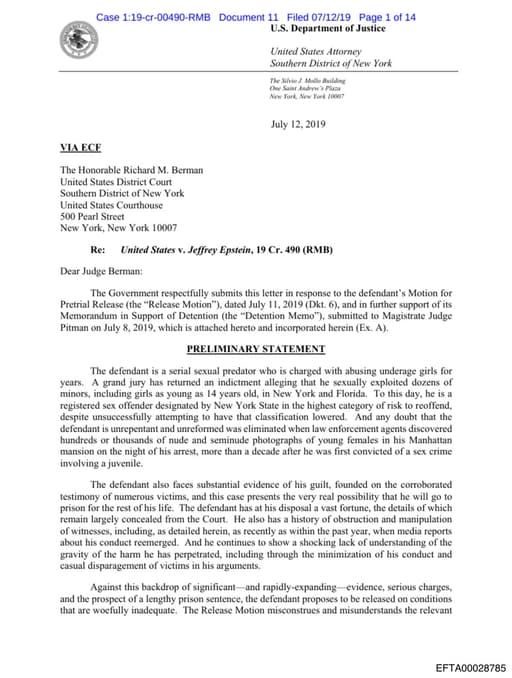
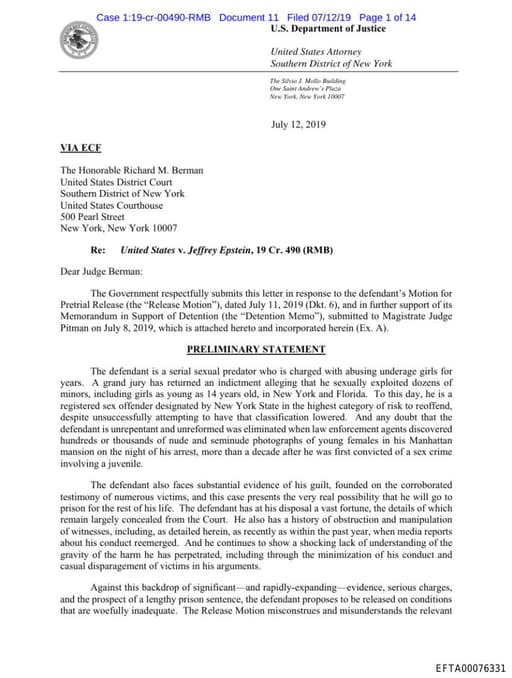
trict in which the plea is entered unless it affirmatively appears that the agreement contemplates a broader restriction.") (citing United States v. Annabi, 771 F.2d 670, 672 (2d Cir. 1985) (per curiam)). Moreover, any references in an NPA to the "Government" or the "United States" do not abrogate thes
Page: EFTA00015544 →ited States v. Brown, No. 99-1230, 2002 WL 34244994, at *2 (2d Cir. Apr. 26, 2002) (in analyzing an SDFL plea agreement, reiterating the holding of Annabi and noting that it applies "even if the plea agreement purports to bind 'the Government' or the "United States") (summary order); United States v. B
Page: EFTA00015544 →2 mentions
t through discovery. The government argues that application of the co-conspirator immunity provision beyond the SDFL is barred by United States v. Annabi, 771 F.2d 670 (2d Cir. 1985) (per curiam), in which the Second Circuit stated that "[a] plea agreement binds only the office of the United States A
Page: EFTA00028890 →cs., Inc. v. Sprint Spectrum, L.P., 499 F.3d 1151 (10th Cir. 2007) 8, 9 United States v. Aleman, 286 F.3d 86 (2d Cir. 2002) 17 United States v. Annabi, 771 F.2d 670 (2d Cir. 1985) passim United States v. CFW Const. Co., 583 F. Supp. 197 (D.S.C. 1984), of d, 749 F.2d 33 (4'h Cir. 1984) 6 United
Page: EFTA00028882 →Sponsored
1 mention
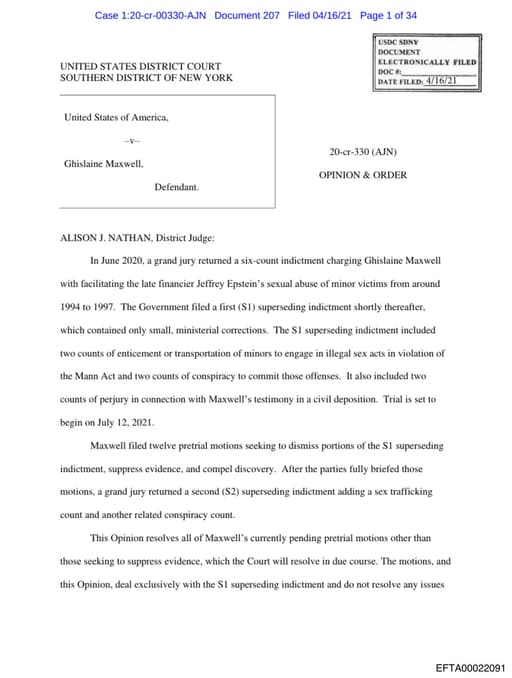
NPA did so. Applying Second Circuit precedent and principles of contract interpretation, the Court concludes that they did not. In United States v. Annabi, the Second Circuit held: "A plea agreement binds only the office of the United States Attorney for the district in which the plea is entered unless
Page: EFTA00022094 →1 mention
es v. Annabi, 771 F.2d 670, 672 (2d Cir. 1985) (per curiam)). This is true even if the text of the agreement purports to bind "the Government." See Annabi, 771 F.2d at 672. This analysis similarly extends to a non-prosecution agreement. See United States v. Laskow, 688 F. Supp. 851, 854 (E.D.N.Y. 1988
Page: EFTA00028302 →1 mention
trict in which the plea is entered unless it affirmatively appears that the agreement contemplates a broader restriction.") (citing United States v. Annabi, 771 F.2d 670, 672 (2d Cir. 1985) (per curiam)). Moreover, any references in an NPA to the "Government" or the "United States" do not abrogate thes
Page: EFTA00028797 →Sponsored
1 mention
NPA did so. Applying Second Circuit precedent and principles of contract interpretation, the Court concludes that they did not. In United States v. Annabi, the Second Circuit held: "A plea agreement binds only the office of the United States Attorney for the district in which the plea is entered unless
Page: EFTA00029543 →EFTA00076303.pdf
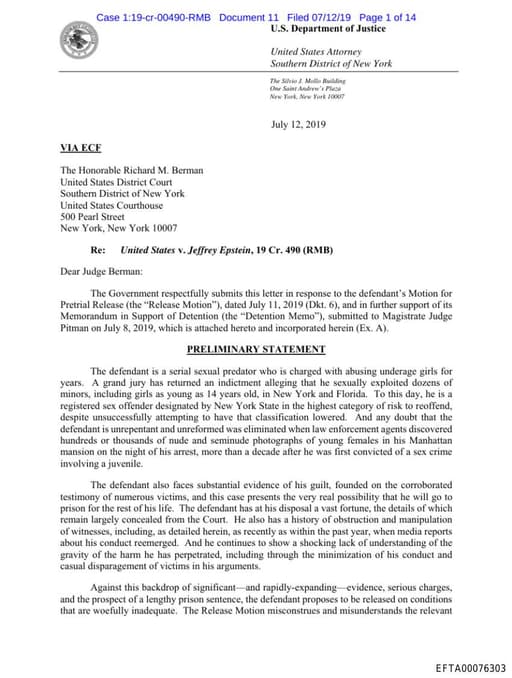
1 mentionEFTA00076303
, 672 (2d Cir. 1985) (per curiam)). Moreover, any references in an NPA to the "Government" or the "United States" do not abrogate these principles. Annabi, 771 F.2d at 672 ("[A] plea agreement whereby a federal prosecutor agrees that 'the Government' will dismiss counts of an indictment .. . might be t
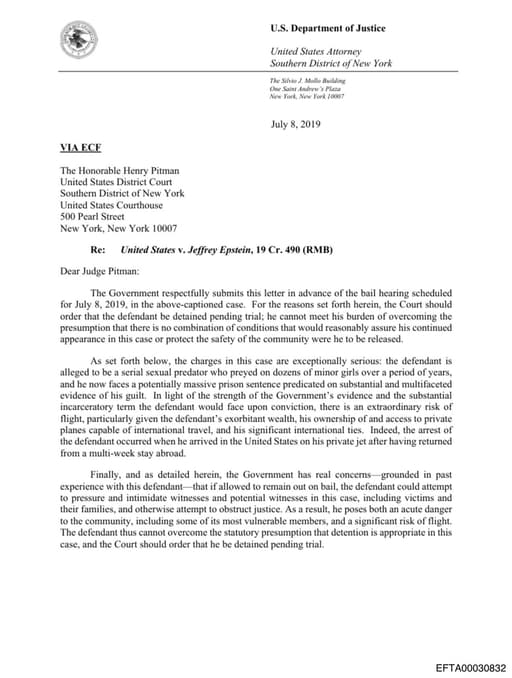
EFTA00076359.pdf
1 mentionEFTA00076359
, 672 (2d Cir. 1985) (per curiam)). Moreover, any references in an NPA to the "Government" or the "United States" do not abrogate these principles. Annabi, 771 F.2d at 672 ("[A] plea agreement whereby a federal prosecutor agrees that `the Government' will dismiss counts of an indictment ... might be th
Sponsored
1 mention
es v. Annabi, 771 F.2d 670, 672 (2d Cir. 1985) (per curiam)). This is true even if the text of the agreement purports to bind "the Government." See Annabi, 771 F.2d at 672. This analysis similarly extends to a non-prosecution agreement. See United States v. Laskow, 688 F. Supp. 851, 854 (E.D.N.Y. 1988
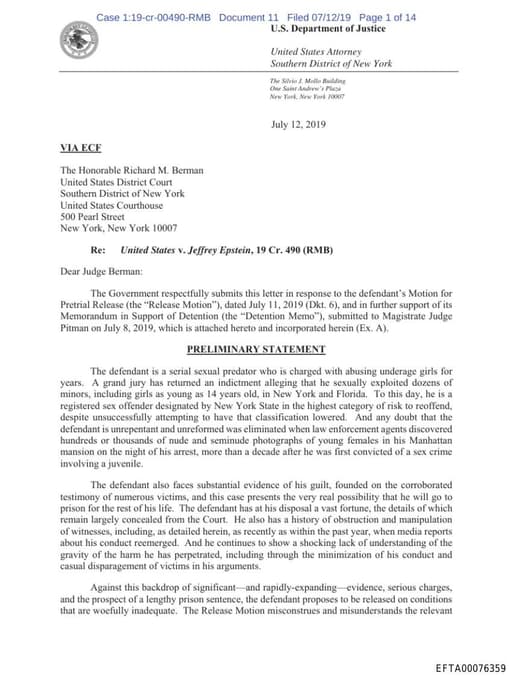
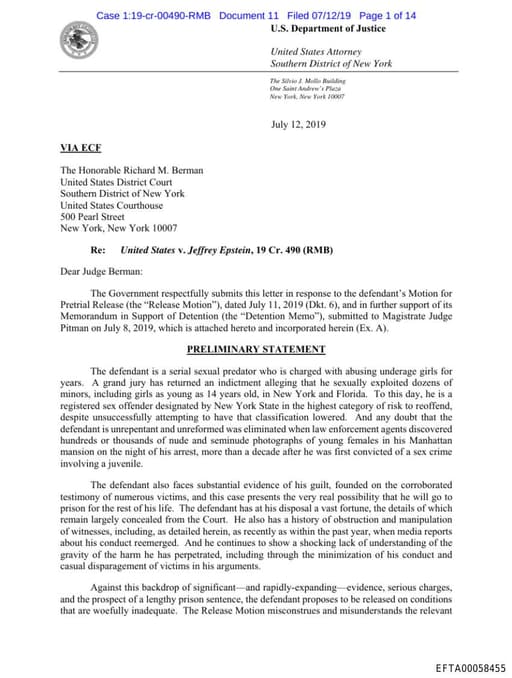
Page: EFTA00030837 →EFTA00058455.pdf
1 mentionEFTA00058455
, 672 (2d Cir. 1985) (per curiam)). Moreover, any references in an NPA to the "Government" or the "United States" do not abrogate these principles. Annabi, 771 F.2d at 672 ("[A] plea agreement whereby a federal prosecutor agrees that 'the Government' will dismiss counts of an indictment .. . might be t
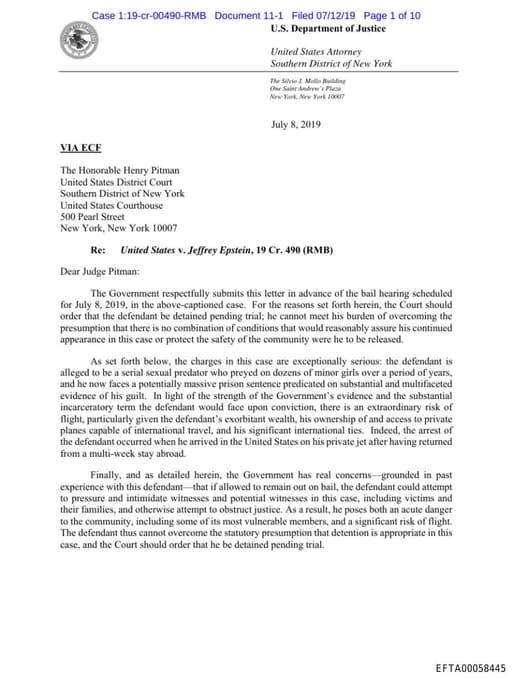
EFTA00058445.pdf
1 mentionEFTA00058445
es v. Annahi, 771 F.2d 670, 672 (2d Cir. 1985) (per curiam)). This is true even if the text of the agreement purports to bind "the Government." See Annabi, 771 F.2d at 672. This analysis similarly extends to a non-prosecution agreement. See United States v. Laskow, 688 F. Supp. 851, 854 (E.D.N.Y. 1988
Sponsored
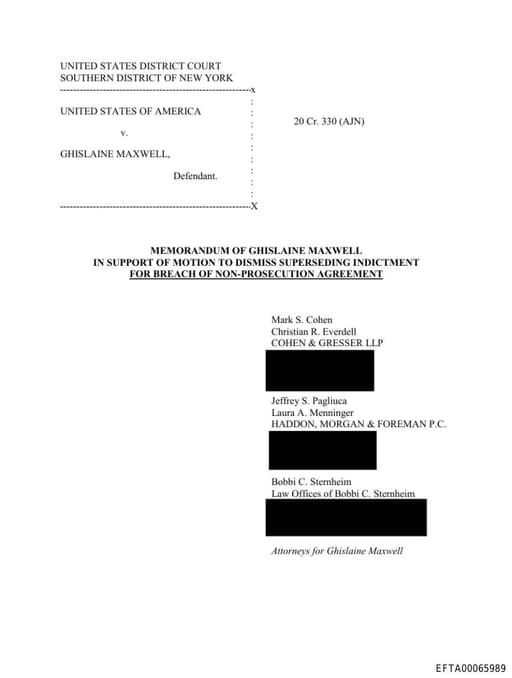
EFTA00065989.pdf
1 mentionEFTA00065989
ecution of Potential Co-Conspirators Is Not Limited to the SDFL. 18 1. The NPA is binding on the USAO in this District 18 2. United States v. Annabi does not alter the analysis. 19 a. There is an "affirmative appearance" that the co-conspirator immunity provision was intended to apply outsid
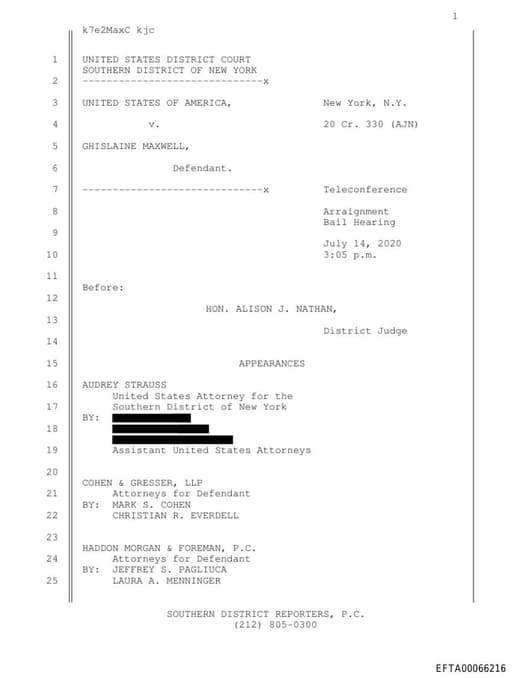
EFTA00066216.pdf
1 mentionEFTA00066216
bail proceeding, that are not even foreclosed by the cases the government does cite to you. They cite to you the -- I'm going to skip this one, the Annabi case, A-N-N-A-B-I case, which says, "The plea agreement binds only the office of the U.S. Attorney for the district in which the plea is entered u
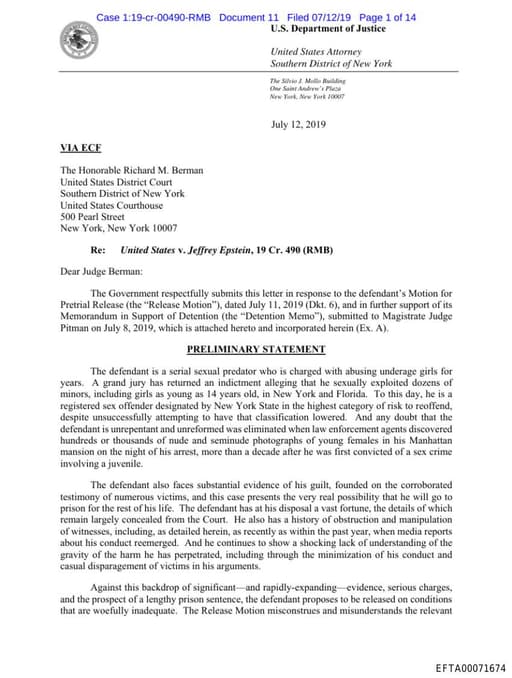
EFTA00071674.pdf
1 mentionEFTA00071674
, 672 (2d Cir. 1985) (per curiam)). Moreover, any references in an NPA to the "Government" or the "United States" do not abrogate these principles. Annabi, 771 F.2d at 672 ("[A] plea agreement whereby a federal prosecutor agrees that 'the Government' will dismiss counts of an indictment .. . might be t
Sponsored
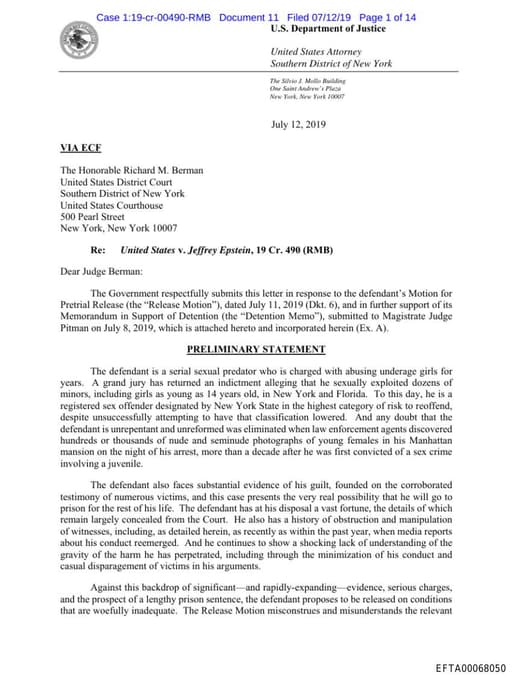
EFTA00068050.pdf
1 mentionEFTA00068050
, 672 (2d Cir. 1985) (per curiam)). Moreover, any references in an NPA to the "Government" or the "United States" do not abrogate these principles. Annabi, 771 F.2d at 672 ("[A] plea agreement whereby a federal prosecutor agrees that 'the Government' will dismiss counts of an indictment .. . might be t
1 mention
es v. Annabi, 771 F.2d 670, 672 (2d Cir. 1985) (per curiam)). This is true even if the text of the agreement purports to bind "the Government." See Annabi, 771 F.2d at 672. This analysis similarly extends to a non-prosecution agreement. See United States v. Laskow, 688 F. Supp. 851, 854 (E.D.N.Y. 1988
Page: EFTA00029009 →EFTA00076331.pdf
1 mentionEFTA00076331
, 672 (2d Cir. 1985) (per curiam)). Moreover, any references in an NPA to the "Government" or the "United States" do not abrogate these principles. Annabi, 771 F.2d at 672 ("[A] plea agreement whereby a federal prosecutor agrees that 'the Government' will dismiss counts of an indictment .. . might be t
Sponsored
1 mention
es v. Annabi, 771 F.2d 670, 672 (2d Cir. 1985) (per curiam)). This is true even if the text of the agreement purports to bind "the Government." See Annabi, 771 F.2d at 672. This analysis similarly extends to a non-prosecution agreement. See United States v. Laskow, 688 F. Supp. 851, 854 (E.D.N.Y. 1988
Page: EFTA00024589 →1 mention
NPA did so. Applying Second Circuit precedent and principles of contract interpretation, the Court concludes that they did not. In United States v. Annabi, the Second Circuit held: "A plea agreement binds only the office of the United States Attorney for the district in which the plea is entered unless
Page: EFTA00020264 →Sponsored
Connected Entities(20 of 707)
Jeffrey Epstein
PersonAmerican sex offender and financier (1953–2019)
59 docs59 co-mentions
United States
LocationCountry located primarily in North America
55 docs55 co-mentions
Reid Weingarten
PersonAmerican white-collar criminal defense attorney at Steptoe & Johnson, represented Jeffrey Epstein and other high-profile clients
46 docs46 co-mentions
Southern District of New York
OrganizationFederal judicial district covering Manhattan and surrounding areas
45 docs45 co-mentions
Ghislaine Maxwell
PersonBritish socialite and sex trafficker, daughter of Robert Maxwell, accomplice of Jeffrey Epstein
43 docs43 co-mentions
the Southern District
LocationFederal judicial district in New York City
42 docs42 co-mentions
SA
Salameh
PersonLegal case citation: United States v. Salameh (misclassified as PERSON)
37 docs37 co-mentions
ET
Emmy Taylor
PersonFormer assistant to Ghislaine Maxwell, appeared in Epstein flight logs and court documents
37 docs37 co-mentions
FBI
OrganizationFederal Bureau of Investigation, domestic intelligence and security service of the United States
36 docs36 co-mentions
LA
Laskow
PersonSurname reference in Epstein-related documents
35 docs35 co-mentions
Prince Andrew
PersonThird child of Queen Elizabeth II and Prince Philip, Duke of Edinburgh (born 1960)
32 docs32 co-mentions
Anderson
PersonSurname reference in Epstein documents
32 docs32 co-mentions
MW
Martin Weinberg
PersonAmerican attorney (born 1946)
32 docs32 co-mentions
Michael Jackson
PersonAmerican singer, songwriter, record producer, and dancer (1958–2009)
32 docs32 co-mentions
Department of Justice
OrganizationUnited States Department of Justice, federal executive department responsible for law enforcement
32 docs32 co-mentions
Second Circuit
OrganizationU.S. Court of Appeals for the Second Circuit
31 docs31 co-mentions
New York State
LocationState in the northeastern United States
31 docs31 co-mentions
PR
Prisco
PersonSurname reference in documents
28 docs28 co-mentions
Icarus
PersonMythological figure or literary reference (not a real person in documents)
27 docs27 co-mentions
CA
Casteneda
PersonSurname reference in Epstein-related documents
27 docs27 co-mentions