HOUSE_OVERSIGHT_024135 - HOUSE_OVERSIGHT_024178
<<Presentation Title>>
Document HOUSE_OVERSIGHT_024135 is a UBS CIO Monthly Extended report from July 2012.
This document is a monthly video and extended report published by UBS Wealth Management & Swiss Bank’s Chief Investment Office (CIO) in July 2012. It outlines the CIO's views on asset classes, including equities, fixed income, and foreign exchange, with a focus on investment themes and preferences for the following 6-12 months. The report also includes disclaimers and disclosures.
Key Highlights
- •The document is a UBS CIO Monthly Extended report from July 2012.
- •It presents UBS's investment strategy and outlook on various asset classes.
- •The report mentions several geographic locations and organizations, including Saudi Arabia, Norway, Reuters, and UBS AG.
Frequently Asked Questions
Books for Further Reading

Perversion of Justice: The Jeffrey Epstein Story
Julie K. Brown
Investigative journalism that broke the Epstein case open

Filthy Rich: The Jeffrey Epstein Story
James Patterson
Bestselling account of Epstein's crimes and network

Relentless Pursuit: My Fight for the Victims of Jeffrey Epstein
Bradley J. Edwards
Victims' attorney's firsthand account
Document Information
Bates Range
HOUSE_OVERSIGHT_024135 - HOUSE_OVERSIGHT_024178
Pages
44
Source
House Oversight Committee
Date
June 29, 2012
Original Filename
CIO_Extended_July.pdf
File Size
619.50 KB
Document Content
Page 1 - HOUSE_OVERSIGHT_024135
For marketing purposes only oe UBS ClO WM Global Investment Office | External Version ClO monthly video www. ubs.com/cio-video For smartphone users: scan the code with an app like "scan" UBS CIO Monthly Extended July 2012 Published Please see important disclaimer and disclosures at the end of the document. 29 June 2012 The content of this publication reflects the view of UBS Wealth Management & Swiss Bank’s Chief Investment Office (CIO). The relative asset class preferences in this publication refer to an investment horizon of 6 months following the publication date — if not indicated differently - and will be updated on a monthly basis. The preferred investment themes have a time frame of either 3-12 months or >12 months since inception, as indicated. The information does not constitute UBS financial research and therefore may not reflect or be fully aligned with the views of UBS Research expressed in other publications. The statutory regulations regarding the independence of financial research are not applicable to this publication. Investments may be subject to jurisdictional and regulatory restrictions and may therefore not be available — please discuss the availability and appropriateness of specific investments with your client adviser. HOUSE_OVERSIGHT_024135
Page 2 - HOUSE_OVERSIGHT_024136
Table of Contents Section 1 Base slides 3 Section 2 Asset class views 12 2.A Equities 13 2.B Fixed income 23 2.C Foreign exchange 30 2.D NTAC: Commodities, Listed real estate, Hedge funds and Private equity 34 3 UBS , HOUSE_OVERSIGHT_024136
Page 3 - HOUSE_OVERSIGHT_024137
Section 1 Base slides 36 UBS HOUSE_OVERSIGHT_024137
Sponsored
Page 4 - HOUSE_OVERSIGHT_024138
Summary "With the global economy continuing to muddle through, we believe that US corporate bonds offer the best risk return." 36 UBS Economy The successful formation of a Greek government after the June 17 elections has reduced the risk of an imminent Greek exit from the Eurozone. However, the Euro debt crisis persists, and further reform and consolidation efforts in Spain and Italy are needed. In the US, economic data weakened recently, but it remains in line with our forecast of moderate growth of around 2% in 2012. The Fed extended "Operation Twist" until the end of the year and is ready to do more if the economic situation deteriorates materially. Meanwhile, Chinese activity data is showing signs of stabilization and inflation remains low. We expect the Chinese economy to gradually pick up in the second half of 2012. Equities Despite our relatively positive outlook for US and Chinese economic growth, ongoing Eurozone issues keep us neutral on global equities. We think US companies are better positioned than their European peers, and thus keep our longer-standing preference for US equities. US earnings are relatively robust and the recovery of the domestic economy continues to support revenues. Furthermore, we keep a moderate overweight in emerging market (EM) equities as valuations are attractive and we expect growth to accelerate in the second half of the year. In the near term EM currency weakness remains a risk factor. Fixed Income High grade government bond yields remain extremely low due to ultra-expansive monetary policy and ongoing investor concerns over global growth. While we expect yields to only rise very gradually in the near term, we continue to see better investment opportunities in other fixed income segments. US high yield remains our favorite asset class, given attractive valuations and a favorable default outlook. We also keep our overweight recommendations on investment grade and EM bonds. Commodities We avoid broad commodity exposure as we see further price weakness ahead. While the worst of the oil sell-off is likely behind us, we see no reason for higher prices in the near term and expect roll costs to weigh on positions. Foreign Exchange In light of the ongoing Eurozone troubles, we continue to prefer the US dollar over the euro. We also prefer the Canadian dollar, given its relatively good growth dynamics, a possible rate hike, and relatively high short rates. Please see important disclaimer and disclosures at the end of the document. HOUSE_OVERSIGHT_024138
Page 5 - HOUSE_OVERSIGHT_024139
Cross-asset preferences Fixed income Commodities 3, UBS Most preferred e US @ Western winners from EM growth @ High quality dividend yields e Event-driven and relative value hedge funds @ Natural gas growth gainers e US high yield @ Global investment grade credit e Event-driven and relative value hedge funds e EM corporate bonds e USD @ GBP e CAD Least preferred @ Europe @ Developed market government bonds ° CHF ° EUR e Agriculture e Energy A Recent upgrades y Recent downgrades Portfolio weights Commodities 3% Liquidity Real Estate 10% 5% High Grade q Bonds 6% Hedge Funds / Private Equity 10% Inv Grade \ Corporates Equities USA | Bonds 10% \ 9% a High Yield Bonds 6% Emerging . Markets Bonds Equities 6% Europe 20% Equities Other 9% EmMa Equities 6% Note: Portfolio weights are for an advisory client with a "EUR moderate" profile. For portfolio weights related to other risk profiles please contact your client advisor. Please see important disclaimer and disclosures at the end of the document. HOUSE_OVERSIGHT_024139
Page 6 - HOUSE_OVERSIGHT_024140
Reference portfolio Tactical asset allocation deviations from benchmark* Currency allocation underweight neutral overweight underweight neutral overweight a a a a a a aT Cash USD 7 | Equities total EUR — ae | UT”t”t~(‘(<(Cséi<‘i;*;é‘CSé@Y!COC;*d?#SC*CO*éirCSCS”~*dY US GBP Eurozone — PY g UK = 2 CHF nr Japan Switzerland = SEK EM imal NOK Other | CAD ee = — Bonds total _— Governmentbordc kla_=_—_____LLLVCVVS dhl lt” Government bonds 3 | AND 5 Corporate bonds (IG) a i j a High yield bonds mnew old Pe EM bonds (USD) a =z Commodities total ; | Precious metals s 3 Energy m= 2 * Please note that the bar charts show total portfolio preferences and thus can 5 Base metals be interpreted as the recommended deviation from the relevant portfolio Vv Agricultural S| benchmark for any given asset class and sub asset class. Listed Real Estate Also note that the implementation in advisory or discretionary products might slightly deviate from the "unconstrained" asset allocation shown above, mnew old depending on benchmarks, currency positions and for other implementation Source: UBS CIO considerations 36 UBS . Please see important disclaimer and disclosures at the end of the document. HOUSE_OVERSIGHT_024140
Sponsored
Page 7 - HOUSE_OVERSIGHT_024141
Preferred themes e High quality dividend yields (sourced from existing European @ and UK equities) High quality companies with geographically diversified business models that pay sustainable dividends offer an attractive income stream in a low yield world. Historically, dividends have made a substantial contribution to total returns, and we expect this to remain the case in the current environment. e Western winners from emerging market growth (sourced from existing equity holdings) Emerging economies continue to grow faster than developed economies. With little need to deleverage and repair balance sheets, Asian economies are also well positioned to continue to outpace their Western peers in the years ahead. We have identified companies from a variety of sectors in Europe, the US and Japan which have significant exposure to the rapidly growing emerging regions. We believe a diversified portfolio of these companies will reward investors seeking to profit from the robust demand growth in emerging economies. e Natural gas growth gainers Natural gas is a relatively clean source of energy, and we think it will benefit from continued substitution for other energy sources over the long term. We have examined the dynamics of the global market and the various components of the gas value chain, and identified the areas we see as the most significant beneficiaries currently. These include producers in Europe and Asia, suppliers of infrastructure, services and related machinery, and Master Limited Partnerships (MLPs) in the US, ) that offer both attractive yields and growth. 36 UBS Government bond alternatives (sourced from government bonds - ClO UW) Developed world government bonds offer a comparatively small cushion against future interest rate hikes and many face increasing credit risk. We expect select bonds of supranational or national agencies, sub-national governments, multinational corporates, and covered bonds to outperform government bonds. We recommend switching out of government bonds into these alternatives. US high yield corporate bonds (sourced from government bonds - clo UW) Positive economic growth, robust corporate earnings and healthy balance sheets provide support to US high yield corporate bonds. Current yield spreads of roughly 660 basis points still price in a much more dire economic outcome than we expect. Historically, US high yield bonds have delivered similar returns to US equities with lower volatility. We continue to believe that US high yield corporate bonds represent a more favorable risk/return potential than equities and expect total returns of approximately 7% over the next 6 months. The place to be in Hedge Funds Recent economic data has shown signs of improvement, but growth in most developed markets remains muted. In this environment, less directional hedge fund strategies, such as relative value and event driven, should offer above average returns. EM corporates: a growing asset class (sourced from global government bonds - CIO UW) Given our relatively constructive current view on risk, we regard EM corporate debt as more attractive than EM sovereign debt due to its higher overall yield. Over a 6-month horizon, we expect EM corporate bonds to outperform US Treasuries and deliver total returns of close to 8% p.a. Please see important disclaimer and disclosures at the end of the document. HOUSE_OVERSIGHT_024141
Page 8 - HOUSE_OVERSIGHT_024142
Global economic outlook - Summary Key questions e Can emerging markets (EM) continue to offset developed market (DM) weakness to buoy global growth? e What are the risks of near-term faltering of the US economic recovery? e When is the European economy likely to return to sustainable economic expansion? CIO View (Probability: 60%*) ¢ Global economic activity remains moderate; the growth impulse stems largely (some 80%) from the EM region. As expected, China started to ease monetary policy. The country is better placed than other EM and particularly DM countries to counter growth weakness with further monetary and fiscal stimuli. Thus, we expect EM growth to stabilize soon and pick up in 2H 2012. e US economic indicators have on balance been disappointing recently, especially data related to business fixed investment and employment growth. Thus, we lowered our 2Q 2012 real GDP growth forecast to an annualized rate of 1.5% from 2%. We still expect growth slightly above 2% in 2H 2012. We think that the risk that the Fed will take measures in addition to the extension of "Operation Twist" is still significant. e Large parts of Western Europe are in recession or stagnation. We expect the economies of the Eurozone and the UK to show mild improvement in 2H 2012. Still, economic activity is likely to remain very sluggish despite support from lower oil prices and less rigorous fiscal austerity. The Bank of England may support the UK economy by increasing its amount of bond purchases soon. The probability that the ECB will take further action to support the economy has risen significantly. A” Positive scenario (Probability: 15%*) e The Eurozone crisis abates. Financial market conditions recover, mitigating the drag from fiscal austerity. ¢ Growth in Western Europe is marginally positive (Eurozone stagnates) in 2012 and the US economy grows moderately above trend. i Negative scenario (Probability: 25%*) e There are three key downside risks to the global economy: 1. a significant escalation of the Eurozone debt crisis; 2. a sharp fiscal contraction in the US, and 3. a sharp deceleration of the Chinese economy. Each one of these risks could precipitate a significant downturn of the global economy. Key dates 2 July USA: ISM manufacturing PMI for June 5 July Eurozone: ECB press conference 24 July Eurozone: purchasing managers indices (PMI), July estimates 22-25 July = China: HSBC flash manufacturing purchasing managers index (Jul) 36 UBS Global growth expected at just under 3% in 2012 Real GDP growth in % Inflation in % 2011 2012F = =2013F 2011 2012F =. 2013F Americas US 17 21 2.6 3.1 2.1 V7 Canada 24 Zerik 24 2. eh Bad Brazil 29 2.0 48 65 5.2 65 Asia/Pacific Japan -0.7 2:5 2.0 -0.3 6.2) 05 Australia 2.1 3.2 35 3.4 16 25 China 9.2: 82 85 5.4 3.0 40 India 65 6.0 7.0 7.8 69 7 Europe Eurozone als: -0.4 04 27 Wins: 2.0 Germany Sul 1.0 1.1 25 1.7 TS France rs 3 0.4 ell en Lok Italy 05 -1.8 02 29 3.4 39 Spain O7 -1.6 -1.3 Sul ee) 9 UK 07 0.2 igs 45 2.8 1.9 Switzerland Ael 13 flock 0.2 0.4 1.4 Russia 43 3.8 a7 85 4g 6.9 World oe 28 333 3.3) 30 3.0 For further information please contact ClIO economist Dirk Faltin, [email protected] Source: UBS CIO, as of 28 June 2012 In developing the ClO economic forecasts, CIO economists worked in collaboration with economists employed by UBS Investment Research. Forecasts and estimates are current only as of the date of this publication and may change without notice. Global economic momentum is deteriorating (UBS GDP tracker) % 10 May 6.3% 3.1% 1.0% -2Jan Jan Jan Jan Van, f Jan Jan Jan Jan -4 05 06 07 08 09 10 11 12 13 6 ——Global DM ——EM* Source: Bloomberg, UBS CIO, as of 22 June 2012 * DM= developed markets, EM = emerging markets Note: Past performance is not an indication of future returns. **Scenario probabilities are based on qualitative assessment. Please see important disclaimer and disclosures at the end of the document. HOUSE_OVERSIGHT_024142
Page 9 - HOUSE_OVERSIGHT_024143
Key financial market driver 1 - Eurozone crisis Key questions e What is the way forward for Eurozone banks? e What is the most likely course of events in Spain, Italy and Portugal? ¢ In what direction will the economy and the ECB go? ClO View (Probability: 65%*) Austerity and weak growth ¢ Support for the banking sector is a major political agenda item, and the request for external support for Spanish banks can be seen as the starting point for greater European support and oversight for banks, to be discussed at the upcoming European Council. ¢ Greece's debt remains unsustainable, but the risk of a euro exit over the next six months has diminished after the 17 June elections, which have produced a viable government coalition. The Troika may only accept moderate adjustments to the second Greek package. Portugal is likely to receive an increased bailout package and is unlikely to default in 2012. Progress on reforms and consolidation in Spain and Italy is most crucial for the near-term development of the crisis. Risk premiums would rise strongly on any failure to meet deficit targets; we expect bond risk premiums to remain elevated for Spain and Italy over the next six months. ¢ Following stagnation in 1Q 2012, economic surveys are commensurate with a quarterly GDP contraction of around 0.3% at present. Business survey evidence points to a general wait and see mode. The risk to the outlook for a stabilization of economic growth in the second half of 2012 is skewed to the downside. The ECB remains on hold, but the bar to support the economy and markets has been lowered substantially. We see a significant probability of policy action in early July, including the possibility of a rate reduction. Despite all the talk about political measures to support growth and increased tolerance for budget slippages, there is practically no leeway for fiscal stimuli. The near-term growth impact of any fiscal measure will at best be marginal, in our view. A Positive scenario (Probability: 15%*) ¢ Bond yields are contained, as peripheral countries' budgets stay on track and economic activity recovers faster than expected. Greece fully complies with the austerity plans and receives further support. Market confidence is restored, and economic growth stagnates in 2012. & Negative scenario (Probability: 20%*) Major shock ¢ Major shocks could include Spain being pushed into a full IMF/EU program, possibly by a rating cut to junk, enhancing pressure also on Italy; serious political disagreement in core countries (for instance after Dutch elections, etc.); a possible Portuguese default; a Greek euro exit; or a major external growth shock. Return to macro stability Key dates 5 July ECB press conference 9-10 July Eurogroup/ECOFIN-Meeting 24 July Eurozone purchasing manager indices (PMI), July estimates 36 UBS Bottoming in Eurozone leading indicators (PMI) in June? 65 60 55 50 45 40 35 30 06 07 08 09 10 11 12 —Manufacturing —Services —Composite Source: Bloomberg, UBS CIO, as of 21 June 2012 (estimates) Yield of Spanish and Italian 10-year bonds over German Bunds (in bps) 600 500 400 300 01/2011 04/2011 07/2011 10/2011. 01/2012: 04/2012 —ltaly Spain Source: UBS CIO, Bloomberg, as of 18 June 2012 Note: Past performance is not an indication of future returns. * Scenario probabilities are based on qualitative assessment. For further information please contact CIO analyst Thomas Wacker, [email protected] and ClO economist Ricardo Garcia, [email protected] Please see important disclaimer and disclosures at the end of the document. HOUSE_OVERSIGHT_024143
Sponsored
Page 10 - HOUSE_OVERSIGHT_024144
Key financial market driver 2 - US policy Key questions e Will the economic outlook deteriorate? Will QE3 become necessary? e How will the election outcome change fiscal policy deliberations? @ Can politicians find an agreement to avoid sharp fiscal contraction in early 2013 ("fiscal cliff")? CIO View (Probability: 65%*) No QE3, political gridlock and some fiscal tightening ¢ The economy stays on a moderate growth path, coupled with stable core PCE inflation close to the Fed’s target of 2%. UBS forecasts real GDP growth of 1.5% in 2Q 2012 (consensus: 2.1%) and 2.3% in 3Q 2012 (consensus: 2.4%), with some downside risk due to rising uncertainty. The Fed has decided to extend so called "Operation Twist" until the end of the year. More near-term monetary easing is still possible, but it is currently not our central scenario. ¢ In the elections, Republicans will likely lose seats in the House overall, but retain a majority; we also expect them to win a narrow majority in the Senate. Obama will likely retain the White House. Such an electoral outcome would confirm the existing gridlock between Republicans and Democrats. e Against the backdrop of ongoing political gridlock, we expect only moderate fiscal tightening of about 0.9% of GDP in 2013. The government will likely let unemployment benefits and the payroll tax cut expire, but postpone income tax hikes and sequestration spending. A Positive scenario (Probability: 10%*) No QE3, Democratic sweep and more fiscal tightening ¢ Propelled by ultra-expansive monetary policy and improved confidence, cyclical forces surmount the structural hindrances and thus growth accelerates. More rapid growth leads to higher inflation, and the Fed responds by tightening monetary policy sooner. ¢ The improved economic outlook raises the odds for an Obama re-election and makes it harder for Republicans to win a majority in the Senate. US fiscal consolidation efforts are facilitated by faster rising tax collections. A Democratic stronghold leads to some tax hikes and limited spending cuts. Fiscal policy tightens by about 1.2% of GDP in 2013. Negative scenario (Probability: 25%*) ¢ Structural hindrances dominate and weigh on the cyclical recovery, thus growth weakens or turns negative. The Fed embarks on QE3, most likely in the form of agency MBS and Treasury purchases. e Weaker economic conditions raise the odds for a larger Republican majority in Congress, but Obama remains President. The debt limit is reached earlier and the Treasury runs out of money before year-end. The political gridlock becomes dysfunctional, thus fiscal policy tightens by USD 600 billion (3.7% of UBS estimate of 2013 GDP) in 2013 (“fiscal cliff”). The US credit rating is downgraded. QE3, political dysfunction and huge fiscal tightening Key dates 2 July ISM manufacturing PMI for June 6 July Nonfarm payrolls and unemployment rate for June 6 Nov US Presidential and Congressional elections 36 UBS US moderate growth to continue US real GDP and its components, quarter-over-quarter annualized in % q/q annualized UBS CIO forecasts 2% 4% 6% 8% -10% -12% Q1 2006 Q1 2007 Q1 2008 Q1 2009 Q1 2010 Q1 2011 Q1 2012 Commercial real estate investment Residential investment Net Exports Real GDP (q/q annualized) mi Consumption mi Capital expenditures @ Inventories li Government Source: Thomsen Datastream, UBS CIO, as of 20 June 2012 US fiscal cliff at year-end 2012 Fiscal effects of change in provisions under current law, USD billion annualized 1Q13 2Q13 3Q13 4Q13 CY2013 a 5 -68 = 6) = 16) 70) S15 NA Bleu ie) -374 -125 ae) fe -94 114-114-114 -109 a KR aly aly aly any aoe -433 -847 -587)— -534 -600 Source: Goldman Sachs, UBS CIO, as of 20 June 2012 * Scenario probabilities are based on qualitative assessment. Note: Past performance is not an indication of future returns. For further information please contact US economist Thomas Berner, [email protected] 2 Please see important disclaimer and disclosures at the end of the document. HOUSE_OVERSIGHT_024144
Page 11 - HOUSE_OVERSIGHT_024145
Key financial market driver 3 - China growth outlook Key questions e When will the economy bottom out? e What economic policy responses can we expect to support the economy ahead? e How significant is the contagion risk from a possible downturn in the Eurozone? ClO View (Probability: 70%*) Modest policy easing to support growth in 2H12 e The latest economic data suggest that economic activity is showing signs of stabilization, albeit at a comparatively low level. However, we have yet to see meaningful pick-up in activity. We think that policy measures to support the economy should have more visible effect on activity in the second half of the year. ¢ To this effect, the People's Bank of China (PBoC) has recently cut interest rates by 25bps — the first such move since late 2008. With investment demand still sluggish, we don't expect the measure to have a significant near-term effect on growth. Still, the cut confirms the leadership's commitment to support the economy. Importantly, with the rate cut, measures were announced to increase the banks’ ability to set interest rates, which should bolster private household spending power in the future. e The rate reduction took place against a backdrop of falling price inflation. Thus, inflation is no obstacle for further measures to ease monetary policy. However, at this point we don't expect further rate cuts this year; especially since increased interest rate flexibility should contribute to an easing of monetary conditions ahead. If anything, we think the PBoC may implement more reductions in banks' reserve requirement rates to ensure sufficient liquidity provisions. Thus, we think the real focus has to be on the fiscal policy measures now, including possibly an acceleration of infrastructure investments, measures to support consumer spending and selective relaxation in the property market (while keeping home-purchase restrictions intact). A Positive scenario (Probability: 20%*) Higher-than-expected growth ¢ Chinese GDP grows above 8.5% in 2012. For this we would probably need to see stronger-than-expected fiscal and monetary policy support from the government. A speedy improvement in the Eurozone debt crisis could also lead to this positive scenario. & Negative scenario (Probability: 10%*) Hard landing ¢ Chinese GDP growth below 6%, i.e. a hard landing of the economy. This could be triggered by a global financial crisis/recession, causing a slump in Chinese exports. Other risks include a sharp decline in Chinese residential property prices — which would slow investment growth, a large-scale default of local government debt, or a surge in inflation that forces the PBoC to significantly tighten monetary policy. Key dates 1 Jul Manufacturing purchasing managers index (Jun) 13 Jul Fixed asset investment, industrial production lun), 2Q12 GDP 11-15 Jul New bank lending, M2 Gun) 22-25 Jul HSBC flash manufacturing purchasing managers index (Jul) a UBS For further information please contact CIO analyst Gary Tsang, [email protected], Glenda Yu, [email protected], Patrick Ho, [email protected] First interest rate cut since 2008 8 un-03 un-04 un-05 un-06 un-O7 un-08 un-09 un-10 un-11 un-12 === |-year lending rate ——= 1-year deposit rate Source: Bloomberg, UBS CIO, as of 18 Jun 2012 Pick-up in infrastructure investment armima oe, Ho, 1 3 A ie li Year-on-ye ar i HM ¥ Source: Bloomberg, UBS CIO, as of 18 Jun 2012 Note: Past performance is not an indication of future returns. * Scenario probabilities are based on qualitative assessment. 10 Please see important disclaimer and disclosures at the end of the document. HOUSE_OVERSIGHT_024145
Page 12 - HOUSE_OVERSIGHT_024146
Section 2 Asset class views 36 UBS HOUSE_OVERSIGHT_024146
Sponsored
Page 13 - HOUSE_OVERSIGHT_024147
Section 2.A Equities 36 UBS HOUSE_OVERSIGHT_024147
Page 14 - HOUSE_OVERSIGHT_024148
Equities overview Global equity markets — Key points ¢ We keep an overall neutral allocation to equities (see summary on slide 3). ¢ The US remains our preferred developed market. The domestic economy is expected to continue to grow. This should underpin earnings growth for US companies. With labour costs in check, profit margins should stay around the current high levels. ¢ We keep our overweight position on EM equities. Monetary easing in key countries continues, and relatively attractive valuations remain key supporting factors. However, near-term economic and currency weakness remains a major concern for investors — especially those domiciled in hard currency regions (e.g. USD, EUR). Until year-end, we expect some growth acceleration and therefore stay overweight. ¢ The UK remains a preferred market. It offers a solid earnings outlook compared to other European markets. Moreover, the valuation is attractive at a trailing P/E ratio close to 10. ¢ We keep our negative stance on Eurozone equities. The economy remains very weak affecting earnings growth negatively. The sovereign debt crisis remains a major risk (see page 8). ¢ We remain cautious on Australian equities. The earnings prospects are still being revised down by analysts. The domestic economy is moving at two speeds with the strong part getting its impulse from the mining sector. We maintain a small underweight. ¢ We keep a moderate underweight in Swiss equities, as valuation looks expensive relative to world equities. The negative earnings impact of the strong Swiss franc should ease further in coming quarters. Global equity sectors - Key points ¢ Consumer Staples and Healthcare remain preferred among defensive sectors, as their long-term earnings prospects are very solid. Both sectors also offer strong balance sheets, exposure to favorable demographic trends and emerging markets. ¢ We keep our negative view on Telecom and Utilities. Both sectors suffer from weak revenue growth as well as margin pressure. ¢ Within cyclical sectors, we keep our preference for IT due to a solid earnings outlook and strong corporate balance sheets. Moreover, we reiterate our neutral allocation to Industrials. ¢ Valuations are high and earnings expectations are optimistic for Consumer Discretionary. However, we reduce our Underweight as we become more positive on the sector in the US. ¢ Following the latest oil price decline and a good relative performance, we have reduced our overweight on Energy. However, the earnings outlook remains solid and valuation is very attractive. While Materials are not expensive, we are neutral, as margins remain under pressure. e The earnings outlook for US and Asian Financials is solid, which leads us to be neutral on Financials from a global perspective. However, we maintain our underweight on Eurozone Financials, where sovereign indebtedness and bank capitalization remain major concerns. 36 UBS Preferences (6 months) - neutral ++ <8 Us =a 5s 2 L. Canada EMU Po 2 uK — i Switzerland =| Sweden Australia = Hong Kon u 9g g < a 4 Japan Singapore = GlobalEM — mnew old Note: Preference in hedged terms (excl. currencies) - neutral ++ Consumer Discretionary Consumer Staples Energy Financials Healthcare Industrials IT Materials Telecom Utilities mnew old Source: UBS CIO, as of 28 June 2012 13 For further information please contact ClO asset class specialists Markus Irngartinger, [email protected], or Carsten Schlufter [email protected]. Please see important disclaimer and disclosures at the end of the document. HOUSE_OVERSIGHT_024148
Page 15 - HOUSE_OVERSIGHT_024149
US equities S&P 500 (27 June): 1,332 (last month: 1,319) UBS View S&P 500 (6-month target): 1,430 e US firms on average show more resilient earnings than their global and especially European peers. Modest domestic economic growth supports US companies' revenue and thereby earnings growth. About two thirds of revenues are generated in the US. ¢ While profit margins are slightly higher than their average over the last 30 years, we expect them to hold up in coming quarters. Pressure from rising wages on margins is rather muted. So company earnings are forecast to develop in line with revenues. e In the next six months, we forecast the price-to-earnings ratio (P/E) of the S&P 500 to rise to about 14.0x realized earnings from slightly above 13.0x currently. ¢ The combination of expected moderate earnings growth and an expansion of the valuation multiples make the US one of our preferred equity markets. A Positive scenario S&P 500 (6-month target): 1,580 e An accelerating US and global economy reduces risks to company earnings. Investors begin to shift funds into more cyclical sectors such as Industrials and Materials in light of better growth prospects. In this scenario, we would expect earnings to grow by around 10% in the next 12 months, and the trailing P/E multiple to expand to around 15x. Negative scenario S&P 500 (6-month target): 1,115 ¢ The US slides into a recession and corporate earnings fall by around 15% over the coming 12 months. Coupled with an escalation in the Eurozone debt crisis, we would expect the P/E multiple to contract towards 12.0x trailing earnings. Note: Scenarios refer to global economic scenarios (see slide 7) What we're watching Why it matters Business sentiment The ISM is a leading indicator for US manufacturing and services. Key dates: 2 July, ISM manufacturing; 5 July, ISM non-manufacturing The Fed The direction of monetary policy and hints on further quantitative easing can influence equities. Key date: 11 July, minutes from June FOMC meeting Labor market Improvement in the labor market is key for domestic consumption. Key date: 6 July, US labor market report for June Earnings reports Earnings season in the US, with 60% of the S&P 500 companies reporting in July. Key date: 9 July, Alcoa, first major earnings report in July 36 UBS Preference: overweight Recommendations Tactical (6 months) e¢ We have adopted a neutral allocation between defensive and cyclical sectors. e Among defensives, we still like Consumer Staples, while IT is a preferred cyclical sectors. We also like Energy. e We are cautious on Materials, where we expect margin pressure to continue, as well as Telecom and Utilities, due to high valuations. Strategic (1 to 2 years) °¢ We like medium-sized US companies, which should benefit from robust earnings growth in the long term (see also slide 21). Our sector stance in the US Sectors us Consumer Discretionary v Consumer Staples Energy Financials Healthcare ndustrials T Materials Telecom ee; e 1 ulvl vey viaya Utilities Source: UBS CIO, as of 28 June 2012 Note: Past performance is not an indication of future returns. 14 For further information please contact CIO asset class specialist Markus Irngartinger, [email protected] Please see important disclaimer and disclosures at the end of the document. HOUSE_OVERSIGHT_024149
Sponsored
Page 16 - HOUSE_OVERSIGHT_024150
Eurozone equities Euro Stoxx (27 June): 217 (last month: 215) UBS View Euro Stoxx (6-month target): 223 ¢ The crisis in the Eurozone will remain the main driver in the coming months. After the elections in Greece, progress on the reform program will be closely monitored. Spain and Italy will also remain in the spotlight with levels of government bond yields too high for being sustainable. ¢ With the sovereign debt crisis dragging on we expect the Eurozone market to stay highly volatile in coming months. e Economies in peripheral countries increasingly feel the burden of austerity. The economic weakness affects company earnings negatively. Analysts’ earnings growth forecasts (consensus) for 2012 have come down to about 3% for this year, but we see this as still too high against the weak economic backdrop. ¢ All in all, the ongoing risks stemming from the sovereign debt crisis lead us to the view that Eurozone equities will underperform other major markets. A Positive scenario Euro Stoxx (6-month target): 275 ¢ Global economic growth reaccelerates and Eurozone growth shows clear signs of bottoming out, enabling 2-4% earnings growth over the rest of the year. The trailing P/E ratio could re-rate to 12x from the current reading close to 10x. & Negative scenario Euro Stoxx (6-month target): 165 ¢ Europe slides into a deep recession, and the debt crisis leads to severe pressure on Spain and Italy. In a major crisis, earnings could fall by 10% to 15% from current levels until year-end, and the trailing P/E ratio could drop to 8.5x by the end of 2012. Note: Scenarios refer to global economic scenarios (see slide 7) What we're watching Why it matters Growth indicators Economic growth indicators provide information on the development of a potential Eurozone recession. Key dates: 2 July, Final PMI manufacturing Eurozone, Germany, France for June; 24 July, Flash PMI Eurozone, Germany, France for July; 25 July, IFO business climate Germany Decisions by European politicians and the ECB affect the course of the debt crisis. Key dates: 5 July, ECB meeting Earnings reports of the Euro Stoxx companies. Key dates: Mid July until mid August Policy action Earnings season 36 UBS Preference: underweight Recommendations Tactical (6 months) We continue to recommend defensive sectors. We like Consumer Staples and Healthcare. We also like the Energy sector, where the valuation is very attractive. Because of risks stemming from the sovereign debt crisis, we keep a cautious stance on Financials — especially Banks and diversified Financials. pitnegeve (1 to 2 years) For investors with a multiyear horizon, we believe there are attractively valued opportunities in core Europe (see also slide 21). Our sector stance in the Eurozone Sectors Consumer Discretionary Consumer Staples Energy T Financials Healthcare ndustrials Telecom Utilities Eurozone 4 aterials ~e;/e<_|/vjviulule;aulau Source: UBS CIO, as of 28 June 2012 Note: Past performance is not an indication of future returns. 15 For further information please contact CIO's asset class specialist Markus Irngartinger, [email protected] Please see important disclaimer and disclosures at the end of the document. HOUSE_OVERSIGHT_024150
Page 17 - HOUSE_OVERSIGHT_024151
UK equities FTSE 100 (27 June): 5,524 (last month: 5,266) UBS View FTSE 100 (6-month target): 5,785 e We continue to like UK equities relative to global ones. An expected improvement in the global economy over the coming quarters should support UK companies as 70% of revenues are generated abroad. ¢ Energy is the largest sector of the UK market. While the oil price eased sharply over the past months, we expect it to stabilize in the second half of 2012. An attractive valuation of the energy sector at 6.5x trailing earnings provides some buffer for earnings volatility going forward. e Profitability of UK banks is reasonable. They are less affected by the sovereign debt crisis than their Eurozone peers. While the recent easing of collateral requirements by the Bank of England is supportive in the short-term, the profitability of the domestic operations could be negatively affected by the implementation of the ring-fencing bank reform by 2015. ¢ UK equities’ P/E, at about 10.0x trailing, indicates attractive value relative to global equities. Based on our 12-month forward earnings growth estimate of about 5% and the P/E multiple slightly expanding to 10.3x, we expect UK equities to show good returns over the next six months. 4 Positive scenario FTSE 100 (6-month target): 6,650 ¢ Continued global growth and strong demand from emerging markets should support demand for commodities, helping the Materials and Energy sectors to lead the market higher. The market could re-rate to a P/E multiple of close to 12.0x, and we would expect earnings growth of 5-8% over 12 months. & Negative scenario FTSE 100 (6-month target): 4,400 e A global recession drags UK earnings down by 15-20%. The market's defensive characteristics would only partly offset its strong exposure to commodity-related sectors. We would expect the trailing P/E multiple to drop towards slightly below 9x. Note: Scenarios refer to global economic scenarios (see slide 7) What we're watching Why it matters Growth indicators Business survey indicators provide information on the economic development in the UK. Key date: 2 July, PMI manufacturing for June; 4 July, PMI services for June; Commodity prices Energy and Materials together are about 30% of the UK market by market capitalization. Developments in commodity prices affect earnings estimates. Policy action Loose monetary policy by the Bank of England (BoE) supports equities. Key date: 05 July, Bank of England policy meeting Preference: overweight Recommendations Tactical (6 months) e We like the Energy sector due to attractive valuations; Consumer Staples is another preferred sector Because of its defensive qualities. e Approaching the end of the patent cliff should remove some uncertainty on the Healthcare sector and enable a re- rating. Strategic (1 to 2 years) e As commodity-related sectors, Energy and Materials should benefit from robust demand in emerging markets. e The UK market's 4% dividend yield provides a good income stream. UK market trades at a P/E-discount (based on realized earnings) 01.90 01.92 01.94 01.96 01.98 01.00 01.02 01.04 01.06 01.08 01.10 01.12 —— FTSE 100 realized PIE World realized PIE Source: Thomsen Reuters, UBS CIO, as of 21 June 2012 Note: Past performance is not an indication of future returns. 16 For further information please contact CIO asset class specialist Markus Irngartinger, [email protected] Please see important disclaimer and disclosures at the end of the document. HOUSE_OVERSIGHT_024151
Page 18 - HOUSE_OVERSIGHT_024152
Swiss equities SMI (27 June): 5,997 (last month: 5,818) UBS View SMI (6-month target): 6,200 ¢ Swiss listed companies generate a high share of profits in economies outside Switzerland. Consequently, the Swiss equity market is affected by the recent weakening in global growth. ¢ Swiss companies try to mitigate concerns on the global economic prospects by maintaining tight cost controls. This should allow to maintain relatively robust operating margins in 2012. e While the Swiss franc remains overvalued, we expect the currency impact to gradually become less of a drag. In fact, at current exchange rates, Swiss companies' earnings would show some positive currency translation effects by end 2012, compared to the previous year. e Still, the PE-ratio of the market is relatively high compared to the global average, indicating less attractive value. The SMI is trading at about 12.8x realized earnings. We are thus more cautious on the ability of the market to deliver further multiple expansion in a challenging market environment. As a result, we maintain a small underweight stance on Swiss equities. A Positive scenario SMI (6-month target): 6,900 e Eurozone economic growth reaccelerates meaningfully, providing relief to Swiss financials as well as Swiss exporters. Defensive sectors would likely be left behind in a relief rally. In this scenario, we would expect the equity market P/E to re-rate to 14x and earnings to grow by 5% over the next six months. & Negative scenario SMI (6-month target): 5,075 ¢ The sovereign debt crisis re-escalates, leading to further downside for Swiss financials and the export- focused Industrials and Materials sectors. In this scenario, corporate earnings could drop by 5-10% over the next six months and we would expect the P/E to contract significantly, toward 11.5x. Note: Scenarios refer to global economic scenarios (see slide 7) What we're watching Why it matters Economic indicators Key announcement dates of domestic economic indicators: 2 July, PMI manufacturing; 27 July, KOF Swiss leading indicator Monetary and economic policy Corporate results Key Swiss/European monetary policy dates that can impact Swiss equities: 2 July, SNB meeting; 5 July, ECB Governing Council meeting Key corporate announcement dates that could move the market: 5 July, Barry Callebaut; 12 July, Partners Group; 16 July, Kuhne+Nagel; 17 July, Georg Fischer & SGS; 19 July, Actelion; 20 July, Sulzer; 25 July, Rieter & Lonza; 26 July, ABB, CS Group, Logitech & Sika 36 UBS For further information please contact CIO's asset class specialist Stefan Meyer, [email protected] Preference: underweight Recommendations Tactical (6 months) e We favor companies with a strong and broad foothold in emerging markets, as well as innovative companies able to market their products and services efficiently and globally. e We continue to favor large caps. Strategic (1 to 2 years) e We like stocks paying high and sustainable dividends. e¢ Moreover, we favor leaders in regards to the two key Swiss success factors: innovation and globalization. Swiss market trades at a P/E-premium (based on realized earnings) 42 —_ 2003 2005 2007 2009 2011 —— MSCI Switzerland: realized P/E MSCI World: realized P/E Source: Thomsen Reuters, UBS CIO, as of 25 June 2012 Note: Past performance is not an indication of future returns. 17 Please see important disclaimer and disclosures at the end of the document. HOUSE_OVERSIGHT_024152
Sponsored
Page 19 - HOUSE_OVERSIGHT_024153
Japanese equities Topix (27 June): 745 (last month: 721) UBS View Topix (6-month target): 780 ¢ We expect earnings growth of about 45% over the coming 12 months. This exceptional high growth is mainly due to the two natural disasters last year, as well as tax regulation changes which caused a number of one-time losses to be booked in the fiscal year that ended in March 2012. e In our base case scenario, we see only limited scope for an additional earnings boost from the local economic recovery, given the slowing in export markets. Japanese companies are expected to continue their cost reduction efforts to counter the impact of a strong yen. ¢ The Japanese government has started implementing its JPY 18tn recovery budget in 4Q 2011, and we expect the budget to boost Japanese GDP by 1-1.5% in FY2012. e Mainly due to the earnings rebound, we expect the TOPIX trailing P/E to drop from around 16.5x to 14x — 14.5x by year end; still the earnings rebound should provide some room for moderate price increases. 4 Positive scenario Topix (6-month target): 900 ¢ Stronger global demand and stabilizing European markets provide an additional boost to earnings, and also lead to improved risk taking. Falling risk aversion is likely to lead to a weaker yen, providing further upside to earnings. TOPIX target is based on 16.0x trailing P/E. & Negative scenario Topix (6-month target): 600 ¢ Faltering global growth leads to weak exports, triggering negative earnings surprises. A strengthening USDJPY below 75 in response to rising risk aversion might provide an additional drag on the economy and earnings. We would then expect the P/E ratio to contract to 13.5x, even if earnings show no recovery. Note: Scenarios refer to global economic scenarios (see slide 7) What we're watching Why it matters JPY and exports The exchange rate is an important factor for the Japanese equity market, and central bank intervention is a key swing factor. Japan’s trade balance could be in deficit and may impact USDJPY rates. Key date: 09 July, Japanese trade balance BoJ’s monetary policy The Bank of Japan’s (BoJ) additional commitment to its asset purchase program, board meeting which is currently JPY 65tn in size, would lead to a weaker yen, in our view. Key date: 12 July, BoJ policy meeting 36 UBS For further information please contact ClO asset class specialist Toru Ibayashi, [email protected] Preference: neutral Recommendations Tactical (6 months) e The earthquake in Japan and recent floods in Thailand have impacted Japanese earnings negatively. A recovery from these disasters should benefit auto and industrial stocks in particular. e We prefer companies that continue cost reduction initiatives to maintain price competitiveness during the period of yen strength. Strategic (1 to 2 years) e A weaker USDJPY may drive Japanese companies’ earnings recovery beyond a technical recovery from natural disasters. e Arapidly aging population and the lack of a powerful and stable government remain negative for the country's longer- term economic prospects. Japanese realized earnings likely to recover going forward 95 8&5 75 65 55: 45 35 25 15 5 (5) 1988 1990 1992 1994 1996 1998 2000 2002 2004 2006 2008 2010 2012 — Topix: 12m realized earnings per share Source: Thomson Reuters, UBS CIO, as of 21 June 2012 Note: Past performance is not an indication of future returns. 18 Please see important disclaimer and disclosures at the end of the document. HOUSE_OVERSIGHT_024153
Page 20 - HOUSE_OVERSIGHT_024154
Emerging market equities MSCI EM (27 June): 913 (last month: 907) UBS View MSCI EM 6-month target: 1,000 ¢ Currency weakness hurt emerging market (EM) equity performance in US-dollar terms year-to-date. We expect EM FX to appreciate against the USD from current levels over a six-month horizon. e As expected, China has started to ease monetary policy. We believe there is also room to do more on the fiscal side, helping to support China's economic growth outlook for the second half of 2012 and into 2013. The 2Q GDP numbers are expected to represent the low point in the current cycle. ¢ Given the above, in our base case, we see scope for some multiple expansion for the MSCI EM Index, from the current 10.3x realized price-to-earnings ratio to closer to 11x over the next six months. We expect earnings growth of around 10% over the next 12 months. ¢ Within EM, we believe that Asia is best positioned for economic growth in the second half of 2012. In emerging Asia, we prefer China. In Latin America, we prefer Brazil and Mexico. Central and Eastern Europe remains the most vulnerable region, and we remain neutral on Russia. 4 Positive scenario MSCI EM (6-month target): 1,190 e The outlook for the global economy improves, boosting EM's ability to grow more strongly in 2013. Stronger economic growth leads to earnings growth of 15%. Investor confidence improves, leading to a better P/E multiple of 12.5x trailing earnings. More cyclical Korea and Taiwan would benefit. & Negative scenario MSCI EM (6-month target): 730 e Serious negative developments (e.g. a further deterioration of the Eurozone crisis, the US fiscal cliff, or a Chinese hard landing) hit trade and thus the economic prospects of emerging markets. In this case, we would expect a 25% decline in earnings. More defensive Malaysia would do better, whereas more cyclical Korea and Taiwan would underperform. We assume, however, that the market would also be expecting some recovery in earnings for 2013, helping the P/E multiple to recover to 9.5x trailing earnings. Note: Scenarios refer to global economic scenarios (see slide 7) What we're watching Why it matters Emerging market Investors are trying to figure out which emerging market central banks still have monetary policy room to ease monetary policy and where rates may be heading up. Inflation data due for Russia (4-9 July), Brazil (7 July), China (9 July), Mexico (9 July), India (13 July), South Africa (18 July). Oil prices & EM FX 36 UBS of earlier rises, but the exchange rate matters, too. Recent declines in oil prices are helping to reverse some of the inflationary impact Preference: overweight Recommendations Tactical (6 months) e In Asia, we expect Chinese equities to benefit as the Chinese economy avoids a hard landing. In Latin America, we prefer Brazil and Mexico. Strategic (1 to 2 years) e Structural factors (e.g. stronger fiscal position, more favorable demographics) should continue to support stronger economic growth than in the developed economies. ¢ Strategically, we would advise a tilt in EM portfolios toward cash-rich and faster- growing Asia. Emerging market country preferences Current most Current least preferred markets preferred markets Brazil Hungary China Indonesia Mexico Poland We currently have a neutral view on the remaining emerging equity markets in the MSCI EM index. For further information please contact CIO asset class specialist Costa Vayenas, [email protected]!@ Please see important disclaimer and disclosures at the end of the document. HOUSE_OVERSIGHT_024154
Page 21 - HOUSE_OVERSIGHT_024155
Asian equities (ex-Japan) MSCI Asia ex-Japan (27 June): 469 (last month: 466) UBS View MSCI Asia ex-Japan (6-month target): 515 ¢ The region continued to show high volatility last month, with its P/BV temporarily close to 2008 lows. ¢ Hong Kong and Singapore markets’ domestic fundamentals remain solid. Hong Kong should benefit from China's gradual recovery in 2H 2012, while Singapore's economy is rebounding and corporate balance sheets and earnings remain solid. After the rate cut early June, we expect China to have more policies to support growth in 2H 2012. China is our most preferred market, while Indonesia is least preferred in the region. We are more concerned about Indonesia's fiscal deficit, since the fuel price hike did not happen. Domestic problems for Indonesia include current account deficits, potential capital outflows, bottomed-out inflation and hiccups in economic and market reforms, in our view. ¢ We expect 10% earnings-per-share growth over 12 months for the MSCI Asia ex-Japan, which trades on 11.6x 12-month trailing earnings. We expect this multiple to expand slightly in the next six months, as the current earnings downgrade cycle is approaching its end. Nevertheless, MSCI Asia ex-Japan is likely to see further volatility in the near term due to global macro risk factors. @ Positive scenario MSCI Asia ex-Japan (6-month target): 610 ¢ More supportive monetary and fiscal policy, stable inflation, sustained domestic demand growth, and an improved global growth outlook should lead to a better earnings outlook. We would expect earnings growth of 15% and a P/E based on realized earnings of 14x. 4 Negative scenario MSCI APAC ex-Japan (6-month target): 380 e Ahard landing in China with a global recession leads to negative earnings revisions for 2012. In this scenario, earnings could fall 20% over 12 months and the P/E could fall to about 10.5x. Note: Scenarios refer to global economic scenarios (see slide 7) What we're watching Why it matters Growth Both HK and Singapore's GDP growth disappointed, raising concerns about the growth momentum in the region. Investors should focus on whether growth will re-accelerate in the near term. Key dates: 3 July, HK retail sales; 13 July, SG retail sales; 17 July, SG exports Policy responses Some other countries in the region have structural issues due to fuel subsidies (e.g. Indonesia) and fiscal deficits (e.g. India). Policy responses often come on an ad hoc base. 36 UBS For further information please contact CIO asset class specialist Patrick Ho, [email protected] Preference: overweight Recommendations Tactical (6 months) e We prefer Hong Kong banks, Singapore high-dividend stocks and Chinese insurance and consumer plays. e We are concerned about India's inflation pressure, but we see opportunities in the power and banking sectors. Strategic (1 to 2 years) e Rising consumption is the long-term trend in Asia ex-Japan that we expect will continue to play out. e In China, sectors that contribute to improved labor productivity or deliver goods and services for the elderly should benefit from demographic changes (ageing population and decelerating population growth). Asia ex-Japan country preferences Current most Current least preferred markets preferred markets China Indonesia We currently have a neutral view on the remaining emerging equity markets in the MSCI Asia ex-Japan index. 20 Please see important disclaimer and disclosures at the end of the document. HOUSE_OVERSIGHT_024155
Sponsored
Page 22 - HOUSE_OVERSIGHT_024156
Equity styles UBS View Prefer value and large caps in Europe, mid caps in US ¢ We recommend that investors look for value opportunities in Europe: The cheapest stocks within each sector are at extreme relative valuations, which should begin to normalize. Within Financials, however, investors should limit their direct exposure to the Eurozone debt crisis. We assess the cheapness of a stock by looking at its price-to-earnings and price-to-book ratios relative to its peers. ° We believe US mid caps will outperform large caps. US economic data is forecast to stabilize and GDP growth should be resilient in the second half of 2012. Greater domestic sales exposure reduces earnings risk coming from Europe. In Europe, we prefer large over small caps in the current very challenging economic environment. ¢ High quality dividend paying stocks provide a real and stable income stream to investors during the current low yield environment. Furthermore, they give exposure to the long term potential of equity markets while also providing some support in declining markets. 4 Positive scenario Prefer value, low quality and small caps ¢ Leading indicators continue to move higher, and risks related to the Eurozone debt crisis subside. In this case, add deep cyclical value (cheap price/book, price/earnings) regardless of sector, with high beta and high leverage. In such an environment, small- and mid-cap stocks should also perform well, but a dividend strategy would be too defensive to outperform the market. & Negative scenario Prefer quality and large caps ¢ The global economic picture deteriorates markedly. In this case, buy high-quality growth companies and large caps. Do not look for value opportunities, but be as defensive as possible with your equity exposure. Look to high-quality, dividend-paying stocks for yield. Note: Scenarios refer to global economic scenarios (see slide 7). What we're watching Why it matters Earnings revisions—see | Watch for signs of continued improvement in earnings revisions (aggregated chart from stock level). An improved earnings outlook would cause investors to add (3-month moving more risk, allowing multiples to expand and triggering the outperformance of average upgrades vs. value stocks. downgrades) US and Eurozone PMIs If PMIs stabilize or improve, value stocks should outperform as there is no longer justification to pay the high price for earnings stability (quality). Key dates: 2 July, PMI Manufacturing Eurozone; 2 July, US ISM Manufacturing a UBS For further information please contact CIO's asset class specialist Christopher Wright, [email protected] Regional differentiation e Within Europe, look for value opportunities within each sector, but be aware of the higher-risk Financials. e In the US, there are opportunities in value names that also show strong growth. e Within Europe, avoid small caps and instead rotate into large caps. e In the US, prefer mid caps to large caps while GDP growth is above 2%. Strategic (1 to 2 years) e We expect value strategies to outperform the market significantly over the long term. ¢ Mid-cap stocks provide attractive opportunities over the longer term. European earnings revisions fell hard last year, but the down cycle might be be ending (net revisions, in %; MSCI Europe) 30% 20% 10% 0% -10% -20% -30% -40% -50% -60% Jun.05 Jun.06 Jun.07 Jun.0&8 Jun.09 Jun.10 Jun.11 Jun.12 Source: FactSet, UBS CIO, as of 27 June 2012 Note: Past performance is no indication for future returns. 21 Please see important disclaimer and disclosures at the end of the document. HOUSE_OVERSIGHT_024156
Page 23 - HOUSE_OVERSIGHT_024157
Section 2.B Fixed income 36 UBS HOUSE_OVERSIGHT_024157
Page 24 - HOUSE_OVERSIGHT_024158
Bonds overview Government bonds - Key points ¢ Government bond yields of major developed markets started to rise from their historical lows ahead of Greek elections, in particular with hopes of more Eurozone integration (e.g. Eurobonds or a European bank deposit guarantee). The new Greek government has at least eased concerns of an imminent and disorderly Greek exit helping yields in their short term rise. However, further central bank easing, including the extension of Operation Twist (OT) until end of 2012 by the Fed limited the further upside potential in yields over the coming months. ¢ Our expectations for bond yields over the coming 6 months remain a marginal rise. Despite recent setbacks in global growth, the world economy remains in expansion mode. However, OT will keep longer yields low for longer. Also short-term downside risks to bond yields cannot be excluded; Spain has returned to the spotlight, and challenges in Italy's adjustment programs remain. Given current division among European leaders, the mutualization of debt is unlikely to be resolved soon. ¢ On a relative basis, we prefer German and Swiss bonds, over those in the US and UK, where bond yields could rise faster due to a sounder economic outlook. In particularly in the US, the cyclical recovery looks comparatively more robust. ¢ Declining growth momentum, extension of Operation Twist by the Fed and a rising likelihood of a rate cut by the ECB, are likely to keep yields on extraordinary low levels, for the time being. Thus we suggest a neutral duration position at this stage. Corporate and emerging market bonds - Key points ¢ We maintain our preference for corporate credit (both investment grade and high yield) as well as emerging market bonds, keeping overweight positions in all three segments. ¢ Investment grade (IG) corporate bonds showed remarkable resilience in the latest downturn. The asset class is likely to outperform government bonds in the coming six months, with higher liquidity and lower volatility than HY bonds. We see the highest return potential in the lower-rated IG segment (BBB and A). e US corporate bonds of lower credit quality (high yield, HY) remain fundamentally supported by solid balance sheets and a benign US growth outlook. Given the low risk of default losses, valuations are attractive at an effective yield of 7.5%. For US HY, we expect high single-digit total returns in the next six months. US senior loans are an attractive alternative to traditional fixed income assets. e Emerging market bonds should continue to benefit from better fundamentals than those of developed markets over the medium term. Valuations remain attractive, and the potential for spreads to trend lower should more than offset the gradual increase in US Treasury yields in the quarters ahead. We continue to prefer increasing exposure to corporate bonds while keeping existing investments in sovereign bonds. 36 UBS For further information please contact CIO's asset class specialist Achim Peijan, [email protected] and CIO's asset class specialist Daniela Steinbrink Mattei, Preferences (6 months) short duration neutral long duration USD EUR (DE) GBP JPY CHF CAD AUD mnew old underweight neutral overweight Bonds total | Government bonds Investment grade corporate bonds High yield bonds Emerging market bonds Bnew old Source: UBS CIO, as of June 19% 2012 23 [email protected] Please see important disclaimer and disclosures at the end of the document. HOUSE_OVERSIGHT_024158
Sponsored
Page 25 - HOUSE_OVERSIGHT_024159
US rates US 10-year (29 June): 1.6% (last month: 1.7%) UBS View US 10-year (6-month forecast): 1.8% e US 10-year yields have recovered slightly from their June 1%* 2012 lows after a reduction of political risks in the Eurozone. However, Treasury yields remain near historical lows due to the extension of Operation Twist (OT) coupled with recent setbacks of domestic economic data. e We expect a marginal rise in yields since the US economy remains on a moderate cyclical growth path with the housing market having bottomed out. Additionally the diminished near-term risk of a Greek exit from the Eurozone following elections supports a gradual rise in Treasury yields. ¢ However, over a six-month horizon, the extension of Operation Twist (OT) until the end of 2012 by the Federal Reserve (Fed) will limit the upside potential in yields. As of late, the probability of even more stimulus in the form of quantitative easing from the Fed has risen substantially and markets have pushed out the first rate hike expectation into 2015. Additionally, structural obstacles from the pending US fiscal consolidation will also limit the upside potential for yields. Further, the US economy seems more vulnerable to possible spillover effects of increased political uncertainties in the Eurozone. A Positive scenario for US bonds US 10-year (6-month range): 1.5-1.7% e The European debt crisis further re-escalates. The resulting contagion would intensify the current flight to quality, with Italian and Spanish spreads above 550 basis points to the Bund (our base case). ¢ With the increased likelihood of further quantitative easing, the risk is that yields would stay low or fall lower. & Negative scenario for US bonds US 10-year (6-month range): 2.3-2.9% e If the EU leaders indicate serious commitment towards more fiscal integration, and US growth proves more sustainable with a rapidly improving labor market, then yields could rise. e Recently, market expectations regarding future rate hikes by the Fed have pushed out a first rate hike into 2Q 2015. Any re-pricing into 2014 or 2013 will result in higher yields. Note: Scenarios refer to global economic scenarios (see slide 7) What we're watching Fed policy Why it matters The Fed's assessment of the labour market determines it's stance on quantitative easing and is key for yields. Key dates: 31 July, Federal Open Market Committee meeting Key focus of the Fed, judged in part based on estimates of the non-accelerating inflation rate of employment. Key date: 6 July, US non-farm payrolls Current yields reflect low real interest rates, but rather normal inflation expectations. If inflation expectations decline, the risk of a deflationary spiral would exist, leading to more downside risk for long maturity yields. The US presidential election will guide fiscal spending for the coming years. Labor market Inflation expectations US presidential election 36 UBS Duration preference: neutral Recommendations Tactical (6 months) e Declining growth momentum, extension of Operation Twist by the Fed and a rising likelihood of a rate cut by the ECB, are likely to keep yields on extraordinary low levels, for the time being. Thus we suggest a neutral duration position tactically. Strategic (1 to 2 years) e Yields have significant upside potential over the next couple of years given the current extraordinarily low levels — of real interest rates in particular. Thus clients with a longer time horizon should focus on bonds with short and medium maturities USD 10-year yields and forecasts 5% A% 3% 2% 1% 0% Jun-09 Jun-10 Jun-11 Jun-12 Jun-13 forecasts — US 10Y¥ Source: Bloomberg, UBS CIO, as of June 18t 2012 Note: Past performance is not an indication of future returns. 24 For further information please contact CIO's asset class specialist Daniela Steinbrink Mattei, [email protected] Please see important disclaimer and disclosures at the end of the document. HOUSE_OVERSIGHT_024159
Page 26 - HOUSE_OVERSIGHT_024160
European rates EUR (DE) 10-year (29 June): 1.6% (last month: 1.4%) UBS View EUR (DE) 10-year (6-month forecast): 1.7% ¢ We believe the reasons for the recent rise in Bund yields are numerous: First, signs of more Eurozone integration (e.g. European bank deposit guarantee) combined with the recapitalization of Spanish banks. Second, the firm commitment of central banks to act if downside risks materialize (possible quantitative easing by the BoE and a higher probability of a ECB rate cut) and finally, Greek election results met expectations. However, this rise was muted given the extension of Operation Twist, weak global / German data and Spain's return to the spotlight. ¢ Over a three- to six-month horizon, we expect growth momentum to remain subdued but still in positive territory; we should have more information on how Spain and Italy are handling their adjustment programs. Also, the new pro-memorandum Greek government should limit safe haven inflows, and thus limit short-term downside risks to yields. ¢ In the UK, economic data continues to be mixed as the recovery continues but is prone to external shocks. The recent liquidity provision announcement by the BoE has confirmed these concerns. e In Switzerland, yields have traded range bound owing to conflicting economic data. The SNB stressed increased downside risks to the economy and stands ready to act. However, we believe Swiss yields will gradually normalize. A Positive scenario for German bonds 10-year Bund yield (6-month range) 1.1-1.3% e The European debt crisis re-escalates. The resulting contagion would intensify the current flight to quality. ¢ The economic recovery fails to gain momentum in the second half of the year. Credit demand fails to improve further as some of the recent European Central Bank (ECB) data indicates. The ECB cuts rates. ¢ Further quantitative easing by the Fed would be supportive for Bunds and speaks for lower yields. & Negative scenario for German bonds 10-year Bund yield (6-month range) 1.9-2.3% ¢ A moderate Eurozone economic recovery kicks in, supporting debt-burdened Eurozone countries in their efforts to fulfill austerity commitments and thus reducing the demand for safe-haven assets. Alternatively, Germany gives additional guarantees and the Eurozone moves towards a transfer union. Note: Scenarios refer to global economic scenarios (see slide 7) What we're watching Why it matters Elections/EU fiscal The EU Summit will show if newly elected governments will change the dynamics consolidation in the Eurozone. Central banks The revival of the SMP program by the ECB would reduce the yields in the periphery. Their assessments of the current economic situation can give hints of further rate cuts or quantitative easing measures. Key dates: 5 July, ECB rate decision; 31 July, Fed FOMC meeting Credit conditions (ECB bank lending survey). Key date: 14 August, Eurozone GDP Q2 The level of yield spreads to German bonds influences the level of German Bund yields due to safe-haven flows. Economic variables Eurozone yield spreads 36 UBS Duration preference: neutral Recommendations Tactical (6 months) e Long term Bund yields would fall lower, in case of rising Euro zone break up probability. In contrast if Germany would need to support the periphery further, Bund yields would rise. We expect the market to oscillate between these two cases and recommend to stay neutral on duration tactically. Strategic (1 to 2 years) e Yields have significant upside potential over the next couple of years. Thus clients with a long time horizon should focus on bonds with short and medium maturities. EU 10-year yields and forecasts 5% 4% 3% 2% 1% 0% Jun-09 Jun-10 Jun-11 Jun-12 Jun-13 forecasts — UK 10Y Germany 10Y — Switzerland 10Y Source: Bloomberg, UBS CIO, as of June 18t 2012 Note: Past performance is not an indication of future returns. For further information please contact CIO's asset class specialist Daniela Steinbrink Mattei, [email protected] or Sebastian Vogel, [email protected],, or Nina Gotthelf, [email protected] Please see important disclaimer and disclosures at the end of the document. HOUSE_OVERSIGHT_024160
Page 27 - HOUSE_OVERSIGHT_024161
Investment grade corporate bonds Current global spread (26 June): 225bps (last month: 225bps) UBS View Spread target (6-month): 170bps ¢ We expect investment grade (IG) corporate bonds to achieve a total return of around 3% over the next six months. Our spread target of 170bps is based on our benign economic outlook, ongoing investor appetite for income-generating assets and expected negative net issuance. This target spread is still above its 15-year average of 130bps. ¢ Non-financial corporates: While total yields are at record lows, the pickup over government bonds and money market rates is attractive. Aggressive re-leveraging by companies looks unlikely in the current environment. Credit quality should remain good and non-financials continue to deliver a stable income. e Financial corporates: Due to regulatory challenges, spreads are expected to remain above past averages. Total returns could outpace non-financials, but volatility will be considerably higher. ¢ Overall, IG corporate bonds remain a preferred asset class, providing an attractive yield pickup. The asset class offers relatively low volatility and a benign total return outlook. We expect lower-rated issuers (BBB and A) to outperform higher-rated ones. A Positive scenario Spread target (6-month): 140bps ¢ Global growth accelerates more forcefully than expected. This could compress spreads to closer to pre- crisis levels. Soreads for Financials are likely to remain elevated due to regulatory challenges. However, in this positive case, rising benchmark yields would limit total returns to 1-2% over six months. & Negative scenario Spread target (6-month): 400bps e Even if US economic growth falters, and the European recession turns out to be worse than currently expected, we believe we would be unlikely to see the spread levels reached in 2009, given companies’ superior balance sheet positions. European financial issuers would be most at risk in this scenario. Note: Scenarios refer to global economic scenarios (see slide 7) What we're watching Why it matters Core market yields Developed market sovereign yields are only expected to increase gradually. A sudden rise and high volatility would hurt IG credit. Key dates: 1 August, Federal Open Market Committee meeting Good corporate earnings and low leverage on corporate balance sheets should help prevent defaults. As companies continue to deleverage, net negative supply on the IG market should support higher prices. Corporate fundamentals New issuance 36 UBS Preference: overweight Recommendations Tactical (6 months) ° We still see room for tighter yield spreads; the return outlook compares very favorably to government bonds. e Internationally diversified companies from non-financial sectors offer a stable and relatively safe income stream for conservative investors. e We recommend bonds from the lower IG rating segments (BBB and A) over higher- rated issuers. Strategic (1 to 2 years) e We prefer corporate over sovereign assets given companies’ robustness compared to the structural weakness of public finance in many countries. Yield spreads 700 bps 600 500 400 300 200 100 fe) 2005 2006 2007 2008 —— EUR Investment Grade 2009 2010 2011 2012 —USD Investment Grade Source: Bloomberg, UBS CIO, as of 26.June 2012 Note: Past performance is not an indication of future returns. 26 For further information please contact ClO’s asset class specialist Philipp Schéttler, [email protected] Please see important disclaimer and disclosures at the end of the document. HOUSE_OVERSIGHT_024161
Sponsored
Page 28 - HOUSE_OVERSIGHT_024162
High yield corporate bonds Spread USD HY (26 June): 660bps (last month: 660bps) UBS View USD HY spread target (6-month): 525bps ¢ US high yield (HY) bonds continue to offer attractive value; we expect high single-digit total returns over the next six months. We stick to our spread forecast of 525bps based on an ongoing recovery of the US economy, robust company balance sheets, rising earnings, and ongoing investor appetite for higher- yielding assets. US HY bonds remain our preferred asset class. ¢ Fundamental factors remain supportive. Despite the recent uptick in defaults, in the absence of a renewed US recession only a very gradual increase is to be expected. We forecast a modest rise in the trailing default rate to 3.5% at the end of the year from 3.1% in May. A heavy load of new issuance in the first three months of the year means that HY companies will be faced with a lower risk of failed refinancing going forward (e.g. in case of an unexpected economic slump). e¢ We acknowledge that ongoing risk aversion could still cause spreads to widen somewhat in the short run. Investors who are able and willing to hold on to their HY position will likely benefit over 6 months. @ Positive scenario USD HY spread target (6-month): 450bps ¢ In the positive economic scenario, a rally in high yield bonds and a return to pre-crisis spreads of about 400bps is likely. Benchmark yields would also rise, limiting HY returns to around 10%. European HY outperforms the US. & Negative scenario USD HY spread target (6-month): 1,200bps ¢ A global recession is a major risk for high yield bonds. Based on the more robust state of the corporate sector, we would not expect spreads to widen to 2008/09 peak levels above 2,000bps. Although short-term spikes are likely, due to liquidity suddenly drying up, we would expect a quick return to the "usual" recession-level spread of around 1,200bps. Note: Scenarios refer to global economic scenarios (see slide 7) What we're watching Credit quality/ default cycle Why it matters As long as corporate earnings increase and balance sheets remain backed by high cash levels and low debt ratios, the default rate will remain below its 5% long- term average. For now, favorable conditions in the primary market have mainly been used for refinancing. More aggressive issuance activities should be monitored. Bank lending provides an important source of funding. US banks relaxed standards slightly in 2Q. Key dates: early-July, ECB bank lending survey; late-July, Fed Senior Loan Officer Survey New issuance Bank lending standards 36 UBS Preference: overweight Recommendations Tactical (6 months) e US high yield corporate bonds offer an attractive return outlook and should be overweighted. We prefer US over European issuers given the poorer economic outlook in Europe and the increasing proportion of peripheral and financial issuers in the European HY universe. Inflows into HY mutual funds have been strong so far in 2012, but new issuance has cooled down a bit in April and May. Strategic (1 to 2 years) e We expect US defaults to remain at below- average levels for longer. Significant re- leveraging is unlikely in the medium term. ° We believe US high yield corporate bonds will provide good returns for absolute return-oriented investors, as well as relative to other fixed income segments. Yield spreads 2,500 bps 2,000 1,500 1,000 500 ce) 2005 2006 2007 —EUR High Yield 2008 2009 2010 2012 —USD High Yield 2011 Source: Bloomberg, UBS CIO, as of 26 June 2012 Note: Past performance is not an indication of future returns. 27 For further information please contact ClO’s asset class specialist Philipp Schdttler, [email protected] Please see important disclaimer and disclosures at the end of the document. HOUSE_OVERSIGHT_024162
Page 29 - HOUSE_OVERSIGHT_024163
Emerging market bonds EMBI Global / CEMBI spread (27 June): 388bps / 430bps (last month: 410bps / 440bps) UBS View EMBI Global / CEMBI spread target (6-month): 340bps / 350bps e Emerging market (EM) bond spreads are currently higher than implied by fundamentals, and we think they offer attractive returns even against a more challenging global backdrop. ¢ The probability remains significant, though, that negative headlines out of the Eurozone or a weakening global growth outlook will put short-term pressure on EM bond prices. However, given EM sovereigns’ better average fundamentals, and EM corporates' solid profit growth outlook and low leverage ratios, we think that periods of price weakness should offer attractive entry points. e Although we revised our spread targets (to 340bps from 300bps for sovereigns, and to 350bps from 310bps for corporates), we continue to expect spreads to trend gradually lower over the next six months, more than offsetting the moderate rise in US Treasury yields we expect in the quarters ahead. A Positive scenario EMBI Global / CEMBI spread target (6-month): 290bps / 290bps e Yield stability in Europe's core markets and higher-than-expected growth in the US would provide a favorable backdrop for EM fixed income spreads. In such an environment, issuers of lower credit quality would likely fare better. Average spreads could tighten to below 300bps in such an environment. & Negative scenario EMBI Global / CEMBI spread target (6-month): 525bps / 700bps e An environment of escalating risk aversion in Europe, deteriorating EM funding markets, weakening global growth prospects, and lower commodity prices could impact EM credit negatively. Liquidity in emerging market bonds could dry up and spreads could spike. Note: Scenarios refer to global economic scenarios (see slide 7) What we're watching Why it matters Core market yields The direction of US Treasury and German Bund yields are important for EM fixed income spreads, especially for USD- and EUR-denominated bonds. Key dates: 1 August, US ISM & FOMC rate decision The European debt crisis may lead to further periods of outflows and weaker prices, which could offer attractive entry levels for investors. Capital flows Monetary policy cycles @ Monetary policy easing remains a key topic for local currency bonds. We look for central bank policy announcements in key markets such as Brazil, Indonesia, Malaysia, Mexico, Poland, South Africa, and Turkey. Key policy rate announcement dates: 29 June, Colombia; 4 July, Poland; 5 July, Malaysia; 11 July, Brazil; 12 July, Indonesia; 19 July, Turkey 36 UBS Preference: overweight Recommendations Tactical (6 months) e EM corporate bonds are particularly attractive due to favorable valuation, solid fundamentals, and their relatively short duration. We advise clients to focus on investment grade bonds in the current environment. We continue to like selected sovereign bonds. Please refer to our EM bond list for specific guidance. Strategic (1 to 2 years) e EM bonds are attractive for longer-term investors looking for higher yields. e Local markets in Asia offer interesting opportunities for longer-term investors because of a supportive currency outlook. Room for tightening Spreads of EM bonds over US Treasuries (in bps) 600 500 400 300 200 100 0 Jun-09 Dec-09 Jun-10 Dec- 10 Jun-11 Dec-11 — Emerging market sovereign bonds (EMBI Global) Emerging market corporate bonds (CEMBI Broad) Source: JP Morgan, UBS CIO, as of 27 June 2012 Note: Past performance is not an indication of future returns. 28 For further information please contact CIO's asset class specialist Michael Bolliger, [email protected] and Kilian Reber, [email protected] Please see important disclaimer and disclosures at the end of the document. HOUSE_OVERSIGHT_024163
Page 30 - HOUSE_OVERSIGHT_024164
Section 2.C Foreign exchange 36 UBS HOUSE_OVERSIGHT_024164
Sponsored
Page 31 - HOUSE_OVERSIGHT_024165
Foreign exchange overview Foreign exchange - Key points e EUR: Greek election results reduce the near-term euro break-up risk. Now starts a difficult period with re-negotiation of the Greek austerity program. Also Spanish yields, which have reached hard to sustain highs, need to be addressed. As the crisis carries on and hurts growth prospects for Europe well into 2013 we recommend to keep euro short positions. The risk for either an ECB rate cut or an extension of bond purchase program by ECB as well as the increasing risks to the banking system are weighing on the euro. ¢ The extension of Operation Twist in response to weakening growth outlook in the US has its pros and cons for the USD. Global risk aversion and search for alternatives to the euro is supporting the greenback currently. The clear commitment of the Fed to respond with more stimulus to European contagion and the approaching fiscal cliff is limiting the upside potential for the USD. ¢ The CAD has increased in attractiveness recently due to weaker spot rates, while good growth dynamics in Canada still lead to rate hike expectations. We continue to recommend an overweight. e We keep the overweight position in the GBP. The BoE eased monetary conditions for the banking system to protect the UK financial market against contagion effects spilling over from the continent. Apart from this, we think the pound remains well supported, because valuation is cheap and investors are seeking liquid alternatives to the euro. ¢ EURCHF is currently trading at the low end of our expected range of 1.20-1.25, and we therefore keep an underweight position in the CHF. The 1.20 EURCHF floor prevents any CHF appreciation and the SNB has clearly shown in May that it is willing and can protect the floor; we expect the SNB to continue in this. ¢ Sweden and Norway stand out for their lower debt-to-GDP ratios and current account surpluses. The NOK appreciated recently, due to safe haven inflows. We stay neutral as the appreciation potential is now limited. The SEK is very sentiment-driven and should profit in the medium term. e Longer-term debt issues and weak competitiveness of major exporters are hurting the Japanese economy. Therefore the Bank of Japan and Ministry of Finance will maintain an expansive policy and continue to try weaken the JPY. However, current positive growth dynamics are supportive of the JPY. ¢ For commodity currencies, the AUD and NZD weakened within ranges from March to May. We expect another bout of weakness over the next three months together with increasing European troubles. e We expect the CNY to appreciate 3% against the USD, moving towards 6.15 over the coming 12 months. Internationally marketable instruments (such as CNH, the offshore version of the Chinese currency traded in Hong Kong) have similar appreciation potential. Our most preferred emerging market currencies are currently MXN, ZAR, PLN, ZAR, KRW and CNY. 36 UBS Preferences (6 months) underweight USD EUR GBP JPY CHF SEK NOK NZD AUD neutral overweight Bnew old Source: UBS CIO, as of 22.06.2012 30 For further information please contact CIO 's asset class specialist Thomas Flury, [email protected] Please see important disclaimer and disclosures at the end of the document. HOUSE_OVERSIGHT_024165
Page 32 - HOUSE_OVERSIGHT_024166
G10 currencies UBS View see UBS FX forecasts, below-right Recommendations ¢ The negative momentum on the EUR is likely to persist. The growth outlook has deteriorated in the last Tactical (6 months) couple of months to a point, which challenges the fiscal austerity efforts seriously. e Long USD, GBP and CAD ¢ The USD profits from European troubles, but the upside remains limited by expansive fed policy e Short EUR, and CHF ¢ The GBP is resuming its uptrend despite stimulus measures by the Bank of England. The main reason is Strategic (1 to 2 years) the need for diversification of the EUR and better current economic indicators. e We recommend investors diversify from ¢ The AUD seems to have found a bottom, and should recover on the back of better risk sentiment. We large USD and EUR exposures into minor believe the CAD remains one of the most attractive currencies. currencies. Structural financing issues ¢ The SNB has shown that it will defend the CHF-floor. EURCHF will remain in the 1.20-1.25 range. 4 Positive scenario FX targets: EURUSD >1.35 / EURJPY 120 e Eurozone economies avoid a material contraction and financial market conditions recover. EURUSD should trade above 1.40 in this case. Yen weakness could develop, since hopes for global growth would make the carry-trade role of the yen more prominent. weigh on each of the major currencies. e The best diversifiers based on long-term macroeconomic fundamentals are the CAD and the SEK. The AUD, NOK and CHF should only be added at better entry levels. 4 Negative scenario FX targets: EURUSD <1.20 / EURJPY 100 e European growth outlook deteriorates further with continued recession in 2013. The euro could rapidly UBS CIO FX forecasts fall below 1.20. A European debt default cascade is a tail risk for the single currency. Risk aversion would 9 | (5D aay _— — lead to an extended USD and JPY rally. EURUSD 1.2485 1.22 28 32 1.31 ; , , ; USDIPY 79.88 83 85 30 80 Note: Scenarios refer to global economic scenarios (see slide 7) leone 756 — 4 ed aed ae \ : AUDUSD 0.9993 0.97 00 1.05 0.75 What were Why it matters GBPUSD 1.5548 1.56 65 1.70 1.69 watching NZDUSD_0.7851 0.75 0.79 0.83 0.60 ; . ; ; ; USDCHF 0.9617 0.99 0.95 0.93 1.01 Chinese growth We expect Chinese growth to land softly and then recover. Should China disappoint us EURCHF 1.2006 1.21 21 1.23 1.32 with a hard landing, then we have a problem. Risk unwinding will support USD and JPY SRY Soya to oy to tas versus risk takers currencies. SURGEE ~~ eee cas 078 0.78 077 . . . . . . EURSEK §.8133 &.65 8.55 &.40 8.86 European - With Greek elections out of the way, the main focus lies on Spain and on potential ECB ERK aa a7) ai a dA Bey sovereign crisis, rate cuts. Any improvement in Spain should support the euro, a rate cut would probably ECB policy hurt it. Key dates: ECB Meetings on 5 July and 2 August Sees _ cine oe al ee Note: Past performance is not an indication of future returns. US growth and _—Wvill the Fed add QE to current Operation Twist programs? How will presidential Fed policy elections change political powers in Washington? Keys to address long-term financing response issues. Key dates: 1 August, FOMC meeting; 6 November, US Presidential 36 UBS elections 31 For further information please contact CIO's asset class specialist Thomas Flury, [email protected] Please see important disclaimer and disclosures at the end of the document. HOUSE_OVERSIGHT_024166
Page 33 - HOUSE_OVERSIGHT_024167
EM currencies UBS View ¢ With the risk of a Greek Eurozone exit subsiding, we think selected emerging market (EM) currencies look attractive over the medium term against the USD and JPY and some even against the EUR. ¢ Global growth prospects remain intact, also due to recent policy easing in China, and the risk of a broader European crisis remains contained, in our view. Over the medium term, this will likely support EM currencies. However, further bouts of volatility remain likely in the months ahead, since negative headlines from Europe will likely continue to weigh on investor sentiment. ¢ Our tactical and strategic recommendations list our preferred currencies. For now, we remain cautious on the Brazilian real, Hungarian forint, Indian rupee, and Turkish lira. For current exchange rates and CIO forecasts see table A Positive scenario ¢ Macroeconomic data comes in stronger than expected and contagion risks in Europe subside further. EM exchange rates could appreciate swiftly against G4 currencies (USD, EUR, JPY, GBP). & Negative scenario ¢ Global growth prospects suffer a prolonged deterioration and the European debt crisis intensifies further. EM exchange rates could see a significant, although likely temporary, sell-off across regions. Should growth concerns return to the fore, we expect export-oriented EM countries (e.g. most Asian economies) to welcome currency weakness in order to cushion economic growth. Note: Scenarios refer to global economic scenarios (see slide 7) > 7% outperformance of EM FX against G4 currencies over a 6-month horizon > 4% depreciation of EM FX across regions against USD over a 6-month horizon What we're watching Why it matters Inflation dynamics in EM Inflation dynamics are important to forecast central bank policy rate decisions. Monetary easing typically weighs on EM currencies, while rate hikes tend to be supportive. Key policy rate announcement dates: 29 June, Colombia; 4 July Poland; 5 July, Malaysia; 11 July, Brazil; 12 July, Indonesia; 19 July, Turkey European sovereign crisis US growth Setbacks in sentiment will likely lead to bouts of EM currency depreciation and elevated volatility across regions, providing attractive entry points for investors. Growth in the US is key for risk sentiment, growth prospects in EM, and US monetary policy decisions. Positive surprises tend to support EM currencies. Key dates: 1 August, US ISM & FOMC rate decision 36 UBS Recommendations Tactical (6 months) e Several EM currencies look attractive at current levels; we advise investors to gradually increase their exposure to our preferred EM currencies, using the yen and the USD as funding currencies. Our preferred EM currencies are CNY, IDR, KRW, SGD, MXN, ZAR, CZK, and PLN. Strategic (1 to 2 years) e We recommend EM currencies backed by stable fundamentals as a strategy to diversify currency exposure. e Our favorites include the Chilean peso, Czech koruna, Polish zloty, Chinese renminbi, Korean won, Malaysian ringgit and Singapore dollar. UBS CIO EM FX forecasts 27.06.2012 3-month 6-month 12-month Americas USDBRL 2.07 2.10 1.95 1.85 USDMXN 13.8 12.7 12.5 12.3 Asia USDCNY 6.37 6.30 6.25 6.15 USDINR 57.1 53.0 54.0 55.0 USDIDR 9'480 9'300 9'200 9'000 USDKRW 1'157 1'130 1'110 1'050 USDSGD 1.28 1.24 1.23 1.22 EMEA EURPLN 4.25 4.35 4.15 4.00 EURHUF 286 305 285 310 EURCZK 25.9 26.0 25.0 24.3 USDTRY 1.81 1.75 1.78 1.78 USDZAR 8.43 7.90 7.75 7.50 USDRUB 32.9 33.5 32.0 31.0 Source: Bloomberg, UBS CIO, as of 27 June 2012 Note: Past performance is not an indication of future returns.1 32 For further information please contact CIO's asset class specialists Michael Bolliger, [email protected] or Teck-Leng Tan, [email protected] Please see important disclaimer and disclosures at the end of the document. HOUSE_OVERSIGHT_024167
Sponsored
Page 34 - HOUSE_OVERSIGHT_024168
Section 2.D NTAC: Commodities, Listed real estate, Hedge funds and Private equity 36 UBS HOUSE_OVERSIGHT_024168
Page 35 - HOUSE_OVERSIGHT_024169
Commodities overview Commodities -— Key points 36 UBS Broadly diversified commodity indices, which declined by about 10% in May, found some support in June. The sideways move was visible across all commodity sectors, with gold (precious metals) delivering a temporary price uptick after the May US nonfarm payroll release. Despite signs of price stabilization, diversified commodity indices are likely to decline in the coming weeks. Sluggish economic activity should put upward pressure on most commodity inventories. To mitigate inventory buildups, lower prices are required, in our view. Production cuts for cyclical commodities need to be incentivized, while demand needs a push. The starting point for gold (precious metals) remains challenging, with supply likely to outpace demand this year. However, the chance of further monetary easing (QE3) by the Fed - which is not our base case - is an upside risk to the gold price. Given the weak fundamental situation combined with the substantial QE3 risk we maintain our neutral position. Easing geopolitical tensions related to Iran and further inventory builds in crude oil shifted the market's attention to sluggish demand growth. With muted incremental crude oil consumption, crude oil prices are likely to remain under pressure. But as production cuts are likely to kick in, downward price momentum should slow meaningfully. OPEC production cuts of up to 0.5 mbpd are needed in the coming months, and should allow the Brent price to stabilize in the USD 80.5 - 90/bbl range (WTI with a USD 12/bbl discount). But a sideways move in crude oil is not good enough to be long the commodity. The Brent forward curve has joined WTI and moved into contango as well. Hence, we keep our underweight position. With regards to base metals, prices have room to soften in the very short run (4-6 weeks). Copper prices are likely to decline to USD 6,600/mt in order to weigh on scrap supply and compensate for deteriorating Chinese import volumes. But the price decline in copper and other base metals should be short lived. Fiscal and monetary easing in China provide the basis for an acceleration in base metal demand and should keep prices largely flat on a 6-month horizon. Moreover, metals like aluminum and nickel are already trading deeply into the production cost curve, which we regard as unsustainable over the long run. We keep a neutral position on base metals until we see further confirmation of a pickup in Chinese economic activity. The outlook for ample supply in agricultural commodities, especially for corn, should still weigh on the grain complex towards the end of the year. Some short-term price support from dry US Midwest weather conditions in recent weeks is not altering our negative stance. Soft commodities are also battling with higher inventories, which will not bode well for prices in 3Q 2012. For further information please contact CIO's asset class specialists Dominic Schnider, [email protected] or Giovanni Staunovo, [email protected] Preferences (6 months) underweight neutral overweight Commodities Tid total Precious Metals energy | Base Metals Agricultural Bnew old Source: UBS CIO, as of 22 June 2012 Note: Past performance is not an indication of future returns. 34 Please see important disclaimer and disclosures at the end of the document. HOUSE_OVERSIGHT_024169
Page 36 - HOUSE_OVERSIGHT_024170
Precious metals Gold (25 Jun): USD 1,573/oz (last month: USD 1,573/0z) UBS View (gold) 6-month target: USD 1,650/oz ¢ The price outlook for gold is largely tied to quantitative easing by the Fed. Although the probability has increased on weak US data, our base case still calls for no QE. Hence, current prices run on thin ice, in our view. In the absence of any monetary stimulus, the gold market is likely to be oversupplied by more than 400 tons this year. e Physical demand out of Asia remains lackluster. With the USDINR trading at a record high, the world's second-largest gold market, India, is likely to witness a steep decline in jewelry consumption and a rather firm increase in scrap supply. Central bank buying, estimated at 300 tons (7% of total demand) in 2012, will not be enough to clear the market. Right incentives — i.e. temporary price setbacks — are needed to motivate enough demand, before prices should manage to rebound towards USD 1,650/oz in 6 months. ¢ The negative stance from a absolute return perspective, should not overshadow the relative attractiveness of the yellow metal. The higher probability of QE3 by the Fed poses an upside risk to the gold price. Hence, we maintain our neutral position. 4 Positive scenario 6-month target: USD 1,920/oz ¢ Additional quantitative easing measures by the US Fed and the ECB are implemented, or inflation accelerates sharply in emerging markets. This would drive the gold price towards USD 1,920/oz again. & Negative scenario 6-month target: USD 1,250/oz ¢ A liquidity crisis would curtail financial demand and weigh on the gold price. A similar impact would come from deflationary pressure (positive real rates), or a combined Chinese and Indian hard landing. What we're watching Why it matters Physical demand/supply Further INR weakness in the coming months should determine jewelry demand from India. The health of coin and bar demand should be visible in the World Gold Council mid-August release. After the drop in PGM production, keeping an eye on South African PGM output is a must. Flows & rates To judge gold-related financing deals, we track gold export/import between Hong Kong and China. In addition we follow the latest uptick in ETF gold holdings and futures positions in gold to proxy investment demand strength. From an opportunity-cost perspective (real interest rate standpoint), we also look at the upcoming meetings of the ECB on 5 July and Fed on 1 August. 36 UBS For further information please contact CIO's asset class specialists Dominic Schnider, [email protected] or Giovanni Staunovo, [email protected] Preference: neutral Recommendations Tactical (up to 6 months) e In case of a conversion into gold, investors should hold the position and target re- conversion at the original strike level. Over three months, we regard strike levels around USD 1,460-1,520/oz as attractive. With option volatility on the rise, the risk reward for selling volatility has improved. Strategic (1 to 2 years) e The risks for debt monetization in the developed world and double-digit wage growth in China and India, the two largest gold markets, should ensure a steady rise in demand for gold and platinum over time. Physically backed ETF positions allow investors to participate effectively in higher prices. Positive real interest rates present a threat to this view. Gold in INR terms and Indian gold demand 20° ‘Standardized to 100 250 200 150 100 AP 50 0 Jan-09 Jan-10 Jan-11 M§ India's gold quarterly demand - in tons (rhs) —Gald in USD terms (Ihs) Gold in INR terms (Ihs) Source: WGC, Bloomberg, UBS CIO, as of 19 June 2012 Note: Past performance is not an indication of future returns. 35 Please see important disclaimer and disclosures at the end of the document. HOUSE_OVERSIGHT_024170
Sponsored
Page 37 - HOUSE_OVERSIGHT_024171
Energy Brent (25 Jun): USD 91/bbl (last month: USD 109/bbl) UBS View (crude oil) Brent 6-month target: USD 100/bbI ¢ A combination of renewed economic concerns about the Eurozone, easing geopolitical tensions between Iran and the West, and further inventory builds in crude oil triggered a sharp decline in the Brent crude oil price to USD 92/bbl and USD80/bbI for WTI. ¢ We think the crude oil market is oversupplied, which is likely to push up OECD crude oil inventories to 62 days of consumption in the coming months. While it seems that Saudi Arabia has slightly reduced its production in May from 10.1 mbpd in April, the country could be in a wait-and-see position for longer. First, the EU/US sanctions on Iran take effect at the end of June/early July, and bring some additional supply uncertainty. Second, Saudi Arabia also sees the need for lower prices in the short run to support economic activity in the developed world. But to prevent inventories from swelling too strongly, additional production cuts of up to 0.5 mbpd (0.55% of global demand) are needed in the coming months. ¢ So what should investors do at current levels? Although downward momentum in crude oil prices is likely to fade, a sideways move should still lead to negative investment returns in the short run. The Brent forward curve flipped into contango from backwardation, which is deteriorating the risk reward payoff of the energy sector. Hence, we currently maintain our underweight position. A Positive scenario Brent 6-month target: USD 140-180/bbl e Iranian oil exports gets subject to a complete embargo, or military interventions affect crude oil supply via the Strait of Hormuz. Alternative OPEC supply routs would not be in a position to compensate for such a supply shortfall. In order to curb demand, prices would need to spike towards USD 180/bbl. & Negative scenario Brent 6-month target: USD 75-80/bbl ¢ Economic growth in the developed world contracts, thereby triggering a 0.5% to 1% decline in world crude oil consumption. Although to a lesser degree, fading Iranian tensions and no supply cuts by OPEC would allow crude oil inventories to build firmly and push Brent prices down towards USD 80/bbl. What we're watching Why it matters lran tensions Resurfacing Iranian tensions could cause prices to spike higher, but an escalation is less likely, in our view. The focus is on remaining Iranian exports (currently around 1.6mbpd versus 2.4 mbpd in 2011). US crude oil supply has come in strongly — reaching 6.4 mbpd. Further supply growth would not bode well for WTI crude oil. We also look at oil supply related to Sudan, Syria and Yemen, which caused a 0.5 mbpd decline in global crude oil production capacity. It seems that these production capabilities will remain offline for a longer period — potentially until 2014. Key dates: 12 July, IEA Medium Term Oil market report. Another round of downward revisions to demand, like in June, is not expected. The latest forecast changes to demand have been meaningful. Supply Oil market reports (EIA/IEA/OPEC) 36 UBS For further information please contact CIO's asset class specialists Dominic Schnider, [email protected] or Giovanni Staunovo, [email protected] Preference: underweight Recommendations Tactical (6 months) ¢ We foresee further short-term weakness although less pronounced than the past month — we expect Brent to stabilize in the range of USD 80.5 - 90/bbl in the next 3 months. Production cuts and a pick up in emerging market demand should push Brent crude oil above current levels. Strategic (1 to 2 years) e After the demand slump in 1H 2012, we expect Brent crude oil to trade at USD 110/bbl in 12 months. This higher price level for 2013 reflects our expectation that economic activity should provide price support in 2013. Thus, three-year crude oil futures contracts at USD 90/bbl remain for us mispriced and an attractive investment solution for strategy-oriented crude oil investors. OECD crude oil industry inventories on the rise 65 ) Days of consumption 60 Jan Feb Mar Apr May Jun Jul Aug Sep Oct Novy Dec range 2007-2011 —2012 average 2007-2011 Source: EIA, UBS CIO as of 19 June 2012 Note: Past performance is not an indication of future returns. 36 Please see important disclaimer and disclosures at the end of the document. HOUSE_OVERSIGHT_024171
Page 38 - HOUSE_OVERSIGHT_024172
Base metals Current (last month): copper USD 7,317/mt(7792); nickel USD 16,528/mt(16833); aluminum USD 1,825/mt(1989) UBS View 6-month target: copper: UDS 7,400/mt nickel: USD 18,000/mt; aluminum: USD 2,200/mt ¢ With the exception of aluminum, base metal prices stabilized broadly in June. But we see room for somewhat lower prices in the short run (4-6 weeks). Deteriorating industrial activity in Asian countries, weak US data and the Euro-zone crisis remain a price burden for the sector in the early part of 3Q12. ¢ To weigh on scrap supply and compensated for lower Chinese copper imports, copper prices are likely to decline towards USD 6600/mt, in our view. For the rest of the base metals, prices could move deeper into the cost curve of production. When it comes to aluminum and nickel, however, prices have already declined deeply into the production cost curve. In both cases supply cuts could come quicker and limit the price downside from current levels. ¢ In addition, supply uncertainty related to aluminum and nickel needs to be considered as well. Indonesia's new regulations on ore exports could jack up Chinese import costs by around 20% in the coming quarters. We think such an increase would be meaningfully, as 60% of China's nickel pig iron (NPI) production and 80% of China's bauxite imports depend on Indonesia. ¢ The reason why base metals overall should trade at current levels or higher in six months from now, relates to China. We think the People's Bank of China has made the right monetary policy steps to achieve stronger credit activity and higher sequential GDP growth in 2H 2012. With this fairly balanced risk reward on a six-month horizon, we maintain our neutral position. A Positive scenario e China eases monetary policy aggressively, by pushing credit growth beyond 20% y/y. Additional QE in the US paired with stable European and Japanese demand would allow the sector to rally by around 25%. & Negative scenario e Chinese monetary conditions remain behind the curve, resulting in an economic hard landing. A severe escalation of the Eurozone crisis (deep recession/global impact) could also bring prices close to 2009 levels. What we're watching Why it matters Demand The latest uptick in Chinese imports, driven by technical factors, do not reflect stronger end demand. The June figures (on 10 July) should give some clarity. That said, the attractiveness to import from an arbitrage perspective SHFE to LME has improved. Interest for physically backed copper ETFs needs to be tracked as exchange inventories are structurally low. Copper supply has room to improve in 2H 2012 from poor mine output in 1H 2012. Fading supply disruptions and capacity additions put copper at risk. Indonesia's new export rules could have a positive one-off impact on aluminum and nickel. People's Bank of China meeting, Chinese economic data (especially IP and loan growth by financial institutions) Key dates: 11-15 July Supply Economic data/forward curve 3 UBS For further information please contact CIO's asset class specialists Dominic Schnider, [email protected] or Giovanni Staunovo, [email protected] Preference: neutral Recommendations Tactical (3-6 months) e From a timing perspective, building up exposure to base metals is not yet advised. While we still expect higher prices over the next 6-12 months, the short-term downside risks should offer investors better entry points, particularly for copper. That said, existing aluminum and nickel positions should be kept. Strategic (>1 year ) e Rising energy and labor costs provide the backdrop for base metal prices to trend higher. The strongest performance is likely to come from zinc and lead, where existing mine capacity is expected to peak in 2014. Environmentally challenged base metals, like tin, should be in line with the sector average. For nickel and aluminum, ample production capacity should lead to an underperformance in the long run. Due to its high current price versus production costs, copper should lag too. Heavy industrial activity in China, with high commodity use, slumped 26 Cumulative year-on-year values, in % 20 ce) Feb-99 Feb-02 Feb-05 Feb-08 Feb-11 — Light industry value added Heavy industry value added Source: Bloomberg, UBS CIO, as of 18 June 2012 Note: Past performance is not an indication of future returns. 37 Please see important disclaimer and disclosures at the end of the document. HOUSE_OVERSIGHT_024172
Page 39 - HOUSE_OVERSIGHT_024173
Agriculture Current (25 June) (last month): Soybeans, USD 14.79/bu (USD 13.82/bu); Corn, USD 6.09/bu(USD 5.79/bu); Wheat, USD 6.91/bu (USD 6.80/bu) UBS View 6-month target: Soybeans, USD 13.5/bu; Corn, USD 5.10/bu; Wheat, USD 6.00/bu ¢ Besides the overall commodity price backdrop, prevailing dry weather conditions in the US have been price supportive for the grains and added to firmer prices. ¢ While weather-related news flows might support grain prices in the short run (downward revisions in grain yield estimates, especially corn), the 6-12 month price outlook remains negative. Global corn inventories should grow beyond 10% in 2012/13. We think this will more than compensate for firmer wheat fundaments (lower inventory estimates) in the coming months. For soybeans, current price levels sufficiently factor in the poor supply figures seen in recent months. This would be especially true, if South American planting gets a boost due to soybeans’ relative price improvement. eA strong supply backdrop for Brazilian coffee along with a weaker BRL has kept coffee prices under pressure. For 2012/13, Brazilian coffee and sugar exports are likely to increase by 12% and 2% y/y respectively, and keep the global market well supplied in 2012. Cotton prices saw some bouts of strength, but demand has yet to work off high inventory levels at 74-75mn bales. With ample inventories and economic conditions at risk, renewed price weakness is likely. A Positive scenario Soybeans 6-month USD 16/bu e Lower acreage and yield figures for the US can tighten the supply backdrop until 1Q 2013 (until the new South American crop comes). On the demand side, higher soybean use for bio diesel in Argentina and strong Chinese imports (improvements in crush margins) are catalysts for prices to rally. 4 Negative scenario Soybeans 6-month USD 12/bu e Unexpected Chinese government stock sale of soybeans and deteriorating crushing margins for soybean oil/meal production, would leave soybean prices vulnerable to a price correction. What we're watching Why it matters USDA WASDE report US corn yields could be at risk in the upcoming WASDE release. Key date : 11 (monthly) July 2012 Grains stock report Corn and soybean inventories could be lowered vs. current estimates, reflecting (quarterly) the strong export activity in corn during March—May and higher soybean crushing during the same period. Key date: 28 September 2012 Dry weather conditions in the US has impacted the crop conditions (rating), which deteriorated in recent weeks. Investors have scaled back their long exposure in corn. At the present speed, net positions would close in on zero over the next two months. USDA crop progress (weekly, Monday) COT (weekly, Friday) 36 UBS For further information please contact CIO's asset class specialists Dominic Schnider, [email protected] or Giovanni Staunovo, [email protected] Preference: underweight Recommendations Tactical e The forward curve in corn already factors in asteep decline by the end of the year, thereby mitigating the expected negative return. With lower corn prices, wheat should come under pressure as well. Most agricultural commodities are generally well supplied, so unless the weather surprises on the downside, we expect further weakness. Strategic e Strategic agricultural positions are not recommended at present. Our return outlook for the grains stands at -7.5% to - 5% over the next 12 months. Although the softs have a positive return outlook over the same period, investors should bide their time. Short-term price setbacks of 10% or more are still likely over the next two to three months. Global corn surplus as % of demand to advance towards 5-year high 12% 8% oo -4% -8% 2009/10 2010/11 2011/12 2012/13E mCorn mSoybeans m Wheat Source: USDA, UBS CIO, as of 18 June 2012 Note: Past performance is not an indication of future returns. 38 Please see important disclaimer and disclosures at the end of the document. HOUSE_OVERSIGHT_024173
Sponsored
Page 40 - HOUSE_OVERSIGHT_024174
Listed real estate UBS Global Index DTR (28 June): 1,375 (last month: 1,320) UBS View UBS Global Index DTR (6-month target): 1,400 ¢ A slight positive monthly performance has been driven by rebounds in the higher beta markets, respectively Hong Kong, Japan and Singapore. e Listed real estate is still attractively valued on different earnings ratios and trade on a slight discount to NAV. Earnings yields over 5 year swap rate are attractive currently attractive, yet the flattening of interest curves has come to a halt and we see less support from it in the future. e Little supply of commercial space across the globe leads vacancy rates to gradually decline and low capitalization rates in core markets support capital values. Also rental yields remain attractive compared to high grade bond yields. However, further significant capital appreciation is unlikely. This is especially due a slow down in rental income as economic growth is subdued. Hence, future performance is limited. e Although slightly reduced, we maintain our preference for US REITs due to stable fundamentals and like Australia as a conservative play. We slightly overweight Hong Kong, stay neutral towards Singapore, but maintain a slight underweight in Japan as fundamentals remain unconvincing. A Positive scenario UBS Global Index DTR (6-month target): 1,500 ¢ Improving macroeconomic data in the US, positive economic surprises in Europe followed by monetary easing in China help to increase growth prospects that support rental income growth, while refinancing costs remain low in a low inflation environment. Real estate offers a comparatively attractive yield. Negative scenario UBS Global Index DTR (6-month target): 1,300 ¢ The US growth path disappoints investor expectations and causes the comparatively high valuation levels there to correct, significantly affecting global real estate. Furthermore, a more severe recession in Europe triggers a tightening of credit standards, making listed real estate more dependent than ever on bank financing at a time when credit markets are already fragile. Real estate underperforms global equities because the correlation between the availability of credit and short-term performance is high. Note: Scenarios refer to global economic scenarios (see slide 7) What we're watching Why it matters We do not expect capitalization rates to decrease much from now. Rental yields have already been pushed down by decreasing bond yields; we see a diminishing support from the interest curve, which has significantly flattened in the past. Global commercial real estate transaction volumes are down year-on-year due to a lack of product in core markets and constraints on debt financing. Global rental growth has softened and very modest growth will feature major markets overall. Capitalization rates and rental yields Transaction volumes and future rental growth in direct markets Credit markets and financing costs 36 UBS Lending conditions have been a little tightened. However, well financed listed companies have still good access to credit, while others are more restricted. Preference: neutral Recommendations Tactical (6 months) ¢ We maintain our neutral stance towards listed real estate after a good performance year-to-date and due to a relative less attractive valuation compared to global equities. Going forward returns are limited by subdued revenue growth. However, we still expect listed real estate to stay comparatively attractive in a low growth, low rates environment. Strategic (1 to 2 years) e A cyclical slowdown in rents limits growth, but attractive refinancing conditions are supportive. We see potential for higher payout ratios in the US and Asia, while Europe has to consolidate balance sheets. Preference (6 months) Our market preferences for listed real estate* North America = Continental Europe | | = =i ues Japan| | OT =U HongKong — Sngpore | | tt (‘<‘é édT;S*é‘( C‘i‘Cédr:C*S Avswaia [| | |S = Old m New * This is our relative preference within the global real estate sector based on UBS Global Real Estate Index domestic total return, which is not the overall secter view Source: UBS CIO, as of 26 June 2012 Note: Past performance is not an indication of future returns. 39 For further information please contact CIO's asset class specialist Thomas Veraguth, [email protected] Please see important disclaimer and disclosures at the end of the document. HOUSE_OVERSIGHT_024174
Page 41 - HOUSE_OVERSIGHT_024175
Hedge funds UBS View Prefer Relative value and Event-driven ° We expect hedge funds (HF) to offer positive asymmetric returns characteristics vs. the S&P 500 due to active management and stop-loss strategies. (HF were down 1.9% in May 2012 vs MSCI world at -8.5%) ¢ Decelerating global growth prospects, the next leg in the ongoing Eurozone crisis, is challenging mostly equity long-short managers, who are net-long the market. While event-driven managers share some of the performance drivers, idiosyncratic bets (event) reduce the exposure to markets. The real reason to own this strategy, however, is the potential for out-sized return in distressed, high yield and other credit investments as the Eurozone crisis plays out. The inherent hedging in relative-value should remain appealing. Credit relative-value managers should perform well in this environment of higher fixed income volatility and increasing pricing anomalies created by central bank interventions (OT2) and limited competition. A Positive scenario Prefer Equity long-short ¢ A reduction of uncertainty (e.g. resolution in Europe) lowers equities' correlation and volatility. This helps bottom-up fundamental analysis and equity long/short managers the most. Also, CEOs will likely make more corporate transactions that can be monetized by event-driven managers, and a clearer macroeconomic environment with more persistent trends would be supportive for macro managers Negative scenario Prefer Trading (Global Macro + CTA) e A 2011-type scenario in which hedge fund managers get whipsawed through the year with risk-on and risk-off circumstances, driven by a multitude of political interventions, is difficult to anticipate. That would impact long-short managers, event-driven, and to a lesser extent global macro managers. Note: Scenarios refer to global economic scenarios (see slide 7) What we're watching Why it matters Global equity direction The outlook for global equities becomes an important HF performance driver. / economic cycle The economic cycle impacts the strategies differently. Correlation Correlation among pair-stocks; an important performance/alpha driver for equity long/short, the largest HF strategy by assets under management. Leverage Gross and net leverage are key to monitoring risk. Volatility The direction influences certain HF strategies (e.g. convertible arbitrage). Liquidity Particularly for large HF that are less nimble to enter and exit their strategies Regulation Volcker's rule, USCITS III/IV 36 UBS Recommendations Strategic (1 to 2 years) Active risk management is instrumental for capital preservation during adverse market conditions. At the moment, we therefore favor relative value and event-driven strategies, since they are less hinged to equity markets and other risky assets than trading is. Value proposition: Hedge funds should achieve robust performance over an extended horizon, while displaying limited volatility vis-a-vis equities and other risky assets, in general. Hedge funds minimize downside losses in adverse market conditions (e.g. active risk management) and play a crucial role in wealth appreciation, since there is less ground to regain in the recovery phase and ultimately greater chances for superior long-term returns. Performance (year-to-date) Relative value Event driven Equity hedge Hedge Funds Trading 1.0% 0.5% 0.0% 05% 1.0% 1.5% 20% 25% 3.0% 3.5% 40% Source: HFRI, UBS CIO, as of 18 June 2012 Note: Past performance is not an indication of future returns. 40 For further information please contact CIO's asset class specialist Cesare Valeggia, [email protected] Please see important disclaimer and disclosures at the end of the document. HOUSE_OVERSIGHT_024175
Page 42 - HOUSE_OVERSIGHT_024176
Private Equity Prefer small/mid-cap buyout in US / emerging markets; UBS View distressed debt in Europe e Private equity deals in today's volatile and uncertain markets are conservatively financed, with an average equity cushion of 40%. We like mid-market buyout strategies, which offer long-term exposure to attractive corporate assets and which rely less on large bank debt syndications. ¢ Our house view sees large parts of Europe in a stagnation, and business owners are reluctant to sell their companies, reducing PE deal flow in the region significantly. We therefore prefer North America, which will see continuous (albeit suboptimal) growth, and emerging markets, which show positive fundamentals. e Prices for PE transactions have corrected by around 10% this year, although they are still 20% above the attractive levels seen during the successful years between 2000 and 2004. However, significant dry powder and high cash positions at corporations keep competition high and hinder prices from falling much further. A Positive scenario Prefer small-/mid-cap buyout and secondaries e An abating Eurozone debt crisis and improved business confidence would increase deal flow and exit opportunities for private equity managers, but would also increase entry prices. In such a positive scenario, we would perceive commitment strategies to secondary funds as attractive for building exposure to an invested private equity portfolio. 4 Negative scenario Prefer distressed debt e A renewed escalation of the debt crisis would significantly impact deal activity, the availability of debt and company owners' willingness to sell. At the same time, it would offer attractive opportunities within distressed strategies and lower entry prices for long-term private equity investors. Note: Scenarios refer to global economic scenarios (see slide 7) What we're watching Credit markets Why it matters Availability of leverage and credit spreads are important signs of the health of buyout markets. Small/mid caps are currently financed at 4.3x EBITDA (vs 4.6x for large-caps) and are more attractive given their lower reliance on bank financing in a period of ongoing bank deleveraging. We track deal/exit activity to understand the pressure to invest, future price dynamics and draw-down profiles for investors. More than USD 930bn of un- invested capital and expiring investment periods will keep prices elevated. Capital overhang Purchasing prices (Enterprise Price multiples offer valuable insight into private company valuations. YTD value / EDITDA) May 2012, buyouts occurred at 8.1x, down from 8.8x seen in 2011. Large-cap buyouts have come down 10% from the peak last year to 8.6x. USD bn Recommendations Strategic (1 to 2 years) Private equity deals continue to be defensively We prefer small-/mid-cap buyouts in North America given the better economic outlook vs Europe, higher transaction certainty and more attractive entry prices. Investors looking for downside protection and stability during economic uncertainties can consider large-cap buyouts in the US, which offer exposure to large, diversified companies at more attractive prices. In Europe, the crisis and ongoing deleveraging have led to attractive opportunities for special situations. We thus recommend investing in distressed debt to benefit from the macroeconomic adjustment process and selling pressure for many European banks. We advise investors make an ongoing allocation to private equity in emerging markets, which offer an attractive way to capture superior long-term growth and provide access to small/mid-cap companies not available through the stock market. financed amidst economic uncertainty 100 2005 2008 2007 2008 2009 2010 2011 YTD May 12 mmm PE backed high yield issuances ([hs) —Equity cushion in LBOs (ths) Source: S&P, UBS CIO, as of May 2012 Note: Past performance is not an indication of future returns. Equity cushion (% of transaction For further information please contact CIO's asset class specialist Stefan Bragger, [email protected] Please see important disclaimer and disclosures at the end of the document. Note: We emphasize the equal importance of fund manager selection and the commitment strategy. Please note that private equity is an illiquid asset class and must be held at least until the end of the fund (10+ years). Please note that UBS might not have a product available which reflects our UBS CIO private equity recommendations. Private equity is only suitable for qualified investors (> USD 5m investable assets). HOUSE_OVERSIGHT_024176 value)
Sponsored
Page 43 - HOUSE_OVERSIGHT_024177
Contact list UBS WM Global Chief Investment Officer Alexander Friedman alexander. [email protected] Global Head of Investment Mark Haefele [email protected] Global Investment Office Themes / UHNW Simon Smiles [email protected] Kiran Ganesh [email protected] James Purcell [email protected] Christopher Wright [email protected] Regional Chief Investment Officers Regional CIO Europe Andreas Héfert [email protected] 3, UBS Asset Allocation Advisory Mark Andersen [email protected] Karsten Bagger [email protected] Achim Peijan [email protected] Philipp Schéttler [email protected] Regional CIO Asia-Pacific Yonghao Pu [email protected] Asset Allocation Discretionary Mads Pedersen [email protected] Walter Edelmann [email protected] Markus Irngartinger, CFA [email protected] Oliver Malitius [email protected] Matthias Uhl [email protected] Regional ClO Emerging Markets Jorge Mariscal [email protected] Regional ClO Switzerland Daniel Kalt [email protected] HOUSE_OVERSIGHT_024177 42
Page 44 - HOUSE_OVERSIGHT_024178
Disclaimer This document has been prepared by UBS AG, its subsidiary or affiliate ("UBS"). The information is intended as a general market commentary and provided solely for marketing and information purposes. Opinions expressed herein are those of UBS Wealth Management & Swiss Bank's Chief Investment Office. The information does not constitute UBS financial research. The statutory regulations regarding independence of financial research are not applicable to this publication. The document is not to be regarded as a sales prospectus, an offer or a solicitation of an offer to enter in any investment activity or investment advice. Specific investment objectives, financial situation or particular needs of a recipient are not considered in this document. Tax treatment depends on the individual recipient's circumstances and may be subject to change in the future. UBS does not provide legal or tax advice. Recipients should therefore obtain independent legal and tax advice in the respective jurisdiction. At any time, UBS, its directors, officers and employees’ or clients may adopt long or short positions or deal as principal or agent in relevant securities or may have a relationship with and provide financial services to issuers of relevant securities that are linked to the subject matters discussed in this publication. Please note that all investments carry a certain degree of risk. The market in certain securities may be illiquid. Investments may be subject to sudden and large falls in value and on disposition may pay back less than invested. Changes in foreign exchange rates may have an adverse effect on the price, value or income of an investment. If for a financial instrument a prospectus has been published, this prospectus is available free of charge via UBS. Information contained herein may refer to past performances or are simulated past performances. Forecasts may be based on prognoses. All of these are not reliable indicators of future results. Information contained herein is current as of the date of publication and are subject to change without prior notice. The information has been obtained from sources deemed to be reliable. No representation or warranty, express or implied, is provided in relation to the accuracy, completeness or reliability of such information except with respect to information concerning UBS. UBS is not liable for any loss or damage arising out of the use of all or any part of this document. This document is intended solely for the information of the person to whom it has been delivered and may not be distributed in any jurisdiction where such distribution is restricted or would constitute a violation of applicable law or regulations. This document is, in particular, not intended for distribution into the US and/or to US persons. UBS specifically prohibits the amendment or the redistribution of this document in whole or in part without the written permission of UBS and UBS accepts no liability whatsoever for any actions in this respect. Australia: 1) Clients of UBS Wealth Management Australia Ltd: This notice is distributed to clients of UBS Wealth Management Australia Ltd ABN 50 005 311 937 (Holder of Australian Financial Services Licence No. 231127), Chifley Tower, 2 Chifley Square, Sydney, New South Wales, NSW 2000, by UBS Wealth Management Australia Ltd. This document contains general information and/or general advice only and does not constitute personal financial product advice. Prior to making any investment decision, a recipient should obtain personal financial product advice from an independent adviser and consider any relevant offer documents (including any product disclosure statement) where the acquisition of financial products is being considered. UBS AG is authorised to provide financial product advice in relation to foreign exchange contracts in Australia, and as such UBS AG is responsible for all general advice on foreign exchange and currencies contained herein. 2) Clients of UBS AG: This notice is issued by UBS AG ABN 47 088 129 613 (Holder of Australian Financial Services Licence No 231087): This document is issued and distributed by UBS AG. This is the case despite anything to the contrary in the document. The document is intended for use only by “Wholesale Clients” as defined in section 761G (“Wholesale Clients”) of the Corporations Act 2001 (Cth) (“Corporations Act”). In no circumstances may the document be made available by UBS AG to a “Retail Client” as defined in section 761G of the Corporations Act. The document is general information only and does not take into account any person’s investment objectives, financial and taxation situation or particular needs. Belgium: This publication is not intended to constitute a public offering or a comparable solicitation under Belgian law, but might be made available for information purposes to clients of UBS Belgium NV/SA, a regulated credit institution under the "Financial Services and Markets Authority" and the "National Bank of Belgium", to which this publication has not been submitted for approval. This publication is not intended to constitute a public offering or a comparable solicitation under Belgian law, but might be made available for information purposes to clients of UBS Belgium NV/SA, a regulated bank under the “Commission Bancaire, Financiére et des Assurances”, to which this publication has not been submitted for approval. Canada: In Canada, this publication is distributed to clients of UBS Wealth Management Canada by UBS Investment Management Canada Inc. France : This document is distributed by UBS (France) S.A., a French joint stock company with an Executive Board and a Supervisory Board (société anonyme 4 Directoire et Conseil de Surveillance), with share capital of EUR 125,726,944, headquartered at 69 boulevard Haussmann, 75008 Paris, RCS Paris B 421255670, for its clients and prospects. UBS (France) S.A. is an investment services provider authorized by the French Prudential Supervisory Authority (Autorité de Contréle Prudentiel). Germany: The issuer under German Law is UBS Deutschland AG, Bockenheimer Landstrasse 2-4, 60306 Frankfurt am Main. UBS Deutschland AG is authorized and regulated by the “Bundesanstalt fur Finanzdienstleistungsaufsicht”.Luxembourg: This publication is not intended to constitute a public offer under Luxembourg law, but might be made available for information purposes to clients of UBS (Luxembourg) S.A., 33a, Avenue J. F. Kennedy, L-1855 Luxembourg, R.C. No. B 111 42, a regulated bank under the supervision of the ,,Commission de Surveillance du Secteur Financier” (CSSF), to which this publication has not been submitted for approval. Saudi Arabia: This publication has been approved by UBS Saudi Arabia (a subsidiary of UBS AG), a foreign closed joint stock company incorporated in the Kingdom of Saudi Arabia under commercial register number 1010257812 having its registered office at Tatweer Towers, P.O. Box 75724, Riyadh 11588, Kingdom of Saudi Arabia. UBS Saudi Arabia is authorized and regulated by the Capital Market Authority to conduct securities business under license number 08113-37. Singapore: Please contact UBS AG Singapore branch, an exempt financial adviser under the Singapore Financial Advisers Act (Cap. 110) and a wholesale bank licensed under the Singapore Banking Act (Cap. 19) regulated by the Monetary Authority of Singapore, in respect of any matters arising from, or in connection with, the analysis or report. The recipient of this report represent and warrant that they are accredited and institutional investors as defined in the Securities and Futures Act (Cap. 289) UK: Approved by UBS AG, authorized and regulated in the UK by the Financial Services Authority. A member of the London Stock Exchange. This publication is distributed to private clients of UBS London in the UK. Where products or services are provided from outside the UK, they will not be covered by the UK regulatory regime or the Financial Services Compensation Scheme. @ UBS 2012. The key symbol and UBS are among the registered and unregistered trademarks of UBS. All rights reserved 36 UBS . HOUSE_OVERSIGHT_024178
Entities Mentioned
AP
Achim Peijan
PERSON
Name reference in documents

Alexander Friedman
PERSON
King of Macedonia and conqueror of Achaemenid Persia (356–323 BC)
AH
Andreas Héfert
PERSON
Name reference in documents

Barack Obama
PERSON
President of the United States from 2009 to 2017
CS
Carsten Schlufter
PERSON
Name reference in documents
CV
Cesare Valeggia
PERSON
Name reference in documents

Christopher Wright
PERSON
American writer

Costa Vayenas
PERSON
Name reference in documents

Daniel Kalt
PERSON
Austrian journalist
DM
Daniela Steinbrink Mattei
PERSON
Name reference in documents

Dirk Faltin
PERSON
Name reference in documents

Dominic Schnider
PERSON
Name reference in documents

Eric Holder
PERSON
United States Attorney General from 2009 to 2015

Gary Tsang
PERSON
Name reference in documents
GS
Giovanni Staunovo
PERSON
Name reference in documents
GY
Glenda Yu
PERSON
Name reference in documents
JP
James Purcell
PERSON
Australian politician

John F. Kennedy
PERSON
President of the United States from 1961 to 1963 (1917–1963)
JM
Jorge Mariscal
PERSON
Researcher

Karsten Bagger
PERSON
Name reference in documents
KR
Kilian Reber
PERSON
Name reference in documents

Kiran Ganesh
PERSON
Indian actor and television presenter (born 1980)

Marc Rich
PERSON
American commodities trader (1934–2013)
MA
Mark Andersen
PERSON
American activist

Mark Haefele
PERSON
South Korean-Canadian rapper
MI
Markus Irngartinger
PERSON
Name reference in documents
MU
Matthias Uhl
PERSON
German historian

Michael Bolliger
PERSON
Name reference in documents

Nina Gotthelf
PERSON
Name reference in documents
OM
Oliver Malitius
PERSON
Name reference in documents

Patrick Ho
PERSON
Hong Kong ophthalmologist and politician

Paul Volcker
PERSON
American economist (1927-2019)
PS
Philipp Schéttler
PERSON
Name reference in documents
RG
Ricardo Garcia
PERSON
Spanish musician

Sebastian Vogel
PERSON
American stand-up comedian and actor
SS
Simon Smiles
PERSON
Managing Director - UBS AG

Stefan Bragger
PERSON
Name reference in documents
SM
Stefan Meyer
PERSON
Dr. phil. Universität Wien 1896
TT
Teck-Leng Tan
PERSON
Name reference in documents
TB
Thomas Berner
PERSON
Name reference in documents
TF
Thomas Flury
PERSON
Researcher
TV
Thomas Veraguth
PERSON
Name reference in documents

Thomas Wacker
PERSON
Snooker player
Toru Ibayashi
PERSON
Name reference in documents
WE
Walter Edelmann
PERSON
Name reference in documents
YP
Yonghao Pu
PERSON
Doctoral candidate at the London School of Economics and Political Science

Actelion
ORGANIZATION
Swiss biopharmaceutical company
Asia/Pacific Japan
ORGANIZATION
Organization referenced in documents
Australian Financial Services
ORGANIZATION
Organization referenced in documents
Autorité de Contréle Prudentiel
ORGANIZATION
Organization referenced in documents

Chief Investment Office
ORGANIZATION
The head of investments
Consumer
ORGANIZATION
Organization referenced in documents
CS Group
ORGANIZATION
Organization referenced in documents
ECB Governing Council
ORGANIZATION
Organization referenced in documents
EMBI Global
ORGANIZATION
Organization referenced in documents
Energy and Materials
ORGANIZATION
Organization referenced in documents
Eurogroup
ORGANIZATION
Informal body of the Council of the EU, made up of the ministers of the member states of the eurozone
Europe Eurozone
ORGANIZATION
Organization referenced in documents

European Council
ORGANIZATION
Institution of the European Union defining the EU's general political direction and priorities and consisting of heads of state or government of the EU's member states
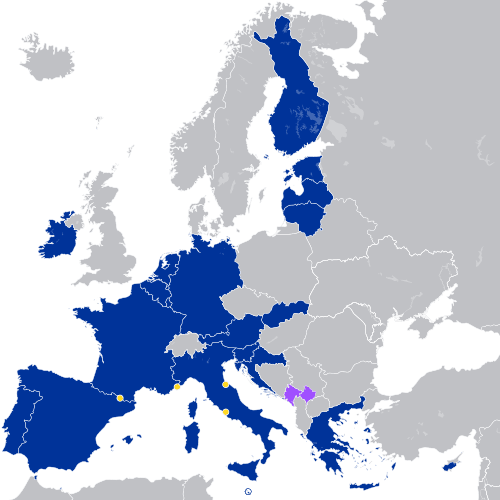
Eurozone
ORGANIZATION
Region of EU countries using the Euro
Eurozone Financials
ORGANIZATION
Organization referenced in documents

FactSet
ORGANIZATION
American financial data company
Fed FOMC
ORGANIZATION
Organization referenced in documents
Federal Open Market
ORGANIZATION
Organization referenced in documents
Federal Open Market Committee
ORGANIZATION
Committee of the United States Federal Reserve

Federal Reserve
ORGANIZATION
Federal Reserve System, central banking system of the United States
German Bund
ORGANIZATION
West Germanic language native to Central Europe
GOP
ORGANIZATION
American political party
Inventories
ORGANIZATION
Organization referenced in documents
Investment Research
ORGANIZATION
Organization referenced in documents
Kuhne+Nagel
ORGANIZATION
Organization referenced in documents

Logitech
ORGANIZATION
Swiss global provider of peripherals
Master Limited Partnerships
ORGANIZATION
Organization referenced in documents

Materials
ORGANIZATION
American band led by Bill Laswell
MSCI APAC
ORGANIZATION
Organization referenced in documents

MSCI Asia
ORGANIZATION
Biggest continent in the world

Partners Group
ORGANIZATION
Swiss-based global private equity firm
PIE World
ORGANIZATION
Organization referenced in documents
PMI Manufacturing Eurozone
ORGANIZATION
Organization referenced in documents

Reuters
ORGANIZATION
International news agency
Soreads for Financials
ORGANIZATION
Organization referenced in documents

Staples
ORGANIZATION
American multinational office supply retailing corporation
Sulzer
ORGANIZATION
Organization referenced in documents
Tactical
ORGANIZATION
Organization referenced in documents
Telecom
ORGANIZATION
Organization referenced in documents
Telecom and Utilities
ORGANIZATION
Organization referenced in documents
the ,,Commission de Surveillance du Secteur Financier”
ORGANIZATION
Organization referenced in documents
the Bank of England
ORGANIZATION
Central bank of the United Kingdom
the Bank of Japan
ORGANIZATION
Organization referenced in documents
the European Central Bank
ORGANIZATION
Organization referenced in documents
the Financial Services Compensation Scheme
ORGANIZATION
Organization referenced in documents
the London Stock Exchange
ORGANIZATION
London Stock Exchange

the Ministry of Finance
ORGANIZATION
Government ministry responsible for fiscal policy
The Monetary Authority of Singapore
ORGANIZATION
Organization referenced in documents
the People's Bank of China
ORGANIZATION
Organization referenced in documents
the US Fed
ORGANIZATION
Organization referenced in documents
Thomsen Datastream
ORGANIZATION
Organization referenced in documents

Troika
ORGANIZATION
Organ with possible joint informal control over national policies, made by the European Commission, the European Central Bank and the International Monetary Fund

U.S. Treasury
ORGANIZATION
United States Department of the Treasury, executive department of the federal government
UBS (France) S.A.
ORGANIZATION
Organization referenced in documents
UBS (Luxembourg) S.A.
ORGANIZATION
Organization referenced in documents

UBS AG
ORGANIZATION
Swiss multinational investment bank and financial services company
UBS Belgium NV/SA
ORGANIZATION
Organization referenced in documents
UBS CIO
ORGANIZATION
Swiss multinational investment bank and financial services company
UBS Deutschland AG
ORGANIZATION
Organization referenced in documents
UBS Global Index
ORGANIZATION
Organization referenced in documents
UBS Investment Management Canada Inc.
ORGANIZATION
Organization referenced in documents
UBS London
ORGANIZATION
Capital and largest city of England and the United Kingdom
UBS Research
ORGANIZATION
Organization referenced in documents
UBS View
ORGANIZATION
Organization referenced in documents
UBS Wealth Management & Swiss Bank
ORGANIZATION
Organization referenced in documents
UBS Wealth Management Australia Ltd.
ORGANIZATION
Organization referenced in documents
UBS Wealth Management Canada
ORGANIZATION
Organization referenced in documents
USDA WASDE
ORGANIZATION
Organization referenced in documents
Utilities
ORGANIZATION
Utility company or services

Belgium
LOCATION
Country in western Europe
Central and Eastern
LOCATION
Geographic and cultural region of Europe
China Indonesia
LOCATION
Location referenced in documents

Columbia University
LOCATION
Private Ivy League research university in New York City
Euro zone
LOCATION
Location referenced in documents

Frankfurt am Main
LOCATION
City in Hesse, Germany

Hong Kong
LOCATION
City and special administrative region of China

Hungary
LOCATION
Country in Central Europe

Luxembourg
LOCATION
Country in Western Europe

Malaysia
LOCATION
Country in Southeast Asia

Middle East
LOCATION
Geopolitical region encompassing Egypt and most of Western Asia, including Iran

New South Wales
LOCATION
State of Australia

North America
LOCATION
Continent

Norway
LOCATION
Country in Northern Europe

Riyadh
LOCATION
Capital and largest city of Saudi Arabia

Saudi Arabia
LOCATION • 2 mentions
Country in West Asia

Sudan
LOCATION
Country in Northeast Africa

Sydney
LOCATION
Capital city of New South Wales, Australia
the Strait of Hormuz
LOCATION
Strait of Hormuz, body of water in the Persian Gulf

Western Europe
LOCATION
Western part of the European continent

Yemen
LOCATION
Country in West Asia
Statistics
Pages:44
Entities:136
Avg. OCR:92.3%
Sponsored