HOUSE_OVERSIGHT_023666 - HOUSE_OVERSIGHT_023706
Document HOUSE_OVERSIGHT_023666 is a set of government records from the House Oversight Committee providing background information on Dr. Robert Lawrence Kuhn, an expert on China.
The document details Robert Lawrence Kuhn's extensive work with Chinese state leaders and the Chinese government, including his commentary on Chinese media outlets, advising the government, speaking at the launch of Xi Jinping's book, and providing analysis of CPC National Congresses. It highlights his roles as a public intellectual, corporate strategist, and commentator on China, with mentions of his books and media appearances.
Key Highlights
- •The document is sourced from the House Oversight Committee.
- •Robert Lawrence Kuhn is identified as a key figure with close ties to Chinese leadership, including Xi Jinping.
- •Kuhn has been a commentator on major media outlets regarding China and US-China relations.
Frequently Asked Questions
Related Links
Books for Further Reading
Document Information
Bates Range
HOUSE_OVERSIGHT_023666 - HOUSE_OVERSIGHT_023706
Pages
41
Source
House Oversight Committee
Date
June 1, 2012
Original Filename
Dr. Robert Lawrence Kuhn - bio, media, press - September 2018.pdf
File Size
8.54 MB
Document Content
Page 1 - HOUSE_OVERSIGHT_023666
Robert Lawrence Kuhn Dr. Robert Lawrence Kuhn is a public intellectual, international corporate strategist and investment banker, and a renowned expert on China. He is a commentator on the BBC, CNN, CGTN, CCTV, CNBC, Fox Business, Bloomberg, and other media; senior political/economics commentator on China Global Television Network (CGTN); and a columnist in China Daily and South China Morning Post. For 30 years, Dr. Kuhn has worked with China’s state leaders and advised the Chinese government. He spoke at the launch ceremony of President Xi Jinping’s book, The Governance of China; he provided live commentary on CNN for Xi’s policy address during his U.S. state visit (2015); and he introduced to foreign audiences Xi as “core” of the CPC (2016). He is interviewed extensively on US-China relations, including the trade war (2018). For the 19" CPC National Congress (October 2017) and 13" National People’s Congress (March 2018), Dr. Kuhn was interviewed extensively, including 24 times on CNN and BBC World News / BBC World Service, and he was quoted in newspapers and websites in U.S., Hong Kong, Italy, India, etc. His full-page, in-depth analyses of the 19'* CPC National Congress were featured in China Daily to open the CPC Congress (“Historical Starting Point for New Stage of Development’) and to close the CPC Congress (“New Era on the Road to 2050”). His essay at the opening of the Party Congress was published in People’s Daily. Dr. Kuhn is the author of How China’s Leaders Think (featuring President Xi), and The Man Who Changed China: The Life and Legacy of Jiang Zemin (China's best-selling book of 2005). He wrote the Introduction for Understanding the CPC, the book series by China’s ruling party, the Communist Party of China (2015). Shanghai Media Group and Dr. Kuhn are co-creators and co-producers of the award-winning, five- part series China’s Challenges, broadcast internationally (PBS stations in the U.S.) and in China. Dr. Kuhn is writer and host; Peter Getzels is director. China’s Challenges won first prize in China News Awards twice (2013, 2018). A second season won an Emmy Award (Los Angeles, 2016). A third season (on “Xi Jinping Thought” and China 2020 / China 2050) is broadcast in late 2018. Dr. Kuhn is the creator, co-producer and host of “Closer to China with R.L.Kuhn” on CGTN (China Global Television Network, co-created by Adam Zhu), the weekly series with unique access that features China’s thought leaders and decision makers, broadcast globally and in China. Closer To China focuses on China’s politics and government, CPC/Party, economics and society, reform and development, and international affairs and relations, with emphasis on Xi’s policies and philosophy. A special documentary on President Xi’s “targeted poverty alleviation” campaign, co-produced by CGTN, Dr. Kuhn and Adam Zhu, is in production. Dr. Kuhn is host and writer. Peter Getzels is director. Dr. Kuhn was one of only two Americans, with Henry Kissinger, named as the first “China Visionaries”. He was selected by Oriental Outlook magazine (Xinhua News Agency) as one of the all-time, top-ten influential supporters of China’s ruling party/CPC (he is the only one living). An international corporate strategist and investment banker, Dr. Kuhn works with major multinational corporations, CEOs and C-Suite executives, in formulating and implementing China strategies by applying his “politico-strategic framework’. He was president/co-owner of the largest middle-market M&A firm in the U.S. (sold to Citigroup in 2000). Dr. Kuhn is creator, writer and host of Closer To Truth (produced and directed by Peter Getzels), the long-running PBS/public television series on science and philosophy (broadcast continually since 2000, over 275 TV episodes; more are in production). Dr. Kuhn is author or editor of over 30 books on China, corporate strategy, finance, science and philosophy (including, with the philosopher John Leslie, The Mystery of Existence: Why is there Anything At All). Dr. Kuhn is chairman of The Kuhn Foundation which supports new knowledge in science and philosophy, classical music, and informed relations between the United States and China. The Kuhn Foundation produced the feature documentary “Khachaturian” on the life and music of the Armenian-Russian composer Aram Khachaturian, which won the Best Documentary award at the Hollywood Film Festival. Dr. Kuhn has a B.A. Human Biology (Johns Hopkins); Ph.D. Anatomy/Brain Research (University of California at Los Angeles, UCLA); MBA (Massachusetts Institute of Technology, MIT). HOUSE_OVERSIGHT_023666
Page 2 - HOUSE_OVERSIGHT_023667
Future of U.S.-China Trade Relations Robert Lawrence Kuhn, August 27, 2018 QUEST MEANS BUSINESS HOUSE_OVERSIGHT_023667
Page 3 - HOUSE_OVERSIGHT_023668
CNBC Squawk on the Street US-China Tariffs - US-China Trade War Robert Lawrence Kuhn, August 22, 2018 DBCnBcC SEARCH MENU MARKETS BUSINESS NEWS’ INVESTING’ TECH POLITICS CNBC TV US and China have self- fulfilling prophecies on both sides for trade... 10:40 AM ET Wed, 22 Aug 2018 STREET Cl fee ROBERT KUHN Long-time advisor to Chinese gov't officials and - : Robert Kuhn, China government advisor and “How China’s _ multinational : Leaders Think” author, discusses his expectations for the next _ corporations round of U.S.-China trade talks that begin today. Mie I leovawscy FcHINA TRADE TALKS RESUME |. fq WATCH CNBC LIVE TV meee OOOO HOUSE_OVERSIGHT_023668
Sponsored
Page 4 - HOUSE_OVERSIGHT_023669
FOX BUSINESS FOX\| Watch Live Show Clips News Clips BUSINESS — Aa Will tariffs change China's behavior 2M a . ee RT) on intellectual property theft? | = click here Fox Business Channel Finder | . ! @MorningsMaria Find the Fox Business Network in your area. ; “7 ee | NEWS U.S. VS. CHINA | > FOX ALERT A AS ol ag foxbusiness.com/channelfinder HOUSE_OVERSIGHT_023669
Page 5 - HOUSE_OVERSIGHT_023670
oo oe 1 RD ; TER | PEAT | AH LW >> € RBA (www.cctv.com) HPRBREED, H KREME cVoceaw U BRE RIMM, BRM. ES. RR. AS — PC#Pin [ A— PRE AAO Bah ts BAR SEP NA CCTV-1S HFM @ —-BiNE305 MEHS0DIERAT FBT PHRASE SITS Ki: RAL 201846084 18H 12:19 Cen 13 +m sis RAM (wwwcctv.com) APRBMAED, % sa {shia Ala e: «Szeto Ses REAM, VAM (OR RR. HS 45% | TEA | MR MR D—KOAAMR ED EORSIP IS, RBH oO Pcesw =~ ee we wrt ee - VE Hig pas mEKLy EASY COTV-13 RF IER #71305 [MHSIODISRAT FAN PHRACETE RTE SM: RL 20184608 4H 18H 12:19 CEIVa3 1] ] yx eOucetn vine Som ee ~~ 12:728ithttp://www.cyberpolice.cnRR# HOUSE_OVERSIGHT_023670
Page 6 - HOUSE_OVERSIGHT_023671
BiBICI President Xi Jinping-NPC Closing Session Robert Lawrence Kuhn March 20, 2018 HOST: Well joining me now from Beijing is Dr. Robert Lawrence Kuhn, advisor to the Chinese government and author of the book How Chinese Leaders Think. Thanks so much for joining us here on the program. Usually the NPC is seen as sort of a choreographed event: we know what to expect. But this time it felt very different. RLK: It certainly was different. You have to look at this year’s National People’s GIGS WORLD NEWS | THE PHILIPPINES a. pis) US RETAIL GIANTS ASK Ti HOUSE_OVERSIGHT_023671
Sponsored
Page 7 - HOUSE_OVERSIGHT_023672
BiBICI Congress - and the so-called Two Sessions - as part of the “political season” which begins with the party congress in October and goes now to the government sessions in March. And normally there is a predictability and what happens at the National People’s Congress is not very significant. RLK: This year is different: China talks about a “New Era” — and this is not just words, it is really the case. If we look at the vision that Xi Jinping gave at the party congress, what we see here at the National People’s Congress we see as the implementation of that vision across a very broad front. CHINA'S NATIONAL PEOPLE'S CONGRESS CLOSES Xi: China would defeat any attempt to divide country CHINA'S NATIONAL PEOPLE'S CONGRESS CLOSES i officials to visit island EIEN WORLD NEWS EN 106.43 Missi YOU CAN GET MORE ON ALL THES) HOUSE_OVERSIGHT_023672
Page 8 - HOUSE_OVERSIGHT_023673
BiBICI RLK: People have focused on term limits - understandably so - but the change is only for the presidency. Xi Jinping by having been made “Core” of the Party in October 2016 - actually with that designation undermined “collective leadership” - and when Xi’s name was put into the Party Constitution as the contemporary arbiter of Marxism - on which the Party is based and the Party rules the country - he then became the overarching leader, no matter what position he would hold. (a A=— Local Time 22:05 CHINA'S NATIONAL PEOPLE'S CONGRESS CLOSES Xi spoke of a “China solution" to world problems Time 22:05 CHINA'S NATIONAL PEOPLE'S CONGRESS CLOSES Xi spoke of a "China solution" to world problems EIS WORLD NEWS S$ AT bbc.com/news . CHECK OUT OUR FACEBOOK Pi HOUSE_OVERSIGHT_023673
Page 9 - HOUSE_OVERSIGHT_023674
CNN International President Xi Jinping, China, Term Limits Robert Lawrence Kuhn —- March 12, 2018 HOST: Let’s talk about President Xi Jinping with our gues,t Robert Lawrence Kuhn, a longtime advisor to the Chinese government, the author of How China’s Leaders Think, and the host of Closer to China with R.L. Kuhn on the China Global Television Network. Thanks for being with us. RLK: Hi Natalie. Interesting day we’re having. HOST: Isn’t it, though? So, I guess the first question would be to follow up on your book title, how China’s leaders think. What is Xi Jinping thinking with this move? PARLIAMENT VOTES TO END PRESIDENTIAL TERM LIMITS CAN 9:32 AM CET CNN NEWSROOM HOUSE_OVERSIGHT_023674
Sponsored
Page 10 - HOUSE_OVERSIGHT_023675
RLK: First of all, we have to understand it in context. There are twenty-one different clauses in this Constitutional Amendment, and the whole point of it is to strengthen the governance system of China. Now China is a party-state system where the party controls the state. Everyone is focusing on the abolition of term limits, and it is important, but we need to understand the context within this party-state system. In October of 2016, Xi Jinping was made “Core” of the Party, which meant the collective leadership of the past was no longer operative; that X was, in essence, for the Party, the decision maker. Then just this last October at the 19th CPC National Congress, his name was put into the Party Constitution as “Xi Jinping Thought on Socialism with Chinese Characteristics for a New Era,”... it’s a big phrase. RLK: But what it means is that Xi is the arbiter of Marxism and party theory. That means in terms of being the Core ot the Party and the interpreter of Marxism that gives him ultimate power. He doesn’t even need a formal position when has those two and the Party continues to run the country. HOST: Is that a good thing? How can it be a good thing for the country when one person has the ultimate power? RLK: There are two issues. One is how it happened: Now the abolition of presidential term limits coordinates with the Party and military, together the three largest positions. So they’re now coordinated because he already had that power in the Party and the military. - via Skype ei—BAm labs he TOMS RART RAS HAS Robert Lawrence Kuhn | Author, "How China's Leaders Think" 33 am amt CNN NEWSROOM WES t=84 PHAR PARLIAMENT VOTES TO END PRESIDENTIAL TERM LIMITS 9:33 AM CET CNN NEWSROOM HOUSE_OVERSIGHT_023675
Page 11 - HOUSE_OVERSIGHT_023676
President Xi Jinping, China, Term Limits Robert Lawrence Kuhn — Minxin Pel March 5, 2018 HOST: When it comes to trade, one country more than any other has been the target of Trump’s rhetorical wrath, and that’s China. But my next guest tells me that the promised tariffs won’t bother China much, as we’ve been discussing. In any way, they in China are dealing with much more important things, like the proposal for the rubber stamp Party Congress which starts its new session today to change the Constitution, and lift all term limits on President Xi Jinping, effectively making him president for life. Now, I’ve been talking to Minxin Pei: he’s a professor of government at Claremont McKenna College in California, and to Robert Lawrence Kuhn, who is the author of How China’s Leaders Think, and he is the host of a show on the government-run CCTV news channel in Beijing. Gentlemen welcome to you both. Let me start by asking you, Robert Lawrence Kuhn there in Beijing. From the Chinese government perspective, these tariffs that the president of the United States has announced, how much does it concern Beijing? do? | tan, a ee HOUSE_OVERSIGHT_023676
Page 12 - HOUSE_OVERSIGHT_023677
RLK: Well certainly it’s a concern, but I would call ita minor annoyance as opposed to something extremely serious. They have a lot on their plate here. The last thing they want is a trade war with the U.S., but they have to react. If the U.S. does something, there has to be something that they will do in retaliation. They will ratchet it down. They will signal, as you do, that they do not want to accelerate this, but to save face and to be appropriate, they'll have to match it. HOST: To you Minxin Pei, how do you see this playing out? MP: If the investigations find China at fault, or guilty of some practices, then the US has a wide range of options to punish China ona trade front. And if these things happen, then US-China trade war will take place. Another thing I want to say is that US-China relations have turned a corner. This is a relationship that has headed toward a long period of confrontation, and adversarial relationships. So what is going to happen on the trade front is part of a much larger picture of geopolitical rivalry, if not competition. HOUSE_OVERSIGHT_023677
Sponsored
Page 13 - HOUSE_OVERSIGHT_023678
Bloomberg Bloomberg TV Worldwide President Xi, China, Economy Robert Lawrence Kuhn — March 5, 2018 HOST: You were there at the Great Hall of the People. What was your main takeaway from what some have described as Li Keqiang’s impossible challenge: how to deleverage, how to take away stimulus, and still keep 6.5% growth? RLK: I don’t take the 6.5% growth as the primary objective here. I mean you have to look at what these National Peoples Congresses are. They’re not setting the vision and the strategy. That was set at the party congress in October. What we're dealing here is the implementation of the policies. If you attend these every year you know they all look and sound the same because it’s the same structure, same kind of structure of numbers, so what you do is look for the differences. What are those subtle differences between one year and another. That’s what I focus on at these congresses. HOST: What’s the main difference you saw? HOUSE_OVERSIGHT_023678
Page 14 - HOUSE_OVERSIGHT_023679
BiBICI BBC World News Xi Jinping and the New Politburo Standing Committee Robert Lawrence Kuhn October 25, 2017 HOST: We're going to put a question to Robert Lawrence Kuhn, who’s a long-time advisor to the Chinese government. Robert, great to see you again. You were with us at the very beginning of the Party Congress and you were at the Congress today when it finished. Did you have any vision, any inkling that President Xi Jinping would take on so much authority? Also, what about the fact that there is no successor candidates among the new leaders? RLK: I was interviewed in early 2012 by a well-known American television network and the question put to me, in January of that year, was, “isn’t Xi Jinping going to be a very weak leader because he was not appointed by Deng Xiaoping and he has no strong base of support?” TESL A SOLAR POWER ARRIVES IN PUERTO AI HOUSE_OVERSIGHT_023679
Page 15 - HOUSE_OVERSIGHT_023680
CW CNN International Xi Jinping and the New Politburo Standing Committee Robert Lawrence Kuhn - October 26, 2017 HOST: The author of How China’s Leaders Think: The Inside Story of Past, Current and Future Leaders, Robert Lawrence Kuhn is a longtime advisor to the Chinese government. He comes to us once again from Beijing. We talked this time yesterday. Good to have you back. And we discussed yesterday what we would learn about that lineup of the standing committee. It hadn’t been revealed at that point that we spoke, but we now know and is it correct to say the most significant thing is no sign of a leader in waiting? RLK: I think the most significant sign is who the people are and how they relate to each other. It’s a group that actually respects traditional norms. » F RLK: There was thought that Wang Qishan, for example, might violate norms by being on the Standing Committee after the traditional retirement age and that’s not the case. There is balance among the member in terms of their geographies, even their political affiliations within the party which internally are important. Two are from Shanghai, two are from the Communist Youth League - one is actually from Shanghai and the Youth League as well but he’s really from Shanghai - two have a long relationship with General Secretary Xi. And then of course General Secretary Xi has the overarching power as everyone says - and that is correct and will be correct for a long time to come. tobert Lawrence y CHINA'S NEW POWER PLAYERS ./ LIVE Ii PRESIDENT XI CEMENTS POWER, REVEALS LEADERSHIP TEAM | CEMENTS POWER, REVEALS LEADERSHIP TEAM fe" >Kuhn Author, "How China's Leaders Think” was ~ sss08 TODAY HOUSE_OVERSIGHT_023680
Sponsored
Page 16 - HOUSE_OVERSIGHT_023681
| PBs e+ Le—m ° Thr a iret e ee 4 CCTW/CGTN ; 12:07 Pu BREAKING NEWS CHINA NAMES NEW SEVEN-MEMBER LEADERSHIP COMMITTEE (RS. @ONBRK CHINA'S COMMUNIST PARTY ALREADY ELEVATED STATURE OF PRESIDENT XI! JINPING al > i HOUSE_OVERSIGHT_023681
Page 17 - HOUSE_OVERSIGHT_023682
CHINA DAILY Tuesday, January 23, 2018 C VISION CHINA 7 Observers offer fresh insight for new era Intellectual hails progress made in past while warning of challenges that lie ahead By LIYANG [email protected] Robert Lawrence Kuhn has many titles, ranging from investment banker to anatomy researcher. But he is better known in China asa spe- cialist who knows the country inside out. Over the past 29 years, he has visited almost every provincial region and spoken with people from all walks of life, including some who have gone on to become State lead- ers. “Tt’s been a great gift to my life to be able to learn so much about Chi- na’s rich civilization, political theo- ries and the whole development,” he said. Kuhn, who is from the United States, learns as an outsider but communicates as an insider. In his talk show Closer to China with R.L. Kuhn on the China Global Televi- sion Network, he presents China’s complex story to the world through candid, intimate discussions with the country’s decision-makers. In a hotel suite in Wangfujing, downtown Beijing, one busy lunch- time last week, Kuhn shared his thoughts on Chinese politics with China Daily, between exercising and a meeting of the Communist Party of China, which he had been invited to attend as an observer. He spoke passionately about the 19th CPC National Congress, which was held in Beijing in October, describing it as “a milestone con- gress that set the agenda for more than 30 years”. The Party proposed two new con- cepts at the congress — “a new era of socialism with Chinese charac- teristics” and Xi Jinping Thought on Socialism with Chinese Charac- teristics for a New Era, which has been written into the Party Consti- tution. “To understand China today, it is critical to appreciate what the new era means. ... I like to understand new era in two categories: its char- acteristics at home and abroad, and its timeline,” Kuhn said. He has obviously developed his own way of explaining terms with Chinese characteristics. That is to break down the characteristics, domestically and internationally, rather than delve into the term. He listed a number of challenges in China’s new era, from pollution to medical care, among which he said the biggest is the rising expectations of the people at home, because “now that the people have some, they want more”. The complex international envi- ronment is the main characteristic of the new era, as the world is frag- mented by diverse problems and challenges, he said. While explaining what he called the timeline of the new era (2017, 2021, 2049) and expounding his understanding of Xi Jinping I like to understand new era in two catego- ries: its characteristics at home and abroad, and its timeline.” Robert Lawrence Kuhn, investment banker and anatomy researcher Q&A | ROBERT LAWRENCE KUHN You hold multiple titles now. How have you managed to master so many different fields? Do they have any- thing in common? There's one word to describe the commonality, that is “pas- sion” Whatever I’ve done I want to have passion for it. To expand that a bit, it’s the pas- sion to learn. 'm not here to teach, I love to learn. When I write a new book, it’s some- thing I want to learn about. I use that vehicle to learn. So passion about learning is the common denominator. China has given me a hugely rich life because of everything I’ve learned here. Thought on Socialism with Chinese Characteristics for a New Era — which he broke down into three cat- egories: serve the people, national rejuvenation, and governance mod- ernization — Kuhn showcased his knowledge of the Party’s files, which he has clearly learned by heart. He recited almost every key point of the 68-page report Xi delivered to the congress in Octo- ber. More important, he made con- nections between these points, presenting them in a vivid way, sea- soned with personal experiences and thinking. When asked about the effects of the anti-corruption campaign, he immediately listed 10 objectives. That's his style of approaching Chi- nese issues — divergent thinking and a vigilance not to lose sight of the connections between different points. From left: oo . VISION CHINA - New.Era, New Thinking =. RINT ATA hao Jianguo, head of the international communication bureau of the Publicity Department of the Communist Party of China Central Committee; Jiang Qingzhe, Party chief of the University of International Business and Economics; China Daily reporter Andrew Moody; Guo Weimin, vice-minister of the Information Office of the State Council; speakers Robert Lawrence Kuhn and Liu Xin; Zhou Shuchun, publisher and editor-in-chief of China Daily; and Zhang Jianmin, head of translation and interpretation for the Ministry of Foreign Affairs, pose for a photo at the inaugural Vision China event on Monday at UIBE. FENG YONGBIN/ CHINA DAILY British journalist tells China’s story to the world By LIUXUAN [email protected] Despite living and working in Chi- na for a decade, Andrew Moody’s abil- ity to speak Mandarin is still at a basic level. Yet that has not stopped the award-winning journalist from inter- preting China’s story for the world. Moody joined China Daily nine years ago and is now a senior corre- spondent. He has written more than 150 cover stories for the paper’s Euro- pean Weekly and African Weekly, examining a wide range of issues including the Belt and Road Initiative. The job has provided him with first- hand experience of how China is developing as well as the chance to record reactions from the outside world, especially in the West, toward the nation’s growth and changes. He was at the Great Hall of the People to hear General Secretary Xi Jinping deliver a report to the 19th National Congress of the Com- munist Party of China in October, when the concept of a “new era” was first mentioned. “The consensus of the various peo- ple I spoke to in the hours after the speech was that China's entering anew era could be a momentous turning point in world history,’ Moody said. According to his interviews, he said, people believe that a more confi- dent China is striding into a world that it also is helping to shape. Moody has his own understanding of the new era. With 40 years of reform and opening-up, he said China has reached a point where it can move on in many ways, such as in foreign policy, global governance and domes- The real fun of reporting in China is the closeness to the actual story, the big fascinating story of China merging into the 21st century.” Andrew Moody, China Daily senior reporter ticreforms. “China has reached anew junction and has to move forward.” The British journalist has written many stories that explain China tothe rest of the world, and these have brought him many honors, including being named a State High-End Project Foreign Expert. “J like reporting on China because it’s perhaps the 21st century’s most fascinating story,” he said. “The real fun of reporting in China is the close- ness to the actual story, the big fasci- Q&A ANDREW MOODY How do you overcome the challenges of showing the real China to the world, especially to those who have biases against China? It's a long-term thing, and you cannot change this over- night. There are negative per- ceptions about China. It’s about engagement. If China has much more interactions with the rest of the world, then people will see China as it actually is. One of the 2035 objectives is to better increase China’s soft power. Organiza- tions like China Daily can actu- ally play a role in improving China’s soft power. But I do think it’s a long-term process, and China doesn’t need to be too sensitive toward criticism. nating story of China merging into the 21st century, the stories that may- be Western media don’t really have the chance to interview.” Moody sees his task as communi- cating China to a global audience, and there are still a number of things that need to be done, he said. “I go back to the UK quite a lot, and I still don’t think that people are aware of the impact of a much bigger Chinese economy and China’s being a more significant player in the world,” hesaid. “AllI can doisto reportand do stories one by one.” Broadcaster sees choice and confidence in rising nation By YANG WANGLI [email protected] For 20 years, Liu Xin has had a sin- gular goal: to build a bridge of under- standing between China and the outside world. The television presenter began working for China Central TV, the State broadcaster, in 1997, two years after becoming the first Chinese to take part in — and win — the Interna- tional Public Speaking Competition. Early last year, her desire to share China’s story received a major boost when she was chosen to host The Point, a prime-time discussion show that airs weekdays on the China Glob- al Television Network. She said that China entering a new era means three things: opportunities, challenges and responsibilities. “My winning speech in that 1995 national competition was about choice,” she said. “After 15 years of reform and opening-up, we Chinese now enjoy an abundance of choice in our daily lives” After listening to General Secretary Xi Jinping’s report at the opening of the 19th National Congress of the Communist Party of China, Liu said she was impressed with his use of the word “confidence”. “Tt’s the confidence China has devel- oped through knowing that our sys- tem works. The confidence about who weare as a people, as a culture. And it’s the confidence about our future role in the world,” she said. “As media workers, we believe we have a great story to tell. In the past, people relied on a few correspondents or experts for information and opin- ions on China. But more people are tuning in to Chinese media for infor- mation, both traditional platforms such as TV and online.” As more questions emerge in the minds of those watching from outside China, Liu said the opportunities to tell stories from inside the country are growing. However, so too are the chal- lenges. “Because of the ideological differen- ces between China and the West, Chi- na has always been the subject of ‘Western media criticism, which is often downright bashing based on falsehoods,” she said. Now that China has defied all kinds of predictions of a collapse or econom- ic hard landing, Western observers are having a hard time explaining the Chi- na phenomenon, she said, adding that the result is an ignorance-based supe- riority complex mixed with bewilder- ment and iced with jealousy. During her 30-minute program, Liu conducts live interviews with guests in the studio or via satellite link to get a Chinese perspective on two to three top- ics that affect people around the world. “T understand the urgency to be more assertive, but I believe we always need to be aware of the danger of put- ting feelings before reason, putting opinions before facts,” she said. “Nationalism is my biggest enemy. “President Xi has said we need to improve the quality and effect of devel- opment. I believe this also applies to China’s international communication. The Chinese people will work hard toward a community of ashared future, regardless of how others view us.” Meanwhile, Liu has a job to do. “Asa journalist, our duty is to tell China’s story as it is, one topic at a time, one show at a time,” she added. China has always been the subject of Western media criticism, which is often downright bashing based on falsehoods.” Liu Xin, host of The Point on China Global Television Network Q&A | LIUXIN As a professional journalist, what do you think China's mainstream media could do to better report China to the outside world in such a media transformation age? It’s challenging. I think we need to be aware of new tech- nology. And the content is very important. If we’re more confi- dent, we can really be more sincere, be more at ease with our problems and our achieve- ments. So let’s have a sincere conversation, not shy away from the problems we're fac- ing. That’s why I say let’s tell the China story as it is. It’s not 100 percent about achieve- ments. Every day we see mixed news, we have mixed feelings, so let’s be factual, let’s be sin- cere and let people decide whether they want to watch us or not. This is going to take time, but I think if we follow the right philosophy, the right steps, we're going to make it. HOUSE_OVERSIGHT_023682 What they say Vision Chi- nais the first high- end event organized by China Daily and UIBE after the two sides launched a partnership. By telling China's stories in an objective and rational manner, it aims to help students get to know a real China and an objective world, and to under- stand China in the new era. Wang Jiaqiong, president of the University of International Business and Economics I've learned alot from Vision Chi- na today. What impressed me most is how to eliminate bias against China when telling China's stories. The three experts shared a common opinion, which is to show a true China and not care too much about comments from the outside world. The sincerest story is often the most touching one. Zhu Yue, a senior student majoring in international poli- tics from Beijing International Studies University Itwas an interesting lecture. It was good to understand certain aspects about China. It would be good to have things like this abroad because it's about China. You don’t have to explain China to the Chinese people, but you need to explain it to the out- side world. Nektarios Palaskas, science and technology counselor for the Swiss embassy This event was very interesting. You invited distin- guished speakers, is and all of them are of global thinking and have a vision about China. China is boom- ing, and everyone is interest- ed. | enjoyed hearing the speakers’ ideas about how China will be in the future. | came here with an open mind. Ratthawoot Nanthaikuakool, first secretary of Thai embassy
Page 18 - HOUSE_OVERSIGHT_023683
Al2 Saturday, March 10, 2018 INSIGHT Power with purpose Robert Lawrence Kuhn explains why abolishing presidential term limits may well be good for China o interview delegates and officials at the annual National Peo- ple’s Congress in Bei- jing, interspersed with being interviewed in the interna- tional media about China abol- ishing term limits forits president, is to inhabit parallel universes. Delegates and officials focus on clusters of issues from control- ling financial risk and reducing pollution to scientific innovation and business stimulation, plus enhancing and institutionalising China’s anti-corruption cam- paign with a powerful National Supervision Commission. The international media, no surprise, focus on the constitutional amendment ending term limits, assuming President XiJinping will now serve in a for-life dictator- ship, reminiscent of Mao's China, the Soviet Union, the Kim family in North Korea and some African countries. It is no challenge to explain why abolishing term limits is bad for China - dependency on one human being who is not omni- scient but is hostage to fortune, fewer and weaker checks and balances, forced conformity in a complex society with no easy an- swers, etc. The system begins stronger in that hard choices can be made and consistency main- tained, butit could become brittle in that officials are more wary and may say things they do not believe. Itisa challenge to explain why abolishing term limits is good for China, so that's what! will do. First, some background. There are three separate issues being conflated: the significance of end- ing term limits, the intended con- sequences and the unintended consequences. Though terminat- ing the two-term limit for China's presidency captures headlines, it is more the symbolic, final step ratifying Xi’s near-absolute power than the big breakthrough itself. Many expect this experiment to end badly for China. It is indeed an experiment but its end is not set Xi’s prior designation as “core” of the Communist Party in October 2016 and the inscribing of “Xi Jinping Thought...” into the party constitution in October 2017 were more meaningful. Moreover, the Politburo Standing Committee, the highest authoritative body in China, unambiguously supports Xi. China watchers see the front page of People's Daily - published the day after the new Standing Com- mittee marched out on stage — which featured Xi’s photo on top, many times larger than the small- er, subservient photo of all seven members lined up on the bottom. All this reconfirms that, in a system where the party controls the state - especially where the pany ‘is Marxist and ideology is its asis for being — Xi, as core of the party, with his name inscribed in the constitutions of party and state as the contemporary arbiter of Marxism, will be the uncontest- ed, overarching leader of China for the rest of his sentient life. For intended consequences, the official line is that the purpose is national cohesion brought about when the three top leader- ship positions — general secretary ofthe party, chairman of the Cen- tral Military Commission and president of the republic - are aligned temporally and held bya single person. his makes sense, but as a primary, proximal motivation, itis not entirely persuasive. The current structure has existed for decades without outcry or angst (notto mention that the three po- sitions could be unified by install- ing term limits on the other two). The “newera”, marked by eco- nomic, social and global com- plexities, is said to require firm and consistent leadership, mak- ing moot inner party struggles and even mitigating political gos- sip, facilitating focus on the tasks of governance and development. Specifically, because advancing etd) reformhasbecome more difficult, with entrenched interest groups resisting change, the message must now go forth that all must get with the programme, because you can’t outwit or outwait Xi. Because, it is said that only Xi has the vision, experience, com- petence and character to bring about “the great rejuvenation of the Chinese people”, especially from 2020 to 2035 and ultimately to 2050- bringing China to global centre stage — Xi’s unimpeded leadership is deemed essential. China cannot afford “downtime” to accommodate a change of leadership, and after Xi’s success at the 19th National Party Con- gress came the time to make clear that he will call the shots for the foreseeable future. Some argue that doing away with term limits shows the superi- ority of the Chinese system as it allows flexibility in matching leadership to requirements (though what national leader, when extending his reach, hasnot claimed “current requirements” as justification?) The party-run Global Times stated that ending term limits does notmean China has reverted to president-for-life tenure. (But who can deny that however long Xi holds the top positions seems largely up to him?) As for the unintended conse- quences, the almost unanimous, disparaging foreign reaction — other than US President Donald Trump’s-didnotburnish China's international image. More worrisome would be a reluctance by officials to offer constructive opposing views on central policies. By stressing term limits, the international media misses fundamental changes going on in China ~ this ee, innovation, streamlining of government, faci- litation of business (cutting bureaucracy and reducing taxes), rural revitalisation and rural land reform. The 13th National Peo- ple’s Congress shows how the grand vision and mission of the 19th National Party Congress is translated into specific strategies and policies. Ifone sees only term limits, one cannotvisualise thebig picture. AsforXimaintaining the presi- dency perpetually, it doesn’tactu- ally matter much thisis the deep insight of how China’s party-state system works. Xi as core of the party and “Xi Jinping Thought...” as the party's (andnowthestate’s) guiding principle means that Xi can transfer titular party leader- shipand/orthe presidencyto oth- ers and still maintain his overarching power. It may well be that, after serving two or even three more terms, rather than try- ing to find and install another leaderlike himself, he will move to bring about true democracy with- inthe I. Here's he best case. Xi will not be leader-for-life, but leader long enough to bring about China's national rejuvenation and estab- lish a Chinese kind of democratic norms. Could Xi continue until around 2035, when China plans to have “basically” achieved full mo- dernisation, heading towards, by mid-century, 2050, a “great mod- ern socialist country”? Many expect this experiment toend badly for China. Itis indeed an experiment but its end is not set. It may be a race between achieving Xi’s grand vision and some untoward perturbation that could cause fracture. Allfactors considered, Iam not saying abolishing term limits is absolutely good for China. I am saying itmay be good -because of China's special conditions and Xi’s special capabilities—butifitis good, it’s just for this once, andit’s just for so long. That's the best case. I'm rooting forXi. Robert Lawrence Kuhnisa public intellectual, international corporate strategist and investment banker, and China expert/commentator. He is the author of How China’s Leaders Think What the Western belt and road sceptics are missing Wenshan Jia says there are opportunities for the whole world to benefit from China’s initiative hina'’s “Belt and Road Initiative’is an original plan to carry out anew type of “collaborative globalisation” above and beyond US-led type. Itwas proposed five years ago by President Xi Jinping after the tapering off of US-led globalisation in 2008. Xioffered three principles: mutual consultation, joint construction and shared benefits. China has since then fully executed 101 agreements with 86 countries, and total investmentin the 24 countries along the belt and road regions. has amounted to US$50 billion, resulting in 75 industrial and trade zones, an¢ 200,000 jobs. With its focus on infrastructure, the initiative is a model not only for developing countries, but also industrialised ones in Europe and North America, where ageing infrastructure needs replacing. It also adapts to each local, national or regional condition, situation and need. Itis proving very democratic, more so than the lopsided US-led globalisation that spurred a populist, isolationist backlash across the Western world. China has done a proper job of explaining to the West what the initiative is and extended a sincere invitation to each country to join. Many think tank scholars. and major media outlets in the West have found it potentially lucrative and expressed relatively strong support. Yet, instead of appreciating China's efforts to both inherit the liberal agenda of globalisation and forgea new path for global development, many Western political elite, led by the US, have started a campaign to resist the initiative. From Australia to the US, and the UK to Germany, there are calls for the West to cut interactions with China to minimise or resist its so-called “sharp power”. The labels typically applied to China include “authoritarian” and ‘predatory citing Beijing for not upholding “freedom, democracy and individual rights”, the core values of the West. This attitude towards the initiative reveals not only a contradiction in the Western mind, but also the narrowing or even closing of minds. Isn'tit beneficial to meet the goals of forging connectivity and cooperation, as articulated in Xi’s effort to enrich and expand the meaning of the “free world” by liberating humankind from geographical, financial, political and cultural barriers? The worldis no longer the West versus the rest, as wealready live in aworld connected by the internet. The initiative seeks to make the world more interconnected for both the West and the rest, contributing to the construction ofa human community with a shared future. Recently, the initiative has inspired and spawned a push for localisation, particularly the Indo-Pacific strategy led by the so-called “Quad” of the US, India, Japan and Australia. Some Western media viewit asa rival or alternative to China’s beltand road. But] would argue that it can be part of China's initiative as longas the three Chinese principles (mutual consultation, The anti-China smear campaign must be replaced bya discourse involving consultation and communication joint construction and shared benefits) are observed in the Quad strategy. The belt and road was created to be anall-inclusive platform, so Beijing has no need to fear localisation as long as such strategies do not seek to contain China or disruptits plan. Itwould be wise for the Quad and China to look for ways to collaborate. Quad countries need not take an antagonistic stance towards China; the anti-China smear campaign must be replaced bya discourse involving consultation and communication. The world has experienced more than enough damaging talk, not to mention wars. The core principles of Xi’s belt and road strategy must be always applied in China's interactions with local strategies. If China is, as German Foreign Minister Sigmar Gabriel told the Munich Security Conference in February, “the only country in the world with any sort of genuinely global, geostrategic concept”, then Western leaders should cultivate a genuinely global strategy in line with China's vision, for the betterment of all humankind. Wenshan Jia, PhD, is a professor in the School of Communication, at Chapman. University (California) and a research fellow atthe National Academy of Development. and Strategy, Renmin University of China Private clubs deserve ‘cushy’ rental deals Edith Terry says private recreational clubs are part of Hong Kong’s heritage and have contributed to nurturing less popular sports, as well as a unique hybrid culture first job, went in search of a social group. He founda home away from home in Hong Kong's oldest private recreational club, newly relocated froma prime location on Victoria Harbour, where City Hall is today, toa modest flagstone boathouse beneath Island Road on Hong Kong's south side. Fifty-five years later, Frank Pfeiffer, a Zen Buddhist and mountain climber, is still anactive member of the Victoria Recreation Club, established in 1849. He has watched it ring the changes from Hong Kong's colonial society in the 1960s, when it had only two Chinese members and no female members, to the hybrid institution it is today, under its first Hong Kong Chinese chairman, Wu Kam Shing. Its membership is a spectrum of Hong Kong's diverse and athletically minded middle class. There is the Hong Kong Chinese court reporter who visits the club in Deep Water Bay every morning at 6am on her way from home in Ap Lei Chau to her workplace in Sha Tin. There are her fellow swimmers, many elderly, who swim outto the buoys, rain or shine, hot or cold, eve day. Some 100-150 “paddlers” use the club as a base for outrigger canoeing, dragon boating and paddle boarding. Some of the sports were unknown to Hong Kong before the club nurtured them, others, like dragon boating, are deeply traditional. In the current debate over the future of the 67 private recreational clubs that pay minimal rents to the government, history has been swept aside. True, they were designed on a colonial template, in which the diverse ethnic groups were given separate retreats. Membership at the pinnacle clubs was reserved primarily for the British. For other ethnic groups, there was a Chinese Recreation Club, a Club de Recreio, a Hlipiie Club, an Indian Recreation Club, andso on. long Kong's colonial rulers reviewed the lease system for the private clubs in 1968 and 1979, andin the run-up to the handover in 1997 when leases were restricted to 15-year terms. At the handover, anumber of leases were extended to ensure a so-called smooth transition. The sceptic would argue that this was a dodge, and indeed in 2011, during the first post-1997 review of private recreational leases oy the Legislative Council, most of the clubs seemed oblivious to public concerns as well as new requirements for “opening up” The government argued that subsidies were needed because use of land for sports and recreation would never trump commercial utilisation I 1964, ayoung German, fresh off the plane athis to schools and community organisations, Following the last well-publicised review in 2013 and the current investigation seeking new venues for public housing, theyareno longer complacent. Should the private clubs have got their cushy rental deals in the first place? At the time of the reviews 50 years ago, the government argued that subsidies were needed because use ofland for sports and recreation would never trump commercial utilisation. What was true then is even more so today. The high cost ofland in Hong Kongis dragon innovation and creativity. The existence of the private recreational clubs means ithas been less ofa dragon sports. Most of the clubs with governmentleases are framed around core sports golf, tennis, horse racing, swimming sailing and rowing, to namea few. Hong Kong athletes whose development was: supported by these clubs have gone to the Olympics and other international competitions. In the 1940s, the Victoria Recreation Club was the driving force behind Hong, Kong's participation in the International Olympic Committee and the Hong Kong Sports Federation. Public pressure on the clubs to forge community ties and contribute to Hong Kong through “opening up” schemes is appropriate—but not the pressure to convert their land to high-rise estates. The loss is not only to the core sports they represent but also to their unique DNA, which is the foundation of Hong Kong— diverse, cosmopolitan and adventurous. If you want to look for a Hong Kong that is not just about money, one place tolookishere. Edith Terry is the honorary secretary of the Victoria Recreation Club. She writes in a personal capacity Stand-up paddlers participate in an event held at the Victoria Recreation Club. Photo: Jonathan Wong HOUSE_OVERSIGHT_023683
Sponsored
Page 19 - HOUSE_OVERSIGHT_023684
CHINA DAILY Wednesday, December 27, 2017 VIEWS 9 2017 YEAR-END: Politics Robert Lawrence Kuhn Watchin hen future historians recon- struct the long history of Chi- na, they will likely circle 2017 as ayear of significance. I’ve seen it all this year, and attended or even participated in the major events. I’ve con- versed with Chinese leaders and experts, and searched for meaning. I didn’t appreciate the opportunity I've had until I began reviewing the year from China’s domestic perspective, seeking themes and trends, discerning from what we know about the recent past to what we might forecast about the near-term future. It takes no flash of insight to see the leader- ship and vision of President Xi Jinping headlining almost every event. Following is the review of the meaningful events of 2017. a January: Xi began the year with a memo- rable speech at the World Economic Forum in Davos, Switzerland, mounting a roaring defense of globaliza- tion, free trade, and economic openness and. liberalization. It was the first-ever speech by Chi- na’s head of state at Davos and, as commentators the world over noted with amazement and irony, as the United States under President Donald Trump was apparently retreating from the world and abrogating global leadership, China under President Xi was apparently defending the international order and pro- moting global governance. March: The annual “two sessions” of the National People’s Congress, China’s top leg- islature, and the Chinese People’s Political Consultative Conference National Commit- tee, the top political advisory body, seemed to radiate more energy than usual, perhaps in anticipation of the 19th National Con- gress of the Communist Party of China in the fall. A highlight was the adoption of the draft general provisions of civil law, a step closer to a long-needed unified civil code. Isensed delegates’ growing confidence and assertiveness to represent their particu- Jar sectors in the competitive marketplace of public ideas and government funding, a competition that is vital for the develop- ment of China’s kind of consultative democ- racy. This was especially true of the CPPCC National Committee, whose members are often leading experts in their fields, such that even though they do not have legal authority to pass laws, they have moral authority to exert pressure and affect change. It did not escape notice that, throughout the “two sessions”, Xi was recog- nized repeatedly as “core” of the CPC Cen- tral Committee and of the whole Party. Robert Lawrence Kuhn Belt and Road to the fore May: The first “Belt and Road Summit” (the Belt and Road Forum for International Cooperation), held in Beijing, was the diplo- matic highlight of the year in China. Some 130 countries participated, including 29 heads of state and government. The goal was no less than the transformation of the economic structure of the developing world: building infrastructure and connec- tivity, stimulating development, alleviating poverty, reducing severe imbalances, pro- moting South-South cooperation, and revi- talizing globalization. Xi called the Belt and Road Initiative “the project of the century”. July: China celebrated the 20th anniver- sary of Hong Kong's return to the mother- land. It was a time of reflection for the cosmopolitan city, long a global leader in economic freedom and competitiveness. Hong Kong had flourished: its way of life preserved, its economy dynamic. But times change. With Shanghai and Shenzhen on the rise, and with some claiming the “one country, two systems” principle is in decline, Hong Kong faces new challenges. August: The People’s Liberation Army celebrated its 90th anniversary. In a move both practical and symbolic, the PLA estab- lished its first overseas logistics base in Dji- bouti, situated strategically on the Horn of Africa. Xi Jinping, who is also chairman of the Central Military Commission, said the PLA is becoming “strong” informationized armed forces. “The Chinese people love peace,” Xi said. “We will never seek aggres- sion or expansion, but ... No one should expect us to swallow the bitter fruit that is harmful to our sovereignty, security or development interests”, Foreigners are wondering: what is the PLAs long-term plan for operating over- seas? What will be the impact of the PLAS modernization and reform, especially its burgeoning blue-water navy with multiple aircraft carriers? August: China hosted the BRICS Sum- mit in Xiamen, East China’s Fujian prov- ince. The five BRICS countries — Brazil, Russia, India, China and South Africa — have increasing influence on global econo- my and politics, but does BRICS as an orga- nization make sense? China certainly thinks so, and promoted the BRICS Summit as representing a new kind of multilateral global governance. There are complexities: political instabilities in Brazil and South Africa; the growing, comprehensive cooper- ation between Russia and China; the sen- sitive, multifaceted relationship between India and China. Throughout the year, events on the Korean Peninsula continued to intrude. While China continued to call for denuclearization and dia- logue, just hours before Xi gave the opening speech at the BRICS Summit, the Democratic People’s Republic of Korea detonated its most powerful nuclear bomb ever. 19th Party Congress and the New Era October: The highlight of the year was, as expected, the 19th CPC National Congress. Not quite expected were the far-reaching proclamations and, taken together, the magnitude of their significance. I witnessed history and see six high- lights. First, Xi’s name and thought were writ- ten into the CPC Constitution — “Xi Jinping Thought on Socialism with Chinese Charac- teristics for a New Era” Xi is now, officially, the overarching creator and arbiter of polit- ical thought, and combined with his desig- nation as “core” of the CPC, he is now the undisputed, unimpeded leader with singu- Jar authority. Xi Jinping “thought” is built on the twin pillars of people orientation and national rejuvenation, with the new con- cept of development (innovation, coordina- tion, green, open, sharing) driving anew kind of economic growth. Second, the “New Era’, which is intended as a policy-energizing game changer, is a conceptual lens with which to view the range of goals, strategies and concepts that compose Xi’s way of thinking and the Par- ty’s new direction. The “New Era” is envisioned in three tem- poral segments: (i) from now until the ful- fillment of China’s first centenary goal of a “moderately prosperous society” in 2020 (2021 being the 100th anniversary of the CPC); (ii) from 2020 to 2035, when the CPC states it will build on the foundation of the moderately prosperous society so that, after “15 years of hard work’; the country will “basically” realize “socialist modernization”; and (iii) from 2035 to 2050, when the CPC states it will “work hard for a further 15 years” and “develop China into a country that is prosperous, strong, democratic, cul- turally advanced, harmonious, and beauti- ful”. Realizing this vision at mid-century, around 2050, with China being respected as a great, modern, socialist country, is the sec- ond centenary goal (2049 being the 100th anniversary of the People’s Republic of Chi- na). Third, the new “principal contradiction” in China’s “New Era” is between “unbal- anced and inadequate development” and “the people's ever-growing needs for a bet- ter life’, which includes increasingly broad demands for “democracy, rule of law, fair- Ness and justice, security, and a better envi- ronment” From now on, this new-era principal contradiction, replacing quantita- tive GDP growth with qualitative improve- ment of life, is what will guide China’s domestic affairs and policies. Fourth, the Party’s leadership role in gov- erning the country is expanding and the Party’s stringent approach to governing itself is intensifying. The Party will be more deeply embedded within agencies of gov- ernment and sectors of society (including private companies, foreign businesses and educational institutions), and by reforming and purifying itself, the Party’s governance will be stricter and more comprehensive. The anti-corruption campaign, not only continues, it has been enhanced. Fifth, the “New Era” has China moving closer to center stage of the world and mak- ing greater contributions to humanity, offering “Chinese wisdom” and “Chinese solutions” for world problems. China’s diplomacy will be proactive, championing the development of a community with a shared future for humanity and encourag- ing the evolution of the global governance system. Sixth, I watched the new senior leaders of China, the seven members of the new Standing Committee of the Political Bureau of the CPC Central Committee, walk out on stage, ending months, really years, of specu- lation and rumor. Because everything in China reports to a Political Bureau Standing Committee member, and because of the Party’s principle of collective leadership, their personalities, composition and bal- ance determine the vision, strategies and policies that shape China. The importance of the Political Bureau Standing Committee remains true today, but its importance frankly is also less true today. It is hard to overstate the conse- quences of Xi’s name written into the Party Constitution, thus inscribing into perpetu- ity his predominant status and assuring his continuing pre-eminence in the coun- try’s political life. Following the 19th Party Congress, some might have expected a respite, a slower November and December. They were any- thing but. Form is substance November: The “state visit-plus” of US President Donald Trump came at a delicate moment. Amid pomp and pageantry, including a personal tour of the Palace Museum (Forbidden City), $253 billion in business deals were signed, a world record, though critics complained it was all trans- actional, nothing structural. The number, some said, was more form than substance, but here, perhaps, form was substance. Both Xi and Trump hailed the visit as “suc- cessful and historic”. ‘Yet, on sensitive topics, one could be for- given for seeing sunlight between their positions. On trade, Xi lauded the business deals and market access, “which will deliver great benefits for the two peoples” Trump sought improved trade with China based on “a level playing field for our workers” and solving the “massive trade distortion” — which, characteristically, Trump blamed on past US administrations, not on China. On the Democratic People’s Republic of Korea, Xi reiterated China’s firm commit- ment for a denuclearized Korean Peninsula and direct communications, while Trump said that they “agreed not to replicate failed approaches of the past” and he called for “increased economic pressure until North Korea abandons its reckless and dangerous path”, Subsequent to Trump’s visit, China announced revised regulations that were indeed structural. China will reduce or eliminate (over time) limits on foreign ownership of financial services sectors, including insurance, commercial banking, securities, futures, and asset manage- ment. Significantly, the State Council, China’s Cabinet, established a Financial Stability and Development Committee to oversee financial stability and boost risk prevention (including close monitoring of “shadow banking” and corporate debt). This new supra-ministry commission will be empow- ered to make decisions related to reform and development, coordinate issues con- cerning monetary policy, and establish financial policies and related fiscal and industrial policies, thus improving the financial regulatory system. At the Asia-Pacific Economic Cooperation Leaders’ Meeting in Vietnam, Xi strength- ened his themes of making economic glo- balization more open, balanced and inclusive; lauded regional multilateralism for promoting common interests; and stressed the Belt and Road Initiative for advancing global connectivity. What struck me in Xi’s speech was what he inserted about poverty: “To lift all the SHI YU / CHINA DAILY remaining poor people out of poverty is a solemn commitment made by the Chinese government to the people. It is uppermost in my mind, and I have spent more energy on poverty alleviation than on anything else.” “Upper most in my mind?” “More energy on poverty alleviation than on anything else?” An extraordinary statement from the president! Although Xi has been making high-profile visits to numerous poor coun- ties and villages, relentlessly championing “targeted poverty alleviation” for realizing the “moderately prosperous society’; this was his clearest statement that poverty alle- viation is his highest priority. Main contradiction reinforced ‘Two unpleasant events in Beijing rein- forced the new “principal contradiction’, highlighting “the people's ever-growing needs for a better life” as that surprisingly powerful lens for viewing Chinese society. The first was alleged child abuse at a kin- dergarten. The second was a fire in which 19 migrant workers died. In both cases, net- izens reacted with anger: in the alleged. child abuse, anger about a perceived cover- up; in the fire, anger for the disorderly and inconsiderate way of evacuating migrant workers. When Xi first announced the new princi- pal contradiction at the 19th Party Con- gress, some dismissed it as arcane Party- speak. Public reaction to the alleged child abuse and to the fire revealed its prescient and perspicacious wisdom. The second volume of Xi Jinping: The Governance of China, a collection of 99 of Xi’s speeches, conversations, instructions and letters, was published. The book offers aresource to follow the development of Xi’s ways of thinking and ideas and to under- stand China’s new guiding philosophy and the specific elements that compose it. The month ended with what may seem a light touch when Xi called for China to upgrade its toilets. Toilets among the year’s highlights? Xi was serious and his point is probative. For China to become a more civi- lized society, the hygiene of the people must be improved (especially in rural areas), and for China’s tourism industry to blossom, better bathrooms are needed. Although China’s leader talking toilets elicits smiles, and some say it downgrades his dignity, it demonstrates, above all, Xi’s intrinsic com- mitment to improve the quality of life for the Chinese people. December: In the first nine days of the month, Xi engaged with four international events, stressing common commitment to build a community of a shared future for all humanity. The four engagements To the “CPC in Dialogue with World Polit- ical Parties High-Level Meeting” Xi China’s year for history described four views of the future: a world that is safe and free of fear; prosperous and free of poverty; open, inclusive and free of isolation; and environmentally clean and beautiful. At the “Fourth World Internet Confer- ence’; Xi asserted how the internet posed new challenges for sovereignty, security and development. At the “2017 Fortune Global Forum’, Xi called for openness and innovation to enhance global economic growth, pledging to liberalize and facilitate trade and foreign investment in China. And at the “South-South Human Rights Forum”, Xi emphasized that “human rights must and can only be promoted in light of specific national conditions and people’s needs”. The CPC's Dialogue with World Political Parties was path-setting in that it put the world on notice that a transformed CPC under Xi is reaching out globally with pride and confidence — explaining, especially to developing countries, the developmental benefits of party leadership and party build- ing. The point of debate, as it were, has shifted from whether the China model of a perpetually ruling party (with all that entails) is good for China to how the China model is good for other countries. At a meeting of the Political Bureau of the CPC Central Committee, Xi directed author- ities to improve digital infrastructure, pro- mote the integration and sharing of digital resources, and protect data security, in order to better serve the nation’s economic and social development as well as to improve people's lives. The big vision is to turn China into a world leader in big data and a global innovation hub for artificial intelligence by 2030. The last major event of the year was the annual Central Economic Work Conference, which identified “three tough battles” for the next three years: preventing and defus- ing risks (especially financial risks), elimi- nating absolute poverty (China’s 2020 goal), and curbing pollution (for instance, encour- aging investment in environmental pro- jects). Setting three-year targets was itself an innovation (over the traditional one-year targets), thereby strengthening long-term thinking, reducing pressures to make hasty decisions, and giving markets stable expec- tations. The priority of reducing absolute debt was modified to controlling a rise in bor- rowing, such that China’s debt-to-GDP ratio does not further deteriorate. This signaled that growth would not be jeopardized and (to the disappointment of some) debt-driv- en growth would continue. To contain financial risk, China will crackdown on irregular and illegal activities in its chaotic financial industry and intensi- fy regulatory scrutiny; continue supply-side structural reform (reducing overcapacities); and maintain a proactive fiscal policy, a prudent and neutral monetary policy, anda basically stable yuan exchange rate. Resisting arguments for shrinking State- owned enterprises, China will make SOEs “stronger, better and bigger”; and the gov- ernment will seek efficiencies by becoming more of an investor and less of an operator. China pledged to open up its markets fur- ther and to balance trade by boosting imports (US pressures, expressed vividly by Trump, were not mentioned). Theoretical foundation After five years of “practice”, the theoreti- cal foundation of China’s economic devel- opment is now labeled, “Xi Jinping Thought on Socialist Economy with Chi- nese Characteristics for a New Era’, paral- leling the phrase added to the Party Constitution two months earlier. The “thought” is based mainly on Xi’s new con- cept of development — innovative, coordi- nated, green, open and shared development — which has been the core of his economic philosophy. For the first time at this annual confer- ence, topics other than economics were on. the agenda. Diverse public concerns were addressed, such as burdensome homework for schoolchildren, sex discrimination in the workplace, and online scams. This was a clear consequence of how China’s new “principal contradiction” in the “New Era” now drives domestic policy; as Chinese citi- zens seek a “better life’; the government must respond. To pick one message to characterize the year, it is this. In 2017, under the leadership of Xi, China set the trajectory, in all vital areas, of the country’s domestic develop- ment and international engagement for the next 30-plus years, to mid-century, to 2050. Every year brings challenges. For China, no doubt, big ones lie ahead. In 2018, China will celebrate the 40th anniversary of reform and opening-up. The world is watching. The author is a public intellectual, interna- tional corporate strategist and investment banker, and China expert/commentator. He is co-creator (with Adam Zhu) and host of CGTN’s Closer to China with R.L. Kuhn and “The Watcher” commentaries. HOUSE_OVERSIGHT_023684
Page 20 - HOUSE_OVERSIGHT_023685
= October 28-29, 2017 D COMMENT OPINION ChinaDaily chinadaily.com.cn/opinion Robert Lawrence Kuhn New era on the road to 2050 witnessed history sitting in the Great Hall of the People during the 19th National Congress of the Communist Party of China. I listened raptly to Xi Jinping, general secretary of the CPC Central Committee, when he delivered his new-era-defining report. I heard the amendment to the Party Constitution that enshrined “Xi Jinping Thought on Social- ism with Chinese Characteristics for a New Era”. I watched members of the new Stand- ing Committee of the Political Bureau of the CPC Central Committee walk out on stage. I was awed by the presence of the leadership, past and present. And I was overawed by Xi’s grand vision for China and the country’s increasing, radiating confidence. Most of all, I marveled at the remarkable and historic transformation of China, which means so much to the Chinese people and which in this new era will mean so much to the rest of the world. Having departed the Great Hall of the People, I reflected how I, an American, found myself caught up in the welling Chi- nese patriotism of the 19th CPC National Congress. Certainly, I was experiencing first- hand this inflection point in Chinese histo- ry, when China envisions itself becoming a fully modernized country and taking pro- active part in international affairs, and regaining its leading seat at the high table of great nations. What have I just witnessed? Following are some personal observations. Ageneral consensus describes four pri- mary outcomes of the 19th Party Congress: Xi Jinping Thought on Socialism with Chi- nese Characteristics for a New Era; a new “contradiction” that defines China’s princi- pal social challenge; a China that takes “cen- ter stage in the world”; and the Party enhancing its leadership of society, includ- ing maintaining, indeed intensifying, its anti-corruption campaign. To me, however, a highlight was the speci- ficity of Xi’s vision of China, not only estab- lishing policies for the next five years, but also framing the agenda and setting the strategies for the next 30 years. This congress, Xi said, is the “confluence” of the “Iwo Centenary Goals”: a moderately prosperous society by 2020 (2021 being the 100th anniversary of the CPC), which will likely be fulfilled within the term of the 19th Party Congress, and a great, modern, socialist country by 2050 (2049 being the 100th anniversary of the Peo- ple’s Republic of China), which is being planned by the 19th Party Congress. Ina multi-meaning refinement, the path to mid-century is now designed in two sta- ges. In the first stage, from 2020 to 2035, the Party states it will build on the foundation of the moderately prosperous society such that, after “15 years of hard work’; the country will basically realize “socialist modernization’: Inthe second stage, from 2035 to 2050, the CPC states it will build on a basically achieved modernization, “work hard for a further 15 years” and “develop China into a great mod- ern socialist country that is prosperous, strong, democratic, culturally advanced, har- monious, and beautiful’: China portrays its mid-century self as a global leader in every area of human consequence: economics and trade, science and technology, military and defense, culture and governance. But Chinese leaders, and officials in gener- al, seem to have a different highlight. While the “Two Centenary Goals” are certainly vital, especially with new stages and specificity, they focus on the amendment to the Party Consti- tution: “Xi Jinping Thought on Socialism with Chinese Characteristics for a New Era”. “The (Xi’s) thought is the biggest high- light of the 19th National Congress of the CPC and a historic contribution to the Par- ty’s development,” said Zhang Dejiang, the third-ranking member of the Standing Committee of the Political Bureau of the 18th CPC Central Committee. Liu Yunshan, the fifth-ranking member, said the elevation of Xi’s thought to the Party’s guiding princi- ple is of great political, theoretical and prac- tical significance. I take a closer look at Xi’s thought: first by examining each of its elements, then by con- sidering its unified significance. “Xi Jinping” is the “core” of the CPC Cen- tral Committee and of the whole Party, and he thereby at the top level provides the “cen- tralism” of the Party’s cardinal principle of democratic centralism. The “Thought” is the totality of Xi’s fun- damental principles. I see four broad cate- gories: people orientation, national rejuvenation, comprehensive development, and Party leadership. In his report, Xi listed 14 categories: Party leadership over all aspects of society; peo- ple-centered policies; deepening reform comprehensively; new concept of develop- ment (innovation, coordination, green, open, and sharing); people as masters of the country; adherence to rule of law, compre- hensively governing the country by law; socialist value system and cultural confi- dence; protecting and improving people's livelihoods; harmonious coexistence of man. and nature (ecological civilization); national security; the Party’s absolute leadership over the military; “one country, two sys- tems” and promoting reunification with Tai- wan; international community of a shared. future for all humanity; and comprehensive and strict Party governance. The term “thought” in Chinese has special meaning because before this it had been associated only with Mao Zedong — “Mao Zedong Thought”. “Socialism” is a set of political ideas with a complex history, unified by public or com- mon ownership of the means of production and concern for the masses. “Chinese characteristics” is the phrase, originating with Deng Xiaoping, that adapts Marxism to China’s special conditions — the Sinicization of Marxism in modern China — which includes the market playing a decisive role in the allocation of resources and the encouragement of non-public, for-profit busi- nesses, while at the same time State-owned enterprises still playing a dominant role. “New Era” is a new idea in the constitu- tional amendment, and it is designed to profoundly transform the essence of social- ism with Chinese characteristics into the vision, concepts and strategies that com- pose Xi’s way of thinking. The more I reflect, the more I see “New Era” as a conceptual lens with which to view the 19th Party Congress. Semi-official Party analysts say the new era answers five ques- tions. hensiveness of the cate- gories were clear, amplified by the commit- ment to deepen reform. Here, by category, are what stood out. The Party and the fight against corrup- tion. Confidence in socialism and the increasing role of the Party in managing all aspects of the country is unequivocal, and. the increasingly strict governance of the Party, by reforming and purifying itself, is unambiguous. Moreover, the anti-corrup- tion campaign not only continues but also will be enhanced. Economy. After more than three decades of rapid growth, China’s economy has been transitioning to slower but higher-quality growth. Supply-side structural reform has been written into the Constitution. No GDP growth targets are set. The country focuses on the real economy (as opposed to specula- tion, such as in the real estate sector). China is not backing away from State-owned enterprises, rather it will support State capi- tal in “becoming stronger, doing better, and growing bigger, thereby turning Chinese enterprises into world-class, globally com- petitive firms” Consumption is fundamental in driving economic growth. The framework of regula- tions must be improved, prudent macroeco- nomic and monetary policy maintained, and interest and exchange rates made more Robert Lawrence Kuhn ‘Xi said, an example of his plainspoken can- dor. “It will take more than drum-beating and gong-clanging to get there.” The speculations of China watchers, and the focus of the international media, have been on the new Standing Committee of the Political Bureau of the CPC Central Commit- tee. Because everything in China reports to astanding committee member, composition. and balance determine the vision, strategies and policies that will shape China. This remains true today, but less true today. It is hard to overstate the signifi- cance of Xi Jinping’s name written into the Party Constitution. Xi is now, officially, the originating designator and overarching arbiter of “Thought” as it relates to “Social- ism with Chinese Characteristics for a New Era’, which is the guiding political theory of China and encompasses, essentially, every- thing in China. For Xi to be named in the CPC Constitution is the ultimate in authori- ty, surpassing even “core” (which already had superseded all other leaders), thus set- ting into perpetuity Xi’s predominant sta- tus and assuring his preeminence in the country’s political life. That said, to know China is to know the members of the Standing Committee. They are a highly competent, highly experienced group: six of the seven have run provinces or province-level municipalities, many of which, in terms of population and GDP, are the equivalent of major nations. Traditional norms of balance and age are respected. It’s a diverse group — by geogra- phy, education and political career. They What “road” to take? Socialism with Chi- nese characteristics under new historical conditions. ‘What kind of country to build? First, a moderately prosperous society and then a modernized socialist country. ‘What development to realize? Better life and common prosperity for all. ‘What goal to achieve? The great rejuvena- tion of the Chinese nation. What contribution to make? Facilitate world peace and prosperity (exemplified by the Belt and Road Initiative of building infrastructure in developing countries). Thus, Xi Jinping joins only Mao Zedong and Deng Xiaoping in having his name affixed to a political philosophy in the Party Constitution, a blazing sign lost on no one. It then would follow that the “New Era” into which China is now entering is the third era of the CPC and by extension of the People’s Republic of China. Aseemingly subtle but significant change is the Party's judgment of what con- stitutes the fundamental “contradiction” in Chinese society. (“Contradiction” is a Marx- ist term expressing a particular way of political thinking — dialectical materialism. — which identifies “dynamic opposing for- es” in society and seeks to resolve the resulting tensions). The principal contradiction has evolved from one between the ever-growing materi- al and cultural needs of the people and backward social production to that between “anbalanced and inadequate development and the people's ever-growing needs for a better life,” Xi said. The needs for the people to live a better life are increasingly broad and have to be met. Not only have their material and cultural needs grown; their demands for democracy, rule of law, fairness and justice, security, and a better environ- ment are increasing. This “New-Era” contradiction, replacing quantitative GDP growth with qualitative improvement of life, is what will drive Chi- na’s policy. The mission of a CPC congress is to review and assess achievements of the previous five years, and to forecast challenges and set tar- gets for the subsequent five years (and beyond). Overall, for the 19th Party Congress, the ambition of the goals and the compre- market-based. For economic development, innovation leads, especially in science and technology. Poverty alleviation. Xi has made the elimination of extreme poverty in China by 2020 a cornerstone of his domestic policy. After all, how could China claim to have achieved a moderately prosperous society by 2020 if millions of its citizens would be still living in extreme poverty? Opening-up. China reasserts its com- mitment to become more open, including easing market access and protecting the rights and interests of foreign investors. China’s economists see foreign competition as upgrading the quality and cost efficiency of Chinese companies, thus better serving Chinese consumers. Rule of Law. Strengthening and institu- tionalizing the rule of law, and weakening arbitrary rule of officials, is a priority. Reflecting Xi’s commitment, the Party is set- ting up a central leading group for advanc- ing law-based governance in all areas, coordinating the activities of judicial organs. The goal is to complete the transfor- mation of China’s legal system by 2035 with theoretical foundations and practical enforcement. Ecology. Beautiful China is one of the country’s main descriptions for its second centenary goal by the middle of the century. This modernization is characterized by har- monious coexistence between humanity and nature (such as nature parks) and it requires substantial bolstering of regulatory agencies and their enforcement powers. Armed forces. China's goal is to trans- form the People’s Liberation Army into a world-class military by mid-century, basical- ly completing military reform and moderni- zation by 2035, with information technology/cyber applications and strategic capabilities prioritized. Especially significant for Xi’s mission are the two “anti’s” — anti-corruption and anti- poverty — the former to support the Party’s continuing leadership, the latter as a prime example of what the Party has delivered. Xi does not downplay a realistic appraisal of problems, including social imbalances, industrial overcapacities, financial system risks, endemic pollution. “Achieving nation- al rejuvenation will be no walk in the park,” ZHAI HAIJUN / FOR CHINA DAILY have worked together, in various combina- tions, for years. With much now being writ- ten about each member, I’ll just offer some personal reflections. First, of course, is Xi Jinping, general sec- retary of the CPC Central Committee, whose prior experience included governor of Fuji- an province and Party secretary of Zhejiang province and Shanghai. In 2005, I was advised to study the “Zheji- ang model” which promotes entrepreneur- ship to generate economic development. I met Xi, who was then Zhejiang provincial Party secretary, and he recommended that I study China both “horizontally” across diverse regions and “vertically” through the history of its development. “To understand our dedication to revitalize ‘the country, one has to appreciate the pride that Chinese people take in our glorious ancient civilization,’ Xi said. “This is the histor- ical driving force inspiring people today to build the nation. The Chinese people made great contributions to world civilization and enjoyed long-term prosperity,’ he said. “Then we suffered over a century of national weak- ness, oppression and humiliation. So, we have a deep self-motivation to build our country. Our commitment and determina- tion is rooted in our patriotism and pride.” But he cautioned that pride in China’s recent achievements should not engender complacency. Second, premier of the State Council, is Li Keqiang, who was Party secretary of Hen- an and Liaoning provinces. When I visited Liin Liaoning, he explained the complex challenges of revitalizing State-owned enterprises while creating a fertile environ- ment for private businesses. Li shared the same experience of Xi as educated youths in the countryside in the 1970s. The experience gave them the chance to know better rural China and the lives of rural people and thus fostered their people-orientation. The following members are new: Li Zhanshu, who was governor of Hei- longjiang province and Party secretary of Guizhou province, has been director of the general office of the CPC Central Committee since 2012. ‘Wang Yang, vice-premier, is former Party secretary of Chongqing municipality and Guangdong province. At the height of the global financial crisis in early 2009, he argued it was imperative to restructure Guangdong’s economy, so that it can move up the ladder of industrialization and pro- mote more knowledge-based, high-tech, low- polluting businesses. ‘Wang Huning, secretariat, is director of the Policy Research Office of the CPC Central Committee. Wang is well known for provid- ing intellectual vision and sophistication in support of practical strategies and policies, ranging from political philosophy to interna- tional relations. Zhao Leji, new chairman of the Central Commission for Discipline Inspection, has served as head of the CPC Organization Department, and before that, as Party secre- tary of Qinghai and Shaanxi provinces. In addition to his responsibilities for Party and government officials, Zhao provided strong support for the poverty-alleviation mission. Han Zheng is Party secretary of Shanghai. Under his leadership, Shanghai has become arecognized leader in trade, logistics and finance. What is the impact of all this on China’s international relations? There is no need to speculate. Xi himself, in his report, openly and boldly tells all who will listen. China, he says, “has become a great power in the world” China's global engagement is proactive, confident and growing. Economics and trade drive China’s power, exemplified by the much-needed Belt and Road Initiative, but diplomacy, the soft power of culture and media, and the hard power of a blue-water navy projecting power, are developing rapidly. As Xi said, the new era sees “China moving closer to center stage and making greater contributions to mankind” The country is now offering “Chinese wisdom” and “Chinese solutions” to the international community — the experiences and lessons of China’s remarkable development, especially to devel- oping countries. Regarding Taiwan, which exemplifies Chi- nese sovereignty, Xi painted a bright red line. “We will resolutely uphold national sover- eignty and territorial integrity and will never tolerate a repeat of the historical tragedy of a divided country;’ Xi emphasized. “We have firm will, full confidence, and sufficient capa- bility to defeat any form of Taiwan independ- ence secession plot.” China has asserted again that it is no threat to any country. No matter how power- ful China becomes, China’s leaders say it will never seek hegemony or pursue expansion- ism. Nonetheless, some foreigners remain. suspicious, wary of China’s long-term ambi- tions. Who knows future circumstances, they worry? Who knows how China may change? Although I fear self-fulfilling prophecy, I am encouraged that China appreciates such sen- sitivities and works to build confidence. The 19th Party Congress, especially Xi’s report, is an epic narrative of what China has accomplished, what China has yet to achieve, and what China envisages as necessary to be a great nation. Xi, now, carries the authority; he also bears the burden. Setting that new target date of 2035 for China to achieve basic modernization, Xi sees China as standing at a new historic starting point and socialism with Chinese characteristics as exploring new horizons. China has entered a new era and the road ahead leads, apparently, to great nation sta- tus by 2050. The author is a public intellectual, interna- tional corporate strategist, and China expert/ commentator. He is co-creator (with Adam Zhu) and the host of China Global Television Network's Closer to China with R.L.Kuhn. CONTACT US China Daily 15 Huixin Dongjie Chaoyang, Beijing 100029, News: +86 (0) 10 6491-8366; [email protected] Subscription:A36 400-699-0203; [email protected] Advertisement:A36 (0) 10 6491-8631; [email protected] Phone app: chinadaily.com.cn/iphone China Daily USA 1500 Broadway, Suite 2800, New York, NY 10036 +1 212 537 8888 [email protected] China Daily Asia Pacific China Daily Hong Kong Room 1818, Hing Wai Centre 7 Tin Wan Praya Road Aberdeen, Hong Kong +852 2518 5111 [email protected] [email protected] China Daily UK 90 Cannon Street London EC4N 6HA +44 (0) 207 398 8270 [email protected] China Daily Africa PO.Box 27281-00100, Nairobi, Kenya +254 (0) 20 522 3498 (Nairobi) [email protected] [email protected] [email protected] HOUSE_OVERSIGHT_023685
Page 21 - HOUSE_OVERSIGHT_023686
CHINA DAILY Wednesday, October 18, 2017 G Five years on Robert Lawrence Kuhn Historical starting point for new stage of development he 19th National Congress of the Communist Party of China, which begins on October 18, will set the leadership and establish the policies for the next five years, at least. While Party national congresses are always seminal events in the political life of the country, there is reason to expect that this congress will have even greater and longer-reaching impact. The context of the 19th CPC National Congress is the grand vision for Chi- na presented by CPC Central Committee Gen- eral Secretary Xi Jinping, who is now the “core” of “the CPC Central Com- mittee and of the whole Party” It is an epic narra- tive of what China has remarkably achieved, what China has yet to do, and what China envisages as necessary to become a great nation. Xi’s grand vision is famously expressed as “the Chinese Dream’; described as “the great rejuvenation of the Chinese nation’, which has personal and national implica- tions. It is specified by two overarching goals: the two centenary goals of establish- ing a moderately prosperous society by 2020 — the 100th anniversary of the CPC is 2021 — and establishing China as a “fully modernized, socialist nation” by the 100th anniversary of the People’s Republic of Chi- na in 2049. The first goal, which includes the total elimination of extreme poverty in the coun- try, will likely be achieved within the five- year term of the 19th CPC National Congress. It is the second goal that is of spe- cial interest at this time, because in drawing the roadmap and formulating the policies to achieve China’s mid-century goal, this Congress may set the agenda for the next 30-plus years. The CPC national congresses are the highest authority of CPC governance and decision-making. The CPC constitutional provision of holding congresses every five years was reaffirmed by Deng Xiaoping in the early days of reform (in part to establish order and collective responsibility after a period of chaos and political vicissitudes), and since 1982, Party congresses have been held scrupulously on schedule. The congresses establish the senior lead- ership of the Party and hence the nation by electing the CPC Central Committee, which in turn elects all top Party positions, and also the Central Commission for Discipline Inspection; review and assess the achieve- ments and challenges over the five years since the previous Party Congress; set the vision, goals and objectives, agenda and pri- orities for the subsequent five years; revise the Party constitution (to keep up with the times); and project an image of unified pur- pose and direction to engender national confidence and commitment. The review and assessment of the previ- ous five years and setting the agenda and priorities for the subsequent five years are formally presented in the Report, delivered by the general secretary representing the outgoing Central Committee and thus reflecting the consensus view of the Party leadership. Ratified by the congress (after minor modifications), it becomes the guid- ing document that drives policy for the incoming Central Committee. On the day following a congress, the first plenum of the new 19th Central Committee is convened to elect the Party’s new senior leadership, including the Political Bureau, the Standing Committee of the Political Bureau (to which, in essence, everything in China reports), and the general secretary of the Central Committee. Also approved are the Central Military Commission (which oversees the People’s Liberation Army), the Secretariat (which runs Party daily opera- tions), and the head of the Central Commis- sion for Discipline Inspection. The planning for the national Party Con- gress follows similar patterns. Beginning more than a year in advance, it involves both formal and informal processes. The formal process includes the election or appointment of about 2,300 delegates (2,280 delegates at the 19th National Con- gress) from among the Party’s over 89 mil- lion members, at all levels and in all sectors, and the preparation of the Report via an elaborate system of extensive research in targeted areas (involving thousands of experts), solicitation of broad input, drafts (or sections) circulated to numerous Party experts and officials for comments, and iter- ative intense reviews by higher bodies and senior leaders. In addition, smaller groups are assigned the more sensitive tasks of amending the Party constitution and rec- commending candidates for the new Central Committee and senior leadership positions. Final decisions for this year’s congress, as well as final edits of the Report, were made at the Seventh Plenum of the 18th CPC Cen- tral Committee, held on Oct 11 to 14, days prior to the opening ceremony of the 19th CPC National Congress. To understand the position and role of CPC Central Committee General Secretary Xi at the 19th Party National Congress, we should appreciate what it means for Xi to Robert Lawrence Kuhn be the core. It was in October 2016, at the Sixth Plenum of the 18th CPC Central Com- mittee, that Xi was designated the “core” of the CPC Central Committee and of the entire Party. The appellation was an unam- biguous assertion that China requires strong leadership to maintain stability and ensure development given China’s unprece- dented, complex challenges: domestically, slower growth, industrial overcapacity, endemic pollution, unbalanced develop- ment, income disparity, social injustice, social service demands; and internationally, regional conflicts, sluggish economies, vola- tile markets, trade protectionism, ethnic clashes, terrorism, geopolitical rivalries, and territorial disputes. Moreover, because China must deepen reform to achieve the goal of being a moder- ately prosperous society, the resistance of entrenched interest groups must be over- come. In fact, the necessity of having a lead- ership core to maintain stability and expedite reform was a primary factor relat- ing to Xi’s elevation to be the core. In addition, not only does Xi have the responsibility for China’s transformation; he is also accountable for it. He has shown courage in combating rampant practice of graft, bribery and illicit patronage. Xi’s relentless anti-corruption campaign is altering how officials in government and managers in industry work, and even how they think. And let no one assume that Xi’s battle against corruption has been risk-free. Xi as the core does not change the Party's cardinal principle of “democratic central- ism” The Party says it is encouraging the democratic solicitation of input and feed- back from Party members, lower-ranked officials, and the general public; and strengthening centralism through Xi’s core leadership. In acomplex world, given the diverse interests and forces in Chinese society, the Party asserts that the Chinese Dream can- not be realized without unity. Strong leader- ship is required to build and maintain unity for China to continue its development. When Xi received the core appellation, he was already general secretary of the Party, chairman of the Central Military Commis- sion, and president of the country — the three highest leadership positions in China — so how does being the “core” augment his perceived stature or actual power? The 2016 Party plenum communique confirmed that “the collective leadership system ... must always be adhered to”, Nonetheless, there must have been shifts in terms of both the setting of the agenda and making final decisions — or else making Xi the core would have little meaning. When foreigners dismiss the political aphorisms of China’s leaders as simplistic sloganeering, they miss an opportunity to enrich their understanding. Chinese offi- cials certainly hold Xi’s frameworks in high esteem. Xi’s thought for the Party, the inner-Party directives, include the “eight regulations” (against waste and perks); “four self-confi- dences” (in the country’s development path, The China model, Xi said, successful at home, also broadens the way for developing countries to modernize, thus providing Chinese wisdom and Chinese solutions for problems facing mankind. theories, systems, culture of socialism with Chinese characteristics); opposing the “four evil winds” (formalism, bureaucracy, hedonism, decadence); the “four greats” (struggles, projects, enterprises, dreams). The combined intent is to make Party members, especially Party and government officials, more dedicated, committed, com- petent and loyal, with exemplary moral standards of probity and rectitude. It is no small order. The Party’s unremitting anti-corruption campaign, unprecedented under Xi, has won strong public support and will certain- ly continue. But some foreign analysts mis- takenly see Xi’s anti-corruption campaign as largely a tool of political power, thus reflecting a superficial and one-dimension- al understanding of China. Befitting the size and complexity of the country, for almost every decision of importance, China’s lead- ers have multiple motivations. For the anti-corruption campaign, these motivations include respect for the rule of law and judicial impartiality; effective func- tioning of the Party devoid of personal interests; public trust in the Party; efficient economic resource allocations (corruption distorts markets); expediting reform (by breaking up “interest groups” that resist reform); maintaining national unity (by removing officials with non-standard politi- cal ambitions); elevating morality of Chi- nese society; restoring ethical standards of Chinese civilization; and facilitating China’s emergence as a world-business center and global role model. Xi’s thought for the country — his new ideas, new strategies, new initiatives set forth over the past five years — can be encapsulated as the overall vision of the “Five in One” construction (economic, polit- ical, cultural, social, ecological); governance of the country via his “Four Comprehen- sives” (a moderately prosperous society; deepening reform, strengthening the rule of law, strictly governing the Party); and renewed economic development via the Five Major Development Concepts (innova- tion, coordination, green, open, sharing), plus “supply-side structural reform’, Xi’s thought for national rejuvenation includes a grand vision for global govern- ance, consisting of eight big diplomatic con- cepts: a global community of shared destiny and future; win-win cooperation; economic globalization; fairer global governance; a new kind of major power relationship; expanding cooperation while managing dif- ferences; multilateralism; and people-to- people exchanges. Moreover, Xi’s Belt and Road Initiative — facilitating economic development in developing countries, espe- cially by building much-needed infrastruc- ture — is China's “project of the century”, China recognizes it has international responsibilities and seeks to uphold a com- mon, comprehensive, cooperative and sus- tainable security strategy. China’s own. requirement is to protect the country’s three sacrosanct “core interests” — its polit- ical system, economic development, and national sovereignty (territorial integrity). China appreciates that to be a major country, with its political influence reflect- ing its economic strength, and also to pro- tect its own core interests, its diplomacy must be pro-active. China does not claim that its “China model” can be adopted by other countries, but the world should understand Xi’s principles of governance as optimally suited for China’s domestic condi- tions. Party congresses have similar styles and to casual observers, they can all seem much the same. But they do have differences, which are usually subtle and often mean- ingful. For the 19th National Congress, some of the things to look out for are: Are political frameworks and policies stated in their expected forms? If so, confi- dence in political and economic stability is reinforced. How is General Secretary Xi Jinping’s sta- tus as “core” further stressed, as expected? Who are the members of the new Stand- ing Committee of the Political Bureau and. what are their portfolios? Assuming the Party Constitution is amended to include Xi’s new ideas, new strategies, new initiatives, will they be given an overarching label? What is the composition of the new Cen- tral Committee? In listing the essential economic, politi- cal, cultural, social and ecological policies, are there shifts of emphasis that, however nuanced, suggest changing priorities? For deepening reform, surely stressed, what targets are specified? For example, what will be stated explicitly about State- owned enterprise reform? Environmental protection is a high prior- ity, but what specific regulations and enhanced enforcements distinguish the fight against pollution under Xi from those of previous congresses? Many social areas will be highlighted — for example, education, healthcare, rural land reform, migrant worker residencies — but do any stand out? As already affirmed, the anti-corruption campaign will continue, but will its intensi- SHI YU / CHINA DAILY ty or direction change in any manner, will it be institutionalized? How will the forth- coming National Supervisory Commission work? What is the relative prominence of mili- tary reform and modernization? What is the relative prominence of inter- national affairs, given the high-profile Belt and Road Initiative and China’s intense, pro-active diplomacy? Forecasting the 19th CPC National Con- gress is not all guesswork and triangulating rumors. Following tradition, Xi offered to Party leaders a preview of his Report. Speaking on July 26, he outlined China’s achievements since the previous national congress: new concepts of development, deepened reform, enhanced rule of law, strengthened environmental protection, and a more capable military. China, Xi said, has, after suffering centu- ry-long hardships and tribulations, taken three historic leaps, from standing-up to becoming better-off to becoming stronger. Xi called for a comprehensive, strategic and forward-looking action program, highlight- ing the success and vitality of socialism with Chinese characteristics, the increasing strength of the Party, and China’s expanding circle of friends in the international com- munity. In China, he stressed, political legit- imacy is founded on competence and accomplishment. Significantly, Xi asserted that China’s development stands at a new historic start- ing point and that socialism with Chinese characteristics is entering a new develop- ment stage. The CPC cannot rest on its lau- rels, he stressed. The country faces daunting challenges. He warned the Party against self-satisfaction and blind optimism. Xi’s comments resonated with his core values and bear witness to his consistency. In 2006, then Zhejiang Party Secretary Xi told me that China should be proud of its successes, but its “achievements should not engender complacency’, adding “we need to assess ourselves objectively”: Preparing for the upcoming congress, Xi recognizes that the people's desire for a hap- pier life is stronger than ever. They want better education, higher incomes, stable jobs, reliable social insurance, higher quali- ty healthcare, more comfortable living con- ditions, a more beautiful environment and aricher cultural life. And there has been an inflection point in China’s international perspective, reflecting the nation’s consequential global engage- ment. The China model, Xi said, successful at home, also broadens the way for develop- ing countries to modernize, thus providing Chinese wisdom and Chinese solutions for problems facing mankind. The influence of the 19th CPC National Congress and the impact of Xi Jinping’s thought seem for decades to come. The author is a public intellectual, interna- tional corporate strategist, and China expert/commentator. He is co-creator (with Adam Zhu) and host of CGTN’s Closer to China with R.L. Kuhn. HOUSE_OVERSIGHT_023686
Sponsored
Page 22 - HOUSE_OVERSIGHT_023687
16 Wednesday March 21, 2018 FORUM GLOBAL TIMES CPC-led system a political innovation Editor’s Note: The Two Sessions, the annual meet- ings of China’s top legislative and advisory bodies, have been under global spotlight for the past few weeks. This year’s Two Sessions are of extraordinary importance as they have adopted the constitutional amendments, restructured govern- ment institutions and elected the new national leadership. To understand what the institutional changes mean for China’s future, as well as the policy agenda for the coming year, Global Times (GT) Washington- based correspondent Hu Zexi talked ‘o Dr. Robert Lawrence Kuhn (Kuhn) who is a long-time China observer, and author and editor of over 25 books. Kuhn has been invited to Bei- jing to take a closer look at this year’s Two Sessions. GT: What kind of policy issues are you following during the Two Ses- sions? Kuhn: The proposed amendments to the Constitution of the People’s Republic of China give a road map of areas deemed critical. Several of the provisions strengthen the stability, continuity and robustness of governance. Beyond these, I looked for any deviations from expectations, for example, on State-owned enterprise reform or local government financing. I also looked for any reaction to the increased push-back against China’s rising global capabilities from certain countries. GT: In recent years, the Chinese govern- ment has made more efforts to make Two Sessions’ agenda better meet public expectations. For example, the govern- ment will cooperate with media websites to conduct surveys about top policy areas that the public wants the Two Sessions to address. How do you evaluate such efforts? Kuhn: Irrespective of the nature of the political system or ideology, transpar- ency in governance is the best way for government to deliver effective, ef- ficient programs, and enhance credibil- ity. The Chinese government has been striving to increase transparency, which deserves praise. The Two Sessions are a vehicle for the government to communicate with the people and engage them through media in dealing with all the critical issues. GT: How do you see the political belief of China that democracy should meet the real or fundamental needs of the public? Kuhn: Government performance and democracy are not the same. The former is indeed assessed by alleviating poverty, reducing pollution, improving healthcare and the like. Democracy is the public participation of common people in the complex process of governance. Thus, true democracy is much broader than one-person-one-vote. It includes, primarily, the capacity to provide substantive input on complex issues and to provide oversight in the management of officials. GT: China for long has argued that democracy or any other political mecha- nism should be developed on the basis of a country’s specific condition. How do you see this belief, as well as its practice? Kuhn: Certainly, political systems dif- fer, even between countries that have the same ideology. Nonetheless, there are great commonalities in the goals and objectives shared by all countries and people. I suspect that over time, measured in not less than decades and perhaps even centuries, there will be a convergence of systems toward what I call with a smile, “Optimiza- tionism” — leaders, officials, executives making myriad decisions every day to optimize outcomes without thinking of the ideology. GT: There’s talk about China’s unique system of multiparty cooperation and political consultation led by the Com- munist Party of China (CPC) during the Two Sessions. How do you observe this system? Kuhn: The benefits of a one-party-rule are apparent: the coherence of policies, rapid decision-making and formula- tion of strategies that require long-term consistency for long-term commitment. But all systems of governance have trade-offs, and two challenges of one- party-rule are assuring that all rational points of view, including dissenting ones, are included in the decision-mak- ing process; and systemic checks and balances for oversight of officials at all levels of government. China’s system of multi-party co- operation and consultation, led by the CPC, is a political innovation in includ- ing inputs and ideas from diverse seg- ments of society, while still maintaining harmony of spirit and consistency in policies. But because of its scale and power, the CPC, which is the ruling party, has a higher obligation to pay attention to other parties and voices. A true democracy is measured by how the majority treats the minority. GT: As a decades-long observer of China, what do you think the constitutional amendment will bring to the country? Kuhn: This constitutional amendment is all about strengthening China’s system of governance, especially the Party’s leadership of the country and President Xi Jinping’s leadership of the Party and the nation. Going by the whiplash of Western reactions, one could be forgiven for as- suming that the amendment is all about abolishing term limits of the president and vice president. In fact, there are 21 clauses in the constitutional amend- ment and to understand where China is going, one must gauge the meaning and intent of all of them. Xi has been consistent in respect- ing, indeed in championing, China’s Constitution, and by now amending it, he underscores the congruity between the realities of how China is governed and what the Constitution says — thus bolstering Xi’s commitment to the Rule of Law. Establishing the National Supervi- sory Law and Commissions, expanding the anti-corruption campaign to all public organs and organizations, reaf- firms Xi’s commitment to enhancing the rule of law. As for term limits, it is not that Xi will hold the formal titles of leader- ship for life, but that he will hold real eadership long enough to bring about China’s national rejuvenation and es- ablish Chinese type democratic norms. All factors considered, because of China’s special conditions and Xi’s spe- cial capabilities, abolishing term limits may be good for China. It is commonly said that China’s system of governance can ensure stability and consistency, which is a necessary requirement for advancing reform. GT: What do you see as the under- lying reason for the institutional restructuring of the government passed during the Two Sessions? Kuhn: The sweeping restructur- ing of the Chinese government streamlines the bureaucracy, eliminates institutional conflicts of interest between government bodies, aligns authority with responsibility, and, significantly, enhances the leadership of the Party in the management as well as the oversight of the govern- ment. Although the restructur- ing has multiple motivations, a prime driver is to support China’s continuing development under complex conditions — a slowing economy, uncertain financial risk, unacceptable pollution, the special demands of innovation. Given China’s challenges at home and abroad the government restructure is timely. Some media outlets describe it as a “reshuffle,” as if the random rearrangement of a deck of cards. I beg to differ. This restructuring is as deliberate as it is far-reaching — and planned precise- ly to address a host of contradictions. The outcome is to strengthen CPC’s leadership throughout the country. In fact, deepening reform is now defined, for state as well as for Party institutions, as strengthening the CPC’s leadership in every sector. The aim is consistency and uniformity in implementing policy. The announcement of the restruc- turing followed swiftly after the adop- tion by the National People’s Congress of the constitutional amendment, and although both were long in the works, their rapid-fire sequence serves to un- derscore the preeminence of President Xi in setting the new agenda, and the power of the Party in implementing the new policies. GT: Environment has always been a heated topic at the Two Sessions. How do you see the prospect of green develop- ment in China? Kuhn: | have been following China’s environmental problems for over two decades, and until recent years under President Xi. While officials would of course decry pollution, it only became progressively worse. Companies flouted the law. The minuscule fines were a small price for not worrying about the cost of controlling pollution. Officials were loath to risk impeding economic growth. Today is dramatically different. President Xi has raised ecology and environment to the highest category of national priorities. Ecological progress is among the five top goals (along with economic, political, cultural and social progress). Green is the third of the New (Five Major) Concepts of Development. The change in attitudes toward pollu- tion is stunning. For example, fines for corporate pollution now hurt. Page Editor: [email protected] HOUSE_OVERSIGHT_023687
Page 23 - HOUSE_OVERSIGHT_023688
South China Morning Post Monday, November 21,2016 All INSIGHT Core strength Robert Lawrence Kuhn says those who see China’s designation of Xi Jinping as core leader to be a vari tion of strongman rule misunderstand its significance for a people navigating their way through huge challenges hen, at a recent party plenum, President Xi Jin- ping (#2) was designated as “core” of the Communist Party's Central Committee, some Western media were quick to condemn the rise of a new “strongman”. While recognising the significance of Xi as the core was correct, conjuring up visions of an emerging dictator was not. T recalled my meeting with Xi years earlier, when he wasstill party secretary of Zhejiang (‘#f71) prov- ince. Even then he was criticising “empty talk” and advising, “We should never overestimate our accomplishments or indulge our- selves in our achievements”. I took note of how Xi stressed, “We need to assess ourselves objec- tively”. Hardly, in retrospect, the ruminations ofa gestating dictator. Tounderstand why Xiis nowthe core, one must appreciate the complex challenges of our times. China is now facing multiple chal- lenges: domestically -slow growth, industrial overcapacity, endemic pollution, imbalanced develop- ment, income disparity, social injustice, social service demands; and, internationally—wars, regional conflicts, sluggish economies, vola- tile markets, trade protectionism, ethnic clashes, terrorism, geopoliti- cal rivalries, and territorial disputes in the South and East China seas. Most critically, because China must deepen its reforms to achieve its oft-promised goal of a “moder- ately prosperous society” by 2020, the resistance of entrenched inter- est groups must be overcome. More there is what some call a pervasive “soft resistance” - local officials who do not do their job and economic elites who migrate. If reform had been progressing smoothly, then why strengthen central authority by investing Xi with the status of core leader? Xihas encountered obstacles; if there were no obstacles, there would be no need fora core leader. Thave been speaking to party officials and theorists about Xi as core leader. In fact, the necessity of having a leadership core to main- tain stability and expedite reform is the first and foremost of what I found to be four factors relating to Xi's elevation. Asecond factor is that not only does Xi have the responsibility for China’s transformation, he is also accountable forit. Moreover, he has shown courage in confronting and dismantling a vast, corrupt system of bribery, patronage and illicit wealth accretion. Athird factoris thatXias the core does not end, and even may not di- minish, the cardinal principle of Xi Jinping as core leader is more a ratification of reality than ashift of fundamentals § he pee “democratic centralism”. The party bolsters each of the concepts: encouraging the democratic sclici- tation of input and feedback from members, lower-ranked officials, and the public; and strengthening centralism through Xi’s leadershi) of the principal levers of power (his positions as party general secretary, head of state, chairman of the Central Military Commission, and head of the “leading groups” on reform, national security and inter- net security) A fourth factor is that a core is required to manage the party more strictly and thereby give members and the public more confidence. Witness Xi’s relentless and unprec- edented anti-corruption campaign, which is altering how government officials and industry managers work and even think. Let no one assume that Xi’s battle against corruption has been risk-free. Significantly, these four factors undergirding Xi as the core leader map onto his overarching political framework, his strategic blueprint called “The Four Comprehensives” —a moderately prosperous society, reform, rule of law, party discipline. Xi’s core status arises, we're told, through the collective will of the party and the people. Becoming party core is not an automatic consequence of being general sec- retary; a core leader must fit the times and the status must be earned. Speaking at a press conference following the 18th Central Commit- tee's sixth plenum last month, Huang Kunming (#!#%), executive vice-minister of the committee's Publicity Department, said that the “central and local departments as well as the military all expressed their support” for Xi’s position as party core, adding that this decision was “based on the valuable experi- ence of the party and we feel keenly aboutit”. Huang explained that “a core is needed to ensure that the party will be the governing party”, describing it as significant for upholding the Central Committee’s authority and maintaining the central, unified leadership of the party and for its “staying true to its mission”. Therefore, party theorists explain, Xi as core leader is more a ratification of reality than a shift of fundamentals. What does Xi as core mean ina historical context? It was Deng Xiaoping (9/7) who introduced the concept when he designated Jiang Zemin (1) as “core of the third generation” of central leaders, bolstering Jiang’s stature following his unexpected appointment as party leader in 1989. At the time, China was facing the dual impedi- ments of economic stagnation and social uncertainty at home, and economic quarantine and diplo- matic isolation abroad. As Deng pointed out: “Any leading group should have a core; a leadership with no core is unreliable.” Only then did Deng retrospec- tively apply the novel term to Mao Zedong (84) and to himself, as core of the first and second gener- ations, respectively. (Of course, Mao was so utterly dominant that calling him core during his lifetime would have seemed a demotion. Deng remained core even when he no longer held any official position.) Today's world is more complex. China faces threats at home and abroad. Volatility grows and uncer- tainty abounds ~ the Middle East and Donald Trump are offered as evidence. The need to secure China’s stability is more essential than ever, and thus to strengthen Xi’'s authority is a primary reason, I’m told, for designating Xi as core leader. Party theorists say China “urgently” requires a political nucl- eus that is sophisticated and nuanced, attuned to contemporary times. Though conditions now differ from those in 1989, Deng’s admonition rings timelessly true. However, that a core leader is needed now does notmean one will always be needed. When China becomesa fully modernised nation, perhaps by mid-century, condi- tions may change again. True loyalty is telling leadership in private what one really believes is in their best interests Thear frequently of the “painful lessons of China's century of blood and tears” and that for China not to have a tested and authoritative leadership core would be “unthink- able”, Party inner talk says “Xi Jinping has passed the test of the people” to be China's political core, leadership core, and a core of the times. Chinese scholars argue that “core” is a unique characteristic of Chinese political theory — however inapplicable (even inexplicable) in Western political theory. They call Western concerns that Xi as core leader means that “a new emperor is born” wildly unfounded, even paranoic. In feudal society, the emperor ruled unconditionally with arbitrary imperial power, and insucha“command-obey’ system, goes the argument, there is simply noneed foracore. Rather, given today’s party polit- ical structure, the concept ofa core both strengthens cohesion and serves to prevent a personality cult, not to promote one. Having a core means acknowledging that the party system is not the “emperor system" —absolute poweris rejected —and that the optimum system, at least for the foreseeable future, is a combination of concentrated cen- tralism and democratic collective leadership. Corroborating this functional balance, in the communiquéissued following the sixth plenum, the “collective leadership system” is reconfirmed. It states: “The imple- mentation of collective leadership and personal division oflabouris an important component of demo- cratic centralism and must always beadhered to.” And itstresses: “Any organisation or individual shall, under any circumstance, not be allowed to violate this system for anyreason.” Thethree “any’s” seem no accident. Some analysts see contradic- tions. On the one hand, the communiqué calls for democracy and constructive criticism internal- ly within the party. On the other, disobeying the central leadership is forbidden, backed by vigilant supervision and tough discipline. Yet to read these statements as contradictory is to misunderstand what is happening here. Xi appreci- ates the complex and arduous tasks that lie ahead. He told me so a decade ago, and it is obviously truer today than it was then. The state- ments are harmonised, first, by the party's motivation toseekoptimum peices forthecountry, and second, y keeping most of the divergent views internal. True loyalty is telling leadership in private what one really believes is in their bestinterests, not pandering and fawning by repeating what one thinks leadership wants to hear. Though there are concerns, no one here worries that Xi will become Mao. China is now the world’s largest trading nation and its second-larg- est economy. China's diplomacy is expanding and its military is grow- ing. Fromits Belt and Road initiative building infrastructure and facili- tating trade in over 60 developing countries to its leading role in the UN peacekeeping forces, China, the “Middle Kingdom’, is involved in every meaningful matter of interna- tional affairs. So, what kind of China do we want? Certainly not one with weak central leadership and fragmented citadels of power. With its huge and imbalanced population, and its diverse culture and traditions, China today requires a leader with sufficient strength and prestige to secure social stability, drive eco- nomic reform, and guide it in being a responsible world power. Xi as core leader should be good for China and, thus, for the world. Robert Lawrence Kuhn isa public intellectual, political/economics commentator, and an international corporate strategist. He spoke at the launch ceremony of President Xi Jinping’s book, The Governance of China, and is the host of Closer to China with R. L. Kuhn, a weekly show on CCTV News produced by Adam Zhu Bring down the curtain on this idiotic political drama feel you. It’s draining, to say the least, especially when the melodrama in Hong Kongis dragging out; it has become downright dreadful when we know there is no respite in sight. We were supposed to havea brief break after last September's Legislative Council polls, before the next big event. Even though a large number of people will be unable to casta vote in the Election Committee subsector elections, less than a month away, and in the chief executive election, scheduled for late March next year, the city should by now be focusing on what's ahead. But, thanks to the two recently disqualified lawmakers, who lacked. the necessary knowledge, ability and respect for oath-taking, our (albeit dystunctcnal) legislature has basically been shut down fora month. The ugly politics that should have been insulated within [ee ofall the politics, 1 Alice Wu has had enough of the brouhaha over the oath-taking by two lawmakers. Now that they’ve been disqualified, HK must focus on battles ahead the chamber once again spilled out onto our streets. And what should have been decided and concluded on September4 isnow dragging on indefinitely, with two or possibly more by-elections added to the election overload. Hell-raising politics is not going away any time soon, but the sheer stupidity of the localist pair's actions really is one for the books— Macbeth, in fact: Tomorrow, and tomorrow, and tomorrow, / Creeps in this pet e from day today, - pape To the last syllable of recorded time, /Andallour yesterdays have lighted fools The way to dusty death. Out, out, briefcandle!/ Life's buta walking shadow, a poor player Thatsthutsdnd pets ‘his hour upon the stage/And then is heard no more. Itisa tale Told byan idiot, fullofsound and fury, / Signifying nothing. hey wet tee hlloound and fury, and they did nothing for thecommon good. What they did opened the door for an invitation to the courts to intervene. What they did presented an opportunity foran interpretation of the Basic Law by the National People’s Congress Standing Committee. What they did, oltenatey may well become the precedent for other legislators to be similarly barred. And that is why the duo's pledge to spend every penny—and lest we forget, this also means the mounting cost to the public purse— to “appeal atall costs” isbeyond rich, coming from them. Clearly, they have yet to wrap their heads around the concept of “personal responsibility”. Sixtus Baggio Leung Chung-hang is wrong in believing that their disqualification from Legco rendered the election meaningless. They have no one but themselves to blame for their defenestration. It istheywho made the election meaningless. And, to add insult to the grave injury they brought on the rest of us, they are asking for donations. At some point—ifwe're not there already—we must take serious offence to be taken as fools, again and again. The curtain must now be drawn on this overly played-out second act. The irony may be lost on the pat butit's pretty obvious who has een played for total fools. In case theyhaven’tnoticed, the lawmakers who served as the duo's chaperones have stopped babysitting them because there is no value in being their keepers any more. Escorting the duo's Legco gate-crashing attempts served their purpose: to usher the two straight to their political end, and the votes the two rendered meaningless are now political spoils. The two took the toxic brewand there will be no stay of execution that could stop those ready to contest their seats. Wemust fight our political fatigue. We can ill afford to be distracted by those who continuously try to foolishly make their own stupid mistakes our collective problem. Alice Wu isa political consultant and a former associate director of the Asia Pacific Media Network at UCLA > CONTACT US: Agree or disagree with the opinions on this page? Write to us at [email protected]. If you have an idea for an opinion article, email itto [email protected] The basic law of unintended consequences Mike Rowse says the continuing political tussles in HK illustrate the pain of being caught in a cycle of actions and reactions, and we must address the root cause of the grievances the Basic Lawand the rule of law, and their interaction. Perhaps neglected in the process has been a different but relevant concept: the law of unintended consequences, whereby an action gives rise to outcomes unforeseen by the instigator. Hong Kong's tortuous path towards political reform isacase in point. The first reference to the idea of universal suffrage for selection of the chief executive comes in Article 45 of the Basic Law, promulgated back in 1990. Looking towards 1997, its purpose was to reassure. Naturally, attention turned to the subject in the early part of this century. While people understood that the move towards universal suffrage had to be in accordance with the “principle of gradual and orderly progress”, the reform package put forward in 2014 was widely perceived as disappointing; the plan to stick with an unrepresentative nominating committee deciding who could enter the race was unpalatable. The State Council's white paper on the governance of Hong Kong, intended to set things straight, only stirred things up and led to the Occupy Central protests. The governmentlet the action linger, hoping public anger would pay dividends in the 2016 Legislative Council election. While the 79 days of disruption did bring the protesters momentary opprobrium, memories quickly faded. In the election, the pro-government share of the vote actually fell, and the attack on the idea of independence led directly toa near 20 percent share of the vote for a localist faction. This was surely not the objective. Now the government is trying to overturn the election outcome. The practice of banning some potential candidates from standing, then using all means at hand to unseat some of those elected, is a tactic more usually associated with third-world countries following a military coup. Has something been lost in translation here? Perhaps we need an interpretation of the interpretation In the short term, the judicial review sought by the chief executive against the decision by Legco president Andrew Leung Kwan-yuen to give Sixtus Baggio Leung Chung-hang and Yau Wai-ching another opportunity to take the oath has been successful. Mr Justice ‘Thomas Au Hing-cheung ruled in the High Court that their oaths were invalid, they should notbe given a second chance and their positions should immediately be vacated, Many observers thought he might decline toruleatall, and simply refer the matter back to the Legco president. The problem with one arm of the administration delving too deeply into the processes of anotheris thatit inevitably generates more requests to doso. And, sure enough, we now have legal challenges against more legislators, plus. challenge against the chief executive himself. Given that, in the past, other Legco members who had politicised their swearing-in and then done it properly second time round were permitted to take up their seats, did Leung and Yau havea “legitimate expectation” that they would enjoy similar treatment? The Legco president certainly thought so, hence his origin: ruling Nowitis for ahigher court to decide. Meanwhile, the National People's Congress Standing Committee has sought to clarify Article 104 of the Basic Law, which requires all people concemed to “swear to uphold the Basic Law of the Hong Kong special administrative region of the People’s Republic of China and swear allegiance” to it. But the interpretation is different: it talks of “a legal pledge ... to the People’s Republic of China and its Hong Kong Special Administrative Region” (emphasis added). Has something been lost in translation here? Perhaps we need an interpretation of the interpretation. If, atthe end of the day, there are two (ormore) vacant Legco seats, then we are in by-election territory. Idon’t think the people are fooled for one minute about whatis going on. In each constituen impeccable opposition candidate will stand, wina majority, and take the oath impeccably. Unfortunately, this tragedy - or farce —will continue until the government starts to address the underlying grievances over the lack of meaningful political reform instead of just hammering the symptoms, which generates new grievances in the process. r | here has been a considerable focus recently on Mike Rowse is the CEO of Treloar Enterprises and an adjunct professor at the Chinese University of Hong Kong. [email protected] Ayellow umbrella, a symbol of the Occupy movement, is used ina recent protest against Beijing. Photo: Reuters HOUSE_OVERSIGHT_023688
Page 24 - HOUSE_OVERSIGHT_023689
South China Morning Post Wednesday, April 25,2018 All INSIGHT Looming tech war Robert Lawrence Kuhn says the ZTE showdown points to a misunderstanding over motives s someone who works for US- China understanding and roots for US-China partner- ships, I've been concerned, but not worried, over what others have called “a looming trade war”. I've not worried because tariffs don’t work; they are bluntinstruments ina globalised economy, penalising American companies and consumers as much as Chinese. Most American experts oppose tariffs, and Presi- dent Donald Trump likes to make bigdeals after making big threats. But I am now worried over what I will call “a looming tech war”, because the structural imperatives fo deeper. ‘As everyone who follows China knows, the US Department of Commerce has im- posed a denial of export privileges against ZTE, China's second-largest tele- communications equipment manufactur- er, thus prohibiting US companies from selling essential electronic components and software to ZTE, a crippling sanction. China has responded resolutely, with actions that seem selected from expert sce- nario planning, and with rhetoric, both in- dignation and nationalistic bravado. From China's perspective, according to its Ministry of Commerce, “If the United States attempts to curb China's develop- ment... it miscalculates. The action targets China; however, it will ultimately under- mine the US itself,” affecting tens of thou- sands of jobs and hundreds of related US enterprises. “Targeting technology is like throttling the neck of the Chinese enterprises,” wrote China Daily. “The ZTE case should remind China's decision-makers of the urgency to become self-sufficient in core technologies. President Xi Jinping has been prescient about domestic control of core technol- ogies, especially related to the internet and more recently to artificial intelligence. Since taking office in 2012, he has stressed the “hidden risks” that come with core technologies not being mastered domesti- cally. He said, “Heavy dependence on im- ported core technology is like building our house on top of someone else's walls: no matter how big and how beautiful it is, it won't remain standing during a storm.” Innovation is the first of Xi’s “five major concepts of development”. Beijing also claims that the country itself is a victim of discriminatory policies From the US perspective, according to its Department of Commerce, the prone tion against ZTE is punishment for ZTE vio- lating US sanctions against Iran and North Korea, making false statements and ob- structing justice, and then after reaching a settlement agreement, violating it. The United States claims it is not resist- ing China's rise, but rather the country’s unfair or illegal means to achieve it. The US action enumerated four such practices as rationale for imposing punitive tariffs, all relating to technology or intellectual prop- erty: foreign firms in China are required to form joint ventures and transfer knowl- onke. as well as license technology with below-market terms and conditions, while the state supports Chinese enterprises in acquiring foreign hi-tech assets, and sanc- tions commercial cyber theft. President Trump is wildly unpopular among American elites, especially among policy experts, who do notneed much ofan iticise him—note the fusillade of attacks on Trump’s tariffs. But these elites are not criticising Trump on US moves to counter what they, with unusual consen- sus, perceive to be China's unfair policies, and in some cases unlawful programmes, to becomeaworldleaderin state-of-the-art technologies, especially AI, information technology, robotics, advanced manufact- uring, new energy vehicles, aviation and biotechnology. China claims that itis still a developing country, so different rules apply, a founda- tional principle of the World Trade Organ- isation. Beijing also claims that the country itself is a victim of discriminatory policies restricting its imports of hi-tech products. Of course, China had to respond with appropriate actions as well as confident words, imposing heavy tariffs on US sorghum and signalling that additional agricultural tariffs were at the ready, along with barely veiled threats against US com- panies operating in China. Here's my fear. While I have argued that most mainstream American experts are not motivated to impede China's rise, as many in China believe, I can no longer make that argument persuasive. In the US, there has been a dark turn among experts that US policy towards China, calibrated over four decades to shepherd China's rise, has failed: China, they have come to believe, has become a competitor and may become an adversary, and that US relations with China must now be managed as with an emergent adver- sary, not as with a developing partner. In China, nationalistic voices are on the rise, castigating the US for its self-serving motivation to impede China's rise, and call- ing for China to Become more self-reliant, more rapidly, especially in world-class semiconductors, so that the country would not be vulnerable to US “blackmail”. Welcome to the unhappy world of self- fulfilling prophecy, where the actions of each side in response to a perceived threat from the other side increases the likelihood of that threat morphing from theoretical to actual. To both sides, I offer two pieces of advice. First, take a breath and a fresh look, because the road on which you are travel- ling will not lead toa happy place. Second, contemplate why the otherside is misinterpreting your actions. To my American friends, what makes China think the US is resisting its rise? To my Chinese friends, what makes the US think that China is a competitor and may become an adversary? Projecting malevolent motives and see- ing sinister conspiracies is the easy way out. It can solicit cheers and plaudits in one’s domesticmedia, butitwill impede progress andis likely to be self-defeating. The US and China must each figure out hownotto confirm the other's self-fulfilling prophecy. Robert Lawrence Kuhn isa public intellectual, international corporate strategist and investment banker, and China expert and commentator. He is the author of How China's Leaders Think anda co-creator (with Adam Zhu) and host of CGTN's “Closer to China with R.L. Kuhn” and “The Watcher” commentaries Greater effort is required to foster gender diversity Kevin Sneader and Anu Madgavkar say the Asia-Pacific region needs more women leaders omen’s representation in high- ranking positions in business and politics isa global issue, but an even more pressing one in Asia-Pacific. Across the region, only one in five people in leading roles isa woman. This waste of women’s talentcomes at an economic cost. Many economies in the region are ageing and skills shortages are onthe rise: making more of women’s potential can help meet such challenges. Businesses gain a great deal from supporting women. McKinsey’s 2018 report “The Power of Parity” found that companies in the top quarter for gender diversity on their executive teams are 21 percent more likely to experience above- average profitability. Even in developed economies in the Asia-Pacific, few women are getting to the top in business—in Japan, there are no female CEOsin the top 100 public companies. In Australia and Singapore, the share of women CEOs in 2016 was only 6 percent and 5 percent respectively. The Philippines, a traditionally matriarchal society whose government has been, proactive in tackling gender inequality, does better in senior positions overall, but only3 per cent of CEOs and 15 percent of board members are women. The lower share of women in leading positions within companies isn'tall about the glass ceiling—the point at which women’s careers appear to halt. Rather, women’s under-representation has its rootsas far backas the education system. In India, only 44 per cent of students in tertiary education are female and many graduates don’t take up employment: only 25 per cent of entry-level positions in Indian companies are taken by women. In Japan, the share of women enrolled in college is higher, at 47 per cent, but women were only 28 per cent of students attending the top 10 universities. The share of women erodes sharply from entry-level to the boardroom, and the biggest “breakpoint” is motherhood. Ina 2015 McKinsey survey, 45 per cent of Asian executives cited the “anywhere, anytime” performance model as the largest barrier towomen moving into senior roles. In Japan, a survey found that three-quarters of women respondents said they were not interested in managerial positions, partly because promotion would mean working even longer hours. The second most cited factor behind women. dropping out of workis the “double burden” of holding downa job while looking after the family. In China, 33 percent of female respondents to a 2017 survey said that they hada lower salary when they returned to work after having a baby, and 36 percent said they had to accepta demotion. Sixty-three per cent said they did notwanta second child because this would hurt their career. Many women struggle to return to work because childcare options are limited or too expensive. In Australia, net childcare costs (paid by two-earner families) were 20 percent ofan average family’s income in 2015, compared with the 13 per cent average in OECD economies. The attrition of women from the talent pipeline starts even earlier motherhood, as societal attitudes militate against women pursuing a career and prioritise looking after families. In India, 70 percent of respondents to the 2010-2014 World Values Survey agreed with the statement, “When a mother works for pay, the children suffer.” More can be done to give women the freedom to choose a career as well as motherhood There has been some progress. The share of women on company boards has been rising reflecting efforts by both governments and private-sector organisations. India has made it mandatory for companies to have at least one female director, and the Australian Securities Exchange Corporate Governance Council tracks gender diversity in its constituent companies. Japanese pharmaceutical company Takeda hit its target of 30 per cent ofnew managers being women (from only 6.2 per centin 2015) through a range of initiatives including flexible working hours. However, there is much more that can. be doneto give women the freedom to choose a career as well as motherhood. Narrowing the leadership gender gap will require concerted action by governments and companies from encouraging and helping girls to learn the right skills fora changing labour market and mentoring women in their careers, to shiftin; attitudes towards women's roles through public-awareness campaigns to — perhaps most importantly making work flexible. More help with childcare is urgently needed. Governments can use public spending to expand childcare provision and companies can set up nurseries. Flexible working practices in companies are vital. In Australia, financial services company Suncorp enables flexible working through “workat home hubs” that combine home work stations and working spaces in regional shopping centres. Such efforts are only likely to be effective with a root-and-branch shift in attitudes towards women’s roles in society. Governments can lead from the front, setting targets for women’s representation, in business as Japan and Singapore have done, and more companies can push for true diversity within their ranks. Doing so is notonlyin the interests of their bottom line but the health ofthe economies in which they work. Kevin Sneader is chairman, Asia-Pacific, of McKinsey & Company. Anu Madgavkar is a. partner at McKinsey Global Institute Older people still have lot to offer in the workplace Paul Yip says measures to ensure Hong Kong retirees remain active through employment may help prevent poverty and partially offset the impact of a declining birth rate keeping people out of poverty. In Hong Kong's latest poverty situation report, for those with a job, the poverty rate is only 12.3 per cent, compared to 77.4 per cent among those not working. Among older adults with a job, itis 12.9 per cent, compared with 48.2 percent among those without employment. Chief Secretary Matthew Cheung Kin-chung has recently raised the possibility of promoting workforce participation for those aged 50-64 and helping those aged 65-74 re-enter the job market. Hong Kong's workforce participation rate among older adults is 17.7 percent, lower than in Japan (22.7 per cent), Singapore (26.8 per cent) and Seoul (31.5 per cent). ‘The Japanese government has been very active in promoting workforce participation among its older citizens, especially since 27 per cent of its population was aged 65 or over as of 2017. The population size has decreased, from 128 million in 2010 to 127 million in 2015, and the United Nations estimates that the number will continue to fall until 2061. The number of migrants moving to the country has not offset the population decrease, leaving no choice but to improve the labour participation and productivity rate, especially among older adults and married women with children. Though Hong Kong's total fertility rate is only 1.2 per woman —less than the 1.4 in Japan—we have benefited from migration from the mainland to keep our population young. Our life expectancy is also very similar to Japan’s, at 81 for men and 87 for women. It is time to explore how to make better use of our older The most important thing is to provide an option for older adults to be active in the job market | ; mploymentis the most robust method for adults. We should create the right environment for raising the retirement age and extending employment beyond that age. Some issues, like excessive health and medical insurance costs for the older workforce, and long working hours, should be re-examined. The governmentcan create a fund to protect against excessive increases in insurance costs, while introducing a more flexible working arrangement for the older workforce. The most important thing is to provide an option for older adults to be active in the job market, and give them the choice of whether to continue in ajob. Those who have had enough could perhaps take on volunteer work in the community. For those who stay on with paid employment, more flexible time arrangements would better suit their needs, while their roles could be redefined so as not to stand in the way of the career advancement of younger workers. Some tangible support might be needed for the business sector, ideally through a tax-deductible arrangement rather than the proposed cash support. Forsome work, such asin teaching and research, the situation depends on individual ability. As in overseas countries, participants should be allowed to work as long as they meet expectations. At present, a vigorous review process takes place to determine whether to extend beyond retirement age. The education levels of Hong Kong's older adults is not high and, among those with very lowlevels, most can only find workin low-skilled jobs such as cleaning and, security duties Nevertheless, these areas face a shortage oflabour and can be a good fit. In such cases, people's rights and pay should be better protected, to avoid companies exploiting this group of workers. Also, sometimes, older adults are not driven by money when seeking work. For some, finding meaning in their work can be sufficient. The Japanese experience shows that some older adults continue to work to maintain their independence and fitness. Such workers, whatever they do, display high levels of professionalism. Respecting the wishes of older adults and providing a quality choice in terms of working would be awin- win situation for the whole community. Paul Yip is chair professor (Population Health) in the Department of Social Work and Social Administration at the University of Hong Kong For some, finding meaning in work is important, as with these women who recycle used clothes to make bags. HOUSE_OVERSIGHT_023689
Sponsored
Page 25 - HOUSE_OVERSIGHT_023690
South China Morning Post ===» US-China trade war could end with a ‘big deal’ through baby steps towards mutual understanding Robert Lawrence Kuhn says the US must accept China’s need to support technological development, while China should work with US policymakers who oppose tariffs but want the country to further open its markets and protect intellectual property rights PUBLISHED : Thursday, 30 August, 2018, 5:02am - UPDATED : Thursday, 30 August, 2018, 6:15am Robert Lawrence Kuhn HOUSE_OVERSIGHT_023690
Page 26 - HOUSE_OVERSIGHT_023691
President Xi Jinping Major Speech Seattle September 24, 2015 Robert Lawrence Kuhn Simultaneous Commentary XI JINPING ADDRESSING U.S. BUSINESS LEADERS GW | XI JINPING ADDRESSING U.S. BUSINESS LEADERS OW y Seattle, Washington 18:26 HAPPENING NOW Seattle, Washington - — 18:27 — HAPPENING NOW | HOUSE_OVERSIGHT_023691
Page 27 - HOUSE_OVERSIGHT_023692
Quest Means Business China's Xi Jinping UN Speech Robert Lawrence Kuhn Interview September 28, 2015 @RichardQuest //) LIVE CHINA'S XI JINPING MAKES FIRST U.N. SPEECH — L : | NA'S XI a CHI iii ee — h JINPING MAKES FIRST U.N. SPEECH CW) @RichardQuest HOUSE_OVERSIGHT_023692
Sponsored
Page 28 - HOUSE_OVERSIGHT_023693
‘a e ECGINA iG SE KAS HOUSE_OVERSIGHT_023693
Page 29 - HOUSE_OVERSIGHT_023694
CNN’S AMANPOUR -— May 29, 2013 President Xi Jinping to meet President Barack Obama Interview with Dr. Robert Lawrence Kuhn, long-time adviser to China’s leaders. http://edition.cnn.com/video/#/video/world/2013/05/29/exp-race-china-us-amanpour.cnn CHRISTIANE AMANPOUR, CNN HOST: Good evening. I'm Christiane Amanpour. There may officially be only one superpower today, but another is rapidly advancing. The United States and China jockey for position at the pinnacle of the world in what might just be called a race to the top. So how will the first tete-a-tete go between their leaders, the two most powerful men on Earth, U.S. President Barack Obama and China's leader, Xi Jinping, will meet just over a week from now in an informal setting at the aptly named Sunnylands Estate just outside Los Angeles. China is anxious and angry about Obama's much-touted “pivot” to Asia and about what China perceives to be the U.S. siding with Japan over disputed islands in the East China Sea. The United States, for its part, has a laundry list of concerns, everything from alleged Chinese hacking of even its most sensitive military secrets to its influence over North Korea and Pyongyang's nuclear saber-rattling. President Xi says the U.S.-China relationship 1s at a crucial juncture and he says that he wants to forge, "a new type of great power relationship." So what exactly will that look like? We need to know because this may just be the most important relationship in the world today. And in a moment, I will dig deeper with Robert Lawrence Kuhn, a long-time adviser to China's leaders. AMANPOUR: Robert Lawrence Kuhn has tremendous insight into China's leaders. He's a long-time adviser to the Chinese government; he's met President X1 several times and he's the author of the book, "How China's Leaders Think." That is a big title. Welcome to the studio. HOUSE_OVERSIGHT_023694
Page 30 - HOUSE_OVERSIGHT_023695
Fareed Zakaria GPS “Xi Jinping: The Governance of China” Robert Lawrence Kuhn October 5, 2014 FZ: What in the world is the leader of the second largest economy on the planet thinking? That’s a question many would love to know the answer to, but in a closed, secretive society, like China, it’s all but impossible to know. He rarely gives interviews, and the press in China is far from free. But now we have something to look at. Chinese President Xi Jinping has a new book, entitled The Governance of China, and it’s aiming for worldwide impact. State media there reports that the book has been published in nine languages: Chinese, English, French, Russian, Arabic, Spanish, Portuguese, German and Japanese. My next guest, Robert Lawrence Kuhn, says it is a milestone. Kuhn has advised the Chinese government for twenty-five years, and is the author of How China’s Leaders Think. Welcome. KUHN: Pleasure to be here. WHAT IN THE WORLD IS XI JINPING THINKING? FZ: First, give us a sense of who this man is for ers @ : eet § our viewers. Who is Xi Jinping, and why is he a little different from China’s ordinary leaders? KUHN: Xi Jinping has been involved in all aspects of what makes China today. His father was one of the founders of the country, truly a great revolutionary and a great reformer in the early days. Xi Jinping graduated from Tsinghua University [‘China’s MIT’], with a degree in chemical engineering. Then he went through 4 more than two decades working at the local level. WHAT IN THE WORLD IS XI JINPING THINKING? Cy Starting in a county, and then a city, Xiamen, : = working his way up for many years in Fujian a — 4 , eS province, becoming the governor. Then for five years Xi was the Party Secretary of, the number one official responsible for, Zhejiang province, which is the center of entrepreneurship in China. So that gives him a great sense of business. And that was when I first met Xi Jinping, actually, in 2005, and then again in 2006, seeing him doing the real work of running a province, a local area. a | President Xi is a person, when you see him, who is unassuming; he’s big, he has a strong presence WHAT IN THE WORLD IS X! JINPING THINKING? Cee | in aroom, but you feel very comfortable with = oro him. He doesn’t put on airs, he’s very warm and HOUSE_OVERSIGHT_023695
Sponsored
Page 31 - HOUSE_OVERSIGHT_023696
BBC World News Robert Lawrence Kuhn China’s Economy & Politics President Xi’s ‘Four Comprehensives’ August 25, 2015 HOST: Dr. Robert Lawrence Kuhn is an advisor to the Chinese government and author of How China’s Leaders Think and he joins me now from Beijing. A cut in interest rates today - but in China any economic decision is always colored with politics. RLK: Certainly people are concerned here, but you have to realize a 43% drop in the Shanghai stock market is still 25° above its 52-week lows, so what the economists, government, tries to do is to distinguish between the so-called real economy and the stock market. Most people realize China’s stock market was overvalued, but perception is reality, and if people have less money on paper, they'll spend less, and so the fall will affect the real economy. And you're right, the way to look at such situations in China is not just economically - you can’t look at China without looking at politics, and here there are two major areas. One is President Xi Jinping’s state visit to Washington. This has been a very tense time in Sino-US relations: South China Sea, cybersecurity, human rights, lots of issues. But what this economic uncertainty and volatility will do - I hope - is to make both presidents focus on what really affects human beings and human lives, focus on economic areas, because this is where there can be some commonality between China and the US. The contentious issues are real, but economics is more real for people. Domestically in China, it’s really interesting, because in recent days, there have been editorials in People’s Daily talking about extreme resistance to reform and older leaders who are still involved and maybe shouldn’t be, and so you have to look at domestic politics in terms of what Xi Jinping, who is China’s dominant leader, the president of the country, head of the party, head of the military, and other titles as well, and what his overarching policy is. It’s called the “Four Comprehensives.” We learn from each one. The first says that China wants to build a ‘moderately prosperous society’. That’s their short- term goal. It’s not different than others have said in - BBS News CHINA MARKETS FALL China cuts interest rates for fifth time since Nov CHINA MARKETS FALL China stocks continue to tumble CHINA MARKETS FALL Yesterday Shanghai markets saw biggest fall in 8 years HOUSE_OVERSIGHT_023696
Page 32 - HOUSE_OVERSIGHT_023697
omANT Ae Aneee com a “KA CO PROPLE Ss DAILY OVERSEAS PPITION EER bese — CE RNSERSLESIGM-FiLe- OB anes ann SPOT fie BE i) ie tel SA Foie AR EH FAR HESD HR 20174205 08 A HA — lm CS Bt eee “BOR BAL 2 GC fj SETR EIR BARE «SHOT PRI ARES i eo FE « KR AAR HEIN > (2017470508 35 01 fig) BARE - SAE FRI “a” FB a Ee UES «ARI SG TDG Eel EE EI MERE SPOUT - FRR. PEA ICI See, EP a EP BM Ba BSE, i BE DB eB” Bon PE Pe HA ARR J Ro AU. “i BP ADT 4 BOND “i EO 9 2 1 Eee HC SE 2s HP TP] TRS PRR RL. “it BR PETE Z Se, EA BR TA eA I] TEAR he BENS ko AL. “FB HADES RES RR SE BIA, FE BEATS WRAL: —SEMBMOERS 2 BAR is BE. SEE BRE. CARLIE BRAT KSA. feta i Bi aE TA UAH 6 SETHE S QP ZORDL, "HERE AE “BE, HEARS THT HEAR, ARBRE AR Se, BS Ei“ 7 EB GHP BT EB BA He “it BEDE SES, BORE. FEI S ET. RR Bi: “AUPE RT AMAR OLAS. SMURPAR T RR. SBa SBR. SAAR IATA AS he THOTT AI. ESSE, i HT ME, FR AL ULAIE FIX BAIA ERE LSE @” PRS. ft EE) aE Ae TE EEA TAY “Spe HOUSE_OVERSIGHT_023697
Page 33 - HOUSE_OVERSIGHT_023698
www. news. cn Net manhwanet.com Xinhuanet China World Business Entertainment Sports Culture&Edu Sci&Tech Health Odd T Interview: Xi's engaging, creative diplomatic approach to benefit China-U.S. ties: U.S. expert | 2015-09-10 21:06:53 | Editor: Tian Shaohui by Xinhua writer Luo Jun BEIJING, Sept. 10 (Xinhua) -- Chinese President Xi Jinping, with an engaging and creative diplomatic approach, is likely to secure "a big success" in his visit to the United States later this month, said U.S. expert Robert Kuhn. In an exclusive interview with Xinhua, Kuhn, author of "The Man Who Changed China: The Life and Legacy of Jiang Zemin" and "How China's Leaders Think," recalled Xi's previous trip to California as president and to Iowa as vice president as "one of the best images as for China." (The photo shows Robert Lawrence Kuhn introducing "Xi Jinping: The Governance of China" at BookExpoAmerica in New York on May 29, 2015) "He went to sporting events and I was at one of the luncheons. You really had a wonderful, enriched feeling about China at that point," Kuhn said. Now with the United States entering a political season of presidential election, issues of contention with China and the lack of overall understanding of China's policy has been increasing, but Kuhn believes that low expectations can become an advantage as people may "get surprised on the positive HOUSE_OVERSIGHT_023698
Sponsored
Page 34 - HOUSE_OVERSIGHT_023699
8 CHINADAILY.COM.CN/OPINION MONDAY, OCTOBER 20, 2014 CHINA DAILY +a EDITORIAL A foundation of law THE FOURTH PLENARY SESSION OF THE 18TH Central Committee of the Communist Party of China opens on Monday and will last for four days. The designated theme — governing through the rule of law — indicates how important this meeting will be for the future of both the Party and the country. That this is the first time in 17 years the Party has designated such a theme for a plenary session speaks volumes about the importance the new leadership attaches to it. It is high on the agenda. Yet, the more the concept of rule of law has been discussed, the more obvious it becomes that there is, today, much to be desired. More than 50 minister-level or higher officials have either been indicted or placed under investigation for abuse of power in the past year or so, underlining the fact that the rule of lawis sorely needed. It is perhaps the only way to eliminate, once and for all, the most serious threat to good governance and to secure the blessings of prosperity and justice to the people. The fact that power today can effectively nullify the law, and that those in power can circumvent it, not only deprives the Party of its capacity to govern the country in a consistently fair and just manner but also disrupts the reasonable running of the marketplace. Abuse of power makes it impossible for fair- ness to prevail in the socialist market economy. Despite the great achievements China has made over more than three decades, it will be very difficult for its economy to grow in a sound manner — and neither will society progress in a healthy way — unless fair competition and mutual trust can be secured and ordinary people’s rights and interests can be guaranteed through the rule of law. If the country is to achieve further reforms in various fields and establish and maintain a fair and just society, the power- worshipping mentality among government and Party officials must be eliminated. This is a core goal of the leadership. Unless the overwhelming majority of Party and government officials not only respect the law, but follow it when making decisions, governing the country by the rule of law will amount to little but lip service. It will be no easy job, and it will take time for the power-ori- ented way of doing things to be transformed. But the new Par- ty leadership has shown it has the courage to face the challenge. We therefore have reason to expect much from the current plenary session as they work to put the country on the right track. OTHER VIEWS Historic moment he convocation of the Fourth Plenary Session of the 18th Com- munist Party of China Central Committee, whose theme is promoting the rule of law, embodies the CPC’s deepening percep- tion on governance and the law. www.people.com.cn October 15. tis the first time that the CPC, as the ruling Party, will make a comprehensive plan on the rule of law in the form of a Party doc- ument. The session, which marks the ruling Party’s significant strategic layout on how to govern the nation in accordance with Jaws and the Constitution, illustrates its new exploration of social- ism with Chinese characteristics. The CPC Central Committee will focus on discussions on how to promote rule of law in at a plenary session. ... It has only six years to 2020, the deadline set for the realization of a well-off society for China, and 35 years to 2049, the promised year for China to be a prosperous, democratic, civilized and har- monious socialist modern nation. All these mean China has entered a crucial stage of deepened reforms. Only by sticking to “governance of the nation according to laws” will China realize its historic mission. www.xinhuanet.com.cn October 19. he National People’s Congress, China’s top legislature, should play a bigger role in the country’s efforts to promote the rule of law. For example, the NPC can push for deepened reforms within the framework of the Constitution and laws through legislation to realize a benign interaction between reforms and the rule of law. The deeper the water China’s reforms will enter, the more legal guidance and guarantees these reforms will need. The NPC enjoys a broad space for maneuvering in this regard. Beijing News October 17 n the last three months, the Political Bureau of the CPC Central Committee has held two conferences studying major issues related to comprehensively pushing for the rule of law. As the theme “Chinaruled by law” is set for the Fourth Plenary Session of the 18th CPC Central Committee, the overall planning and prospect of a China governed by law will become increasingly explicit. Lianhe zaobao October 14 CONTACT US China Daily 15 Huixin Dongjie Chaoyang, Beijing 100029 News: +86 (0) 10 6491-8366; [email protected] Subscription: +86 400-699-0203; [email protected] Advertisement: +86 (0) 10 6491-8631; [email protected] Phone app: chinadaily.com.cn/iphone China Daily USA China Daily UK 1500 Broadway, Suite 2800, New 90 Cannon Street London EC4N 6HA York, NY 10036 +1 212 537 8888 +44 (0) 207 398 8270 [email protected] [email protected] China Daily Hong Kong (Asia) Room 1818, Hing Wai Centre 7 Tin Wan Praya Road Aberdeen, Hong Kong +852 2518 5111 [email protected] [email protected] China Daily Africa P.O.Box 27281-00100, Nairobi, Kenya +254 (0) 20 522 3498 (Nairobi) [email protected] [email protected] [email protected] ROBERT LAWRENCE KUHN Decoding Xi’s future vision President Xi’s new book reveals his thinking about the country’s governance and maps out a path for achieving the Chinese Dream he Governance of China, Presi- dent Xi Jinping’s new book, is unprecedented. Can analyzing the book elucidate Xi’s thinking and illuminate China’s future? Consider seven frameworks or perspectives: publishing purpos- es, overarching themes, content analysis, chain of developmental causation, domestic goals, domes- tic means and global principles. Publishing Purposes: substance, symbol, signal. Substance means Xi's political phi- losophy and wide-ranging policies — organizing 79 speeches and commentaries in 18 chapters — to discern how Xi intends to realize the Chinese Dream, “the great rejuvenation of the Chinese nation’: Symbol means recognizing Xi’s emergence as China’s leader, with greater authority, confi- dence and support than observers had expected when he first took office two years ago. Signal Means communicating Xi’s way of thinking to global audiences in nine languages, an original and explicit outreach to engage the world on mul- tiple levels. Overarching Themes: pride, stability, respon- sibility, vision. Pride expresses the yearning of the Chinese people for the “great rejuvenation” Stabili- ty means maintaining the current political system. (Socialism with Chinese characteristics and the Party’s leadership). Responsibility means “realiz- ing a moderately prosperous society by the centen- ary of the Party in 2021” Vision means “turning China into a prosperous, democratic, culturally advanced and harmonious modern socialist coun- try by the centenary of the People’s Republic of China in 2049” Content Analysis. How does Xi impute impor- tance to topics? By examining what's in Xi’s book, can we explore what's on Xi’s mind? Of the book’s 18 chapters, 11 relate to domestic affairs, seven to foreign affairs; six have political relevance; six con- cern standards of living; and four standards of LI MIN FU JING behavior. Categorizing the content, about a third is politics and people; another third on international relations; about 15 percent each on reform and development, and society and culture; and about 8 percent on national security and defense. Perva- sive throughout is reform. Chain of Developmental Causation. The Chinese Dream is founded on political stability, which enables far-reaching reform, which in turn. promotes economic development, and which, when combined with rule of law and Chinese val- ues, strengthens China’s society, culture, ecology and even defense. Where is this “chain of causa- tion” in Xi’s book? The first and last chapters affirm political stabili- ty: “Socialism with Chinese Characteristics” and “The CPC Leadership’, both of which assert the Party’s political primacy and thus assure social sta- bility. “The Chinese Dream” is the second chapter, proclaiming the grand mission of national resur- gence and personal well-being. Then, chapters on. deepening reform and economic development, which lead to chapters on rule of law, advanced cul- ture, social undertakings and ecological progress. Domestic Goals: values, morality, prosperity, Sairness, happiness. Values: Xi's vision is to incul- cate China’s traditional values — “the thoughts of the ancient sages”; exemplified by Confucianism — into socialist core values. (“We must take tradition- al Chinese culture as the base.”) Morality: Derived from values, morality is described as “conscious law’, and “civic morality” is characterized as need- ing improvement, while “paragons of morality are important banners for building public ethics” (“A gentleman takes morality as his bedrock” — a tra- ditional virtue that Xi quotes.) Prosperity: “Com- mon prosperity is the fundamental principle of Chinese socialism ... We will accelerate China’s overall prosperity” Fairness: Because the Chinese people have always had a perception that “inequal- ity rather than want is the cause of trouble”, Xi says, China “should do a better job of promoting fairness and justice” Happiness: The Chinese Dream, Xi says, is to “bring happiness to the Chi- nese people” to “ensure the people greater happi- ness” — but, he cautions, “happiness does not fall from the sky, nor do dreams come true automati- cally.’ (In Xi’s book, “values” occurs about 120 times, “morality” 24, “prosperity” 67, “fairness” 44. and “happiness” 16.) Domestic Means: close to the people, realism, stability, reform, rule of law, combating corrup- tion. “Close to the people” is an all-encompassing way of thinking that shapes all decisions. Realism: “T have repeatedly said that the great rejuvenation of the Chinese nation can in no way be realized easily,’ Xi says. “While fully affirming our achieve- ments, we should also be aware of our shortcom- ings.” Stability: The precondition for all else, stability is a recurrent and foundational theme (“stability” occurs 125 times). Reform: Those who wonder whether Xi is a “real reformer” should read “Explanatory Notes ... Concerning Compre- hensively Continuing Reform” (page 76). Exam- ples: the market plays a “decisive role”; farmers given transactional property rights; the judicial system separate from the administrative system. Rule of Law: “A fundamental principle” and “the basic way to run the country” — the Fourth Plena- ry of the 18th CPC Central Committee, focusing on tule of law, is Xi’s call to action. Combating corrup- tion is a hallmark of Xi’s administration, enhanc- ing each of the five other domestic means. It is no accident that the chapter on combating corruption. is positioned, significantly, between “Close Ties with the People” and “The CPC Leadership” Ibear witness to Xi’s consistency. In 2006, Adam Zhu (my long-term partner) and I met privately with then-Zhejiang Party Secretary Xi. He stressed that while China should be properly proud of its successes, “achievements should not engender complacency” Xi said: “We need to assess our- selves objectively” Global Principles. Consider five. Independ- ence (China remains unaligned). Multi-polar world (no country dominates). One country, two systems (Hong Kong, Macao, Taiwan). Peaceful development (“We have made a solemn pledge to the whole world that we will never seek hegemo- ny”). Multilateral affairs (cooperation with the global community). These five global principles drive China's “new model of major country rela- tions” (primarily with the US), “neighborhood diplomacy” (Japan, Vietnam, Koreas, etc.), and “cooperation with developing countries” (such as in Africa). The Silk Road economic belt (land route and maritime) is President Xi’s new initiative for multinational development. Here’s my blurb for Xi’s book: “This book is a milestone, both in substance and symbol, offering openly the political philosophy of President Xi Jin- ping and recognizing his emergence as China’s senior leader. While misunderstandings about China and its leadership abound, there is now no need to speculate about President Xi. Here is how he thinks, candidly and comprehensively.’ It is the pride of a patriot. The author is an international corporate strate- gist and political/economics commentator. He is the author of How China’s Leaders Think and a biography of former president Jiang Zemin. He gave one of the speeches at the launching ceremo- ny for Xi Jinping: The Governance of China, at the Frankfurt Book Fair on Oct 8. Courtesy, not confrontation, best for Europe inister of Commerce Gao Hucheng arrived in the lobby of the European Commission's headquarters at 9 o'clock on Saturday morning. He was Jed to the office of outgoing Trade Commissioner Karel De Gucht, who has been a thorn in the side of Chinese businesses because of his protectionist attitude ever since he took over the job in 2010. De Gucht, 60, will be replaced in a few days by Swedish politician Cecilia Malmstrom, 46, when. anewly constituted commission gets underway. In the afternoon, the Chinese side announced a long-awaited agreement in principle: Brussels will not launch an investigation into subsidies of China’s telecommunication imports into the European market. The EU side still needs to go through internal procedures for formal approval. The threat was mainly targeted at Chinese tele- communications equipment makers Huawei Technologies Co and ZTE Corp. While the big picture of relations has been a positive one, the Europeans have annoyed Beijing from time to time — for example, by allowing the Dalai Lama to visit, by attacking China on human rights and by imposing high trade barriers. Despite such irritants, Beijing has sent con- structive signals. In the first half of this year, Pres- ident Xi Jinping paid the first-ever visit of a Chinese president to the European Union's head- quarters. And last week, at the summit of Asian and European leaders in Milan, Italy, Premier Li Keqiang hosted a special dinner for Barroso and European Council President Herman Van Rom- puy, thanking them for their contributions to pos- itive relations. At the dinner, the leaders were thought to have touched on the telecommunica- tion trade dispute, which involves about 1 billion euros ($1.26 billion) annually. The path to Saturday's solution was similar toa pattern set earlier, in mid-2013, after both sides worked through an anti-dumping and anti-subsi- dy investigation involving China’s multi-billion- dollar solar panel exports to the EU. Brussels began that investigation in 2012. Beijing was unhappy that there had been no high-level invitation to visit Brussels a year after the launch of the investigation. In May last year, Li made his first trip to Ger- many after taking office and won the support of the German government, which vetoed Brussels’ decision, following dozens of EU member states. Li made a last-minute call on Barroso the fol- lowing month, as Brussels was about to vote on whether to end the solar panel dispute through amicable consultation. Li’s decisive role was crucial in preventing the escalation of a trade war. If Beijing had opted to deal with such disputes in an eye-for-eye, tooth- for-tooth manner, both sides would have been losers, with the EU taking the brunt. It has already suffered two economic recessions, and its jobless rate has been in double digits for a few years now. Of course, with the trade volume between Chi- naand Europe expanding, and with investment pouring into Europe, China’s government, its businesses and its media must work to make the most of the rising economic tide. So far, there is no unified Chinese business council in Brussels to represent and lobby for Chinese investors in Europe. By contrast, a major US business organization reportedly has 300 staff members focusing on Brussels’ policymaking. Alack of communication and influence can easily lead to misunderstandings. Bureaucrats in Brussels usually follow Washington's lead when making policies that affect China. Trade commission leaders need to make more field trips to member states to learn how Chinese businesses matter. Take China’s solar panel exports for example. The industry, which involves about 400,000 workers in China, has offered competitive prod- ucts to thousands of European upstream compa- nies and helped Europe achieve its status as a green energy leader. In telecom, Huawei and ZTE are deeply inte- grated with European partners. And, incidentally, Huawei is a steady job creator in Europe, where young people, in particular, have faced huge employment challenges. If De Gucht had kept the big picture in mind, he would not have made confrontational moves against China and its businesses. Overall, the EU recognizes China as strong stra- tegic partner. This is the starting point for dispute control. Amicability helps both sides win. With confrontation, everyone loses. The author is China Daily chief correspondent in Brussels. Sujing @chinadaily.com.cn HOUSE_OVERSIGHT_023699
Page 35 - HOUSE_OVERSIGHT_023700
>> Go to CNTV Homepage [Program Videos |Anchor [AboutUs |Contact Us About Program Closer to China with R.L.Kuhn is a new weekly show that brings true, complex story of China to the world through candid, intimate discussions with China's decision-makers and opinion-setters In all sectors. Air Time: GNT Closer to China with R.L.Kuhn 07/12/2015 Understanding the CPC Episode 2 Anchor Robert L. Kuhn Robert Lawrence Kuhn is a long-time adviser to China's senior leaders and the Chinese government, and an international corporate strategist and investment banker. Special Coverage filler Understanding the CE ¢ @ o With the Communist Party of China having marked the 94th anniversary of its founding on July 1st, CCTV NEWS presents an exclusive inside look at the Party. Hosted by noted author Dr. Robert Lawrence Kuhn, in our five-episode special series "Under-standing the CPC,” the Party opens up, sharing its story with the world on TV for the first time ever. Featuring interviews and insights from leading Party thinkers and officials, the series offers an insider's perspective on the workings of the CPC, its approach to governance and its vision for the future of China. To catch the episodes, tune into CCTVNEWS every Sunday, starting July 5th, at 9:30 a.m. and 9:30 p.m. Beijing time. Copyright @ 2015 China Central Television. All Rights Reserved Latest Episodes SS] | gh) we wn Closer to China with R.L.Kuhn 07/12/2015 Understanding the CPC 2- The CPC's governance practice s r A I a - Closer to China with R.L.Kuhn 06/21/2015 China model = = Closer to China with R.L.Kuhn 07/05/2015 Understanding the CPC Episode 1 “ ‘ Ete Closer to China with R.L.Kuhn 06/14/2015 Xi Jinping: The Governance of China Closer to China with R.L.Kuhn 05/24/2015 China's football reform plan Closer to China with R.L.Kuhn 05/31/2015 Xi Jinping: The Governance of China Pre 4 | 2 Next Repeated: Si JT/ Sun. 04:30-02-00 GMT ; 30-22:00 BJT/ Sun 91:30- 02:00 More Closer to China with R.L.Kuhn 06/28/2015 China Model init aes 5 Closer to China with R.L.Kuhn 06/07/2015 Four- pronged comprehensives strategy a Closer to China with R.L.Kuhn 05/17/2015 China's foreign policy English | Espafol | Frangais | sw" | Pyccnai | HOUSE_OVERSIGHT_023700
Page 36 - HOUSE_OVERSIGHT_023701
6 | WEDNESDAY, JUNE 5, 2013 Views Xi Jinping’s Chinese Dream OBAMA MEETS XI JINPING American policy makers must under- stand that the new Chinese leader needs to bea nationalist to be a reformer. Robert Lawrence Kuhn BEWING What to make of Xi Jinping, China’s new senior leader, who holds his first summit meeting this week with President Barack Obama? The hope is that Xiis a reformer who will guide China through domestic transformation and to responsible statecraft. The fear is that Xiis ana- tionalist, who has set China on an ag- gressive course of bullying its neigh- bors and confronting the United States. The fear seems not unfounded. China has intensified its territorial claims, from island disputes with Japan to vast areas of the South China Sea. Xi frequently inspects People’s Liber- ation Army forces, especially naval fleets, exhorting China’s military to “get ready to fight and to win wars”’ and “to win regional warfare under LT.-oriented conditions.” Xi holds China’s top three positions: head of the ruling Communist Party of China, head of state, and, as chairman of the Central Military Commission, head of the military. He will likely lead China for a decade. Just after becoming party chief in late 2012, Xi announced what would become the hallmark of his administration. ‘“‘The Chinese Dream,’ he said, is “‘the great rejuvenation of the Chinese nation.” Xi’s Chinese Dream is described as achieving the ‘““Two 100s”’: the material goal of China becoming a ‘‘moderately well-off society”’ by about 2020, the 100th anniversary of the Chinese Com- munist Party, and the modernization goal of China becoming a fully de- veloped nation by about 2049, the 100th anniversary of the People’s Republic. The Chinese Dream has four parts: Strong China (economically, politically, diplomatically, scientifically, militar- ily); Civilized China (equity and fair- ness, rich culture, high morals); Har- monious China (amity among social classes); Beautiful China (healthy en- vironment, low pollution). “A moderately well-off society” is where all citizens, rural and urban, en- joy high standards of living. This in- cludes doubling the 2010 G.D.P. per cap- ita (approaching $10,000 per person) by about 2020 and completing urbanization (roughly one billion people, 70 percent of China’s population) by about 2030. “Modernization” means China re- gaining its position as a world leader in science and technology as well as in eco- nomics and business; the resurgence of Chinese civilization, culture and mili- tary might; and China participating ac- tively in all areas of human endeavor. If Xi’s nationalism seems at odds with these grand goals, it is not. Here are six reasons why: International Herald Cribune THE GLOBAL EDITION OF THE NEW YORK TIMES « Need to consolidate power. Xi was not selected by Deng Xiaoping, the archi- tect of reform, as were his predecessors (Jiang Zemin and Hu Jintao), and he was not elected by the people. Conven- tional wisdom had it that Xi would be a weak leader. In order to realize his Chinese Dream, Xi needs to assert strength and assure control. So far, he has exceeded expectations. « Need to enable reform. Xi and Premier Li Keqiang are determined to enact far- reaching economic reforms, the most extensive in 15 years, but there is stiff resistance from those whose domi- nance would be diminished and bene- fits cut (such as state-owned enter- prises with ties to party power). This resistance can no longer be couched credibly in terms of ideology, so it appeals to nationalistic aspirations by accusing reformers of ‘worshipping Western ways,” “glorifying Western models” or ‘‘caving in to Western pres- sures,”’ Xi’s proactive nationalism is a strategy of ‘‘offense is the best de- fense’’ — an inoculation, as it were, against the political virus of being labeled ‘‘soft’’ or “pro-Western.” Reformers in China are generally as- sociated with pro-American attitudes and thus subject to fierce public crit- icism. By establishing himself as a na- tionalist operating independently of the United States (his first foreign trip was to Russia), Xiis able to secure econom- icreforms by distinguishing them from serving Western/American interests. * Need to legitimze one-party rule. To perpetuate its rule (which China’s top leaders truly believe is essential for the well-being of the country), the Chinese Communist Party has constructed a grand narrative that is founded on three critical claims: Only the Commu- nist Party can continue to improve cit- izen’s standard of living (and amelior- ate severe social and economic disparities); only the party can main- tain a stable, unified country and con- struct a happy, harmonious society; and only the party can effect the ‘“‘reju- venation of the Chinese nation,” which stresses a firm command of ‘‘core in- terests’’ (i.e., sovereignty and territori- ality) and increasing global respect. * Maintain stability through unity. China faces numerous internal ten- sions, especially a class-divided popu- lace (rich-poor, urban-rural, coastal-in- land) that have erupted within one generation. Moreover, an increasingly complex society can fracture along mul- tiple fault lines. Pollution, corruption, healthcare, housing, migrant workers, workers’ wages, social cynicism, chan- ging values, among other raging issues, EDITORIAL OPINION threaten to tragment society — and all are exacerbated by an energetic social media. Only nationalism, which reson- ates intrinsically and passionately across Chinese society, can provide suf- ficiently strong social glue. @ Differentiate from predecessors. Top Chinese leaders must combine historic- al continuity with their own distin- guishing theories and practices. How shall Xi fare? Economic growth rates must decline, and a host of domestic tensions (or crises) are coming his way, such as public anger at corruption and resis- tance to pollution. Hence another ra- tionale for nationalism. In the past, nationalistic surges were triggered largely by external events (such as NATO's accidental bombing of the Chinese Embassy in Belgrade in 1999). Xiis putting nationalism at the core of his leadership — his nationalism is proactive, riding the high road of pa- triotism and pride. * Personal beliefs. Xi has deep-seated patriotic convictions, the product of family, life and career. His father, Xi Zhongxun, was a founder of the new China and a leading reformer under Deng Xiaoping. In 2006, when Xi Jin- ping was party secretary of Zhejiang Province, he told me about Chinese pride and patriotism as motivating China’s historic resurgence — words remarkably similar to his recent pro- nouncements. So is Xiareformer? A nationalist? The answer is that he is both, because only by being a nationalist can he be a reformer. American policy makers must understand Xi’s nationalism so that when the reigning superpower meets the rising superpower, both can benefit. ROBERT LAWRENCE KUHN is an international investment banker and the author, most recently, of ‘How China's Leaders Think: The Inside Story of China's Reform and What This Means for the Future.” GLOBAL VIEWPOINT/TRIBUNE MEDIA SERVICES HOUSE_OVERSIGHT_023701
Sponsored
Page 37 - HOUSE_OVERSIGHT_023702
PAGE 32 CHINA DAILY EUROPEAN WEEKLY JULY 13-19, 2012 Last word The insider with an outside view STRATEGIST, BANKER AND AUTHOR HAS INTIMATE KNOWLEDGE OF CHINA — AND ITS LEADERS By ANDREW MOODY andrewmoody @chinadaily.com.cn obert Lawrence Kuhn says the West often doesn’t understand the Chinese leadership’s key priorities for China. The 67-year-old American is seen by many as one of the few figures outside the world’s second- largest economy who actually does. He is regarded as a knowledgeable insider, having been an adviser to a number of leading Chinese bod- ies since the late-1980s and knowing many of the country’s top political figures personally. “There is rarely alignment between what topics China’s leaders think are important about China and what the world thinks,” says Kuhn, also an international corporate strate- gist and investment banker. “Under- standing China requires knowing the difference.” He was speaking recently in the five-star Grand Hyatt hotel in central Beijing, which is his home for 90 days a year. The rest of the time he divides between his three homes in the Unit- ed States and traveling elsewhere. “They treat me very well here. Even when I travel around China, I keep a room here,” he says. The hotel is well placed near to China’s seat of government around Tian’anmen Square where he has an extensive network of contacts. His latest book, How China’s Lead- ers Think: The Inside Story of China’s Past, Current and Future Leaders, which is now out in paperback and more than 500 pages, goes into extensive detail about those who have the responsibility for shaping modern China. Kuhn, who cuts a dapper figure, says many in the West often have an outdated view about modern Chi- nese leaders. “The reality is that China’s leaders are meritocratic,” he says. “Many have strong academic back- grounds from top universities and all have significant experience, often having run two or more provinces or major municipalities as Party secre- tary, governor or mayor.” Kuhn, who is also a new China Daily columnist, is much in demand from major news organizations around the world, including TV appearances on BBC, CNBC, Eurone- ws and Bloomberg TV, and says he has had complete freedom to express his opinions. “T have written three books about China, dozens of articles and col- umns; I’ve produced two major TV documentaries about China and given scores of media interviews — and never has anyone in China even requested to censor anything I’ve published or broadcast outside of China,” he says. Some in the West, however, have accused him of being too much of an insider and not giving the full picture about China because he was too close to the leadership. Robert Lawrence Kuhn says China's growth is good for the world, but it cannot save the world. “T deem it vital, considering Chi- na’s importance in the world, that China’s leaders become more known to the world, and known not just via sound-bites and photo ops, but by seeing them up-close as real people — hearing their own words, listen- ing to their stories, getting their ways of thinking. I’m pleased to facilitate some of this,” he says. “T also offer my own analysis. As for my accuracy and understand- ing, readers or viewers can judge for themselves.” Kuhn, who was born in New York, began his career as a scientist. After studying biology at John Hopkins University, he did a doctorate in anatomy and brain research at the University of California at Los Ange- les in the 1960s. Brain science and consciousness remain major inter- ests of his. His first involvement in China was through the scientific community in the late-1980s when he worked with scientists reforming China’s research and technology base. He received an invitation from Song Jian, then a State councilor and chairman of the State Science and Technology Com- mission. At the time he was developing a parallel business career and became president of The Geneva Companies, a leading US mergers and acquisi- tions company, which he eventually sold to Citigroup in 2000. At the same time he was cement- ing links with leading business and political figures in China. His organization, The Kuhn Foun- dation, with CCTV (China Central Television), produced the documen- tary In Search of China for PBS in the US, which was broadcast in 2000. He is now working on a new five- part series China’s Challenges, which will be broadcast in China in the autumn and syndicated to PBS sta- tions in the US next year. Perhaps Kuhn’s most significant project was writing a biography of former president Jiang Zemin, which was the best-selling book in China in 2005. How China’s Leaders Think was based on interviews with more than 100 leading Chinese political figures, some of whom he has known for more than a decade. “I know many personally and have worked with several for a number of years. When you hear them speak over a period of time, it gives you a sense of their personalities and character as well as their intellec- tual capabilities, leadership style and political progress,” he says. Kuhn sometimes likes to invoke humor to explain why there is some- times friction between Chinese and American leaders. “Some people think it is because FENG YONGBIN / CHINA DAILY of ideological, historical or cultural reasons that we have communica- tion problems. As I once pointed out, perhaps it’s because China’s leaders, the members of the Politburo Stand- ing Committee, were trained as engi- neers, and most American politicians were trained as lawyers. Maybe the problem is that lawyers and engi- neers can’t talk to one another!” Kuhn says the main focus in the West is often the Chinese economy and whether it will continue to motor ahead. “China should have 10 to 20 more years of what we should still call rela- tively high growth, driven by con- tinuing the country’s unprecedented urbanization and modernization. “Growth rates will naturally ease from reform’s historic averages — probably to 6 to 8 percent per annum — which is less than we are used to, but which may be optimal because China can more effectively deal with its most severe problems, particu- larly economic and social imbalances and sustainable development. “However, China’s economy is frag- ile, vulnerable to exogenous shock. China’s growth is good for the world, but it cannot ‘save the world?” he says. Kuhn says there is often a dan- ger of China being misrepresented because it is seen through a narrow perspective. HOUSE_OVERSIGHT_023702 ROBERT LAWRENCE KUHN International corporate strategist, investment banker, senior adviser to multinational corporations and author Age: 67 Education: * Bachelor's degree in human biology, Johns Hopkins University, 1964 * PhD in anatomy and brain research, University of California at Los Angeles, 1968 * Master of sciences in management, MIT Sloan School of Management, 1980 Career: + President and co-owner of The Ge- neva Companies, a US leading mergers and acquisitions company (sold to Citigroup in 2001) * Chairman, The Kuhn Foundation, which produces documentaries on scientific and philosophical questions as well as on China issues + Author of The Man Who Changed China: The Life and Legacy of Jiang Ze- minand How China's Leaders Think, as well as 25 books on business strategy, finance and investment banking Books: The Inflationary Universe: The Quest for a New Theory of Cosmic Origins by Alan H. Guth, Lake Views: This World and the Universe by Steven L. Weinberg, The Coherence of Theism by Richard Swinburne, and /nfinite Minds: A Philosophical Cosmology by John Leslie. Books on consciousness by John R. Searle, David J. Chalmers and Colin McGinn. Film: Khachaturian (2003, directed by Peter Rosen; Dora Serviarian-Kuhn, executive producer) Music: Piano Concerto in D-flat Major by Aram Khachaturian (1903-78) played by Kuhn's wife Dora Serviarian-Kuhn Food: “| eat tofu all the time. | appreci- ate the unbelievably different textures.” “Western media takes China’s very real problems and reports them as if they were, say, 80 percent of China’s story. I take the same problems — which are genuine and often intrac- table — and they consist of, say, 35 percent of my work,” he says. “Tt is not that Western media is conspiratorially biased or always anti-China, it is that they often do not provide proper and sufficient context,” he says. Huang Tiantian, Dong Fangyu and Zheng Yibing contributed to this story. 9 °772045°799003 |
Page 38 - HOUSE_OVERSIGHT_023703
B6 COVER STORY On a mission to explain ‘real’ Ch sED EDITION Above: “How China’s Leaders Think” Right: “The Man Who Changed China: The Life and Legacy of Jiang Zemin” I don’t try to make any- body happy, but I just want to tell the truth. I can be wrong, and maybe my truth is not balanced. Lu Feiran hina expert and American public intellec- tual, Robert Lawrence Kuhn is best known in China for two books about Chinese leaders and their views, including a biography of former President Jiang Zemin in 2005 and one about other leaders and their thinking in 2009. Kuhn, also an investment banker, business con- sultant, brain scientist and philosopher, has been granted unprecedented access to Chinese leaders, though he does not speak Chinese. His biography “The Man Who Changed China: The Life and Legacy of Jiang Zemin” published in both Chinese and English, was a best-seller in China where readers are not accustomed to humanized biographies of leaders. It was probably the first biography written by a foreigner about a living Chinese leader that was published in China. Kuhn has also produced documentaries on China, written extensively for Chinese media and is often quoted by western media. He is a contributor and consultant to CCTV, some Chinese newspapers and the Xinhua News Agency. Kuhn sees his mission as telling the world about the real China. He was in Shanghai late last month for an In- ternational Channel Shanghai (ICS) program he co-produced and wrote about China’s challenges, in conjunction with the 18th National Congress of the Communist Party of China. He held a press confer- ence and also spoke with Shanghai Daily. Chinese media sometimes accuse some Westerners and Western media of China bashing, saying they misunderstand or are even malevolent. But 68-year-old Kuhn, a New Yorker, is believed to have a more neutral view for China. He received a bachelor’s degree in human biology from Johns Hopkins University, a master’s of science in man- agement from the MIT Sloan School of Management, and a PhD in anatomy and brain research from UCLA. His books were published by the Shanghai Trans- lation Publishing House and Shanghai Century Publishing Group. Kuhn said he “never tried to please the Chinese government, though Western media thought I did.” “I like feedback, including negative feedback, because I know that people are engaged,” he told Shanghai Daily. “I don’t try to make anybody happy, but I just want to tell the truth. I can be wrong, and maybe my truth is not balanced.” Sunday 25 November 2012 Shanghai Daily Kuhn’s experience with China started in 1989, when he was invited by former State Councilor Song Jian, director of the State Science and Technology Commission. The two became friends and Kuhn began traveling between the US and China, getting to know govern- ment officials and ordinary people. Kuhn said he felt frustrated because his experience in China differed from the description in much of the Western media. “Then they only focused on the negative side and ignored the rest,” he said. That disparity inspired him to write Jiang’s biog- raphy, he said. Jiang himself said that Kuhn didn’t “beautify” him and got his wedding date wrong. Kuhn spent four years writing “The Man Who Changed China.” Though he had only met Jiang three times and did not interview him for the book, he talked to many people close to Jiang, including rela- tives, friends and colleagues, gathering stories and perceptions. He became close to many of them. “T thought I had been rather familiar with China before I started working on the book,” said Kuhn. “But after I started collecting the information, I found that my knowledge was very limited.” Humanized leader Kuhn said he was determined to depict a real, ani- mated Jiang, different from the seemingly impassive figure appearing on state occasions, on Chinese TV and in newspapers. “For a very long time, Chinese leaders were either described as God or the Devil, but never in-between,” he said. “So I expected to display a Chinese leader who is a human being.” Soon after publication, it became a best-seller in China. After Kuhn held a book-signing in Guang- zhou, Guangdong Province, more than 300 books were sold in an hour. In Shanghai, more than a million copies were sold in 2005, the highest in the social science category. Chinese readers called the book refreshing be- cause it told daily life stories and described Jiang’s youth. One Internet user called “Burn the scarecrow” said before reading the biography, he thought Jiang was “a quiet man standing high above the masses.” “But after reading the book, my first feeling was that he was once young like us and he is also an ordinary man.” The English version, however, received some criti- cism, primarily that Kuhn was “fawning” over Jiang and the government. Kuhn denied that. “In fact, the book had a disclaimer, saying all HOUSE_OVERSIGHT_023703
Page 39 - HOUSE_OVERSIGHT_023704
Wisdom comes with Global People iZ#ikAM RALES MINAS $8328 #5620158 20121268 = 1 | a — _. | = 8) | =. : 7 rey BES | ES rabee- Bites ZB, RBLRBWAI As: “RMAEAn Sil” SERIRTTAR AYE ete ARS NY “AEACE” a ISSN 1673-6176 | | i i feaata Sy OTT 16? S 617123 ‘ www.globalpeople.com.cn em ART HOUSE_OVERSIGHT_023704
Sponsored
Page 40 - HOUSE_OVERSIGHT_023705
See —o— a | COVER PEOPLE E3i:0eun FAT PER A CE PDI EY Wek. “Ames, LHS A MAA Bio UWA AAR, ARAN, PRES ARK.” Meh Ieih, “(AMR APA NT EORAANT, MARS UEF Ek, AARINAG TILRMEAGE BIKE, FECTIVE ZA A FIX RE, PR AEA, Abt REL, Se rhe A A RIK A HEY” ” TEPER RARE, CER BU DI FUE Tr SU AP 2B EY, SEE Hy FREE AOU as FY PT PAL — 7a) ww, BUA MT PORMHE. IMAP TARE a “GER ER a, “Hh FEL Bs 11 As PSP TA LL PEARSE, TT AEF "22 AY DEB EEK ee a FY WH SBE PTE, FE TE 2006#3A, SRERISDEFSR, Th, BR IGRI’ 2” OTE — RORDL, RORRAY LOM Breil mT FAY, 30 Se STI, FER pee | TW, 110 BR — 28. Br TA BEM, LEE ROH RA YT BEDS A is BES HOME IN, PPE WOKS, PER | ARG eRUHTT, ARABI, A FI reer, “Rem CFTPRR” 2007 4F 12 HOA, NEP eB CSL RMD TAG IL 3 Ki. XI WEG ERR PHM, 40 “190346, TLR MT EET, EROS ib AH LARS — EBT FEL BIR 30 AEST, EET ese te, “MIS, Fe EAS. Fk (AEBS TT REITER) WR ERATE PE RVAIE, BUR BLE fb WADE, MIE Te. Ae =, TLR BU EAR PBR OKT FM — VSL.” 2000489, TLE AYA. (Tee, FP Pl PERI HT ——-VEKM RDA, Pech SSG TE ne, fh 40 Bil, BEAT PR AG, OU MOR DTA, HLT OR RH = D+ TERIA FEA ENUM LE ER. 3 4F PRE. MAN RTE, AN SEA fa, PERE CEAL RT SPER RT LE HELV, 20054624 = Wo= + MEA. RUA, ER RPAH. MARR TAILAERAA, 260, PREVEWTPE Eee ILE IEW =| ORDER UETT RB, JP RTIL PE RE PERL AISEESOFT SA J Oh BCP AEST RAB RE ICMAE A, RUSSERT = LIZA. a RISC EAE TL, ES lOO AMARA DL. LTA BAA. FREE OAR OMS AEDT, = RIN eH, IRD TRA BCE WAY FERMGkAB, FR RLCERE re PTR ASAP, ZED I | PRD. PERU S Stl se ak Fe Hf 2S MFRS VE, WEB FR OCH RR T 80 FUT “FEN AR ABE, BOE AE, TL, (WH TARR. TE LENE SE U4E3 A, FE RCRUORSIWT, — {WIT RRB A RFRA a NBIAD.” Ua hehe, BP Ri OM UR, A ee TAR “WES”. BR 2008 4F 12. A, (A 304F : ABR et AUPE”. BE 44, SUES, 5 ANT, (SUPERTASTER BEE) PCE PRAT URE, FRE ROR RES T 3000 77%, fi. Siri, AC ZITA, HE OE, ede PE Mae 60 FAME, 1K SA 70 Jd Be “Fon PDE RUE SEH], FOUL ETE BRIIA TT. ARAB, 2005 4A, A 47 AY CAE | TPAC”. AR EME — rh Sb LCE Pa PF +H RIK——J PEER AS ) MA. PPSHLEN MAY 20 PEREZ BL, SGA EAU Pa 30 4EPEREA BAR. KER He SiR Ae | CR | WER TF 31 —e— HOUSE_OVERSIGHT_023705
Page 41 - HOUSE_OVERSIGHT_023706
> ++ * When WY lO SEE ATice RB 2016415118, & Beit mize ATIC ASH. (AWICe (GHG #5 ) f= 16 - a HOUSE_OVERSIGHT_023706
Entities Mentioned
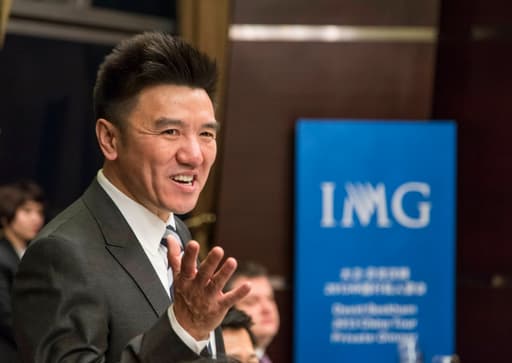
Adam Zhu
PERSON
American investment banker (born 1965)
Alan H. Guth
PERSON
American theoretical physicist and cosmologist

Alice Wu
PERSON
American film director
Andrew Leung Kwan-yuen
PERSON
Hong Kong politician
AM
Andrew Moody
PERSON
Name reference in documents
Anthony Hopkins
PERSON
Welsh–American actor and director (born 1937)

Anu Madgavkar
PERSON
Name reference in documents
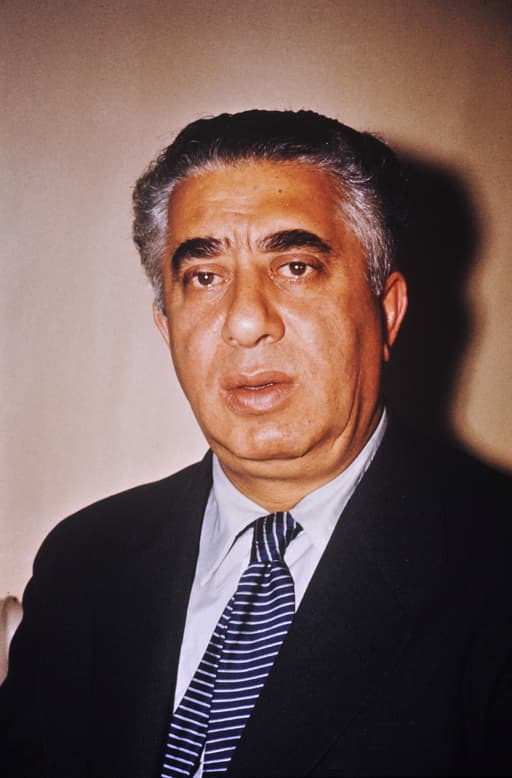
Aram Khachaturian
PERSON
Soviet Armenian composer (1903–1978)
BL
BAm labs
PERSON
Name reference in documents
Barack Obama
PERSON • 2 mentions
President of the United States from 2009 to 2017
BA
Barroso
PERSON
Name reference in documents

Bradley Cooper
PERSON
American actor
CK
CARLIE BRAT KSA
PERSON
Name reference in documents
Cecilia Malmstrom
PERSON
Swedish politician
CHRISTIANE AMANPOUR
PERSON
English-Iranian news anchor and international correspondent
David J. Chalmers
PERSON
Horticulture researcher in New Zealand

De Gucht
PERSON
Name reference in documents
Deng Xiaoping
PERSON • 2 mentions
Chinese politician and paramount leader from 1978 to 1989
Donald Trump
PERSON • 3 mentions
President of the United States (2017–2021, 2025–present)
DF
Dong Fangyu
PERSON
Chinese association football referee

Dora Serviarian-Kuhn
PERSON
Armenian pianist
ET
Edith Terry
PERSON
Name reference in documents
Fareed Zakaria
PERSON
Indian-American journalist and author
FY
FENG YONGBIN/
PERSON
Name reference in documents
FR
Frangais
PERSON
Surname or name fragment in documents

Gabriel
PERSON
First name reference to multiple individuals in Epstein-related documents
Gao Hucheng
PERSON
Commerce Minister of China

Georgina Chapman
PERSON • 2 mentions
English fashion designer and actress
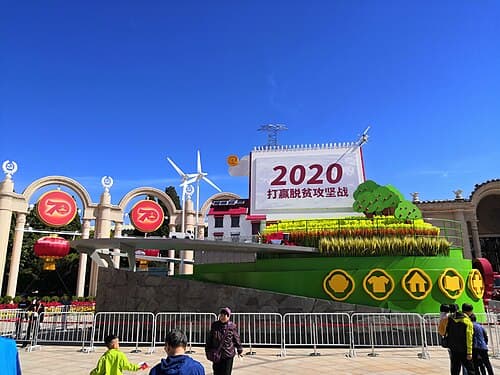
Guo Weimin
PERSON
Name reference in documents
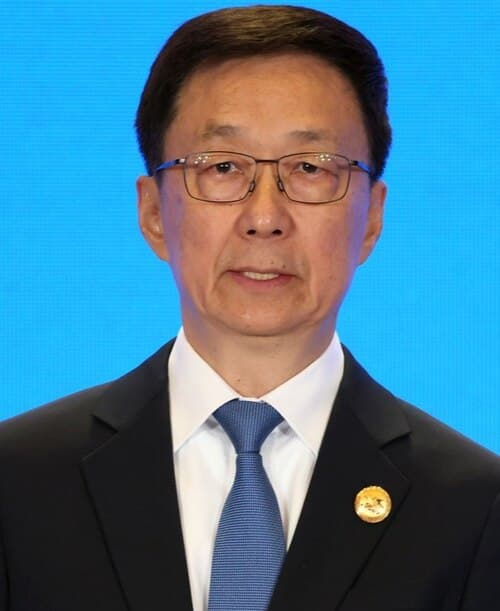
Han Zheng
PERSON
Vice President of the People's Republic of China
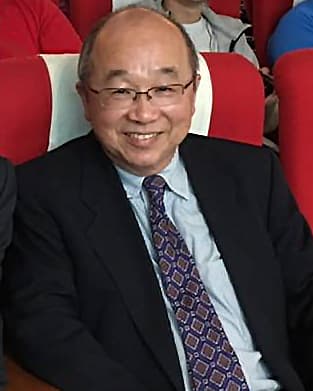
hao Jianguo
PERSON
Name reference in documents
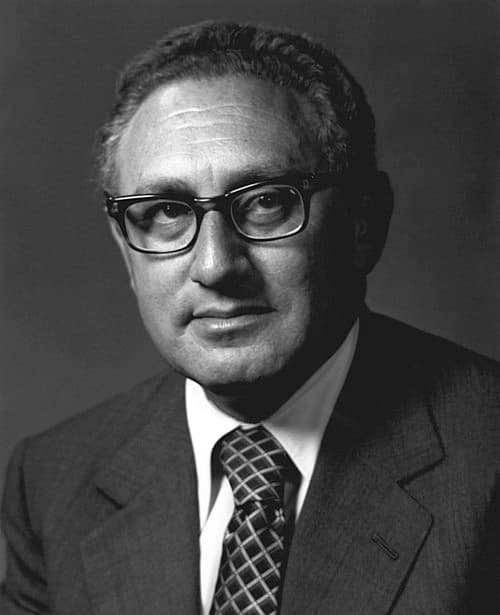
Henry Kissinger
PERSON • 2 mentions
American politician and diplomat (1923–2023)
HR
Herman Van Rompuy
PERSON
Name reference in documents
Hu Jintao
PERSON
Former General Secretary of the Chinese Communist Party
Hu Zexi
PERSON
Qing dynasty person CBDB = 341341

Huang
PERSON
Ambiguous surname reference in Epstein documents
Huang Kunming
PERSON
Chinese politician

Huang Tiantian
PERSON
Name reference in documents
Huixin Dongjie Chaoyang
PERSON
Name reference in documents
Jeff Sessions
PERSON
American politician and lawyer (born 1946)
JI
Jiang
PERSON
Surname reference in Epstein-related documents
Jiang Zemin
PERSON
Person referenced in documents
Jinping
PERSON
General Secretary of the Chinese Communist Party since 2012
JL
John Leslie
PERSON
British television presenter
John R. Searle
PERSON
American philosopher (1932–2025)

Jonathan Wong
PERSON
Canadian badminton player

Karel De Gucht
PERSON
Belgian politician
Keqiang
PERSON
Name reference in documents
Kevin Sneader
PERSON
Canadian-born British management consultant

Lawrence Kuhn
PERSON
Name reference in documents
Leung
PERSON
Surname or name fragment in documents
Li Keqiang
PERSON
Premier of the People's Republic of China from 2013 to 2023
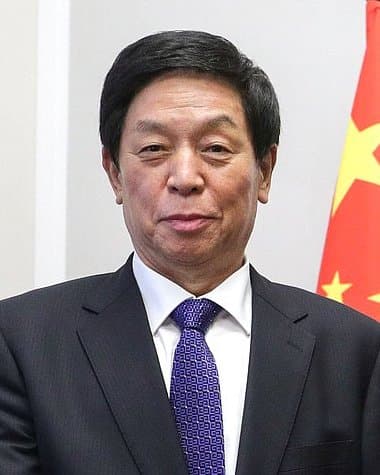
Li Zhanshu
PERSON
10th Chairman of the Standing Committee of the National People's Congress of the People's Republic of China
LZ
Lianhe zaobao
PERSON
Name reference in documents
Liu Xin
PERSON
Badminton player
Liu Yunshan
PERSON
Chinese retired politician

Lu Feiran
PERSON
Name reference in documents
LJ
Luo Jun
PERSON
Name reference in documents

Macbeth
PERSON
Reference to Shakespeare's Macbeth
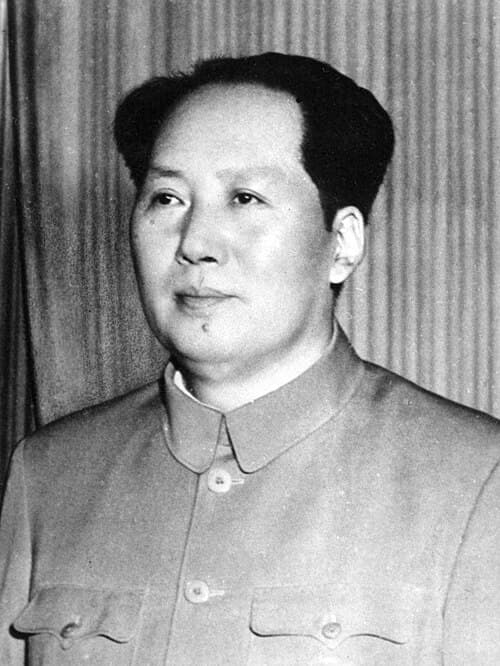
Mao Zedong
PERSON • 2 mentions
1st chairman of the Chinese Communist Party and founder of the People's Republic of China (1893–1976)
Marc Rich
PERSON
American commodities trader (1934–2013)
MW
Martin Weinberg
PERSON
American attorney (born 1946)
Matthew Cheung Kin-chung
PERSON
Hong Kong politician
MI
Meh Ieih
PERSON
Name reference in documents
Michael Bloomberg
PERSON
American businessman and politician; 108th Mayor of New York City
Michael Reiter
PERSON
American security advisor and former Palm Beach, Florida, police chief
MI
Mie I
PERSON
Name reference in documents
Mike Rowse
PERSON
Hong Kong civil servant
MINXIN PEI
PERSON
Sinologist
Minxin Pel
PERSON
Name reference in documents
MI
Missi
PERSON
Name reference in documents

Moody
PERSON
Surname reference in Epstein-related documents
NA
Natalie
PERSON
First name reference to multiple individuals in Epstein documents

Nektarios Palaskas
PERSON
Name reference in documents
PY
Paul Yip
PERSON
Researcher

Peter Getzels
PERSON
Director

Peter Rosen
PERSON
Apostle of Jesus Christ
PF
Pfeiffer
PERSON
Surname reference in documents
PY
Pyccnai
PERSON
Name reference in documents
QI
Qingzhe
PERSON
Researcher

R. L. Kuhn
PERSON
Name reference in documents
RN
Ratthawoot Nanthaikuakool
PERSON
Name reference in documents
Richard Swinburne
PERSON
British philosopher of religion
RE
RIN eH
PERSON
Name reference in documents

Robert Lawrence Kuhn
PERSON • 2 mentions
American banker
Samantha Power
PERSON
Irish-American academic, author and diplomat
SI
Sigmar
PERSON
Name reference in documents
SC
Sixtus Baggio Leung Chung-hang
PERSON
Name reference in documents
Song Jian
PERSON
Chinese missile scientist and politician
SW
Steven Weinberg
PERSON
Nobel Prize-winning physicist, referenced in Epstein science funding network
SU
Sujing
PERSON
Senior manager of product engineering at Maxim Integrated
The Dalai Lama
PERSON • 2 mentions
Tibetan spiritual leader, referenced in Epstein scheduling and contact documents
TH
Thomas Au Hing-cheung
PERSON
Name reference in documents
Tian Shaohui
PERSON
Name reference in documents
tobert Lawrence
PERSON
Indian choreographer, actor, director, producer, philanthropist
TH
TOMS RART RAS HAS
PERSON
Name reference in documents
UH
Ua hehe
PERSON
Name reference in documents
Wang Huning
PERSON
Chairman of the Chinese People's Political Consultative Conference
WJ
Wang Jiaqiong
PERSON
Name reference in documents
Wang Qishan
PERSON
10th Vice President of the People's Republic of China from 2018 to 2023
Wang Yang
PERSON
9th Chairman of Chinese People's Political Consultative Conference
WJ
Wenshan Jia
PERSON
Name reference in documents
Wu Kam Shing
PERSON
Name reference in documents
Xi Jinping
PERSON • 3 mentions
General Secretary of the Chinese Communist Party since 2012
XI
Xiaoping
PERSON
Name reference in documents
YANG WANGLI
PERSON
Song dynasty person CBDB = 27270
Yau Wai-ching
PERSON
Hong Kong politician
ZE
Zedong
PERSON
Researcher
ZH
ZHAI HAIJUN
PERSON
Name reference in documents
Zhang Dejiang
PERSON
Chinese retired politician
ZJ
Zhang Jianmin
PERSON
Chinese politician (1964-)
Zhao Leji
PERSON
Chairman of the Standing Committee of the National People's Congress of the People's Republic of China
ZY
Zheng Yibing
PERSON
Name reference in documents
ZH
Zhongxun
PERSON
Name reference in documents
Zhou Shuchun
PERSON
Chinese journalist (born 1958)
Zhu Yue
PERSON
Chinese association football player
AARINAG TILRMEAGE
ORGANIZATION
Organization referenced in documents
Abt REL
ORGANIZATION
Organization referenced in documents

AC ZITA
ORGANIZATION
Organization referenced in documents
AEBS TT REITER
ORGANIZATION
Organization referenced in documents
African Weekly
ORGANIZATION
Organization referenced in documents
APA NT EORAANT
ORGANIZATION
Organization referenced in documents
BBC World News
ORGANIZATION
International news and current affairs television channel

BBC World Service
ORGANIZATION
International radio station of the BBC
BEAT PR AG
ORGANIZATION
Organization referenced in documents
Beijing International
ORGANIZATION
Organization referenced in documents
Beijing News
ORGANIZATION
Organization referenced in documents

Bloomberg BNA
ORGANIZATION
American multinational mass media corporation
Bloomberg TV Worldwide
ORGANIZATION
Organization referenced in documents
BP Ri OM UR
ORGANIZATION
Organization referenced in documents

BRICs
ORGANIZATION • 2 mentions
Organization referenced in documents

CBS
ORGANIZATION
American broadcast television and radio network
CCTV News
ORGANIZATION
Organization referenced in documents
Centra
ORGANIZATION
Organization referenced in documents
China Central Television
ORGANIZATION
Chinese Communist Party-run propaganda outlet
China Central TV
ORGANIZATION
Organization referenced in documents
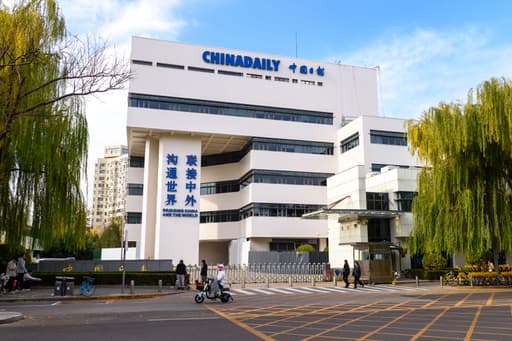
China Daily
ORGANIZATION
Chinese Communist Party propaganda outlet
China Global Television
ORGANIZATION
Organization referenced in documents
China Global Television Network
ORGANIZATION
Organization referenced in documents
Claremont McKenna College
ORGANIZATION
Private liberal arts college in Claremont, California

Closer To
ORGANIZATION
Organization referenced in documents
Councils
ORGANIZATION
Organization referenced in documents
CPC National
ORGANIZATION
Organization referenced in documents
CPC/Party
ORGANIZATION
Organization referenced in documents
Dialogue with World Political
ORGANIZATION
Organization referenced in documents
E-Trade
ORGANIZATION
Organization referenced in documents
Election
ORGANIZATION
Organization referenced in documents
Espafol
ORGANIZATION
Organization referenced in documents
Euronext
ORGANIZATION
Organization referenced in documents

European Council
ORGANIZATION
Institution of the European Union defining the EU's general political direction and priorities and consisting of heads of state or government of the EU's member states

European Union
ORGANIZATION
Political and economic union of 27 European states

Fox Business
ORGANIZATION
American business channel
Fox Business Channel
ORGANIZATION
TV channel focused on business news

Fox Business Network
ORGANIZATION
American business channel
Global Times
ORGANIZATION
Chinese Communist Party-controlled propaganda outlet
Grand Hyatt
ORGANIZATION
Hotel brand owned by Hyatt Hotels Corporation
Huawei
ORGANIZATION
Chinese multinational technology company
International Herald Cribune
ORGANIZATION
Organization referenced in documents

Johns Hopkins
ORGANIZATION
Private university in Baltimore, Maryland, USA
Johns Hopkins University
ORGANIZATION
Private university in Baltimore, Maryland, USA

Legislative
ORGANIZATION
Organization referenced in documents
Legislative Council
ORGANIZATION
Organization referenced in documents
LI MIN FU JING
ORGANIZATION
Organization referenced in documents
MARS UEF
ORGANIZATION
Organization referenced in documents

McKinsey
ORGANIZATION
Organization referenced in documents

McKinsey & Company
ORGANIZATION
Organization referenced in documents
McKinsey Global Institute
ORGANIZATION
Organization referenced in documents

Ministry of Foreign Affairs
ORGANIZATION
Russian ministry
MIT Sloan School of Management
ORGANIZATION
Business school of the Massachusetts Institute of Technology
National Front
ORGANIZATION
British far right, racial nationalist, whites-only political party
National Party Congress
ORGANIZATION
Organization referenced in documents
Networks
ORGANIZATION
Organization referenced in documents

Occupy
ORGANIZATION
2025 video game developed by BananaDogGames
Oriental Outlook
ORGANIZATION
Organization referenced in documents
OU MOR DTA
ORGANIZATION
Organization referenced in documents
Ovations
ORGANIZATION
American cable television channel

Party Congress
ORGANIZATION
General meeting of a political party
Party National Congress
ORGANIZATION
Organization referenced in documents
PE Mae
ORGANIZATION
Organization referenced in documents
People
ORGANIZATION
American weekly magazine devoted to celebrity and human-interest

Plenum
ORGANIZATION
Organization referenced in documents
Political Bureau Standing
ORGANIZATION
Organization referenced in documents
Population Health
ORGANIZATION
Organization referenced in documents
Renmin University of China
ORGANIZATION
Research university in Haidian District, Beijing, China
RORRAY LOM
ORGANIZATION
Organization referenced in documents
Shanghai Century
ORGANIZATION
Organization referenced in documents
Shanghai Daily
ORGANIZATION • 2 mentions
Organization referenced in documents
Standing Committee of the Political Bureau
ORGANIZATION
Organization referenced in documents
Suncorp
ORGANIZATION
Organization referenced in documents
Takeda
ORGANIZATION
Organization referenced in documents
the Belt and Road Initiative
ORGANIZATION
Organization referenced in documents
the CCP Central Committee
ORGANIZATION
Organization referenced in documents
the Central Committee
ORGANIZATION
Organization referenced in documents
the Central Military Commission
ORGANIZATION
Organization referenced in documents
the Chinese Communist Party
ORGANIZATION
Organization referenced in documents
the Chinese University of Hong Kong
ORGANIZATION
Organization referenced in documents
the Communist Party of China
ORGANIZATION
Organization referenced in documents
the Communist Youth League
ORGANIZATION
Organization referenced in documents
the CPC Congress
ORGANIZATION
Organization referenced in documents
the CPC Organization
ORGANIZATION
Organization referenced in documents
The Greenbrier Companies
ORGANIZATION
Organization referenced in documents
the High Court
ORGANIZATION
Organization referenced in documents
The Kuhn Foundation
ORGANIZATION
Organization referenced in documents
the New Politburo Standing Committee
ORGANIZATION
Organization referenced in documents
the Party Central Committee
ORGANIZATION
Organization referenced in documents
the People’s Daily
ORGANIZATION
Organization referenced in documents
The People’s Liberation Army
ORGANIZATION • 2 mentions
Organization referenced in documents
The School of Education
ORGANIZATION
Organization referenced in documents
the Shanghai Media Group
ORGANIZATION
Organization referenced in documents
the Standing Committee
ORGANIZATION
Organization referenced in documents

the State Council
ORGANIZATION
Organization referenced in documents
the Tea Party
ORGANIZATION
Organization referenced in documents
The Two Sessions
ORGANIZATION
Organization referenced in documents
the US Department of Commerce
ORGANIZATION
Organization referenced in documents
the World Economic Forum
ORGANIZATION
Organization referenced in documents
the World Trade Organisation
ORGANIZATION
Organization referenced in documents
the Xinhua News Agency
ORGANIZATION
Organization referenced in documents
the Youth League
ORGANIZATION
Organization referenced in documents
Treloar Enterprises
ORGANIZATION
Organization referenced in documents
Tsinghua
ORGANIZATION
University in Beijing, China
U.N. SPEECH
ORGANIZATION
Organization referenced in documents
Zhejiang Party
ORGANIZATION
Organization referenced in documents

ZTE Corp
ORGANIZATION
Organization referenced in documents
Aberdeen
LOCATION
City in Scotland, United Kingdom
Ap Lei Chau
LOCATION
Island in Hong Kong
Asia-Pacific
LOCATION
Part of the world in or near the Western Pacific Ocean; typically includes East Asia, South Asia, Southeast Asia, and Oceania
Belgrade
LOCATION
Capital of Serbia
China
LOCATION • 3 mentions
Country in East Asia
Chongqing
LOCATION
Municipality of China

Davos
LOCATION • 2 mentions
Municipality in the canton of Graubünden, Switzerland
Deep Water Bay
LOCATION
Bay and residential in Hong Kong Island, Southern
Democratic People’s Republic of Korea
LOCATION
Location referenced in documents

Earth
LOCATION
Third planet from the Sun in the Solar System
East China
LOCATION
Geographical and cultural region of China
Fujian
LOCATION
Province of the People's Republic of China, covering the mountainous coast opposite Taiwan
Guangdong
LOCATION
Province of China
Guangdong province
LOCATION
Province of China
Guangzhou
LOCATION
Capital city of Guangdong Province, China
Guizhou province
LOCATION
Landlocked province of the People's Republic of China
Hong Kong
LOCATION • 3 mentions
City and special administrative region of China
Indo-Pacific
LOCATION
Region of Earth's seas

Kenya
LOCATION
Country in Eastern Africa

Korea
LOCATION
Region in East Asia
Liaoning
LOCATION
1988 Kuznetsov-class aircraft carrier
Liin Liaoning
LOCATION
1988 Kuznetsov-class aircraft carrier

Macao
LOCATION
City and special administrative region of China
Middle Kingdom
LOCATION
Location referenced in documents

Milan
LOCATION
Italian commune and capital city of Lombardy
Nairobi
LOCATION
Capital city of Kenya

New York
LOCATION
Most populous city in the United States

North
LOCATION
1994 comedy film by Rob Reiner

North America
LOCATION
Continent

North Korea
LOCATION
Sovereign state in East Asia
Norther
LOCATION
Finnish melodic death metal band

Philippines
LOCATION
Archipelagic country in Southeast Asia
Province
LOCATION
Location referenced in documents
Pyongyang
LOCATION
Capital city of North Korea
Qinghai
LOCATION
Province of China
Seattle
LOCATION
City in and county seat of King County, State of Washington, United States
Seoul
LOCATION
Capital and largest city of South Korea
Shaanxi
LOCATION
Province of central China with its capital Xi'an, the ancient homeland of the Zhou and center of several major dynasty
Shanghai
LOCATION
Provincial-level municipality in China
Shenzhen
LOCATION
Sub-provincial division in China
SHI YU
LOCATION
Ph.D. Katholieke Universiteit Leuven 2009
South China Morning Post
LOCATION
Hong Kong newspaper
South-South
LOCATION
Geopolitical zone in Nigeria

Soviet Union
LOCATION
Former country in Eurasia (1922–1991)
the Asia-Pacific region
LOCATION
Location referenced in documents
the Asian Pacific
LOCATION
Location referenced in documents
the Korean Peninsula
LOCATION
Location referenced in documents
the Middle Kingdom
LOCATION
Location referenced in documents

United States
LOCATION • 3 mentions
Country located primarily in North America
Victoria Harbour
LOCATION
Harbour between Kowloon and Hong Kong Island in Hong Kong
Vietnam
LOCATION
Country in Southeast Asia
Wangfujing
LOCATION
Shopping street in Beijing
Xiamen
LOCATION
Prefecture-level city in Fujian, China
Zhejiang
LOCATION
Province of China
Zhejiang Province
LOCATION • 2 mentions
Province of China
Statistics
Pages:41
Entities:278
Avg. OCR:84.2%
Sponsored