DOJ-DOE6-80994-059
Document DOJ-DOE6-80994-059 is a legal document from the United States District Court for the Southern District of Florida, related to civil cases against Jeffrey Epstein.
This document contains the United States' response to the court's order regarding Jeffrey Epstein's motion to stay proceedings in multiple civil cases filed by Jane Does. The cases, presided over by Judge Kenneth Marra, involve allegations against Epstein. The document reflects the legal arguments and the government's position on whether the civil cases should be paused in light of related investigations or proceedings.
Key Highlights
- •The document pertains to multiple cases (Jane Doe Nos. 2, 3, 4, 5, 6, 7, C.M.A. and Jane Doe) against Jeffrey Epstein in the Southern District of Florida.
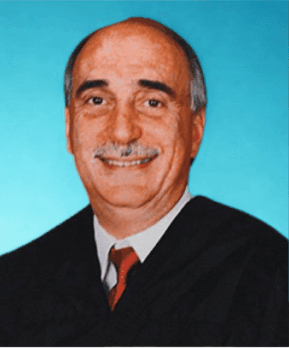
- •Judge Kenneth Marra is presiding over the cases.
- •A. Marie Villafana, an Assistant United States Attorney, is involved.
- •The United States is responding to a court order regarding Epstein's motion to stay the civil proceedings.
Frequently Asked Questions


Document Information
Bates Range
DOJ-DOE6-80994-059
Pages
17
Source
DOJ First Production
Original Filename
059.pdf
Document Content
Page 1 - DOJ-DOE6-80994-059_p1
UNITED STATES DISTRICT COURT SOUTHERN DISTRICT OF FLORIDA JANE DOE NO. 2, CASE NO.: 08-CV-80119-MARRA/JOHNSON Plaintiff, vs. JEFFREY EPSTEIN, Defendant. ____________________________________/ JANE DOE NO. 3, CASE NO.: 08-CV-80232-MARRA/JOHNSON Plaintiff, vs. JEFFREY EPSTEIN, Defendant. ____________________________________/ JANE DOE NO. 4, CASE NO.: 08-CV-80380-MARRA/JOHNSON Plaintiff, vs. JEFFREY EPSTEIN, Defendant. ____________________________________/ JANE DOE NO. 5, CASE NO.: 08-CV-80381-MARRA/JOHNSON Plaintiff, vs. JEFFREY EPSTEIN, Defendant. ____________________________________/ Case 9:08-cv-80994-KAM Document 59 Entered on FLSD Docket 05/29/2009
Page 2 - DOJ-DOE6-80994-059_p2
Page 1 of 17 -2- JANE DOE NO. 6, CASE NO.: 08-CV-80994-MARRA/JOHNSON Plaintiff, vs. JEFFREY EPSTEIN, Defendant. ____________________________________/ JANE DOE NO. 7, CASE NO.: 08-CV-80993-MARRA/JOHNSON Plaintiff, vs. JEFFREY EPSTEIN, Defendant. ____________________________________/ C.M.A., CASE NO.: 08-CV-80811-MARRA/JOHNSON Plaintiff, vs. JEFFREY EPSTEIN, Defendant. ____________________________________/ JANE DOE, CASE NO.: 08-CV-80893-MARRA/JOHNSON Plaintiff, vs. JEFFREY EPSTEIN et al, Defendants. ____________________________________/ Case 9:08-cv-80994-KAM Document 59 Entered on FLSD Docket 05/29/2009
Page 3 - DOJ-DOE6-80994-059_p3
Page 2 of 17 -3- DOE II, CASE NO.: 09-CV-80469-MARRA/JOHNSON Plaintiff, vs. JEFFREY EPSTEIN et al, Defendants. ____________________________________/ JANE DOE NO. 101, CASE NO.: 09-CV-80591-MARRA/JOHNSON Plaintiff, vs. JEFFREY EPSTEIN, Defendant. ____________________________________/ JANE DOE NO. 102 CASE NO.: 09-CV-80656-MARRA/JOHNSON Plaintiff, vs. JEFFREY EPSTEIN, Defendant. ____________________________________/ UNITED STATES’ RESPONSE TO COURT’S ORDER REQUESTING POSITION ON DEFENDANT’S MOTION TO STAY [DE 99] Comes now the United States, by and through the undersigned Assistant United States Attorney, and files this response to the Court’s Order requesting the position of the United States on Defendant Jeffrey Epstein’s Motion to Stay Proceedings [DE 99]. For the reasons set forth below, it is the United States’ position that a stay of the proceedings is not necessary and was not contemplated by the Non-Prosecution Agreement between the United States and Defendant Jeffrey Epstein. Case 9:08-cv-80994-KAM Document 59 Entered on FLSD Docket 05/29/2009
Sponsored
Page 4 - DOJ-DOE6-80994-059_p4
Page 3 of 17 -4- ISSUE PRESENTED The United States is not a party to these lawsuits and, accordingly, is not fully aware of the scope of the proceedings, the range of arguments presented by counsel, and any correspondence or oral communications between the parties in these civil suits. Based on the information presented by the Court and a review of Defendant Jeffrey Epstein’s Motion to Stay and/or Continue Action for Time Certain Based on Parallel Civil and Criminal Proceedings with Incorporated Memorandum of Law (Court File No. 08-CV-80811- MARRA/JOHNSON DE 51-1), and responses thereto filed by various plaintiffs in their suits, the undersigned understands that the Court has requested the position of the United States on the following issue: Are there “special circumstances” that require the imposition of a stay of the civil proceedings in the “interests of justice” until the “expiration” of the Non- Prosecution Agreement [“NPA”] between the United States and Epstein? By filing this response, the United States does not make itself a party to this litigation and takes no position with respect to the outcome of any of the civil suits; nor does the United States take any position regarding Defendant Epstein’s performance of his obligations pursuant to the NPA. The United States also declines to comment on Defendant Epstein’s representations regarding past allegations of violations of the NPA by Epstein. The United States files this response solely as amicus curiae at the Court’s request and does not waive any procedural or statutory bars to suit. Case 9:08-cv-80994-KAM Document 59 Entered on FLSD Docket 05/29/2009
Page 5 - DOJ-DOE6-80994-059_p5
Page 4 of 17 -5- I. STANDARD FOR IMPOSING A DISCRETIONARY STAY A. The Defendant Must Show that the Assertion of His Fifth Amendment Privilege Against Self-Incrimination Would Automatically Result in the Entry of Summary Judgment Against Him. “The decision whether or not to stay civil litigation in deference to parallel criminal proceedings is discretionary. . . . A movant must carry a heavy burden to succeed in such an endeavor.” Microfinancial, Inc. v. Premier Holidays Internat’l, Inc., 385 F.3d 72, 77 (1st Cir. 2004) (citations omitted). When a defendant facing possible criminal liability invokes his Fifth Amendment right against compelled self-incrimination in connection with civil litigation, a court can stay discovery or the entire civil case. Diaz v. Jenne, 2007 WL 624286 *1 (S.D. Fl. Feb. 23, 2007) (Cooke, J.). “However, ‘the Constitution does not require a stay of civil proceedings pending the outcome of related criminal proceedings. Forcing an individual to risk non-criminal disadvantage by remaining silent for fear of self incrimination in a parallel criminal proceeding does not rise to the level of an unconstitutional infringement.’” Id. (quoting Shell Oil Co. v. Altina Assocs., Inc., 866 F. Supp. 536, 540 (M.D. Fl. 1994)). As this Court has previously explained: The law regarding stays of civil actions is well-settled in the Eleventh Circuit. In United States v. Lot 5, Fox Grove, Alachua County, Fla, 23 F.3d 359, 363- 65 (11th Cir. 1994) (“Lot 5"), the Court articulated the following principles of law with respect to a stay of a civil action pending resolution of a related criminal action: [A] blanket assertion of the privilege is an inadequate basis for the issuance of a stay. Rather, a court must stay a civil Case 9:08-cv-80994-KAM Document 59 Entered on FLSD Docket 05/29/2009
Page 6 - DOJ-DOE6-80994-059_p6
Page 5 of 17 1It appears from a brief review of some of Epstein’s discovery responses that Epstein has made a blanket assertion of the privilege. For example, Epstein has asserted his Fifth Amendment privilege in response to a plaintiff’s request to produce the NPA and the United States’ list of identified victims although these documents were provided to Epstein by the United States. -6- proceeding pending resolution of a related criminal prosecution only when “special circumstances” so require in the “interests of justice.” The court may deny a stay so long as the privilege’s invocation does not compel an adverse judgment against the claimant. . . . [T]he standard set by the Eleventh Circuit as to when a stay should be granted to prevent unconstitutional infringement is more narrow. The law in the Eleventh Circuit requires consideration of whether, as a result of invoking the privilege, the defendant faces certain loss of the civil proceeding on summary judgment if the civil proceeding were to continue. Lot 5, 23 F.3d at 364; Pervis v. State Farm Fire & Casualty Co., 901 F.2d 944 (11th Cir. 1990). Under this standard, Movants must show that invocation of the privilege in the instant matter will result in certain loss by automatic summary judgment. United States v. Two Parcels of Real Property, 92 F.3d 1123, 1129 (11th Cir. 1996); Pervis, 901 F.2d at 946-47. This must be an actual adverse judgment, and not “merely the loss of the defendant’s most ‘effective defense.’” Securities & Exchange Comm. v. Incendy, 936 F. Supp. at 955 (S.D. Fl. 1996); Shell Oil Co., 866 F. Supp. at 540-41. Court-Appointed Receiver of Lancer Mgt. Group LLC v. Lauer, 2009 WL 800144 (S.D. Fl. Mar. 25, 2009) (Marra, J.). Thus, before reaching the relative benefit and prejudice to each of the parties caused by staying the cases, the Court must determine whether, if defendant Epstein were to invoke his Fifth Amendment right against self-incrimination1 and the Court were to allow an adverse inference to be drawn therefrom, an adverse judgment against Epstein would be automatically compelled. The United States respectfully submits that it would not. Case 9:08-cv-80994-KAM Document 59 Entered on FLSD Docket 05/29/2009
Sponsored
Page 7 - DOJ-DOE6-80994-059_p7
Page 6 of 17 -7- From a review of the Complaints filed by the plaintiffs in these cases, it appears that some have filed claims based upon Title 18, United States Code, Section 2255, some have filed claims based upon common law torts, and some have filed a combination of the two. Under general principles of tort law, a plaintiff is required to prove: (1) that the defendant committed a bad act; (2) that the plaintiff suffered damages; and (3) that the damages were caused by the defendant’s bad act. To succeed on a claim under 18 U.S.C. § 2255, a plaintiff must show: (1) that the plaintiff is a person who, while a minor, was a victim of an enumerated offense committed by the defendant; (2) that the person suffered personal injury as a result of that violation; and (3) the amount of damages she sustained. Epstein’s assertion of his Fifth Amendment privilege could result in the drawing of a negative inference only as to the first element under both of these claims. Therefore, to succeed on summary judgment (or at trial), the plaintiffs would still have to prove that they suffered personal injury/damages as a result of the defendant’s bad act. Cf. In re Financial Federated Title & Trust, Inc., 252 B.R. 834, 838 (S.D. Fl. Bank. Ct. 2000) (Stay not warranted in bankruptcy proceeding where criminal indictment was pending because negative inference related only to defendant’s receipt of allegedly fraudulent transfers, but “Trustee must still carry the burden of proving all of the elements of his complaint for fraudulent transfers . . . includ[ing] fraudulent intent, insolvency, and financial condition at the time of the transfers to the Defendants.”). While Epstein may believe that his arguments and proof as to the first element are his “most effective defense,” that alone is insufficient to warrant the imposition of a stay of the Case 9:08-cv-80994-KAM Document 59 Entered on FLSD Docket 05/29/2009
Page 8 - DOJ-DOE6-80994-059_p8
Page 7 of 17 2The United States notes that it is not aware of the identities of all of the plaintiffs in the civil suits. To the extent that any are not “identified victims” under the NPA, this contractual provision would not apply. -8- litigation. There are two other items for the Court to consider in deciding this issue. First, pursuant to the terms of the NPA, as to those victims identified by the United States, Epstein has already made a concession that they are victims of an enumerated offense committed by Epstein. Thus, this inference is drawn not due to his invocation of the right against self- incrimination but due to his entry into a contractual agreement with the United States for which the identified victims are third-party beneficiaries.2 Second, in Lot 5, the Eleventh Circuit pointed out the wealth of evidence other than the defendant’s testimony that could be used to defeat a liability claim. See Lot 5, 23 F.3d at 364 (“Thus, Claimant’s assertion that only her own testimony could vindicate her is groundless; other participants to the illegal acts that gave rise to the forfeiture were available to testify at trial. Claimant’s failure to indicate with precision why she did not use other parties’ testimony to substantiate her defense was fatal.”). For example, Epstein could mount a defense using effective cross-examination, telephone records, travel records, documents within the possession of the plaintiffs or third parties, and/or the testimony of third parties to rebut the plaintiffs’ proof. Case 9:08-cv-80994-KAM Document 59 Entered on FLSD Docket 05/29/2009
Page 9 - DOJ-DOE6-80994-059_p9
Page 8 of 17 -9- B. Additional Factors to Consider in Balancing the Prejudice to the Parties If the Court is persuaded that the negative inference drawn from Epstein’s assertion of his Fifth Amendment privilege would result in an automatic grant of summary judgment in favor of the plaintiffs, then the Court must engage in a balancing of equities in determining whether there are “special circumstances” warranting the imposition of a stay “‘to prevent a party from suffering substantial and irreparable prejudice.’” Securites and Exchange Comm’n v. Incendy, 936 F. Supp. 952, 956 (S.D. Fl. 1996) (quoting S.E.C. v. First Financial Group of Texas, Inc., 659 F.2d 660, 668 (5th Cir. 1981) (add’l citations omitted). Examples of “special circumstances” provided by the Supreme Court in [United States v. Kordel] are: (1) if the Government brought the civil action solely to obtain evidence for its criminal prosecution, (2) if the Government failed to advise the defendant in the civil proceeding that it contemplates his criminal prosecution; (3) if the defendant is without counsel or reasonably fears prejudice from adverse pretrial publicity or other unfair injury; or (4) any other special circumstances indicating unconstitutionality or even impropriety. Incendy at 956 (citing United States v. Kordel, 397 U.S. 1, 11 (1970)). See also Securities and Exchange Comm’n v. Wright, 261 Fed. Appx. 259, 263 (11th Cir. 2008) (“[N]o ‘special circumstances’ existed in this case warranting a stay, as there is no record evidence suggesting the Government had brought the civil case solely to obtain evidence for the criminal prosecution or that the criminal case against [defendant] was unconstitutional or inappropriately instituted.”). No “special circumstances” exist here. First, unlike Wright and Incendy, the United States Government is not a party to the civil litigation. Each suit is brought on behalf of an Case 9:08-cv-80994-KAM Document 59 Entered on FLSD Docket 05/29/2009
Sponsored
Page 10 - DOJ-DOE6-80994-059_p10
Page 9 of 17 -10- individual plaintiff represented by private counsel. Some of those plaintiffs are adverse to the United States and have filed suit against the Government based upon its handling of the criminal case against Epstein. (See In re Jane Doe Litigation, Court File No. 08-80736-Civ- Marra.) There has been no allegation, and certainly no showing, that the civil litigation is a ruse to obtain discovery on behalf of the criminal investigation. As some of the plaintiffs have mentioned, one purpose of the NPA was to place the identified victims in the same position where they would have been if Epstein had been convicted after trial of an offense enumerated in 18 U.S.C. § 2255. (See, e.g., Court File No. 08-CV-80119 DE 49-2.) If Epstein had proceeded to trial and been convicted, those victims would have been entitled to restitution and to file suit pursuant to 18 U.S.C. § 2255, and would have been entitled to the same sorts of discovery that they now seek. None of the plaintiffs has contacted the United States about passing on materials gathered through discovery to any criminal investigators or about seeking discovery that would be relevant only to the criminal proceedings, rather than to their individual cases. If Epstein has legitimate concerns that the civil discovery process is being abused in some way, he can ask the Court for a protective order limiting the scope of discovery or its distribution. Furthermore, if at some time in the future, Epstein were the subject of a criminal indictment and he alleged that the evidence to be used against him was gathered improperly, he could file a motion to suppress or to dismiss the indictment in that criminal action. See, e.g., United States, ex. rel. Westrick v. Second Chance, 2007 WL 1020808 *4 (D.D.C. Mar. 31, 2007) (Defendant in civil False Claims Act suit moved to stay civil action pending criminal Case 9:08-cv-80994-KAM Document 59 Entered on FLSD Docket 05/29/2009
Page 11 - DOJ-DOE6-80994-059_p11
Page 10 of 17 3With respect to the other “special circumstances” mentioned in Incendy, the government obviously advised Epstein of the potential for criminal charges, and that knowledge led to the negotiation of the NPA. Epstein also has a number of attorneys listed on the Service List for the civil cases and has retained a similarly large number of attorneys to handle the criminal investigation and negotiation of the NPA. Epstein alleges a fear of adverse publicity, but as the plaintiffs have pointed out, during the course of the state and federal criminal investigations, Epstein’s personal publicist distributed stories to the press impugning the credibility of the victims and other witnesses and averring that the victims’ allegations of abuse were made solely to extract money from the defendant. In the context of some of the civil suits currently pending, Epstein has asked the Court -11- investigation where no indictment had been returned. The district court denied the motion, noting that while “allowing civil discovery to proceed may afford the government [who was the real party in interest in the civil case] the opportunity to gain evidence that it may not be entitled to under the more restrictive criminal discovery rules, if and when discovery becomes necessary, protective orders and other remedial measures may be taken.”) (citations omitted). By entering into the NPA, with its explicit discussion of 18 U.S.C. § 2255, Epstein acknowledged that the United States was trying to protect the victims’ rights to restitution and that civil claims would likely follow. Epstein did not bargain for a stay of those proceedings. Instead, both parties received benefits and gave consideration for the bargain that was struck – while Epstein is faced with answering discovery requests that he would not face during criminal proceedings, he also is entitled to the identification of and extensive discovery from the victims, which he would not have received in the criminal case. Based upon a review of the discovery requests he has promulgated thus far, it appears that Epstein is taking full advantage of this benefit and if a criminal case were ever filed, he would, no doubt, seek to use that information in his defense.3 Case 9:08-cv-80994-KAM Document 59 Entered on FLSD Docket 05/29/2009
Page 12 - DOJ-DOE6-80994-059_p12
Page 11 of 17 to unseal the victims’ names so that he may make use similar press efforts to impugn their credibility. -12- Unlike Wright and Incendy, Epstein also has not been criminally indicted. In some districts, this alone is virtually dispositive. See, e.g., Sterling Nat’l Bank v. A-1 Hotels Internat’l, 175 F. Supp. 2d 573, 576-77 (S.D.N.Y. 2001) (“district courts in this Circuit ‘generally grant the extraordinary remedy of a stay only after the defendant seeking a stay has been indicted.’” (quoting Citibank, N.A. v. Hakim, 1993 WL 481335 *1 (S.D.N.Y. Nov. 18, 1993) (add’l citations omitted). As one court explained: the consensus that a party seeking a stay bears a heavier burden when he has not yet been indicted derives logically from the balancing test set out by the courts of appeals that have considered the question. When a defendant has been indicted, his situation is particularly dangerous, and takes a certain priority, for the risk to his liberty, the importance of safeguarding his constitutional rights, and even the strain on his resources and attention that makes defending satellite civil litigation particularly difficult, all weigh in favor of his interest. Moreover, if the potential prejudice to the defendant is particularly high post-indictment, the prejudice to the plaintiff of staying proceedings is somewhat reduced, since the criminal litigation has reached a crisis that will lead to a reasonably speedy resolution. Furthermore, at that stage in the criminal proceeding, the contours of the indictment will provide the Court with a reasonable basis for determining the extent of the threat to the defendant’s Fifth Amendment rights, and the likely extent and timing of the criminal litigation. Pre-indictment, these factors must be balanced significantly differently. Though many of the same risks to the civil defendant are present, the dangers are at least somewhat more remote, and it is inherently unclear to the Court just how much the unindicted defendant really has to fear. Conversely, the delay imposed on the plaintiff is potentially indefinite. There is no telling how complicated the government’s investigation may be, whether the allegations of the particular civil plaintiff are merely the tip of an iceberg that will result in a lengthy and open-ended investigation, what priority the government assigns to the investigation, whether it will result in charges that will have to Case 9:08-cv-80994-KAM Document 59 Entered on FLSD Docket 05/29/2009
Sponsored
Page 13 - DOJ-DOE6-80994-059_p13
Page 12 of 17 4Epstein points to provisions requiring him to maintain certain evidence “inviolate” as proof that the grand jury investigation is still active. These provisions are meant only to insure that easily destroyed evidence identified through the investigation, such as computer equipment, that is still in Epstein’s control, will still be available to investigators if Epstein does, in fact, breach the NPA. Epstein is well aware that litigation concerning those matters have been removed from the Court’s docket, at the insistence of the United States, because it fully halted its investigation in accordance with the terms of the NPA. -13- be litigated, or how time-consuming the resulting criminal case will be. Under these circumstances, the likelihood that a civil party can make the necessary showing to obtain the “extraordinary” remedy of a stay is inevitably much reduced. Sterling Nat’l Bank, 175 F. Supp. 2d at 577 (internal citations omitted). The First Circuit has noted that the decision whether to grant a stay “is highly nuanced . . . [and] involves competing interests. Balancing these interests is a situation-specific task, and an inquiring court must take a careful look at the idiosyncratic circumstances of the case before it.” Microfinancial, supra, 385 F.3d at 78. Epstein’s case is more idiosyncratic than most. As the Court aptly noted in its Order denying Epstein’s first motion to stay the civil proceedings, Epstein has not been indicted and there are no criminal proceedings pending against him.4 The resurrection of criminal proceedings against Epstein lies entirely within Epstein’s own hands, by performing or not performing under the terms of the NPA. This tips the balance of equities even further in favor of the plaintiffs. Epstein makes allegations that the U.S. Attorney’s Office has unfettered discretion in determining breaches of the NPA, but this is no different than in any contractual setting. If one party believes that there has been a breach, it may seek the remedy set forth in the contract. If the other party believes that Case 9:08-cv-80994-KAM Document 59 Entered on FLSD Docket 05/29/2009
Page 14 - DOJ-DOE6-80994-059_p14
Page 13 of 17 5The United States also notes that this finite termination to Epstein’s exposure to potential criminal consequences is illusory. The NPA addresses only certain victims identified during the course of the government’s investigation. To the extent that any of the plaintiffs who have already filed suit against Epstein do not fall within that group, the NPA does not address potential charges based upon crimes committed against them. The NPA also does not bind any other state or federal prosecutor from pursuing charges for criminal acts committed within their jurisdiction(s). The federal statute of limitations for offenses against children is ten years or the life of the child, -14- there has been no breach, it has a remedy at law or equity. In this situation, Epstein would be entitled to seek dismissal of the indictment. See United States v. Beeks, 167 Fed. Appx 777 (11th Cir. 2006); United States v. Diaz, 138 Fed. Appx. 965 (9th Cir. 2005); United States v. Davis, 393 F.3d 540 (5th Cir. 2004). Epstein argues that because he is seeking a finite period of delay – until the time that he asserts that the NPA “expires” – and that, thereafter, he will promptly provide full and complete responses to all discovery, the harm to the plaintiffs is de minimis. With all respect, this overlooks a number of obvious issues. First, if a stay is imposed until Epstein’s proposed “expiration date,” it affords Epstein one of two incentives: (a) to delay any intended breach until a time when he believes that the United States has no remedy and then to breach the agreement with impunity (i.e, to use the NPA as a shield and a sword); or (b) to delay the civil litigation as long as possible (until shortly before the “expiration” of the NPA), and then, after criminal charges have been filed, to seek a mandatory stay of the civil cases until the criminal case is resolved. Thus, contrary to the assertions of Epstein, the delay is not limited but, instead, is “potentially indefinite,” as Sterling Bank warns. If the U.S. Attorney’s Office were to proceed criminally, the litigation would likely be very lengthy, and would result in an even greater delay to the plaintiffs.5 Case 9:08-cv-80994-KAM Document 59 Entered on FLSD Docket 05/29/2009
Page 15 - DOJ-DOE6-80994-059_p15
Page 14 of 17 whichever is longer. 18 U.S.C. § 3283. Thus, for Epstein (or any other person accused of sexually abusing children) to “wait out” any chance of criminal liability, the court would have to stay civil litigation until all of the plaintiffs have died. -15- The factors to consider include: “(i) the interests of the civil plaintiff in proceeding expeditiously with the civil litigation, including the avoidance of any prejudice to the plaintiff should a delay transpire; (ii) the hardship to the defendant, including the burden placed upon him should the cases go forward in tandem; (iii) the convenience of both the civil and criminal courts; (iv) the interests of third parties; . . . (v) the public interest[;] . . . (vi) the good faith of the litigants (or the absence of it) and (vii) the status of the cases.” Microfinancial, 385 F.3d at 78 (citations omitted). In considering those factors, the United States respectfully recommends to the Court that all of the factors weigh against a stay. In making its decision, the Court should consider that, unlike all of the cases cited herein, Epstein seeks to stay not one suit involving a single plaintiff, but more than a dozen suits filed by individual plaintiffs. Each of those plaintiffs, in turn, impliedly asserts that she is a “crime victim” with the “right to full and timely restitution” and the “right to proceedings free from unreasonable delay.” 18 U.S.C. § 3771(a)(6) & (7). As noted above, one of the purposes of the NPA was to provide these rights to victims identified in the Government’s investigation. Thus, this factor weighs more heavily for the plaintiffs than in the average civil dispute as it embodies both the plaintiffs’ and the public’s interests. The victims who were identified in the government investigation, by and large, were without financial assets and had significant counseling needs that could Case 9:08-cv-80994-KAM Document 59 Entered on FLSD Docket 05/29/2009
Sponsored
Page 16 - DOJ-DOE6-80994-059_p16
Page 15 of 17 -16- be remedied through obtaining restitution from Epstein. In addition to those needs, they have legitimate concerns about memories fading, witnesses becoming unavailable, and dissipation of Epstein’s assets while the matter is stayed. On the other hand, while the potential harm to the defendant normally weighs in the defendant’s favor, in this case, Epstein has significant control over whether the criminal investigation remains in abeyance and whether criminal charges are ever filed. CONCLUSION In accordance with the Court’s Order, the United States hereby submits that it is not aware of any “special circumstances” that warrant staying all of the civil cases pending the “expiration” of the NPA. Respectfully submitted, R. ALEXANDER ACOSTA UNITED STATES ATTORNEY By: s/A. Marie Villafaña A. MARIE VILLAFAÑA Assistant United States Attorney [email protected] Florida Bar No. 0018255 500 East Broward Boulevard, 7th Floor Ft. Lauderdale, FL 33394 Telephone: 954-356-7255 Facsimile: 954-356-7230 Case 9:08-cv-80994-KAM Document 59 Entered on FLSD Docket 05/29/2009
Page 17 - DOJ-DOE6-80994-059_p17
Page 16 of 17 -17- CERTIFICATE OF SERVICE I HEREBY CERTIFY that on May 28, 2009, I electronically filed the foregoing document with the Clerk of the Court using CM/ECF. According to the Court’s website, counsel for all parties are able to receive notice via the CM/ECF system. s/A. Marie Villafaña A. MARIE VILLAFAÑA Assistant United States Attorney Case 9:08-cv-80994-KAM Document 59 Entered on FLSD Docket 05/29/2009
Entities Mentioned
A. Marie Villafana
PERSON
Former Assistant U.S. Attorney, lead federal prosecutor in the 2008 Epstein case
Alexander Acosta
PERSON
American attorney and politician, 27th U.S. Secretary of Labor (born 1969)
BE
Beeks
PERSON
Surname or name fragment in documents
CL
Claimant
PERSON
Surname reference in documents
CO
Cooke
PERSON
Surname reference in documents
HA
Hakim
PERSON
Egyptian singer
JD
Jane Doe
PERSON
Pseudonym for anonymous victims/witnesses in Epstein legal proceedings
Jeffrey Epstein
PERSON • 4 mentions
American sex offender and financier (1953–2019)
JE
Jenne
PERSON
Surname reference in Epstein-related documents
Kenneth Marra
PERSON
American judge
KO
Kordel
PERSON
Surname reference in documents
LA
Lauer
PERSON
Surname reference in documents
MI
Microfinancial
PERSON • 2 mentions
Surname reference in documents
PE
Pervis
PERSON
American gospel, R&B and soul singer
WE
Westrick
PERSON
Surname reference in documents
WR
Wright
PERSON
Surname reference in Epstein documents
Federated Title & Trust, Inc.
ORGANIZATION
Organization referenced in documents
Lancer Mgt.
ORGANIZATION
Organization referenced in documents
M.D. Fl.
ORGANIZATION
Organization referenced in documents
Microfinancial, Inc.
ORGANIZATION
Organization referenced in documents
Premier Holidays Internat’l, Inc.
ORGANIZATION
Organization referenced in documents
Second Chance
ORGANIZATION
Organization referenced in documents
Securities & Exchange Comm.
ORGANIZATION
Organization referenced in documents
Shell Oil Co.
ORGANIZATION
Organization referenced in documents
State Farm Fire & Casualty Co.
ORGANIZATION
Organization referenced in documents
Sterling National Bank
ORGANIZATION
Organization referenced in documents
the Eleventh Circuit
ORGANIZATION
U.S. Court of Appeals for the Eleventh Circuit
The First Circuit
ORGANIZATION
U.S. federal appeals court
the U.S. Attorney’s
ORGANIZATION
Organization referenced in documents

the U.S. Attorney’s Office
ORGANIZATION
Organization referenced in documents
Two Parcels of Real Property
ORGANIZATION
Organization referenced in documents
Alachua County
LOCATION
Location referenced in documents
Fox Grove
LOCATION
Location referenced in documents

Lauderdale
LOCATION
Suburb of Hobart, Australia
S.D. Fl.
LOCATION
Location referenced in documents

United States
LOCATION • 2 mentions
Country located primarily in North America
Statistics
Pages:17
Entities:36
Sponsored