Back to Network
















9
Shared Docs
9
Same-Page
9 / 9
Mentions
Document Mentions (9 shared documents)
2 mentions1 same-page
Page ?Same page
alf of 2005, a resolute Sharon carried out his plan to remove Israeli settlements and military bases from Gaza in August 2005, breaking up his own Likud party over it. This political move, which resulted in the creation of the Kadima party, would hardly have made sense had Gaza been Sharon's final
domestic affairs of another country for reasons of state. He merely cannot abide reasons of conscience. "And if they put Jews into gas chambers in the Soviet Union," he remarked to Richard Nixon in 1973, "it is not an American concern. Maybe a humanitarian concern." Yeah, maybe. IT IS NOT ONLY because of Houl
2 mentions1 same-page
Page ?Same page
ve to last for 25 years. Even after the Netanyahu cabinet voted to cut that number to 40 percent, it was still too high for the leaders of both the Likud and Labor parties, who denounced the decision as "reckless." Release of the report triggered demonstrations that blocked roads in central Tel Aviv,
ir Putin, the Russian President and autocrat, had a plan for the winter of 2014: to reassert his country's power a generation after the collapse of the Soviet Union. He thought that he would achieve this by building an Olympic wonderland on the Black Sea for fifty-one billion dollars and putting on a dazzling t
2 mentions1 same-page
Page ?Same page
vernment, they must lose power. They wi// lose power.” He was right. Only twice in the four decades that followed would a Labor leader defeat Begin’s Likud party: Rabin’s election victory in 1992, and mine over Bibi Netanyahu in 1999. During the first two years of Begin’s rule, however, I was 7,000 mile
sands of tanks. Hundreds of fighter jets. Other, much larger nations had endured months, even years, of hell before prevailing in such circumstances: the Soviet Union, for instance, with its huge strategic depth, or France, rescued by its American-led allies, during World War Two. But any pride in having prevailed
Sponsored
2 mentions1 same-page
Page ?Same page
losing their jobs. Israel’s next election, the first since the Lebanon war, was due in July. Just as the trauma of the 1973 war had helped Begin end Likud’s three decades in opposition, the polls and the pundits were now suggesting that Shimon Peres might bring Labor back to power. There was no prospect
I began by welcoming the constellation of changes which seemed to offer at least an opportunity for stability, security and peace: the unravelling of the Soviet Union; the Oslo Agreement; the peace treaty with Jordan and the continuing talks with the Syrians. As long as we had partners committed to reaching an agre
2 mentions1 same-page
Page ?Same page
he left. Right after Yitzhak’s murder, I’d gone to see Zevulun Hammer, the leader of the National Religious Party. It had been part of both Labor and Likud governments ever since 1948, though not Rabin’s. The NRP, too, had been drifting steadily rightward. But it still basically subscribed the idea of a
ies in the interior, Jerusalem as well, not to mention 312 HOUSE_OVERSIGHT_011783 / BARAK / 27 the settlements on the West Bank. Since the fall of the Soviet Union, hundreds of thousands of Russians had also flowed into Israel. Most were Jewish in culture more than religious observance, but they were instinctive
2 mentions1 same-page
Page ?Same page
vernment, they must lose power. They will lose power." He was right. Only twice in the four decades that followed would a Labor leader defeat Begin's Likud party: Rabin's election victory in 1992, and mine over Bibi Netanyahu in 1999. During the first two years of Begin's rule, however, I was 7,000 miles
sands of tanks. Hundreds of fighter jets. Other, much larger nations had endured months, even years, of hell before prevailing in such circumstances: the Soviet Union, for instance, with its huge strategic depth, or France, rescued by its American-led allies, during World War Two. But any pride in having prevailed
Sponsored
2 mentions1 same-page
Page ?Same page
losing their jobs. Israel's next election, the first since the Lebanon war, was due in July. Just as the trauma of the 1973 war had helped Begin end Likud's three decades in opposition, the polls and the pundits were now suggesting that Shimon Peres might bring Labor back to power. There was no prospect
I began by welcoming the constellation of changes which seemed to offer at least an opportunity for stability, security and peace: the unravelling of the Soviet Union; the Oslo Agreement; the peace treaty with Jordan and the continuing talks with the Syrians. As long as we had partners committed to reaching an agre
2 mentions1 same-page
Page ?Same page
he left. Right after Yitzhak's murder, I'd gone to see Zevulun Hammer, the leader of the National Religious Party. It had been part of both Labor and Likud governments ever since 1948, though not Rabin's. The NRP, too, had been drifting steadily rightward. But it still basically subscribed the idea of a
ties in the interior, Jerusalem as well, not to mention 312 HOUSE _OVERSIGHT_028160 / BARAK / 27 the settlements on the West Bank. Since the fall of the Soviet Union, hundreds of thousands of Russians had also flowed into Israel. Most were Jewish in culture more than religious observance, but they were instinctive
2 mentions1 same-page
Page ?Same page
he court of public opinion” and “America’s most public Jewish defender.” It has also earned me the title of “Ziofascist,” “Jewish Nazi,” “tool of the Likud,” and “Israel Firster.” It is these latter titles that have brought about the most recent change in my life during my 8" decade. Until recently, I w
ll seem worth the apparently unrewarded efforts. I attended a concern by the great Russian cellist Mstislav Rostropovich, several years after he left the Soviet Union. Since he had been a sometimes threatened advocate of human rights in 323 HOUSE_OVERSIGHT_017410 4.2.12 WC: 191694 Moscow, I wanted to meet him,
Sponsored
Mutual Connections (1,135)
Entities connected to both Likud and the Soviet Union
Barack Obama
PERSON36 w/ Likud·88 w/ the
George W. Bush
PERSON35 w/ Likud·80 w/ the
United States
LOCATION23 w/ Likud·86 w/ the
Bill Clinton
PERSON25 w/ Likud·72 w/ the
Benjamin Netanyahu
PERSON43 w/ Likud·52 w/ the
Jeffrey Epstein
PERSON18 w/ Likud·63 w/ the
Bashar al-Assad
PERSON27 w/ Likud·51 w/ the
Lebanon
LOCATION26 w/ Likud·51 w/ the
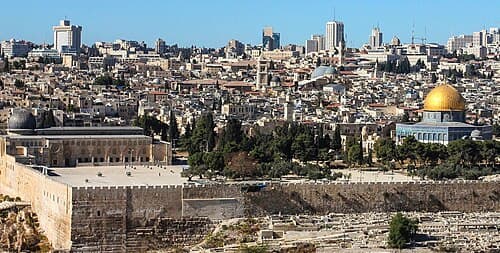
Jerusalem
LOCATION29 w/ Likud·43 w/ the
Marc Rich
PERSON13 w/ Likud·57 w/ the
Joe Biden
PERSON14 w/ Likud·55 w/ the
LB
Leon Black
PERSON8 w/ Likud·61 w/ the
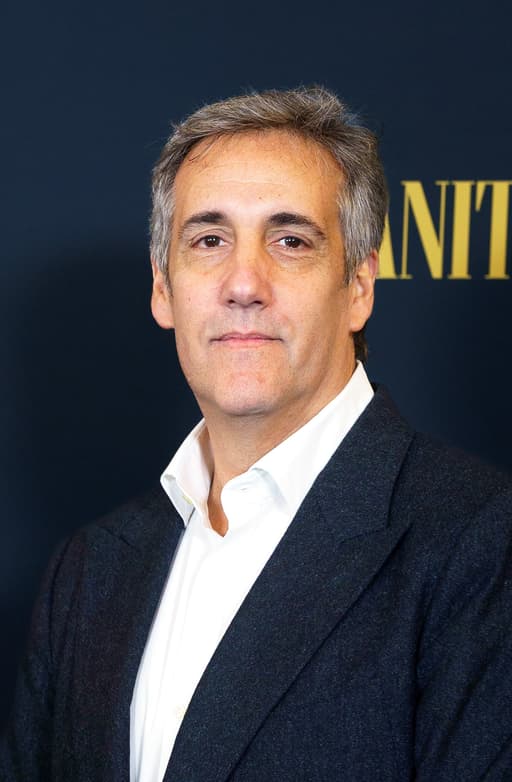
Michael Cohen
PERSON16 w/ Likud·50 w/ the
Middle East
LOCATION18 w/ Likud·47 w/ the
Tehran
LOCATION24 w/ Likud·41 w/ the
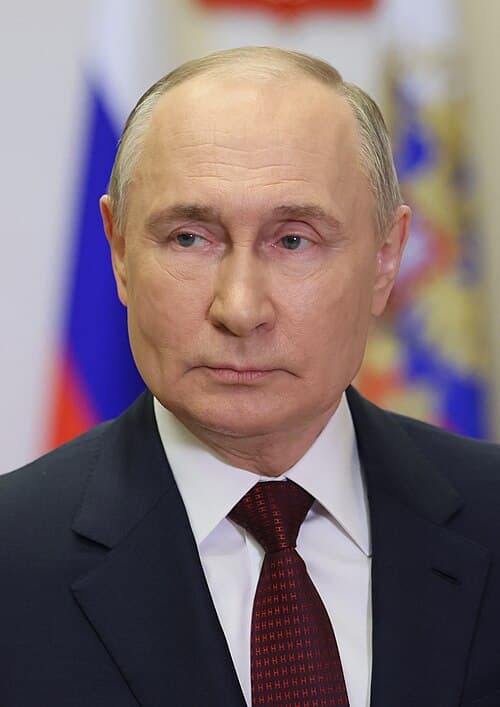
Vladimir Putin
PERSON10 w/ Likud·51 w/ the
John F. Kennedy
PERSON12 w/ Likud·48 w/ the
Saddam Hussein
PERSON18 w/ Likud·41 w/ the
Department of Justice
ORGANIZATION9 w/ Likud·50 w/ the
Prince Andrew
PERSON10 w/ Likud·48 w/ the