HOUSE_OVERSIGHT_017088_sub_004 - HOUSE_OVERSIGHT_017487
Document Information
Bates Range
HOUSE_OVERSIGHT_017088_sub_004 - HOUSE_OVERSIGHT_017487
Pages
100
Source
House Oversight Committee
Original Filename
CURREN DRAFT 04.02.12.docx
Document Content
Page 301 - HOUSE_OVERSIGHT_017388
4.2.12 WC: 191694 I also knew that our Constitution said some things about religion. In our Yeshiva we learned mostly about the First Amendment’s protection of freedom of religion. But I started to read a little more about the Constitution and quickly learned that there were three references to religion in that great document of liberty. The first, in the body of the original Constitution, declared that “no religious test shall ever be required” for holding office under the United States. Wow, is this really true? I wondered, then why hasn’t there been a Jewish president? And why is there only one “Jewish seat” on the Supreme Court? It sure sounded to me like religious tests were being applied in fact, although it was unconstitutional to do so. This got me to thinking about the difference between the law as written and practiced. I also discovered that the First Amendment, in addition to guaranteeing freedom of religion, had an awkwardly phrased guarantee which I did not understand: “Congress shall make no law respecting an establishment of religion.” There were two words I didn’t understand. What does “respecting” mean? I had always used it to suggest a positive attitude—respect—toward others. Clearly it had a different meaning in the First Amendment, something like “regarding.” Second, what did the word “establishment” mean? I simply had no idea and so I began to do some research. The answer was anything but simple and the meaning of the term is still not completely clear to me after 60 years of thinking, writing and teaching about it. So there was some upside for me in the words “under God” being added to our pledge. It not only got me thinking, it got me arguing with my friends and even with some of my teachers. It’s an ongoing argument... The downside, which was evident to me even back then, was that whatever the words prohibiting an establishment of religion meant, they seemed incomparable with compelling every school boy to declare his belief in a God inserted into the pledge by Congress. So, although I believed in God (or more likely never thought about any alternative), I decided never to say the words. I continued to recite the old pledge, confident that it was I, and not those who amended the pledge, who were being patriotic and faithful to the meaning of our Constitution. I guess I was an early Originalist in that regard, since my reading suggested to me that Jefferson and Madison would not have approved of making young kids declare a belief in God.” Flashing forward a generation, my oldest son Elon, had a similar epiphany in 1970, when my family moved to California for a year so that I could take up residency in The Center For Advanced Study of Behavioral Sciences at Stanford. We enrolled our kids in a Palo Alto Public School and my 8 year old son Elon got into trouble for refusing to recite the words “under God” in the pledge. When he came home from school, I asked him how come he had just noticed the words under God, since his elementary school in Cambridge also required periodic recitations of the pledge. He told me that we were at war in Vietnam and he thought the words—pronounced with a Boston accent—were “under guard.” It was only a California teacher writing the words on the blackboard that revealed to him that he was being required to take a pledge that included God. By this time I knew that the Supreme Court had ruled that a religious objector could not be required to recite the pledge, because, as the justices put it: °° Nor would the composer of the original pledge who was an early socialist. 301 HOUSE_OVERSIGHT_017388
Page 302 - HOUSE_OVERSIGHT_017389
4.2.12 WC: 191694 “Tf there is any fixed star in our constitutional constellation, it is that no official, high or petty, can...force citizens to confess by word or act their faith...” Elon was excused from saying the words for the remainder of the year. Elon suffered no adverse consequences from his religious dissent, but the same cannot be said for Susan Shapiro, a 17 year old high school senior in the Boston area. When she exercised her right not to participate in the pledge, her teacher said it was as if someone had spit on the Star of David. She was called names by fellow students and told to “go back to Israel.” (She was born in America). I agreed to represent her and, after we threatened to bring a lawsuit; we got the school to permit her not to participate in the pledge and to inform the students that she was within her rights. A few years later I was to become involved in a highly publicized case involving the right of a criminal defendant not to be discriminated against on account of his religion, even though he himself was accused of using his religion to defraud co-religionists. The case involved television evangelist Jim Bakker, who was married to the equally famous Tammy Faye Bakker. I was retained to argue his sentencing appeal, following his conviction for defrauding PTL (“Praise the Lord” and “People that Love”) Club Lifetime Partners who had paid for homes in Heritage U.S.A.—a Christian family retreat—but were never able live in them. This is how the appellate court summarized the case: Bakker planned to finance these projects by selling lifetime partnerships [that promised] annual lodging in one of the Heritage Village facilities... Many of these partners drew on meager incomes to purchase Heritage Village lodging benefits. Appellant raised at least $158 million through the sale of approximately 153,000 partnerships with lodging benefits. Bakker promised television viewers that he would limit the sale of partnerships to ensure that each partner would be able to use the facilities annually. Appellant, however, oversold the partnerships. ..Bakker used relatively few of the funds solicited from the partners to construct promised facilities...Instead, Bakker used partnership funds to pay operating expenses of the PTL and to support a lavish lifestyle. This extravagant living included gold- plated fixtures and a $570 shower curtain in his bathroom, transportation in private jets and limousines, an air-conditioned tree house for his children and an air-conditioned doghouse for his pets. This combination of overselling partnerships and diverting partnership proceeds meant that the overwhelming majority of the partners never received the lodging benefits Bakker promised them. After a lengthy and emotional trial, Bakker was convicted by a jury. The judge sentenced him to 45 years in prison. In imposing that lengthy sentence, the judge—the Honorable Robert Potter, known around the courthouse as “maximum Bob’—said the following: "He had no thought whatever about his victims, and those of us who do have a religion are ridiculed as being saps from money-grubbing preachers or priests." 302 HOUSE_OVERSIGHT_017389
Page 303 - HOUSE_OVERSIGHT_017390
4.2.12 WC: 191694 Bakker wrote me a long handwritten letter from prison imploring me to join his appellate team and save him from a lifetime of imprisonment. There was not enough time before the appellate brief had to be filed for me to take over the entire appeal, but I was particularly appalled by the length of the sentence and the religiously discriminatory reason the judge gave for imposing it. I agreed therefore to brief and argue the sentencing issue on the appeal (a team of Texas lawyer had been retained long before to argue against the conviction). This is how a New York Times journalist characterized the oral argument: Last June, barely a week before their brief was due, the Houston lawyers handling Mr. Bakker's appeal, Don Ervin and Brian Wice, learned that Mr. Dershowitz was joining their legal team. He was to handle only a small part of Mr. Bakker's appeal, concerning the 45- year sentence meted out by Judge Robert D. Potter. Mr. Dershowitz insisted he would remain in the background. But that, it turned out, was a bit like George Steinbrenner's saying "Yogi Berra is my manager for the rest of the year." In October, when the Bakker appeal was argued, it was around Mr. Dershowitz that everyone clustered... Even his co-counsel, two Texans schooled in a tradition of great oratory, were dazzled by what they saw in court. "It was kind of like watching a terrific maestro in front of an orchestra," Mr. Ervin said. Mr. Wice called the performance "mesmerizing" and added: "He looks like a schlep, wearing suits he could have bought in Filene's Basement, woolen socks, and shoes -- I don't know if they still call them Earth shoes. But the judges hung on every word he had to say and bought what he was selling." Nonetheless, Mr. Wice couldn’t resist noting what he called Mr. Dershowitz’s predilection for publicity. “I’ve discovered that the most dangerous place to be in the criminal justice system is not the Federal Penitentiary at Marion or the holding cell at the Tombs, but between Alan Dershowitz and a television camera.” Mr. Dershowitz relished the chance to take on Judge Potter (nicknamed "Maximum Bob" for his harsh sentencing), with whom he'd tangled in a previous case. "This is a judge who doesn't understand the difference between a year and a decade, who always adds a zero to the sentence other judges would impose," Mr. Dershowitz said. Jim Bakker did not have such nice things to say about his other lawyers: Alan Dershowitz did an outstanding job highlighting the errors in my case and in my sentencing. That same could not be said, however, of my Texas attorneys’ attempt to contest the merits of the case. Their arguments were confusing and unconvincing. At one point they implied to the judges that I had not intended to defraud the PTL Partners, merely deceive them. “You can intend to deceive but not intend to defraud,” my lawyer said. “It is not against the law in this context to deceive. Of course, I had intended to do 303 HOUSE_OVERSIGHT_017390
Sponsored
Page 304 - HOUSE_OVERSIGHT_017391
4.2.12 WC: 191694 not such thing—defraud or deceive the PTL Partners! That was the last day the Texas firm worked as part of our legal team. We waited several months for the decision. Finally, it was released. The Court of Appeals ruled that the conviction was valid but the 45 year sentence was not. In vacating the sentence, the court established a powerful precedent against a judge using his own religious beliefs as a factor in determining the degree of punishment. This is what they said about the role of religion in sentencing: Courts have held that sentences imposed on the basis of impermissible considerations, such as a defendant's race or national origin, violate due process. [W]e believe that similar principles apply when a judge impermissibly takes his own religious characteristics into account in sentencing. Courts... cannot sanction sentencing procedures that create the perception of the bench as a pulpit from which judges announce their personal sense of religiosity and simultaneously punish defendants for offending it. Whether or not the trial judge has a religion is irrelevant for purposes of sentencing. Regrettably, we are left with the apprehension that the imposition of a lengthy prison term here may have reflected the fact that the court's own sense of religious propriety had somehow been betrayed. The court vacated the sentence “with genuine reluctance” because they believed Bakker was indeed guilty: Yet, the fact remains that this case involves the explicit intrusion of personal religious principles as the basis of a sentencing decision. [O]ur review of the sentencing transcript reveals comments that are, in the end, too intemperate to be ignored. Because an impermissible consideration was injected into the sentencing process, we must remand the case [to a] different district judge to ensure that the ends of due process are achieved. This was precisely the result we asked for: resentencing by a judge other that Maximum Bob, who surely would have imposed the same sentence without referring to his religion. The new judge eventually reduced the sentence to 8 years and Bakker was released after serving 4.5 years—quite a reduction from the 45 years originally imposed by Maximum Bob. Following our victory in the Jim Bakker sentencing appeal, Tammy Faye Bakker declared the judicial ruling “a great victory for Christianity.” I responded that “the fact that a Jewish lawyer helped bring that about must show that it was a great victory for all Americans.” The New York Times reported further on her reaction to our victory. Tammy Faye Bakker says Mr. Dershowitz has singlehandedly restored her faith in lawyers. "Jim and J are really sold on him and think he's the greatest," she said. "He certainly is worthy of every penny he makes." (In fact, his bill was $20,000, contributed largely by the Bakkers' backers.) 304 HOUSE_OVERSIGHT_017391
Page 305 - HOUSE_OVERSIGHT_017392
4.2.12 WC: 191694 Mrs. Bakker has yet to make Mr. Dershowitz's acquaintance. But she said she went right out to watch "Reversal of Fortune" and added, "Every time he's on, I run to the television." "One of my biggest desires now is to meet him," she went on. "He's our kind of people, a real down-to-earth, nice man." Eventually, I did meet her. She kissed and hugged me and repeatedly blessed me in the name of Jesus. When she kissed me, so much of her makeup came off on my face that it took me several minutes and some hard scrubbing to remove it. Several weeks later, I received a gift in the mail from Tammy Faye. It was a Passover Haggadah—the prayer book that is read at the Seder. We have a large collection of Haggadahs, some dating back hundreds of hears, many with beautiful illustrations of the Passover story. At our ecumenical Seder, which usually includes several dozen guests of all religions—we once invited Anwar Sadat’s daughter—we distribute the different Haggadahs among the participants, and each one reads a passage in the English translation. I try to make the passage selected for each guest relevant to their background. I purposely gave the Bakker Haggadah to a friend who reads very expressively and who focuses more on his delivery than on the content. He began to read about the reasons we eat matzo on Passover. “This is the bread of affection that the people of Israel had to eat when they fled from Egypt.” So far so good. But then, it went on to describe why matzo had small holes: “The holes in the matzo represent the wounds on the body of our Savior, Jesus Christ, who in his body was punctured during his crucifixion.” Not in the traditional Jewish Haggadah! Tammy Faye had sent me a Christian Evangelical rip-off of the Haggadah designed for use at Seders conducted by Jews for Jesus. I had perused it before distributing it to my friend to recite, so I knew what it contained. We all had a great chuckle at what Tammy Faye regarded as an appropriate gift for liberating her husband from bondage. These stories and cases vindicating both freedom of, and freedom from religion, highlight one of the great ironies of the American experiment with separation of church and state. And it was surely an experiment. Ours was the first nation in the history of the world to separate religion and government, at least in theory. Our constitutional provisions remain among the strongest in the world. Yet we are the most religious democracy on the face of the earth. More Americans believe in God and go to houses of worship than in any other democracy. No Atheist and Agnostic can be elected to high office (though that was probably not always the case.) Indeed, in order to get elected, a candidate must loudly and repeatedly proclaim a deep belief in God and a strong commitment to “faith” (which has become the new political buzz word). 305 HOUSE_OVERSIGHT_017392
Page 306 - HOUSE_OVERSIGHT_017393
4.2.12 WC: 191694 Is this an irony, or is there a causal connection between our constitutional separation of church and state and the high level of religiosity among our people? I believe the latter is the case. The original theory behind the metaphor of “the wall of separation” was to protect the holiness of the church from the corrupting influences of the secular state. Roger Williams, who is credited with coining the metaphor, was a 17" Century Baptist minister in Providence, Rhode Island. He insisted that a “hedge or wall of separation between the garden of the church and the wilderness of the world” was necessary to protect religion, as well as to assure freedom of conscience. And this wall has worked wonderfully to do both.” Churches are thriving in America, unlike in most European countries that have long traditions of established churches. When the state supports churches, resentment against government, which is inevitable, spills over to religion. Consider Israel, whose citizens are far more secular on average than Americans. Many Israeli Jews resent religion because the Rabbis have too much influence over marriage, divorce and other aspects of daily life. This turns people against religion. Israel does not have an established religion, despite its being a “Jewish state.” Muslim and Christian Israelis, who comprise nearly a quarter of the population, have equal status and equal rights, or at least as a matter of law, but Conservative and Reform Jews do not. Within the Jewish religion, Orthodoxy is the established branch. This has caused enormous resentment—against both the state and the synagogue—by reform, conservative and secular Jews and have driven many of them away from religion. In the U.S., on the other hand, resentment against the government (Congress’ approval rating is always quite low) does not translate into resentment against the churches. To the contrary, cynicism about politics, may well drive some people toward greater commitment to their churches. I believe, therefore, that perhaps the single most important guarantee in our Constitution is one that is not explicitly enumerated: the separation of church and state. Although those words do not appear in either the body of the Constitution or in the First Amendment, there can be no doubt that the founding fathers constructed a system of checks and balances that required such separation. Without it, the church (representing organized religion) could not serve as an effective check on the secular excesses of the state; nor could the state serve as an effective check on the excessive involvement of the church in the business of governance and on the rights of religious and non-religious dissenters. The marvel of our unique system of checks and balances, is that is does not simply involve each branch of government—executive, legislative and judicial—checking on the others; it also encourages—through the freedoms guaranteed by the First Amendment—other institutions to serve as checks on the government. In addition to the churches (broadly defined to include all religious institutions), these include the media, the academy, the business community, and especially the “people” who have the right to vote, to assemble and to petition for a redress of grievances. Just before the 50" Anniversary of the Declaration of Independence—the day on which two of its primary authors, Jefferson and Adams, both died—Jefferson wrote the following about the purpose of Declaration: *! The irony is that the wall was essentially a contribution made by Baptists to America, is now being attacked by many Baptists. 306 HOUSE_OVERSIGHT_017393
Sponsored
Page 307 - HOUSE_OVERSIGHT_017394
4.2.12 WC: 191694 “May it [the Declaration of Independence] be to the world, what I believe it will be (to some parts sooner, to other later, but finally to all), the signal of arousing men to burst the chains under which monkish ignorance and superstition had persuaded them to bind themselves, and to assume the blessing and security of self-government. That form which we have substituted, restores the free right to the unbound exercise of reason and freedom of opinion. All eyes are opened, or opening, to the rights of man. The general spread of the light of science has already laid open to every view the palpable truth, that the mass of mankind has not been born with saddles on their backs, nor a favored few booted and spurred, ready to ride them legitimacy, by the grace of God. Jefferson, who himself believed in the God of Deism—that is a non-Biblical, not Judeo Christian diety—saw the Declaration as freeing Americans (and hopefully the rest of the world) from the stifling influence of the church (“monkish ignorance and superstition”) and encouraging “the free right to the unbound exercise of reason and freedom of opinion.” Even earlier, Jefferson, while President, had written to the Danbury Baptist Association, describing that the “act of the whole American people which declared their legislature should ‘make no law respecting an establishment of religion, or prohibiting the free exercise thereof, [as] thus building a wall of separation between church and state.” Even earlier, while Adams was president and Jefferson Secretary of State, they jointly signed a treaty, ratified by the Senate, with the Barbary regime in Tripoli, that stated unequivocally that “the government of the United States is not in any sense founded on the Christian religion.” (emphasis added). It is difficult, therefore, for any reasonable person, especially anyone who gives weight to the original understanding, to dispute Jefferson’s conclusion that the First Amendment built a wall of separation between church and state and that our state is not based on the Christian religion. Despite this wall of separation guaranteed by our Constitution and despite the unambiguous statement in the early American treaty, approved by two of our most influential founding fathers, there are those who continue to insist that the United States is a Christian nation, as a matter of law. I became personally involved in this divisive controversy in 1988, when the Republican Party of Arizona proposed the enactment of a resolution declaring the United States to be “a Christian nation...based on the absolutes of the Bible.” The leader of the group (characterized by the late Arizona Senator Barry Goldwater as a “bunch of kooks”) wrote to Justice Sandra Day O’Connor on the United States Supreme Court asking her to support their efforts. “Republicans are making some interesting advances in this heavily controlled Democratic area. Some of us are proposing a resolution which acknowledges that the Supreme Court ruled in 1892 that this is a Christian nation. It would be beneficial and interesting to have a letter from you.” 307 HOUSE_OVERSIGHT_017394
Page 308 - HOUSE_OVERSIGHT_017395
4.2.12 WC: 191694 Despite the crass partisan political objective of the undertaking and its utter incompatibility with the Constitution O’Connor had sworn to uphold, she agreed to help, writing the following letter for publication: “You wrote me recently to inquire about any holdings of this Court to the effect that this is a Christian nation. There are statements to such effect in the following opinions: Church of the Holy Trinity vs. United States; Zorach vs. Clauson; McGowan vs. Maryland.” Not only was O’Connor wrong to write any letter in support of this unconstitutional, partisan, kooky proposal, she was wrong on the law, wrong on the facts and wrong on her history. First of all, if this were a “Christian” nation, its form of Christianity would be decidedly Protestant. Catholics would be second class citizens. Indeed our Constitution, and the earlier Declaration of Independence, were designed, at least in part, to protect Americans from the influence of the Catholic Church, which was reviled by many of our founding fathers, including Adams and Jefferson. (“Monkish ignorance” was a clear reference to the Catholic Church.)” Second, there are no such “holdings.” Third, the first case she cited (which had long ago been discarded, if not overruled) contained—in dictum—some of the most bigoted language in Supreme Court history by one of the most bigoted Justice in its history, David Brewer. Brewer’s dictum, in an obscure immigration case, declared “Mohomet” and “the Grand Lama” to be “imposters.” In his other writings and speeches, he decried the evil of Mormonism and other non-Christian faiths. He was an anti-Catholic bigot and an anti-Semite, as well as a racist and segregationist. He believed that we were a white Protestant nation and he smuggled the concept of a “Christian nation” into dictum not even in a case that did not even raise the issue. When, in 1892, Brewer wrote the disgraceful and bigoted opinion cited by O’Connor, the U.S. was, demographically, a white Protestant Christian nation. The nation’s demography changed dramatically in the nearly a century between that decision and O’Connor’s letter. And the law reflected that change. Since 1892, the court has not referred to this nation as “Christian” or “Protestant.” Indeed, the justices have gone out of their way to be inclusive. For example, when Justice William O. Douglas sustained a New York program permitting public school students to be released for an hour each week for religious instruction, he specifically gave as an example of religious accommodations “a Jewish student [asking] his teacher for permission to be excused for Yom Kippur.” Yet this was one of the decisions miscited by Justice O’Connor as containing statements to the effect that this is a Christian nation.” When her letter was disclosed, Justice O’Connor issued a statement regretting that it has been “used in a political debate,” and the Supreme Court media office said that O’Connor “had no » Cite Jefferson 3 Tn at least one, a justice said—in passing—that “we are a Christian people.” But he then quickly added in the same sentence that we are a people who accord “to one another the equal right of religious freedom” (emphasis added). United States v. MacIntosh, 283 U.S. 605, 625. Justice Holmes, Brandeis Stone, and Hughes dissented. Justice O’Connor failed to mention this case. 308 HOUSE_OVERSIGHT_017395
Page 309 - HOUSE_OVERSIGHT_017396
4.2.12 WC: 191694 idea” that the letter would be used politically. But that simply isn’t true, since the request to Justice O’ Connor—stating that it would be “beneficial” to have a letter from her as part of a Republican proposal to enact a Christian Nation resolution—made it clear that she was being asked to write her letter specifically for use in a political campaign. When I got wind of Justice O’Connor’s letter, I wrote a scathing op ed for the New York Times criticizing her judicial ethics as well as her miscitation of the law. Justice Sandra Day O'Connor has again deplorably allowed her name and judicial office to be used for partisan political purposes. In 1987, she agreed to conduct a "private briefing" in the Supreme Court for Republicans who contributed at least $10,000 to a political-action group. She canceled it after leading ethics experts publicly criticized her actions as violating the Code of Judicial Conduct - but not until after her name had been used in the fund-raising solicitation. Justice O'Connor recently complied with a request from an arch-conservative Arizona Republican friend who had asked her to write a letter in support of a proposed party resolution declaring the United States to be "a Christian Nation . . . based on the absolute law of the Bible." I then described what she had done and the phony excuse she had offered in defense: that she “had no idea” her letter would be used politically. My op ed concluded: Not only was Justice O'Connor's letter used in that [political] campaign, its miscitation of cases was relied on in the resolution enacted by the Arizona Republican Party. That resolution begins, "Whereas the Supreme Court of the United States has three holdings to the effect that this is a Christian nation . . . ." It then cites the decisions provided by Justice O'Connor and declares that we are "a Christian Nation," and that the Constitution created "a republic based upon the absolute laws of the Bible, not a democracy." Justice O'Connor has twice given aid and comfort to partisan Republican causes. Both times her regrets came too late and only after public criticism. She has twice allowed her name and judicial office to be used improperly. She has twice violated the Code of Judicial Conduct, which unambiguously directs sitting judges to refrain from political activity, including "making speeches for a political organization" and participating in political fund raising. A seat on the Supreme Court does not exempt a Justice from complying with the rules of the profession. Justice O'Connor must remember that her allegiances are no longer to a particular wing of the Arizona Republican Party but to all Americans, regardless of party affiliation, region or religion. I was told by several law clerks that after my op ed appeared, she was deeply embarrassed by what she had done and has not repeated the errors of her way during her subsequent years of service on the Court. 309 HOUSE_OVERSIGHT_017396
Sponsored
Page 310 - HOUSE_OVERSIGHT_017397
4.2.12 WC: 191694 Justice O’Connor was not, of course, the first (or the last) public office to use Christianity in the of partisan politics. The issue got so bad during the 1984 presidential race that Walter Mondale found it necessary to remind Ronald Reagan that in the United States the president, unlike the queen of England, is “not the defender of the faith” but rather the “defender of the Constitution.” In 2012, A Republican candidate for President, Rick Santorum, said that the concept of an absolute separation of church and state, as articulated by John Kennedy when he was running for president, “makes me want to throw up.” Other candidates, though expressly themselves less graphically, have also railed against the separation of church and state. “Faith” has become synonymous with “values” in the minds of many although there is absolutely no correlation. Indeed, the “values” espoused by people who would impose their faith on others are highly questionable. They include denying gays the equal protection of the law, denying women (and young girls) the right to choose abortion, and sometimes contraception, even in compelling cases; and, often, other conservative political “values” that have nothing to do with religion, such as low taxes, the right to bear arms, the death penalty and widespread censorship. The debates over these issues, especially gay rights and the right to choose abortion, have become wedge controversies that are unduly influenced by the churches in violation of the spirit, if not the letter, of our Constitution. The rights of gays to absolute equality When I was growing up, it was impermissible to use any words that were demeaning to African Americans (who we called Negroes or colored), to other religions or ethnic minorities (except for the Germans and Japanese during World War IJ) or to women. But insulting gay boys (we had no idea there even were lesbians) was perfectly acceptable. Indeed, we commonly used “the F word” to insult non-athletic classmates or effeminate-looking boys. We never actually met a real live homosexual (at least to our knowledge) but we knew there was “something wrong” with anybody who was sexually attracted to people of the same gender. Our bigotry was not religiously based, though we knew that the Bible prohibited sex between men (perhaps the Bible’s authors, like us, had no idea there were lesbians). We just didn’t like “homos.” It was as simple as that. You really do have to be taught to hate (as said the words of a song from a show popular back in the day.) And we were taught to treat all people, except gays, equally. It’s very different among today’s youth, at least in parts of the world that I frequent. Most young people I encounter can’t even understand why anyone would discriminate against someone based on his or her sexual orientation or preference. Today, the discrimination does seem religiously based, at least to a significant degree. The Bible is frequently cited as the authoritative source for condemning homosexuality, and the sanctity (a religious term) of marriage between a man and a woman serves as the primary basis for opposition to gay marriage. 310 HOUSE_OVERSIGHT_017397
Page 311 - HOUSE_OVERSIGHT_017398
4.2.12 WC: 191694 Since my youth, the movement toward full equality for gays has made great strides, despite continuing religious objection from some church groups and some Orthodox Jews. The fact that many churches, as well as conservative and reform Judaism, support equality has muted the impact of the religious right somewhat on this issue. Before long, I predict, it will not be an issue for most Americans. In 2003, during the beginning of the presidential election season, the Supreme Judicial Court of Massachusetts rendered the first-in-the-nation decision declaring it unconstitutional to limit marriage to heterosexual couples. This decision was truly a knife that cut both ways: it was a Magna Carta for gay and lesbian couples, but it was also a boon to social conservative candidates who could use it as an important part of their appeal to the majority of Americans who then believed that marriage should be reserved for heterosexual couples. I decided to write an op ed that would seek to eliminate gay marriage as “a wedge issue” in the upcoming political campaign. In it, I argued that if marriage is indeed sacreda divine, a blessed sacrament between man and woman as ordained in the Bible, it would follow that the entire concept of marriage has no place in our civil society, which recognizes the separation between the sacred and the secular, between church and state. Just as the state has no role in baptisms, circumcisions or other religious rituals, it should play no role in sacred marriages. The state is, of course, concerned with the secular rights and responsibilities that are currently associated with the sacrament of marriage (as it is with the safety of baptisms and circumcisions): the financial consequences of divorce, the custody of children, Social Security and hospital benefits, etc. The solution I proposed is to unlink the religious institution of marriage -- as distinguished from the secular institution of civil union -- from the state. Under this proposal, any couple, regardless of gender, could register for civil union, recognized by the state, with all its rights and responsibilities. Religious couples could then go to the church, synagogue, mosque or other sacred institution of their choice in order to be married. These religious institutions would have total decision-making authority over which marriages to recognize. Catholic churches would not have to perform or recognize gay marriages. Orthodox Jewish synagogues would not perform or recognize a marriage between a Jew and a non-Jew who did not wish to convert to Judaism. And those religious institutions that chose to perform or recognize gay marriages could do so. It would be entirely a religious decision beyond the scope of the state. Under this new arrangement, marriage would remain a sacrament, as ordained by the Bible and as interpreted by each individual church. No secular consequences would flow from marriage, only from civil union. In this way, gay couples would win exactly the same civil rights as heterosexual couples in relationship to the state. They would still have to persuade individual churches of their point of view, but that is not the concern of the secular state. Not only would this solution be good for gays and for those who oppose gay marriage on religious grounds, it would also strengthen the wall of separation between church and state by 311 HOUSE_OVERSIGHT_017398
Page 312 - HOUSE_OVERSIGHT_017399
4.2.12 WC: 191694 placing a sacred institution entirely in the hands of the church while placing a secular institution under state control. Roger Williams and Thomas Jefferson would surely have approved. Although this proposal may sound radical, it does not differ fundamentally -- except for labels -- from the situation that exists in many states today. Throughout the United States, couples have the option of being married civilly by going to town halls or to a justice of the peace and simply signing a marriage certificate. They also have the option of going to a church, synagogue or mosque and being married in a religious ceremony. So most Americans already have the choice between a sacrament and a secular agreement ratified by the state. All that would be different would be the name we give the secular agreement. The word "marriage" would be reserved for those who chose the religious sacrament. Though some traditionalists would be certain to balk at an explicit division between marriage and civil union, a majority of Americans already agree that gay couples should be allowed to join in secular unions with the rights and responsibilities that generally accompany marriage. I concluded my op ed as follows: So let each couple decide whether they want to receive the sacrament of marriage or the secular status of civil union. And let the state get out of the business of determining who should receive holy sacraments. My column was widely circulated and generated an enormous debate. I was invited to appear on television and radio shows, where extremists on both sides pilloried me: gay activists for not going far enough; religious anti-gay activists for going too far. Shortly after my column appeared, I received a phone call from the then Governor of Massachusetts, Mitt Romney, who told me that he found my idea interesting and asked me to draft legislation that he might consider proposing in order to break the deadlock. I drafted the legislation, but never heard back from the governor, who by the time I submitted it, had announced his candidacy for President of the United States. He was almost certainly fearful of the pushback he would get from the religious right—whose votes he needed to be nominated—if he were seen as favoring anything that even resembled gay marriage. Since that time, several states have adopted gay marriage or civil unions and the trend is clearly in the direction of full equality for gay men and women. I predict, based on the reaction of my current students to this issue, that the next generation will not even understand why earlier generations took so long to recognize equality for gays. A woman’s right to choose abortion As easy as the resolution of the gay marriage issue would be under our Constitution—full equality either in marriage or civil unions for all—that’s how difficult it is to resolve the abortion issue as a 312 HOUSE_OVERSIGHT_017399
Sponsored
Page 313 - HOUSE_OVERSIGHT_017400
4.2.12 WC: 191694 matter of Constitutional law. Politically I have always supported a women’s right to choose abortion, since I do not regard an early term fetus as a human being for purposes of the abortion debate. For me the decision to abort is very much a matter of degree and the women carrying the child should have primary responsibility to make that decision. But as a matter of constitutional law, I find little basis in either the right of privacy or the right to equal protection that would grant a women the right to terminate her pregnancy, particularly as the fetus comes closer to viability. The law must always make arbitrary judgments—an 18 year old may vote but a 17 year old may not, a 34 year old may not run for president, but a 35 year old can—and the judgment as to when a fetus becomes a human being in highly arbitrary. Most legal systems establish exit from the birth canal as the moment of humanity but a 9 month old fetus in the womb is biologically indistinguishable from a fetus that has just exited the womb. (Indeed when kangaroos exit from the womb, it is only a temporary condition and the joey returns periodically to the mother’s external womb for nourishment.) The fetuses is as viable at 9 months as at 9 and a half, but distinctions must be made by the law. The question of when life begins is somewhat more arbitrary than the related question of when life ends. But even the latter question is subject to disagreement as the cases involving “pulling the plug” demonstrate. The religious component in the abortion debate is quite pronounced. For a believing Catholic, and for some Protestants, life begins at conception. If I believed, as some do, that abortion is the killing of a human being with a soul, I would probably be marching in front of abortion clinics to stop the murder of innocent babies. The fact that I don’t believe this is largely a matter of my upbringing, most particularly my religious training. It is not a matter of absolute “truth.” Some scholars, believe that they can demonstrate, as a matter of philosophical truth, that the Catholic position is wrong. I think that is the height of arrogance. Nor am I convinced by the faulty argument, offered by some, that if Catholics really believed that fetuses were human beings, they would punish abortion by the death penalty and the fact that they don’t proves, under this view, that they don’t really believe that fetuses are human beings. This argument is preposterous on its face, for several reasons. First, some religious extremists do believe that abortion should be punished by death. Indeed, they have killed abortion doctors. Second, some Catholics are opposed to the death penalty even for murder. Indeed, that is the official position of the Vatican. Third, one can believe that abortion is murder and yet understand that there may be mitigating factors. Following the Supreme Court infamous decision in Bush v. Gore, essentially handing the 2000 Presidential election to George W. Bush, I wrote a book (Supreme Injustice) in which I argued that “the seeds” of Bush v. Gore “were planted by the campaign to constitutionalize a woman’s right to choose abortion.” I argued that the abortion issue is quintessentially political. It involves a clash of ideologies, even world views. Unlike the issue of equality for gays or state-enforced racial segregation, the controversy over abortion has no absolute right and wrong, either morally or constitutionally. Virtually everyone today acknowledges that segregation was both immoral and unconstitutional. All it took was a strong push by a unanimous Supreme Court to set in motion a process that was ongoing in most other democracies throughout the world, but that had gotten stuck in the United 313 HOUSE_OVERSIGHT_017400
Page 314 - HOUSE_OVERSIGHT_017401
4.2.12 WC: 191694 States because the channels of democracy had been blocked by malapportioned legislatures and other perversions of the democratic process. Over a period of years, the Supreme Court placed its moral imprimatur on desegregation and eventually unblocked these channels of democracy. It worked — not perfectly, but perfection is rarely possible in a heterogeneous and divided democracy. A similar process is today underway with regard to equality for gays. Abortion is different. The Supreme Court’s decision, now more half a century old, changed few minds on this issue, because those who believe that abortion — or certain kinds of abortion — is tantamount to murder are not like those who believed that segregation was right. The former believe that they occupy the moral high ground. And they do, if their underlying premise — that a fetus is a human being — is correct. No rational argument, whether made by philosophers or Supreme Court justices, will ever disprove the truth of that a priori premise. Nor will experience alter it, unlike views concerning segregation or gay rights which have been markedly changed by experience. Moreover, the nation was — and remains — closely divided about the morality of abortion, both in the abstract and under various circumstances. Advocates of a woman’s right to choose abortion could have organized politically to win that right (at least for most women under most circumstances) in the elected branches of government. According to the ACLU: Between 1967 and 1971, under mounting pressure from the women’s rights movement, 17 states decriminalized abortion. Public opinion also shifted during this period. In 1968, only 15 percent of Americans favored legal abortions; by 1972, 64 percent did. When the Court announced its landmark 1973 ruling legalizing abortion in Roe v. Wade, it was marching in step with public opinion. But it is not the proper role of the Supreme Court to march “in step” with public opinion. That is the role of the elected branches of government. Instead of devoting all their resources to continuing the legislative and public opinion battle, the pro-choice movement devoted much of its resources to the litigation option, whose goal it was to get the Supreme Court to constitutionalize a woman’s right to choose abortion. It worked as planned, thus sparing the pro-choice movement the difficult political task of organizing and fundraising on a state-by-state basis. The justices did the work for them, by simply striking down most abortion laws in one fell swoop. The short-term consequences of constitutionalizing the abortion issue were powerful and positive for the choice movement. The long-term consequences were disastrous. Roe v. Wade provided the Religious Right and the conservative wing of the Republican Party one of the best organizing tools and rallying cries imaginable. The right-to-life movement was energized by this decision and became one of the most potent political forces both nationally and in a large number of states. At the same time, the pro-choice movement became lethargic, celebrating its great judicial victory and neglecting the hard work of organizing and fundraising — at least in the beginning. As the ACLU has put it: ... the backlash was swift and fierce. Anti-choice forces quickly mobilized, dedicating themselves to reversing Roe. In 1974, the ACLU established its 314 HOUSE_OVERSIGHT_017401
Page 315 - HOUSE_OVERSIGHT_017402
4.2.12 WC: 191694 Reproductive Freedom Project to advance a broad spectrum of reproductive rights. Litigation continued to be the weapon of choice in this battle. Roe v. Wade helped secure the Presidency for Ronald Reagan, by giving him a “free” issue. It was free because he — and other “pro-life” Republicans — could strongly oppose all abortion without alienating moderate Republican women and men who favored a woman’s right to choose but felt secure in the knowledge that the Supreme Court = would continue to protect that right, regardless of what Reagan and others said or did. Abortion thus became the most important issue for right-wing religious zealots and a marginal issue for moderate Republicans who favored a woman’s right to choose but who also supported the Republican economic and other programs. This helped to destroy the moderate wing of the Republican Party (the so-called Rockefeller Republicans) and drove former moderates such as the elder George Bush to the right. (He started as a pro-choice Republican and ended up as a pro-life Republican whose hands were tied by the Supreme Court.) At bottom Roe v. Wade and Bush v. Gore represent opposite sides of the same currency of judicial activism in areas more appropriately left to the political processes. Courts ought not to jump into controversies that are political in nature and are capable of being resolved — even if not smoothly or expeditiously — by the popular branches of government. Judges have no special competence, qualifications or mandate to decide between equally compelling moral claims (as in the abortion controversy) or equally compelling political claims (counting ballots by hand or stopping the recount because the standard is ambiguous). Absent clear governing constitutional principles (which are not present in either case), these are precisely the sorts of issues that should be left to the rough-and-tumble of politics rather than the ipse dixit of five justices.”* There are, of course, considerable differences between Roe v. Wade and Bush v. Gore. No matter how critical one may be of Roe, no one can accuse the justices who voted for it of being politically partisan, as were the 5 Republican justices were voted to step the recount and hand the election over the candidate and party for whom they had voted. Though equality for gays and the right of a woman to choose abortion are the prime wedge issues that today divide the religious right from the rest of the country, there are other issues that also divide the country along religious lines. Some involve religion directly, such as prayer in the public schools, the right of religious groups and persons to be exempted from laws of general application, and religious discrimination—in law or in fact—against atheists, agnostics or members of unpopular religions or “cults.” The difficult question of how to balance freedom of religion with the equally important freedom from religion—the two sides of the First Amendment coin—is never going to be neatly resolved in a pluralistic democracy; it is an ongoing tight rope walk that requires sensitivity from all sides. It also requires a Supreme Court willing to buck popular pressures in this highly sensitive area that the framers of our Constitution deliberately removed from majoritarian politics. Most 4 Whether the same is true of the debate over capital punishment is a more complex issue, because of the unfairness and inequality in administering the death penalty. 315 HOUSE_OVERSIGHT_017402
Sponsored
Page 316 - HOUSE_OVERSIGHT_017403
4.2.12 WC: 191694 importantly, it requires a collective decision by public officials of all political stripes to agree to stop running as defenders of the faith and to end the contest over who is more religious or committed to “faith.” Religion and faith, as Jefferson recognized, are private matters and no one should be judged based on their “religious opinions, any more than [their] opinions in physics or geometry.” With this in mind, let me end this chapter with my own “Ten Commendments” (a commandment is a cross between a “commandment” and an “amendment” that I would “commend” candidates for following: 1. Do not claim God as a member of your party or that God is on your side of an issue. 2. Do not publicly proclaim your religious devotion, affiliation, and practices, or attack those of your opponents. 3. Do not denounce those who differ with you about the proper role of religion in public life as antireligious or intolerant of religion. 4. Do not surround your political campaign with religious trappings or symbols. 5. Honor and respect the diversity of this country, recalling that many Americans came to these shores to escape the tyranny of enforced religious uniformity and, more recently, enforced antireligious uniformity. 6. Do not seek the support of religious leaders who impose religious obligations on members of their faith to support or oppose particular candidates. 7. Do not accuse those who reject formal religion of immorality. Recall that some of our nation’s greatest leaders did not accept formal or even informal religion. 8. Do not equate morality and religion. Although some great moral teachers were religious, some great moral sinners also acted in the name of religion. 9. When there are political as well as religious dimensions to an issue, focus on the political ones during the campaign. 10. Remember that every belief is in a minority somewhere, and act as if your belief were the least popular. 316 HOUSE_OVERSIGHT_017403
Page 317 - HOUSE_OVERSIGHT_017404
4.2.12 WC: 191694 Chapter 18: From Human Right to Human Wrongs: How the hard left hijacked the Human Rights Agenda The United States Constitution guarantees equality under American law, but the vast majority of the world’s population has no such legal protection. Human rights are not limited by geographic or political borders. They apply, at least in theory, to all human beings, regardless of nationality, race or religion. I have devoted much of my life to trying to turn theory into reality on an international scale. I was brought up in the golden age of human rights. Our heroes were Eleanor Roosevelt, Rene Casin and Albert Schweitzer. Our great hope was the United Nations with its Universal Declaration of Human Rights. Our mantra was FDR’s “Four Freedoms:” freedom of speech and expression; freedom of worship; freedom from want; freedom from fear. The enemies of human rights were also clear: fascism, communism, racism, religious discrimination, McCarthyism, authoritanism, slavery, apartheid and other forms of oppression emanating from both the extreme right and left. All good liberals—and my friends, neighbors and co-religionists were almost all good liberals—were kneejerk supporters of the human rights agenda? And why not? How could any decent person be opposed to the Four Freedoms and other universal human rights such as racial and religious equality, the ability to travel freely, the right to a fair trial and the ability of workers to join unions and collectively bargain for fair wages and working conditions. We all admired the United Nations and looked to it as a guarantor of peace and a protector of human rights. And again, why not? It had been founded in the wake of the allied victory over Nazism by nations—mostly democracies—that had been on the right side of the war against Germany, Japan and other members of the Fascist Axis. One of the U.N.’s first actions was to divide the British mandate over Palestine into a Jewish and Arab state, thereby creating the conditions that led to the establishment of Israel. I vividly recall watching the U.N. vote with my father on a small black and while television and cheering when cast the deciding vote in favor of the two state solution (that Israel accepted and the Arab states and Palestinian Arabs rejected.) In those golden years, there was no conflict between supporting the U.N. and supporting Israel, the only democracy in the Middle East. My first confrontation with the United Nations My earliest experiences in human rights (other than signing the petition to save the Rosenbergs, which earned me both the respect and the concern of my frightened parents, and my act of civil disobedience against the slave-owning King of Saudi Arabia, which nearly got me arrested) involved the United Nations. When I was a junior in Yeshiva University High School, the United Nations came up with the idea of a universal calendar that would introduce a “bland day at the end of each year [that] would 317 HOUSE_OVERSIGHT_017404
Page 318 - HOUSE_OVERSIGHT_017405
4.2.12 WC: 191694 2995 disrupt the 7 day Sabbatical cycle. The Orthodox Jewish community was in an uproar about this well intentioned proposal, because it would change the natural order of when the Jewish Sabbath fell. Under the conventional calendar, the Sabbath corresponded with Saturday. Under the brave new world proposal, the Jewish Sabbath could fall on any day of the week. Jews (and Seventh Day Adventists) had fought hard to recognize Saturday as a day off from most jobs and school activities. The UN proposal would require Sabbath-observers to be absent from such activities when the Sabbath fell on a weekday. At the time I was president of the “Inter- Yeshiva High School Council”—a group I had formed after the principle of my high school banned me from running for the presidency of the school’s student body. I used the newly formed organization as the nerve-center for the campaign to stop the universal calendar. We did not consider the proposal to be anti-Semitic; it was motivated by benign universalistic aspirations. We regarded it as insensitive to the religious concerns of certain groups. In an effort to broaden the opposition, I reached out to Seventh-Day Adventists (who joined our efforts), Muslims (who seemed less concerned about whether their day of rest corresponded with the UN’s “Friday”) and other religious groups. The result was a postcard campaign (I still have the postcard) in which we sent thousands of the following message—where I drafted—to the UN: Ambassador Henry Cabot Lodge United States Delegation United Nations, N.Y. Dear Sir: As a student of a Hebrew parochial high school in New York, I wish to express my opposition to the World Calendar Reform proposal soon to come before the United Nations. This proposal, which would move the Jewish Sabbath to other days of the week, would have disastrous effects on Jewish religious life, thus impairing the freedom of religion which we so cherish. Respectfully yours, Under Auspices of the Inter- Yeshiva High School Student Council It was a modest effort by later standards: no marches, sit-ins or lawsuits. But it succeeded. The UN dropped the proposal and our small group got credit in the media. Here is how the New York Post—my community’s “newspaper of record” in those days—reported our success beneath the headline, “Calendar Reform Tops Formosa Issue in Letters to U.N.:” “World Calendar reform, not Formosa, is the topic provoking most of the letters being received by Ambassador Lodge, chief U.S. representative at the U.N. °° Joseph P. Lash, Calendar Reform Tops Formosa Issue in Letter to U.N., N.Y. Post, April 21, 1955, p. 34, quoting a U.S. note to Secretary General Dag Hammarskjold. 318 HOUSE_OVERSIGHT_017405
Sponsored
Page 319 - HOUSE_OVERSIGHT_017406
4.2.12 WC: 191694 Of the 328 pieces of mail addressed to Lodge during the first week in April, 209 expressed opposition to world calendar reform on religious grounds. These were the result of a postcard campaign instituted by the Inter-Yeshiva HS Council. The article went on to point out that Lodge had also received letters from the Oklahoma students who favored the proposal, as did some legislators. However, the opposition of religious groups to calendar reform—and it came from all faiths—prevailed. The U.S. informed Secretary General Hammarskjold that it did not favor any action by the UN to revise the present calendar. ‘Large numbers of the US citizens oppose the plan,’ the U.S. note said. “Their opposition is based on religious grounds...”” We were thrilled that our campaign—involving hundreds not quite the “large numbers” reported—had succeeded. We regarded it as a victory for religious freedom. It persuaded me that even small efforts could have an impact on large organizations—a lesson that has stayed with me over my career. And it enhanced my admiration for the U.N., which had shown sensitivity to religious minorities. During my high school years, my class made several visits to the U.N., where we watched the General Assembly in action. We debated whether “Red China should be admitted to the U.N.” I took the affirmative side. Several of us joined “the United Nations Association,” and we participated in “model U.N.” sessions, playing the role of representatives from particular countries. No one could have predicted, in those days, how the UN would soon become an organization dominated by human rights violators and a bystander to, if not a facilitator of, genocide, terrorism and other human wrongs by so many of its own members. What are human rights? During my college and law school years, most of my focus was on domestic civil rights. I marched, attended rallies, trained for civil rights work in the South, and briefly traveled to points of confrontation in several southern cities, while carefully remaining out of harm’s way. After becoming a teacher and a lawyer, my involvement in the human rights movement broadened, both academically and politically. In my academic work, I began to explore the meaning of the term “human rights,” as contrasted with “civil rights,” “civil liberties,” and “political rights.” To be an advocate of “human” rights meant to me going beyond one’s particular group. A Jew who fights only against anti-Semitism is an advocate for particular rights, as is an African-American who struggles only against racism, a woman who only opposes sexism, or a gay person who limits his advocacy to gay rights. These are commendable activities, but they do not qualify as advocacy of human rights. Just as joining “The First Amendment Club” requires the active defense of expression one deplores, so too, joining “the Human Rights Club,” requires an active commitment to the universal rights of all 319 HOUSE_OVERSIGHT_017406
Page 320 - HOUSE_OVERSIGHT_017407
4.2.12 WC: 191694 people, even those you disagree with or despise. The membership roles of both “clubs” are, tragically, quite small under this criteria, though many claim their honorific mantles. Being a member of the “Human Rights Club” does not require abstaining from advocacy for one’s own group (however defined). But it does require more universal advocacy as well. The “motto” for the club might well be the famous dictum of Hillel: “If I am not for myself, who will be for me, but if I am for myself alone, what am I? And if not now, when?” I have tried hard to live by these words—which hang on the wall in my office—and to maintain my membership in the Human Rights Club, although my priorities have changed with shifting threats to particular groups over time. As a young lawyer, I witnessed little threat to the Jewish community in America, despite lingering anti-Semitism in law firms, social clubs, and some universities and neighborhoods. I fought against these remnants of bigotry, but it was clear that the trend was in the right direction: top- down anti-Semitism and elite discrimination against Jews were on the way out. Jews did not need my help. By this time, I had stopped being a strictly observant Orthodox Jew. My synagogue attendees had become episodic and my involvement in the Jewish community peripheral. The reason was my children. Many people became more religiously committed “because of the children.” For me, it was the opposite. As my children got old enough to ask questions, I realized that I had remained observant only to please my parents. I did not want to impose that obligation on my children. I remained deeply Jewish in a secular sense—whatever that may mean—and my children were Bat and Bar Mitzvahed and attended Jewish Sunday School, but my life no longer centered around my identity as a Jew. Nor did my legal career. Early in my legal career, my first wife, who was also an Orthodox Jew, and I were divorced. I assumed primary responsibility for the raising of our two sons. A decade after the divorce I met and soon married Carolyn, who was raised as a sometime Reform and sometime Conservative Jew in Charleston, South Carolina. Together we live a life dedicated to more secular Jewish values. I dedicated my first book about my brand of Judaism—Chutzpah—to Carolyn. Carolyn’s family participated in the struggle for civil rights in Charleston, and we are both deeply committed to universal human rights. In the early phase of my career, I didn’t focus on Jewish rights or on Israel. There were bigger and more serious problems facing America, particularly with regard to race. There were also more serious problems around the world: Apartheid in South Africa; repression in the Soviet Union, China, South America and Saudi Arabia; an unjust war being fought by my own country in Vietnam. I threw myself into these causes (as well as into the worldwide campaign to abolish the death penalty). 320 HOUSE_OVERSIGHT_017407
Page 321 - HOUSE_OVERSIGHT_017408
4.2.12 WC: 191694 The Vietnam War During the height of the conflict over the Vietnam War, I represented numerous defendants, protestors and civil disobedients. I also advised lawyers who were suing the government in an effort to stop what they believe was an illegal war. The faculty of Harvard Law School was divided over the morality, legality and effectiveness of the war, and there were interesting discussions in the faculty lunch room involving such luminaries as Archibald Cox, Erwin Griswold, Abram Chayes and Paul Freund. I decided that these discussions should be shared with our students, and so I organized the first law school class on the Vietnam War. The debate over the war was a teaching moment and we had to take advantage of it. I prepared a set of legal materials and invited professors with different views to share their perspectives with the students. The course was a remarkable success. Students attended in droves, and the media covered the lectures. The New York Times story was headlined “400 Enroll in a Harvard Course on ‘Law and the Lawyer’ in the Vietnam War.” It reported that: According to Prof. Alan M. Dershowitz, who conceived the course, more than a dozen professors have volunteered as teachers, including Prof. Derek C. Bok, the dean-designate of the law school. Professor Dershowitz said that the participating professors “reflect every view.” However, he said that he “majority,” including himself, were signers of a statement released last week in which 500 of the nation’s law teachers called upon the legal profession to oppose the Johnson Administration’s Vietnam war policy. Professor Dershowitz said he understood that the course would be the first of its kind offered in any law school in the United States. “It is our hope,” he said, “that this will be a pilot and a model for other law schools throughout the country.” Dr. Dershowitz said that the idea for the course grew out of the fact that “much student and faculty energy was being devoted to thinking about and writing about Vietnam, and the legal issues growing out of it.” He said the course would not be “biased or political,” but would “look at these issues in a detached, lawyer-like, scholarly way.”... Mr. Dershowitz, whose specialty is criminal law, said he became involved in planning the course because “I’m very interested in legal education, and terribly concerned about law schools being at the center of contemporary issues.” “Can you imagine a law school which is supposed to be dealing with the major issues of the day not teaching a course relating in some manner to the Vietnam War, which is the critical social issue of our time?” As evidence of the courses appeal, Professor Dershowitz said that the 400 registrations represented the largest enrollment for any course at the school, which has about 1,500 students. 321 HOUSE_OVERSIGHT_017408
Sponsored
Page 322 - HOUSE_OVERSIGHT_017409
4.2.12 WC: 191694 “Tt was all done with little publicity and little fanfare, and we gave only two days for registering,” he said. The objective of the course, Professor Dershowitz said, would be “to assess the role of the lawyer, as professional and citizen, in both the domestic and foreign aspects of the conflict.” He said the course would explore “the relevance of law to this country’s involvement in Vietnam.””° Time Magazine began its story this way: “Viet Nam is the most significant social, political and legal issue of the day,” said Harvard Law Professor Alan Dershowitz last week. “And a law school should be concerned with the issues of the day,” Dershowitz had just finished giving the first class in a brand-new, ten-week Harvard course entitled “The Role of the Law and the Lawyer in the Viet Nam Conflict.” It has no exam or grades, offers no credit, and involves a good deal of reading over and above the students’ already heavy regular work load. But it has a record enrollment of more than 400—one-quarter of the student body—and is one of the most popular courses in the 150-year history of the school. The course will cover such questions as the international-law aspects of the war, the division of war-making responsibility between the President and Congress, free speech and dissent, the draft and the rights of an inductee, and the status of a conscientious objector to a specific war. Lawyers who were contemplating legal action against the war sat in on the class and several faculty members, who were not involved in the teaching, attended as well. I received dozens of requests for copies of the materials from professors at other schools who wanted to offer the course to their students. For me, it was the beginning of a practice that I have followed throughout my teaching career: offering courses about highly relevant contemporaneous issues that respond to interesting teaching moments. Over the half-century of my teaching at Harvard Law School, I have offered a new course just about every year. Many of them have dealt with pressing issues of human rights generated by the conflicts of the day. In addition to teaching courses I wrote article on human rights and brought lawsuits challenging human rights abuses. And I participated in political campaigns to end apartheid, the War in Vietnam and other human wrongs. My early work on human rights won me a coveted Guggenheim fellowship and other honors. It also earned me the media title “Global Watchdog.” In an article by that name, the reporter interviewed me about my definition of human rights: “T’m less concerned with causes than I am with concepts of equality, fairness, due process, civil liberties, and free speech...” °° Sunday New York Times, February 18, 1968. °7 Harvard Law School Bulletin, Summer 1978 a22 HOUSE_OVERSIGHT_017409
Page 323 - HOUSE_OVERSIGHT_017410
4.2.12 WC: 191694 “T’m certainly a civil libertarian, although I don’t like that term. I prefer to think of myself as an advocate for human rights...” Dershowitz’s definition of human rights is uncomplicated. He applies to the world at large a “core concept of human rights”—everyone should be free to express opinions and views, to read what one chooses, to have some influence in the process of government, to leave one’s country. One should be free from arbitrary arrest and trial, torture and execution. Wherever human rights are trampled, Dershowitz feels compelled to lend a hand, if possible. “I try hard to balance my attack, right and left—for every attack on the Soviet Union, there’s one on Chile. For every attack on a right-wing repressive government, there should be an attack on a left-wing repressive government.” Dershowitz’s strong personal identification with human rights goes back to his roots. “There but for the grace of my great grandparents go I,” he paraphrases. “If I were a 39 year old citizen of Kiev or wherever, I sure as hell hope I'd be a dissident and I suspect that there would be someone here trying to get me out.” “Tf there is discrimination against anybody, there is discrimination against everybody,” he says flatly, which explains his decision to defend John Lucido, a Catholic Italian lawyer, who filed suit against Cravath, Swaine and Moore, charging that the firm had failed to promote him to a partnership because of his nationality, his religion or both.” Dershowitz loves to teach and has integrated some of his human rights experiences into a seminar which he taught this spring with Visiting Professor Telford Taylor ’32, pioneer in the international protecting of human rights. The seminar taught future lawyers how to defend foreign dissident clients and how to promote human rights in other nations. “T think there are always between 30 and 100 students at the School who are really interested in these issues. That’s not to say that all of them, or even half of them, will ultimately involve themselves in the human rights struggle but at least they will be in a position to make substantial contributions in the area during their career.” This is one of the basic reasons for his remaining in teaching. As Dershowitz puts it, “In practice you can do a lot to implement human rights in this generation but in teaching you can both help this generation and help plant the seeds for progress later on.” Despite my deep involvement in human rights work, I wondered whether I was really having a discernable impact on the problems of the world. Unlike litigation in American courts, where the results are immediately evident, the impact of petitions, op ed articles, Congressional resolutions, and other conventional human rights activities on foreign countries tends to be less visible or immediate. I will never forget one encounter that made it all seem worth the apparently unrewarded efforts. I attended a concern by the great Russian cellist Mstislav Rostropovich, several years after he left the Soviet Union. Since he had been a sometimes threatened advocate of human rights in 323 HOUSE_OVERSIGHT_017410
Page 324 - HOUSE_OVERSIGHT_017411
4.2.12 WC: 191694 Moscow, I wanted to meet him, so I stood in line waiting to shake his hand after the performance. When I introduced myself, he grabbed me in a long bear-hug. “You gave us hope,” he told me. “We knew you were out there fighting for our rights, even thought we couldn’t contact you. You made us feel safer.” I had no idea that Rostropovich or any of the other artists or dissidents whose rights we advocated, had ever heard of us, or had any idea of what we were doing on their behalf. Rostropovich’s hug, and what he said, was more than enough compensation for all the pro-bono work we had done on behalf of dissidents and artists around the world. I had become involved in the defense of Soviet dissidents after reading Elie Wiesel’s eye-opening book “The Jews of Silence,” which first alerted me to the plight of Soviet Jewish and non-Jewish dissidents. I traveled to the Soviet Union and other parts of Eastern Europe on several occasions during the 1970s and 1980s and filed briefs on behalf of dissidents Refusenicks and others. I have written extensively about this aspect of my human rights work elsewhere” and will not repeat it here. Suffice it to say that my unwillingness to limit my advocacy only to Jewish Refusenicks in the Soviet block caused a rift with some Jewish and Israeli organizations, but I insisted that human rights must extend to all who are oppressed or discrimination against. One of my Soviet clients was Silva Zalmunsen, who after several years of confinement was finally released from the Soviet Gulag. When she finally came to America, I along with her other American lawyers arranged to meet her over lunch at Lou Siegel’s, a kosher restaurant in Manhattan. It would be our first “reunion” — hopefully the first of many — with the clients we had never met. Our encounter was emotional and tearful. Knowing of Silva’s love for all things Jewish, we decided to order a real old-fashioned Jewish meal for our Friday lunch. The first dish was cholent, a delicious concoction of beans, potatoes, barley, and a small amount of beef, cooked for hours in a savory sauce. When the cholent came, I turned to Silva and explained what it was — that it was a traditional dish served in Jewish homes on the Sabbath. She took one taste of it, and her face turned sad — and then she burst out laughing as she exclaimed, “Traditional Jewish food? This is Russian prison food! I’ve just been through eating food like this for four years!” Only then did we realize that the old-fashioned food, which was such a treat for us, was peasant food, designed to use the least amount of meat possible. The same economics that dictated the diets of our peasant forebears now determined the menus prepared by the prison authorities. We all had a good laugh, and I ordered a slice of rare roast beef for our guest. I made several trips to the Soviet Union during that time. On one of them I met a young man who had been a dissident and refusenick but who had been drafted into the army because of his activities. He wanted to smuggle a message out in is own voice, using his broken English, to seek support from human rights organizations throughout the world. Tape recorders were not permitted in the Soviet Union at that time and it was illegal to smuggle out tapes. But he had managed to get his hand on a primitive cassette recorder and he brought me a copy of a Tchaikovsky tape that was being sold in the Soviet Union. In order to prevent re-recording over the tape, certain changes had been made in the cassette. My Soviet client knew how to override those changes and he managed to record his statement in lieu of the third movement of Tchaikovsky’s Fifth. He told me that its always good to have the recorded statement in the °8 [cite Best Defense, Chutzpah, articles] 324 HOUSE_OVERSIGHT_017411
Sponsored
Page 325 - HOUSE_OVERSIGHT_017412
4.2.12 WC: 191694 middle of the music, because Soviet authorities tend to listen to the beginning and end of any music tape to assure that it does not contain forbidden material. I managed to get his statement back to the United States. Shortly thereafter he was released and came to live in my home while he was trying to get into school here. My interest in Soviet Jewry was stimulated by Elie Wiesel’s wonderful book Zhe Jews of Silence. But it became a passion only after a more personal encounter. In 1971, I was invited to become a fellow at the Center for Advanced Study in the Behavioral Sciences on the Stanford campus in Palo Alto, California. Forty fellows were invited from all over the world, to spend the year writing and thinking. This year for the first time, a fellow had been invited from Communist Romania, Michael Cernea. He was Chairman of the Department of Sociology and Anthropology at the University of Bucharest and an active member of the Romanian Communist Party. On the day before Rosh Hashanah, he invited me to take a walk with him through the woods. When we were away from any possibility of surveillance he told me that his real name was Moishe Katz, that he was a committed Jew, and that he desperately wanted to defect along with his family from Communist Romania and move either to the United States or Israel. He swore me to secrecy and asked if I would become his pro-bono lawyer in what would surely be a long-term activity, since his family was being held hostage back in Romania. I immediately agreed and invited him to my home for dinner that night, where we stayed up until dawn, listening to Jewish cantorial music, which he had not heard since his youth some thirty years earlier. Tears flowed freely from his eyes. Several years later, we were able to arrange for him and his wife to be out of the country at the same time, and they both defected, leaving his two children and his elderly mother behind. But within a year or so, with the help of Senator Kennedy and others, we managed to get the whole family out. We have remained close friends since that time. Another close friend who started out as a client is Natan Sharansky, now a cabinet member of the Israeli government. When I represented him his name was Anatoly Sharansky and he was an imprisoned Soviet refusenick. His mother and wife asked me, along with my friend and colleague Irwin Cotler, now the Minister of Justice in Canada, to represent Anatoly on a pro-bono basis. We continued to be his lawyer for nearly nine years. We were not allowed to meet our client or even to communicate with him. For all we knew, he had no idea we were his lawyers. But we represented him vigorously in the court of public opinion as well as in the courts of the Soviet Union. We were also involved in proposed prisoner exchanges which included Sharansky, Nelson Mandela and several Eastern European spies being held by the United States. Neither Sharansky nor Mandela wanted to be part of any exchange for real spies, since they were political dissidents. It is interesting to note, a especially in light of Sharansky’s high position in the Israeli government, that when Sharansky was first arrested, the Israeli government wanted to have nothing to do with his case, since they regarded him as a human rights dissident rather than as a prisoner of Zion. He was, of course, both. When he was finally released some of the very same people who fought hardest against Israel doing anything on his behalf were among the first to claim credit for his release. I will never forget how I watched my client walk - - really bounce - - across the Glinicke Bridge and into the safety of the West. I knew he was well even while watching him on television. Shortly thereafter I met him in person for the first time. He threw his arms around me and whispered in my ear, “Baruch matir asurim,” which means, “Blessed be those who help free the 325 HOUSE_OVERSIGHT_017412
Page 326 - HOUSE_OVERSIGHT_017413
4.2.12 WC: 191694 imprisoned.” Several years later I was being interviewed on a television show and the host asked me what my biggest fee had been. He thought I would mention the Michael Milken or Leona Helmsley cases, but instead I said it was in the Sharansky case. He expressed surprise saying that he didn’t know Sharansky had any money. I said he did not but that when he put his arms around me and gave me that hug and whispered those words, that was the biggest fee I ever earned. Another “fee” for my work was the opportunity to speak in Carnegie Hall on behalf of Vaclav Havel and other dissident artists in 1991. Several Americans who had fought for the human rights of censored artists were invited to read from and discuss works banned by repressive regimes. I had been part of a team of lawyers assembled to help Havel and other Czeck dissidents get out of prison in the 1970s. The American readers included Garrison Keillor, Marvin Hamlisch, Peter Ustinov, William Warfield, Martin Garbus, and Maurice Sendak. I was honored to be included among them. My mother loved showing her friends the Carnegie Hall program, with my name listed as a “performer.” She would tell them a variation of the old joke: A man asks a musician carrying a violin case, “How do you get to Carnegie Hall? My mother’s answer: “Practice, practice, practice law, like my son.” My next encounter with Havel took place in Jerusalem during the celebration of Israel’s 60 birthday. Havel, Sharansky and I were on a panel together discussing human rights. When it was over we got onto the same elevator. Remarkably, Mickael Gorbachev was also on the elevator. (I knew it sounds like the beginning of a bad joke: “Havel, Sharansky, Gorbachev and Dershowitz get into an elevator.”) Gorbachev turned to me and said, “You’re the big shot lawyer who tried to get these people out of prison. You did a good job, but I did a better job. I’m the one who got them out.” We all laughed and Havel turned to Gorbachev and asked, “Why didn’t you get us out sooner?” Gorbachev replied, “I’m not that good.” The struggle against real Apartheid My interest in South Africa Apartheid began while I was editor-in-chief of the Yale Law Journal in 1961. An article was submitted on the legal structure of the apartheid system in the country. At that time very little was known about the legal aspects of this highly regulated practice, and this lengthy draft laid it all out. It was my job to edit it so as to make it comprehensible to an American audience. It was shocking to me that only a few decades after the Nuremburg Laws in Nazi Germany, a “civilized” country, with a British and Dutch heritage, could construct a system of laws based on overt racism and discrimination, under which racial classifications determined who could vote, hold certain jobs, live in certain areas, be treated in good hospitals, attend public events, enroll in schools and hold office. I was determined to help dismantle the system of apartheid and actively joined in the campaign against it. But there were limits to what I was prepared to do, and these limits brought me into conflict with some of the most ardent anti- apartheid activists. Most particularly, I was not willing to support the “blacklisting” or artists 326 HOUSE_OVERSIGHT_017413
Page 327 - HOUSE_OVERSIGHT_017414
4.2.12 WC: 191694 who had performed in South Africa. To me, this blacklisting constituted reverse McCarthyism, even if it is in the interest of a just cause. I wrote an article in 1985 exposing and condemning this new liberal McCarthyism. It included the following: This time, blacklisting is being practiced in the name of a progressive cause—the antiapartheid movement. It turns out that the Register of Entertainers to be shunned is officially published by the United Nations Special Committee Against Apartheid “as a means to promote the cultural boycott of South Africa.” It included the names of entertainers and actors who have performed in South Africa since 1981. Anyone whose name appears on the list is prohibited from performing at any function sponsored by the United Nations. Other organizations also use the U.N. blacklist to screen politically unacceptable artists. The introduction to the U.N. blacklist boasts that “a number of city counsels and other local authorities have decided to deny use of their facilities for entertainers” whose names appear on the blacklist. No advance notice is given to persons who are to be blacklisted, and the list includes some performers who “were not aware of the cultural boycott.” Among those currently on the blacklist are Ray Charles, Linda Ronstadt, Frank Sinatra, the Beach Boys, Cher, Goldie Hawn, Sha Na Na, Ermest Borgnine, and the British rock group Queen. The recent flap that publicized the existence of the U.N. blacklist involved a proposed concert to raise money for African famine relief. Among those volunteering to perform was the rock group Chicago. But Chicago was on the blacklist. And because of the absolute prohibition against using blacklisted artists at U.N.-sponsored events, plans for the concert had to be postponed. It is ironic that some black African children may die of hunger because of the U.N. blacklist. The American Civil Liberties Union recently complained loudly when the Boston Symphony Orchestra canceled a concert with Vanessa Redgrave because of her support for and complicity with...terrorists. Though no blacklist was published, the ACLU decried the “blacklisting” of Ms. Redgrave because of her politics as a violation of her civil liberties. I am waiting to hear from the ACLU on the U.N. blacklist. I never heard from the ACLU, but I did hear from Woody Allen, to whom I sent my article because his film The Front had exposed the evils of blacklisting and he was also a strong opponent of apartheid. He wrote me that: a27 HOUSE_OVERSIGHT_017414
Sponsored
Page 328 - HOUSE_OVERSIGHT_017415
4.2.12 WC: 191694 “On the face of it the issue certainly seems to me like blacklisting. I’m sure they make good arguments for it on the basis that a legitimate tactic of the United Nations is boycotting, but still I’m sure that if I examined it as closely as you have, I would find there would be no excuse for it. Thanks for keeping me informed. Best, Woody.” During the Apartheid regime, I was invited to speak at the Witwatersrand University in Johannesburg. Many in that university had been on the forefront of opposing Apartheid and I was anxious to lend support to these efforts by delivering a strong human rights message. When I appeared at the South African consulate in Boston to receive my Visa, the Counsel General was well prepared: he had on his desk the Yale Law Journal article I had edited. He told me that before he could consider my application, he wanted to see a copy of my proposed speech. I declined his request, citing freedom of expression. I did not receive the Visa and had to postpone my first visit to South Africa until after the end of apartheid. I had hoped not only to speak against apartheid during my aborted visit to South Africa, but also to try to get to Robin’s Island to meet with the imprisoned Nelson Mandela. I was working with Professor Irwin Cotler, with whom I had taught human rights at Harvard Law School, on a complicated legal plan to free Mandela. Our plan began following the arrest of an East German professor in Boston on charges of spying for his country. I received a call from an East German lawyer asking if I could represent him or recommend a good lawyer who could. The East German lawyer—who was a well known and trusted “spy-swapper’—told me that his client was innocent, but that the East German might be willing to arrange a “spy swap” for my client Anatoly Sharanksy. I told him that my client wasn’t a spy so a “spy swap” was off the table. He responded “neither is my client.” He then proposed a possible “prisoner exchange, including prisoners who were accused of spying but were innocent.” It was an interesting idea. I then called my friend and colleague Irwin Cotler in Canada and told him of the call. He was, at the time, working on both the Sharansky and Mandela case, and he had previously sought my advice on the Mandela matter. He suggested that we inquire whether there were any South African spies in Soviet Block prisons, and whether South Africa might be willing to release Mandela as part of a prisoner exchange among several countries. In the end, Sharansky was exchanged for the East German man (who was represented by other lawyers), but we learned from the African National Congress lawyers with whom we were conferring that Mandela refused to participate in any prisoner exchange, particularly one that involved anyone accused of spying. He wanted to be released on his own terms, even though his decision would require him to remain imprisoned until his own terms were accepted by the South Africa government, as they finally were in 1990. My negotiations with the East German lawyer were shrouded in secrecy and had elements right out of a John Le Carre novel. We used code words over the phone and met in out of the way places at unusal times. He was a man of his word and could always be counted on to honor his commitments. After the fall of the Berlin Wall, he was indicted on an assortment of concocted 328 HOUSE_OVERSIGHT_017415
Page 329 - HOUSE_OVERSIGHT_017416
4.2.12 WC: 191694 charges and he sought my help, which I was pleased to give. Eventually, he was cleared of all charges and continued to practice law in the newly united Germany. Human rights in Israel A human rights case that surely tested my commitment to universal rights involved an Arab-Israeli who was accused by Israel of assisting terrorism. He was being held in administrative detention, instead of being formally charged with a crime. I was in Israel at the time writing a long article on the practice of administrative detention (or as Americans call it “preventive detention”). I was critical of the practice though I understood why some Israelis believed it was necessary to combat terrorism. After meeting the Israeli-Arab in the detention center and reviewing his case, I concluded that his detention was unjustified. I met with Israeli officials and urged them to reconsider his case. They did, and they released him. He moved to Lebanon where he became an active member of the more moderate wing of the Palestine Liberation Organization. To my knowledge, he has never engaged in any acts of terrorism. I helped several other Palestinian prisoners and detainees as well. I also wrote critically of and litigated against several Israeli policies, including the use of unacceptable interrogation methods, the overuse of wiretaps, religious discrimination against women, and de facto discrimination against Israeli Arabs. Since the early 1970s, I have been a vocal and persistent opponent of Israeli settlements in the West Bank and Gaza. And after the war in Lebanon, I protested the use of cluster bombs that, though lawful, unduly endanger the lives of civilians. I have never believed that my strong, general support of Israel is in any way inconsistent with my opposition to, and criticism of, specific Israeli policies which violate neutral principles of human rights. Human rights and wrongs in China In 1979, Senator Edward Kennedy asked me to travel to China and report back to him on the condition of human rights. The cultural revolution was just ending, and the first sparks of freedom were being ignited at a place in Beijing called “Democracy Wall,” where dissidents gathered and posted anonymous notes. I was to be one of the first human rights advocates allowed into what had long been a closed society. Senator Kennedy, with whom I worked closely on numerous human rights issues, was the key to why I was invited not only to visit prisoners and courtrooms, but also to lecture on criminal law in several of China’s most important universities. Although I was invited to lecture exclusively on technical aspects of criminal law, in order to help China develop a modern penal code, I managed to smuggle some discussion of human rights into my lectures. During my visit to several prisons, I learned about a legal provision that seemed unique to China. When the sentence of death was imposed for certain types of crimes, the condemned prisoner was sent to a particular institution to await execution. After about a year, half of the condemned would actually be executed, while the other half would be spared. All the condemned were competing against each other in a zero sum game, in which the stakes were life and death. The “winners” were selected not only on the basis of good behavior—needless to say, everyone in this high stakes game was on their best behavior—but also on their commitment to Maoism and their “worthiness” to live. 329 HOUSE_OVERSIGHT_017416
Page 330 - HOUSE_OVERSIGHT_017417
4.2.12 WC: 191694 v i u u ws, but I’ve never experi i I’ve been to many prisons and on numerous death rows, but I’ve never experienced so grim a cae ww? wi ic mn ; Le lace as this “life or death row,” where every inmate saw every other inmate as a competitor in the quest to remain alive. The warden invited me to play basketball with the inmates and I agreed. No one fouled me, trash- talked me or in any way misbehaved, as the warden watched, notepad in hand. I was conscious throughout the 30 minute game that anything a player did or didn’t do could become part of their score of death—or life. I tried hard to make everyone look good in the eyes of the warden. The changing consensus regarding human rights By the mid-1970s, the consensus regarding human rights was beginning to change. Although the Soviet Union had long used the language of “human rights” (as well as the language of “civil rights”) as a club against western democracies, few serious people gave this hypocritical ploy any credence. “There they go again” was the general response when Soviet diplomats at the United Nations postured against the imperfections of the United States, while their Communist masters locked up dissidents, made a mockery of justice,” and kept entire nations in subjugation behind an iron curtain. By the early 1970s, however, the Soviet ploy was beginning to be expropriated by the hard left in the United States and Europe. Hard left intellectuals such as Professors Noam Chomsky of MIT and Richard Falk of Princeton were claiming that the United States was the worst human rights violator in the world.'°° Some hard left lawyers, such as William Kunstler, refused to say anything critical of the human rights records of the Soviet Union, China, Cuba or other “socialist” countries, while railing against the human rights violations of the United States and its allies. As I previously mentioned, Angela Davis, who I had helped to represent in the early 1970s, refused to speak up for Soviet dissidents and in fact supported Soviet repression of “fascist opponents of socialist democracy,” i.e., dissidents and Refusenicks. Another client, Abby Hoffman, also turned against me. I was part of the legal team in the Chicago Seven case that grew out of demonstrations during the Democratic National Convention of 1968. Abby Hoffman, who was one of the defendants, had allegedly made some crude remarks about how his “Jew lawyers” cared more about Israel than America. I called him out on his comments in a brief note, to which he responded with an angry handwritten two page letter which included the following: “T never made a remark about my ‘Jewish Lawyers.’ I might have spoken more positively about the PLO but I would never make an anti-Semitic juxtaposition such as you think you heard. If you read my current autobiography you will see I flaunt my ‘Jewishness’ at every turn of the road.” At the time Hoffman penned these words, the PLO was a terrorist gang that was hijacking airplanes, murdering civilians and blowing up synagogues, and Israel had not yet established any settlements in occupied areas. » An old Soviet dissident joke went this way: The leader of Czechoslovakia asked his Soviet masters for money for a Department of the Navy. The Soviet replied, “But you’re a landlocked country and don’t need a department of the Navy.” The Czech leader replied: “Well you have a Department of Justice.” 10 Tget cite] 330 HOUSE_OVERSIGHT_017417
Sponsored
Page 331 - HOUSE_OVERSIGHT_017418
4.2.12 WC: 191694 At about the same time, another radical client fired me because he heard that I was a “Zionist” and he could have nothing to do with anyone associated with such a “fascist” cause. Father Daniel Berrigan, a lapsed Catholic priest who had become the darling of the hard left as the result of his anti- Vietnam War activities, began to call both the United States and Israel “criminal” entities.'°' Chomsky notoriously defended the ruthless Cambodian dictator Pol Pot against charges of genocide, insisting that western media reports of millions of murders were typical exaggerations of horrors regularly but falsely attributed to Communist regimes. The National Lawyers’ Guild, which had become the legal arm of the hard left, dismissed all accusations against Communist regimes as “red baiting.” They also became the legal arm of anti-Israel extremists, including terrorists. They did not support these clients on grounds of human rights or civil liberties principles, but rather because they agreed with their politics. In 197 __, I broke with the National Lawyers Guild, with which I had worked closely when it had been a neutral human rights organizations. In a widely read article in The American Lawyer, I told the sad story of the transformation of the NLG from a genuine human rights organization into an advocate for some of the worst human wrongs on the planet. This transformation presents in a microcosm the larger account of the hyacking of the human rights label and agenda by the hard left. The National Lawyers Guild was established in 1937 as an antidote to the American Bar Association, which was then fighting the New Deal, excluding black lawyers from membership, and opposing the labor movement. The original guild was an amalgam of Roosevelt liberals, CIO labor leaders, black civil rights lawyers, and radicals of assorted affiliations and persuasions. It strongly supported Israel’s struggle for independence and opposed the arms embargo against the Jewish state. Its membership over the years has included such distinguished lawyers as Thurgood Marshall, Arthur Goldberg, Ferdinand Pecora, Paul O’Dwyer, Louis Boudin, and William Hastie. During its early years, splits developed between the anti-Communist liberals and the radicals. But the guild survived and accomplished much good on the domestic front, including an excellent record of providing legal assistance to the civil-rights, labor and anti-war movements. In the late 1960s and early 1970s, at the height of the antiwar movement, the guild began to be taken over by younger, more militant lawyers from the New Left. As George Conk, an admiring guild historian and a former editor of the monthly Guild Notes, describes it: “At the Boulder [Colorado] convention in 1971, the young veterans of the antiwar movement found they had the guild in their own hands, and many older members withdrew from active membership.” Law students and other “legal workers” were also admitted, thus strengthening the hold of the young radicals but reducing the percentage of actual lawyers in the guild to less than half. The guild no longer considered itself an alternative bar association but rather the prime organizer of “radical legal people” and the legal arm of the American radical Left. While all this was happening at home, the radical Left was beginning its campaign against Israel. In a highly publicized speech delivered on October 19, 1973—a speech that many people see as the original declaration of war by the radical American Left against Israel—the Reverend Daniel Berrigan described Israel as “a criminal Jewish community” that has committed “crimes against humanity,” has “created slaves” and has espoused a “racist ideology” reminiscent of the Nazis, aimed at proving its “racial superiority to the people it has crushed.” Berrigan also chastised the “Jewish people,” whom he described 101 Toet quotes] 331 HOUSE_OVERSIGHT_017418
Page 332 - HOUSE_OVERSIGHT_017419
4.2.12 WC: 191694 as “so proud” and so “endowed with intelligence,” but who “have in the main given their acquiescence or their support to the Nixon ethos” which has led to the death, maiming, and displacement of “some six million Southeast Asians.” Berrigan referred to the ironic figure of 6 million as “one of those peculiar facts which must be called free-floating” and concluded with a veiled threat to both American Jews and to Israel: “To put the matter brutally, many American Jewish leaders were capable of ignoring the Asian holocaust in favor of economic and military aid to Israel ... It is not merely we nor the Vietnamese who must live with that fact. So must Israel. So must the American Jews.” Reaction to Berrigan’s polemic was swift and sharp, especially among lawyers who had represented left-wing causes and individuals. Battle lines were quickly drawn. Some, like William Kunstler, supported Berrigan. Others — among them lawyers who had represented Berrigan and Kunstler — were appalled at Berrigan’s diatribe. In 1970, the guild sent a delegation to the Congress of the International Association of Democratic Lawyers — an organization consisting largely of Communist lawyers from Eastern Europe and “progressive” lawyers from Western Europe. The International Association of Democratic Lawyers passed a resolution supporting Palestinian terrorism, characterizing it as “heroic” and “legitimate resistance and ... the expression of a national liberation movement constituting an integral part of the world struggle for liberation against imperialism.” The guild delegates were subjected to considerable pressure from the PLO to conform their organization’s policy to the consensus of “democratic” and “progressive” lawyers. It agreed, therefore to commit “the resources of the organization to continuing and expanding our internal political education on the Palestinian question.” As part of this educational process, the guild subsequently decided to send what it called an objective delegation to the Middle East. The organizer of this “objective” group was Abdeen Jabara, the founder of the Association of Arab-American University Graduates and the editor of Free Palestine, a paper that justified the planting of terrorist bombs in universities and marketplaces. Jabara arranged for the funding of the three-week, ten- person trip and for its itinerary. The major funding for and sponsorship of this objective educational adventure came from none other than the “objective” Palestine Liberation Organization. The grateful delegation showed its appreciation for the PLO grant by beginning its education in PLO camps and, according to one member of the delegation, limiting its interviews almost exclusively to PLO-approved Palestinians and Israeli anti-Zionists. The resulting report contained few surprises: it presents a sordid caricature of Israel as a repressive totalitarian society which tortures, imprisons, and expels its Arab population without even a semblance of reason or justification. Nowhere in the report’s 127 pages is there any discussion of the PLO terrorism that plagued the civilian population of Israel and the West Bank. Indeed, the single mention of terrorism that I was able to find in the report is a quoted reference to “acts of terrorism” by Israeli authorities against the peaceful Arab occupants of the West Bank. 332 HOUSE_OVERSIGHT_017419
Page 333 - HOUSE_OVERSIGHT_017420
4.2.12 WC: 191694 The resulting one-sided report, which violated all the rules of an organization that had long claimed to be a neutral advocate for universal human rights in the spirit of Eleanor Roosevelt, was according to Guild old-timers, designed as a litmus test for its Jewish members: “Basically ... you had a situation where a bunch of Third World types wanted to ensure that the Jews in the guild — and the Jews were almost certainly a majority — would be forced to eat crow, to choose sides. The guild changed dramatically in the late 1960s and early 1970s, when the veterans of the early days were displaced by the veterans of campus unrest who had gone from SDS to law schools around the country. They’re angry, and rigid, and there’s no better test of their control of the guild than forcing the old-timers to grovel, and there’s no better evidence of their own militance — if they’re Jews — than toadying up to the PLO. Endorsing the PLO has become a litmus test for Jewish radicals.” I decided to devise a litmus test of my own to challenge the bona fides of the Guild’s claim that it was still a neutral human rights organization. I called Professor John Quigley, the national vice- president of the guild. After learning that the guild had decided to send an observer to a trial of an alleged terrorist in Israel, I requested that the guild also send an observer to the Soviet trial of Anatoly Shcharansky. It was the belief of several experts on Soviet law that a request by the guild to send an observer to the Shcharansky trial could have had a unique impact on Soviet actions, since the Soviet Union has a close relationship with the International Association of Democratic Layers and its constituent members. Professor Quigley was extremely candid in his response to my request. He told me that he doubted the guild would be willing to send an observer to a Soviet trial, since the “reality” of the situation is that a considerable number of the guild members approve of the Soviet Union and would not want to criticize a Soviet judicial proceeding. In his written response, claiming that the guild could not act on my request in time for the Shcharansky trial, he put it somewhat differently: “The problem is that we do not approach matters such as this purely from a human-rights perspective. We regard it as well from the standpoint of the importance of focusing attention on human-rights violations in a particular country. With respect to the U.S.S.R., we have not had discussion or come to any decision about the appropriateness of focusing on human-rights issues there.” The only conclusion one can reasonably draw from the guild’s reluctance to send observers to the Soviet Union, coupled with its willingness to send observers to Israel, is that the guild is as unwilling to criticize Communist countries as it is eager to criticize Israel and other Western democracies. In my article I put the choice to the Guild: “Tf the guild decides to continue its foray into international politics, it will have to make a choice: either to perpetuate its double standard on human rights, which will surely alienate much of its support here at home for its domestic programs; or to report honestly on human rights throughout the world, which will surely alienate the PLO and the Soviet Union.” 333 HOUSE_OVERSIGHT_017420
Sponsored
Page 334 - HOUSE_OVERSIGHT_017421
4.2.12 WC: 191694 The Guild decided to abandon any pretense of reporting neutrally on human rights and has continued to serve only as the legal and political arm of the hard left. It has now lost all of its credibility as a human rights organization. Nor was the Guild alone in shifting from “a purely human rights perspective” to a largely political perspective that used the label of human rights selectively against its ideological enemies. Other organizations which were founded on the principles of neutral human rights, such as Human Rights Watch,'” the Carter Center and Amnesty International, '@ As an early supporter of Human Rights Watch and an admirer of its founder, I have taken upon myself the responsibility of monitoring its actions very carefully—of guarding the guardians. I was particularly critical of its reporting on Israel’s war against Hezbollah in 20___, after Hezbollah fired thousands of rockets at civilian targets in the north of Israel. I focused on the highly publicized “conclusion” reached by Human Rights Watch allegedly after extensive “imvestigations” on the ground: “Human Rights Watch found no cases in which Hezbollah deliberately used civilians as shields to protect them from retaliatory IDF attack.” (emphasis added) After investigating a handful of cases, Human Rights Watch found that in “none of the cases of civilian deaths documented in this report [Qana, Srifa, Tyre, and southern Beirut] is there evidence to suggest that Hezbollah forces or weapons were in or near the area that the IDF targeted during or just prior to the attack.” No cases! None! Not one! That’s what Human Rights watch reported to the world. But anyone who watched even a smattering of TV during the war saw with their own eyes direct evidence of rockets being launched from civilian areas. Not Human Rights Watch. “Who are you going to believe, me or your lying eyes?” That’s not Chico Marx. It’s Human Rights Watch. Their lying eyes belonged to the pro-Hezbollah witnesses its investigators chose to interview—and claimed to believe. But their mendacious pens belonged to Kenneth Roth, HRW’s Executive Director, and his minions in New York, who know how to be skeptical when it serves their interests not to believe certain witnesses. How could an organization, which claims to be objective, have been so demonstrably wrong about so central a point in so important a war? Could it have been an honest mistake? I don’t think so. Despite its boast that “Human Rights Watch has interviewed victims and witness of attacks in on-on-one settings, conducted on- site inspections ... and collected information for hospitals, humanitarian groups, and government agencies,” it didn’t find one instance in which Hezbollah failed to segregate its fighters from civilians. In arriving at this counter-factual conclusion, Human Rights Watch willfully ignored credible news sources, such as The New York Times, The New Yorker and other sources. After I exposed the double standard practiced by Human Rights Watch, its founder, Robert Bernstein, wrote the following in the New York Times. As the founder of Human Rights Watch, its active chairman for 20 years and now founding chairman emeritus, I must do something that I never anticipated: I must publicly join the group’s critics. Human Rights Watch had as its original mission to pry open closed societies, advocate basic freedoms and support dissenters. But recently it has been issuing reports on the Israeli-Arab conflict that are helping those who wish to turn Israel into a pariah state. Israel, with a population of 7.4 million, is home to at least 80 human rights organizations, a vibrant free press, a democratically elected government, a judiciary that frequently rules against the government, a 334 HOUSE_OVERSIGHT_017421
Page 335 - HOUSE_OVERSIGHT_017422
4.2.12 WC: 191694 politically active academia, multiple political parties and, judging by the amount of news coverage, probably more journalists per capita than any other country in the world — many of whom are there expressly to cover the Israeli-Palestinian conflict. Meanwhile, the Arab and Iranian regimes rule over some 350 million people, and most remain brutal, closed and autocratic, permitting little or no internal dissent. The plight of their citizens who would most benefit from the kind of attention a large and well-financed international human rights organization can provide is being ignored as Human Rights Watch’s Middle East division prepares report after report on Israel. Human Rights Watch has lost critical perspective on a conflict in which Israel has been repeatedly attacked by Hamas and Hezbollah, organizations that go after Israeli citizens and use their own people as human shields. These groups are supported by the government of Iran, which has openly declared its intention not just to destroy Israel but to murder Jews everywhere. This incitement to genocide is a violation of the Convention on the Prevention and Punishment of the Crime of Genocide.” Only by returning to its founding mission and the spirit of humility that animated it can Human Rights Watch resurrect itself as a moral force in the Middle East and throughout the world. If it fails to do that, its credibility will be seriously undermined and its important role in the world significantly diminished. = Amnesty International, which began as an organization dedicated to the freeing of political prisoners from repressive regimes and won the Nobel Peace Prize for its noble efforts, has now turned into a hard-left political lobby that elevates its ideology above its commitment to neutral advocacy for the victims of repression. Consider its 2005 report on rapes and honor killings perpetrated against Palestinian women by Palestinian men in the West Bank and Gaza. Such violence is a serious problem, especially in the Arab and Muslim world, because so few leaders within these groups are prepared to condemn it and so many even justify it as a necessary means of maintaining family honor and male dominance. The AI report documented honor killings of women who had been raped. In one such case a 17 year old girl was murdered by her own mother after she was “repeatedly raped by two of her brothers.” In another case, a 21 year old “was forced to drink poison by her father” when she was found to be pregnant. The AI report places substantial blame for these and other killings on Israel! Here is AI’s conclusion, listing the causes of the violence directed against Palestinian women, presumably in the order of their importance: “Palestinian women in the West Bank and Gaza Strip are victims of multiple violations as a result of the escalation of the conflict, Israel’s policies, and a system of norms, traditions and laws which treat women as unequal members of society.” The “escalation of the conflict” (which AI blames primarily on Israel) and “Israel’s policies” rank higher than the “norms, traditions and laws which treat women as unequal.” The report asserts that violence against women has “increased” dramatically during the Israeli occupation and has reached “an unprecedented level” as a result of the “increased militarization of the Israeli-Palestinian confrontation.” This is a deliberately false conclusion. In fact the number of such killings has gone down dramatically since the Israeli occupation. But if one were to believe the Amnesty International Report, it would be as if the West Bank and Gaza Strip had been violence free for Palestinian women until the Israeli Occupation. Following the publications of the Amnesty International report, I spoke with Donatella Rovera, who is AI’s researcher on Israel and the Occupied Territories and asked her to provide the data on which she had based her conclusion that violence against women had escalated to an “unprecedented level” during the occupation, and especially during its most militarized phase. I also asked her whether AI had compared violence against women in the occupied West Bank and Gaza with violence against women in unoccupied Arab-Muslim areas that have comparable populations, such as Jordan. Rovera acknowledged that AI could provide no such comparative data and confirmed that the report was based on anecdotal information, primarily from Palestinian NGOs. “We talk to anyone who would talk to us,” she said. When I asked her for a list of the NGO’s that were the sources of the information, she refused to provide them because “there are things we can simply not provide to outsiders.” I assured her that I was not interested in names or identifying features, but only in statistical data regarding the 335 HOUSE_OVERSIGHT_017422
Page 336 - HOUSE_OVERSIGHT_017423
4.2.12 WC: 191694 ‘3 have been hijacked by hard left ideologues who focus disproportionate attention on imperfect democracies at the expense of victims of far more serious human rights abuses by tyrannical regimes. The worst offender in this inversion of human “rights” and “human wrongs” has been the U.N. When my mentor Arthur Goldberg was appointed as United States Ambassador to the U.N. in 1965, [check year] he asked me to help him in an informal capacity as an advisor on human rights and matters of international law. I worked closely with him on a number of such issues, meeting with him regularly in New York. In 1967, following Israel’s victory in the Six Day War, Goldberg asked me to consult with him on the drafting of Security Council Resolution 242 which sought to provide a framework for peace in that troubled part of the world. The Resolution, which was carefully crafted in diplomatic language—“U.N. speak’”—called for Israel to return “territories” (not all territories or even the territories captured in the defensive war) in exchange for recognition by the Arab stated and secure borders. Israel accepted 242, but the Arab nations held a conference in Khartoum, where they issued their 3 infamous “no’s.” “No peace. No negotiation. No recognition.” This led Israel’s U.N. representative Abba Eban to quip that “this was the first time in history that the winners of a war sued for peace, while the losers demanded unconditional surrender.” [get exact quote] From that point on, the U.N. (most particularly the General Assembly, the Human Rights Council, Unesco, and several other agencies) began its downhill spiral away from neutrality and toward becoming an organization focused almost exclusively on the imperfections of democracies such as the United States and Israel, while virtually ignoring genocides and repressions by non-democratic nations. The year 1975 was perhaps the Apex (or Nadir) of the inversion of human rights, especially at the United Nations. While Pol Pot was murdering millions, how did the world community react? Surely the murder of so many innocent people would prompt the United Nations to swift preventive action. And yet, just as it did during the Holocaust, the world community did absolutely nothing to prevent the atrocities. Indeed, not only did the United Nations take no alleged trends cited in the report, but she still refused to provide anything more than a recommendation that we Google “pretty much all the NGOs” in the region. It is impossible under these circumstances for any outside researcher to replicate AI’s study and to confirm or disconfirm its conclusions. The NGO Monitor, an organization based in Jerusalem which analyzes reports made by other NGOs, blasted the Al report on the ground that “Palestinian men are condescendingly excused from taking responsibility for their actions.” This is true, as a careful reading of the AI report shows. Listen to the excuses AI provides: "Restrictions on movement and curfews which confine people to their homes for prolonged periods, and increased unemployment, poverty and insecurity, which have forced men to spend more time at home, as well as the increase in crowded conditions in the home, have contributed to the increase in violence against women, including sexual abuse, within the family.". By providing these “abuse excuses,” AI places its own political biases ahead of the interests of the female victims. The NGO Monitor correctly characterized the amnesty report as based on “biased sources” and lacking in “credibility.” It is also categorically false, as a simple matter of fact. But that doesn’t matter to Amnesty International, because the counter-factual “increase” in honor killings after the Israeli occupation fits its ideological and political agenda better than the truth. 336 HOUSE_OVERSIGHT_017423
Sponsored
Page 337 - HOUSE_OVERSIGHT_017424
4.2.12 WC: 191694 action, but its major bodies refused even to condemn the genocide until after the killing was completed and at least 1.8 million people lay dead. The General Assembly, for instance, did not mention Cambodia in a single resolution until November 1979—nearly a year after the genocide’s end. Even then the resolution was framed in terms of sovereignty and did not mention specific human rights violations, let alone genocide.’ Only in 1980, nearly five years after the atrocities began, did the UNCHR finally pass a resolution condemning the genocide. The hard left was similarly uninterested in the Cambodian genocide. While millions were being murdered, many leftists dismissed the atrocities as western propaganda. Activists Gareth Porter and George Hilderbrnd wrote, “Cambodia is only the latest victim of the enforcement of an ideology that demands that social revolutions be portrayed as negatively as possible, rather than as a response to real human needs....” According to the pair, what “was portrayed as [the Khmer Rouge’s]| destructive backward-looking policy motivated by doctrinaire hatred was actually a rationally conceived strategy for dealing with the problems that faced postwar Cambodia.” Noam Chomsky also dismissed the genocide, writing that “if Cambodian terror did not exist, the Western propaganda systems would have had to invent it, and in certain respects they did.” He unabashedly wrote that blaming solely the Khmer Rouge for deaths from malnutrition and disease was as “if some Nazi apologists were to condemn the allies for postwar deaths from starvation and disease in DP camps.” Instead of focusing on the savage mass murder of more than a million civilians in Southeast Asia, the global community chose instead to use its limited time and resources to try to delegitimize Israel. Just a few months after the Cambodian atrocities began, the General Assembly adopted the most infamous resolution in its history, resolution 3379, declaring that “Zionism is a form of racism and racial discrimination.” 72 countries voted in favor, including, ironically, Cambodia. 35 voted against and 32 abstained. This and other similar actions by the General Assembly led Abba Eban to proclaim that if Algeria offered a resolution than the earth was flat and Israel flattened it, it would pass 72 to 35, with 32 abstentions. The United States representative to the United Nations, Daniel Patrick Moynihan, fumed that “the United States rises to declare before the General Assembly of the United Nations and before the world that it does not acknowledge, it will not abide by, it will never acquiesce in this infamous act.” The result of this resolution was that “Zionists” were blacklisted and banned from speaking at several colleges and universities that had “anti-racist” speaking policies. Not a great victory for “human rights” or for freedom. In a world, where genocide, slavery, disappearances, torture, systematic rape, murder of dissidents and other grave violations of human rights were being routinely perpetrated by its member nations, Zionism and Israel became the number one enemy of the U.N., with more resolutions condemning Israel than all the other member nations combined. The record of the UN Commission on Human Rights (UNCHR) on the matter is much the same. In March 1978 the United Kingdom petitioned the UNCHR to appoint a special rappourteur for human rights in Cambodia. Syria, the Soviet Union, and Yugoslavia blocked the move. Instead of appointing a rappourteur, the commission invited comment by the Khmer Rouge, referred the matter to a sub-committee, and (despite the ongoing genocide) delayed consideration of the matter until 1979. By the 1979 meeting of the commission, Vietnam had already invaded Cambodia and effectively ended the killings. Yet again, however, the commission delayed consideration of the Cambodia matter. 337 HOUSE_OVERSIGHT_017424
Page 338 - HOUSE_OVERSIGHT_017425
4.2.12 WC: 191694 The Zionism-Racism resolution was followed by a deluge of anti-Israel sentiment in the General Assembly, the Security Council, and the UN Council on Human Rights. At the 1978 session, “several speakers drew a parallel between Zionism and apartheid,” insisting that “those selective and racist regimes should be outlawed by the international community.” In 1979, after the Cambodian genocide was already completed but before any major UN body condemned the genocide, there were more comparisons between Zionism and apartheid, with some delegates drawing a parallel “between Nazi policies against the Jews and Israeli brutalities against the people of Palestine.” When the General Assembly itself finally addressed the Cambodian genocide in a resolution, it did so in tepid terms compared to its treatment of Israel. The General Assembly simply noted “with great concern that the armed conflict in Kampuchea [Cambodia] and is seriously threatening the peace and stability of South-East Asia.” In contrast, a resolution passed that same year “deplores the continued and persistent violation by Israel of the Geneva Convention relative to the Protection of Civilian Persons in Time of War, of 12 August 1949, and other applicable international instruments, and condemns in particular those violations which that Convention designates as ‘grave breaches’ thereof.” True to form, Chomsky related Cambodia to Israel, inverting the actual seriousness of the human rights violations and asserting that “condemnation of Cambodian atrocities, covering the full spectrum with the exception of some Maoist groups, had reached a level and scale that has rarely been matched, whereas the situation of the Arabs under Israeli occupation (or indeed, in Israel itself) is virtually a taboo topic in the United States.” The Zionism-racism resolution was ultimately rescinded in 1991 by a vote of the General Assembly, but it continued to animate U.N. actions, especially by the “Human Rights Council” of the U.N. (previously known as the UN Commission on Human Rights), which in 2001 convened the first of several “Durban Conferences” against “racism, racial discrimination, xenophobia and related intolerance.” Its primary, if not exclusive, focus was on Israel. It virtually ignored racial genocides, slavery and other obvious manifestations of racism and discrimination. The final preparatory session was held in Tehran. All Israelis and all Jewish NGO’s were excluded. According to Irwin Cotler, the former Attorney General of Canada, who attended the conference, the air was filled with hate speech such as “too bad the Holocaust was not completed.” The conference became a “festival of hate such that we had not experienced anywhere at any time before.” It was “a state sanctioned culture of hate” which, to Cotler, “is the most dangerous form of anti-Semitism that we are witnessing in the 21* Century.” And all of this was done under the Aegis of the U.N.! Even the U.N. High Commissioner for human rights—Mary Robinson, no friend of Israel—was appalled at what she was witnessing. The Arab Lawyers’ Union distributed a booklet of anti-Semitic cartoons that could have been published by Der Sturmer. The Jerusalem Post reported Robinson’s reaction: “Waving a book of anti-Semitic cartoons distributed at the anti-racism conference in Durban, UN High Commissioner Mary Robinson - in a dramatic act of identification with 338 HOUSE_OVERSIGHT_017425
Page 339 - HOUSE_OVERSIGHT_017426
4.2.12 WC: 191694 the Jews vilified in the pamphlet - declared "I am a Jew" at an NGO dinner there Wednesday night.” The late Congressman Tom Lantos from California observed: “whenever the word ‘Holocaust’ was read during the plenary review of the combined text, one of the Islamic delegates—usually Egypt—intervened to change ‘Holocaust’ to ‘holocausts.’ Adding insult to injury, the same delegates requested that the phrase ‘and the ethnic cleansing of the Arab population in historic Palestine’ be inserted after the appearance of ‘holocausts.’ Each time...language on anti-Semitism and the need to combat it was raised in the plenary, the OIC states intervened to couple anti-Semitism with the phrase ‘racist practices of Zionism,’ or even more outlandish ‘Zionist practices against Semitism’”—a deliberate move to confuse the real meaning of anti-Semitism. A second “Durban Conference” was held in Geneva in 2009. Although the U.S., Canada, Italy and several other countries boycotted what had by this time become clear would be another hate conference, I decided to travel to Geneva in an effort to restore the human rights agenda to its proper priorities, or if that wasn’t possible, to expose the UN Human Rights Council for what it has become—an enemy of neutral and universal human rights. It would be an uphill fight because the primary speaker invited to address the second Durban Conference was Mahmoud Ahmadinejad, the Holocaust-denying President of Iran. I worked with several genuine human rights organizations in an effort to shame the Human Rights Council into broadening its agenda to include the genocides in Africa and other serious human rights abuses around the globe. We brought real victims of human rights abuses from Rwanda, Darfur and other locations where genocides had been ignored, or even facilitated, by the U.N. We conducted a parallel human rights conference in which we took testimony from these ignored victims and witnesses, to whom the U.N. had refused to listen. I also delivered an address on the inversion of “human rights” and “human wrongs.” As it turned out, I was staying in the same hotel as Ahmadinejad. My wife and I were having a pleasant drink in the lobby bar, when Ahmadinejad and his entourage paraded through the lobby. He looked at us and smiled. I approached one of his handlers and introduced myself. I told him that I would like to challenge the President to a debate about the Holocaust. He asked, “where, at Harvard?” Ahmadinejad had previously spoken at Columbia University and I suspected that he might welcome an invitation from Harvard and the platform such as an event would accord him. I replied, “No, the debate should be at Auschwitz; that’s where the evidence is.” He said he would communicate my offer to the president, who, he told me, was on the way to a press conference on the Mezzanine floor of the hotel. I went to the press conference and tried to ask Ahmadinejad whether he would debate me at Auschwitz. I was immediately hauled off by the Swiss police, removed from the hotel and told I would not be allowed to return “for security reasons.” I insisted that “security reasons” did not justify protecting the President from a hostile question, but they told me that my belongings would be removed from my room and my key changed. I 339 HOUSE_OVERSIGHT_017426
Sponsored
Page 340 - HOUSE_OVERSIGHT_017427
4.2.12 WC: 191694 immediately called someone I knew in the Obama administration, who phoned the US Embassy in Geneva and I was allowed back in the hotel with an apology. The photograph of me being forcibly removed from the hotel was flashed around the world, with the following caption: “Harvard law professor Alan Dershowitz, is led away after declaring he planned to challenge Iranian President Mahmoud Ahmadinejad about his views on the Holocaust and Israel minutes before the meeting between Swiss President Hans-Rudolf Merz and the Iranian president in Geneva, Switzerland, on April 19, 2009.” The next day Ahmadinejad was scheduled to give his address to the Durban Conference. We were not allowed into the Chamber in which he was speaking, but were told to go to a special room where we could watch and listen to his talk. We assembled in that room and watched as Ahmadinejad was greeted with applause by many of the delegates. When he began to speak, we discovered that his words, delivered in Farsi, were not being translated to those of us in the separate room, but only to those in Assembly Chamber. This was not acceptable and so I marched to the Assembly Chamber and simply walked in. Several delegations were absent and so we simply took their seats. But not for long. As soon as Ahmadinejad denied the Holocaust, which he did near the beginning of his speech, I stood up and shouted “Shame” and walked out, passing directly in front of his lectern. Many others walked out as well, including several European delegations. Ahmadinejad’s talk was a fiasco, and was so reported by the media. He had made a fool of himself, with little help from us. The following year, the Durban Conference on human rights was once against convened, this time in New York. Once again, we convened parallel conferences. In my address, I made the following point: One important reason why there is no peace in the Middle East can be summarized tragically in two letters, UN. That building dedicated in theory to peace has facilitated terrorism, stood idly by genocide, given a platform to holocaust deniers, and disincentivized the Palestinians from negotiating a reasonable two-state solution. How dare states such as Saudi Arabia, Cuba, Venezuela, Zimbabwe, Iran, Bahrain, Syria, Belarus and other tyrannies too numerous to mention -- but if you want to see the list, just go over to the next building -- read the list of nation states and you'll see more than half of them fit this definition of undemocratic tyrannies. How dare those tyrannies lecture Israel about human rights? How dare states such as Turkey, that have attacked their own Kurdish minorities and Armenian minorities, and Russia, which has attacked its own Chechnyan minority, how dare these warmongering countries lecture Israel about peace? How dare Norway with its long and sordid history of anti-Semitism and collaboration with evil, a history which tragically persists to this day, how dare Norway lecture Israel on equality? How dare South Africa, which continues to practice de facto, though not de jure apartheid, call Israel, which is far more integrated than South Africa, an apartheid state? 340 HOUSE_OVERSIGHT_017427
Page 341 - HOUSE_OVERSIGHT_017428
4.2.12 WC: 191694 Is there no sense of shame in that building? Has the word hypocrisy lost all meaning across the street? Does no one recognize the need for a single, neutral standard of human rights? Have human rights now become the permanent weapon of choice for those who practice human wrongs? For shame. For shame. As I spoke these harsh words in the shadow on the U.N. building, I wondered what my mentor Arthur Goldberg, who left a lifetime job on the Supreme Court, to go to the U.N., would think of what I was saying. He always defended and supported me, but he loved and admired the U.N. I think he would have approved of the thrust of my talk, if not of every word, as he did when another one of his mentees, Daniel Patrick Moynihan, used powerful words to condemn the actions of the U.N. If an organization—governmental or non-governmental—is to remain true to a genuine commitment to universal and neutral human rights, it must prioritize the use of its resources. “The worst first” must be its governing criteria. The “worst” has two major components. First and foremost is the nature and scope of the human wrongs: genocide, mass murder, widespread torture and mutilation of dissidents, rape as a policy, slavery, genuine apartheid and other comparable abuses. Second is the inability of victims to secure relief from the judiciary, from human rights groups, from the media and from other domestic sources. Failure to prioritize is a sure sign of bias and lack of neutrality. Today’s U.N. and most “human rights” NGOs fail this test. My defense of Western democracies, and most particularly Israel, against deliberately exaggerated charges regarding human rights, led to an offer that presented me with an existential challenge to my dual identity as an American and a Jew. In 2010, the Prime Minister of Israel, Benjamin Netanyahu, urged me to accept the position of Israel’s Ambassador to the U.N. He told me that in order to serve in that capacity, I would have to become an Israeli citizen, though I could also retain my American citizenship. I realized immediately that I could never accept the offer, despite the reality that I would have enjoyed the job immensely. The idea of standing up against the hypocrisy and double standard of the UN appealed to me. But it was clear to me that I am an American, not an Israeli. For me to switch sides—even to a nation that is so close an ally to my own nation—would raise the spectre of dual loyalty that has been directed at Jews since Biblical times, when they lived as minorities in the lands of Egypt and Persia.'° After much discussion and arm twisting, I finally persuaded Netanyahu that if I accepted the position, it might be good for me, but it would not be good for American Jews or for Israel. So I declined, after promising the Prime Minister that I would be available, as an international lawyer and an American, to help defend Israel against unjust charges brought by international bodies such as the International Criminal Court, the International Court of Justice and various UN agencies. I will also continue to criticize Israel’s human rights record when criticism based on a single universal standard is warranted by its actions. 15 Quote Exodus and Esther 341 HOUSE_OVERSIGHT_017428
Page 342 - HOUSE_OVERSIGHT_017429
4.2.12 WC: 191694 Conclusion: The Second Six Million The sad reality is that the inversion of the human rights agenda, especially at the U.N., has needlessly cost many innocent lives. Since the time the world promised “never again” at the end of World War II and built a structure and jurisprudence designed to fulfill that important promise, another six million innocent victims of preventable genocides have been slaughtered while the world once again stood silent. Since the Holocaust, the international community has turned a blind eye as genocides across the globe claimed millions of innocent lives. Cambodia, Rwanda, and Darfur are just the beginning of the story. The UN has also failed to help desperate civilians in Burundi, the former Yugoslavia, Syria, and other countries. While ignoring the gruesome killings by the member states in its midst, the United Nations has focused its time and attention on a single country—Israel. The numbers are staggering. In the last eight years, Israel has garnered more than six times as many UN condemnatory resolutions than any other country in the world.’ The General Assembly has called only ten special emergency sessions in its history, but six of them have been devoted to the Middle East’s only liberal democracy.'°’ Of course Israel has its shortcomings, but it deserves to be subjected to the same scrutiny as every other state, no more and no less. The UN’s obsession with Israel is not necessarily the only cause of its inaction on genocide, but it is certainly a contributing factor. Like all institutions, the United Nations has limited resources. When it dedicates so many of those resources to criticizing Israel it decreases its ability to respond effectively to genocide. It is important to realize that the sheer amount of time the UN spends chastising Israel in one-sided and repetitive resolutions is also time vor spent on genocide. As the NGO UN Watch notes, “Diplomats at foreign ministries or UN missions have a limited amount of time to devote to any particular UN session. Because every proposed UN resolution is subjected to intensive review by various levels and branches of government, a direct result of the anti-Israel texts is a crippling of the UN’s ability to tackle the world’s ills.”!°* What could have been if, during the Cambodian genocide, the General Assembly passed a single resolution on the atrocities instead wasting time debating whether Zionism was racism? How would the situation in Darfur have changed if, during its 2006-2007 sessions, the General Assembly once condemned the genocide in Sudan instead of passing 22 resolutions condemning Israel? One might easily dismiss the UN’s obsession with Israel, if the body’s failure to stop suffering was not so serious and not so real. The UN could have intervened more quickly and vigorously and saved millions of lives in Cambodia, Darfur, Rwanda, the former Yugoslavia, Syria and numerous other places. It is a broken institution. Until it ends its obsession with Israel, the UN cannot be fixed. It will remain the key perpetrator—through its actions and inactions—of the tragic inversion of human rights over the past 40 years. 16 Bye on the UN, http://www.eyeontheun.org/browse-un.asp?ya=1 &sa=1 &ua=1 &s=0&tp=1 &tpn=Resolution. 107 American Jewish Committee, A Diminished Body: An Overview of the UN and Israel 5, http://www.ajc.org/atf/cf/%7B42D75369-D582-4380-8395- D25925B85EAF%7D/DIMINISHEWORLDBODYOVERVIEWUNISRAEL 2006.PDF. 108 UN Watch, UN, Israel & Anti-Semitism, http://www.unwatch.org/site/c.bdKKISNqEmG/b. 1359197/k.6748/UN_Israel__AntiSemitism.htm. 342 HOUSE_OVERSIGHT_017429
Sponsored
Page 343 - HOUSE_OVERSIGHT_017430
4.2.12 WC: 191694 While these premeditated and carefully organized killing sprees were taking place, the United Nations fiddled on about the imperfections of the United States, Israel and other western democracies. The real victims of this inversion have not been the western democracies that have been the focus of the U.N. condemnations. The real victims have been those willfully ignored by the U.N., which has used its focus on Israel and other democracies as an excuse—a cover—for its malignant inaction against horrible human wrongs committed by the tyrannical regimes that control much of the UN agenda and give themselves exculpatory immunity from any UN condemnations or intervention. “Never again” has been turned into “again and again and again.” The label of “human rights” has been used to promote human wrongs. Our heroes—Eleanor Roosevelt, Rene Cassin, Albert Schweitzer—should be turning over in their graves, as the shields they constructed to protect the helpless from oppression and genocide have been beaten into swords to be used by the oppressors and genocidal killers. I refuse to allow these human rights pretenders to hijack and invert the honorable agenda of neutral and universal human rights. I will keep struggling until my dying day to return human rights to its proper place in the international community. 343 HOUSE_OVERSIGHT_017430
Page 344 - HOUSE_OVERSIGHT_017431
4.2.12 WC: 191694 Conclusion—Closing Argument: Looking back at my 50 year career and forward to the laws next 50 years. As I begin my second half century of law practice and teaching, I look back with fondness, nostalgia and a heavy dose of surprise on my interesting life and career, as I look forward to my remaining years. Since I try to prepare my students to be lawyers over their entire careers, and since the career of a lawyer now extends to a full half century, I must always think ahead to what our legal system will look like when my current students end their careers. I could not have asked more or better from my first half century. I have accomplished far more than I could ever have anticipated, especially in light of my undistinguished elementary and high school performance, and I have lived a more interesting life than I could ever have dreamed. I have surely lived the passion of my times and I’ve been very lucky, at least so far. (I don’t want to give myself a “kneina hura.”!’) Like the fictional Zelig in Woody Allen’s great film of that name, I was privileged to have been present—literally or virtually—at many of the most important legal and political events that transpired during my adult life. For some I volunteered, for others I was solicited. Sometimes I was a direct participant, other times an active observer and reporter. In this “closing argument” I will try to summarize my role in the important legal and political developments in which I participated. I will also speculate about what the future may hold for our system of laws and justice. Oliver Wendell Holmes, Jr. viewed the role of the lawyer as a predictor of future legal decisions and trends.’’” But the Talmud cautioned that prophecy ended with the destruction of the second temple and that he/she who tries to prophecy the future is either a fool or a naive. Or asa contemporary sage—Y ogi Berra—put it: “Prediction is very hard, especially about the future.” I certainly agree that prognosticating the future is a daunting challenge, but lawyers and law professors must confront that challenge, because one of the most important jobs we have is to identify trends and to anticipate significant developments, I will try, therefore, with these cautions in mind, to extrapolate about what a lawyer writing an autobiography 50 years from now might look back at and write about. Before I summarize my past and speculate about the future, let me say a word about my present life. I remain extremely active in every phase of my career. Here is a summary of the week during which I wrote these words. The week of November 13 through November 20, 2011 was fairly typical of my life during my 74" year.!"! On Sunday morning I was picked up by limo and taken to Bedford airport where I boarded a private 747 jet owned by Sheldon Adelson, reputed to be the richest Jew in history and among the handful of wealthiest Americans. The son of a Boston cab driver, Adelson has accumulated billions of dollars by building and running casinos in Las Vegas, Micow and Singapore. His jet, ' Yiddish corruption of the Hebrew for “evil eye.” 110 [CITE] "! More typical of spring than fall, when I teach. 344 HOUSE_OVERSIGHT_017431
Page 345 - HOUSE_OVERSIGHT_017432
4.2.12 WC: 191694 which was once owned by the Sultan of Brunei, is a flying mansion, equipped with a bedroom, several sitting rooms, a chef and other appertences of wealth and glamour. I spent much of the trip conferring with Sheldon and his wife, Dr. Miriam Adelson, who is an expert in addiction and the psychological problems associated with drug dependency. As we were about to land, I was invited into the cockpit where I saw the Hoover Dam and other interesting sights on the approach to Las Vegas. Upon arriving in Las Vegas I was taken to the Dr. Miriam and Sheldon Adelson Educational Campus and shown around the school that they built in a suburb of Las Vegas. Then I was picked up by Larry Ruvo, who wanted me to see the brain institute that architect Frank Grary had built in Ruvo’s father’s memory. Ruvo credits me with helping to get this project done, after the local university ran out of money and broke its agreement with him. I wrote a strong letter on his behalf, and the result was an arrangement with the Cleveland Clinic, one of the great medical institutions in the world. After touring the facility, I went to the Venetian Hotel where I spoke on behalf of the Adelson Day School and was honored with a beautiful plaque made from Jerusalem stone. The students of the school presented me with a book of drawings that the students had done in my honor representing their views of justice. (Later that week, I passed the book around to the college students in my seminar on morality.) At 10PM, I was taken to the airport where the Adelsons smaller jet—a gulfstream—was waiting to fly me back to New York where I arrived at 5:30AM. Following a few hours of sleep in my New York apartment, I was picked up by a paralegal and driven to Rikers Island where I spent the morning conferring with my client Gigi Jordan, who is accused of murder. She had killed her autistic son and tried to kill herself after learning that her child had been repeatedly abused, both sexually and physically by his biological father, and after unsuccessfully seeking help from numerous government and social service agencies. After returning from Rikers Island, I was driven to Brooklyn College, where my legal and personal papers—more than a million of them in 1600 boxes—were being opened for public viewing. I am contributing all of my papers to my alma matter. I made a talk about the papers and my experiences at Brooklyn College to a crowd that included my wife and sons, old friends, classmates, current and former faculty members, and current students. It was a thrilling experience for me to go back more than half a century to the college that meant so much to me and to express my appreciation to people who so influenced my life. On Tuesday I appeared in New York State Supreme Court on behalf of my client Gigi Jordan and made arguments in preparation for her trial. Following that court appearance, I boarded the Acela train and went home for a good long night’s sleep. On Wednesday morning I met with the Chief Prosecutor of the International Criminal Court, Luis Moreno Ocampo, for breakfast. He had invited me to discuss with him a pending application of the Palestinian Authority to be recognized as a state by the International Criminal Court in order to bring charges against Israel for the war in Gaza and for building settlements in the West Bank. We had a long and fruitful discussion. I then went back to the law school where I prepared for my first class of the day—a legal ethics course from | to 3PM. Before class I had a short lunch in the faculty dining room where I sat with an old friend, Michael Boudin, who is a judge on the US Court of Appeals for the First 345 HOUSE_OVERSIGHT_017432
Sponsored
Page 346 - HOUSE_OVERSIGHT_017433
4.2.12 WC: 191694 Circuit and an adjunct member of our faculty. The first half of the legal ethics class was devoted to discussing the difficult problem of what a lawyer should do when a client gives him physical evidence, the possession of which itself might be a crime. Such evidence might include videos of child pornography, stolen goods and other contraband. We considered a case where a legal aid lawyer had been told where his client buried the body of a college student he had murdered, but his murder was not known to her parents or to the police. We also discussed the Joe Paterno case that was then in the news and that raised questions regarding obligations to report serious misconduct. The second hour, prosecutor Ocampo made a brief appearance in the classroom, to discuss ethical problems faced by international prosecutors. The class ended with a discussion about the scope of confidentiality and what a lawyer should do if his client claims innocence and would like to testify as to his innocence, but the lawyer firmly believes that he is guilty. Following that class I sent an hour preparing for my next seminar which is a class of freshman at Harvard College. The subject is “Where Does Your Morality Come From?”, and we discussed the moral limits on spying and other forms of subterfuge directed against enemy countries. Straight from class I went to the Huntington Theater where I had been asked to comment on a play that was opening there. The play was about the capture of Adolph Eichmann, and I spent about an hour on the stage speaking and responding to questions from the director and the audience about the legal issues growing out of the highly publicized capture and trial by Israel. Thursday was essentially my day of rest. I spent the day writing several short articles and doing research and writing on several pending projects, including my autobiography. Thursday night was my only night of the week at home with my wife, and we spent it watching a dumb but entertaining movie called Crazy Stupid Love. Friday began with my annual checkup at my doctor’s office followed by lunch with Peter Norton, director of the Norton Antivirus Software. I met him and his wife Gwen for lunch at the Harvest, where we discussed, among other things, the use of computer viruses against the Iranian nuclear threat. After lunch, I received an email from a lawyer representing Saif Ghadafi, who had just been apprehended by the Lybians. He wanted me to represent Ghadafi in the International Criminal Court and to negotiate for him to be tried in the Hague rather than in Tripoli. I asked for more information before making a decision. I spent the rest of the afternoon working on writing projects, and then went back to the law school at 6:30PM for a Shabbat dinner sponsored by Chabad and the Jewish Law Students Association. I am faculty advisor to both of those organizations and I gave a brief talk at the beginning of the dinner. My wife and I then attended a concert at Sanders Theater. At 5:30 on Saturday morning, I flew to fly to Washington DC to be a keynote speaker at an event sponsored by Iranian dissidents. The other speakers included former Secretary of Homeland Security, Tom Ridge, Former Chairman of the Democratic National Committee Howard Dean, former Congressman Patrick Kennedy and several other former and current government officials. I then took the train back to New York, where I was hoping to attend the Metropolitan Opera, but I was too tired and I went back to my apartment and ended the week by falling asleep at about 10PM. My wife was proud of me for acknowledging my limitations, saying that 5 years earlier, I never would have been willing to miss anything because of being tired. A friend, who is a 346 HOUSE_OVERSIGHT_017433
Page 347 - HOUSE_OVERSIGHT_017434
4.2.12 WC: 191694 psychoanalyst, has labeled my affliction “FOMS”—“fear of missing something.” I plead guilty to that diagnosis. Nor was this event-filled week unusual. Two weeks later, my wife and I were off to Israel, where I received the Begin Prize” for my “contributions to the Jewish people,” and gave several lectures in Jerusalem and Tel Aviv. During my visit to Israel, I flew to Paris for a talk and to the Hague on a human rights matter. Then back to Israel for a conference and meetings with the Prime Minister and other government officials. My granddaughter joined us in Vienna for a few days of opera and strudel, followed by a visit to Prague as guests of the U.S. Ambassador, a speech at a Czech university and the lighting of Chanukah candles at the U.S. Embassy. I don’t know how long I will be able to keep up this pace. I am now teaching only in the fall semester at Harvard Law School, though I generally squeeze 4 or 5 separate courses into that one semester—one large class, two seminars and one or two reading groups. We move to South Beach for the winter, where I write, lecture and consult on cases. I am trying to accept fewer commitments, but I find it hard to say no to interesting offers (FOMS?). I also cannot remain passive in the face of injustice and bigotry, which appear to be on the increase. I still love a tough challenge and welcome a good fight. I hate to lose and I never give up. If past is prologue, my approach to life—living the passion of the times—will not change, but nature has its claim and physical energy inevitably abates and requires choices and priorities. My priorities will continue to be determined by the seriousness of the wrongs that need to be challenged by rights. 347 HOUSE_OVERSIGHT_017434
Page 348 - HOUSE_OVERSIGHT_017435
4.2.12 WC: 191694 Since the theme of this book is change—change in the freedom of expression, change in the way homicides are prosecuted and defended, change in the nature of media coverage of high profile cases, change in the uses and misuses of “human rights,” change in attitudes toward race, change in the relationship between religion and government, and change in the way law is taught and learned—it is appropriate to end with changes I have experienced in my own personal and professional life over the years. During each of my seven decades of adult life, I have undergone significant change, beginning in my second decade, when I was a teenager about to enter college, through my eighth decade as I approach retirement from Harvard. It is to these changes that I now turn. 348 HOUSE_OVERSIGHT_017435
Sponsored
Page 349 - HOUSE_OVERSIGHT_017436
4.2.12 WC: 191694 Summarizing my past: The major changes in my life The questions I am most often asked by others—and sometimes by myself—are about significant changes in my life and why they occurred. Going back to my teen years, the question is why I changed, within a few short months, from a C and D student in high school to an A+ student in college and law school. The change was dramatic and sudden—literally over the summer of 1955, between high school and college. What happened in those two months to change me from being last, or close to last in a class of 50, to being first among the men (15 women were ahead of me)!” in a highly competitive class of 2,000, and then first in a class of 170 even more competitive men and women (only a handful) at Yale Law School? Was it me who changed, or was it the schools? It was both. I think I had begun to change during my last year in high school, but my reputation among the faculty was so firmly established and so negative, that teachers simply couldn’t see past it. Even when I got A grades on the statewide Regents exams, the teachers gave me Cs and Ds as semester grades. My occasionally intelligent classroom comments were taken as ‘wise ass” remarks. And some of my teachers even thought I must have cheated whenever I got a good grade on a test. So I doubt it was possible for me ever to shine in a high school where my favorite teacher insisted that I was “a 75 student” and would always be “a 75 student.” (I didn’t quite live up to his expectations, graduating with an average below 75). Moreover, my high school was a Yeshiva—a “parochial school” and I am not a parochial person. I did not respect most of my teachers, and the feeling was obviously mutual. Creativity was frowned upon. Rote memorization was rewarded. And “respect” for “authority” was not only demanded, it was actually graded. I got a “U” for unsatisfactory. When I got to Brooklyn College, creativity was rewarded, rote memorization frowned upon, and respect was something to be earned, not merely accorded by the title of Rabbi. The same kind of creative and challenging answers that got me Cs and Ds in Yeshiva earned me A’s in college and law school. But there was more at work than a change of schools. I changed over that summer as well. I went to a new summer camp as an assistant counselor, where I excelled and received praise for my creativity as a song writer for “color war” and for my leadership skills. I had always been a leader, even during my darkest days in high school, but the school rejected my leadership, fearful that other students would follow me in my heretical ways. I always had an abundance of energy, but it was—in the views of my high school teachers—misdirected. That summer in Camp Maple Lake, I received confirmation of my talents, and the result was heightened self confidence. I also met a young woman and began my first serious romantic relationship, which culminated four years later in my first marriage. Suddenly, I was “talented,” “attractive,” and “accepted.” It was a great send off to college. '? Because of the draft, men and women were ranked separately. 349 HOUSE_OVERSIGHT_017436
Page 350 - HOUSE_OVERSIGHT_017437
4.2.12 WC: 191694 I also had a bit of a chip on my shoulder and an “Ill show them” attitude toward my high school teachers, who told me I’d never amount to anything, and my principle, who persuaded Yeshiva College not to admit me. I was motivated and roaring to go. In college, although I succeeded beyond my wildest imaginations, I also had deep-seated doubts about whether I was really as good as my grades. I had recurrent nightmares about failing exams and being exposed as a “phony.” I also wondered whether Brooklyn College was easier than Yeshiva, because half the day was not devoted to religious studies. But I didn’t let these doubts get in the way of my success. I loved Brooklyn College; and Brooklyn College loved—and still loves—ime. (Yeshiva now loves me as well, bestowing on me an “Alumni of the Year” award and an honorary doctorate, reflecting some selective amnesia about our past unhappy relationship.) Moving from my teen to my twenties, another question about change arises: why did I change—again dramatically and precipitously—from a strictly observant Jew, into a mostly non- observant secular Jew. Within a brief period of time, I transformed myself from an Orthodox Jew who put on Tfilin and davened every day and never ate anything—even a Nabisco cookie—that didn’t have the magical U, into a secular Jew who went to synagogue only a few times a year and who did not keep Kosher (except in my home, so my parents could eat there). These changes occurred in my middle to late 20s, and did not reflect any theological epiphany, but rather a rational decision to become my own person, rather than a follower of my parents’ life style. It would have been easy for me to remain observant. By the time I was making the decision, my career was well established. I had been hired by Harvard as an observant Jew, and I could have remained observant with no adverse consequences (other than some silly questions from the Dean). Indeed, from a career perspective, there would have been a distinct advantage in remaining part of the Orthodox community. I would have been among the most successful Orthodox lawyers and professors in the world. Having given up Orthodoxy, I was just one among the thousands of highly successful Jewish lawyers and professors. I often think about what my life, and that of my family, would have been like had I remained a member of “the club” of Modern Orthodox Jews. The “road not taken” often appears less bumpy than the road one actually traveled. But I have no regrets. Many of my friends, who have remained Orthodox, do not understand my decision. They, like me, are skeptics and agnostics, but that has not stopped them from remaining observant. As one old friend put it: “the older I get, the less I believe, but the more I observe.” They love the community of Orthodox observers and want to remain part of it. That requires complying with a set of rules—not believing a set of beliefs. Since I am very rule abiding in my secular and professional life, following the religious rules would have been easy for me, but I chose the road less traveled, at least for my Orthodox friends. And that has made all the difference, both for me and for my children—for better or worse. I simply did not want to impose my parents’ rules on my children. My parents imposed their rules on me and my brother, and I wanted my children to be free to choose a lifestyle for themselves. Of course no one is entirely free from parental influences, and choice is always a matter of degree. 350 HOUSE_OVERSIGHT_017437
Page 351 - HOUSE_OVERSIGHT_017438
4.2.12 WC: 191694 In my thirties, I made another significant choice. Having spent my first 5 or 6 years at Harvard as a pure scholar, writing dozens of law review articles, two case books and hundreds of lectures, I was becoming restless. I wanted more action. I “think therefore I am” (even if Des Carte got the order right) was not enough. I wanted to do. “I do, therefore I am,” is more consistent with my personality and energy level. But I also loved teaching. I didn’t want to stop being a professor. I also have always hated to choose among good things. My choice has always been to do everything—not to miss anything. (““FOMS” again! I am terminal!) I never want to miss anything. My wife always reminds me of the great Yiddish expression: “With one Tuchis (rear end) you cannot dance at two weddings.” Maybe not, but there’s no harm in trying. And why only two, if there are three. (My son Elon, a filmmaker, recently made a clever, short cartoon video, showing me breaking the Martha’s Vineyard record by attending five parties in one night!) And so, consistent with my lifelong aversion to choosing, I chose not to choose. I decided to remain a professor while also arguing cases and becoming deeply involved in causes. The immediate precipitator of this change did not come from within me. It came from a tragedy that struck my 10 year old son Elon, who was diagnosed with brain cancer. I dropped everything I was doing and focused all my energy on getting him the best surgical and oncological care in the world. Following successful surgery at Boston’s Children’s Hospital, he had radiation therapy at Stanford Medical Center in California. Then it was time to wait. Waiting—not doing—is difficult for me. I simply couldn’t concentrate on long term scholarly projects that had no deadlines. My mind wandered to my son and I could get no work done. I had to put on hold a major scholarly book project on the preventive state. I decided that what I needed was short term projects with deadlines that required me to complete the work on schedule. Appellate cases fit the bill perfectly, and I began to take on criminal appeals. When Elon was diagnosed, I had no money. My salary was meager and I had no outside income. I had to borrow money from Judge Bazelon to assure Elon the best care. I vowed that I would never again put my family in that position and I decided to try to earn additional income from cases. I took half my cases on a pro bono basis, but the other half earned me a nice outside income, which I invested cautiously. I remember vividly charging my first legal fee: $35 an hour. I couldn’t believe anyone would be willing to pay me so much—almost 50 times as much as the 75 cents an hour I had earned as a babysitter and Bar Mitzvah tutor! Within a few years it was $75 an hour, then a hundred. My goal was to be certain that if Elon experienced a recurrence, I would have enough money to assure the best treatment without having to borrow. Fortunately, Elon has been fine, but the years go by awfully slowly when you have a child at risk for recurrence. Once having dipped my toe in the water of practice, I wouldn’t stop. I loved the challenge of the courtroom and took to it quite naturally. I’ve never looked back. Practice has made me a better teacher, and teaching has made me a better practitioner. 351 HOUSE_OVERSIGHT_017438
Sponsored
Page 352 - HOUSE_OVERSIGHT_017439
4.2.12 WC: 191694 In my 40s, I made another career change. I stopped writing law review articles and started to write books about law for a general audience. My first book, written in my early 40s, was The Best Defense, which became a national best seller and is still in print. It has been followed by 28 additional books, six of which became best sellers. My books have been translated into a dozen languages, and well over a million of them have been sold throughout the world. One of them, Chutzpah, was the number one best seller on The New York Times and other lists. My career as a popular writer of non-fiction and fiction has been gratifying, especially when readers tell me that my books have influenced their thinking and their lives. I think of my book writing as part of my job as a teacher, both to my Harvard law students and to my readers. In my 40s, I also became a regular presence on national television, explaining the law and advocating civil liberties positions. I appeared frequently with Ted Koppel, Larry King, Katie Couric and other widely watched shows. As a result, I became something of a public figure (for better or worse.) I also met my second wife, Carolyn Cohen, and began to live a more stable and rewarding home life. In my 50s, my life changed again. Because of my success as a lawyer, my media visibility and my books, I began to attract world famous people as clients. The nature of my practice changed considerably, and although I still took half of my cases without fee, the fees for my paying cases went up dramatically, and for the first time in my life I was relatively wealthy. My wife and I—who by this time had a daughter named Ella—bought a beautiful home in Cambridge and a vacation home on Martha’s Vineyard. We began to collect art and to open our home to students and charity events. Shortly thereafter, my son Jamin married Barbara and had two children, Lori and Lyle, making me a relatively young grandfather. Clients, including several billionaires, were flocking to me and I had my choice of cases. I tried to strike a balance among the cases I took, but the media focused only on my rich and famous clients. Suddenly I was a celebrity lawyer. I hated that designation, and it didn’t accurately reflect my day-to-day work, but it stuck and my obituary will probably use the term, no matter when it is published. My next career change took place in my 60s, when I began to devote considerable time and energy to the defense of Israel against efforts to demonize and delegitimize the Jewish state. As I entered my seventh decade and looked back on my life’s work, I saw most trends moving in a positive direction: freedom of expression, though never secure, was expanding; science was playing more of a role in solving homicides that ever before, though the courts were not keeping pace with technological developments; racial, gender, religious and even sexual orientation, equality, though far from complete, was much closer to reality than when I was growing up. There was, however, one important issue that was moving in the wrong direction: the campaign to demonize and delegitimize Israel—being conducted by the strangest of bedfellows, the hard ideological left and the hard Islamic right—was crossing dangerous lines. Israel’s imperfections (and what nation is anything but imperfect) was becoming the newest excuse for legitimizing the oldest of bigotries. The line from anti-Zionism to anti-Semitism—a line Martin Luther King warned about in a speech at Harvard shortly before his death—was being crossed. For the first time in my adult life, I was seeing an increase in the hatred of Jews. 352 HOUSE_OVERSIGHT_017439
Page 353 - HOUSE_OVERSIGHT_017440
4.2.12 WC: 191694 Moreover, the fervor in the hatred of Israel could not be explained in rational, policy terms. Israel, the “Jew Among Nations,” was being treated by many on the hard left and on the Islamic right, in the way the Jewish people had been treated for millennia. This change took me by surprise. In the conclusion to my 1991 book, Chutzpah, I predicted the end of mainstream, top-down anti- Semitism in America, and its replacement by anti-Zionism. I also predicted “a sharp decline in support for Israel among college and university students,” who will be “tomorrow’s leaders.” I should have, but did not anticipate that the new anti-Zionism would morph into anti-Semitism, at least for some. I should have because the hatred of Israel by the hard left and the Islamic right was So irrational, so off the charts, so extreme, that it could be explained only by a hatred for Israel’s Jewishness. A confrontation I experienced in 2004 was all too typical: It took place in front of Faneuil Hall, the birthplace of American independence and liberty. I was receiving a justice award and delivering a talk from the podium of that historic hall on civil liberties in the age of terrorism. When I left, award in hand, I was accosted by a group of screaming, angry young men and women carrying virulently anti-Israel signs. The sign carriers were shouting epithets at me that crossed the line from civility to bigotry. “Dershowitz and Hitler, just the same, the only difference is the name.” The sin that, in the opinion of the screamers, watranted this comparison between me and the man who murdered dozens of my family members was my support for Israel. It was irrelevant to these chanters that I also support a Palestinian state, the end of the Israeli occupation, and the dismantling of most of the settlements. The protestors also shouted, “Dershowitz and Gibbels [sic], just the same, the only difference is the name”—not even knowing how to pronounce the name of the anti-Semitic Nazi butcher. One sign carrier shouted that Jews who support Israel are worse than Nazis. Another demanded that I be tortured and killed. It was not only their words; it was the hatred in their eyes. If a dozen Boston police had not been protecting me, I have little doubt I would have been physically attacked. The protestors’ eyes were ablaze with fanatical zeal. The feminist writer Phyllis Chesler aptly describes the hatred some young people often direct against Israel and supporters of the Jewish state as “eroticized.” That is what I saw: passionate hatred, ecstatic hatred, orgasmic hatred. It was beyond mere differences of opinion. When I looked into their faces, I could imagine young Nazis in the 1930s in Hitler’s Germany. They had no doubt that they were right and that I was pure evil for my support of the Jewish state, despite my public disagreement with some of Israel’s policies and despite my support for Palestinian statehood. There was no place for nuance here. It was black and white, good versus evil, and any Jew who supported Israel was pure evil, deserving of torture, violence, and whatever fate Hitler and Goebbels deserved. To be sure, these protestors’ verbal attack on me was constitutionally protected speech, just as the Nazi march through Skokie was constitutionally protected speech. But the shouting was plainly calculated to intimidate. An aura of violence was in the air, and had the police not been there, I would not have been able to express any views counter to theirs. 353 HOUSE_OVERSIGHT_017440
Page 354 - HOUSE_OVERSIGHT_017441
4.2.12 WC: 191694 As it turned out, I was not able to express my opinions anyway, even in response to their outrageous mischaracterization of my viewpoint or their comparisons of me to the most evil men in the world. When I turned to answer one of the bigoted chants, as I always do in these situations, the police officer in charge gently but firmly insisted that I walk directly to my car and not engage them. It was an order, reasonably calculated to assure my safety, and it was right. The officer climbed into my car with me and only got out a few blocks away, when we were beyond the range of violence. The intimidation had succeeded. I had been silenced, and the false and horrible message had gone unanswered in the plaza near Faneuil Hall. I have experienced similar hatred around the world: in California, Toronto, Trondheim, Cape town, London and Paris. I needed police protection—sometimes with shields and bulletproof vests—when I spoke about Israel. I never saw anything like this hatred directed at the South African Apartheid regime in the 1970s and 1980s. Even during the worst days of McCarthyism, there was nothing like this even directed at Stalin’s Soviet Union or Mao’s China. And there was nothing like this directed at the German Nazi regime or the Italian Fascist regime in the 1930s. The hatred directed at Israel—calling it worse than Nazi Germany and Apartheid South Africa—is sui genesis. It is unprecedented on campuses around the world, and it was inevitable that it would cross the line into old fashioned and crude anti-Semitism, as it has done on many campuses and in many lecture halls. I could not remain silent in the face of this dangerous phenomenon. I decided therefore to prioritize my legal and human rights work in defense of Israel and the Jewish community as long as this threat persisted. I had wanted to write a book called 7he Case For Peace, in which I criticized both sides of the Arab-Israeli conflict for not doing enough to bring about a compromise peace. Instead, I decided to write Zhe Case For Israel, in order to provide students with a factual basis for responding to the untruths that are rampant on campuses. The book became an instant best seller, both on campuses and around the world, where it was published in many languages. It helped change the terms of the debate on many campuses and it changed the minds of many people. One example is particularly gratifying. An Arab man named Kassim Hafeez wrote an article in October of 2011 entitled From Anti-Semite to Zionist. In it, he described his journey as follows: “Growing up in a Muslim community in the UK I was exposed to materials condemning Israel, painting Jews as usurpers and murderers. My views were reinforced when I attended Nakba Day rallies where speakers predicted Israel's demise. My hate for Israel and for the Jews was fuelled by images of death and destruction, set to the backdrop of Arabic melodies about Jihad and speeches of Hizbollah leader Hasan Nasrallah or Osama Bin Laden. There was also constant, casual antisemitism around me. My father would boast of how Adolf Hitler was a hero, his only failing being that he didn't kill enough Jews. 354 HOUSE_OVERSIGHT_017441
Sponsored
Page 355 - HOUSE_OVERSIGHT_017442
4.2.12 WC: 191694 What changed? In Waterstones one day I found myself in the Israel and Palestine section. To this day I don't know why I actually pulled it off the shelf, but I picked up a copy of Alan Dershowitz's The Case for Israel. In my world view the Jews and the Americans controlled the media, so after a brief look at the back, I scoffed thinking "vile Zionist propaganda". But I decided to buy it, eagerly awaiting the chance to deconstruct it so I could show why Israel had no case and claim my findings as a personal victory for the Palestinian cause. As I read Dershowitz's systematic deconstruction of the lies I had been told, I felt a real crisis of conscience. I couldn't disprove his arguments or find facts to respond to them with. I didn't know what to believe. I'd blindly followed for so long, yet here I was questioning whether I had been wrong? I decided to visit Israel to find the truth. I was confronted by synagogues, mosques and churches, by Jews and Arabs living together, by minorities playing huge parts in all areas of Israeli life, from the military to the judiciary. It was shocking and eye-opening. This wasn't the evil Zionist Israel that I had been told about. After much soul searching, I knew what I had once believed was wrong. I had to stand with Israel, with this tiny nation, free, democratic, making huge strides in medicine, research and development, yet the victim of the same lies and hatred that nearly consumed me. Not all people were so positively influenced, a woman in England asked the manager of a large book store for a copy of Zhe Case For Israel. He responded, “there is no case for Israel.” I have devoted much of my 7" decade to the defense of Israel (while continuing to criticize many of its policies, especially regarding settlements.) This has earned me the title of “the Jewish State’s lead attorney in the court of public opinion” and “America’s most public Jewish defender.” It has also earned me the title of “Ziofascist,” “Jewish Nazi,” “tool of the Likud,” and “Israel Firster.” It is these latter titles that have brought about the most recent change in my life during my 8" decade. Until recently, I was always known as a liberal Democrat aligned politically with the likes of Senator Ted Kennedy, President Bill Clinton, Secretary of State Hillary Clinton, Senator Hubert Humphrey, Justices Arthur Goldberg and William Brennan, the Reverend Martin Luther King, and Judge David Bazelon. The organization with which I have been most closely associated has been the American Civil Liberties Union, on whose national and local boards I have served. The causes with which I have been most often associated were freedom of speech; opposition to the death penalty; due process for criminal suspects and defendants; the separation of church and state; racial, gender, religious, wealth and sexual orientation equality; and political accountability . Indeed, when I have been considered for judgeships and other government positions requiring Senate confirmation, I was generally regarded as “too liberal” to be confirmed. 355 HOUSE_OVERSIGHT_017442
Page 356 - HOUSE_OVERSIGHT_017443
4.2.12 WC: 191694 Today, my views on all of the above subjects have remained essentially the same, but because of my support, critical as it may be, for Israel, I am now widely regarded as a “conservative,” a “right winger,” a “sell out,” even a fascist. Many college and university students have no idea of my views on the core issues that separate liberals from conservatives (inexact as those categories are). All they know is that is that I defend Israel, and that is enough for them to brand me as “politically incorrect” and worse. This is the way MJ Rosenberg, an anti-Israel blogger active in Media Matters, a Democratic think tank, absurdly put it: “Dershowitz is not a Democrat. The only issue he cares about—and the only issue he ever spouts off about—is Israel. Unlike most Americans, [say 99%], Dershowitz has no particular opinion on any issue that does not relate to Israel.” His obsession over Israel’s imperfections has blinded him, and other of his ilk, to the fact that the vast majority of my books, op eds, cases and causes relate to civil liberties, criminal and constitutional law. This last change is not one that I have brought about by changing my views or actions, as were the earlier changes. I have done nothing different. It is the world around me that has changed with regard to Israel, and attitudes toward me have changed because of this. I will continue to live by my principles. I’m probably too old and too set in my ways to change even if I wanted to, which I don’t. I will not adapt my principles to changing times and attitudes, when I believe that these changing attitudes are wrong and bigoted. But I must recognize that the perception of me by many others is changing. After I helped win the O.J. Simpson case, I thought that it would be that aspect of my career that would be the focus of my obituary. Now I think it will also be Israel. Since I’m never satisfied unless I get the last word, I penned the following letter to the editor to be sent following my death: Dear editor: I don’t want you to think that I don’t appreciate some of the kind words written about me in your obituary, but I had a policy throughout my life of setting the record straight with regard to things written about me, and I see no reason to allow my untimely death to change that. Your understandable emphasis on my high profile cases distorts my record by downplaying the numerous pro bono cases I handled on behalf of obscure and indigent clients. I made it a policy throughout my life to devote at least half of my professional time to nonpaying cases and causes. One such cause was the defense of Israel from unfair attacks, but I was not an uncritical advocate for the Jewish state. To the contrary, I was critical when criticism was warranted, as with regard to Israel’s settlement policy. I supported Israel not despite my liberalism, but because of it—and because I have always defended just causes against unjust attacks. 356 HOUSE_OVERSIGHT_017443
Page 357 - HOUSE_OVERSIGHT_017444
4.2.12 WC: 191694 I tried to live my life based on principles and consistency. There were not always understood by those who disagreed with where my principles sometimes took me and who they led me to represent. That is why I have made it a policy to correct the record. I admit that I have always tried to get the last word. Hence this posthumous letter to the editor which I promise is my last word. Alan Dershowitz From I don’t know where I hope this posthumous letter to the editor isn’t published for a while, but I suspect it will be relevant whenever my obituary appears. That’s ok—as long as I get the last word! 357 HOUSE_OVERSIGHT_017444
Sponsored
Page 358 - HOUSE_OVERSIGHT_017445
4.2.12 WC: 191694 APPENDIX — VIGNETTES Justice Harlen 358 HOUSE_OVERSIGHT_017445
Page 359 - HOUSE_OVERSIGHT_017446
4.2.12 WC: 191694 Henry Kissinger 359 HOUSE_OVERSIGHT_017446
Page 360 - HOUSE_OVERSIGHT_017447
4.2.12 WC: 191694 Opera Tickets 360 HOUSE_OVERSIGHT_017447
Sponsored
Page 361 - HOUSE_OVERSIGHT_017448
4.2.12 WC: 191694 Cardinal Glemp 361 HOUSE_OVERSIGHT_017448
Page 362 - HOUSE_OVERSIGHT_017449
4.2.12 WC: 191694 Israel Philharmonic 362 HOUSE_OVERSIGHT_017449
Page 363 - HOUSE_OVERSIGHT_017450
4.2.12 WC: 191694 Nevins 363 HOUSE_OVERSIGHT_017450
Sponsored
Page 364 - HOUSE_OVERSIGHT_017451
4.2.12 WC: 191694 Prime Minister Benjamin Netanyahu Among the public figures I have counseled is Israel’s Prime Minister Benjamin Netanyahu. I had met Bibi when he was a student in Cambridge in the early 1970’s. We got to know each other when he served in New York as Israel’s representative to the United Nations. He has been to our home for dinner and we have been at his. Over the years, he has sought my advice on legal and governmental matters, but not on Israeli domestic politics, which he knows I stay out of. Shortly after he first became Prime Minister, he invited me to his office on a Friday afternoon. My wife, our daughter and I stood outside of the King David Hotel trying to hail a cab, but all the cab drivers were heading home for the weekend. It looked like we might be late for our appointment with the Prime Minister. Suddenly a car pulled up. It was the mayor of Jerusalem, Ehud Olmert, whom I knew. He rolled down his window and shouted, “Alan, you’ll never get a cab on a Friday afternoon. Where do you need to go?” I told him and he willingly agreed to drive us there. As I began to get into his car, a cab driver pulled over and said, “I'll take them.” Olmert replied, “No, no, it’Il be my pleasure.” The cab driver pulled his car in front of Olmert’s, blocking it and shouting, “I don’t try to run Jerusalem, why are you trying to be a cab driver? Stop taking business from me.” Only in Jerusalem! I paid the cab driver what his fare would’ve been and took the ride with the mayor. When I got to the Prime Minister’s office, Bibi spent a few minutes with us and then invited me to his private office for a confidential meeting. He explained that this was one of the most secure locations in the world and that anything I told him would never leave the room. He then said, “There’s been something I have been waiting to ask you.” I expected him to ask my advice on some critical security or political issue, as he had in the past. I said, “Sure, ask me anything.” He put his arm around me and whispered in my ear, “So, did O.J. do it?” I was taken aback but I quickly responded, “So, Mr. Prime Minister, does Israel have nuclear weapons?” Bibi looked at me sternly and said, “You know I can’t answer that question.” I looked back at him and said, “Aha!” Bibi understood and we both laughed. Over the years I have advised Netanyahu on a variety of issues during his tenure as Prime Minister and between his terms. I do not share all of his political and diplomatic views, and he knows that, but he seems to value my judgment, as do several other Israeli political leaders to the left of him. They know I care deeply about Israel and will always give them my unbiased views. Recently, Netanyahu made the following statement during a nationally-televised conference in Israel: “First off, I would like to congratulate the Globes Conference for its foresight in inviting Alan Dershowitz and I would like to say to Alan. Israel has no greater champion and the truth has no greater defender than Alan Dershowitz.” I was obviously flattered by his comment. Several hours later, I received a call from President Obama, who had apparently learned of Netanyahu’s words. He said he valued my views because “you've always been straight with me over the years that we’ve known each other.” He asked me 364 HOUSE_OVERSIGHT_017451
Page 365 - HOUSE_OVERSIGHT_017452
4.2.12 WC: 191694 about the situation in Israel and eventually about Iran, and invited me to the White House for lunch to continue our discussion. 365 HOUSE_OVERSIGHT_017452
Page 366 - HOUSE_OVERSIGHT_017453
4.2.12 WC: 191694 Getting back to my invitation to President Clinton to attend Rosh Hashanah services, this was not the first such invitation I had extended to a head of state. In 1990, I had invited Soviet President Mikhail Gorbachev to join me at Rosh Hashanah services in Moscow, where I had been invited to the Kremlin to speak at a conference on law and bilateral economic relations in September of 1990. It was a time of transition, but the Soviet Union was still in existence and Gorbachev was still running it. Gorbachev attended the closing dinner, having just come from an emotional meeting of the Supreme Soviet at which he had sought emergency powers to confront the ongoing crisis. I introduced myself to him as he was eating dinner and we had a lengthy conversation in which I asked him to come with me to the synagogue and denounce anti-Semitism as Pope Paul had done when he appeared at the Rome Synagogue and deplored “the hatred, persecutions, and displays of anti-Semitism directed against the Jews at any time and by anyone.” Gorbachev smiled and asked me rhetorically, “Are you here to help bring down my government ?” He said he could not go to the synagogue but he promised me that he would condemn anti- Semitism. Shortly thereafter, he announced that “the Democratic Russian public denounces anti- Semitism and will do everything in its power to uproot the phenomenon from our society.” In 2008, I met Gorbachev again. This time, under the most unusual of circumstances. He was in Israel at the invitation of President Shimon Peres to help celebrate Israel’s 60" birthday. I was there for the same reason. I had just appeared on a panel with Vaclav Havel and with Natan Sharansky, both of whom who had been imprisoned by Communist regimes, and both of whose cases I had worked on as a defense attorney. After the completion of the panel, in a remarkable turn of fate, the four of us ended up in the same elevator. (Sounds like the beginning of a bad joke: Gorbachev, Havel, Sharansky and Dershowitz meet in an elevator in Jerusalem...) Gorbachev recognized the three of us and turning to me said, “You’re the big shot lawyer for all the dissidents.” I extended my hand to him and reminded him of our meeting in Moscow. He then turned to Havel and Sharansky and said, “He may be a good lawyer but it was I who got you out of prison.” I smiled and replied, “It’s always more important to have a good judge than a good lawyer.” Sharanky turned to Gorbachev and said, “Why didn’t you let us out sooner?” to which Gorbachev responded, “You overrate my power.” We all had a good laugh. 366 HOUSE_OVERSIGHT_017453
Sponsored
Page 367 - HOUSE_OVERSIGHT_017454
4.2.12 WC: 191694 Brooke Shields and her mother Teri When Brooke Shields was 10 years old, her ambitious mother Teri signed a contract with an equally ambitious photographer to photograph Brooke naked, taking a bath. Brooke was paid $450 for the photo sessions by Playboy Press, and her mother signed a release giving the photographer the unlimited right to publish the photographs anywhere and at any time. Seven years later, as Brooke was about the enter Princeton as a freshman, the photographer decided to exploit her fame by producing a calendar featuring naked pictures of the 10 year old. Brooke was upset that any such calendar would circulate among her fellow students at Princeton and would cause her great embarrassment. She hired a former student of mine to try to negotiate with the photographer to buy back the rights, and if that failed, to try to prevent publication of the photographs. My former student sought my advice on the matter. I told him it would be an uphill fight to try to enjoin the publication of the pictures, because they were not obscene and because prior restraint is always disfavored by the law. This was another example, this time of a celebrity mother, making a short term judgment to allow her young daughter to pose naked, without considering the longer term implications on her welfare. The only theory on which I thought she could possibly succeed was that Brooke’s mother had no right to surrender her daughter’s privacy and that Brooke, now approaching adulthood, should have control over her own image. Ultimately the court ruled, in a bizarre opinion, that Brooke had essentially waived her right to privacy by allowing the photographs to be published earlier, and by pursuing a career in which she has relied on her sexuality for her success. The court put it this way: “Much of plaintiff's recent commercial activity upon which her fame is based has been far more sexually suggestive than the photographs which have been shown to the court. These photographs are not sexually suggestive, provocative or pornographic; they do not suggest promiscuity. They are photos of a prepubescent girl in innocent poses at her bath. In contrast, defense counsel have submitted numerous samples of sex-oriented publicity concerning plaintiff. Particularly notable is her widely televised sexually suggestive advertisement for blue jeans. Recent film appearances have been sexually provocative (e.g., “The Blue Lagoon”, “Endless Love”.). Plaintiffs claim of harm is thus undermined to a substantial extent by the development of her career projecting a sexually provocative image. This reasoning fails to distinguish between a 17 year old and a 10 year old. The earlier photographs were taken of a 10 year old kid, whose mother controlled what she would do. Her recent appearances were made by a near-adult and were far more within her own control. The court simply ignored the argument by the 10 year old should not be bound by foolish decisions made by an ambitious mother when Brooke was too young to say no. 367 HOUSE_OVERSIGHT_017454
Page 368 - HOUSE_OVERSIGHT_017455
4.2.12 WC: 191694 I believe that if this case were to come before a court today, in light of the new sensitivity toward child exploitation, the case would have been cited in favor of Brooke Shields. Eventually the case was settled and the calendar wasn’t distributed to Brooke’s Princeton classmates. Brooke Shields went on to a successful career as a multi-dimensional performer. 368 HOUSE_OVERSIGHT_017455
Page 369 - HOUSE_OVERSIGHT_017456
4.2.12 WC: 191694 Marlon Brando I have a small apartment in New York, which my wife and I use for weekend trips to the Opera and other Manhattan events. On this particular weekend, I lent it out to my cousin and doctor, Harold Solomon. He called me from the apartment and said that while he was out, a message was left on the machine from a guy who did a pretty good imitation of Marlon Brando. He told me that the caller, spoofing the great actor, had criticized my diction on the outgoing message. I called my machine and immediately realized that it was Marlon Brando. I called him back and he asked me if I would help get his son Christian, who was charged with having shot and killed his half sister’s lover, out of jail. Christian Brando was originally charged with murder, after he shot his half sister Cheyenne’s boyfriend. He claimed that Cheyenne had told him that the boyfriend, Dag Drollet, had physically abused her. Christian apparently confronted Drollet. Christian claimed that they struggled over his gun and that he never intended to kill htm. The prosecution claimed that it was a cold- blooded, premeditated murder fueled by Christian’s drunken state. Marlon Brando asked me to work with Robert Shapiro to get his son out of prison as soon as possible. Brando blamed himself for his family problems and wanted to help as much as he could. He said he heard that I “could perform miracles” and he wanted my input. I tried to disabuse him of the notion that I could free his son immediately but promised to work as hard as I could with Shapiro. Eventually a plea bargain was struck and Christian pleaded guilty to manslaughter. He was released from prison after serving only five years, much to the chagrin of many in the public and the media. The story did not, however, have a happy ending. Cheyenne committed suicide in 1995 at age 25 and Christian died of pneumonia in 2008 at age 49. Marlon Brando, who stage and screen presence was electric, was kind of boring and predictable when I met him. He had stereotypically “Hollywood” political views, conventional ideas and no sense of humor. He was accustomed to “yes men” agreeing with his every idea and didn’t take criticism or disagreement easily. He loved his children but didn’t seem to have any notion of how to relate to them. All in all he struck me as a rather pathetic figure, totally at odds with his public persona. 369 HOUSE_OVERSIGHT_017456
Sponsored
Page 370 - HOUSE_OVERSIGHT_017457
4.2.12 WC: 191694 Turning down Bobby Fisher One celebrity whose case I turned down was the world champion of chess, Bobby Fisher. He was training for his world championship match at the Catskill Mountain Resort at Ground.., where my family and I were spending Passover. I received a note from Fisher asking me to meet with him. At the time he hadn’t yet turned the corner into the anti-Americanism and anti-Semitism that characterized his later years. He was known then as a somewhat eccentric and brilliant chess player. Since he grew up in Brooklyn and went to high school right next to the Yeshiva I attended, I was anxious to meet him. He asked me to come to the bowling alley where he was strengthening his arms and hands. When I got there he told me that he had heard that I was a good lawyer and that I was in the hotel and he wanted to ask my legal advice about an issue relating to whether he could copyright or trademark his chess moves. It was an intriguing question, and one that I would have been happy to research. I told him that I would be willing to provide a legal memorandum to him on the subject, and immediately asked me whether I would be willing to do it without charge to him. I was certainly prepared to do that, but since my 10 year old son Elon was then learning how to play chess, I thought I would ask him for something in return. With a smile I said, “sure, I will provide you legal advice for free, if you would do me the favor of playing one quick chess match with my son Elon, and a second favor or not beating him in four moves (the minimum necessary for checkmate) but would extend it to six or seven moves.” He looked at me sternly and said, “I’m not a circus performer. I don’t perform for children. How dare you ask me.” I was shocked by his disproportionately response to my somewhat flippant request for a favor for my son. I looked him straight in the eye and said, “I’m not a circus performer either. I don’t perform free legal services for ingrates who refuse to do a small favor for a young child whose learning how to play chess. Find another lawyer and pay him the going rate.” He walked away. I walked away and I never saw him again. I don’t know whether the issue he wanted to raise has ever been definitively resolved, but I do know that I saw an early manifestation of what ultimately became Bobby Fisher’s downfall. 370 HOUSE_OVERSIGHT_017457
Page 371 - HOUSE_OVERSIGHT_017458
4.2.12 WC: 191694 Malcolm X at Harvard Just weeks after I began teaching at Harvard, students from the Harvard Law Forum asked me if I would introduce the controversial Malcolm X. He had been invited to speak at the forum but no senior faculty member would agree to introduce him, and the rules of the university required that a faculty member perform this function. I readily agreed, despite my disagreement with many of Malcolm X’s views, particularly with regard to the Middle East. He had just returned from a trip to Mecca and Medina, where he embraced Islam and began to say some pretty awful things about Israel, Zionists and Jews. But believing as I do in free speech, I agreed to facilitate his appearance, as long as the law forum did not limit what I could say in my introduction. They agreed. I was polite in my introduction but somewhat critical. [find my introduction in the book Malcolm X Speaks at Harvard edited by Archie Epps] As I introduced him I noticed that he was wearing what appeared to be a large camera case slung over his shoulder and covering his chest. I later learned that it contained a gun, and that the reason no other faculty member would agree to introduce him, and share the stage with him, was as much because his life was under constant threat, as because of his controversial views. The event went smoothly. First Archie Epps—a distinguished African American Harvard Dean—made some introductory comments in which he sharply distanced himself from the views of Malcolm X. Then I made my somewhat more critical introduction. Malcolm X then proceeded to regal the crowd with his extreme views on black liberation. Following the speech, we all went to dinner at a local restaurant. I was seated next to Malcolm X and we spent most of the dinner arguing about the Middle East. During the course of the dinner I asked him if he would be willing to travel to Israel. He said he was not, since he regarded it as occupied Muslim land, but he added, “I would be much safer in Israel than in any of the Arab countries I visited, and safer than I am here in the United States.” Within several months of making that comment, Malcolm X was gunned down in Harlem. Several years after Malcolm X was murdered, Dean Archie Epps edited a book entitled “Malcolm X speaks at Harvard.” He included the speech that I introduced as well my critical introduction. But he excluded his own critical introduction. By this time, Malcolm X had become somewhat a martyr within the black community, and my critical views seemed somewhat out of place in the book so I called Dean Epps and asked him why he decided to include my critical comments but not his own. He responded, “That’s the advantage of being the editor. You decide what stays in and what goes out.” 371 HOUSE_OVERSIGHT_017458
Page 372 - HOUSE_OVERSIGHT_017459
4.2.12 WC: 191694 Martha Stewart I knew Martha Stewart in law school. Her then husband was my classmate. When she got in trouble, she called me and we discussed her situation. She had been indicted for acts she was accused of committing after she retained top flight lawyers. She then hired another top flight lawyer, Robert Murcalo, to represent her. He did a terrible job and she was convicted. She went to jail largely as the result of the lawyers she had picked. By the time she called me, it was too late to do very much. She picked excellent lawyers for her appeal and I consulted with them, but the court affirmed her conviction and she went off to serve her relatively short prison sentence. She has now rebounded and her conviction will be a small footnote in her otherwise successful and productive life. a72 HOUSE_OVERSIGHT_017459
Sponsored
Page 373 - HOUSE_OVERSIGHT_017460
4.2.12 WC: 191694 Ronald Reagan slept on my shoulder I was flying back from Washington, DC on Eastern Airlines. I was seated in first class and the aisle seat next to me was empty. A minute before the door closed, Ronald Regan was escorted onto the plane and seated next to me. He had just completed his terms as governor of CA and had not yet announced his candidacy for President of the US. His security people seated him and then left him to fly alone to Boston where he was to be met by other security people. As soon as he sat down, he introduced himself and asked me if I lived in Boston. I introduced myself and told him yes. He then asked me if I was a friend of Senator Ted Kennedy. I told him I was. He said, “great American. Nice man.” We spent the next 15 minutes or so chatting about Boston politics. I told him I knew Jerry Brown from law school and he said, “Great American.” We continued the talk until the plane reached its flying altitude. At that point, practically in mid sentence, Regan simply dozed off and his head landed on my shoulder, where it remained for the rest of the trip. When the pilot announced that we were approaching Boston, Regan immediately woke up and continued the conversation as if there had been no interruption. He offered me a ride downtown, to the hotel where he was speaking, but I told him I had my car at the airport. He was absolutely charming, but I had absolutely no thought that he might someday become the President of the United States. 373 HOUSE_OVERSIGHT_017460
Page 374 - HOUSE_OVERSIGHT_017461
4.2.12 WC: 191694 Kevin Costner 374 HOUSE_OVERSIGHT_017461
Page 375 - HOUSE_OVERSIGHT_017462
4.2.12 WC: 191694 Marsha Clark without underwear Marsha Clark may not have been the most sophisticated prosecutor I ever encountered, but she certainly was among the most resourceful, employing everything she had to her advantage. In the OJ Simpson case, Johnny Cochran was about to make his closing argument. As we walked to the lecturn, Marsha Clark went over to him and whispered, “when you’re up there, I want you think of only one thing: I’m not wearing any underwear.” When Johnny Cochran told me this story, I was skeptical. So I called Marsha Clark and asked her. She told me, “Absolutely true.” I asked, “which part of it was true: the fact that you told him you weren’t wearing any underwear or that you weren’t, in fact, wearing any underwear?” She replied, “That’s one thing you’ll never know.” 375 HOUSE_OVERSIGHT_017462
Sponsored
Page 376 - HOUSE_OVERSIGHT_017463
4.2.12 WC: 191694 The case of the Vibrating Beeper A guy I knew from Yeshiva called me one day to tell me that his son, a medical school graduate who was interning at a New York hospital, had just been suspended for masturbating in front of a nurse. His residency and medical career were in danger. The young man was engaged to a wonderful woman and my friend knew he could not have been guilty of this offense. When I met with him he explained that his fiancé would pick him up from work with her car after she completed work. She was to signal him when she was outside by calling his beeper. Because the hospital forbade use of the beeper for private calls, the young doctor always put it in his pocket on vibrate. One day when he was talking to a nurse, the beeper went off in his pocket. Fearful that she would see it, he fumbled around in his pocket to find the off switch. She misunderstood his actions and that of the vibrating beeper for masturbation. I told him that he had to tell the truth, because the offense of using his beeper improperly was trivial compared to the offense with which he was charged. He agreed. He asked me to speak to his supervisor. I borrowed his beeper, put it in my pocket and went in to speak to the supervisor. At a prearranged moment, he phoned the beeper and it began to vibrate in my pocket. The supervisor saw my vibrating pocket. I quickly retrieve d the beeper and the case was over. Demonstrative evidence always works better than oral testimony. 376 HOUSE_OVERSIGHT_017463
Page 377 - HOUSE_OVERSIGHT_017464
4.2.12 WC: 191694 Robert Downey, Jr. aTT HOUSE_OVERSIGHT_017464
Page 378 - HOUSE_OVERSIGHT_017465
4.2.12 WC: 191694 Pierre Trudeau When the Canadian government was confronted with terrorism from some people seeking independence for Quebec, Prime Minister Trudeau invoked an emergency law called “The War Measures Act” that authorized arrests without trial of dangerous people. The Prime Minister then convened a conference of Canadian experts to advise him about the implementation of this extraordinary law. We met at an isolated resort on a frozen lake. Among those in attendance were the Attorney General and Minister of Justice of Canada, Professors Irwin Cotler, and I (as the one non-Canadian) 378 HOUSE_OVERSIGHT_017465
Sponsored
Page 379 - HOUSE_OVERSIGHT_017466
4.2.12 WC: 191694 Moshe Katsav President Moshe Katsav of Israel asked me to come to see him during the last year of his presidency. He asked me for advice—political and media advice rather than legal, since I am not an expert on Israeli law—about the sexual harassment charges he was then facing. He told me that he had been offered a deal by the prosecutor under which he would plead guilty to an harassment charge, and the prosecutor would not bring rape charges. I do not feel comfortable disclosing precisely the advice I gave him, even though it wasn’t legal advice and even though I was never part of his legal team. All I can say is that if he had followed my advice, I don’t think he would be in prison today. 379 HOUSE_OVERSIGHT_017466
Page 380 - HOUSE_OVERSIGHT_017467
4.2.12 WC: 191694 Dinner with President and Mrs. Ford Several years before Gerald Ford died, he and his wife invited me to deliver a lecture in Palm Springs where they were living. They invited my son and me to join them for dinner before the lecture. We schmoozed about our common experiences at Yale Law School, our different party affiliations, and our mutual love for football and other sports. Then he asked me a question: “What do you think of Justice John Paul Stevens?” I responded that I thought he was one of the greatest justices in modern history, that he brought real common sense to the job of judging, that he was non-ideological and that he was a really nice man. He deemed and said, “appointing him was the second most important decision of my presidency.” I asked him what the first most important decision was. He said, “The one that cost me reelection—the pardon of President Nixon.” 380 HOUSE_OVERSIGHT_017467
Page 381 - HOUSE_OVERSIGHT_017468
4.2.12 WC: 191694 Rabin 381 HOUSE_OVERSIGHT_017468
Sponsored
Page 382 - HOUSE_OVERSIGHT_017469
4.2.12 WC: 191694 My only “crime” I can think of only one crime that I may have committed in my life, and I know that if I had been tried for it, I would not only have been acquitted, but the jurors would have cheered me. It occurred after my son, Elon, had serious brain surgery for a life threatening illness. He was 10 years old and the bravest person I ever met. Shortly after the surgery, he went back to work selling newspapers in the subway station at Harvard Square. One day two young hoodlums from Somerville beat him up, broke his tooth and stole the few dollars he had earned. A local policeman, Frank Burns, who knew Harvard Square like the back of his hand, immediately recognized the MO of the thugs and arrested the two youths (“youts”—remember My Cousin Vinny!) Several days later, the two thugs came back to Harvard Square, robbed my son again and told him that unless he withdrew his complaint, they would throw him in front of a moving train. He called me and I ran to the square, where I saw the two thugs taking a victory lap. I approached them and I said I have only two words to say to you. I then mentioned the name of a man on whose case I was then consulting. Although the charge against him involved marijuana trafficking, the man himself was known to be a notorious hit man for one of Boston’s most violent gangs. I told the two youths that if they ever came near my son again, I would tell my client and that my client would do anything for me. The two thugs got down on their hands and knees and pleaded with me not to tell my client what they had done. They never came back. I never told my client, indeed I had never met my client, and still haven’t. I was just consulting with another lawyer on a constitutional issue related to the case. But simply mentioning his name terrorized the thugs. I’m not sure whether what I did was a crime. But I would do it again if anyone ever threatened any of my children. 382 HOUSE_OVERSIGHT_017469
Page 383 - HOUSE_OVERSIGHT_017470
4.2.12 WC: 191694 Jumping a mugger When I was a young lawyer, I frequently took my kids to Boston Bruin hockey games, which were rough and tumble affairs, both on the ice and in the stands. At one game, a great lawyer with whom I have sometimes worked, Joe Oteri was sitting a row in front of me with his teenage daughter. During a break between period, Joe went out for a beer. An older teenage guy began to aggressively flirt with Joe’s daughter. When Joe saw him touching his daughter in an unwelcome way, he grabbed him. Unbeknownst to Joe, the guy’s friend was standing in back of him and raised his hand above his head about to hit Joe from behind. As soon as I saw this, I leaped over the seats and grabbed the guy from behind, preventing him from hitting Joe. The security came and quickly separated us. When Joe began to tell this story to anyone who would listen, it kept getting better and better. The final version had me beating up the two maulers and saving his daughter’s life. Although the reality is that my heroism was quite limited and totally instinctive, Joe has never forgotten what I did and has always shown his appreciation. 383 HOUSE_OVERSIGHT_017470
Page 384 - HOUSE_OVERSIGHT_017471
4.2.12 WC: 191694 How a frozen tongue saved me There used to be a deli in New York that named sandwiches after famous people. My sandwich was “tongue on rye,” which I took as flattering, especially since some of my friends had turkey or ham in their named sandwiches. Tongue was not only appropriate because I talk a lot but also because a tongue once helped me beat off a would-be mugger. I was coming from my parent’s house in Brooklyn and heading back to school in New Haven on the New York subway. My mother, as usual, gave me some food to take back to school. It was a solidly frozen, homungous tongue. I didn’t really want to take it, in part because it was so cumbersome to carry in the plastic bag in which my mother had placed it. As I got off the subway and approached the railroad station, a guy grabbed my briefcase and started to kick me. I swung my tongue at his knee, knocked him to the ground, grabbed my briefcase and escaped into the railroad terminal. Had the tongue not been frozen solid, who knows what would have happened? Several years later, I was reminded of this event while watching an episode of , in which a wife kills her husband by hitting him over the head with a frozen leg of lamb. When a policeman comes looking for the weapon, the murderer serves him the leg of lamb, well done, and he eats the evidence. I too ate my weapon. It was delicious. 384 HOUSE_OVERSIGHT_017471
Sponsored
Page 385 - HOUSE_OVERSIGHT_017472
4.2.12 WC: 191694 The case of the questionable antiques My brother Nathan and I were retained to appeal the conviction of a Persian antiquities seller, who was charged with arranging the theft of his own antiquities. The story, which became a lead article in The New Yorker magazine, involved a man whose father had been the director of antiquities for the Shaw of Iran. When the Shaw fell, the son took the family’s antiquities and opened a shop in London. The Metropolitan Museum in New York wanted to exhibit the antiquities, since the owner said they were pre-Mohammaden and therefore very valuable. The owner had an expert examine and certify them as pre-Mohammaden and they were then shipped to the museum. When they arrived in New York, they were stolen. The District Attorney charged our client with arranging for their theft, because, as the DA alleged, they were not really pre- Mohammaden and therefore considerably less valuable. The motive was to collect insurance based on the artificially-high British evaluation. When the client asked us to do his appeal, he offered to pay us in pre-Mohammaden antiquities. I responded, “Would you really want a lawyer who was foolish enough to accept pre-Mohammaden antiquities from a man charged with falsely dating them?” We agreed on a retainer and we won the case. Not only was the client totally reprieved but he even got his antiquities back. Shortly thereafter, he sent me a bonus for winning. Sure enough, it was an antiquity. I hope it’s real. 385 HOUSE_OVERSIGHT_017472
Page 386 - HOUSE_OVERSIGHT_017473
4.2.12 WC: 191694 OJ’s glove I happen to be on the way to Australia to deliver a talk. There was a stopover in Los Angeles and I decided to pay a visit to the OJ trial. My usual role was to provide legal briefs and memoranda from my office in Cambridge on two or three occasions I appeared in court to argue motions, but these appearances were rare and episodic. On this day, I had no real business to conduct in the courtroom, but when my son picked me up at the airport, I suggested that we drop by and simply say hello to the legal team and OJ, and join the legal team for lunch. My son turned on the radio, which was carrying the trial live. The man on the witness stand was an expert in gloves, He was testifying in the most boring and tedious matter ever, about the stitching in gloves. We practically fell asleep in the car listening to the tedium. Elon begged me not to go to the courthouse and continue to listen to this boring testimony, but I insisted. Upon entering the courthouse I sat down next to the lawyers and my son sat in ....within 5 minutes of our appearance in court, Prosecutor Dardin got up and asked to have OJ try on the glove. It was about the dumbest ploy any prosecutor could have tried, especially since under CA law, he could have insisted that OJ try on the glove outside the presence of the jury, before he decided to conduct this experiment in front of the jury. But Dardin was not one for legal subtlety. OJ walked right in front of me, tried on the glove, and in the most dramatic moment of the most month trial, walked in front of the jury and showed them that it didn’t fit. He even “testified ‘it’s too small.’” [get exact quote] Shortly after this dramatic moment, the lunch recess was called and I went to OJ’s holding cell behind the courtroom. I told him that it was likely that they would ask him to try on the glove without the latex underglove he wore during the courtroom experiment. He assured me that it still wouldn’t fit. My grandmother would have said, “it was bashert’”—that is ordained—that I would be in the courtroom just at the moment that led to the famous closing argument “If it doesn’t fit, you must acquit.” 386 HOUSE_OVERSIGHT_017473
Page 387 - HOUSE_OVERSIGHT_017474
4.2.12 WC: 191694 Singing with Vidal Sassoon I was the guest speaker at a Hebrew University dinner honoring Frank Gary. Among the guests was the hair stylist Vidal Sassoon. The topic of my speech was the Middle East conflict. I was introduced to Sassoon by David Steinberg, the comedian. Steinberg said, “Did you know that Vidal Sassoon had fought for Israel during its War of Independence?” Sassoon added, “I was in the Palmach,” which was the elite strike force. Sassoon simply didn’t look like he was old enough to have participated in the 1948 war so I issued him a challenge, “Sing the Palmach song for me.” Without a moment’s hesitation, Vidal Sassoon started to belt out the anthem of the Palmach. Since I too knew the song, from my time at Zionist camp in 1948, I sang along with him. So here were these two old men singing “Mi mitula ad hanegev, rishonim tamud anachau tamid anu anu hapalmach.” A crowd quickly gathered around us and the few people our own age joined in the singing. It was a wonderfully nostalgic moment for us all. 387 HOUSE_OVERSIGHT_017474
Sponsored
Page 388 - HOUSE_OVERSIGHT_017475
4.2.12 WC: 191694 David Merrick Adoption 388 HOUSE_OVERSIGHT_017475
Page 389 - HOUSE_OVERSIGHT_017476
4.2.12 WC: 191694 Shooting Foul Shots in the Boston Garden 389 HOUSE_OVERSIGHT_017476
Page 390 - HOUSE_OVERSIGHT_017477
4.2.12 WC: 191694 Throwing out first pitch at Fenway for my birthday and having sandwich named after you at Bleacher Bar 390 HOUSE_OVERSIGHT_017477
Sponsored
Page 391 - HOUSE_OVERSIGHT_017478
4.2.12 WC: 191694 Years later, after Anatoly, now Natan, became a leading political figure in Israel, we were both invited to speak at the celebration of Israel’s 60" birthday. Many world leaders were also invited. One of the events was held in the Inbal Hotel in Jerusalem. I got into the elevator and by coincidence both Mikael Gorbachov and Sharansky got into the same elevator. Gorbachov recognized us (I had met him in Moscow during one of my human rights trips while he was the Chairman of the Communist Party and the head of state). He pointed at me and said to Sharanksy: “He’s a good lawyer, but I’m an even better lawyer.” Sharansky replied, “But he got me out of the Soviet prison.” Gorbachov smiled and said “I got you out. He helped, but without me you would have sat longer.” We all got a good laugh and shook hands. 391 HOUSE_OVERSIGHT_017478
Page 392 - HOUSE_OVERSIGHT_017479
4.2.12 WC: 191694 Claus Von Bulow After we won the case, Claus and his then girlfriend decided to host a dinner party. I told them I would not come if it was a victory party, since I have a policy of not going to victory parties of criminal defendants. He assured me that it was merely a dinner for several interesting people. He told me among his other guests would be the novelist Norman Mailer and his wife. When the dinner began, Claus regaled everybody with stories from the trial and I explained why the evidence seemed to point to his innocence. About halfway through the dinner, Mailer grabbed his wife’s arm and said, “Let’s get out of here. I think this guy is innocent. I thought we were going to be having dinner with a man who actually tried to kill his wife. This is boring.” In fact, many of my most exciting cases involved very boring people, though Claus was not one of them. When the movie came out, Claus refused to go to see it insisting that he would never watch Jeremy Irons play him. Several months later I was having lunch with Claus and his most recent girlfriend who I had never previously met. After about an hour of conversation with me, she turned to Claus and said, “Now that I’ve met Alan I believe that Ron Silver really didn’t do him justice. He overplayed him.” Claus immediately shook his head in agreement saying, “You’re right my dear, I too think he overplayed him.” This from a man who claimed he didn’t see the film. 392 HOUSE_OVERSIGHT_017479
Page 393 - HOUSE_OVERSIGHT_017480
4.2.12 WC: 191694 The killing of John Lennon Another death for which I have long felt some responsibility was the murder of John Lennon by Mark Chapman in 1980. Lennon was in the United States on that fateful day because I helped him avoid deportation back to England in 197 _. Had our legal team not been successful in stopping the Nixon Admuinistration’s efforts to deport Lennon on trumped up allegations relating to his use of marijuana in England, Lennon would have been deported and banned from the United States. It is highly unlikely (though not impossible) that Chapman would have stalked and shot him on the streets of London or Liverpool, as he did on Central Park West in New York. I was retained by an excellent deportation lawyer named Len Wildes to write a legal memorandum on the impropriety of the deportation request. (My fee was to be a record album signed by John Lennon: Lennon signed it; Wildes lost it; and my children nearly killed me!) We won the case and Lennon continued to live in Dakoda for the ____ years before he was killed. His killer, Mark Chapman, had no money to hire a lawyer and so the court appointed a former student of mine and friend Jonathan Marks, to represent him. Marks 1s a brilliant and innovative lawyer who wanted to raise a defense based on Chapman’s mental state. He asked me to consult with him on the case, but I didn’t feel comfortable helping a defendant who had killed my former client. So I declined. Several years later, I happened to run into Yoko Ono at an art auction. I told her how sad I was that we had won the deportation case, because if we had lost, John would still be alive. She became angry at what I had said: “Don’t ever think that,” she admonished. “Those years were the happiest in his life and mine. He gave me John Ono. You did a good thing.” She reached over, kissed me and thanked me. I still feel somewhat responsible for what happened on that awful day in front of the Dakoda. 393 HOUSE_OVERSIGHT_017480
Sponsored
Page 394 - HOUSE_OVERSIGHT_017481
4.2.12 WC: 191694 Mazoltuv Borukhova In February 2011, I argued the appeal of Mazoltuv Borukhova, whose murder conviction became the basis of Janet Malcolm’s best seller, Iphigenia in Forest Hills: Anatomy of a Murder Trial. Borukhova, a young doctor who recently immigrated from Bukhara in the former Soviet Union, was involved in a hotly contested divorce and custody suit with her dentist husband, who had also immigrated from Bukhara. Mazoltuv was accused of hiring a cousin from the State of Georgia to come up to Queens and murder her husband. She was convicted and sentenced to life imprisonment. The major issue on appeal was similar to the one that resulted in the reversal of Sandra Murphy’s conviction, namely a hearsay statement, testified to by the murder victim’s father, describing a statement allegedly made by the murder victim that suggested he feared being killed by his estranged wife. The court ruled that this statement should not have been admitted into evidence, but that the other evidence presented to the jury was so overwhelming, that the error of admitting the hearsay was “harmless’”—that means that the jury would have convicted Borukhova even if they had never heard this inadmissible evidence. Appellate courts are not really in a good position to evaluate what a jury would have concluded if certain evidence had been excluded. The case is now on habeus corpus. 394 HOUSE_OVERSIGHT_017481
Page 395 - HOUSE_OVERSIGHT_017482
4.2.12 WC: 191694 Gigi Jordan I am currently representing a woman named Gigi Jordan, who admittedly killed her 8 year old severely autistic child and tried to take her own life at the same time. There is considerable evidence that her child was being sexually abused by his biological father and Gigi was in great fear that her former husband was trying to kill her. If he succeeded, she believed that her autistic child would be left at the mercy of his sexually abusive father. Gigi decided that this horrible choice of evils required her to protect her child in the only way she knew how: by ending his life along with hers. We are in the process of preparing for her trial. 395 HOUSE_OVERSIGHT_017482
Page 396 - HOUSE_OVERSIGHT_017483
4.2.12 WC: 191694 Leona Helmsley Leona Helmsley was not a good client. She too was boring and rather stupid. She was called the queen of mean, and I can only disclose incidents that occurred in public. Here’s one that shows how she earned her title. We were having breakfast in the dining room of her hotel, when a waiter brought me a cup of tea. She noticed, but I didn’t, that a little bit of the tea had dripped onto the saucer. It was certainly no big deal. When she saw it she grabbed the tea and the saucer and threw it on the floor in the direction of the waiter, shattering it into many pieces. She then screamed at the waiter, “Now clean it up and beg me for your job.” I simply walked away, not wanting to be associated with that kind of public rudeness. When my daughter was born, Leona had her private jet fly a large stuffed bear to Boston, where it was placed in a limo and brought to our home. My daughter loved the bear and several years later had an opportunity to thank Leona for sending it. Leona replied: “It’s stolen merchandise. I stole it from Donald Trump.” She then explained how she had sold a hotel to Trump that included a pastry restaurant called Rumplemyers, which was decorated with large stuffed animals. The sale included the stuffed animals, but Leona took the bear, which belonged to Trump, and sent it to my daughter. I told Leona that I would either have to return the stolen bear or get Trump’s permission to keep it. She said, “tell the Donald I stole it from him. See what he says.” I told Trump. He laughed and said “I’m not surprised. Let your daughter enjoy the bear.” One day my brother, who was another of her lawyers, was invited to a birthday party at her house. He brought my mother along. Leona knew that my mother did not want to be confronted with the reality that my brother is not kosher outside of his house. My brother, sensitive to this, always eats only kosher food in her presence. He was on line with my mother at the buffet choosing among the smoked salmon and vegetables when Leona came over to my mother and brother and in her booming voice yelled, “In front of your mother you eat salmon. In front of me you eat lobster. Ha ha ha.” It was entirely gratuitous, hurtful and all too typical. Although my brother and I—who were her appellate lawyers—saved Helmsley several years imprisonment by winning the state appeal—Helmsley refused to pay our final legal bill. We should have demanded up front payment for all our services because she had a reputation for “negotiating” all of her bills. (“I'll give you 25 cents on the dollar. If you don’t like it, sue me!”’) My brother eventually sued her but dropped the suit after she said she would spend “a large fortune beating him into the ground.” Once when we were waiting to go to court, Leona told me a joke about two competitive Russian neighbors who hated each other. One day, the first one tripped over a lamp and a genie popped out. “You get the usual three wishes, but here’s the catch: everything you ask for and receive, your neighbor gets double.” He asked for a thousand rubies, and the next day the neighbor boasted, “I got 2,000 rubies.” He asked for a beautiful woman, and the neighbor bragged he got two women. Finally, in frustrations he asked the genie, “Would it be too painful to cut off one of my testicles?” 396 HOUSE_OVERSIGHT_017483
Sponsored
Page 397 - HOUSE_OVERSIGHT_017484
4.2.12 WC: 191694 That, in a nutshell, was Leona Helmsley. She cared more about hurting others than helping herself. 307 HOUSE_OVERSIGHT_017484
Page 398 - HOUSE_OVERSIGHT_017485
4.2.12 WC: 191694 Being mentored by Elie Wiesel Since the beginning of my career, Elie Wiesel—the world’s most famous and influential Holocaust survivor—has served as a guide, mentor and friend. I have sought his advice on many issues, and he has sought mine. As a professor of public law, I get to nominate candidates for the Nobel Peace Prize. In 1986, I nominated him. In my letter of nomination, I wrote the following: No one in the world today deserves the Nobel Peace Prize more than Elie Wiesel. Professor Wiesel represents the survivors of the most massive genocide ever perpetrated on a segment of humankind—with the implicit approval of so many bystanders. It is particularly disappointing that the Nobel Peace Prize Committee—which, because of its North European heritage, in some sense represents a portion of these bystanders—has never seen fit to recognize Professor Wiesel’s contribution to peace. To understand Professor Wiesel’s unique and immeasurable contribution to peace, one must only imagine how it might have been without a Wiesel. It is impossible to imagine the rage that must be continually experienced by direct and indirect survivors of the Holocaust. Other victims have responded by non-peaceful means—for example, the continuing violence of some Armenians against Turks. Jewish survivors have not. There has been no terrorism against innocent Germans—or even guilty Germans who live in luxury and sometimes in honor. For this alone, the Jewish survivors as a group deserve recognition for their contribution to peace. Professor Wiesel’s role in helping to shape the attitude of the first and second generations of survivors is, of course, widely acknowledged. There are many excellent reasons for recognizing Professor Wiesel. But none is more important than for his role in teaching survivors and their children how to respond in constructive peace and justice to a worldwide conspiracy of genocide, whose complicitous components included mass killing, mass silence, and mass indifference. Professor Wiesel has devoted his life to teaching the survivors of a conspiracy which excluded so few, to reenter and adjust in peace to an alien world that deserved little forgiveness. He has also taught the rest of the world the injustice of silence in the face of genocide. Wiesel’s life work merits the highest degree of recognition—especially from representatives of the world that stood silently by. In an article several years later, I urged the Nobel committee to use Elie Wiesel as its model for selecting future Nobel Prize winners. This is part of what I wrote: Many of the Nobel Peace Prize winners were recognized by the Nobel Committee for their work on behalf of their own people: Most recent winners - Rigoberto Menchu of Guatemala, Aung San Suu Kyi of Burma, the Dalai Lama of Tibet, Bishop Desmond Tutu of South Africa, Lech Walesa of Poland - were honored primarily for 398 HOUSE_OVERSIGHT_017485
Page 399 - HOUSE_OVERSIGHT_017486
4.2.12 WC: 191694 helping their own people, and they have continued to try to help their people. Elie Wiesel's work is far more universal. For example, those who have suffered most in the former Yugoslavia have been the Croats and the Muslims. It was they who Elie Wiesel risked his life to protect. Yet during the Holocaust, which took the lives of 6 million of Wiesel's people, the Croats were among the most barbarous hands-on perpetrators of genocide against Jewish babies, women and men. The Islamic world has been in conflict with Elie Wiesel's people over Israel, and many innocent Jews have been murdered by Islamic co-religionists of Muslims who have been terrorized in Sarajevo. Yet, Wiesel makes no distinctions based on religion, race, creed or even enmity against his own people. He will bear witness, even at the risk of his life, to the suffering of any human beings, so long as they are not the aggressors. To be sure, Elie Wiesel speaks up on behalf of his people as well, with a voice of unparalleled eloquence. A great Jewish sage once wrote, "If I am not for myself, who will be for me? But if I am for myself alone what am I? And if not now, when?" Elie Wiesel lives by that tripartite philosophy. He is the voice of the Jewish people - their international moral spokesman. But he speaks not for Jews alone; instead, he can be counted to combat hatred and bigotry regardless of who the victims may be. And for Elie Wiesel, tomorrow is never an excuse for not acting today. Over the years, we have worked closely together on issues relating to Soviet dissidents, the Armenian genocide, the massacres in Rwanda and Darfur, efforts to delegitimate Israel and other human rights concerns. I have sought his advice on many occasions, and it has always been wise and useful. In 1982, Elie was asked to present me with the William O. Douglas Award by the Anti- Defamation League. In presenting the award, he paid me the highest compliment: “If there had been a few people like Alan Dershowitz during the 1930's and 1940's, the history of European Jewry might have been different.” Although I have always believed that these words were highly exaggerated—no one could have stopped Hitler’s maniacal determination to kill the Jews of Europe—I have tried to hold myself up to his expectations of me. I recall his words every time I think of slowing down or doing less to protect the victims of human rights abuses. In 19 __, Elie and his wife, Marianne, invited me to their home in New York for an intimate dinner with French President, Frangois Mitterrand. Elie and his wife speak fluent French but I do not and neither did the two other couples at the dinner. Mitterrand spoke passable English but he insisted on conducting the entire conversation in French, with a British translator at his side. At one point, Mitterrand told a joke in French. None of the French speaking people at the table laughed. His translator then repeated it in English and everyone laughed hysterically. I asked Elie 399 HOUSE_OVERSIGHT_017486
Sponsored
Page 400 - HOUSE_OVERSIGHT_017487
4.2.12 WC: 191694 whether the joke was funnier in English than in French, and he replied, “No, but Mitterrand doesn’t know how to tell a joke, his translator does.” Recently, Elie had quintuple bypass surgery. I had lunch with him shortly thereafter, and all he could talk about was the future and how important it was to keep up the struggle for human rights. Elie Wiesel is truly one of the great men of the 21* Century. When I think of how close he came to not surviving, and when I think of how many other Elie Wiesels were lost in the flames of Auschwitz, I begin to understand the full horrors of the Holocaust. 400 HOUSE_OVERSIGHT_017487
Entities Mentioned
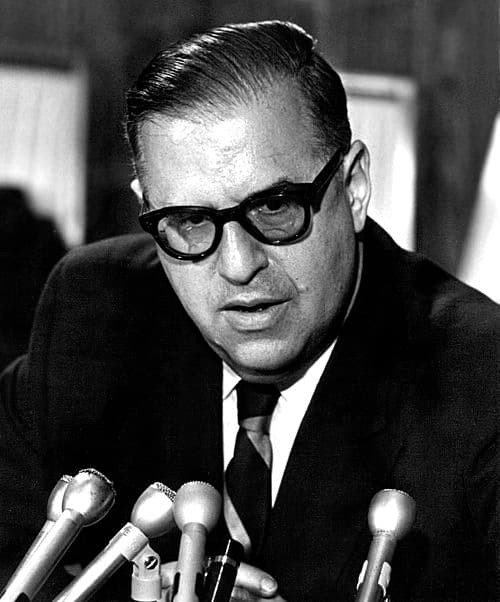
Abba Eban
PERSON
Israeli diplomat and politician (1915-2002)
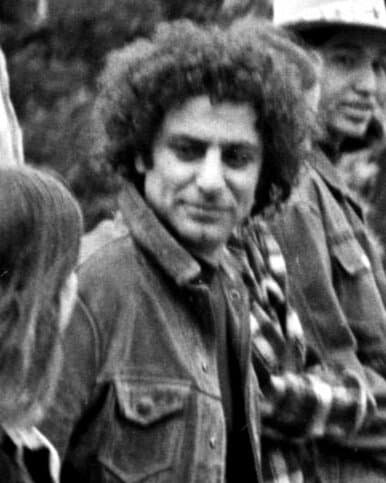
Abbie Hoffman
PERSON
American activist (1936–1989)
AJ
Abdeen Jabara
PERSON
Name reference in documents
Abram Chayes
PERSON
Recipient of the Purple Heart medal (1922-2000)

Adams
PERSON
Ambiguous surname - refers to multiple people in Epstein documents
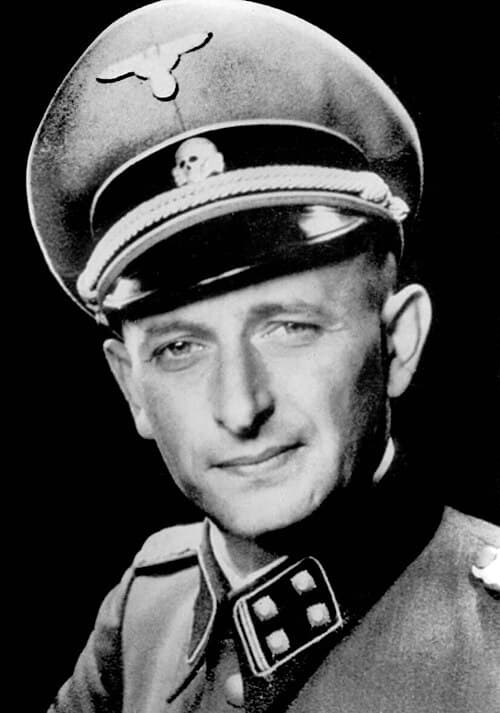
Adolf Eichmann
PERSON
German-Austrian SS officer and one of the major organizers of the Holocaust (1906–1962)
Adolf Hitler
PERSON • 2 mentions
Dictator of Germany from 1933 to 1945, main instigator of World War II and leader of the Holocaust (1889–1945)
Ahmadinejad
PERSON
6th President of the Islamic Republic of Iran from 2005 to 2013
Al Gore
PERSON
Vice President of the United States from 1993 to 2001 (born 1948)
Alan Dershowitz
PERSON • 4 mentions
American lawyer, author, and art collector (born 1938)
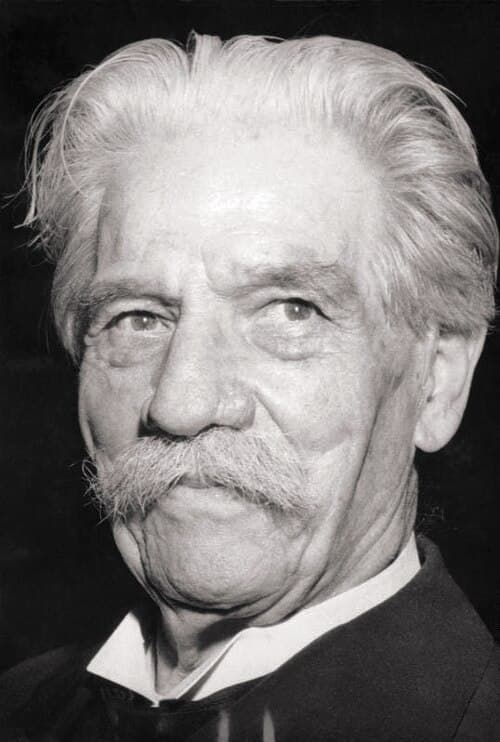
Albert Schweitzer
PERSON
Person referenced in documents
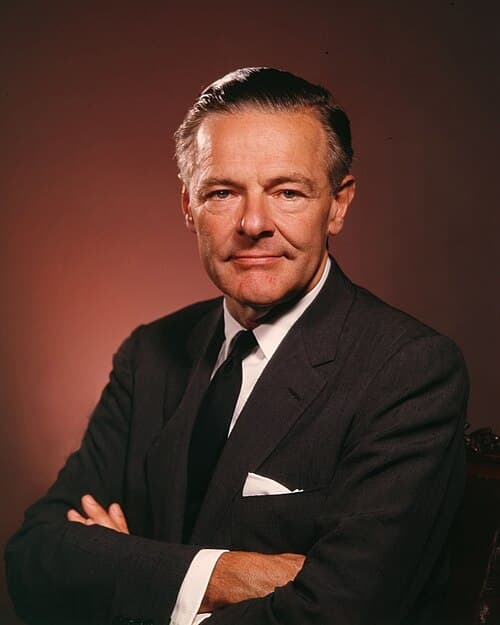
Ambassador Lodge
PERSON
Name reference in documents
AN
Anatoly
PERSON
Name reference in documents
AS
Anatoly Shcharansky
PERSON
Name reference in documents
Angela Davis
PERSON
American political activist, scholar, and author
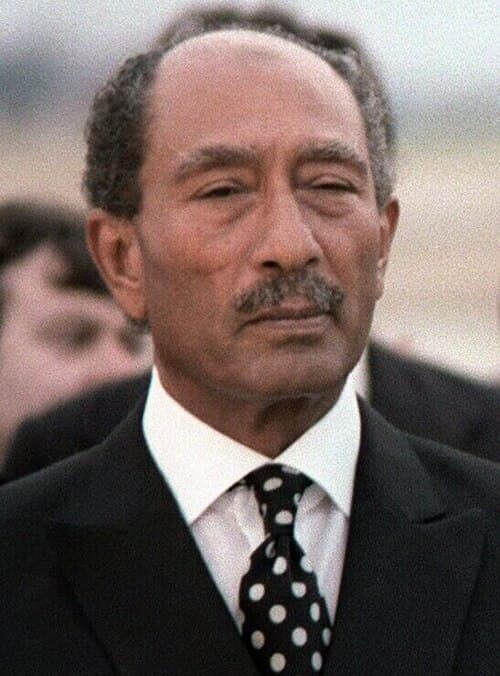
Anwar Sadat
PERSON
President of Egypt from 1970 to 1981
Archibald Cox
PERSON
American prosecutor (1912–2004)
AE
Archie Epps
PERSON
Name reference in documents
Ariane de Rothschild
PERSON
French baroness
Arthur Goldberg
PERSON
American lawyer, politician and civil servant (1908-1990)
Aung San Suu Kyi
PERSON
Former State Counsellor of Myanmar and Leader of the National League for Democracy
Barack Obama
PERSON
President of the United States from 2009 to 2017
BA
Barbara
PERSON
Ambiguous first name - refers to multiple people in Epstein documents
Barry Diller
PERSON
American businessman
Barry Goldwater
PERSON
American politician and military officer (1909–1998)

Baruch matir asurim
PERSON
Name reference in documents
BA
Bazelon
PERSON
Surname or name fragment in documents
Benjamin Netanyahu
PERSON • 3 mentions
Prime Minister of Israel (1996–1999; 2009–2021; since 2022)
Bernie Sanders
PERSON
United States Senator from Vermont since 2007
BE
Berrigan
PERSON • 2 mentions
Name reference in documents
Bill Burns
PERSON
American diplomat, former Director of the CIA (2021-2025), former Deputy Secretary of State
Bill Clinton
PERSON • 3 mentions
President of the United States from 1993 to 2001 (born 1946)
Bin Laden
PERSON
Al-Qaeda founder, referenced in Epstein-related media and news coverage documents
BF
Bobby Fisher
PERSON
Name reference in documents
BB
Boston Bruin
PERSON
Name reference in documents
Brandeis Stone
PERSON
Name reference in documents
Brando
PERSON
Name reference in documents

Brewer
PERSON
Surname reference in Epstein-related documents
BW
Brian Wice
PERSON
Name reference in documents
BR
Brooke
PERSON
First name reference to multiple individuals in Epstein documents

Brooke naked
PERSON
Name reference in documents

Brooke Shields
PERSON
American actress
CA
Carolyn
PERSON
First name reference to multiple individuals in Epstein documents
CC
Carolyn Cohen
PERSON
Biologist
CM
Chico Marx
PERSON
Name reference in documents
Christian
PERSON
Italian singer
CB
Christian Brando
PERSON
Name reference in documents
Claus
PERSON
Swiss painter (-1422)
CL
Clauson
PERSON
Name reference in documents
CO
Cotler
PERSON
Name reference in documents

Cynthia Nixon
PERSON
American actress and politician
DD
Dag Drollet
PERSON
Name reference in documents
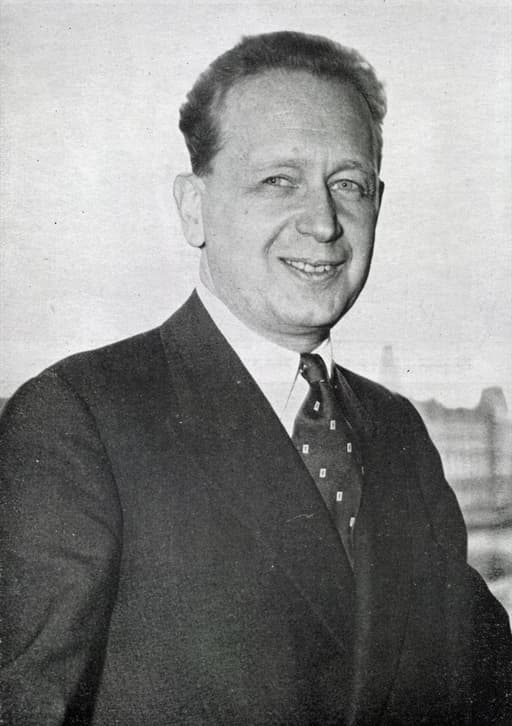
Dag Hammarskjold
PERSON
Swedish diplomat, economist, and author (1905-1961)
DB
Daniel Berrigan
PERSON
Name reference in documents
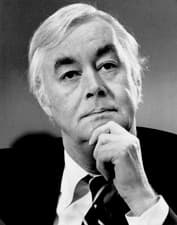
Daniel Patrick Moynihan
PERSON
American politician (1927-2003)
DA
Dardin
PERSON
Name reference in documents
DB
David Bazelon
PERSON
Name reference in documents

David Brewer
PERSON
English broker and politician (1940–2023)
David Steinberg
PERSON
Comedian, actor, director, and writer
DE
Dean Archie Epps
PERSON
Name reference in documents
DE
Dean Epps
PERSON
Name reference in documents
DS
Der Sturmer
PERSON
Name reference in documents
DB
Derek C. Bok
PERSON
American lawyer and college administrator
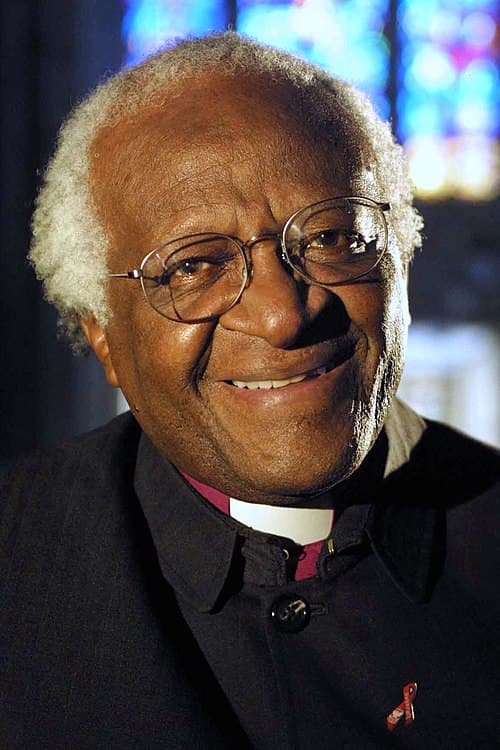
Desmond Tutu
PERSON
South African churchman, politician, archbishop, Nobel Prize winner (1931–2021)
Don Ervin
PERSON
Name reference in documents
Donald Trump
PERSON • 3 mentions
President of the United States (2017–2021, 2025–present)
DR
Donatella Rovera
PERSON
Name reference in documents
Edward Kennedy
PERSON
American lawyer
Ehud Barak
PERSON
10th Prime Minister of Israel
Ehud Olmert
PERSON • 2 mentions
Prime Minister of Israel from 2006 to 2009
Eleanor Roosevelt
PERSON • 2 mentions
First Lady of the United States from 1933 to 1945 (1884–1962)
Elie Wiesel
PERSON
Romanian-born American writer, professor, political activist, Nobel laureate, and Holocaust survivor (1928-2016)

Elon Musk
PERSON
Businessman and entrepreneur (born 1971)
ET
Emmy Taylor
PERSON
Former assistant to Ghislaine Maxwell, appeared in Epstein flight logs and court documents
EB
Ermest Borgnine
PERSON
Name reference in documents
ER
Ervin
PERSON
First name reference to multiple individuals
Esther
PERSON
Biblical Jewish queen of Persia and Medes (Book of Esther)
EX
Exodus
PERSON
Surname reference in documents
FP
Ferdinand Pecora
PERSON
Name reference in documents
FI
Fisher
PERSON
Surname reference in Epstein documents
FO
Formosa
PERSON
Name reference in documents
FM
Frangois Mitterrand
PERSON
Name reference in documents
FB
Frank Burns
PERSON
Name reference in documents
Frank Gehry
PERSON
Canadian and American architect (1929–2025)
Frank Sinatra
PERSON
American singer and actor (1915–1998)
GP
Gareth Porter
PERSON
Name reference in documents
Garrison Keillor
PERSON
American author, storyteller, humorist, voice actor, and radio personality
GC
George Conk
PERSON
Name reference in documents
GH
George Hilderbrnd
PERSON
Name reference in documents
George Steinbrenner's
PERSON
Name reference in documents
George W. Bush
PERSON • 3 mentions
President of the United States from 2001 to 2009

Georgina Chapman
PERSON
English fashion designer and actress
Gerald Ford
PERSON
President of the United States from 1974 to 1977 (1913–2006)
GH
Ghadafi
PERSON
Name reference in documents
GI
Gibbels
PERSON
Name reference in documents
GJ
Gigi Jordan
PERSON
Name reference in documents
Goebbels
PERSON
Name reference in documents

Goldie Hawn
PERSON
American actress
Gorbachev
PERSON
Leader of the Soviet Union from 1985 to 1991 (1931–2022)
Guild
PERSON
Surname or name fragment in documents
HR
Haley Robson
PERSON
Identified as recruiter of underage girls for Jeffrey Epstein in Palm Beach
HM
Hans-Rudolf Merz
PERSON
Name reference in documents
HS
Harold Solomon
PERSON
Name reference in documents

Havel
PERSON • 2 mentions
Surname reference in documents

Helmsley
PERSON
Surname reference in documents
Henry Cabot Lodge
PERSON
American politician (1902–1985)
Henry Kissinger
PERSON • 2 mentions
American politician and diplomat (1923–2023)
Hillary Clinton
PERSON • 2 mentions
American politician and diplomat (born 1947)
HI
Hillel
PERSON
Surname reference in documents
Howard Dean
PERSON
American politician (born 1948)
Hubert Humphrey
PERSON
Vice president of the United States from 1965 to 1969
IP
Iphigenia
PERSON
Name reference in documents
Irwin Cotler
PERSON
Canadian politician
JG
Jack Goldberger
PERSON
American criminal defense attorney who represented Jeffrey Epstein, partner at Goldberger Weiss P.A. in West Palm Beach, Florida
James Baker
PERSON
American lawyer and statesman (born 1930)
JA
Jamin
PERSON
Surname or name fragment in documents
JM
Janet Malcolm’s
PERSON
Name reference in documents
Jesus Christ
PERSON • 2 mentions
Central figure of Christianity (6 or 4 BC – AD 30 or 33)
Jim Bakker
PERSON
American televangelist (born 1940)
Joe Biden
PERSON
46th President of the United States (2021–2025)
JO
Joe Oteri
PERSON
Name reference in documents
JP
Joe Paterno
PERSON
Name reference in documents
John Brennan
PERSON
Director of the Central Intelligence Agency from 2013 to 2017
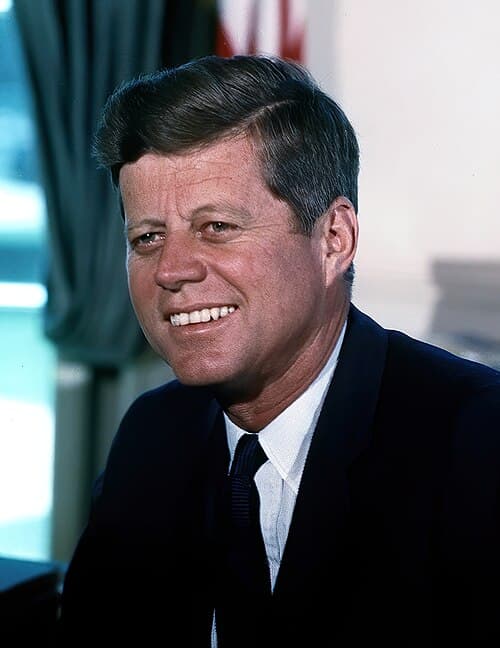
John F. Kennedy
PERSON • 2 mentions
President of the United States from 1961 to 1963 (1917–1963)
John Le Carre
PERSON
Name reference in documents
John Lennon
PERSON • 2 mentions
British musician (1940–1980)
John Lucido
PERSON
Name reference in documents
John Ono
PERSON
British musician (1940–1980)
John Paul II
PERSON
264th pope of the Catholic Church (1978–2005)
JQ
John Quigley
PERSON
Name reference in documents
JC
Johnny Cochran
PERSON
Name reference in documents
JM
Jonathan Marks
PERSON
Name reference in documents
Joseph P. Lash
PERSON
American political activist (1909-1987)

Julie K. Brown
PERSON
American journalist
Justin Trudeau
PERSON
23rd prime minister of Canada from 2015 to 2025
KA
Kampuchea
PERSON
Name reference in documents
KH
Kassim Hafeez
PERSON
Name reference in documents

Katie Couric
PERSON
American journalist, presenter, producer, and author
KR
Kenneth Roth
PERSON
Name reference in documents
KC
Kevin Costner
PERSON
Name reference in documents
KU
Kunstler
PERSON
Name reference in documents
LK
Larry King
PERSON
Person referenced in documents
LR
Larry Ruvo
PERSON
Name reference in documents
Lech Walesa
PERSON
President of Poland from 1990 to 1995
Len Wildes
PERSON
Name reference in documents
LE
Leona
PERSON
First name reference to multiple individuals
Leona Helmsley
PERSON
American hotel owner (1920–2007)
LR
Linda Ronstadt
PERSON
Person referenced in documents
Lou Siegel’s
PERSON
Name reference in documents
LB
Louis Boudin
PERSON
Name reference in documents
Mahmoud
PERSON
First name reference to multiple individuals in Epstein-related documents
Mahmoud Ahmadinejad
PERSON
6th President of the Islamic Republic of Iran from 2005 to 2013
MA
Mailer
PERSON
Individual employed to handle newspapers from the press to the truck
MH
Malcolm X. He
PERSON
Name reference in documents
MX
Malcolm X’s
PERSON
Name reference in documents
Mandela
PERSON
First President of South Africa and anti-apartheid activist (1918–2013)
Mao Zedong
PERSON
1st chairman of the Chinese Communist Party and founder of the People's Republic of China (1893–1976)
Marc Rich
PERSON
American commodities trader (1934–2013)

Mark Chapman
PERSON
British television presenter

Marks
PERSON
Ambiguous surname - refers to multiple people in Epstein documents
Marlon Brando
PERSON
American actor (1924–2004)
MC
Marsha Clark
PERSON
Name reference in documents

Martha
PERSON
Czech vocalist

Martha Stewart
PERSON • 2 mentions
American businesswoman, writer, TV personality (born 1941)
MV
Martha’s Vineyard
PERSON
Person referenced in documents
MG
Martin Garbus
PERSON
Name reference in documents
Martin Luther
PERSON
Name reference in Epstein documents, likely referring to Martin Luther King Jr.
Martin Luther King
PERSON
American Baptist minister and civil rights leader (1929–1968)
Marvin Hamlisch
PERSON
Name reference in documents
Mary Robinson
PERSON
Former President of Ireland and former United Nations High Commissioner for Human Rights
MS
Maurice Sendak
PERSON
Name reference in documents
MB
Maximum Bob
PERSON
Name reference in documents
MA
Mazoltuv
PERSON
Name reference in documents
MB
Mazoltuv Borukhova
PERSON
Name reference in documents

Medina
PERSON
Ambiguous surname - refers to D. Medina, David Medina, and Gisela Castro Medina
MB
Michael Boudin
PERSON
Name reference in documents
MC
Michael Cernea
PERSON
Name reference in documents
Michael Cohen
PERSON
American former attorney and former Republican official

Michael Douglas
PERSON
American retired actor, producer and activist (born 1944)
Michael Jackson
PERSON
American singer, songwriter, record producer, and dancer (1958–2009)
Michael Milken
PERSON • 2 mentions
American investor
MG
Mickael Gorbachev
PERSON
Name reference in documents
Miriam
PERSON
Sister of Moses and Aaron
MA
Miriam Adelson
PERSON
Name reference in documents
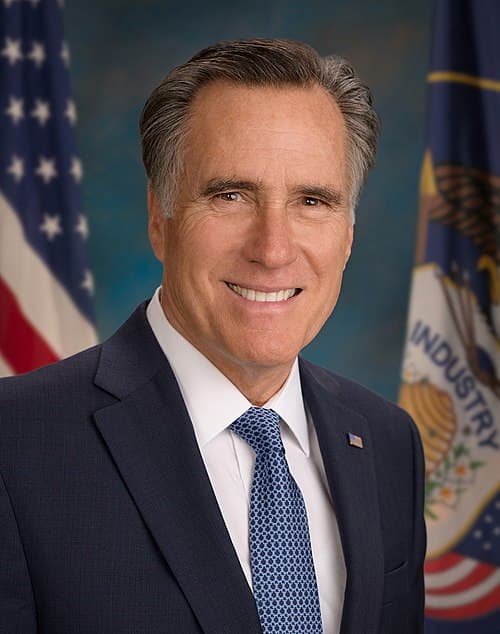
Mitt Romney
PERSON • 2 mentions
American politician and businessman (born 1947)
Mitterrand
PERSON
21st President of the French Republic from 1981 to 1995 (1916–1996)
MR
MJ Rosenberg
PERSON
Name reference in documents
MO
Mohammaden
PERSON
Name reference in documents
MK
Moishe Katz
PERSON
Name reference in documents
Moshe Katsav
PERSON
8th President of Israel (2000–2007)
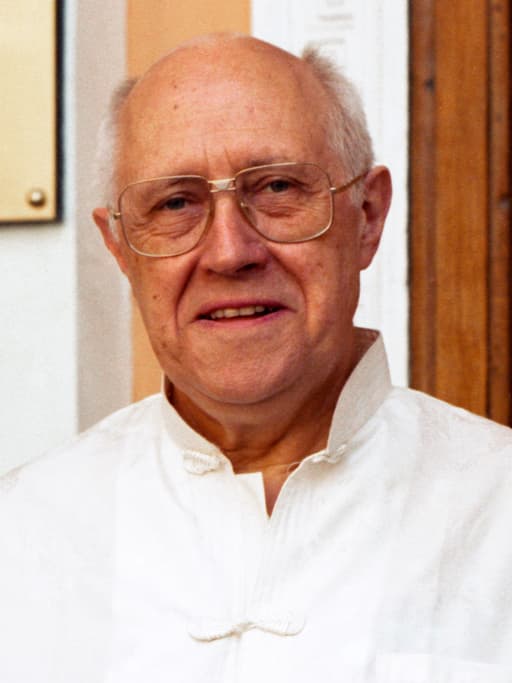
Mstislav Rostropovich
PERSON
Soviet and Russian cellist and conductor (1927-2007)
Natan Sharansky
PERSON
Israeli politician (born 1948)
Nelson
PERSON
First name/surname reference to multiple individuals including Justin D. Nelson (attorney) and Nelson Peitz
Nelson Mandela
PERSON
First President of South Africa and anti-apartheid activist (1918–2013)
Noam Chomsky
PERSON • 2 mentions
American linguist and activist (born 1928)
Norman Mailer
PERSON
American writer (1923–2007)

O.J.
PERSON
Surname or name fragment in documents
O.J. Simpson
PERSON • 2 mentions
Former American football player acquitted of murder, referenced in Epstein-related documents and media coverage
O'
O'Connor
PERSON
Ambiguous surname in legal citations within Epstein prosecution documents
OC
Ocampo
PERSON
Name reference in documents
Oliver Stone
PERSON
American film director, screenwriter, and producer (born 1946)
Oliver Wendell Holmes
PERSON
Person referenced in documents
Osama bin Laden
PERSON
Saudi terrorist and co-founder of al-Qaeda (1957–2011)

Palmach
PERSON
Elite strike force of the Haganah in Mandatory Palestine
Patrick Kennedy
PERSON
English actor
PF
Paul Freund
PERSON
Name reference in documents
PO
Paul O’Dwyer
PERSON
Name reference in documents
Peter Mandelson
PERSON
British politician and life peer (born 1953)
PN
Peter Norton
PERSON
Name reference in documents
PC
Phyllis Chesler
PERSON
Name reference in documents
Pierre Trudeau
PERSON
Prime Minister of Canada from 1968 to 1979 and 1980 to 1984 (1919–2000)
Pol Pot
PERSON
Former General Secretary of the Communist Party of Kampuchea (1925–1998)
PO
Potter
PERSON
Surname reference in Epstein-related documents
PR
pre-Mohammaden
PERSON
Name reference in documents
Prince Charles
PERSON
King of the United Kingdom and other Commonwealth realms since 2022 (born 1948)
QU
Quigley
PERSON
Surname reference in Epstein-related documents
Ray Charles
PERSON
American singer, pianist and songwriter (1930–2004)
Redgrave
PERSON
Name reference in documents
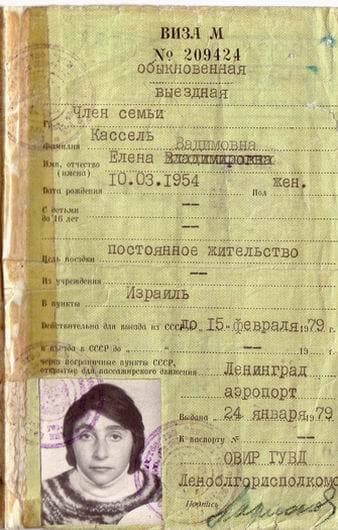
Refusenicks
PERSON • 2 mentions
Name reference in documents
RC
Rene Cassin
PERSON
Name reference in documents
RF
Richard Falk
PERSON
Name reference in documents
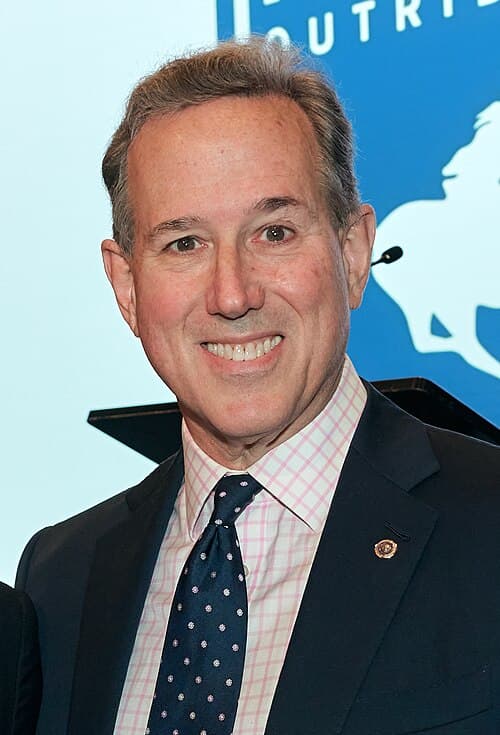
Rick Santorum
PERSON
American politician and commentator (born 1958)
RB
Robert Bernstein
PERSON
Name reference in documents
RP
Robert D. Potter
PERSON
Name reference in documents

Robert Downey
PERSON
American actor (born 1965)
RM
Robert Murcalo
PERSON
Name reference in documents
RS
Robert Shapiro
PERSON
American lawyer (1942-)
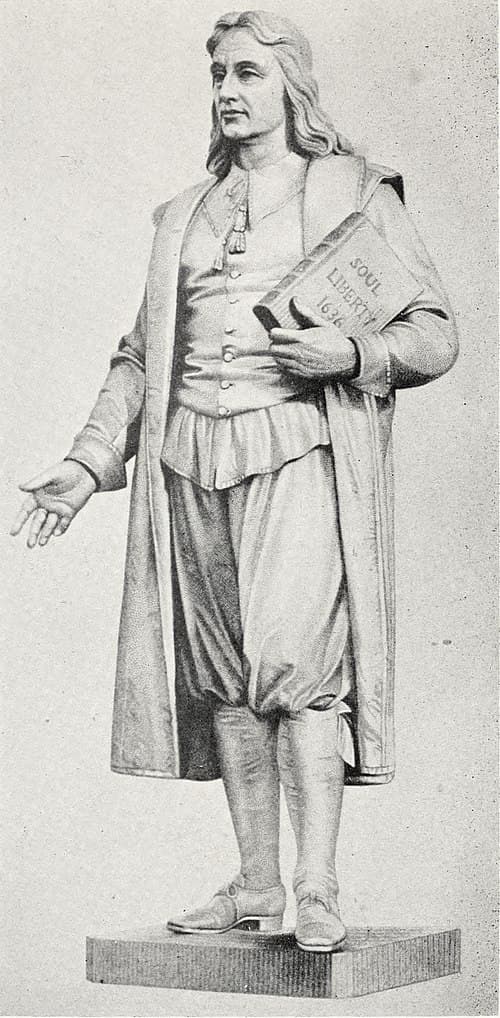
Roger Williams
PERSON
Person referenced in documents
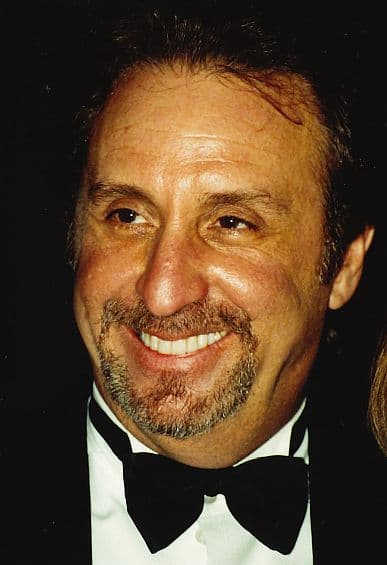
Ron Silver
PERSON
American actor and activist (1946-2009)
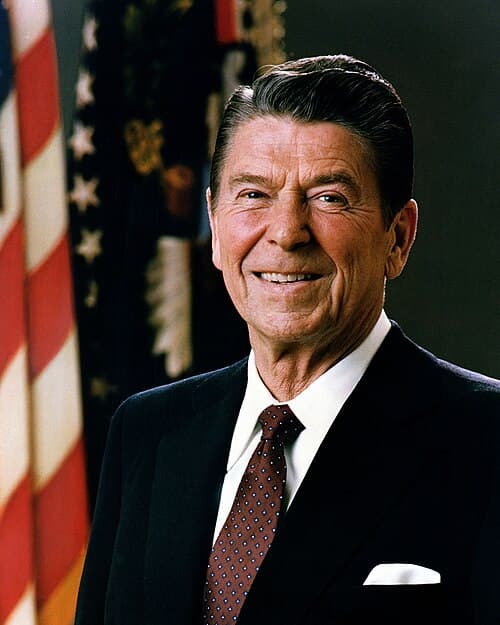
Ronald Reagan
PERSON • 2 mentions
President of the United States from 1981 to 1989 and actor (1911–2004)

Rosenbergs
PERSON
Name reference in documents
Rostropovich
PERSON
Soviet and Russian cellist and conductor (1927-2007)
RO
Rovera
PERSON
Name reference in documents
RU
Rumplemyers
PERSON
Name reference in documents
SG
Saif Ghadafi
PERSON
Name reference in documents
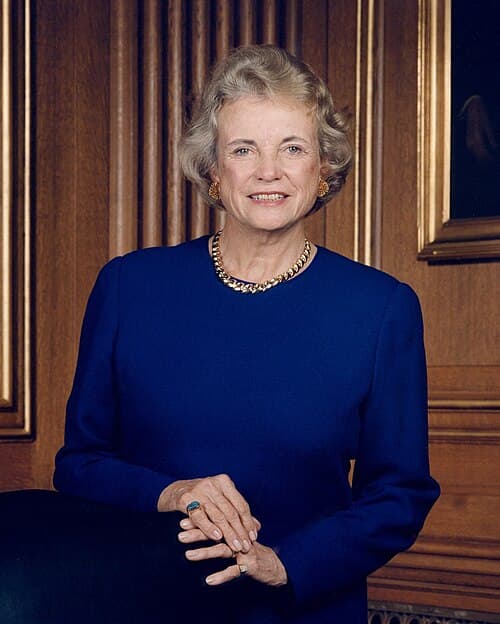
Sandra Day
PERSON
Name reference in documents
Sandra Day O'Connor
PERSON
Name reference in documents
SM
Sandra Murphy’s
PERSON
Name reference in documents
Sassoon
PERSON
Surname reference in documents
SH
Shapiro
PERSON
Ambiguous surname reference in Epstein documents
SH
Shcharansky
PERSON
Name reference in documents
SH
Sheldon
PERSON
First name reference to multiple individuals in Epstein-related documents
Sheldon Adelson
PERSON
American businessman (1933–2021)
Shimon Peres
PERSON • 2 mentions
Israeli politician (1923–2016) –Former President of Israel (2007–2014) and Prime Minister of Israel (1977, 1984–1986, 1995–1996)
SI
Silva
PERSON
Surname reference in Epstein-related documents
SZ
Silva Zalmunsen
PERSON
Name reference in documents
SR
Srifa
PERSON
Name reference in documents
ST
Steinberg
PERSON
Surname reference in Epstein-related documents
ST
Stevens
PERSON
Artist
Susan Shapiro
PERSON
American writer
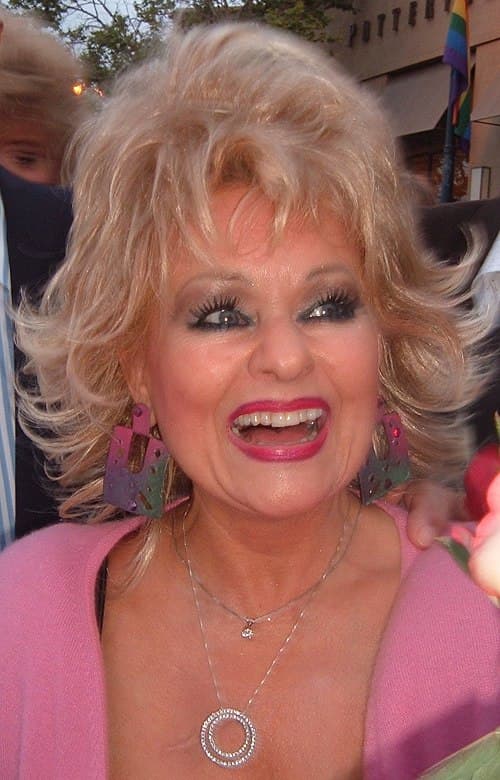
Tammy Faye
PERSON
Name reference in documents

Tammy Faye Bakker
PERSON
American evangelist (1942-2007)
Tchaikovsky
PERSON
Patter song written by Ira Gershwin and Kurt Weill
Ted Kennedy
PERSON
United States Senator from Massachusetts from 1962 to 2009
TK
Ted Koppel
PERSON
Name reference in documents
TT
Telford Taylor
PERSON
Name reference in documents
TF
Tfilin
PERSON
Name reference in documents
The Dalai Lama
PERSON • 2 mentions
Tibetan spiritual leader, referenced in Epstein scheduling and contact documents
Thomas Jefferson
PERSON • 2 mentions
President of the United States from 1801 to 1809
Tom Lantos
PERSON
U.S. Representative from California (1981–2008)
TR
Tom Ridge
PERSON
Name reference in documents
Vaclav Havel
PERSON
Czech statesman, playwright, and former dissident, the last president of Czechoslovakia and the first president of the Czech Republic (1936–2011)

Vanessa Redgrave
PERSON
British actress and activist (born 1937)
Vidal Sassoon
PERSON
British hairstylist (1928–2012)
VI
Vinny
PERSON
First name reference to multiple individuals in Epstein-related documents
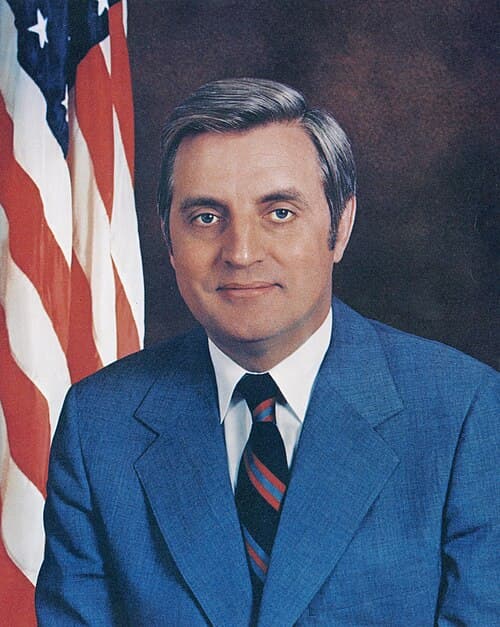
Walter Mondale
PERSON
Vice President of the United States from 1977 to 1981
WI
Wiesel
PERSON
Reference to Elie Wiesel or similar named individual
WI
Wildes
PERSON
Name reference in documents
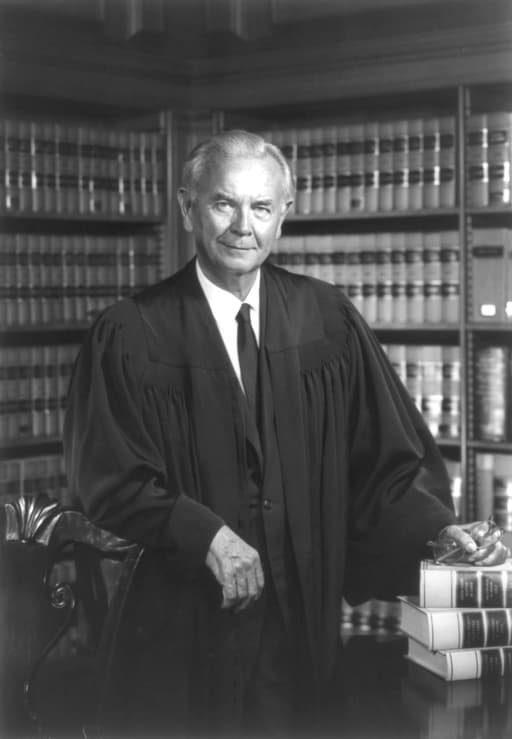
William Brennan
PERSON
Name reference in documents
WH
William Hastie
PERSON
Name reference in documents
William Kunstler
PERSON
American lawyer and civil rights activist (1919-1995)
WW
William Warfield
PERSON
Name reference in documents
Woody Allen
PERSON • 3 mentions
American filmmaker, actor and comedian (born 1935)

Yeshiva
PERSON • 2 mentions
Surname reference in documents
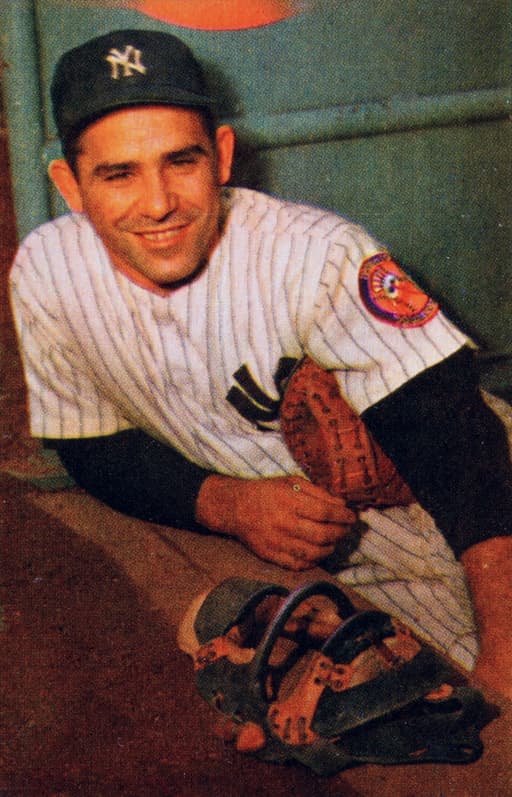
Yogi Berra
PERSON
American baseball player, manager, and coach (1925–2015)

Yoko Ono
PERSON
Japanese artist and activist based in the United States (born 1933)
ZC
Zhe Case
PERSON
Name reference in documents
ZJ
Zhe Jews
PERSON
Name reference in documents
Zorach
PERSON
Name reference in documents
a Department of the Navy
ORGANIZATION
Organization referenced in documents
Adelsons
ORGANIZATION
Organization referenced in documents
American Jewish Committee
ORGANIZATION
Organization referenced in documents
Auschwitz
ORGANIZATION • 2 mentions
Nazi concentration and extermination camp
Boston’s Children’s Hospital
ORGANIZATION
Organization referenced in documents
Brooklyn College
ORGANIZATION
Senior college of the City University of New York, located in Brooklyn
Carnegie Hall
ORGANIZATION
Performing arts building in New York City
Chabad
ORGANIZATION
Organization referenced in documents

Chamber
ORGANIZATION
Organization referenced in documents
Church of the Holy Trinity
ORGANIZATION
Church in Toronto, Canada
Chutzpah
ORGANIZATION
Quality of audacity, of Yiddish origin into English
Club Lifetime Partners
ORGANIZATION
Organization referenced in documents
Cravath, Swaine and Moore
ORGANIZATION
Organization referenced in documents
Department of Justice
ORGANIZATION
United States Department of Justice, federal executive department responsible for law enforcement
Des Carte
ORGANIZATION
Organization referenced in documents
Eastern Airlines
ORGANIZATION
Organization referenced in documents
Fenway
ORGANIZATION
Organization referenced in documents

First Amendment
ORGANIZATION
Organization referenced in documents
Free Palestine
ORGANIZATION
Organization referenced in documents
GOP
ORGANIZATION
American political party

Guggenheim
ORGANIZATION
Organization referenced in documents
Haggadahs
ORGANIZATION
Organization referenced in documents

Harvard College
ORGANIZATION
Undergraduate college of Harvard University in Cambridge, Massachusetts
Harvard Law School
ORGANIZATION
Law school of Harvard University in Cambridge, Massachusetts
Harvard Law School Bulletin
ORGANIZATION
Organization referenced in documents
Hebrew University
ORGANIZATION
Hebrew University of Jerusalem

Heritage
ORGANIZATION
Organization referenced in documents
Heritage Village
ORGANIZATION • 2 mentions
Organization referenced in documents
Human Rights Watch’s
ORGANIZATION
Organization referenced in documents
Israel & Anti-Semitism
ORGANIZATION
Organization referenced in documents
Jewish Sunday School
ORGANIZATION
Organization referenced in documents

Judaism
ORGANIZATION
Abrahamic monotheistic ethnic religion of the Jews
Justice of Canada
ORGANIZATION
Organization referenced in documents
Kosher
ORGANIZATION
Organization referenced in documents
Kremlin
ORGANIZATION
Fortified complex in Moscow, Russia
Letters
ORGANIZATION
Organization referenced in documents

Likud
ORGANIZATION
Israeli centre-right to right-wing political party

MacIntosh
ORGANIZATION
Organization referenced in documents
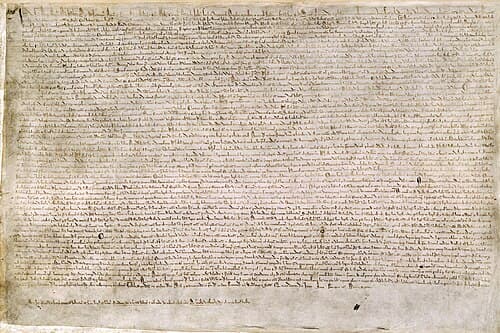
Magna Carta
ORGANIZATION
Organization referenced in documents
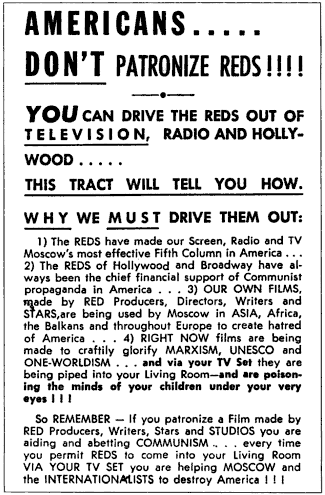
McCarthyism
ORGANIZATION
Phenomenon in the United States of making accusations of subversion or treason without proper regard for evidence, named after Senator Joseph McCarthy
Media Matters
ORGANIZATION
Organization referenced in documents

Mormonism
ORGANIZATION
Religious tradition and theology founded by Joseph Smith and centered on the Book of Mormon
my ‘Jewish Lawyers
ORGANIZATION
Organization referenced in documents
N.Y. Post
ORGANIZATION
Financial services company
Nabisco
ORGANIZATION
American snack company
New York State Supreme Court
ORGANIZATION
Organization referenced in documents
Nobel Committee
ORGANIZATION
Organization referenced in documents
Passover
ORGANIZATION
Organization referenced in documents
Playboy Press
ORGANIZATION
American men's lifestyle and entertainment magazine
Rights Watch
ORGANIZATION
Organization referenced in documents
Security Council Resolution 242
ORGANIZATION
Organization referenced in documents
Seders
ORGANIZATION
Organization referenced in documents
Stanford Medical Center
ORGANIZATION
Organization referenced in documents
Supreme Court
ORGANIZATION • 2 mentions
Highest court of jurisdiction in the US
the “Human Rights Club
ORGANIZATION
Organization referenced in documents
the “Inter- Yeshiva High School
ORGANIZATION
Organization referenced in documents
the “Jew Among Nations
ORGANIZATION
Organization referenced in documents
the Adelson Day School
ORGANIZATION
Organization referenced in documents
the African National Congress
ORGANIZATION
Organization referenced in documents

The American Civil Liberties Union
ORGANIZATION
Organization referenced in documents

The American Lawyer
ORGANIZATION
Organization referenced in documents
the Amnesty International
ORGANIZATION
Organization referenced in documents
the Amnesty International Report
ORGANIZATION
Organization referenced in documents
The Arab Lawyers’ Union
ORGANIZATION
Organization referenced in documents
the Arizona Republican Party
ORGANIZATION
Organization referenced in documents
the Assembly Chamber
ORGANIZATION
Organization referenced in documents
the Association of Arab-American University Graduates
ORGANIZATION
Organization referenced in documents
the Behavioral Sciences
ORGANIZATION
Organization referenced in documents
the Catholic Church
ORGANIZATION
Catholic Church
the Center for Advanced Study
ORGANIZATION
Organization referenced in documents

the Cleveland Clinic
ORGANIZATION
Organization referenced in documents
the Convention on the Prevention and Punishment of the Crime of Genocide
ORGANIZATION
Organization referenced in documents
the Danbury Baptist Association
ORGANIZATION
Organization referenced in documents
the Democratic National Committee
ORGANIZATION
Organization referenced in documents
the Democratic National Convention of 1968
ORGANIZATION
Organization referenced in documents
the Department of Sociology and Anthropology
ORGANIZATION
Organization referenced in documents
the Durban Conference
ORGANIZATION
Organization referenced in documents
the Fascist Axis
ORGANIZATION
Organization referenced in documents
the Federal Penitentiary
ORGANIZATION
Organization referenced in documents
the General Assembly
ORGANIZATION
United Nations General Assembly
the Huntington Theater
ORGANIZATION
Organization referenced in documents
the Inter- Yeshiva High School Student Council
ORGANIZATION
Organization referenced in documents
the Inter-Yeshiva HS Council
ORGANIZATION
Organization referenced in documents
the International Court of Justice
ORGANIZATION
Organization referenced in documents
the International Criminal Court
ORGANIZATION
International court in The Hague for war crimes and crimes against humanity
the Jewish Law Students Association
ORGANIZATION
Organization referenced in documents
the Johnson Administration’s
ORGANIZATION
Organization referenced in documents
the Khmer Rouge
ORGANIZATION
Organization referenced in documents
The Metropolitan Museum
ORGANIZATION
Organization referenced in documents
The NGO Monitor
ORGANIZATION
Organization referenced in documents
the NGO UN Watch
ORGANIZATION
Organization referenced in documents
the Norton Antivirus Software
ORGANIZATION
Organization referenced in documents
the Palestine Liberation Organization
ORGANIZATION
Organization referenced in documents
the Palestinian Authority
ORGANIZATION
Palestinian National Authority
the PTL Partners
ORGANIZATION
Organization referenced in documents
the Romanian Communist Party
ORGANIZATION
Organization referenced in documents
the Security Council
ORGANIZATION
United Nations Security Council
the Soviet
ORGANIZATION
Organization referenced in documents
the Supreme Judicial Court
ORGANIZATION
Organization referenced in documents
the UN Commission on Human Rights (UNCHR
ORGANIZATION
Organization referenced in documents
the UN Council on Human Rights
ORGANIZATION
Organization referenced in documents
the UN Human Rights Council
ORGANIZATION
Organization referenced in documents
the United Nations Association
ORGANIZATION
Organization referenced in documents
the University of Bucharest
ORGANIZATION
Organization referenced in documents
the US Court of Appeals
ORGANIZATION
Organization referenced in documents
the US Embassy
ORGANIZATION
Organization referenced in documents
the Vibrating Beeper
ORGANIZATION
Organization referenced in documents
the Witwatersrand University
ORGANIZATION
Organization referenced in documents
the Yale Law Journal
ORGANIZATION
Organization referenced in documents
Trondheim
ORGANIZATION
Organization referenced in documents
UN Watch
ORGANIZATION
Organization referenced in documents
UNCHR
ORGANIZATION
Organization referenced in documents

United Nations
ORGANIZATION
Global international and intergovernmental organization
United Nations Special Committee Against Apartheid
ORGANIZATION
Organization referenced in documents
Venetian Hotel
ORGANIZATION
Organization referenced in documents

Yale Law School
ORGANIZATION
Law school of Yale University
Yeshiva University High School
ORGANIZATION
Yeshiva high school in Los Angeles, California, United States
Zelig
ORGANIZATION
Organization referenced in documents

Algeria
LOCATION
Country in North Africa

Bahrain
LOCATION
Country in the Persian Gulf
Barbary
LOCATION
Location referenced in documents
Bedford
LOCATION
County town of Bedfordshire, England
Beirut
LOCATION
Capital and largest city of Lebanon

Belarus
LOCATION
Country in Eastern Europe
Borukhova
LOCATION
Location referenced in documents

Boulder
LOCATION
City in Colorado, United States
Bukhara
LOCATION
Location referenced in documents
Burma
LOCATION
City in Myanmar (Burma)

Burundi
LOCATION
Sovereign state in Africa

Cambodia
LOCATION
Country in Southeast Asia
Central Park West
LOCATION
Street in Manhattan, New York City

Charleston
LOCATION
Largest city in the U.S. state of South Carolina
Cheyenne
LOCATION
Location referenced in documents

Chile
LOCATION
Country in South America

Colorado
LOCATION
State of the United States of America

Czechoslovakia
LOCATION
Country in Central Europe, 1918–1992
Darfur
LOCATION
Region of Sudan

Earth
LOCATION
Third planet from the Sun in the Solar System

Eastern Europe
LOCATION
Eastern part of Europe
Filene
LOCATION
Location referenced in documents
Florida
LOCATION
State of the United States of America
Forest Hills
LOCATION
Location referenced in documents
Gaza Strip
LOCATION
Gaza Strip, Palestinian territory
Geneva
LOCATION
City in Switzerland and capital of its canton

Guatemala
LOCATION
Sovereign state in Central America
Hague
LOCATION
City in the Hague, Netherlands
Harlem
LOCATION
Neighborhood in Manhattan, New York City, New York, United States

Houston
LOCATION
Seat of Harris County, and largest city in State of Texas, United States

Jerusalem
LOCATION
City in the Middle East, holy to the three Abrahamic religions

Johannesburg
LOCATION
Largest city in South Africa
Khartoum
LOCATION
Location referenced in documents
Khmer
LOCATION
Location referenced in documents

Las Vegas
LOCATION
City of Clark County, and largest city in state of Nevada, United States

Lebanon
LOCATION
Country in West Asia
Madison
LOCATION
Capital city of Wisconsin, United States

Mecca
LOCATION
Saudi Arabian city and capital of the Makkah province
Micow
LOCATION
Location referenced in documents

New Haven
LOCATION
City in Connecticut, United States

Norway
LOCATION
Country in Northern Europe

Oklahoma
LOCATION
State of the United States of America

Palo Alto
LOCATION
City in Santa Clara County, California, United States
Prague
LOCATION
Capital city of the Czech Republic

Providence
LOCATION
Capital city of Rhode Island, United States

Queens
LOCATION
Borough in New York City, New York, United States
Red China
LOCATION
Location referenced in documents
Rikers Island
LOCATION
Island in New York City
Robin’s Island
LOCATION
Location referenced in documents

Romania
LOCATION
Country in Southeast Europe
Rome Synagogue
LOCATION
Location referenced in documents

Rwanda
LOCATION
Country in East Africa
Sarajevo
LOCATION
Capital city of Bosnia and Herzegovina

Skokie
LOCATION
Village in Cook County, Illinois, United States
Somerville
LOCATION
Location referenced in documents

South
LOCATION
Directional region of the United States

South Africa
LOCATION
Country in southern Africa
South Africa Apartheid
LOCATION
Location referenced in documents

South Carolina
LOCATION
State of the United States of America
South-East Asia
LOCATION
Location referenced in documents
Soviet Block
LOCATION
Location referenced in documents

Sudan
LOCATION
Country in Northeast Africa

Tehran
LOCATION
Capital city of Iran

Tel Aviv
LOCATION
City in Israel
the Beach Boys
LOCATION
Location referenced in documents
the Boston Garden
LOCATION
Location referenced in documents
the Catskill Mountain Resort
LOCATION
Location referenced in documents
the New Left
LOCATION
Location referenced in documents
the Occupied Territories
LOCATION
Location referenced in documents
the Soviet Union
LOCATION
Former country, now part of Russia and other nations
the West Bank
LOCATION
Territory in the Middle East

Tibet
LOCATION
Plateau region in west China

Toronto
LOCATION
Capital and largest city of the province of Ontario, Canada

Tripoli
LOCATION
Capital city of Libya
united Germany
LOCATION
Location referenced in documents

Venezuela
LOCATION
Country in South America
Vienna
LOCATION
Capital of and state in Austria

Viet Nam
LOCATION
Location referenced in documents
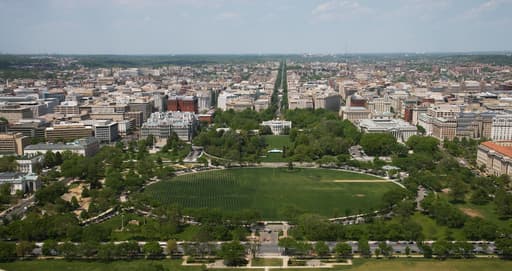
Washington D.C.
LOCATION
Capital city of the United States of America
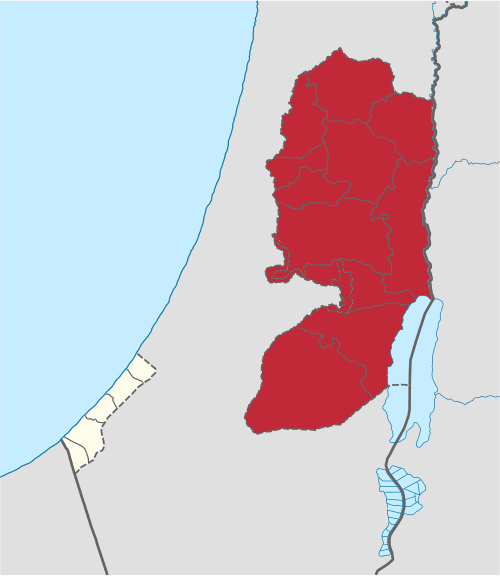
West Bank
LOCATION
Territory in the Middle East
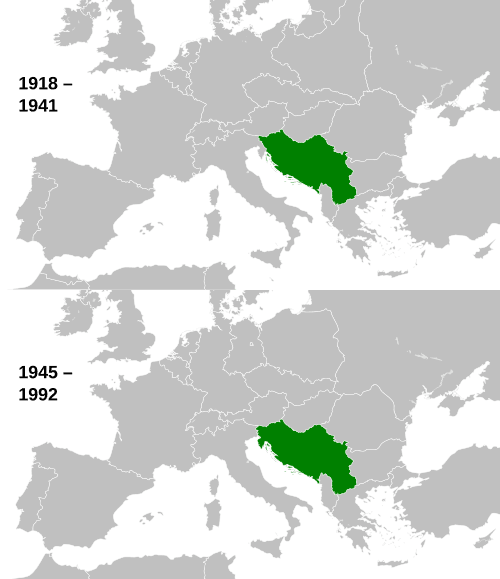
Yugoslavia
LOCATION
1918–1992 country in Southeastern Europe

Zimbabwe
LOCATION
Sovereign state in southern Africa
Statistics
Pages:100
Entities:479
Avg. OCR:95.2%
Sponsored