Back to Network



















8
Shared Docs
8
Same-Page
12 / 12
Mentions
Document Mentions (8 shared documents)
4 mentions1 same-page
Page ?Same page
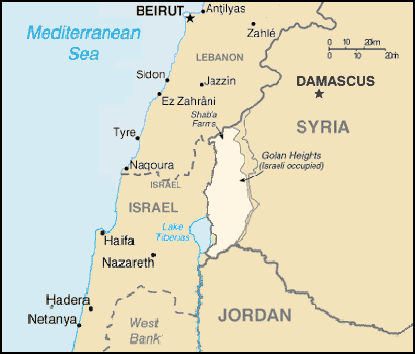
our position was that, assuming all our own negotiating concerns were addressed, we accepted that peace with Syria would include withdrawing from the Golan. The formula was agreed in a meeting in Israel between Rabin and the Clinton Administration’s Middle East negotiator, Dennis Ross. Rabin didn’t tell
or the promise, or maybe only the hope, of peace. It was the same problem Yitzhak had faced over the Americans’ misuse of our “pocket deposit” on the Golan. I realized that, having come this far with Oslo, neither he nor the government was likely to back away from approving the Gaza-Jericho accord. But h
briefed me on the questions I could expect, not just about the Achille Lauro but the wider issue of Palestinian attacks, as well as Syrian President Hafez al- Assad’s efforts to re-equip his air force after his losses in Lebanon. So I came to the interview prepared. I brought audio tapes of the hijacker
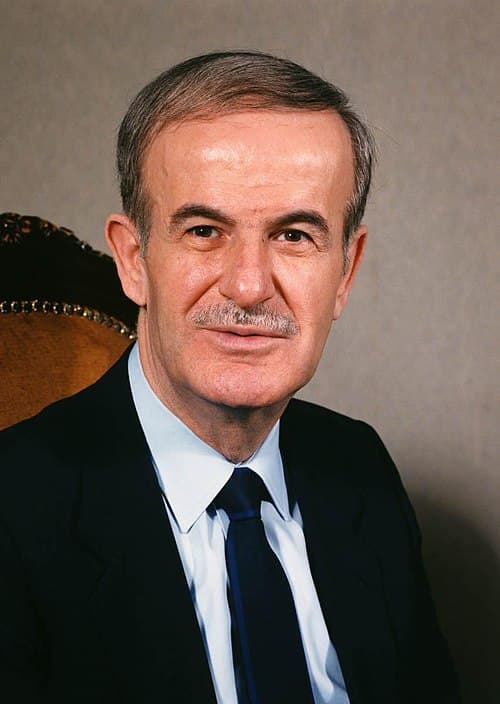
r time, we might manage to extricate ourselves from the escalating violence with Hizbollah; reach a land- for-peace deal with the enigmatic President Hafez al-Assad in Syria; and find some form of coexistence with the Palestinians. He also spoke about international politics. I remember one afternoon in the summe
4 mentions1 same-page
Page ?Same page
our position was that, assuming all our own negotiating concerns were addressed, we accepted that peace with Syria would include withdrawing from the Golan. The formula was agreed in a meeting in Israel between Rabin and the Clinton Administration's Middle East negotiator, Dennis Ross. Rabin didn't tell
or the promise, or maybe only the hope, of peace. It was the same problem Yitzhak had faced over the Americans' misuse of our "pocket deposit" on the Golan. I realized that, having come this far with Oslo, neither he nor the government was likely to back away from approving the Gaza-Jericho accord But he
briefed me on the questions I could expect, not just about the Achille Lauro but the wider issue of Palestinian attacks, as well as Syrian President Hafez al- Assad's efforts to re-equip his air force after his losses in Lebanon. So I came to the interview prepared. I brought audio tapes of the hijacker
r time, we might manage to extricate ourselves from the escalating violence with Hizbollah; reach a land- for-peace deal with the enigmatic President Hafez al-Assad in Syria; and find some form of coexistence with the Palestinians. He also spoke about international politics. I remember one afternoon in the summer
4 mentions1 same-page
Page ?Same page
Bibi what successive Israeli leaders had learned: a deal might be possible, but only if Israel was willing to commit in advance to pulling out of the Golan. Assad told Lauder to come back to him with a detailed map setting out Bibi’s view on delineating the Israeli-Syrian border under a peace agreement.
outbursts, and they won’t do you any good.” He challenged Bibi to just “look me in the eye” and admit what he really thought about the future of the Golan. The media verdict was unanimous. Mordechai had won. Which meant I had won. Though my American and British brains’ trust had little input into our d
effective end of the peace process. Even though Arik assured me privately that he understood my determination to reopen peace efforts with Arafat and Hafez al- Assad, I knew Arik. The path toward peace agreements, assuming they were even possible, would be tough. Sooner or later — and certainly if we fac
giously motivated ideologues, were Labor supporters. And almost no Israel, of any political stripe, 331 HOUSE_OVERSIGHT_011802 / BARAK / 46 viewed Hafez al-Assad as a natural partner for peace. For years, he’d been a constant, sneering presence on our northern border, denouncing not only Sadat but any Arab lea
Sponsored
4 mentions1 same-page
Page ?Same page
Bibi what successive Israeli leaders had learned: a deal might be possible, but only if Israel was willing to commit in advance to pulling out of the Golan. Assad told Lauder to come back to him with a detailed map setting out Bibi's view on delineating the Israeli-Syrian border under a peace agreement.
outbursts, and they won't do you any good." He challenged Bibi to just "look me in the eye" and admit what he really thought about the future of the Golan. The media verdict was unanimous. Mordechai had won. Which meant I had won. Though my American and British brains' trust had little input into our da
effective end of the peace process. Even though Arik assured me privately that he understood my determination to reopen peace efforts with Arafat and Hafez al- Assad, I knew Arik. The path toward peace agreements, assuming they were even possible, would be tough. Sooner or later - and certainly if we fac
igiously motivated ideologues, were Labor supporters. And almost no Israel, of any political stripe, 331 HOUSE _OVERSIGHT_028179 / BARAK / 46 viewed Hafez al-Assad as a natural partner for peace. For years, he'd been a constant, sneering presence on our northern border, denouncing not only Sadat but any Arab lea
2 mentions1 same-page
Page ?Same page
ficient cachet with the Damascus dictator. So, rather than pressing Syria to stop its arms deliveries to Hezbollah, it began to press Israel on the Golan. Why Obama thought the Golan Heights could be the big opener in the peace process is anybody's guess. The fact is that the Palestinians do not car
U.S. Been So Soft on Bashar Assad? Martin Peretz March 29, 2011 - I don't know where to begin. So let me start with Bashar Al Assad—whose father, Hafez, Jimmy Carter wrote he had higher regard for than any other leader in the Middle East. Barack Obama never said anything quite that hagiographic abo
2 mentions1 same-page
Page ?Same page
surmount the blame that the Golan Heights were lost to Israel in the Six-Day War on his watch, when he was defense minister. Unable to recover the Golan, he did the next best thing: he all but came into possession of Lebanon, practically erasing the border between the two countries. He went into Leb
ck 2. The Daily Beast Syria: The Lost Bequest of Hafez Assad Fouad Ajami January 23, 2012 -- Bashar, son of Hafez Assad, has a son by the name of Hafez. But as the defiance and bloodletting in £yria would seem to suggest, Bashar needn't worry about training his son for future rulership. The house t
Sponsored
2 mentions1 same-page
Page ?Same page
Syria. The special technology unit attached to military intelligence had developed a bugging device designed to be placed on a telephone pole on the Golan. The task of installing it was given to the most decorated, and respected, commando unit in the army: Company A in Sharon’s paratroop battalion, led
ed us. I knew the drill: the same thing had happened when I had come tantalizingly close to finalizing a peace deal with Syria’s then-dying dictator, Hafez al-Assad, a few months earlier. Yet these three dedicated men — Gili, who was by training a lawyer; Shlomo, an academic; and Danny, a former Mossad chief — ha
2 mentions1 same-page
Page ?Same page
Syria. The special technology unit attached to military intelligence had developed a bugging device designed to be placed on a telephone pole on the Golan. The task of installing it was given to the most decorated, and respected, commando unit in the army: Company A in Sharon’s paratroop battalion, led
ed us. I knew the drill: the same thing had happened when I had come tantalizingly close to finalizing a peace deal with Syria’s then-dying dictator, Hafez al-Assad, a few months earlier. Yet these three dedicated men — Gili, who was by training a lawyer; Shlomo, an academic; and Danny, a former Mossad chief — ha
Sponsored
Mutual Connections (919)
Entities connected to both Golan and Hafez al-Assad
Bill Clinton
PERSON31 w/ Golan·25 w/ Hafez
Lebanon
LOCATION19 w/ Golan·32 w/ Hafez
Bashar al-Assad
PERSON18 w/ Golan·33 w/ Hafez
George W. Bush
PERSON22 w/ Golan·27 w/ Hafez
Damascus
LOCATION15 w/ Golan·29 w/ Hafez
Barack Obama
PERSON15 w/ Golan·29 w/ Hafez
Benjamin Netanyahu
PERSON15 w/ Golan·21 w/ Hafez
Hosni Mubarak
PERSON12 w/ Golan·22 w/ Hafez
Saddam Hussein
PERSON12 w/ Golan·21 w/ Hafez
United States
LOCATION14 w/ Golan·18 w/ Hafez
Tehran
LOCATION11 w/ Golan·19 w/ Hafez
Tunisia
LOCATION7 w/ Golan·23 w/ Hafez
Jerusalem
LOCATION14 w/ Golan·15 w/ Hafez
Prince Andrew
PERSON21 w/ Golan·7 w/ Hafez
Yemen
LOCATION11 w/ Golan·16 w/ Hafez
Hillary Clinton
PERSON11 w/ Golan·16 w/ Hafez
Jeffrey Epstein
PERSON22 w/ Golan·5 w/ Hafez
the Golan Heights
LOCATION16 w/ Golan·11 w/ Hafez
Michael Cohen
PERSON13 w/ Golan·13 w/ Hafez
Fatah
ORGANIZATION12 w/ Golan·13 w/ Hafez