Back to Network






3
Shared Docs
3
Same-Page
5 / 3
Mentions
Document Mentions (3 shared documents)
3 mentions1 same-page
Page ?Same page
out that a park in the center of the city had been set aside to allow for the burial of as many as 5,000. With Israel’s military commanders pressing Eshkol to take the initiative and launch a preemptive strike, he delivered a radio address at the end of May, intended to reassure the country the situation
sure and brought back Moshe Dayan, now a member of the Knesset, as Defense Minister. I still vividly remember a visitor to the sayeret the day after Eshkol’s address. Colonel Eli Zeira was head of the “collection department” of the intelligence corps, the rough equivalent of America’s National Security A
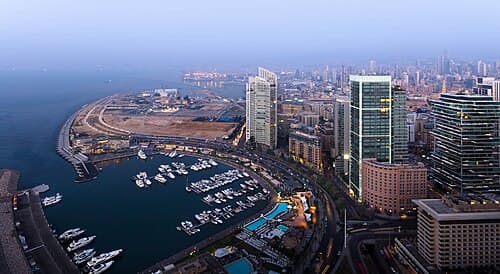
ter under Shimon Peres. But in the intervening years, Arafat was rarely off of my radar. By the early 1970s, he and his fighters had been expelled by King Hussein’s army from Jordan and were re-based in Lebanon. Arafat was becoming a significant figure on the Arab and world political stage, and an increasingly un
3 mentions1 same-page
Page ?Same page
out that a park in the center of the city had been set aside to allow for the burial of as many as 5,000. With Israel's military commanders pressing Eshkol to take the initiative and launch a preemptive strike, he delivered a radio address at the end of May, intended to reassure the country the situation
that we could begin the process of building genuine, lasting, human relationships and, eventually, peace. There was a brief period after the war when Eshkol cautioned his ministers about the implications of holding on to the vast new area we had conquered The government formally agreed to treat most of it
ter under Shimon Peres. But in the intervening years, Arafat was rarely off of my radar. By the early 1970s, he and his fighters had been expelled by King Hussein’s army from Jordan and were re-based in Lebanon. Arafat was becoming a significant figure on the Arab and world political stage, and an increasingly un
2 mentions1 same-page
Page ?Same page
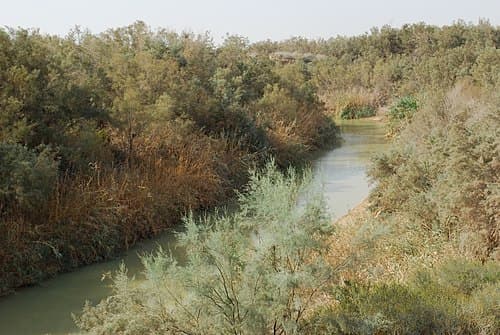
he Jordan River, in a town called Karameh. From early 1968, they had been launching hit- and-run raids, not just on the West Bank but into the Negev. Eshkol’s cabinet was initially divided on whether to attack his base in Jordan, in both an act of retaliation and a signal to King Hussein that if his army
need for a special-forces unit was becoming increasingly hard to ignore. By the summer of 1971, a couple of months after I became sayeret commander, King Hussein’s army had defeated the insurgency of Fatah and a pair of even more militant partners, the Democratic Front and the Popular Front for the Liberation of
Sponsored
Mutual Connections (335)
Entities connected to both Eshkol and King Hussein’s
Jerusalem
LOCATION5 w/ Eshkol·3 w/ King
Rotem
ORGANIZATION4 w/ Eshkol·3 w/ King
Karameh
LOCATION4 w/ Eshkol·3 w/ King
the Jordan River
LOCATION4 w/ Eshkol·3 w/ King
Golani
ORGANIZATION4 w/ Eshkol·3 w/ King
Sinai
LOCATION4 w/ Eshkol·3 w/ King
Alliance
ORGANIZATION4 w/ Eshkol·3 w/ King
the Seventh Armored Brigade
ORGANIZATION4 w/ Eshkol·3 w/ King
Lebanon
LOCATION4 w/ Eshkol·3 w/ King
Eitan
ORGANIZATION4 w/ Eshkol·3 w/ King
Beirut
LOCATION4 w/ Eshkol·3 w/ King
Negev
LOCATION4 w/ Eshkol·3 w/ King
BA
Baddura
PERSON4 w/ Eshkol·3 w/ King
Air Force
ORGANIZATION4 w/ Eshkol·3 w/ King
Sayeret Matkal
LOCATION4 w/ Eshkol·3 w/ King
CW
Courtney Wild
PERSON4 w/ Eshkol·3 w/ King
Beersheva
LOCATION4 w/ Eshkol·3 w/ King
the State of Israel
LOCATION4 w/ Eshkol·3 w/ King
Yasser Arafat
PERSON4 w/ Eshkol·3 w/ King
the Golan Heights
LOCATION4 w/ Eshkol·3 w/ King