Back to Network














6
Shared Docs
6
Same-Page
6 / 10
Mentions
Document Mentions (6 shared documents)
3 mentions1 same-page
Page ?Same page
Yitzhak was always punctilious in not broaching before I’d left the army. Shimon had also taken to including me — usually along with Yossi Beilin and Shlomo Ben-Ami, a bright young historian who would become our ambassador to Spain before entering politics himself — in a coterie of “youngsters” he would bring alo
our position was that, assuming all our own negotiating concerns were addressed, we accepted that peace with Syria would include withdrawing from the Golan. The formula was agreed in a meeting in Israel between Rabin and the Clinton Administration’s Middle East negotiator, Dennis Ross. Rabin didn’t tell
or the promise, or maybe only the hope, of peace. It was the same problem Yitzhak had faced over the Americans’ misuse of our “pocket deposit” on the Golan. I realized that, having come this far with Oslo, neither he nor the government was likely to back away from approving the Gaza-Jericho accord. But h
3 mentions1 same-page
Page ?Same page
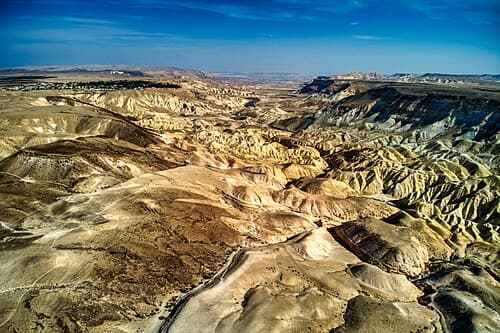
oted, we attended an event for Labor supporters north of Tel Aviv, before flying to Beersheva to spend the final hours in the Negev. I’d arranged for Shlomo Ben-Ami to go to Kiryat Shmona in the north — emphasizing, as throughout the campaign, our determination to broaden our support beyond Labor’s heartland. The
Bibi what successive Israeli leaders had learned: a deal might be possible, but only if Israel was willing to commit in advance to pulling out of the Golan. Assad told Lauder to come back to him with a detailed map setting out Bibi’s view on delineating the Israeli-Syrian border under a peace agreement.
outbursts, and they won’t do you any good.” He challenged Bibi to just “look me in the eye” and admit what he really thought about the future of the Golan. The media verdict was unanimous. Mordechai had won. Which meant I had won. Though my American and British brains’ trust had little input into our d
3 mentions1 same-page
Page ?Same page
Yitzhak was always punctilious in not broaching before I'd left the army. Shimon had also taken to including me - usually along with Yossi Beilin and Shlomo Ben-Ami, a bright young historian who would become our ambassador to Spain before entering politics himself - in a coterie of "youngsters" he would bring alo
our position was that, assuming all our own negotiating concerns were addressed, we accepted that peace with Syria would include withdrawing from the Golan. The formula was agreed in a meeting in Israel between Rabin and the Clinton Administration's Middle East negotiator, Dennis Ross. Rabin didn't tell
or the promise, or maybe only the hope, of peace. It was the same problem Yitzhak had faced over the Americans' misuse of our "pocket deposit" on the Golan. I realized that, having come this far with Oslo, neither he nor the government was likely to back away from approving the Gaza-Jericho accord But he
Sponsored
3 mentions1 same-page
Page ?Same page
oted, we attended an event for Labor supporters north of Tel Aviv, before flying to Beersheva to spend the final hours in the Negev. I'd arranged for Shlomo Ben-Ami to go to Kiryat Shmona in the north - emphasizing, as throughout the campaign, our determination to broaden our support beyond Labor's heartland. The
Bibi what successive Israeli leaders had learned: a deal might be possible, but only if Israel was willing to commit in advance to pulling out of the Golan. Assad told Lauder to come back to him with a detailed map setting out Bibi's view on delineating the Israeli-Syrian border under a peace agreement.
outbursts, and they won't do you any good." He challenged Bibi to just "look me in the eye" and admit what he really thought about the future of the Golan. The media verdict was unanimous. Mordechai had won. Which meant I had won. Though my American and British brains' trust had little input into our da
2 mentions1 same-page
Page ?Same page
rd was sober. Huddling with the inner core of my negotiating team — my policy co-ordinator Gilad Sher, security aide Danny Yatom and Foreign Minister Shlomo Ben-Ami — I could see that the way the summit ended had hit them hard. It was probably true, as all three often reminded me, that the greatest pressure fell
Syria. The special technology unit attached to military intelligence had developed a bugging device designed to be placed on a telephone pole on the Golan. The task of installing it was given to the most decorated, and respected, commando unit in the army: Company A in Sharon’s paratroop battalion, led
2 mentions1 same-page
Page ?Same page
rd was sober. Huddling with the inner core of my negotiating team — my policy co-ordinator Gilad Sher, security aide Danny Yatom and Foreign Minister Shlomo Ben-Ami — I could see that the way the summit ended had hit them hard. It was probably true, as all three often reminded me, that the greatest pressure fell
Syria. The special technology unit attached to military intelligence had developed a bugging device designed to be placed on a telephone pole on the Golan. The task of installing it was given to the most decorated, and respected, commando unit in the army: Company A in Sharon’s paratroop battalion, led
Sponsored
Mutual Connections (732)
Entities connected to both Shlomo Ben-Ami and Golan
Bill Clinton
PERSON6 w/ Shlomo·31 w/ Golan
George W. Bush
PERSON4 w/ Shlomo·22 w/ Golan
Lebanon
LOCATION6 w/ Shlomo·19 w/ Golan
Bashar al-Assad
PERSON6 w/ Shlomo·18 w/ Golan
the Golan Heights
LOCATION6 w/ Shlomo·16 w/ Golan
Damascus
LOCATION6 w/ Shlomo·15 w/ Golan
Benjamin Netanyahu
PERSON6 w/ Shlomo·15 w/ Golan
Jerusalem
LOCATION6 w/ Shlomo·14 w/ Golan
Barack Obama
PERSON4 w/ Shlomo·15 w/ Golan
Michael Cohen
PERSON6 w/ Shlomo·13 w/ Golan
Sinai
LOCATION6 w/ Shlomo·13 w/ Golan
Yasser Arafat
PERSON6 w/ Shlomo·12 w/ Golan
Ehud Barak
PERSON6 w/ Shlomo·12 w/ Golan
Fatah
ORGANIZATION6 w/ Shlomo·12 w/ Golan
Haifa
LOCATION6 w/ Shlomo·11 w/ Golan
Negev
LOCATION6 w/ Shlomo·11 w/ Golan
Mediterranean
LOCATION4 w/ Shlomo·12 w/ Golan
United States
LOCATION2 w/ Shlomo·14 w/ Golan
Saddam Hussein
PERSON4 w/ Shlomo·12 w/ Golan
the Jordan River
LOCATION6 w/ Shlomo·10 w/ Golan