Back to Network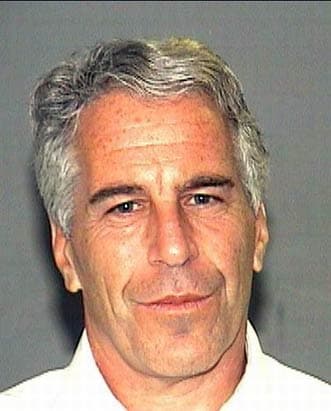


11
Shared Docs
10
Same-Page
11 / 11
Mentions
Document Mentions (11 shared documents)
2 mentions1 same-page
Page ?Same page
was intolerable." After six days of war, a cease-fire was agreed. However, at that time our troops had not yet succeeded in surrounding Beirut. So Sharon broke the cease-fire to cut the vital Beirut-Damascus highway. The present crisis in the "peace process" was caused by the Israeli government's br
incidents there, in order to annex the so- EFTA00718140 called "demilitarized zones". Still later, the memory of these incidents was used to annex the Golan Heights. The start of Lebanon War I was a direct violation of the cease-fire arranged a year earlier by American diplomats. The pretext was flimsy as usual
2 mentions1 same-page
Page ?Same page
wed as a military burden rather than as an Israeli asset. After a grueling political battle that extended through 2004 and half of 2005, a resolute Sharon carried out his plan to remove Israeli settlements and military bases from Gaza in August 2005, breaking up his own Likud party over it. This poli
10. For it was on that day in 1967 that a cease-fire in the Six-Day War was declared, leaving Israel in possession of the West Bank, Gaza, Sinai, the Golan Heights, and Jerusalem but divided over what to do with its newfound gains. Israel withdrew from the Sinai in 1982 and from Gaza in 2007, and no one is di
2 mentions1 same-page
Page ?Same page
decade later, the idea would suddenly resurface. In my first meeting, as a newly promoted Major General, with our then Defence Minister Ariel Sharon, Sharon turned to me and the army’s Chief of Staff, Rafael Eitan, and said: “Tell me. Why the hell is Arafat still alive?” He looked first at Raful, then at
ldiers crossed the border on an intelligence mission. It had happened in 1954, and it ended in a failure even more serious than Rotem. The target was the Golan Heights, inside Syria. The special technology unit attached to military intelligence had developed a bugging device designed to be placed on a telephone pole
Sponsored
2 mentions1 same-page
Page ?Same page
7. So during the last, decisive 10 days of the war, I would witness first-hand the tension among our top commanders in the Sinai, especially between Sharon and Gorodish, since Arik wasted few opportunities to suggest, rightly but not always helpfully, that his successor was woefully out of his depth. I w
urprise attacks by Syria and Egypt — armies we’d not just defeated, but humiliated, six years earlier — had pinned down and pushed back our forces on the Golan Heights and in the Sinai. Without any advance call-up, many reservists were only now reaching the front lines. As hundreds of people pressed for seats on th
2 mentions1 same-page
Page ?Same page
med to agree. Notably, Yitzhak Rabin. He was no longer in government, nor even in charge of Labor. But he had always had a soft spot for Arik, as did Sharon for him. With uneasiness, questions and outright criticism of the siege building both internationally and inside Israel, Arik got Rabin to helicopter
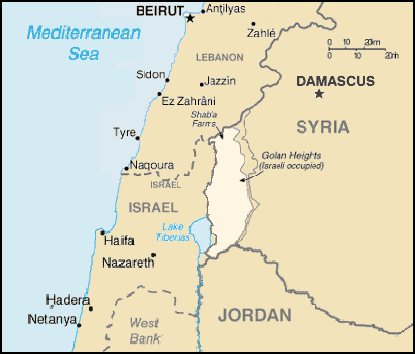
ade with him. The substance in any agreement, though politically difficult, was also more straightforward. We knew what Assad wanted: the recovery of the Golan Heights, in return for the absolute minimum level of political normalization with Israel. We knew what we wanted: security guarantees and assurances regardin
2 mentions1 same-page
Page ?Same page
ons be imposed, and Shlomo agreed. The first was that the visit not occur on a Friday, when the mosques would be full of worshipers; the second, that Sharon not set foot in either of the mosques on the Haram. Our chief of police informed Sharon that if he didn’t accept the conditions, we’d deny him permis
so wanted my assessment about whether the army could work out arrangements to safeguard the country’s security if we handed back most, if not all, of the Golan Heights. If so, what kind of security arrangements, with what timeline? We met through the summer, as the 301 HOUSE_OVERSIGHT_011772 / BARAK / 16 talks wi
Sponsored
2 mentions1 same-page
Page ?Same page
decade later, the idea would suddenly resurface. In my first meeting, as a newly promoted Major General, with our then Defence Minister Ariel Sharon, Sharon turned to me and the army’s Chief of Staff, Rafael Eitan, and said: “Tell me. Why the hell is Arafat still alive?” He looked first at Raful, then at
ldiers crossed the border on an intelligence mission. It had happened in 1954, and it ended in a failure even more serious than Rotem. The target was the Golan Heights, inside Syria. The special technology unit attached to military intelligence had developed a bugging device designed to be placed on a telephone pole
2 mentions1 same-page
Page ?Same page
67. So during the last, decisive 10 days of the war, I would witness first-hand the tension among our top commanders in the Sinai, especially between Sharon and Gorodish, since Arik wasted few opportunities to suggest, rightly but not always helpfully, that his successor was woefully out of his depth. I w
urprise attacks by Syria and Egypt - armies we'd not just defeated, but humiliated, six years earlier - had pinned down and pushed back our forces on the Golan Heights and in the Sinai. Without any advance call-up, many reservists were only now reaching the front lines. As hundreds of people pressed for seats on the
2 mentions1 same-page
Page ?Same page
med to agree. Notably, Yitzhak Rabin. He was no longer in government, nor even in charge of Labor. But he had always had a soft spot for Arik, as did Sharon for him. With uneasiness, questions and outright criticism of the siege building both internationally and inside Israel, Arik got Rabin to helicopter
ade with him. The substance in any agreement, though politically difficult, was also more straightforward. We knew what Assad wanted: the recovery of the Golan Heights, in return for the absolute minimum level of political normalization with Israel. We knew what we wanted: security guarantees and assurances regardin
Sponsored
2 mentions1 same-page
Page ?Same page
ons be imposed, and Shlomo agreed. The first was that the visit not occur on a Friday, when the mosques would be full of worshipers; the second, that Sharon not set foot in either of the mosques on the Haram. Our chief of police informed Sharon that if he didn't accept the conditions, we'd deny him permis
so wanted my assessment about whether the army could work out arrangements to safeguard the country's security if we handed back most, if not all, of the Golan Heights. If so, what kind of security arrangements, with what timeline? We met through the summer, as the 301 HOUSE_OVERSIGHT_028149 / BARAK / 16 talks with
Sponsored
Mutual Connections (1,077)
Entities connected to both Sharon and the Golan Heights
Jeffrey Epstein
PERSON91 w/ Sharon·7 w/ the
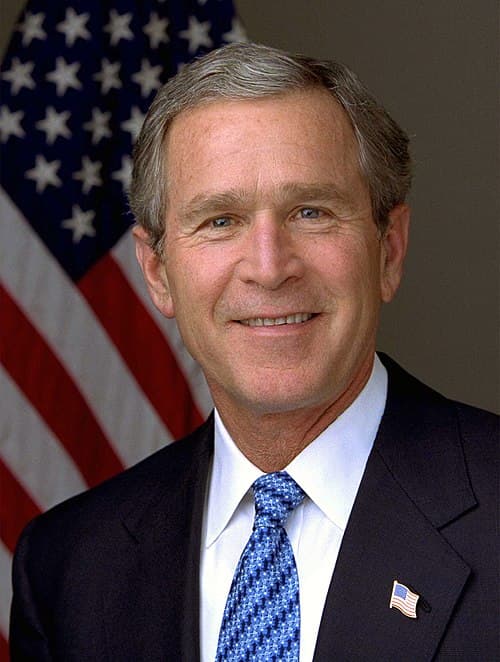
George W. Bush
PERSON32 w/ Sharon·26 w/ the
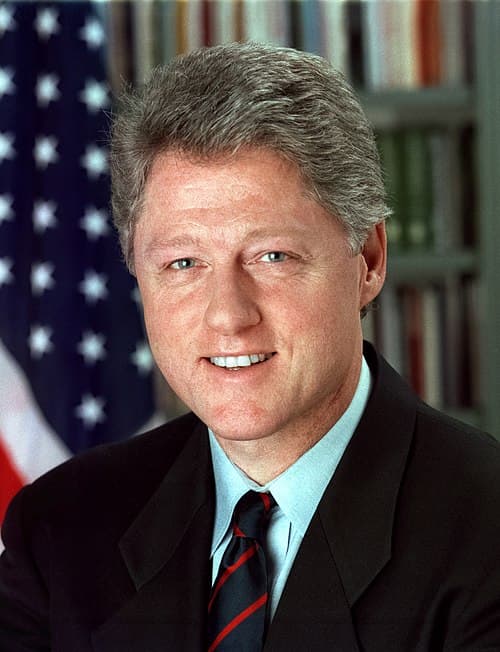
Bill Clinton
PERSON26 w/ Sharon·24 w/ the
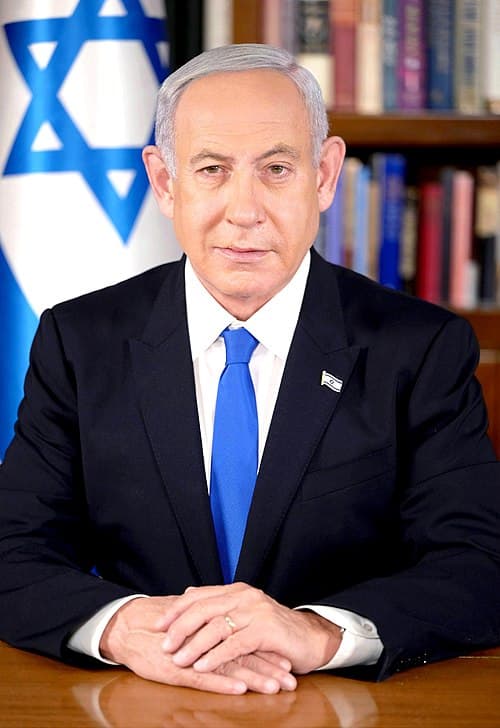
Benjamin Netanyahu
PERSON20 w/ Sharon·27 w/ the
Barack Obama
PERSON17 w/ Sharon·26 w/ the
Lebanon
LOCATION16 w/ Sharon·26 w/ the
Jerusalem
LOCATION18 w/ Sharon·24 w/ the
Bashar al-Assad
PERSON12 w/ Sharon·29 w/ the
United States
LOCATION21 w/ Sharon·20 w/ the
Marc Rich
PERSON29 w/ Sharon·10 w/ the
Chris Christie
PERSON35 w/ Sharon·2 w/ the
Damascus
LOCATION14 w/ Sharon·23 w/ the
Fatah
ORGANIZATION16 w/ Sharon·20 w/ the
Ehud Barak
PERSON20 w/ Sharon·15 w/ the
Hosni Mubarak
PERSON11 w/ Sharon·23 w/ the
Sinai
LOCATION12 w/ Sharon·20 w/ the
LB
Leon Black
PERSON22 w/ Sharon·10 w/ the
John F. Kennedy
PERSON16 w/ Sharon·15 w/ the
Yasser Arafat
PERSON15 w/ Sharon·16 w/ the
Michael Cohen
PERSON14 w/ Sharon·15 w/ the