Back to Network



4
Shared Docs
4
Same-Page
4 / 4
Mentions
Document Mentions (4 shared documents)
2 mentions1 same-page
Page ?Same page
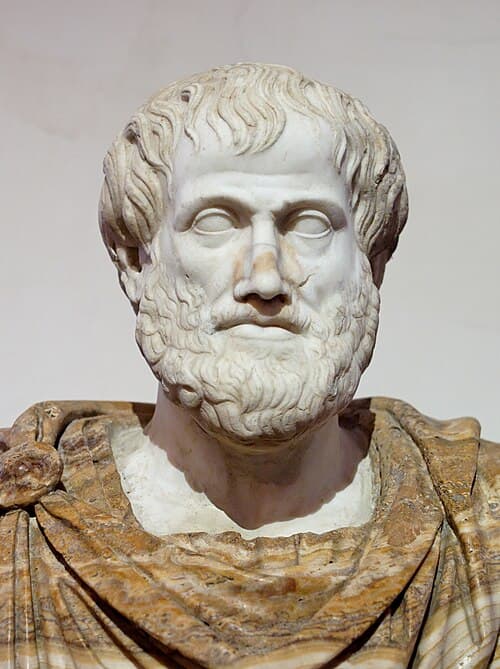
an when he was 60 years old. He’d had an astonishing life until then, of course. He’d been taught by Socrates and, in turn, had sharpened the mind of Aristotle. He’d established his famous Academy in Athens. The puzzles of philosophy and politics that defined his city’s most turbulent era had been the work o
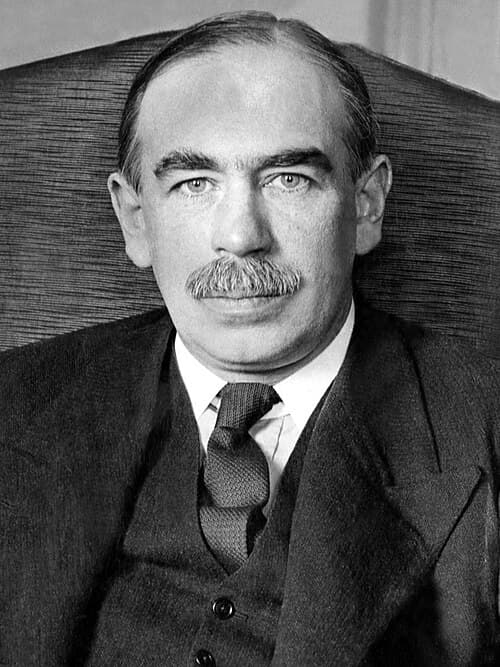
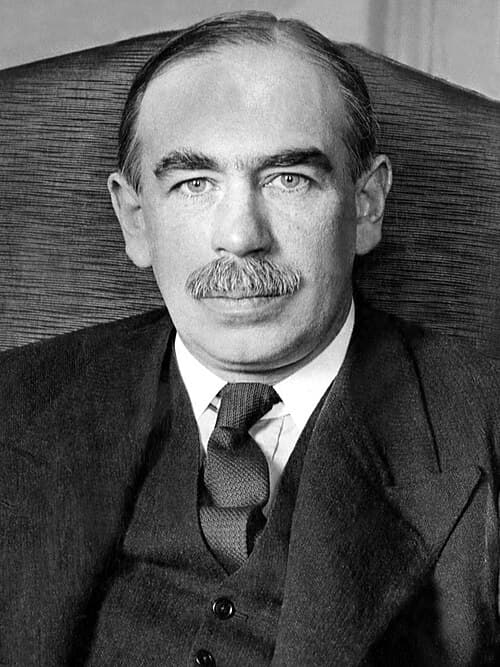
ine power. Looking back on his formative years, before Europe was ground up in the First World War, the powerfully brilliant and sensitive economist John Maynard Keynes bitterly recalled the iron certainty of his set of friends and their confident, diffident arrogance: “We were not aware that civilization was
2 mentions1 same-page
Page ?Same page
and decision making, they are the best learners in the universe. Much of the process of turning data into theories happens before we are five. Since Aristotle and Plato, there have been two basic ways of addressing the problem of how we know what we know, and they are still the main approaches in machine le
ovement of goods is largely automated, as are many services. What’s left for humans to do? In 1930—long before the advent of computers, let alone AI—John Maynard Keynes wrote, in an essay called “Economic Possibilities for our Grandchildren,” that as a result of improvements in productivity, society could prod
2 mentions1 same-page
Page ?Same page
and decision making, they are the best learners in the universe. Much of the process of turning data into theories happens before we are five. Since Aristotle and Plato, there have been two basic ways of addressing the problem of how we know what we know, and they are still the main approaches in machine le
ovement of goods is largely automated, as are many services. What’s left for humans to do? In 1930—long before the advent of computers, let alone AI—John Maynard Keynes wrote, in an essay called “Economic Possibilities for our Grandchildren,” that as a result of improvements in productivity, society could prod
Sponsored
2 mentions1 same-page
Page ?Same page
in the same sense as Galileo, if by this term one describes those who tear down the dictates of the authorities who came before, as Galileo had for Aristotle. Einstein did just the opposite. He knew that rules that had been established on the basis of experiment could not easily be tossed aside, and it w
assical laws of motion and laid the basis for his theory of gravity, both of which form the foundation of much of modern physics. Never- theless, as John Maynard Keynes pointed out: Newton was not the first of the age of reason, he was the last of the magicians, the last of the Babylonians and Sumerians, the
Sponsored
Mutual Connections (436)
Entities connected to both Aristotle and John Maynard
George W. Bush
PERSON13 w/ Aristotle·8 w/ John
Marc Rich
PERSON13 w/ Aristotle·7 w/ John
Alan Dershowitz
PERSON12 w/ Aristotle·6 w/ John
Prince Charles
PERSON14 w/ Aristotle·4 w/ John
Stephen Hawking
PERSON13 w/ Aristotle·5 w/ John
Harvey Weinstein
PERSON11 w/ Aristotle·5 w/ John
Prince Andrew
PERSON11 w/ Aristotle·5 w/ John
Earth
LOCATION11 w/ Aristotle·5 w/ John
Julie K. Brown
PERSON10 w/ Aristotle·6 w/ John
Plato
PERSON11 w/ Aristotle·4 w/ John
Barack Obama
PERSON10 w/ Aristotle·5 w/ John
DB
Doug Band
PERSON9 w/ Aristotle·6 w/ John
Samantha Power
PERSON9 w/ Aristotle·5 w/ John
Keynes
PERSON5 w/ Aristotle·9 w/ John
Jeffrey Epstein
PERSON10 w/ Aristotle·4 w/ John
LB
Leon Black
PERSON10 w/ Aristotle·4 w/ John
Richard Dawkins
PERSON10 w/ Aristotle·3 w/ John
William Shakespeare
PERSON10 w/ Aristotle·3 w/ John
Eric Trump
PERSON6 w/ Aristotle·6 w/ John
Robert Gates
PERSON8 w/ Aristotle·3 w/ John