Back to Network








3
Shared Docs
3
Same-Page
5 / 3
Mentions
Document Mentions (3 shared documents)
3 mentions1 same-page
Page ?Same page
vailable for business to borrow and invest. But business lacked the “animal spirits” to take such a risk ina slump. We saw the same story after 2008. Keynes’ proposal was for government to do the borrowing and investing instead. That’s part of the “fiscal policy” I described in Chapter 1. Here we tend to
saving is invested, as I use the word, but finds different returns. Saving under the mattress is investment at zero return, and drops output just as Keynes said. Investment at the current average return keeps output unchanged. That’s what Keynes meant. But investment at lower returns lowers output, and c
ountry gave each year’s capital growth as a flow. I added this to consumption to give what call market-valued output. I said earlier that Piketty and Zucman should logically have done the same. This gave the values for (4.1) and (4.1a). I then divided by year-end capital to give values for (4.3). 1 next
3 mentions1 same-page
Page ?Same page
ht also be surprised at my choice of benchmarks in verse and economics. Masefield and Mill? A consensus might have picked T. S. Elliot, say, and Lord Keynes. Masefield and Mill are likelier to be remembered as old-fashioned fuddy-duddies already outmoded when they wrote. But that’s me. I am Don Quixote. N
b paragraph on growth. The candidates for third seem well behind. Maybe Jevons or John Rae or Leon Walras. Time has not been kind to the teachings of Keynes. I would now rank his teacher Alfred Marshall higher. I like Myrdal’s magnificent ex ante - ex post distinction. Boehm Bawerk and the Austrian school
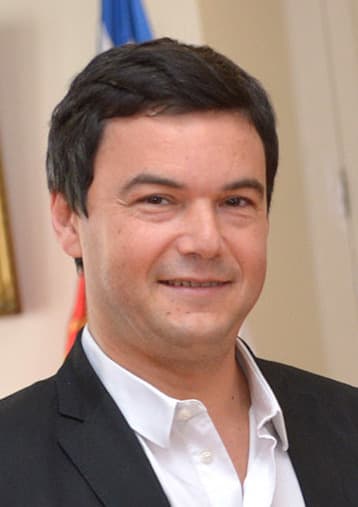
ard Nobel prizes to those who help. My first nominees would be Piketty and Zucman. Not that I think much of Piketty’s arguments. But his website with Zucman is as powerful a new resource for scholarship and the database as national accounts were eight decades ago. Chapter 8 Banks, Money and Macroeconomi
2 mentions1 same-page
Page ?Same page
proposed initially proposed by John Maynard Keyes and aimed at containing financial instability arising from speculative financial transac- tions (Keynes, 1936). In the same spirit James Tobin proposed in 1974 the introduction of an internation- al currency transactions tax also aimed at taming globa
The initial impact of TIEAs seems to be a relocation of funds or redirection of new illicit financial flows across juris- dictions (Johannesen and Zucman, 2012). Moreover, coordination of efforts to fight tax havens is challenging because not all tax havens are created equal. The group includes larg
Sponsored
Mutual Connections (25)
Entities connected to both Keynes and Zucman
George W. Bush
PERSON19 w/ Keynes·3 w/ Zucman
Marc Rich
PERSON18 w/ Keynes·2 w/ Zucman
Prince Charles
PERSON13 w/ Keynes·2 w/ Zucman
Alan Dershowitz
PERSON12 w/ Keynes·2 w/ Zucman
William Shakespeare
PERSON6 w/ Keynes·2 w/ Zucman
SC
Schultz
PERSON4 w/ Keynes·2 w/ Zucman
Thomas Piketty
PERSON4 w/ Keynes·2 w/ Zucman
JR
John Rae
PERSON3 w/ Keynes·2 w/ Zucman
Mincer
PERSON3 w/ Keynes·2 w/ Zucman
BE
Becker
PERSON3 w/ Keynes·2 w/ Zucman
Jevons
PERSON3 w/ Keynes·2 w/ Zucman
Myrdal
PERSON3 w/ Keynes·2 w/ Zucman
Amherst
LOCATION3 w/ Keynes·2 w/ Zucman
Solow
ORGANIZATION3 w/ Keynes·2 w/ Zucman
RT
Robert Trivers
PERSON3 w/ Keynes·2 w/ Zucman
PE
Petty
PERSON3 w/ Keynes·2 w/ Zucman
Mozart
PERSON3 w/ Keynes·2 w/ Zucman
Tennyson
PERSON2 w/ Keynes·2 w/ Zucman
Marco Polo’s
PERSON2 w/ Keynes·2 w/ Zucman
Schubert
PERSON2 w/ Keynes·2 w/ Zucman