Back to Network


















10
Shared Docs
10
Same-Page
20 / 10
Mentions
Document Mentions (10 shared documents)
3 mentions1 same-page
Page ?Same page
ates, I Don't Bluff Jeffrey Goldberg Articl= 3. chttps://mail.google.com/mail/=/0/html/compose/static_filesiblank_quirks.htmlftc> The daily Beast Shimon Peres's Influence Wanes a= Israel Grows More Bellicose Toward Iran Dan Ephron Articl= 5. <https://mail.google.com/mail/40/html/compose/static_filesiblank_q
om/articles/2012/02/26/obama-won-t-bac=-an-israeli-strike-on-iran.html> . Netanyahu is an unwavering skeptic with a deep devotio= to Greater Israel, Peres a relentlessly optimistic peacenik. Yet for much=of the past three years, Netanyahu had no bigger booster than Peres, who r=peatedly vouched for him
e to do without losing face. GOLDBERG: Let me flip this entirely around and ask: Why is containme=t not your policy? In the sense that we contained the Soviet Union, North =orea -- PRESIDENT OBAMA: It's for the reason I described -- because you're t=lking about the most volatile region in the world. It will not
3 mentions1 same-page
Page ?Same page
that process by its Palestinian and Israeli opponents. Yossi Beilin served as a minister in the cabinets of Israeli Prime Ministers Yitzhak Rabin, Shimon Peres, and Ehud Barak. He initiated the Oslo peace process in 1992, worked on the Beilin-Abu Mazen talks between 1993 and 1995, and launched the Geneva A
of Israeli Prime Ministers Yitzhak Rabin, Shimon Peres, and Ehud Barak. He initiated the Oslo peace pro
U.S. interests and ideals, Roosevelt built a powerful case for an anti-Nazi policy that allowed him to extend lend-lease aid to United Kingdom and the Soviet Union and do battle with the German navy even before December 1941. Once the United States entered the war, religion was an important part of the ideolog
3 mentions1 same-page
Page ?Same page
ander-in-Chief of the Air Force, the heads of the two main intelligence agencies, the Mossad (Israel's C.I.A.) and Shin Bet (its F.B.I.), President Shimon Peres, and members of Netanyahu's cabinet. Apart from Peres, these men are anything but liberals. Recently, the writer met with Meir Dagan, who was the d
telligence agencies, the Mossad (Israel's C.I.A.) and Shin Bet (its F.B.I.), President Shimon Peres, and members of Netanyahu's cabinet. Apart from Peres, these men are anything but liberals. Recently, the writer met with Meir Dagan, who was the director of the Institute for Intelligence and Special
bly the most authoritative of the dissident security chiefs. Dagan was born in 1945, on the floor of a train, as his family was being deported from the Soviet Union to a Nazi detention camp in Poland. In 1950, his family sailed for Israel aboard a cattle boat, and they eventually settled in Bat Yam, south of Te
Sponsored
3 mentions1 same-page
Page ?Same page
ssment report. Then, we’d join Motta’s operations meeting with the general staff, often attended by the man who’d followed Dayan as defense minister, Shimon Peres. The analysis of military intelligence included separate teams for Egypt and Syria, Jordan and Lebanon, Iraq and other neighboring states, as well a
chute assault off the Israeli coast in Haifa later in the day, but if that went well, it seemed the only practical alternative. Motta and I went met Peres around 8:30am. Shimon had no first-hand military experience, having played a political role alongside Ben-Gurion from Israel’s early years. So he was
sands of tanks. Hundreds of fighter jets. Other, much larger nations had endured months, even years, of hell before prevailing in such circumstances: the Soviet Union, for instance, with its huge strategic depth, or France, rescued by its American-led allies, during World War Two. But any pride in having prevailed
3 mentions1 same-page
Page ?Same page
July. Just as the trauma of the 1973 war had helped Begin end Likud’s three decades in opposition, the polls and the pundits were now suggesting that Shimon Peres might bring Labor back to power. There was no prospect he’d win an outright majority in the 120-seat Knesset. No one had ever done that, not even Ben
ng being used as our military headquarters in the south Lebanese city of Tyre, killing more than 60 people. Yet the election ended up as a near-tie. Peres did lead Labor back into top spot for the first time since Begin’s victory in 1977. But he got only 44 seats, to the Likud’s 41. After weeks of horse
I began by welcoming the constellation of changes which seemed to offer at least an opportunity for stability, security and peace: the unravelling of the Soviet Union; the Oslo Agreement; the peace treaty with Jordan and the continuing talks with the Syrians. As long as we had partners committed to reaching an agre
3 mentions1 same-page
Page ?Same page
e on a unity government. To my amusement, if not altogether to my surprise, I got word that Bibi was putting out separate political feelers to Shimon Peres. But before long, it became clear there was a specific political motivation behind his approaching me. It was indeed the peace process. But it wasn’t
Israel... A short time ago, I spoke with Prime Minister Netanyahu and thanked him for his service to the State of Israel.” Then — with both Leah and Shimon Peres at my side — I paid tribute to “that one special person who had a unique role in our reaching this moment — somebody who was my commander and guide,
ies in the interior, Jerusalem as well, not to mention 312 HOUSE_OVERSIGHT_011783 / BARAK / 27 the settlements on the West Bank. Since the fall of the Soviet Union, hundreds of thousands of Russians had also flowed into Israel. Most were Jewish in culture more than religious observance, but they were instinctive
Sponsored
3 mentions1 same-page
Page ?Same page
ssment report. Then, we'd join Motta's operations meeting with the general staff, often attended by the man who'd followed Dayan as defense minister, Shimon Peres. The analysis of military intelligence included separate teams for Egypt and Syria, Jordan and Lebanon, Iraq and other neighboring states, as well as
achute assault off the Israeli coast in Haifa later in the day, but if that went well, it seemed the only practical alternative. Motta and I went met Peres around 8:30am. Shimon had no first-hand military experience, having played a political role alongside Ben-Gurion from Israel's early years. So he was
sands of tanks. Hundreds of fighter jets. Other, much larger nations had endured months, even years, of hell before prevailing in such circumstances: the Soviet Union, for instance, with its huge strategic depth, or France, rescued by its American-led allies, during World War Two. But any pride in having prevailed
3 mentions1 same-page
Page ?Same page
July. Just as the trauma of the 1973 war had helped Begin end Likud's three decades in opposition, the polls and the pundits were now suggesting that Shimon Peres might bring Labor back to power. There was no prospect he'd win an outright majority in the 120-seat Knesset. No one had ever done that, not even Ben
ing being used as our military headquarters in the south Lebanese city of Tyre, killing more than 60 people. Yet the election ended up as a near-tie. Peres did lead Labor back into top spot for the first time since Begin's victory in 1977. But he got only 44 seats, to the Likud's 41. After weeks of horse
I began by welcoming the constellation of changes which seemed to offer at least an opportunity for stability, security and peace: the unravelling of the Soviet Union; the Oslo Agreement; the peace treaty with Jordan and the continuing talks with the Syrians. As long as we had partners committed to reaching an agre
3 mentions1 same-page
Page ?Same page
e on a unity government. To my amusement, if not altogether to my surprise, I got word that Bibi was putting out separate political feelers to Shimon Peres. But before long, it became clear there was a specific political motivation behind his approaching me. It was indeed the peace process. But it wasn't
Israel... A short time ago, I spoke with Prime Minister Netanyahu and thanked him for his service to the State of Israel." Then - with both Leah and Shimon Peres at my side - I paid tribute to "that one special person who had a unique role in our reaching this moment - somebody who was my commander and guide,
ties in the interior, Jerusalem as well, not to mention 312 HOUSE _OVERSIGHT_028160 / BARAK / 27 the settlements on the West Bank. Since the fall of the Soviet Union, hundreds of thousands of Russians had also flowed into Israel. Most were Jewish in culture more than religious observance, but they were instinctive
Sponsored
3 mentions1 same-page
Page ?Same page
om our society.” In 2008, I met Gorbachev again. This time, under the most unusual of circumstances. He was in Israel at the invitation of President Shimon Peres to help celebrate Israel’s 60" birthday. I was there for the same reason. I had just appeared on a panel with Vaclav Havel and with Natan Sharansky,
s in Israel at the invitation of President Shimon Peres to help celebrate Israel’s 60" birthday. I was th
ll seem worth the apparently unrewarded efforts. I attended a concern by the great Russian cellist Mstislav Rostropovich, several years after he left the Soviet Union. Since he had been a sometimes threatened advocate of human rights in 323 HOUSE_OVERSIGHT_017410 4.2.12 WC: 191694 Moscow, I wanted to meet him,
Sponsored
Mutual Connections (1,202)
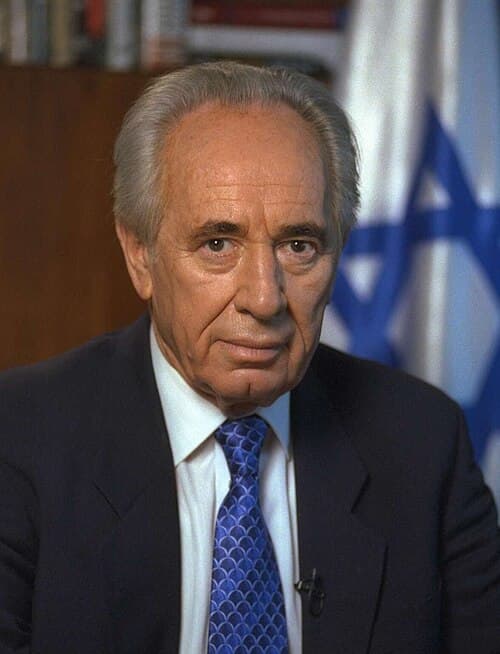
Entities connected to both Shimon Peres and the Soviet Union
Jeffrey Epstein
PERSON81 w/ Shimon·63 w/ the
George W. Bush
PERSON60 w/ Shimon·80 w/ the
United States
LOCATION48 w/ Shimon·86 w/ the
Barack Obama
PERSON38 w/ Shimon·88 w/ the
Bill Clinton
PERSON29 w/ Shimon·72 w/ the
Benjamin Netanyahu
PERSON41 w/ Shimon·52 w/ the
Bashar al-Assad
PERSON30 w/ Shimon·51 w/ the
Marc Rich
PERSON24 w/ Shimon·57 w/ the
Lebanon
LOCATION29 w/ Shimon·51 w/ the
LB
Leon Black
PERSON14 w/ Shimon·61 w/ the
Jerusalem
LOCATION32 w/ Shimon·43 w/ the
Michael Cohen
PERSON24 w/ Shimon·50 w/ the
Joe Biden
PERSON16 w/ Shimon·55 w/ the
Tehran
LOCATION26 w/ Shimon·41 w/ the
Middle East
LOCATION20 w/ Shimon·47 w/ the
John F. Kennedy
PERSON19 w/ Shimon·48 w/ the
Saddam Hussein
PERSON25 w/ Shimon·41 w/ the
Stephen Hawking
PERSON15 w/ Shimon·45 w/ the
Ghislaine Maxwell
PERSON37 w/ Shimon·23 w/ the
Prince Andrew
PERSON11 w/ Shimon·48 w/ the