Back to Network












8
Shared Docs
8
Same-Page
8 / 8
Mentions
Document Mentions (8 shared documents)
2 mentions1 same-page
Page ?Same page
's 1936 paper, "On computable numbers, with an application to the Entcheidungproblem." This paper was a key inspira- tion towards the future work of Claude Shannon creating modern cryptographt via his collaboration with Alan Turing at Bletchlcy Park during WWII. (see: http://en.wikipedia.org/wiki/Claude_Shann
eidungproblem." This paper was a key inspira- tion towards the future work of Claude Shannon creating modern cryptographt via his collaboration with Alan Turing at Bletchlcy Park during WWII. (see: http://en.wikipedia.org/wiki/Claude_Shannon) ii) 55 years since Kurt Gadd% 1956 letter to John von Neumann
2 mentions1 same-page
Page ?Same page
MIND OVER COMPUTER Computer versus Human “I visualize a time when we will be to robots what dogs are to humans, and I'm rooting for the machines.” Claude Shannon “The question of whether computers can think is just like the question of whether submarines can swim.” Edgar Dijkstra HOUSE_OVERSIGHT_015693 Kas
How Alan Turing invented the computer, helped win World War II and left us with one of the greatest puzzles of our time: are humans simply computers or are we more t
Sponsored
2 mentions1 same-page
Page ?Same page
t. Because each key is only used once you can't use any sort of statistical method to work out the message, making the one-time pad perfectly secure. Claude Shannon proved this in 1945 while working for Bell Corporation but, due to wartime secrecy, his proof was not published until 1948. HOUSE_OVERSIGHT_015906
, or even a physicist, could grasp! That thing is a Turing Machine. We will examine this next. HOUSE_OVERSIGHT_015898 Chapter 10 TURING’S MACHINE Alan Turing HOUSE_OVERSIGHT_015899 ‘A computer would deserve to be called intelligent if it could deceive a human into believing that it was human.” Alan Turi
2 mentions1 same-page
Page ?Same page
tted is useless as it is, in effect, encrypted using a one-time pad. The only person in possession of a copy of this one-time pad is me: the sender. Claude Shannon proved a one-time pad is unbreakable during the Second World War. Yet the British succeeded in breaking it. How was this possible? The fatal weaknes
In the nearly hundred years of investigation since Wallas proposed this theorem, we have not moved much further forward in understanding creativity. Alan Turing described his thoughts on the science behind creativity in a short piece he wrote about decision making: “When making a decision of minor importance
2 mentions1 same-page
Page ?Same page
But at the center it is dense, still, even quiet with the silently cranking algorithms of massively concentrated power. The computer science pioneer Claude Shannon saw information in 1949 as wild, uncertain, and pulsing with the instability of an entropic system. Yang. The machine architect Norbert Weiner, writi
redictability and emergence are regarded as the best way to grow. 119 Long before the idea of a smart phone or 3D goggles, the British mathematician Alan Turing anticipated their arrival when he dreamed of what he called a “universal device”!2°: A notional box that, starting from the ones and zeros of digitiz
Sponsored
2 mentions1 same-page
Page ?Same page
arguments in Zhe Human Use of Human Beings seem closer to the 19th century than the 21st. In particular, although Wiener made reference throughout to Claude Shannon’s then-new work on information theory, he seems not to have fully embraced Shannon’s notion of information as consisting of irreducible, meaning-free
- reproducing systems. As an abstraction of life, he modeled a machine that can communicate a computation that constructs itself. And the final thing Alan Turing, who is credited with the theoretical framework for computer science, studied was how the instructions in genes can give rise to physical forms. Thes
Sponsored
Mutual Connections (615)
Entities connected to both Claude Shannon and Alan Turing
Alan Dershowitz
PERSON10 w/ Claude·34 w/ Alan
Stephen Hawking
PERSON13 w/ Claude·27 w/ Alan
Turing
PERSON11 w/ Claude·17 w/ Alan
Jeffrey Epstein
PERSON4 w/ Claude·21 w/ Alan
Samantha Power
PERSON11 w/ Claude·14 w/ Alan
George W. Bush
PERSON11 w/ Claude·13 w/ Alan
Prince Charles
PERSON9 w/ Claude·14 w/ Alan
Eric Trump
PERSON9 w/ Claude·13 w/ Alan
Prince Andrew
PERSON10 w/ Claude·12 w/ Alan
Marc Rich
PERSON11 w/ Claude·10 w/ Alan
LB
Leon Black
PERSON12 w/ Claude·9 w/ Alan
Harvey Weinstein
PERSON9 w/ Claude·12 w/ Alan
Quantum
ORGANIZATION10 w/ Claude·9 w/ Alan
Earth
LOCATION8 w/ Claude·10 w/ Alan
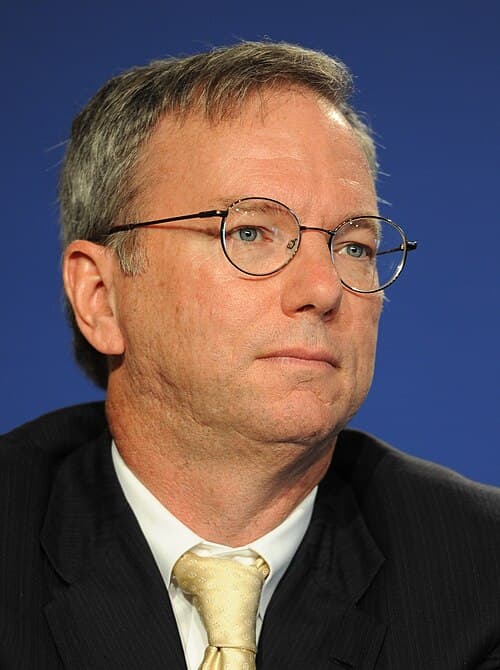
Eric Schmidt
PERSON4 w/ Claude·13 w/ Alan
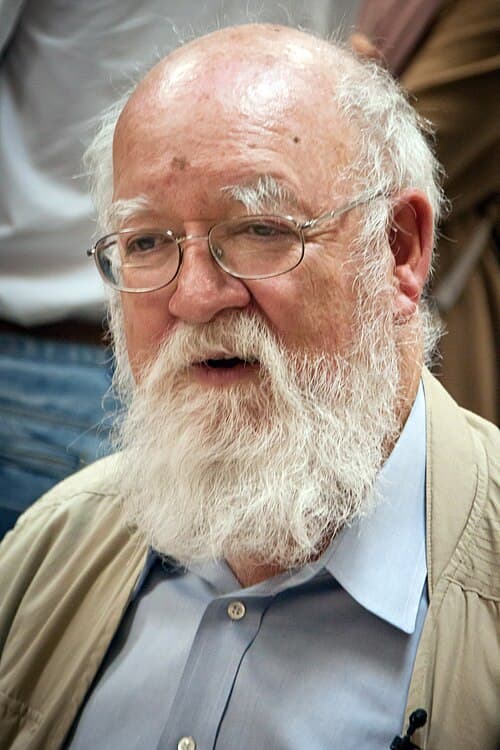
Daniel Dennett
PERSON7 w/ Claude·10 w/ Alan
Michael Douglas
PERSON7 w/ Claude·9 w/ Alan
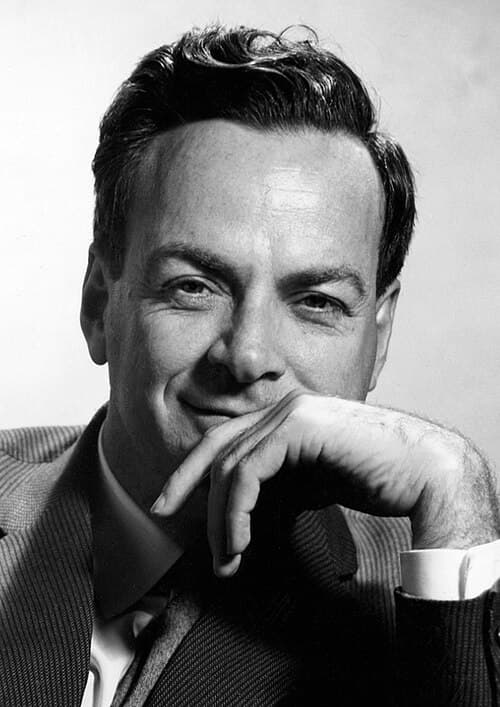
Feynman
PERSON8 w/ Claude·8 w/ Alan
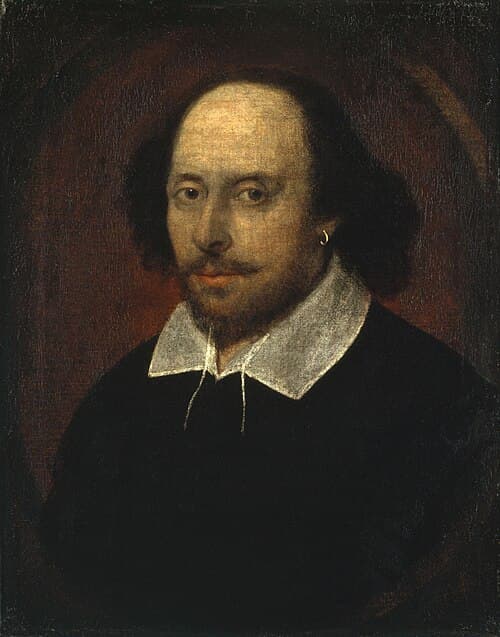
William Shakespeare
PERSON10 w/ Claude·6 w/ Alan
Richard Dawkins
PERSON3 w/ Claude·12 w/ Alan