Back to Network











6
Shared Docs
6
Same-Page
6 / 6
Mentions
Document Mentions (6 shared documents)
2 mentions1 same-page
Page ?Same page
MIND OVER COMPUTER Computer versus Human “I visualize a time when we will be to robots what dogs are to humans, and I'm rooting for the machines.” Claude Shannon “The question of whether computers can think is just like the question of whether submarines can swim.” Edgar Dijkstra HOUSE_OVERSIGHT_015693 Kas
d on interview, rather than practical tests. Could a computer hold a conversation with me and persuade me it is intelligent? Meet Eliza. Invented by Joseph Weizenbaum of the Massachusetts Institute of Technology, and named after George Bernard Shaw’s character in Pygmalion, Eliza runs an algorithm pretending to be
2 mentions1 same-page
Page ?Same page
But at the center it is dense, still, even quiet with the silently cranking algorithms of massively concentrated power. The computer science pioneer Claude Shannon saw information in 1949 as wild, uncertain, and pulsing with the instability of an entropic system. Yang. The machine architect Norbert Weiner, writi
lding - this is fine. Wonderful even. But it’s also not enough. “It happens that programming is a relatively easy craft to learn,” the MIT scientist Joseph Weizenbaum observed in the 1970s, as computers emerged into academic life. “Almost anyone with a reasonably ordered mind can become a good programmer with just
2 mentions1 same-page
Page ?Same page
series of dinners—an ongoing seminar about media, communications, art, music, and philosophy that focused on Cage’s interest in the ideas of Wiener, Claude Shannon, and Marshall McLuhan, all of whom had currency in the New York art circles in which I was then moving. In particular, Cage had picked up on McLuhan’
owing it to detect dissent and subversion as it arises and make resistance to state power futile. Orwell’s telescreens are the prototype, and in 1976 Joseph Weizenbaum, one of the gloomiest tech prophets of all time, warned my class of graduate students not to pursue automatic speech recognition because government s
Sponsored
2 mentions1 same-page
Page ?Same page
arguments in Zhe Human Use of Human Beings seem closer to the 19th century than the 21st. In particular, although Wiener made reference throughout to Claude Shannon’s then-new work on information theory, he seems not to have fully embraced Shannon’s notion of information as consisting of irreducible, meaning-free
e; the Fair Access to Science and Technology Research Act (FASTR); and the Open Humans Foundation. In his 1976 book Computer Power and Human Reason, Joseph Weizenbaum argued that machines should not replace Homo in situations requiring respect, dignity, or care, while others (author Pamela McCorduck and computer sc
2 mentions1 same-page
Page ?Same page
series of dinners—an ongoing seminar about media, communications, art, music, and philosophy that focused on Cage’s interest in the ideas of Wiener, Claude Shannon, and Marshall McLuhan, all of whom had currency in the New York art circles in which I was then moving. In particular, Cage had picked up on McLuhan’
owing it to detect dissent and subversion as it arises and make resistance to state power futile. Orwell’s telescreens are the prototype, and in 1976 Joseph Weizenbaum, one of the gloomiest tech prophets of all time, warned my class of graduate students not to pursue automatic speech recognition because government s
2 mentions1 same-page
Page ?Same page
arguments in Zhe Human Use of Human Beings seem closer to the 19th century than the 21st. In particular, although Wiener made reference throughout to Claude Shannon’s then-new work on information theory, he seems not to have fully embraced Shannon’s notion of information as consisting of irreducible, meaning-free
e; the Fair Access to Science and Technology Research Act (FASTR); and the Open Humans Foundation. In his 1976 book Computer Power and Human Reason, Joseph Weizenbaum argued that machines should not replace Homo in situations requiring respect, dignity, or care, while others (author Pamela McCorduck and computer sc
Sponsored
Mutual Connections (721)
Entities connected to both Claude Shannon and Joseph Weizenbaum
Stephen Hawking
PERSON13 w/ Claude·10 w/ Joseph
Marc Rich
PERSON11 w/ Claude·10 w/ Joseph
Samantha Power
PERSON11 w/ Claude·10 w/ Joseph
LB
Leon Black
PERSON12 w/ Claude·7 w/ Joseph
Prince Andrew
PERSON10 w/ Claude·7 w/ Joseph
George W. Bush
PERSON11 w/ Claude·6 w/ Joseph
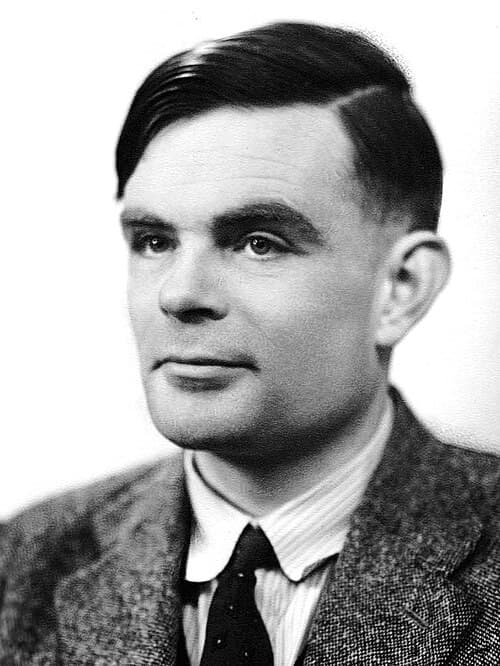
Turing
PERSON11 w/ Claude·6 w/ Joseph
DB
Doug Band
PERSON10 w/ Claude·7 w/ Joseph
Alan Dershowitz
PERSON10 w/ Claude·7 w/ Joseph
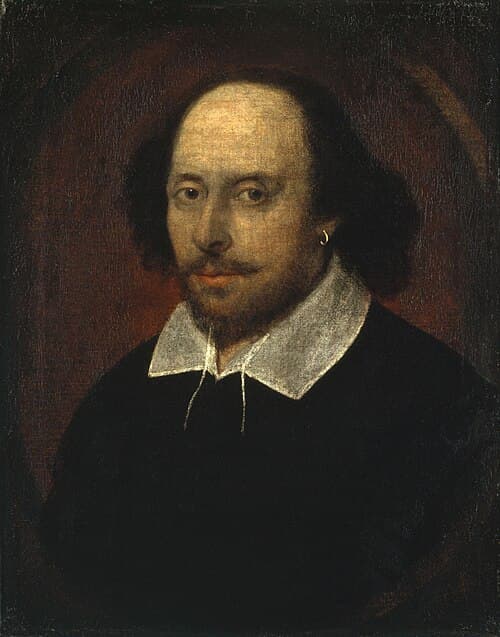
William Shakespeare
PERSON10 w/ Claude·6 w/ Joseph
Harvey Weinstein
PERSON9 w/ Claude·7 w/ Joseph
Quantum
ORGANIZATION10 w/ Claude·6 w/ Joseph
Bill Gates
PERSON8 w/ Claude·8 w/ Joseph
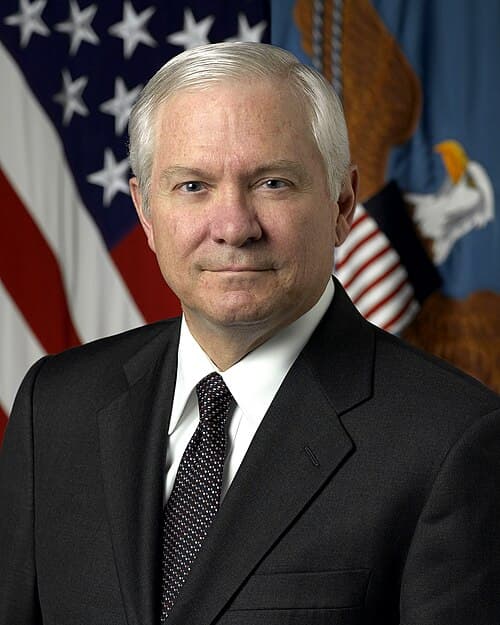
Robert Gates
PERSON7 w/ Claude·8 w/ Joseph
Prince Charles
PERSON9 w/ Claude·6 w/ Joseph
Eric Trump
PERSON9 w/ Claude·5 w/ Joseph
Earth
LOCATION8 w/ Claude·6 w/ Joseph
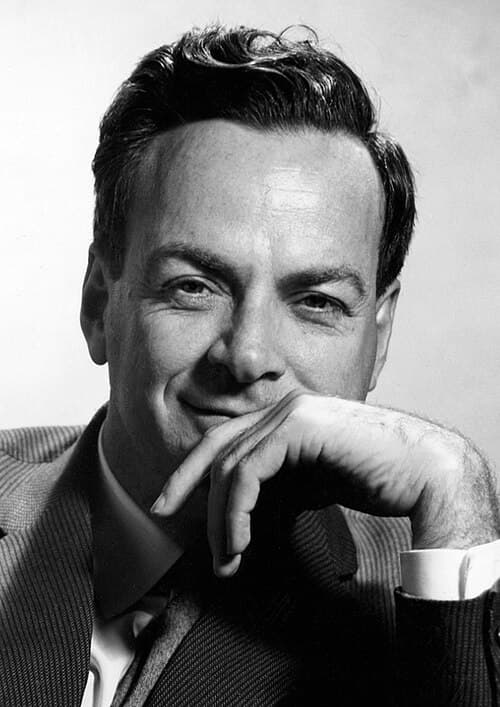
Feynman
PERSON8 w/ Claude·6 w/ Joseph
Alan Turing
PERSON8 w/ Claude·5 w/ Joseph
Cambridge University
ORGANIZATION5 w/ Claude·8 w/ Joseph