Back to Network
















4
Shared Docs
4
Same-Page
4 / 4
Mentions
Document Mentions (4 shared documents)
2 mentions1 same-page
Page ?Same page
MIND OVER COMPUTER Computer versus Human “I visualize a time when we will be to robots what dogs are to humans, and I'm rooting for the machines.” Claude Shannon “The question of whether computers can think is just like the question of whether submarines can swim.” Edgar Dijkstra HOUSE_OVERSIGHT_015693 Kas
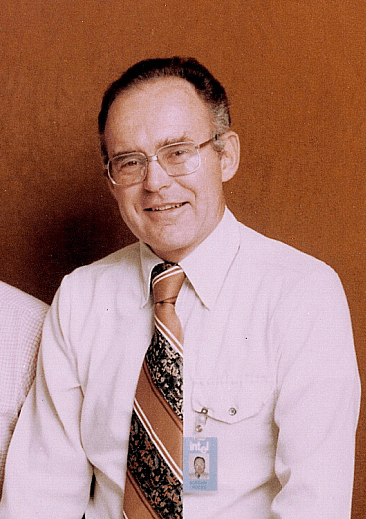
r the world’ science fiction genre — is that computers are improving exponentially fast in line with Moores Law, and the parity point is coming soon. Gordon Moore founded Intel with Andy Grove, and ran the engineering department there for more than 20 years. According to Moore's Law, the power of a computer dou
2 mentions1 same-page
Page ?Same page
But at the center it is dense, still, even quiet with the silently cranking algorithms of massively concentrated power. The computer science pioneer Claude Shannon saw information in 1949 as wild, uncertain, and pulsing with the instability of an entropic system. Yang. The machine architect Norbert Weiner, writi
in the year 2020, (Redmond: Microsoft Research Publication 2008) 108 This how commonplace magic: Chris Mack, “The Multiple Lives of Moore’s Law: Why Gordon Moore’s grand prediction has endured for 50 years”, IEEE Spectrum (March 30, 2015), accessible online. 83 HOUSE_OVERSIGHT_018315 constantly. But when Gord
2 mentions1 same-page
Page ?Same page
arguments in Zhe Human Use of Human Beings seem closer to the 19th century than the 21st. In particular, although Wiener made reference throughout to Claude Shannon’s then-new work on information theory, he seems not to have fully embraced Shannon’s notion of information as consisting of irreducible, meaning-free
ystopian scenarios prevail; we generally end up muddling along somewhere in between. But history also suggests that we don’t have to wait on history. Gordon Moore in 1965 was able to use five years of the doubling of the specifications of integrated circuits to project what turned out to be fifty years of expon
Sponsored
2 mentions1 same-page
Page ?Same page
arguments in Zhe Human Use of Human Beings seem closer to the 19th century than the 21st. In particular, although Wiener made reference throughout to Claude Shannon’s then-new work on information theory, he seems not to have fully embraced Shannon’s notion of information as consisting of irreducible, meaning-free
ystopian scenarios prevail; we generally end up muddling along somewhere in between. But history also suggests that we don’t have to wait on history. Gordon Moore in 1965 was able to use five years of the doubling of the specifications of integrated circuits to project what turned out to be fifty years of expon
Sponsored
Mutual Connections (421)
Entities connected to both Claude Shannon and Gordon Moore
Stephen Hawking
PERSON13 w/ Claude·8 w/ Gordon
Marc Rich
PERSON11 w/ Claude·8 w/ Gordon
Samantha Power
PERSON11 w/ Claude·8 w/ Gordon
LB
Leon Black
PERSON12 w/ Claude·5 w/ Gordon
DB
Doug Band
PERSON10 w/ Claude·5 w/ Gordon
Prince Charles
PERSON9 w/ Claude·6 w/ Gordon
Prince Andrew
PERSON10 w/ Claude·5 w/ Gordon
Alan Dershowitz
PERSON10 w/ Claude·5 w/ Gordon
Turing
PERSON11 w/ Claude·4 w/ Gordon
George W. Bush
PERSON11 w/ Claude·4 w/ Gordon
Harvey Weinstein
PERSON9 w/ Claude·5 w/ Gordon
Bill Gates
PERSON8 w/ Claude·6 w/ Gordon
Quantum
ORGANIZATION10 w/ Claude·4 w/ Gordon
Joseph Weizenbaum
PERSON6 w/ Claude·8 w/ Gordon
William Shakespeare
PERSON10 w/ Claude·4 w/ Gordon
Alan Turing
PERSON8 w/ Claude·5 w/ Gordon
Robert Gates
PERSON7 w/ Claude·6 w/ Gordon
Feynman
PERSON8 w/ Claude·4 w/ Gordon
Earth
LOCATION8 w/ Claude·4 w/ Gordon
Eric Trump
PERSON9 w/ Claude·3 w/ Gordon