Back to Network















3
Shared Docs
3
Same-Page
3 / 3
Mentions
Document Mentions (3 shared documents)
2 mentions1 same-page
Page ?Same page
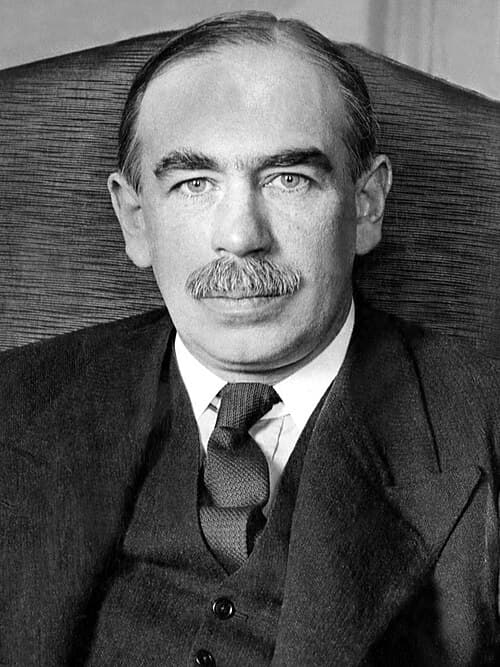
ine power. Looking back on his formative years, before Europe was ground up in the First World War, the powerfully brilliant and sensitive economist John Maynard Keynes bitterly recalled the iron certainty of his set of friends and their confident, diffident arrogance: “We were not aware that civilization was
reakthrough. So after developing his algorithms, he wanted to find an intuitive demonstration. He decided to build a 175 In 1965: Joseph Weizenbaum, Computer Power and Human Reason, W.H. Freeman and Company, 1976 p. 7 120 HOUSE_OVERSIGHT_018352 system that could, in a very limited sense, converse. The computer would take type
2 mentions1 same-page
Page ?Same page
ovement of goods is largely automated, as are many services. What’s left for humans to do? In 1930—long before the advent of computers, let alone AI—John Maynard Keynes wrote, in an essay called “Economic Possibilities for our Grandchildren,” that as a result of improvements in productivity, society could prod
e” software, hardware, and wetware; the Fair Access to Science and Technology Research Act (FASTR); and the Open Humans Foundation. In his 1976 book Computer Power and Human Reason, Joseph Weizenbaum argued that machines should not replace Homo in situations requiring respect, dignity, or care, while others (author Pamela McCord
2 mentions1 same-page
Page ?Same page
ovement of goods is largely automated, as are many services. What’s left for humans to do? In 1930—long before the advent of computers, let alone AI—John Maynard Keynes wrote, in an essay called “Economic Possibilities for our Grandchildren,” that as a result of improvements in productivity, society could prod
e” software, hardware, and wetware; the Fair Access to Science and Technology Research Act (FASTR); and the Open Humans Foundation. In his 1976 book Computer Power and Human Reason, Joseph Weizenbaum argued that machines should not replace Homo in situations requiring respect, dignity, or care, while others (author Pamela McCord
Sponsored
Mutual Connections (389)
Entities connected to both John Maynard and Computer Power and Human Reason
George W. Bush
PERSON8 w/ John·5 w/ Computer
Marc Rich
PERSON7 w/ John·5 w/ Computer
Keynes
PERSON9 w/ John·3 w/ Computer
Alan Dershowitz
PERSON6 w/ John·5 w/ Computer
Julie K. Brown
PERSON6 w/ John·5 w/ Computer
DB
Doug Band
PERSON6 w/ John·5 w/ Computer
Harvey Weinstein
PERSON5 w/ John·5 w/ Computer
Samantha Power
PERSON5 w/ John·5 w/ Computer
Feynman
PERSON5 w/ John·5 w/ Computer
Earth
LOCATION5 w/ John·5 w/ Computer
Stephen Hawking
PERSON5 w/ John·5 w/ Computer
Prince Andrew
PERSON5 w/ John·5 w/ Computer
Eric Trump
PERSON6 w/ John·4 w/ Computer
Barack Obama
PERSON5 w/ John·4 w/ Computer
LB
Leon Black
PERSON4 w/ John·5 w/ Computer
Joseph Weizenbaum
PERSON4 w/ John·5 w/ Computer
Richard Feynman
PERSON4 w/ John·5 w/ Computer
Thomas Jefferson
PERSON5 w/ John·3 w/ Computer
Turing
PERSON3 w/ John·5 w/ Computer
Deep Blue
PERSON3 w/ John·5 w/ Computer