Back to Network







4
Shared Docs
4
Same-Page
4 / 4
Mentions
Document Mentions (4 shared documents)
2 mentions1 same-page
Page ?Same page
t we take for a Universe really nothing more complex than putting a DVD in the slot and hitting play? One last piece of trivia links Hofstadter with Penrose: Roger Penrose and his father invented the Penrose Steps, inspiring the never- ending staircase in the Escher prints featured in Hofstadter’s book. F
ns had perfected their calculations to predict the motion of Venus and it proved reliable over a whole century? Would this constitute understanding? Feynman would say no: the Mayan understanding was not complete. It was only black box equivalent to our modern understanding over a limited period. We known
2 mentions1 same-page
Page ?Same page
lusion that plays with your stereoscopic synthesis. The dots appears to flip between black and white. Other illusions play with depth perception. The Penrose Steps are a type of illusion that tries to build an impossible physical model in our cerebral cortex. The brain sees perspective and depth perception
Once again, I disprove the theory. Since both routes fail, James’ list of prime numbers is not complete and, therefore, prime numbers are infinite. Feynman's Proof My favorite piece of logic is Richard Feynman's disproof of the existence of polywater. It’s a strange logical proof bordering on philosophy
2 mentions1 same-page
Page ?Same page
ion removes the requirement for many worlds and, indeed, our curious position as the conscious beings that bring the world into existence. Of course, Penrose does not stop there. He proposes the quantum gravity interaction gives rise to conscious thought and this process is the root of mathematical intuiti
drives creativity. There are also some myths to dispel about creative people. Inventors are portrayed as eccentric and hopelessly disorganized, but Feynman kept notes of every idea he ever had. I have kept a series of notebooks, now computer based, since J left university. I still have almost all of thes
Sponsored
2 mentions1 same-page
Page ?Same page
y of the Human Animal. New edition. Vintage, 2005. Neumann, John Von. The Computer and the Brain. 2nd Revised edition. Yale University Press, 2000. Penrose, Roger. The Large, the Small and the Human Mind. New Ed. Cambridge University Press, 2000. Pribram, Karl H., and Sir John Carew Eccles. Rethinking N
ivity versus 312 program equivalence problem 250 programmer 235, 238, 263 programming geniuses 271 super-programmers 266 progressive cipher 214 proof Feynman’s proof 157 indirect 244 mathematical 156 philosophical 246 Index 415 PSPACE problem 168 Pulitzer Prize 365, 367 purpose on the planet 9 puzzle tw
Sponsored
Mutual Connections (201)
Entities connected to both Penrose and Feynman
Jeffrey Epstein
PERSON39 w/ Penrose·32 w/ Feynman
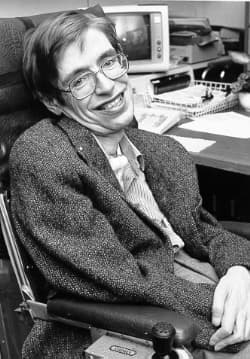
Stephen Hawking
PERSON19 w/ Penrose·13 w/ Feynman
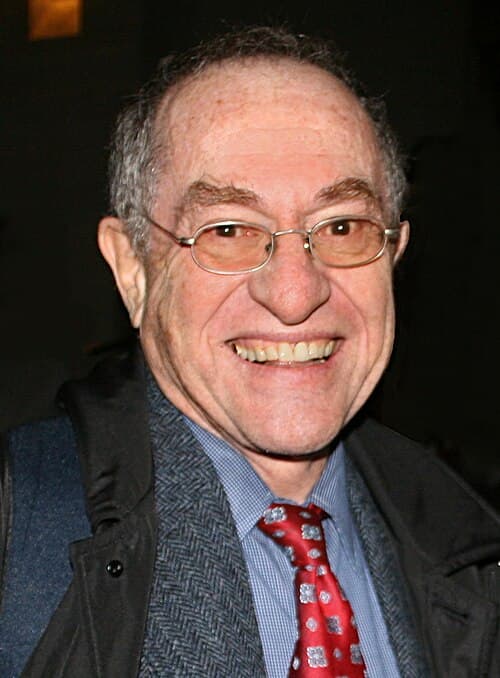
Alan Dershowitz
PERSON17 w/ Penrose·15 w/ Feynman
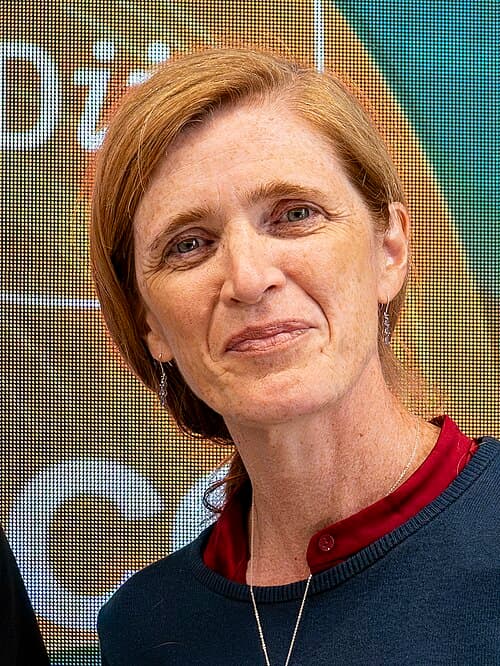
Samantha Power
PERSON19 w/ Penrose·10 w/ Feynman
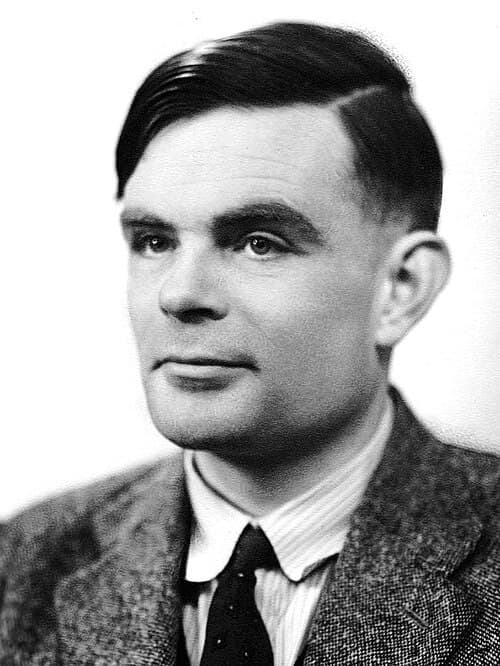
Turing
PERSON17 w/ Penrose·10 w/ Feynman
Quantum
ORGANIZATION14 w/ Penrose·13 w/ Feynman
Deepak Chopra
PERSON21 w/ Penrose·4 w/ Feynman
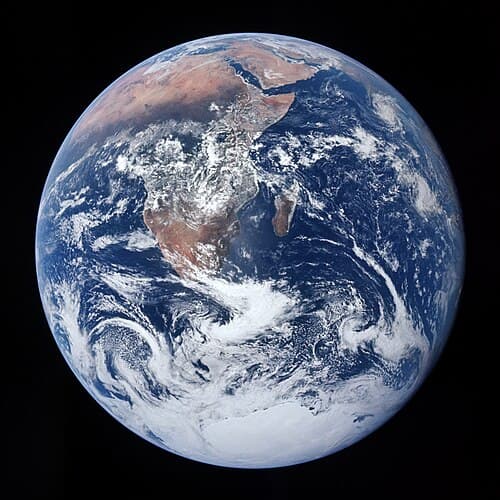
Earth
LOCATION9 w/ Penrose·14 w/ Feynman
Harvey Weinstein
PERSON8 w/ Penrose·14 w/ Feynman
Prince Andrew
PERSON10 w/ Penrose·10 w/ Feynman
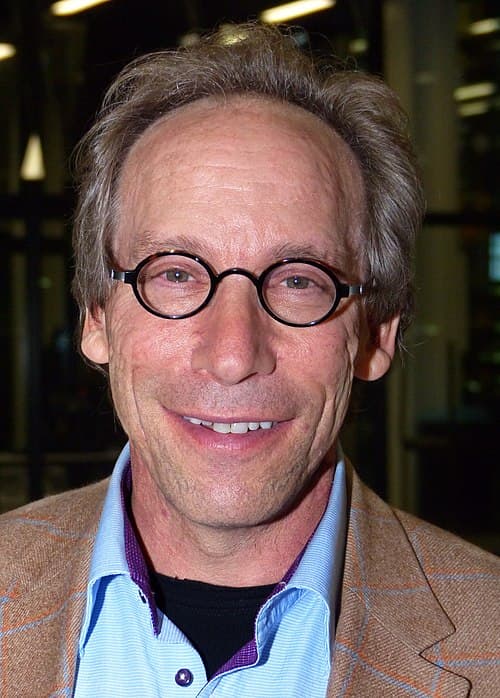
Lawrence Krauss
PERSON6 w/ Penrose·14 w/ Feynman
Alan Turing
PERSON11 w/ Penrose·8 w/ Feynman
LB
Leon Black
PERSON9 w/ Penrose·9 w/ Feynman
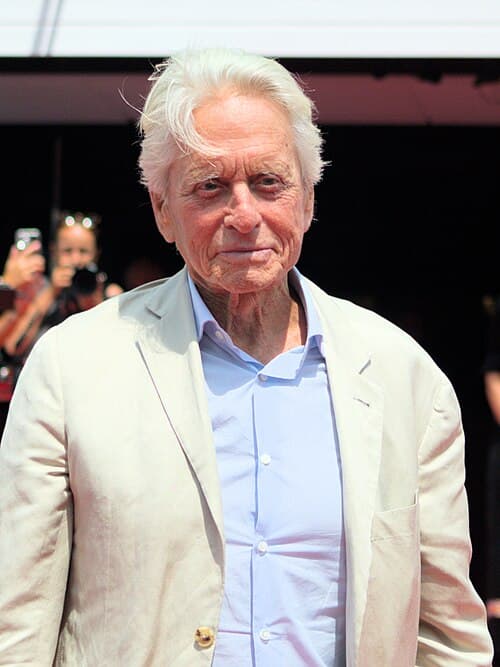
Michael Douglas
PERSON7 w/ Penrose·10 w/ Feynman
George W. Bush
PERSON7 w/ Penrose·9 w/ Feynman
Prince Charles
PERSON8 w/ Penrose·8 w/ Feynman
Marc Rich
PERSON5 w/ Penrose·11 w/ Feynman
Seth Lloyd
PERSON11 w/ Penrose·4 w/ Feynman
Marvin Minsky
PERSON8 w/ Penrose·7 w/ Feynman
Julie K. Brown
PERSON5 w/ Penrose·10 w/ Feynman