Back to Network
















3
Shared Docs
0
Same-Page
6 / 4
Mentions
Document Mentions (3 shared documents)
Page HOUSE_OVERSIGHT_032195
gs for nondemocratic regimes are always preferable to hard ones, even if the process takes some time. A moral argument can be made that monsters like Muammar el-Qaddafi in Libya and Kim Jong-il in North Korea should be overthrown any way they can, as fast as we can, regardless of the risk of short-term chaos. But tha
Page: HOUSE_OVERSIGHT_032195 →Page HOUSE_OVERSIGHT_032197
e required to hold the state together. To be sure, Egypt's Mubarak and Tunisia's Ben Ali neither ran police states on the terrifying scale of Libya's Qaddafi and Syria's Assad nor stifled economic progress with such alacrity. But while Mubarak and Ben Ali left their countries in conditions suitable for the
Page: HOUSE_OVERSIGHT_032197 →Page HOUSE_OVERSIGHT_032199
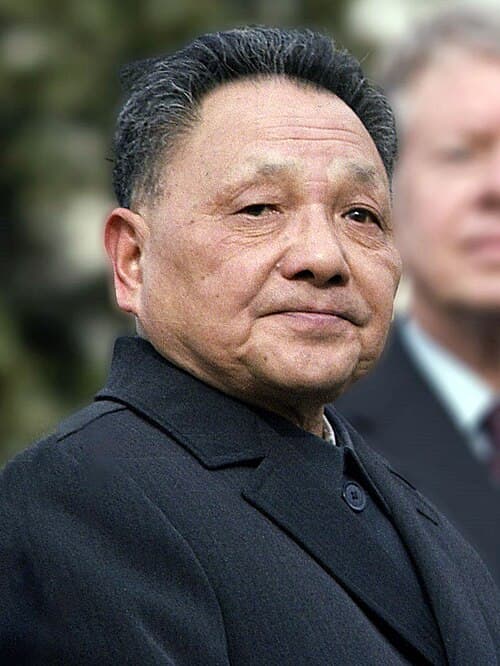
scale. Here the debate gets interesting. Indeed, probably one of the most morally vexing realizations in the field of international politics is that Deng Xiaoping, by dramatically raising the living standard of hundreds of millions of Chinese in such a comparatively short space of time-which, likewise, led to a
Page: HOUSE_OVERSIGHT_032199 →ersonal freedoms across China—was, despite the atrocity of Tiananmen Square that he helped perpetrate, one of the great men of the twentieth century. Deng's successors, HOUSE_OVERSIGHT_032198 --- PAGE BREAK --- 29 though repressive of political rights, have adhered to his grand strategy of seeking nat
Page: HOUSE_OVERSIGHT_032199 →Page HOUSE_OVERSIGHT_031587
regime change in Iraq in 2003. The frustration was even greater during the Libyan crisis that ended with the overthrow and execution of former leader Muammar Gaddafi. Indeed, from Beijing's perspective, resolution 1973 of the United Nations seeking to impose a no-fly zone in Libya did not give any foreign power th
Page: HOUSE_OVERSIGHT_031587 →Page HOUSE_OVERSIGHT_031588
countries. Since the opening of the country under Deng Xiaoping in 1978, Chinese foreign policy can be m
Page: HOUSE_OVERSIGHT_031588 →ceful coexistence in developing diplomatic relations and economic and cultural exchanges with other countries. Since the opening of the country under Deng Xiaoping in 1978, Chinese foreign policy can be more generally characterized as pragmatic. Pragmatism and the five principles are the key to understanding Chi
Page: HOUSE_OVERSIGHT_031588 →Page HOUSE_OVERSIGHT_031851
conomy was roughly five times that of the People's Republic. Forty years later, as a result of the industrial revolution unleashed by Mao's successor Deng Xiao- ping, it is conceivable that China could overtake America within a decade. This is a feat the Soviet Union never came close to achieving. Moreover, China
Page: HOUSE_OVERSIGHT_031851 →ndustrial revolution unleashed by Mao's successor Deng Xiao- ping, it is conceivable that China could ov
Page: HOUSE_OVERSIGHT_031851 →Page HOUSE_OVERSIGHT_031855
y, Prime Minister Recep Tayyip Erdogan as well occasionally makes some correct analysis. Last week, while comparing the uprising in Libya against the Moammar Gadhafi regime and the growing unrest in the Syrian street against the Baathist regime of Bashar al-Assad, the prime minister correctly said Libya and Syria
Page: HOUSE_OVERSIGHT_031855 →Sponsored
Mutual Connections (396)
Entities connected to both Deng Xiaoping and Muammar Gaddafi
George W. Bush
PERSON82 w/ Deng·35 w/ Muammar
Barack Obama
PERSON40 w/ Deng·54 w/ Muammar
Jeffrey Epstein
PERSON65 w/ Deng·25 w/ Muammar
Bill Clinton
PERSON39 w/ Deng·40 w/ Muammar
United States
LOCATION35 w/ Deng·41 w/ Muammar
Marc Rich
PERSON40 w/ Deng·26 w/ Muammar
Mao Zedong
PERSON60 w/ Deng·5 w/ Muammar
Bashar al-Assad
PERSON18 w/ Deng·46 w/ Muammar
Ghislaine Maxwell
PERSON52 w/ Deng·8 w/ Muammar
Tehran
LOCATION16 w/ Deng·41 w/ Muammar
Donald Trump
PERSON29 w/ Deng·21 w/ Muammar
Lebanon
LOCATION14 w/ Deng·32 w/ Muammar
Tunisia
LOCATION12 w/ Deng·34 w/ Muammar
Condoleezza Rice
PERSON39 w/ Deng·7 w/ Muammar
Xi Jinping
PERSON42 w/ Deng·3 w/ Muammar
Damascus
LOCATION16 w/ Deng·29 w/ Muammar
Hillary Clinton
PERSON15 w/ Deng·29 w/ Muammar
Hosni Mubarak
PERSON9 w/ Deng·35 w/ Muammar
Benjamin Netanyahu
PERSON6 w/ Deng·35 w/ Muammar
Saddam Hussein
PERSON6 w/ Deng·33 w/ Muammar