Back to People & Entities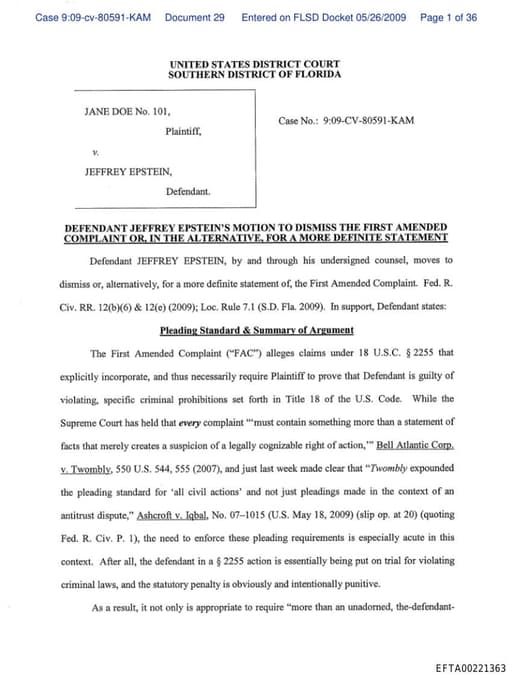










ST
Stogner
Person
19
Total Mentions
13
Documents
531
Connected Entities
Surname reference in documents
Document Mentions (13)
EFTA00221363.pdf
2 mentionsEFTA00221363
where the party was not, by law, liable to any punishment." After (but not before) the original statute of limitations had expired, a party such as Stogner was not "liable to any punishment." California's new statute therefore "aggravated" Stogner's alleged crime, or made it "greater than it was, when
ention of the Er Post Facto clause. The Supreme Court's decision in California v. Stogner, 539 U.S. 607 (2003), perfectly illustrates the point. In Stogner, the defendant was charged in 1998 based on sex crimes that he allegedly committed between 1955 and 1973. While the original three-year statute of l
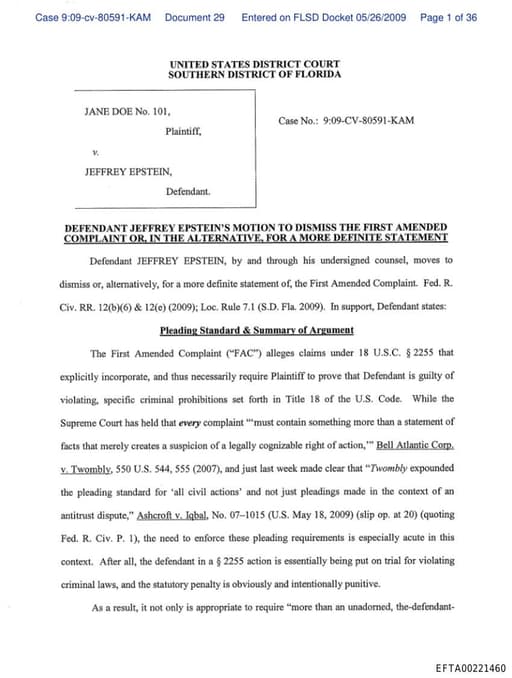
EFTA00221460.pdf
2 mentionsEFTA00221460
where the party was not, by law, liable to any punishment." After (but not before) the original statute of limitations had expired, a party such as Stogner was not "liable to any punishment." California's new statute therefore "aggravated" Stogner's alleged crime, or made it "greater than it was, when
ention of the Er Post Facto clause. The Supreme Court's decision in California v. Stogner, 539 U.S. 607 (2003), perfectly illustrates the point. In Stogner, the defendant was charged in 1998 based on sex crimes that he allegedly committed between 1955 and 1973. While the original three-year statute of l
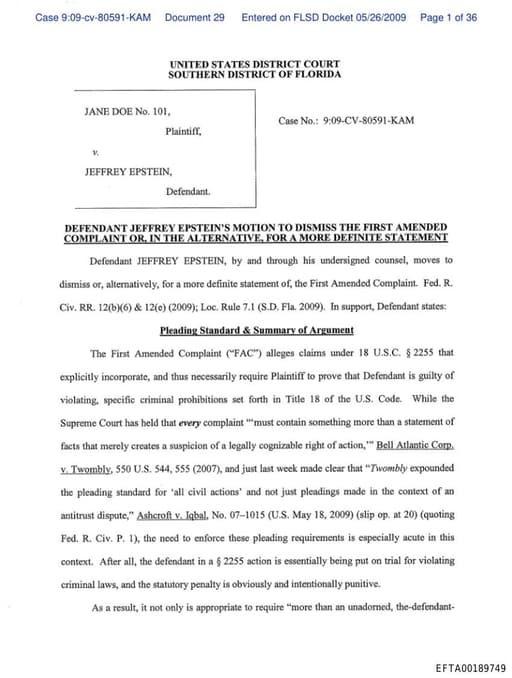
EFTA00189749.pdf
2 mentionsEFTA00189749
ention of the Er Post Facto clause. The Supreme Court's decision in California v. Stogner, 539 U.S. 607 (2003), perfectly illustrates the point. In Stogner, the defendant was charged in 1998 based on sex crimes that he allegedly committed between 1955 and 1973. While the original three-year statute of l
where the party was not, by law, liable to any punishment." After (but not before) the original statute of limitations had expired, a party such as Stogner was not "liable to any punishment." California's new statute therefore "aggravated" Stogner's alleged crime, or made it "greater than it was, when
Sponsored
EFTA00192835.pdf
2 mentionsEFTA00192835
where the party was not, by law, liable to any punishment." After (but not before) the original statute of limitations had expired, a party such as Stogner was not "liable to any punishment." California's new statute therefore "aggravated" Stogner's alleged crime, or made it "greater than it was, when
Post Facto clause precludes the revival of claims predicated on past crimes. The precise concerns animating Stogner are present in this case. As in Stogner Defendant was "liable to punishment" under § 2255 before Plaintiff turned 18, but once she attained that age, he no was longer "liable to punishmen
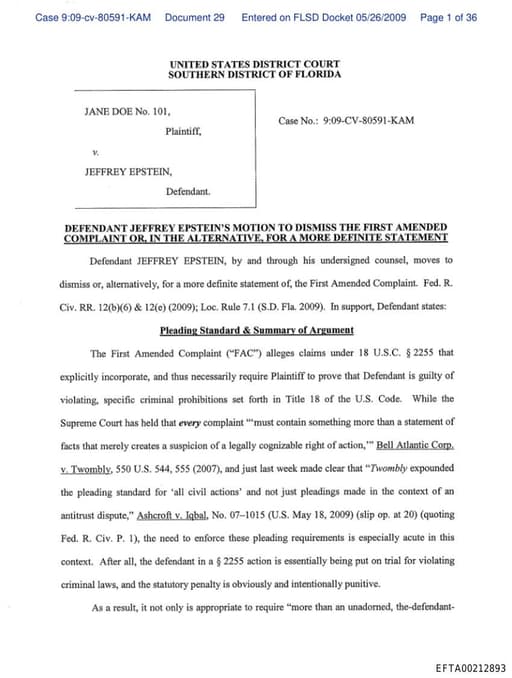
EFTA00212893.pdf
2 mentionsEFTA00212893
ention of the Er Post Facto clause. The Supreme Court's decision in California v. Stogner, 539 U.S. 607 (2003), perfectly illustrates the point. In Stogner, the defendant was charged in 1998 based on sex crimes that he allegedly committed between 1955 and 1973. While the original three-year statute of l
where the party was not, by law, liable to any punishment." After (but not before) the original statute of limitations had expired, a party such as Stogner was not "liable to any punishment." California's new statute therefore "aggravated" Stogner's alleged crime, or made it "greater than it was, when
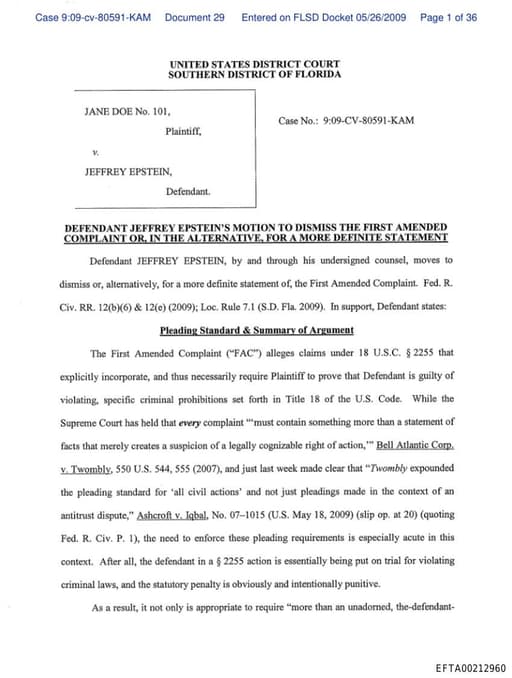
EFTA00212960.pdf
2 mentionsEFTA00212960
ention of the Er Post Facto clause. The Supreme Court's decision in California v. Stogner, 539 U.S. 607 (2003), perfectly illustrates the point. In Stogner, the defendant was charged in 1998 based on sex crimes that he allegedly committed between 1955 and 1973. While the original three-year statute of l
where the party was not, by law, liable to any punishment." After (but not before) the original statute of limitations had expired, a party such as Stogner was not "liable to any punishment." California's new statute therefore "aggravated" Stogner's alleged crime, or made it "greater than it was, when
Sponsored
1 mention
ime-barred prosecution violates the Ex Post Facto Clause of the Constitution, but a law that extends an un-expired statute of limitations does not. Stogner v. California, 539 U.S. 607, 632-33 (2003). Senator Leahy, who co- sponsored the PROTECT Act, expressed concerns in a committee report that the propo
Page: EFTA00020275 →EFTA00039421.pdf
1 mentionEFTA00039421_sub_001 - EFTA00039421_100
01) 109, 113 viii EFTA00039429 Silver, 15 Cr. 93 (VEC) 275 Skelos, 15 Cr. 317 (KMW) 275 Smith v. Maryland, 442 U.S. 735 (1979) 117, 118 Stogner v. California, 539 U.S. 607 (2003) 45 Swain v. Alabama, 380 U.S. 202 (1965) 300 Taylor v. Louisiana, 419 U.S. 522 (1975) 299, 300 Taylor v.
1 mention
ime-barred prosecution violates the Ex Post Facto Clause of the Constitution, but a law that extends an un-expired statute of limitations does not. Stogner v. California, 539 U.S. 607, 632-33 (2003). Senator Leahy, who co- sponsored the PROTECT Act, expressed concerns in a committee report that the propo
Page: EFTA00022105 →Sponsored
1 mention
ime-barred prosecution violates the Ex Post Facto Clause of the Constitution, but a law that extends an un-expired statute of limitations does not. Stogner v. California, 539 U.S. 607, 632-33 (2003). Senator Leahy, who co- sponsored the PROTECT Act, expressed concerns in a committee report that the propo
Page: EFTA00029554 →EFTA00102999.pdf
1 mentionEFTA00102999_sub_001 - EFTA00102999_100
1) 109, 113 viii EFTA00103007 Silver, 15 Cr. 93 (VEC) 275 Skelos, 15 Cr. 317 (KMW) 275 Smith v. Maryland, 442 U.S. 735 (1979) 117, 118 Stogner v. California, 539 U.S. 607 (2003) 45 Swain v. Alabama, 380 U.S. 202 (1965) 300 Taylor v. Louisiana, 419 U.S. 522 (1975) 299, 300 Taylor v.
EFTA00099941.pdf
1 mentionEFTA00099941_sub_001 - EFTA00099941_100
1) 109, 113 viii EFTA00099949 Silver, 15 Cr. 93 (VEC) 275 Skelos, 15 Cr. 317 (KMW) 275 Smith y. Maryland, 442 U.S. 735 (1979) 117, 118 Stogner v. California, 539 U.S. 607 (2003) 45 Swain v. Alabama, 380 U.S. 202 (1965) 300 Taylor v. Louisiana, 419 U.S. 522 (1975) 299,300 Taylor v. U
Sponsored
EFTA00077606.pdf
1 mentionEFTA00077606_sub_001 - EFTA00077606_100
01) 109, 113 viii EFTA00077614 Silver, 15 Cr. 93 (VEC) 275 Skelos, 15 Cr. 317 (KMW) 275 Smith v. Maryland, 442 U.S. 735 (1979) 117, 118 Stogner v. California, 539 U.S. 607 (2003) 45 Swain v. Alabama, 380 U.S. 202 (1965) 300 Taylor v. Louisiana, 419 U.S. 522 (1975) 299, 300 Taylor v.
Sponsored
Connected Entities(20 of 531)
Jeffrey Epstein
PersonAmerican sex offender and financier (1953–2019)
13 docs13 co-mentions
Supreme Court
OrganizationHighest court of jurisdiction in the US
13 docs13 co-mentions
WA
Walker
PersonSurname reference in Epstein documents
13 docs13 co-mentions
United States
LocationCountry located primarily in North America
13 docs13 co-mentions
Prince Andrew
PersonThird child of Queen Elizabeth II and Prince Philip, Duke of Edinburgh (born 1960)
10 docs10 co-mentions
Scarlett Johansson
PersonAmerican actress (born 1984)
10 docs10 co-mentions
Ashcroft
PersonRefers to John Ashcroft, former US Attorney General, referenced in legal proceedings and policy discussions
10 docs10 co-mentions
George W. Bush
PersonPresident of the United States from 2001 to 2009
10 docs10 co-mentions
Jennifer Lopez
PersonAmerican singer and actress (born 1969)
9 docs9 co-mentions
JD
Jane Doe
PersonPseudonym for anonymous victims/witnesses in Epstein legal proceedings
9 docs9 co-mentions
FBI
OrganizationFederal Bureau of Investigation, domestic intelligence and security service of the United States
8 docs8 co-mentions
Forde
OrganizationOrganization referenced in documents
7 docs7 co-mentions
NE
Nejad
PersonSurname reference in documents
7 docs7 co-mentions
ET
Emmy Taylor
PersonFormer assistant to Ghislaine Maxwell, appeared in Epstein flight logs and court documents
7 docs7 co-mentions
Ghislaine Maxwell
PersonBritish socialite and sex trafficker, daughter of Robert Maxwell, accomplice of Jeffrey Epstein
7 docs7 co-mentions
BO
Bortnovsky
PersonSurname reference in Epstein-related documents
7 docs7 co-mentions
Giglio
PersonNER artifact - legal term or document reference misclassified as person
7 docs7 co-mentions
SA
Salameh
PersonLegal case citation: United States v. Salameh (misclassified as PERSON)
7 docs7 co-mentions
SA
Santobello
PersonLegal case citation (Santobello v. New York) in Epstein court documents
7 docs7 co-mentions
Reid Weingarten
PersonAmerican white-collar criminal defense attorney at Steptoe & Johnson, represented Jeffrey Epstein and other high-profile clients
7 docs7 co-mentions