HOUSE_OVERSIGHT_023731_sub_003 - HOUSE_OVERSIGHT_023970
Document Information
Bates Range
HOUSE_OVERSIGHT_023731_sub_003 - HOUSE_OVERSIGHT_023970
Pages
40
Source
House Oversight Committee
Original Filename
Schank 1st.pdf
Document Content
Page 201 - HOUSE_OVERSIGHT_023931
How the Best Universities Inadvertently Ruin Our Schools 185 a year (or whatever the tuition was at that time) to attend Yale and he damn well was going to see me. I did in fact see him because he had a point. Professors are hard to find. There are many reasons for this. The first is that if no one makes them see undergraduates, so why should they? The second is that from long experience most professors have come to understand that when an undergraduate wants to see them, there typically is one of two motives. Either the student wants to argue about a grade he or she received, or wants to engage the professor in a conversation whose point is that the undergraduate is really a great guy or gal and will be counting on a recommendation down the road. Neither of these conversations is any too fascinating to professors so they usually make themselves hard to find. The funny part of this story is that the student who was making the fuss had neither of those issues. He was exactly the sort of student professors very much want to see. He wanted to become a professor in my field. This is exactly who a professor wants to meet with. The con- versation with him didn’t start out about that exactly, but it was easy to see that he had real issues he wanted to talk about, science issues, the kind professors wish were on the mind of every undergraduate but rarely are. This student did in fact become a professor, the ultimate suc- cess story for the professor who guided him there. And, no surprise, he treats undergraduates who want to see him the same way I treated him. There is a naive conception on the part of students in a top univer- sity that their needs matter to the professors of that university. But the top universities are not structured in such a way as to reward professors who care deeply about students. If a young assistant professor spends too much time with undergraduates, there usually will be some wiser head who will counsel him against this behavior. Assistant professors must be concerned with getting tenure. Having the students like you has next to nothing to do with tenure at the top universities. No one higher up in the administration of the university cared much about how much I taught. “Why not?” you wonder. To answer this, one has to understand how universities really work, why they work that way, what game they are playing, and who wins and who loses. The answers to these questions, well known by anyone in a top university, are, somehow, completely unknown to the general public. Outsiders don’t ask how Yale works. They ask how they can get their kids into Yale. And therein lies the problem. HOUSE_OVERSIGHT_023931
Page 202 - HOUSE_OVERSIGHT_023932
186 Teaching Minds As long as the customers keep coming, as long as people will do anything to get their kids into Yale, Yale will not have to change. Now bear in mind that going to Yale isn’t such a bad experience. This is not my point. But Yale’s attitude (and every other top university’s at- titude) toward what those universities are inherently about is seriously harming the education of every high school student and almost every college student in the country. Yale doesn’t know that it is doing this. The faculty of Yale didn’t wake up one morning and think that destroying the American education system would be a good idea. They never think that subject-based education is a bad thing. They are pro- fessors of subjects, after all. It makes sense to them. Most of the Yale faculty doesn’t think for even a minute about the U.S. high school system, or the community college system, or the thousands of other colleges in the United States. Yale professors are thinking about their research, ideas, and projects. Yale administrators are thinking about making Yale work better and about money and prestige issues. They are not thinking that the subject-based education that is the basis of the university structure has filtered down to high school for no good reason. They think that there is a good reason: to prepare high school students for college, namely to make the profes- sors’ lives easier when the students arrive at college. They do not know they are killing education with their subject ori- entation. But they are, just as surely as if they had a plan to do so and were working on it on a daily basis. And, the parents who just must send their kids to Yale are regularly giving them the power to continue doing just that. People who do not live and work within the confines of a great university imagine that professors are basically teachers, like high school teachers but more intellectual. They do not understand the col- lective mindset at a place like Yale, a mindset that the Yale faculty, for the most part, is perfectly happy with. They do not understand why asking what I taught was a funny question. They do not readily get, if teaching isn’t a professor’s main concern, what exactly his concerns would be. To explain all this requires looking at the life of a typical Yale fac- ulty member and beginning to understand the world in which he lives. We must begin by understanding the aims of the university it- self. Universities are employers, after all, and professors, like any other employee, worry about what their boss thinks of them. Curiously, HOUSE_OVERSIGHT_023932
Page 203 - HOUSE_OVERSIGHT_023933
How the Best Universities Inadvertently Ruin Our Schools 187 however, professors don’t really have bosses in the traditional sense. I remember the provost of a top university complaining to me that with professors everything is a la carte. The provost is the guy who runs the university. What he meant was that he could not ask any professor to do anything without the professor asking what he would get in return. The traditional sense of boss is gone, of course, when the boss can’t fire you. The real bosses in the university system are your colleagues. Huh? Your colleagues can’t fire you. But this is what they can do. In order to hire a new senior faculty member at Yale, we actually had to write letters, at the beginning of the process, to all the important faculty members around the world in the subspecialty in which we wanted to hire, asking them to rank the top ten people in the world in that subspecialty. If the person we wanted was not on that top ten list, we would not be able to hire them without proving why we couldn’t get one of the people in the top ten and why we so desperately needed someone who clearly wasn’t that good. Top universities are caught up in a game they can’t get out of that has two very bad results. The game is the superstar-prestige game. Top universities want to be number one. They want this very badly. Uni- versity administrators worry about this on a daily basis. All hirings revolve around this issue. All professors worry about their status in the academic world at large. It is the coin of the realm in academia. Although it does not obviously follow from this, one effect of this game is less than stellar education for undergraduates. And, in- cidentally, this game also has a disastrous effect on the nation’s high schools. This is not at all obvious to professors and to the universities for whom they work. To understand this, we need to first see what professors do and how they think about what they do. I will start by telling a story about someone I barely know. He is a professor of aerospace engineering at the University of Washington, which is in the top tier of state universities. I met him because I was working on creating a high school aerospace curriculum that I hope one day will replace some of what is now in high school for those in- terested in engineering. I asked Boeing to host a meeting to design this curriculum and they agreed. They invited some of their engineers as well as this professor, I brought some of my people, and we began to design a series of projects that would take students with no knowledge HOUSE_OVERSIGHT_023933
Sponsored
Page 204 - HOUSE_OVERSIGHT_023934
188 Teaching Minds of engineering and after a year allow them to work on designing a 787. Such a project-based, real-world curriculum is, in my mind, an important improvement on the way things are done now in school. At the very beginning of the meeting, this professor said that he hoped the outcome of this high school curriculum redesign meeting would be a curriculum that taught math and science better because the average student at the University of Washington that he encoun- tered had very weak math and science skills. This was not my intent at all and I told him so. I was hoping to allow high school students to have a year-long experience of actually doing engineering so they could decide whether that interested them or at least make use of some of what they learned in their later lives. As far as I’m concerned, there is too much math and science in high school now and I told him so, Since no one ever says things like that, he was quite shocked. I asked him, since he thought entering college students who wished to study aerospace were deficient in math and science, why he didn’t think it was his obligation to teach it to them? He replied that this was the duty of the high schools. His position then was that even though less than 1% of college students would study aerospace engineering, nevertheless every student in the country should be made to learn the math and science they might need just in case they might study aerospace engineering. Of course, this is hardly a unique position. In fact, this stance is exactly the one in place in high schools today. Just in case you some day might need it, we will teach it to you. What is the reasoning behind this point of view? What is really going on here relates strongly to the teaching requirement issue I mentioned earlier. I had a light teaching load. This man certainly teaches more often than I did. To see what his load was, I looked him up on the web. Here are the courses he was teaching in 2007-08 as I wrote this: e AA 430 Finite Element Structural Analysis e AA 432 Composite Materials for Aerospace Structures e AA532 Mechanics of Composite Materials I had guessed what kinds of courses he taught before looking him up. The man is about my age, which means he has seniority, and he is HOUSE_OVERSIGHT_023934
Page 205 - HOUSE_OVERSIGHT_023935
How the Best Universities Inadvertently Ruin Our Schools 189 obviously respected by Boeing, so he is a senior and successful man in his field. This means a small teaching load since the best professors teach the least. Three semester-long courses in a year is a light load at a big state university. You might wonder, as an outsider to the ins and outs of the uni- versity, why the best professors teach the least. You also might wonder why I knew the types of courses he would teach and what I mean by that. I will explain. To start this explanation, it is important to understand why pro- fessors are “rewarded” with light teaching loads. (Note the word load. This is the normal way this is discussed in a university.) I was given an extraordinarily light load at Northwestern for two reasons. One reason was that universities, like baseball teams, recruit so-called “su- perstars” (yes, that is how they are referred to in the university) from competitors. So Northwestern had to beat Yale’s offer in my case. At Yale I taught one semester-long course per year, so Northwestern sim- ply made me a better offer. The reason both of these universities would even consider such a light load is that I earned money for the university. As I used to tell my children when they asked “why” questions, in the end it is usually about money. I was recruited by Northwestern (in 1988), but I was really being recruited by Andersen Consulting. They offered Northwestern (that is, they offered me if I came to Northwestern) $30 million (over a 10-year period). Yes, that’s right, $30 million. I think you can see that North- western didn’t really care what I taught or when I taught it. They wanted that money. And, they also wanted the prestige. Before I go too much further, I need to explain the prestige thing because it is very important. In fact, the prestige issue for professors and universities is precisely the root of the problem in our education system. This will take some time to explain, so let me start simply for now. When Harvard plays Yale in football, they are battling for prestige. But the battle may not be on the field exactly. The real battle is in how powerful and important the alumni who attend the game have become and how big their respective endowments have become and who has the best chemistry department or business school. It is a real battle. The battle is for reputation. And, although it may seem silly to take this battle seriously, it is taken very seriously. There is no World HOUSE_OVERSIGHT_023935
Page 206 - HOUSE_OVERSIGHT_023936
190 Teaching Minds Series that determines the winner. The real determination is made by newspapers, or parents who want their kids to apply there, or poten- tial donors. But the battle is real enough. This battle was dead serious before U.S. News and World Report started publishing annual rankings. Now, it is the basis of how the university functions. When the current president was recruited at Northwestern, he essentially was told that his job was to get North- western into the top ten (in the U.S. News rankings). Northwestern was ranked 12th or 13th at this time. In his first year he succeeded. Why? Because Northwestern’s football team won the Big Ten title and went to the Rose Bowl. Of course, he had nothing to do with that. But the following year applications doubled (or something like that) and that is a Statistic that U.S. News uses, so presto, we were number nine. It didn’t last. Neither did it make sense. Recruiting me was like winning the Rose Bowl. Well, all right, not really. But a member of the Board of Trustees actually did say to me when he met me: “It’s our star quarterback.” I brought in money and prestige. It is natural to wonder who actually got the money that An- dersen offered and what was done with it and why it was given out, and, while we are at it, what exactly it was I did all day if I didn’t teach. First the university’s share. Every dollar of that $30 million went into Northwestern’s bank account. Then they let me spend it accord- ing to certain rules. The first rule is called “overhead.” The university charges an overhead rate on all contracts. The actual percentage varies and one of the first things I had to negotiate with Northwestern was how much their take would be. I don’t remember exactly now, but they got about 30% of what I brought in. So, about $9 million of this money went into Northwestern’s pocket. Do you see now why they didn’t care how much I taught? They just wanted me there and they wanted that money. By the way, they also got the interest on all the money. They also got the prestige. I set up a new institute that became in- stantly well known and was something the university could brag about. The Institute for the Learning Sciences was something unique. North- western had one and no one else did. Moreover, I might (and did) raise even more money for my institute. More overhead money. Yippee! What did I do with the money? Mostly what you can do with this money is hire people. If you have a research agenda, something you want to build or accomplish, you will need help. If you want to build a rocket ship that no one has ever built before, you will need to HOUSE_OVERSIGHT_023936
Sponsored
Page 207 - HOUSE_OVERSIGHT_023937
How the Best Universities Inadvertently Ruin Our Schools 197 hire folks who can contribute. I was trying to build educational soft- ware but the principle was the same. I hired programmers, researchers, assistants to do lower level work, video staff, artists, and, of course, graduate students. And, now you know what I did all day. I managed this enterprise. Eventually my institute had 200 people working in it. I did what any person in charge of 200 people does. I set the direction and checked on progress. Also, I wrote books and thought deep thoughts. This is what any professor does who brings in grant money. I was just doing it on a larger scale than most. All of this is about winning the prestige game. Any university wants pre-eminent professors. Universities want the best faculty so their name is mentioned a lot, so they get applications from students, attention from the media, and more grant money. That is what uni- versities do. Teaching? Well, how exactly does teaching fit in with all that? It really doesn’t. Most professors agree that the university is a lot nicer place when there aren’t all those undergraduates around. From May to September New Haven was an idyllic place. Smart people, good weather, interesting conversation. Then in September, thousands of young people, making a racket and expecting to be taught. But, there- in lies the problem. Are students really expecting to be taught? It doesn’t take very long for a professor to learn that those brilliant Yale students, the ones who killed themselves to get into the place, may not be there solely to enter into the life of the mind. While everyone is thinking great thoughts and doing great research over the summer, professors manage to get themselves believing that the job of a profes- sor at a great university is to be an intellectual. What they forget easily enough is who is paying the bills. And, they forget the real agenda of those who are paying the bills. They are reminded soon enough. Students want courses to be easy, not bother them too much with work outside the classroom, and help them get a good job. Of course, I am oversimplifying here. Many students attend Yale to learn what it is that you, the professor, really know and want to teach. In 15 years at Yale I met a number of them. I remember their names because there weren't that many. We can hope that all professors have met their share of that type of student. Most college students are 18-year-olds who are on their own for the first time. They are more interested in exploring themselves and their new freedoms than they are in working hard at intellectual HOUSE_OVERSIGHT_023937
Page 208 - HOUSE_OVERSIGHT_023938
192 Teaching Minds pursuits. Every university has underground lists, written by students, about courses that are easy or professors who readily give good grades. The real agenda of the majority of students is to take school just seri- ously enough to graduate. If you offered them a diploma after 1 year, most of them would take the deal. This all brings me back to our aerospace friend. Why does he want high schools to teach more math? Because he doesn’t want to teach it. Teaching undergraduates becomes pleasurable at precisely the point where you can teach the very courses this man teaches. He is teach- ing highly technical courses, and, it is safe to assume, the students who are taking those courses are there with serious intentions. They want to become engineers and they want to know what he knows. So he may well enjoy teaching them. But he certainly would not enjoy teaching them calculus. There is a big difference in the experience of teaching when you are teaching people who plan on working in your field some day and when you are teaching a required course that stu- dents wish they weren’t being made to take. But why does it matter what this man enjoys teaching? In the ideal university, the one professors at top-tier universities would have if it were possible, professors, who consider themselves primarily to be researchers in very specialized subfields, would teach only work that directly related to their actual research or was impor- tant for preparing future researchers in their field. Professors at Yale get to be professors at Yale because they are either potentially or actually the best in the world at something. While this might not actually be true, it is certainly supposed to be true. When a professor is proposed to be promoted (or hired for the first time) as a full professor at Yale, the chair of his department must address a meeting of all the other chairs and high officials and explain why the professor in question is indeed the best in the world at what he does. To do this, the chairs often have to define what he does extremely narrowly to have it be at all credible. Isn’t there someone at Stanford or Princeton who is just as good or, perish the thought, even better than the candidate you propose? There better not be or this candidate won't get voted in. So, somewhere in every professor’s mind is the idea that he or she is the best at something or for assistant professors, soon will become the best at something. Under this kind of pressure, and this kind of egotism, a professor’s first and foremost concern is attaining and maintaining that exalted HOUSE_OVERSIGHT_023938
Page 209 - HOUSE_OVERSIGHT_023939
How the Best Universities Inadvertently Ruin Our Schools 193 status. Teaching future professors in one’s own field helps maintain that status, so graduate students pursuing Ph.D.s are quite often taken very seriously. Teaching graduate seminars is intellectually stimulat- ing, may help with one’s own research, and is therefore worthwhile to do. But undergraduates are a whole different story. Very small per- centages of them actually will become researchers in one’s field. Pro- fessors are in the fame game. They worry about the prestige of their department and themselves. They care about this because they won’t attract high-quality Ph.D. students unless they maintain that prestige. Undergraduates do not figure into this equation. Except they do pay the bills. So professors have to teach them. And, someone has to teach those damn introductory courses that typically have hundreds of students in them. Why do they have hundreds of students in them? Because no one wants to teach them so making the sections as large as possible means fewer professors will have to teach them. And, why does our aerospace guy want high school to teach the math his students need? Because he certainly doesn’t want to do it. He wants to teach eso- teric courses about composites, which is his field. Teaching basic math would be worse than teaching Introduction to Aerospace. A great deal of work and no enhancement to prestige at all. And, there is a bigger problem. He can’t teach math because the structure of the university doesn’t allow it. Math is taught by the math department. If everyone had to learn math, there would have to be an awful lot of math professors. While that sounds OK, it really isn’t possible. Remember, at top universi- ties everyone has to be a superstar or close. Math isn’t that hot of a field. There aren’t large numbers of people wanting to become math professors, nor is there a great deal of funding for math research. Re- member, without outside funding as a possibility, a top university isn’t going to want to create a big department. You get big departments, and lots of professors, only in fields that pay for themselves through outside funding. So math has to stay small. Solution—make sure math is taught in high school. This solution makes everyone in the university happy. And, it shouldn’t be a big surprise that the original idea of requiring alge- bra of high school students came from the president of Harvard and the chairman of the Princeton Math Department (in 1892). It has al- ways been in the university’s interest to push teaching the basics that HOUSE_OVERSIGHT_023939
Sponsored
Page 210 - HOUSE_OVERSIGHT_023940
194 Teaching Minds are needed in college into the hands of the high schools so that the university professor’s life is easier and involves less teaching that he doesn’t want to do. So, of course, professors want high schools to do a better job. The question is why high schools should care about what universities want at all. High schools have their own problems, or should have, but they have been convinced to ignore their problems and focus on the prob- lems that universities have. Parents demand that high schools prepare their kids for college, which really means help them get into college. Gradually the high school curriculum has become one giant entrance test for college. The idea that someone might not want to go to college seems very odd to most people. So, if the colleges say more math, then more math it is. But colleges are not saying more math in good faith. They are just hav- ing high schools teach what they don’t want to teach. But there are about 3,000 colleges in the United States and only about 50 top-tier research universities. What Yale needs may not be what the other colleges need. Why, then, is the tail wagging the dog? Yale says jump and everybody asks how high. Yale sets the rules. Yale says 3 years of math, and 3 years of math it is, even though higher math will not, or at least should not, come up in most college classes. Does Yale know it is doing this? Do the faculty understand that by requiring that the high schools teach mathematics, they are caus- ing massive numbers of dropouts and making learning a very stressful experience for most high school students? I think the answer is no, but even if they did know it, they would do nothing about it. They have a university to run and they simply cannot change the way they operate. I can explain this with a story, this time from Columbia University. I once had the opportunity to create courses for Columbia Uni- versity that would be put online through a business I started that was funded (and then abruptly terminated when the dot com boom busted) by venture capitalists. I interviewed various professors at Co- lumbia in order to decide which courses to put online. I wasn’t trying to simply copy the courses they had but was trying to build learn-by- doing versions of them that would be more engaging than the usual lecture course and would try to teach real-world skills rather than the usual stuff one gets in an introductory course. We decided to build an economics course and talked at length with the chairman of the Economics Department. We decided to simulate HOUSE_OVERSIGHT_023940
Page 211 - HOUSE_OVERSIGHT_023941
How the Best Universities Inadvertently Ruin Our Schools 195 the experience that this man had had working as an economic advisor in the White House. The students played that role in the simulation and learned how economics is used in the real world. All of this is really beside the point, however. I learned, during these conversations, that at Columbia calculus is required in order to be an economics major. I wondered about this, since the courses we were building never had any complicated math in them, so it seemed that calculus wasn’t something that came up regularly in real-world economics. I asked and was told that my observation was right and that cal- culus was required in order to ensure that there wouldn’t be too many economics majors. As an insider in the university world, I understood this remark, but it needs some explaining for outsiders. Columbia doesn’t have an undergraduate business major. And, in New York City there are a lot of students interested in business. Colum- bia and other Ivy League schools think that business isn’t an academic subject, so students shouldn’t learn it until they go to graduate school. Columbia does have a well-respected business school, but, as I pointed out, no one really wants to teach undergraduates so they certainly aren’t lobbying to teach them. (This is also true of medical schools and law schools and it is why you never see courses for undergraduates in those fields despite the evident interest of the undergraduates.) So, potential businesspeople at Columbia need to major in some- thing and economics seems to them to be a reasonable second choice. (I am not really sure that it is a good choice but these are 18-year-olds making these decisions.) Thus, the Economics Department is flood- ed with potential majors. This seems like it would be a good thing, doesn’t it? Students want to study what you teach. Isn’t that good? Well, not really. Let us assume we have an economics faculty of 20 people, each of whom teaches three courses a year. So we can offer 60 courses. Sounds like a good number. But this has to include graduate seminars, and the faculty will be lobbying to have more of these and more advanced courses where they can teach their own specialty, as I have said. But majors need courses too. They might need 20 or more. This doesn’t leave a lot for introductory courses unless the department runs enor- mous lecture courses that have hundreds of students. Now depart- ments know that such courses are pretty awful things and they try to keep them down to a dull roar. But if you have hundreds of students wanting to take your courses, and you were set up with just enough HOUSE_OVERSIGHT_023941
Page 212 - HOUSE_OVERSIGHT_023942
196 Teaching Minds faculty to handle 60 courses with fewer than 20 students in each class, you have a problem. Multiple sections of courses require multiple fac- ulty and maybe even, God forbid, heavier teaching loads. Simply put, if there are too many majors, all the specialty courses will overflow and you might need twice the faculty to handle them. The university is not going to let you hire twice the faculty in order to handle them. Why not? Tenure is why not. Once you hire tenured faculty, they stay for- ever. Tenure is another one of those ideas that sounds a lot better than it is. One of its downsides, and it has many, is that you can’t easily hire new faculty when you need to. There may be a jump in econom- ics majors this year, but who is to say that this will be true next year? Universities move slowly. So, the current economics faculty would have to teach more cours- es. They simply do not want to do that. They want to go back to their offices and do research and write books and consult with the govern- ment or big business, should they call. Voila! Calculus. That will keep the little buggers out. If that doesn’t work, advanced calculus. Who cares if those courses have little relevance for econom- ics? They can always say it might come up some day. (It might.) Or they can say it teaches rigorous thinking. The real reason is to keep the numbers down. This is also why biology and chemistry are required courses for pre-med students, why statistics is required for psychology majors, and so on. Most departments will not admit to this, but that’s why those things are there. You never see this kind of thing in departments that have too few students. Too few students is the kind of problem that gets your de- partment shut down. So, linguistics departments, which were started when linguistics was in fashion in the 1960s, are always under threat of shut down. They won’t be requiring calculus. But they would if their situation changed. Instead, what they are doing is trying to ex- plain why linguistics is calculus, Huh? When I arrived at Northwestern, undergraduates were required to take a math course in order to graduate. There could have been any number of reasons for this requirement—none of them having to do with interests or needs of the undergraduates. HOUSE_OVERSIGHT_023942
Sponsored
Page 213 - HOUSE_OVERSIGHT_023943
How the Best Universities Inadvertently Ruin Our Schools 197 In fact, diverting from that story for a moment, my secretary, who never went to college, insisted that her daughters go, so one of them found herself in an art history course that she hated and complained to her mother who in turn complained to me. Why does she have to take art history? She is a business major (at Hofstra), for God’s sake, said my secretary. Obviously, I replied, there are art history professors who are wor- ried that no one will take their course and they will be fired (tenure doesn’t apply in that case as tenured faculty can be fired if their de- partment is shut down), so they have lobbied successfully to require it. She thought that was stupid and so do I. Now back to Northwestern. Clearly the mathematics professors at Northwestern were simi- larly concerned. Of course, they made their argument, the same way the Hofstra art history professors did, one would assume, about these courses being necessary for a liberal education, but the real argument was about saving the department and everyone knew it. But at Northwestern, this math argument had been made a long time ago. What was new was that linguistics, at Northwestern, had been classified as a math course! The reasons are clear enough. No one was taking linguistics at Northwestern and the linguists were scared. How they won the argument that linguistics was math (and thus an alternative to the required math course) is anybody’s guess. Just re- member that none of this is being done with the interests of the stu- dents as the real agenda item. If you believe, as universities do, that the most important thing you can do as an administrator is recruit superstars to make your uni- versity great, then there is a consequence to all this. The students suf- fer. At first this seems an odd idea. How could a student be harmed by recruiting a superstar? Well, it depends on the university. At MIT, where students are different than they are at Northwestern by quite a bit, there are a number of superstars that I know quite well. Two of them, whom I will not name but are about as famous as a pro- fessor can be, are people I have heard lecture many times. I have never understood what they were talking about in any of those lectures. Now, bear in mind that I know their fields very well so I should have been able to understand them. Also, bear in mind that I was a terrible stu- dent, which means my attention fades fast when I am bored or irritated. Since I know these two men well enough, I can tell you that nei- ther is particularly worried about being understood. They have been HOUSE_OVERSIGHT_023943
Page 214 - HOUSE_OVERSIGHT_023944
198 Teaching Minds acclaimed by one and all to be brilliant, and many brilliant people think that if you can’t understand what they are thinking about, then it is your fault not theirs. They are talking about complex issues that interest them, and you should be able to follow along, and if you can’t then you are a dope. This works at MIT, sort of. No MIT student happily admits to not understanding what the professor is saying. They all muddle through as best they can and are usually awestruck by even being in the pres- ence of these great men, much less being able to take a course from them. Understanding what they said, or, worse, actually being able to make use of what they said, seems unimportant by comparison. You would take a course given by Einstein, wouldn’t you, even if you didn’t understand physics? That is the attitude. This attitude works at MIT. But it fails miserably at lesser schools. I took advanced calculus from a superstar when I was an under- graduate. I didn’t understand anything. I was a math major, but that course caused me to lose interest in math and start thinking about other things. I went to see this superstar and asked him for advice. We had a great conversation. He was a very smart guy. He pointed me in a direction that helped me make some important decisions. As a one- on-one advisor he was great. But the system made him teach, which really wasn’t something he could do very well. As luck would have it, years later when I was chairman of the Computer Science Department at Yale, he was one of my faculty. So, in a sense he wound up working for me (to the extent that any faculty member actually works for the chair, which is really not the case). He was a great man. He inspired many a graduate student to be- come a professor. He was fun to talk to. But he couldn't teach at all. At Yale we made sure that he taught only specialty courses, which was fine with him. What he was doing teaching advanced calculus that year long ago is anybody’s guess. My guess is that as he was the chairman of the Math Department at the time, either he got stuck with it because there was nobody else or he was trying to prove a point in order to in- duce senior faculty to come down from on high and teach the basics. Either way it was a terrible idea. Prestigious universities that recruit superstars are not, at the same time, recruiting teachers. They are just hoping someone can and will teach. But no one cares that much. Tonce had dinner with a man who was on the Board of Trustees of the University of Hlinois. I asked him how he liked being on the board HOUSE_OVERSIGHT_023944
Page 215 - HOUSE_OVERSIGHT_023945
How the Best Universities Inadvertently Ruin Our Schools 199 of a fraudulent institution. He reacted the way you might expect and demanded an explanation. I asked him if he thought the average stu- dent attending the University of Illinois was going there because she figured after graduation she would be able to get a job. He agreed. I then asked whether job skills were in fact taught to the majority of students there and whether the faculty, by and large, actually had ever worked anyplace but a university. He laughed. It is OK that Yale hires only intellectuals and only the best of the best because Yale is not a state-run institution and Yale can do what it wants. No one is making anyone go to Yale. Caveat emptor. But a state spending a great deal of money on its flagship educa- tional institution ought to know what it is getting. This is what it is getting—Yale. There are no faculty members at the University of Illinois in any mainstream department (I don’t mean agriculture, for example) who do not consider themselves the equal of, and in some cases better than, their Yale colleagues. When I went to Northwestern, I was given the right to hire a va- riety of faculty in a number of disciplines that related to learning. When you recruit faculty, you mostly consider how your institution might look better to someone at another institution. So, Northwestern doesn’t recruit from Harvard or MIT (or Yale!) very often because Chi- cago doesn’t seem a more appealing place than Boston to an academic and Northwestern isn’t a step up. And, Northwestern doesn’t recruit from California in general, for the same reason. So, it’s the University of [linois! I recruited heavily from [linois because Chicago looks more ap- pealing than Champaign-Urbana to most people, so I had something to offer, and the faculty there had already bought into the idea of liv- ing in the Midwest. Moreover, in the academic world, the University of Illinois is considered to a top-ranked institution with a faculty every bit as good as Yale’s, maybe better in some departments. So, why is this bad? It is bad for the students of the state of Illinois who worked hard to get into the state’s best university only to discover that its faculty think they are at Yale. Of course, they know they are not at Yale, but they are compet- ing in that world nevertheless. They also do research and publish and HOUSE_OVERSIGHT_023945
Sponsored
Page 216 - HOUSE_OVERSIGHT_023946
200 Teaching Minds work hard to be famous superstars. They are in exactly the same game as their Yale counterparts, so it follows that they don’t want to teach either. But the numbers are much bigger at Illinois. Classes are larger and faculty have to teach more classes. So these same people, who would readily move to an institution that didn’t treat them like this, are stuck competing with their Yale colleagues and, at the same time, having so many more undergraduates to deal with. Guess who loses? And, I haven’t even started to discuss the idea that most students at Illinois do not go there to become professors or intellectuals, or hobnob with the best and brightest. The faculty think they are (or ought to be) at Yale, but the students do not. The students want to get jobs 4 years later. Good luck with that. That is not what Yale is for. I was told that explicitly one day, by the way. I had to give a short talk to entering freshmen at Yale when I was the department chair. The idea was to extol the virtues of majoring in the field represented by the chair. Each chair gave a short speech. Mine, as usual, was the shortest. Major in computer science—get a job. That was my speech. I was booed. I was booed by the freshmen, who by this time at Yale had been there maybe 5 minutes but had already absorbed the zeitgeist of the place. Yale was for thinkers not workers. By the way, that was in 1982 or so. All our computer science gradu- ates went to work at Microsoft in those years. There were lots of million- aire alums not too long after. (Presumably, not those who were booing.) They wouldn’t have booed at Illinois, and that is the point. Yale is not the problem unless you realize that it sets the direction for ev- ery other university in the country. It doesn’t do this by itself and it doesn’t do it intentionally. Nevertheless, it ruins the chances that II- linois graduates will receive a reasonably practical education that actu- ally might get them jobs or teach them how to live in the real world. So, we have created a system that values heavy intellectuals and gives them a place to do their thing. Is this bad? How could it be bad? It certainly isn’t bad for the intellectuals. But it is bad for the students. Not necessarily for the students at Yale, although there are certainly unhappy students there. It is bad for the society at large. Students don’t need to major in subjects unless they intend to become profes- sionals in those subjects. Actually, they need to intend to be profes- sional researchers in those subjects, since the faculty really don’t know HOUSE_OVERSIGHT_023946
Page 217 - HOUSE_OVERSIGHT_023947
How the Best Universities Inadvertently Ruin Our Schools 207 how to or care to think about their subject as anything other than a research area. Making a real living with what they teach is not on any faculty member’s mind. But students go to college precisely because they think they will get a job afterward that college will have prepared them for. It just isn’t true. Teaching how to survive in the real world is simply not the job of an Ivy League professor. This is too bad because there are professors who really do like to teach. One day I decided that I needed some news video from the ma- jor networks for a project I wanted to start. I called the president of Northwestern and asked him if he knew anyone at the networks, and he told me that the former president of one of them was now on our journalism faculty. So I called him. He said he would help me but only on one condi- tion. He wanted me to sit in on the class he taught. This was really an odd request, and especially hard for me to agree to given how much I hate classes and classrooms. But I really wanted that video. Professors almost never ask other professors to watch them teach. One reason is that they usually aren’t all that proud of their teaching and don’t want to hear the criticism that inevitably follows. Also, it really isn’t something they want to talk about even if they are good at it. It has minor value in a professor’s world. The class I attended was the most extraordinary I had ever wit- nessed. This former head of a network previously had been head of the news division. He had turned his class into an all-day simulation of a network newsroom. Students were charged with preparing and produc- ing the evening news. They got their information from various sources that were used by the networks and prepared stories, played the roles of on air reporter, news writer, anchor, camera person, editors, and so on. They finished and went on air at 5.00. At 5:30 they watched to see what the networks had done that day and compared and judged their own success. The professor was there all day guiding them. I thought this class was fantastic and said so. I then said it would be a loss when he left Northwestern in a couple of years. He said he had no intention of leaving, but I knew what he was doing would never be tolerated. Why not? Let me count the reasons. First, he was teaching doing and prac- tice, and not theory and analysis. While the rest of the world knows that doing and practice is how you learn, this is the exact opposite of HOUSE_OVERSIGHT_023947
Page 218 - HOUSE_OVERSIGHT_023948
202 Teaching Minds how teaching occurs in a great university. (There are exceptions to this, of course. In engineering, agriculture, and even in journalism, practice does occur. But it always occurs in the presence of lots of theory.) University professors are not practitioners. Usually they don’t know a thing about how what they teach actually is used in the real world, never having been in the real world themselves, so they have created a culture where theories and ideas are considered to be more important than simply being able to do something. So one reason his class would have to go is that it inevitably would be seen as threaten- ing to the other faculty. Another reason that it threatens the other faculty is that it is a lot of work to do what he did. He was there all day. Professors teach 3 hours a week, 6 if they aren’t superstars. No one wants to see a new standard of teaching created that is both practical and takes a long time to do. When would the professors do their research and write their books? This man didn’t have that agenda. He just wanted to teach. There is no room for that in a top-tier university. And, how would this class fit in a student’s schedule? Students can’t spend all day at something without missing those important required classes that meet 3 times a week for an hour. Totally consuming classes that take all day, and may even take all week, cannot possibly exist. Two years later this man was gone. It is actually very difficult to change the way a university runs, and this includes trying to change any aspect of how courses are offered or structured. I learned this when I took on the job of building a new West Coast campus for Carnegie Mellon University. (By building, I mean design- ing its offerings, not its buildings.) As I am an advocate of learning by doing, in just the way our former network head was doing in his class, I decided that there would be no courses, only projects, and that each project would build on the one that preceded it. The administration in Pittsburgh let me get away with this precisely because there were no faculty hired in California and the Pittsburgh faculty wouldn’t much notice what we were doing 2,000 miles away. We had to lie to the registrar about what we were doing because courses had to be in parallel to make it into their system and we weren’t offering courses at all. The projects had to be labeled as cours- es, but they varied in length (not every project takes the same amount of time). These “courses” ran in sequence not parallel, so we basically had to lie about it to get by the registrar. HOUSE_OVERSIGHT_023948
Sponsored
Page 219 - HOUSE_OVERSIGHT_023949
How the Best Universities Inadvertently Ruin Our Schools 203 The students objected that there were no faculty around and were no classes, so they felt cheated in some way and asked why they had to show up at all. We replied that they didn’t, since all the materials they needed were online anyway. The students were assigned mentors who were on campus, but after a while students interacted with them by instant message instead of walking down the hall even when the students were on campus. The students started out hating what we did and wound up loving it. These were students in master’s degree programs and they were, in essence, simulating the jobs they were preparing for. Even the faculty in Pittsburgh came to appreciate what we were doing in California. But you will never hear about it (except from me). Carnegie Mellon will never brag about it or publicize it in any way. Why not? What I did is very threatening. At one point the provost, realizing that since the program was online, in principle we could serve a lot of students, asked me whether I was going to put Golden Arches over the campus and say over a million served. Seemed a good idea to me. But not to Carnegie Mellon. We don’t want to cheapen our brand name, the provost told me. In other words, if hundreds of thousands of people had Carnegie Mellon degrees, how prestigious would such a degree be? These de- grees were in computer science, a field in which Carnegie Mellon is number one or two in the world. But if too many people had these degrees, the university’s prestige would go down, so whether or not this was good educational practice, and the certifying boards certainly thought it was, this was never going to happen. I made the mistake of saying in an interview how well our experi- ment was going, and was told by Carnegie Mellon to stop doing that. It seemed that parents of undergraduates at Carnegie Mellon were calling and asking why, if this method was so preferable to the usual course-based method, it wasn’t being employed in Pittsburgh? Since that could never happen—the professors would never allow it—I had to stop giving interviews. As I write this, the learn-by-doing master’s degree programs we built are still running, but no more will be developed at Carnegie Mel- lon. Eventually the ones I built will be shut down. The reason will be that they employ teachers who teach (as mentors) all the time and therefore don’t do research and that can’t be allowed. Not if you are in the superstar prestige game. HOUSE_OVERSIGHT_023949
Page 220 - HOUSE_OVERSIGHT_023950
204 Teaching Minds Universities will not change until some equally prestigious online university is developed that challenges their ability to attract students. As long as students show up at Yale, and there is no danger there in the foreseeable future, Yale does not have to change. But Yale must understand what it is doing to the high school sys- tem. It has to stop telling the high schools what to teach. It has to stop talking about how high schools must prepare students for college. That should not be its job. Yale has to accept the idea that students will arrive at Yale “unprepared” for college. Making Yale’s admissions process easier should not be the job of the high schools. Teaching the subjects that superstars don’t want to teach should not be the job of the high schools. High schools need to focus on the concerns and is- sues of real students living in the real world. If Yale really believes in algebra for its students, then it can teach algebra to all entering fresh- men. (Believe me, it never will.) Until subjects cease to be the basis of the structure of universities, there will be a big problem in education across the planet because ev- eryone everywhere assumes that university degrees are important. As long as we assume this, and as long as we accept that what is taught in high school will be determined by the universities, we are in serious trouble. High schools have become college preparation centers and thus no one learns anything but academic subjects in high school. Cognitive processes must be the meat of high schools and should be the basis of college as well. The top-tier colleges will not change and maybe they shouldn’t. They can continue to be research universities and specialize in producing the next generation of Nobel physicists or literary scholars. Great scientists are nice and I am all for producing them. But the 3,000 colleges in the United States are not all producing great physicists. Still they teach chemistry and require mathematics for no reason that anyone can remember. If we don’t start thinking seriously about how to teach thinking, as opposed to academic subjects, to the 99% of students who have no intention of becoming scholars, we will all lose. HOUSE_OVERSIGHT_023950
Page 221 - HOUSE_OVERSIGHT_023951
CHAPTER 14 i MZ What Can We Do About It? Simple solutions seldom are. It takes a very unusual mind to undertake analysis of the obvious. —Alfred North Whitehead What is obvious here? Schooling is broken. It needs to be rethought. What can we build as an alternative? It is a simple question really. If we had all the resources in the world and we really wanted to edu- cate our children, where education means teach them to think clearly, live well-thought-out lives, and be able to pursue their dreams, what would we build? It is, of course, very difficult to think about replacing sacred in- stitutions. The only way I know to think about it, is as a thought experiment. Just imagine that we lived in a different world, maybe a Greek colony in the Ist century, and ask yourself how we might edu- cate our children in this environment, pretending that schools are the one thing we cannot build for some reason. As we think about this, we must not assume that what we teach in schools now needs to be taught in some other way. We simply need to ask: What should one teach children? while making no assumptions that what we have been teaching is necessarily relevant. To put this another way, the right question to ask is: What do chil- dren need to be able to do, in order to function in the world they inhabit? The next question is, of course, How would we teach children to do those things? Now admittedly I am prejudicing the answer here by simply leav- ing out the word know. The usual question is, What should children know? It is this question that leads people to make lists of things every 3rd-grader should know and allows school boards to create lists of facts students need to be tested on. So, let’s leave that word out of the discussion and see where it gets us. 205 HOUSE_OVERSIGHT_023951
Sponsored
Page 222 - HOUSE_OVERSIGHT_023952
206 Teaching Minds A good place to start is to ask what a highly functioning adult can do and moreover has to be able to do in order to live in this world. When we ask this question, the phrase “21st-century skills” will not come up. Every time that phrase comes up, somehow the answer turns out to include algebra and calculus and science, which, the last I heard, were 19th-century skills too. In fact, let’s not talk about particular centuries at all. To see why, I want to diverge for a moment into a discussion of the maritime in- dustry, a subject with which I have become more fascinated over the years. What did a mariner from Ancient Greece have in common with his modern counterpart in terms of abilities? The answer is an obsession with weather, ship maintenance, lead- ership and organization, navigation, planning, goal prioritization, and handling of emergencies. Effective mariners from ancient times would have in common with those of today is an understanding of how to operate their ships, the basic laws of weather, tides, navigation, and other relevant issues in the physical world, and an ability to make decisions well when circumstances are difficult. They also would have to know how to get along with fellow workers, how to manage the people who report to them, as well as basic laws of commerce and defense. In fact, the worlds they inhabit, from an educational point of view, that is, from thinking about what to teach and how to teach it, would be nearly identical except for one thing: how to operate and maintain the equipment. Their ships were, of course, quite different. So, let’s reformulate this question that seems to haunt every mod- ern-day pundit on education (usually politicians or newspaper people). What are 21st-century skills? Can this question be transformed (for mariners) into what does a 21st-century mariner need to be educated about that his Ancient Greek counterpart was not educated about? The answer, it seems obvious to me, is 21st-century equipment and procedures: engines, navigation devices, particular political situa- tions, computers, and so on. But, and this is an important “but,” none of this stuff is the real issue in the education of a mariner. The real issue is decision making. What one has to make a decision about is secondary to the issue of knowing how to make a decision at all. You can learn about a piece of equipment or a procedure by ap- prenticeship. Start as a helper and move on gradually to being an ex- pert. But this is not what school emphasizes. School typically attempts to intellectualize these subjects. Experts write books about the theory HOUSE_OVERSIGHT_023952
Page 223 - HOUSE_OVERSIGHT_023953
What Can We Do About [t? 207 of how something works and the next we know, schools are teaching that theory as a prelude to actually doing the work. Scholarship has been equated with education. You do not have to know calculus to re- pair an engine. You might want to know calculus to design an engine, but that is no excuse for forcing every engineer to learn it. Similarly, you do not have to know theoretical physics to master the seas. Mari- ners do know physics, of course—practical physics about load balanc- ing, for example—but they do not have to know how to derive the equations that describe it. What I am saying here about the shipping industry holds true for every other area of life as well. Twenty-first-century skills are no dif- ferent from 1st-century skills. Interestingly, Petronius, a 1st-century Roman author, complained that Roman schools were teaching “young men to grow up to be idiots, because they neither see nor hear one single thing connected with the usual circumstances of everyday life.” In other words, schools have always been about educating the elite in things that don’t matter much to anyone. This is fine as long as the elite don’t have to work. But today the elite have extrapolated from what they learned at Harvard and decided that every single schoolchild needs to know the same stuff. So, they whine and complain about math scores going down without once asking why this could possible matter. Math is not a 21st-century skill any more than it was a 1st-century skill. Algebra is nice for those who need it, and useless for those who don’t. Skill in mathematics is certainly not going to make any industrial nation more competitive with any other, no matter how many times our “ex- perts” assert that it will. One wonders how politicians can even say this junk, but they all do. Why? My own guess is that, apart from the fact that they all took these subjects in school (and were probably bad at them—you don’t become a politician or a newspaper person because you were great at calculus), there is another issue: They don’t know what else to suggest. Thinking about the 1st-century will help us figure out what the real issues are. People then and people now had to learn how to func- tion in the world they inhabit. This means being able to communi- cate, get along with others, function economically and physically, and in general reason about issues that confront them. It didn’t mean then, and doesn’t mean now, science and mathematics, at least not for 95% of the population. HOUSE_OVERSIGHT_023953
Page 224 - HOUSE_OVERSIGHT_023954
208 Teaching Minds How do we choose who studies the elite subjects? We don’t. Offer choices. Stop making lists of what one must know and start putting students into situations where they can learn from experi- ence while attempting to accomplish goals that they set out for them- selves, just as people did before there were schools. Education has always been the same: learning from experience with help from wiser mentors. School has screwed that all up and it is time to go back to basics. So the “what” question is simple. We should teach children what adults know that enables them to function in the world they inhabit. This has much less to do with academic knowledge than it has to do with practical, and often subconscious, knowledge of how to do a va- riety of things in the social and physical and economic world we have created. Now let’s address the question of how to teach these things. John Dewey noted, in 1916, that he had been talking about learn- ing by doing for a long time, but nobody ever listened to him about it—-which was exactly his point. He was frustrated about changing the system. In 1916! Imagine how he would feel today. It is not unreasonable to ask why the system never changes, and who is making sure that it won’t change. The answer is obvious. So many people have vested interests in things staying as they are that the system basically cannot change—at least not of its own free will. The President of the United States could help make the changes needed, but he won’t. Here is a piece from then-Senator Obama’s education speech given during his campaign in Dayton, Ohio, in 2008: We will help schools integrate technology into their curriculum so we can make sure public school students are fluent in the digital language of the 21st-century economy. We’ll teach our students not only math and science, but teamwork and critical thinking and communication skills, because that’s how we’ll make sure they’re prepared for today’s workplace. Some advisor of his had read my writings and was quoting me on that one. I usually say reasoning and not critical thinking, but this is taken from my many speeches on education. And what has the President actually done? He said in that same speech: HOUSE_OVERSIGHT_023954
Sponsored
Page 225 - HOUSE_OVERSIGHT_023955
What Can We Do About [t? 209 And don’t tell us that the only way to teach a child is to spend most of the year preparing him to fill in a few bubbles on a standardized test. I don’t want teachers to be teaching to the test. I don’t want them uninspired and I don’t want our students uninspired. Uh huh. Did he change No Child Left Behind? No. Of course not. Test- ing dominates education as much as it ever did. All presidents are the same, really. They can’t fight the vested interests, or won’t. I will avoid figuring out why here, although, once again, John Dewey had much to say on the subject of how governments stay in power by making sure that people aren’t really educated. We can’t count on politicians, but here is what we can do. We can build it and then we can work inside or outside the system in such a way that allows people to be able to come. But how do you build a new high school system? Very simple: one curriculum at a time. The trick is making sure that you put the curri- cula online. We cannot change education one school at a time. Many good schools have been created over the years. Today, John Dewey’s Lab School (in Chicago), which was entirely a learning-by-doing place, is now a college prep school. Having a few reasonable schools will not change the system. A curriculum offered online is available to every- one and eventually can provide an alternative to a system that offers boring and mindless education. In addition, online means choices. Once we create dozens, may- be hundreds, of curricula from which to choose, students should be able to learn anything they want to learn without regard to whether a teacher for that curriculum or other students interested in that cur- riculum happen to live nearby. So, in an ideal world, what would these curricula be about? They can be about anything that one can learn to do in the real world (which would leave out all the traditional academic subjects). They should teach teaching cognitive processes, of course, but one should not endeavor to teach cognitive processes specifically, that is, apart from their possible use. So, it is the use of these processes in some area of real life that would be the intent of any full-year, story- centered curriculum. These curricula and any others that we would design have the following characteristics: HOUSE_OVERSIGHT_023955
Page 226 - HOUSE_OVERSIGHT_023956
270 Teaching Minds They must be learn-by-doing curricula consisting of series of projects inside coherent stories about life in some aspect of the real world. They must be delivered on the web. Students should work on projects where the background and help are web delivered. They would submit their work to mentors and receive feedback online. Mentors in the curricula would include parents, online subject matter experts worldwide, local experts, and teachers trained to be mentors. Mentoring, unlike teaching, is not about providing information that can be found easily in books but about helping students through a problem without giving them the answer. Mentors point students in the right direction and react to their work as it progresses. Students should, on a regular basis (sometimes weekly, sometimes more often), submit work products related to each project for evaluation and feedback. Students would submit their work many times to achieve increasing mastery and get continuing feedback. There should be no competency tests, only the continual monitoring of performance. Each curriculum should be designed by a panel of experts in a given field. The curriculum should provide a simulation of what life might be like in that field. For example, students might spend the year working legal cases, or starting a business, or designing roads and bridges. Students should be encouraged to work in virtual teams, learning to deal with others to produce results. Choice must be a staple of the curricula. There can be no single set of standard requirements. Instead, students should be able to select the curricula they wish to participate in. Their records would list what deliverables they have created in their chosen curricula. Curricula must be designed around projects with clear, meaningful, achievable goals. They must be designed carefully so to incorporate all the key basic skills like reading, writing, reasoning, researching, calculating, computing, and so on, in a systematic and natural way. HOUSE_OVERSIGHT_023956
Page 227 - HOUSE_OVERSIGHT_023957
What Can We Do About [t? 277 Here are some curricula that have been proposed that would meet stu- dent’s interests head on, that would be able to teach them to be good at a variety of skills (including all 12 cognitive processes), and that would make the students employable as well: Criminal Justice Sports Management The Music Business The Legal Office Military Readiness The Fashion Business Aerospace Engineering Computer Networking Homeland Security Medical Technology Construction Computer Programming Television Production Real Estate Management Architecture The Banking Industry Automotive Engineering Architecture Biotechnology Film Making Travel Planning Financial Management Parenting and Childcare Starting an Online Business Urban Planning Hotel Management Health Sciences The Food Industry Graphic Arts Communication Veterinary Science Marketing Telecommunications Scientific Reasoning HOUSE_OVERSIGHT_023957
Sponsored
Page 228 - HOUSE_OVERSIGHT_023958
272 Teaching Minds Obviously, this list could be much longer. The intention here is to make any student excited about learning because what he or she wants to learn about is offered. The trick for the designers of the curricula is to make sure that students’ interest is grabbed and maintained for a full year, while teaching them how to hone their capabilities at the 12 cognitive processes. What are the obstacles? What would prevent this from happening? Really there are only four issues: Finding people who know how to build the curricula Paying the people who will build the curricula Convincing schools or other entities to offer the curricula Training teachers to be mentors in these curricula Smart, articulate, people who are well organized and can write well can easily learn to do the bulk of the work involved in building a course as long as they have access to experts and are guided by experienced designers, and the project is run by someone how knows how to run projects. Finding people who can do this work is not a problem. Being able to pay them for the year or so that it takes to do the work is the real issue. This leads us to discuss who would pay for this. The answer should be the federal government, but it is clear that that will never happen. The federal government, as any interested citizen knows, is influenced mightily by big business, especially when big business has profits to protect. Companies that produce textbooks and companies that produce and grade exams will not stand by and see their revenues drop. Any alternative curriculum that did not use textbooks and did not use standardized tests would be anathema to them. Companies that have billions of dollars in revenues from textbooks know how to encourage politicians to protect their interests. What about the testing industry? A recent report says that “the testing industry is somewhat secretive.” I wonder why. But sometimes they do report revenue. To give an example, the revenue of Kaplan Inc., which is just one of many test preparation companies, was over $1 billion in 2008. Who owns Kaplan? The Washington Post. So while the testing companies make great profits, the nation’s newspapers, having a vested interest in those profits, tout testing as the country’s HOUSE_OVERSIGHT_023958
Page 229 - HOUSE_OVERSIGHT_023959
What Can We Do About [t? 273 salvation. The most visible touter is the Secretary of Education, who gives eloquent speeches about more rigorous testing that are, of course, printed in The Washington Post. Why would President Obama want to do the same thing as Presi- dent Bush did, especially when he campaigned against No Child Left Behind, as I pointed out earlier? The answer is simple. There is lots of money invested in testing by powerful players. Kids are no one’s main concern. So the money for the new plan will not be coming from the government. What about from business? Venture capital, for example? Is a new kind of high school offered online likely to be a successful business venture? One mentor in the story-centered curriculum can handle between 20 and 50 students, depending on the mentot’s expe- rience. Assuming that the students pay tuition that covers the men- tor’s salary, which means they need to pay at least $3,000 a year, more or less, in tuition, it shouldn’t cost anything to run. Charge larger tu- itions and there will be profits. Initial investment is about $2 million to build a curriculum, but enough students paying reasonable tuitions will pay that investment back quickly enough. So, is this a big business opportunity? Actually I doubt it. I think that it is a big opportunity for universi- ties that traditionally charge large tuitions. We have had a great deal of success with master’s degrees, for example. But universities typically don’t invest $2 million in anything, even if it does have great upside potential. When Carnegie Mellon University made that investment in its West Coast campus (where I was designing the curriculum), it did so without quite knowing it was doing so because the person in charge didn’t tell the University officials what he was up to. Universities typi- cally don’t think about investing money in order to make money in the daily enterprise. Businesses do think that way, of course, but busi- nesses have trouble starting universities that are accredited. I worked for Trump University, which supposedly was going to do exactly that, but they never could raise enough money or figure out how to be accred- ited. So there is a potentially very big business in master’s degrees, but it needs some well-financed and prescient people to make it happen. High schools are another story. I actually do not believe that busi- ness will invest in online high schools whose mission is to overthrow the existing system. Venture capitalists are not revolutionaries. They tend to follow the herd in whatever they do and there is no herd in HOUSE_OVERSIGHT_023959
Page 230 - HOUSE_OVERSIGHT_023960
274 Teaching Minds education except the one promoting more testing. They certainly do invest in that. So we are left with appealing to people who actually care about kids and their education. Money isn’t and shouldn’t be the allure here. This means that the saviors of education will have to be wealthy indi- viduals or foundations started by wealthy individuals. The health sciences curriculum that we built was funded by the Ewing Kauffman Foundation. We built it using our not-for-profit com- pany, Engines for Education. I really believe that no alternative to the nonprofit model funded by wealthy people exists. We just have to find people who care about education. They are in short supply, and they typically aren’t the wealthy people who make pronouncements about education, but Iam hopeful that they are out there. I wouldn’t mind being wrong about anything I have said here. The federal government could get taken over by people who actually care about kids and not votes. How do we convince schools to offer these curricula once they have been developed? It won’t be easy. There aren’t that many schools run by people who realize that the system is broken. But they do ex- ist, however. The real problem is not so much convincing the head of a private school or the superintendent of a school district. It is more about convincing parents who fundamentally do not understand edu- cation, or teachers who have taught what they have always taught and really don’t want to learn new skills. And, in addition, there are all those state standards. The first thing that any school that wants to use our curriculum has to do is to see how they can map what we will teach into their state’s standards. If the state standards specify 2 years of algebra, we are out of luck. If they have vague science standards, we are in better shape. Either way, the state standards, passed by all those brilliant state legislatures that know all there is to know about what should be taught in high school, inhibit real change in the system. So we need motivated heads of schools or school systems, in states that have flexible standards, where parents who hold views about why school was better in their day do not have to be listened to. Do these exist? Sure. The last issue is training teachers to mentor. We do this by having teachers be students in a curriculum mentored by others who have experience in that curriculum. Mentoring does not come naturally to HOUSE_OVERSIGHT_023960
Sponsored
Page 231 - HOUSE_OVERSIGHT_023961
What Can We Do About [t? 275 people who have been teaching in the usual way. But they pick it up and often find that they like it better. Here is Lynn Carter, one of the first mentors we trained to teach in this new way at CMU’s West Coast campus. He is a professor of software engineering at Carnegie Mellon University. It has taken me a while to figure out how to undo about 25 years of teaching experience that was standing in front of a room and talking, but I really like it. I enjoy interacting with students. As much as I enjoy standing in front of students and talking, it is much mote satisfying to be dealing with smaller groups, more of a one-on-one interaction. Professors often complain that no students come to see them during their office hours. That isn’t a problem with us here. How did we teach Professor Carter to mentor Socratically? It wasn’t trivial to do, but it didn’t take that long either. Once a teacher gets the idea that his job is not telling but helping, he gets into the swing of it fairly easily. Training teachers to teach in the kinds of SCCs we propose for high school is more an issue of familiarizing them with the content, which will differ considerably from what they have been teaching. Handholding comes naturally to most people because they have been doing that kind of teaching all their lives with siblings and children. Lecturing is not a natural human activity and teachers are easily dissuaded from doing it as long as they are not being presented with a classroom of listeners. In the end, the real question is this: Why do we still have schools? This is a little like asking why we still have religious institutions. In fact, it is a lot like asking that question because you will get the same reactions. People get used to the institutions that have always been a part of their lives. The fact is that these institutions were cre- ated in a different time when knowledge was harder to come by and the economy was quite different. Religion is not my issue. Should we still have schools? Instead of answering this question by listing all the good things that schools provide—no one would argue that a literate population is a bad thing, for example—I will turn the question around: What is bad about having schools? Here is a list of what is bad. Following the list, I will explain what is bad about these things (assuming it isn’t obvious). HOUSE_OVERSIGHT_023961
Page 232 - HOUSE_OVERSIGHT_023962
276 Teaching Minds Schools emphasize competition. Schools make kids stressed. Schools know the right answers. Schools enable bullying and peer pressure. Schools stifle curiosity. Schools choose the subjects for students. Schools have classrooms. Schools give grades. Schools provide certification. Schools confine children. Schools claim that academics are the winners. Schools do not value practical skills. Schools cause students to want to please teachers. Schools cause students to question their self-worth. Schools are run by politicians. Governments use education for repression. Discovery is not valued in school. Boredom is seen as a bad thing in school. Competition: Why should school be a competitive event? Why do we ask how a kid is doing in school? Learning in life outside of school is not a competitive event. We learn what we choose to know in real life. Stress: When 6-year-olds are stressed about going to school, you know that something is wrong. Is learning in real life stressful? Stress can’t be helping kids learn. What kid wouldn’t happily skip school on any given day? What does this tell us about the experience? Right answers: School teaches that there are right answers. The teacher knows them. The test makers know them. Now you have to know them. But in real life, there are very few right answers. Life isn’t mathematics. Thinking about how to behave in a situation, planning your day or your life, plotting a strategy for your company or your country—no right answers. Bullying and peer pressure: You wouldn't have to have say no to drugs or cigarettes campaigns if kids didn’t go to school. In school there are always other kids telling you how to dress, how to act, how to be cool. Why do we want kids’ peer groups to be the true teachers of HOUSE_OVERSIGHT_023962
Page 233 - HOUSE_OVERSIGHT_023963
What Can We Do About [t? 277 children? Being left out terrorizes children. Why do we allow this to happen by creating places that foster this behavior? Stifling of curiosity: Isn't it obvious that learning is really about curiosity? Adults learn about things they want to learn about. Before the age of 6, prior to school, one kid becomes a dinosaur specialist, while another knows all about dog breeds. Outside of school, people drive their own learning. Schools eliminate this natural behavior. Subjects chosen for you: Why algebra, physics, economics, and U.S. history? Because those subjects were pretty exciting to the president of Harvard in 1892. And, if you are interested in something else—psychology, business, medicine, computers, design? Too bad. Those subjects weren’t taught at Harvard in 1892. Is that nuts or what? Classrooms: If you wanted to learn something and had the money, wouldn’t you hire someone to be your mentor, and have them be there for you while you tried out learning the new thing? Isn’t that what small children have, a parent ready to teach as needed. Classrooms make no sense as a venue for learning unless, of course, you want to save money and have 30 (or, worse, hundreds of) students handled by one teacher. Once you have ratios like that, you have to teach by talking and then hoping someone was listening, so then you have to have tests. Schools cannot work as places of learning if they employ classrooms. And, of course, they pretty much all do. Grades: Any professor can tell you that students are pretty much concerned with whether what you are telling them will be on the test and what they might do for extra credit. In other words, they want a good grade. If you tell them that 2 + 2 = 5 and it will be on the test, they will tell you that 2 + 2 = 5 if it means getting a good grade. Parents do not give grades to children and employers do not give grades to employees. They judge their work and progress for sure, but not by assigning numbers to a report card. Certification: We all know why people attend college. They do so primarily to say they are college graduates so they can get a job or go on to a professional school. Most don’t care all that much about what HOUSE_OVERSIGHT_023963
Sponsored
Page 234 - HOUSE_OVERSIGHT_023964
278 Teaching Minds hoops they have to go through. They do what they are told. Similarly, students try to get through high school so they can go on to college. As long as students are not in school to get an education, you can be pretty sure they won’t get one. Most of our graduates have learned to jump through hoops, nothing more. Confined children: Children like to run around. Is this news to anyone? They have a difficult time sitting still and they learn by trying things out and asking questions. Of course, in school sitting still is the norm. So we have come up with this wonderful idea of ADHD, that is, drug those who won’t sit still into submission. Is the system sick or what? Academics viewed as winners: Who are the smartest kids in school? The ones who are good at math and science, of course. Why do we think that? Who knows? We just do. Those who are good at these subjects go on to be professors. So those are certainly the smartest people we have in our society. Perhaps they are. But I can tell you from personal experience that our society doesn’t respect professors all that much, so something is wrong here. Practical skills not valued: When I was young, there were academic high schools and trade high schools. Trade high schools were for dumb kids. Academic high schools were for smart kids. We all thought this made sense. Except that are a lot of unemployed English majors and a lot of employed airplane mechanics. Where did we get the idea that education was about scholarship? This is not what Ben Franklin thought when our system was being designed, but he was outvoted. The need to please teachers: People who succeed at school are invariably people who are good at figuring out what the teacher wants and giving it to her. In real life there is no teacher to please and these “grade grubbers” often find themselves lost. When I did graduate admissions, if a student presented an undergraduate record with all A’s, I immediately rejected him. There was no way he was equally good at or equally interested in everything (except pleasing the teacher). As a professor, I had no patience for students who HOUSE_OVERSIGHT_023964
Page 235 - HOUSE_OVERSIGHT_023965
What Can We Do About [t? 279 thought that telling me what I just told them was the essence of academic achievement. Selfworth questioned: School is full of winners and losers. I graduated number 322 in my high school class (out of 678). Notice that I remember this. Do you think this was good for my self-esteem? Even the guy who graduated number 2 felt like a loser. In school, most everyone sees themselves as a loser. Why do we allow this to happen? Politicians in charge: Politicians demand reform but they wouldn’t know reform if it hit them over the head. What they mean is that school should be like they remember rather than how it is now, and they will work hard to get you to vote for them to give them money to restore the system to the awful state it always was in. Politicians, no matter what party, actually have no interest in education at all. An educated electorate makes campaigning much harder. Government use of education for repression: As long as there have been governments, there have been governments that wanted people to think that the government (and the country) is very good. We all recognize this tendency in dictatorships that promote the marvels of the dictator and rewrite history whenever it is convenient. When you point out that our government does the same thing, you are roundly booed. We all know that the Indians were savages that Abraham Lincoln was a great president and that we are the freest country on earth. School is about teaching “truth.” Discovery not valued: The most important things we learn we teach ourselves. This is why kids have trouble learning from their parents’ experience. They need their own experiences to ponder and to learn from. We need to try things out and see how they go. This kind of learning is not valued in school because it might lead to, heaven forbid, failure, and failure is a really bad word in school. Except failure is how we learn, which is pretty much why school doesn’t work. Boredom ignored: Boredom is a bad thing. We drug bored kids with Ritalin so they will stop being bored. All of my best work has come when I was most bored and let my mind wander. It is odd that HOUSE_OVERSIGHT_023965
Page 236 - HOUSE_OVERSIGHT_023966
220 Teaching Minds we keep trying to prevent this from happening with kids. Lots of TV, that’s the ticket. Major learning by-doing mechanism ignored: And last but not least, scholars from Plato to Dewey have pointed that people learn by doing. That is how we learn. Doing. Got it? Apparently not. Very little doing in schools. Unless you count filling in circles with number 2 pencils as doing. Online education can change all this. Build it right once and children the world over will have the opportunity to learn how to think and to learn how to work. Such a system would be capable of changing fast. Any new industry or market or technology could produce a course in what is needed to work in that field and instantly get the people it needed. Schools are an ancient artifact that can’t last much longer. HOUSE_OVERSIGHT_023966
Sponsored
Page 237 - HOUSE_OVERSIGHT_023967
/ aC f Notes Chapter 1 1. In the United States it all stems from a meeting of the Committee of Ten chaired by the president of Harvard in 1892. 2. John Adams, the second president of the United States, said that school should teach us how to live and teach us how to make a living. No subsequent U.S. president has ever understood this point, however. Chapter 2 1. Paul Ramsden. Learning to Teach in Higher Education. New York: Routledge, 1992.. 2. Arthur W. Chickering and Zelda F. Gamson. “Seven Principles for Good Practice in Undergraduate Education.” The American Association for Higher Education Bulletin, March 1987. 3. John V. Adams, Student Evaluations: The Ratings Game. Inquiry, 1(2), Fall 1997, 10-16. Chapter 3 1. From a column by Robert Jamieson, Jr., Seattle Pl.com, February 27, 2008. 2. I didn’t start writing about education until 1978. Before that it was always artificial intelligence that concerned me. 3. I have done this in gory detail in Dynamic Memory and in Dynamic Memory Revisited as well as in Explanation Patterns. 4. Tell Me a Story. Chapter 5 1. For more on the origins of the school system, see The Origins of the American High School as well as Making Minds Less Well Educated Than Our Own. 2. Socratic Arts, a company that builds learning-by-doing software for schools, businesses, and government. 227 HOUSE_OVERSIGHT_023967
Page 238 - HOUSE_OVERSIGHT_023968
222 Notes Chapter 7 1. Report Urges Changes in Teaching Math , New York Times, March 14, 2008. 2. Daniel Willingham, Why Don’t Students Like School: A Cognitive Scientist Answers Questions About How the Mind Works and What It Means for the Classroom. San Francisco: Jossey Bass, 2010 Chapter 8 1. Scripts, Plans, Goals and Understanding (1977) and Dynamic Memory (1981). Chapter 9 1. I wrote about this in some detail in The Future of Decision Making and have been building this kind of thing for big corporations. 2. There are many experiences one could build. I talked about some that we have built for high school and graduate school in Chapter 8. At the end of this chapter, I talk about one for little kids. 3. Scripts, Plans, Goals, and Understanding. 4. For example, Dynamic Memory and Inside CBR. 5. Richard Neustadt and Ernest May, Thinking in Time: The Uses of History For Decision Makers, Washington, D.C.: Free Press, 1988 6. Taken from Smart Parenting, Brad Smart and Kate Smart .Mursau: CDK Press, 2007. 7. Roger Fisher, author of Getting to Yes. 8. Blaise Pascal usually gets the credit. HOUSE_OVERSIGHT_023968
Page 239 - HOUSE_OVERSIGHT_023969
(G About the Author Roger Schank is the CEO of Socratic Arts and Managing Director of Engines for Education. He was Chief Education Officer of Carnegie Mellon West, Distinguished Career Professor in the School of Com- puter Science at Carnegie Mellon University, and Chief Learning Of ficer of Trump University. He founded the renowned Institute for the Learning Sciences at Northwestern University, where he is John P. Ev- ans Professor Emeritus in Computer Science, Education, and Psychol- ogy. He has taught at Yale University, the University of Paris VII, and Stanford University. He holds a Ph.D. in linguistics from the Univer- sity of Texas. He is a fellow of the AAAI and was founder of the Cogni- tive Science Society and co-founder of the Journal of Cognitive Science. He is the author of more than 25 books on learning, language, artifi- cial intelligence, education, memory, reading, e-learning, and story- telling. Recently he has been consulting with businesses about how to be more innovative, and how to manage their corporate knowledge so that it is delivered just in time. 223 HOUSE_OVERSIGHT_023969
Sponsored
Page 240 - HOUSE_OVERSIGHT_023970
HOUSE_OVERSIGHT_023970
Entities Mentioned
Abraham
PERSON
Hebrew patriarch according to the Hebrew Bible
Abraham Lincoln
PERSON
President of the United States from 1861 to 1865 (1809–1865)
AC
Arthur W. Chickering
PERSON
Educational researcher in the field of student affairs
Barack Obama
PERSON • 2 mentions
President of the United States from 2009 to 2017
Ben Franklin
PERSON
Name reference in documents

Blaise Pascal
PERSON
Name reference in documents

Brad Smart
PERSON
Name reference in documents
DW
Daniel Willingham
PERSON
Name reference in documents
DE
Dewey
PERSON
Surname reference in Epstein-related documents

Donald Trump
PERSON
President of the United States (2017–2021, 2025–present)
EM
Ernest May
PERSON
American historian

George W. Bush
PERSON • 2 mentions
President of the United States from 2001 to 2009
Harvey Weinstein
PERSON
American film producer and sex offender (born 1952)
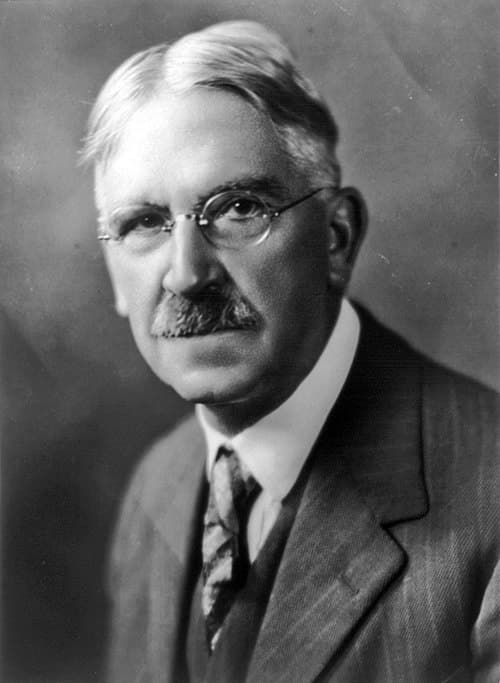
John Dewey’s
PERSON
Name reference in documents
John V. Adams
PERSON
Name reference in documents
JB
Jossey Bass
PERSON
Name reference in documents

Kaplan
PERSON
Surname reference in Epstein documents

Kate Smart
PERSON
Name reference in documents
Lynn Carter
PERSON
Name reference in documents
Paul Ramsden
PERSON
British-Australian education theorist (1948-2017)
PE
Petronius
PERSON
Name reference in documents
Plato
PERSON
4th-century BCE Greek philosopher
Richard Neustadt
PERSON
American political scientist (1919–2003)
RJ
Robert Jamieson
PERSON
Name reference in documents
Roger Fisher
PERSON
American guitarist
SE
Selfworth
PERSON
Name reference in documents

Socratically
PERSON
Name reference in documents
ZG
Zelda F. Gamson
PERSON
American sociologist
Aerospace Engineering
ORGANIZATION
Organization referenced in documents
American High School
ORGANIZATION
Organization referenced in documents
Andersen Consulting
ORGANIZATION
Organization referenced in documents
Automotive Engineering
ORGANIZATION
Organization referenced in documents

Carnegie
ORGANIZATION
Carnegie Corporation of New York, philanthropic fund

Carnegie Mellon
ORGANIZATION
Private research university in Pittsburgh, Pennsylvania, United States

Carnegie Mellon University
ORGANIZATION
Private research university in Pittsburgh, Pennsylvania, United States
Childcare
ORGANIZATION
Organization referenced in documents
Computer Networking
ORGANIZATION
Organization referenced in documents
Computer Science, Education
ORGANIZATION
Organization referenced in documents
Decision Makers
ORGANIZATION
Organization referenced in documents
Engines for Education
ORGANIZATION
Organization referenced in documents
Ewing Kauffman Foundation
ORGANIZATION
Organization referenced in documents
Hofstra
ORGANIZATION • 2 mentions
Organization referenced in documents

Homeland Security
ORGANIZATION
U.S. Department of Homeland Security
Institute for the
ORGANIZATION
Organization referenced in documents
Learning Sciences
ORGANIZATION
Organization referenced in documents

Northwestern
ORGANIZATION • 2 mentions
Organization referenced in documents
Northwestern University
ORGANIZATION
Private university in Evanston, Illinois, U.S.

Routledge
ORGANIZATION
British multinational academic publisher founded in 1836
Science Society
ORGANIZATION
Organization referenced in documents
Socratic Arts
ORGANIZATION
Educational technology company
the Best Universities Inadvertently Ruin Our Schools 203
ORGANIZATION
Organization referenced in documents
the Economics Department
ORGANIZATION
Organization referenced in documents
The Food Industry
ORGANIZATION
Organization referenced in documents
The Future of Decision Making
ORGANIZATION
Organization referenced in documents
The Institute for the Learning Sciences
ORGANIZATION
Organization referenced in documents
the Journal of Cognitive Science
ORGANIZATION
Organization referenced in documents
the Math Department
ORGANIZATION
Organization referenced in documents
the Princeton Math Department
ORGANIZATION
Organization referenced in documents
the University of Illinois
ORGANIZATION
Organization referenced in documents
the University of Paris VII
ORGANIZATION
Organization referenced in documents

the University of Washington
ORGANIZATION
Organization referenced in documents
Trump University
ORGANIZATION
Former for-profit US education company
U.S. News
ORGANIZATION
Organization referenced in documents
Undergraduate Education
ORGANIZATION
Organization referenced in documents
World Report
ORGANIZATION
Organization referenced in documents
Ancient Greece
LOCATION
Location referenced in documents
Champaign
LOCATION
City in Champaign County, Illinois, United States
Dayton
LOCATION
City and county seat of Montgomery County, Ohio, United States

Middle East
LOCATION
Geopolitical region encompassing Egypt and most of Western Asia, including Iran
Pittsburgh
LOCATION
City and county seat in Allegheny County, Pennsylvania, United States

Seattle
LOCATION
City in and county seat of King County, State of Washington, United States

United Kingdom
LOCATION
Country in north-west Europe

West Coast
LOCATION
Directional region of the United States
Statistics
Pages:40
Entities:73
Avg. OCR:95.2%
Sponsored