HOUSE_OVERSIGHT_023731_sub_001 - HOUSE_OVERSIGHT_023830
Document Information
Bates Range
HOUSE_OVERSIGHT_023731_sub_001 - HOUSE_OVERSIGHT_023830
Pages
100
Source
House Oversight Committee
Original Filename
Schank 1st.pdf
Document Content
Page 1 - HOUSE_OVERSIGHT_023731
Teaching Minds How Cognitive Science Can Save Our Schools HOUSE_OVERSIGHT_023731
Page 2 - HOUSE_OVERSIGHT_023732
HOUSE_OVERSIGHT_023732
Page 3 - HOUSE_OVERSIGHT_023733
Teaching Minds How Cognitive Science Can Save Our Schools RocerR SCHANK [PRESS Teachers College, Columbia University New York and London HOUSE_OVERSIGHT_023733
Sponsored
Page 4 - HOUSE_OVERSIGHT_023734
Published by Teachers College Press, 1234 Amsterdam Avenue, New York, NY 10027 Copyright @ 2011 by Roger Schank. All rights reserved. No part of this publication may be reproduced or transmitted in any form or by any means, electronic or mechanical, including photocopy, or any information storage and retrieval system, without permission from the publisher. Library of Congress Cataloging-in-Publication Data ISBN 978-0-8077-5266-1 (paper) ISBN 978-0-8077-5267-8 (hardcover) Printed on acid-free paper Manufactured in the United States of America 18 17 16 15 14 13 12 #121 8 7 65 43 2 1 HOUSE_OVERSIGHT_023734
Page 5 - HOUSE_OVERSIGHT_023735
For Milo (who can now read this) and for Max, Mira, and Jonah HOUSE_OVERSIGHT_023735
Page 6 - HOUSE_OVERSIGHT_023736
HOUSE_OVERSIGHT_023736
Sponsored
Page 7 - HOUSE_OVERSIGHT_023737
MZ Contents Preface . Cognitive Process-Based Education . Teaching Kids to Walk and Talk . What Can’t You Teach? . Twelve Cognitive Processes That Underlie Learning . Real-Life Learning Projects Considered . A Socratic Dialogue . Knowledge-Based Education vs. Process-Based Education . New Curricula for a New Way of Teaching . How to Teach the Twelve Cognitive Processes That Underlie Learning 10.Defining Intelligence 11.Restructuring the University vit HOUSE_OVERSIGHT_023737
Page 8 - HOUSE_OVERSIGHT_023738
12.How Not to Teach 13.How the Best Universities Inadvertently Ruin Our Schools 14.What Can We Do About It? Notes About the Author HOUSE_OVERSIGHT_023738
Page 9 - HOUSE_OVERSIGHT_023739
« Preface My father always told me that I would be a teacher. He didn’t mean it in a nice way. My father talked in riddles. As the only child in the house, I had plenty of time and opportunity to figure out what he was really saying. This was it: I am afraid that like me, the best you will be able to do in life is to be a civil service worker. He was also saying: If he had realized he was going to be a civil service worker, at least he could have been a teacher, which he might have enjoyed. He wasn’t really talking about me at all. I never had any intention of being a teacher. I didn’t particularly like school and later, when I became a professor, the part of the job I disliked the most was the teaching. One might wonder how I wound up being a professor if I disliked teaching, and one might wonder why Tam writing a book about teaching if I dislike teaching. One also might wonder whether I still dislike teaching. Yes. And no. It depends on what one means by teaching, which is, after all, what this book is about. The other day my 3-year-old grandson Milo told me he was going to teach me how to throw rocks. It seemed an odd idea. What could he mean by this? To Milo, “teach” means to tell someone what to do and how to do it and then have the person do it too. Teach is part of tell plus imitate for Milo. Milo is 3. It is not too surprising that this is what teach means to him. It is a little surprising that he thinks he should be his grandfather’s teacher, but that is another issue. But it is really no shock that Milo thinks this is what teach means. It is what nearly everyone thinks teach means. The commonly accepted usage of teach is tell and then have the person who was told, do what he was told. This certainly is not what teach ought to mean, or more important, is not what good teaching is. And, every good teacher knows this. The problem is that the system that employs teachers doesn’t know it and more or less insists that Milo’s definition be the one that is followed. Actually, Iam being too generous here. Milo’s view, namely, that after he tells me, I will do what he has said, is a better definition of i HOUSE_OVERSIGHT_023739
Sponsored
Page 10 - HOUSE_OVERSIGHT_023740
x Preface teaching than the one actually employed commonly today. Milo at least thinks that the end result will be the student doing something that the teacher did. In school, teach usually means helping the stu- dent to know something that the teacher told him. Milo doesn’t know about that definition of teaching yet since he hasn’t been to school, but, unfortunately, he soon will. I have been thinking about teaching for more than 50 years. First I thought about it when my father said that was what I was going to be. Then I thought about it as I watched my teachers teach me and, no less important, watched my father teach me. My father eventually retired from his civil service job and became a junior high school teacher in Harlem. He loved his new job and, I have to assume, became a good teacher. I say it that way because he was certainly not a good teacher for me, at least not when he thought he was trying to teach me. I remember him trying to teach me algebra and it making no sense to me whatever. I remember him teaching me sports and I mostly think of him as being totally frustrated with my inability to perform as well as he had hoped. (Being a jock was a big thing to my father.) I did fine in algebra without his help and, in fact, became a math major in college. But, as I look back at it, my father was my first and best teacher. Why do I say this after all the bad things I have just said? Because my father was at his best when he wasn’t teaching but was just saying what was on his mind and arguing. He often talked about history because he liked history. And when he talked about history and I asked questions, he became a good Socratic teacher. He forced me to think and question in our discussions. The conversations were often very heated but also were a highlight of my intellectual life at that time. My father didn’t teach me anything except how to think. That’s better than algebra, actually. For this I am grateful. So, I thought about teaching then and I thought about it again when I went to college. As part of my father’s conversations with me about life, he talked a great deal about his own experiences. His mother sent him to New York City to live with his aunt in Brooklyn and to go to college. He was 15 and had, until that time, spent his entire life on a farm/hotel run by his parents in upstate New York. He was unprepared for the city, had no money, missed his family, and had no idea why he wanted to go to college at all. Did I mention that he was 15? He had graduated first in his class (a class of 16, I HOUSE_OVERSIGHT_023740
Page 11 - HOUSE_OVERSIGHT_023741
Preface xi think) and had skipped a few grades on the way. Suddenly he found himself at New York University, which in those days was located in the Bronx. This is what he remembered most about college in 1923: Apart from the poverty stories, the “how hard he had to work to support himself” stories, the stories about watching the Yankees from the el- evated train and wishing he could go to a game, he remembered that teachers lectured, that you had to memorize what they told you and then tell it back to them on a test. He thought college was stupid, but he assured me (in 1960) that college surely had changed by now and that teachers wouldn't still be doing this. Oh yeah? In 1962, when I entered college, they were doing exactly that. And, in 2000, when I retired from 32 years of professoring, not that much had changed. So I was thinking about teaching before I got to college and I was thinking about it while I was a professor and I am thinking about it now that I have, for the most part, finished teaching. To make sure I have been thinking about it correctly, I asked former Ph.D. students of mine, (now tenured professors mostly and some industry executives) what they had learned from me while they were spending 4—7 years studying with me. I thought their answers might help me think about teaching in a new way. I sent an e-mail to maybe 20 former students whose e-mail addresses I happened to have, and most responded. Here are some excerpts. 1. [remember quite specifically a homework presentation I made in your class. When I presented it in class, I was a junior in college, and all the other students in that class were grad students. When I was done you smiled at everyone (a rare event) and said, “Anyone care to follow that act?” Your clearly heartfelt endorsement of my little research product was a key moment in my coming to trust my own ideas. I just submitted a $16.7 million proposal to NIH that would create the first all- computational genome center. The kind of chutzpah embodied in that proposal is one consequence of my experience with you. 2. The way you assigned me to a project—you sent me to each existing project for 2 weeks until I hit on a project with a good fit (I was enthusiastic and coherent talking about it). I used this technique when I was assigning people at Accenture. HOUSE_OVERSIGHT_023741
Page 12 - HOUSE_OVERSIGHT_023742
xi Preface 3. You taught me to teach by telling students stories that are meaningful to you. I think to be a real teacher you have to let yourself be vulnerable. So the students can see that you are a human with feelings and fears and goals. And then being able to say to the students: This is the way I do it; it fits who I am; it helps me be successful; and don’t let anyone tell you that you can’t do something. 4. You taught me that not everyone will like you no matter what you do and no matter how hard you try. I came back from a Deloitte course evaluation, and the deans just hated me. Instead of being upset with me, you assured me that you have to just say what you believe, and some people won’t like you, and oh well. 5. You taught me to start by collecting data. I recall watching most of your papers start by collection of data. I recall watching your criticisms of work that was just abstraction on abstraction, with no data at its roots. 6. You once told me to imagine that my mother was my audience—if I could explain it to my mother, I could explain it to anyone. Incredibly, this seems to work for every audience out there. So I’ve passed that tip along to my students and it seems to work for them too. 7. [remember that you used to tell us we need to be excited to get up and go to work in the morning, that that was the most important thing. For some people, it’s because of the people you will be with. For some, it is because of the passion about whatever it is. But, in general, I still give people that advice (and it is advice I’ve also been giving my own kids). You have to love what you are doing. This is just a sample but it reflects what these former students, now all in their 40s and 50s, remember about what I taught them. Hadn’t they learned any facts from me? Didn’t I teach them some real stuff? Some said in passing that they had learned the actual content of the subjects I taught as well, but that that wasn’t as important to them as the things they chose to write about. Why not? HOUSE_OVERSIGHT_023742
Sponsored
Page 13 - HOUSE_OVERSIGHT_023743
Preface Xhit There are two important answers to this question and those an- swers are what this book is really about. My father offered these same answers to me, not explicitly by any means, when I thought about the good and bad of having him as my teacher. When he tried to teach me facts, [learned nothing much. When he engaged my mind, I learned a lot. As a professor I never forgot this lesson. I rarely tried to teach facts, upsetting many a student along the way. I just argued with them, or encouraged them. I never told them much, except maybe some good stories. So here are the answers: The first is: Teaching isn’t what outsiders to the profession think it is. The profession I am referring to here is, of course, the teaching profession. The second is: Learning isn’t what outsiders to the profession think it is. In this case, the profession I am referring to is not teaching at all. Let’s start with teaching. A professor friend of mine once asked her class what they thought a professor’s biggest fear was while teaching a class. They all agreed it was not knowing the answer to a question a student might ask. When she told this story to a group of professors, they all laughed out loud. Why am I telling this story? Because a student’s view of teach- ing varies greatly from a teacher’s view. No teacher worries about not knowing the right answer to something a student will ask. You can always fake it (say—What do you think? or, Class, can you help here?) if you think it is important, but answers don’t matter very much. Teach- ers are not supposed to be encyclopedias. They are supposed to be something else. The question is: What? My students’ responses above give a hint. Teachers are supposed to be people who help students find their interests in life, think about HOUSE_OVERSIGHT_023743
Page 14 - HOUSE_OVERSIGHT_023744
xiv Preface how to make decisions, understand how to approach a problem, or otherwise live sensibly. Teachers are never shocked to be asked to pro- vide personal or professional advice to a student having a problem— any problem. If one takes one’s job seriously, teaching means being available to help. But this important advisory job is confused by lesson plans, and class hours, and lectures, none of which matter very much. Why do I say that these things don’t matter very much? This is the essence of what this book is about—the move from content-based in- struction to cognitive-based learning, assisted by good teaching. This means we will have to define this “new” kind of learning (it’s not re- ally new, of course, just new to schools) and the “new” kind of teach- ing that is a natural consequence of using this new learning method. Most teachers understand and appreciate that delivering the re- quired material is not their real job, at least it is not the reason they signed on in the first place. The employers of teachers, on the other hand—administrators, governments, department heads, and so on— expect certain material to be covered. Exciting students is not on their worry list. This is a big problem for teachers and for students, and one that we will address here. But my more serious concern is our conception of learning, not teaching. Teaching follows one’s conception of learning so getting learning right is of prime importance. When I said earlier that outsid- ers to the learning profession wouldn’t get the real point, I was being ironic. There is no learning profession. Why not? In 1989, I moved from Yale to Northwestern to establish a new institute, funded by Andersen Consulting, devoted to issues of chang- ing training and education by the use of new technologies. I needed a name for the institute and came up with The Institute for the Learning Sciences. I made up the term learning sciences. There was no such field in academia. Most people thought I meant we were planning to work on how people learned science. The only academic fields that “stud- ied” learning were psychology and education. Psychology, being an experimental field, allows faculty to work only on experiments about learning that provide data in a controlled environment. Education faculty study how schools work and very rarely think about learning outside of the school context or in a way different from the paradigm already extant in schools. I wanted to create a learning profession. In 1989, there certainly didn’t seem to be one. HOUSE_OVERSIGHT_023744
Page 15 - HOUSE_OVERSIGHT_023745
Preface xY Today this is less true. Cognitive science, a field I also had a big part in creating, has become more important in the academic world. Training, and e-learning, the first new field to come about as a result of our work at my new institute (for better or for worse, I am not too fond of most e-learning work) have become more important to think about within the academic context, in part because online courses are seen as potential revenue producers. So, while there is still no learning profession per se, there is much interest in what learning is about. This book is meant to address the issue of what learning really is, in or out of school, and to answer the question: How does learning really work? The questions that follow from the answer to that question are: e What kinds of learning situations occur naturally? e How can we focus education (and training and e-learning) on those types of situations in a new paradigm? e What would teaching look like in this new paradigm? e If what we know about how learning works is antithetical to how school works, then what can we do? Answering these questions is one goal of this book. Another goal of this book is to think seriously about what it means to teach. Typically, we look at teaching in precisely the way that our system forces us to look at it. There are subjects and there are experts, and experts talk about their subjects to students who listen to what they have to say. This idea is not only archaic—it is wrong. In the his- tory of humankind, teaching could never have looked this way. Until recently, teaching always meant apprenticeship. We are set up to be apprentices, to learn by doing with help from a mentor. We have done this since the beginning of time. When learning became academic in nature, when students were expected to become scholars, all this changed—and it didn’t change for the better. Teaching started to mean talking, and talking is a terrible way to teach. People aren’t really that good at listening, after all. Small children don’t listen to their parents. They may copy their parents. They can be corrected by their parents. They may be impeded from doing something by their parents. But listen? Not really. We listen in order to be entertained, not in order to learn. HOUSE_OVERSIGHT_023745
Sponsored
Page 16 - HOUSE_OVERSIGHT_023746
xvi Preface This lack of understanding about what learning really is like, and what teaching must be like in order to be useful, has caused us to set up school in a way that really does not work very well. When students complain about school, when politicians say school isn’t working, we understand that there is a problem. But we don’t understand what the problem is. We think we can fix schools by making them more friendly, or safer, or paying teachers better, or having students have more say, or obsessing about test scores, but none of this is the case. The problem with schools lies in our conception of the role of school. We see school as a place to study academics, to become a scholar, when in fact very few students actually want to become schol- ars or study academics. AS a society we have gotten caught up in a conception of school from the late 1800s that has failed to change in any significant way, despite the fact that universal education has made the system un- stable. Universities dominate the discussion, and everyone listens to what academics have to say because they don’t see the alternative or know whom else to listen to. But, if we understand how learning ac- tually works, and how teaching actually should work, the alternative becomes much clearer. It is establishing that clarity that is my goal in this book. HOUSE_OVERSIGHT_023746
Page 17 - HOUSE_OVERSIGHT_023747
CHAPTER 1 MZ i CG: i Cognitive Process-Based Education Education is an admirable thing, but it is well to remember from time to time that nothing that is worth knowing can be taught. —Oscar Wilde Learning begins with a goal. However, when we think about education and school, we often forget this. Someone, somewhere, decides that a student must learn about Napoleon, but fails to ask how such learning might conform to a goal that the student consciously holds. We don’t forget this when we try to teach a child to walk or talk, because we know that the child does want to learn to do these things. When we teach a child to hit a baseball, we usually determine beforehand that the child wants to learn to do this. But, we forget this simple idea of goal-directed learning as soon as we design curricula for schools. Who cares if the child wants to learn long division? Make the child learn it. It is very important. Full speed ahead! Somewhere along the way, many students get lost. They may get lost in high school, or in college, or in job training. But somewhere they learn to shut off their natural learning instincts, the ones that drive them to improve because they really want to accomplish some- thing. Instead they try hard to do what they were told to do—they study, they pass tests, and eventually their love of learning is gone. The feedback that they previously have gotten from accomplishing a real goal, one that they truly had held, has been replaced by pleasing the teacher, or getting a good grade, or progress in their goal of getting into a “good college.” Designers (and teachers) of courses must contend with this truth: The students that you have may not want to learn what it is that you want to teach. What to do? HOUSE_OVERSIGHT_023747
Page 18 - HOUSE_OVERSIGHT_023748
2 Teaching Minds First, we must establish whether students can learn whatever it is that you want to teach. I always wanted to teach my daughter to throw a ball properly. She threw a football astonishingly well at the age of 6. But, she never got it about how to throw a softball. I don’t know why. She just couldn’t learn to do it right. She can’t do math either. Believe me, I tried. Second, we must determine whether what you want to teach can be taught. Not everything can be taught. It is hard to learn to be a nice guy if you are inclined to be nasty. You can learn to be nicer, or at least to fake it, perhaps, but certain things are hard to learn after a certain age. You can teach a 2-year-old to be nice—a 22-year-old is another story. Third, we must figure out what method of learning actually would teach what we want to teach. This is an important question that is made more important, in part, by the fact that the learning meth- ods available in schools tend to be of a certain type. The things that schools desire to teach are of a type that conforms to the available methodologies for teaching. Content that lies outside the range of the currently available methodologies typically is not considered some- thing worth teaching. Fourth, we must decide whether a selected learning methodology actually will work, given the time constraints and abilities of the stu- dents, and other constraints that actually exist. This is, of course, the real problem in education. It is easy to say that students would learn better if they had real experiences to draw upon. This isn’t that hard to figure out. What is hard is implementing this idea within the time con- straints of the school day and the other demands of the school year. Fifth, we must determine a way that will make what you want to teach fit more closely with real-life goals that your students actually may have. By real-life goals I mean things like walking and talking (and later driving). Why is it that teachers, or more accurately school systems and governments, want to teach things that are not in ac- cord with a student’s real interest? While we argue about how best to teach algebra, no one ever asks what to do if a student doesn’t want to learn algebra. The question is so weird; the possibility that you could skip algebra because it doesn’t interest you is so remote that we don’t even think about this in any way. What is the real cause of this prob- lem? Why can’t we just let students learn what interests them? Are the people who run schools simply out of touch with how learning really works or how actual students behave when faced with something they HOUSE_OVERSIGHT_023748
Sponsored
Page 19 - HOUSE_OVERSIGHT_023749
Cognitive Process-Based Education 3 don’t want to learn, or is something else more complex going on? I will summarize these five issues as follows: ABILITY POSSIBILITY METHODOLOGY CONSTRAINTS GOAL ALIGNMENT School is subject-based and, further, those subjects are predefined and agreed upon by those in charge. Without giving a history of how this state of affairs came to be,' or why it is an issue, it is first necessary to note that it is the case. I say this because when we were students in school, we accepted the fact that school was the way it was, and we assumed that it was the way it was supposed to be. We may not think each subject we learn is valuable or interesting, and perhaps we long to learn different subjects, but never do we hear people suggest that there shouldn't be subjects in school at all. This is a very difficult idea to swallow. There have always been subjects. What else would there be? What would it mean to not have subjects? Answering this question is the aim of this book. We need to under- stand what goes on in schools and what might be preferable. The issue really is not schooling at all. The real issue is how learning actually takes place in the human mind. Ask a student how he is doing in school and he will tell you the subjects he likes. I like English but Iam bad at math, he might say. This is such a normal sentiment among students that we never think about how weird a sentiment it really is. We don’t ask: How are you doing at life? We could ask that of a teenager and she might say: I am good at dating but bad at driving. But, actually, you would never hear teenagers say something like that. This is weird because, in general, dating and driving are much more important subjects in a teenager’s world than English and math. But they don’t talk about whether they are good at it or bad at it in the same way. They continue to practice and get better at those things because they care about them. Saying, I am bad at math, means, in essence, ... and I don’t care and have stopped trying because I don’t see the point. Saying, I am good at English, typically means, I am getting a good grade in English. This state of affairs defines the main problem in education: HOUSE_OVERSIGHT_023749
Page 20 - HOUSE_OVERSIGHT_023750
q Teaching Minds There are subjects that are school subjects and there are subjects that are life subjects and teenagers can tell the difference. They work harder at the life subjects. And, what is the difference between these two kinds of subjects? Goals. It is as simple as that. Instead of simply saying what is wrong with schools and what teenagers are really like in school, I want to take a different tack. Some teenagers wake up in the morning wanting to learn history or algebra but they are a very small minority of the school population. There is no minority, however, when it comes to dating or driving for teenagers. They all want to do these things. So the question I want to ask is: Are there other things that all teenagers want to do and are those things connected in some way with learning? Or, to put this another way, if school had been designed around something other than subjects, what would it have been designed around? Driving and dating, which we know are winners in a teenager’s world, could be seen as subjects, or they could be seen as instances of something else, and that something else might be something important to learn. Students everywhere might want to learn whatever that is and they would work hard to learn it. If we can turn the question around in that way, maybe we can design better learning situations for everybody. So, the question is: What are driving and dating instances of, with respect to learning? Or, to address this from the cognitive science point of view: What is it that students are doing when they learn to drive and date that they might be getting better at while doing those things? Can we view whatever it is they are getting better at as an example of the kinds of things we should want to teach and that students should want to learn? Answering these questions will allow us to HOUSE_OVERSIGHT_023750
Page 21 - HOUSE_OVERSIGHT_023751
Cognitive Process-Based Education 5 look at education in a new way. We need to think about how people actually learn, regardless of the subject, in order to address them. Let’s think about dating, then. I was never any good at it as a kid. I know how the non-cool guys feel. But, later on, much later on, I got very good at it. So, I must have learned something. What? What was I bad at as a kid? Meeting girls, for one thing. Other kids could do it easily. I always needed to be fixed up. Talking to girls, for another. I hardly knew any girls. I went to an all-boys high school. I was 16 when I went to college and the other freshmen were 18, so that didn’t help either. In other words, I had no confidence. But mostly, I had no idea what to say to a girl. What did they talk about? And, one more thing. I really didn’t get the point. I didn’t know why one wanted to go out with girls anyway. I mean I eventually got the idea, at least I think I did. Why am I saying it this way? I am trying to get an insight into the learning process and I am a fine example. I didn’t know how to do it and then I did. I didn’t get the point and then I did, sort of. So I must have learned something between the ages of 16 and 60. What? Here are some things I learned: e Human relationships are important, but they aren’t easy to establish or maintain. They require work. e The work involves, among other things, learning how to listen and respond to the needs of another human being. It involves subjugating one’s own interests from time to time for the interests of another. e Girls, and later women, feel good. Being with someone who loves you feels good. Learning to love feels good. More than feeling good, these things are critical for staying alive. This is not so obvious when you are surrounded by love from your family. But eventually you are alone, and alone is not so much fun. As this is not a chapter on love, I will stop there. Suffice it to say that I learned how to meet girls, how to gain their interest, and how to form relationships with them. I also learned why I wanted to do that. Now let’s see what we have learned about learning from my little diversion into teenage angst. HOUSE_OVERSIGHT_023751
Sponsored
Page 22 - HOUSE_OVERSIGHT_023752
& Teaching Minds We have learned that learning about how other people behave is very important. We have learned that learning about one’s own emotions and feelings is very important. We have learned that building confidence is very important. We have learned that learning to listen is very important. We also have learned that learning how to express oneself is very important. Now let’s go back to discussing learning. Why is it that teenagers are more interested in thinking about dat- ing than they are in thinking about algebra? Why is it that they don’t rate themselves on their success in dating in the same way as they do when they are discussing how they are doing in science? What do teenagers know about learning that their school doesn’t know? This is it: Teenagers know that the issues I have mentioned above will be important for them for the rest of their lives in a large variety of arenas, not just dating. No matter what they do in life they will need to form relationships, assess their own abilities, gain confidence through practice, learn to listen, learn to love, try things out and see how well they work, and learn why they do what they do. To put this another way: Dating is way more important than algebra and every teenager knows it. Dating is much more important not because teenagers have raging hormones and they crave sex, as this phenomenon often is described. It is important because what they learn while dating serves them in many areas in life and relates strongly to who they will be and how well their lives will go. Algebra relates to none of this and they know that too. So, let me ask a simple question: If we must have subjects in school, why wouldn’t dating be rated as way more important than mathematics? HOUSE_OVERSIGHT_023752
Page 23 - HOUSE_OVERSIGHT_023753
Cognitive Process-Based Education 7 The answer to this is simple enough. School was not designed to help kids live better lives. That was never the point. But shouldn’t it be?” From a cognitive growth point of view, school wasn’t even de- signed to teach us things that relate to learning per se. Scholars designed the subject matter of the current school system. You hear sportscasters describe football players as scholar-athletes. Real- ly? Scholars? Why would that be what we are seeking to create? There are only so many jobs for scholars, and while scholarship is very nice, it ought not be the goal we seek in school in a system of universal education. Yes, but dating? Is that the subject I am proposing? Really? Let me explain the real issue here. Take a look at the items I mentioned above. We have learned that learning about how other people behave is very important. We have learned that learning about one’s own emotions and feelings is very important. We have learned that building confidence is very important. We have learned that learning to listen is very important. We also have learned that learning how to express oneself is very important. Now, I will transform these slightly: Students need to learn about how other people behave and why, and they need to learn how to interact with different kinds of people. Students need to learn about their own emotions and feelings and how to deal with them. Students need to learn how to rely on themselves and feel confident in their own abilities. Students need to learn how to listen to others and really hear what they are saying. Students need to learn how to express themselves effectively. Now this list doesn’t seem so crazy, does it? In fact, most parents will tell you that they try very hard to teach all these things to their chil- dren. So one argument might be that the school doesn’t have to do it, since parents do it. HOUSE_OVERSIGHT_023753
Page 24 - HOUSE_OVERSIGHT_023754
a Teaching Minds Another argument might be that if the schools worked on these issues, they would have students memorize the 12 principles for build- ing self-confidence and learn to express themselves by analyzing clas- sics in world literature. Here is the key point: These issues, the ones that could be learned from dating, transcend all aspects of our lives. And, more important, students know this. I started with the idea that learning begins with a goal. The points I listed above are goals that teenagers actually have. They would not have to be talked into those goals. Moreover those goals are, as all students know anyway, way more important than algebra. They aren’t interested in becoming scholars. Now let’s consider the cognitive science behind this. Everything we do as human beings is goal-directed. We go for a walk for a reason, we shower for a reason, we get a job for a reason, we talk to people we meet for a reason. We pursue goals as soon as we are born. We try hard to learn to walk, talk, get along with our family, get our needs satisfied, and find out what we like and what we don’t like. We do this from birth. If school related to the goals that children actually had, that they were working on at the very moment that they entered school, school would seem like a natural and helpful experience. Stu- dents wouldn’t stress about satisfying their teachers any more than they stressed about satisfying their parents when they were learning to walk and talk. Yes, they want to please their parents, but that is not exactly the same thing. People know what their goals are and they know when something they are being offered, a parasailing lesson or a pomegranate, for ex- ample, doesn’t fit with their goals. They can be convinced to try out a new activity that they believe will not satisfy any of their goals, but for the most part it is difficult to convince them that weird things that were not on their goal list actually should be on the list. We say things to students like, “You will need this later.” But this is usually a bold- faced lie. You don’t need algebra later. Making up nonsense convinces nobody. There is a more important issue here. Later on in this book I will detail the 12 kinds of learning that make up what it means to learn. If HOUSE_OVERSIGHT_023754
Sponsored
Page 25 - HOUSE_OVERSIGHT_023755
Cognitive Process-Based Education 9 you get good at learning these things, you get good at what life has to offer. The list above is a partial list of the group of learning processes that I detail in Chapter 4. It is really quite important. I have used dat- ing as a simple way of explaining it because no one has to explain why that matters to a teenager. Teenagers know that they have to learn the processes that I discuss in Chapter 4. As things are now, these impor- tant issues are not considered significant enough to deal with seriously in school. World history is always considered more important. But why should that be the choice? Earlier, I mentioned that students want to learn how to drive as well as how to date. This is a pretty universal goal that teenagers have so we should ask of it as well whether it is important and what it might be an instance of that is inherently significant in real life. On the surface, driving seems a skill that is an important part of daily life. So, one is led to ask why driving isn’t a school subject? The answer is that it is. Driver’s education has been taught in schools for many years. Not every school offers it, but many do. So what is the problem? It is just a useful skill, not a scholarly subject, so surely I am not suggesting that it is more important than physics. That is, of course, exactly what I am suggesting. In our test-driven society, when driver’s ed is taught, it is taught with a clear goal and a clear notion of success. When a student has passed the tests and gotten her driver’s license, everyone is satisfied. Well, not everyone. I was once called in on a consulting assign- ment for a university hospital that was working on a study to prevent teenage car accidents. The study was funded by an insurance company that would have been happy to pay out less in damages and, presum- ably, also thought fewer dead kids would be a generally good thing. What is the problem? Students may have their licenses but they don’t know much about driving and responsibility. It wouldn’t be a shock to anyone to know that kids drink and drive, text message and drive, and generally yell and scream and goof around while driving. They often die from this behavior. Could we teach them not to do that? The answer always seems to be to put up posters that say don’t drink and drive and to make them watch scary movies about car accidents. The school system strikes again. If we tell them, then they will do it, never seems to work, but we keep trying. HOUSE_OVERSIGHT_023755
Page 26 - HOUSE_OVERSIGHT_023756
10 Teaching Minds I often have used the Department of Motor Vehicles (the DMV) as an example of the best there is in testing. They have two tests. Dumb multiple choice questions that make no sense and a real test that tests to see whether you can drive. Schools typically don’t have the real test at all, one that tests to see whether you actually can do something, so the DMV at least is smarter than the school system. But the real issue is something else entirely. Driving is an instance of a piece of very complex behavior that exemplifies one of the ways in which we learn. Perhaps more important, driving entails a great deal of other things, which could be learned and should be learned. A simple example of this is car mechanics. Once upon a time schools taught kids to fix cars as well as to drive them. Perhaps they still do. But vocational subjects like that have been relegated to the back burner of education so that more testable subjects can be taught. Also, cars have gotten more difficult to fix. This is too bad, because if car mechanics were required instead of physics, students actually might learn science. What do I mean by this? When we hear an outcry about the nation’s need to make children learn science, no one ever asks why. The standard answer, if this is ever asked, is that science is important in tomorrow’s world or some such nonsense. Push harder and you might get some remarks along the lines that soon all the scientists will be Indian and Chinese, which may be the real fear of those who push science in the United States. To address this question properly, one has to ask what exactly is meant by “science.” Imagine that you are a student working on fixing a car in a car mechanics class. As I write this Iam imagining a scene from the musi- cal Grease, which was set in the 1950s when there actually were cars to work on in school. I never got to work on a car because I went to a science high school where such a thing would be looked down upon. So when I graduated from high school and drove to college and my car broke down, I hadn’t the slightest idea what to do. I wish I could tell you that at least I understood the physics of the engine but I didn’t. I just knew F = MA and other stuff that wasn’t going to help me fix my engine. Now let me ask you, how is fixing one’s car engine like fixing one’s air conditioning or plumbing? The answer to this question has HOUSE_OVERSIGHT_023756
Page 27 - HOUSE_OVERSIGHT_023757
Cognitive Process-Based Education 17 embodied within it what it means to do science. When science means learning facts about science, we are talking about useless information that is readily forgotten after the test. I have no idea why anyone learns to balance chemical equations or apply physics formulas or learns about biology classifications in high school. None of this is of any use to most adults. (It is easy to test, however.) When the stuff that is being taught does not relate to the inher- ent goals of the students, it will be forgotten. You can count on it. Why this stuff is taught is simply that it derives from a conception of science prevalent in the 1890s that has not been modified since. It is defended by people as a way to produce more scientists, which makes no sense since it probably deters more students from entering science than it encourages. Scientific reasoning, on the other hand, is worth teaching. Why? Because car mechanics, plumbers, doctors, and crime investigators, to name four random professions, all do scientific reasoning on a daily basis. As a society we anoint only doctors with the glory of doing actual scientific reasoning. The other professions get less glamorous interpretations. But they are all doing the same stuff. This is what they are doing: They are taking a look at evidence and trying to determine the probable causes of the conditions that they have found. To do this one must know what causes what in the real world, which is science; what counts as evidence of known conditions, which is sci- ence; and previous cases that are similar and that any good scientist must know. So while we may not think of a plumber as doing scien- tific reasoning, that is exactly what he is doing. Science is about creating hypotheses and gathering evidence to support or refute those hypotheses. Children are natural scientists. They often try stuff out—skipping rocks on the water or dropping stones from the roof or lighting things on fire—to see what happens. But there is more to science than trying stuff out. One must seek expla- nations and make sure those explanations are correct. Knowing what constitutes a correct explanation is really the essence of what scientific knowledge is about. But notice that there are correct explanations for HOUSE_OVERSIGHT_023757
Sponsored
Page 28 - HOUSE_OVERSIGHT_023758
12 Teaching Minds hypotheses in plumbing as well as in medicine and that these expla- nations exist for repairing a faulty engine and for understanding who committed a crime. It is all scientific reasoning. The difference between plumbing and medicine is in the complex- ity of the science. Not a lot of invention goes on in plumbing and there aren’t all that many explanations to choose from. The degree of difficulty in understanding what is going on and why is what sepa- rates those fields and makes one science and one not. But the basic thought processes are the same. This is important to notice because all these areas of inquiry are what we might call diagnostic. So, and this is the important part, the real issue from a cognitive science point of view is not in teaching science per se, but in teaching scientific activities, one of which is diagnosis. And, since diagnosis is a similar process no matter what you are diagnosing, it makes sense that all through school, diagnosis would be a subject, and not physics or literature. The things that children are asked to diagnose might start with things little kids like, like finding out what is wrong with their pets or their toys, and then move on to things bigger kids like, like cars and crime, and then move on to large issues, like why a business has failed or why our foreign policy doesn’t work. Diagnosis matters a great deal in our lives, yet it is not a subject in school. This is not surprising because the origins of the school subject areas, as I have said, are scholarly. But if we want to teach children to do things that matter and we want to retain their interest because they know intrinsically that these things do matter, then we must have them practice diagnosis all through their school lives, in a variety of venues that correlate with their interests. They don’t all have to diag- nose the same stuff. It is the diagnostic process itself that matters, not what is diagnosed. I have been using the word subject for an idea like diagnosis but it is not a subject and should not be seen that way. I have been using the word only to contrast it to existing subjects in school. Diagnosis is a fundamental cognitive activity. Cavemen did diagnosis. They may not have done it well, but they did it well enough to continue the species. The diagnostic process is as old as people. Knowing why, being able to prove a hypothesis, is a fundamental cognitive process. School needs to be organized around fundamental cognitive ac- tivities. It would be easy to demean what I have said here by saying HOUSE_OVERSIGHT_023758
Page 29 - HOUSE_OVERSIGHT_023759
Cognitive Process-Based Education 13 I want to teach kids to date and drive better. What kind of school is that? But this trivializes the point. I do want to teach students to date and drive better. But these are just a few instantiations of general cog- nitive processes. Forming human relationships and figuring out what is going in the physical world are two of many very important cogni- tive abilities that manifest themselves in myriad ways in real life. A properly designed school system needs to focus on cognitive abilities, not scholarly subjects. Kids will recognize instantly that these activities are the ones they know how to do and that they need to get better at. If we allow them to choose what areas of knowledge they would like to focus on while learning these skills, they would be atten- tive and interested students. No more ADHD. Poof! A society that organized schools around cognitive abilities would become one where people were used to thinking about what they did and how and why they did it. They would not find school stressful or boring. This wouldn’t be a bad thing. HOUSE_OVERSIGHT_023759
Page 30 - HOUSE_OVERSIGHT_023760
HOUSE_OVERSIGHT_023760
Sponsored
Page 31 - HOUSE_OVERSIGHT_023761
CHAPTER 2 MZ i CG: i Teaching Kids to Walk and Talk Failure is instructive. The person who really thinks learns quite as much from his failures as from his successes. —John Dewey Teaching is a serious issue. Teachers matter. Or at least they should mat- ter. But we have the sense that it is the job of the teacher to tell us stuff. Students expect it and teachers do it. Often, teachers get criticized if they do anything else. And, this is pretty much the beginning and the end of the problem with teaching. We force teachers to teach wrong. Iam beyond the age where I have little kids that I have to teach how to walk and talk. But when I did, I don’t remember preparing any lesson plans. In a cognitive process-based model of education, all teaching looks like the teaching you do when you teach your children to walk and talk. Lately I have been personally interested in being taught. This is because at the age of 55 I started to play softball in an old guys’ softball league in Florida. I discovered I wasn’t really very good. This was a bit surprising since I had played in the university softball leagues while I was a professor and had stopped playing only in my 40s. I wasn’t a bad player then. There hadn’t been that long a hiatus. And, I was playing against people a good deal older than myself since I am rather young as recent Florida transplants go. I used to be a good hitter and I wasn’t now. The reason was easy enough to understand. In the university leagues they play fast pitch. A batter has a second or so to decide about swinging. It is all instinct. At least it was after having played for 40 some odd years. But, in Florida, old guys play slow pitch. The pitcher throws the ball in a high looping arc and it is a strike if it lands on the plate. Quite a different experience from trying to hit a ball that is zinging by your head. Should be easier, no? Not for me. It took a bit of thinking to figure out why. 15 HOUSE_OVERSIGHT_023761
Page 32 - HOUSE_OVERSIGHT_023762
16 Teaching Minds I analyzed how I was swinging, when I was swinging, and what kinds of pitches I was swinging at, and I came to many different con- clusions. I realized I needed to wait longer before I swung. I realized I had to stop swinging at inside pitches (the ones that almost hit you). I realized that I had to stop swinging at pitches that looked good but yet dropped in front of my feet. I realized I had to see the ball hit the “sweet spot” on the bat. I realized I needed to change my whole ap- proach to hitting, in fact. OK. I realized a lot. I had come to many conclusions. Now what? Just do it, right? Aha. Not so simple. You can’t just do what you know you should do. Why not? Be- cause your subconscious isn’t listening to what you have to say. This is why you don’t tell a little kid how to walk and talk. Apart from the fact that he wouldn’t understand you anyway, even if he could understand you, the part of his mind that would be doing the understanding is the conscious part. Cognitive process-based teaching teaches noncon- scious processes a good deal of the time. A child learns a lot more from falling down than he ever will learn from hearing Mom say, “Watch your step.” We are wired to learn from failure. Those who don’t learn from failure typically die young. We are descended from people who learned not to eat certain poisonous plants, and not to travel in a way that would expose them to danger, and to stay near their mates, and to protect their offspring. Those who didn’t do these things, those who didn’t learn from their own failures and from the failures of others, didn’t get to have surviving offspring. The human race exists precisely because it is capable of learning from failure, both individually and collectively. Did you ever wonder why what you learned in school isn’t still in your head, or why you can’t remember what your wife wanted you to get from the store on your way home? Or, why the things you have decided to do to improve your business or make more money or be a better person actually don’t ever get executed? The answer is simple: You can’t learn by listening—not from teachers, not from your wife, not from helpful suggestions from wise people, and not even from yourself. Why not? Because it is your subconscious that is in charge of ex- ecuting daily activities—from swinging a bat, to driving home, to talk- ing to people you want to make an impression on, to getting along with your wife. Your conscious mind can make decisions, but your HOUSE_OVERSIGHT_023762
Page 33 - HOUSE_OVERSIGHT_023763
Teaching Kids to Walk and Talk 17 subconscious pretty well does what it is in the habit of doing. The subconscious is a habit-driven processot. Bad habits, as they say, are hard to break. Actually, all habits, good or bad, are hard to break. A new swing is really hard to develop, as is a new way of selling, or a new way of treating people, or driving a new route home. This is the real use of education: the creation of new habits. This can be done in only one way. The subconscious learns in only one way. The subconscious learns by repeated practice. The only teaching that can work, then, is the kind of mentoring that helps someone execute better while they are practicing. How is a high school football coach different from a high school history teacher? Before we attempt to answer this question, we need to consider why it is an important question to consider. In general, I think most people would agree that the behavior of these two types of teachers is likely to be quite different. In our mind’s eye, we see images of yelling and crude behavior versus refined lecture and discussion. But let’s get beyond the superficial stereotypes and think about what they teach rather than their style of teaching it. The history teacher at his worst teaches facts, and at his best teach- es careful analysis of sources of facts. The football coach at his worst teaches that someone could never possibly do something, and at his best coaches someone to do some- thing better. The history teacher teaches the conscious. The football coach teaches the subconscious. This makes sense if we view education (in school) as a conscious affair. It certainly seems to be a conscious affair. We discuss history, we don’t do history. And, it makes sense in football since the coach doesn’t need players who can discuss football—he needs players who can execute. It begins to make less sense when we consider how the conscious and the subconscious interact. As long as we see ourselves as rational beings who can think logi- cally and make carefully reasoned decisions about our daily lives, then education indeed should be about the promotion of reasoned HOUSE_OVERSIGHT_023763
Sponsored
Page 34 - HOUSE_OVERSIGHT_023764
18 Teaching Minds deliberation and the gaining of knowledge that will enhance our abil- ity to reason. But suppose this conception we have of ourselves and our ability to reason logically is simply wrong? Our entire education system depends on this debate. Actually the word debate is really not right here as there is no debate. The other side, the side that says we need to teach our unconscious because our conscious isn’t capable of listening, has not really been expressed di- rectly very often. It is, however, indirectly referred to often enough. Plato comments: The most important part of education is right training in the nursery. The soul of the child in his play should be guided to the love of that sort of excellence in which when he grows up to manhood he will have to be perfected. Why should this be the case? Why should it be in the nursery where real training takes place? And, what kind of training could the nurs- ery provide—the kind of the football coach or the kind of the history teacher? And, what can we learn about education by considering seri- ously what Plato said? The principles of learning in childhood are rather simple really. The first and most important part of an analysis of early childhood learning is an understanding of where the motivation comes from. If learning starts with a goal, as we have said, one question is, What goals do children have and how do they happen to have them? When people mention motivation, the word reward often is added into the discussion. What kinds of rewards do children receive and to what extent are these involved in learning? Bear in mind that there are three kinds of rewards: intrinsic, extrinsic, and systemic. If it makes me happy, I don’t need you to tell me I did well. If the activity doesn’t really matter to me (an algebra test, for example), I will need some outside reward to even try. When do kids learn because of the use of external rewards? If I do well on an algebra test, it might be that it gives me intrinsic happiness to know I did well at algebra. As a math- oriented kid, I did get that kind of reward. It also makes you happy when your parents are proud of you. And it makes you happy when your grades win you admission into Yale or get you something else you might want. Which types of rewards figure into early childhood learning and what can we learn from this about learning? And, what will this tell us about teaching? HOUSE_OVERSIGHT_023764
Page 35 - HOUSE_OVERSIGHT_023765
Teaching Kids to Walk and Talk 19 Let’s start with walking and talking. Walking and talking are intrinsically rewarding. No kid needs en- couragement to do either. They do have to be discouraged from crying when a word will serve them better. I want milk works better than wah. But they learn this quite naturally without very much parental help. They learn to walk when their parents hold their hands and cheer when they succeed, but they would have learned to walk anyway. The parents’ role as the teachers of their children can be seen very clearly when we consider walking and talking. Kids can learn to do either without much help, but they do these things quicker and better with parental help. Children who are spoken to by their parents, and listened to and corrected when they make an error, learn to speak well and more clearly as adults. While everyone learns to walk, parental care prevents falls when steps and other hazards present themselves. So, is the parent teaching the child? What does the parent actually know about how to teach walking and talking? Actually the parent knows quite a bit about teaching. We are wired to teach our children and help them. All higher level animals do this as well. It is not a par- ticularly conscious process, So, at what point are children better taught by professional teachers instead of their parents? This is an important and interesting question. A professional teacher is better than a parent if and only if the teacher knows more about what is being taught than the parent does. Teachers may take education courses and that may seem to qualify them to teach, but really those courses are not so much about the art of teaching per se. Teachers learn to teach by teaching, like anyone else learns how to do anything. But teachers learn to teach in the system they find themselves in. This means that typically they learn how to manage classrooms and deal with administrators and handle various issues that are very specific to school. Teaching outside of school usually does not entail managing mul- tiple children nor should it entail dealing with state standards and oth- er governmental interference (although that often happens anyway). So, knowledge is the real issue in teaching, not teaching skill. Or so it would seem. Actually this idea is clearly wrong if one thinks about university teaching. Professors become professors by writing a Ph.D. thesis, not by learning anything about teaching. They may have some teach- ing experience prior to becoming professors because they may have taught an introductory course or two as graduate students, but nobody HOUSE_OVERSIGHT_023765
Page 36 - HOUSE_OVERSIGHT_023766
20 Teaching Minds teaches them how to teach. In fact, professors are not qualified to teach since they know nothing about teaching. They are hired by uni- versities because of their research credentials, and teaching doesn’t matter much. There is some lip service about the subject but no one ever got hired at Yale as a professor because she was a great teacher who did no research. Here is a professor of computer science from a very highly ranked Big Ten university (he does not want his name mentioned): Every faculty member in the Department of Computer Science at my university thinks that their small insignificant area is important enough that all undergraduates must take a course in it. When you add all those courses up there is simply no time for a student to do anything other than take crazy courses in subdisciplines represented by the faculty in the department. Everybody’s course is a sacred cow. If you tried to put something new in, something would have to come out, and no faculty member wants his course to be eliminated. Professors are not there because they are good teachers. I certainly knew nothing about teaching when I became a profes- sor at Stanford many years ago. But I hated seeing students bored and miserable and started to think about what the problem was and how I could fix it. Many professors do exactly this. They want to be good at something they do regularly and their pride makes them into good teachers. Not all professors do this, by any means. What does it mean to become a good teacher in that context? Professors are rated for their teaching ability. It is clear if one looks at those ratings what the criteria are from the students’ perspective. They rate the friendliness, fairness, enthusiasm, and even the “hotness” of their teachers. These ratings have been studied extensively and conclusions like this one are typical: While student evaluations of faculty performance are a valid measure of student satisfaction with instruction, they are not by themselves a valid measure of teaching effectiveness. If student evaluations of faculty are included in the evaluation process of faculty members, then they should represent only one of many measures that are used.! HOUSE_OVERSIGHT_023766
Sponsored
Page 37 - HOUSE_OVERSIGHT_023767
Teaching Kids to Walk and Talk 27 Professors and universities are very concerned about the evaluations of the teaching of the faculty and these days websites (like www.rate- myprofessors.com) make a very public show of how badly received some professors are. The professors are concerned with how they ap- pear and whether they are liked and how all this might affect their salaries. They are not concerned with teaching effectiveness because they are not really teachers in their own minds. Let’s hear from an Ivy League professor (who also doesn’t want to be named): There are faculty here who study real-world phenomena and don’t know how to apply that knowledge to their own lives. We could teach students here how to make use of what we teach in their own lives, we just don’t. Right now the approach that is taken makes most of the information that professors impart useless. It doesn’t have to be that way. My colleagues here don’t even do what they are studying when they are out of the lab. They are not successful people in life. If someone studying memory had to remember something, would they make use of their own data? I doubt it. Many of our professors don’t realize that they may not know as much as they think they know. All these people assume that whatever they do is the best that can be done. When a child learns to walk, you cannot say you were very good at teaching her to walk. She would have learned to walk without your help, most likely. When you teach a child to play baseball, you can more easily say that you were a good teacher, but really who knows you didn’t screw him up with nonsense that it may take him years to undo? I was taught to step into the pitch in baseball and years later learned that what I was taught was wrong. College professors can be evaluated on effectiveness only if some- one knows what that means. Does it mean how well students do on exams? We can make easier exams then. Does it mean how many of them get into Ph.D. programs at Harvard or how many get good jobs upon graduation? That likely has nothing to do with the effectiveness of the professors. There are no measures that make sense, for a very simple reason. College teaching doesn’t make much sense in the first place. Lecturing HOUSE_OVERSIGHT_023767
Page 38 - HOUSE_OVERSIGHT_023768
22 Teaching Minds and giving grades is certainly not a paradigm that any parent would use. You don’t grade your child on speaking ability; you help her speak better. If it takes longer to do that, then it does. Even the DMV doesn’t care about effective teaching. It doesn’t give grades, just licenses. Can you do it well? is the question the DMV is charged with answering. But can you do it well? isn’t a meaningful question in the top universities because there is typically nothing, other than research, that anyone is really being taught to do. This leaves us in a quandary when it comes to understanding what it means to teach well. Here is the Ivy League professor again: People need to learn to generalize the information that they are given. They need to learn how to think about content in order to see how that content may or may not be true for them. We do not do that here. Instead we teach that this is the way it is done. We have kids at mediocre universities who don’t know the facts and then we have kids at the good schools who know the facts but very few who know that those facts are not necessarily true. We need a different approach to knowledge than we currently have. By having students memorize the facts, it makes it seem as if the facts are truer than they actually are. We need to teach students to attack the facts and not to replace them with other facts. If facts are taught here in this way, and we are setting the standard, then we have a problem. Some faculty here actually do teach in this way, but it is not the main culture. Even the hard- core facts, like dates, are arguable. Students are not taught to use the information they have to question other information. If we are teaching something where there are no performance mea- sures, then effectiveness cannot be gauged. If the performance mea- surement is based on an exam, this likely would not reflect on the teacher’s ability at all. Some students do well on exams and others don’t, even though they all hear exactly the same lectures. And, when there are performance measures, it is not always clear that it was the teacher who was in any way responsible for the success of the students (or their failure). So what is effective teaching? HOUSE_OVERSIGHT_023768
Page 39 - HOUSE_OVERSIGHT_023769
Teaching Kids to Walk and Talk 23 If a teacher is better at teaching a child than a parent is, it must be because the teacher knows something the parent doesn’t know or, at least, doesn’t know how to teach. This makes the teacher more ef- fective than the parent, but for very uninteresting reasons. You can’t teach what you don’t know, of course. But knowledge alone is meaningless because teaching is not about the transfer of knowledge. I realize that a great many people think that this is what teaching is about; except if that were the issue, students wouldn’t even think about rating their teachers on anything except how much they knew. And, by the way, that is about the last thing teachers are ever rated on. For the most part, teachers are rated by students on how entertain- ing they are. But entertainment and teaching are really not particu- larly related. They are not unrelated because you can’t get through to someone who has tuned you out. But you can entertain your students and get great ratings and still teach them nothing. Here is the Big Ten professor again: At a big state university, which one would think has an obligation to supply training to the students of that state in a major field in which students can readily find employment, the faculty could care less about that and they only want to do graduate teaching. We teach courses that are modeled after courses in the professor training schools like Harvard and MIT. But how many professors do we need? Superstars who bring a lot of funding are very important in the university. The superstar system made sense when there were superstars. But today how many of these superstars have really big ideas? Does my school really have any superstars at all? I don’t think so. The School of Education, where I am also on the faculty, has a research focus, which they do badly. Most of their students plan to be teachers. But they teach them the literature and not how to teach. It is the same situation as in computer science. They really want their students to become professors of education. They are not teaching teachers to teach because they don’t care about that. They look down their noses at teacher preparation schools. Ninety-eight percent of their undergraduates HOUSE_OVERSIGHT_023769
Sponsored
Page 40 - HOUSE_OVERSIGHT_023770
24 Teaching Minds want to become teachers but the faculty are focusing on their graduate students. They don’t teach the teachers. They do it, but it is not their focus. The average professor of education here understands that he is supposed to teach teachers to teach but he gets evaluated on his research not on the quality of teachers who come out. It is a research university. How many dollars do you bring in? How much do you publish? Where would quality of teacher training fit in that model? So, again, what exactly is effective teaching? Let’s look at two of the lon- ger versions of what my former Ph.D. students and former employees wrote to me when I asked about good teaching. These stories each need some context in order to be understood, and then I will comment. The first story is from a Ph.D, student of mine who then continued to work with me for 30 more years. You were collecting key things teachers needed to know to do story curricula properly. Your contribution was “know when to lie to students.” That triggered all kinds of discussion, pro and con, leading eventually to a longer, more explicit statement about knowing when to oversimplify, etc. Reflecting on it later, I realized that “know when to lie to students” was the right way to say it. The rephrased version was too reasonable. It didn’t trigger any emotional reaction and re- evaluation. “Know when to lie” is a lie, but that’s the point. Why is this story important? I placed it here because it reflects an important belief that I hold about teaching. At the moment to which he is referring, we were writing, as a group, a set of guidelines on how to teach Socratically using the online curricula we were building for high schools. We were, in essence, writing an instruction manual for teachers on how to teach in a new way. When I supervise very smart people who know perfectly well how to do things, I deliberately pro- voke them. I believe that my job is to make them think. There is no better way to make people think than by annoying them in a way that makes them defend their point of view, especially when their point of view may not have been well thought out. HOUSE_OVERSIGHT_023770
Page 41 - HOUSE_OVERSIGHT_023771
Teaching Kids to Walk and Talk 25 It is important, when teaching Socratically, which is my preferred methodology, to make students question their beliefs. No one is a bet- ter teacher than a teacher who makes students wonder whether he has been wrong about something. Do I think that teachers should lie to students? I think teachers should make students think harder than they might have been capable of doing without the teachers. I also think that teachers should not tell answers to students. Students do not learn from memorizing answers. They learn from developing questions for themselves that they then can begin to find answers to. | believe that effective teaching makes .. . students develop questions to which they then will seek answers students look for answers from people other than the teacher students confused and less certain than they were before Now, I realize that these are pretty nonstandard ideas. That is, of course, the point. This next writer worked for me (after getting his Ph.D. elsewhere) in the academic world and later in the business world. Probably the most important lesson I learned from you was the value of overstatement and oversimplification in communicating ideas and getting people’s attention. I recently retired and was roasted at my retirement party by a group of longtime employees and there were some interesting anecdotes about what I’d taught them about selling their ideas through management. Software engineers are often uncomfortable making a point without giving every possible nuance, caveat, and detail. This typically causes management’s eyes to gloss over and their ideas never get a fair hearing. So, I’ve (apparently relentlessly) encouraged employees to make their points quickly and to use overstatement and oversimplification as rhetorical devices. I’m still wincing over the roasts that portrayed my predilection for interrupting presenters and asking, “What’s your point?”—I learned that one from you. HOUSE_OVERSIGHT_023771
Page 42 - HOUSE_OVERSIGHT_023772
26 Teaching Minds I most certainly taught the lessons this writer describes. I hated it when students couldn’t get to the point and I frequently interrupted them when they were speaking. In business, I make a point of saying things that are very simple, which tends to upset people. I find this a good way to start a conversation that addresses complex issues. Of course, I never actually say any of this. I simply do it. The real issue in teaching, by parents or by teachers or by anyone else, is the model you present to the students. That model is presented by what they see you do and how they see you act. They can choose to emulate you or not. But a good teacher makes students think about how to behave and about what works and what doesn’t. | believe that effective teaching makes .. . students think about how the teacher is behaving and causes the students to wonder about whether copying this behavior would be a good idea students think about what works and what doesn’t in the adult world This next writer is a professor at a major university. I hired him to be on the faculty at Yale, which was his first academic job. I teach by telling stories that are meaningful to me. I let them see who I am and how I live. I let them see what is important to me and why. To be a real teacher you have to let yourself be vulnerable. The student needs to see that you are a human with feelings and fears and goals. You are saying to students: This is the way I do it; it fits with who I am; it helps me be successful; and don’t let anyone tell you that you can’t do something. Everyone wants to control you, but in the end, you have to be you, for better or worse. So, don’t let anyone tell you that you can’t do something. I tell that story over and over and over again in different ways. About my research, about my company, about my family. I walk the talk. And, the students have to see that there are consequences of breaking the rules; that it costs; and the costs can be high HOUSE_OVERSIGHT_023772
Sponsored
Page 43 - HOUSE_OVERSIGHT_023773
Teaching Kids to Walk and Talk 27 at times. But that’s part of the price of believing in yourself. Sometimes you get hurt and then you have to pick yourself up and try it again. This writer was writing about his teaching. I behave this way as well, and he knows it. | believe that effective teaching makes .. . students think about the stories the teacher tells students believe that their teacher is not a phony, so they can take what is said seriously students think about what it means to put oneself on the line for one’s own beliefs The next writer worked for me as a writer for many years. Her main career was, and is, as a concert musician. My high school English teacher was a great teacher. He was married to the Singer sewing machine heiress but committed to teaching kids. He had us keep a writing journal and was just excellent at helping me understand what was so personal to me that others wouldn't be able to connect (or perhaps just plain sappy romantic drivel!) and what was “strong” and pertinent to everyone. I still have the journal and wince at what I wrote but still really admire his comments in the margins. In the future, in a world where online learning begins to preempt classroom teaching, mentoring will replace lecturing. Many teachers know how to mentor but often they are not given the opportunity or don’t take the time to do it. The teacher described above was a personal writing mentor, which is about the only way you can teach someone to write. | believe that effective teaching makes .. . students look more carefully at the work that they themselves have produced students believe that their teacher is their personal mentor HOUSE_OVERSIGHT_023773
Page 44 - HOUSE_OVERSIGHT_023774
28 Teaching Minds Here is the same woman, this time writing about how she learned music, My mentor, Otto-Werner Mueller, was conducting the Yale Philharmonia in the 1970s—I met him as an undergrad in Madison, WI. I attended his graduate seminars in Madison and spent a lot of time with him while he was in New Haven. He guest-conducted the Hartford Symphony (where I now work) twice in the past few years. (He is 83 now.) I spent hours and hours in “lab orchestra” watching him teach his conducting students, both in Madison and at Yale. What always struck me was how students were either so self-conscious they were wooden, or how they’d try to imitate Otto (who at 6 feet, 7 inches had amazing stature) physically and couldn’t pull it off. Very few were able to incorporate what he was teaching and then make it their own. | believe that effective teaching makes. . . students look at what the teacher does and see how they can imitate it in a way that is consonant with who they are The next writer was a Ph.D. student of mine and is now a professor at a major university. Trust your intuitions. This was something you told many of us over and over. It has had three meanings for me—first, that the only right things to work on are those that I can imagine a solution to; second, that whether a way of attacking something is the right way or not, it will lead me to the right way; and third, go out on a limb. I can’t say how I learned this except, perhaps, through trusting your advice and then noticing that it got me to success over and over again. It began to really sink in when I had my own students. Often, the most interesting things they brought to me were more intuitive than they were based on what everyone else was saying. And I have had to reassure people that their ideas are good and they should follow up on them. Of course, there are also intuitions that my students have that I don’t think are good, and I don’t advise them to follow HOUSE_OVERSIGHT_023774
Page 45 - HOUSE_OVERSIGHT_023775
Teaching Kids to Walk and Talk 29 up on those. So I think I now believe in trusting intuitions that someone I trust can also see value in, and for my students, trust intuitions that someone they trust can also see value in. | believe that effective teaching makes .. . students trust their own intuitions students trust their teacher’s advice The final two are a little different from the others. I included them because teaching is not always implicit, as the above stories indicate, but sometimes explicit. The next writer was student of mine who is now high up in a large corporation. You taught me that you always start by collecting data—so basic, but so often overlooked. I recall watching most of your papers start by collection of data. I recall watching your criticisms of work that was just abstraction on abstraction, with no data at its roots. For the work I’m currently doing, I have a log of all the types of entities (typically business or government enterprises), interactions (typically business models or sustainability models), and outcomes. I just gave five talks last week and used the method of “start by collecting data” when introducing my work and when being a critical thinker about the work of others that was being presented to me. This point is about how to do real research does not apply to everyone. But a more general form of this advice is to start at the beginning, which is usually useful advice. Knowing where the beginning is can be complicated, however. | believe that effective teaching makes .. . students understand how to begin a process students understand what you tell if you constantly demonstrate the value of what you tell them This writer was another of my Ph.D. students who is now a professor at a major university. HOUSE_OVERSIGHT_023775
Sponsored
Page 46 - HOUSE_OVERSIGHT_023776
Teaching Minds You taught me about the important role of explicit social hierarchies in a learning environment. At Yale the hierarchy was very clear and everyone knew exactly where they stood. You pay your dues before you join the club and academia is chock full of clubs. You taught this by both example and explanation. Seeing a good clear example of a social hierarchy that works (such as the one we had in our lab at Yale) gave me one level of understanding, but I had to see what happens when the hierarchy is not so obvious to truly appreciate the importance of the whole concept. Any longstanding community will have a social hierarchy, but it’s not always so obvious (especially when the community likes to pretend it doesn’t exist), and that makes it really hard on newcomers. I’ve seen some really stellar junior faculty get into difficult tenure decisions because no one was guiding them politically (or else they just blew it off). And more recently I’ve been running into more and more students with “entitlement issues” who just don’t seem to buy into any social hierarchies. There is a lot of social commentary on why this is happening and how the workplace needs to adjust to a whole generation of kids who always got trophies. | believe that effective teaching makes. . . students understand where they fit in the world in which they live students understand how to get ahead in the world in which they live students understand the roles of those around them There is certainly a great deal more that one could say about effective teaching. Unfortunately, much has been written on effective teaching that is not particularly helpful. Mostly it is politically correct advice that is quite difficult to implement. Here are two lists that I found. The first is from Learning to Teach in Higher Education. 1 1: Interest and explanation 2: Concern and respect for students and student learning 3: Appropriate assessment and feedback HOUSE_OVERSIGHT_023776
Page 47 - HOUSE_OVERSIGHT_023777
Teaching Kids to Walk and Talk 37 4; Clear goals and intellectual challenge 5: Independence, control, and active engagement 6: Learning from students The second is from a Michigan State website and was taken from a book by Arthur W. Chickering and Zelda F. Gamson entitled Seven Principles for Good Practice in Undergraduate Education.’ Principle 1: Good practice encourages student-faculty contact Principle 2: Good practice encourages cooperation among students Principle 3: Good practice encourages active learning Principle 4: Good practice gives prompt feedback Principle 5: Good practice emphasizes time on task Principle 6: Good practice communicates high expectations Principle 7: Good practice respects diverse talents and ways of learning? Whenever I see phrases like diverse talents or ways of learning or ac- tive learning or active engagement | am very distrustful of the advice being offered. Active learning should mean learning by doing, but it never does because learning by doing is very difficult to implement in the university context (which is where this advice comes from). It is easier to do it in Ist grade, but after a while the class has to sit still and listen and that is not active learning no matter what the teaching guides say. Different learning styles is usually a way of saying, “some people are dumber than others,” which no one wants to say. What bothers me most about these kinds of lists is that they avoid saying what really needs to be said. It is nearly impossible to measure your success as an effective teacher because the performance expectations of students are almost always about test scores and very rarely about actual production. With this idea in mind, that effective teaching means helping stu- dents do what it is they wanted to do and not what it is that you want- ed them to do, I will list the suggestions I have been scattering about in this chapter. Bear in mind that this is not meant to be a complete list. I got this list the way you saw, by interpreting things written by students and former employees about their own experiences. HOUSE_OVERSIGHT_023777
Page 48 - HOUSE_OVERSIGHT_023778
32 Teaching Minds Effective teaching makes .. . students develop questions to which they then will seek answers students look for answers from people other than the teacher students confused and less certain than they were before students think about how the teacher is behaving and causes the students to wonder about whether copying this behavior would be a good idea students think about what works and what doesn’t in the adult world students think about the stories the teacher tells students believe that their teacher is not a phony, so they can take what is said seriously students think about what it means to put oneself on the line for one’s own beliefs students look more carefully at the work that they themselves have produced students believe that their teacher is their personal mentor students look at what the teacher does and see how they can imitate it in a way that is consonant with who they are students trust their own intuitions students trust their teacher’s advice students understand how to begin a process students understand what you tell if you constantly demonstrate the value of what you tell them students understand where they fit in the world in which they live students understand how to get ahead in the world in which they live students understand the roles of those around them Now, taking my own advice about starting with the data and then clas- sifying it, let’s look at these rules as a group. What exactly are they sug- gestions about? Broadly speaking, they fall into the following categories: Helping students think: students develop questions to which they then will seek answers students look for answers from people other than the teacher HOUSE_OVERSIGHT_023778
Sponsored
Page 49 - HOUSE_OVERSIGHT_023779
Teaching Kids to Walk and Talk 33 students are confused and less certain than they were before students think about the stories the teacher tells Helping students observe and copy good behavior: students think about how the teacher is behaving and wonder about whether copying this behavior would be a good idea students think about what works and what doesn’t in the adult world students look at what the teacher does and see how they can imitate it in a way that is consonant with who they are Making students respect their advisors: students believe that their teacher is not a phony, so they can take what is said seriously students believe that their teacher is their personal mentor students trust their teacher’s advice students understand what you tell if you constantly demonstrate the value of what you tell them Teaching students how and when to take action: students think about what it means to put oneself on the line for one’s own beliefs students understand how to begin a process Teaching students to be good critics of their own work: students look more carefully at the work that they themselves have produced students trust their own intuitions Teaching students their place in the world and how to succeed in that world: students understand where they fit in the world in which they live students understand how to get ahead in the world in which they live students understand the roles of those around them HOUSE_OVERSIGHT_023779
Page 50 - HOUSE_OVERSIGHT_023780
34 Teaching Minds Effective teaching, then, means teaching these things: How to be a critic Whom to respect and copy How to know where you fit How to take action How to think The relevant question for a teacher, then, is: Does your teaching result in students who can do the five things listed above? There are many ways to get those things to happen for students. These, however, typi- cally do not include lecturing, being entertaining, giving easy grades or easy tests, or marching students through boring exercises that teach them the truth. Effective teaching is made much easier, of course, if what you are trying to teach is something worth learning. So, let’s move on to dis- cussing that. HOUSE_OVERSIGHT_023780
Page 51 - HOUSE_OVERSIGHT_023781
CHAPTER 3 MZ PE G@: What Can’t You Teach? Nothing in education is so astonishing as the amount of igno- rance it accumulates in the form of inert facts. —Henry B. Adams When children are born, they come with distinct personalities. Ask any mother of a second child. “It even behaved differently in the womb,” she will say. One kid is aggressive while the other is contem- plative. One kid is constantly talking while the other hardly says a word. One kid is shy while the other is outgoing. Often, when we think about teaching and learning, we have the idea that if we want someone to do something, or know something, or behave in a certain way, all we have to do is teach it to them. So we teach kids to appreciate music, when they may have no interest in, or inclinations toward, music at all, or to act in the class play, when they are simply bad at acting, or to throw a baseball when they simply can’t do it and don’t care. Often, but not always, we are forgiving of the differences between people and their individual talents and we acknowledge that she is tone deaf, or he will always throw poorly, and we give up. Small children are like sponges. They ask questions constantly and, if they have reasonable parents, get answers. The belief system that children adopt is usually quite similar to that of their parents. They don’t decide to try out a different religion at age 5; they do what they have always known. They eat what they were fed and they like to go to places they have been taken. Parents influence every aspect of a child’s belief system. Because of that, we have the sense that we can teach children anything, but this gets less true as they get older. The Jesuits have a saying about teaching a child before he is 7 and thus producing the man he will become. There is some truth to this. If you really learn honesty when you are 5, it is unlikely you will become a crook. Your subconscious wouldn’t permit it. a5 HOUSE_OVERSIGHT_023781
Sponsored
Page 52 - HOUSE_OVERSIGHT_023782
36 Teaching Minds Then, what is the role of the subconscious here? When a child is be- ing taught at 3, he is not being taught consciously. He does not memo- rize rules for walking or talking and he does not learn anything very much by consciously trying to learn. Rather, a child absorbs by con- stantly practicing and then making that practice a part of who she is. Later, when the subconscious attitudes about walking, talking, relating to others, family values, and all the rest, are well within the deep subconscious of the child, we begin the attempt to teach the child consciously. We worry when we hear, for example, that: About a quarter of teens questioned in the broad survey weren’t able to correctly identify Adolph Hitler as Germany’s chancellor during World War II. About 20 percent couldn’t say whom America fought in that war! More than a quarter wrongly believed Columbus sailed to the New World after 1750. Half didn’t know whom Senator Joseph McCarthy investigated. And a third had no clue the Bill of Rights is the source of freedoms of religion and speech. Nearly a third couldn’t tell you who said in a famous speech: “Ask not what your country can do for you....” Until a child enters school, he has been learning things that are useful to him. He knows where his toys are and how to play with them; he knows how to get food; he knows how to get his parents to do what he wants (perhaps); he knows how to entertain himself. In short, he has learned what he has learned because he has found his new abilities to be of value. And the history cited above? Of what value is it to know about Joe McCarthy? Not only is it of no value to a child, but what we know about McCarthy is slanted by whoever is writing the history and bi- ased by whatever point the person is trying to make. It is all very well to tell students the truth about what happened in the past and assume that they will learn from it, and therefore not repeat it, but we can’t easily know the truth and they are not likely to learn much from the telling anyhow. Pundits scream and yell about what children don’t know. The question is: Why do they need to know it? If the answer is that it makes the system happy that they know certain facts while not mak- ing the child in any way happier, we all can guess how well that is going to turn out. HOUSE_OVERSIGHT_023782
Page 53 - HOUSE_OVERSIGHT_023783
What Can’t You Teach? 37 The bottom line here is one of initial belief systems and fundamental personality characteristics, coupled with the notion of truly held goals. You cannot teach someone something that: e does not help them achieve some goal they actually hold e is not in line with their fundamental personality characteristics e goes against their subconscious beliefs You can try, but you won’t succeed. So the question of what you can’t teach, which is very important when we think about teaching and learning, comes down to a ques- tion of whom the child has become because of what she learned prior to the age of 7, and what she was anyway when she exited the womb. Those two things are powerful enough even if you don’t add in trying to teach something that in no way relates to any goal the child has. This is even more true for adults, of course. We can try to teach adults things that are at odds with who they are as people, but good luck with that. Traits may come with the child, or they may have been learned by the child prior to the age of 7, but it really makes no difference when we are discussing teaching. Personality cannot be changed. Core beliefs are very hard to change. Interests are hard to change, although new ones can be found. Clinical psychologists try to make small changes in these aspects of people but they have a very difficult time doing it. But my point here is to address an issue in education and training that is not well understood. Simply stated it is this: Jt is not possible to teach or train students to do things that are not in line with who they are as people. This matters because much of what we try to teach in school and train for in companies is an attempt to alter behavior. I have been building what have come to be called e-learning sys- tems for about 25 years. Over the years, I have realized that there is nothing new under the sun in the subject matter that e-learning sys- tems are asked to address. One of my least favorite subjects, one that comes up frequently, is integrity and compliance. I have been asked to work on this subject quite often. Usually what is being asked is im- possible. Most e-learning companies simply do what they are asked to do by the client without pointing out—if they even know—that what they are being asked to teach can’t be taught. Companies that need HOUSE_OVERSIGHT_023783
Page 54 - HOUSE_OVERSIGHT_023784
38 Teaching Minds to train their employees in such things, because of some regulation or other, ask for it, and e-learning companies willingly build it. Unfortunately, as my mother would have attested to, were she still around, I was born with off-the-scale honesty. I can’t build e-learning I know won’t work any more than I was able, when I was 5, to let my mother walk out of a store without paying (by mistake) without be- coming hysterical. So, now Lam hysterical about fraudulent education and fraudulent e-learning—namely, courses that claim to teach subjects that alter the very nature of a person. Of course, such courses don’t say that is what they are trying to do, but it is pretty much the basis of courses about safe driving or drugs or sexual behavior, or how not to violate the law. How is training about compliance an attempt to alter basic behavior? Recently I was presented with an opportunity to teach integrity and compliance to the employees of a large company that bids on RFPs. The bidding process is part of a legal process and the company wants its employees to stay within the guidelines. Fair enough. Makes sense. Except, when you look at the guidelines, they include an array of rules spelled out in a complex document, typically a signed legal contract for potential bidders. To know those rules, one would have to read the contract. In effect, the company wants to train people to read, and pay careful attention to, the contract. The company wants to do this by putting employees in fictitious situations in which some- one has not read the contract and this failure to read causes serious difficulties for the company when the employee violates a rule he didn’t know about. Much of e-learning is like this. You are the manager of a large project, which needs to finish on time, and is over budget. Do you: steal money lie about the time you have spent tell the company it can keep the damn project carefully explain to your superiors the problems that exist and let them decide Do people learn from stuff like this? Of course not. But everyone feels better after producing it. At least I assume they do. HOUSE_OVERSIGHT_023784
Sponsored
Page 55 - HOUSE_OVERSIGHT_023785
What Can’t You Teach? 3g If this stuff makes people happy, then build more of it, by all means. But if we want to address real issues, we need to discuss per- sonality and how to deal with it. I have insisted, as long as I have been discussing education,” that learning has to be experientially based. I proposed building complex social simulators 20 years ago, and this has come to be understood by the e-learning community as telling people they are in a situation that they may or may not relate to instead of actually putting them into a very realistic simulation of that situation. The reason they do it that way is money, of course, but something gets lost in the translation. What is the difference? Suppose that I tell you that you are a baseball player in the major leagues and your team is down by one run with one out in the bottom of the ninth with the bases loaded. I then give you a set of multiple choices about what to do on the first pitch (like, a—take the first pitch, b—look for a fast ball, etc.). What is the problem with this? There are right answers about what to do, but they depend on many variables (Do you know this pitcher’s habits? How have you been hitting today? How fast is the guy on third?). Pretending that we can abstract a situa- tion with a simple description and then suggest there is a right answer, is absurd. But more important, if you have never actually been in that situation, if you have never played baseball, your comprehension of the unmentioned details is likely to be zero. Attempting to teach any- thing through short descriptions of situations followed by multiple choice answers is just dumb. Why, then, do e-learning companies keep on building courses that sound like that? Usually the answer is that corporations that don’t know any better asked them to. What does this have to do with altering basic behavior? I do in- deed play baseball, as I have said, and what I would do in that situ- ation depends on my personality in many ways. It also depends on an accurate assessment of my own abilities. What it doesn’t depend on is deep thought. Professional athletes do not become professional athletes owing to their superior cognitive abilities. They have superior physical abilities and rely on instinct for thinking. They do what they “know” to do. They don’t think it out. Coaches try like crazy to get them to think it out, but you often can find a 20-year professional vet- eran getting chewed out by his coach and being asked, What were you HOUSE_OVERSIGHT_023785
Page 56 - HOUSE_OVERSIGHT_023786
40 Teaching Minds thinking? Nothing. He was thinking nothing. Correct action is rarely about thought, especially when little time for thinking is available. So, then, how do we teach people to do the right thing, especially when the right thing is not in line with their normal behavior? Can we teach nurturance, or aggression, or extroversion, or or- derliness? I hope that it is obvious that we cannot do this. People are born with these characteristics. They are not learned. Ask any parents of more than one child. They will respond that their children had certain personality traits that were apparent from birth. My grandson Milo is a neatnik. Everything has to be in its place. Also, he loves to perform in front of an audience. His parents do not share and did not teach him these behaviors. The degree to which we have such traits defines our innate personalities. So, we need to translate this question into one we can answer. The real issue is one of degree and not of kind. You will never teach someone who is fundamentally dishonest to be very honest, or vice versa. You will never teach someone who is very aggressive to be very passive. What you can do is make people aware of the conse- quences of their actions and hope to change their behavior slightly, when they have the time to think about what they are about to do. You can make people aware of their behavior, and their rational selves can direct what they do, if they have time to think about. But their subconscious is likely to want them to behave differently, and it is their subconscious that is usually in charge in a pinch. Someone who hates details is not a good candidate for being taught to read contracts in detail. Similarly, someone who loves de- tails is not a great candidate for sales rep. (Why? Because being very people-oriented is actually a characteristic that never goes hand in hand with being detail-oriented.) So, it is not uncommon for com- panies to be faced with the arduous task of training their salespeople to pay attention to detail. Telling them to hire differently is hopeless, because people who are both very detail-oriented and love engaging people socially do not exist. Accountants don’t usually win personal- ity contests. What to do? This is indeed a job for teaching but not for teaching of the usual sort. To see what kind of job it is, we need to think for a moment about how the mind works. Specifically, we need to think about how the unconscious learns to make decisions. HOUSE_OVERSIGHT_023786
Page 57 - HOUSE_OVERSIGHT_023787
What Can’t You Teach? 47 If you have a character trait, say, honesty, you have had to come to grips over the years with its upside and its downside. People ap- preciate you for being honest, but not when they ask you if they look good after they have spent an hour dressing (I speak from experience here). People dislike dishonesty but not when it helps get a deal closed because you said you loved a restaurant that you really hated. We have mixed feelings about honesty, as we do about any personality charac- teristic. We like friendly people but we dislike overly friendly people. Who decides which is which is anybody’s guess. Teenagers often try to be all things to all people, but as adults they soon realize that they simply will have to be themselves and they will try to find work and friends that suit the personalities that they happen to have. Personality features are not conscious. We don’t decide which ones to have and we may not even be aware of how others perceive us. We do what we feel comfortable doing and we push on. And then we meet integrity and compliance officers. They tell us to read every detail of a contract to make sure we are in compliance, and those who are detail-oriented and fearful of mak- ing errors and introverted and sensitive do it without question, and those people who are gregarious and confident and aggressive figure they can get by without it. What is an integrity and compliance officer to do? Here is what not to do: e Don’t try to tell people who naturally act one way to act differently. e Don’t make a movie of the idiot who did it wrong and say, See, look how dumb that guy was and look what trouble he got into. e Don’t lecture on the benefits of behaving the way the company wants you to behave. e Don’t write a manual with correct behavior that no one will read. e Don’t build an e-learning course with multiple choice answers where one of them is the right thing to do. The mind is organized around experiences. We remember our experi- ences and we index our remembered experiences so that we can find them later. Individuals don’t know how they do this, but cognitive HOUSE_OVERSIGHT_023787
Sponsored
Page 58 - HOUSE_OVERSIGHT_023788
42 Teaching Minds science can tell something about how this process works. You can’t find an experience that was indexed wrong, for example. Good indexing involves figuring out the goal that an experience relates to and the conditions that allowed that goal to be achieved or not. We do not do this consciously. We learn by doing, that is, we learn from experience, and from thinking about those experiences. When we have understood our experiences well enough, we can (un- consciously) index them so that they will come up again just in time when we need them again. (This is what we call being reminded.) It is beyond the scope of this book to explain how that process works.? The simple idea is that experiences get labeled when we think about them and not otherwise. So the real question for an integrity and compliance officer is how to get people to think about integrity and compliance issues. This thinking needs be done over time in a complex way and voluntarily. How might we do that? That is the real question. One answer to this is stories. People really like stories. As long as there have been people, there have been stories; we have moved from epic poems and theatre to novels and movies in recent years, but, by and large, the stories are the same. How to overcome obstacles to get- ting what you want, is a theme that dominates much of literature, for example. Movie makers say it as “boy meets girl, boy gets girl, boy loses girl, boy gets girl.” There have been many books written about the basic plots that occur again and again in stories. Human beings understand stories because stories resonate with them. Characters have dilemmas that readers or viewers themselves have had. Stories appeal to emotions rather than logic, and emo- tions are at the heart of our pre-7-year-old unconscious selves. We feel something because of a well-told story and that feeling can help us see something in a new way. Why am I going on and on about stories? I believe that all of human intercourse is about the exchange of stories. (I wrote a book about this.*) If you want to appeal to the pre-7-year-old unconscious that resides in all of us, you need to hit emotion not logic. This means that a good story can help someone to reconsider deep down in their unconscious a feeling or attitude or seemingly immutable personality trait that they can feel perhaps is somewhat dysfunctional. Stories can change our natural instincts. HOUSE_OVERSIGHT_023788
Page 59 - HOUSE_OVERSIGHT_023789
What Can’t You Teach? 43 That story cannot be short and sweet. It takes a great deal of emo- tion and empathy to change a point of view in a belief system. Decid- ing to construct a 15-minute, e-learning module in which one plays the sales rep and learns that honesty is the best policy, is so absurd that Iam sorry I am referring to it at all, except that is what was proposed by the integrity and compliance people to whom I was speaking. You can move people ever so slightly by having them have emo- tional experiences that they can discuss with one another. Imagine a book club that deals with a book about dishonesty and causes people in the discussion group to talk about the subject. If the book presented deep dilemmas to which there were no obviously right answers, this would allow people to get to and discuss their unconscious beliefs. Simply articulating those beliefs can be quite helpful. This is what clinical psychologists are really trying to do, after all. It is also what Lit- erature professors are trying to get their classes to do. Thinking about and talking about complex emotional issues makes personality traits and core beliefs something you can think about consciously. The real issue, in the end, is interests. Teaching works best when you teach students who agree that they really want to learn what- ever it is you have to teach. This means making sure that students are preparing to do things that they want to do and actually will do. That makes teaching much easier for all involved. The one-size-fits-all curriculum doesn’t work because one size doesn’t fit all. Let detail- oriented people learn detailed kinds of things. Let artistic people learn artistic kinds of things. Let logical people learn logical kinds of things. Everyone would be much happier and all would enjoy learning a lot more if we simply let people be themselves. HOUSE_OVERSIGHT_023789
Page 60 - HOUSE_OVERSIGHT_023790
HOUSE_OVERSIGHT_023790
Sponsored
Page 61 - HOUSE_OVERSIGHT_023791
CHAPTER 4 MZ i CG: i Twelve Cognitive Processes That Underlie Learning Those who know how to think need no teachers. —Mahatma Ganchi Not everything we would like to teach can be taught, as we have seen. Similarly, not everything we would like to learn can be learned, espe- cially if we are taking the wrong approach to learning. In the previous chapter we discussed what can’t be taught. Now, let’s talk about what can be taught. One problem in such a discussion is that we are used to (because we went to school) thinking about what needs to be taught and learned in terms of subjects (English, math, science, etc.). We think this way because school originally was organized by professors who had spe- cialties in these subject areas. These professors were scholars and they set up the lower schools on the basis of the specialties that they had. When I was working in artificial intelligence, I began to realize that what I needed to teach the computer to do in order for it be smart was a far cry from what people thought needed to be taught. People assumed that we needed to tell the computer facts about the world of the type that children learn in school, and that this would make the machine smart. (Quite recently, I attended a meeting of AI people who were planning a project to allow computers to pass SAT tests as a way of showing that the computer was smart!) But what computers lack is intelligent capabilities, not information. It is easy enough to fill a machine with information, but when you are done, it would be able to tell you only what you told it. (If that was what a child did, you would think that he was brain damaged.) Intelligence and the learning required to create useful new knowledge are really a result of an amalgamation of cognitive processes. Intelligent computers, and intelligent people, need those processes to be working well. 45 HOUSE_OVERSIGHT_023791
Page 62 - HOUSE_OVERSIGHT_023792
46 Teaching Minds What I mean by this, is that there is stuff we can do mentally, and that learning just means doing that stuff and getting better at it. Learning is not any one process, but many processes, depending on what you are learning. What are the cognitive processes that make up learning? If we wish to teach people, it is important to ask what cognitive capabilities we want them to have when we are done, not what we want them to know. In other words, we want to understand what we have to do in order to make them better able to think. In this chapter, we will discuss the kinds of cognitive processes that people can (and must) learn to do well. Later we will discuss how to best approach learning and teaching these processes. There are 12 types of processes outlined here. There may be more types than these, but with these we pretty much can cover the ground of what human learning looks like. I have divided them into three groups: conceptual processes, analytic processes, and social processes. No- tice first that all the types are types of processes. Thinking is a process. It is something we do. We need to see what that doing is like. All these processes require practice in order to master them. You cannot learn to master a process without practicing it again and again. Feedback and coaching help one learn. CONCEPTUAL PROCESSES 1. Prediction: Making a prediction about the outcome of actions This is experiential learning about everyday behavior in its most common form—it includes learning about how to travel or eat or get a date, for example. In its complex form it is how one learns to be a bat- tlefield commander or a horse race handicapper. One learns through experience by trial and error. The cognitive issue is building up a large case base and index that case base according to expectation failures, as I described in Dynamic Memory. We learn when predictions fail. When they succeed, we fail to care about them because most of the predic- tions we make are uninteresting (I predict the room I just left will look the same when I return). Learning to predict what will happen next requires repeated practice in each domain of knowledge. There is some HOUSE_OVERSIGHT_023792
Page 63 - HOUSE_OVERSIGHT_023793
Twelve Cognitive Processes That Underlie Learning 47 transfer across domains but not that much. (Learning to buy an air- plane ticket is somewhat related to eating in a restaurant, but not that closely. You might use a credit card in each, for example, and might be refused service because you are rude.) 2. Modeling: Building a conscious model of a process We need to learn how things work. A citizen knows, presumably, how voting works. Someone looking for venture capital should know how fund raising works. Processes need to be learned in order to ef- fectively participate in them and in order to propose changes in them. Building a conscious model of a process matters a great deal if you want to make the process work for you. If you want to get into col- lege, you need to understand how the process works. This cannot be learned from experience in a serious way because one may do it only once and may not be able to experience the entire process. Having the process explained to you may not work that well either because this will not bring an operational understanding of it (as opposed to a more superficial understanding of it). Designing it, modifying it, and participating in simulations of it work much better as learning methods. 3. Experimentation: Experimentation and replanning based on success and failure This is probably the most important learning process we engage in while living our lives. We make life decisions and we need to know when we need to change something. There are big decisions—like getting married or how to raise a child or whether to change jobs— and little decisions, such as changing your diet or your sleep habits. We make our decisions on the basis of what has worked before and what has failed to work. We tend to make life decisions without much knowledge. We don’t know how our bodies work all that well and we don’t really know how the world works or what it has in store for us. Thinking about these issues and learning from failure is a pressing need all through life. Learning to analyze what has worked out and what has not and why is part of living a rational life. These things can be learned by living and talking about our experiences, thus creating a database of stories that we can rely on later. We learn by talking with HOUSE_OVERSIGHT_023793
Sponsored
Page 64 - HOUSE_OVERSIGHT_023794
48 Teaching Minds others and hearing their stories but we also learn from our own experi- ence as we construct our own stories. We can learn about life experi- ences through reading and movies as well. We like stories in all these forms precisely because they focus on real-life issues. The cognitive task here is story creation, comparison, indexing, and modification. Most conversation depends on story exchange. The more emotional a story is, the more likely it is to be remembered. 4. Evaluation: Improving our ability to determine the value of something on many different dimensions There are no rights and wrongs in what we like. But there is gen- eral agreement about what makes a work of art great. The factors to be considered are not necessarily conscious, although for experts they typically are. In these more subjective and subconscious areas of life, it is more a matter of trying to understand what feels right than under- standing why it feels right. There is a difference between being some- one who can make an artistic judgment and being an art expert. One might learn to notice things that one had failed to notice, if someone takes the time to point them out. Learning to make artistic judgments is about learning to notice, to describe, and to appreciate. One’s con- cept of beauty changes when one’s focus changes. Practice is a key idea here as is the assembling of a case base to use as a comparison set. Nevertheless, the comparison set is not usually conscious. One can like something because it is pleasing without realizing (or caring about) why it is pleasing. When we make a value judgment, we don’t necessarily know the values we have and we haven’t necessarily learned them consciously. We should value human life over property but whether we do or not we will find out only if the situation arises. It is tempting to try to teach values but this actually is done so early in life and in so many subtle ways that anybody over the age of 10 is unlikely to be much affected by what people say to them about what they should value and what they shouldn’t. Perhaps husbands should value helping their wives over watching football but that doesn’t mean they will. In important areas of life, on the job and in child raising, for example, one’s values come into play. If parents believe they shouldn't correct a child when he makes a mistake in speaking, they soon will find that they have HOUSE_OVERSIGHT_023794
Page 65 - HOUSE_OVERSIGHT_023795
Twelve Cognitive Processes That Underlie Learning 49 a child who speaks poorly. The value held by the parents may well be that self-confidence is more important than being articulate (“We don’t want to criticize him.”). Perhaps it is. But the consequences of one’s values manifest themselves every time a value-based decision is made. Nevertheless, we do need to learn to make value-based judgments. Doing this requires understanding what our values are. Confronting a person with her own value system (one that she has unconsciously adopted) can help her think things out, but change is never easy. ANALYTIC PROCESSES 1. Diagnosis: Making a diagnosis of a complex situation by identifying relevant factors and seeking causal explanations Diagnosis is a very important skill and one that needs to be learned both in principle and separately for each domain of knowledge. Diag- nosis of heart disease isn’t a different process in principle from diag- nosis of a faulty spark plug in a car engine. Nevertheless, one wants a specialist to do the diagnosis in each case. Why is this? Diagnosis is a matter of both reasoning from evidence and understanding what to look for to gather evidence. Given all the evidence, it is easy to make a diagnosis in an area of knowledge you don’t know very well. So, the gathering of the evidence is the most important part. Crime analysts and gardeners both do diagnosis. They both reason from evidence. What separates them is knowing what constitutes important evidence and what does not. Here again, this comes from experienced cases. Analytic processes involve attention to details that enable the forming of hypotheses that can be tested by a variety of methods. These three pieces, determining evidence, forming hypotheses, and testing hypotheses, are what is commonly referred to as the scientific method. When science is taught, it often dwells on the facts of science rather than the process. Diagnosis is about the process. But the process is not of much use without domain knowledge. Domain knowledge is often about causality, although that knowledge of causality may be subconscious. Experts know what causes an engine to misfire so they HOUSE_OVERSIGHT_023795
Page 66 - HOUSE_OVERSIGHT_023796
50 Teaching Minds know where to look to find a faulty part. Experts also know that an engine is misfiring in the first place. What causes what is the real issue in the comprehension of any given domain. We learn to do diagnosis, and to understand what causes what, consciously. This is knowledge that can be taught to us by experts, but it needs to be taught as part of the process of diagnosis. If you have a goal (understanding what is broken or has gone awry is a very typical goal), then it is much easier to acquire information that helps in the pursuit of that goal than it is to acquire that same information with- out that goal. To learn diagnosis, one must practice more and more complex cases in one area of knowledge. 2. Planning: Learning to plan; needs analysis; conscious and subconscious understanding of what goals are satisfied by what plans; use of conscious case- based planning People plan constantly. Often their plans aren’t very complicated. Let’s have lunch is a plan, after all. Sometimes they make much more complex plans. A football coach makes plans to fool the defense. They are called plays. A general makes battlefield plans. A businessperson writes business plans. An architect draws up architectural plans. All these more complex plans have a lot in common with the let’s have lunch plan. Namely, they have been used before or something quite similar has been used before. People rarely make plans from scratch. When they do, they find the process very difficult and often make many errors. Learning to plan, therefore, has two components: being able to create a plan from scratch (which almost never actually happens) and being able to modify an existing plan for new purposes. The first one is important to learn how to do, but it is the latter ability that makes one proficient at planning. Planning from first principles is actually quite difficult. Normally people just modify an old plan. Last week we had steak; this week let’s try lamb chops. This doesn’t sound like rock- et science and it isn’t. Computer programmers write new programs by modifying old programs. Lawyers write contacts by modifying old contracts. Doctors plan procedures by thinking about past procedures. In each case, people try to improve on prior plans by remembering where these plans went wrong and then thinking about how to im- prove them. Acquiring a case base of plans is critical. One can modify plans from one domain of knowledge to use in another but this is not HOUSE_OVERSIGHT_023796
Sponsored
Page 67 - HOUSE_OVERSIGHT_023797
Twelve Cognitive Processes That Underlie Learning 57 easy and requires a level of abstraction that is very important to learn. Most creative thinking depends on this ability to abstract plans from one field of knowledge to another. We learn to do this by practicing it. Teachers can help people see correspondences across domains. Ab- straction of this sort is what creative people do best. 3. Causation: Detecting what has caused a sequence of events to occur by relying on a case base of previous knowledge of similar situations (case-based reasoning) All fields of knowledge study causation; biology, physics, history, economics—they are all about what causes what. The fact that this is an object of study by academics tells us right away that it is not easy and no one knows for sure all of the causes and effects that there are in the world. Because of this, acquiring a set of known causes and effects tends to make one an expert. A plumber knows what causes sinks to stop up and knows where to look for the culprit. A mechanic knows what causes gas lines to leak and knows where to look. A detective knows what causes people to kill and knows where to start when solving a murder case. Causal knowledge is knowledge fixed to a domain of inquiry. Experts have extensive case bases. Case bases are acquired by starting on easy cases and graduating to more complex ones. It is im- portant to discuss with others the cases one works on because this makes one better at indexing them in one’s mind, enabling one to find them later as needed. 4. Judgment: Making an objective judgment There are two forms of this, both involving decisions based on data. The first is deciding whether you prefer Baskin Robbins or Ben and Jerry’s. There is no right answer. We make judgments and then record them for use later. We find ways to express our judgments (Ben and Jerry’s is too sweet, for example). We learn what we like by trying things out. A wine expert learns about wine by drinking it and record- ing what he thinks so he can compare his thoughts about one wine to those about a different wine later on. The second form is reasoning based on evidence. A jury does this but it doesn’t learn much from it. Judges, however, learn in this way, as do psychiatrists and businesspeople. They collect evidence, they HOUSE_OVERSIGHT_023797
Page 68 - HOUSE_OVERSIGHT_023798
52 Teaching Minds form a judgment, and later they may get to see whether their judg- ment is correct. When asked, they can tell you clear reasons (typically post hoc justifications) as to why they decided the way they did. The wine expert can say reasons as well, but the evidence for taste is not really all that objective. (Of course, the evidence may be found after the judgment is made. People are not always entirely rational.) To learn to make objective judgments, one needs constant feed- back either from a teacher or from a colleague or from reality. One needs to think about what was decided and why. People who are good at this are good at it because they have analyzed their successes and failures and they can articulate their reasoning. Learning requires re- peated practice. SOCIAL PROCESSES 1. Influence: Understanding how others respond to your requests and recognizing consciously and unconsciously how to improve the process Human interaction is one of the most important skills of all. We regularly interact with family, friends, colleagues, bosses, romantic in- terests, professors, service personnel, and strangers. Communicating effectively is very important to any success we might want to have in any area of life. But, we do not know why we say what we say, nor do we really understand how we are being perceived by others. We just talk and listen and go on our way. Some people are loved by everyone and others are despised. It is wrong to assume that we know what image we project or that we are easily capable of altering the way we behave so that we will be perceived differently. How do we learn to become conscious of inherently unconscious behavior? One can learn to behave differently if one becomes con- sciously aware of the mistakes one is making. Watching others, watch- ing oneself, thinking about how to improve—all this helps one make subconscious behavior into conscious behavior. We unintentionally return to standard ways of acting in various situations. A wallflower at a party doesn’t decide to be a wallflower—it is simply behavior she is comfortable with. If no one is harmed by HOUSE_OVERSIGHT_023798
Page 69 - HOUSE_OVERSIGHT_023799
Twelve Cognitive Processes That Underlie Learning 53 these subconscious choices, then there is no need to fix anything. But often we might behave differently in how we treat others, if we real- ized what we were doing. Getting along with people is a very big part of life. Each of us has our own distinct personality and often it doesn’t match with our own ambitions and desires. To change our behavior, we need to practice new behaviors that become as natural to us as our old behaviors. The only way to do this is to do it. People can help point out what you are doing that isn’t helpful to your needs but that does not mean you can easily change. If you want to change, you need to try new behaviors and practice them. This can be coached. Practic- ing new behaviors and being critiqued can help greatly. Written com- munication is handled the same way. 2. Teamwork: Learning how to achieve goals by using a team, consciously allocating roles, managing inputs from others, coordinating actors, and handling conflicts It is the rare individual who works all alone. Most people need to work with others. Children are not naturally good at this and are taught to “share.” Then they sometimes do what is called “parallel play” where they play near one another doing different things. Get- ting kids to cooperate to do something together is not easy. Usually one wants to dominate the others. There is nothing wrong with this per se. People are who they are and they need to assume roles in any team that are consonant with their personalities. One person plays quarterback and another blocks. People do not have to do the same thing in order to work together. But they do need to get along and function as a team. This is no more true of sports than it is of the workplace. People learn to work in teams by working in teams and re- ceiving helpful advice when a team is dysfunctional. Football coaches explicitly teach this. More formal learning situations (like school) of- ten don’t, which is unfortunate. It really isn’t possible to get along in the real world unless you can assume various roles in a team that fit with who you are. 3. Negotiation: Making a deal; negotiation/contracts Contracts, formal and informal, are the basis of how we function. We reach agreements in business, in marriage, in friendship, in a store, HOUSE_OVERSIGHT_023799
Sponsored
Page 70 - HOUSE_OVERSIGHT_023800
54 Teaching Minds and at school. Parties to those agreements have the right to complain if obligations are not met. Learning to make a contract, legal or not, is a big part of being a rational actor. To make a contract one must negotiate it. Negotiation often is seen as something only politicians and high-powered business leaders do. But, actually, we negotiate with waitresses for good service and we negotiate with our children when we give them an allowance. Learning how to negotiate can be done only by trying and learning from failures. The techniques tend to be context-independent, but there is, of course, special knowledge about real estate and politics (for example, the relevant laws) that makes one a better negotiator in each situation. Again, practice with coaching is the ideal. 4. Describing: Creating and using conscious descriptions of situations to identify faults to be fixed When problems exist in any situation, we need to be able to de- scribe and analyze them. We need to be able to describe them in order to get help from people who may know more about the situation than we do. We need to learn to focus on the critical issues. In order to do this, we need also to be able to analyze these situations to see what was supposed to happen and why it isn’t happening. Consultants who try to fix failing businesses do this sort of thing all the time, as do doctors when consulting on difficult cases. Creating a careful description of a situation is a skill that can be learned only through practice. This sometimes is described as learning an elevator speech to tell someone succinctly what you are doing. This ability is a very important part of understanding and helping others understand. Now let’s see what we have. First let’s list again the types of cognitive processes that underlie learning: Conceptual processes 1. Prediction 2. Judgment 3. Experimentation 4. Evaluation HOUSE_OVERSIGHT_023800
Page 71 - HOUSE_OVERSIGHT_023801
Twelve Cognitive Processes That Underlie Learning 55 Analytic processes 1. Diagnosis 2, Planning 3. Causation 4. Judgment Social processes Influence Teamwork Negotiation Describing Bos What kind of stuff is this? I said above that these are cognitive pro- cesses. So let’s look at them from that perspective. Let’s start with the analytic processes. What does it mean to say that diagnosis is a cognitive process? It means that there are steps and these steps are based in thought rather than in action. The first step may be to gather evidence, for example. While this seems like a physical act, and often it is, it is actually a mental act. Evidence can be gathered by asking questions, by looking carefully at a scene, by listening to sounds, or by taking blood tests. There are many ways to gather evidence and typically the physical manifestations of evidence gathering bear no real relationship to one another. Evidence gathering is a mental act, although physical actions may be involved. It is a mental act that is part of a set of complex men- tal processes that, of course, include reasoning about the evidence, checking the validity of the evidence, comparing known information with previous cases that are similar, and so on. Diagnosis is a complex mental process. Teaching diagnosis matters because getting good at diagnosis can make you a good mother, a good teacher, a good detec- tive, a good nearly anything you can think of. The process of diagnosis is constant in our mental lives. Are all 12 of the processes listed above like this? Clearly the oth- er analytic processes are very similar. Planning is a mental activity that one gets better at by doing it. Whether you are planning a party or planning a career, the process involves thinking about steps and HOUSE_OVERSIGHT_023801
Page 72 - HOUSE_OVERSIGHT_023802
56 Teaching Minds imagining consequences to those steps. The more you plan, the bet- ter you get at it. We do planning every day. It matters a great deal and the better you are at it, the easier your life will go. The same is true of the third mental process: analysis of causation. Knowing why some- thing happened allows us to not do it again—if we didn’t like the end result—or to try to do it again, if we did, and everything in between. Determining causation is a mental process that is very similar to diag- nosis, of course. So these three are all cognitive processes and they require constant practice. Getting better at them throughout one’s life is very impor- tant. I define learning as improvement in one’s cognitive processes. Lifetime learning does not mean the continual acquisition of knowl- edge so much as it means the improvement in one’s ability to do these processes by means of the acquisition and analysis of experiences to draw on. HOUSE_OVERSIGHT_023802
Sponsored
Page 73 - HOUSE_OVERSIGHT_023803
CHAPTER 5 (Z Real-Life Learning Projects Considered | learned more about the economy from one South Dakota dust storm than | did in all my years of college. —Hubert H. Humphrey These days everyone has ideas about ways to improve student learn- ing. These range from having kids stretch between classes, to listening to Moaart, to eating right. Of course, those things won’t harm you, but they really have nothing to do with learning. They are about getting students to concentrate on material that doesn’t interest them much. Presumably, a tedious task is made better by these kinds of things. An interesting task does not need that kind of enhancement. It should be interesting in and of itself. In the summer of 2008, I met a most unusual man. He recently had retired from being the CEO of Epson Europe. Some years earlier, his close friend, who was director general of a college, got sick and died. His dying wish was that his friend, the Epson CEO, would succeed him and become president of the business school of the college. And so it happened that a professional from the business world found himself in charge of the Business Engineering School at La Salle University in Barcelona, Spain. During his years at Epson he had hired many gradu- ates from that college and others, and believed that the training they received there was highly theoretical, not practical enough or oriented to the real world of business. It was clear to him that students needed a different kind of training in order to prepare them for professional life. He began to talk to the faculty about teaching different kinds of courses, ones that were less theoretical and more related to what people actually do in business. The faculty objected. Shocker. A provost friend of mine once said that with faculty, everything is a la carte. What he meant was that professors never feel that they have 57 HOUSE_OVERSIGHT_023803
Page 74 - HOUSE_OVERSIGHT_023804
58 Teaching Minds to follow the wishes of the administration. They consider themselves free agents. This former CEO, coming from a business where there re- ally is someone in charge, didn’t know what to do. He talked to people who talked to people and eventually he found me. As a professor for 30 some odd years, I developed a healthy disre- spect for professors as a group. They tend to lobby for keeping their lives easy and that means, among other things, making sure they don’t have to teach too much or teach in a way that makes them have to work too hard. Professors always have something more important to do than teach. I am not criticizing here. I would have been the first to whine and wail if anyone had made me teach more than one course every other quarter. I considered myself a researcher, also a graduate seminar teacher, but classes with lots of students wanting to hear a lecture? Ugh. The college president and I had dinner and discussed what we could do together. I said we could build any program he wanted online as long as we didn’t need the approval of faculty to do it and we had good experts available. He said he was the expert and we needed the approval of no one. I said it would be expensive and he said, God will provide. (Did I mention this school is run by the Christian Brothers?) Two months later I found myself in front of 25 faculty in Barce- lona as I interviewed the president about what someone would have to know how to do in order to make them into someone whom he would hire. He gave me a list. The faculty got to comment, but that was about it. It was clear who was in charge. So, we built a story-centered curriculum meant to teach practi- cal business by creating simulated experiences. The idea is to deliver it online around the world, using mentors who speak the students’ language. (The website is in English). No classes. No lectures. No tests. Graduates get an MBA degree but this curriculum doesn’t have that much in common with traditional MBA programs. The idea is to help people launch their own business or go to work. Students are part of teams that work to create deliverables within a story about a situation that demands some work on their part. They consult with their team members and use extensive background and step-by-step help that has been created as part of the website. Men- tors are available to answer questions and to evaluate the final work product. The projects are large enough that students need to divide up the work and consult with one another on how to proceed. Eventually HOUSE_OVERSIGHT_023804
Page 75 - HOUSE_OVERSIGHT_023805
Real-Life Learning Projects Considered 59 they create a deliverable and either continue to work on improving it after receiving feedback from the mentor or move on to the next subtask in the story. I will describe briefly the stories that the students work within (they each last anywhere from 6 to 9 weeks). Then I want to consid- er what these courses are really teaching from the perspective of the framework of cognitive processes that I described in Chapter 4. COURSE 1: “CASH CRISIS”— ANALYZE AND SOLVE FINANCIAL BUSINESS PROBLEMS The story for this course is that a family that owns a winery business hires a consulting firm to help determine why the bank denied the re- newal of a loan. The students, working in the role of assistant consul- tants, first conduct financial analyses to determine problems within the business. Next, they conduct a root cause analysis to determine the underlying causes of the problems affecting the business. Students then develop solutions to address the problems and write a report out- lining the solutions, including 5-year financial projections. COURSE 2: “GOING ONLINE”’— TAKE A SMALL BUSINESS ONLINE Students are contacted by an investor who is interested in starting an online business selling gift baskets. She wants the students to help her plan what the business will sell in the gift baskets and to design the user interface for the website. She is leaving it up to the students to determine what sort of gift basket business they want to design. Her immediate concern is seeing what the site would look like, and how it would function, to make sure she will have a good design to impress prospective buyers. Students begin by interviewing prospective customers and seeing how they typically buy such items online, to learn from their usage patterns and to determine common breakdowns in the usual process. Next, students produce expected user scenarios for the “personas” they identify as being prospective users of the site. They then define functional and nonfunctional requirements for the site they must HOUSE_OVERSIGHT_023805
Sponsored
Page 76 - HOUSE_OVERSIGHT_023806
&0 Teaching Minds design. They design the information architecture, including content, sitemap, wireframes, and low-fi prototypes, after which they test their prototypes on prospective users. The final step in the process is a re- view of proposals from a set of vendors who could build the site the students designed. COURSE 3: MARKETING—LAUNCHING A NEW PRODUCT In this story, the students belong to a product-launching team. The goal is to launch a new social network for amateur performers, iSing. com. Students decide which role they want to play, product marketing or marketing communication, and working together in teams of four, they prepare the launching plan for this product. Among the activities they perform are preparing job descriptions for both roles, preparing a position strategy statement and a message architecture, preparing a preliminary market segmentation for the product, preparing demo- graphics and psychographics of the target groups, launching a kick- off meeting for the project, and preparing a launching program, in- cluding the following subtasks: total product requirements, barriers to customer adoption, competitive analysis, market/customer research, hiring a research firm, market leverage model, communication plan, web tools, branding, market research, and hiring a PR firm. Finally, students prepare a complete budget and defend the plan and the bud- get in front of the top management of the company. COURSE 4: RE-ENGINEER A SUPPLY CHAIN Students now play the role of junior executive in the supply chain management department of RightByte technologies. They receive a report from the CEO describing the current processes and the main problems identified. With this information, students are requested to find out the root causes of the problems and come up with a suggested course of action to solve them. They have to take into account the following design principles for the new solution: customer service im- pact, impact on cost savings, and ease of implementation. From this point on, the teams analyze each piece of the sup- ply chain to make the deep diagnosis: demand/supply planning, HOUSE_OVERSIGHT_023806
Page 77 - HOUSE_OVERSIGHT_023807
Real-Life Learning Projects Considered &7 transportation, warehouse management, sales order management, and central order fulfilment. Once the diagnosis and requirements are well established, the teams develop a suggested solution. Finally, top management requires the team to prepare a change management evaluation to see whether the company is prepared to undertake such a complex project. COURSE 5: INVESTMENT READINESS— HELP A SMALL TECHNOLOGICAL COMPANY TO SUCCESSFULLY RAISE FUNDS FOR AN INTERNATIONAL EXPANSION IN A SECOND ROUND Next.TV is a small company that has been very successful in the local market. It has developed a software package to automate an editorial department of a TV channel. Most of the main domestic channels have already implemented the package and the company wants to go international. Students are hired as expert consultants to prepare the company for this second round of financing and to present the proj- ect to Venture Capital firms. Students now do several tasks that they have already done in the previous modules, plus some new tasks, but they do them now in an integrated manner and with much less time to finish them. Task to perform are: analyze starting point (P&L and balance sheet), enhance the product value proposition, prepare a sales plan, perform a management audit, prepare the internalization plan, prepare financial planning, write the business plan, identify potential VC firms to present to, analyze offerings, and negotiate a term sheet. COURSE 6: ETHICAL AND LEGAL ISSUES IN CORPORATE GOVERNANCE This course involves reading and discussing a specially written nov- el. The intent of the novel is to inspire readers to wrestle with the problems of the characters, who are involved in complex ethical and moral decisions within the pharmaceutical industry. The novel serves as a Starting point for the kind of active contemplation and discussion that truly make people better able to think more deeply about such is- sues. The students immerse themselves in the story of an international HOUSE_OVERSIGHT_023807
Page 78 - HOUSE_OVERSIGHT_023808
&2 Teaching Minds pharmaceutical company engaged in a hostile takeover of a smaller, but highly successful, competitor. Students experience the tough ne- gotiations, the elimination of dedicated and talented individuals, and the painful shuffling of roles and responsibilities that accompany ma- jor change in a modern corporation. Students also confront the com- plicated (and sometimes conflicting) relationship between social re- sponsibility, legal responsibility, and profit motive, as they witness the company’s attempt to establish a new research facility in a blighted town as a consequence of the merger. As students consider each epi- sode, they critique the actions and reactions of the central characters, advise them on next steps, and glean lessons related to negotiation, change management, legal and ethical issues in corporate governance, and working with other cultures, STORY 7: SELLING AND IMPLEMENTING SOLUTIONS Students begin their work as new project managers at a premier event- planning company, World Class Events. They begin by qualifying and prioritizing opportunities to propose work to prospective clients, pitching to senior management which of the proposals should receive the greatest budget, based on potential profitability, likelihood of win- ning, and other relevant considerations. They create a project scope document for the sales effort, first planning and attending a simulated meeting with event-planning experts to determine a vision for the event, including risks and open questions for the client. They then en- gage in a role-play call with the client, introducing World Class Events and clarifying the project vision. Of course, the intent of this curriculum is to prepare students to go out into the business world. So, there is a natural subject orientation. The subject is business. But after we acknowledge that, everything else is different. The curriculum was designed with the 12 cognitive pro- cesses in mind. Let’s see how that was accomplished. The real issue in learning in any arena of knowledge is getting better at the cognitive processes that underlie that knowledge. The processes involved in learning have been with us as long as there have been humans. School, and subject-based education, is a more recent invention. To understand how human learning works, we need to think more deeply about how we can teach these processes. HOUSE_OVERSIGHT_023808
Sponsored
Page 79 - HOUSE_OVERSIGHT_023809
Real-Life Learning Projects Considered &3 So, we might ask, Where do the 12 cognitive processes get taught in this MBA program? First let’s list the cognitive processes again: Conceptual processes 1. Prediction 2. Judgment 3. Experimentation 4. Evaluation Analytic processes 1. Diagnosis 2, Planning 3. Causation 4. Judgment Social processes 1. Influence 2. Teamwork 3. Negotiation 4, Describing Now let’s consider them one at a time. Where is prediction taught in our MBA program? In course 1 (cash crisis), students have to create a financial plan. Any planning document is a serious attempt at prediction. Prediction is covered in a different way in course 2. In that course, students need to predict how users will behave on a website. In course 3, students need to predict the effects of a marketing campaign and predict what will work and what will not work in a product launch. In course 4, stu- dents need to predict how changes they make in the supply chain will improve the process. In course 5, students are developing a business model, which is in itself a prediction that certain decisions and behav- iors will make money. In course 6, students must predict the effects of various changes in an organization and must predict the behavior of the people with whom they will negotiate. In course 7, students HOUSE_OVERSIGHT_023809
Page 80 - HOUSE_OVERSIGHT_023810
&4 Teaching Minds predict which sales pitches will work as well as predicting various costs and benefits associated with their product. In fact, it seems obvious that prediction is at the very heart of this MBA program. But so are all the other cognitive processes. Students are always working in teams and are always trying to influence their peers, their superiors, their customers, and so on. They are in constant negotiations and they are creating all kinds of plans—financial plans, marketing plans, and business plans. They are constantly diagnosing problems in the various stories and constantly creating documents as work products (describing). They must determine the cause of various problems in each story and evaluate solutions to those problems. They make judgments about what to do, and what is working and what isn’t, in each story and they create models of proposed solutions. Each new solution they propose is, in effect, an experiment, and they must evalu- ate the results of each experiment as they proceed. Now let’s reconsider what it means to teach and what is impor- tant to teach within the context of a good curriculum. One might have expected, given that there are 12 cognitive processes that must be learned, that each project in the curriculum would be put clearly into one of categories. The schooling mentality naturally leads to the idea that if diagnosis is important, then we should offer a course in diagnosis. But you can’t diagnose randomly and you can’t teach stu- dents to do diagnosis in the absence of an acknowledgment of their real interest and goals independent of a context. While diagnosis is fundamentally the same process whether you are plumber, a doctor, or a businessperson, there is also much to learn about the context of the diagnosis, and real students with real goals will fall asleep while hear- ing about diagnosis in one context, whereas they will perk up while actually doing diagnosis in a context they find fascinating. We have designed this curriculum to teach the 12 cognitive pro- cesses within the context that was decided upon by the students. No one is forced to take an MBA program. The students are those who want to run their own business or work within the context of a large business. It is the job of the curriculum designer (and the teacher), therefore, to teach them how to think well within that context. Now I am not saying that this is not done (or at least cannot be done) within traditional schooling. Sometimes it is. A good history teacher does in fact teach about diagnosis and causation and plan- ning. One can think about the Battle of Waterloo and learn a great HOUSE_OVERSIGHT_023810
Page 81 - HOUSE_OVERSIGHT_023811
Real-Life Learning Projects Considered &5 deal about planning, and influence, and causation, and teamwork. But while this could be true of a good history course, it often is in no way actually the case. If history courses were designed to teach students to think within the context of history, they would be much more important than they now are. As long as we think that history is about getting the facts about who signed what declaration when, we are missing the forest for the trees from a teaching point of view. Now, of course, some subjects lend themselves very easily to em- phasis of the 12 cognitive processes. Science courses could, for ex- ample, be entirely about experimentation or diagnosis or causation, and they would be very useful if they were. But instead we encourage learning the facts about who did what experiment and we teach for- mulas to be memorized and we teach about equations. Experimenta- tion is indeed a very exciting subject. (Ask any 2-year-old who ex- periments with what best goes in his mouth on a daily basis.) But schooling manages to make it a very dull subject by teaching who did what experiment when. One reason that we have managed to create dullness out of materi- al that can be inherently interesting is the absurd emphasis on testing that has dominated the world of education in the past years. Below are three questions (quite typical ones) from an AP psychology exam. Ivan P Pavlov is famous for his research on (A) teaching machines. (B) perceptual learning. (C) forward conditioning. (D) classical conditioning. (E) backward conditioning. A stimulus that elicits a response before the experimental manipulation is a (an) (A) response stimulus (RS). (B) unconditioned stimulus (UCS). (C) generalized stimulus (GS). (D) conditioned stimulus (CS). (E) specific stimulus (SS). HOUSE_OVERSIGHT_023811
Sponsored
Page 82 - HOUSE_OVERSIGHT_023812
&6 Teaching Minds Erikson proposed that trust or mistrust develops during the (A) muscular-anal stage. (B) locomotor-genital stage. (C) latency stage. (D) oral-sensory stage. (E) maturity stage. Psychology is all about experimentation, but the questions here are about facts about previous experiments, which is very different from learning to design and perform an experiment about something that personally interests you. Psychology teachers cannot teach students how to create a hypothesis and experiment to find out whether it is true, unless they go around the existing curriculum. Since teachers are judged by their students’ results on AP tests, this is hardly likely. Another problem here is that only some of the 12 cognitive pro- cesses are conscious. Others are hidden from our conscious minds. If school were to actively try to teach diagnosis, for example, soon enough there would be the 18 principles of diagnosis or a test about who said what about diagnosis. There probably wouldn’t be much ac- tual diagnosis unless something drastically changed our conception of what schooling should look like. The major problem with how we think about teaching is our con- ception of what it means to teach, as well as our conception of what it means to learn. In school we “know” that one has to learn math and science and literature. I am asserting here that it is that notion, that there are these specific subjects to teach, that has ruined our schools. There are abilities to teach, not subjects. Academics designed the school system. To them, it seemed natu- ral that the subjects that they were experts on should be taught in high school. Such a simple thought has created a major problem.' Education ought not be subject-based but, in a sense, we can’t help but think of it that way because we all went to schools that were sub- ject-based. Even corporate training, which need not be subject-based, tends to be viewed in that way as well, simply because that is the way we have always looked at education owing to our own experiences in school. Once you set up the learning question in terms of subjects that need to be taught, it is very tempting to use the old tried and true, Why HOUSE_OVERSIGHT_023812
Page 83 - HOUSE_OVERSIGHT_023813
Real-Life Learning Projects Considered &7 don’t we just tell them the facts and any underlying theories? The knowledge metaphor, the one that says that teachers know some stuff that students don’t, naturally leads teachers to tell students what they know. Now let’s consider corporate training. The companies that contract with my company’ to build courses know that we will not use the learning by telling method. Presumably they are frustrated with the results that the telling method has pro- duced in courses that have been built for them by others. (In fact, they refer to it as “death by PowerPoint.”) This is why they come to us. Still they can’t help but ask the same subject-based question. How could they not? It is all they know. They went to school. They see the world in the way that school taught them to see it. They don’t ask the questions they should ask because they can’t. We need to transform badly formed educational questions into prop- erly formed ones. We need to transform subject-based questions into cognitive process-based questions. This means changing statements about the need to manage client relationships into statements about cognition, and statements about product launch into ones about cog- nition, and so on. What does it mean to make such transformations? It means asking what one does when one manages client relationships or when one launches a product. This is, of course, exactly what we ask clients in our first meeting with them. For example, we ask: What does one do when one launches a product? What I plan to do here is reveal what we do next, namely, the sub- ject to cognitive ability transformation process. We must do the transfor- mation properly and then make clear what one does in course design after one has figured out what really needs to be taught. Let’s start simple. Let’s imagine we want to train insurance adjust- ers to decide what compensation a policy owner is entitled to after a hurricane hits his property. (Yes, I do live in Florida, but I can’t say I care much about this process personally.) I found this on the Internet covering this subject: Catastrophe Adjusting Refresher Course Description: This is a course package comprised of three courses plus a bonus section and downloadable documents. One of the three courses is this: HOUSE_OVERSIGHT_023813
Page 84 - HOUSE_OVERSIGHT_023814
&8 Teaching Minds Catastrophe Adjusting Skills and Techniques Course Description: This is a course package comprised of seven courses plus two bonus sections and a number of downloadable documents. This online class is for individuals who are new to adjusting catastrophes, such as hurricanes, windstorms, and tornadoes. The course is broken down into two key sections: “Getting Prepared for Adjusting” and “The Actual Adjusting Process.” The first section includes a number of course components and background knowledge that can be done in preparation for any catastrophe. The second part of the class takes you through all the steps and processes required for adjusting residential properties. This online package includes everything listed under course topics. Course Topics: Insurance Basics Tools of the Trade Working with Digital Photos Residential Construction Basics Claim File Components Homeowners Policy Interpretation Property Adjusting 101 Getting organized Claim reporting Course Length: 8 hours Audience: Property adjusters who are new to processing and adjusting catastrophe claims and need the knowledge and skills required to be successful on the job. One thing that jumps out here is the time. In 8 hours, the above topics will all be covered. Wow! Assuming an hour for each subject, this means you can learn insurance basics, or residential construction basics, in an hour if you take this course. What this means in practice, I assume, is that HOUSE_OVERSIGHT_023814
Sponsored
Page 85 - HOUSE_OVERSIGHT_023815
Real-Life Learning Projects Considered &9 there will be some text to read and some questions to answer to make sure that you have read the text. Personally, I doubt that one could learn much about any of these subjects by oneself in 8 hours (or even 8 days.) Clearly, they are teaching vocabulary and a few facts. Most of it will be forgotten. Now suppose the insurance industry had come to me and asked my company to build a course that covered these topics. What would I say? (Apart from: Are you nuts?—not in 8 hours.) I would start by asking what is hard about insurance adjusting. At the same time, I would have already assumed that this was basically a diagnosis task. Diagnosis is a complex cognitive process that has three important parts. The most important part is the end result. All successful diagno- ses result in an answer (cancer, stopped up sewer line, misfiring spark plug, paranoia, etc.). These results are taken from a list of acceptable answers and typically are not in any way inventive. The second part is the case. A prototypical case for all possible results typically is com- pared with the current case. A match determines the result. The third part is the evidence. To construct a case, one must gather evidence. When more than one prototypical case matches the situation, more evidence needs to be gathered in order to differentiate the cases that might match. Doctors call this differential diagnosis. How does one learn to do diagnosis? One must know the pro- totypical case, which often takes years for one to acquire naturally through experience. One must know how to gather evidence, and what constitutes evidence, and one must know the possible set of re- sults. All of this takes a long time to learn. But the process itself is very much the same no matter what you are diagnosing. So, one question we would ask was whether the students in the course had any experi- ence diagnosing anything. It is easier to teach diagnosis to people who have done it before even if the subject matter is different this time. Another question we would ask is how much the students knew about the basics of the subject matter since it is easier to teach diagnosis to those who already know the subject matter. So when I ask what is hard about insurance adjusting, I have a good idea of what the answer may be. It is probably in one of these three things. Is it difficult to learn all the kinds of cases that there are and what differentiates one from another? This depends on how many HOUSE_OVERSIGHT_023815
Page 86 - HOUSE_OVERSIGHT_023816
70 Teaching Minds types of cases there are. Is it hard to gather evidence properly? Prob- ably. It usually is. Is it hard to know all the possible results? It might not be. It might be hard to decide on a result, however, since the result is usually to pay some amount of money, so how much money would be the key question. All this takes practice, so what we really need to know is where the main areas of practice should be. So now we have a real question to ask: Q1: How can we practice gathering evidence, learning about prototypical cases, and knowing how to determine the correct final result in insurance adjusting? Notice that this is a very different question from asking what an insurance adjuster knows and then asking how to tell students what they should know. Making the transformation from the list of knowledge given above by the online course offerers into Q]1 is the real issue in transforming subject-based education into cognitive process- based education. Let’s discuss a different type of example. My company was invited into a technical college in Peru to discuss how to teach accounting. Why would you want to teach accounting? I asked. Because the students need to know it, I was told. Why? I said. Because they need it in their work. So I changed the subject. I asked, What work do most people do when they graduate from your school? It turns out most of their graduates ran fast-food restaurants. Then why do they need to learn accounting? They need it in order to run a res- taurant. Iam sure there is some accounting done as part of running a restaurant, but surely not every part of accounting is needed. And, I asked, Do you actually teach how to run a restaurant? Of course they didn’t. Why not? Because accounting is an aca- demic subject and managing fast-food employees and ordering meat are not. They hire an accounting professor and he knows accounting and knows nothing about running a restaurant. Even a practical tech- nical school gets caught up in subject-based education in part because it hires graduates from that system who know only what they them- selves were taught. What are the cognitive processes involved in running a fast-food restaurant? Let’s see which are relevant. HOUSE_OVERSIGHT_023816
Page 87 - HOUSE_OVERSIGHT_023817
Real-Life Learning Projects Considered 77 Conceptual processes 1. Prediction YES 2. Modeling YES 3. Experimentation YES 4. Evaluation YES Analytic processes 1. Diagnosis YES 2, Planning YES 3. Causation YES 4, Judgment YES Social processes 1. Influence YES 2. Teamwork YES 3. Negotiation YES 4, Describing YES Hmm. All of them. How can this be? Managing a business, any business, requires one to influence em- ployees, negotiate with suppliers, plan future moves, determine what isn’t working, teach employees how to work together, make judg- ments about people and processes, and so on. All this should give a hint about how to approach a business that wants to teach its employees to do their jobs properly. One must teach each of the 12 processes, but they need to be taught in the actual con- text of what people will do when they graduate. This does not mean that for every problem there are 12 courses that need to be created. While you might need to predict an employee’s behavior, this does not mean there should be a prediction course. This is not a problem because there never is such a course. A businessperson has to make judgments, and determine causes of problems, and so on, so maybe we should have courses in each of those processes. But this makes no sense. We must teach people to deal with the real-life issues that arise in any situation they are preparing to work in. In other words, the HOUSE_OVERSIGHT_023817
Sponsored
Page 88 - HOUSE_OVERSIGHT_023818
72 Teaching Minds designer of a course on how to manage a restaurant must focus on the typical goal conflict situations that a new manager would have to confront. The course designer must create a fictional situation where it is necessary to convince an employee to do something or to find out why something that was asked of an employee did not happen. The magic word is scenario. Scenarios are like plays. Things happen and you have to deal with them. A well-written scenario makes sure that all of the processes that could be at all relevant to what you want to teach, occur in this new context. In a reasonable education system, students would have been practicing all of these processes all of their lives. But we do not have a reasonable education system. We have one based in subjects. So our cognitive processes are not rehearsed over time in different contexts by constant practice. Instead we learn knowledge about subjects. To remedy this, a course designer (and a teacher if the teacher has that freedom) must make sure that as many of the cognitive processes as are relevant to a situation naturally occur within the scenario being constructed to simulate what will happen in real life later on. Not ev- ery situation requires diagnosis, but many do. Not every situation has a goal conflict or forces one to make predictions or plans, but many do. If what needs to be taught naturally lends itself to working on any of the 12 cognitive processes, then the training being built must concentrate on that. If there could be diagnosis, then there should be training in diagnosis in that context, and that training must supersede the garnering of facts. Schools are tough to change. We are trying, but the subject-based educators have a few hundred years head start. However, in designing new training, it is quite possible to reorient subject-based courses and turn them into cognitive process-based courses that are much more satisfying to both the teacher and the student. HOUSE_OVERSIGHT_023818
Page 89 - HOUSE_OVERSIGHT_023819
CHAPTER 6 (W/ . i A Socratic Dialogue Sit down before fact as a little child, be prepared to give up every conceived notion, follow humbly wherever and whatever abysses nature leads, or you will learn nothing. —Thomas Huxley Slave Boy: So it really doesn’t matter how you classify a teaching/ learning problem because there are many methods that could apply, correct? Socrates: And what follows from this? Slave Boy: That it is not the classification that matters but the methods entailed in that classification. Socrates: And what do all these methods have in common? Slave Boy: They all involve practice Socrates: And what else? Slave Boy: Real experience. Socrates: And how is experience stored? Slave Boy: Through cases. Socrates: Expressed how? Slave Boy: As stories Socrates: So what follows from all this? Slave Boy: That the methodology entailed in each classification of learning types is not the real issue. Socrates: And what is the real issue? Slave Boy: Practice Socrates: And? Slave Boy: Dialogue Socrates: Why dialogue? Slave Boy: Because it is through dialogue that stories are solidified and indexed Socrates: So the classification of learning types doesn’t really matter then, does it? 72 HOUSE_OVERSIGHT_023819
Page 90 - HOUSE_OVERSIGHT_023820
74 Teaching Minds Slave Boy: Oh no, dear teacher, I beg to differ. The classification helps us think about the real issues in education. Socrates: Indeed. HOUSE_OVERSIGHT_023820
Sponsored
Page 91 - HOUSE_OVERSIGHT_023821
CHAPTER 7 MZ aS PE G@: Knowledge-Based Education vs. Process-Based Education Diagnosis is not the end, but the beginning of practice. —Martin H. Fischer In our society we have set up schools to teach knowledge. We concern ourselves with what facts children know, we test to make sure they know them, and then we complain that the schools are failing when they don’t. This idea is so ingrained in our way of looking at school- ing that when people like me complain about it, we are seen as people who are rambling around muttering to ourselves. There are so many people having anxiety attacks about what kids know, it seems one can find an article about it in every news segment on education. I happened on an article in Huffington Post written by someone named Schweitzer who is listed as “having served at the White House during the Clinton Administration as Assistant Director for International Affairs in the Office of Science and Technology Policy.” Here is a piece of what he said: The health care debate cannot be understood in historic context because many Americans have never heard of Thomas Jefferson. Extrapolating from state surveys, only 14% of American high school students can name who wrote the Declaration of Independence. Nearly 75% do not know that George Washington was our first president. ... We can say that our educational system has failed when the vast majority of American students do not know enough to pass an exam to qualify as American citizens. This is an astonishing statement. 75 HOUSE_OVERSIGHT_023821
Page 92 - HOUSE_OVERSIGHT_023822
76 Teaching Minds Why do we have such a failed system? Could it be the policies of presidents like Clinton, who pursued a policy of never offending the teachers unions by doing anything threatening to them, like changing the curriculum? Or, could it be that people such as this writer define education in terms of random facts they wished everyone knew? The problem is not that people don’t know who Thomas Jefferson was. If citizens knew who he was, would that mean that they could think clearly and not be influenced by all the special interests who were trying to tell them what to think? If they knew who George Washington was, what exactly would they know about him? That he could never tell a lie? This is obviously untrue, and many have written about what a good liar he actually was. That he was a brilliant general? There is lots of evidence against that. That he owned 300 slaves? This is not usually mentioned. That he married a rich woman probably so he could get her land? Historians discuss this. Schools never do. Nevertheless, peo- ple are upset because our students don’t know our national myths and some random facts. The real issue in the healthcare debate is that the general public can’t think clearly. That would have a simple explanation. The schools don’t even try to teach people to think clearly. I mentioned President Clinton above, but really all U.S. presidents are culpable. It may not be their fault. Certainly they are given terrible information. Lamar Alexander, former Secretary of Education (under George H.W. Bush) was speaking in the U.S. Senate recently on restoring teaching history to its “rightful place” and making sure that history was part of the NCLB act. Here is a quote from him from 2006: Just one example of how far we are from helping our children learn what they need to know. The fourth grade national report card test asked students to identify the following passage, “We hold these truths to be self-evident that all men are created equal, that they are endowed by their Creator with certain unalienable rights, that among these are Life, Liberty, and the Pursuit of Happiness.” Students were given four choices: Constitution, Mayflower Compact, Declaration of Independence, and Articles of Confederation. Less than HOUSE_OVERSIGHT_023822
Page 93 - HOUSE_OVERSIGHT_023823
Knowledge-Based Education vs. Process-Based Education 77 half the students answered correctly that that came from the Declaration of Independence. Another question said, “Imagine that you landed in Philadelphia in the summer of 1776. Describe an important event that is happening there.” Nearly half the students couldn’t answer the question correctly that the Declaration of Independence was being signed. Politicians never seem to get it about education. What history do students “need to know”? None, actually, unless they plan on being historians, or maybe senators. Now I realize this is a radical point of view, but history is not something anyone needs to know. Why not? Because knowing what happened in Philadelphia in 1776 does not in fact make you a better citizen, no matter what Alexander says. Random historical “facts” do not make one a critical thinker about history nor do they promote clear thinking about current political issues. Such “facts” are almost always used by politicians to justify whatever it is they already believe. Understanding how human events typically flow is, in fact, quite valuable, but that has more to do with understanding human nature and prior circumstances than it does with memorizing facts that politicians deem important to know. A good citizen would be one who carefully considered the issues when voting. That would mean being able to diagnose problems and evalu- ate proposed solutions. But that would produce a citizenry that could ask hard questions of politicians, which is probably not what these politicians are aiming for. In 1776 we had a bunch of politicians who, if the present set are any example, surely were voting for their own special interests. The fact that we, as a country, feel the need to make them into folk heroes does not make it one bit more likely they were any better or worse than the current people who govern us. What Alexander is really ar- guing for is more indoctrination—more informing students what to think instead of teaching them how to think. It would be nice if one simply could point a finger and say it is all the politicians’ fault. They really don’t want people to think all that clearly. But politicians are only part of the problem. Recently, a report was issued about the teaching of mathematics, stating: HOUSE_OVERSIGHT_023823
Sponsored
Page 94 - HOUSE_OVERSIGHT_023824
78 Teaching Minds Students who complete Algebra II are more than twice as likely to graduate from college compared to students with less mathematical preparation.' The natural assumption here is that we must hurry up and teach more Algebra II, of course. Except that obviously is not what is going on; it just serves the interests of those who wrote the report to put it that way. Here is another statement from that report: Students who depended on their native intelligence learned less than those who believed that success depended on how hard they worked. The claim is simply this: If you work harder, you get into college. Now the question is: Why are the writers of this report claiming that the thing that students have to work harder at is Algebra II? It is easy enough to see why this panel decided that. At stake was a $100 million federal budget request for Math Now, and the people who were on the panel were people who would receive that funding. Uni- versity professors issue reports asking for grant money to be approved that state that the nation will not succeed without that grant money. Vested interests are nothing new. I am sometimes amazed that no one points this stuff out, however. It is well established that everyone must know algebra. The fact that this is well established by those who make money on the teaching of algebra is never brought up by the New York Times, which published a lead article on the report, or by anyone else, it seems. My favorite part of the Times article was the following: Dr. Faulkner, a former president of the University of Texas at Austin, said the panel “buys the notion from cognitive science that kids have to know the facts.” Dr. Faulkner, let me point out, is a chemist, and I am pretty sure he doesn’t really know much about cognitive science. But cognitive science has been used of late to justify a great deal of what is wrong in education. E.D. Hirsch, an English professor at the University of Virginia, made a career of making lists of stuff every kid should know. When cognitive scientists trashed this work as nonsense, he cited the HOUSE_OVERSIGHT_023824
Page 95 - HOUSE_OVERSIGHT_023825
Knowledge-Based Education vs. Process-Based Education 79 idea that one needs background knowledge in order to read, which is both true and a product of various works in cognitive science. Hirsch was made to look like a fool so often that he resorted to hir- ing a cognitive science professor at Virginia, who has written a book justifying the same nonsense with more cognitive science facts.” There is plenty of work in cognitive science that shows that back- ground knowledge helps people interpret the world around them, and thus reading, for example, is facilitated by having knowledge about the world about which you are reading. This idea, however, does not imply that ramming facts down a kid’s throat is the way for them to acquire that background knowledge. Knowledge acquisition is a natu- ral result of engaging in cognitive processes that are being employed to satisfy a truly held goal. If you are trying to find your way around a city, you will learn the streets of that city and develop what is called a cognitive map. If you try to memorize those same streets, it simply won’t work. Real knowl- edge is acquired as a natural part of an employed cognitive process in service of a goal. But Hirsch and Willingham know nothing about cog- nitive processes. They only know, and talk about, how best to acquire more facts. Politicians listen to them and there are more tests to make sure those facts have been acquired. No one remembers Algebra II or much about the Founding Fathers because that stuff is mostly facts acquired independent of any real goals that will employ those facts. Knowledge is not the real issue in education or in mental life. The real issue is developing facility with doing various cognitive processes. Knowledge comes along for free with practice of these processes in specific domains. There is no evidence whatsoever that accumulation of facts and background knowledge are the same thing. In fact, there is plenty of evidence to the contrary. Facts learned out of context, and apart from actual real-world experience that is repeated over and over, are not retained. Why don’t kids like school? Because we teach them knowledge that they know they won’t need. How do they know this? They know that their parents don’t know this stuff—that is how. Many kids don’t like math much and it is clear why. They find it boring and irrelevant to anything they care about doing. If we think math is so important, then why not teach it within a meaningful context, where it actually is used? There is plenty of evidence that shows that teaching math HOUSE_OVERSIGHT_023825
Page 96 - HOUSE_OVERSIGHT_023826
80 Teaching Minds within a real and meaningful context works a whole lot better than shoving it down their throats and following that with a multiple choice test. But for the vast majority of citizens, Algebra II is never used. There is no evidence whatsoever that says that a nation that is trailing in math test scores will somehow trail in GDP or whatever it is we really care about. This is just plain silly, but we keep repeating the mantra that we are behind Korea in math as if it has been proven that this matters in some way. Nothing of the sort has been proven. What is true is that there are a great many vested interests that need to keep teaching math: tutoring companies, testing companies, math teachers, book publishers, and many others who make lots of money when people are scared into thinking that their kid won’t get into col- lege because he or she is bad at Algebra II. Nearly every grownup has forgotten whatever algebra he or she ever learned to pass those silly tests, so it is clear that algebra is meaningless for adult life. Any college professor who is honest will tell you that algebra almost never comes up in any college course, and when it does come up it usually needn’t be there in the first place. So, math isn’t important and history isn’t important. What is important? Tests. Tests are very important. Not to me, of course, but my vote isn’t being counted. The past two presidents have been obsessed with raising test scores. I am assuming this is true because some political analysts somewhere have determined that the general public believes in the significance of raising tests scores and will vote for politicians who are able to show that they have done it. There can’t be any other reason. Try taking those tests. Most of them are available online. See how well you can do at them. But what could really be wrong with testing and emphasizing test scores? TESTING TEACHES THAT THERE ARE RIGHT ANSWERS The problem is that in real life, the important questions don’t have an- swers that are clearly right or wrong. “Knowing the answer” has made school into Jeopardy. It is nice to win a game show, but important HOUSE_OVERSIGHT_023826
Sponsored
Page 97 - HOUSE_OVERSIGHT_023827
Knowledge-Based Education vs. Process-Based Education 87 decisions are made through argumentation and force of reason—not by knowing the right answer. People who know a lot are generally quite smart. I could do well at Jeopardy as could most professors, I would think. But we are not successful intellectuals because we know a lot of facts. We know a lot of facts because we are successful intellectu- als. People have got this backwards. Consider athletes. A great baseball player and a great basketball player, it can be assumed, also will be very good at lifting weights. But they did not become good at lifting weights and then become great athletes. It was the other way around. They had a natural talent for hitting a ball or shooting baskets and then they had to get stronger in order to compete with others who had the same talents. The talent is the reason—not the weightlifting. Michael Jordan, a really great ath- lete, couldn’t become a successful baseball player because he couldn’t hit a curve ball. That talent had nothing to do with the athletic abil- ity that made him a great basketball player. Hitting a curve ball is a different kind of talent. His weightlifting ability was the same either way. I know a lot of facts and I am talented at designing educational software. The facts I know do not help with the talent. But the more educational software I design in different domains of knowledge, the more facts I pick up. When we look at people who are knowledgeable and confuse that with people who can think well, we totally miss the point about edu- cation. Education ought not be focused on imparting facts any more than athletic training ought to be focused on weightlifting. You learn to hit a ball by hitting one and you learn to think clearly by thinking. Focusing on the 12 cognitive processes I have outlined, rather than focusing on fact acquisition, helps one learn to think. TESTING TEACHES THAT SOME SUBJECTS ARE MORE IMPORTANT THAN OTHERS The tests are small in number. If there were thousands to choose from, then perhaps people could get tested in fiber optics instead of history. But the system has determined which subjects are the most impor- tant. The system made that determination in 1892. Some things have changed in the world since then. There are a few new subjects—psy- chology, computers, medicine, business, and law, for example. Many HOUSE_OVERSIGHT_023827
Page 98 - HOUSE_OVERSIGHT_023828
&2 Teaching Minds new sciences and social sciences came into being after 1892. But none of those will ever make it into the sacred group of math, science, Eng- lish, economics, and history because everyone seems to think that the big five were handed down on tablets to Moses. And everyone is sure that their favorite subject is the most impor- tant one, be it history, literature, math, or science. Math and science are having a big moment as I write this. We hear that the nation does not produce enough students interested in math and science. Some- thing must be done. I was a math major in college. I got 98 on every math Regents test offered. (I lived in New York where testing ruled in the world in the 1950s too.) My mother always asked where the other two points went. I grew up to be a computer science professor. Iam not a math phobe. But neither am I a math proponent. I have never used math in my professional life. I always start any discussion on education by asking if the person Iam talking with knows the quadratic formula. One out of one hun- dred knows it. (The last few times I asked, the people included the head of a major testing service, the governor of a U.S. state, various state legislators, and 200 high school principals.) Then why do we teach this obviously useless piece of information to every student in the world? Because math is important, of course. Why? As a person who was involved with graduate admissions for 30 years at three of the top ten universities in the country, I know what this hysteria is actually about. Nearly all applicants to graduate com- puter science programs (which is what I know—but it is true in most fields of engineering and science) are foreign nationals. We wonder why American kids aren’t interested in these fields—which is a reason- able enough question. But then we have come up with an extraordi- nary answer. What we say is that we must teach math and science better in high school when what we mean is that it would be nice to have some more American-born scientists. Do we really believe that the reason that there are so many foreign applicants to U.S. graduate programs is that they teach math and sci- ence better in other countries? China and India provide most of the applicants. They also have most of the world’s people. And many of HOUSE_OVERSIGHT_023828
Page 99 - HOUSE_OVERSIGHT_023829
Knowledge-Based Education vs. Process-Based Education &3 those people will do anything to live in the United States. So they cram math down their own throats, knowing that it is a ticket to America. Very few of these applicants come from Germany, Sweden, France, or Italy. Is this because they teach math badly there or is it because those people aren’t desperate to move to the United States? U.S. students are not desperate to move to the United States, so when you suggest to them that they numb themselves with formulas and equations, they refuse to do so. The right answer would be to make math and science actually interesting, but with those awful tests as the ultimate arbiter of success, this is very difficult to do. Math and science are not important subjects. There, I said it. Start the lynching. One can live a happy life without ever having taken a physics course or knowing what a logarithm is. But being able to reason on the basis of evidence actually is im- portant. You cannot live well without this skill (or any of the other cognitive processes I have been writing about). Diagnosis is science as it actually is practiced by scientists. Science is not a bunch of stuff to be memorized. It is the fact-based tests that cause this prob- lem. We don’t need more math and science. We need more people who can think. TESTING FOCUSES TEACHERS ON WINNING NOT TEACHING Many teachers are extremely frustrated by the system they have found themselves a part of. They cannot afford to spend time teaching a student or getting a concept across if the issues being taught are not on the tests. They are judged on the basis of test scores. So any ratio- nal teacher gives up teaching and becomes a kind of test preparation coach. Testing has become a kind of contest between schools, much like football. I like football. But the football mentality that envelops our concept of schooling is a disaster. Take a look at this excerpt of an article taken from my local paper. What our educators are worrying about is winning the game. Unfortunately, the game has nothing to do with educating students and everything to do with test scores, which are probably less valuable than football scores in predicting anything about the future of children’s lives. HOUSE_OVERSIGHT_023829
Sponsored
Page 100 - HOUSE_OVERSIGHT_023830
&4 Teaching Minds Martin County School District won't settle for B July 27, 2007 STUART—The Martin County School District was just short of earning a perfect report card from the state in late June. But the district, which earned 18 A’s and one B, has a chance to earn straight A’s. School officials are appealing J.D. Parker School of Science, Math & Technology’s B grade. The Stuart elementary school had enough points to be considered an “A” school, but because the lowest 25 percent of the school’s students didn’t make learning gains, the state dropped the grade to a B. Martin had the second-highest percentage of A schools among the state’s 67 counties. Gilchrist County had the highest percentage of A’s, though the county in northeastern Florida only has four schools. The district is also filing an appeal for Warfield Elementary in Indiantown. The school received an A, but did not make adequate yearly progress under the federal No Child Left Behind Act, state data shows. The result of all this is that teachers are now being “held accountable” for their teaching, which is another way of saying, Get those test scores up or else. The following is from an article on the front page of the New York Times (December 23, 2007): Mr. Obama, for instance, in a speech last month in New Hampshire denounced the law (NCLB) as “demoralizing our teachers.” But he also said it was right to hold all children to high standards. “The goals of this law were the right ones,” he said. When Mtr. Edwards released an education plan earlier this year, he said the No Child law needed a “total overhaul.” But he said he would continue the law’s emphasis on accountability. And at the elementary school in Waterloo, Mrs. Clinton said she would “do everything I can as senator, but if we don’t get it done, then as president, to end the unfunded mandate known as No Child Left Behind.” HOUSE_OVERSIGHT_023830
Entities Mentioned
Adolf Hitler
PERSON • 2 mentions
Dictator of Germany from 1933 to 1945, main instigator of World War II and leader of the Holocaust (1889–1945)
AC
Arthur W. Chickering
PERSON
Educational researcher in the field of student affairs

Barack Obama
PERSON
President of the United States from 2009 to 2017

Bill Clinton
PERSON • 2 mentions
President of the United States from 1993 to 2001 (born 1946)
Bradley Edwards
PERSON
American attorney who represented Epstein victims, author of Relentless Pursuit

E.D. Hirsch
PERSON
Name reference in documents
Erikson
PERSON
Cuban-American pianist
Faulkner
PERSON
Surname or name fragment in documents
George H.W. Bush
PERSON
President of the United States from 1989 to 1993 (1924–2018)

George W. Bush
PERSON • 2 mentions
President of the United States from 2001 to 2009

George Washington
PERSON
American literary and historical figure, referenced in Epstein documents
Henry B. Adams
PERSON
Name reference in documents

Hillary Clinton
PERSON
American politician and diplomat (born 1947)
Hubert H. Humphrey
PERSON
Name reference in documents
Ivan P Pavlov
PERSON
Name reference in documents
JP
J.D. Parker
PERSON
Name reference in documents

Jerry
PERSON
First name reference to multiple individuals in Epstein documents
JH
Jillian B. Hirsch
PERSON
Person referenced in documents

Joe Biden
PERSON
46th President of the United States (2021–2025)
Joseph McCarthy
PERSON
American politician (1908–1957)

Lamar Alexander
PERSON
American politician
MG
Mahatma Ganchi
PERSON
Name reference in documents
Marc Rich
PERSON
American commodities trader (1934–2013)

Martin H. Fischer
PERSON
Name reference in documents
Michael Jordan
PERSON
American basketball player and businessman (born 1963)

Moaart
PERSON
Name reference in documents

Moses
PERSON
Abrahamic prophet said to have led the Israelites out of Egypt

Napoleon
PERSON
First name reference to multiple individuals in Epstein-related documents
OM
Otto-Werner Mueller
PERSON
German conductor (1926-2016)
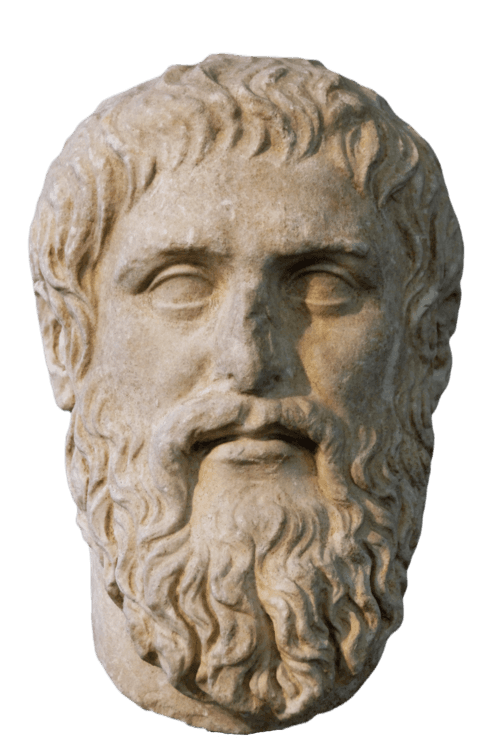
Plato
PERSON
4th-century BCE Greek philosopher

Robert Mueller
PERSON
Sixth director of the FBI; American attorney
RS
Roger Schank
PERSON
American scientist (1946–2023)
SC
Schweitzer
PERSON
Surname reference in documents
Socrates
PERSON
5th-century BCE Greek philosopher

Socratically
PERSON
Name reference in documents

Thomas Jefferson
PERSON • 2 mentions
President of the United States from 1801 to 1809

Virginia Giuffre
PERSON
Advocate for sex trafficking victims (1983–2025)

Willingham
PERSON
Name reference in documents
ZG
Zelda F. Gamson
PERSON
American sociologist

Accenture
ORGANIZATION
Multinational management consulting, technology services and outsourcing company
Andersen Consulting
ORGANIZATION
Organization referenced in documents
Articles of Confederation
ORGANIZATION
Organization referenced in documents

Baskin Robbins
ORGANIZATION
Organization referenced in documents
cal Grease
ORGANIZATION
Organization referenced in documents
Cognitive Process-Based Education
ORGANIZATION
Organization referenced in documents
Constitution, Mayflower Compact
ORGANIZATION
Organization referenced in documents

Deloitte
ORGANIZATION
Multinational professional services network founded in 1845
Epson
ORGANIZATION
Japanese electronics manufacturer (Seiko Epson)
Epson Europe
ORGANIZATION
Organization referenced in documents
International Affairs
ORGANIZATION
Academic journal
Jeopardy
ORGANIZATION
Television game show
John Dewey
ORGANIZATION
Organization referenced in documents
Knowledge-Based Education
ORGANIZATION
Organization referenced in documents

Learning
ORGANIZATION
Organization referenced in documents
Library of
ORGANIZATION
Organization referenced in documents
Math Now
ORGANIZATION
Organization referenced in documents

Northwestern
ORGANIZATION
Organization referenced in documents
Process-Based
ORGANIZATION
Organization referenced in documents
Process-Based Education &3
ORGANIZATION
Organization referenced in documents
Real-Life Learning Projects
ORGANIZATION
Organization referenced in documents
Real-Life Learning Projects Considered &5
ORGANIZATION
Organization referenced in documents
RightByte
ORGANIZATION
Organization referenced in documents
School of Science, Math & Technology’s
ORGANIZATION
Organization referenced in documents
Teachers College
ORGANIZATION
Organization referenced in documents
Teachers College Press
ORGANIZATION
Organization referenced in documents
the Business Engineering School at La Salle University
ORGANIZATION
Organization referenced in documents
the Christian Brothers
ORGANIZATION
Organization referenced in documents
the Clinton Administration
ORGANIZATION
Organization referenced in documents
the Department of Computer Science
ORGANIZATION
Organization referenced in documents
the Department of Motor Vehicles
ORGANIZATION
Organization referenced in documents
the Hartford Symphony
ORGANIZATION
Organization referenced in documents
the No Child
ORGANIZATION
Organization referenced in documents
the Office of Science and Technology Policy
ORGANIZATION
Organization referenced in documents
The School of Education
ORGANIZATION
Organization referenced in documents
the U.S. Senate
ORGANIZATION
Organization referenced in documents
the University of Texas
ORGANIZATION
University in Texas
Undergraduate Education
ORGANIZATION
Organization referenced in documents
Warfield Elementary
ORGANIZATION
Organization referenced in documents

Yankees
ORGANIZATION
Baseball team and Major League Baseball franchise in the Bronx, New York, United States

Bronx
LOCATION
Cocktail with orange juice

Columbus
LOCATION
Capital city of Ohio, United States of America
Gilchrist County
LOCATION
County in Florida, United States

Harlem
LOCATION
Neighborhood in Manhattan, New York City, New York, United States
Indiantown
LOCATION
Census designated place in Pennsylvania, USA

Madison
LOCATION
Capital city of Wisconsin, United States

New Haven
LOCATION
City in Connecticut, United States

Philadelphia
LOCATION
1993 film by Jonathan Demme

South Dakota
LOCATION
State of the United States of America
The Martin County School District
LOCATION
Location referenced in documents
Waterloo
LOCATION
City in Ontario, Canada
Statistics
Pages:100
Entities:90
Avg. OCR:95.1%
Sponsored