HOUSE_OVERSIGHT_018438_sub_001 - HOUSE_OVERSIGHT_018537
Document Information
Bates Range
HOUSE_OVERSIGHT_018438_sub_001 - HOUSE_OVERSIGHT_018537
Pages
100
Source
House Oversight Committee
Original Filename
the-sm-feminist-best-of-clarisse-thorn.pdf
Document Content
Page 1 - HOUSE_OVERSIGHT_018438
THE 3S&M FEMINIST « 1 t 4 $b 4 i HOUSE_OVERSIGHT_018438
Page 2 - HOUSE_OVERSIGHT_018439
What Others Are Saying About The S&M Feminist te Kk ok "I wish we could make it so everyone buying a copy of Fifty Shades of Grey would also buy Clarisse Thorn's The S&M Feminist.” ~ A.V. Flox, editor of BlogHer's Love & Sex section "Clarisse isn't afraid to talk about her own experiences with BDSM, relationships, and sexual politics. But she's also not afraid to explore some of the issues around consent, violence, and safety that a lot of the kink cheerleaders would like to sweep under the rug. She brings a refreshing honesty to her writing that is often lacking. Add to that a deep commitment to feminism and sex-positivity, and you have an amazing combination. "The tension between kink and feminism is a tough one to hold onto and most people end up firmly in one camp or the other. What makes Clarisse's writing phenomenal is her steadfast refusal to avoid doing that. The clarity with which she discusses both sides without resorting to caricatures or stereotypes is simultaneously inspiring and challenging. If you're interested in either or both, I can't recommend her enough.” ~ Charlie Glickman, educator at the classic feminist sex store Good Vibrations te ok ok The S&M Feminist: Best of Clarisse Thorn te ok ok Clarisse Thorn Smashwords Edition te ok ok clarissethorn.com @ClarisseThorn te Kk ok This ebook is copyright 2012 Clarisse Thorn. I certainly have mixed feelings about modern copyright law... but I've put an enormous amount of time and effort into my writing. So I ask you to please respect my time and effort, and observe copyright laws as they apply to this ebook. If you would like to share this book with another person, please purchase a new copy for each recipient. If you're reading this book and did not purchase it, or it was not purchased for your use only, then please purchase your own copy. Also, HOUSE_OVERSIGHT_018439
Page 3 - HOUSE_OVERSIGHT_018440
check out the Electronic Frontier Foundation at [ http://eff.org |, a nonprofit that protects free speech on the Internet and does lots of awesome work around copyright issues. Cover image copyright 2002 Clarisse Thorn. te Kk ok Also check out Clarisse's awesome book Confessions of a Pickup Artist Chaser! * There's a huge subculture of men who trade tips, tricks, and tactics for seducing women. Clarisse Thorn, a feminist S&M writer and activist, spent years researching these guys. She observed their discussions, watched them in action, and learned their strategies. By the end, she'd given a lecture at a seduction convention. This is her story -- and her theories about feminism and seduction to boot. https://www.smashwords.com/books/view/14445 1 In paperback: https://www.createspace.com/3830583 Notes, Acknowledgments and Resources te Kk ok I had a privileged upbringing. My education and safety nets are the biggest reasons I'm able to do the work that I do, and I try not to forget that. I have been blessed with parents, friends, and lovers who have supported me both emotionally and intellectually. Since this is a "Best Of" my blog, I want to particularly acknowledge the commenters who have contributed their perspective to my blog, and the other bloggers who have responded to me and cross-posted my work. There are too many to name, but thank you all so much. Special thanks to Brenda Errichiello, a guerrilla editor-for-hire. Brenda has been very generous and helpful to me; errors and weirdness in this book should be blamed on me and not her, because a lot of the time she tries to convince me to fix things and I refuse out of writerly arrogance. If you need editing for your self-published ebook (and you do), then you should totally contact her. Her website is [ http://www.bee-editing.com/ ]. I try to keep my writing as accessible as possible. One way I do that is by avoiding jargon and by using terms that I think most people will recognize. I often write "S&M" instead of "BDSM," for example; and when I'm using technical S&M language like "top" or "bottom" or "scene," I try to define the words as I go along. But sometimes I slip into HOUSE_OVERSIGHT_018440
Sponsored
Page 4 - HOUSE_OVERSIGHT_018441
jargon by accident. Also, plenty of S&M terms are super useful, and giving a quick overview of S&M language can go a long way towards describing S&M culture. Hence, I have included a Glossary at the end of this book. Many of the terms in the Glossary aren't terms that I use in this book, but you might find it useful or interesting anyway. (I also included a few terms that come from other subcultures, such as polyamory or queer studies.) I've received a lot of feedback over the years informing me that I'm the "gateway drug” into feminism for some readers. That's kind of cool, but I want to make it clear that if you're just now getting into feminism, there's lots of other stuff to learn before you draw any conclusions. Feminism is a huge, varied, rich movement with lots of history, schisms, and discontents. Also, in case it needs to be said, I'm not the only feminist who does S&M. There are others, some of whom love my work and some of whom disagree with me frequently. One advantage of the blog format, as opposed to more traditional formats, is that each post can contain tons of hyperlinks -- and each article has comment space, so there can be fascinating discussions that explore each topic more deeply. (Of course, there can also be silly, boring, or offensive discussions.) As soon as a blog becomes moderately successful, it develops its own community of regular commenters, and mine is no exception. Facilitating and moderating these discussions can be amazingly fun and interesting. It can also be stressful and exhausting. As a commenter community evolves, it shapes how other people read the blog's articles and comment on them; sometimes the community will develop norms or tendencies that make certain people feel more comfortable -- or less comfortable. I've tried to control this with my blog so that it's a welcoming environment for most people, but I have such a diverse range of commenters that it's sometimes quite difficult. I bring all this up because, if you're intrigued by some of the articles you read in this book, I encourage you to check out the original post. In this book, I've made a lot of hyperlinks into footnotes, but not all of them. More importantly, if you look at the original post, you can read the comments. But my commenter community has changed over time. Sometimes it's more feminist, for example, and sometimes it's less feminist. So just be aware, if you read the comments, that the range of opinions may not reflect any group that would assemble elsewhere on the planet; that a different community might produce really different comments; and that other articles might have really different discussions. You can buy this book in paperback form at CreateSpace: https://www.createspace.com/3878670 If you've already read my incredibly awesome book Confessions of a Pickup Artist Chaser, then thank you! (Bonus points if you can pick out all the parts of Confessions that I pulled verbatim from articles included in this book.) If you haven't read Confessions, then please check that out, too. https://www.smashwords.com/books/view/14445 1 Paperback copies of Confessions: https://www.createspace.com/3830583 HOUSE_OVERSIGHT_018441
Page 5 - HOUSE_OVERSIGHT_018442
I powered this ebook almost entirely with my own strangely obsessive energy, so you can blame me for any mistakes. If you find coding errors, broken internal links, or whatever, then I invite you to email me and let me know so I can update the file! I'm available at [email protected]. This is version 1.2 of The S&M Feminist. The resource list, glossary, and formatting have all been updated. TK OK ok BDSM Resources BDSM is a 6-for-4 deal of an acronym that stands for Bondage, Discipline, Dominance, Submission, Sadism, and/or Masochism. Some people call it S&M, B&D, leather, fetish, or kink. BDSM can mean very different things to different people, and there are a lot of activities that can fall under the BDSM umbrella; such activities might include spanking, Master/slave role-playing, handcuffs, cages, rape fantasies, razor blades, or all kinds of other things. I mention a lot of resources in the articles that I've included in this book, but I wanted to include an overview at the beginning, too. Hands down, I believe that one of the most important resources within the BDSM community is the Kink Aware Professionals list. If you are seeking medical, legal or other professional help for a problem that is influenced by alternative sexuality, there is probably someone on the list who can help you. When I was going through my own complicated and difficult BDSM coming-out process, I tried two therapists from the KAP list. One of them didn't really get me, but the second was wonderfully helpful -- so, if you're looking for a therapist, don't be afraid to shop around until you find the right fit. The list is here: https://ncsfreedom.org/resources/kink-aware-professionals-directory/kap- directory-homepage.html Want more information on how BDSM interfaces with the psychiatric establishment? I've compiled the research here: http://clarissethorn.com/blog/2012/05/07/the- psychology-of-sm/ Books In 2012, the legendary educator Tristan Taormino released The Ultimate Guide To Kink: BDSM, Role Play and the Erotic Edge, which is supposed to be amazing. I haven't read it myself, though. My personal favorite beginner BDSM books are The New Topping Book and The New Bottoming Book, by Dossie Easton and Janet W. Hardy. If you look for those books on Amazon.com, you will also see a lot of interesting related books in the "Customers Who Bought This Item Also Bought" section. I remember liking Jay Wiseman's SM/01/, although I know some people who have mixed feelings about it; a number of people recommend Screw The Roses, Send Me The Thorns by Philip Miller and Molly Devon, but I've never read it myself. If you're thinking of coming out to a loved one, I recommend the book When Someone HOUSE_OVERSIGHT_018442
Page 6 - HOUSE_OVERSIGHT_018443
You Love Is Kinky by Dossie Easton and Catherine W. Liszt. I've also heard good things about the "Parents of Alternative Sexuality” pamphlet by Dr. Amy Marsh. If you, like me, are particularly attracted to the idea of needle piercing, there's a great book called Play Piercing by Deborah Addington. If you're more interested in getting a feel for common BDSM philosophies and what the BDSM community is like -- an anthropological perspective, one might say -- then there's a book by Mark Thompson called Leatherfolk, and a newer one by Staci Newmahr called Playing at the Edge. Well-known feminist BDSM theory authors from the generation ahead of me include Pat Califia and Gayle Rubin, who are both brilliant. Online I usually direct total newbies to this BDSM 101 page by Franklin Veaux: http://www.xeromag.com/fvbdsm.html As it happens, the same writer has a good Polyamory 101, too: http://www.xeromag.com/ fvpoly.html There are a lot of websites on BDSM, and they aren't all carefully edited or moderated; so if you can manage it, then I suggest you try to get hold of one of the above how-to books. That said... overall, one of the best online BDSM resources is FetLife.com, the kinky social networking site. Once you have an account, you can join a huge variety of discussion groups about BDSM. FetLife is not a dating site; it's more like a kinky Facebook (seriously). I think that there are important problems with how FetLife is structured. For example, there's no way to search for past topics, which is ridiculous; this means that the research process for finding discussions is incredibly weird. The BDSM activist maymay has written intelligently about many issues with FetLife: http://maybemaimed.com/2011/03/20/fetlife-considered-harmful/ But the fact remains that FetLife is a huge gathering place. Another good online resource is the amazing sex education site Scarleteen.com. Scarleteen offers a ton of advice on a ton of sexual topics, and has its own message boards. The site KinkAcademy.com has received some good reviews, and features video tutorials by some people who are pretty well-known in the community. You have to buy a membership, though. The BDSM writer Ranai from Germany has labored long and hard to make an amazingly comprehensive, international, multilingual directory of kink resources. I haven't gone through it extensively, but every time Ranai comments on my blog she's brilliant, so I'm sure her directory is brilliant too. Here's the directory: http://ranai.wordpress.com/kink- resources/ There are so many BDSM blogs that I could never count them all. I want to direct special attention to Kink Research Overviews, an abandoned but still excellent blog that profiles the sparse and scattershot research on BDSM: http://kinkresearch.blogspot.com/2009/10/ HOUSE_OVERSIGHT_018443
Sponsored
Page 7 - HOUSE_OVERSIGHT_018444
welcome-to-kink-research. html In 2012, Bitch Magazine ran a series called "Thinking Kink" by Catherine Scott, which examines S&M and culture from a feminist perspective: http://www.allthatchas.blogspot.co.uk/2012/08/all-of-my-thinking-kink-posts-for- bitch. html In Person If you've decided that you want to start attending workshops, discussion groups, parties, or other BDSM events in person, please keep in mind that not everyone is going to mesh well with their local BDSM groups. If you don't like your local BDSM group, then don't force yourself to participate! That said, I generally encourage people to get into their local community, because it truly can be an amazing resource -- it's way more than just a place to meet partners. If you make an account on FetLife, you may be able to join groups for your area (for example, if you live in Chicago, then you should look for Chicago groups), where local issues or events will be discussed and publicized. For those aged 18-35, many major cities have branches of The Next Generation, a.k.a. the local "kinky youth group.” Otherwise, just Google around. It's much easier these days than it was for our parents. ok ook This resource list can be found on the Internet at: http://clarissethorn.com/blog/bdsm-resources/ Table of Contents KK Ok Here's a link to go back to The Very Beginning. And here's a link to the Glossary. Throughout this book, footnotes will look like links in the text. Click the link to go to the footnote. At the end of each footnote I've included a backlink to the context you came from. I write both personal narratives and cultural analysis. Almost all my writing mixes the two, but most of my pieces incline more towards one than the other. Accordingly, I've tagged all the articles in this book as either [storytime] or [theory]. te ok ok HOUSE_OVERSIGHT_018444
Page 8 - HOUSE_OVERSIGHT_018445
SECTION 1: The Basics In which we explore the foundations of S&M, feminism, and sex-positive feminism. KK ok S&M [storytime]: Love Bites: An S&M Coming-Out Story te ok ok Education [theory]: Liberal, Sex-Positive Sex Education: What's Missing TK OK ok Communication [theory]: Sex Communication Tactic Derived From S&M: The Annotated Safeword KOK ok Communication [theory]: Sex Communication Tactic Derived From S&M: Checklists KK ok Communication [theory]: Sex Communication Tactic Derived From S&M: Journal- Keeping te OK ok Communication [storytime]: Sex Communication Case Studies te ok ok Feminism [theory]: Towards My Personal Sex-Positive Feminist 101 KOK ok S&M [theory]: S&M Superpowers KK ok S&M [theory]: BDSM Can Be "Love Sex" Too te Kk ok S&M [theory]: Body Chemistry and S&M TK OK ok S&M [theory]: Going Under KK Ok Orgasmic "Dysfunction" [storytime]: A Unified Theory of Orgasm te OK ok HOUSE_OVERSIGHT_018445
Page 9 - HOUSE_OVERSIGHT_018446
Boundaries [storytime]: I'm Not Your Sex-Crazy Nympho Dreamgirl KOK ok Boundaries [storytime]: Orgasms Aren't My Favorite Part of Sex, and My Chastity Urge KK ok Boundaries [theory]: Anger, Fear and Pain te ok ok Evolution [theory]: Sexual Openness: Two Ways To Encourage It TK OK ok Relationships [storytime]: Fear, Loathing and S&M Sluthood in San Francisco KK Ok S&M [theory]: BDSM As A Sexual Orientation, and Complications of the Orientation Model KK ok S&M [theory]: BDSM "versus" Sex te Kk ok S&M [theory]: BDSM Roles, "Topping From The Bottom,” and "Service Top" ok oe Feminism [theory]: "Inherent Female Submission": The Wrong Question ok oe Manliness [theory]: Fifty Shades of Grey, Fight Club, and the Complications of Male Dominance ok Abuse [theory]: The Alt Sex Anti-Abuse Dream Team te Kk ok Section 1 Study Guide TK OK ok SECTION 2: Activism and Allies In which we explore activism and other topics tangentially related to S&M feminism -- from sex work, to community organizing, to the nature of masculinity. KK ok HOUSE_OVERSIGHT_018446
Sponsored
Page 10 - HOUSE_OVERSIGHT_018447
Activism [theory]: Grassroots Organizing For Feminism, S&M, HIV, and Everything Else te Ok ok Activism [storytime]: Interview with Richard Berkowitz, Star of Sex Positive and Icon of Safer Sex Activism TK OK ok Abuse [theory]: Social Responsibility Within Activism KK ok Boundaries [storytime]: Taking Care Of Each Other te Kk ok Manliness [theory]: Questions I Want To Ask Entitled Cis Het Men te Ok ok Education [theory]: Sexual ABCs in Africa, Part 1: Abstinence KK Ok Education [theory]: Sexual ABCs in Africa, Part 2: Be Faithful te OK ok Education [theory]: Sexual ABCs in Africa, Part 3: Condoms te ok ok Activism [theory]: Colonized Libidos KOK ok Vegan [theory]: Confections of a Pickup Artist Chaser te OK ok Polyamory [theory]: In Praise of Monogamy te Kk ok Polyamory [theory]: My Top Questions About Dealing With Multiple Lovers TK OK ok Sex Work [storytime]: One Blurred Edge of Sex Work: Portrait of a Sugar Baby KK Ok Sex Work [theory]: A Sugar Baby Leaves The Business te OK ok HOUSE_OVERSIGHT_018447
Page 11 - HOUSE_OVERSIGHT_018448
Section 2 Study Guide KOK ok SECTION 3: Making It Complicated In which we really get into it. te ok ok Relationships [storytime]: Chemistry TK OK ok S&M [theory]: Start From A Position of Strength KK Ok S&M [storytime]: Predicament Bondage te Kk ok Relationships [theory]: Relationship Tools: Monogamy, Polyamory, Competition, and Jealousy te Kk ok Evolution [storytime]: You Don't Always Know What You're Thinking TK OK ok Abuse [theory]: Thinking More Clearly About BDSM versus Abuse KK Ok Communication [theory]: What Happens After An S&M Encounter "Gone Wrong" te OK ok S&M [theory]: Aftercare or Brainwashing? te Ok ok Communication [theory]: Feminist S&M Lessons From the Seduction Community KOK ok S&M [storytime]: The Strange Binary of Dominance and Submission KK ok Feminism [storytime]: My Mom's Rape Story, and A Confused Relationship with Feminism te OK ok HOUSE_OVERSIGHT_018448
Page 12 - HOUSE_OVERSIGHT_018449
Section 3 Study Guide KOK ok About The Author KK ok Clarisse's Lectures, Workshops and Events te ok ok Footnotes TK OK ok Glossary SECTION 1: The Basics In which we explore the foundations of S&M, feminism, and sex-positive feminism. ok oe When I think of this section, I think of: If you're afraid of pain, you have to find out what pain is. ~ Marina Abramovic I'd like to thank all the brave pioneers of the BDSM community, for exploring the reaches of human sexuality, and coming back with maps. ~ an unsourced quotation offered by one of my blog commenters S&M: [storytime] Love Bites: An S&M Coming-Out Story The events of this story took place between 2005-2008; I wrote it in fits and starts over the span of 2006-2008. I started blogging as Clarisse Thorn in 2008, but my coming-out story wasn't published until early 2010, when Time Out Chicago picked it up. I look over this piece today, in 2012, and I think about what I would have written differently if I'd HOUSE_OVERSIGHT_018449
Sponsored
Page 13 - HOUSE_OVERSIGHT_018450
had the hyper-focused feminist sex educator instincts that I have now. I would have written differently about consent, and I would have written differently about the communication that happened with my partners about my consent. I would have talked about how the S&M subculture isn't always welcoming for everybody, though it feels welcoming for me. Plus, I'm no longer practicing monogamy; I'm polyamorous these days. But at the time, my goal was to do two things: (1) write out how S&M stigma felt for me, as a young feminist, and to talk about how I was overcoming it. And (2) show that sometimes a partner just isn't good for you, even if he has a quality that you really really want -- and you can always walk away. KK Ok Love Bites: An S&M Coming-Out Story I was very drunk. My perceptions had a frame-by-frame quality, and the evening didn't seem immediate: pieces of it were foreign, disconnected as a dream. I was being bitten very hard on the arm. It would leave marks the next day. I was so muddled by assorted things that even now I can't sort out how I felt at that moment. When Richard's nails scored my skin I gasped, but I didn't ask him to stop. I flinched away, but he kept a firm grip on me. "Beg for mercy," he said softly. Frame. Skip. I discovered that a mutual friend of ours had seen us, stopped, and was sitting on the grass across from Richard. "Hey," he said. "You shouldn't do that." "It's okay," Richard said, "she likes it," and pulled my hair hard enough to force me to bow my head. / do? I managed to think, before thought vanished back into the blur of alcohol and pain. Our friend's face loomed over me, concern sketched vividly on his features. I closed my eyes. "Mercy," I whispered. te Ok ok Later, Richard reminded me of something I said that night: "I wish I'd met you years ago.” Thinking hard, I could only recall the evening in broad strokes. We'd gotten drunk at an outdoor party; he'd hurt me a bit; I'd said that; and then I'd staggered off to help clean up. "A lot of crap comes out when you do this stuff," he now said. A few weeks had passed. I was lying on my stomach across the foot of his bed. Sitting perpendicular to me, he leaned back and propped his feet on the small of my back. Thin and pale, he tended to wear black, and had intense dark eyes. It was summer in 2005. I was twenty years old. He'd asked me why I wanted to be hurt. I couldn't work out an answer -- wasn't certain the question was valid -- so I asked him why he liked to hurt people. He'd half-laughed, with a tone that I couldn't evaluate. Ruefully? "That's a long, dark road," he'd said. HOUSE_OVERSIGHT_018450
Page 14 - HOUSE_OVERSIGHT_018451
"How do you know?" I asked, irritated by his presumption, nervously curious. I wasn't sure I was what he thought I was -- wasn't sure what had been going on that night, beyond alcohol dulling my reactions and feelings. But I knew I hadn't been abused or violated. I hadn't asked him to stop, and I wanted to figure out why. "How did you know about me?” "I can tell," he said, and grinned. "With you, it was obvious.” He paused, added quietly, "You were begging for it.” A couple of hours later, we remained fully clothed, my face was buried in his pillow, and I was crying. He'd pinned me down so I couldn't move, and was raking his nails across what was exposed of my tank-topped back. When Richard first spotted the tears, he'd asked if I wanted a break. I'd said that it was okay, that he should continue, that I was fine. I felt myself fragmenting, desperation and terror and pain pouring through me in an unbearable, necessary torrent. I told myself over and over that it didn't hurt that much, but I couldn't stop myself from tensing, crying out. After a while, I found myself saying, "No." I felt him check himself, shifting his weight from my back. "Can we clarify something?” he asked gently. "Do you really want me to stop when you say no?” No, I realized, J don't, and something vital in my psyche seemed to snap. The tears overwhelmed me. I couldn't get an answer out through my sobs, but even if I could have, I haven't the faintest idea what I might have said. "We should take a break," he decided, and moved away. I'll never forget the relief -- and desolation -- I felt as he did. TK OK ok It was a long time later that I remembered: I had met someone like Richard, years before. It had been in spring 2003; the guy was thin and pale, dressing mainly in black. I hadn't once thought of him in a romantic light. I'd counted him a friend, but had only been alone with him once. We were in his living room, seated next to each other on dun-colored carpet. I couldn't recall how it started -- we'd been sitting playing video games? had he tickled me as I shouted invective at the screen? -- but it ended with him holding my wrists, me lying back on the floor and wondering how to get him off me. I'd thought he might kiss me, so I turned my head away. Instead, he bit my neck. "No," I said aloud, more in startlement than anything else, and he gave me a searching look -- as if he wasn't sure I was serious. "Please let me up,” I said, and he asked, "Why?" I didn't feel panicked, but strangely at a loss: he didn't seem to take my objection seriously. Yet he wasn't particularly threatening me, and I wasn't afraid. I explained that I was in a committed, monogamous relationship I didn't want to disrupt; I carefully didn't react when he bit me again, although it hurt. I didn't say I wasn't getting anything out of my powerlessness or his apparent desire to HOUSE_OVERSIGHT_018451
Page 15 - HOUSE_OVERSIGHT_018452
hurt me, that it left me cold. Maybe I wasn't sure it would register: he hadn't appeared to believe me when I first told him to let me up. And maybe something in me agreed that such a response was incorrect. Eventually, I got away. Stupidly, confused, I mentioned the incident to my boyfriend. Of course he was furious; I had to calm him. For my part, it hadn't occurred to me to be mad. That didn't feel as bizarre as it sounds -- on some level, I felt that the whole incident was reasonable, even if it hadn't turned out to be what I wanted. Not then. Not with him. te OK ok After I cried my heart out in his bed, Richard was very kind. He brought me a glass of water and listened as I said a lot of bewildered things. When I finally ran down, it was late; he invited me to sleep over, but didn't put the moves on me. The next morning, he told me he had work to do. Straightforwardly, I asked when I could see him again. He smiled, said to email him, that we'd work something out. The next few days -- weeks -- time, I don't know; however long it was, it felt like being put through a shredder. I couldn't think about anything but that night and how, through my turmoil and tears, I'd found a kind of exultation. I had been sober, prepared and clear- headed. I couldn't find a way around the brutal, uncompromising revelation that apparently, I wanted nothing more than to be subordinated, used, hurt. I actually wanted to be a victim. I wanted to talk to someone, but wasn't sure how to frame my words. I was positive it would help to talk to Richard, but he was busy, and busy, and busy. I had a number of friends who I suspected were into hardcore BDSM; I could have called any of them. But it was one thing to be fine with other people doing it, and quite another to discover such a desire in myself. In another situation, I would have thoroughly deconstructed my obvious double standard -- but just then, it was a minor irrationality on top of one big chunk of insanity. I considered asking my loving, liberal parents for advice and tried to imagine how it would go. Mom. Dad. I love you, and I'm so sorry. I know you've tried to give me an independent, rational, feminist outlook, as well as self-esteem and integrity. Sadly, none of this appears to have taken; I guess I'm a broken mockery of everything you tried to instill. I don't want you to worry, or blame yourselves, but have you any advice on where to go from here? No. ok oe My mental images of that summer are hazy with remembered anger. As Richard remained occupied, I felt fury building within my fascination. I'm sure I felt like the classical woman spurned: he was nice enough when he ran into me and told me he was there to talk if I needed it, but the evidence contradicted his words. For weeks after that HOUSE_OVERSIGHT_018452
Sponsored
Page 16 - HOUSE_OVERSIGHT_018453
night, if I tried to see him he didn't have time. It didn't help that he reacted very badly when I went after him aggressively -- too aggressively, I knew, but couldn't help it -- and told him honestly how vulnerable I was. He backed off fast, leaving me more confused than ever. (Though not too confused to think: How stereotypical.) It went beyond being a woman spurned, though. Especially since I believed, intellectually, that he didn't owe it to me not to be busy. He wasn't required to sort me out. And -- since it seemed to be what I was after -- he wasn't obligated to continue hurting me. We'd just met, after all. It was more that I was enraged by how desperately I wanted to be hurt -- and infuriated that someone, anyone, could have such power over me. I had always thrown myself into infatuations; like most people, I'd been known to get angry at the object of my affections. But this was different. Not only was I infatuated, I was aching for something I couldn't reconcile. Even if Richard had been the perfect counselor I had no right to expect, I might have hated him. As it was, I felt toyed with, and found as many other reasons to dislike him as I could. As long as I could focus on wrath, I didn't have to think about my other feelings. It kept me from falling apart. He was away for most of the summer. I went to a few trusted friends for reassurance and validation; giving few details, I allowed my anger to calcify. But Richard ended up surprising me. On a visit to Chicago, he called me every night for a week. The bruises he left took weeks to fade, some of them bleeding and leaving scars. I raged as I covered the worst of them -- but felt also a low-burning fulfillment. One close friend, Andrew, caught sight of a bruise on my leg and cast me a worried look. "That looks pretty bad," he observed, and I could only say, "Yes." By then, I'd well and truly internalized the belief that Richard didn't want to deal with emotional vulnerability, and my furious resentment remained. This feeling was not helped by society in general; men hate emotions, right? Still, the more time I spent with him, the more I had to admit that he made an effort to be sensitive. Most of our failures to understand each other came from how different our relationship paradigms were, not to mention my unevenly-repressed identity crisis. I know I tried to warn Richard that I wasn't doing well at expressing myself and that what I thought, or felt, or believed I was might change on short notice; but I doubt I got even that concept across. He identified fairly publicly as a BDSMer, and made it clear that he considered me superficial and cowardly because I was unsure about doing so myself. He was also polyamorous, a lifestyle that I had some experience with -- but though I respected others’ choices to engage in it, I'd decided against polyamory for myself. It felt strange to draw the parallel, but it was somewhat like dealing with a difficult boyfriend. Still, I didn't trust him, and our relationship didn't particularly involve sex. Just pain. Towards the end of one night, wan light filtering through my curtains, Richard inquired HOUSE_OVERSIGHT_018453
Page 17 - HOUSE_OVERSIGHT_018454
unexpectedly, "Are you happy with the way we are now?" "What do you mean?" I temporized, sighing inwardly. Now I'd have to come up with a rational, coherent answer that would satisfy him. In those days, rationality and coherence felt like improbable dreams. Richard explained that he hadn't particularly been satisfied with how he'd dealt with me before he left, but hadn't had time for anything better. Now, he thought the situation was "healthier." "What do you want from this?" he asked seriously. I want the strength to walk away from you, | thought unclearly. J want you to actually care about me. I never want to see you again. I hugged my arms to myself, resting my hands gingerly on swelling skin. "Um," I said slowly, "nothing in particular?" I took a breath and gathered the one overriding fact: J want you to keep hurting me. "I don't expect anything from you," I told him, "and I don't want you to expect anything from me.” I knew from his smile that my answer was the right one. I could only hope it was accurate. TK OK ok The summer passed, Richard away again for the end of it, then returning in September for the beginning of the school year. I, however, was leaving the city soon, and would be gone for some time. Those days were my last chances to see him for a while, and I was acutely aware of his nearness: I felt oriented towards him, as if I were a compass and he was North. But I still felt the rage, lurking under the surface of my mind like a submerged monster. And though I ached with disturbingly intense thoughts of violence, it seemed that I was staying away from Richard, closing him out when I ran into him. He finally confronted me and asked, blunt as ever, if I was avoiding him. I denied it reflexively. How could I avoid North? "I'm still figuring out how I feel about you," I told him as we walked late one night on the waterfront. I'd started to come to terms with being a masochist, had begun to assimilate that into my self-image, but that didn't explain why it had taken him to force the knowledge on me. The man I'd known in 2003, for instance, made no impression -- though he'd obviously seen exactly what Richard saw, and had taken almost exactly the same approach. And I'd known heavily, formally BDSM-identifying folks for years. I'd even experimented with light bondage in previous relationships -- being gently tied up, for instance -- though I hadn't found it especially compelling. Was it that I'd been drunk the first time I encountered Richard, my careful rational mind turned off? Was it that nothing less drastic than the bruises he'd left could have forced my understanding? Was it simply that I'd been romantically unhappy at the time, whereas I'd been content when that other man pinned me to the floor? Even in the midst of my now- constant confusion, I couldn't stop myself from analyzing it all to bits. Now I concluded that I ought to know how I felt about Richard if 1 wanted to get to the roots of myself. It had taken me a while to call my openly-BDSM friends for advice, but -- maybe around the same time I really started acclimating -- I had. One of their offhand comments came HOUSE_OVERSIGHT_018454
Page 18 - HOUSE_OVERSIGHT_018455
to mind. "I guess there's no reason you would know this," she'd said, "but it's fairly common for people to have one person who's their lover, and a separate person for inflicting pain.” I thought about that, and about Richard saying, "A lot of crap comes out when you do this stuff." I considered the maxims that tell us that the opposite of love isn't actually hate, and how much time I'd spent encouraging myself to hate him. Finally, I admitted that the only term I had to cover this depth of emotion was "love"... but that couldn't make it feel like the right word. Then again, it wasn't exactly "hate", either. He was a demon, an idol. He hardly felt like a person to me. I didn't vocalize any of this. Coming back from the waterfront, we arrived at the intersection where Richard would go to his apartment and I'd return to mine. An awkward pause ensued: I was leaving in a few days, and wouldn't be alone with him again. Watching him, I wondered if he was thinking about asking me over, or was looking for an excuse not to. I looked away. "Goodnight," I said. Walking home, I wished I felt strong. te Ok ok It was after I left Chicago that I really started piecing myself back together. My anger drained away quickly, as if an infected wound had been lanced. Perhaps I found my strength under the scab. I figured that maybe all this did identify something about my personality, but it didn't tell the whole story. Even now, I could be independent, rational, and feminist, with self-esteem and integrity. Right? Right. It was impossible to deny that the desires were real -- and when I allowed myself to focus on them, I didn't try. Ruminating on my past, I recalled heart-twisting details that put everything in a certain compelling context. It wasn't just the man who'd gone after me in 2003. Wincing, I remembered childhood fantasies: I'd compulsively written and drawn brutal dreams until, at some confused middle-school point, their horror came home to me and I recoiled. In those long-repressed fictions of slavery and pain, I recognized my newly-acknowledged desires. One conversation I'd had with an early boyfriend rang in my head. "There's a dark current inside me," I'd told him. Self-consciously, I'd averted my eyes at my own melodrama. "I don't know how to be with you, when I feel it." I hadn't exactly been trying to leave him, but I'd needed something more. The last dream I remember of Richard didn't involve any pain at all: he just kissed me. Awakening, I felt a melancholy pang. Richard invested a lot of self-conception in being a sadist, and he was so distant -- I couldn't imagine relating to him as a lover. And I knew our relationship (such as it was) would never have started without BDSM as a focus. Previous to that night at the outdoor party, he'd hardly registered on my romantic radar, and we had little in common in terms of how we dealt with relationships. Still, for a moment I wished -- unreasonably, I knew -- that I could have fallen straightforwardly in love. HOUSE_OVERSIGHT_018455
Sponsored
Page 19 - HOUSE_OVERSIGHT_018456
te OK ok I was gone for six months, and I returned in heartbreak. A relationship more important than words can encompass had become -- after years of attempts -- impossible. I think it was obvious. One friend told me vulnerability was all over me; /ike a scent, I thought, and wondered if Richard could smell it. In worse shape than ever, I saw Richard and laughed with an edge to my voice. I gave him doe-eyed looks, but deflected his interest with doublespeak and icy tones. I wanted him, and I felt the rage returning. I hated and sheltered behind the unclear verbal games we played. Furious and despairing, I refused to chase him, yet I felt him everywhere. North. I had to do something. My identity had somewhat solidified: I was into BDSM. I believed it, I even accepted it, but I couldn't go on feeling like I did. In looking around the Internet, I came upon a directory of Kink Aware Professionals, including therapists who provided their names for people who needed to talk about BDSM but feared judgment. I visited two. One listened to me silently, with a vaguely sorrowful expression; he offered no feedback, and left me wondering why he'd listed his name in the directory. He obviously didn't know what to do with me, and I got the uneasy feeling that I worried him. Naturally, that didn't help at all. Luckily, the other was everything I could have asked for -- open, patient, clearly knowledgeable about BDSM. He looked straight at me and nodded understandingly when I confessed the whole trail of events; he explained how common my experience was; he gave me ideas about where to look for more information, but didn't try to put his own preferences into our talks. "Most people in your situation feel that they've broken a major taboo," he said. "A lot try to get away from BDSM. But I'm not hearing that from you. You want to adjust, not escape." I nodded, and arranged to see him regularly. Still, I don't think I could have put myself together again without two other things. My close friend Andrew went after me at a drunken party. Shades of Richard, | might have thought, but I never did. Andrew pinned me to the floor, laughed as I fought back, hurt me, finally kissed me. When I asked in bewilderment what brought this on, he confessed. "When you were gone, I missed you," he whispered, "and I've never missed anyone like that before." He was as afraid of the darkness of BDSM as I had been, yet he'd thought of me and found himself fantasizing. He wanted to try it with me, but first he wanted to be sure that he and I would remain close -- wouldn't lose what we already had. In everything Andrew told me -- everything we said to each other, laughing, almost in tears, burying each other in embraces, happily drunk and clear-eyed in the morning -- I found the things that were missing with Richard. Uncertain about BDSM, guarding his and my boundaries, Andrew wanted to commit to me and to a devoted monogamous relationship. Part of me counseled caution and withdrawal, but as my therapist laughingly put it, Andrew was as tempting as an ice-cream factory. It was my chance to fall straightforwardly in love. Soon after that, I had to explain to my parents why I wanted a psychiatrist who was out- of-network for my health insurance. I closed my eyes as my father asked why I needed this specialist, what his focus was. "S&M," I said shortly. HOUSE_OVERSIGHT_018456
Page 20 - HOUSE_OVERSIGHT_018457
Why had I worried? I knew my parents had striven to give me an independent, rational, feminist outlook. Self-esteem and integrity. I was so lucky, I understood as my father said nothing but, "All right.” It was a blinding realization: my father might have judged me with all the worst things I thought of myself -- but instead, he trusted me to do my best. When I called my mother (long separated from my dad), too many of my flatmates were around for a private conversation indoors. I banished myself into a warm summer storm, cradling my cell phone away from the rain. There was a pause after I said the fateful words -- then she said, "Have you talked to your father about this?” "Yes," I said hesitantly. "Why?" "Well, I think it was an issue in our marriage that I was more into that stuff than he was." Fat droplets soaked my hair. The tight knot in my chest -- familiar for nearly a year -- loosened as I caught my breath. I turned my face up to the sky and let the tilted world resettle around me; my mother's faraway voice helped me through a hundred things that had torn my heart. "You aren't giving up your liberation," she reminded me, and emphasized my continuing right to a partner who respects me. She even noted mildly that she'd "wondered" about me when I was a child. I'd feared that I was damaged, that there was something deeply broken in me. I'd wildly guessed that I'd suffered trauma and repressed the memories. But if my mother -- one of the most independent, feminist women I've ever met -- could reconcile BDSM, then I knew I could. And if she was into BDSM herself, then rather than viewing my proclivities as damage, I could see them as something intrinsic we shared. Over the next hour, my mother told me I could retain rationality, self-esteem and integrity. For the first time, I found myself believing it. My therapist laughed when I told him. "I swear," he cried, "it's genetic!" te Kk ok There was one loose end to a conclusion that felt like a fairy tale. Though we had some unfettered conversations, tension remained between me and Richard -- perhaps it even worsened. At one point, observing us, Andrew said mildly: "Settle down, you two." Worse, Andrew and I were going in different directions. I finally felt somewhat at peace with BDSM, but he couldn't gain that comfort, and started backing away from it. It was impossible not to think of Richard and shiver, remembering how uncompromisingly vicious he could be. When Andrew and I broke up over a year later, I knew: J shouldn't see Richard. My therapist warned me to be careful with BDSM when my heart was in pieces. Of course I wasn't. It was the first time I'd explicitly pursued Richard since he'd told me, so long ago, that he was busy. I emailed him straightforwardly, sat down on his bed shortly after Andrew and I broke up. When Richard set his fingernails into my skin, he murmured, "It's been a while,” as if he'd always known he'd see me here again. The tears came more quickly than they once had -- I'd fought them then, unwilling to break down in front of him. I'd HOUSE_OVERSIGHT_018457
Page 21 - HOUSE_OVERSIGHT_018458
been successful, too. Richard had only made me cry once, before. This is what I want, | reminded myself as Richard wound his hand in my hair and pulled my head back. His teeth bruising my shoulder felt familiar and wrong. A kiss on my neck sent me rigid. Sobs nearly choked me. Why now, my heart cried, why not when you were who I dreamed of, Richard? I couldn't fault his empathy -- he pulled away. "No," I said unwillingly, "I'm fine,” but he wouldn't continue. Uneasily, he pointed out that I'd never reacted like that. I said he'd never kissed me like that, and he asked, "Really?" as if it were a surprise. Yes, I thought, forcing my tears away. / was desperate for it. I know. To get him to keep hurting me, I had to convince him that I was fine. This is what I want, I coached myself. I was nearly composed when Richard mentioned Andrew, and I felt grief rip me open. He watched me cry, got me a glass of water. Shades of two years ago, I might have thought, but I never did. I apologized; he said only, "I thought this might happen." On some level, I knew that I had, too -- for all my self-reassurances that I would be fine. What was I thinking? | asked myself, and the answer came instantly. / had to know. When Richard asked if I wanted to sleep over, I said I didn't. "Then don't go yet," he said softly, putting his arms around me where I lay. I rested my head on his chest. / won't tell Andrew about this, | decided, wondering if he and I would be together again. Even if I've learned that I don't want Richard anymore. te OK ok In retrospect, it seems surreal that I reacted so badly to my BDSM orientation. The agonizing memories of my adjustment have lost their emotional flavor. I've learned a lot about how to practice BDSM safely -- physically and emotionally. I've had multiple BDSM partners, and I've had positive experiences in the welcoming BDSM subculture. In recent times, I've even begun to switch: occasionally I'll be the dominant partner, though I feel submissive masochism far closer to my core. Still, I remember the unease I felt at first -- and I recognize stronger unease in others. I certainly wouldn't describe this orientation to, say, an employer. I believe BDSM needs a liberation movement, just like homosexuality, but I'm not (yet?) ready to be a public spokeswoman. And I definitely wouldn't consider dragging others out of the closet. I write about BDSM under a pseudonym, and I have changed the names of Richard and Andrew. I fear that others will read this narrative as describing an assault, a near-rape -- and a woman who tried to rationalize her experience by embracing it. That's not what happened. When Richard first pulled my head back and hurt me at that drunken outdoor party, I could have said no. The word was echoing in my mind, waiting on my lips, and I didn't say it because I didn't want him to stop. I was certainly intoxicated, but I wasn't helpless. I was threatened, but I was not afraid. I may have fought self-actualization like a caged animal, but I could not deny it. I have always been this way. HOUSE_OVERSIGHT_018458
Sponsored
Page 22 - HOUSE_OVERSIGHT_018459
Conversely, I'm afraid that some conservative will read this and say: "Look how the feminist movement has failed us!" That's not what happened, either. I identify as feminist, and I don't believe that to be at odds with being a submissive masochist. Indeed, I believe that the feminist movement helped my practice of BDSM: it's one of the factors that gave me the strength and self-assurance required to figure out and discuss my sexual needs. Andrew and I did get back together; then we broke up again. Richard and I have had other nights together. I wish this narrative ended cleanly. I wish I could say that I've found a fairy-tale lover, that I'm now with a man who both hurts me till I cry and gives me the relationship I want. (Why stop there? He could be rich and handsome and a great cook, too!) But this is my story, not a fairy tale. Just as well; that means I still have space to learn. I believe I've gotten better at communicating clearly. I believe I've gotten better at sorting out the harsh emotions inspired by BDSM, working with -- and enjoying! -- those feelings in the context of a loving relationship. And I hope I no longer objectify my sadistic partners to the extent that I objectified Richard. Still, I know I've got a ways to go. I see BDSM as a continuum -- similar to the theory that homosexuality is a continuum -- and sometimes I think that everyone's on the continuum to some degree. I don't think Andrew is as far into the continuum as I am, and not as far as Richard, either. But there are reasons I was with Andrew for nearly two years, yet never let myself fall completely into Richard. A certain kind of devoted relationship is important to me. I felt strongly about Richard, and he was a good fit for BDSM, but he couldn't give me the relationship I want. I went back to Andrew, though he was far less into BDSM, because I was able to love him. I wonder, though: if I ever fall for a completely vanilla man, will I be able to compromise that far? It seems unlikely. Maybe if that happens I'll have to remember my friend's words and find a separate person, a non-lover who inflicts pain. I'd rather not do that, but I can't imagine giving up BDSM. The idea feels equivalent to a vow of celibacy. As my therapist said, I'm not looking to escape -- especially not now that I've finally adjusted. It wasn't easy, but I feel that today I am triumphant. And I believe, I hope, that knowing what I want is the surest path to falling straightforwardly -- happily -- in love. This can be found on the Internet at: EDUCATION: HOUSE_OVERSIGHT_018459
Page 23 - HOUSE_OVERSIGHT_018460
[theory] Liberal, Sex-Positive Sex Education: What's Missing I originally wrote this in 2009, then reposted it in 2010 as part of a group drive by sex- positive bloggers to solicit donations to Scarleteen.com. Scarleteen is an amazing sex education site run by the equally amazing sex educator Heather Corinna, and it can always use donations! You should totally go investigate that site -- after you're done reading my work, of course. When I first published this piece, the sex-positive film director Tony Comstock commented on Twitter, "I think that post of yours might be one of the most important things written about sex-positivity in the last 10 years." I was really honored by that, because he does excellent work. My parents occasionally read my blog, and I also got some interesting feedback from my mother. She wrote to me: " Speaking from where I sat when you were growing up: I wish I could have taught you what you eventually learned on your own. But I felt there was this unchallengeable wave moving and I didn't have a place to stand to counter it. I kept thinking I was leaving you to learn the hard way exactly what I learned the hard way, and was still learning, and was despairing of ever learning." I wrote back: "For what it's worth, I remember you trying to stem the tide with small comments, and I think that those comments later helped me center myself in a place where I could reach my own conclusions rather than blindly sleeping around." I hope it made her feel better, because it's true. I'm not a parent, although someday I would like to be... but I think one of the hardest things about parenting must be knowing that your kids will learn terrible things from the surrounding world, and the best you can do is try to be there while they process those lessons. KOK ok Liberal, Sex-Positive Sex Education: What's Missing I am fortunate. I was born in the eighties and I received a great sex-positive upbringing. The public school I attended taught students how to use condoms; middle school health education included a section on sexually transmitted diseases. My parents didn't throw their sexuality in my face -- but they were almost always matter-of-fact, understanding and accepting when they talked about sex. (I'll never forget how, at age 12 or so, Mom sat me down and gave me a long speech about how it would be totally okay if I were gay.) I was raised Unitarian Universalist, and the Unitarian Sunday School teen program included a wonderful sex education curriculum called About Your Sexuality. (I understand that the sex-ed curriculum has been changed and updated, and is now called Our Whole Lives. I haven't delved deeply into the Our Whole Lives program -- maybe it addresses some of the issues I'm about to describe.) So I think I'm in a good position to describe the problematic signals we face in liberal sexual education. Yes, I've experienced the overall sex-negative messages that drench America, and they're terrible -- but so much is already being said about those. I also received lots of sex-positive messages that are incomplete, or problematic, or don't quite go the distance in helping us navigate sexuality -- and I think the sex-positive movement must focus on fixing them. HOUSE_OVERSIGHT_018460
Page 24 - HOUSE_OVERSIGHT_018461
I'm so grateful for my relatively liberal, relatively sex-positive upbringing. I think it did me a world of good. But here are my five biggest problems with the way I learned about sexuality: 1. L wish that I hadn't gotten this message: "Sex is easy, light-hearted -- and if it's not, you're doing it wrong." Do I believe sex can be easy? Sure. Do I think it can be light-hearted? Absolutely! But do I think it's always those things? No, and I don't think it "ought to” be. I think we need to teach that sex can be incredibly difficult. It can be hard to communicate with your partner. It can be hard to learn and come to terms with your own sexual desires. It can be hard to understand or accept all your partner's sexual desires. And just because it's hard, doesn't mean that you're with the wrong partner -- or that you're missing some vital piece of information that everyone else has -- or that you're doing it wrong. And as for light-hearted, well -- sure, sex can be "happy rainbows joy joy!", but it can also be serious... or dark. And there's nothing wrong with that! I recently talked to a friend, who also identifies as a BDSMer, about our stories of coming into BDSM. Both of us had sadomasochistic fantasies from a very early age (mine, for instance, started in grade school -- seriously, I actually did tie up my Barbie dolls). I told my friend about how I'd always had these intense, dark, violent feelings -- but when I made it to middle school, I remember a change. I had a series of vivid BDSM- ish dreams, and I freaked out. I closed it all away, I stopped thinking about it, I repressed it all as savagely as I could. Before that, I had also started thinking about sex. I imagined sex at great length; I read about sex. I had long since filched my parents’ copy of The Joy of Sex and examined it, cover to cover -- not to mention many other fine sexuality works, like Nancy Friday's compilation of female sexual fantasies My Secret Garden. I was totally fascinated by sex. I talked about it so much that one of my friends specifically searched out a vibrator as a birthday present for me. I actually pressured my first major boyfriend into some sexual acts before he was ready, which I suppose is an interesting reversal of stereotype (but to be clear, it's not okay that I did that). As I started having sex, I found that I liked it okay, but knew a lot was missing -- and couldn't figure out what. It took me years and years to connect sex to BDSM -- to figure out that the biggest thing I was missing was BDSM. Why? Because BDSM was horrible and wrong, and I'd shut it away; BDSM (I thought) couldn't possibly have anything to do with the bright, shiny, happy horizon of sex! Coming into BDSM was a crisis for me partly because -- although I knew other people practiced it, and had never thought much about that -- my own need for those dark feelings totally shocked me. This wasn't me. This wasn't healthy sex. Sex was light-hearted, happy rainbows joy joy!... wasn't it? In contrast, my friend -- who had an extremely sexually repressed upbringing -- never had any trouble integrating BDSM into his sex life. Sex, for him, was already wrong and bad... so as he got in touch with his sexuality and began having sex, BDSM was involved from the start. After all, there was no reason for it not to be. HOUSE_OVERSIGHT_018461
Sponsored
Page 25 - HOUSE_OVERSIGHT_018462
As glad as I am that my upbringing was not stereotypically sexually repressed, I have to say that I envy my friend his easy personal integration of BDSM. 2. 1 wish this point had been made, over and over: "You might consider being careful with sex." I recently read an excellent New Yorker article that reviews the new version of The Joy of Sex. It talks about the time when The Joy of Sex came out, as well as a similar contemporary feminist book, Our Bodies, Ourselves, and it points out that "both books espoused the (distinctly seventies) notion that sex could be a value-neutral experience, as natural as eating.” "Value-neutral": that's a great way to describe the overall attitude about sex that I absorbed. As if sex were something I could do as an amusing diversion, with anyone, at any time, and it would always be fun fun fun! As if there was no need to be overly careful or sensitive -- sex was just a game I could play, like a sport -- where the worst that would happen if I screwed up might be a skinned knee. I wish that there had been an emphasis on how emotions can really matter, when it comes to sex. I wish that there had been acknowledgment of the fact that we can really hurt ourselves, and others, when we're cavalier about sex. (Not that we always do -- but we can.) I wish I had understood sooner that sex is not always value-neutral; that everyone has all manner of different sexual needs and hangups, anxieties and strong emotions. I think maybe there are people out there who can have "value-neutral" sex -- where it's totally about physicality and nothing more -- but I am not like that, and I suspect that most people are not. Which isn't to say that I think there's anything wrong with people who can have sex that's "value-neutral." (And maybe "value-neutral” is not a great term for it; I worry that I sound like I'm judging when I use that term.) I just don't think it's a good model for everyone, and yet I think that it has somewhat been promoted as if everyone "ought to" be that way. I think that there are lots of people out there who feel as though the sexual liberation movement "failed" or "betrayed them," because they convinced themselves that sex is value-neutral and then got hurt. You see a lot of assertions along these lines in the conservative media -- for instance, here's a quotation from a synopsis of the book Modern Sex: The 1960s sexual revolution made a big promise: if we just let go of our inhibitions, we'll be happy and fulfilled. Yet sexual liberation has made us no happier and, if anything, less fulfilled. Why?... sex today is increasingly mechanical and without commitment -- a department of plumbing, hygiene, or athletics rather than a private sphere for the creation of human meaning. The result: legions of unhappy adults and confused teenagers deprived of their innocence, on their way not to maturity but to disillusionment.... These beautifully written essays -- on subjects ranging from the TV show Sex and the City to teen sex to the eclipse of the manly ideal to the benefits of marriage -- add up to the deepest, most informative appraisal we have of how and why the sexual revolution has failed. HOUSE_OVERSIGHT_018462
Page 26 - HOUSE_OVERSIGHT_018463
I disagree with most of their attitude. We don't need innocence. We don't need sexual mystery. We don't need to eliminate teen sex. We don't need to re-establish some limiting, patriarchal "manly ideal." But they've got one thing right: we do need to start talking about sex as something that is not mostly mechanical -- as something that, yes, can be "a private sphere for the creation of human meaning.” 3. [wish I'd learned this: "Good sex doesn't just require two (or more) people who like sex. It requires desire -- and desire simply doesn't work the same way for everyone." I've said before that I went through a period -- back when I was first becoming sexually active -- where I simply could not figure out why sexual acts with people I didn't care about didn't seem to turn me on. Or rather -- they turned me on a little, but not... much. It took me a while to understand that sex requires more than just two eager people. It requires attraction and desire. When I was fifteen or so, and at summer camp, I remember making out with a boy. I didn't really want to make out with him, but I wasn't sure how to reject him (more on this under point 5). And I figured: he seems nice enough, so I might as well make out with him. Afterwards, I felt angry at myself, and I felt like I'd wasted my time -- and I felt confused. I'd been bored at best and repulsed at worst, and I wasn't sure why I felt that way, or why I'd done something that made me feel that way. So why had I done it? Because I'd thought: "Sex is value-neutral." Because I'd thought: "Making out is fun, right? -- that means I ought to do it when I get the chance!" Because I'd thought: "My preference not to make out with him is probably just some silly repression that I need to get over." Because I didn't understand that desire is complicated, that you can't just make yourself feel desire when it's convenient, and that you don't need a reason for your attractions -- or lack of attraction. This situation was to reprise itself in various forms over the next years, until I finally learned that sometimes you simply want or don't want things, and that you aren't required to justify your desires. 4. I wish I'd gotten a list of suggestions: "Here are some places you might go to start figuring out what turns you on." I was told that sex was fun. I was even told to explore! But I still spent years with very little actual idea of what I wanted. No one ever told me how or where I might be able to learn more about my needs, or what exploring my needs might look like. And no one ever explained that people are turned on by different things, that some people like some sex acts and don't like others, and that's okay. I went into sex with a buffet-style attitude, thinking that I must naturally enjoy sex equally in all ways. I was so surprised when I found out that I like some positions better than others! I remember how confused I was when I dated a guy who didn't like fellatio, and how hurt I felt -- like his lack of enjoyment meant that I must be doing it wrong, because everyone likes oral sex, right? And of course, while I had a pretty comprehensive idea of the vanilla sex acts I could experiment with, I had very little idea of what else was out there. In retrospect I find this hilarious, but I remember -- back in my vanilla days -- I had two boyfriends who tied me up. They tied me up and were nice to me, and I suppose it was amusing enough, but HOUSE_OVERSIGHT_018463
Page 27 - HOUSE_OVERSIGHT_018464
didn't drive me crazy with lust or anything. And -- this is the kicker -- because I did not understand that there's a lot more to BDSM than light bondage, because I did not understand that there are many separate BDSM acts that people can enjoy and many ways to flavor them, I assumed from this experience that I didn't like BDSM. I went through my old journal entries the other day and uncovered one in which I, confused, am speculating about what's missing from my sex life: I write, "I've tried S&M, so it can't be that.” What a learning curve I had ahead of me, eh? I wish someone had tried to explain to me the vast cornucopia of human fetishes out there. I wish someone had explained that erotica and pornography are both actually really good ways to learn about your turn-ons, and -- more importantly -- had told me that not all erotica and pornography are the same, so the fact that I wasn't into mainstream stuff didn't mean I automatically wasn't interested in all erotica or porn. I've mentioned that I had lots of conversations with friends about sex, but -- until recent years -- those conversations were never framed as "This is what I like," or "I've found something new that turns me on," and I wish I'd realized sooner what a great resource conversations like that might be. 5. IL wish I'd gotten a list of ideas: "Here are some ways you can try communicating with your partner about sex." Lastly, but certainly not least -- I was never taught how to communicate about sex. No one ever gave me even the first idea. In all my sex-positive, liberal sexual upbringing, I was told over and over that "relationships require communication", but no one ever said: "And here's some ways in which you might communicate sexually with your partner.” One big benefit of teaching sexual communication strategies is that it helps people learn to say "no" when they don't want to do something. Teaching people how to set boundaries is massively important, and I think a lot about ways to do it. I saw this adorable video about cuddle parties recently that really struck me -- these people create parties where everyone basically just cuddles, but everyone also specifically has the power to say "no" to any given person or act. The reporter who made the video talks at the end about how she found the whole experience to be empowering -- how she felt like it gave her space to say "no" that she hadn't had before. Perhaps these could be used to teach people to set boundaries? But you can't really use cuddle parties in a school or workshop setting, more's the pity. When I developed my first sex education workshop, it was all about describing good communication strategies. I listed questions that all sex partners could benefit from asking each other, including "What do you like?" and "What do you fantasize about?” and "Is there anything you really don't want me to do?" And I talked about ways that you can make communication easier, if the two partners are uncomfortable having this conversation. I took a page from the BDSM community by creating checklists of all kinds of sexual acts and weird fetishes and gender-bending craziness, and I put it all on a 1-5 scale (with | being "not at all interested” and 5 being "I'd love to try this"), and I told people that they could try filling out those checklists and HOUSE_OVERSIGHT_018464
Sponsored
Page 28 - HOUSE_OVERSIGHT_018465
giving them to their partners. (The amazing sex education site Scarleteen later implemented the same idea, in a much more comprehensive way than I had!) I suggested that partners write out their fantasies and email them to each other, or write out descriptions of their mutual sexual experiences -- long accounts, describing how they felt about everything and what sticks out in their minds -- and send those to each other, too, so they can get each others’ perspectives on what they've done. (By the way, I still offer a much-improved version of that workshop on my list of events, lectures, and workshops, just in case you're interested in bringing me in....) God, it's so hard to talk about what we want. It's even hard to talk about talking about what we want. I mean, it's hard enough to figure out what we want in the first place -- but communicating it... eeek! And it's worth noting that this is not just a problem of having good sex. As was pointed out recently on the blog for the wonderful sex-positive anthology Yes Means Yes!: [There is a] need to demystify and destigmatize communication about sex. If we can't talk about what we like and what we want, we will always have problems making clear what it is we're consenting to. If we can't be frank about what we do want, we put a lot of weight on the need to communicate what we don't. Giving everyone great sexual communication skills doesn't just give us all better sex -- it fights rape. There's a noble cause for you! ... SO, that's my five-pointed analysis. And that's what I'm pushing for. My goals are not Just to get people thinking that sex is awesome and sexual freedom is important. It's going to be hard, and it's going to be an uphill battle, but I'm hoping that I can not only help out with sexual liberation -- I'm hoping to improve it. KOK ok This can be found on the Internet at: http://clarissethorn.com/blog/2010/11/11/classic-repost-liberal-sex-positive-sex- education-whats-missing/ COMMUNICATION: [theory] Sex Communication Tactic Derived From S&M: The Annotated Safeword As soon as I started researching S&M and thinking critically about the communication tactics promoted in the S&M community, I realized that there were a lot of really important lessons wrapped up in those tactics -- lessons that could be deconstructed and applied to all kinds of sexuality. From the beginning, I planned to do a series of posts on Sex Communication Tactics Derived from S&M, but I only got around to it in 2010. HOUSE_OVERSIGHT_018465
Page 29 - HOUSE_OVERSIGHT_018466
The post about safewords caught the attention of Thomas MacAulay Millar, a feminist blogger and S&Mer who is older and more established in the blogosphere than I. Thomas asked if he could annotate the article, then post it on the blog where he usually writes -- the blog for the excellent sex-positive anti-rape anthology Yes Means Yes. Of course I agreed. The final product looks something like a conversation between me and Thomas, although I wrote the post before he added his input. KOK ok The Annotated Safeword Thomas MacAulay Millar: Clarisse Thorn's post about safewords is so good I'm just going to repost the whole thing and annotate it. Clarisse Thorn: Everyone knows about BDSM safewords... or at least, everyone thinks they know about safewords. But one of the initial moments that really impressed me about my current boyfriend was when I asked him, many moons ago, if he knew what a safeword is. He paused, then answered, "I think I'm familiar with the idea, but I probably don't know much more than a stereotype, so I'd like to hear you define it." Humility and open-minded curiosity are so incredibly hot! Righto. Hot boyfriend aside, I'm here to explain safewords and check-ins, and how those concepts can exemplify excellent sexual communication for everyone -- not just S&Mers -- ina world that doesn't do a good job teaching anyone how to communicate sexually. When two (or more) people have a BDSM encounter together, generally they set a safeword -- a word that anyone can say at any time to stop the action. (Sometimes people don't use safewords. This is their choice and I totally respect it. I would not recommend going without safewords for anyone who doesn't know their partner extremely well, and I would be seriously sketched out by anyone who pressured a partner to go without safewords.) Thomas MacAulay Millar: A word on origin: safewords are only strictly necessary in one circumstance -- where the participants want words like "no" and "stop" not to have their ordinary meaning. One can do BDSM for a lifetime without a safeword, if words have their ordinary meanings. As former porn star and kinkster Ona Zee once put it (I'm quoting an interview from memory here), "our safeword is 'that hurts."" Folks can even do heavy play depending on how they react to things, without a safeword, simply saying "stop" or "too much” or "fuck, I can't handle any more of that!" when the play gets too intense. Any BDSMer who would tell you URDOINITRONG if you use ordinary words to communicate in scene is not someone you need to listen to. Safewords are essential for roleplay where "no, please don't, I'll do anything!" should not stop the action. It's also essential for any bottom who will involuntarily shout "No! Stop!" while actually wanting more. Other than that, it's an optional tool -- a very, very useful HOUSE_OVERSIGHT_018466
Page 30 - HOUSE_OVERSIGHT_018467
one, for many reasons. Clarisse mentioned that some people "don't use safewords." From the context, she's talking not about people for whom no means no in scene, but people for whom there is no definitive way for the bottom to stop the scene. And perhaps readers can tell from Clarisse's tone that that's... the advanced class. You'll find the safety police in any BDSM space or community that finger-wag about it, and the swaggering more- kinky-than-thous that brag about it. But what does it mean? I can only tell you what it means for me. There are times I give up my safeword: only to my spouse. We've been playing together for about a decade and a half. If I give up my safeword, and that's something we do rarely, it doesn't mean I don't have limits. I have limits! Yes I do! There are things I can't handle, mentally or physically, and things I never want to handle! There are "hard limits," things I've said I'm just not willing to do. And there are soft limits, things I don't think I'm ready for but I'm willing to bump up against them and see what happens. If I give up my safeword, it means I have limits, but instead of telling her when I've reached them, I'm going to trust her to listen to me and watch me and make that decision. I may say, "I can't, I can't, I can't," and she may decide I really can't. Or she may decide I've got more in me than I believe I do. There's a lot of risk associated with that. But there's a trust in those moments and a closeness that does not go away when the scene is over. Or ever, really. Risk and reward: we set our own tolerances. Some folks may have come across the term "consensual nonconsent." It's one of those terms with multiple meanings. Some people use it to describe any situation where the bottom is saying "no, don't" but has not yet safeworded -- a usage I find less than useful. Others use it to describe roleplays of nonconsensual situations. The last common usage, though, is that which I like to describe using Hunter S. Thompson's phrase, "buy the ticket, take the ride.” It means that the bottom consents to be in a situation I've just described, where the top decides if the bottom needs to stop, often but not always around specific activities, and usually (wisely) heavily negotiated. Clarisse Thorn: When I give advice about setting safewords, I usually offer the following: A) Some people like to say that it's good to use a safeword that's jolting, and is likely to make your partner feel totally unsexy. Isn't there a Family Guy episode in which Lois & Peter's safeword is "banana" or something? Thomas MacAulay Millar: Not a fan. The more obscure a safeword, the harder it is for a bottom who is spacey or flying on endorphins to access it. It's easy to remember "banana" in the calm before the storm. At the moment when it's most needed, that can easily become a muddle of "yellow? was it a fruit? Shit, what do I do?" That's not a place bottoms want to find themselves and a top never, never, never wants to have a bottom who is at a limit but can't communicate about it. Clarisse Thorn: B) In my experience, the generally accepted safewords in the S&M community are HOUSE_OVERSIGHT_018467
Sponsored
Page 31 - HOUSE_OVERSIGHT_018468
"safeword” and, more commonly, "red." I consider it useful to go with the "public standard" because that means that in the future, you're likely to be attuned to the correct word if you practice BDSM with other partners as well. (It also means that if you ever do S&M in a public space such as a dungeon, everyone in the place will recognize your safeword if you scream it.) C) At first wasn't that excited about this, but I've grown to love the fact that the safeword "red" also sometimes encompasses "green" -- and "yellow." That means that if I'm in the middle of an S&M encounter, I can say "red" and my partner will stop; I can then catch my breath and say "green," which means "by God keep going!" Or, if I'm a little uncertain about the territory but don't actually want my partner to stop -- if I just want my partner to be a little bit cautious -- then I can say "yellow" (and, of course, I can move to "sreen” if I become really psyched, or shift to "red" if I really want my partner to stop). Thomas MacAulay Millar: My spouse and I use the "stoplight system." It's simple, it works, and "yellow" option is really useful for things that are getting hard to handle. Also, a lot of bottoms are either submissives or masochists with more pride and stubbornness than is good for them -- the former out of an overdeveloped desire to please, the latter sometimes out of a desire to impress or even just a pitbull-stubborn urge to push themselves as hard as they can go. Take the personalities that finish an Ironman and collapse and need IV fluids, and put them on a spanking bench with big welts from a prison strap, and you've got someone who won't safeword when ze probably should. In those and other circumstances, giving the bottom an easy option to say, "I'm struggling here" without feeling like they're quitting is a very useful thing. [Editor's Note: "ze" is the gender-neutral pronoun, and it's in the Glossary. Clarisse tried to use it regularly for a while, but ultimately concluded that it made her posts less accessible to non-gender nerds. ] Clarisse Thorn: I know that this probably doesn't sound sexy at all, but it totally can be! Consider the following example: during my last vacation to America, I had an S&M encounter with a dude I'll refer to as Klark. (It's not my fault. He requested the pseudonym.) At one point, Klark was experimenting with hurting me, and I had my eyes closed and was whimpering / crying out in a totally glorious way. (The poor overnight desk clerk. He was only one short flight of stairs away from us.) I think Klark was legitimately having trouble detecting whether I was enjoying myself, though -- understandably, because we had only just met, and I enjoy sinking myself into dramatic masochistic misery -- so he leaned over me and said, in a low dark voice, "Red, yellow, green." Immediately, I gasped back "Green." Because he spoke in a gritty and dominant voice, and the check-in was quick, we were able to maintain the mood -- and it was actually kind of hot in itself. Which brings me to the other thing: check-ins. Sometimes, you want to check in with your partner. Which can be easy: you can just say, "Hey, how does this feel?" or, as a more precise example, "Give me a rating of 1-10 on how good this feels (or how much this hurts)." But if you want to do it quickly and without shifting the mood, you can do it HOUSE_OVERSIGHT_018468
Page 32 - HOUSE_OVERSIGHT_018469
as I outline above in the Klark example. Or even quicker, as for example with the hand- squeeze system, where the participants agree ahead of time that you can squeeze another person's hand twice and expect two squeezes back -- and if there aren't two return squeezes, it's time to stop and figure out what's going wrong. (Squeeze system: also very helpful when gags are involved.) Thomas MacAulay Millar: There are all kinds of safesigns when nonverbal communication is necessary; one being to give the bottom an object to hold and to drop when at a limit. It has the disadvantage of being binary, so it loses the middle step that the stoplight system provides. Clarisse Thorn: Sometimes submissives will have a hard time safewording -- whether out of pride, inexperience, or eagerness to please -- and that's another reason check-ins can be good even when there's a set safeword. If you aren't sure how to read your partner's reactions and you suspect ze may be uncomfortable with what you are doing, then you might consider checking in even if ze hasn't safeworded, because your suspicion may be right. Thomas MacAulay Millar: This can't be emphasized enough. Tops Can Never Be On Cruise Control! A safeword gives the bottom a tool to communicate, but it does not ensure safety. The top has at least as much information that the bottom doesn't have, as the bottom has information the top doesn't have. Therefore, the top has to be a full participant in making sure the scene is working and the risks are under control at all times. Anyone who thinks ze can ignore safety as long as the bottom has a safeword is dangerous. This post was edited to add: In the comments on this article, Dw3t-Hthr made a powerful point that for some people, safewords are unavailable in scene. She said, in part: [I]f I am in a place where a safeword might be necessary, a safeword is not possible. Not just because I am someone who is regularly nonverbal, but because the altered consciousness state that I achieve makes processing those sorts of questions at best difficult and at worst unachievable... But I'm not a bottom, I'm a submissive, and this isn't about "wanting to please,” it's about a psychological incapacity to recognise when I might be doing myself damage in certan situations. If I'm not in that state, I can say "Oh stop doing that it's wrenching my Shoulder" or whatever is appropriate. If I am in that state, I cannot indicate and have to place complete trust in the judgement of my partner. I happen to know that I'm not the only person like this. I think it's important to recognise that safewords are not always possible. It's important, I think, to communicate to the person who resembles me in this that while their brainwiring is not morally incorrect, that they probably ought to think of themselves as Advanced Subjects and try to do their thing in a context where the trust and competence required to do it safely is demonstrated. Also, a note on terminology: Clarisse used "submissive" there in a way where it's not HOUSE_OVERSIGHT_018469
Page 33 - HOUSE_OVERSIGHT_018470
clear from the context whether it's meant as an umbrella term like "bottom" or as a specific term. The use of "dominant" and "submissive" as the default terms seems to me to have started in the mid 90's, and I've never liked it because of its imprecision. Not all bottoms are subs; some people like to bottom but don't have a submissive bone in them. Some bottoms are wisecracking smartassed masochists only in it to play the pain game and ride the endorphins; some bottoms don't see themselves as giving up power in any way to the top. And I top my fair share, but I certainly don't think of myself as a dominant. I think the change in terminology arose with a small but vocal minority of kinksters who believe that everyone who does BDSM is really looking for a deep power exchange, ultimately even a 24/7 relationship. I still see people make this argument. They're still wrong, and they're still few in number. Using "submissive" and "dominant" when one means to include folks who are just topping and bottoming may be misunderstood; saying "top" and "bottom" is almost always correctly understood as the inclusive term. ("Sadist" and "masochist" are specific terms that shouldn't be pressed into general service either; there are submissives that really, really don't like pain at all and dominants that would prefer never to inflict it.) Clarisse Thorn: What I love about safewords and check-ins: 1) Hypothetically, mainstream society acknowledges that anyone could say no at any point during sex, but in practice, this is really hard. A variety of forces -- girls socially pressured not to be so-called "cock-teases," boys socially pressured to supposedly "prove their manliness," and everyone anxious to please their partners -- work against people's capacity to say no; and while there is a vague understanding that "no means no," that vagueness is as far as it gets. There's no explicit framework in place for how to say "no," and no understanding of how to continue an encounter (or relationship) after one's partner says no. Even worse, there's an assumed linear progression of sexual activity -- the best example is the "base system," which places sexual interaction on a metaphorical baseball diamond where "first base" = groping and "home base" = penis-in-vagina sex. Have I mentioned that I hate the base system? So anyway, the biggest moral of the story with safewords and check-ins is that consent does not only happen once. Consent is always happening, and can always be renegotiated or withdrawn. Adapting my understanding of sexuality to reflect this -- even in my non-BDSM sex -- might have been the best thing that ever happened to my sex life. Thomas MacAulay Millar: What can safewords do for non-kinky people? Permission communication. In a culture that delegitimizes communication -- especially women's communication of limits or needs -- this is huge. Safewords permission "no." That which permissions the free exercise of "no" also, necessarily, creates space for the free exercise of "yes." Clarisse Thorn: 2) On a related note: Good sex is not about entitlement. If we acknowledge that anyone can safeword out of any sexual act at any time, then we acknowledge that no one is HOUSE_OVERSIGHT_018470
Sponsored
Page 34 - HOUSE_OVERSIGHT_018471
entitled to any kind of sex from a partner -- ever. If your partner loves you but doesn't want to have sex with you? That's a respectable choice. If you're really turned on, but your partner can't stand the idea of having sex right now? That's a respectable choice. Those two are easy, I think, but how about these? + If your partner used to do something with you a lot, but doesn't want to do it anymore? That's a respectable choice. + If you are married to your partner, but ze doesn't want to have sex? That's a respectable choice. + If your partner performed a sexual act with another partner but would prefer not to do it with you? That's a respectable choice. + If you know your partner likes a certain kind of sex, but they don't want to do it right now? That's a respectable choice. + If you think a certain act is "mild" and "taken for granted," like kissing or tickling, but your partner doesn't want to do it? That's a respectable choice. By the way, if you (like I once did) feel as though your partner is entitled to sex of any kind, I encourage you to re-examine that feeling. Ditto if you've got a little voice in your head telling you that you "ought to" be up for sex all the time just because you don't get it very often... or that you "ought to” be up for sex if you've done it with your partner before... or whatever. The other best thing that ever happened to my sex life was when I finally, finally, finally internalized the idea that my partners don't ever "deserve" sex for any reason -- that there's no reason I ever "should" be having sex -- and that the only reason I should ever, ever, ever do anything sexual is because I legitimately want to. Of course, if you truly believe that you need a certain kind of sexuality in your life, then you're absolutely entitled to ask your partner to consider it -- and you're entitled to leave the relationship if ze isn't up for it. But this doesn't mean that you "deserve" to do that act with that person, or that your partner "owes" you a certain act. And hey, if your partner isn't down with one specific sexual act, then that means you've got the chance to explore all kinds of other sexuality. Another other best thing that ever happened to my sexuality? Quite possibly, it's my current boyfriend -- whose religious adherence has drastically limited our physical sexual options. Thomas MacAulay Millar: We're each entitled to our own identity, but not to our own partner. Our partners are people, with thoughts and desires and limits of their own, and they don't have to do what we want them to do. This goes for tops, too! Tops have limits! Because of my blogging covenant with my spouse (what I do as a bottom is personal to me and I decide how much I reveal; what she does as a bottom is personal to her and she prefers that those stories not be blogfodder) I don't have any really good stories to share about hitting my limits as a top. But they exist. Tops are not required to be into everything a bottom is into, and they damned sure are under no obligation to do things that make them uncomfortable just because the bottom wants it -- whether the reason for the discomfort is risk tolerance, ideology, squeamishness or anything else. Tops can say, "no, I won't suspend you from HOUSE_OVERSIGHT_018471
Page 35 - HOUSE_OVERSIGHT_018472
moO that eyebolt because I don't trust it", "no, I'm not interested in doing that roleplay because I wouldn't be comfortable with it", or "I don't do play piercing because blood is a hard limit for me." We all have a right to say no to sexual acts we don't want; even if we're topping. te OK ok This can be found on the Internet at: http://yesmeansyesblog.wordpress.com/2010/07/07/the-annotated-safeword/ Clarisse's original post on safewords can be found on the Internet at: & Pp http://clarissethorn.com/blog/2010/07/03/sex-communication-tactic-derived-from-sm-2- safewords-and-check-ins/ COMMUNICATION: [theory] Sex Communication Tactic Derived From S&M: Checklists This is part of the same 2010 series as the previous article -- in fact, it came first. ok Checklists S&M checklists are long lists of different acts that sexual partners can use to discuss different acts and measure each others’ interest in those acts. Each act on the checklist usually looks something like this: FLOGGING -- GIVING O0O000 FLOGGING -- RECEIVING O0O000 Each partner rates each entry by filling out 1-5 bubbles, with 1 darkened bubble meaning "Not interested" and 5 bubbles meaning "I crave this!" I think this concept is brilliant because: 1) Too often, it's assumed that "sex" encompasses certain acts, and if you're interested in a sexual relationship you must be interested in all those acts. Or there's assumed to be a kind of linear progression, as exemplified in the "base system," where "first base" is groping and "home base" is penis-in-vagina sex. Talking about each sexual act as its own self-contained idea short-circuits those problematic ideas about sex and makes it easier for couples to turn down some of the "assumed" acts (e.g., if I don't want oral sex but I do want penis-in-vagina...). 2) It provides an easy way to communicate desires -- if a person is nervous about saying, "Hey, is it okay if I flog you?" then the couple doesn't even have to talk about it right HOUSE_OVERSIGHT_018472
Page 36 - HOUSE_OVERSIGHT_018473
away. They can just sit down, fill out their checklists and compare results without getting too worried about how to bring up certain desires. I mean, at some point of course they'll hopefully talk about it, but hopefully the checklist framework makes it easier and lower- pressure. 3) Concurrently, it provides an easy way to turn down acts -- it's much harder to reject a lover's proposition when ze says, "Darling, can I flog you?" than it is when you simply fill in one bubble on the "Flogging -- Receiving" section. In the past, I've certainly felt a lot of anxiety when I wanted to turn down partners, and it's nice to imagine a set-up that would have made me feel less anxious. In fact, I love the checklist concept so much that when the University of Illinois at Chicago had me design my sexual communication workshop, I created a "vanilla" version of the checklist that had entries ranging from "oral sex" to "sex in public” to "tying up / being tied up." (Okay, maybe it wasn't entirely vanilla... I wanted to encourage people to voice things they weren't sure about!) Then I later found out that the amazing sex education site Scarleteen has created its own non-BDSM checklist, and theirs is way better than mine. I just love the principle of the thing -- the principle that a couple can have a lot of fun just by sitting down and talking about every conceivable sex act, being presented with some options that they maybe haven't thought of before, and honestly describing how into each idea they each are. TK OK ok This can be found on the Internet at: http://clarissethorn.com/blog/2010/06/14/sex-communication-tactic-derived-from-sm-1- checklists/ COMMUNICATION: [theory] Sex Communication Tactic Derived From S&M: Journal- Keeping This is part of the same 2010 series as the previous two articles. In this piece, I mentioned 24/7 Master/slave relationships, which I had just learned about. Since then, I've learned a lot more about those relationships. I have never been in one, although I have occasionally had partners order me to do long-term submissive things. But I've read and heard a lot of tales about 24/7 M/s. 24/7 Master/slave scenarios are rare... and I will say that there are some awful horror stories floating around about them. Some BDSMers say that 24/7 Master/slave relationships are always a terrible idea and should never be done. I am unwilling to condemn them so thoroughly, but those relationships obviously require a lot of respect HOUSE_OVERSIGHT_018473
Sponsored
Page 37 - HOUSE_OVERSIGHT_018474
and care from each participant. I would advise a person interested in such a relationship to only consider it with a partner they know very well; to establish pressure-free channels of communication; and to ensure crystal-clear understanding of how, exactly, the relationship can be ended if anyone involved truly wants it to end. te OK ok Journal-Keeping Some BDSMers play with really, really strong power dynamics. A good example of this is couples who choose a "24/7 dynamic": one partner is dominant and the other is submissive... all the time. I attended a workshop once with Sir Top and slave bonnie, two wise BDSM educators, where I learned that slave bonnie was only ever allowed to disobey orders of two kinds: * Suicidal orders, * Orders that would cause financial ruin. The rest of the time, bonnie obeyed Top -- all the rest of the time. Obviously, relationships like this are totally cool with me as long as they are -- say it with me, everyone -- 100% consensual! Such relationships can also encourage the use of interesting communication tactics, because many of the usual tactics don't feel right to the participants. For example, these relationships often take place between people who feel such a strong power dynamic that it would be almost impossible for the submissive to feel comfortable safewording -- safewording can feel disconcertingly like a form of resistance. One way of dealing with this problem is for both partners to keep journals that are open to the other partner. (With some couples, only the submissive keeps an open journal.) They talk about their romantic feelings, they process their sexual encounters, they articulate anxieties, etc. Sometimes a partner will give the other one journal prompts to answer. The idea is that it's easier to express these things when there's a designated space for it outside the relationship; the journals mean that partners (especially submissives) can talk about what they need without fearing that they're undermining the power dynamic. I find the concept of simultaneous journals intriguing for a number of reasons. One is that I've used similar tactics myself; I kept a private journal for many years, and once in a long while I'd give entries to my partners when I needed to explain something complicated about my feelings. I only did this a few times, ever, but it was really effective when I did. Later, I took to writing love letters that I noticed were very similar to both my journal entries, and to the simultaneous relationship journals suggested for Master/slave couples. I realized that I was writing letters because, at the time, I felt more comfortable writing about my desires than talking about them. I've gotten a million times better at talking about my sexuality honestly and shamelessly since then; but back then, there were definitely things I wrote to my partners that I couldn't have said aloud. I also wrote because -- just like Master/slave couples -- I wanted to communicate my feelings outside HOUSE_OVERSIGHT_018474
Page 38 - HOUSE_OVERSIGHT_018475
the anxiety-inducing frameworks of the "serious discussion," the bedroom, etc. So when I developed my sexual communication workshop, I encouraged love letters. I gave two suggested points of departure for a love letter: 1) Describe what happened during a sexual encounter you had together, with particular emphasis on what your partner did that you really liked -- and what you liked about it. ("I love it when you fuck me" is a great thing to say, but you give much more information to your partner if you say "I love it when you fuck me from behind,” or even better, "I love it when you fuck me from behind and it feels amazing when your balls hit my clit." [This blog does not necessarily reflect the desires or encounters of Miss Clarisse Thorn. ]) 2) Describe a fantasy you have. Bonus points if you explicitly put your partner in it. ("I like to imagine you sinking your teeth into me until I scream." This blog does not necessarily... oh, who am I kidding.) Postscript: In the comments on this piece, a reader noted that they might feel anxious and pressured if a partner described them doing something specific. I hadn't thought of this, but I totally believe that it could be a problem. Certainly, I've sometimes had experiences writing to a partner where I described him doing something and he thought it was ridiculously hot... but I've also done it and had partners dislike it. I guess my final advice is that -- as with all communication -- you'll want to consider the audience, and be ready to apologize. KOK ok This can be found on the Internet at: http://clarissethorn.com/blog/2010/07/30/sex-communication-tactic-derived-from-sm-3- COMMUNICATION: [storytime] Sex Communication Case Studies I wrote this post in 2011, years after the events in my coming-out story, and a long time after I'd done all the above research into communication tactics. By 2011, I'd picked up lots of sexual and BDSM experience with a variety of partners. I had just written a post about my most destructive past relationship; the post got a lot of readers and was eventually cross-posted to Jezebel. I wanted to do something positive with all the attention, so I decided to offer a productive counterpoint. te Kk ok Sex Communication Case Studies In the wake of my last post, which was basically a meditation on one relationship with HOUSE_OVERSIGHT_018475
Page 39 - HOUSE_OVERSIGHT_018476
bad sexual communication, I want to offer some positive examples of sexual communication from my life. te Ok ok 1) Low pressure and leather belts. Years ago, when I was pretty inexperienced in the community, I had a single BDSM encounter with a gentleman in his home. We met at a BDSM discussion group, arranged to meet later at a cafe, and went home from there; as we exited the cafe, I took his driver's license and texted his full name and license number to a friend. (I think more people should do this, frankly -- in fact, more non-BDSM people should do this when they go home with strangers from bars.) We sat together on the public transit and quietly discussed the upcoming scene: he asked me many, many questions about what I was okay with and not okay with. Questions like: "What do you have experience with?" "Could you go into that more?” "What do you like?” "What makes that fun for you?" "Is there anything you really don't want me to do?” He asked a lot of the questions twice, too, which I think is a really great strategy especially with new partners. People don't always have their heads together enough during these conversations to answer an S&M question properly the first time, especially if it's a broad and open-ended question like "What are the things you really don't want to do?" I made it clear that I just wanted a BDSM encounter, that I wasn't up for oral sex or vaginal sex or anything like that. He'd never had a BDSM encounter that didn't involve orgasm, so it was a new concept for him, but he was cool with trying it. After our long discussion of boundaries and limits, we made it to his apartment and settled in. He got out some equipment, including a collar, and he said: "While you're wearing this, you will obey everything I say. Do you have any final boundaries to set? Anything you really want me to do? Anything else you don't want me to do?" I said no, and he snapped on the collar. (We did have an agreed-upon safeword, though -- so I had a way of interrupting the proceedings if I really needed to.) It was an interesting encounter, partly because he was looking more for dominance (giving orders) than sadism (inflicting pain), whereas at the time I was looking more for masochism (receiving pain) than submission (accepting orders). So we started out with him giving me a bunch of orders (primarily to fulfill his kink), and then in the end he hit me a lot with a leather belt (to fulfill mine). At the time I was still figuring out where the boundary was for me: whether I identified as a submissive or only a masochist; how much submission and masochism were intertwined. That night showed me a lot about how one can create submissive energy within a pre-defined space, even with someone you barely know. Afterwards, when I was done crying, he took off the collar and we went to bed. (By that time of night, I didn't have a way back home from where he lived, so I had to sleep over.) We chatted about random things, neither of us quite tired enough to sleep. Within half an hour or so, he realized that there was no way he was ever going to get to sleep unless he had an orgasm, but he also understood that I didn't want to have sex with him, so he didn't try to push that. Instead, he said: "I really need to have an orgasm before I can get HOUSE_OVERSIGHT_018476
Sponsored
Page 40 - HOUSE_OVERSIGHT_018477
to sleep. I can either take care of that in the bathroom, or I can do it here. If I do it here, then you can help me along, or not. I'd especially appreciate it if you could talk dirty while I jerk off, but it's your decision.” Talk about low pressure! Yeah, I learned a lot from that guy. KK ok 2) Scripts and Lists. I had one brief relationship last year with a gentleman who is really, really awesome -- but we have very different approaches to S&M. We had a hard time communicating about it... honestly, if he hadn't been such an awesome guy, I would probably have given up on the relationship after a couple nights together. We were great at having extensive theoretical conversations about sexuality, but when it came down to actually having sex with each other, things got puzzling. We had difficulty predicting, understanding, and initiating with each other. I'm not sure what made it so hard. I think, mostly, we just brought really different assumptions to the table. I tend to take an "improvisational" approach to my encounters, whereas he tends to take a "scripted" approach. He's into doing stuff like rearranging the furniture, taking on specific roles (e.g. teacher and student), using costumes and props, and knowing exactly what will be said beforehand. Me, I like going free-form. I talk to my partner about hard limits (things we absolutely don't want to do); I talk to him about things we really like; and we set a safeword. I'm usually okay with diving in from there. If he wants a more structured conversation, I'm glad to have one (and sometimes, especially when I'm dominant, I'll ask for more conversation myself). But generally, I like seeing how things go based on a very loose set of guidelines, and making minor adjustments during the encounter, then evaluating the situation afterwards. One of the reasons I like doing this is that unexpected things happen. On the flip side, there's also more room for experiences that aren't very exciting. I think I'm more likely to have disjointed or confusing encounters than a lot of other BDSMers I know, although maybe I'm just falling prey to the bias of assuming other people are doing better than I am. And Scripty Guy in particular really doesn't like disjoint and confusion -- he likes knowing what's going to happen. Late in the relationship, I suggested that we try going through a checklist. When people use these checklists, a lot of the time they just write their rating for each act, and give them to each other to read. What we did instead was go through the checklist together and discuss what we found hot, what was not, and whatever else came to mind. This worked amazingly well -- it totally bridged our theoretical gap and it was a turn-on in itself! (Seriously, by the time we were done going through the whole list, I could not wait to have sex with that guy.) The conversation also helped me figure out the scripted vs. un-scripted difference between us. We stopped seeing each other for unrelated reasons soon afterwards, and they were good reasons, but it seemed like a shame; I felt like we'd only just started figuring things out. I'm not sure how well our S&M styles would have ultimately meshed, but I was curious HOUSE_OVERSIGHT_018477
Page 41 - HOUSE_OVERSIGHT_018478
to try. Oh well... win some, lose some. KOK ok 3) Transparent as Glass. Very rarely, I'll end up with a BDSM partner where our brief in-the-moment communications -- you know, like groans, or physical shifts, or facial expressions, or even jokes -- function very well. We can get into intense, intimate S&M in a way that seems almost instinctive (although it helps future encounters if we talk it over and process what we did afterwards). This is really exciting when it happens, but I recognize it as unusual. A gift. The person I'm about to write about is totally going to get a swelled head because I write about him so much, but he's such a good example, I have to. The first time I went home with him, I knew he wasn't in the public BDSM community. We'd had one really vague conversation about BDSM previously, and he'd read a small sample of my work. I didn't expect anything much. He kissed me, and then I think he gave me some kind of mild signal like a bite on my shoulder. It was a gentle bite, by my standards. So I took matters into my own hands and removed my shirt, preparing to give him some feedback. He leaned back and said, "Whoa," and I thought, Oh damn, I'm totally going too fast for him, he's probably not accustomed to a high degree of sexual directness, so | said, "Sorry, is this okay?" and he laughed and kind of threw up his hands and said, "Sure." That made me a tad nervous -- if me taking off my shirt surprised him, what else would surprise him? -- but I figured I'd see it through, see what happened. So I explained to him what kind of biting I really like, and showed where I like it on my back and my arms. I think I gave him a couple of other tips, too, but I honestly can't remember; it didn't take more than five minutes. I certainly didn't give him an exhaustive rundown of my preferences before I said, "Does that all make sense?" and he said "Yes," and put his hands on me. Which is why it was so surprising that within a very short time, both of us were breathing hard and confused and maybe slightly dizzy and looking at each other with very wide eyes, and he was saying in an amazed tone: "I just -- I'm a little shocked. That was really good," and I was saying: "Yes. Yes it was." It went like that for a while. He'd go for it, and then pull back, and I'd drag myself out of my BDSM headspace long enough to explain one or two ideas, or reassure him that I felt fine. And then he'd go for it again. And by the end of it, I was -- blazing. Sometimes, it just works. You've never met this person before, you've talked for half an hour about something completely irrelevant like science fiction novels, yet it only takes five minutes of discussion about preferences and safewords, and then it just works. I don't know why, and I don't know how, but sometimes you find a partner who can just -- read you, like an open book -- or who seems as transparent as glass to you; or, if you're really lucky, both. (But I write about this with some hesitation, and I'm putting it at the end of this post after two other examples for a reason: because I don't think it's the standard, and I don't think it HOUSE_OVERSIGHT_018478
Page 42 - HOUSE_OVERSIGHT_018479
ought to be seen as standard. Especially because, paradoxically, this kind of instinctive connection will sometimes throw me off guard, make me unlikely to communicate when I probably ought to, because if he can read me that well -- it's so tempting to assume that "he just knows" everything. But of course he doesn't. I later had a couple rough moments with that particular guy, where I didn't tell him about boundaries that were actually pretty important, because I thought he could just tell -- and of course he couldn't always "just tell." Sometimes he could, but sometimes he couldn't.) The overall moral of the story is this. Even with him, even with this guy, who totally blindsided me with his ability to read me despite the fact that he barely knew me: even with him, I had to be able to talk directly about what I wanted. Our connection was established because I was able to say, "Okay, that bite was a tad gentle, here's how I really like it, and here's what not to do with your teeth on me." All my most extraordinary sexual connections have benefited from everyone involved taking ownership of their desire, and talking about it directly at least a little bit. I occasionally come across people who ask me how they can get their partners to do BDSM without talking about it directly. While I appreciate and sympathize with both their need to do BDSM, and their anxiety about talking about it -- I just can't get behind the premise of the question. The fantasy of a sexual relationship that is totally instinctive and perfect without any effort is just that -- a fantasy. And moreover, while you might be able to get some BDSM experiences without actually having a conversation about BDSM, direct sexual communication is not a threat to your sexual experiences -- it can improve them. Do what you want, really, as long as it's consensual. If you want to have sex that's not communicative, that is your prerogative, as long as it's always consensual. (It's worth asking, though... are you so sure you can tell that it's consensual, if you don't talk about it?) Still. Learning how to talk about sex more directly and exactly might be hard or embarrassing or complicated, but it is seriously worth it. Not just BDSM; all sex. It's so worth it. ok ook Ok This post originally appeared at: http://clarissethorn.com/blog/2011/03/1 1/storytime-sex-communication-case-studies/ FEMINISM: [theory] Towards My Personal Sex-Positive Feminist 101 I wrote this in 2011, when I realized that I couldn't find a good Sex-Positive Feminist 101 anywhere on the Internet. The original version contains a lot more links, including an evolving set of relevant links at the end. HOUSE_OVERSIGHT_018479
Sponsored
Page 43 - HOUSE_OVERSIGHT_018480
te OK ok Towards My Personal Sex-Positive Feminist 101 There's an aphorism from the early 1900s literary critic Andre Maurois: "The difficult part in an argument is not to defend one's opinion but to know it." Even though I identify as an activist and genuinely want to make a real impact on the world based on my beliefs... I often think that much of my blogging has been more an attempt to figure out what I believe, than to tell people what I believe. And sometimes, I fall into the trap of wanting to be consistent more than I want to understand what I really believe -- or more than I want to empathize with other people -- or more than I want to be correct. We all gotta watch out for that. But I'm getting too philosophical here. (Who, me?) The point is, I am hesitant to write something with a title like "Sex-Positive 101," because not only does it seem arrogant (who says Clarisse Thorn gets to define Sex-Positive 1017?) -- it also implies that my thoughts on sex-positivity have come to a coherent, standardized end. Which they haven't! I'm still figuring things out, just like everyone else. However, lately I've been thinking that I really want to write about some basic ideas that inform my thoughts on sex-positive feminism. I acknowledge that I am incredibly privileged (white, upper-middle-class, heteroflexible, cisgendered etc) and coming mostly from a particular community, the BDSM community; both of these factors inform and limit the principles that underpin my sex-positivity. I welcome ideas for Sex-Positive Feminism 101, links to relevant 101 resources, etc. te ok ok Some Central Sex-Positive Feminist Ideas, according to Clarisse Thorn 1) Desire is complicated, and people are different. These ideas both seem basic and obvious to me as I write them, but I wanted to put them out there because I think they're useful anchors for all the rest. 2) Gender is not a binary, and gender cannot be determined by a person's outer appearance or behavior. Different people experience and display gender in a galaxy of ways. No woman in the world is perfectly submissive, perfectly hourglass-shaped, perfectly kind, etc, although these are stereotypes commonly associated with women. No man in the world is perfectly dominant, perfectly confident, perfectly muscular, etc. While many people reduce the idea of a person's gender to whether they have a penis or a vagina, the existence of trans people and intersex people proves that this isn't a valid approach. Individual people have all kinds of qualities that are attributed to the "other" gender... and the concept of an "other" (or "opposite") gender is weird in itself, because why does one gender have to be the "other," and what does that imply? All this having been said, gender is frequently perceived as a binary, and many people fit themselves into the possibly-arbitrary system of gender that currently exists. There are ideas of "men" and "women" that are culturally understood, widely adopted, and socially enforced. Feminism has its roots in women resisting men's violent and social dominance, and in women resisting the cultural emphasis on stereotypical men's desires. HOUSE_OVERSIGHT_018480
Page 44 - HOUSE_OVERSIGHT_018481
3) Historically, sex has usually been defined in terms of two things: (a) reproduction, and (b) the sexual pleasure of stereotypical men. Cultural sexual standards are based on these things. For example, the sexual "base system"; if you've read my work before then you'll have seen me talk about it a lot, because it's such a perfect example. It's commonly discussed among USA schoolchildren and it describes kissing as "first base,” groping as "second base," oral sex as "third base" and penis-in-vagina sex as "home base.” Why should this hierarchy exist? It only makes sense if we think of sex as being centered around reproduction. If we think of sex as being about pleasure and open exploration in ways that are different for everyone, then having a "home base" -- a standardized goal -- makes zero sense. Another example: penis-in-vagina sex is often seen as "real" sex or "actual" sex, with all other sex considered "less real." How many arguments have you had over the course of your lifetime about whether oral sex "counts" as sex? (Hint: more than the subject deserves.) For a recent example, there's the Kink.com virgin shoot, wherein a porn model publicly "lost her virginity" notwithstanding the fact that she'd already had plenty of oral and anal sex on camera for years -- she'd just never had vaginal sex. As for sex being defined by the pleasure of stereotypical men: one example is how people usually think about orgasms. In my experience and that of people I talk to -- and in the vast majority of porn -- it seems commonly accepted that sexual activity ends with a man's orgasm, whereas women are commonly expected to continue engaging in sex after having an orgasm... despite the fact that many women seem just as tired and less- interested in sex post-orgasm as many men are. In part, this goes back to defining sex in terms of reproduction: men have to orgasm in order for reproduction to happen, so men's orgasms must (supposedly) be central to sex. It's all influenced by these other constructions, like how penis-in-vagina sex is "real" sex, or "home base": many people are confused by the idea that you'd shift sexual gears to (for example) manual stimulation if you've already "made it to home base." But it also arises from centering stereotypical men’s desires -- from a culture that just generally sees them as more important, more driving, and more necessary than women's. (Note that the majority of women don't" achieve orgasm from penis-in-vagina sex in itself.) When sex is defined in terms of reproduction and stereotypical male pleasure, the following things result: + People who aren't men have a harder time understanding their sexuality, because there are fewer models (for example: it's fairly common for women to figure out how to have orgasms much later in life than the average man -- like 20s or 30s, if ever) + Men who don't fit masculine stereotypes have a harder time understanding their sexuality (for example: there's a great essay by a former men's magazine editor in the anthology Best Sex Writing 2010 in which he talks about how hard it was for him to come to terms with his desire for heavy women) + Even men who do fit masculine stereotypes feel limited from other types of exploration, and may derive less pleasure from sex than they would in a less broken world HOUSE_OVERSIGHT_018481
Page 45 - HOUSE_OVERSIGHT_018482
+ Sex acts or sexual relationships that aren't reproductive are devalued, are seen as weird, or aren't even defined as sex (for example: stigma against gay sex, lesbian sex, many fetishes, etc) 4) Women are expected to trade sex to men in exchange for support or romance. Women who don't get a "good trade" (e.g. women who don't receive a certain level of financial support or romance "in exchange for" sex) are seen as sluts. Men who don't get a "good trade" (e.g. men who don't receive a certain amount of sex "in exchange for" a relationship) are seen as pussies. (Yes, "pussies"... don't you just love that a word for female genitalia is a commonly used insult against so-called "weak" men?) What this also means is that many people have trouble examining motivations outside this framework: women are always expected to be looking for more emotional or financial investment from a guy, whereas men are always expected to be looking for more (or more so-called "extreme") sex. Women who actively seek sex, or men who actively seek intimacy, are shamed and hurt and confused for it -- often even within their own heads. 5) Since stereotypical men have historically been much freer to explore their sexuality than people of other genders, the desires of stereotypical men have formed the pattern for "liberated sexuality."" As women have won freedom to act, work and explore outside the home more, we've been following patterns created mostly by men, and those patterns might look extremely different if women had created them. When we talk about sexuality, I think that leads us to examine what "liberated sexuality” looks like. "Liberated sexuality" is often stereotyped as promiscuous, for example. "Liberated sexuality" is also stereotyped as being unromantic, never involving any of those pesky pesky feelings, etc. I write about this cautiously: I have no intention of telling anyone what "real" men do or feel, or what "real" women do or feel. However, it seems conceivable to me that most men are generally more likely to enjoy promiscuity and emotionless sex than most women are -- if only for hormonal reasons. Here's a quotation from the brilliant trans man sex writer Patrick Califia on the effects of testosterone: It's harder to track psychological and emotional changes caused by one’s taking testosterone than it is to notice the physical differences. But I think the former actually outweigh the latter. It isn't that testosterone has made me a different person. I always had a high sex drive, liked porn and casual sex, couldn't imagine giving up masturbation, was able to express my anger, and showed a pretty high level of autonomy and assertiveness. But all of these things have gotten much more intense since I began hormone treatments. During the first six months on T, every appetite I had was painfully sharp. A friend of mine expressed it this way: "When I had to eat, I had to eat right fucking now. If I was horny, I had to come immediately. If I needed to shit, I couldn't wait. If I was pissed off, the words came right out of my mouth. If I was bored, I had to leave." My body and all the physical sensations that spring from it have acquired a piquancy and an immediacy that is both entertaining and occasionally inconvenient. Moving through the world is even more fun, involves more stimulation than it used to; life is more in the here-and- now, more about bodies and objects, less about thoughts and feelings. ... Casual sex has changed. When I want to get off, my priority is to find somebody who HOUSE_OVERSIGHT_018482
Sponsored
Page 46 - HOUSE_OVERSIGHT_018483
will do that as efficiently as possible, and while I certainly would rather have a pleasant interaction with that person, I don't think a lot about how they were doing before they got down on their knees, and I don't care very much how they feel after they get up and leave. It's hard to keep their needs in mind; it's easier to just assume that if they wanted anything, it was their responsibility to try to get it. I always preferred to take sexual initiative, and that has become even more ego-congruent. (pages 397-398, Speaking Sex To Power) A trans woman friend once told me that not only did she get turned on more frequently pre-transition; also, she now has to feel more emotionally connected to her partner in order to enjoy sex. And she noted that she has to "take care of herself more" in order to feel turned on now -- not just in the moment, but in life, and in the relationship. If we accept that there is, speaking generally, a difference in sexual desires between men and women (although individuals will always be unique), then it leads to new questions. If women were socially and culturally dominant, what would so-called "liberated sexuality" look like? If people of all genders are following patterns set by stereotypical men, then what does that mean for attempts to think around those patterns? 6) Communicating consent is complicated, but consent is the only thing that makes sex okay, so we have to make every effort to respect it. All sex is completely fine with me as long as it's consensual. Seriously, I really don't care what you do -- as long as it's consensual. (Try to find a consensual sex act that shocks me. I dare you.) Communicating consent can, however, be complicated, and there are lots of different ways to do it. Many BDSMers are eminently familiar with this, as you can tell by the fact that some parts of the BDSM community have developed an extensive array of tactics for discussing consent. For example, the most famous BDSM communication tactic is safewords, which gives everyone involved a clear word that they can invoke to stop the action at any time. Most people don't communicate directly about most things, and the stigma and high emotions around sexuality make it even harder for most people to communicate directly about sex. Hence, most sexual communication is highly indirect. Even among people who are accustomed to direct sexual communication -- like many BDSMers -- a lot of communication ends up being indirect and instinctive anyway; there's just no way to discuss every possible reaction and every single desire ahead of time. Everyone fucks up sometimes. No one in the world has a perfect track record on creating a pressure-free environment for their partners to express what they want... or asking their partners for what they want... or even knowing what they want in the first place. So, yes, I acknowledge that communicating about sex and getting what you want consensually can be really hard. However, it's most important to not violate people's boundaries. No matter how hard it is, it's necessary to make a serious and genuine effort to measure and respect a partner's consent every time sex happens. Feminist ideas of enthusiastic consent are designed to help this process. Here's my attempt at a quick definition of enthusiastic consent: The basic idea is simple: don't initiate sex unless you have your partner's enthusiastic HOUSE_OVERSIGHT_018483
Page 47 - HOUSE_OVERSIGHT_018484
consent. Not a partner who says, "Okay, I guess," in a bored tone, but doesn't actively say "no." Not a partner who is silent and non-reactive, but doesn't actively stop you when you start having sex with them. Not a partner who seems hesitant, or anxious, or confused. Enthusiastic consent means an enthusiastic partner: one who is responding passionately, kissing you back, saying things like "Yes" or "Oh my God, don't stop”... or a partner who talks to you ahead of time about what will happen, as many BDSMers and sex workers do, and knows how to safeword or otherwise get out of the situation if you do something they don't like. It's worth noting that there are critiques within feminism of the concept of enthusiastic consent. For example, some feminist sex workers point out that when they have sex for money, their consent is not exactly "enthusiastic," but they still feel that their consent is real consent, and that their choices must be respected. The same goes for some asexual people. Asexuality is commonly defined as "not feeling sexual attraction to others," but some asexual people have romantic relationships with other people in which they have sex entirely to satisfy their partner, and some of them have said that they don't feel included by feminist discussions of enthusiastic consent. Hey, even some of my non-asexual, non-sex worker friends have problems with the idea that they aren't "really" consenting unless they're super-enthusiastic about the sexual act at hand. A married friend once commented wryly that if she and her husband always demanded 100% enthusiastic consent from each other, then the marriage would fall apart. But as we continued to discuss it, she and her husband both agreed that they have zero problem with the situation as it stands. I don't want to sweep those critiques under the rug. I figure that as long as everyone's communicating about the situation openly, and working to keep things relatively low- pressure, then consent is likely to happen, even if it's not perfectly “enthusiastic.” I've had extensive debates on the topic with other feminists, though, and I often seek more, because honing consent theory is one of my favorite things! All this having been said: the concept of enthusiastic consent has been very helpful for me personally. I know that it's also been helpful for an enormous number of other people who are trying to understand boundaries in their sexual relationships. I absolutely believe that enthusiastic consent is an important and useful standard, and I do my best to observe that standard as much as I can in my own relationships. So, while I think some critiques are reasonable, I also think that the idea of enthusiastic consent is the best baseline assumption to start these conversations... if not to end them. 7) In practice, as long as everyone involved is having consensual fun, criticism is secondary. Practically speaking, consent is the most important thing; from a pragmatic standpoint, the question of whether sexuality arises from biology or culture doesn't matter nearly as much. (I find the question of whether BDSM can be categorized as a sexual orientation to be more politically and theoretically interesting than practically important.) Understanding sexual biology or culture may help us grasp some of the complexities of consent. For example, people often have trouble saying "no" to things directly: when was the last time you explicitly said "no" when you didn't want to do something? Which of the following exchanges is more likely: HOUSE_OVERSIGHT_018484
Page 48 - HOUSE_OVERSIGHT_018485
Person A: Hey, want to come over tonight? Person B: You know, I'd love to, but I'm so exhausted from work, I really need to get some sleep. or Person A: Hey, want to come over tonight? Person B: No. People of all genders really don't like saying "no" to things directly. Grasping this important cultural concept is one step on the path of learning how to communicate effectively about consent. But in my book, it's really not as important to understand why people hate saying "no" directly, as it is to understand that people hate saying "no" directly. It's necessary to understand that because it means that pushing someone until they say "no" can mean pushing them further than they wanted to go. I believe that the most important role of social criticism -- including sex-positive feminism -- is not to tell people what to do. If you have sex that appears to be in line with ridiculous and oppressive stereotypes, I really do not care as long as everyone involved is consenting and having fun. I reserve the right to occasionally have consensual sex where a gentleman friend beats me up before fucking me, and I reserve the right to enjoy it. But I want to offer sex-positive feminist analyses in order to help people understand themselves and their desires... and also understand their partners and their desires. I think that many people have sex they don't like, sex that's in line with ridiculous and oppressive stereotypes, because they haven't been exposed to anything they like better. I think many people have sex they don't like because they don't feel like they can look for something different -- they think it's the best they can get. I think many people have sex they don't like because they think it's what their partner wants -- and I think those people are frequently wrong, and I think most partners would genuinely prefer that everyone be having fun. Which is why I try to deconstruct sexual norms and stereotypes. Which is why I encourage people to look for what they like. Which is why I always emphasize talking about it. 8) Awesome, respectful, joyful, mutual sex means approaching sex as collaborative rather than adversarial. Aside from solo sex (i.e. masturbation), sex always involves another person. And at its best, it's about having a good time with other people -- understanding their reality, accepting it, playing with it. The best metaphors I've ever heard for sex were all about collaborative art, like a musical jam performance. Here's a bit from Thomas MacAulay Millar's totally brilliant essay "Towards a Performance Model of Sex" (please do read the whole thing someday): The negotiation is the creative process of building something from a set of available elements. Musicians have to choose, explicitly or implicitly, what they are going to play: genre, song, key and interpretation. The palette available to them is their entire skill set -- all the instruments they have and know how to play, their entire repertoire, their imagination and their skills -- and the product will depend on the pieces each individual HOUSE_OVERSIGHT_018485
Sponsored
Page 49 - HOUSE_OVERSIGHT_018486
brings to the performance. Two musicians steeped in Delta blues will produce very different music from one musician with a love for soul and funk and another with roots in hip-hop or 1980s hardcore. This process involves communication of likes and dislikes and preferences, not a series of proposals that meet with acceptance or rejection. ... Under this model, the sexual interaction should be creative, positive, and respectful even in the most casual of circumstances. ("Towards a Performance Model of Sex" was first printed in Yes Means Yes, edited by Jessica Valenti and Jaclyn Friedman, the brilliant sex-positive anti-rape anthology that I want everyone in the entire world to read. It was also reprinted in Best Sex Writing 2010, edited by Rachel Kramer Bussel.) 9) All people deserve equal rights, including sexual minorities. As long as people are having consensual sex, they do not deserve to be stigmatized, harassed, or otherwise harmed for their sexuality. Period. No one should be fired for their sexual or gender identity. No one should have their kids taken away for their sexual or gender identity. Rape is still rape, even when it's perpetrated against a sex worker. I support decriminalizing sex work for a lot of reasons; for example, I'd love it if the law would quit harassing and jailing sex workers for having consensual sex, and I'd love it if sex workers could organize for better workplace safety. The bottom line is that people -- all people -- have rights. It's time to treat them that way. KK Ok In terms of actual ways to be sex-positive in everyday life, here are the three ways I usually encourage people to spread the sex-positive love: A) Avoid re-centering. Sexuality shouldn't be societally "centered" on any particular norm, idea, or stereotype (except consent). It is frequently tempting to re-center "objective" ideas about sexuality onto ourselves, if we're different from the norm, or onto people we admire. But the truth is that -- on a societal level -- queer sex is just as awesome as straight sex; that BDSM sex is equally admirable as vanilla sex; that cisgendered people are not any more or less amazing than trans people. The decision to have sex is no better than the decision to avoid sex, and asexual people are just as great as hypersexual people who are just as great as anyone with any level of sex drive. In alternative sexuality subcultures, one often encounters a kind of superior attitude, perhaps because we have to push back so hard against the norm. In polyamory, for example, some of us use the sarcastic term "polyvangelist": a person who insists that polyamory is "better" or "more evolved" or "makes more sense" for everyone, everywhere, than monogamy does. Neither monogamy nor polyamory is better than the other; they're just different. Polyvangelists are trying to re-center onto polyamory. Not cool. B) Start conversations. One of the most damaging problems around sexuality is the overwhelming and constant stigma. It hurts people with certain sexual identities, preferences or pasts. It hurts them spiritually. It can hurt them societally, like when LGBTQ folks have difficulty adopting children, or former sex workers are not allowed to work at other jobs. It can even hurt them physically: 40 years after doctors started HOUSE_OVERSIGHT_018486
Page 50 - HOUSE_OVERSIGHT_018487
noticing the HIV pandemic, too many people are still refusing to talk about sex openly, or give healthcare to sexual minorities directly affected by HIV. To say nothing of people who are attacked or killed for their sexual minority status, like trans people who are murdered in the street, or lesbians who are raped in order to "fix" their sexuality. Sexual stigma kills. So when someone says something icky about sex and gender, or stereotypes a certain sex or gender identity, it's so great to challenge them -- or at least to question them. ("Really? What makes you think all gay people are abuse survivors?") And some of the most powerful sex activism out there involves starting discussion groups, creating venues for discussion, hosting sexuality speakers or sex-related art, etc. C) Be "out" or open, without being invasive. This can be tricky, because I don't want to encourage people to aggressively talk about sex at totally inappropriate times -- and again, I'm against re-centering. On the other hand, the most powerful tool for destigmatizing sexuality appears to be coming out of the closet -- whether a person is queer, BDSM, or whatever. Openly acknowledging, owning, and discussing your sexual preferences can help others respect those preferences -- and can help others who share those preferences respect themselves. (Can you tell that I cried when I saw the movie Milk?) This post can be found on the Internet at: S&M: [theory] S&M Superpowers I wrote this post in 2011, but I encountered the "superpower" framework for fetishes in 2008, before I started blogging. I was telling one of my first S&M partners about how broken and anxious I felt, and he said: "Why talk about it that way? You haven't lost anything. You've gained a superpower!" ok oe S&M Superpowers I've gotten so bored of the biases and stereotypes against S&M. It's like, "Hey, another person who implies that those of us who do consensual S&M were all abused as children? Sweet! That person is wrong, and I consider those views highly stigmatizing and sometimes damaging. So, can we go for a swim now?" (For the record, the biggest and best-designed study ever done on this topic surveyed HOUSE_OVERSIGHT_018487
Page 51 - HOUSE_OVERSIGHT_018488
20,000 people and found that S&Mers "were no more likely to have been coerced into sexual activity” than the general population. But -- also for the record -- an S&Mer whose sexuality was associated with being abused would not be "less legitimate" than the rest of us, as long as that person practiced kink consensually. Because what makes S&M okay is consent, right? Right. S&M isn't okay or not okay because of its "source," whatever that might be -- it's okay only when it's practiced consensually, right? Right. So this is all actually kind of a silly conversation to have in the first place, right? Right. It's too bad stigma tends to make zero sense, isn't it? Stigma loves to trick you into debating on its own terms.) It's much more entertaining to imagine how people would talk about S&M, if we lived in a culture where S&M wasn't wildly stigmatized. In fact, what if S&M were admired or seen as a great thing... instead of being repressed and forced underground and seen as a dark, evil, disgusting thing? I've known people who called S&M and other fetishes "superpowers," in a kind of ironic twist on this concept. Many people have written about how S&Mers can offer lessons in sexuality that we gleaned from our outside-the-box perspective (there's a whole paper on this topic for clinicians, written by psychologist Peggy Kleinplatz and titled "Learning from Extraordinary Lovers"). I myself have talked about how S&Mers tend to use much more careful and precise sexual communication tactics than the mainstream (examples include checklists and safewords). But these lessons are hardly confined to S&Mers -- there are lots of vanilla people out there who are awesomely careful and precise about communicating sexually. The superpower framework is a bit different.... + For example, I already noted that it's been demonstrated that S&Mers are not more likely to have endured non-consensual acts -- so we know that despite what Freud would have had you believe, all S&M does not arise from childhood abuse. But maybe it does arise from a childhood experience... an awesome childhood experience. Maybe the Missing S&M Link is that something totally wonderful happened to S&Mers in our childhoods. Hey, vanilla people? I'm so sorry you all had such bad childhoods. Really, you have my sincerest sympathies. + For example, some folks will say that we S&Mers have a wire crossed somewhere; some genetic inferiority. But maybe we are totally way superior. Maybe average dominants and sadists are, say, more empathic than the norm. (There is, after all, actual research showing that consensual S&M increases intimacy.) Maybe average submissives and masochists are better at processing pain and enduring challenges, both physical and emotional, than the norm. Sorry vanilla people, but we're going to have to start screening for your gross vanilla genes in the womb. Nothing personal. + For example, one of my exes has a story about how he was down in Latin America and he only had access to incredibly cold showers. So he gritted his teeth, stepped into the shower, and told himself that a dominant woman was forcing him to take it. "Actually it HOUSE_OVERSIGHT_018488
Sponsored
Page 52 - HOUSE_OVERSIGHT_018489
made the shower a million times easier to deal with,” he said later. "And I had a raging erection the whole time.” Aren't submissives awesome? I pity those of you who lack submissive tendencies. Just because anything on the Internet can and will be misread, I will conclude this post by hammering down the point that this is all a thought experiment, and I do not actually think vanilla people are any less wonderful than S&M people. It's okay vanilla folks. I love you just the way you are. te Kk ok This post can be found on the Internet at: http://clarissethorn.com/blog/2011/06/21/sm-superpowers/ S&M: [theory] BDSM Can Be "Love Sex" Too In early 2011, my fellow sex blogger Rachel Rabbit White asked me to participate in her initiative "Lady Porn Day." This was the result. There's a list of relevant links at the end of the online version of this article. te Ok ok BDSM Can Be "Love Sex" Too I'm not a big porn consumer, but I have no problem with porn in itself. When I have a problem with porn, it's because I have a problem with how it was made: because there are labor issues, or questions of the actors' consent. Sometimes, I get frustrated with the context in which porn exists or the stereotypes it expresses -- but there, the problem is with the context and the stereotypes, not with porn in itself. I tend to think that most anti- porn anxiety arises from irrational grossed-out reactions and stereotype-created fears, and I try to open up conversations about the ethics of making porn whenever I can. This isn't to say I don't get angry because many people in our society are pressured to have sex that doesn't work for them -- but that's not the fault of porn. I certainly get frustrated by sexual stereotypes, but I don't think porn created those stereotypes. One stereotype I've been thinking about a lot lately -- one that I see expressed over and over in BDSM porn -- is the idea that BDSMers don't love our partners, or that love can't be part of a BDSM relationship. Here's a quotation from Pat Califia's Speaking Sex To Power that touches on this (note: contains spoilers about the endings of three famous BDSM novels -- Story of O, Return to the Chateau and Nine And A Half Weeks): I still remember how crushed I was when I read Story of O and Return to the Chateau HOUSE_OVERSIGHT_018489
Page 53 - HOUSE_OVERSIGHT_018490
and came to the ending, where Sir Stephen loses interest in O and tells her to kill herself. I can also remember being furious with the way Nine And A Half Weeks (the book, not the movie) ends. The submissive woman has a public breakdown. She begins to cry hysterically, and is abandoned by her master, so that strangers have to obtain help for her. One of the cruelest stereotypes of S/M people is that we don't love each other, that there is something about our sexual style that makes our relationships mutually destructive and predisposes us to suicide. This quotation came to mind during a conversation I had a few days ago: I was talking to a gitl who really likes BDSM sex but referred to non-BDSM sex as "love sex." Because, you know, love is just not an ingredient in BDSM sex. "Everyone knows" that -- the same way "everyone knows" that BDSM always arises from childhood abuse, or dominant sadism is for villains, or everyone who likes BDSM is damaged and miserable and irresponsible, or.... Not to put too fine a point on it: fuck that. I'm not saying there's no BDSM smut out there with love in it. Anne Rice's Beauty series ends with Beauty riding off into the sunset with her loving sadomasochistic partner (although of course the characters deal with all kinds of uncaring brutality first). But even nuanced BDSM erotica seems to fall into this trap more often than not -- for example, Jacqueline Carey's Kushiel's Dart, which is so consciously written that it includes safewords, also portrays a main character whose most compelling BDSM relationships are with her enemies and whose love relationship is with a man who can't stand to hurt her. (Carey took a very different tack later in the series, with other characters; I've always wondered whether she did so as a reaction to criticism.) It's easier to criticize than create. And all my porn critiques could come back and bite me soon, because I plan on releasing my own BDSM smut sometime... and I'm sure that what I produce won't even be close to perfect. Yet one thing I really want to ensure I represent in whatever I write is love. There are plenty of BDSM fantasies that partly operate on the absence of love -- that even demand it, perhaps because the fantasy is all about a vicious and emotionally distant dominant, or because much of the erotic tension is derived from how much the partners hate each other, or for lots of other reasons. And yeah, they're hot in their own way.... But it'd be so great if those weren't the standard. te OK ok This can be found on the Internet at: http://clarissethorn.com/blog/2011/02/22/ladypornday-bdsm-can-be-love-sex-too/ HOUSE_OVERSIGHT_018490
Page 54 - HOUSE_OVERSIGHT_018491
[theory] Body Chemistry and S&M This was originally published in 2011. I don't normally write basic "how-to" posts like this, but every once in a while I see a gap I just have to fill. * Body Chemistry and S&M I often think that good physical health is a widely-ignored element of good sex. I am obviously not saying that people in poor health can't have good sex (and in fact, I certainly hope they do -- more power to 'em). But it consistently amazes me how much my physical health factors into my sexuality, especially S&M. I am by no means an expert on this topic, but here are some examples: * Food. I am both less interested in sex and in S&M when I'm hungry; ensuring that I've eaten well before I take some punishment is especially crucial. I try to eat well in general, but if I'm planning to have a heavy S&M encounter, I don't cut myself any slack. I try to specifically ensure that I eat enough protein before the date and I try to include some vitamin-heavy foods like beets, leafy green vegetables, etc. Eggs are a good source of protein; nuts, beans and tofu are my primary protein sources. If I don't have enough protein available for whatever reason, I at least eat enough food that I won't be hungry when I see my partner. Part of the reason I'm writing this right now is that I've had trouble finding useful resources on the Internet for what people recommend as good pre- or post-S&M food, especially during aftercare. "Aftercare" is an S&M term for how people end their S&M encounters. One excellent page on aftercare describes it thusly: Aftercare is the last act of the SM drama. It is the culmination, the pulling together of all loose ends, the finishing touches, the final communion between sharers of the SM ritual, the phase where the participants (usually the tops) formally give the fantasy scene a context in everyday reality. Its technical purpose is to transition both players from the elevated states created in a scene [i.e., an S&M encounter] back into normalcy, returning to the motor control and awareness they will need to drive home once the scene is over. But as any good SM practitioner will tell you, it's much more than that. It is the time after the action when the participants come together in mutual affirmation that something special was created and shared. It is when affection and closeness is offered and sought. It is, at very least, the proper time to express thanks to the person who has shared this tiny segment of your life with you. It can be, and often is, the most beautiful part of a scene, and it is part of the scene. To skip it altogether is as rude as having dinner at a friend's house and then bolting once you've eaten your fill. A lot of tops keep food and water on hand to give bottoms at the end of a scene, which I think is probably a good idea. (Eating post-scene doesn't feel necessary for me as a bottom, but it might if I weren't so careful about what I eat beforehand.) Some people say that fruit or fruit juice is the way to go -- and indeed, it will give the bottom's system a sugar boost and may make them feel better for that reason -- but I would personally rather eat a protein bar, and I have some friends who feel the same way. Dungeons usually serve snacks, although the snacks aren't always very healthy. HOUSE_OVERSIGHT_018491
Sponsored
Page 55 - HOUSE_OVERSIGHT_018492
A final note on food: I know there are people who specifically include food deprivation as part of their S&M. Obviously, this is totally fine by me as long as it is consensual, but I'd encourage people not to expect themselves -- or their partners -- to react the way they usually do to S&M, as long as they're hungry. * Weight. I used to be much scrawnier than I am now, and as my health has improved, I've gained weight. Sometimes this freaks me out (it's impossible to be female in our society and not daydream about having cheekbones that can stab people), but it has been worth it. One time, after I'd been having a lot of anxiety about weight gain, my then- boyfriend emailed me the image of an art card printed with the words, "I gained 30 pounds... & sex has never been better!" He perceptively wrote: "Maybe that's why it's easier for you to have orgasms now? I think you should investigate this if you try to lose weight.” I am not in a position to comment about whether being overweight affects sex. But I can definitely assure you that being underweight is not good for your sexual well-being. * Sleep. I much prefer to have S&M encounters on days when I've gotten a lot of sleep the night before; this is at least as crucial as eating well before an encounter. There are approximately a billion studies that show the far-reaching effects that getting enough sleep can have on our health, and they seem to usually recommend around 7-8 hours as a good amount per night (more for teenagers). As with food, I know there are people who include sleep deprivation as part of their S&M encounters. Again, this is obviously fine by me as long as it is consensual, but I'd encourage people not to expect themselves -- or their partners -- to react the way they usually do to S&M, as long as they're tired. I don't know about you, but exhaustion certainly makes me erratic and overly emotional. If you're going to be doing something like S&M that can specifically create an erratic and overly emotional state... well, when overlapping that with exhaustion, it just seems like a good idea to be careful. * Alcohol. Alcohol definitely decreases my pain tolerance (quite dramatically in fact), and it definitely makes it harder for me to get turned on. There is only one bonus to alcohol, and that's the famous "social lubricant" effect. I personally prefer to limit myself to one glass of wine, maaaaybe two, if I'm planning to hook up with someone; in general, stone-cold sobriety is my preferred state to go into S&M. Good S&M makes me high enough on its own. I get the impression that some people get drunk before they do S&M because otherwise they feel too anxious to do S&M. As always, I'm not going to tell other people that they shouldn't do consensual things... but drunkenness frequently makes it hard to communicate and hard to know what's going on in your head, which means that drunkenness makes consent hard. Not impossible, just hard. Be careful. A lot of people say that mixing substances and BDSM is always bad. Personally, I figure that if a person has a lot of experience with a given substance, and a lot of experience with a given BDSM act, and a lot of experience with their partner... then I kind of doubt they're taking a huge risk by doing a familiar BDSM act with a familiar partner in a familiar state of mind. It's a lot to deal with at once, and again, it's worth being careful. HOUSE_OVERSIGHT_018492
Page 56 - HOUSE_OVERSIGHT_018493
And of course, substance abuse problems are a whole nother ballgame. But if a person has been drinking a glass of wine with dinner every night for 10 years, then I'm not going to tell her that I consider her incapable of doing BDSM after dinner. I am not qualified to comment on non-alcohol drugs because I, of course, never do anything illegal. But for all your drug-related questions, the website Erowid.org is often very useful. * Illness. I don't have any particular observations about how being sick changes my experience of S&M, but it definitely does. When I get sick and I have the option to reschedule a date, I always do. * Aaand finally, menstrual cycle. I haven't tracked my cycle with enough care to know exactly how it affects me S&M-wise, but I'm pretty sure it does. As one of the good people at EduKink once observed, "The great part about playing with a woman is that you have 28 different partners, one for each day of the month!" KK ok This can be found on the Internet at: http://clarissethorn.com/blog/2011/01/30/body-chemistry-and-sm/ S&M: [theory] Going Under This was originally published in 2011. People have asked me whether there's any actual research out there on the altered states that some people access through S&M; as far as I know, there isn't. It's also worth noting that a lot of dominant partners go into another kind of "zone" that's sometimes called top-space. ok Going Under "Come back," an S&M partner said softly, the other day, pushing my hair out of my eyes. I blinked and shook my head in a futile attempt to clear it. "That's weird," I said. "Someone else used to say those words to me when I was coming out of subspace. I... that's weird.” "I'm not surprised," he said. "It's a natural thing to say to you. You go under so fast, and so deep. You're so far away." "Not all the time," I said. "And not with everyone. You're good at putting me there.” He smiled. "You bring it out in me.” HOUSE_OVERSIGHT_018493
Page 57 - HOUSE_OVERSIGHT_018494
Subspace is so hard to describe. I've written about it before, in passing, so many times, because it's so important, but I've never come up with a good description for it; and when I Google for it I can see that other people have the same problem. When I'm starting to go into subspace it's just soft and dark and slow. But when I'm really far under, I'm totally blank. Falling. Flying. Somewhere else. Come back. What is it, where do I go? It's just submissive, masochist headspace. But I don't always get into subspace when I submit, and I don't always get into it when I take pain either. I'm not sure what the other ingredients are: some amount of trust, of course. And strong feelings about my partner make everything more intense... way more intense. Orders of magnitude more intense. Still, I've had new partners put me under with surprising thoroughness. It's a lot like deep sexual arousal -- hard to think, hard to process, hard to make decisions -- but the deepest sexual arousal does not put me anywhere near deep subspace. Deep subspace is. More. Than anything else. Some S&M teachers tell people not to drive after an S&M encounter, not for a while; not until you're over the subspace. They compare it to an altered state, like being drunk. Some S&M teachers caution that it's dangerous for the dominant partner to suggest a new activity in the middle of an S&M encounter -- something that wasn't negotiated beforehand -- because the submissive may not be able to think clearly enough to consent. (And because in those moments, the submissive will have a harder time than ever saying no.) I sometimes think that when I was younger and less experienced, I abandoned myself to subspace more easily. I'm better at pulling myself out of subspace now, but I think the cost may be that it's harder for me to really get into it. (Safety first?) I trained myself to be able to say, "Don't stop," when I wanted my partner to keep going. (Sound easy? Trust me, it took a while.) Playing with unfamiliar partners, I trained myself to be on guard. (One of my sex worker friends told me once, "I don't care how deep the subspace is, I can always come out if the client tries to fuck me without a condom.") I got better at calling my safeword before I had to -- asking my partner to do something else or give me a break, rather than suddenly stopping everything once I hit my absolute limit. I am nowhere near perfect, of course. In particular, I can rarely answer complicated questions, and sometimes my partners literally can't get me to answer any questions when I'm subspaced. Sometimes it takes me a long time to come out, and partners may get nervous while I'm surfacing. But I'm not sure these aspects can actually be eliminated from subspace. And I've gotten better. I'm sure that in an emergency, I could talk and function straight out of heavy subspace. I doubt I would be optimally intelligent and thoughtful, however. When I was younger, I'd get frustrated with my partner if he tried to ask me questions or clarify things or otherwise check in with me when I was in subspace. Damn it, can't you HOUSE_OVERSIGHT_018494
Sponsored
Page 58 - HOUSE_OVERSIGHT_018495
see I'm not here? Can't you see I'm under? Don't drag me back -- Intellectually, I understood that my frustration was unreasonable, and I did my best to train myself to deal with the check-ins. To surface quickly, slip back under afterwards. But I had to experience subspace from the dominant side before I understood how hard it was to deal with. I remember sitting with my arms around the submissive and occasionally asking him how he was; in response, he would murmur and snuggle up to me. Ten minutes. Twenty minutes. I was processing my own dominant experience, and I had questions; I'd occasionally ask one. He'd murmur something softly. After a while I really wanted a glass of water and I thought he'd basically fallen asleep, so I said, "Hey, I'm going to go get a glass of water, okay?" and tried to move away. "No," he cried, and grabbed me. Holy shit, I thought, so that's what surfacing from subspace can look like from the outside. Suddenly I understood exactly where his head was at: barely any time had passed for him at all, and he was still drifting up through velvety layers of consciousness. When I tried to leave, he'd felt sudden panic, a shot of pure abandonment, no no no you can't, you can't leave me alone when I'm like this, please I need your arms around me, I need you -- I knew exactly what to tell him. "Shh," I said, "I'm here.” A dominant friend once told me that he always informs his partners ahead of time that he has to move after a good scene, he has to go for a run, and he won't stick around to guide them out of subspace. I've always wondered how his partners deal with it. Maybe it's easier if you know it's coming. There are questions of consent, of negotiating new activities while a partner's in subspace. Some people have told me they can't even actually safeword when they're in deep subspace; I can't quite relate to this, but I imagine it could happen sometime. I myself have occasionally had trouble safewording in the past, but it wasn't ever just because of subspace, it was because of pride or difficult emotions with the dominant partner. Subspace did complicate things, but I don't think it was the reason I had trouble (though it can be hard to disentangle these things). But maybe someday I'll go under so far that it will be. I'm not saying it's never okay to push further than you discussed, once they're under -- it's Just important to be careful, and not to do it unless you're pretty sure you can read your partner... or that they have the emotional wherewithal to deal with it if you push too hard. Because safety in subspace is a question of emotional safety, more than anything. The vulnerability and intimacy in those moments can be terrifying. The tiniest change in his tone can mean the difference between mindless fear and absolute trust. It's so scary, and So intoxicating, and so weirdly unexplainably glorious. Come back. The best part might actually be coming back. te OK ok HOUSE_OVERSIGHT_018495
Page 59 - HOUSE_OVERSIGHT_018496
This can be found on the Internet at: http://clarissethorn.com/blog/2011/04/22/going-under/ ORGASMIC "DYSFUNCTION": [storytime] A Unified Theory of Orgasm At one point during my blogging career, an editor for the iconic feminist publication Ms. Magazine got in touch and asked me to do some promotion for them. I asked if they would accept a submission from me, and when the editor said yes, I poured my soul into this long article about my experiences learning how to have an orgasm. The article was rejected by Ms., so I went back to my old friend the Internet and got published on the adorable girl-power site OffOurChests.com. Then it was cross-posted in about a million places. I would love to get published in Ms., but in retrospect, I'm actually glad that this piece went out on the Internet instead of being trapped in a print publication. I've received an enormous amount of positive feedback for this piece, and I'm certain that most of the young people who tell me it helped them would never have seen it if it were in a print magazine. te Kk ok A Unified Theory of Orgasm I CAN'T COME. and it's poisoned every romance I've ever had. masturbating doesn't work. I don't know why. I tried therapy too, but my smart, understanding, sex-positive, open-hearted doctor couldn't help. drugs while fucking? check. I date attentive men who only want to make me happy, but no matter how fantastic they make me feel, I can't get off: and believe me, I like sex. I love sex! how can it feel so good and not end in an orgasm? I tried experimenting, and I sure do love the kink. it feels great. but doesn't get me off. I've tried everything. everything. now I have the best boyfriend I've ever had. but just like every other one, he can't get me off. big dick? oral sex? tons of foreplay? kink? it's all there. nothing works. I used to lie to my boyfriends and say it was ok that I couldn't get off. then at least they could enjoy sex without feeling guilty. but then they'd stop trying, of course. and this one is still trying... sometimes. I mean, it's clearly never going to work. so I can't blame him for not having the same passion for trying as he used to. and I keep thinking I should back off- after all, why put pressure on him to "perform"? he'll just resent me if I keep asking for more, even if I'm gentle about it and compliment him and all that. since nothing he does HOUSE_OVERSIGHT_018496
Page 60 - HOUSE_OVERSIGHT_018497
works. it will never work. and I try so hard not to get frustrated, but I can't avoid the knowledge that I am fucked up, I must be broken. I mean, any normal woman would have come by now. so what do I do? I don't know what I need. do I back off and focus on him? that's what I end up doing, because I can't face asking for a little more attention in bed anymore. what's the point? he'll just resent me when it doesn't work again. so I back off. and I can't help resenting him, just a little, for not noticing how much I'm hurting. and not trying, even if I am broken, and I will never ever come. te Kk ok I. Vaginal Pain When I wrote the above, I was actually pretty close to figuring out how to have an orgasm. But I didn't know that. I'd dealt with the anxiety of being unable to come for so long -- and I'd also recently begun to understand that my sexuality is oriented towards S&M -- and so anguish just flooded out of me, into those words. I craved S&M, but acknowledging the craving made me feel like a "pervert," a "freak." It contributed to my already-overwhelming fear that I was "broken" because I couldn't figure out how to come. There's one thing I didn't mention when I poured out all that fear and shame: I experience rare vaginal pain -- not every time I have sex, not even most times, but occasionally. Medical science has traditionally failed to care about how women experience our sexuality, so very little research has been done on the subject. As a result, it's impossible to say why I get that pain. Is it some kind of physical problem? That seems likely, because my psychological comfort level with a sexual encounter doesn't seem to correlate with whether the pain happens or not. But because female sexuality is often stereotyped as too mysterious and emotional to be worth rigorous medical investigation, I doubt I'll ever know for sure. For a while I was sure I was allergic to semen, because I read a magazine feature by a woman who said she was. Aha, I thought. I stopped taking hormonal birth control pills. I made my trusted monogamous boyfriends use condoms. The pain became less common. Yet throughout that time -- continuing through today -- I still get the pain occasionally, very occasionally. Sometimes I even feel the pain during encounters that lack vaginal penetration, so it's clearly not about having a penis in me. I can push through the pain; I can even have an orgasm, a reflex that feels good yet is surrounded by not-good; but I can't get rid of the pain entirely. Whenever I think I'll never feel it again, it sneaks into some sexual encounter. The semen allergy theory has been ruled out, since I get the pain without semen contact. That doesn't mean that hormonal birth control didn't have an effect, though -- the pain was definitely worse while I was taking it. The Pill intersects with sexuality in ways we still don't understand; one common side effect is that it reduces sex drive. Perhaps the Pill affected my sexuality in some physical-medical way, worsening the pain problem. The long and the short of it is that I experience some vaginal pain; the pain is confusing HOUSE_OVERSIGHT_018497
Sponsored
Page 61 - HOUSE_OVERSIGHT_018498
and hard to predict, and there aren't any good medical resources on the matter. Maybe the pain points to something unusual about my constitution. Maybe there's a reason it's harder for me to have orgasms than the "average" woman. But the vaginal pain itself is not overwhelming, on the rare occasions that it crops up. And the vaginal pain is not even close to the most central issue of my sexuality -- or the biggest influence on my orgasmic ability. TK OK ok I. S&M I identify my sexuality as BDSM -- a.k.a. kink, leather, fetish, S&M, or B&D. BDSM is a 6-for-4 acronym that encompasses a host of related activities, including bondage, discipline, dominance, submission, sadism and masochism. And yeah, I'm really into it: my desires are heavy and overwhelming; I dream of agony, of terrified screams for mercy. I've gone so far as to describe BDSM as my sexual orientation. Before someone goes leaping to conclusions, there is a definite difference between "good pain" and "bad pain.” The occasional pain I feel within my vagina is not good pain; it's not even interesting. It's just annoying. It's not sexy or enjoyable at all. Some of us in the BDSM community have felt lifelong tendencies towards BDSM. We have conversations ending with thrilled exclamations: "You mean, you tied up your Barbie dolls as a child too?!" But BDSM is widely misunderstood and negatively stereotyped, and thus, many of us also went through periods of rejection. We've internalized so much anti-BDSM stigma from society that, at times, we freak out. We deny or erase our BDSM desires. That's what happened to me when I was in middle school. As my sexuality made itself more and more evident, my anxiety peaked. I'd been producing secret sadomasochistic art and stories without labeling what I was doing, but I stopped. I blockaded my thoughts of violent power-play. I closed it all away as thoroughly as I could. I still felt sexual desire -- I mean, I was entering my teens, so of course I did. Sometimes I felt so much desire, like in the middle of some inconvenient class, that I'd have to rest my burning forehead on the cold desk. I would close my eyes, and breathe deeply, and wait for the erotic shiver to pass. At home, I'd lie around my twin bed and dream about kisses; imagine men's hair and skin and touch. Yet it was hard for me to trace my desire, to take control of it. I thought I had no problem with the idea of masturbation, but when I touched my own lady bits, I went cold. Vibrators did nothing but bore me. I had excellent sex education, thank goodness. I went through a Unitarian Universalist sex education program that talked carefully about different experiences, that made space for gay and lesbian and bisexual and transgender and queer folks. I didn't only learn about sexually transmitted infections and pregnancy and condom usage; I was also encouraged to explore my sexuality, to value it. But this marvelous curriculum did not include BDSM and other non-standard sexual identities. Nor did it include much advice on how to negotiate sexual encounters with my partners. So, although I internalized many HOUSE_OVERSIGHT_018498
Page 62 - HOUSE_OVERSIGHT_018499
positive and feminist messages about sex, my own sexuality remained invisible, bewildering and hard to talk about. When I started having sex around my mid-teens, I liked it -- I liked it a lot -- but it seemed weirdly lacking. I'd never figured out how to masturbate, so I couldn't show my partners how to pleasure me. And although I occasionally suspected that I wanted something like S&M, I didn't understand how far I wanted to go. A couple of teenage boyfriends tied me up... but then they acted solicitous and went down on me, which didn't send me over the moon (though it was fun). From this, I concluded that S&M was boring, but the truth is, I hadn't come close to the extremes that form my preferences. It was years later that I released my need for agony, tears, bruises and blood. te Ok ok Ill. Frigid As I got older and had more sex, my apparent inability to orgasm became the most toxic secret I had. Most of my closest friends didn't know. For a while I thought I must be "frigid," and ripped myself apart over the idea that I was a "frigid bitch,” even though that made no sense. It was ridiculous to conceptualize myself that way -- my sexual desire was undeniable, unavoidable. But I had no other words, no other images or stereotypes, that described a pre-orgasmic woman. When I did tell my friends, it almost never went well. The best-case scenario was a conversation with anecdotal fragments: "I knew a girl,” one friend advised, "who couldn't have orgasms. Then one day she was tripping, and having sex, and she fell asleep, and when she woke up she was having an orgasm.” I also found a book on my father's top shelf, written by a guy who said he could give "any" girl a squirting orgasm. The author claimed that the key was for the woman to be comfortable. He also claimed that the woman had to not know what he was trying to do. In fact, the book explicitly recommended that men prevent their girlfriends from reading it. Needless to say, it was hard to extrapolate a Unified Orgasm Theory from these tales. The only things that seemed clear were that I somehow needed to both "let go" and to "keep trying.” But how? Every once in a while I made the mistake of telling someone who was convinced they knew the answer -- which was: sleep with them. When I got drunk with one sexually experienced male friend and asked for advice, he insisted that if I'd just fuck him I'd be sure to come. "Anytime you want,” he slurred, "I'll give you an orgasm. Guaranteed!" The fact that I was not attracted to him was, in his view, unimportant. Worse was my lesbian female friend who declared that I had "issues." She said that I ought to sleep with a woman. Ultimately, she turned out to be right that the problem was one of sexual identity, but she was wrong that I was a repressed bisexual. Her campaign to get me to sleep with her ended in a threesome with a guy I had a crush on. I liked bits of that evening, but most of it was boring -- if not distasteful. When I tried to talk to my HOUSE_OVERSIGHT_018499
Page 63 - HOUSE_OVERSIGHT_018500
friend honestly about it later, she insisted that I loved the whole experience. She said that I was merely feeling morning-after guilt. "You were totally into it,” she informed me. She was clearly smug with victory, but angry that I resisted her version of events. I felt resentful for years. I didn't even tell my partners about my orgasm difficulties until I'd known them for a while, because my secret felt like such Restricted Information: I couldn't give it to anyone I didn't trust. I couldn't abide the idea of "everyone knowing" how broken I felt. I couldn't stand the combination of pity and fascination that my problem evoked in the few who knew. When I did get around to telling my partners, that was most complicated of all. I was quite unpopular in high school, and so I was something of a late bloomer -- boyfriend- free until my late teens. It took years before I had any confidence in my boyfriend interactions. And because I had no idea how to come and no idea where to start and little idea of how to communicate about sex, I could not give guidance about what I wanted. I also felt paranoid that lovers would resent me if they felt I was demanding something too "difficult" during the sexual "exchange," so I downplayed my feelings. I told awful lies like “it's not a big deal that I can't come" -- lies that broke my heart as I spoke them, but felt safer than the truth. I did manage to have one orgasm in my teens -- one. I'm still not sure how it happened. It occurred one evening when I was incredibly tired, but went out with friends to get a fudge brownie sundae anyway. When I got back, my boyfriend came over and wanted to have sex, and I let it happen -- despite being tired and uninterested and full of sundae -- because I had not yet internalized the notion that my boyfriends wouldn't hate me if I denied them sex. I was barely present during the act, but I jolted into awareness when I realized I was having an orgasm. Afterwards, exhaustion overwhelmed me and I fell straight into sleep -- so deep that my boyfriend was unable to wake me. This was puzzling and hard to analyze. What aspects of my singular orgasm should go into my Unified Theory... and which aspects were irrelevant? The chocolate? Well, chocolate is arguably a mild drug, and drugs help some people come. Also, there were studies that found mild aphrodisiac qualities to chocolate. So maybe. The position? The position had felt really good but was somewhat awkward, and I felt weird asking my boyfriend to reproduce it, so I didn't let myself think about the position. (I'm much better at communicating with my partners now.) What about the exhaustion? It made sense that being very tired might help me "let go." But I hadn't been very turned on or enjoyed the rest of the encounter, mostly because I was so exhausted; and I didn't want to deliberately force myself to have sex while tired. So while the exhaustion might have been a factor, I filed it under "less-than-useful" as well. I didn't worry about the problem too much for a while, because I figured that now that I'd had one orgasm, surely it would become easy. I didn't tell my boyfriend it had happened, HOUSE_OVERSIGHT_018500
Sponsored
Page 64 - HOUSE_OVERSIGHT_018501
either, because I didn't know how to describe exactly how. I thought I'd figure it out as we went along, and then I would tell him exactly what it took. Unfortunately, it wasn't that easy. Months and years passed without replicating the incident. Anxiety began seeping back. My Unified Orgasm Theory was not doing well. My fear of being perceived as "demanding" during sex and relationships was at a ridiculous extreme back then. For example, I'd heard over and over that boys don't like girls who are "high-maintenance," so I told my boyfriends that I never wanted them to buy me flowers. I thought that men would feel relieved that they didn't "have to cater to me," but they were just puzzled. (One responded by buying me fake flowers.) Because of the awful shaming stereotypes around cunnilingus, I sometimes refused that too. I couldn't believe that the boyfriends who were willing to go down on me were actually enthusiastic about it, enjoying it -- and when my anxiety became too painful, I inevitably stopped them. I always stopped them long before I stopped enjoying the act, because I was so scared that they hated it, and hated me for wanting it. I was scared that they resented me more and more, the longer they did it and I didn't come. My fear crept up my spine and twisted around my heart until I had to make them stop. Sometimes I felt trapped between love and disgust, like with the boyfriend who constantly complimented me on how great in bed I was, but who seemed unaware of how much I felt missing. The worst was when he went off on a rhapsodic list of my wonderful qualities ending with: "... and I don't even have to worry about giving you an orgasm!" He didn't see the bind he was putting me in, the awful self-suppression and self-wounding that he encouraged. He seemed unaware that I heard him telling me: "You're great in bed because you are constantly disappearing your own needs, and never asking anything complicated of me!” In fairness, I wasn't giving him any guidance on how to do better with me. In fairness, I had no idea what kind of guidance to give. They had their own social programming, and I didn't communicate well. But sometimes I still have trouble forgiving my early boyfriends. TK OK ok IV. The Fight Not all my boyfriends were willing to do as little as going down on me. One, in particular, resisted very strongly; never did it at all. This was an especial problem because he was one of the men I've loved most in my life, and our relationship lasted for years. I think well of him when I think of anything other than sex. But when I remember having sex with him, I feel echoes of sick panic and heartbreak. By the end, every time I slept with him I felt nothing but disgust. He seemed to prove all my fears: that the men in my life would loathe and resent me if I tried to discuss my confusion and desperation; that they would loathe and resent me if I asked for help with my sexual needs. Towards the beginning of our relationship, I tried asking him (very timidly) to go down on me, and he simply refused. In later HOUSE_OVERSIGHT_018501
Page 65 - HOUSE_OVERSIGHT_018502
conversations he insisted that cunnilingus was "too degrading," an assertion he made with a weird lack of irony, given that I was going down on him regularly. As the years passed, my frustration deepened and I started thinking about experimenting more sexually, but I was terrified of mentioning it. I didn't know what I wanted to experiment with -- I really believed that I'd "already tried" BDSM, and that I didn't like it -- but his initial rejection of mere cunnilingus didn't make me feel confident. Finally, I got to the point of directly asking for sexual experimentation, and we had the worst fight ever. I recall that our relationship was somewhat rocky already. One of my journal entries from that time contains the sentence, "I can't seem to not make him angry when I'm trying to discuss our relationship." For this particular fight, we were sitting in his room reading when I scraped together my courage and asked for his help in figuring out my sexuality. "Well, what do you want me to do?" he demanded. "I don't know,” I said, "but I think there must be some way to find out -- I don't know, there have to be books?" "That's ridiculous,” he snapped. "I love you, but I'm not going to read books in order to figure out how to have sex with you." It got worse from there. I was crying within the first few sentences. At one point, he outright shouted at me "I don't care about your satisfaction," at which point I said, "You can't mean that," and he repeated it. Eventually, I simply turned around and walked out of his room. I had nowhere to go; it was a long train ride to visit him, and the trains had stopped running that day. It was mid-winter, and freezing cold. Crying, I put on my coat and shoes and exited the house, onto his suburban street. I walked completely at random. I was hardly able to see. Fortunately, because it was so cold, no one else was out and about. I muffled my sobs by bowing my head into my collar. After fifteen minutes, I discovered my cell phone in my pocket and tried to call my best friend, but she didn't answer. I was still walking around crying an hour later, when she returned the call. She calmed me down and got the story out of me. It was the first she'd heard about my inability to orgasm, and she didn't know how to advise me because she didn't have the same problem. Also, it was obvious to both of us that trying to communicate with my boyfriend wasn't working. It was obvious that there might be no way to successfully communicate with him on this topic at all. Eventually, after she'd managed to quiet me into a trembling jellylike mass, my friend said gently, "Okay, hon, you need to hang up and go back inside." She was right. So I did. When I stepped back into my boyfriend's room, he was still reading. I could sense from the texture of our silence that he felt bad, though. I was exhausted, I felt like a stiff breeze would blow me apart, but I told myself that I had to set a line. I was sure my voice would waver as I made myself say: "If you're going to tell me that you don't care about my sexual satisfaction, then I can't do this anymore...." HOUSE_OVERSIGHT_018502
Page 66 - HOUSE_OVERSIGHT_018503
"I never said that,” he said softly. I closed my eyes. He would do this sometimes, insist that he hadn't said words I was sure I'd heard, and it always made me feel like I had gone insane. I knew he'd said it. I'd even responded with, "You can't mean that," and then he'd repeated it. But I felt so tired. It had been hard enough to start the conversation. Hard enough to walk around the streets crying for hours. Maybe I really did misunderstand him somehow; I've been over those moments in my head a million times, and I don't know anymore. Maybe I misunderstood. Or maybe he was falling into a classic pattern of emotional abusers. Maybe he insisted that I was hallucinating in order to confuse me out of protesting: abusers do these things because they work. What I do know for sure is that when he halted the conversation with a flat denial, I couldn't bring myself to even try to talk about it again. Couldn't bring myself to resume the conversation. But I also couldn't bring myself to break up with someone I loved so much. We talked about other things instead. And, of course, nothing about our sex life changed at all. When my best friend called me the next day to check in, I said, "Well, he says that he didn't say what I thought he did.” Her silence echoed with disbelief. "Maybe I just... didn't understand what he actually meant," I said, but my words sounded weak even to my own ears. "Maybe," she said doubtfully, but she didn't press the issue. Even after that fight, I continued dating that man for a long time. I look back now and I can't imagine how I did it. KK Ok V. Men's Perspective The gendered societal pressures that affect men are worth discussing, and worth analyzing, and I often do just that. There is undeniable pressure on men to "perform" sexually, for example. I try to have sympathy for men who feel this pressure -- but it is difficult sometimes, because its major effect on my life has been to silence me. To make me feel as though I couldn't ask for anything sexually. As though I couldn't express my needs without hurting my boyfriend's feelings or making him angry. And even now, when I talk about this stuff, I am as vague as I possibly can be about the exact timeline. The last thing I want is for people who know me to read this and know exactly when I started having orgasms. I don't want anyone to know exactly which partners "couldn't perform." Because I know those men might feel it as a social punishment, and as much as I hate the dynamics at work, I can't hate the men who were part of them. They had their own social anxieties and their own blind spots and if I didn't understand what was wrong, how could they? HOUSE_OVERSIGHT_018503
Sponsored
Page 67 - HOUSE_OVERSIGHT_018504
I recently had dinner with a former partner. At one point we found ourselves having a very explicit conversation, and I mentioned that I've figured out how to come. He looked sad and apologized: "I'm sorry I was never able to get you there." I had no idea what to say. te OK ok VI. S&M, Redux I finally came into my BDSM identity around age 20. At first, when I was faced with the fact that I wanted to be hurt until I cried and begged for mercy, I freaked out. I had no idea what to do about BDSM, no idea how to feel about it. The only thing I knew for sure was that I'd found something I really needed. But what did that mean for me, when I was also trying hard to be an independent, rational feminist with self-esteem and integrity? It took me years to parse out my thoughts on feminism and BDSM, to feel comfortable with BDSM, and to talk openly and comfortably about it. During that process, I got better and better at finding partners who were interested in my sexual desires and willing to experiment. I also got to the point of reading sexuality advice books on my own, including books specifically on BDSM. (For recommendations, please check the notes at the beginning of this book.) And I gritted my teeth, forced down my anxiety, and looked into books about the female orgasm. One book that came highly recommended from Amazon.com was Lonnie Barbach's For Yourself. By the time I was halfway through the first chapter, I was crying because what she wrote felt so true. At the end of the first chapter, I put it down and was never able to pick it up again. Barbach wrote compassionately about experiences very similar to mine -- for instance: /Are you afraid to talk to your partner about your problem] because you're embarrassed to ask for what you want at a particular time; afraid your partner will refuse, get angry, or feel emasculated? But she also ended the first chapter this way: You have to assume responsibility and be somewhat assertive. Our culture has taught us that a woman should depend on a man to take care of her, which means she can blame him for any mistakes. It's nice to be driven around in a car, but it's also nice to be able to drive yourself so you can go where you want to, when you want to. But to do that, you'd have to assume some responsibility. It was the same "let go" and "keep trying” advice I'd been coming across for years, except that now it was wrapped up in a nice package of assumptions about me: implications that I wasn't assuming responsibility or being assertive. I felt like she was telling me that I chose to depend on a man to take care of me. Maybe it would have been okay if the rest of the chapter hadn't been so miserably true, but the combination of reading a bunch of truth about how I was feeling -- then being told that I wasn't trying hard enough, that I was choosing to avoid responsibility.... It was toxic. I also had the bright idea of asking my gynecologist. The doctor rolled her eyes as I spoke, then told me that the problem was obviously my partners. When I insisted that I HOUSE_OVERSIGHT_018504
Page 68 - HOUSE_OVERSIGHT_018505
needed more guidance, she referred me to a center that gave orgasmic dysfunction "evaluations" at $1,500.00 a pop. I was earning $7.50 per hour at the time. I didn't go. I got up my nerve and talked to my mother, who had been extremely helpful and caring when I came out to her about BDSM. During the BDSM conversation, I'd been scared -- then I felt immense relief as Mom told me that there was nothing wrong with me, and reassured me that I wasn't "giving up my liberation." When it came to orgasms, though, she seemed unsure of what to say. She did at least tell me that she, too, couldn't come easily, which made me feel a little better. Most helpful was the therapist I found on the Kink Aware Professionals list -- an online list of doctors, lawyers, and other professionals who believe they understand alternative sexualities such as BDSM. I tried one therapist who didn't seem to get it, but the second therapist I saw was wonderful. He helped me through an enormous amount of my BDSM anxiety. The orgasm problem was thornier, but he didn't make any assumptions, and he did listen carefully, which was more than most people did. My therapist gently encouraged me to get a second opinion about my how my body worked, from a new gynecologist. Irrationally, I didn't. I suppose I still felt crushed by how the first gynecologist had reacted. I also hoped I'd learn to come as I explored BDSM more -- which turned out to be true. KK ok VIL. Figuring It Out In retrospect, I recognize that I went through a brief period where I had orgasms sometimes -- weak ones. But the orgasms were hard to hang on to because they happened during sex with my boyfriend. This would be the same boyfriend I described at the beginning of this piece, when I wrote: now I have the best boyfriend I've ever had. but just like every other one, he can't get me off. big dick? oral sex? tons of foreplay? kink? it's all there. Now I see, in retrospect, that not everything was there: neither of us had questioned our sexual assumptions, our societally-determined sexual scripts. And one of the biggest sexual scripts is that sex ends with the man's orgasm. That the man's orgasm is the goal. It's very hard to think around these scripts. It's very hard to even be aware of them. So, since my paramount goal during sex was obviously "satisfying my man,” I often pushed my orgasm away due to my focus on him. I knew that if I came then I'd feel tired and less interested in sex (at least for a while). And obviously, if he were to have his all-important manly orgasm, I couldn't go falling asleep on him could I? I couldn't even pause to mentally process my sensations if he seemed to be enjoying himself, now could I? Plus, once he'd come, I certainly couldn't expect him to stimulate me any more than he already had, because he was tired; he'd just had an orgasm! (These days, one of my #1 judgments of whether a new partner could be good for me is this: if I didn't come before he did, then does he take a moment post-orgasm to catch his breath, and then turn to me and smile and offer to do what it takes?) In the end, figuring it out was almost anticlimactic. HOUSE_OVERSIGHT_018505
Page 69 - HOUSE_OVERSIGHT_018506
I saw an online video from sex educator Betty Dodson called "Did I Orgasm?”"... and I realized that I'd been occasionally having weak orgasms already. I was also experimenting more and more with BDSM; simultaneously, I put more and more power into the hands of my fantasy men; and once I had compelling private fantasies to feed on, I couldn't help masturbating. Here was the key: initially, I'd felt that masturbating in itself involved having too much control over the situation. And that's not how my sexuality worked. Oh yes, in practice I take responsibility for my pleasure; and now I'm pretty good at clearly discussing what kind of role my partners will take ahead of time, describing what they'll do with me. These days, I sometimes take the dominant role, too. But even now, it's hard for me to come if I feel like I'm in control. On some level, even if it's the most tissue-thin fantasy, I usually have to convince my emotional-sexual self that I'm not in charge. It helps if I have an emotional connection with whoever I'm fantasizing about, too. If I don't have an emotionally involved romantic partner, I seem to automatically create BDSM-themed fantasy worlds with hilariously ornate storylines. Years ago, it never occurred to me that I couldn't reach orgasm because my internal characters weren't compelling or my plotlines weren't dramatic enough... but sometimes it's true! In my case, I believe that BDSM is the key to my sexuality. It is as close to the core of my sexual identity as I can get; close enough that, like some other BDSMers, I occasionally call it my "orientation." But I don't think BDSM is like that for everyone, and I don't even think that's the whole story with me -- because during the whole time, this self-discovery process, I was doing things like eating more regularly, keeping a healthier diet, putting some weight on my previously stick-thin frame, and exercising more. Health plays a big role in any kind of sex, and it's important to think about. Still, even now I can't come without some thread of dominance and submission, even if it's an entirely internal fantasy that I imprint on whatever is happening. When women ask me for advice on how to have orgasms, I feel helpless because there is no "one true way." I don't want to fall back on the old "let go" and "keep trying” that I received -- it's decent advice, but it's so vague. Perhaps something more useful would be this: first, it really helps to have an idea of what you want. I know this can be hard in a society that soaks us with sexual images designed for stereotypical men, rather than images for women (and especially not for non-normative women like myself). And I feel so aware of how patronizing and useless the "you aren't in touch with your sexuality, that's why you can't come” argument can be. Remember, I had that argument used against me by my lesbian friend. But it was, in fact, kinda true for me -- just in a different way: I need BDSM. If you're not sure what you want, don't panic. Just keep your eyes and ears open, and try to monitor your reactions. It may surprise you. If it does, don't worry -- just research it! No matter how unusual your sexuality, there is probably information on the Internet about it. (And even if your sexuality is unusual, odds are it's not nearly as unusual as you think it is.) I often refer to my personal favorite sex education website in the entire world: it's HOUSE_OVERSIGHT_018506
Sponsored
Page 70 - HOUSE_OVERSIGHT_018507
Scarleteen.com, a grassroots feminist effort with an amazingly comprehensive perspective. Scarleteen has an incredible impact on many, many lives. Sometimes I read it just for fun! Secondly: it may help not to prioritize orgasms. I am not saying orgasms aren't important; I just don't want the importance of orgasms to wound you, the way it wounded me. For me, it is helpful to imagine sex as a journey. For me, it helps to focus on having fun throughout, instead of doing what it takes to reach the "goal" of orgasm. If you're not taking pleasure in the journey -- or at least indulging some curiosity -- then why keep going? Why not stop and try something else? Experimenting sexually in an open-ended way has been, for me, the most productive possible attitude. And in fact, once I knew how to make myself come, I discovered that -- though it's helpful to be able to attain that release if I really want to -- orgasms aren't actually my favorite part of sex! There are lots of other things I like better. It's also worth noting that our definitions of "orgasm" are fairly narrow. Some research indicates that there may be other ways to conceptualize orgasms than the stereotypical genital-focused approach. Thirdly, although it's possible for a person to explore sexuality on her own, relationships can make or break the process. We all make some compromises for romance. But when we compromise, we should know what we're compromising, and we should think about whether the compromise is worth it. For me, sexual exploration and satisfaction are incredibly important -- but it took ages to develop the courage to put my foot down about them. After my boyfriend shouted at me that he didn't care about my sexual satisfaction, it took me an embarrassingly long time to end things with him; I really was in love, and we'd been together for years. But my sexuality wasn't even close to a priority for him, and breaking up with him was one of the best decisions I ever made. After ending that relationship, I was able to build my self-confidence and self-esteem with new boyfriends surprisingly fast -- and my boyfriends helped me more than they probably know. I owe countless small debts to men who accepted my inability to orgasm, took my anxieties about it into account, and sometimes gently pushed me to try new things. One particular guy comes to mind: I told him I couldn't come, but that I wanted to experiment with S&M, so we arranged to buy rope and some painful equipment. During our conversation, he gently drew me out on my history, and then he said, "You know what I think we need to go along with this rope? A vibrator." I blinked and said hesitantly, "I don't know, I've never really liked vibrators." But I was willing to try it again, and that's when I learned that vibrators are awesome. That's when I learned that what I really need is to convince myself I'm not in charge -- that once the correct fantasy is in place, vibrators make everything easy. Even today, few things make me happier than a man who grasps the tension I still sometimes feel about "being demanding" or "asking for too much.” I communicate with HOUSE_OVERSIGHT_018507
Page 71 - HOUSE_OVERSIGHT_018508
straightforwardness that amazes most partners, but it's crucial for them to understand that I still have hesitations. That even I, sometimes, need a moment to articulate what I want -- or need to be asked whether there's anything he can do. Lastly, and most importantly: don't let go of your boundaries unless you're sure you're ready. If you really don't want to do something, you don't have to make yourself do it. I'm writing this because when I was growing up, all the sex-positive work I read encouraged exploration at the cost of boundaries, and I think that's wrong. There were times when that attitude hurt me -- for example, I did things I didn't like because people claimed I hadn't yet gotten over my sexual "issues," like my lesbian friend in college. And I know that attitude has hurt other women, too. I don't like seeing sex-positive feminism equated with making oneself freely sexually available. Exploring sexuality does not mean you have to ignore your warning bells. Sexuality is so complicated. Sex cannot be reduced to bodies, or hormones, or psychological stereotypes. Sex cannot be reduced to certainties, to shoulds and shouldn'ts. If I could destroy every force in our lives that drives home ideas of sexual "normality," I would. Which leads to my final piece of advice: don't let me tell you what to do. This is just my experience, just my ideas. As with everything, I want you to do whatever feels right for you -- as long as it's among consenting adults. ok VILL. Study Questions! Here are some things that might be interesting to reflect on: 1) What questions do you have about your orgasm? la) Where have you researched the answers to those questions? 1b) Have you ever discussed those questions with your partners? 2) What questions do you have about your partners’ orgasms? 2a) Have you ever asked your partners about their orgasms? 3) What's one thing you wish you'd said in bed to a partner? 3a) What would have made it easier to say it? 4) What are your favorite sexual acts? Are there other ways you could perform them? 5) What's the best sexual experience you remember? What made it great? 6) What's the hottest thing you've seen or read? What made it great and are there ways you could participate? 7) Does anything from this article resonate with you? What? KK Ok Here is a tangential footnote on issues of manliness: HOUSE_OVERSIGHT_018508
Page 72 - HOUSE_OVERSIGHT_018509
When this article was first posted, a guy grabbed the first comment on the version that I posted to the feminist blog Feministe, protesting that I clearly don't get the men's side of this equation. I don't usually get super angry about comments on the Internet, but in that case I did, and I had to take a while to calm down. There was a mild comment fracas. Eventually, in response to that guy, I wrote: I worked really hard on this article to try and note both: A) how men's perspective might make this difficult for them, but simultaneously B) why men's insecurities aren't actually an excuse for men to treat women badly. In my experience women are actually extremely aware of men's insecurities. Women frequently silence themselves and put up with a lot of crap because we are afraid of "emasculating" our man, as I specifically noted in the article. Given that this was an article about: 1) a woman's experience, 2) and what it's like to be a woman, 3) and why this issue is difficult to take on as a woman, 4) and why women shouldn't allow men's insecurities to shut us up... ... can you see why I would avoid putting a lot of text towards describing men's insecurities in loving detail? Now. With that having been said.... One of the guys in the Clarisse Thorn Manliness Brain Trust (tm) emailed me with some thoughts in the wake of this article. Once again, I want to emphasize that I don't want anyone to feel that they "ought to” give a crappy partner "another chance” if that partner is treating them badly. I spent years giving a terrible boyfriend millions of second chances because I kept telling myself that he was just "insecure." Walking away from that oh-so-"insecure" man was one of the best choices I ever made. Nonetheless, I think that the following comment from my Manliness Brain Trust (tm) friend might be useful for some people: When I first saw this post, my first thought was that I have to pass it on to a couple of the people I'm involved with, who have difficulty reaching orgasm because it's an awesome, awesome article. My second thought was that it seemed like Clarisse didn't really grok the guy's side of this exchange. Somewhere among Sth, 7th and 9th thoughts, was the notion that I'd be a jerk to raise that point in the comments. This article is a great reference for women working through difficult climax issues and there's no need to drag the conversation off to the guy side of the experience... So I sent Clarisse an email about it instead. Because the thing with Unification theories is that they're never all the way done. And things could have been so much easier for Clarisse if her boyfriends didn't suck. Maybe some insight into why they sucked would help with the ongoing development of the model, or at least provide some HOUSE_OVERSIGHT_018509
Sponsored
Page 73 - HOUSE_OVERSIGHT_018510
eased management strategies. The thing is, I don't feel attacked or diminished or anything else by this article. Despite the fact that I'm a guy, I have insecurities and I can in some places see a stupid, obnoxious mirror of myself in Clarisse's dumb ex boyfriends -- that isn't at all why I thought I should talk about the topic more with the author. It just seemed to me like Clarisse hadn't quite got her head around what the guys were going through with their side of this interaction. Where their insecurities came into play. In my head, I see a young woman, working through her own issues with orgasms reading this, and seeing her young boyfriend reflected in Clarisse's past relationships. And the take away from Clarisse's experience at the moment seems to be that if your boyfriend is insecure and stupid, maybe he's not the right person to work through this with you. And I'm not sure that's doing anyone any favors. I mean shit, maybe that is what you should take away from reading this -- that the guy you're with isn't the right person for you right now if you're struggling with difficulty achieving orgasm. But maybe there are other stories going on as well. Maybe he's insecure about his role and his failings (or his body or whatever) and maybe he could be the right guy to work through this with you, if you're the right person to work through his insecurities with him? And please, please don't take that to mean let things slide because you don't want to emasculate him. I'm not for a moment advocating putting up with nonsense because he's a guy with a precious male ego. But lots of guys, certainly including myself, have personal insecurities, about masculinity and about sexuality, and attached to the perceptions of masculinity in sexual situations. As a guy, we're all taught that real men don't give head -- or at least that it's a private thing that we don't admit too -- which is so fucking stupid, but is still really out there in heteronormative western male culture. We're all taught that getting a woman off is our job, and to be a good man, and a good lover, we have to get our partner off before we get off. I don't know a single sexually active guy who has never felt humiliated because he came too early, and too early is largely defined as before our partner gets off. And we're all taught that real men get their partners off with nothing but the awesomeness of our cocks. Hand jobs/digital penetration are fine for highschool or fore play -- but our image of a good man, and a desirable lover doesn't integrate with those things. We're coached by pop culture and porn to believe that the guy every woman wants is the one who sticks his cock in and makes her explode with joy from the very first thrust. And any time that doesn't happen, the guy is at fault. And again, to stress my position here, I think all of those things are stupid, illogical nonsense. But those are the pressures that are on guys. And maybe, if the guy that you're with is struggling to work through your orgasm issues, maybe it's because he's so far under the weight of his own insecurities that he doesn't know how to cope with his own issues, and be a supportive partner to work through yours. But the thing about a good relationship, is that together you're stronger than the sum of your individualities. Maybe as a couple, you can work through his insecurities and your orgasm difficulties at the same time. Nobody's problems exist in a vacuum, and sometimes finding the support you need is easier if you just fix the support you already have. I posted the comment in response to the other dude's Feministe comment, and there was some discussion afterwards -- including some guys saying that they never got any memo HOUSE_OVERSIGHT_018510
Page 74 - HOUSE_OVERSIGHT_018511
about cunnilingus being "not manly.” Here's my wrap-up: sympathy is good. Trying to build a better relationship is good. And I understand that some people may have serious, important reasons that they can't or don't want to walk away from their romantic partner. (That's one of the things feminism has always worked towards: giving people many sources of support and safety nets, so people can leave abusive partners if necessary.) But. Seriously, if your partner sucks? Walking away is an option -- it's even an option, sometimes, when you think it's not an option. Just remember that. te Kk ok This post can be found on the Internet at: http://clarissethorn.com/blog/2011/10/31/a-unified-theory-of-orgasm/ BOUNDARIES: [storytime] I'm Not Your Sex-Crazy Nympho Dreamgirl This was originally published in 2011 on GoodMenProject.com, and it got a lot of attention. I think the feelings I outline in this piece are shared by a lot of people, and that they're one of the reasons people often get angry about porn. But as I said in "BDSM Can Be 'Love Sex' Too," I don't think restricting porn is the answer to these feelings. I think the answer is encouraging people to be honest, yet respectful and flexible about their desires. For many people, mainstream porn seems to function as sex education -- and that can be a real problem, because mainstream porn shows a very specific stereotype of sexuality. But if more people had better and more complete sex education, then more people would recognize that mainstream porn is a very limited and particular product, and they'd also recognize that most people aren't interested in actually enacting that style of sexuality. I also think porn probably receives an unfair portion of the blame in these debates. It's possible that the current ubiquity of porn is partly to blame for "sex- crazy nympho dreamgirl" anxieties, but there are plenty of other stereotype sources in our culture -- I wish that all the people who talk about banning porn would also talk about banning romantic comedies! te Kk ok I'm Not Your Sex-Crazy Nympho Dreamgirl There's this cultural image of what it means to be female, and good in bed. The image includes being young and thin and cisgendered of course, and that can be problematic. But it also includes a lot of behavioral stuff: the way you squirm, the way you moan, being Super Excited about everything the guy wants to do, and Always Being Up for It -- whatever "It" is. When people think about "good in bed," for a woman, that's often what they think. HOUSE_OVERSIGHT_018511
Page 75 - HOUSE_OVERSIGHT_018512
Here's a short list of some things I think are totally awesome: + Squirming and moaning during sex in a genuine way, out of genuine pleasure! + Acting Super Excited when your partner wants to do something you're actually Super Excited about! + Being up for sexual experimentation and trying new things, while keeping track of your boundaries and saying no (or calling your safeword) to sexual things you really don't like! Those things are great. They're great when they happen in all kinds of sex, and I have no problem with how people experience or deal with with those things -- whether people get them from vanilla or S&M sex, or porn, or sex with multiple people, or queer sex, or whatever. All consensual sex is fine with me. (In particular, in pieces like the one you're about to read, I often have to make it really clear that I'm not anti-porn. OK? I'm not anti- porn. Got that? Say it with me now: Clarisse Thorn is not anti-porn. Yay, it rhymes!) What scares me, however--what continuously gets my goat, what still occasionally makes me feel weird about sex -- is how easy it is to perform those three things I listed above. Because I have always, since before I even started having sex, known exactly what I was supposed to look like while I had sex. I don't even know how I internalized those images: some of them through porn, I suppose, or art or erotica or what have you; some of them by reading sex tips on the Internet or hearing the ones whispered to me by friends. But I can definitely assure you that before I had any actual sexual partners, I knew how to give a good blowjob. I also knew how to tilt my head back and moan, and I knew how to twist my body, and I knew what my reactions and expressions were supposed to look and sound like -- I knew all those things much better than I knew what would make me react. There was a while there, where my sexuality was mostly performance: an image, an act, a shell that I created because I knew it was hot for my partners. I'm not saying I was performing 100% of the time -- but certainly, when I was just starting to have sex, that's mostly what it was. And, scarily, I can put the shell back on at any time. Sometimes it's hard to resist, because I know men will reward me for it, emotionally, with affection and praise. It's much, much more difficult to get what I actually want out of a sexual interaction than it is for me to create that sexy dreamgirl shell: hard for me to communicate my desires, hard for me to know what I'm thinking, hard for me to set boundaries. And hard to believe that a guy will like me as much, if I try to be honest about what I want. Honesty means that sometimes I'm confused, and sometimes we have to Talk About It; honesty means that sometimes I say no, it means that sometimes I'm not Up For It. Something in me is always asking: Surely he'd prefer the sexy, fake, plastic dreamgirl Shell? It's not true, I know it's not true, I swear it's not true -- I don't have such a low opinion of men as that. I know this is just a stereotype, the idea that men are emotionally stunted horndogs with no interest in how their partners feel. So sometimes, I have to fight myself not to perform. But it's worth it -- because the hardest thing of all is feeling locked into an inauthentic sexuality. I tell myself, I try to HOUSE_OVERSIGHT_018512
Sponsored
Page 76 - HOUSE_OVERSIGHT_018513
force myself to believe it: even if a guy would like me more for faking and holding back and being so-called "low-maintenance" -- I tell myself it's a stereotype, but even if that stereotype is true of some men -- no man is worth doing that to myself. No man is worth that trapped, false, sick feeling. te OK ok Being a sex and S&M writer sometimes increases my performance anxiety. Occasionally I'll meet guys who seem to think Iam equipped to give any man the Night Of His Life -- and that this is my goal at all times. Sometimes I feel like I should grab certain guys by the shoulders and shake them and say, "I am not your sex-crazy nympho dreamgirl! I'm a real person and I have real preferences, I do not exist just as your fantasy fodder!" But if I really like a guy and he's read some of my work, then I feel less irritation than concern that I won't stack up. It increases the urge to go all Sexy Dreamgirl Shell, rather than attempting to communicate. Being a sex-positive feminist, I also sometimes worry that other women will read my work and it will increase their performance anxiety. I worry that writing about some stuff I like will be misinterpreted -- that it will lead other women to feel like, gosh, is this something liberated sex-positive women do? Is this something I "should" be doing? With some things I write, I get afraid that I've contributed to a nightmare world where women are "liberated" only in the sense that we can better perform for men. I once read a blog post by a radical feminist writer in which she claimed that women always hate fellatio because it's always degrading and disgusting. She wrote something along the lines of, "I say this for the women and girls who believe that they have to do it.” Part of me felt frustrated by the way she refused to acknowledge that some women really do like performing fellatio (and many other women don't love it, but don't mind doing it as long as they have great sex otherwise). In some ways, it felt like that writer was policing sexuality. But I empathized with her goal: She wanted women who don't like fellatio to relax; she wanted to help them recognize what they don't like. She wanted to decrease their performance anxiety. I'd like to do the same thing, but I generally prefer to speak from personal experience rather than making claims about others’ experience. Accordingly, I've often thought that it would be great if more sex-positive feminists would make lists of Things We, Personally, Don't Like. It's not the easiest project to sell, because one of the big goals of being sex- positive is to destigmatize sexuality and decrease shame. But if we destigmatize sexuality without encouraging good boundaries, then we're not moving forward; we're just creating more bad standards. So hey, here's an example of a common sexual thing that I don't like: swallowing after giving oral sex. I love fellatio most of the time, and I like it when partners come in my mouth, but I really hate swallowing. In the past I've found a variety of creative ways to deal with this problem, some of which were hot (according to me, anyway) -- but usually I just spit it out in the closest sink. (The reason J don't like swallowing is that it makes me physically ill. No, I am not interested in your armchair theories about why this happens; evidence so far implies a physical cause, not a psychological one.) HOUSE_OVERSIGHT_018513
Page 77 - HOUSE_OVERSIGHT_018514
A more complicated example would be facials. As a sex-crazy nympho dreamgirl, I am supposed to love all facials all the time, to which I say: Bah. I'm occasionally into degradation scenes, and facials feel really degrading to me, so there are circumstances in which a guy can come on my face and it'll be hot -- but those circumstances are rare. I've got to really respect him and really trust him, and I've got to be really turned on and excited about whatever scene we're playing out. And if a guy were to give me a facial without clearing it with me at some point ahead of time? Serious boundary violation. Not cool. Have I destroyed your image of me as your sex-crazy nympho dreamgirl? Good. I think that people of all genders receive a lot of unconscious training about how we can damage ourselves in exchange for the attention of the opposite sex. By writing about my own experience, I don't mean to discount the experiences of others. I get that many guys feel locked into acting confident and dominant, and that lots of guys hate that role as much as I hate my Sexy Dreamgirl Shell. I get that many women genuinely enjoy reclaiming the Sexy Dreamgirl image, and making it their own; hell, I do it myself sometimes. (Yes, I do it myself sometimes. Sex is complicated.) People of all genders have a hard time figuring out what turns them on. Authenticity is hard -- and sexual authenticity gets harder when you're feeling low, or you really like someone and really want that person to like you, or when you feel bombarded with messages about how you've got to "compete" in a harsh sexual "marketplace." I believe that one of the best ways to authenticity is to seek understanding of the pressures on everyone, and to grasp that everyone's got their own nightmare of the Sexy Dreamgirl Shell. te OK ok This can be found on the Internet at: http://clarissethorn.com/blog/2011/05/27/im-not-your-sex-crazy-nympho-dreamgirl/ BOUNDARIES: [storytime] Orgasms Aren't My Favorite Part Of Sex, and My Chastity Urge These two articles were both written and published at OffOQurChests.com after I published "A Unified Theory of Orgasm." The first was a followup to "A Unified Theory of Orgasm," and the second wasn't, but when I reviewed the two articles later, I concluded that they deal with fundamentally the same issues and belong together. Interestingly, when I posted this to my blog, most of the comments didn't come from women, they came from men who agreed that orgasms aren't their favorite part of sex, either. HOUSE_OVERSIGHT_018514
Page 78 - HOUSE_OVERSIGHT_018515
te OK ok Orgasms Aren't My Favorite Part Of Sex, and My Chastity Urge My previous piece "A Unified Theory of Orgasm" was really well-received, and a lot of people have thanked me for writing it. As always, though, there's some mixed feedback too. And I've been worried about one thing in particular: it seems like a lot of people missed the part in my article where I said that, now that I've learned how to have orgasms... orgasms aren't even my favorite part of sex. It's a long article, and I can see how people would miss that, but I did say it and I think it's important. It may be ironic that I spent so much time feeling terrible and broken and depressed because I couldn't figure out how to have orgasms... whereas now I prefer not to focus on them. In fact, I estimate that most of my current sexual encounters don't include my orgasm, and very few of my most pleasurable sexual encounters have included my orgasm. I'm the first to admit that I don't know everything about sex, and there's a lot that I haven't experienced. Anything might change. But seriously. The best sex I've had in my life has been connective and emotional and, for me personally, has frequently involved intense BDSM. My favorite sex so far? Has also mostly been orgasm-free. Some people in some sex-related communities have asserted that for maximum amorous power, it's actually best to limit one’s orgasms, because then the contained sexual energy ends up channeling into a deeper connection with one's partner. I can see that. For me, another way of thinking about it is that I'm really into being teased -- and I'd rather experience hours of being teased without an orgasm, than have a quick encounter that ends in orgasm. And.... (Oh no, I can already tell this is going to get complicated... but hey, sex is complicated, so I'll give it a shot.).... Especially when I'm doing BDSM, it can actually be hot sometimes if I don't have an orgasm. For example: if I go to sleep so turned on that I can't dream about anything but my partner, and then I wake up in a damp mess, and then my partner makes my life difficult all morning, it's pretty awesome. (Although it's very nice that I know how to give myself orgasms now, because that means that if I'm really feeling overwhelmed by my own sexual energy, I know how to give myself release if I have to. You know, like... if I need to get some work done.) Aaaaand... here's the most painful, ridiculous, circular irony of all. Ready? Here goes: now that I'm capable of having orgasms, I've found myself occasionally having orgasms only to satisfy my partner. How absurd is that? Plus, I know I'm not alone, because I've talked to other women who do the same thing! I've written before that in the past I've felt trapped by fake plastic ideas of "what hot girls look like during sex"; I've written about how the pressure to "perform" my sexuality can hurt. What has amazed me, as I've gotten older, is just how pervasive that pressure can feel with some partners... and how little pressure there is with other partners. The question of how to create a low-pressure environment for sexuality to flourish is big and complicated, so let me just say here that although I'm all about people giving each other orgasms... it's no good if my partner's desire to give me an orgasm turns into pressure for HOUSE_OVERSIGHT_018515
Sponsored
Page 79 - HOUSE_OVERSIGHT_018516
me to have an orgasm! Scarleteen, my favorite sex education site, has a great article about "squirting" orgasms and how some women feel pressured to "squirt" for the sake of the sexual "novelty." On a similar note, I'll close this post with an anecdote about a guy I dated a while back who was very focused on giving me orgasms. To his credit, he figured out how to make me come very quickly. But the problem was that -- I soon realized -- the biggest reason he wanted to make me come was because he wanted to feel like he could. Fundamentally, it wasn't about my pleasure; it was about him feeling like "the man.” Let me be clear: he was a great guy, and I was into having sex with him. But it became very obvious to me that if I didn't have an orgasm every time we had sex, then he would be really bothered. So there were definitely a few encounters where, although I wasn't especially interested in having an orgasm, I still closed my eyes and flicked through fantasies with a kind of panic... until I managed to kick-start my body into coming. Isn't that messed up? One thing I've learned, in years of writing about sex and gender, is that anything -- anything at all -- can be a tool for limiting or stifling sexuality... just as much as it can be a tool for releasing sexuality. Turns out, orgasms are no exception. Even orgasms can become a difficult duty. I'm so glad that I know how to have an orgasm now; for me, that was an important step for my sexuality and my self-esteem. But now that I've learned how to do that, I find myself questioning why it's such an important and destructive issue in the first place! Sex is a journey. There are so many directions, so many forks in the road, so many stops along the way. There are so many speedbumps and roadblocks, uphills and downhills, free and easy open stretches. Sometimes people stop to rest. Sometimes people double back. Everything is evolving. A lot of people find it most awesome to simply... enjoy the road. te ok ok When I was in my late teens, I had a couple straight lady friends who did this thing where they took a year of chastity... although they had already had a fair amount of sex. It wasn't that they thought sex was bad. It wasn't that they especially disliked sex. It wasn't that they regretted choosing to have sex previously. But these women felt powerfully drawn towards taking a year away from sex, a year where no sex happened in their lives... and I instinctively understood because I felt the same urge. In fact, I came up with the idea of deliberately taking a year of chastity on my own, before I heard that anyone else was doing it. I'm not telling you this because I want to sound like one of the "cool kids"; I'm not trying to say anything like, "I was into chastity when it was underground!" As it happened, I never actually went through with my chastity urge. But I thought about it a lot, and I thought about the fact that other girls I knew were doing it. We didn't have backgrounds that one would normally consider anti-sex. We had liberal backgrounds, liberal parents, liberal educations. Why were we so attracted to the idea of taking a year without sex? I thought about it a lot, and I concluded this: We felt like we didn't own our sexuality. HOUSE_OVERSIGHT_018516
Page 80 - HOUSE_OVERSIGHT_018517
We felt like our sexuality wasn't for us. Or at least, that's how I felt. Even though on the surface it looked like I was totally in charge of my sexual decisions, there were social pressures and expectations that made me feel overwhelmed and confused. Not always, and not all the time! But enough that there were plenty of times that I just felt like all I wanted to do was stop and be done with it... "take my body back" from a world that seemed intent on constantly telling me how I must look, how I must dress, how I must have sex. I've written about how much easier it was for me to learn how I ought to look and "perform" while having sex, than it was for me to learn what I actually wanted from sex. That, I think, is where the chastity urge came from for me. That, and the way I kept finding myself making out with guys who I had zero interest in because it was "too awkward to say no." Or the way I didn't feel like I could decide not to have sex with my boyfriends; not because I didn't think my boyfriend would listen if I said no, but because his potentially hurt feelings seemed so much more important than my bodily preferences. So many things about the way I was having sex seemed to have nothing to do with me. And if sex had nothing to do with me... then why was I doing it? I guess I wanted to reassure myself that I could take control of at least one thing: saying no. Eventually, I got a better handle on my sexual preferences and began to learn how to talk about them. It was a long process, and my sexual journey is far from over (yay!). There were people who showed me what it meant to have a low-pressure sexual relationship; there were people who made it easy for me to talk about sex; and there were other people who made it easy for me to turn them down, sexually, which was just as important. But one interesting thing during the beginning of my learning process... especially given that I now really emphasize and encourage talking directly about sex... was that I felt like a couple of my boyfriends really, really didn't want to talk about sex. And while sometimes this was clearly terrible and toxic, sometimes it felt good. It felt safe. I wanted to be sexual, but I also felt so much pressure to be sexual that it sometimes felt like a huge relief to just... "not worry about it.” In retrospect, though, I think that the "safety" I felt when I didn't talk about sex with certain partners was a mirage. It was a false safety, sustained by a carefully crafted mutual fiction of the relationship. When we ended up talking about sex later, "giving up that safety” just made the conversation unnecessarily scary and weird. And the independent illusions we each had about our sexual relationship flourished and grew strong within our silence. Those illusions were so much harder to release after months of self-reinforcement than they would have been if we'd dragged them into the light from the beginning! Occasionally, I wonder how it would have felt if I'd taken that deliberate year of chastity. I wonder which of my early experiences would have changed; I wonder whether a year of chastity would have made me feel more comfortable with my sexuality sooner. I'm very happy with how I feel sexually now. I sometimes feel confused or overwhelmed, but I think I'm okay at handling that and even talking about it. Yet I do wonder how it would have felt to draw such a strong boundary; to say such a strong "No" to the world and its HOUSE_OVERSIGHT_018517
Page 81 - HOUSE_OVERSIGHT_018518
messed-up sexual expectations. KOK ok This post can be found on the Internet at: BOUNDARIES: [theory] Anger, Fear and Pain I wrote this post in late 2010. The comments on the online version are especially good, with a lot of people sharing their own experience of these emotions in S&M encounters. So if you have an interest in the topic, this is a good post to review online. KOK ok Anger, Fear and Pain I like pain. I like submission. What do these things actually mean, though? I don't like it when I stub my toe, for example, and there are quite a lot of authoritarian situations I don't like either. My emotional reactions, in particular, can get really complicated. So I need more precise words than "I like pain" and "I like submission." This is not a new problem, and around the BDSM subculture there are more precise terms that are frequently used. But when I was first exploring BDSM and didn't yet have access to the community, I started coming up with my own vocabulary for what I liked and what I didn't like. The primary words I came up with -- words that I still use a lot in my own head, and that I sometimes try to explain to my partners -- were "clean" pain and "dirty" pain. I think of some pain as "clean" because even if it's intense, I usually... like it. (For lack of a better word.) This is the kind of pain I fantasize about when I'm really craving BDSM. There are certain places on my body that take pain more cleanly -- my upper arms, most of my back, my thighs. There are certain types of pain that are inherently more clean -- needles come to mind. Wide, deep, blunt bites are good too. Heavy whips made of weighty materials, like suede. Pulling my hair right above the nape of my neck. On the other hand, I think of some pain as "dirty" because it's... harder to take. I don't think of it as dirty because I see it as scandalous or perverse -- rather, dirty pain is complex and hard to process. I never fantasize about it. Pain where my bones are close to the surface of my skin, like my collarbone, is dirty. Pain on top of scars is dirty. Pinches and small, narrow bites are dirty. Pulling my hair anywhere besides the nape of my neck is dirty. Electric shocks are extremely dirty. HOUSE_OVERSIGHT_018518
Sponsored
Page 82 - HOUSE_OVERSIGHT_018519
But this whole "clean" and "dirty" thing, it doesn't make any sense outside my own body, my own head. It's hard to explain it. It helps that the BDSM community tends to frame pain in terms of techniques and less-subjective adjectives, using words like "sharp" or "sting" or "thud." (A lot of people think of "sharp" and "sting" as the same sensation. I usually separate them a bit more, but I'm not sure how many other people separate them.) The BDSM and polyamory writer Franklin Veaux defines "thud" as "sensation of heavy, dull impact” and defines "sting" as "sensation of quick, sharp pain." These words are most often applied to floggers (implements for hitting people, e.g.: "this is a thuddy flogger"), but sometimes the words are used for other things too. I've found that I generally prefer thuddy-type pain, for example, but it took me a long time to figure that out, because there are so many specific sharp sensations that I love. Okay. Now for emotions. This is the really hard part. A while back I got an anonymous comment on my coming-out story that I absolutely love. Here's a quotation from the comment: When it came to it, very little about the reality [of BDSM] matched my fantasies. Oh, sometimes what we did matched the way a real-life even can match a fantasy. There were moments that were... Transcendental. But there were many more moments that... were deeply, deeply conflicted. NEVER expected to feel that much... anger... toward someone dominating me and inflicting pain. I expected it to be a relief. I didn't expect to wrestle with hatred. He liked to slap my face. Everytime he did it I would feel this burst of pure hatred. At one point he asked if I liked it. I said, "No. I hate it. But I don't want you to stop doing it.” I can't remember right now if any other "coming out" story I've ever read included such a visceral description of anger. Of course, I think the last time I read one I hadn't experienced it myself. Maybe I never noticed it before, but noticed it this time because it resonated with me. But mostly I remember those stories mentioning fear, shame, worry, and embarrassment. The events in my coming-out story took place years ago, and my feelings about BDSM are really different now. I remember that I was conflicted, furious, resentful. But at the same time, I have often thought that much of my anger and resentment was due to the fact that Richard -- my first intense BDSM partner -- was not emotionally available. I needed support that he didn't give me. (To some extent because neither he nor I recognized how much support I needed.) And, of course, much of that anger was due to the fact that I couldn't deal with BDSM. I was fighting back against my sexuality, and felt unable to take ownership of it. As I settled my feelings and reconciled myself to my sexual identity, my emotional reactions became a whole different ball game. (It helped that I dated a string of men who were more emotionally available and assisted me with emotional processing, too.) It turned out that the rage that I had suspected was inextricable from BDSM was, in fact, entirely possible to separate. I entered a stage where I learned how to avoid that anger. To work around it. I learned to sink myself into fear and desperation, which I love, and HOUSE_OVERSIGHT_018519
Page 83 - HOUSE_OVERSIGHT_018520
which are easier to work with. I experimented with different types of submissive play. One thing I've learned is that it's almost impossible for me to feel submissive unless someone hurts me. (There have been exceptions, but they were definitely exceptional.) The BDSM community has lots of jargon for interpersonal emotional encounters, but those words usually describe actions or scenarios rather than feelings, like "public humiliation" or "domestic servitude" or "sexual slavery." So I had to learn which emotions are associated with which actions, and that's complicated too, though some things are just obvious. Some people really get off on public humiliation, for example, but that's a strong and instinctive limit for me because it makes me extraordinarily angry. (There have been exceptions, but they were definitely exceptional.) I got better at calling out my safeword when I had to. Yes, I think it's hard to use a safeword, especially when you're new... for all kinds of reasons: you don't want to disappoint your partner, and sometimes it's hard to realize that you need to safeword, because it's very difficult to keep track of how you're feeling in the moment... but I also think that calling a safeword when you need to stop is a skill that you can get better at, much like other kinds of boundary-setting. So I became fairly practiced at calling my safeword when I needed to. If I started feeling very angry, I got good at halting the encounter, or shifting the emphasis to something else instead. As I gained a more precise understanding of my physical reactions -- clean pain and dirty pain -- I figured out that there are differences in emotional reactions, too. Loosely speaking: clean pain makes me feel afraid and submissive, whereas dirty pain makes me mad. (Though this isn't always true. I hate spanking, for example; it irritates me; but it's pretty clean pain. And it might be worth noting how much I hate tickling... but that doesn't hurt.) If the dirty pain is hard or unexpected enough, I can't seem to control lashing out. I fight back without even thinking about it (which often functions just fine as a way of renegotiating the encounter, in itself, without safewording). If it's mild? I just get annoyed. But if it's intense... I don't just struggle, I attack. I leave marks on my partners. I learned to avoid dirty pain, usually. I learned to circumvent anger, usually. I had once seen anger, and dirty pain, as maybe being an unavoidable cost of BDSM. I once suspected that I might never be able to have a BDSM relationship where I didn't feel anger, where I didn't feel pain that I didn't want. I was wrong. Those things aren't unavoidable costs. They can be worked around. But now.... Yes, now! We've reached the part of the entry where Clarisse makes statements about her current self and potential future actions that may or may not be true and should be treated with caution, because she is an evolving and complicated human...! Now that I've built up all these frameworks, I've had a few encounters lately where I felt... a lot of anger. Sometimes connected to dirty pain; sometimes not. And I didn't stop. I watched how I was feeling and I dealt with it while it was happening, and it was... worth watching. It was hard to take, oh, it was so hard to take. But it was also intense and fascinating. HOUSE_OVERSIGHT_018520
Page 84 - HOUSE_OVERSIGHT_018521
I've heard from a few other BDSM submissives that they like feeling anger during their encounters, that they need anger in order to get where they want to go. If I follow the thread of anger, now.... Where will it take me? KK Ok This post can be found on the Internet at: http://clarissethorn.com/blog/2010/12/26/anger-fear-and-pain/ EVOLUTION: [theory] Sexual Openness: Two Ways To Encourage It This was written in 2010, and it amazes me how I've changed since then. I don't like to talk about people being "further along" in their sexual experimentation than others; people are simply in different places, based on their preferences and experiences. I look at this piece now and I think that maybe it would be better-written if Id tried to talk about sexual evolution in a more neutral way. However, it's undeniable that when I was younger, I often felt like I was somehow "held up" or "inhibited," and I no longer feel that way about sex. And I do think that in general, lots of people want to explore but aren't sure how to overcome their own hesitance and psychological blocks. Some of them even write to me for advice, and I can only tell them what worked for me: the approach I outlined in this post. TK OK ok Sexual Openness: Two Ways To Encourage It I've been thinking a lot lately about the factors that went into my sexual evolution. People have always seen me as sexually open-minded, and I had an extraordinarily liberal upbringing... but at the same time, I think I spent a long time surprisingly buttoned-up. Part of it was the men I fell in love with, the partners I had. Monogamy felt right to me, and that effectively meant that once I was in a relationship, it was hard to explore sexuality beyond what my lovers were comfortable with. I've often looked back in frustration at sexual shame and inhibitions that I feel were imposed on me by some past partners. But at the same time, there's no denying that -- even when my partners were relatively inhibited -- I was with those men partly because I felt comfortable with them. I recall conversations in which I felt frustrated at a lover's unwillingness to explore or discuss certain things... but I also recall times when I felt relieved that they were willing to leave those things alone. HOUSE_OVERSIGHT_018521
Sponsored
Page 85 - HOUSE_OVERSIGHT_018522
How did I evolve through that balance and come into the place where I am today, where my sexual boundaries have shifted dramatically? I'm up for trying things just to see what they're like; I routinely have fantasies that would have appalled me in my teens; and I routinely have orgasms as well.... But why is it that, for example, I'm very interested in having multiple partners now, but wasn't at all interested a few years ago? Why did I initially swear I'd never wear a collar, then end up associating collars with profound sexual love? How is it that I initially considered myself solely a submissive but later transitioned into an enthusiastic switch (1.e., both a sub and a domme)? Here are the two factors that, I think, facilitate sexual evolution and openness: 1) A pressure-free environment This is key! A person can be pressured into sexual exploration, but in my experience it won't "take." Many people (though not all) who feel pressure react by becoming defensive and unwilling to change; even if they do try the experiment, they're less likely to enjoy it. And someone who has a bad sexual experience will often have trouble enjoying that kind of sex in the future. Take me, for example -- there were a lot of reasons why I felt less willing to experiment with polyamory (multiple relationships) when I was 20, but one of the big ones is that I felt lots of pressure to be poly. Because I ran in highly "alternative" social circles, I was meeting "polyvangelists" who argued that polyamory is the "best" kind of relationship and that anyone who doesn't want to try poly is just being selfish or close-minded. General social pressure exerts an influence, so it helps to have open-minded friends who accept different forms of consensual sexuality -- which doesn't just mean that "vanilla" people would do well to accept those of us who are "non-standard," but also means that even people in "alternative" circles have to accept "mainstream" sexuality. But in my experience, the actual sexual relationships are the most relevant aspect of life that must be sexually pressure-free. They're also one of the most difficult, especially when the stakes are high: if one or both parties are helplessly in love, if they are married, if they have children, if they live together... then it becomes very hard to make the relationship pressure-free. A husband who is afraid that his wife might leave him is more likely to do sexual things for her that make him uncomfortable because he wants her to stay, for example -- even if she doesn't ask him to. A girl who is totally in love with her boyfriend is more likely to acquiesce to sex that she's not really into, because of course she wants to please him -- but she is simultaneously unlikely to tell him outright that she’s not into it. And then there's the fact that what feels like "pressure" for each person will be different depending on that person's triggers, the relationship, and the time in their life. Today, I feel totally comfortable setting limits and clearly telling my partner "no" if he asks me to do something I don't want to do... but it wasn't so long ago that I'd feel anxiety-inducing pressure to do something if my boyfriend merely mentioned that he liked it. Which brings me to my next point: there's a fine line between sharing and pressure. One must be careful when bringing up one's own preferences and desires -- which isn't to say one shouldn't bring them up! Merely that it's important to recognize that these are difficult topics, and when we discuss them with people we love or admire, there's lots of potential HOUSE_OVERSIGHT_018522
Page 86 - HOUSE_OVERSIGHT_018523
for accidental anxious pressure. Okay, I'm talking pretty theoretically, right? So here's some actual concrete advice on how to avoid imposing sexual pressure: * Don't demand that people explain their preferences. A person doesn't have to explain, examine, or "figure out" why they're gay, straight, kinky, polyamorous, or whatever if they don't want to. Even your sexual partner doesn't have to explain why they don't want to do something if they don't want to. In fact, it may be very helpful if you merely make it clear that your partner doesn't have to explain from the beginning -- because they may feel as if they ought to, even if you don't ask. I so clearly remember an encounter I had a few years ago in which my partner asked what I was up for and I said, hesitantly, "Well, I'm not really up for sex tonight... I can't really explain it, I --" and he held up his hand. "You don't have to explain it,” he said -- and I was totally shocked at the gratitude, relief and comfort that poured through me. I later felt proud and thrilled to "pay it forward" when I had my first serious encounter as a dominant. Towards the end of the encounter, I asked, "Do you want me?” and my submissive stiffened, saying awkwardly, "Yes, I do, but... I don't want to have sex so soon, it's just one of my own boundaries, I --" and I saw how much the words were costing him. Saw the same anxiety I'd felt once. And immediately I covered his mouth and said, "Shh, it's fine, you don't have to explain it," and I saw him relax with the same terrible relief I'd once felt. And then we made out for many hours and it was unbelievably awesome. ... Of course, sometimes people will want to examine their own preferences, which is obviously fine! But if your partner or friend is examining for their own mental well- being, that's very different from demanding that they examine to satisfy you. Bottom line: they don't owe you an explanation, and asking for one may just make them tense up and feel totally unsexy in all ways. * Express preferences gently. I once attended an incredible BDSM workshop by the author Laura Antoniou in which she offered an outline for bringing up your filthiest, scariest fantasy with your partner: "Buy ice cream. Sit down at the kitchen table and describe your fantasy. Then say, 'Don't say anything now. I'll give you some time to think about it -- now let's eat this ice cream and maybe go out for a movie.” I love this advice because (a) everyone gets ice cream and (b) it's so perfect for lowering tension. And as Laura said, "The worst thing that can happen is that they're not into it.” [Editor's Note: since writing this post, Clarisse went vegan, and she recommends eating that frozen Coconut Bliss stuff instead of ice cream. The chocolate flavor is absurdly delicious.] It's important to emphasize from the start: "This is something I'm interested it, but it's not a requirement and I don't want you to do it if you're not into it." In fact, it might help to begin by saying those exact words. And if your partner doesn't want to do something now, it's often worth giving time for them to grow into the idea. Perhaps by exploring other sexual angles, they'll come around HOUSE_OVERSIGHT_018523
Page 87 - HOUSE_OVERSIGHT_018524
to yours. I remember that when I was in my late teens, one boyfriend asked me if I'd be up for a certain kind of sex, and I refused. (He asked very gently, and didn't pressure me when I said no, which made me feel much safer and happier with him!) At the time I couldn't imagine ever wanting to do it. Then a few years later -- after I'd gained a lot more sexual experience -- I ended up asking my boyfriend to try it! I'm convinced that if my previous partner had pressured me, I wouldn't have come around to it so easily years later -- and if he and I had still been together, then maybe we would have even done it together. ... But of course, the difficult part here is that sexual needs are important, and can't be put on the back burner indefinitely. If you have sexual needs that are being routinely ignored -- or can't be fulfilled -- by your partner, then it's obviously not desirable to keep gently saying, "Don't worry, I can do without this.” Still, I think that if you're approaching ultimatum territory -- for example, if you are tempted to say that "If you can't satisfy this need, then I need an open relationship so I can find someone who can, or else we have to break up" -- then it's best to at least state the ultimatum gently, emphasize that you care about your partner and this is difficult, and steel yourself to act quickly in case you have to go through with your ultimatum. And, of course, to understand that this could make sexuality with your partner more difficult if you keep trying to date through ultimatum territory. Sadly, sexual pressure can sometimes be simply unavoidable. Sometimes the best we can do is be gentle, understanding, and prepared to face the consequences. 2) Exposure to new conceptions of sexuality, sexual mentors, and sex education Many gay people say they're "wired" for a certain approach to sexuality, but there's also others, such as some BDSMers, who consider ourselves to be innately kinky. And we often say that we would have come to those sexual conclusions and practices whether we had examples before us, or not. (Even so, it's really helpful to have a community sharing tips and emotional support, especially when it comes to alternative sexuality. It might seem like sex will come naturally and obviously, but sometimes non-obvious things can really trip you up!) Still, there are lots of sexual ideas are worth exploring and wouldn't necessarily occur to us if we didn't have examples before us: erotica, pornography, friends and mentors, workshops and educational materials. Here's some concrete advice on how best to emotionally access those: * Find a good mentor, or at least a friend or social group, to talk about sex with -- who you don't want to have sex with. Being able to honestly discuss turn-ons in a neutral environment is invaluable, as is someone who can guide and advise without inserting their preferences and desires into the conversation. Naturally, it's entirely possible to have a good sexual relationship with a sexual mentor -- and sometimes, mentor (or friend) relationships evolve in unexpectedly sexual ways. But it can be very useful to take that element out of at least some relationships. One piece of advice that I love is for mentors to be the same "type." That is, for example, if you're a heterosexual female submissive, it's awesome to have an experienced HOUSE_OVERSIGHT_018524
Sponsored
Page 88 - HOUSE_OVERSIGHT_018525
heterosexual female submissive mentor if possible. This post was edited to add the next paragraph: \n the comments, Ranai pointed out that it's not always a great idea to have just one mentor -- and I agree with her. I think it's helpful to have a range of voices who can give advice, if possible. There's nothing wrong with trusting one person above others, but all humans have their blind spots, and mentors are human too. This is one thing I love about the BDSM community, by the way (or at least, my experience with the BDSM communities I have been part of -- not all BDSM communities are the same...). In many BDSM communities, there are many cafe meetups and other low-pressure gatherings that make perfect environments for getting this kind of advice! * Not all BDSM -- or porn -- or whatever! -- is the same. If you don't like (or are even revolted by) something you see, then you can try watching (or reading, or talking about) something else. Me, I got really excited when I first learned about Comstock Films: Tony Comstock makes documentaries that show real couples having real sex, and his documentaries are much more realistic and comfortably sexual than mainstream porn. And I really didn't like mainstream porn. But then I found that I wasn't that into Comstock Films themselves, even though I love the idea so much that I screened one of the movies at my sex-positive film series. So I concluded that I'm just not into porn at all, and that I'd be better off to focus on written erotica. But then I finally saw some porn that turned me on at CineKink, "the really alternative film festival" -- and I hadn't even expected it to turn me on! I'd just been watching out of academic interest! And these days, I find that I'm sometimes turned on by watching the mainstream porn I tried so hard to avoid in the first place. The moral of the story is obvious. The bottom line is that mere exposure to new ideas about sexuality can bring personal sexual evolution -- and that's awesome. So if you're interested in facilitating your own sexual evolution, the first thing to do is learn about sexuality by whatever means possible. te Kk ok This can be found on the Internet at: http://clarissethorn.com/blog/2010/05/28/sexual-openness-2-ways-to-encourage-it/ RELATIONSHIPS: [storytime] Fear, Loathing, and S&M Sluthood in San Francisco I originally wrote this and published it at OffOurChests.com in late 2010. If you've read Confessions of a Pickup Artist Chaser, or any of my posts that refer to "Adam," then I probably don't have to tell you which of these men later turned into Adam. But I'll spoil the mystery for you, and tell you outright that Mr. Thereltls is Adam. (In this entry, I HOUSE_OVERSIGHT_018525
Page 89 - HOUSE_OVERSIGHT_018526
named him after the post I wrote when I met him: "There It Is.") KOK ok Fear, Loathing, and S&M Sluthood in San Francisco Since I was small, I've loved the Van Gogh painting "Starry Night.” I loved the cypresses in particular: winding spiral trees, hallucination trees. They were so unlike other trees I'd seen that I thought Van Gogh made them up, and so when I first saw cypresses years later, I was stunned: the hallucination trees had been imported into my world. I'd like to think that my world turned a little bit sideways forever, when I first saw cypresses, but I'm probably being melodramatic. (I'm good at that.) San Francisco has cypresses, and a lot of other hallucinations, too. The city is full of angles, vantages, transitions, unceasing changing views: it feels, at times, like an unsolvable puzzle. A forested path leads darkly under a bridge, suddenly opens upon a manicured lawn with a white lace conservatory. A cement staircase rises through a narrow outlet, resolving itself step by step into a slice of brightly painted Victorian facade. I walked once with a friend alongside an ocean road, pacing through thick fog, and arrived at a dirt path that I insisted on following; thirty seconds later we stumbled upon extraordinary ruins. San Francisco. Halcyon city, heartbreak city. Cypress city. The place I come to recover from being torn apart and, it seems, sometimes the place where I get torn apart again. This is okay with me, because nothing is more fun than overanalyzing strong emotions. I am not even kidding. te OK ok I returned from Africa recently; paused briefly in my adopted city of Chicago to collect my thoughts; and then went to the Burning Man Arts Festival, thence to San Francisco. This is my version of emotional decompression, and it worked! I feel much more centered now. But part of decompressing, for me, was specifically going out to a lot of dates and BDSM parties and pushing my own boundaries, which carries its own potential decompressable risks. At the time of this story, it had been a couple of months in San Francisco, and I was leaving soon. I'd had an assortment of adventures, but there were two guys in particular who I was excited about. Not necessarily in a long-term way -- I'm not in this for the white picket fence and the 2.5 kids (or at least, not yet) -- but definitely in a wow-I-have- to-control-myself-or-I'll-come-off-as-kind-of-puppyish way. New Relationship Energy: it is such a mind trick, such a delicious head-trip. You are the perfect drug. I had to control myself less when I first hooked up with The Artist: possibly the most postmodern individual I've ever met, possibly the most creative, who I've loosely been friends with for six whole years, and who has never ceased to fascinate me. It is hard for me to meet people who keep me thinking, but The Artist never disappoints. If anything, our problem was shifting a cerebral connection into a sexual one: the first time we made out, I absolutely had to interrupt the proceedings because I'd forgotten to tell him about this great sociology paper. It was okay to show how much I liked him because we'd HOUSE_OVERSIGHT_018526
Page 90 - HOUSE_OVERSIGHT_018527
known each other for so long, it was easier to read the situation, easier to allow investment. Much harder with Mr. ThereltIs, who came out of nowhere, who I barely knew but had awesome chemistry with. In the beginning steps of this game, you can never let them smell your fear. Saturday morning. I'd spent the night with The Artist, was checking my email while he made breakfast. (He actually likes cooking, which I have trouble comprehending.) I wanted to plan my week, and texted Mr. ThereltIs to ask when we'd see each other. My breath hitched as he texted back: he didn't think it'd be a good idea to spend the night together again, but he wanted to have drinks and catch up. I closed my eyes, made myself breathe. Remembered how many times he'd pulled back, how much anxiety he'd expressed about the BDSM we engaged in. I'd tried to make it clear that he was doing awesomely, but dollars to donuts he was still freaking out about it. I was his first-time heavy BDSM partner. Why do I keep doing this to myself? Haven't I learned my lesson about vanilla-but-questioning guys yet? After giving myself a moment to calm down, I texted back that I was open to getting drinks, but wanted to understand his motives better before doing so. "Feel free to email or text," I wrote, "I can't talk right now," then put down my phone and walked into an intense conversation in the kitchen. There'd been some uncertainty over my last month or so with The Artist, due to surprisingly divergent relationship priorities. We're decently matched in terms of being BDSM-identified, and we have so much else in common, but there were some things I wanted to do that particularly freaked him out, plus he wasn't feeling 100% comfortable with polyamory. Most of all, I've been surprised by his emphasis on settling down. That Saturday, it ended with him deciding it wouldn't work. "You and I are in such different places right now," he said gently. "You're still focused on having an interesting life. I'm not prioritizing that anymore. I would have been a much better match for you five years ago.” You're one of the most interesting people I've ever met, | wanted to say, how can you decide this? The night before, we'd had a conversation in which he'd described how incredibly stable he wants his life to be. Well-designed apartment, respected job, kids, the lot. How much he wants to get away from past days, when he thrived among bizarre subcultures, prioritized art above everything. He doesn't even want to travel! I listened, heart sinking. Trying to understand. "Isn't there anything you can't walk away from?" I asked. "S&M," he said promptly. "But that bothers me, because I don't know how I can make it fit." Stability; making things fit. Saturday at breakfast, The Artist mentioned that a friend had compared him to Alex, the main character in A Clockwork Orange: in the famous "lost" 21st chapter, Alex decides that it's time to abandon ultraviolence and settle down. Obviously, The Artist was never even close to being the psychopath that Alex is, but it's still an instructive parallel. And I, with all my desire to push and stretch myself, with all the boundaries I'm still seeking to subvert and hack and destroy -- I don't work with the desire to settle down. I may never work with that desire. HOUSE_OVERSIGHT_018527
Sponsored
Page 91 - HOUSE_OVERSIGHT_018528
I understood. Of course I understood. I knew intellectually that it wasn't about me, I knew it was just about the situations at hand, but of course it hurt anyway. Two awesome men, giving me the same message at once: This is too much, you're too extreme. A matter of their boundaries. Not about me. Of course it hurt anyway. "Is there anything else you want to add while we're having this conversation?" I asked The Artist finally, as we wound things up. He thought for a minute, took my hand. "Well, you're wonderful and beautiful, but you know that.” "Do I?" Tasked, and made myself laugh to take the sting from my words. KOK ok An aside: Occasionally, my mother has tried to convince me that I am at emotional risk in part because of the fact that I am forward about my sexuality. Because -- I think this is how the story goes, though she's never explicitly articulated it -- because it means that men will see me as a disposable toy; the hot edgy girl he likes but would never settle down with; the whore but not the Madonna. Cute enough to catch his attention and passionate enough that he'll call her back but ultimately, not "the keeper", not the girl he'd have any loyalty to in the end. I think my mom is afraid that I'll stumble out the other end of this brilliant razor-edged fluorescent beautiful funhouse that is my "young and attractive" years, that I'll come down like a girl falling through a distorted mirrored sheet of glass. That shards will burst everywhere and I'll collapse, covered in metaphorical blood, and turn my eyes up to the harsh white stars and wonder how I let men use me and why. This is the stereotype that I think she's afraid of, on my behalf, the one that comes up on occasion when she comforts me through heartbreak. My mother is hardly a conservative slut-shamer, but she loves me and she wants to protect me, so she tells me this. And I'll admit it -- I fear it too, I feel those anxieties whispering behind me, thrumming through my veins during times like these. What did I mean to him? Did I matter, did I make an impression, does he give a damn? Would he be willing to Make A Commitment? He doesn't care, God, I don't matter, and I was just stupid because God forbid I allow myself to like or trust a man that I fuck, when everyone knows that men don't ever have feelings for the women they fuck -- But actually those fears don't make sense, do they -- they don't make any sense at all if I assume that men are complex humans who want to have relationships but aren't always sure about it (much like myself), rather than sex-seeking-stereotype-activated-robots. The fears don't make sense in the context of my own experience, which is full of friends and relatives and lovers who have been caring, self-aware, honest men. The fears don't make sense given the fact that very often, I'm the one who prefers not to have a serious relationship right now, or who can only compromise up to a point. And the fears especially don't make any damn sense if we assume that I want to pursue my own goals, my own dreams, my own pleasures, my own sexuality on my own terms. If we assume that I have no intention of playing by the rules in a world that tells me HOUSE_OVERSIGHT_018528
Page 92 - HOUSE_OVERSIGHT_018529
women never have our own damn sexual needs; that it's wrong or wicked or dirty for women to negotiate any sexual exchange for pleasure; that women are meant to trade sex for "commitment" or "support" (though, bizarrely, never outright for money). If we assume that I can get something great from sexual relationships without Being On The Path To Marriage. That I understand and honor my sexual desires, that those desires are worth fulfilling in themselves. And if we assume that men have something wonderful they could bring to the sexual exchange; that they aren't always "using" or "exploiting" or "winning" some kind of sick war-of-the-sexes, every single time they fuck. But even if the fears don't make sense, sometimes they still come out and whisper at the back of my neck... /'m selling myself short. As if I should have bargained better, should have traded my sexuality for far more than "mere" pleasure with someone I "merely" liked, was "merely" attracted to, who "merely" respected my boundaries and "merely" was fun to hang out with. Would some people see it as ironic that I prefer relationships with real emotional heft, even when short-term or casual? Even with that said, though, there is no description of how reasonable, safe, or awesome my relationships are that will matter to our slut-shaming society -- or to the fears it's hammered into me. Society, whose judgment of whether a girl is a "slut" can be sudden and devastating, stupid and stereotypical; a lightning strike that lands based on absurd factors like how non- normative or straightforward or aware of her sexuality she is. And once I'm a "slut" -- if] dare dance over that ever-shifting line -- then I'm beyond the pale. The world always seems to be outdoing itself in finding new ways to tell me that once I'm a slut, no man will ever respect me again. TK OK ok I went home. It was raining, all across my cypress city; raining so hard, I had to take the bus instead of walking. The rain struck me as an insultingly obvious metaphor, as did the fact that I was scheduled to attend a wedding that afternoon. It seemed strange that hallucinatory San Francisco would throw such tired tropes at me. (I should have trusted the city more. It was with me, still.) I was sad. Not devastated. Just sad, and a little bit scared. /'m such a screwed-up perverted slut, no man will ever care about me. However, I'm an adult, so I tried to recognize my emotional baggage, give myself some time to process, then eat a proper lunch and get some work done. I took a very dear, very blunt friend out to dinner recently. (Yes, I paid, and yes, he felt objectified.) Over Indian curries, I tried to explain my fears that All Men (who are of course a monolith) will pigeonhole me as "too much", "too extreme." A "slut." Whatever. My friend listened, savoring his delicious lassi as he thought about what I was trying to say. Then he said, "Look, you shouldn't worry about it. You're extreme. You're also tall. You couldn't be un-tall for a man, and you can't be un-extreme. There are men who will like you just fine for it, so just keep an eye out for those men.” I could detect the edge under his words: Come on, Clarisse, you're the one who always says that People Are Different, why do I even have to tell you this? A fair point, but I can't help it -- stories like this still shake me. As it happens, though, this story has a happy ending. HOUSE_OVERSIGHT_018529
Page 93 - HOUSE_OVERSIGHT_018530
I was about to head out to the wedding when I received an email from Mr. Thereltls: So my txt was not really well-considered. I was delaying writing you because I've got mixed and confusing inclinations about all this and was hoping I could figure them out before writing. So I spent last night drinking too much and ranting with friends about unrelated topics, which surprise turned out to not have helped me figure my shit out at all. I'm just feeling intimidated and uncertain about our kinkiness. On one hand I've been feeling "aaa this is weird, run away". But I'm also feeling like this is fun and new and hot and fascinating, and I should get over my bs and try it again. So if you can forgive my impulsive txt and my erratic emotions.... I'm free on your free nights this week. And if I've spooked you or your schedule has filled up, then I would be disappointed... but I'd understand. Sorry about the drama. I'm usually drama-free, I swear. It was amazing how much further my internal anxieties resolved themselves upon receipt of this email: it was not only concrete evidence that men are human beings who are frequently just as confused as I am; not only concrete evidence that men are different from each other, and assumptions should not be made about how they're feeling; but also, it was concrete evidence that a man (a vanilla-but-questioning man, no less!) might not inevitably fall into the stereotypes that feed my fears. I was still a little bit spooked, of course, but I did indeed see Mr. Thereltls later that week, and it turned out great. And as I was pulling myself together to leave his apartment, I raised my eyebrows at him. "I don't know if I'll ever see you again,” I said, fishing. I didn't have any nights open before I was due to catch my plane out of the city, but maybe some other time.... "You'll see me again," he obliged. I zipped up my backpack. "I wonder why we have so much chemistry." "I don't know," he said, "but I'll read about it on your blog when you figure it out,” and he laughed and caught my wrists when I pretended to punch him. It was such a stupidly adorable moment that I am almost ashamed to write it down, but it was also such a cypress moment, I've got to mention it. As for The Artist, we went to a charming museum a few days before I left, and had a fine old time. There was almost no tension at all. Right before we parted, we inevitably ended up discussing our brief romance, and the conversation was gloriously friendly. "No hard feelings," I said as I walked him to the bus, and meant it. I then tried to walk away from the bus, but it turned at the same corner I did and chased me down the street. Ack, I couldn't help thinking, so much for a nice clean exit. I was suddenly possessed by ridiculous performance anxiety, knowing he could see me, so I paused and took a drag of a passing gentleman's cigarette, and then deliberately zigzagged away from the bus again. The Artist texted me fifteen seconds later: "That puff of a cigarette looked mighty tasty." "I needed it to relieve my feelings of being watched from the bus," I texted back, then HOUSE_OVERSIGHT_018530
Sponsored
Page 94 - HOUSE_OVERSIGHT_018531
added impulsively, "Take care, handsome, and have lots of wonderful children." "You too,” he replied. "We'll see if I become okay with poly first, or you gain these ‘adult’ preferences...” I shook my head and laughed over my phone, walked home with a spring in my step. San Francisco had done what I needed it to do. This can be found on the Internet at: S&M: [theory] BDSM As A Sexual Orientation, and Complications of the Orientation Model The first version of this post was written in 2009. I updated it slightly and reposted it in 2012. The online version includes an evolving set of relevant links at the end. te ok ok BDSM As A Sexual Orientation, and Complications of the Orientation Model There's a hilarious sticker that you can buy online at a website called TopPun.com. It shows a list with "Homosexual Agenda” written at the top. The list items are: "1. Spend time with family, 2. Be treated equally, 3. Buy milk.” (You can also buy a keychain version.) I love that because it so perfectly highlights how preposterous all those right-wing accusations about "the gay agenda" are. Actually, gay people just want to live their lives like everyone else; the to-do list for most gay people looks a lot like most other people's. In a way, that sticker also highlights some problems with the very concept of sexual orientations -- the way we sort ourselves into groups based on sexuality and its apparent innateness. Why do people have to insist on being so different from each other? A question that sometimes gets raised in BDSM contexts: is BDSM a "sexual orientation"? And I have such mixed feelings about that question. I feel intense BDSM as an incredibly important aspect of my sexuality, perhaps an innate one, but I don't want us to fall into the same traps that beset homosexuality. I remember the first moment it occurred to me to consider BDSM an orientation -- the first time I used that word. I believe I was writing up my coming-out story at the time; I was discussing the way I freaked out when I came into BDSM, and I wrote: Jn HOUSE_OVERSIGHT_018531
Page 95 - HOUSE_OVERSIGHT_018532
retrospect, it seems surreal that I reacted so badly to my BDSM orientation. I remember that I felt vaguely electrified at what I was saying, a little scared... but also comforted. At the time, I hadn't had much contact with other sex theorists, and I thought I was saying something radical. I was scared that my words might appear too radical to be taken seriously. Also, since our culture mostly discusses the idea of "orientation" in regards to gay/ lesbian /bi /transgender /queer, it seemed to me that -- if I dared refer to it as "my BDSM orientation” -- then a comparison with LGBTQ was implied in my statement. Would the world believe that my BDSM desires could be as "real," as "deep-rooted," as "unavoidable" as the sexual orientation of a gay/lesbian/bi/transgender/queer person? Would I offend GLBTQ people by implying that my sexual needs are as "real," "deep- rooted" and "unavoidable" as theirs? I later found out that some LGBTQ people do get offended by it, and others don't. Sometime you end up with ridiculous arguments like this one from a comments thread on an incredibly BDSM-phobic blog: one person says, "As a lesbian, I would like to say a sincere fuck you to people comparing BDSM to homosexuality,” to which another person replies, "As a queer person myself, I would like to say a sincere fuck you to people who claim that I ought to see my BDSM and my queerness differently." As for me, Clarisse, I'll be frank with you -- I've come to the conclusion that I don't have a dog in that fight, and I'm staying out of it. I'm straight as the day is long, but I've also been invited to speak about BDSM at queer conventions and to write about BDSM on queer blogs. So I'll hang out with the people who are cool with me, and everyone else can kick me out of their LGBTQ circles as much as they want. But I used to feel a lot more worried about how I'd be perceived for talking about BDSM as an orientation. Still, as weird as the concept of "BDSM as an orientation” felt when I first thought of it, it also felt right. When I looked back at my memories and previous actions, it was quite obvious that I have always had these needs, desires and fantasies. Acknowledging this, and applying the word "orientation" to BDSM, helped me come to terms with my BDSM identity. The "BDSM orientation" idea cleared a mental path for me to think of BDSM as a inbuilt part of myself, like my bone structure or eye color. BDSM became something that it was desirable to accept, come to terms with... even embrace. It was a hugely liberating way of thinking about it: if I thought of BDSM as an orientation, that meant I didn't have to worry about or fight it anymore. Since then, I've been so buried in sexuality theory and I've talked to so many BDSM people that -- well, now the idea of a "BDSM orientation" seems kinda boring. I am reminded that it's a radical concept only when I talk to people who don't think about these things all the time. I think that the idea of BDSM as an orientation occurs naturally to people who think a lot about BDSM sexuality, because so many kinksters either know we're BDSM people all along, or instantly recognize BDSM once we find it. Here's a quotation from an article about a BDSM-related legal case that quotes sexologist Charles Moser at the end, as he very eloquently describes how BDSM can be considered a sexual orientation: HOUSE_OVERSIGHT_018532
Page 96 - HOUSE_OVERSIGHT_018533
When I talk to someone who is identifying as BDSM and ask them have you always felt this way, and they almost always report that 'This has been the way I was all along. I didn't realize it. I thought I was interested in more traditional male/female relationships but now I realize that I really like the power and control aspects of relationship." ... They are very clear often that, ‘my relationships which were vanilla were not fulfilling. I always felt like there was something missing. Now that I'm doing BDSM, I am fulfilled. This feels really right to me. This really gets me to my core. It's who I am.' ... And so in the same way as someone who is homosexual, they couldn't really change -- they somehow felt fulfilled in the same-sex relationship -- similarly ina BDSM relationship or scenario, they similarly feel the same factors, and in my mind, that allows me to classify people who fit that as a sexual orientation. I cannot change someone who's into BDSM to not be BDSM. That's how I feel. Absolutely. And yet I disagree with Moser on one key point: not all BDSM people are like this. I know that people exist who do BDSM, who don't feel it the same way I do. They don't feel that it's been with them all along. It's not deep-rooted for them. It's not unavoidable, it's not necessary, it doesn't go to their core. They can change from being into BDSM to not doing BDSM, because it's not built-in; it's just something they do sometimes, for fun. There are also plenty of people who have equally strong feelings about their BDSM sexuality, but who have different BDSM preferences from mine. And that's totally okay with me! I will always say that I've got no problem with whatever people want to do, as long as it's kept among consenting adults. But what does the existence of people like that mean for BDSM as an orientation? Are they somehow less "entitled" to practice BDSM, because it's not as deep-rooted or important to them as it is for, say, me? No, that can't be true. I'm not going to claim that my feelings are "more real" than theirs, or somehow more important, just because BDSM goes straight to my core but not to theirs. They've got as much right as I do to practice these activities, as long as they do it consensually. So, where does that leave us? It means that BDSM is an orientation for some people, but not for others. I'm fine with that. Does that mean we're done here? Well, no.... ... because if BDSM is an orientation for some people but not others, then we're in a bit of a weird place when it comes to societal recognition. In the case I cited above, Charles Moser is claiming that we BDSMers can't change ourselves and that therefore, we don't deserve to be stigmatized for our sexuality. On the surface, this might seem reasonable, but actually, whether or not people can alter their sexual needs, there's no reason people shouldn't be able to do what they want with other consenting adults. If any of us phrase the argument as: "I can't change myself, so please don't hate me!" then we are implicitly saying, "If I could change myself, I would... but I can't, so please have pity on me!" In other words, we are implicitly saying: "BDSMers can't 'fix' our sexual needs -- it's not ‘our fault’ -- so please don't hate us.” HOUSE_OVERSIGHT_018533
Sponsored
Page 97 - HOUSE_OVERSIGHT_018534
And when we say that, we are accepting and validating the way our culture tries to shame our sexuality. We are fundamentally agreeing with the opposition and begging for an exception, rather than trying to change the rule. We are calling BDSM a "fault," rather than stating that freely exercising sexuality is our "right." When we make BDSM into an orientation, we are often casting BDSM sexuality as something that we would "fix" if we could. But BDSM is not broken in the first place! Also, using the orientation argument leaves the entire segment of the population that doesn't feel BDSM as an orientation standing out in the cold. If we go with the orientation model, and say that it's okay for BDSM-identified people to practice BDSM only because we feel it as a deep-rooted orientation... then we are implying that it's not okay for people to practice BDSM if they don't feel it as a deep-rooted orientation. Something like this has happened in some gay/lesbian communities: people who have sex with folks of the same gender, but don't identify as strictly gay or lesbian, have sometimes been stigmatized within gay/lesbian communities or even disallowed from gay/lesbian gatherings. I understand that there are historical reasons that kind of thing happened, and analyzing the phenomenon would take up a whole post. I'm pretty sure books have been written about it. But the point is that when it did happen, it left bisexual people -- as well as others who don't fit neatly within the "gay/lesbian orientation" -- out in the cold. And I don't want to support that with BDSM. So I've tended to avoid that kind of language. I think it is important to move away from "I can't help having these needs," and towards "It's fundamentally unimportant whether we can change our sexual desires; the only really important thing is whether or not we practice them consensually.” But... there's always a but... I'll admit that I feel anxiety about abandoning the "orientation model.” I still haven't taken the word "orientation" out of my BDSM overview lecture, because it is useful for convincing people that BDSM is okay. Many people, at this point, have accepted the LGBTQ orientation as something that should not be stigmatized. The word “orientation” can really help them understand what BDSM means to us and why it's not okay to stigmatize that, either. Furthermore, there are obviously people out there (like Charles Moser) who are seeking to protect BDSM legally, as a sexual orientation. They want to make BDSM a protected class, so that we can't get fired or have our kids taken away or suffer other consequences for being into BDSM anymore. If talking about BDSM as a sexual orientation means | can worry less about those potential consequences, then is it worth it? Maybe. And, of course, I don't want to forget how much the idea of an "orientation" comforted me when I was first coming into BDSM. It made me feel so much better to recognize BDSM as an inbuilt part of myself. I don't want to take that comfort away from anyone else. HOUSE_OVERSIGHT_018534
Page 98 - HOUSE_OVERSIGHT_018535
So, when I try to campaign for general sexual freedom and acceptance -- "orientation" or no "orientation" -- I imagine that I'll still end up using the word sometimes. But I'll always try to be conscious of it, and I'll always try to speak in ways that support this statement: It's fundamentally unimportant whether we can change our sexual desires; the only really important thing is whether or not we practice them consensually. TK OK ok This can be found on the Internet at: http://clarissethorn.com/blog/2012/04/09/classic-repost-bdsm-as-a-sexual-orientation- and-complications-of-the-orientation-model/ S&M: [theory] BDSM "'versus" Sex This was originally published in two parts in 2011. I named the first part "Divide and Conquer," and the second part "How Does It Feel?" But as often happens when I split up my long posts, people were already talking about points that I addressed in the second post while commenting on the first post -- before the second post was published. (Unfortunately, my commenters are at least as smart as I am, and they notice when I leave things out.) I've often struggled with length problems as a blogger. If I could write posts that are typical blog length, like 250-500 words, then I'd probably be a lot more successful. But I just can't seem to write short, and since splitting up long posts is a bad idea too, I constantly feel frustrated by blogging... let alone platforms like Twitter! Ifyou have clever thoughts for how I can train myself to be a better short-form writer, email me. Seriously. te Kk ok BDSM "versus" Sex Every once in a while, someone will ask me a question about something BDSM-related that I feel "done with"; I feel like I did all my thinking about those topics, years ago. But it's still useful to get those questions today, because it forces me to try and understand where my head was at, three to seven years ago. It forces me to calibrate my inner processes. I often think of these questions as the "simple" ones, or the "101" questions, because they are so often addressed in typical conversation among BDSMers. Then again, lots of people don't have access to a BDSM community, or aren't interested in their local BDSM community for whatever reason. Therefore, it's useful for me to cover those "simple" questions on my blog anyway. Plus, just because a question is simple doesn't mean the question is not interesting. HOUSE_OVERSIGHT_018535
Page 99 - HOUSE_OVERSIGHT_018536
One such question is the "BDSM versus sex” question. Is BDSM always sex? Is it always sexual? A lot of people see BDSM as something that "always" includes sex, or is "always sexual in some way." In the documentary "BDSM: It's Not What You Think!", one famous BDSM writer is quoted saying something like: "I would say that eros is always involved in BDSM, even if the participants aren't doing anything that would look sexual to non-BDSMers." But a lot of other people see BDSM, and the BDSM urge, as something that doesn't necessarily have anything to do with sex -- that is separate from sex. I see two sides to this question: the political side, and the "how does it feel?" side. Both sides are intertwined; when it comes to sex, politics can't help shaping our experiences (and vice versa). I acknowledge this. And yet even when I try to account for that, there is still something deeply different about the way my body feels my BDSM urges, as opposed to how my body feels sexual urges. I don't think that those bodily differences could ever quite go away, no matter how my mental angle on those processes changed. KOK ok The Political Side of BDSM versus Sex "BDSM versus sex" could be viewed as a facet of that constant and irritating question -- "What is sex, anyway?" I've always found that the more you look at the line between "what is sex" and "what is not sex," the more blurred the line becomes. For example, recall that ridiculous national debate that happened across America when Bill Clinton told us that he hadn't had sex with Monica -- and then admitted to getting a blowjob from her. Is oral sex sex? Maybe oral sex isn't sex! Flutter, flutter, argue, argue. It is my experience that (cisgendered, heterosexual) women are often more likely to claim that oral sex is not sex, while (cis, het) men are more likely to claim that oral sex is sex. I suspect this is because women face steeper social penalties for having sex (no one wants to be labeled a "slut"), so we are typically more motivated to claim that sex acts "don't count" as sex... whereas men are usually congratulated for having sex (more notches on the bedpost!), so men are typically more motivated to claim that sex acts "count" as sex. (Unless they're Bill Clinton.) So we already have this weird ongoing debate, about what "qualifies" as sex. And you throw in fetishes such as BDSM, and everyone gets confused all over again. A cultural example of this confusion came up in 2009, when a bunch of professional dominatrixes got arrested in New York City... for being dominatrixes... which everyone previously believed was legal. Flutter, flutter, argue, argue, and it turns out that "prostitution" (which is illegal in New York) is defined as "sexual conduct for money." But what does "sexual conduct" mean? At least one previous court had set the precedent that BDSM-for-pay is not the same as "sexual conduct for money"... and yet, in 2009, the Manhattan District Attorney's office decided that "sexual conduct" means "anything that is arousing to the participants"... and then decided that this suddenly meant they ought to go arrest dominatrixes. It's not clear why the Manhattan HOUSE_OVERSIGHT_018536
Sponsored
Page 100 - HOUSE_OVERSIGHT_018537
DA did not, then, also begin arresting strippers. And what about random vanilla couples on a standard date-type thing, where the woman makes eyes at the man over dinner, and the man pays for the meal? Sounds like "sexual conduct for money” to me. Which could totally be prostitution, folks, so watch your backs. In his piece "Is There Such A Thing As Kinky Sex?", Dr. Marty Klein says that: If practicing kinky sex makes you "other," not one of "us," if it has non-sexual implications, if it means you're defective or dangerous -- who wants that? And so as "kinky sex" and its practitioners are demonized, everyone is concerned -- am I one of "those people"? It makes people fear their fantasies or curiosity, which then acquire too much power. It leads to secrecy between partners, as people withhold information about their preferences or experiences. ... I'd like to destroy the idea of binary contrast -- that kinky and non-kinky sex are clearly different. Instead, I suggest that kinky and vanilla sex are parts of a continuum, the wide range of human eroticism. We all slide side to side along that continuum during our lives, sometimes in a single week. We don't need to fear our fantasies, curiosity, or (consensual) sexual preferences. They don't make us bad or different, just human. Some people like being emotional outlaws. They'll always find a way to get the frisson of otherness. But most people don't want to live that way. So ending kink's status as dangerous and wrong, and its practitioners as "other," is the most liberating thing we can do -- for everyone. That's certainly reasonable from a political standpoint. I've made similar arguments. (Some folks, such as the brilliant male submissive writer maymay, also argue against the common idea that "kink" is limited to "BDSM"; they prefer an expansive definition of "kink" that denotes a vaster cornucopia of sexuality.) Plus, I even suspect that a lot of the distinctions made by BDSMers ourselves are based far more on stigma than sense. For example, when I was younger, I went through a period where I couldn't stand to have the word "submissive" applied to myself. I insisted that I was into BDSM solely for the physical sensation, and swore I would never ever do something solely submission-oriented (such as wearing a collar). It was like I could only handle BDSM as long as I distanced myself from the power elements; the power elements carried too much stigma in my head for me to acknowledge them... yet. I also used to carefully separate "BDSM" from "sex" in my head. Part of me felt like, "If my desire for pain and power is sexual, then it's weird. If it's not sexual, then it's less weird." (It looks strange when I type it, now, but I guess that's how sexual stigma works: it rarely holds up against the clear light of day.) It took me a while to integrate sexuality into my BDSM practice. In contrast, I once met a couple who told me that it took them a long time to do BDSM that wasn't part of sex. In their heads, the thought was more like: "If the desire for pain and power is sexual, then it's not weird. But if it's not sexual, then it's really weird.” I've heard of plenty of dungeons where sex is not allowed -- sometimes for legal reasons, but sometimes because there is actually a social standard against it: people are like, "Dude, let's not get our nice pure BDSM all dirty by including sex." (Note: My HOUSE_OVERSIGHT_018537
Entities Mentioned
AF
A.V. Flox
PERSON
Name reference in documents

Amy Marsh
PERSON
Name reference in documents

Andre Maurois
PERSON
Name reference in documents

Anne Rice's
PERSON
Name reference in documents

Barbach
PERSON
Name reference in documents

Betty Dodson
PERSON
American sex educator (1929–2020)

Bill Clinton
PERSON • 2 mentions
President of the United States from 1993 to 2001 (born 1946)
BR
Brenda
PERSON
Ambiguous first name reference to multiple individuals in Epstein documents
BE
Brenda Errichiello
PERSON
Name reference in documents
CA
Carey
PERSON
Ambiguous name reference to multiple individuals in Epstein documents
CS
Catherine Scott
PERSON
Chief librarian for the National Air and Space Museum (1927–2010)

Catherine W. Liszt
PERSON
Name reference in documents
CM
Charles Moser
PERSON
Name reference in documents
CG
Charlie Glickman
PERSON
American sex coach
Clarisse Thorn's
PERSON
Name reference in documents

Condoleezza Rice
PERSON
American diplomat and political scientist (born 1954)
CO
Confessions
PERSON
Name reference in documents
DA
Deborah Addington
PERSON
Name reference in documents
Dossie Easton
PERSON
American author and family therapist
ED
EduKink
PERSON
Name reference in documents
FE
FetLife
PERSON
Name reference in documents

Franklin Veaux
PERSON • 2 mentions
Name reference in documents
Freud
PERSON
Reference to Sigmund Freud or Lucian Freud
Gayle Rubin
PERSON
American cultural anthropologist, activist, and feminist

George W. Bush
PERSON
President of the United States from 2001 to 2009

Glass
PERSON
Surname reference in Epstein documents
HC
Heather Corinna
PERSON
Feminist activist, writer, photographer, artist, educator, internet publisher and community organizer

Hunter S. Thompson's
PERSON
Name reference in documents

ina BDSM
PERSON
Name reference in documents
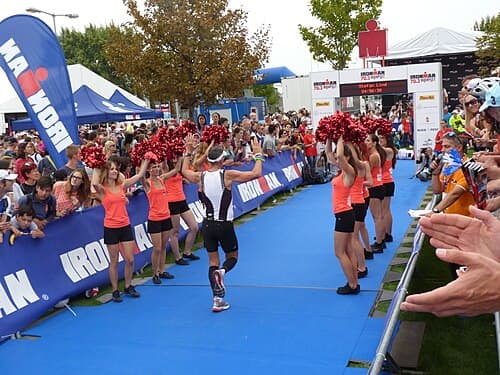
Ironman
PERSON
Name reference in documents

Jaclyn Friedman
PERSON
Name reference in documents

Jacqueline Carey's
PERSON
Name reference in documents

Janet W. Hardy
PERSON
Name reference in documents

Jay Wiseman's
PERSON
Name reference in documents

Jessica Valenti
PERSON
US feminist author and blogger

Jezebel
PERSON
Surname or name fragment in documents

Klark
PERSON • 2 mentions
Name reference in documents
KU
Kushiel
PERSON
Name reference in documents
LJ
Landon Thomas Jr.
PERSON
American journalist
Laura Antoniou
PERSON
American novelist

Leatherfolk
PERSON
Name reference in documents
LB
Lonnie Barbach's
PERSON
Name reference in documents

Madonna
PERSON
American singer, songwriter, and actress (born 1958)
Marc Rich
PERSON
American commodities trader (1934–2013)

Marina Abramovic
PERSON
Serbian performance artist (born 1946)
Mark Thompson
PERSON
Television executive
MW
Martin Weinberg
PERSON
American attorney (born 1946)

Marty Klein
PERSON
Name reference in documents
Molly Devon
PERSON
Name reference in documents
Monica
PERSON
First name reference to multiple individuals in Epstein documents
MO
Moser
PERSON
Surname or name fragment in documents

My Chastity
PERSON
Name reference in documents
MG
My Secret Garden
PERSON
Name reference in documents
My Unified Orgasm Theory
PERSON
Name reference in documents
NA
Nancy
PERSON
First name reference to multiple individuals in Epstein documents

Ona Zee
PERSON
American pornographic actress
PC
Pat Califia's
PERSON
Name reference in documents
PC
Patrick Califia
PERSON
American sex and gender writer
PK
Peggy Kleinplatz
PERSON
Canadian clinical professor, psychologist, and sexologist
PS
Peggy Siegal
PERSON
American entertainment publicist

Philip Miller
PERSON
Name reference in documents

Prince Andrew
PERSON
Third child of Queen Elizabeth II and Prince Philip, Duke of Edinburgh (born 1960)

Prince Charles
PERSON
King of the United Kingdom and other Commonwealth realms since 2022 (born 1948)

Rachel Kramer Bussel
PERSON
American writer
Rachel Rabbit White
PERSON
Name reference in documents

Ranai
PERSON
Name reference in documents
RB
Richard Berkowitz
PERSON
Name reference in documents

Samantha Power
PERSON
Irish-American academic, author and diplomat
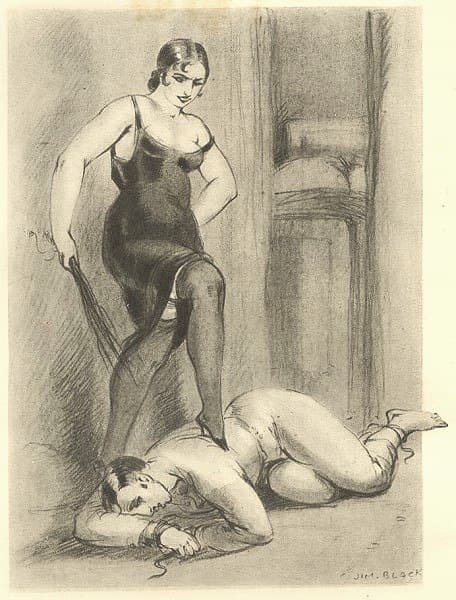
Staci Newmahr
PERSON
Name reference in documents

Stephen Hawking
PERSON
British theoretical physicist, cosmologist and author (1942–2018)

the Van Gogh
PERSON
Name reference in documents
TH
Thereltls
PERSON
Name reference in documents
Thomas MacAulay Millar's
PERSON
Name reference in documents
TC
Tony Comstock
PERSON
Name reference in documents

Tristan Taormino
PERSON
American author, columnist and adult film director

Van Gogh
PERSON
Name reference in documents

Beauty
ORGANIZATION
1997 single by Mötley Crüe
Bitch Magazine
ORGANIZATION
Organization referenced in documents
BlogHer's Love & Sex
ORGANIZATION
Organization referenced in documents
Bondage
ORGANIZATION
Organization referenced in documents

Chateau
ORGANIZATION
Type of manor house mostly built by noble families for representative purposes
Clarisse
ORGANIZATION
Organization referenced in documents
Comstock Films
ORGANIZATION
Organization referenced in documents

CreateSpace
ORGANIZATION
Organization referenced in documents
Delta
ORGANIZATION
Major American airline
Feministe
ORGANIZATION
Organization referenced in documents
Fight Club
ORGANIZATION
Organization referenced in documents
Glossary
ORGANIZATION
Organization referenced in documents
Kink Research Overviews
ORGANIZATION
Organization referenced in documents
Lois &
ORGANIZATION
Organization referenced in documents
Make A Commitment
ORGANIZATION
Organization referenced in documents
New Relationship Energy
ORGANIZATION
State of mind during new relationship
Orgasm
ORGANIZATION
Organization referenced in documents
S&M Coming-Out Story
ORGANIZATION
Organization referenced in documents
S&M Sluthood
ORGANIZATION
Organization referenced in documents
Scarleteen
ORGANIZATION • 2 mentions
Organization referenced in documents
Sex Communication Tactics Derived
ORGANIZATION
Organization referenced in documents

Shell
ORGANIZATION
British multinational oil and gas company
Subspace
ORGANIZATION
Organization referenced in documents
Super Excited
ORGANIZATION
Organization referenced in documents
The Basics
ORGANIZATION
Organization referenced in documents
the Burning Man Arts Festival
ORGANIZATION
Organization referenced in documents
the Electronic Frontier Foundation
ORGANIZATION
Organization referenced in documents
the Erotic Edge
ORGANIZATION
Organization referenced in documents
the Kink Aware Professionals
ORGANIZATION
Organization referenced in documents
The Next Generation
ORGANIZATION
Organization referenced in documents
The S&M Feminist
ORGANIZATION
Organization referenced in documents
The Strange Binary of Dominance
ORGANIZATION
Organization referenced in documents
The Ultimate Guide To Kink
ORGANIZATION
Organization referenced in documents
the University of Illinois
ORGANIZATION
Organization referenced in documents
Thorn Manliness Brain Trust
ORGANIZATION
Organization referenced in documents
Time Out
ORGANIZATION
American news magazine and website
URDOINITRONG
ORGANIZATION
Organization referenced in documents
Cypress
LOCATION
Unincorporated community of Harris County, Texas, United States
Halcyon city
LOCATION
Location referenced in documents

North
LOCATION • 2 mentions
1994 comedy film by Rob Reiner
SM/01/
LOCATION
Location referenced in documents
Statistics
Pages:100
Entities:117
Avg. OCR:93.8%
Sponsored