EFTA00625129_sub_001 - EFTA00625129_100
Document Information
Bates Range
EFTA00625129_sub_001 - EFTA00625129_100
Pages
100
Original Filename
EFTA00625129.pdf
Document Content
Page 1 - EFTA00625129_001
Why Money Trickles Up Geoff Willis [email protected] The right of Geoffrey Michael Willis to be identified as the author of this work has been asserted by him in accordance with the Copyright, Designs and Patents Act 1988. EFTA00625129
Page 2 - EFTA00625129_002
0.0 Abstract This paper combines ideas from classical economics and modern finance with Lotka-Volterra models, and also the general Lotka-Volterra models of Levy & Solomon to provide straightforward explanations of a number of economic phenomena. Using a simple and realistic economic formulation, the distributions of both wealth and income are fully explained. Both the power tail and the log-normal like body are fully captured. It is of note that the full distribution, including the power law tail, is created via the use of absolutely identical agents. It is further demonstrated that a simple scheme of compulsory saving could eliminate poverty at little cost to the taxpayer. Such a scheme is discussed in detail and shown to be practical. Using similar simple techniques, a second model of corporate earnings is constructed that produces a power law distribution of company size by capitalisation. A third model is produced to model the prices of commodities such as copper. Including a delay to capital installation; normal for capital intensive industries, produces the typical cycle of short- term spikes and collapses seen in commodity prices. The fourth model combines ideas from the first three models to produce a simple Lotka-Volterra macroeconomic model. This basic model generates endogenous boom and bust business cycles of the sort described by Minsky and Austrian economists. From this model an exact formula for the Bowley ratio; the ratio of returns to labour to total returns, is derived. This formula is also derived trivially algebraically. This derivation is extended to a model including debt, and it suggests that excessive debt can be economically dangerous and also directly increases income inequality. Other models are proposed with financial and non-financial sectors and also two economies trading with each other. There is a brief discussion of the role of the state and monetary systems in such economies. The second part of the paper discusses the various background theoretical ideas on which the models are built. This includes a discussion of the mathematics of chaotic systems, statistical mechanical systems, and systems in a dynamic equilibrium of maximum entropy production. There is discussion of the concept of intrinsic value, and why it holds despite the apparent substantial changes of prices in real life economies. In particular there are discussions of the roles of liquidity and parallels in the fields of market-microstructure and post-Keynesian pricing theory. 2 EFTA00625130
Page 3 - EFTA00625129_003
0. Zeroth Section 0.0 Abstract 0.1 Contents 0.2 Introduction 0.3 Structure of Paper Part A — Some Models Part A.I — Heavy Duty Models 1. Wealth & Income Models 1.1 Wealth & Income Data — Empirical Information 1.2 Lotka-Volterra and General Lotka-Volterra Systems 1.3 Wealth & Income Models - Modelling 1.4 Wealth & Income Models - Results 1.5 Wealth & Income Models - Discussion 1.6 Enter Sir Bowley - Labour and Capital 1.7 Modifying Wealth and Income Distributions 1.8 A Virtual 40 Acres 1.9 Wealth & Income Distributions - Loose Ends 2. Companies Models 2.1 Companies Models - 2.2 Companies Models - 2.3 Companies Models - 2.4 Companies Models - 3. Commodity models 3.1 Commodity models 3.2 Commodity models 3.3 Commodity models 3.4 Commodity models Background Modelling Results Discussion - Background - Modelling - Results - Discussion 4. Minsky goes Austrian a la Goodwin — Macroeconomic Models 4.1 Macroeconomic Models - Background 4.2 Macroeconomic Models - Modelling 4.3 Macroeconomic Models - Results 4.4 Macroeconomic Models - Discussion 4.5 A Present for Philip Mirowski? — A Bowley-Polonius Macroeconomic Model EFTA00625131
Sponsored
Page 4 - EFTA00625129_004
Part A.II - Speculative Building 4.6 Unconstrained Bowley Macroeconomic Models 4.7 A State of Grace 4.8 Nirvana Postponed 4.9 Bowley Squared 4.10 Siamese Bowley - Mutual Suicide Pacts 4.11 Where Angels Fear to Tread - Governments & Money 4.12 Why Money Trickles Up Part B - Some Theory 5. Theory Introduction Part B.I — Mathematics 6. Dynamics 6.1 Drive My Car 6.2 Counting the Bodies - Mathematics and Equilibrium 6.3 Chaos in Practice — Housing in the UK 6.4 Low Frequency / Tobin Trading 6.5 Ending the Chaos 7. Entropy 7.1 Many Body Mathematics 7.2 Statistical Mechanics and Entropy 7.3 Maximum Entropy Production 7.4 The Statistical Mechanics of Flow Systems Part &II — Economic Foundations 8. Value 8.1 The Source of Value 8.2 On the Conservation of Value 8.2.1 Liquidity 8.2.2 On the Price of Shares 9. Supply and Demand 9.1 Pricing 9.2 An Aside on Continuous Double Auctions 9.3 Supply — On the Scarcity of Scarcity, or the Production of Machines by Means of Machines EFTA00625132
Page 5 - EFTA00625129_005
9.4 Demand Part &III — The Logic of Science 10. The Social Architecture of Capitalism 11. The Logic of Science Part C — Appendices 12. History and Acknowledgements 13. Further Reading 14. Programmes 15. References 16. Figures 5 EFTA00625133
Page 6 - EFTA00625129_006
0.2 Introduction "The produce of the earth -- all that is derived from its surface by the united application of labour, machinery, and capital, is divided among three classes of the community; namely, the proprietor of the land, the owner of the stock or capital necessary for its cultivation, and the labourers by whose industry it is cultivated To determine the laws which regulate this distribution, is the principal problem in Political Economy..." On The Principles of Political Economy and Taxation - David Ricardo [Ricardo 1817] "We began with an assertion that economic inequality is a persistent and pressing problem; this assertion may be regarded by many people as tendentious. Differences in economic status - it might be argued - are a fact of life; they are no more a 'problem' than are biological differences amongst people, or within and amongst other species for that matter. Furthermore, some economists and social philosophers see economic inequality, along with unfettered competition, as essential parts of a mechanism that provides the best prospects for continuous economic progress and the eventual elimination of poverty throughout the world. These arguments will not do. There are several reasons why they will not do However there is a more basic but powerful reason for rejecting the argument that dismisses economic inequality as part of the natural order of things. This has to do with the scale and structure of inequality " Economic Inequality and Income Distribution — DG Champernowne [Champernowne & Cowell 1998] "Few if any economists seem to have realized the possibilities that such invariants hold for the future of our science. In particular, nobody seems to have realized that the hunt for, and the interpretation of, invariants of this type might lay the foundations for an entirely novel type of theory." Schumpeter (1949, p. 155), discussing the Pareto law — via [Gabaix 2009] This paper introduces some mathematical and simulation models and supports these models with various theoretical ideas from economics, mathematics, physics and ecology. The models use basic economic variables to give straightforward explanations of the distributions of wealth, income and company sizes in human societies. The models also explain the source of macroeconomic business cycles, including bubble and crash behaviour. The models give simple formulae for wealth distributions, and also for the Bowley ratio; the ratio of returns to labour and capital. Usefully, the models also provide simple effective methods for eliminating poverty without using tax and welfare. The theoretical ideas provide a framework for extending this modelling approach systematically across economics. 6 EFTA00625134
Sponsored
Page 7 - EFTA00625129_007
The models were produced firstly by taking basic ideas from classical economics and basic finance. These ideas where then combined with the mathematics of chaotic systems and dynamic statistical mechanics, in a process that I think can be well summed up as 'econodynamics' as it parallels the approaches of thermodynamics, and ultimately demonstrates that economics is in fact a subset of thermodynamics. This makes the process sound planned. It wasn't. It was a process of common sense and good luck combined with a lot of background reading. It was suggested to me in 2006 That the generalised Lotka-Volterra (GLV) distribution might provide a good fit for income data. The suggestion proved to be prescient. The fit to real data proved to be better than that for other previously proposed distributions. At this point, in 2006, I used my limited knowledge of economics to propose two alternative models that might fit the simplest economically appropriate terms into two different generating equations that produce the (GLV). I passed these ideas forward to a number of physicists. The history of this is expanded in section 12. After that, nothing very much happened for three years. This was for three main reasons. Firstly, I didn't understand the detailed mathematics, or indeed have a strong feel for the generalised Lotka-Volterra model. Secondly, my computer programming, and modelling skills are woeful. Thirdly, the academics that I wrote to had no interest in my ideas. In 2009/2010 I was able to make progress on the first two items above, and in early 2010 I was able, with assistance from George Vogiatzis and Maria Chli, to produce a GLV distribution of wealth from a simulation programme with just nine lines of code, that included only a population of identical individuals, and just the variables of individual wealth (or capital), a single uniform profit rate and a single uniform (but stochastic) consumption (or saving) rate. This simple model reproduced a complex reality with a parsimony found rarely even in pure physics. After a brief pause, the rest of the modelling, research and writing of this paper was carried out between the beginning of May 2010 and the end of March 2011. This was done in something of a rush, without financial support or academic assistance; and I would therefore ask forbearance for the rough and ready nature of the paper. From the first wealth-based model, and with greater knowledge of finance and economics; models for income, companies, commodities and finally macroeconomics dropped out naturally and straightforwardly. The models are certainly in need of more rigorous calibration, but they appear to work well. The wealth and income models appear to be powerful, both in their simplicity and universality, and also in their ability to advise future action for reducing poverty. The macroeconomic models are interesting, as even in these initial simple models, they give outcomes that accord closely with the qualitative descriptions of business and credit cycles in the work of Minsky and the Austrian school of economics. These descriptions describe well the actual behaviour of economies in bubbles and crashes from the Roman land speculation of 33AD through tulipomania and the South Sea bubble up to the recent credit crunch. Part A of this paper goes through these various models in detail, discussing also the background and consequences of the models. 7 EFTA00625135
Page 8 - EFTA00625129_008
The agents in the initial models were identical, and painfully simple in their behaviour. They worked for money, saved some of their money, spent some of their money, and received interest on the money accumulated in their bank accounts. Because of this the agents had no utility or behavioural functions of the sort commonly used in agent-based economic modelling. As such the models had no initial underlying references to neoclassical economics, or for that matter behavioural economics. There simply was no need for neoclassicism or behaviouralism. As the modelling progressed, somewhat to my surprise, and, in fact to my embarrassment, it became clear that the models were modelling the economics of the classical economists; the economics of Smith, Ricardo, Marx, von Neumann (unmodified) and Sraffa. With hindsight this turned out to be a consequence of the second of the two original models I had proposed in 2006. In this model wealth is implicitly conserved in exchange, but created in production and destroyed in consumption. Ultimately total wealth is conserved in the long term. This model denies the premises of neoclassicism, and adopts an updated form of classical economics. Despite the rejection of neoclassicism, the models work. Classical economics works. Where the classical economists were undoubtedly wrong was in their belief in the labour theory of value. They were however absolutely correct in the belief that value was intrinsic, and embodied in the goods bought, sold and stored as units of wealth. Once intrinsic wealth, and so the conservation of wealth is recast and accepted, building economic models becomes surprisingly easy. The re-acceptance of intrinsic wealth; and so the abandonment of neoclassicism, is clearly controversial. Given the wild gyrations of the prices of shares, commodities, house prices, art works and other economic goods, it may also seem very silly. Because of this a significant section of part B of this paper discusses these issues in detail, and the economic and finance background in general. The other main aim of part B of this paper is to introduce the ideas of chaotic systems, statistical mechanics and entropy to those that are unfamiliar with them. Partly because of these theoretical discussions this paper is somewhat longer than I initially expected. This is mainly because I have aimed the paper at a much larger audience than is normal for an academic paper. In my experience there are many people with a basic mathematical background, both inside and outside academia, who are interested in economics. This includes engineers, biologists and chemists as well as physicists and mathematicians. I have therefore written the paper at a level that should be relatively easy to follow for those with first year undergraduate mathematics (or the equivalent of a UK A-level in maths). Although the numbers are much smaller, I believe there is also a significant minority of economists, especially younger economists, who are acutely aware that the theory and mathematical tools of economics are simply not adequate for modelling real world economies. This paper is also aimed at these economists. 8 EFTA00625136
Page 9 - EFTA00625129_009
I would not be particularly surprised if every single model in this paper has to be reworked to make them describe real world economies. It may even be the case that many of the models have to be superseded. This would be annoying but not tragic, but is beside the point. The main point of this paper is the power of the mathematical tools. The two main tools used in this paper are chaotic differential equation systems and statistical mechanics. In both cases these tools are used in systems that are away from what are normally considered equilibrium positions. It is these tools that allow the production of simple effective economic models, and it is these tools that economists need in order to make progress. Comparative statics may be intellectually satisfying and neat to draw on a blackboard, but it doesn't work in dynamic multi-body systems. For a dynamic system you need dynamic differential equation models. For systems with large numbers of interacting bodies you need statistical mechanics and entropy. Although a minority of economists have toyed with chaos theory, and many economists claim to use 'dynamic' models, I have only encountered one economist; Steve Keen, who truly 'gets' dynamic modelling in the way that most physicists, engineers and mathematical modellers use dynamic modelling. Indeed the macroeconomic model in this paper shares many ideas with, and certainly the approaches of, Steve Keen who has used dynamical mathematical models to follow the ideas of Goodwin, Minsky and others; and who has used the Lotka-Volterra dynamics in particular. Although Keen's models are certainly heterodox he is almost unique in being an economic theoretician who predicted the credit crunch accurately and in depth. While other economists predicted the credit crunch, almost all the others who did so did this from an analysis of repeating patterns of economic history. That is, they could spot a bubble when they saw one. Steve Keen is unusual in being a theoretical economist who is able to model bubbles with a degree of precision. The use of statistical mechanics in economics is even more frustrating. Merton, Black and Scholes cherry-picked the diffusion equation from thermodynamics while completely ignoring its statistical mechanical roots and derivation. They then sledge-hammered it into working in a neoclassical framework. Tragically, a couple of generations of physicists working in finance have not only accepted this, but they have built more and more baroque models on these flimsy foundations. The trouble with Black-Scholes is that it works very well, except when it doesn't. This basic flaw has been pointed out from Mandlebrot onwards, to date with no notice taken. This is most frustrating. If physicists were doing their jobs properly, finance would be one of the simplest most boring parts of economics. The only economist I have encountered who truly 'gets' statistical mechanics is Duncan Foley. He is uniquely an economist who has fully realised not only the faults with the mathematics used by most economists, but also dedicated considerable effort to applying the correct mathematics, statistical mechanics, to economics. Although primarily modelled in a static environment, Foley's work is profoundly insightful, and demonstrates very clearly how statistical mechanical approaches are more powerful than utility based approaches, and how statistical mechanics approaches naturally lead to the market failures seen in real economies. Despite this visionary insight he has ploughed a somewhat lonely furrow, with the relevant work largely ignored by economists, and more embarrassingly also by physicists. 9 EFTA00625137
Sponsored
Page 10 - EFTA00625129_010
Because chaos and statistical mechanics are unfamiliar in economics, I have spent some effort in both the modelling sections and the theory sections in explaining how the models work in detail, how these concepts work in general, and why these mathematical approaches are not just relevant but essential for building mathematical models in economics. This extra explanation for less mathematical scientists and economists may mean that the paper is over-explained and repetitive for many physicists and mathematicians. For this I can only offer my apologies. However, even for physicists some of the background material in the discussions on entropy contains novel and powerful ideas regarding non-equilibrium thermodynamic systems. This is taken from recent work in the physics of planetary ecology and appears not to have percolated into the general physics community despite appearing to have general applicability. The ideas of Paltridge, Lorenz, Dewar and others, along with the mathematical techniques of Levy & Solomon, may not be familiar to many physicists, and I believe may be very powerful in the analysis of complex 'out of equilibrium' systems in general. In fact, although I was trained as a physicist, I am not much of a mathematician, and by emotional inclination I am more of an engineer. My skills lie mostly in seeing connections between different existing ideas and being able to bolt them together in effective and sometimes simpler ways. Part of the reason for the length of this paper is that I have taken a lot of ideas from a lot of different fields, mainly from classical economics, finance, physics, mathematics and ecology, and fitted them together in new ways. I wish to explain this bolting together in detail, partly because very few people will be familiar with all the bits I have cherry-picked, but also I suspect that my initial bolting together may be less than ideal, and may need reworking and improving. I feel I should also apologise in advance for a certain amount of impatience displayed in my writing towards traditional economics. From an economics point of view the paper gets more controversial as it goes along. It also gets increasingly less polite with regard to the theories of neoclassical economics. In the last two years I have read a lot of economics and finance, a significant proportion of which was not profoundly insightful. Unfortunately, reading standard economics books to find out how real economies work is a little like reading astrology books to find out how planetary systems work. Generally I have found the most useful economic ideas in finance or heterodox economics, areas which are not usually well known to physicists, or indeed many economists. These ideas include recent research in market microstructure, liquidity, post-Keynesian pricing theory as well as the work of Foley, Keen, Smithers, Shiller, Cooper, Pettis, Pepper & Oliver, Mehrling, Lyons and others. Neoclassical economics, while forming an intellectually beautiful framework, has proved of limited use to me as a source of knowledge. Partly this is because the mathematics used, comparative statics, is simply inappropriate. Partly it is because some of the core suppositions used to build the framework; such as diminishing returns and the importance of investment and saving, are trivially refutable. 10 EFTA00625138
Page 11 - EFTA00625129_011
The only defence I can make for my impoliteness is a very poor one; that I am considerably more polite than others. If any of my comments regarding neoclassical economics cause offence, I advise you to read the work of Steve Keen and Phillip Mirowski with some caution. Both are trained economists who have the mathematical and historical skills to realise the inappropriateness of neoclassicism. Their writing has the polemical edge of a once devout Christian who has recently discovered that the parish priest has been in an intimate liaison with his wife for the last fifteen years. Finally I would like to comment on the work of Ian Wright, Makoto Nirei & Wataru Souma and others. Throughout this paper comparisons are made to the work of Ian Wright who describes simulated economic models in two notable papers [Wright 2005, 2009]. Wright's models are significantly different to my own, most notably in not involving a financial sector. Also, unlike the present paper, Wright takes a 'black box' and 'zero intelligence' approach to modelling which eschews formal fitting of the models to mathematical equations. Despite these profound differences, at a deeper level Wright's models share fundamental similarities with my own, sharing the basic conservation of value of the classical economists, as well as using a dynamic, stochastic, statistical mechanical approach. More significantly, the models are striking in the similarities of their outputs to my own work. Also it is important to note that Wright's models have a richness in some areas, such as unemployment which are missing from my own models. In relevant sections I discuss detailed differences and similarities between the models of Wright and myself. In two papers Souma & Nirei [Souma & Nirei 2005, 2007] build a highly mathematical model that produces a power tail and an exponential distribution for income. Their approach also builds ultimately on the work of Solomon & Levy. However their approach is substantially more complex than my own. Their models do however share a number of similarities to my own models. Firstly, the models of Souma & Nirei use consumption as the negative balancing term in their model in a manner almost identical to the role of consumption in my own model. Secondly, their models ascribe a strong positive economic role to capital as a source of wealth, however this is ascribed to the process of capital growth, not the dividends, interest, rent, etc that is used in my own models. Both Wright's work and that of Souma & Nirei predate this paper. Their work also predates my original models produced in 2006. Given the process by which I came to produce the models below, I believe I did so independently of Wright, Souma & Nirei. However, I would be very foolish to discount that possibility that I was subconsciously influenced by these authors, and so I do not discount this. It is certainly clear to me that Wright, Souma & Nirei have made very substantial inroads in the same directions as my own research, and that if I had not had lucky breaks in advancing my own research, then one or other of them would have produced the models below within the near future. Given that the work of Wright, Souma & Nirei predates my own, and so gives rise to questions of originality, I have included a brief history of the gestation of the present paper in section 12, History and Acknowledgements. With regard to precedence, I would like to note that the general approach for the macroeconomic models in section 4 were partly inspired by the work of Steve Keen, though the 11 EFTA00625139
Page 12 - EFTA00625129_012
models themselves grew straight out of my company and commodity models; and ultimately out of my income models. More importantly, not a word of this paper would have been written without the work of Levy & Solomon and their GLV models. Manipulation of the GLV is beyond my mathematical ability. Although Levy & Solomon's economic explanations are naive, their gut feeling of the applicability of the GLV to economics in particular, and complex systems in general, was correct. I believe their work is of profound general importance. In later sections of this paper I quote extensively from the work of Ian Wright, Duncan Foley and Steve Keen, as their explanations of the importance of statistical mechanics and chaos in economics are difficult to improve on. 0.3 Structure of the Paper Part A of this paper discusses a number of economic models in detail, Part A.I discusses a number of straightforward models giving results that easily accord with the real world and also with the models of Ian Wright. Part A.II discusses models that are more speculative. Part B discusses the background mathematics, physics and economics underlying the models in Part A. The mathematics and physics is discussed in Part B.I, the economics in part B.II, the conclusions are in part B.III. Finally, Part C gives appendices. Within Part A; section 1 discusses income and wealth distributions; section 1.1 gives a brief review of empirical information known about wealth and income distributions while section 1.2 gives background information on the Lotka-Volterra and General Lotka-Volterra models. Sections 1.3 to 1.5 gives details of the models, their outputs and a discussion of these outputs. Section 1.6 discusses the effects that changing the ratio of waged income to earnings from capital has on wealth and income distributions. Sections 1.7 and 1.8 discuss effective, low-cost options for modifying wealth and income distributions and so eliminating poverty. Finally, section 1.9 looks at some unexplained but potentially important issues within wealth and income distribution. Sections 2.1 to 2.4 go through the background, creation and discussion of a model that creates power law distributions in company sizes. Sections 3.1 to 3.4 use ideas from section 2, and also the consequences of the delays inherent in installing physical capital, to generate the cyclical spiking behaviour typical of commodity prices. Sections 4.1 to 4.4 combine the ideas from sections 1, 2 and 3 to provide a basic macroeconomic model of a full, isolated economy. It is demonstrated that even a very basic model can endogenously generate cyclical boom and bust business cycles of the sort described by Minsky and Austrian economists. 12 EFTA00625140
Sponsored
Page 13 - EFTA00625129_013
In section 4.5 it is demonstrated that an exact formulation for the Bowley ratio; the ratio of returns to labour to total returns, can easily be derived from the basic macroeconomic model above, or indeed from first principles in a few lines of basic algebra. In section 4.6 and 4.7 the above modelling is extended into an economy with debt. From this a more complex, though still simple, formulation for the Bowley ratio is derived. This formulation suggests that excessive debt can be economically dangerous and also directly increases income inequality. The more general consequences of the Bowley ratio for society are discussed in more depth in section 4.8. In section 4.9 two macroeconomic models are arranged in tandem to discuss an isolated economy with a financial sector in addition to an ordinary non-financial sector. In section 4.10 two macroeconomic models are discussed in parallel as a model of two national economies trading with each other. To conclude Part A, section 4.11 introduces the role of the state and monetary economics, while section 4.12 briefly reviews the salient outcomes of the modelling for social equity. In Part B, section 6.1 discusses the differences between static and dynamic systems, while section 6.2 looks at the chaotic mathematics of differential equation systems. Examples of how this knowledge could be applied to housing markets is discussed in section 6.3, while applications to share markets are discussed in section 6.4. A general overview of the control of chaotic systems is given in section 6.5. Section 7.1 discusses the theory; 'statistical mechanics', which is necessary for applying to situations with many independent bodies; while section 7.2 discusses how this leads to the concept of entropy. Section 7.3 discusses how systems normally considered to be out of equilibrium can in fact be considered to be in a dynamic equilibrium that is characterised as being in a state of maximum entropy production. Section 7.4 discusses possible ways that the statistical mechanics of maximum entropy production systems might be tackled. Moving back to economics; in section 8.1 it is discussed how an intrinsic measure of value can be related to the entropy discussed in section 7 via the concept of 'humanly useful negentropy'. Section 8.2 discusses the many serious criticisms of a concept of intrinsic value in general, with a discussion of the role of liquidity in particular. Section 9.1 looks at theories of supply and pricing, the non-existence of diminishing returns in production, and the similarities between the market-microstructure analysis and post-Keynesian pricing theory. Section 9.3 looks for, and fails to find, sources of scarcity, while section 9.4 discusses the characteristics of demand. In section 10 both the theory and modelling is reviewed and arranged together as a coherent whole, this is followed by brief conclusions in section 11. Sections 12 to 16 are appendices in Part C. Section 12 gives a history of the gestation of this paper and an opportunity to thank those that have assisted in its formation. 13 EFTA00625141
Page 14 - EFTA00625129_014
Section 13 gives a reading list for those interested in learning more about the background maths and economics in the paper. Section 14 gives details of the Matlab and Excel programmes used to generate the models in Part A of the paper. Sections 15 and 16 give the references and figures respectively. 14 EFTA00625142
Page 15 - EFTA00625129_015
Part A — Some Models Section A.I — Heavy Duty Models 1. Wealth & Income Models 1.1 Wealth & Income Data — Empirical Information "Endogeneity of distribution Neoclassical economics approaches the problem of distribution by positing a given and exogenous distribution of ownership of resources. The competitive market equilibrium then determines the relative value of each agent's endowment (essentially as rents). I think there are problems looming up with this aspect of theory as well. One reason to doubt the durability of the assumption of an exogenous distribution of ownership of resources is that income and wealth distributions exhibit empirical regularities that are as stable as any other economic relationships. I think there is an important scientific payoff in models that explain the size distributions of wealth and income as endogenous outcomes of market interactions." Duncan K. Foley [Foley 1990] Within theoretical economics, the study of income and wealth distributions is something of a backwater. As stated by Foley above, neo-classical economics starts from given exogenous distributions of wealth and then looks at the ensuing exchange processes. Utility theory assumes that entrepreneurs and labourers are fairly rewarded for their efforts and risk appetite. The search for deeper endogenous explanations within mainstream economics has been minimal. This is puzzling, because, as Foley states, it has been clear for a century that income distributions show very fixed uniformities. Vilfredo Pareto first showed in 1896 that income distributions followed the power law distribution that now bears his name [Pareto 1896]. Pareto studied income in Britain, Prussia, Saxony, Ireland, Italy and Peru. At the time of his study Britain and Prussia were strongly industrialised countries, while Ireland, Italy and Peru were still agricultural producers. Despite the differences between these economies, Pareto discovered that the income of wealthy individuals varied as a power law in all cases. Extensive research since has shown that this relationship is universal across all countries, and that not only is a power law present for high income individuals, but the gradient of the power law is similar in all the different countries. Typical graphs of income distribution are shown below. This is data for 2002 from the UK, and is an unusually good data set [ONS 2003]. Figure 1.1.1 here 15 EFTA00625143
Sponsored
Page 16 - EFTA00625129_016
Figure 1.1.1 above shows a probability density function. A probability distribution function (pdf) is basically a glorified histogram or bar chart. Along the x-axis are bands of wage. The y-axis shows the number of people in each wage band. As can be seen this shape has a large bulge towards the left-hand side, with a peak at about £300 per week. To the right hand side there is a long tail showing smaller and smaller numbers of people with higher and higher earnings. Also included in this chart is a log-normal distribution fitted to the curve. The log-normal distribution is the curve that economists normally fit to income distributions (or pretty much anything else that catches their attention). On these scales the log-normal appears to give a very good fit to the data. However there are problems with this. Figure 1.1.2 here Figure 1.1.2 above shows the same data, but this time with the y-axis transformed into a log scale. Although the log-normal gives a very good fit for the first two thirds of the graph, somewhere around a weekly wage level of £900 the data points move off higher than the log- normal fit. The log-normal fit cannot describe the income of high-earners well. Figure 1.1.3 here Figure 1.1.3 above shows the same data but organised in a different manner. This is a 'cumulative density function' or cdf. In this graph the wealth is still plotted along the x-axis, but this time the x-axis is also a log scale. This time the y-axis shows the proportion of people who earn more than the wage on the x-axis. In figure 1.1.3 about 10% of people, a proportion of 0.1, earn more than £755 per week. It can be seen that the curve has a curved section on the left-hand side, and a straight line section on the right-hand side. This straight section is the 'power-tail' of the distribution. This section of the data obeys a 'power-law' as described by Pareto 100 years ago. The work of Pareto gives a remarkable result. An industrial manufacturing society and an agrarian society have very different economic systems and societal structures. Intuitively it seems reasonable to assume that income would be distributed differently in such different societies. What the data is saying is that none of the following have an effect on the shape of income distribution in a country: • Whether wealth is owned as industrial capital or agricultural land • Whether wealth is owned directly or via a stock market • What sort of education system a country has 16 EFTA00625144
Page 17 - EFTA00625129_017
• What sort of justice system a country has • Natural endowments of agricultural land or mineral wealth • And so on with many other social and economic factors Intuitively it seems reasonable that any or all of the above would affect income distribution, in practice none of them do. Income distributions are controlled by much deeper and basic processes in economics. The big unexpected conclusion from the data of Pareto and others is the existence of the power tail itself. Traditional economics holds that individuals are fairly rewarded for their abilities, a power tail distribution does not fit these assumptions. Human abilities are usually distributed normally, or sometimes log-normally. The earning ability of an individual human being is made up of the combination of many different personal skills. Logically, following the central limit theorem, it would be reasonable to expect that the distribution of income would be a normal or log-normal distribution. A power law distribution however is very much more skewed than even a log-normal distribution, so it is not obvious why individual skills should be overcompensated with a power law distribution. While Pareto noted the existence of a power tail in the distribution, it should be noted that more recently various authors have suggested that there may be two or even three power tail regions, with a separation between the 'rich' and 'super-rich', see for example [Borges 2002, Clementi & Gallegati 2005b, Souma, Nirei & Souma 2007]. While the income earned by the people in the power tail of income distribution may account for approximately 50% of total earnings, the Pareto distribution actually only applies to the top 10%-20% of earners. The other 80%-90% of middle class and poorer people are accounted for by a different 'body' of the distribution. Going back to the linear-linear graph in figure 1.1.1 it can be seen that, between incomes of £100 and £900 per week, there is a characteristic bulge or hump of individuals, with a skew in the hump towards the right hand side. In the days since Pareto the distribution of income for the main 80%-90% of individuals in this bulge has also been investigated in detail. The distribution of income for this main group of individuals shows the characteristic skewed humped shape similar to that of the log-normal distribution, though many other distributions have been proposed. These include the gamma, Weibull, beta, Singh-Maddala, and Dagum. The last two both being members of the Dagum family of distributions. Bandourian, McDonald & Turley [Bandourain et al 2002] give an extensive overview of all the above distributions, as well as other variations of the general beta class of distributions. They carry out a review of which of these distributions give best fits to the extensive data in the Luxembourg Income Study. In all they analyse the fit of eleven probability distributions to twenty-three different countries. They conclude that the Weibull, Dagum and general-beta2 distributions are the best fits to the data depending on the number of parameters used. 17 EFTA00625145
Page 18 - EFTA00625129_018
For more information, readers are referred to 'Statistical Size Distributions in Economics and Actuarial Sciences' [Kleiber & Kotz 2003] for a more general overview of probability distributions in economics, and also to Atkinson and Bourguignon [Atkinson & Bourguignon 2000] for a very detailed discussion of income data and theory in general. The author has analysed a particularly good set of income data from the UK tax system, one example is shown in figures 1.1.1-3 above. This data suggests that a Maxwell-Boltzmann distribution also provides a very good fit to the main body of the income data that is equal to that of the log-normal distribution [Willis & Mimkes 2005]. The reasons for the split between the income earned by the top 10% and the main body 90% has been studied in more detail by Clementi and Gallegati [Clementi & Gallegati 2005a] using data from the US, UK, Germany and Italy. This shows strong economic regularities in the data. In general it appears that the income gained by individuals in the power tail comes primarily from income gained from capital such as interest payments, dividends, rent or ownership of small businesses. Meanwhile the income for the 90% of people in the main body of the distribution is primarily derived from wages. These conclusions are important, and will be returned to in the models below. This view is supported, though only by suggestion, by one intriguing high quality income data set. This data set comes from the United States and is from a 1992 survey giving proportions of workers earning particular wages in manufacturing and service industries. The ultimate source of the data is the US Department of Labor; Bureau of Statistics, and so the provenance is believed to be of the good quality. Unfortunately, enquiries by the author has failed to reveal the details of the data, such as sample size and collection methodology. The data was collected to give a comparison of the relative quality of employment in the manufacturing and service sectors. Although the sample size for the data is not known, the smoothness of the curves produced suggest that the samples were large, and that the data is of good statistical quality. The data for services is shown in figures 1.1.4 & 1.1.5 below, the data for manufacturing is near identical. Figure 1.1.4 here Figure 1.1.5 here Like the UK data, there appears to be a clear linear section in the central portion of the data on a log-linear scale in figure 1.1.5, indicating an exponential section in the raw data. Again this data can be fitted equally well with a log-normal or a Maxwell-Boltzmann distribution. What is much more interesting is that, beyond this section, the data heads rapidly lower on the logarithmic scale. This means it is heading rapidly to zero on the raw data graph. With these two distributions there is no sign whatsoever of the 'power tail' that is normally found in income distributions. 18 EFTA00625146
Sponsored
Page 19 - EFTA00625129_019
It is the belief of the author that the methodology for this US survey restricted the data to 'earned' or 'waged' income, as the interest in the project was in looking at pay in services versus manufacturing industry. It is believed income from assets and investments was not included as this would have been irrelevant to the investigation. This US data set has been included for a further reason, a reason that is subtle; but in the belief of the author, important. Looking back at figure 1.1.1 for the UK income data, there is a very clear offset from zero along the income axis. That is the curve does not start to rise from the income axis until a value of roughly £100 weekly wage. The US data shows an exactly similar offset, with income not rising until a weekly wage of $100. This is important, as the various curves discussed above (log-normal, gamma, Weibull, beta, Singh-Maddala, Dagum, Maxwell-Boltzmann, etc) all normally start at the origin of the axis, point (0,0) with the curve rising immediately from this point. While it is straightforward enough to put an offset in, this is not normally necessary when looking at natural phenomena. In the 1930s Gibrat, an engineer, pioneered work in economics that studied work on proportional growth processes that could produce log-normal or power law distributions depending on the parameters. His work primarily looked at companies, and was the first attempt to apply stochastic processes to produce power law distributions. Following the work of Pareto, the details of income and wealth distributions have rarely been studied in mainstream theoretical economics, a notable and important exception being Champernowne. Champernowne was a highly gifted mathematician who was diverted into economics, he was the first person to bring a statistical mechanical approach to income distribution, and also noted the importance of capital as a major creator of inequality, though his approach concentrated on generational transfers of wealth [Champernowne & Cowell 1998]. Despite the lack of interest within economics, this area has had a profound attraction to those outside the economics profession for many years, a review of this history is provided by Gabaix [Gabaix 2009]. In recent years, the study of income distributions has gone through a small renaissance with new interest in the field shown by physicists with an interest in economics, and has become a significant element of the body of research known as 'econophysics'. Notable papers have been written in this field by Bouchaud & Mezard, Nirei & Souma, Dragulescu & Yakovenko, Chatterjee & Chakrabarti, Slanina, Sinha and many, many, others [Bouchaud & Mezard 2000, Dragulescu & Yakovenko 2001, Nirei & Souma 2007, Souma 2001, Slanina 2004, Sinha 2005]. The majority of these papers follow similar approaches; inherited either from the work of Gibrat, or from gas models in physics. Almost all the above models deal with basic exchange processes, with some sort of asymmetry introduced to produce a power tail. Chatterjee et al 2007, Chatterjee & Chakrabarti 2007 and Sinha 2005 give good reviews of this modelling approach. The approaches above have been the subject of some criticism, even by economists who are otherwise sympathetic to a stochastic approach to economics, but who are concerned that a 19 EFTA00625147
Page 20 - EFTA00625129_020
pure exchange process is not appropriate for modelling modern economies [Gallegati et al 2006]. An alternative approach to stochastic modelling has been taken by Moshe Levy, Sorin Solomon, and others [Levy & Solomon 1996]. They have produced work based on the 'General Lotka-Volterra' model. Unsurprisingly, this is a generalised framework of the 'predator-prey' models independently developed for the analysis of population dynamics in biology by two mathematicians/physicists Alfred Lotka and Vito Volterra. A full discussion of the origin and mathematics of GLV distributions is given below in section 1.2. These distributions are interesting for a number of reasons; these include the following: • the fundamental shape of the GLV curve • the quality of the fit to actual data • the appropriateness of the GLV distribution as an economic model Figure 1.1.6 here Figure 1.1.7 here With regard to the fundamental shape of the GLV curve, figures 1.1.6 and 1.1.7 above show plots of the UK income data against the GLV on a linear-linear and log-log plot. The formula for this distribution is given by: P(w) = K(e' r""•)/((w/L)"+"1) (1.1a) and it has three parameters; K is a general scaling parameter, L is a normalising constant for w, and a relates to the slope of the power tail of the distribution. It should firstly be noted that the GLV has both a power tail and a 'log-normal'-like main body. That is to say it can model both the main population and the high-end earners at the same time. This is a very significant advantage over other proposed distributions. The second and more subtle point to note is that the GLV has a 'natural' offset from zero. It is in the nature of the GLV that the rise from zero probability on the y-axis starts at a non-zero value on the x-axis, this is discussed further in section 1.2 Below. Finally the detailed fit of the GLV appears to be equivalent or better than the log-normal distribution. 20 EFTA00625148
Page 21 - EFTA00625129_021
Figure 1.1.8 Reduced Chi Squared Full Data Set Reduced Data Set Boltzmann Fit 3.27 1.94 Log Normal Fit 2.12 3.02 GLV Fit 1.21 1.83 Figure 1.1.8 above gives results from a basic statistical analysis using the GLV, log-normal and Maxwell-Boltzmann distributions. (The values in the table are the reduced chi-squared values, using an assumed standard measurement error of 100. The actual measurement error is not known, so the values above are not absolute, however, changing the measurement value will change the values in the table by equal proportions, so the relative sizes of the values in the table will stay the same.) It can be seen from the figures in the first column that the GLV, with the lowest value of chi- squared, gives the best fit. In itself this is not altogether surprising, as it is known that the log- normal and the Maxwell-Boltzmann have exponential tails, and so are not able to fit power tails. More remarkably, the figures in the second column show the same analysis carried out using a truncated data set with an upper limit of £800 per week. This limit was taken to deliberately exclude the data from the power tail. Again it can be seen that the GLV still just gives the best fit to the data. This in itself suggests that the GLV should be preferred to the log-normal or the Maxwell-Boltzmann distributions. It is also of note that in parallel to the work of Solomon et al, Slanina has also proposed an exchange model that produces the same output distribution as the GLV [Slanina 2004]. Unfortunately the modelling approaches of Solomon et al, and Slanina use economic models that are not wholly convincing, and as such have significant conceptual shortcomings. It is the belief of the author that an alternative economic analysis, using more appropriate analogies allows a much more effective use of GLV distributions in an intuitive and simple economic formulation. This is the third main reason for preferring the GLV distribution, and forms the key content of the initial sections of this paper. As previously noted Souma & Nirei have also pursued research in this direction. Before discussing the GLV distribution in detail I would firstly like to review some background on power law distributions. Power laws are deeply beloved of theoretical physicists, and there are many different ways to produce power laws. Most theoretical physicists tend to have a particular affection for their pet process and it's particular mathematical derivation, and then proceed to fit their pet equations to any model that happens to have a power tail with gay abandon. Also, as is usually necessary, this requires the sledgehammer of many pages of complex mathematical derivation, in an attempt to fit a square peg into a round hole. An unfortunate consequence of this is that most of 21 EFTA00625149
Sponsored
Page 22 - EFTA00625129_022
the very extensive literature on power laws is confusing, apparently conflicting, and to a great extent simply incoherent. This is a shame, as most power laws distributions are actually produced very simply, in a restricted number of ways. For those who want more background on the formation of power laws, log-normal laws and related processes, there are three very good background papers by Newman [Newman 2005], Mitzenmacher [Mitzenmacher 2004] and Simkin & Roychowdhury [Simkin & Roychowdhury 2006]. The papers by Newman and Mitzenmacher give very good overviews of what make power law and log-normal normal distributions without being mathematically complex. One basic point from the papers is that there are many different ways of producing power law distributions, but the majority fall into three main classes. The first class gives a power law distribution as a function of two exponential distributions; of two growth processes. The second class gives power law distributions as an outcome of multiplicative models. This is the route that Levy and Solomon have followed in their work, and forms the basis for the GLV distribution discussed in detail in the next section. The third class for producing power laws uses concepts of 'self-organised criticality' or 'SOC'. A second basic point, discussed in Mitzenmacher, is that the difference between a log-normal distribution and a power law distribution is primarily dependent on the lower barrier of the distribution, if the lower barrier is at zero, then you get a log-normal distribution, if the barrier is above zero, then the distribution gives a power tail. A non-zero barrier, provided by wage income, is an essential part of the GLV model discussed in section 1.2 below. The paper of Simkin and Roychowdhury is illuminating and entertaining. It shows that the same basic mechanisms for producing power laws, and branching processes in general, have been rediscovered dozens of times, and that most power law / branching processes are in fact analogous. As an example, the models of Levy & Solomon follow processes previously described by Champernowne in economics, and ultimately by Yule and Simon almost a century ago. This is not to devalue the work of Solomon and Levy; their approach allows for dynamic equilibrium formation, this includes an element missing from most branching models that in my opinion makes the Solomon and Levy model much more powerful as a general model. This is returned to in section 1.2 below. It is however my belief that reading Simkin and Roychowdhury by all those involved in modelling power laws would make their lives a lot easier. Finally it is important to note the difference between income and wealth. Income data is relatively easy to collect from income tax returns. Pareto's original work and almost all subsequent analysis of data is based on that from income data. Wealth data of any quality is very difficult to find. Where this data has been collected it almost exclusively pertains to the richest portion of society, and suggests that wealth is also distributed as a power law for these people. I am not aware of any data of sufficient quality to give any conclusions about the distribution of wealth amongst the bottom 90% of individuals. This has led to some very unfortunate consequences within the econophysics community. Without exception all the exchange models by all the various authors above, including those of Solomon and Slanina, are wealth exchange models. I have not yet seen a model where income (trivially the time derivative of wealth) is measured. 22 EFTA00625150
Page 23 - EFTA00625129_023
Despite this, the output distributions from these wealth models are often judged to be successful when they map well onto data derived from income studies. Wealth and income (and sometimes money) are used interchangeably in econophysics papers. This is most unfortunate. A paper on physics; written by an economist, that used energy and power interchangeably would be greeted with considerable scorn by physicists. An explanation for why wealth models can give outputs that can then define income data successfully is given in section 1.4.4 below. Before moving on to the modelling of income and wealth distributions, I would first like to discuss the derivation and mechanics of the Lotka-Volterra distribution and the GLV distribution in more detail. 23 EFTA00625151
Page 24 - EFTA00625129_024
1.2 Lotka-Volterra and General Lotka-Volterra Systems 1.2.1 Lotka-Volterra systems Lotka-Volterra systems were independently discovered by Alfred Lotka [Lotka 1925] and Vito Volterra [Volterra 1926] and are used to describe the dynamics of populations in ecological systems. Ultimately this dynamic approach goes back directly to the economic growth equations of Malthus and Sismondi. A basic Lotka-Volterra system consists of a population of prey (say rabbits) whose size is given by x, and a population of predators (say foxes) given by y. Not explicitly given in this simple case, it is further assumed that there is a steady supply of food (eg. grass) for the prey. When no predators are present this means that the population of the rabbits is governed by: dx — = ax dt (1.2.1a) where a is the population growth rate. Left to their own business, this would give exponential, Malthusian growth in the population of the rabbits. In the absence of any rabbits to eat, it is assumed that there is a natural death rate of the foxes: dy — —cx dt (I.2.1b) where c is the population die-off rate, and the negative sign indicates a decline in the population. This would give an exponential fall in the fox population. When the foxes encounter the rabbits, two further effects are introduced, firstly the rate at which rabbits are killed is proportional to the number of rabbits and the number of foxes (ie the chance of foxes encountering rabbits), so: dx dt = —ocx y (1.2.1c) where a is a constant, and the —ve sign indicates that such encounters are not good for the rabbits. However these interactions are good for the foxes, giving: 24 EFTA00625152
Sponsored
Page 25 - EFTA00625129_025
dy dt = yxy Where y is again a fixed constant. (I.2.1d) Taken together, the results above give a pair of differential equations: dx = ax — axy dt = x(a — ay) for the rabbits, and: for the foxes. dy = dt yxy — cy = y(yx — c) (1.2.1 e) = y( —c + yx) (1.2.1f) The most important point about this pair of equations is that x depends on y, while at the same time, y depends on x. The dependency goes in both directions, this make things fun. While it is possible for these equations to have a single stable solution, this is often not the case. Commonly the populations of both rabbits and foxes fluctuates wildly. An example is given in figure 1.2.1.1 below for lynx preying on arctic hares [BBC]: Figure 1.2.1.1 here The data for the graph above comes from long-term records of pelts collected by the Hudson Bay Company. The graph shows very closely the recurrent booms and busts in population of the two types of animals. In the short term the population and total biomass of both lynx and hares can increase or decrease substantially. The population of lynx can be large or small in proportion to that of the hares. The populations of both are highly unstable. A subtlety to note is that the population of the lynx follows, 'lags', the population of the hares. It is also worth considering, even at this early stage, the behaviour, or indeed the 'behaviouralism' of the lynx in particular. 25 EFTA00625153
Page 26 - EFTA00625129_026
Following a previous collapse, the population of hares can expand rapidly as there are very few lynx to hunt them. As the population of hares increases rapidly, the lynx behave 'rationally' (at least given the absence of long-term, liquidly tradable, hare futures) in both eating lots of hares, and also giving birth to lots of new lynx to feed on the excess of hares. Eventually, of course there are too many lynx for the population of hares, and ultimately there are too many lynx and hares for the underlying amount of grass available. At the peaks of hare and lynx populations there is simply too much biomass wandering around for the land to support. Despite the substantial fluctuations seen in figure 1.2.1.1 above, the populations of both lynx and hares show stable fluctuations around long term averages; roughly 40,000 or so for the hares and 20,000 or so for the lynx, though note that the populations pass through these average values very quickly. In fact the values of the two populations are confined to a band of possible values. The population can move round in a limited set of possible options, this is shown for example in the two figures from simulations below. Figure 1.2.1.2 here Note also the figure 1.2.1.2 shows the same leads and lags in predator and prey populations as the real data. The populations of wolves and rabbits can be displayed on one graph, this then produces the phase diagram in figure 1.2.1.3 below showing how the population of wolves and rabbits vary with each other, and how they are constrained to a particular set of paths. Figure 1.2.1.3 here These diagrams are taken from the website of Kumar, [Kumar 2006], which gives a very good brief introduction to the maths and modelling of Lotka-Volterra systems. It can be seen that the simulated population of wolves and rabbits wanders continuously around average values of approximately seventeen rabbits and six wolves. In contrast, figures 1.2.1.4 & 5 below show the same system with minor changes to the rates of growth. In this model the oscillations slowly die down to stable long-term values. Another alternative is that the oscillations can grow in size unstably and explode to infinity. Figure 1.2.1.4 here 26 EFTA00625154
Page 27 - EFTA00625129_027
Figure 1.2.1.5 here One of the important things to note about non-linear dynamic systems such as these is that relatively minor changes in parameters can result in dramatic differences in system behaviour. All the talk of predators and prey can give rise to emotive, and wholly inappropriate, language and modelling. It is an easy, but foolish, course to represent one group of actors (financiers say) as predators, and others (workers) as prey. This is flawed for two reasons. Sometimes the mathematics works the other way, so for example, the Marxian inspired models of Goodwin actually model workers as predators. More importantly, the maths and models are impersonal; they are totally unconnected to the motives of the actors. In fact you don't need both predators and prey, a solitary animal population that grows too quickly can also suffer from population booms and crashes. An example is that of Soay sheep on the island of Soay (in this case the grass can be considered to be the prey, though a better solution would be to use the logistic equation or a similar carrying capacity based approach). 1.2.2 General Lotka-Volterra (GLV) systems As the name implies, the General Lotka-Volterra system (GLV) is a generalisation of the Lotka- Volterra model to a system with multiple predators and prey. This can be represented as: dx, dt = x,r, + Ea xx z.j 1 (1.2.2a) = x,(r, + ah,x,) (1.2.2b) here, dx,/dt is the overall rate of change for the i-th particular species, out of a total of N species. This is made up of two terms. The first term is the natural growth (or death) rate, r4 for the species, where xi is the population of species i. This rate r, is equivalent to the growth rate 'a' in equation (1.2.1e) or the death rate '-c' in equation (1.2.1f). The second term gives the sum of all the interactions with the j number of other species. Here aw is the interaction rate defining the relationship between species i and j. aw is negative if species j is a predator feeding on species i, positive if species i is a predator feeding on species j, or can be of either sign for a heterotroph. a,,; is equivalent to the a of equation (1.2.1e) or the y of equation (1.2.1f). Hopefully it is clear that equations (1.2.2a) and (1.2.2b) are generalisations of equations (1.2.1e) and (1.2.1f) for many interacting species. 27 EFTA00625155
Sponsored
Page 28 - EFTA00625129_028
For each species in the system, potentially N-1 interaction rates aw are needed, while N! separate differential equations are needed to describe the whole system. This makes direct solution of the equations for the system somewhat problematic. Fortunately in many systems it is possible to make simplifying assumptions. As an example Solomon [Solomon 2000] proposes the following difference equation as a possible explanation for the power law distribution of city population sizes. This equation describes changes in the distribution in terms of discrete time-steps from time t to time t+1: wht — t t.t (1.2.2c) The terms on the right hand side, in say the year 2003, the year t, add up to give the population w of city i in the year 2004 on the left hand side, which is at time t+1. Such equations are typically used in simulations, one after the other, to give a model of how populations change. Sometimes, though often not, clever mathematicians can derive output population distributions from the underlying difference equations. In equation (1.2.2c), X is the natural growth rate of the population w of city i, but is assumed that X is the same for each city. at is the arrival rate of population from other cities, which is multiplied by the average population w of all the cities. The final term gives the rate of population leaving each city, which is due to the probability ct of an individual meeting a partner from another city. This is given by multiplying the average population w with the population of city i. Leaving aside the detail of the model, important generalisations have been made to produce a more tractable model. In this case X, a and c are universal rates, applicable to all members of the system. X and a both give 'positive autocatalytic' (positive feedback) terms which increase the population w of each city. While the negative value of c ensures that the population of each city has an element of decrease. In the absence of the negative feedback term, the populations of the cities can increase indefinitely to infinity without reaching a stable solution. In the absence of the positive autocatalytic growth of the X in the first term on right hand side, the second and third terms will cause all of the population to end up in a single city. Normally one or more variables are assumed to be stochastic; that is they can vary randomly. In Solomon's example above, all three of A, a and c are assumed to be stochastic. This stochasticity need not be large; it can be small fluctuations around a long-term mean, but it ensures that a locally stable solution is not reached, and that the system evolves into a single long term equilibrium solution. While the above may seem complex, it will be argued later in section 7.3 that this model can be seen as a very general model across many different real world complex systems. 28 EFTA00625156
Page 29 - EFTA00625129_029
It is possible to show (though not by me) that the above system can give a stable resultant probability distribution function of populations over the various cities of the form: P(w) (1.2.2d) Which is the general form of the GLV distribution. Or more specifically: P(w) = K(e-1"-" I"11')/((w/L)"+"') (1.2.2e) As has been shown above in section 1.1 this formula gives a very good fit to income data. As well as the quality of fit there are three other reasons that suggest that the GLV may be appropriate for wealth and income distributions. The first two reasons are technical and are discussed below, the third is more subjective and forms the core of this paper. A first reason for preferring the GLV is that this distribution is notable in that the distribution has a main body that is similar to a Maxwell-Boltzmann distribution or log-normal Maddala etc distribution, while the tail follows a power law distribution. While other theories, from both economics and physics, are able to explain one part of the distribution well, it is generally necessary to invoke complex assumptions to explain the remaining part of the distribution, if such an explanation is even attempted. The GLV kills both the birds of income distribution with a single theoretical stone. The second reason for preferring the GLV is that the autocatalytic terms in the GLV give the GLV an automatic offset from zero. As noted above in section 1.1 both the UK and US income data show this offset. While it is perfectly straightforward to put an offset into a log-normal or Maxwell-Boltzmann and other distributions, systems commonly found in nature modelled by the above distributions typically have their origin at zero. The third reason is that the GLV naturally describes complex dynamic flow systems that have reached a maximum entropy production equilibrium. Economics is such a complex dynamic flow system, and it will be seen that the straightforward models described below model real economic outcomes surprisingly well. Solomon further proposes a similar model as an explanation for income distribution: µht+1=A l wi.l +aW —cWw I I t 3.t (1.2.2f) In this case X is proposed to be positive gains by individuals with origins on the stock market, 'a' is assumed to represent wealth received in the form of 'subsidies, services and social benefits, while 'c' is assumed to represent competition for scarce resources, or 'external limiting factors (finite amount of resources and money in the economy, technological inventions, wars, disasters, etc.) as well as internal market effects (competition between investors, adverse 29 EFTA00625157
Page 30 - EFTA00625129_030
influence of bids on prices such as when large investors sell assets to realize their value and prices fall as a result. While it is the author's belief that a form of the GLV is appropriate for modelling wealth and income distributions, it is believed that the above economic mechanisms are not realistic. At heart the models of Levy & Solomon remain pair exchange models, with random movements of wealth between individuals. As a realistic description of an economic system this falls short of reasonable requirements. As noted previously, Souma & Nirei [Souma & Nirei 2005, Nirei & Souma 2007] have uniquely moved forward from Levy & Solomon's work in a way that gets closer to meaningful economic fundamentals, however their models include a high degree of complexity. It is also noteworthy that Slanina has produced a pair exchange model that generates an identical output distribution to the GLV output, again it is contended that simple pair exchange is not appropriate as an economic model [Slanina 2004]. In the next section an economic model is proposed that I believe much more closely represents real life economic mechanisms. 30 EFTA00625158
Sponsored
Page 31 - EFTA00625129_031
1.3 Wealth & Income Models - Modelling Figure 1.3.1 here Figure 1.3.1 above shows a simple macroeconomic model of an economy. This model is taken from figure 1 of chapter 2 of 'Principles of Economics', by Gregory Mankiw [Mankiw 2004]. Figure 1.3.2 below shows a modified version of the diagram. The two 'markets' between the firms and households have been removed, investment and saving streams have been added, as well as the standard economics symbols for the various flows. Figure 1.3.2 here All standard economics textbooks use similar diagrams to figures 1.3.1 and 1.32 for macroeconomic flows; I have chosen that of Mankiw as his is one of the most widely used. Flows of goods and services are shown in the black lines. The lighter broken lines show the flows of money. (As a simple-minded engineer I prefer diagrams that include flows of goods as well as cash, as I find them easier to follow.) Note that Mankiw shows households owning 'factors of production' such as land and capital, which the households are then shown as selling to firms. This is indicated as a flow of land and capital (along with labour) from households to firms. I personally have never actually sold any machine tools to a manufacturing company, and I have never met any householder who has done so. We will return to this particular 'flow' later. Note also that the total system shows a contained circularity of flow, with balances between supply and demand of goods and services. In this circular flow model economic textbooks assume some basic equalities: C=G C = Y (1.3a) (1.3b) Equation (1.3b) state that the total income gained from firms adding value is equal to the total consumption of goods and services. 31 EFTA00625159
Page 32 - EFTA00625129_032
[Nb. In writing this paper I have attempted to use standard notation from economics wherever possible. This occasionally results in confusion. It should be noted that the capital letter Y is used as standard in (macro) economics for income, while small y is used as standard in (micro) economics for outputs from companies. This is not normally a problem, as the two are rarely discussed at the same time in standard economic models. In the discussions of income that follows y is not actually necessary for the analysis, and Y invariably refers to income in the equations of the mathematical model and is normally subscripted.] Figure 1.3.3 here In figure 1.3.3 above I have modified this standard model to reflect what I believe is something closer to reality. Firstly in this model households have been changed to individuals, this is simply to bring the model more in line with the standard analysis of statistical physics and agent based, modelling techniques. This amounts to little more than pickiness. This distinction can be made irrelevant by simply assuming that all households consist of a single individual. Much more importantly, the flow pattern has been changed and the circularity has been disturbed. In the real world most goods and services are consumed in a relatively short period of time. To show this, Consumption C, has been changed to represent the actual consumption of goods. This is a real flow of goods, and represents a destruction of value. Note that this is a change from the standard use of C in economics textbooks. That which was previously shown as consumption is now shown as 'y' the material output of goods and services, which are provided to consumers from the firms operating in the economy. The money paid for these goods and services is shown by My. As can be seen in figure 1.3.3 above, the income stream Y has been split into two components, one, e is the earnings; the income earned from employment as wages and salaries, in return for the labour supplied. is the 'profit' and represents the payments made by firms to the owners of capital, this can be in the form of dividends on shares, coupons on bonds, interest on loans, rent on land or other property, etc. 32 EFTA00625160
Page 33 - EFTA00625129_033
The flow of capital has been shown as a dotted line. This is because, as pointed out previously, capital doesn't flow. Householders do not hold stocks of blast furnaces in their backyards in the hope of selling them to firms in exchange for profit or interest on their investments. Capital, such as machine tools and blast furnaces, is normally bought in by firms from other firms, sometimes using money provided by households, but mostly by retained earnings. In fact in all the various models that follow in this paper we are going to ignore both investment I, and saving S. In the income models it is always assumed that the overall economy is in a steady state and so, firstly, that all funds required for wear & repair are taken from internal flows. More importantly, in later models; both for companies and macroeconomic modelling, it is also assumed that all new capital is produced from retained earnings within companies. For many economists, somewhat oddly, this will be seen as a serious flaw. Since at least the time of Keynes, investment and saving have been at the heart of macroeconomic modelling, and this is true of neo-classical and other heterodox modelling, not just that in the Keynesian tradition. The reasons for this are not understood by the author; given that: "Most corporations, in fact, do not finance their investment expenditure by borrowing from banks."[Miles & Scott 2002, 14.2] As examples, Miles & Scott give the following table for proportions of investment financing for four countries averaged over the years 1970-1994. Figure 1.3.4 here [Miles & Scott 2002 / Corbett & Jenkinson 1997] As can be seen the maximum possible proportion of external financing (the IS so beloved of economists) is 36.8% for Japan. For the UK it doesn't even reach 20%. This financing is small to negligible in importance. Most financing is taken from cash flow. Companies that have spare cash buy new toys to play with. Companies that don't, don't. In the whole of this paper the economic models follow reality rather than hypothesis. They are built by modelling capital created and destroyed through imbalances in cash flow. External investment is ignored as the sideshow that it is. Why the whole of macroeconomics should build their models directly contrary to observed data evidence remains a profound mystery. Going back to capital; real capital, in the form of land, machine tools, computers, buildings, etc will be represented in the diagram as fixed stocks of real capital K, held by the companies. All of this real capital is assumed to be owned by households, in the form of paper assets, W, representing claims on the real assets in the form of stocks or shares. In the following discussions bonds and other more complex assets will be ignored, and it will be assumed that all the wealth of K is owned in the form of shares (stocks) in the various firms. This paper wealth will be represented as W in total, or wi for each of i individuals. 33 EFTA00625161
Sponsored
Page 34 - EFTA00625129_034
For the income models in the first part of this paper it will further be assumed that the paper wealth of the households accurately represents the actual physical capital owned by the companies, so: total W = total K (1.3e) or: w, = W = K (lid) the total real capital invested in the firms is equal to the total value of financial assets held by individuals. The dotted line in the figure 1.3.3 indicates the assumed one to one link between the financial assets W and the real assets K. It is dotted to show that it is not a flow, it simply indicates ownership. This mapping of real and financial assets assumes that the financial assets are 'fairly' priced, and can be easily bought and sold in highly liquid markets. In the models below it is assumed that there is a steady state, so the totals of W and K are both constant. This means that the model has no growth, and simply continues at a steady equilibrium of production and consumption. There is no change in population, no change in technology, no change in the efficiencies of the firms. The example of Japan over the last two decades has shown that economies can continue to function in a normal manner with extended periods of negligible growth. For a modern economy the difference between the creation and the destruction is economic growth of the GDP, and at 2%-4% or so per annum is pretty close to being stable. This assumption of equality between W and K will be relaxed in later models, with interesting results; but for the moment we will assume the market operates efficiently with regard to asset pricing. It is important to note that the capital discussed here is only the capital vested in productive companies. Other personal capital is excluded, the most important of these is housing. I have ignored the role of housing in these early models, though clearly this is a major simplification. This is discussed further in section 1.9.1 below. For the moment all wealth held is assumed to be financial assets. All other personal assets such as housing, cars, jewellery, etc are ignored. There are some other important base assumptions of the model. These are discussed briefly below: The economy is isolated; there are no imports or exports. There is no government sector, so no taxation or welfare payments, government spending, etc. 34 EFTA00625162
Page 35 - EFTA00625129_035
There is no unemployment; all individuals are employed, with a given wage, either from a uniform distribution or a normal distribution depending on the model. Labour and capital are assumed to be complementary inputs and are not interchangeable at least in the short term. It turns out, much later, that this assumption is not only true, but of profound importance, this is discussed at some length later in this paper. There is no investment and saving, the economy is stationary, and depreciation is made good from earned profits. The role of money is ignored in these models, for the sake of argument, it can be assumed that payments are made in the form of units SW of the paper assets held by the individuals, say in units of WI or FTSE all share trackers. Finally there is no debt included in the income models. Figure 1.3.5 below shows some of the assumptions above, it also adds in some more flows to help bring the model closer to the real world. Figure 1.3.5 here There are two main reasons for changing the diagram in this manner. One reason is to bring the diagram into line with the ideas of the classical economists such as Smith, Ricardo, Marx and Sraffa. The second is to help the model comply with some of the more basic laws of physics. Starting with the classical economics. It has previously been defined that consumption by the individuals means the destruction of value in the form of using up resources. This consumption could be food eaten in a few days, clothes which wear out in a few months or cars and furniture that take years to wear out, but which ultimately need to be replaced periodically. The consumption can also be services such as meals in restaurants, going to see films, receiving haircuts, going on holiday, etc. All value destruction is assumed to take place within households as consumption. In physics terms, this destructive process is characterised as a local increase in entropy. To balance this destruction, it is assumed that all value is created in the processes of production, and that all this value is created within firms. I am going to follow in SchrOdinger's footsteps and describe this increase in value as the creation of something called 'negentropy'. For physicists a better term might be 'humanly useful free energy'. For non-physicists, it is asked that detailed understanding of the meanings of 'entropy', 'negentropy' or 'humanly useful free energy' are postponed to part B, where it is discussed at 35 EFTA00625163
Page 36 - EFTA00625129_036
length. For the moment the important thing to grasp is that negentropy is equivalent to economic value, the more negentropy something has, the more you are willing to pay for it. Although the discussions in these models use production of manufactured goods as an easily understandable example; it should be noted that 'production' is any process that adds value, and produces higher value inputs than the outputs. So agriculture, mining, power generation, as well as distribution, retail, personal and financial services are all forms of production. Indeed, almost any process that is done within a company is production. That is why companies exist, so that the value added is kept securely within the company. In general, exchange processes don't create value, they are simply a means for swapping goods from different points along the supply chain leading up to the final point of consumption. Exchanges are simply a result of the division of labour between different companies or individuals who have particular sets of skills and abilities. Whether it is the sale of 'lemon' used cars, or the manipulative momentum trading of high- frequency traders, if value is created for one party during an exchange process then this is usually a consequence of an inadequately regulated market that lacks proper informational transparency. The model in figure 1.3.5 above essentially goes back to the ideas of the classical economists; of Smith, Ricardo, Marx, Sraffa and others. It assumes that goods and services have meaningful, long term, intrinsic values, and that long-term prices reflect these values. Short-term prices may move away from these values, primarily to allow generation of new capital. In the models in this paper it is always assumed that value is created in production and that normally exchanges are 'fair' and so there is not net gain of value for either party in an exchange process, again this discussed at more length later in the paper. This paper explicitly rejects the marginalist view that value is exogenously set by the requirements and beliefs of individuals, and that exchange between such individuals creates value. Figure 1.3.6 here Figure 1.3.6 above figure demonstrates these assumptions for a more complex model of linear flows of value added. In figure 1.3.6, all the horizontal flows (flows through the side walls) are direct exchanges of actual goods for monetary tokens. Assuming a free market with fair pricing, and that the currency is a meaningful store of value, then all the horizontal exchange flows have zero net value. xl + Mxl = 0 or: xl = —Mxl, x2 = —Mx2, xk = —Mxk, etc Vertical flows, through the top and bottom of the boxes, involve changes; increases or decrease in negentropy. 36 EFTA00625164
Sponsored
Page 37 - EFTA00625129_037
In economic terms this is stated as value being added or wealth being created. In figure 1.3.6 above the values of the final output y and the series of inputs x are related by: y > x3 > x2 > x I and clearly My > Mx3 > Mx2 > Mx I The differences between these values represents the wealth created by the employees and capital of the firm acting on the inputs to create the outputs. The employees are rewarded for this wealth creation via their wage earnings, while the owners of the capital are rewarded with returns on their capital. Figure 1.3.7 here Figure 1.3.7 above gives another layout that shows that the whole system doesn't have to be linear, but that the same assumptions regarding adding value still hold. Finally to satisfy the physicists reading; waste streams are included so that the 2ntl law is not violated. The total entropy created by the waste streams from the firms, principally low grade heat, is greater than the negentropy created in the products of the firms. Essentially figures 1.3.5 to 1.3.7 bring together the economic and physical diagrams discussed in Ayres & Nair [Ayres & Nair 1984]; so that the circulation of wealth and money complies with the laws of physics as well as the laws of finance. The discussions of Ayres & Nair clearly have strong antecedents in the theories of Georgescu-Roegen [Georgescu-Roegen 1971]. Figure 1.3.5 here So, going back to figure 1.3.5, we are now at a point where we can move into the detail of the mathematical model. Firstly we will assume that x = Mx and that both are irrelevant to the rest of the debate. We will also assume that L = e, ie that labour is fairly rewarded for the value of its input. In later sections this is discussed in more depth, but becoming bogged down in a tedious Marxist debate at this stage of the modelling would be particularly unhelpful. Next we will assume y = My, ie that 'fair' prices are being paid for the goods sold to the consumers. We will eventually relax this assumption in later models. 37 EFTA00625165
Page 38 - EFTA00625129_038
In this model it will further be assumed that: total C = total y = total My at steady state equilibrium. It will be seen later that this is actually a natural outcome of the model, and doesn't need to be forced. Note that although the totals of C and y are the same, they may not be the same for individuals. Some individuals may consume less than they earn, or vice versa. In these earlier models, we are not interested in the detail of the firms so we are going to ignore the difference between the capital K and it's financial equivalent W. We will assume that total K = total W, and so assume that companies are fairly and accurately priced in the financial markets. These assumptions will be relaxed later, again with interesting consequences. The paper wealth W will be split between N individuals, so from individual i = 1 to individual i = N. Going back to figure 1.3.5 and equation 1.3d above; although the total capital and wealth is fixed, individual wealth is allowed to vary, so: wi., = E = NV = K = constant (I.3e) Where w, is the wealth of individual i. This is economics at a statistical level; a level below microeconomics, nanoeconomics perhaps. Looking at a single individual in the box on the right of figure 1.3.5, in one time unit, from t to ti-1, the change in wealth is given by the following equation: = w... y,.. — MY... + e. . ni t — labour, , — capital,., (1.3f ) This equation states that the wealth for a single individual at time t+1, on the left hand side, is equal to the wealth at time t, plus the contributions of the seven arrows going into or out of the box on the right hand side of figure 1.3.5. However equation (1.3f) is not meaningful as it is trying to add apples and oranges. The items y, C, labour and capital are real things, while w, My, e and a are all financial quantities. Adding the non-financial things is not appropriate, however all the financial flows must ultimately add up. So looking then at the financial flows, we have the following equation: 38 EFTA00625166
Page 39 - EFTA00625129_039
whin = whi + Chi + (1.3g) This now counts things that are the same (remember that the currency used for our cash flows were units of SW ). As stated above, although the totals of My = y = C some individuals can consume less than y, and so accumulate more wealth W, others can consume more than y and so reduce their total W. To make this process clearer, I am going to use — Co in place of — My;,, in equation (1.3g). In this case CA is now a monetary unit, and effectively reverts to standard economics usage. To keep the units correct, it is assumed that in practice heavy consumers exchange part of their wealth W with some heavy savers, in return for some of the savers real goods y. This may seem a little confusing but is hoped this will become clearer as the model is more fully explained. Substituting and rearranging, this then leaves us with the following equation: = wi., + e,., + rr,., - Ca., (1.311) This then is the difference equation for a single agent in this model. In a single iteration, the paper wealth w of an individual i increases by the wages earned e plus the profits received it. The individual's wealth also reduces by the amount spent on consumption C. A moment's reflection suggests that this is trivially obvious. We now need to investigate the mechanics of this in more detail. Looking at the second, third and fourth terms on the right hand side of (1.3h) in order, we start with earned income; e. In the first model, Model 1; it is assumed that all agents are identical, and unchanging in their abilities in time, so: e, = e = constant; (1.3i) for all i agents. The assumption above effectively assumes that the economy as a whole is in dynamic equilibrium (the difference between static and dynamic equilibria is discussed at length in section 6 below), there is no technological advancement, no education of employees, etc. It assumes that all individuals have exactly the same level of skills and are capable of producing the exact same level of useful output as one another; and that this is unchanging through time. 39 EFTA00625167
Sponsored
Page 40 - EFTA00625129_040
We move next to a, the income from returns. We assume that the economy consists of various companies all with identical risk ratings, all giving a uniform constant return; r on the investments owned, as paper assets, by the various individuals. Here r represents profits, dividends, rents, interest payments, etc to prevent confusion with other variables, r will normally be referred to as the profit rate. This gives: TT = W IJ LI Given r as constant, then: ( I.3j) for each of the i agents. E Tr, = rE w, (1.3k) so: = = r E n t w, Fr w and (1.31) giving: where it and w are the average values of it and W respectively. Note that r, w and Tr are all fixed constants as a consequence of the definitions. So for an individual: R Tit., = W — a. (I.3m) For the final term consumption; C is assumed to be a simple linear function of wealth. As wealth increases, consumption increases proportionally according to a fixed rate n (a suggested proof that this might be reasonable a assumption is given in Burgstaller [Burgstaller 1994], the constancy of n is discussed in depth in section 4.5). So: 40 EFTA00625168
Page 41 - EFTA00625129_041
C,., = wa.,12 ( I.3n) This final assumption gives the conceptual reason for using C rather than My for this final term. Clearly a linear consumption function is not realistic, and a concave consumption function would reasonably be expected, with the rate of consumption declining as wealth increased. For most of the modelling, this simple consumption function is sufficient to demonstrate the required results, this is examined further in section 1.9.1 below. In model 1A, Q is made to be stochastic, with a base value of 30% multiplied by a sample from a normal distribution which has a variance of 30% of this base value. By stochastic it is meant that the value can vary randomly up and down about a central average. Consumption is chosen as the stochastic element, as being realistic in a real economy. While earnings are usually maximised and fixed as salaries, choosing to save or spend is voluntary. It should be noted that all agents remain fully identical. While the proportion consumed by each agent changes in the model in each iteration, on average each agent spends exactly 30% of its wealth. This is critically important, and I will not tire of repeating it, in model 1A all the agents are identical and have the same long-term average saving propensity, as well as earning ability. Taken together and substituting into (1.3h) this gives the difference equation for each agent as follows: whin = w,., + e + w,.1 — — w,.112 or simply: wi.,+, = w,., + e + wa.,r — (1.3o) Equation (1.3o) is the base equation for all the income models. Although this is a little different to the standard GLV equations quoted in section 1.2 above, it shares the same basic functions. Firstly it is worth noting how simple this equation is. Here w is the only variable. e, r and n are all constants of one form or another, depending on the modelling used. Note that equation (1.3o) is for a single individual in the model. In future models e, r and n may be different constants for different individuals. However, in this first model, e and r are constant, and the same for all individuals. n is slightly different. It is the same for all individuals, and is constant over the long term, but varies slightly bigger and smaller over the short term due to stochastic variation. The second term on the RHS, the earned income e, provides a constant input that prevents individual values of wealth collapsing to zero. Note that this is additive, where in the models of Levy & Solomon in section 1.2 above this term was multiplicative. 41 EFTA00625169
Page 42 - EFTA00625129_042
The third term on the RHS is a multiplicative term and gives a positive feedback loop. The fourth term is also multiplicative and gives negative feedback. In all the income models studied, the total income Y per time unit was fixed, and unless otherwise specified, the earned income was fixed equal to the returns income. So: Y = 1 + = TT% = Tr % = Y 2 constant, always (1.3p) and usually (I.3q) So unless otherwise specified, the total returns to labour are equal to the total returns to capital. This last relationship; that total payments in salaries and total profits are similar in size is not outlandish. Depending on the level of development of an economy, the share of labour earnings out of total income can vary typically between 0.75 and 0.5. Although the value appears to vary cyclically, in developed economies the value tends to be very stable in the region of 0.65 to 075. This was first noted by a statistician, Arthur Bowley a century ago, and is known as Bowley's Law, and represents as close to a constant as has ever been found in economics, figure 1.3.8 below gives an example for the USA. In developing economies, with pools of reserve subsistence labour, values can vary more substantially. Young gives a good discussion of the national income shares in the US, noting that the overall share is constant even though sector shares show long-term changes [Young 2010]. Gollin gives a very thorough survey of income shares in more than forty countries [Gollin 2002]. Figure 1.3.8 here [St Louis Fed 2004] We will come back to Bowley's Law in some depth in sections 1.6 and 4.5-4.8 as it turns out that Bowley's law is of some importance. Because of this importance, it is useful to define some ratios. We already have: Profit rate r = Tr W (1.3r) Where profit can refer to any income from paper assets such as dividends, rent, coupons on bonds, interest, etc. To this we will add: 42 EFTA00625170
Sponsored
Page 43 - EFTA00625129_043
Income rate = EY E w (I.3s) which is the total earnings over the total capital. Here total earnings is all the income from wages and all the income from financial assets added together. To these we add the following: E e Bowley ratio /3 = Y (1.3t) En Profit ratio p = Y (1.3u) These two define the wages and profit respectively as proportions of the total income. Following from the above, the following are trivial: /3 + p = 1 (1.3v) Profit ratio p = —r ( I.3w) Finally, in most of the following models, unless otherwise stated (3 = p = 0.5 Going back to equation (1.3o), at equilibrium, total income is equal to total consumption, so: E w2.,+, = E E Y,.,+, = ,f2E SO: where EY. is the total income from earnings and profit. w = (1.3x) so the average wealth is defined by the average total income and the consumption rate. There is an important subtlety in the discussion immediately above. In the original textbook economic model the total income and consumption are made equal by definition. In the models in this paper, income is fixed, but consumption varies with wealth. The negative feedback of the 43 EFTA00625171
Page 44 - EFTA00625129_044
final consumption term ensures that total wealth varies automatically to a point where consumption adjusts so that it becomes equal to the income. This automatically brings the model into equilibrium. If income is greater than consumption, then wealth, and so consumption, will increase until C=Y. If income is less than consumption, the consumption will decrease wealth, and so consumption, until again, C=Y. 1.4 Wealth & Income Modelling - Results 1.4.1 Model 1A Identical Waged Income, Stochastic on Consumption In the first model, Model 1A, the model starts with each agent having an identical wealth. The distribution of earning power, that is the wages received e, is completely uniform. Each agent is identical and earns exactly 100 units of wealth per iteration. The split between earnings to labour and earnings to capital are fifty-fifty, ie half to each. The consumption of each agent is also identical, at an average of 30% of wealth. So 70% of wealth is conserved by the agent on average through the running of the model. However the consumption of the agents is stochastic, selected from a normal range so that almost all the agents have a consumption rate between zero and 60% on each iteration. So although the consumption of each agent is identical on average, consumption varies randomly from iteration to iteration. So an agent can consume a large amount on one iteration, followed by a small amount of consumption on the next iteration. It is restated, in the very strongest terms, that all these agents are identical and indistinguishable. The models were run for 10,000 iterations, the final results were checked against the half-way results, and this confirmed that the model quickly settled down to a stable distribution. The results in figure 1.4.1.1 show the probability density function, showing the number of agents that ended up in each wealth band. This is a linear-linear plot. Also shown is the fit for the GLV function. Figure 1.4.1.1 here 44 EFTA00625172
Page 45 - EFTA00625129_045
It can be seen that the data has the characteristic shape of real world wealth and income distributions, with a large body at low wealth levels, and a long declining tail of people with high levels of wealth. As expected, the GLV distribution gives a very good fit to the modelling data. Figure 1.4.1.2 shows the cumulative distribution for wealth for each of the agents in the model on a log-log plot. The x-axis gives the amount of wealth held by the agent, the y-axis gives the rank of the agents with number 1 being the richest and number 10,000 Being the poorest. So the poorest agent is at the top left of the graph, while the richest is at the bottom right. Figure 1.4.1.3 shows the top end of the cumulative distribution. It can be seen from figure 1.4.1.3 that there is a very substantial straight-line section to the graph for wealth levels above 1000 units. It can also be seen that this section gives a very good fit to a power law, approximately 15% of the total population follow the power law. Figures 1.4.1.2 here Figures 1.4.1.3 here The earnings distribution for this model is uniform, so the Gini coefficient for the earnings is strictly zero. The Gini coefficient for wealth however is 0.11. In this wealth distribution, the wealth of the top 10% is 1.9 times the wealth of the bottom 10%. The wealthiest individual has slightly more than four times the wealth of the poorest individual. So the workings of a basic capitalist system have created an unequal wealth distribution out of an absolutely equal society. This model, gives probably the most important result in this paper. A group of absolutely identical agents, acting in absolutely identical manners, when operating under the standard capitalist system, of interest paid on wealth owned, end up owning dramatically different amounts of wealth. The amount of wealth owned is a simple result of statistical mechanics; this is the power of entropy. The fundamental driver forming this distribution of wealth is not related to ability or utility in any way whatsoever. In the first model, the random nature of changes in consumption / saving ensure that agents are very mobile within the distribution; individual agents can go from rags to riches to rags very quickly. As a consequence, income changes are very rapid as they depend on the amount of wealth owned. So individual incomes are not stable. For this reason the distribution for income is not shown for model 1A. 45 EFTA00625173
Sponsored
Page 46 - EFTA00625129_046
1.4.2 Model 1B Distribution on Waged Income, Identical Consumption, Non- stochastic In model 1B, the characteristics of the agents are changed slightly. Firstly, the agents are assumed to have different skills and abilities, and so different levels of waged income (it is also assumed the are being fairly rewarded for their work). It is still assumed that all agents has an average earning power of 100, and the total split of earnings to capital is still 50%-50%. However, prior to starting the model, each agent is allotted an earnings ability according to a normal distribution so earning ability varies between extremes of about 25 units and 175 units. The worker retains exactly the same working ability throughout the model. Meanwhile the saving propensity in this model is simplified. Throughout the running of the model, each agent consumes exactly 20% of its wealth. There is no longer a stochastic element for the saving, and all agents are identical when it comes to their saving propensity. It should be noted that, although there is a random distribution of earning abilities prior to running the model, because this distribution is fixed and constant throughout the simulation, the model itself is entirely deterministic. This is not a stochastic model. It turns out this model is in fact very dull. With equal savings rates the output distributions for wealth and income are exactly identical in shape to the input earnings distribution. All three distributions have exactly the same Gini coefficient. 1.4.3 Model 1C Identical Waged Income, Distribution on Consumption, Non- stochastic In model 1C, the characteristics of the agents are reversed to those in model 1B. As with model 1A, the agents are assumed to have absolutely identical skills and abilities, and so identical levels of waged income. It is again assumed that each agent has an earning power of exactly 100, and the total split of earnings to capital is still 50%-50%. However, prior to starting the model, each agent is allotted a consumption propensity according to a normal distribution so average consumption rates are 20%, but vary between extreme values of 12% and 28%, while 95% of values fall between 16% and 24%. This is a much narrower range of consumption rates than model 1A with rates only varying plus or minus 20% from the normal rate for the vast majority of people. The big difference to model 1A is that each worker retains exactly the same saving propensity throughout the model, from beginning to end. Again it should be noted that, although there is a random distribution of saving propensity prior to running the model, because this distribution is fixed and constant throughout the simulation, the model itself is entirely deterministic. This is not a stochastic model. 46 EFTA00625174
Page 47 - EFTA00625129_047
Figures 1.4.3.1 here Figures 1.4.3.2 here Figure 1.4.3.1 and 1.4.3.2 show the distributions of the wealth data. Figure 1.4.3.1 is the probability density function in linear-linear space while figure 1.4.3.2 is the cumulative density function in log-log space. Again it can be seen that the GLV distribution fits the whole distribution, and that the tail of the distribution gives a straight line, a power law. The fit to the GLV distribution is now less good, especially when compared with figure 1.4.1.1 for model 1A. This is because model 1C is not a 'true' GLV distribution. In the original GLV model described in sections 1.2 and 1.3, and modelled in model 1A, the consumption function was stochastic, and balanced out to a long-term average value. All the agents were truly identical. In model 1C the distribution of consumption is fixed at the outset and held through the model, the agents are no longer identical. As a result the underlying consumption distribution can influence the shape of the output GLV distribution. This is explored in more detail in section 1.4.4 and 1.9.1. In this model, because the consumption ratios are fixed and constant throughout, the hierarchy of wealth is strictly defined. The model comes to an equilibrium very quickly, and after that wealth, and so income, remain fixed for the remainder of the duration of the modelling run. This allows a meaningful sample of income to be taken from the last part of the modelling run. Figures 1.4.3.3 and 1.4.3.4 below show the pdf and cdf for the income earned by the agents in model 1C. Figures 1.4.3.3 here Figures 1.4.3.4 here Figure 1.4.3.4 shows a very clear power law distribution for high earning agents. However figure 1.4.3.3 shows that a fit of the GLV distribution to this model distribution for income is very poor. This income distribution does not match the real life income distributions seen in section 1.1 above. There is a very good reason for this. This is most easily explained by going on to model 1D. 47 EFTA00625175
Page 48 - EFTA00625129_048
Not withstanding this, it is worth looking at some of the outputs of the model, compared to the inputs. The inputs are exactly equal earning ability; so a Gini index of zero, and a consumption propensity that varied between 0.16 and 0.24 for 95% of the population — hardly a big spread. The outputs are a Gini index of 0.06 for income and 0.12 for wealth. The top 10% of the population have double the wealth of the bottom 10%, and the richest individual has more than six times the wealth of the poorest individual. As with model 1A, near equality of inputs results in gross wealth differences on outputs. 1.4.4 Model 1D Distribution on Consumption and Waged Income, Non-stochastic In model 1D the distribution of wages is a normal distribution as in model 1B, however the distribution is narrower than that for model 1B. The average wage is 100 and the extremes are 62 and 137. 95% of wages are between 80 and 120. The Gini coefficient for earnings is 0.056 and the earnings of the top 10% is 1.43 times the earnings of the bottom 10%. The distribution of consumption is exactly as model 1C. Importantly the distributions of wages and consumption propensity are independent of each other. Some agents are high earners and big savers, some are high earners and big spenders, similarly, low earners can be savers or spenders. As in models 16 & 1C, the earning and consumption abilities are fixed at the beginning of the model run and stay the same throughout. Again the model is deterministic, not stochastic. Figures 1.4.4.1 here Figures 1.4.4.2 here Figures 1.4.4.1 and 1.4.4.2 show the distributions of the wealth data. Figure 1.4.4.1 is the probability density function in linear-linear space while figure 1.4.4.2 is the cumulative density function in log-log space. Again it can be seen that the GLV distribution fits the whole distribution, and that the tail of the distribution gives a power law section. Again, as with model 1C, there are small variations from the GLV due to the influence of the input distributions. In this model the hierarchy of wealth is strictly defined. The model comes to an equilibrium very quickly, and after that wealth, and so income, remain fixed for the remainder of the duration of the modelling run. Figure 1.4.4.3 and 1.4.4.4 below show the pdf and cdf for the income earned by the agents in model 1D. 48 EFTA00625176
Sponsored
Page 49 - EFTA00625129_049
Figures 1.4.4.3 here Figures 1.4.4.4 here It can be that the GLV distribution gives a good fit to the curve, much better than that for model 1C. On the face of it the curve for income distribution appears to be a GLV and the power law tail is also evident. (In fact it is possible that two power tail sections are present, this will be returned to in section 1.9.1 below.) However these assumptions are not quite correct. The power law tail is a direct consequence of the income earned from capital. For the individuals who are in the power tail the amount of income earned from capital is much higher than that earned from their own labour, and the capital income dominates the earned income. So the power tail for income is directly proportional to the power tail for capital. In the main body, things are slightly different. This is not in fact a GLV distribution. The income distribution is actually a superposition of two underlying distributions. The first element of the income distribution is the investment income. This is proportional to the wealth owned. The wealth owned is a GLV distribution; as found above, so the distribution of investment income is also a GLV distribution. The second element of income distribution is just the original distribution of earned income. This input was defined in the building of the model as a normal distribution. By definition the graph is a sum of the two components of Y that is e for wage earnings, and a for payments from investments. The full distribution of income is the sum of these two components. This then explains why the income graph in model 1C fitted reality so badly. In model 1C the underlying earnings distribution was a flat, uniform distribution. This is highly unrealistic, so reality shows a different distribution. In fact there are reasons to believe that the underlying distribution is a 'pseudo-Maxwell- Boltzmann' or 'additive GLV' distribution, which would show a longer, exponential, fall. This is discussed in section 1.9.2 below. Finally this model represents a more realistic view of the real world, with variations in both earning ability and consumption propensity. It is again worth looking at the outcomes for different individuals. Earnings ability varies by only plus or minus 20% for 95% of individuals in this model. Similarly consumption propensity only varies by plus or minus 20% for 95% of people. Despite this the top ten percent of individuals earn more than twice as much as the poorest 10% and the most wealthy individual has 11 times the wealth of the poorest. The outputs give a Gini index of 0.082 for income and 0.131 for wealth. 49 EFTA00625177
Page 50 - EFTA00625129_050
1.5 Wealth & Income Modelling - Discussion To start a discussion of the results above, it is worth firstly looking back at figure 1.4.4.2 above. There is a changeover between two groups in this distribution. The bottom 9000 individuals, from 1000 to 10,000 (the top quarter of the graph) are included in the main, curved, body of the distribution. The top 1000 individuals are included in the straight-line power tail. In this, very simple model, class segregation emerges endogenously. The distribution has a 'middle class' which includes middle income and poor people; 90% of the population. This group of individuals are largely dependent on earnings for their income. Above this there is an 'upper class' who gain the majority of their income from their ownership of financial assets. As discussed in 1.4.1 above, the rewards for this group are disproportionate to their earnings abilities, this is most obvious in model 1A where earnings abilities are identical. In economic terms this is a very straightforward 'wealth condensation model'. The reason for this wealth condensation is due to the unique properties of capital. In the absence of slavery, labour is owned by the labourer. Even with substantial differences in skill levels, assuming approximately fair market rewards for labour, there is a limit to how much any single person can earn. In practice only a very limited number of people with special sporting, musical, acting or other artistic talents can directly earn wages many times the average wage, and in fact, such people can be seen as 'owning' monopolistic personal capital in their unique skills. Capital however is different. Crucially, capital can be owned in unlimited amounts. And with capital, the more that is owned, the more that is earned. The more that is earned, then the more that can be owned. So allowing more earning, and then more ownership. Indeed, in the absence of the labour term providing new wealth each cycle, the ownership of all capital would inevitably go to just one individual. (Trivially, this is demonstrated in the game of Monopoly, where there is negligible consumption and insufficient provision of new income (via passing Go, etc) to prevent one agent accumulating all the capital.) In the various income models above, the new wealth input at the bottom (due solely to earnings not capital) prevents the condensation of all wealth to one individual, and results in a spread of wealth from top to bottom. But this still results in a distribution with a large bias giving most of the wealth to a minority of individuals. Going back to the Lotka-Volterra and GLV models discussed in section 1.2, it is better to abandon the predator-prey model of foxes killing rabbits, and instead think in terms of a 'grazing' model where the 'predators' are sheep and the 'prey' is grass. In this model the prey is not killed outright, but is grazed on, with a small proportion of its biomass being removed. The wealth condensation process can then be thought of in terms of a complex multi-tier grazing model, a little analogous to the tithing model in medieval Europe. 50 EFTA00625178
Page 51 - EFTA00625129_051
In a simple tithing system, the peasants don't own the land, but are tied to the land-owners. They are allowed to work the land and keep a proportion of the crops grown. However they are obliged to pay a portion of the tithes to the lord of the manor, and also some to the church. The tithes form the rent payable for being allowed to use the land. The lord of the manor may be obliged to pay taxes to the local noble. The noble will be obliged to pay taxes to the king. As national institutions the church and king can gain substantial wealth, even with a relatively low tax, as they can tax a lot more people. In a modern capitalist system things are similar but the payments are now disintermediated. People supply their labour to employers, and receive payments in wages as compensation. Payments to capital are returned in the form of interest on the owners of the capital. The more capital you have, the more return you get. The more capital you have, the bigger grazer you are in a near infinite hierarchy of grazers. The higher up you get the grazers get bigger but fewer. So, to take an example, Rupert Murdoch is a fairly high level grazer as he owns many national newspapers and television stations, so many people make use of his business, and reward him with a small percentage of profit. At the time of writing, Bill Gates is the apex grazer, because even Rupert Murdoch's companies use lots of computers with Windows software. The more capital you have got, the more grazing you get to do. That capital causes wealth to condense at high levels in this way is in fact a simple statement of the obvious. To the man on the street it is clear that the more money you have, the easier it is to make more, and the question of whether money that is gained by investment is 'earned' or justified remains open to debate. The fact that paying interest unfairly benefits the rich has of course been noted by Proudhon, Marx, Gesell and other economists and philosophers. For the same reasons usury was also condemned by the writers of Exodus, Leviticus and Deuteronomy. Other critics of usury include Allah, Thomas Aquinas, and all the popes from Alexander III (1159 to 1181) to Pope Leo XII (1823 to 1829); not to mention writers in Hinduism and Buddhism. In these circumstances, the failure of mainstream economists to notice this basic problem with capitalism is puzzling. As an aside, this may explain the common emergence of civilisation in river valleys that run through deserts; such as Mesopotamia and Egypt. What these areas have in common is good fertile land, but land that is limited in supply. If there is a bad year, a farmer with excess food, due say to different balance of crops, could offer assistance to another farmer with no food, in return for a portion of land. After a while, some farmers will end up with excess land, others with insufficient land. Those with insufficient land will be obliged to labour for those with excess. This then starts off the multiplicative process of accumulation that ends up with Pharohs who own very large amounts of land, and can afford to luxuriate in the arts. For evidence of the existence of power laws in ancient Egypt see [Abul- Magd 2002]. This would not have worked in for example the Rhine or Danube valleys, because while both these rivers have fertile land, there is also plenty of surrounding, rain-fed land, which is also available. A person who became landless would simply move up the side of the valley and create some new personal capital by changing forests into fields with an axe. 51 EFTA00625179
Sponsored
Page 52 - EFTA00625129_052
The actual details of how the wealth is shared out is a consequence of entropy. An understanding of entropy provides standard methodologies of counting possible states that a multi-body system can occupy. In the case of the GLV, this appears to be a consequence of 'path entropy' the number of different routes through a system that can be taken. One of the profound things about entropy, and one of the reasons why it can be so useful, is that the statistical power of entropy can make microscopic interactions irrelevant. So important macroscopic properties of multi-body systems can be calculated without a knowledge of detailed microscopic interactions. It is not proposed to discuss this in detail here; the second part of this paper discusses the concept and consequences of entropy in much more detail. The essential point that needs to be understood at this point is that the GLV distribution is the only possible output distribution in this model because of simple statistical mechanical counting. No other output distribution is possible given the restraints on the system. The invisible hand in this system is the hand of entropy. As has been repeatedly noted, a GLV, complete with power tail, and gross inequality, can be produced from model IA which uses absolutely identical agents. In this regard, it is worth noting; and this is extremely important, some of the many things which are not needed to produce a wealth distribution model that closely models real life. It is clear that to produce such a model, you don't need any of the following: • Different initial endowments • Different saving/consumption rates • Savings rates that change with wealth • Different earning potentials • Economic growth • Expectations (rational or otherwise) • Behaviouralism • Marginality • Utility functions • Production functions In this equilibrium, utility theory is utterly irrelevant. In fact there is no need for utility in any form whatsoever; and, sadly, in an act of gross poetic injustice; you don't need Pareto efficiency to produce a Pareto distribution. The GLV distribution is a direct consequence of the power of entropy combined with the simple concept of a rate of return on capital. It is a full equilibrium solution, a dynamic equilibrium, but an equilibrium nonetheless. 52 EFTA00625180
Page 53 - EFTA00625129_053
In economic systems utility is not maximised. In fact it appears that there is an alternate maximisation process controlling economics, the maximisation of entropy production, and that this is of profound importance, this is discussed in 7.3 below. The non-maximisation of utility of course has important consequences; the distributions of wealth and income dictated by the GLV are neither efficient or rational, never mind fair. In real life human beings are not rewarded proportionally for their abilities or efforts. I would like to end this discussion by noting the similarities and differences between my own models and those of Ian Wright. Superficially Wright's models are very different to my own. Wright does not include a financial sector, or interest rate payments. So clearly Wright's models can not follow my own mathematical definitions. (Wright's approach does not discuss mathematical modelling formally in general.) In Wright's models, the workforce is split into owner manager 'capitalists' who each own an individual company, and 'workers' who are employed by the capitalists. Importantly, Wright allows movement between the capitalist and worker class, through new company formation and dissolution. In practice this results in the same fundamentals as my own models. The capitalists pay the workers for their labour, which is identical to my own models. The capitalists are then rewarded with income according to the size of their own company. So although wealth is not disintermediated, stochastic effects allow wealth to concentrate in the hands of individual capitalists to form a power law identical to my own models. As a result the distributions of wealth and income are similar in Wright's models to my own. While I believe that my own models are more realistic in using the disintermediation of interest/dividend payments. Wright's models are 'purer' and demonstrate the fundamental power of statistical mechanics. Wright demonstrates that you don't even need a financial sector to produce the same income distributions that are seen in the real world. 1.6 Enter Sir Bowley - Labour and Capital All the income models above were carried out using a 50%/50% split in the earnings accrued from capital and labour. So in all the previous models the profit ratio p and the Bowley ratio 13 are both equal to 0.5. In this section the effects of changing these ratios is investigated. It was noted in model 1B that the input wage distribution, of itself, has no effect on the output distribution. That is to say; the input wage distribution is copied through to the output distribution. It is the consumption/savings ratios that generate the power tails and make things interesting. To keep things clearer, model 1C was therefore chosen, as this has a uniform wage distribution. This is less realistic, but makes analysis of what is happening in the model easier. 53 EFTA00625181
Page 54 - EFTA00625129_054
Reruns of the simulations were carried out for model 1C with varying proportions of returns to capital and labour. The profit ratio p; the ratio of returns to capital over total returns, was varied from 0 to 1, ie from all returns to labour to all returns to capital. From the resulting distributions it was possible to calculate the Gini coefficients and the ratio of wealth/income between the top 10% and the bottom 10%. The poverty ratio, the proportion of people below half the average wealth/income is also shown. The data for this model is included in figure 1.6.1. The variation of Gini coefficients and poverty ratios with profit ratio are shown in figure 1.6.2. Figure 1.6.3 shows how the ratio of the top 10% to the bottom 10% changes with profit ratio. The results are dramatic. Figure 1.6.1 Profit Ratio 0.00 0.10 0.20 0.30 0.40 0.50 0.60 0.70 0.80 0.90 1.00 Bowley Ratio 1.00 0.90 0.80 0.70 0.60 0.50 0.40 0.30 0.20 0.10 0.00 Gini coefficient wealth 0.06 0.06 0.07 0.08 0.10 0.12 0.15 0.37 0.63 0.84 1.00 Gini coefficient total income 0.00 0.01 0.01 0.02 0.04 0.06 0.09 0.26 0.50 0.75 1.00 decile ratio wealth 1.43 1.49 1.57 1.68 1.84 2.09 2.58 7.81 22.68 67.31 Mil decile ratio income 1.00 1.04 1.10 1.17 1.28 1.45 1.78 4.60 12.46 36.04 Inf poverty ratio wealth 0.00 0.00 0.00 0.00 0.00 0.00 0.00 0.07 0.76 0.99 1.00 poverty ratio income 0.00 0.00 0.00 0.00 0.00 0.00 0.00 0.00 0.37 0.99 1.00 Figure 1.6.2 here Figure 1.6.3 here The model used is model 1C In which the earnings potential is a uniform distribution and so is equivalent for all individuals, that is all the agents have equal skills. However in model 1C savings rates are different for different agents. Clearly when all earnings are returned as wages p = 0, 13 = 1, and the Gini index is zero. In contrast, when all earnings are returned as capital, one individual, the one with the highest saving propensity, becomes the owner of all the wealth, and the Gini index goes to 1. 54 EFTA00625182
Sponsored
Page 55 - EFTA00625129_055
(From a profit ratio of 0.65 upwards, the Gini coefficient for wealth appears to vary linearly with the profit ratio, though the mathematics of this were not investigated.) Figures 1.6.4 and 1.6.5 show the variation of the power exponent (which describes the power tail of the distribution) with the profit ratio. Figure 1.6.4 Bowley Ratio 1.00 0.90 0.80 0.70 0.60 0.50 0.40 Profit Ratio 0.00 0.10 0.20 0.30 0.40 0.50 0.60 Power Tail Slope Wealth na -17.42 -14.81 -12.20 -9.59 -6.97 -4.23 Figure 1.6.5 here For very low and very high values of the profit ratio the power tail is not well defined, but for a range of values in the middle the results are mathematically very interesting. For model 1C The relationship between alpha and the profit ratio p is strikingly linear. If the plot is limited to the thirteen data points between 0.05 and 0.65 the R2 value is 0.9979. If the plot is further restricted to the eleven points between 0.1 and 0.6 the R2 value rises to 0.9999. It appears that in this case there is a direct mathematical relationship between the Bowley Ratio and the a that defines the power tail in the GLV equation. This relationship was investigated further by rerunning the model and varying the various parameters in the model systematically. The value of a was calculated in the model using the top 400 data points and the formula: a = I + ni In(xix„„„) where n is 400, and the sum is from 1 to n. (1.6a) The parameters available to change are as follows. Firstly the ratio of total income to total capital; that is the total income to both labour and capital (wages plus dividends) as a proportion of total capital, this was defined as the income rate, 1, in equation (1.3s). Secondly relative returns to labour and capital; that is either the profit ratio p or the Bowley ratio (3. Either can be used as they sum to unity. Thirdly the average value of the consumption rate Q, and fourthly the variance of this consumption rate. The first interesting thing to come out of this analysis was that the income rate, the ratio of total returns to total capital r had no effect on a whatsoever. Indeed the author reran the models a number of times believing an error had been made in the coding — eventually the presence of 55 EFTA00625183
Page 56 - EFTA00625129_056
very small differences at multiple decimal places demonstrated that the models were in fact working correctly. The second attribute to drop out of the model was that seen in figure 1.6.5 above; for fixed values of the other parameters there was a substantial central section of the profit ratio p for which (absolute) a declined linearly with increasing p. Like the total returns, varying the absolute value of the consumption rate s2 had no effect whatsoever on the value of a. Although the absolute value of Q had no effect on a, changing the variance of Q had a significant effect. In this model Q is distributed normally, and v is used to denote the matlab variance (O2) parameter compared to the total value of Q. In this model the value of a appears to vary as a power law of v. It should be noted that the value of v could only be increased from 0 to roughly 0.25. Around this value of 0.25 the outliers in the distribution of s2 become similar to the average size of Q. This creates negative values of s-2 for some individuals which results in no consumption, and so hyper-saving for these individuals. This is both unrealistic and results in an unstable model. (a better model would treat this as a new boundary condition.) A first attempt at fitting of the data gave very good fits across the range of p and v using the following equation for (absolute) a: a = 1.5 1.9p V 1.30 V 1.07 (1.66) The presence of power laws for v under both terms, with similar powers, was too tempting. So a second fit was attempted using a common denominator. This gave the equation below which gave a fit to the data almost as good as equation (1.6b): (1.37 — 1.44p) = IAS V (I.6c) now the two constants had moved suspiciously close together, so a further fit was carried out using a common constant, again this gave a data fit almost as good as (1.6b) and (1.6c): CY = 1.36(1 — p) VMS (1.6d) Of course (1.6d) can more simply be written as: 56 EFTA00625184
Page 57 - EFTA00625129_057
= 1.360 I 'S V (1.6e) Where is of course the Bowley ratio. Equations (1.6d) and (1.6e) are deceptively simple and appealing, and their meaning is discussed below in more detail. Before this is done, it is worth stressing some caveats. Firstly the two equations (1.6d) and (1.6e) have been extracted empirically from a model. They have not been derived mathematically. Neither have they been extracted from real data. Although it is the belief of the author that the equations are important and are sound reflections of economic reality, this remains solely a belief until either the equations are derived exactly or supporting evidence is found from actual economic data; or, ideally, both. Secondly the nature of the two variables 13 and v are different. The Bowley ratio is well known in economics and is an easily observed variable in national accounts. In contrast v is the variance in an assumed underlying distribution of consumption saving propensity. In real economics the shape of such a distribution is highly controversial and is certainly not settled. Thirdly, the two equations are limited by the parameters included in a highly simplified model. In real economies it is likely that other parameters will also effect a. Finally, the two equations are for wealth, and do not fit the income data. A similar investigation was carried out to look at the variation of the a for the income distribution power tails. The results were much more complex, and beyond this authors mathematical abilities to reduce to a single equation. As with the wealth distributions, neither the total returns or the average value of the consumption ratio s2 had any effect on the value of a for income. For any fixed value of v, the absolute value of a declined with increasing p, however the decline appeared to be exponential rather than linear. Similarly for any fixed value of p the value of a appeared to decline exponentially with v. Attempts to combine these facts together necessitated introductions of increasing numbers of terms and proved fruitless. Hopefully somebody with greater mathematical skills than myself should be able to illuminate this. Despite this failure to extract a meaningful formulation, it is clear that increasing the value of the profit ratio p, or reducing the Bowley ratio 13 has a direct causal relationship on a resulting in reducing the absolute value of a for income, just as it does for the a for wealth. This is of the utmost importance for the welfare of human beings in the real world. It is of course trivially obvious that decreasing the Bowley ratio and increasing the profit ratio is bad for wealth and income distribution. If more income is moved to the small numbers of capital holders, at the expense of the much larger number of wage earners, then income distribution as a whole is going to get worse. But equation (1.6d) shows that it is in fact much worse than that. 57 EFTA00625185
Sponsored
Page 58 - EFTA00625129_058
The a of the GLV defines the log law of differences in wealth for people in the power tail. As the absolute value of a decreases, inequality increases. Because a is the 'slope' of an inverse law curve (rather than say the slope of a straight line), small changes in a produce very large changes in distribution of wealth. Also by moving wealth around in the main body of the GLV, the a has a profound effect on the wealth and income of all people, not just the rich. The clear link between the Bowley ratio and the a's of the wealth and income distributions means that the changing value of the Bowley ratio has profound effects on the Gini index, relative poverty levels etc. Increasing returns to capital, at the expense of labour produces substantial feedback loops that increases poverty dramatically. All of this of course begs the question of what exactly controls the values of the profit ratio p, the Bowley ratio 13 and the shape of the consumption rate distribution, so giving v. I intend to return to the source of the Bowley ratio in detail in sections 4.5 to 4.8 below with what appears to be a straightforward derivation. My answer to the source of v is more tentative and more subjective, this will be introduced briefly below, but will be returned to in more depth in section 7.3 under the theoretical part below. Before discussing the source of the consumption rate distribution, I would first like to return to equations (1.6d) and (1.6e): = 1.36(1 — p) 1.15 V 1.360 = (1.6e) v1.15 (1.6d) Although equation (1.6e) is simpler, equation (1.6d) is the key equation here. Indeed the more diligent readers; those who boned up on their power law background material, may have noted the strong resemblance of equation (1.6d) with the exponent produced from equation (45) in Newman [Newman 2005], which gives a general formula for a as: a= I — a/b (I.6f) Where a and b are two different exponential growth rate constants. This is of course exactly what we have in equation (1.6d) where p is the ratio of two different growth constants, r and r. Going all the way back to equations (1.3h, 1.3p, 1.3v, 1.3s and 1.3w) p is the ratio of the different components of Y, which are e and it. 58 EFTA00625186
Page 59 - EFTA00625129_059
The total income produced by capital, the amount of value created in each cycle, is given by the sum of wages and profits: Total Income E Y = Ee + LIT (I.3p) EY Income rate = (1.3s) E w The direct returns to capital; that is the returns to the owners of the capital, is given by the profit rate: Profit rate r = E Tr L w (I.3r) but p is defined by: Profit ratio p = direct returns to capital total income from capital E rr/Ew Profit rate r = so: EY/Ew Profit ratio p = —r (1.3w) The value of p is simply the growth rate that capitalists get on capital, divided by the growth rate that everybody (capitalists and workers) gets on capital. It is the combination of these two growth rates that creates and defines the power law tail of the wealth and income distributions. This is the first, and simplest class of ways to generate power laws discussed in Newman [Newman 2005]. And a curious thing has happened here. There are many different ways to produce power laws, but most of them fall into three more fundamental classes; double exponential growth, branching/multiplicative models, and self- organised criticality. The models in this paper were firmly built on the second group. The GLV of Levy and Solomon is a multiplicative model built along the tradition of random branching models that go back to Champernowne in economics and ultimately to Yule and Simon [Simkin & Roychowdhury 2006]. 59 EFTA00625187
Page 60 - EFTA00625129_060
Despite these origins we have ended up with a model that is firmly in the first class of power law production, the double exponential model. It is the belief of the author that this is because the first two classes are inherently analogous, and are simply different ways of looking at similar systems. Much more tentatively, it is also the belief of the author that both the first two classes are incomplete descriptions of equilibrium states, and further input is need for most real systems to bring them to the states described by the third class; that of self organised criticality (SOC). Going back to the wealth and income distributions, equation (1.6d) can define many different possible outcomes for a. Even with a fixed Bowley ratio of say 0.7, it is possible to have many different values for a depending, in this case, on the value of v. It is worth noticing that there is a mismatch between the values for ce given by the models and economic reality. The models give values of a of 4 and upwards for both wealth and income. In real economies the value of alpha can vary in extreme cases can between 1 and 8, but is typically close to a value of 2 see for example Ferrero [Ferrero 2010]. While the model clearly needs work to be calibrated against real data, it is the belief of the author that the relationship between a and p or (3 is valid and important. It is the belief of the author that in a dynamic equilibrium, the value of a naturally tends to move to a minimum absolute value, in this case by maximising v to the point where the model reaches the edge of instability. At this point, with the minimum possible value of a (for any given value of p or (3) there is the most extreme possible wealth/income distribution, which, it is the belief of the author is a maximum entropy, or more exactly a maximum entropy production, equilibrium. This belief; that self-organised criticality is an equilibrium produced by maximum entropy production, is discussed in more detail in section 7.3 below. It is the suspicion of the author that the unrealistic distribution for S2 used in the modelling approach above results in a point of SOC, that is artificially higher than that in real economies. Indeed, it is a suspicion that movement towards SOC may of itself help to define underlying distributions of earnings and consumption. This is returned to in section 7.4. 1.7 Modifying Wealth and Income Distributions The modelling above shows that grossly unequal distributions of wealth and income are produced as a natural output of statistical mechanics and entropy in a free market society. In particular, the ownership of capital and the function of saving are key to the formation of inequality in wealth and income distributions. In communist states strict, and active, microeconomic control was the normal way of attempting to prevent large discrepancies in wealth. In democratic countries this has generally been avoided, partly because of the stunting effects on economic growth, but also because of the restrictions on liberty. Instead these countries have instituted substantial systems of taxation and 60 EFTA00625188
Sponsored
Page 61 - EFTA00625129_061
welfare in an attempt to transfer income from the rich to the poor. Meanwhile trade unions and professional societies also attempt to modify wealth distributions for their own members. From an econodynamics point of view the above methods of attempting to influence income distribution are deeply flawed. In a system of a large number of freely interacting agents the GLV distribution is inevitable and methods of exchange, even ones such as tax and welfare, are largely irrelevant. One approach that does make some sense is that of the trade unionists and professional societies. By tying together the interests of thousands, or even millions, of individuals their members are no longer "freely interacting" and are able to release themselves from the power of entropy to a limited extent. (Monopolistic companies attempt to subvert entropy by similar means). Traditional methods of taxation and welfare have much less justification. This solution attacks the income flows directly, and does not address the issues of capital. Also by attempting to directly micromanage the income distribution, taxation and welfare attempts to impose a non- equilibrium statistical outcome at a microscopic level. This approach is doomed to failure. It is common experience that such transfers give little long-term benefit to the poor. Transfers need to be massive and continuous to be effective, and there is a wealth of data to suggest that many welfare programmes result in the giving of benefit to those of medium and high incomes, rather than to the poor, see section 1.8 below for a discussion of this. This is of course exactly what an econodynamic analysis would predict. Given the power of entropy to force the overall distribution regardless of different sorts of microeconomic interactions, it would initially seem that attempts to modify income distribution will be futile. This is not necessarily the case. As discussed above trying to fight entropy head on is a pointless task. However in the following two sections alternative approaches look at how wealth and income distributions might be modified, given the knowledge that these distributions are formed in a statistical mechanical manner. The first approach looks at imposing boundary conditions on a model of society, the second looks at modifying the saving mechanism feedback loop. 1.7.1 Maximum Wealth The author has previously proposed that the imposition of a maximum wealth level should, by symmetry, produce a symmetrical distribution of wealth and income [Willis 2005]. This proposed solution was based on the (mistaken) assumption that wealth and income distributions were formed in a static exchange equilibrium. Model 1D was rerun to test this theory. Two different versions were rerun, a lazy version and a greedy version. Both versions included an additional rule that came into play when any agent reached a wealth level of more than 50% greater than the average wealth level. In the first rerun; the lazy version, any agent that reached the maximum wealth level duly had their incentives reduced, and reduced their work rate by 5% (5% of its current value). If the agent repeatedly hit the maximum wealth limit, then they repeatedly had their work rate reduced. 61 EFTA00625189
Page 62 - EFTA00625129_062
In the second rerun; the greedy version, any agent that reached the maximum wealth increased their consumption by 5% of current. Figure 1.7.1.1 shows the cdf outcome for the increasing consumption model, the graph for the decreasing work model is almost identical. Figure 1.7.1.1 here Contrary to the expectations of the author, the maximum wealth model fails dismally in achieving it's hoped for aims. The resulting distribution merely flattens off the unconstrained distribution. This has the effect of bunching a large minority of agents at near equal wealth levels close to the maximum permitted wealth. It is worth noting that, in the real world, this particular group of agents would include most of the ambitious, clever, innovative, entrepreneurial, well educated and politically well connected. This model also has the notable non-effect of not assisting the impoverished at the bottom of the distribution in any noticeable way. This model makes the rich poorer, but doesn't make the poor richer. Taken together, this social model would seem to present a highly effective way of precipitating a coup While the author remains romantically attached to the concept of maximum wealth limits, and believes that they may form the basis for interesting future research, this approach is not currently proposed as a basis for tackling inequality in a real economy. 1.7.2 Compulsory Saving The second approach for changing income distributions focuses on the crucial role of saving in the GLV equation. From models 1B and 1C it appears that rates of consumption and saving are critical to the formation of the power tail and so large wealth inequalities. If saving is the problem, it seems sensible to use saving as the solution. Again model 1D was used as the base model. In this model a simple rule was introduced. If any agent's current wealth was less than 90% of the average wealth, that agent was obliged to decrease their consumption rate by 20 percent. This could be thought of an extra tax on these individuals, which is automatically paid into their own personal savings plan. It should be noted that this increase, though significant, is not enormous, and is comparable say to the rate of VAT/income tax in many European countries. Figure 1.7.2.1 here 62 EFTA00625190
Page 63 - EFTA00625129_063
Figure 1.7.2.2 here Figures 1.7.2.1 and 1.7.2.2 show the log-log and log-linear cumulative distributions for the model, with and without the compulsory saving rule. It can be clearly seen in figures 1.7.2.1 and 1.7.2.2 that the number of poor people is much smaller with compulsory saving. For the bottom half of the agents (the top half of figure 1.7.2.2), the distribution is very equal, though it retains a continual small gradient of wealth difference. The top half of society retains a very pronounced power-law distribution, with approximately the same slope. Each individual in the top half is less wealth by an amount that varies from roughly 5% for those in the middle to roughly 10% for those at the top. Despite this they remain far richer than the average. This drop in wealth seems a very slight price to pay for the elimination of poverty, and the likely associated dramatic reduction in crime and other social problems. The power tail structure would leave in place the opportunity for the gifted and entrepreneurial to significantly better themselves. Retaining the group of high earners in the power tail would also have the useful secondary effect of providing an appropriate source of celebrity gossip and target for quiet derision for the remaining, now comfortable bottom half. Figure 1.7.2.3 shows various measures of equality with and without the saving rule. Figure 1.7.2.3 No Compulsory Saving Compulsory Saving Gini Earnings 0.056 0.056 Gini Wealth 0.131 0.077 Gini Income 0.082 0.058 Earnings Deciles Ratio 1.429 1.429 Wealth deciles ratio 2.268 1.617 Income deciles ratio 1.686 1.451 The results are dramatic and also very positive. Without compulsory saving the input earnings distribution was magnified through saving in the GLV into a more unequal distribution for wealth and income. This can be seen in both the Gini indices and also the ratio of the wealth or income of the top 10% to the bottom 10%. With compulsory saving the output distribution for income has almost the same inequality values as the original earnings distribution for both the Gini index and deciles ratio. Wealth is more unequal, but much less so than in the model without compulsory saving. In fact the shapes of this output income distribution (in figures 1.7.2.1 & 2 above) is significantly different in shape to the input earnings distribution, which in this case is a normal distribution. But by smoothing out the rough edges of the GLV, compulsory saving provides an output that is similar in fairness to the skill levels of the inputs. This is probably a distribution that society could live with. 63 EFTA00625191
Sponsored
Page 64 - EFTA00625129_064
In practice poverty has been eliminated for all except those that combine a very poor earnings ability with a very poor savings rate — individuals who in real life would be necessarily be candidates for intervention by the social services. Rather than being purely equitable distributions, the output distributions could be better described as pre-Magrathean: "Many men of course became extremely rich, but this was perfectly natural and nothing to be ashamed of because no one was really poor " It is also worth noting the form in which this transfer of wealth takes place. In this model the rich are not taxed. In this model the poor are compelled to save. The rich would only notice this form of financial redistribution in the form of increased competition for the purchase of financial assets. In practice a compulsory saving scheme would be highly effective once the new, more equal, distribution was in place. However expecting people who are currently very poor to save their way out of poverty is not reasonably realistic. Section 1.8 below discusses extensions of these ideas in more detail. 1.8 A Virtual 40 Acres In this section more detailed proposals are made for modifying wealth and income distributions; based on the outcomes of the models above. It is hoped that these proposals will provide solutions that are more practical, effective and far less costly than current mechanisms such as welfare and subsidised housing. Before continuing with these discussions, I believe it is worth stating some of my own personal political beliefs. This paper uses theoretical ideas from Marx, though the classical economics is equally attributable to Adam Smith. In addition the discussion below is substantially about the reallocation of capital. However I emphasise that I disagree in the very strongest terms with Marx's proposed methods for redistributing capital. I strongly believe that the creation of wealth by market capitalism, within a democratic state, must remain at the core of any effective economic system. I believe that redistribution of capital can be achieved in an effective manner within a democratic, capitalist state, in ways that are much cheaper and more effective than methods currently used in democracies. My aim is not to take from the rich and give to the poor. My aim is to achieve a property owning democracy, where all members own sufficient property to guarantee a basic standard of living (and where the word property does not refer just to housing). In sentiment, though not in policy particulars, I am much closer emotionally to the followers of binary economics and their Capitalist Manifesto, than I am to the ideas in the Communist Manifesto. In the previous section, I proposed that redistribution is carried out by forcing the poor to save, rather than taxing the rich. It is hoped that this makes clear that, while I am very sympathetic to some Marxian insights into economic theory, I am wholly opposed to traditional Marxist proposals to deal with inequality. 64 EFTA00625192
Page 65 - EFTA00625129_065
In many ways I believe the ideas represented in this section are improvements on ideas first proposed by Milton Friedman. Although staunchly right wing, unlike most laissez-faire free- market economists, Milton Friedman recognised that capitalist economies did not ensure a distribution of income that allowed all citizens to meet their basic needs. In his book 'Capitalism and Freedom' [Friedman 1962], he proposed the introduction of a 'negative income tax', a policy that now exists in the form of 'earned income tax credit' in the USA, and which has been copied successfully in other countries. As a form of income redistribution, Friedman's ideas suffer from needing continuous flows. I believe my own proposals achieve the same aims of those of Milton Friedman, at much less cost. I would ask that readers consider these proposals to be more neo—Friedmanite than neo- Marxian. If, however, my ideas are incorrect, then I would rather live with freedom and inequality than equality and injustice. Civil rights are more important than economic rights. To briefly review the conclusions on income models discussed above in sections 1.3 to 1.5, it is possible to conclude the following: Income and wealth distributions are defined by entropy. Income and wealth distributions are not defined by utility, marginality, ability in general or entrepreneurial ability in particular. Income and wealth is gained in a reinforcing circular flow, the more money you have, the more money you will receive. Income and wealth distributions are strongly skewed, giving disproportionate wealth to a small minority. Income and wealth distributions are strongly biased in favour of those who inherit wealth. Despite the above conclusions there is still a question, that needs to be answered, as to why it is felt necessary to change income distributions at all. Some of the arguments are discussed briefly below. The first thing to note is that recognising that wealth and income distributions are caused by entropy, rather than say utility or ability, changes the whole nature of the political debate on redistribution. At present, it is normally assumed within economics that income and wealth distributions are 'natural' and caused by maximisation of utility and/or rewards for entrepreneurial or other ability. It is further assumed that moving away from this 'natural' equilibrium will have bad effects; interfering with the market, reducing overall utility, removing incentives for wealth creation, etc. Under these assumptions, economists and many politicians take the view that any case for changing existing income distributions must be very strong, and movement from the 'natural' position must be justified. Once it is realised that income and wealth distributions are caused by entropy, then things become very different. The entropy equilibrium position may be 'natural' in the scientific sense, but it does not maximise utility. It specifically punishes hardworking people, the majority of individuals, who are effectively debarred from the ownership of capital. This is despite the fact 65 EFTA00625193
Page 66 - EFTA00625129_066
that the labour of these people form the main supply of new wealth that allows capital formation. In this sense the current system of ownership of capital works as a private taxation system acting on the majority of individuals, transferring the majority of the wealth to a small minority of individuals. This 'taxation' is far more iniquitous then any standard taxation system used in a normal democracy. Under these circumstances, failing to modify income distributions becomes a highly political decision. It becomes a decision to support and entrench a system that takes from the poor and middle classes to reward the rich. If this is what the public in a democracy choose to do, then that is fine; but the political debate needs to be made absolutely clear. Two recent papers suggest that the understanding of the deep seated nature of this injustice is very deep. In their paper, Griffiths and Tenenbaum [Griffiths & Tenenbaum 2006] demonstrate that ordinary people, lacking in a mathematical education, are capable of accurately judging whether data fit different mathematical distributions such as the normal or power law. Given that most skills are based on a normal or log-normal distribution, and that wealth is distributed as a power law, this would suggest that people intuitively, and reasonably, realise that distributions of wealth are unfair. In another paper Norton and Ariely [Norton & Ariely 2010], show that Americans, even rich Americans, believe that the United States would ideally have a distribution of wealth more like that of Sweden. Given the political nature of the decision discussed above, the first obvious reason for modifying income distributions is simply common decency. Or, alternatively, basic obedience to spiritual teachings. All major religions recognised the inequities of usury; the bible clearly prohibits usury in Deuteronomy 23:20. For many, particularly the wealthy and those that remain wedded to neo-classical ideas, an appeal to common decency or divine guidance may not be sufficient. So it is worth considering two other, more selfish, reasons for modifying income distributions. The first issue to consider is that strongly skewed income distributions negatively affect rich people as well as poor people, though clearly they affect poor people more than the rich. There are two main reasons that the rich are disadvantaged by skewed wealth distributions, the obvious one is crime, the other, less obviously, is in overall health levels. I will review these very briefly below, for more information; the arguments are discussed at length, in great detail, with much supporting evidence, in the book 'The Spirit Level' by Richard Wilkinson and Kate Pickett [Wilkinson & Pickett 2009]. The issues of crime are easily understood. More unequal societies have much more crime, and higher general levels of aggression and violence. In unequal societies rich people have material wealth, but may have their quality of life significantly reduced through fear of crime. This includes the fear of being attacked in the street or having their homes broken into, and may result in not being able to move about freely or being obliged to live in isolated, highly secure accommodation. 66 EFTA00625194
Sponsored
Page 67 - EFTA00625129_067
The data on health is much more counter-intuitive. It is of course obviously plausible that average life expectancy and health outcomes correlate very closely with fairer wealth distributions, and the statistical data supports this. Critically, and quite surprisingly, these statistical benefits are not just due to outcomes in the poorer parts of the populations. Rich people live longer and are healthier in countries like Sweden or Japan that have more equal wealth distributions. In fact often poor people in more equal countries have better health outcomes than rich people in countries with unequal wealth distributions, see for example figures 1.8.1, 1.8.2 and 1.8.3 below from Wilkinson & Pickett. The reasons are not fully clear, but appear to be due to increased levels of stress throughout the whole of society. Figure 1.8.1 here Figure 1.8.2 here Figure 1.8.3 here The second 'selfish' reason for using statistical theory for changing income distribution is that in practice all democracies attempt to carry out income redistribution. Such efforts, by fighting entropy head on, are normally expensive and of limited effectiveness. Ultimately such efforts must be paid for out of taxation, whether they are effective or not. In Europe of course, the welfare state and high taxation are used in attempts to redistribute income. The workings are obvious, as is the expense. Such systems are generally looked down on by individuals from 'free-market' countries such as Hong Kong, Singapore and the US. In fact, even in the most avowedly free-market democracies, leaving things completely to the market has never been acceptable. All democracies put in some sort of support for the poor. Hong Kong famously has very poor benefits for unemployment, but few people realise that about half of the population of Hong Kong live in subsidised public housing. Those that are purchasing property are allowed to offset up to 100% of home loan interest payments against tax up to a maximum of $100,000 per year. The proportion of the population living in subsidised housing in Singapore is even higher than that in Hong Kong [Telegraph 2010b] The US of course publicly repudiates the horrors of providing public housing. Instead for many years they have given covert subsidies to housing of the poor and middle classes indirectly. Americans, though presumably not particularly poor ones, can receive mortgage tax relief on up to $1,000,000 worth of debt on their homes. Also, very large housing subsidies have been provided through the underwriting policies of the GSE's primarily Freddie Mac and Fannie May. The effects of these gross distortions to the market have been disastrous, not just to the US but to the whole world, as the credit-crunch was triggered by the sub-prime mess created by these back door subsidies. Remarkably, the US appears not to have understood the lessons of this recent disaster. I don't know of any country in 'socialist' Europe that uses government backed mortgage insurance, but in the US the future of the GSE's is still under discussion. 67 EFTA00625195
Page 68 - EFTA00625129_068
The big problem with all the current forms of welfare, whether overt or covert, is that they don't work. The welfare systems currently used by states around the world fall into one of two classes, either they provide income, in the form of benefits, or they provide subsidies to housing. What poor people actually need is capital. If they had capital, they would have their own income, and if they had sufficient income they would be able to provide their own housing. Simply providing income directly doesn't work. This is because the income will be spent immediately and so the income stream needs to be continuous, and even then will not lift people out of poverty. It is also iniquitous. As the British MP Frank Field has pointed out; effectively, in the UK, welfare claimants are stuck in a poverty trap because the income streams they receive mean they 'own' the equivalent of very substantial capital which amount to 'lifetime pensions'. Subsidising housing is better, but is not ideal. Housing is not real capital (see discussions below in section 6.3) and does not give good long-term gains, and again providing housing at less than its cost means that subsidies are continuous. Housing provided by the state also badly affects freedom of choice, allows social stratification and creates ghettos for the poor with associated problems of crime and restricted economic opportunities. The aim of the proposals in this section is to make the process of aiding the poor much easier, by understanding and so using the statistical mechanics of the economic system. The main aim is to transfer capital to poorer people and ensure that they retain that capital. This would make transfers one-offs rather than continuous. In the longer term this in itself would reduce taxes significantly. If secondary effects include less crime and better health, then total tax takes should reduce even further. From the analysis and modelling in sections 1.4 to to 1.6 above it is clear that there is a fundamental near-fixed nature to the ratio of returns to labour and capital (this is discussed in much greater depth in section 4.5 below). This fixed ratio of returns to labour and capital then gives fixed parameters for the GLV distribution, which in turn gives a fixed proportion of people in poverty, as discussed in sections 1.5 and 1.6. The fixed nature of the ratio of labour/capital returns, and the fixed shape of the GLV distribution necessarily mean that the only way that the elimination of poverty can be achieved is by moving capital into the hands of poorer people. Without changes of ownership of capital, poverty will remain fixed. Other methods of attempting to alleviate poverty will necessarily fail. If these methods involve taxation, then they will fail expensively. As discussed above, I believe the key to eliminating poverty is increasing the amount of capital owned by poorer individuals. One solution to this problem would be to encourage employee ownership much more strongly. For example it would be possible to increase the use of employee share ownership plans (Esops) by giving greater tax advantages to them. A better alternative is to encourage full-scale ownership of companies. In the UK employee- owned organisations currently include companies such as John Lewis, a major retailer and Arup 68 EFTA00625196
Page 69 - EFTA00625129_069
and Mott-Macdonald, both of which are major engineering consultancies. Such companies have been very successful in the service sector where capital costs are relatively low and quality of service is key to success. In these companies, profits are normally distributed to employees as bonuses, which are typically paid out in proportion to annual salaries. In 2010 John Lewis staff received bonuses equal to 15% of basic salary, in 2009 they received 13%, in 2008, pre- recession, it was 20%. Although this still results in an unequal distribution of capital, it is a much more equal distribution than that found through the normal pattern of distribution via shares owned by private individuals, which of course is a GLV distribution. Stronger encouragement of employee owned organisations, by the use of tax advantages might in itself be very successful in producing a more equal distribution of wealth. In practice though, it is difficult to see how such organisations could easily raise the capital needed for extractive industries, heavy manufacturing industry, or for that matter companies involved in scientific research or large-scale finance. (Clearly, if such companies use external debt financing for capital investment this just recreates the problem of paying out profits to external capital owners, so recreating the GLV). There can also be very severe problems when people's personal capital is tied up in their employer. In the case of bankruptcy, individuals lose twice over, losing their investments as well as their jobs. Additionally, employee owned organisations do not solve the problem of balancing saving of individuals over the lifecycle. If all companies were employee owned, middle-aged people would not have suitable places to invest their savings for their pensions. (And Robert Maxwell showed that investing your pension in your employer is a profoundly unwise thing to do.) Realistically, for much of the economy there will need to remain a separation of ownership of capital from employment. In practice, I believe the target must be to create a 'virtual 40 acres' of capital for all members of society. The phrase '40 acres and a mule' is 150 years old. In 1865 at the end of the American Civil War, it was the policy of the Northern army to provide freed slaves with 40 acres of fertile land and an ex-army mule to provide a draft animal. At the time it was recognised that this combination was enough to provide a family with a self-sufficient homestead. In practice the policy was not carried out except in parts, and was mostly rescinded even then. As shown in the model in 1.7.2 above, one way of ensuring that people have extra capital is simply to introduce compulsory saving. The main reason for using compulsory saving in this model is simply because it is very easy to model mathematically. In real life such a model would have a big problem starting up. Once it was up and running, and income was already well distributed, then it would be easy to enforce compulsory saving. However trying to enforce compulsory saving, which will feel like an extra tax, on people who are currently poor would be very difficult. It would also have the perverse short-term effect of making people significantly poorer in terms of day-to-day income. A more realistic model for starting the system up would be to introduce assisted saving, where governments allowed tax rebates and/or paid subsidies to people who were saving money. To make such a scheme work effectively, the easy bit is giving assistance to poorer people. The difficult bit is ensuring that the money is not spent as income; to ensure that it is in fact saved. 69 EFTA00625197
Sponsored
Page 70 - EFTA00625129_070
Fortunately there are well-established precedents for schemes of this type, most notably pension systems. In most democracies, people who save for pensions are given tax relief and even assistance with their savings. As a quid pro quo for this assistance, governments lay down strict rules as to when and how the money can be withdrawn in old age. From country to country many other forms of government assistance are given, such as tax relief on mortgage payments, tax-free savings accounts or tax-free share ownership (ISA's in the UK), and even assisted savings such as Government Gateway in the UK. Unfortunately such schemes tend to have grown up historically on an ad hoc basis, without any theoretical underpinnings. As such the results have been, at best, haphazard. Taking the UK as an example, a review of who benefits from such schemes, is quite enlightening. Firstly in the UK, individuals are allowed to invest in tax free savings accounts or 'ISA's'. Any individual is allowed to pay in £5,100 per year if the investment is in cash, or £10,200 per year if the investment is in shares. Money can be left in as long as is wanted. If money is removed, it can't be put back in; the ISA allowance is lost. Any dividends or capital growth achieved are completely tax-free. It is rumoured that some successful stock-pickers have managed to accumulate millions of pounds in their ISA's, and are allowed to receive income from these investments tax-free. It is not clear exactly how this contributes to social equity and cohesion. Clearly the ISA system is much more advantageous to the rich who can both save regularly, and are less likely to need to raid their ISA's in the short term. Also tax-free savings are of no benefit to people who are so poor that they pay little taxes. Policy on pensions provision in the UK is even more interesting, though profoundly confusing. (UK pension and tax policy is very complex, if I have made errors in the brief summary below, I would welcome correction.) Individuals in the UK can pay income into a personal pension fund free of tax. If you are a basic rate taxpayer (a poor person), the maximum you can save is 20%. If you are a higher rate taxpayer (a rich person), then the amount of tax relief you can earn can increase up to a maximum of 40% total. Contributions to your private pension scheme are capped each year to your maximum income. So if you are a poor person, you are only allowed to put a small amount in, and receive a small amount of tax relief. If you are a rich person, you are allowed to put a lot in to your pension, and earn a lot of tax relief. This is an important restriction, as it prevents people with variable income from paying money saved from a good year in during a bad earnings year. Sensibly, there is a maximum limit to how much you can save in your pension tax-free each year. The current maximum is £50,000 per year. (This was recently reduced from £255,000 - I am not making this up.) So the maximum subsidy, per rich person, is nearly £20k per year. The average salary in the UK is approximately £25,000 per year. In addition to the above, there is also a 'lifetime allowance' on the total notional size of the pension fund, and pension receipts from the part of the fund above this allowance are subject to income tax. The lifetime allowance is currently £1.5 million. Even on an interest only basis, assuming no draw down of the fund, at 3% real interest rates this would allow a tax-free pension of roughly double the average UK salary. 70 EFTA00625198
Page 71 - EFTA00625129_071
The 'aim' of all these subsidies to the rich is to avoid people being dependent on state pensions in their old age. The current maximum UK basic state pension is £97.65 a week, so if a person retired at an age of 65 and lived for thirty years, the cost to the state would be roughly £150k. Even including for housing benefit in rented accommodation the cost would be less than £300k. It is not clear to me that the 'aim' of saving money for the state is being successfully achieved. All the above system was put into place and managed under the Labour government of 1997 to 2010, notionally a social democratic, if not socialist party. Perhaps due to a concern with the above largesse lavished on the rich, the same government also introduced an assisted saving scheme called the Savings Gateway. To qualify for the Savings Gateway you must earn less than £16,040 per year, and must also be claiming some sort of benefit. The maximum payment into the scheme is £25 per month. For every £1 that a participant saves, the government will add a further 50p. So the maximum subsidy, per poor person, per year is £150. Whether the Savings Gateway proves to be successful in helping to reduce poverty remains to be seen. I, for one, am not holding my breath. This disparity in assistance for the rich and the poor is not restricted to the UK, this from the Economist in 2005: Politicians' main method for boosting thrift is a swathe of tax-advantaged retirement accounts. This year these accounts will cost some $150 billion in foregone tax revenue. Most of this subsidy goes to richer Americans, who have higher marginal tax rates and who are more likely to save anyway. Only one saving incentive—the Saver's Credit—is targeted at poorer Americans. It is worth only about $1 billion in forgone tax revenue and is due to expire in 2006. And even that offers no incentive to the 50m households who pay no income tax. [Economist 2005]. The report 'Upside Down' gives a detailed analysis of how the majority of assistance given to working families in the USA ends up in the hands of the rich [Woo et al 2010]. While the efficacy of the many different policies used above can rightly be questioned, the important point is that the financial tools and institutions needed for creating private capital for all members of society are already available. Interestingly perhaps the best example of such a system is one initiated by a group of radically right-wing free market economists. The Chilean pension system that the 'Chicago boys' created for dictator Augusto Pinochet in Chile works in exactly this manner. In Chile, all salaried workers are forced to pay 10% of their salary into one of a number of strongly regulated pension funds. The pension funds in turn invest in private companies through the stock market, bond purchases, etc. The pension funds are strictly regulated, and individuals are allowed to switch easily between different suppliers. 71 EFTA00625199
Page 72 - EFTA00625129_072
The major difference between the Chilean pension scheme, and my proposed 'virtual 40 acres' (henceforth 'v40') is that part or all of the interest from the capital, and some of the capital, would be made available during the normal working life of an adult. A rough outline of the 'v40' is as follows. The v40 would consist of a pot of money, held with an officially sanctioned investment fund exactly like those that operate in Chile. The funds would have controls on appropriate investments and proportions of investment in different assets, as is normal with regulated pension funds. At any one time there would be a maximum amount that could be held in the v40, for the present discussions the maximum amount will be assumed to be £50k. This is approximately twice the average annual wage, and as an investment sum it is not particularly large. There is an important reason for this small proposed size, this is discussed later. All people who are in paid employment would be obliged to pay into their v40 at a minimum rate of say 10% of salary. This would apply to all people who had not got a full pot of £50k invested in their v40. Note that people who had the full £50k invested would not be obliged to pay into their v40 pot; in fact people with a full v40 pot would be specifically prohibited from paying further into their v40. To make this compulsory saving more palatable, all payments into the v40 would be before tax and any other payments such as social security. Similarly all interest payments, and eventually capital repayments out of the v40 would also be free of income and capital gains or any other taxes, provided they had been invested for a minimum period of say five years. There would be no limit to the amount paid into the pot each year, up to the total limit of £50k, and all payments up to this amount would be tax-free. (In the UK for example, all current ISA holdings, up to £50k, could be transferred over into the v40 tax-free. ISA's would then be discontinued as a tax-free vehicle.) For poorer people, two further regimes are proposed. Here poorer can mean one of two things. Firstly it can mean people who have low levels of savings in their v40, and so low income from the v40. Secondly it can mean people who have poor employment income, either through low skills level or because of intermittent employment. In practice either or both of these definitions may apply to the 'poor' and 'very poor' discussed below. For 'poor' people further assistance can be given by allowing payments to the v40 account to be counted as an alternative to taxation. So if a poor person is paying 10% of their salary into a v40, then they would have their 'normal' taxation reduced by the same amount of money. For 'very poor' people the government would follow the ideas of the 'Savings Gateway' and other similar schemes, and pay matching amounts to give assisted saving, so helping the very poor move into the category of simply poor. With regard to withdrawals, a portion of interest payments could be withdrawn immediately, but on a sliding scale with strict rules. So the percentage of interest earned that could be withdrawn each year would vary as the percentage of the total v40 allowance held. To take some examples. Assume that the real interest is at 3% per annum (halfway between long-term US and UK rates, see section 4.5 below). Assume also that the v40 limit is £50k. 72 EFTA00625200
Sponsored
Page 73 - EFTA00625129_073
If somebody had a full pot of £50k invested in their v40, then they would earn £1,500 interest per year, and would be allowed to take the full amount out each year as tax-free income. In fact they would be obliged to remove this interest, and any capital accumulation above the £50k, from the account. If somebody had saved half of their v40 allowance or £25k, then they would earn £750 in a year, and would be allowed to remove half of this interest, or £375. The remaining £375 would be automatically reinvested as capital in the v40. Clearly there would be no compulsion to remove any of the interest. If somebody had only £10k in their v40, or 20% of the allowance, then they would earn £300 interest. They would only be allowed to remove 20% of this interest, or £60, with the remaining £240 of interest being reinvested as capital. Finally, to further discourage early removal of interest, a minimum five-year period should be included with punishment of taxation if the interest is removed within five years of it being earned, for 'normal' investors. Or, in the case of 'poor' investors, a reward if the accrued interest is held in the account for a minimum of five years, similar to the 'Savings Gateway' scheme. Note that this punitive taxation would not apply to those who have reached the maximum of the v40 pot. While the above may seem somewhat complex, the aim of all the detail is the same. All the incentives, for rich or poor, are to encourage people to save as much money in their v40 as they can, as quickly as possible. It is hoped that in this manner the v40 will be seen as a sensible way to build up capital by all members of society, even the poorest. While the v40 is being built up, a portion of the accrued interest will be available for removal, as emergency funding, in the case of a financial crisis. But the incentives should encourage such use only in genuine emergency. Once the v40 allowance has been fully reached, then the fund becomes a useful additional income support. At this point, removal of interest and capital gains would become compulsory, and would need to be spent as consumption or moved into private investments that do not attract tax exemption. With regard to removal of capital, it is suggested that rules along the lines of the following are used. Firstly no capital can be withdrawn until a minimum age of say forty years. After that age, capital can be withdrawn according to a set rate depending on the notional length of time that the v40 account will be held. A notional date for the end of the account is assumed, this effectively being a notional date of decease of the account holder. This could be say the age of 80 years old, or ten years older than the current age, whichever is the larger. The amount of capital that could then be withdrawn would be the reciprocal of the number of years between the current age and the notional end date. So if the owner of the v40 was forty, and the notional end date was 80, the difference would be 40 years, and the holder would be allowed to remove 1/40th of the value of the v40's capital, in addition to the allowed interest. At sixty years old the holder would be allowed to remove 1/20th of the value of the v40. From age seventy onwards the holder would be allowed to remove 1/10th of the value of the v40. This 73 EFTA00625201
Page 74 - EFTA00625129_074
would be the maximum amount of capital that could be removed from the account at any time. Removal of capital would not be compulsory. Following the decease of the v40 account holder, all the value of capital would be inheritable. This would be fully tax free, including free of death duties, providing that the v40 money was passed to other individuals, with sufficient spare allowance, for transfer into their own v40's. If the capital was brought out of the protection of the v40 system, it would be taxed, and subject to death duties, as normal capital. Finally there is one subtlety that needs to be controlled if the v40 scheme is to be effective. It is not sufficient simply to prevent people running down the capital in the scheme and using it as income. It is also essential that people be fully prevented from using the capital in the v40 as collateral against which they can borrow money. This would destroy the v40 scheme by allowing savings to be converted into income. The best way to do this is to allow relatively lax personal bankruptcy laws and to specifically exempt money invested in a v40 from being included in bankruptcy cases. That is, even a person who has been made bankrupt is allowed to keep the full value of their v40 intact. If this is put into place, then it will not be possible to secure loans made to an individual against their v40, as such loans will be extinguished in the bankruptcy. In such circumstances individuals should not be able to get loans against v40's. Protection in this manner will also have the advantage of encouraging use of the v40 as a savings vehicle. The net result of this is to have something that works in very similar manner to a pension scheme, but also has characteristics similar to that of an employment insurance scheme. It is aimed to meet basic and/or emergency needs throughout a working life. As such it can be seen as a 'personalised' welfare scheme, and at least in part, can form an effective 'personalisation' of welfare. By handing the main responsibility for management of this 'welfare' to individuals it should be much more effective than state run welfare schemes that lose the link between contributions and benefits. Despite this 'personalisation' it has to be stated in the strongest possible terms that the iron law of the GLV means that some form of government action will always be necessary if such a personalised form of welfare is to succeed. As an absolute minimum, a government would need to strictly enforce compulsory saving to ensure that such schemes operate. It seems more realistic that general tax advantages, assistance for the poorest and a backstop of enforcement will be the most effective policy mix to ensure the v40 operates effectively. To give an example of how this could work, I would like to take Norway as an example, though as will be seen later this is not quite a reasonable choice. Norway is of course very rich. Not only does it have a very well run Scandinavian social and political system, it has also enjoyed four decades of oil production. Despite this, Norwegians still have problems of relative poverty, where depending on definitions, between 4% and 10% of the population have less than 60% of median earnings [EWCO 2010]. Given the very high costs of living in Norway this relative poverty can be debilitating. Poverty in Norway was seen as a priority for the incoming government in 2005. 74 EFTA00625202
Page 75 - EFTA00625129_075
As a result of careful saving, by successive governments, Norway now has a sovereign wealth fund of more than three trillion Norwegian crowns, equivalent to about 500 billion US dollars. The population of Norway is 4.7 million, which must mean there are roughly 3.5 million adults. Using these figures the sovereign wealth fund is worth about $130,000 per person. So trivially, the Norwegian government could simply create 3.5 million v40 accounts tomorrow and give each Norwegian adult $140,000 worth of assets to hold in the account. This isn't actually very sensible, as many Norwegians are already quite wealthy and don't need to be given all that money. Let's assume that say 20% of Norwegians are quite rich and have many assets to hand which they will be happy to transfer into a tax free v40 account given the opportunity. Let's assume 20% of Norwegians are comparatively poor and need to be given their full v40 allowance by the state. Finally we will assume that the remaining 60% of Norwegians are middle income and that they will only need an incentive to transfer their savings and/or income to their v40's. Suppose this is a tax-free incentive of equivalent to 30% of the v40 investment. This means the Norwegian government can make its sovereign wealth fund go much farther, actually more than two and a half times farther. So now the v40 allowance can be set at about $375,000 per head. If we again assume that long-term real interest rates are 3%, then this gives each and every Norwegian adult an independent income of $11,000 per year. Just for comparison, a quick look on the internet suggests that rents in Oslo for a 3-bed apartment are currently about $1000 per month, so such an income would pay most housing costs. But then if you lived in a beautiful country like Norway, and you had an independent income, why on earth would you live in Oslo. From my own limited knowledge of Scandinavian culture, a surprising proportion of Scandinavians have second homes hidden away as rural retreats. With private income like this, if Norwegians moved to the countryside; apart from childcare, hospital care and care for the elderly; the whole of Norway could pretty much retire, and live, a little frugally, on their investment income. There is, of course, no reason to stop at this point. The Norwegian government could still oblige all Norwegians to continue investing a portion of their earnings in their v40's. By enforcing some short term frugality, and maybe even working a couple of days a week, Norwegians could be forced to further increase the value of their v40's, making the whole country richer and richer. Although this should work for Norway, there is a significant problem with expanding such schemes on a global basis. Going back to the UK example given above, I set the v40 allowance at £50k per year. Using long-term UK interest rates, this gives an investment income of £1500 per year. A typical rent in the midlands of the UK would be in the region of £500 per month for a two bed flat. Even with two adults, £3000 a year would only cover half a year's rent, never mind other living costs. While this money would be very helpful, it would fall far short of being truly a 'virtual forty acres'. Even sharing housing costs, and living very frugally, it is not possible to survive in the UK on £1500 per year. In fact £30 a week would hardly cover food and utility costs even if you owned your own home. 75 EFTA00625203
Sponsored
Page 76 - EFTA00625129_076
I chose the value of £50k for an important reason. The stock market capitalisation of the top forty UK companies is in the region of £1000 billion, if we assume the total capitalisation is double this, a brave assumption, then the total wealth available for investment in the UK is £2000 billion. The population of the UK is 61 million, or say roughly 50 million adults. So the available capital on the UK stock market for investment in v40's is about £40k per head. This assumes no other investment use for this capital, such as, for example pensions. Alternatively in 2009 UK gdp per head was roughly $35,000 per head [Economist 2010c]. Assuming that total non-residential capital per head is roughly 2.5 times gdp per head [Miles & Scott 2002, 5.1 or 14.1], this gives $88,000 capital per person, or roughly £57k per person. Another calculation; the Halifax Building Society [BBC 2010a] estimates that total UK personal wealth amounts to £6.3 trillion or £237,000 per household, however more than a third of this is in the form of housing. A large part of the rest will be in pension funds. If one third is in housing, that leaves £158k per household. Assuming 2 adults per household this gives £80k per adult, which gives ball-park agreement with the figures for stock market capitalisation above. This leaves us with a basic problem. If UK capital is used for UK savings, there simply isn't enough wealth per person, even if it is shared out absolutely equally, to give a modest investment income for every person. And of course a major part of the current capitalisation is already tied up in pension funds and is committed to future retirement needs. This actually is obvious if you go back to Bowley's rule as discussed in sections 1.3 and 1.6 above. Historically, in capitalist societies, total returns on capital are roughly equal to half of the total returns to labour. So even if capital was shared absolutely equally to all individuals, it would only be equivalent to half their wages. With present levels of capital it would not be enough money to live on. Norway's sovereign wealth fund represents a special case. Most of the investments in Norway's sovereign wealth fund are invested in companies outside Norway. So most of the investment income accruing to Norway comes from other countries. Interestingly this means that egalitarian, liberal Norway, with it's generous high per capita spending on foreign aid, is probably the world's most effective, and most discrete, neo-colonialist nation. This general problem of insufficiency of capital will be returned to in depth in section 4.8 below. 1.9 Wealth & Income Distributions - Loose Ends Before leaving discussions of income modelling I would like to briefly discuss two areas of income distribution that I have not been able to model successfully, but which I think are of importance. 1.9.1 Double Power Laws 76 EFTA00625204
Page 77 - EFTA00625129_077
Back in section 1.1 above, it was noted that some researchers have noted that there appears to be a split in the power tail of income distribution into two or even three separate sections. This appears to give a split between the 'rich' and the 'super-rich'. Some models have been proposed for this, of varying plausibility. It is possible that this arises simply from the basic models above. Figure 1.9.1.1 here For example, figure 1.9.11 above for model 1E is simply a rerun of model 1D but with larger spreads on the normal distributions for consumption. Figure 1.9.1.1 is a log-log graph, with a long power tail that shows two or possibly three different straight line zones. It is likely that a more realistic log-normal distribution would exaggerate this effect. Another possible source of different power laws is the consumption function. All the models in this paper have used a savings/consumption function that is strictly proportional to wealth. This has the value of simplicity, but may not be realistic. Common sense suggests that the more wealth people have the smaller the proportion of their wealth they consume and the greater the proportion they will save. Note that rich people are assumed to spend more as they get richer, just that the extra spend is not as big as the extra wealth. It should be noted however that this assumption is controversial, though recent research findings tend to support this assumption [Dynan et al 2004]. The idea that consumption functions are concave in this manner seems so obvious that it has in fact been proposed as a source of wealth condensation effects. Clearly this paper has demonstrated that this mechanism is not necessary. During modelling for this paper, an attempt was made to run income models that included concave consumption functions. The results suggested that concave consumption functions did indeed produce a two-section power law. However the results were highly unstable; small change in parameters could result either in a return to a single power law, or collapse of the distribution to a single wealthy individual. The results were not sufficiently strong to justify presentation here, but they do suggest that this is a possibly useful area for future research, given access to better data to calibrate the models with. Finally, while discussing the role of consumption and savings functions, it is worth noting that there is little role for being judgemental with regard to savings. It is very easy to suggest that it is the fault of poor people for being poor if they do not save for the future. But as has been seen in previous income models the rewards for saving are disproportionate. 77 EFTA00625205
Page 78 - EFTA00625129_078
While it the form of savings functions are still up for debate, it is clearly easier to save a portion of your income if your income is higher. Indeed, in the exact opposite of the '40 acres' model, in normal life people face a 'compulsory spending' world. People are obliged to spend a minimum amount of money on food, clothing, housing, heating costs, transport, etc. This compulsory spending will have exactly the reverse effect of the compulsory saving of section 1.7.2 above; it will make inequality worse. Rich people have more discretionary spending, which makes saving easier. On top of this, as Champernowne pointed out, the role of inherited wealth gives an enormous advantage to the better off. 1.9.2 Waged Income The second loose end is potentially much more interesting, and relates to the payment of income in the form of wages and salaries. In all the models in this paper, wage distributions have assumed to be either uniform or normal distributions. The uniform distributions are clearly very unrealistic. They were used primarily for simplicity, and also to demonstrate very clearly that gross inequalities of wealth could be produced with absolutely identical individuals. The normal distribution was used in the more realistic models primarily to avoid controversy, and to provide a useful comfort blanket to any economists still reading the paper. In fact a log- normal would probably have been a more realistic choice, as per figures 1.1.1, 1.1.2, 1.1.4 & 1.1.5. The author has looked at a comparison of the log-normal and the Maxwell-Boltzmann distribution for describing income distributions applied to high quality data sets from the UK and US [Willis & Mimkes 2005]. From this I am firmly of the belief that waged income is distributed as a Maxwell-Boltzmann, or rather a Maxwell-Boltzmann like distribution. The main reason for this is that the Maxwell-Boltzmann distribution is inherently a two- parameter distribution, unlike the log-normal which is a three parameter distribution. So the Maxwell-Boltzmann is inherently simpler than the log-normal. Another way of thinking about this is that the log-normal can take many different shapes, the Maxwell-Boltzmann only has one. It is an extraordinary coincidence that two completely separate sets of data from the US and UK can be fitted by the only log-normal, out of all possible log-normals, that can fit a Maxwell-Boltzmann distribution exactly. There is however one small fly in the ointment for these Maxwell-Boltzmann distributions (and also for the equivalent log-normal distributions). The Maxwell-Boltzmann distributions in income distribution show a significant offset from zero, something that is not normally seen in physics applications. Or indeed in physics theory; which in these models usually uses pure exchange processes subject to conservation principles (much more on this below in section 7.3). With their offsets and their exponential mid-sections, these 'Maxwell-Boltzmann' distributions in fact look very like GLV distributions, but of course without the power tails. 78 EFTA00625206
Sponsored
Page 79 - EFTA00625129_079
It is my belief that these distributions are in fact the product of a dynamic equilibrium process that produces an 'additive GLV' distribution, in contrast to the normal 'multiplicative GLV' distributions, that have been seen throughout this paper. A possible explanation for this is discussed in section 7.4 below, though this is highly speculative. Although speculative, I believe that this might be an important line of research. It also raises some important philosophical questions on the nature of inequality. If the distribution of income is a log-normal, then it could reasonably be suggested that the distribution arises from the inherent skills possessed by the individuals, which following the central limit theorem, could reasonably be distributed as a log-normal. This would make the distribution of wages exogenous to the models, as in fact they have been modelled in this paper. I personally am not convinced that the log-normal found in income distributions is exogenous. My personal experience of human skills is that the majority of human beings fall into a narrow band of skills and abilities; more like a normal than a log-normal, with a very large offset from zero. Fig 1.9.2.1 below shows my assumption of how skills might reasonably be distributed. Figure 1.9.2.2 gives the example of height. Figure 1.9.2.1 here Figure 1.9.2.2 here [Newman 2005] Intuitively, intelligence and other employment skills seem likely to be distributed in a similar manner. If the distribution of income is in fact a Maxwell-Boltzmann-like 'additive GLV', this would put a very different light on things. Such a GLV would be an outcome of a dynamic equilibrium process and would be created endogenously within the economic model. The consequences of income distribution being an endogenously created GLV are simple. It means that poor people are being underpaid for the labour, and better off people are being overpaid. It means that capitalism doesn't reward people fairly, even at the level of waged income. Clearly before such a bold statement can be made, it would be appropriate to produce a meaningful model for producing an 'additive GLV'. Notwithstanding these loose ends, we have effectively dealt with the problems of poverty. Time now to investigate some other problems in economics. 79 EFTA00625207
Page 80 - EFTA00625129_080
2. Companies Models Going back to figure 1.3.5, having looked in detail at the wealth and income distributions, we will now move our interest from the wealth owning individuals on the right hand side of the figure 1.3.5 over to companies, the source of wealth, on the left hand side. 2.1 Companies Models - Background The theory of the firm has long been recognized as a weak point of neoclassical theory. The paradigmatic case for neoclassical theory is the competitive industry, in which a large number (how large is open to considerable discussion) of similar firms coexist. Neoclassical theory roots its explanations in properties of resources, technology and preferences that are independent of the organization of economic activity itself (that is, are exogenous from the point of view of economic theory). What technology could give rise to the coexistence of many similar firms in an industry with free entry? If there are diminishing returns to scale, the industry should be atomized by the entry of ever-smaller rivals. If there are constant returns to scale, the theory cannot explain the actual size distribution of firms except as an historical or institutional datum. If there are increasing returns to scale the theory predicts the emergence of a few large firms, not the competitive market originally posited. [Foley 1990] As discussed previously, it is the belief of the author that firms exist to protect their value- increasing property, their sources of negentropy. Firms buy goods that have well defined prices such as raw materials, components, electricity and labour. They then use these inputs to go through a series of intermediate goods stages with, at best, indeterminate prices, at worst, very low prices. As an obvious example think of a car body shell, which has its engine and transmission installed, but hasn't yet had its electrics, glassware, finishes etc, installed. To the manufacturer it probably has more than two-thirds of its true value installed, in terms of components and labour supplied. However if it were sold on the open market it would have very low value, even to another car manufacturer, as the cost to completion for another company, or an individual, would be very high. To complete the process of production successfully, a company has to finish the goods to a well- defined point, where they can be easily priced in the market and sold to consumers or to other companies as intermediate goods. The company, with its plant, trained workforce, patents, designs and trademarks, exists to protect this wealth creation process. In neo-classical economic theory, as discussed above by Foley, the sizes of the companies should either be very small if entry to markets is easy, or very big and monopolistic, depending on the returns to scale. In fact it is well documented that company sizes, whether measured by number of employees or capitalisation follow well defined power law distributions. For background see Gabaix [Gabaix 2009] or [Gaffeo et al 2003]. 80 EFTA00625208
Page 81 - EFTA00625129_081
These power law distributions are of course similar to the power law distributions of wealth for property owning individuals that we have seen in the discussions of wealth and income above. The model for companies in this paper builds on the income models introduced in section 1.3 above. The modelling looks at company sizes in terms of total capitalisation K of the companies. To extend these models, three basic assumptions are made. Firstly, in a break with the previous models, it is no longer defined that the valuation of the paper assets W matches the real capital of the company K. That is to say the short-term stock- market price W is allowed to vary significantly from the 'fundamental' value of a company's real capital K. As well as introducing this degree of freedom, three further important assumptions are introduced. Firstly, it is assumed that shareholders are myopic, and judge expected company results simplistically on previous dividend returns. Secondly, it is assumed that managers of companies act to preserve the stability of dividend payouts, Thirdly, and more importantly it is assumed that managers act to preserve the capital of their companies. Justifications for these assumptions are given below. Until a few years ago, despite the wealth accumulated by Warren Buffet and other acolytes of the Benjamin Graham school of investing, the concept of companies having fundamental value was highly controversial. In recent years, these views have become more acceptable for discussion, firstly following the dramatic changes in value during the dotcom and housing booms of the last decade, and secondly because of the detailed research of Shiller, Smithers and others that both disprove a purely stochastic basis for stock market movements and also give substantial evidence for long term reversion to mean for stock market prices when measured by Tobin's q or by CAPE; the 'Cyclically Adjusted Price to Earnings ratio'. This is discussed at length in Smithers [Smithers 2009] for example, and is looked at in more detail in section 8.2.1 on liquidity, below. Following the credit crunch and the dramatic changes in prices associated with liquidity problems, ideas of fundamental values have become more acceptable. Following the recent work of Smithers, Shiller and others, and also the beliefs of the classical economists, this section takes as it's starting point the viewpoint that economic companies do have 'fundamental' values, and that these are frequently at odds with their stock market valuations. With regard to myopic behaviour the book 'Flow Markets Fail' by John Cassidy [Cassidy 2009], gives an extensive discussion of data that gives evidence for short term pricing behaviour. This is discussed in depth in chapter 14. It appears that this naive behaviour is not restricted to naive investors. Recent work by Baquero and Verbeek for example [Baquero & Verbeek 2009] suggests that pension funds, private banks and wealth individuals all commonly invest based on short term returns. 81 EFTA00625209
Sponsored
Page 82 - EFTA00625129_082
In their paper 'The Cross-Section of Expected Stock Returns' [Fama & French 1992] Fama and French, originators of the efficient market hypothesis, carried out econometric analysis that confirmed that four empirical factors appear to be involved in the pricing of stocks. The first of these is the risk associated with stocks, in line with the original capital asset pricing model (CAPM). The second is the size of the company. The third is the book to market value of the company. The fourth factor identified to fully explain stock market valuation is the presence of short-term momentum in pricing based on recent returns of the stock. The work of Korajczyk and Sadka [Korajczyk & Sadka 2005] also suggests that momentum is important in company valuations and arises from liquidity considerations. Recent academic work suggests that both size and book to market effects can be explained by changes in liquidity. This is potentially a very important topic, and is discussed at some length in section 8.2.1 below. For the companies model, liquidity, and so company size and book to market values are assumed to be irrelevant. It is assumed that liquidity is constant throughout the modelling process. As modelled by the CAPM, risk is peculiar to individual companies. In this model it is assumed that risk is identical, and in fact zero, for all companies in the model. Given the above assumptions of zero risk and high liquidity; following Fama & French, this leaves short term returns as the only factor that investors use to value companies. So, using basic finance theory, then the present value of a company is given simply by: Present Value = Dividend1 r Where r is the relevant market interest/profit rate; Dividends is the latest dividend payment, and capital growth is ignored. See for example [Brealey et al 2008, chapter 5]. This is the naïve neo-classical approach to valuing capital for aggregation; simply divide by the profit rate. We will simply take this naïve approach as it stands and follow the consequences through the model. With regard to management behaviour, research from Bray, Graham, Harvey and Michaely [Bray et al 2005] support the contention that maintenance of a constant dividend stream is an important priority for managers of corporations. Finally, with regard to the retention of capital within companies, the history of the defence company General Dynamics, gives a very interesting case study. General Dynamics (GD) are interesting in that GD formed a casebook example of how companies are supposed to behave, according to finance textbooks, by working solely to enhance the value of shareholder's stock. In the real world, GD are notable in their exceptionalism, in that their deliberate downsizing to enhance profitability was not only unique in the defence industry, but pretty much unique in corporate history. 82 EFTA00625210
Page 83 - EFTA00625129_083
In contrast to GD, other defence contractors in the 1990s followed deliberate policies of acquisition or diversification in order to maintain their size. This despite the obvious collapse of the defence market following the end of the Cold War. The following are quotations from 'Incentives, downsizing and value creation at General Dynamics' by Dial and Murphy: In the post-Cold War era of 1991, defense contractor General Dynamics Corporation (GD) faced declining demand in an industry saddled with current and projected excess capacity. While other contractors made defense-related acquisitions or diversified into non defense areas, GD adopted an objective of creating shareholder value through downsizing, restructuring, and partial liquidation. Facilitating GD's new strategy were a new management team and compensation plans that closely tied executive pay to shareholder wealth creation, including a Gain/Sharing Plan that paid large cash rewards for increases in the stock price. As GD's executives reaped rewards amid announcements of layoffs and divestitures, the plans became highly controversial, fueling a nationwide attack on executive compensation by politicians, journalists, and shareholder activists. Nonetheless, GD managers credit the incentive plans with helping to attract and retain key managers and for motivating the difficult strategic decisions that were made and implemented: GD realized a dividend-reinvested three year return of 553% from 1991 to 1993—generating $4.5 billion in shareholder wealth from a January 1991 market value of just over $1 billion.1 In the process, GD returned more than $3 billion to shareholders and debtholders through debt retirement, stock repurchases, and special distributions. [Dial & Murphy 1994] In contrast to the explicit strategy of creating shareholder value initiated by General Dynamics, this was the behaviour followed by their competitors: Table 7 summarizes the strategies selected by GD and eight other defense contractors from 1990 through 1993, based on an analysis of quantitative financial data as well as our qualitative interpretation of annual reports, press releases, and news articles. The table includes the nine largest domestic defense contractors (ranked by cumulative 1989-1992 defense contracts). Exceptions are General Electric and Boeing, excluded because their defense operations account for less than 10% of total firm revenues. Some of the strategic options adopted by these firms include: Acquisitions to achieve critical mass; diversification into non defense areas, or converting defense operations to commercial products and services; globalization, i.e., finding international markets for defense operations; downsizing and consolidation; and exit Diversification and commercialization. A 1992 survey of 148 defense companies sponsored by a defense/aerospace consulting firm found that more than half of the respondents report past attempts to "commercialize" (i.e., applying defense technologies to commercial products) and more than three-quarters predict future commercialization. Martin Marietta CEO Norman Augustine, however, cautioned his industry counterparts about wandering too far from their areas of expertise: "Our industry's record at defense conversion is unblemished by success. Why is it rocket scientists can't sell toothpaste? Because we don't know the market, or how to research, or how to market the product. Other than that, we're in good shape." ...Globalization. A number of firms are retaining a defense focus, attempting to bolster sales through globalization, selling U.S. built weapons abroad. This strategy is unlikely to yield 83 EFTA00625211
Page 84 - EFTA00625129_084
dramatic growth, since the demand for weapons is declining world-wide and many foreign countries have their own national producers who are also faced with excess capacity Downsizing, consolidation and exit. Table 7 shows that while most contractors adopted a combination of strategies, all adopted some form of downsizing or consolidation to reduce excess capacity. However, while a few contractors (including GM Hughes, Grumman, and McDonnell Douglas) have divested unprofitable non core businesses where they had little chance of building strategically competitive positions, only General Electric (not included in table 7) followed GD in exiting key segments of the defense industry. Interestingly, it was General Electric (where Anders held his first general management position) that pioneered the "#1 or #2" criterion as a strategic assessment for the composition of its portfolio of business units... ...Goyal, Lehn, and Rack (1993) also analyze investment policies in the defense industry. They report evidence that defense contractors began transferring resources from the industry as early as 1989-1990 through increased leverage, dividends, and share repurchases. Our complementary evidence suggests that although other contractors also espoused and eventually adopted consolidation and downsizing, GD's response in moving resources out of the industry was quicker and more dramatic. To draw an analogy: While other defense contractors engaged in a high-stakes game of musical chairs—hoping to be seated when the music stopped—GD pursued a strategy of offering its chair to the highest bidder. [Dial & Murphy 1994] Despite the obvious and dramatic decline of the defence industry following the end of the Cold War, and even despite the example of General Dynamics, the managers and directors of some of the largest and most important companies in the world's largest economy followed a clear pattern of attempting to maintain the size of their companies, without regard to the value of their shareholders investments. It is the belief of the author that this pattern is widespread throughout the management of limited companies, and so this will be used as a base assumption of the companies model that follows. 2.2 Companies Models - Modelling Figure 2.2.1 here Figure 2.2.1 above is a slightly modified version of figure 1.3.5. A few changes have been made, though the overall process is the same. We are now looking at the financial assets from a company point of view, and we are not interested in the individuals. So we now have a total of N companies, which we count from j=1 to j=N. The big difference with previous models is that we removed the assumption that K = W or that k, = 1/45. 84 EFTA00625212
Sponsored
Page 85 - EFTA00625129_085
So here we differentiate between the fundamental value of the real capital k, formed of the firms buildings, plant, patents, etc and the market valuation of the company w3. w) represents the sum of the stock market value of paper share certificates held by the owners of the company. (Note here that w; is the total wealth represented by all the shares in company j held by various different individuals — is not the same as w,.) At the beginning of each simulation we start with Ek, = K for all the companies, and also Zw, = K initially. That is, to start with, all the companies are the same size, and all are valued fairly by the stock market, with the fundamental value of each company equal to its market capitalisation. It is assumed that each of the j companies has a standard rate of growth r). The average ri will be 0.1, that is each company produces value roughly equal to 10% of its capital each year. So each of the companies is identically efficient in the use of their capital. However, to introduce a stochastic element, we will allow a normal distribution in the values of r, with a variance which is 20% of the value of r. So r varies typically between 6% and 14%. Effectively this assumes that although companies return the same on capital over the long term, they may have short-term good and bad years which allow returns to fluctuate slightly around the long term average. It is assumed that the market is not well informed about the fundamental value of individual companies. Following the research of Fama & French and others, it is assumed that investors simply use the average market rate of returns (0.1 or 10%) as their guide for valuing companies. So the new market capitalisation w) for each iteration of the model will simply be the last actual real returns Tem divided by the long-term rate of returns. so: w 3.1+1 r Then the expected returns for the next year will be the market capitalisation Wj multiplied by the average market rate of return. so: Ti = W j.14-1 1•I Which is an unnecessarily complicated way of saying that next year's expected returns will be the same as the previous years actual returns. As in the previous models, we will assume that labour is fairly rewarded for the amount of added value that it is supplies. So L = e exactly, and both L and e can be ignored in the mathematical model. 85 EFTA00625213
Page 86 - EFTA00625129_086
The loop of the simulation was carried out as follows: The amount of production is calculated by multiplying the capital of each company by the relevant production rate, so: production = k j., rj., After a round of production all of the companies will receive cash from purchasers of its manufactured goods. This cash value will represent the value added in the production process. Each of the companies will have a value of expected returns ( ) based on its current market capitalisation. In the simulations carried out actual payouts of profit t were varied by using different payout ratios. If the value added; the production, is greater than the expected returns then the managers might pay out 90% of the earnings, retaining 10% of the extra value, so allowing a buffer to be built up against future problems, also to allow expansion of the company, empire building, etc. This extra value is added to the total capital. If the managers only pay out 90% of the earnings, this is defined from now on as an 'payout ratio' of 90%. The model allows different payout ratios on the upside and downside. So managers may have an upside payout ratio of 90% and a downside payout ratio of 80%. This would mean that the management would pay out 90% of the earnings if earnings were greater than market expectations, but would only pay out 80% of earnings if earnings were less than market expectations. For example in model 26 both the upside and downside payout ratios were 90%. These actual payouts then give the market its new information for resetting the market value w, of the various companies. The capital k, of each company is then recalculated as follows: 1( 3.1+1 = k j., + production - actual_returns Finally at the end of each round the values of the company capitalisations have to be normalised. The reasons for this are as follows. This model assumes a stationary economy with a fixed total amount of capital K. This capital can be bought and sold between different companies, as they are required to give earnings in requirements of market expectations. All of the companies will receive cash from purchasers of its manufactured goods. This cash value will represent the value added in the production purpose. 86 EFTA00625214
Page 87 - EFTA00625129_087
Some companies will receive more cash than they are expected to payout, some will receive less. It is assumed that the cash rich companies will purchase real capital off the cash poor companies, so allowing the cash rich to expand, and the cash poor to pay their earnings. At each round of the modelling process, the sum of the capital is renormalised to the original K. This is because asymmetric retention of funds allows excess growth or decline for the whole economy. Ideally a more realistic model would automatically adjust these processes. However, this is problematic, there are deeper, and interesting, instabilities at work, these are the subject of models in section 4 below. 2.3 Companies Models - Results 2.3.1 Model 2A Fully Stochastic on Production, No Capital Hoarding Model 2A is the simplest model, so simple that it inevitably fails. Firstly the model is completely stochastic. Each company produces output worth exactly 10% of its capital on a long-term average. However the value of 10% varies up and down stochastically according to a normal distribution. In model 2A the payout ratio is deliberately set at 1. This means that the managers of the companies payout the full amount expected by the market. They do this no matter how well, or how badly the companies perform. Figure 2.3.1.1 shows the full log-log distribution of all the (non-negative) companies. Figure 2.3.1.2 shows the power tail with the trend line fit for the power tail. Figure 2.3.1.1 here Figure 2.3.1.2 here Companies that lose money, due to poor production, still pay out to market expectations, so they slowly drain their capital and lose it to other companies that have above average production. Because of this the model is not stable, and the distribution changes as the model progresses. Despite this, it is noticeable that the model quickly generates a stable power tail with an exponent close to —1; close to the value seen in real life. The power tail remains stable from 10k to 50k iterations. Above 50k iterations the number of companies being eliminated (going negative) becomes very large and the transfer of capital to the larger companies starts to change the exponent of the power tail. The important thing to note here is that a very simple model, using the standard valuation system of capitalism, quickly generates a power tail of companies of vastly different sizes. In the 87 EFTA00625215
Sponsored
Page 88 - EFTA00625129_088
50k, run power tail companies vary in their capital between 80k units and 80,000k units. But all the companies are absolutely identical in their earning ability, effectively the companies have identical managements making identical products with identical inputs. The differentiation in size has only occurred through the stochastic forces of chance. 2.3.2 Model 2B Fully Stochastic on Production, Capital Hoarding Model 2B is identical to model 2A in that the companies are identical in average earnings, but these earnings vary stochastically from model to model. Model 2B is different in that the payout ratios were changed in an attempt to create a stable model. Unfortunately this proved difficult. The only values that prevented 'washout' of smaller companies were payout ratios of 0.9 on both the upside and downside. Initial investigations suggest that this is related to the production rate of 0.1. The results are shown in figures 2.3.2.1 and 2.3.2.2. Figure 2.3.2.1 here Figure 2.3.2.2 here Unfortunately this model is a bit too stable. Although it shows a very clear power law, still with identical companies, the exponent of the power law is very different to that seen in the real world. It appears that the retention is too great and is forcing a high minimum value for companies, so preventing the formation of the power tails with slopes seen in model 1A. 2.3.3 Model 2C Deterministic on Production, Capital Hoarding In model 2C the production rates of the companies was set prior to running the model, and were again drawn from a normal distribution. So in this model some companies produced more than 10% all the way through the model, some produced less than 10% all the way through the model. Note that model 2C is not stochastic, it is deterministic. In this model some companies are more efficient than others with their use of capital. Again the payout ratios were adjusted to prevent elimination of companies from the bottom of the distribution. It was found that any downside payout ratio of less than 0.5 or so prevented this washout. Figures 2.3.3.1 and 2.3.3.2 below are for a downside payout ratio of 0.5 and an upside payout ratio of 0.9. 88 EFTA00625216
Page 89 - EFTA00625129_089
Figure 2.3.3.1 here Figure 2.3.3.2 here Intriguingly the power law exponent of -0.68 is close to the value of —1 seen in real life. However the fit is poor, and it turns out that the value of the exponent is highly sensitive to the value of the upside payout ratio and can change to high tens or low decimals for small changes in the upside payout ratio. Initial modelling suggests that the value of 0.9 is closely related to the production ratio of 0.1. As the production ratio is changed, an upside payout ratio of one minus the production ratio gives a power tail close to one. Again, the important thing to note is that relatively small changes in relative efficiency of the companies produces a power tail with very large, multiple factors of ten, differences in size for the companies. 2.4 Companies Models - Discussion As can be seen from the results, using a very simple combination of classical economics and dynamic statistical mechanics allows the building of simple models that give power law distributions for company sizes similar to those found in real life economies. As with the income models it noticeable that there are many things that are not needed to produce such a model, these include: • Economic growth • Population changes • Technology changes • Different initial endowments (of capital) • Shocks (exogenous or endogenous) • Marginality • Utility functions • Production functions The issue of marginality, utility, production functions will be returned to in a moment, before that I would like to discuss the roles of shocks, expectations and behaviouralism. It is notable that the models do not include for exogenous shocks, which are often found in explanations of company size. Models 2A and 2B are stochastic, and do therefore model minor endogenous shocks to productivity. These could be issues such as a variation in breakdown rates of machinery, management efficiency, etc from period to period. What is notable about models 2A and 2B is 89 EFTA00625217
Page 90 - EFTA00625129_090
that the average productivity of all companies over the long term is identical; and yet a power law still results. Model 2C is effectively deterministic. The initial productive efficiencies of the companies are determined prior to the simulation. The simulation then rapidly reaches an equilibrium with a power law distribution. There are no shocks in model 2C; external or internal. Expectations and behaviouralism do enter into the model in two different ways, firstly with regard to the pricing of stocks, and secondly with regard to the retention of capital within companies. In both cases these are very obvious forms of behaviour and are supported by economic research. With regard to returns, the assumption is simply to take the pricing of financial assets as strictly based on their recent returns. This is in fact the "traditional" naive neo-classical form of pricing capital and is supported by the research of Fama & French and other work discussed in section 2.1 above. This assumption that prices of assets are defined by simplistic projections of present earnings is also at the heart of Minsky's theories. The assumptions on capital retention are more subjective than the assumptions on returns, and more arbitrary in the specific amounts of returns chosen, and is the weakest part of my company modelling. This is discussed in more detail below, when comparing with the work of Ian Wright. However the work of Dial & Murphy regarding General Dynamics and other companies make the assumptions very plausible. What is important to note is that the above assumptions on expectations are the only assumptions needed. No detailed assumptions about the understanding of the economy, interest rates, growth, technology, etc are needed. The only 'behaviourism' that we need to assume is that, firstly investors are deeply short sighted, and secondly that managers don't like sacking themselves. It is clear from the models that neither utility nor marginality are relevant. Much more importantly, the output distribution for the models is demonstrably not 'efficient' in the normal neo-classical usage. To take models 2A and 2B as examples, capital is rapidly shifted between companies according to short-term results, and companies with equal long-term efficiencies end up being sized very differently. In a neo-classical version of model 2A of 2B, either one company would dominate, or all companies would be equally sized. Model 2C is far more realistic, and much more interesting. It also shows how profoundly free markets fail to allocate capital effectively. Model 2C has a range of production efficiencies. Some companies make better use of their capital than others. In a neo-classical outcome (or indeed in the classical models of Smith, Ricardo, etc) the outcome of such a model should be crystal clear. The most efficient company should continually be 90 EFTA00625218
Sponsored
Page 91 - EFTA00625129_091
rewarded with more capital until it ends up being a monopolist, owning all the capital in the economy. Despite the best efforts of managers to cling on to their capital, investors should continually remove their capital from all the less efficient companies until these companies have no capital left and go out of business. This is not what happens. In model 2C, and as Graham, Buffet and others have discovered, also in real life, poorly performing capital is simply written down. Companies are allowed to retain some of their real, book value, capital K. But part of their financial wealth is written off. Once an under-performing company's financial wealth W is small enough to make the (poor) returns from the actual K equal to the normal market rate, then the company is allowed to continue under-performing, and under-utilising its capital, indefinitely. So it is noticeable that moderately bad companies are only downgraded, they are not driven out of business as economic theory suggests they should be. This represents an enormous misallocation of real capital. In model 2C the top company has a capitalisation/capital ratio of 1.37, the bottom company has a capitalisation/capital ratio of 0.62. The bottom company is half as efficient as the top company, but once it has been written down, it is allowed to limp on inefficiently. That this happens in real life is supported by the effective long term investing models of Benjamin Graham, Warren Buffet and others. The accumulated wealth of Warren Buffet has always been one of the most pertinent criticisms of the efficient market hypothesis. In an economy such as model 2C above, the Graham/Buffet approach is straightforward. Finding companies with under-valued physical assets is straightforward; you simply look at the book value of assets compared to the stock price. Generally it is poorly performing human capital that has driven companies into under- performance. The quality of human capital is something that can change very quickly. As General Dynamics showed, a change of CEO can be sufficient. The Graham/Buffet approach uses various measures to identify increases in the efficiency of human capital. These include qualities such as paying down debt and good recent dividend history. By this process, investors such as Graham and Buffet can identify companies that are undervalued, with under-performing capital, and that are also likely to move quickly to over- valuation. In practice this failure of capitalism may not be as bad as painted above. Firstly it is likely that other processes will ensure that capital gets redeployed more quickly. Despite the best efforts of capital retaining managers, many companies do go bankrupt; many more get merged or taken over. Newer, more efficient companies also enter the market and take market share from existing non-performing companies. It may also be the case that the power law distribution is, accidentally, highly effective in preventing monopoly or oligopoly in the market place. Indeed, looking at deviations from power law distributions, in industry sectors as well as whole economies, may well be a very useful way of identifying monopolistic behaviour. If a company is 91 EFTA00625219
Page 92 - EFTA00625129_092
bigger than its place on a power law suggests, then it is probably behaving in a monopolistic or oligopolistic manner and should either be split up or subject to a super tax of some sort. It is the belief of the author that this modelling approach is generally applicable. Although the model focuses specifically on dividends, a simplistic Modigliani & Miller assumption of the irrelevance of forms of payout would allow that the model would work when capital growth was substituted for, or used in addition to, dividend payments. Even in the non-listed sector the same basic arguments hold. If a small business goes to a local bank for a loan, the bank may look at the size of the business assets as collateral for the loan, but the calculations of loan size will be based on estimates of the future revenue streams of the business, based on recent historic revenue streams. The general applicability of this type of model can be seen by looking at the shortcomings of my own model, and also by comparing the model with those of Wright. The workings of the model above are straightforward, and similar to the other GLV models. The companies have a positive feedback loop which means that the more companies earn, the more capital they get. There is also a negative feedback loop, so the bigger companies get the more income they have to pay to investors. If these were the only two rules, then the most efficient company would grow explosively into a monopoly. A true power law distribution can not go down to zero, so to be stable, a power law always needs some other distribution to 'support' it. That is why power law distributions are normally 'tails' to other distributions. As Levy & Solomon make clear, there needs to be a 'reflective barrier' above zero. The assumption of retention of capital assures a continuous, if minimal income to all companies, however small. This prevents collapse of the distribution to a single point, and allows the generation of the power tail distribution. This is the weakest part of the model above, with factors 'selected' (fixed, if you prefer) to ensure the distribution does not collapse. While these assumptions are somewhat contrived, the work of Wright shows that different, but similar assumptions are just as effective. In the modelling of companies the models of Ian Wright are significantly different to, and significantly better than, my own, but detailed analysis shows strong similarities. Wright does not model a financial sector, and the mathematical modelling above is not therefore relevant. 92 EFTA00625220
Page 93 - EFTA00625129_093
In Wright's models, each company is owned by a single 'capitalist', and there is no distinction between the capital of the company and the wealth of the owner. Wright models the expenditure of the capitalist and the income of the company as both being stochastic, and crucially, independent of each other. So the capitalist spends at a set, but stochastic, rate, which depends only on the wealth of the capitalist. So the capitalist is spending his 'expectation' of the future wealth of his company, which is implicitly assumed to be the same as the present wealth of his company (which is identical to his personal wealth). Meanwhile the income of the capitalist's company is set stochastically in the market, and may not match the expenditure of the company. Any mismatch then results in an expansion or contraction of the wealth of company/capitalist. This consequently results in a power law of company sizes that is analogous to my own model. It should be noted that in at least two ways Wright's models of companies are superior to my own. Firstly, Wright models employment directly which my own models ignore, substituting capitalisation. Secondly, Wright allows for the extinguishing of companies as they become too small to trade, and the creation of new start-up companies as individuals become sufficiently wealthy to employ other individuals. This avoids the somewhat artificial 'capital hoarding' approach that is used in my own model, which maintains all companies as operational entities, however severe their losses. In real life clearly both mechanisms operate, with bankruptcy and new company formation happening alongside poorly performing companies that limp on for years without giving good returns on their capital. A third mechanism of corporate takeover, divestment and splitting of companies also takes place. Detailed research would be needed to determine the relative importance of the different mechanisms. Personally I believe that Wright has identified the most important factor in new company formation and extinction. The main point is that, as long as you have a means of supporting the base of the distribution, the basic pricing mechanisms of capitalism produce a power law tail as seen in reality. The differences between the models of Wright, and my own, underline a much more important point. If you use the basic ideas of the classical economists, combined with statistical mechanics, it is in fact very easy to get the same power law distributions that are seen in real life. If you use neoclassical theory, efficient markets, and static equilibria, it is pretty much impossible to give convincing reasons for power law distributions. Neither Wright's or my own models may be fully correct, but they are both clearly closer to the truth than anything produced by neoclassical theory. Another area that needs further investigation is the exponent of the power tail. Data from real economies suggest that this has a value close to 1 in all cases whether measured by employees, capitalisation or other variables. This suggests that a deeper underlying equilibrium is being formed, with a 'self-organising criticality' (SOC) as previously suggested for income distribution. My first model produces this exponent well, but is not stable over the long term. My stable models can reproduce this value, but only by 'fixing' the parameters of the model, a solution that is neither universal nor acceptable. Wright's model does produce this exponent, and without any apparent 'tuning'. As such Wright's model appears to be superior to my own, but as a non- mathematised model, it is not fully clear why his model does this. This is a suitable area for further investigation. 93 EFTA00625221
Sponsored
Page 94 - EFTA00625129_094
3. Commodity models The following is a brief model, mainly to introduce some concepts and demonstrate the importance of a dynamic modelling approach to markets. This paper has taken a classical economics approach that assumes that all goods and services have a meaningful intrinsic value that ultimately relates through to basic concepts of entropy in physics and biology. It is immediately obvious that the prices of some goods; land, housing, gold, artworks, cabbage- patch dolls, etc, show wild fluctuations in price that appear to contradict the assumptions of fundamental value in classical economics. To investigate this further a simple dynamic model of a commodity market is constructed, largely following the lines of the previous company model. The intention is to model the behaviour of a commodity such as copper, platinum or coffee. For such commodities prices can fluctuate wildly, and this is often blamed on external factors such as demand, weather, war etc. In the model below it is demonstrated that the main source of price fluctuations are endogenous and relate to the provision of capital by financial markets. 3.1 Commodity Models - Background The model aims to model the behaviour of mining or agricultural commodities such as copper, aluminium, nickel, platinum, coffee, tea, cocoa, sugar, etc. Such commodities have wildly fluctuating prices, normally characterised by long periods of low prices punctuated by severe spikes. The figure 3.1.1 below for copper shows a typical example. Figure 3.1.1 here This pattern is also seen in other commodities such as oil or natural gas, land, housing, etc. While it is believed that similar forces operate in the markets for oil and houses, these commodities are sufficiently important that they can in turn have large impacts on the economy as a whole. For simplicity the model below chooses to model something like copper or sugar that can have large price spikes without having a significant effect on the economy as a whole. This allows important simplifying assumptions to be made in the model. Although at first glance copper, aluminium, nickel, platinum, coffee, cocoa and sugar would seem to have little in common; in fact they share three important factors. Firstly, in a stable economy demand for these things is quite stable and relatively insensitive to price. 94 EFTA00625222
Page 95 - EFTA00625129_095
Cables are made from copper, and if you build a house you need cables and you pay the price necessary. Similarly, most planes are made from aluminium. Even in poor countries people tend to drink a certain number of cups of tea or coffee each day, with their usual number of spoons of sugar. The total costs are small compared to other outgoings such as food or rent, and the pleasure obtained, so people tend not to cut back even if prices increase significantly. The second factor these commodities have in common are non-substitutability. Copper is both an excellent conductor and corrosion free, and is also relatively cheap compared to other metals with these properties. It is slowly being displaced by plastics for plumbing and aluminium for electrical use, but the substitution process is very slow. While Boeing are beginning to build airliners out of composites, the process has not been easy and demand for aluminium seems likely to remain high for decades. While some people swap between tea and coffee, most have a favourite brew, and there is no other easy substitute for hot caffeinated drinks. I don't know of anything that can effectively substitute for chocolate. The third factor is that all the above commodities take a long time to increase their output by installing new capital. Mines are large, complicated, and often isolated. To bring a new mine into production can easily take three to five years, even expanding an existing mine can take two to three years. Unlike say wheat or rice; coffee, tea and cocoa grow on trees or bushes, and there is a limit to how much you can rush nature. For commodities such as these, price signals take a long time to result in increased output. It is this delay that changes the problem from one of comparative statics to one of dynamics, so it a dynamic model that is needed. 3.2 Commodity Models - Modelling This model follows on from the companies model above, and in one way is much simpler. So simple that the model was moved to a spreadsheet. For anybody who is interested this can be copied and installed into Excel from appendix 14.8. Although the same basic model is used as that in the companies model above, in this case one section of the economy is modelled as a single unit, so there is only a single set of equations running in the model. For the sake of the argument, assume the commodity is copper. In this model, along the lines of classical economics, the production cost of copper is fixed and related directly to its inputs, a mix of energy, machines and various types of labour. We have assumed that the price of copper, even if it varies dramatically, has very little effect on the economy as a whole. This means that the prices of the inputs of energy, machines, labour and any other inputs vary negligibly with the price of copper. So the cost of producing copper is a simple linear function of the amount of copper produced. As with the companies and incomes models, the total amount produced is a fixed ratio of the capital installed. Taken together this means that the marginal price of extra copper is zero. This model ignores marginality, because its importance is marginal, to the point of irrelevance. 95 EFTA00625223
Page 96 - EFTA00625129_096
The price of copper is a different matter. It is assumed that total demand for copper is almost constant with a 'normal' amount required in the market place. In this model 100 units of copper. When this amount, or more, is available, copper companies charge the costs of production. Also they lower their output by closing down excess capacity. This gives a base price, a classical economics price, for copper of 1.0 in this model. If production drops below that required, then price increases very rapidly and demand is choked off very slowly, the demand is highly inelastic. Figure 3.2.1 below shows the price volume curve used in the model. Figure 3.2.1 here This is of course a completely unrealistic, hypothetical demand curve of the type beloved by economists. In a comparative statics analysis an economist would then draw one or more hypothetical supply curves across the same graph and predict a static equilibrium based on marginal outputs of the different mines. This is not a meaningful approach. The effects of delays in installing capital, and/or the retention of wealth by companies mean that a static equilibrium is not possible. In this model, just as in the companies model, the standard market interest rate defines the expected returns, based on the previous market capitalisation w. Again, as in the previous model, payouts are predicated on the expected returns using payout ratios, with companies hoarding capital or returning it to shareholders as appropriate. When supply is low, and prices jump up, the mining companies find themselves with much higher receipts than costs. In these circumstances the excess cash is used to provide more capital. As discussed above, this capital is added to the productive capital, but only after a lag of a number of iterations. This lag can be adjusted in the model from zero to ten cycles. Once the new capital has been added after the lag in time, then production can be increased. Eventually this allows supply to meet demand and prices can drop again. 3.3 Commodity Models - Results The results are fairly straightforward. Figure 3.3.1 below gives the output for Model 3A, this shows the prices for copper with no lag on capital installation and payout factors of one; ie no capital hoarding. 96 EFTA00625224
Sponsored
Page 97 - EFTA00625129_097
Figure 3.3.1 here Even with this very simple model the system is unstable and produces wide cyclical variations in prices (this was something of a surprise, I had thought the model might be stable with instant installation of capital and no capital hoarding). The real price of copper, based on inputs, should be 1 unit; note that the system is only at its true input price for short periods of time. Left to itself the market charges an average price slightly over 50% of the input cost price. The extra 50% being caused by the cyclical over-production and destruction of capital, and consequent rent taking. Figure 3.3.2 below for model 36 shows a capital lag of two periods, but still with a payout ratio of one. Figure 3.3.2 here This shows a pattern closer to reality; long periods at 'classical' prices are interrupted with intermittent spikes. Even in this simple model it is notable that the spikes have a variable pattern showing chaotic (not stochastic) behaviour. With this capital lag, the average price is raised to 1.7 times input cost, as the cycles of capital creation and destruction become more aggressive, and rent taking becomes larger. Finally figure 3.3.3 shows model 3C with zero capital lag, but with up and downside payout ratios of 0.9. Figure 3.3.3 here This figure demonstrates that capital hoarding alone can produce complex cyclical chaotic behaviour. As with figure 3.3.1, cycling only results in 50% price gouging. 3.4 Commodity Models - Discussion I intend to keep the discussion of the commodity model quite brief. The main issues raised are dealt with in more depth elsewhere. Some of the main points of note are as follows. Very simple dynamic economic models can result in complex chaotic behaviour. Behaviour that mimics real life surprisingly well. 97 EFTA00625225
Page 98 - EFTA00625129_098
The behaviour is chaotic, not stochastic. The random changes are generated endogenously. There is no stochastic generator in this model. This distinction is very important, and is discussed at length in section 5 below. This is a Lotka-Volterra model, not a General Lotka-Volterra model. This model is very similar to the lynx and hares model first discussed back in section 1.2, in fact it is closer to the Soay sheep and grass model. The build up of excess capital in the mining companies is analogous to the build up of excess sheep biomass on the island of Soay. The build up of capital is too much for the economy to support, as the build up of sheep is too much for the island to support. While the GLV models were stable, like many Lotka-Volterra models, the build up of capital in the commodity sector is inherently unstable. The problems are deep in the maths of the system. Blaming investors or speculators for misjudging their investments is as sensible as blaming the sheep for procreating. Diminishing returns and marginality are conspicuous by their absence. Diminishing returns are not needed for the model to work. Neither is marginality, and any costs associated with marginality are of an order smaller than those associated with dynamic effects. Using comparative statics to analyse a dynamic process is simply not appropriate. It is the wrong tool for the job. Using comparative statics to analyse dynamic problems is about as sensible as trying to do long division with roman numerals. Using classical economics within a dynamic framework works. It produces output prices that can be at substantial variance with input prices, and can vary substantially with time. It should also be noted that the model does not average to the correct input prices even over the long term. The correct input prices are instead associated with the bottoms of the cycles, and are only touched for short periods of time. Due to problems associated with the way assets are priced, the time taken to install capital, and (financial) capital hoarding by companies, the market is profoundly inefficient. Average prices are substantially higher than they would be if they had the opportunity to settle to long-term static equilibrium prices. The form of this over-pricing is interesting. Above I referred to it as associated with capital appreciation and destruction, but the process is more subtle than this. In a boom period, customers are substantially overcharged compared to the input costs. Extra capital is created, but the nominal capitalisation increases much faster than the real value of the capital installed. In short the companies become grossly overvalued. As a consequence they pay excessive dividends. In a boom most of the over-pricing passes straight through to shareholders as excess profits. In the following crash, the company is still expected to match dividends at the market rate. It does so by drawing down capital to pay dividends. Over the cycle as a whole customers are forced to overpay, with the payments transferred direct to excess profits. Allowing dynamic cycling of economic variables in this way allows large-scale rent-taking by the owners of resources. 98 EFTA00625226
Page 99 - EFTA00625129_099
For most markets these effects are not so important, with the very notable exception of oil, commodities are not a critical price input to the world economy. The price of manufactures and services are much less prone to bubble behaviour, partly due to the speed with which ordinary factories and offices can be built, and also to the fungibility of most non-commodity goods. The problems with oil have been largely mitigated in Europe with very high taxation of petroleum products. This makes the variable element much smaller, and also encourages the reduction of oil energy intensity in the economy. There are two other commodities for which these effects are of great importance. The first is housing, which seems particularly prone to destructive bubbles, this is returned to later in section 6.3. The other commodity is much more interesting, and is unique and of great importance to the analysis of the economy as whole. This commodity is labour. 4. Minsky goes Austrian a la Goodwin — Macroeconomic Models 4.1 Macroeconomic Models - Background So far in this paper three basic models have been developed using the tools of classical economics and the mathematics of the Lotka-Volterra and General Lotka-Volterra models (GLV's). The first set of models looked at the consumption side of the economy and the resulting distribution of income, the second series of models looked at the production side, and the resultant distribution of company sizes. The third, looking at commodities, introduced a very simple supply and demand based model. Although the GLV has not previously been used significantly in economics, some non-linear modelling work has been carried out at a macroeconomic level by Kalecki, Kaldor, Desai and others. Most notably Goodwin used the Lotka-Volterra predator-prey system to model a qualitative cycle described by Marx (though true-blooded Marxists will be disappointed to learn that in these models the workers are modelled as predators; the capitalists are the prey). Keen has extended the Goodwin model to model a Minskian business cycle [Keen 1995]. Despite (or possibly because of) these heterodox Marxian origins there is significant evidence to suggest that these cycles exist in real economies. Barbosa-Filho & Taylor [Barbosa-Filho Taylor 2006] have carried out a detailed study of business cycles in the US. Harvie [Harvie 2000] has carried out a similar study for ten OECD countries. In both cases the evidence is qualitatively strongly suggestive of cyclical changes in labour share of return and employment that match the patterns predicted by Goodwin. In both case though there are significant difficulties in fitting the data quantitatively. 99 EFTA00625227
Sponsored
Page 100 - EFTA00625129_100
In addition to the work above there have also been substantial qualitative studies of business cycles in other schools of non-orthodox economics. In the Austrian school, it has long been proposed that the build up of excess capital has been a fundamental cause of business cycles, with the blame for this generally put on government mishandling of credit availability. In parallel with this Minsky, coming primarily from the post-Keynesian school, but also following the work of Fisher, has also studied the build up of economic cycles, though with the blame being primarily placed with speculation and the unsustainable endogenous creation of debt. The Austrian and Minskian models share significant common features, the most obvious being their beliefs that booms and busts are natural features of economics. Another, unfortunately, is their shared disdain for formal mathematical modelling. In the modelling that follow a very simple macroeconomic model is built, that combines the Lotka-Volterra approach of Goodwin with the basic ideas of the Austrian / Minskian business cycles. The main ingredients for this model, including many simplifications, are already available in the proceeding models above. 4.2 Macroeconomic Models - Modelling In this section a simple macroeconomic model is introduced, based on most of the same variables as the company and income models above. The main assumptions of this model are as follows: In line with classical economic theory, produced goods have real values, but market prices can vary from these values in short time periods due to insufficient or excess demand. Consumption is a fixed proportion of consumers' perceived wealth, held in the form of paper assets, as in the income models above. Companies have real capital which can produce a fixed amount of output, and needs a proportional supply of labour, as in all the models above. The price of paper wealth assets is defined by the preceding revenue stream; as in the myopic companies model above. The management in companies can be capital preserving, as in the companies model above. There can be delays in installing capital as seen in the commodities model above. The price of labour is non-linear according to supply. That is real wage rates go up when there is a shortage of labour, and go down when there is a surplus of labour. Labour is a genuinely scarce resource. It should be noted that, unlike the Goodwin models, both population and technology are fixed. Although this macroeconomic model will be more complex, as it has more variables, in other ways it will be simpler, as we will not look at individual consumers or companies, but look at the aggregated whole of supply and demand, in the same manner as the commodities model. 100 EFTA00625228
Entities Mentioned
Adam Smith
PERSON
Person referenced in documents

Alexander III
PERSON
Name reference in documents
AL
Alfred Lotka
PERSON
Name reference in documents
AB
Arthur Bowley
PERSON
Name reference in documents
Augusto Pinochet
PERSON
Name reference in documents
BG
Benjamin Graham
PERSON
Name reference in documents

Bernie Sanders
PERSON
United States Senator from Vermont since 2007

Bill Gates
PERSON
American businessman, investor, and philanthropist (born 1955)

Bradley Cooper
PERSON
American actor
BR
Brealey
PERSON
Name reference in documents
BU
Burgstaller
PERSON
Name reference in documents

Cassidy
PERSON
American rapper from Philadelphia
CH
Chatterjee
PERSON
Surname reference in documents

Condoleezza Rice
PERSON
American diplomat and political scientist (born 1954)
CW
Courtney Wild
PERSON
American victim/survivor of Jeffrey Epstein who led legal battle for victims' rights
DA
Dagum
PERSON
Name reference in documents
DE
Desai
PERSON
Surname reference in documents

Deuteronomy
PERSON • 2 mentions
Surname or name fragment in documents
DE
Dewar
PERSON
Surname reference in documents
DB
Doug Band
PERSON
American presidential advisor
DF
Duncan K. Foley
PERSON
Name reference in documents
ET
Emmy Taylor
PERSON
Former assistant to Ghislaine Maxwell, appeared in Epstein flight logs and court documents
ES
Esops
PERSON
Name reference in documents
EX
Exodus
PERSON
Surname reference in documents

Ferrero
PERSON
Surname or name fragment in documents
FI
Fisher
PERSON
Surname reference in Epstein documents
FO
Foley
PERSON
Ambiguous surname reference in Epstein documents
FF
Frank Field
PERSON
Name reference in documents
GA
Gabaix
PERSON
Name reference in documents
GA
Gaffeo
PERSON
Name reference in documents
GW
Geoff Willis
PERSON
Name reference in documents
GW
Geoffrey Michael Willis
PERSON
Name reference in documents
GV
George Vogiatzis
PERSON
Name reference in documents

George W. Bush
PERSON
President of the United States from 2001 to 2009
GE
Georgescu-Roegen
PERSON
Name reference in documents
GE
Gesell
PERSON
Surname or name fragment in documents

Ghislaine Maxwell
PERSON • 3 mentions
British socialite and sex trafficker, daughter of Robert Maxwell, accomplice of Jeffrey Epstein
GO
Gollin
PERSON
Name reference in documents
GO
Goodwin
PERSON
Surname reference in Epstein-related documents
GO
Goyal
PERSON
Surname or name fragment in documents

Gregory Mankiw
PERSON
Name reference in documents
GR
Griffiths
PERSON
Surname reference in documents

Harvey Weinstein
PERSON
American film producer and sex offender (born 1952)
HA
Harvie
PERSON
Name reference in documents
IW
Ian Wright
PERSON
Name reference in documents
JC
John Cassidy
PERSON
British-American journalist (born 1963)
JL
John Lewis
PERSON
Person referenced in documents
KA
Kalecki
PERSON
Name reference in documents

Karen Atkinson
PERSON
Person referenced in Epstein-related documents
KP
Kate Pickett
PERSON
Name reference in documents
Keynes
PERSON
Surname reference in Epstein-related documents
KO
Korajczyk
PERSON
Name reference in documents

Kumar
PERSON
Surname reference in Epstein-related documents
LX
Leo XII
PERSON
Name reference in documents
LB
Leon Black
PERSON
American billionaire businessman (born 1951)
LO
Lorenz
PERSON
Surname reference in Epstein-related documents
LS
Lotka-Volterra Systems
PERSON
Name reference in documents
LO
Lotka-Volterra'
PERSON
Name reference in documents
MA
Maddala
PERSON
Name reference in documents
M&
Makoto Nirei &
PERSON
Name reference in documents
Malthus
PERSON
Demon

Mankiw
PERSON
Surname or name fragment in documents
Marc Rich
PERSON
American commodities trader (1934–2013)
MC
Maria Chli
PERSON
Name reference in documents
MF
Maria Farmer
PERSON
American visual artist

Marvin Minsky
PERSON
American cognitive scientist (1927-2016)
MB
Matt Borges
PERSON
Person referenced in documents
ME
Merton
PERSON
Surname reference in documents

Michael Douglas
PERSON
American retired actor, producer and activist (born 1944)
MI
Michaely
PERSON
Name reference in documents
Milton Friedman
PERSON
American economist and statistician (1912–2006)
MI
Mitzenmacher
PERSON
Name reference in documents

Moshe Levy
PERSON
Israeli chemist

Murphy
PERSON
Ambiguous surname - refers to multiple people in Epstein documents
NE
Newman
PERSON
Major character on the TV show Seinfeld

Nirvana
PERSON
Surname reference in documents

Pareto
PERSON
Surname or name fragment in documents
PA
Part A.I
PERSON
Name reference in documents
PM
Phillip Mirowski
PERSON
Name reference in documents

Ricardo
PERSON
Portuguese association football player

Robert Gates
PERSON
CIA director, U.S. Secretary of Defense, and university president
Robert Maxwell
PERSON
Czechoslovak-born British media proprietor and Member of Parliament (1923-1991)
RO
Roychowdhury
PERSON
Name reference in documents

Rupert Murdoch
PERSON • 2 mentions
Australian-American business magnate (born 1931)
Samantha Power
PERSON
Irish-American academic, author and diplomat
SC
Scholes
PERSON
Surname or name fragment in documents
Schumpeter
PERSON
Name reference in documents

Shiller
PERSON • 2 mentions
Surname reference in documents
SI
Simkin
PERSON • 2 mentions
Name reference in documents
SI
Singh-Maddala
PERSON
Name reference in documents
SI
Sinha
PERSON
Surname or name fragment in documents
SI
Sismondi
PERSON
Name reference in documents
SL
Slanina
PERSON
Name reference in documents
SM
Smithers
PERSON
Surname or name fragment in documents
Solomon
PERSON
Ambiguous surname - refers to Robin Solomon, Jennifer Solomon, and others in Epstein documents
SS
Sorin Solomon
PERSON
Name reference in documents
SO
Souma
PERSON
Name reference in documents
Sraffa
PERSON
Surname or name fragment in documents
SK
Steve Keen
PERSON
Name reference in documents
TE
Tenenbaum
PERSON
Surname reference in documents

Thomas Aquinas
PERSON
Person referenced in documents
TO
Tobin
PERSON
Surname reference in documents
VE
Verbeek
PERSON
Name reference in documents
Vilfredo Pareto
PERSON
Italian economist and sociologist (1848-1923)

Warren Buffett
PERSON • 3 mentions
American investor, entrepreneur and businessman
WS
Wataru Souma
PERSON
Name reference in documents
WE
Weibull
PERSON
Name reference in documents

Willis
PERSON
Surname reference in Epstein-related documents
WR
Wright
PERSON
Surname reference in Epstein documents
Actuarial Sciences'
ORGANIZATION
Organization referenced in documents
Angels Fear to Tread - Governments & Money
ORGANIZATION
Organization referenced in documents
Atkinson & Bourguignon
ORGANIZATION
Organization referenced in documents
Ayres & Nair
ORGANIZATION
Organization referenced in documents
Baquero & Verbeek
ORGANIZATION
Organization referenced in documents
Barbosa-Filho & Taylor
ORGANIZATION
Organization referenced in documents
Black-Scholes
ORGANIZATION
Organization referenced in documents
Bouchaud & Mezard 2000
ORGANIZATION
Organization referenced in documents
Bowley
ORGANIZATION • 2 mentions
Organization referenced in documents
Bureau of Statistics
ORGANIZATION
Organization referenced in documents
Champernowne
ORGANIZATION
Organization referenced in documents
Champernowne & Cowell
ORGANIZATION
Organization referenced in documents
Chatterjee & Chakrabarti
ORGANIZATION
Organization referenced in documents
Clementi and Gallegati
ORGANIZATION
Organization referenced in documents
Commodity Models - Background
ORGANIZATION
Organization referenced in documents
Commodity Models - Modelling
ORGANIZATION
Organization referenced in documents
Dragulescu & Yakovenko
ORGANIZATION
Organization referenced in documents
Facilitating GD's
ORGANIZATION
Organization referenced in documents
Fama & French
ORGANIZATION
Organization referenced in documents

Fannie Mae
ORGANIZATION
Government-backed financial services company
Ferrero 2010
ORGANIZATION
Organization referenced in documents
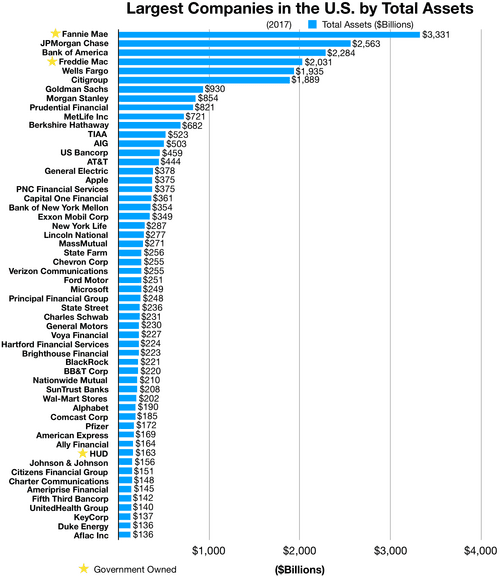
Freddie Mac
ORGANIZATION
American government-sponsored enterprise
Gabaix 2009
ORGANIZATION
Organization referenced in documents
General Dynamics (GD
ORGANIZATION
Organization referenced in documents
General Dynamics Corporation
ORGANIZATION
Organization referenced in documents
GM Hughes
ORGANIZATION
Organization referenced in documents
Government Gateway
ORGANIZATION
Organization referenced in documents
Griffiths & Tenenbaum
ORGANIZATION
Organization referenced in documents

Grumman
ORGANIZATION
Organization referenced in documents
Kaldor
ORGANIZATION
Organization referenced in documents
Kleiber & Kotz
ORGANIZATION
Organization referenced in documents

Labour
ORGANIZATION
Centrist social democratic political party in the United Kingdom
Levy &
ORGANIZATION
Organization referenced in documents
Levy & Solomon 1996
ORGANIZATION
Organization referenced in documents
Levy & Solomon's
ORGANIZATION
Organization referenced in documents
Lotka 1925
ORGANIZATION
Organization referenced in documents
Mandlebrot
ORGANIZATION
Organization referenced in documents
Martin Marietta
ORGANIZATION
Organization referenced in documents
Matlab
ORGANIZATION
Organization referenced in documents
Maxwell-Boltzmann-like '
ORGANIZATION
Organization referenced in documents
Maxwell-Boltzmann'
ORGANIZATION
Organization referenced in documents
McDonald & Turley
ORGANIZATION
Organization referenced in documents
McDonnell Douglas
ORGANIZATION
Organization referenced in documents
Means of Machines
ORGANIZATION
Organization referenced in documents
Mehrling, Lyons
ORGANIZATION
Organization referenced in documents
Miles & Scott
ORGANIZATION
Organization referenced in documents
Model 3A
ORGANIZATION
Organization referenced in documents
Modigliani & Miller
ORGANIZATION
Organization referenced in documents
Mott-Macdonald
ORGANIZATION
Organization referenced in documents
Nirei & Souma
ORGANIZATION
Organization referenced in documents
Norton & Ariely
ORGANIZATION
Organization referenced in documents
Paltridge
ORGANIZATION
Organization referenced in documents
Pepper & Oliver
ORGANIZATION
Organization referenced in documents
Pharohs
ORGANIZATION
Organization referenced in documents
Political Economy
ORGANIZATION
Organization referenced in documents
pre-Magrathean
ORGANIZATION
Organization referenced in documents
Present Value
ORGANIZATION
Organization referenced in documents
SchrOdinger
ORGANIZATION
Organization referenced in documents
Siamese Bowley - Mutual
ORGANIZATION
Organization referenced in documents
Simkin & Roychowdhury
ORGANIZATION
Organization referenced in documents
Solomon & Levy
ORGANIZATION
Organization referenced in documents
Souma & Nirei
ORGANIZATION
Organization referenced in documents
St Louis Fed 2004
ORGANIZATION
Organization referenced in documents
Statistical Mechanics
ORGANIZATION
Organization referenced in documents
the 'Savings Gateway'
ORGANIZATION
Organization referenced in documents
the American Civil War
ORGANIZATION
Organization referenced in documents
the Bodies - Mathematics
ORGANIZATION
Organization referenced in documents
the Conservation of Value
ORGANIZATION
Organization referenced in documents
The GLV of Levy
ORGANIZATION
Organization referenced in documents
the Graham/Buffet
ORGANIZATION
Organization referenced in documents
the Halifax Building Society
ORGANIZATION
Organization referenced in documents
The Logic of Science
ORGANIZATION
Organization referenced in documents
the Lotka-Volterra
ORGANIZATION
Organization referenced in documents
the Luxembourg Income Study
ORGANIZATION
Organization referenced in documents
the Production of Machines
ORGANIZATION
Organization referenced in documents
The Statistical Mechanics of Flow Systems
ORGANIZATION
Organization referenced in documents
the US Department of Labor
ORGANIZATION
Organization referenced in documents
Wealth & Income Data
ORGANIZATION
Organization referenced in documents
Wealth & Income Distributions - Loose
ORGANIZATION
Organization referenced in documents
Wealth & Income Modelling - Discussion
ORGANIZATION
Organization referenced in documents
Wealth & Income Modelling - Results
ORGANIZATION
Organization referenced in documents
wear &
ORGANIZATION
Organization referenced in documents
Wilkinson & Pickett 2009
ORGANIZATION
Organization referenced in documents
Willis & Mimkes
ORGANIZATION
Organization referenced in documents

Chile
LOCATION
Country in South America
Danube
LOCATION
Second-longest river in Europe
Gibrat
LOCATION
Location referenced in documents
Leviticus
LOCATION
Location referenced in documents
Lotka
LOCATION
Location referenced in documents

Mesopotamia
LOCATION
Historical region within the Tigris–Euphrates river system

Norway
LOCATION
Country in Northern Europe
Proudhon
LOCATION
Location referenced in documents
Rhine
LOCATION
River in Western Europe to the North Sea

Russia
LOCATION
Common term for the Duchy, the Kingdom and the Free State of Prussia (1525–1947)
Saxony
LOCATION
Location referenced in documents
the South Sea
LOCATION
Location referenced in documents
Volterra
LOCATION
Location referenced in documents
Statistics
Pages:100
Entities:206
Sponsored