EFTA00285909_sub_002 - EFTA00285909_200
Document Information
Bates Range
EFTA00285909_sub_002 - EFTA00285909_200
Pages
100
Original Filename
EFTA00285909.pdf
Document Content
Page 101 - EFTA00285909_101
A Universe Stranger than Fiction 87 As I have noted, in quantum mechanics particles have a wavelike character. Thanks to Max Born we recognize that the square of the am- plitude of the wave associated with a particle at any point—what we now call the wave function of the particle, following Schthdinger— determines the probability of finding the particle at that point. Because the amplitude of the oscillating wave above is more or less constant at all the peaks, such a wave, if it corresponded to the probability ampli- tude of finding an electron, would imply a more or less uniform prob- ability for finding the electron anywhere along the path. Now consider what a disturbance would look like if it was the sum of two waves of slightly different frequencies (wavelengths), moving along the x axis: When we combine the two waves, the resulting disturbance will look 2P_Glealer-StoryEverTold_Atincld 87 12/18116 3:06 PIA EFTA00286009
Page 102 - EFTA00285909_102
88 THE GREATEST STORY EVER TOLD-SO FAR Because of the slightly different wavelengths of the two waves, the peaks and troughs will tend to cancel out, or "negatively interfere" with each other everywhere except for the rare places where the two peaks occur at the same point (one of these locations is shown in the figure above). This is reminiscent of the wave interference phenomenon in the Young double-slit experiment I described earlier. If we add yet another wave of slightly different wavelength the resulting wave then looks like this: The interference washes out more of the oscillations aside from the position where the two waves line up, making the amplitude of the wave at the peak much higher there than elsewhere. You can imagine what would happen if I continue this process, con- tinuing to add just the right amount of waves with slightly different fre- quencies to the original wave. Eventually the resulting wave amplitudes will cancel out more and more at all places except for some small re- gion around the center of the figure, and at faraway places where all the peaks might again line up: 2P_Gtealer-StorgverTold_Atirdd 88 12118116 3:06 PIA EFTA00286010
Page 103 - EFTA00285909_103
A Universe Stranger than Fiction 89 The greater the number of slightly different frequencies that I add to- gether, the narrower will be the width of the largest central peak. Now, imagine that this represents the wave function of some particle. The larger the amplitude of the central peak, the greater the probability of finding the particle somewhere within the width of that peak. But the width of that central peak is still never quite zero, so the disturbance remains spread out over some small, if increasingly narrow, region. Now recall that Planck and Einstein told us that, for light waves, at least, the energy of each quantum of radiation, i.e., each photon, is di- rectly related to its frequency. Not surprisingly, a similar relation holds for the probability waves associated with massive particles, but in this case it is the momentum of the particle that is related to the frequency of the probability wave associated with the particle. Hence, Heisenberg's uncertainty relation: If we want to localize a particle over a small region, i.e., have the width of the highest peak in its wave function as narrow as possible, then we must consider that the wave function is made up by adding lots of different waves of slightly different frequencies together. But this means that the momentum of the particle, which is associated with the frequency of its wave func- tion, must be spread out somewhat. The narrower the dominant peak in space in the particle's wave function, the greater the number of different 2P_GlealerASIonEverrold_Atirdd B9 12/16116 3:06 PIA EFTA00286011
Sponsored
Page 104 - EFTA00285909_104
90 THE GREATEST STORY EVER TOLD-SO FAR frequencies (i.e., momenta) that must be added together to make up the final wave function. Put in a more familiar way, the more accurately we wish to determine the specific position of a particle, the greater the uncertainty in its momentum. As you can see, there is no restriction here related to actual obser- vations, or consciousness, or the specific technology associated with any observation. It is an inherent property of the fact that, in the quantum world, a wave function is associated with each particle, and for particles of a fixed specific momentum, the wave function has one specific frequency. After discovering this relation, Heisenberg was the first to provide a heuristic picture of why this might be the case, which he posed in terms of a thought experiment. To measure the position of a particle you have to bounce light off the particle, and to resolve the position with great precision requires light of a wavelength small enough to resolve this position. But the smaller the wavelength, the bigger the frequency and the higher the energy associated with the quanta of that radiation. But bouncing light with a higher and higher energy off the particle clearly changes the particle's energy and momentum. Thus, after the measure- ment is made, you may know the position of the particle at the time of the measurement, but the range of possible energies and momenta you have imparted to the particle by scattering light off it is now large. For this reason, many people confuse the Heisenberg uncertainty relation with the "observer effect," as it has become known, in quan- tum mechanics. But, as the example l have given should demonstrate, inherently the Heisenberg uncertainty principle has nothing to do with observation at all. To paraphrase a friend of mine, if consciousness had anything to do with determining the results of quantum physics experi- ments, then in reporting the results of physics experiments we would have to discuss what the experimenter was thinking about—for exam- ple, sex—when performing the experiment. But we don't. The supernova explosions that produced the atoms that make up your body and mine occurred quite nicely long before our consciousness existed. 2P_Glealer-StoryEverTold_Atirdd 90 12/16116 3:06 PIA EFTA00286012
Page 105 - EFTA00285909_105
A Universe Stranger than Fiction 91 The Heisenberg uncertainty principle epitomizes in many ways the complete demise of our classical worldview of nature. Independent of any technology we might someday develop, nature puts an absolute limit on our ability to know, with any degree of certainty, both the mo- mentum and position of any particle. But the issue is even more extreme than this statement implies. Knowing has nothing to do with it. As I described in the earlier double- slit experiment example, there is no sense in which the particle has at any time both a specific position and a specific momentum. It possesses a wide range of both, at the same time, until we measure it and thereby fix at least one of them within some small range determined by our measurement apparatus. Following Heisenberg, the next step in unveiling the quantum craziness of reality was taken by an unlikely explorer, Paul Adrien Maurice Dirac. In one sense, Dirac was the perfect man for the job. As Einstein is re- puted to have later said of him, "This balancing on the dizzying path between genius and madness is awful! When I think of Dirac, an old joke comes to mind. A young child has never spoken and his parents go to see numerous doctors to seek help, to no avail. Finally, on his fourth birthday he comes down for breakfast and looks up at his parents and says, This toast is cold!" His parents nearly burst with happiness, hug each other, and ask the child why he has never before spoken. He answers, "Up to now, everything was fine! Dirac was notoriously laconic, and a host of stories exist about his unwillingness to engage in any sort of repartee, and also about how he seemed to take everything that was said to him literally. Once, while Dirac was writing on a blackboard during one of his lectures, some- one in the audience was reputed to have raised his hand and said, 1 don't understand that particular step you have just written down? Dirac stood silent for the longest while until the audience member asked if 2P_Glealer-StoryEverTold_Atirdd 91 12/16116 3:06 PIA EFTA00286013
Page 106 - EFTA00285909_106
92 THE GREATEST STORY EVER TOLD-SO FAR Dirac was going to answer the question. To which Dirac said, "There was no question." I actually spoke to Dirac, one day, on the phone—and I was terrified. I was still an undergraduate and wanted to invite him to a meeting I was organizing for undergraduates around the country. I made the mistake of calling him right after my quantum mechanics class, which made me even more terrified. After a rambling request that I blurted out, he was silent for a moment, then gave a simple one-line response: sNo, I don't think I have anything to say to undergraduates? Personality aside, Dirac was anything but timid in his pursuit of a new Holy Grail: a mathematical formulation that might unify the two new revolutionary developments of the twentieth century, quantum mechanics and relativity. In spite of numerous efforts since Schthdinger (who derived his famous wave equation during a two-week tryst in the mountains with several of his girlfriends), and since Heisenberg had re- vealed the basic underpinning of quantum mechanics, no one had been successful at fully explaining the behavior of electrons bound deep in- side atoms. These electrons have, on average, velocities that are a fair fraction of the speed of light, and to describe them, we must use Special Relativity. Schrodinger's equation worked well to describe the energy levels of elec- trons in the outer parts of simple atoms such as hydrogen, where it pro- vided a quantum extension of Newtonian physics. It was not the proper description when relativistic effects needed to be taken into account. Ultimately Dirac succeeded where all others had failed, and the equation he discovered, one of the most important in modern particle physics, is, not surprisingly, called the Dirac equation. (Some years later, when Dirac first met the physicist Richard Feynman, whom we shall come to shortly, Dirac said after another awkward silence, "I have an equation. Do you?") Dirac's equation was beautiful, and as the first relativistic treatment of the electron, it allowed correct and precise predictions for the energy 2P_GlealerASIonEverTold_Atindd 92 12/16116 3:06 PIA EFTA00286014
Sponsored
Page 107 - EFTA00285909_107
A Universe Stranger than Fiction 93 levels of all electrons in atoms, the frequencies of light they emit, and thus the nature of all atomic spectra. But the equation had a fundamen- tal problem. It seemed to predict new particles that didn't exist. To establish the mathematics necessary to describe an electron mov- ing at relativistic speeds, Dirac had to introduce a totally new formalism that used four different quantities to describe electrons. As far as we physicists can discern, electrons are microscopic point particles of essentially zero radius. Yet in quantum mechanics they nev- ertheless behave like spinning tops and therefore have what physicists call angular momentum. Angular momentum reflects that once objects start spinning, they will not stop unless you apply some force as a brake. The faster they are spinning, or the more massive they are, the greater the angular momentum. There is, alas, no classical way of picturing a pointlike object such as an electron spinning around an axis. Spin is thus one of the areas where quantum mechanics simply has no intuitive classical analogue. In Dirac's relativistic extension of Schthdinger's equation, electrons can possess only two possible values for their angular momentum, which we simply call their spin. Think of electrons as either spinning around one direction, which we can call up, or spinning around the opposite direc- tion, which we can call down. Because of this, two quantities are needed to describe the configurations of electrons, one for spin-up electrons and one for spin-down electrons. After some initial confusion, it became clear that the other two quantities that Dirac needed to describe electrons in his relativistic for- mulation of quantum mechanics seemed to describe something crazy— another version of electrons with the same mass and spin but with the opposite electric charge. If, by convention, electrons have a negative charge, then these new particles would have a positive charge. Dirac was flummoxed. No such particle had ever been observed. In a moment of desperation, Dirac supposed that perhaps the positively charged particle described by his theory was actually the proton, which, 2P_Glealer-StoryEverrold_Atindd 98 12/16116 3:06 PIA EFTA00286015
Page 108 - EFTA00285909_108
94 THE GREATEST STORY EVER TOLD-SO FAR however, has a mass two thousand times larger than that of the electron. He gave some hand-waving arguments for why the positively charged particle might get a heavier mass. The larger weight could be caused by different possible electromagnetic interactions it had with otherwise empty space, which he envisaged might be populated with a possibly infinite sea of unobservable particles. This is actually not as crazy as it sounds, but to describe why would force us toward one of those twists and turns that we want to avoid here. In any case, it was quickly shown that this idea didn't hold water—first, because the mathematics didn't support this argument, and the new particles would have to have the same mass as electrons. Second, if the proton and the electron were in some sense mirror images, then they could annihilate each other so that neutral matter could not be stable. Dirac had to admit that if his theory was true, some new positive version of the electron had to exist in nature. Fortunately for Dirac, within a year of his resigned capitulation, Carl Anderson found particles in cosmic rays that are identical to electrons but have the opposite charge. The positron was born, and Dirac was heard to say, in response to his unwillingness to accept the implications of his own mathematics, "My equation was smarter than I was!" Much later he reportedly gave another reason for not acknowledging the pos- sibility of a new particle: `Pure cowardice." Dirac's "prediction," even if reluctant, was a remarkable milestone. It was the first time that, purely on the basis of theoretical notions arising from mathematics, a new particle was predicted. Think about that. Maxwell had spostdicted" the existence of light as a result of his unification of electricity and magnetism. Le Verrier had predicted the existence of Neptune by using observations of anomalies in the orbit of Uranus. But here was a prediction of a new basic feature of the universe based purely on theoretical arguments about nature at its most funda- mental scales, with no direct experimental motivation in advance. It may have seemed like a matter of faith, but it wasn't—after all, the pro- 2P_Glealer-StoryEverTold_Atirdd 94 12/16116 3:06 PIA EFTA00286016
Page 109 - EFTA00285909_109
A Universe Stranger than fiction 95 poser didn't actually believe it—and while like faith it proposed an un- observed reality, unlike faith it proposed a reality that could be tested, and it could have been wrong. The discovery of relativity by Einstein revolutionized our ideas of space and time, and the discoveries by Schthdinger and Heisenberg of the laws of quantum mechanics revolutionized our picture of atoms. Dirac's first combination of the two provided a new window on the hid- den nature of matter at much smaller scales. It heralded the beginning of the modern era in particle physics, setting a trend that has continued for almost a century. First, if the Dirac equation was applied more generally to other par- ticles, and there was no reason to believe it shouldn't be, then not only would electrons have "antiparticles," as they later became known, so would all the other known particles in nature. Antimatter has become the stuff of science fiction. Starships such as the USS Enterprise in Star Trek are invariably powered by antimatter, and the possibility of an antimatter bomb was the silliest part of the plot in the recent mystery thriller Angels & Demons. But antimatter is real. Not only was the positron discovered in cosmic rays, but antiprotons and antineutrons were discovered later as well. At a fundamental level, antimatter is not so strange. Positrons are just like electrons, after all, only with the opposite charge. They do not, as many people think, fall sup" in a gravitational field. Matter and an- timatter can interact and completely annihilate into pure radiation, which seems sinister. But particle-antiparticle annihilation is just one in a host of new possible interactions of elementary particles that can occur once we enter the subatomic realm. Moreover, one would need a large amount of antimatter to actually annihilate enough matter to even light a lightbulb with the energy produced. Ultimately, that is why antimatter is strange. It is strange because the universe we live in is full of matter, and not antimatter. A universe made of antimatter would seem identical to ours. And a universe made of 2P_Glealer-StoryEverTold_Atirdd 96 12/16116 3:06 PIA EFTA00286017
Sponsored
Page 110 - EFTA00285909_110
96 THE GREATEST STORY EVER TOLD-SO FAR equal amounts of matter and antimatter—which would surely seem the most sensible universe to begin with—would, unless something hap- pened in the meantime, be boring because the matter and antimatter would have long ago annihilated each other and the universe would now contain nothing but radiation. Why our world is full of matter and not antimatter remains one of the most interesting issues in modern physics. But recognizing that the real reason why antimatter is strange is simply because you never en- counter it once caused me to suggest the following analogy. Antimatter is strange in the same sense that Belgians are strange. They are certainly not intrinsically strange, but if you ever ask in a big auditorium full of people, as I have, for the Belgians to raise their hands, almost no one ever does. Except when I lectured in Belgium, as I did recently, and where I learned my analogy was not appreciated. 2P_Gtealer-StoryEverTold_Atird6 98 12/16116 3:06 PIA EFTA00286018
Page 111 - EFTA00285909_111
Chapter 8 A WRINKLE IN TIME For you are a mist that appears for a little time and then vanishes. -JAMES 4:14 Each hidden connection in nature revealed by science since the time of Galileo has led physics in new and unexpected direc- tions. The unification of electricity and magnetism revealed the hidden nature of light. Unifying light with Galileo's laws of motion revealed the hidden connections between space and time embodied in relativity. The unification of light and matter revealed the strange quantum universe. And the unification of quantum mechanics and relativity revealed the existence of antiparticles. Dirac's discovery of antiparticles came as a result of his "guessing" the correct equation to describe the relativistic quantum interactions of electrons with electromagnetic fields. He had little physical intuition to back it up, which is one reason why Dirac himself and others were initially so skeptical of his result. Clarifying the physical imperative for antimatter came through the work of one of the most important physi- cists of the latter half of the twentieth century, Richard Feynman. Feynman could not have been more different from Dirac. While 97 2P_Glealer-StoryEverrold_Atindd 97 12/1006 3:06 PM EFTA00286019
Page 112 - EFTA00285909_112
98 THE GREATEST STORY EVER TOLD-SO FAR Dirac was taciturn in the extreme, Feynman was gregarious and a charming storyteller. While Dirac rarely, if ever, intentionally joked, Feynman was a prankster who openly enjoyed every aspect of life. While Dirac was too shy to meet women, Feynman, after the death of his first wife, sought out female companions of every sort. Yet, physics breeds strange bedfellows, and Feynman and Dirac will forever be intel- lectually linked—once again by light. Together they helped complete the description of the long-sought quantum theory of radiation. Coming a generation after Dirac, Feynman was in awe of him and spoke of him as one of his physics heroes. Therefore, appropriately, a short 1939 paper that Dirac wrote, in which he suggested a new ap- proach to quantum mechanics, would inspire the work that ultimately won Feynman a Nobel Prize. Heisenberg and Schrodinger had explained how systems behave quantum mechanically starting with some initial state of the system and calculating how it evolves over time. But, once again, light provides the key to another way to think about quantum systems. We are accustomed to thinking of light as always going in straight lines. But it doesn't. This is manifest when you view a mirage on a long straight highway on a hot day. The road looks wet way up ahead because light from the sky refracts, bending as it crosses the many successive layers of warm air near the surface of the road, until it heads back up to your eye. The French mathematician Pierre de Fermat showed in ikso another way to understand this phenomenon. Light travels faster in warmer, less dense air than it does in colder air. Because the warmest air is near the surface, the light takes less time to get to your eye if it travels down near 2P_Glealer-StoryEverTold_Atirdd 98 12/18/18 3:08 PIA EFTA00286020
Sponsored
Page 113 - EFTA00285909_113
A Wrinkle in Time 99 the ground and then returns up to your eye than it would if it came di- rectly in a straight line to your eye. Fermat formulated a principle, called the Principle of Least Time, which says that, to determine the ultimate trajectory of any light ray, you simply need to examine all possible paths from A to B and find the one that takes the least time. This makes it sound as if light has intentionality, and I resisted the temptation to say light considers all paths and chooses the one that takes the least time because I fully expect that Deepak Chopra would later quote me as implying that light has consciousness. Light does not have consciousness, but the mathematical result makes it appear as if light chooses the shortest distance. Now, recall that in quantum mechanics, light rays and electrons do not act as if they take a single trajectory to go from one place to an- other—they take all possible trajectories at the same time. Each trajec- tory has a specific probability of being measured, and the classical, least time, trajectory has the largest probability of all. In 1939, Dirac suggested a way of calculating all such probabilities and summing them to determine the quantum mechanical likelihood that a particle that starts out at A will end up at B. Richard Feynman, as a gradu- ate student, after learning about Dirac's paper at a beer party, mathemati- cally derived a specific example demonstrating that this idea worked. By taking Dirac's hint as a starting point, Feynman derived results that were identical to those that one would derive using the Schrodinger or Heisen- berg pictures, at least in simple cases. More important, Feynman could use this new `sum over paths" formula to handle quantum systems that couldn't easily be described or analyzed by the other methods. Eventually Feynman refined his mathematical technique to help push forward Dirac's relativistic equation for the quantum behavior of electrons and to produce a fully consistent quantum mechanical theory of the interaction between electrons and light. For that work, establish- ing the theory known as quantum electrodynamics (QED), he shared the Nobel Prize in 1963 with Julian Schwinger and Sin-Itiro Tomonaga. 2P_Glealer-StoryEverTold_Atindd 99 12/16116 3:06 PIA EFTA00286021
Page 114 - EFTA00285909_114
100 THE GREATEST STORY EVER TOLD-SO FAR Even before completing this work, however, Feynman described an intuitive physical reason why relativity, when combined with quantum mechanics, requires the existence of antiparticles. Consider an electron moving along on a possible "quantum" trajec- tory. What does this mean? An electron takes all possible trajectories between two points as long as I am not measuring it while it travels. Among these are trajectories that are classically not allowed because they would violate rules such as the limitation that objects cannot travel faster than light (arising from relativity). Now the Heisenberg uncer- tainty principle says that even if I try to measure the electron along its trajectory over some short time interval, some intrinsic uncertainty in the velocity of the electron remains that can never be overcome. Thus even if I measure the trajectory at various points, I cannot rule out some weird nonclassical behavior during these intervals. Now, imagine the trajectory shown below: time For the short time in the middle of the time interval shown the elec- tron is traveling faster than the speed of light. But Einstein tells us that time is relative, and different observers will measure different intervals between events. And if a particle is travel- ing faster than light in one reference frame, in another reference frame it will appear to be traveling backward in time, as shown below (this is one of the reasons relativity restricts all observed particles to travel at speeds less than or equal to the speed of light: 2P_Glealer-StoryEverTold_Atird0 100 12/16116 3:06 PIA EFTA00286022
Page 115 - EFTA00285909_115
A Wrinkle in Time 101 Ttime Feynman recognized that in the latter frame this would look like an electron moving forward in time for a little while, then moving back- ward in time, then moving forward in time. But what does an electron moving backward in time appear like? Since the electron is negatively charged, a negative charge moving backward in time to the right is equivalent to a positive charge moving forward in time to the left. Thus, the picture is equivalent to the following.. 7% 7 In this picture one starts with an electron moving forward in time, and then sometime later an electron and a particle that appears like an electron but has the opposite charge suddenly appear out of empty space, and the positively charged particle moves to the left, again for- ward in time, until it encounters the original electron and the two an- nihilate, leaving only one electron left over to continue moving. All of this happens on a timescale that cannot be observed directly, for if it could be, then this strange behavior, violating the tenets of rela- tivity, would be impossible. Nevertheless, you can be assured that inside 2P_Glealer-StoryEverrold_Atirdd 101 12/16116 3:06 PIA EFTA00286023
Sponsored
Page 116 - EFTA00285909_116
102 THE GREATEST STORY EVER TOLD-SO FAR the paper in the book you are now reading, or behind the screen of your ebook, these kinds of processes are happening all the time. Nevertheless, if such a trajectory is possible in the invisible quan- tum world, then antiparticles must exist in the visible world—particles identical to known particles but with opposite electric charge (which appear in the equations of this theory as if they were particles going backward in time). This also makes it possible for particle-antiparticle pairs to spontaneously appear out of empty space, as long as they an- nihilate in a time period quickly enough so that their brief existence cannot be measured. With this line of reasoning, not only did Feynman give a physical argument for the existence of antiparticles required by the unification of relativity and quantum mechanics, he also demonstrated that at any time we cannot say that only one or two particles are in some region. A potentially infinite number of "virtual" particle-antiparticle pairs— pairs of particles whose existence is so fleeting that they cannot be di- rectly observed—can be appearing and disappearing spontaneously on timescales so short that we cannot measure them. This picture sounds so outrageous that you should be incredulous. After all, if we cannot measure these virtual particles directly, how can we claim that they exist? The answer is that while we cannot detect the effects of these virtual particle-antiparticle pairs directly, we can indirectly infer their presence because they can indirectly affect the properties of systems we can observe. The theory in which these virtual particles are incorporated, along with the electromagnetic interactions of electrons and positrons, called quantum electrodynamics, is the best scientific theory we have so far. Predictions based on the theory have been compared with observations, and they agree to more than ten decimal places. In no other area of sci- ence can this level of accuracy be obtained in the comparison between observation and prediction, based on the direct applications of funda- mental principles on the most basic scales we can describe. 2P_Glealer-StoryEverrold_Atirdd 102 12/16116 3:06 PIA EFTA00286024
Page 117 - EFTA00285909_117
A Wrinkle in Time 103 But the agreement between theory and observation is only possible if the effects of virtual particles are included. Indeed, the very phenome- non of virtual particles implies that, in quantum theory, forces between particles are always conveyed by the exchange of virtual particles, in a way I shall now describe. In quantum electrodynamics, electromagnetic interactions occur by the absorption or emission of the quanta of electromagnetism, namely photons. Following Feynman, we can diagram this interaction as an electron emitting a wavy "virtual" photon (y) and changing direction: Then, the electric interaction between two electrons can be dia- grammed as: 2P_Glealer/StorgverTold_Atind0 103 1216116 306 PIA EFTA00286025
Page 118 - EFTA00285909_118
104 THE GREATEST STORY EVER TOLD-SO FAR In this case, the electrons interact with each other by exchanging a virtual photon, one that is spontaneously emitted by the electron on the left and absorbed by the other in so short a time that the photon cannot be observed. The two electrons repel each other and move apart after the interaction. This also explains why electromagnetism is a long-range force. The Heisenberg uncertainty principle tells us that if we measure a system for some time interval, then there is an associated uncertainty in the mea- sured energy of the system. Moreover, as the time interval gets bigger, the associated uncertainty in energy gets smaller. Because the photon is massless, a virtual massless photon, using Einstein's relation between mass and energy, can carry an arbitrarily small amount of energy when it is created. This means that it can travel an arbitrarily long time— and therefore an arbitrarily long distance—before being absorbed, and it will still be protected by the uncertainty principle, as the energy it can carry is so small that no visible violation of the conservation of en- ergy will occur. Thus, an electron on Earth can emit a virtual photon that could travel to Alpha Centauri, four light-years away, and that pho- ton can still produce a force on an electron there that absorbs it. If the photon weren't massless, however, but had some rest mass, m, it would carry with it a minimum energy, given by E = mo, and could therefore only travel a finite distance (i.e., over a finite time interval) before it would have to be absorbed without producing any visible violation of the conservation of energy. These virtual particles have a potential problem, however. If one particle can be exchanged or one virtual particle-antiparticle pair can spontaneously appear out of the vacuum, then why not two or three or even an infinite number? Moreover, if virtual particles must disap- pear in a time that is inversely proportional to the energy they carry, then what stops particles from popping out of empty space carrying an arbitrarily large amount of energy and existing for an arbitrarily small time? 2P_Glealer-StoryEverTold_Atincld 104 12/16116 3:06 PIA EFTA00286026
Sponsored
Page 119 - EFTA00285909_119
A Wrinkle in Time 106 When physicists tried to take into account these effects, they en- countered infinite results in their calculations. The solution? Ignore them. Actually not ignore them, but systematically sweep the infinite pieces of calculations under the rug, leaving only finite bits left over. This begs the questions of how one knows which finite parts to keep, and why the whole procedure is justified. The answer took quite a few years to get straight, and Feynman was one of the group who figured it out. But for many years after, including up to the time he won the Nobel Prize in 1965, he viewed the whole ef- fort as a kind of trick and figured that at some point a more fundamental solution would arise. Nevertheless, a good reason exists for ignoring the infinities intro- duced by virtual particles with arbitrarily high energies. Because of the Heisenberg uncertainty principle, these energetic particles can propa- gate only over short distances before disappearing. So how can we be sure that our physical theories, which are designed to explain phenom- ena at scales we can currently measure, actually operate the same way at these very small scales? Maybe new physics, new forces, and new el- ementary particles become relevant at very small scales? If we had to know all the laws of physics down to infinitesimally small scales in order to explain phenomena at the much larger scales we experience, then physics would be hopeless. We would need a theory of everything before we could ever have a theory of something. Instead, reasonable physical theories should be ones that are insensi- tive to any possible new physics occurring at much smaller scales than the scales that the original theories were developed to describe. We call these theories renormalizable, since we "renormalize" the otherwise in- finite predictions, getting rid of the infinities and leaving only finite, sensible answers. Saying that this is required is one thing, but proving that it can be done is something else entirely. This procedure took a long time to get 2P_Glealer-StoryEverTold_Atirdd 'OS 12/18/18 3:08 PIA EFTA00286027
Page 120 - EFTA00285909_120
106 THE GREATEST STORY EVER TOLD-SO FAR straight. In the first concrete example demonstrating that it made sense, the energy levels of hydrogen atoms were precisely calculated, which allowed a correct prediction of the spectrum of light emitted and ab- sorbed by these atoms as measured in the laboratory. Although Feynman and his Nobel colleagues elucidated the mecha- nism to mathematically implement this technique of renormalization, the proof that quantum electrodynamics (QED) was a "renormalizable" theory, allowing precise predictions of all physical quantities one could possibly measure in the theory, was completed by Freeman Dyson. His proof gave QED an unprecedented status in physics. QED provided a complete theory of the quantum interactions of electrons and light, with predictions that could be compared with observations to arbitrarily high orders of precision, limited only by the energy and determination of the theorists doing the calculations. As a result, we can predict the spectra of light emitted by atoms to exquisite precision and design laser systems and atomic clocks that have redefined accuracy in measuring distance and time. The predictions of QED are so precise that we can search in experiments for even minuscule departures from them and probe for possible new physics that might emerge as we explore smaller and smaller scales of distance and time. With fifty years of hindsight, we now also understand that quantum electrodynamics is such a notable physical theory in part because of a "symmetry" associated with it. Symmetries in physics probe deep char- acteristics of physical reality. From here on into the foreseeable future, the search for symmetries is what governs the progress of physics. Symmetries reflect that a change in the fundamental mathematical quantities describing the physical world produce no change in the way the world works or looks. For example, a sphere can be rotated in any direction by any angle, and it still looks precisely the same. Nothing about the physics of the sphere depends on its orientation. That the laws of physics do not change from place to place, or time to time, is of deep significance. The symmetry of physical law with time—that nothing 2P_Glealer-StoryEverTold_Atincld t06 12/16116 3:06 PIA EFTA00286028
Page 121 - EFTA00285909_121
A Wrinkle in Time 107 about the laws of physics appears to change with time—results in the conservation of energy in the physical universe. In quantum electrodynamics, one fundamental symmetry is in the nature of electric charges. What we call "positive" and "negative" are clearly arbitrary. We could change every positive charge in the universe to negative, and vice versa, and the universe would look and behave pre- cisely the same. Imagine, for example, that the world is one giant chessboard, with black and white squares. Nothing about the game of chess would be changed if I changed black into white, and white into black. The white pieces would become black pieces and vice versa, and otherwise the board would look identical. Now, precisely because of this symmetry of nature, the electric charge is conserved: no positive or negative charge can spontaneously appear in any process, even due to quantum mechanics, without an equal and opposite charge appearing at the same time. For this rea- son, virtual particles are only produced spontaneously in empty space in combination with antiparticles. It is also why lightning storms occur on Earth. Electric charges build up on Earth's surface because storm clouds build up large negative charges at their base. The only way to get rid of this charge is to have large currents flow from the ground upward into the sky. The conservation of charge resulting from this symmetry can be un- derstood using my chessboard analogy. That every white square must be located next to a black square means that whenever I switch black and white, the board ultimately looks the same. If I had two black squares in a row, which would mean the board had some net "blackness," then "black" and "white" would no longer be equivalent arbitrary labels. Black would be physically different from white. In short, the symmetry be- tween black and white on the board would be violated. Bear with me now, because I am about to introduce a concept that is much more subtle, but much more important. It's so important that 2P_Glealer-StoryEverTold_AC.incld 107 12/16116 3:06 PIA EFTA00286029
Sponsored
Page 122 - EFTA00285909_122
108 THE GREATEST STORY EVER TOLD-SO FAR essentially all of modern physical theory is based on it. But it's so subtle that without using mathematics, it is hard to describe. It is so subtle that its ramifications are still being unraveled today, more than a hundred years since it was first suggested. So, don't be surprised if it takes one or two readings to fully get your head around the idea. It has taken physi- cists much of the past century to get their heads around it. This symmetry is called gauge symmetry for an obscure historical reason I shall describe a bit later. But the strange name is irrelevant. It is what the symmetry implies that is important: Gauge symmetry in electromagnetism says that I can actually change my definition of what a positive charge is locally at each point of space without changing the fundamental laws associated with electric charge, as long as I also somehow introduce some quantity that helps keep track of this change of definition from point to point. This quantity turns out to be the electromagnetic field. Let's try to parse this using my chessboard analogy. The global sym- metry I described before changes black to white everywhere, so when the chessboard is turned by 180 degrees, it looks the same as it did be- fore and the game of chess is clearly not affected. Now, imagine instead that I change black to white in one square, and I don't change white to black in the neighboring square. Then the board will have two adjacent white squares. This board, with two ad- jacent white squares, clearly won't look the same as it did before. The game cannot be played as it was before. But hold on for a moment. What if I have a guidebook that tells me what game pieces should do every time they encounter adjacent squares where one color has been changed but not the next. Then the rules of the game can remain the same, as long as I consult the guidebook each time I move. This guidebook therefore allows the game to proceed as if nothing were changed. 2P_Glealer-StoryEverTold_Atind0 108 12/18116 3:06 PIA EFTA00286030
Page 123 - EFTA00285909_123
A Wrinkle in Time 109 In mathematics, a quantity that ascribes some rule associated with each point on a surface like a chessboard is called a function. In physics, a function defined at every point in our physical space is called a field, such as, for example, the electromagnetic field, which describes how strong electric and magnetic forces are at each point in space. Now here's the kicker. The properties that must characterize the form of the necessary function (which allows us to change our definition of electric charge from place to place without changing the underlying phys- ics governing the interaction of electric charges) are precisely those that characterize the form of the rules governing electromagnetic fields. Put another way, the requirement that the laws of nature remain in- variant under a gauge transformation—namely some transformation that locally changes what I call positive or negative charge—identically requires the existence of an electromagnetic field that is governed by precisely by Maxwell's equations. Gauge invariance, as it is called, com- pletely determines the nature of electromagnetism. This presents us with an interesting philosophical question. Which is more fundamental, the symmetry or the physical equations that man- ifest the symmetry? In the former case, where this gauge symmetry of nature requires the existence of photons, light, and all the equations and phenomena first discovered by Maxwell and Faraday, then God's appar- ent command "Let there be light" becomes identical with the command "Let electromagnetism have a gauge symmetry." It is less catchy, per- haps, but nevertheless true. Alternatively, one could say that the theory is what it is, and the dis- covery of a mathematical symmetry in the underlying equations is a happy accident. The difference between these two viewpoints seems primarily se- mantic, which is why it might interest philosophers. But nature does provide some guidance. If quantum electrodynamics were the only theory in nature that respected such a symmetry, the latter view might seem more reasonable. 2P_Glealer-StoryEverTold_Atind0 109 12/16116 3:06 PIA EFTA00286031
Page 124 - EFTA00285909_124
110 THE GREATEST STORY EVER TOLD-SO FAR But every known theory describing nature at a fundamental scale reflects some type of gauge symmetry. As a result, physicists now tend to think of symmetries of nature as fundamental, and the theories that then describe nature as being restricted in form to respect these sym- metries, which in turn then reflect some key underlying mathematical features of the physical universe. Whatever one might think of regarding this epistemological issue, what matters in the end to physicists is that the discovery and applica- tion of this mathematical symmetry, gauge symmetry, has allowed us to discover more about the nature of reality at its smallest scales than any other idea in science. As a result, all attempts to go beyond our current understanding of the four forces of nature, electromagnetism, the two forces associated with atomic nuclei, the strong and weak forces, which we shall meet shortly, and gravity—including the attempt to create a quantum theory of gravity—are built on the mathematical underpin- nings of gauge symmetry. • • • That gauge symmetry has such a strange name has little to do with quantum electrodynamics and is an anachronism, related to a property of Einstein's General Theory of Relativity, which, like all other funda- mental theories, also possesses gauge symmetry. Einstein showed that we are free to choose any local coordinate system we want to describe the space around us, but the function, or field, that tells us how to con- nect these coordinate systems from point to point is related to the un- derlying curvature of space, determined by the energy and momentum of material in space. The coupling of this field, which we recognize as the gravitational field, to matter, is precisely determined by the invari- ance of the geometry of space under the choice of different coordinate systems. The mathematician Hermann Weyl was inspired by this symmetry of General Relativity to suggest that the form of electromagnetism might 2P_Glealer-StoryEverTold_Aairdd 110 12/16116 3:06 PIA EFTA00286032
Sponsored
Page 125 - EFTA00285909_125
A Wrinkle in Time 111 also reflect an underlying symmetry associated with physical changes in length scales. He called these different "gauges," inspired by the various track gauges of railroads. (Einstein, and Sheldon on The Big Bang The- ory, aren't the only physicists who have been inspired by trains.) While Weyl's guess turned out to be incorrect, the symmetry that does apply to electromagnetism became known as gauge symmetry. Whatever the etymology of the name, gauge symmetry has become the most important symmetry we know of in nature. From a quantum perspective—in the quantum theory of electromagnetism, quantum electrodynamics—the existence of gauge symmetry becomes even more important. It is the essential feature that ensures that QED is sensible. If you think about the nature of symmetry, then it begins to make sense that such a symmetry might ensure that quantum electrodynam- ics makes sense. Symmetries tell us, for example, that different parts of the natural world are related, and that certain quantities remain the same under various types of transformations. A square looks the same when we rotate it ninety degrees because the sides are all the same length and the angles at each corner are the same. So, symmetry can tell us that different mathematical quantities that result from physical calculations, such as the effects of many virtual particles, and many vir- tual antiparticles, for example, can have the same magnitude. They may also have opposite signs so that they might cancel exactly. The existence of this symmetry is what can require such exact cancellations. In this way, one might imagine that in quantum electrodynamics the nasty terms that might otherwise give infinite results can cancel with other potentially nasty terms, and all the nastiness can disappear. And this is precisely what happens in QED. The gauge symmetry en- sures that any infinities that might otherwise arise in deriving physical predictions can be isolated in a few nasty terms that can be shown by the symmetry to either disappear or to be decoupled from all physically measurable quantities. This profoundly important result, proven by decades of work by some 2P_Glealer-StoryEverTold_Atindd 111 12/16116 3:06 PIA EFTA00286033
Page 126 - EFTA00285909_126
112 THE GREATEST STORY EVER TOLD-SO FAR of the most creative and talented theoretical physicists in the world, es- tablished QED as the most precise and preeminent quantum theory of the twentieth century. Which made it all the more upsetting to discover that, while this mathematical beauty indeed allowed a sensible understanding of one of nature's fundamental forces—electromagnetism—other nastiness began when considering the forces that govern the behavior of atomic nuclei. 2P_Glealer-Storgverrold_Atirdd 112 12/16116 3:06 PIA EFTA00286034
Page 127 - EFTA00285909_127
Chapter 9 DECAY AND RUBBLE There is no new thing under the sun. -ECCLESIASTES 1:9 When I first learned that we human beings are radioac- tive, it shocked me. I was in high school listening to a lecture by the re- markable polymath and astrophysicist Tommy Gold, who had done pioneering work in cosmology, pulsars, and lunar science, and he in- formed us that the particles that made up most of the mass of our bod- ies, neutrons, are unstable, with a mean lifetime of about ten minutes. Given, I hope, that you have been reading this book for longer than ten minutes, this may surprise you too. The resolution of this seeming paradox is one of the first and most wonderful of the gorgeous accidents of nature that make our existence possible. As we continue to explore more deeply the question "Why are we here?," this accident will loom large on the horizon. While the neutron may seem far removed from light, which has been the centerpiece of our story thus far, we shall see that the two are ultimately deeply connected. The decay of neutrons— responsible for the "beta decay" of unstable nuclei—required physicists to move beyond their simple and elegant theories of light and open up new fundamental areas of the universe for investigation. 113 2P_Glealer-StoryEverrold_Atindd 113 12/16116 3:06 PIA EFTA00286035
Sponsored
Page 128 - EFTA00285909_128
114 THE GREATEST STORY EVER TOLD-SO FAR But I am getting ahead of myself. In 1929, when Dirac first wrote down his theory of electrons and radiation, it looked as if it might end up being a theory of almost every- thing. Aside from electromagnetism, the only other force in town was gravity, and Einstein had just made great strides in understanding it. Elementary particles consisted of electrons, photons, and protons, to- gether comprising all the objects that appeared necessary to understand atoms, chemistry, life, and the universe. The discovery of antiparticles upset the applecart somewhat, but since Dirac's theory had effectively predicted them (even if Dirac him- self had to catch up with the theory), this was more like a speed bump on the road to reality than a roadblock or detour. Then came 1932. Up to that time, scientists had presumed that atoms were composed entirely of protons and electrons. This posed a bit of a problem, however, because the masses of atoms didn't quite add up. In 1911 Rutherford discovered the existence of the atomic nucleus, contain- ing almost all the mass of atoms in a small region one hundred thou- sand times smaller than the size of the orbits of the electrons. Following that discovery, it became clear that the mass of heavy nuclei was just a bit more than twice the mass that could be accounted for if the number of protons in the nucleus equaled the number of electrons orbiting the nucleus, ensuring that atoms would be electrically neutral. The proposed solution to this conundrum was simple. Actually twice as many protons were in the nucleus as electrons surrounding it, but just the right number of electrons were trapped inside the nucleus, so that again the total electric charge of the atom would be equal to zero. However, quantum mechanics implied that the electrons couldn't be confined within the nucleus. The argument is a bit technical, but it goes something like this: If elementary particles have a wavelike character, then if one is going to confine them to a small distance, the magnitude of their wavelength must be smaller than the confinement scale. But the wavelength associated with a particle is, in quantum mechanics, 2P_Glealer-StoryEverTold_Atincld 114 12/16116 306 PIA EFTA00286036
Page 129 - EFTA00285909_129
Decay and Rubble 115 inversely proportional to the momentum carried by the particle, and hence also inversely proportional to the energy carried by the particle. If electrons were confined to a region the size of an atomic nucleus, the energy they would need to possess would be about a million times the energy associated with the characteristic energies released by electrons as they jump between energy levels in their atomic orbits. How could they achieve such energies? They couldn't. For, even if electrons were tightly bound to protons within nuclei by electronic forces, the binding energy that would be released in this process as they "fell" into the nucleus would be more than ten times smaller than the energy needed to confine the quantum mechanical electron wave func- tion to a region contained within the nucleus. Here too the numbers just didn't add up. Physicists at the time were aware of the problem, but lived with it. I suspect that an agnostic approach was deemed prudent, and physi- cists were willing to suspend disbelief until they knew more, because the issues involved the cutting-edge physics of quantum mechanics and atomic nuclei. Instead of proposing exotic new theories (there were probably some at the margins that I am not aware of), the community was eventually driven by experiments to overcome its natural hesitation to take the logical next step: to assume nature was more complicated than had thus far been revealed. In 1930, about the time that Dirac was coming to grips with the pos- sibility that his antiparticles weren't really protons, a series of experi- ments provided just the clues that were needed to unravel the nuclear paradox. The poetry of the discoveries was rivaled only by the drama in the private lives of the researchers. Max Planck had helped pioneer the quantum revolution by resolving the paradox of the spectrum of radiation emitted by atomic systems. So it was fitting that Planck should indirectly help resolve the paradoxical makeup of the nucleus. While he didn't himself spearhead the relevant research, he recognized the talents of a young student of mathemat- 2P_Glealer-StoryEverTold_Atindd vIS 12/16116 3:06 PIA EFTA00286037
Page 130 - EFTA00285909_130
116 THE GREATEST STORY EVER TOLD-SO FAR ics, physics, chemistry, and music at the University of Berlin, Walther Bothe, and in 1912 Planck accepted him as a doctoral student and men- tored him throughout the rest of his career. Bothe was spectacularly lucky to be mentored by Planck and, shortly thereafter, by Hans Geiger, of Geiger counter fame. Geiger, in my mind, is one of the most talented experimental physicists to have been over- looked for a Nobel Prize. Geiger had begun his career by doing the experiments, with Ernest Marsden, that Ernest Rutherford utilized to discover the existence of the atomic nucleus. Geiger had just returned from England, where ■ worked with Rutherford, to direct a new labo- ratory in Berlin, and one of his first acts was to hire Bothe as an as- sistant. There Bothe learned to focus on important experiments, using simple approaches that yielded immediate results. After an "involuntary vacation" of five years, as a prisoner of war in Siberia during the First World War, Bothe returned and built a remark- able collaboration with Geiger, eventually succeeding him as director of the laboratory. During their time together they pioneered the use of "coincidence methods" to explore atomic, and eventually nuclear, phys- ics. Using different detectors located around a target, and using care- ful timing, they could look for simultaneous events, signaling that the source had to be a single atomic or nuclear decay. In 1930 Bothe and his assistant Herbert Becker observed something completely new and unexpected. While bombarding beryllium nuclei with products of nuclear decay called alpha particles (already known to be the nuclei of helium), the two observed the emission of a completely new form of high-energy radiation. This radiation had two unique fea- tures. It was more penetrating than the most energetic gamma rays, but like gamma rays, the radiation was composed of electrically neutral particles so that it did not ionize atoms as it passed through matter. News of this surprising discovery made its way to other physics labo- ratories throughout Europe. Bothe and Becker had initially proposed that this radiation was some new sort of gamma ray. In Paris, Irene 2P_Glealer-StoryEverTold_Atindd US 12116116 306 PIA EFTA00286038
Sponsored
Page 131 - EFTA00285909_131
Decay and Rubble 117 Joliot-Curie, the daughter of famed physicist Marie Curie, and Irene's husband, Frederic, replicated Bothe and Becker's results and explored the radiation in more detail. In particular, they found that when it bom- barded a paraffin target, it knocked out protons with incredible energy. This observation made it clear that the radiation couldn't be a gamma ray. Why? The answer is relatively simple. If you throw a piece of popcorn at an oncoming truck, you are unlikely to stop the truck or even break a win- dow. That is because the popcorn, even if you throw it with great energy, carries little momentum because the popcorn is light. To stop a truck you have to change its momentum by a large amount because, even if it is moving slowly, it is heavy. To stop a truck or knock a heavy object off the truck, you have to throw a big rock. Similarly, to knock out a heavy particle such as a proton from paraf- fin, a gamma ray, made of massless photons, would have to carry great energy (so that the momentum carried by the individual photons was large enough to kick out a heavy proton), and not enough energy was available, by an order of magnitude at least, in any known nuclear-decay processes for this. Surprisingly, the Joliot-Curies (they were modern and both adopted the same hyphenated last name) were probably loath, like Dirac, to pro- pose new elementary particles to explain data—since protons, electrons, and photons were not only familiar, but sufficient up to that time to ex- plain everything known, including exotic quantum phenomena associ- ated with atoms. So, Irene and Fr€deric didn't make the now-obvious proposal that maybe a new neutral massive particle was being produced in the decays that Bothe and Becker had discovered. Unfortunately, a similar timidity caused the Joliot-Curies to fail to claim discovery of the positron—in spite of having actually observed it in their experiments before Carl Anderson reported his own discovery somewhat later. It fell to the physicist James Chadwick to push things further. Chad- wick clearly had a great nose for physics, but his political acumen was 2P_Glealer-StorgverTold_Atirdd 117 12/16116 3:06 PIA EFTA00286039
Page 132 - EFTA00285909_132
118 THE GREATEST STORY EVER TOLD-SO FAR not so sharp. After graduation from the University of Manchester with a master's degree in 1913, working with Rutherford, he obtained a fel- lowship that would allow him to study anywhere. So he went to Berlin to work with Geiger. He couldn't have picked a better mentor, and he began to do important studies of radioactive decays. Unfortunately, the First World War broke out while Chadwick was in Germany, and he spent the next four years in an internment camp. Eventually he returned to Cambridge, where Rutherford had since moved, to complete his PhD under Rutherford's direction. Following this Chadwick stayed on to work with Rutherford and help direct the Caven- dish laboratory there. While he was aware of Bothe and Becker's results and even reproduced them, only when one of his students informed him of the Joliot-Curies results did Chadwick became convinced, using the energy argument I mentioned above, that the radiation that had been observed had to result from a new neutral particle—of mass comparable to that of the proton—that might reside in atomic nuclei, an idea he and Rutherford had been germinating for years. Chadwick reproduced and extended the Joliot-Curies' experiments, bombarding targets other than paraffin to explore the outgoing protons. He confirmed not only that the energetics of the collisions made it im- possible for the source to be gamma rays, but also that the interaction strength of the new particles with nuclei was far greater than would be predicted for gamma rays. Chadwick didn't dawdle. Within two weeks of beginning his experi- ments in 1932, he sent a letter to Nature entitled "Possible Existence of a Neutron" and followed this up with a more detailed article sent to the Royal Society. The neutron, which we now know makes up most of the mass of heavier nuclei, and thus most of the mass in our bodies, had been discovered. For his discovery he was awarded the Nobel Prize in Physics three years later, in 1935. In a kind of poetic justice, three of the people whose experiments had made Chadwick's results possible—but who missed 2P_Glealer-StoryEverTold_Atindd 118 12/16116 3:06 PIA EFTA00286040
Page 133 - EFTA00285909_133
Decay and Rubble 119 out on identifying the neutron—were awarded Nobel Prizes for other work. Bothe won the Nobel Prize in 1954 for his work on using coinci- dences between observed events in different detectors to explore the de- tailed nature of nuclear and atomic phenomena. Both Irene and Frederic Joliot-Curie, who barely missed out on two other Nobel Prize—winning discoveries, won the Nobel Prize in Chemistry in 193s for their discov- ery of artificial radioactivity—which was later an essential ingredient in the development of both nuclear power and nuclear weapons. Interest- ingly, only after winning the Nobel Prize was Irene awarded a profes- sorship in France. With the two Nobel Prizes for her mother, Marie, the Curie family garnered a total of five Nobel Prizes, the most that have ever been received by a single family. After his discovery Chadwick set out to measure the mass of the neutron. His first estimate, in 1933, suggested a mass of slightly less than the sum of the masses of a proton and an electron. This reinforced the idea that perhaps the neutron was a bound state of these two particles, and the mass difference, using Einstein's relation E = mca, was due to the energy lost in binding them together. However, after several conflicting measurements by other groups, further analysis a year later by Chad- wick using a nuclear reaction induced by gamma rays—which allowed all energies to be measured with great precision—definitely indicated that the neutron was heavier than the sum of the proton and electron masses, even if barely so, with the mass difference being less than 0.1 percent. It is said that `close only matters when tossing horseshoes or hand grenades, but the closeness in mass between the proton and the neutron matters a great deal. It is one of the key reasons we exist today. Henri Becquerel discovered radioactivity in uranium in 1896, and only three years later Ernest Rutherford discerned that radioactivity oc- curred in two different types, which he labeled alpha and beta rays. A year later gamma rays were discovered, and Rutherford confirmed them as a new form of radiation in 1903, when he gave them their name. Bec- 2P_Glealer-StoryEverTold_Atirdd 119 12/16116 3:06 PIA EFTA00286041
Sponsored
Page 134 - EFTA00285909_134
120 THE GREATEST STORY EVER TOLD-SO FAR querel determined in 1900 that the "rays" in beta decay were actually electrons, which we now know arise from the decay of the neutron. In beta decay a neutron splits into a proton and an electron, which, as I describe below, would not be possible if the neutron weren't slightly heavier than protons. What is surprising about this neutron decay is not that it occurs, but that it takes so long. Normally the decay of unstable elementary particles occurs in millionths or billionths of a second. Iso- lated neutrons live, on average, more than ten minutes. One of the chief reasons that neutrons live so long is that the mass of the neutron is only slightly more than the sum of the masses of a proton plus an electron. Thus, there is only barely enough energy available, via the neutron's rest mass, to allow it to decay into these particles and still conserve energy. (The other reason is that a neutron doesn't decay into only a proton plus an electron. It decays into three particles ... stay tuned!) While ten minutes may be an eternity on atomic timescales, it is pretty short compared to a human life or the lifetime of atoms on Earth. Returning to the puzzle I mentioned at the beginning of this chapter, what gives? How can we be largely made up of neutrons if they decay before the first commercial break in a thirty-minute TV show? The answer again lies in the extreme closeness of the neutron and proton masses. A free neutron decays in ten minutes or so. But consider a neutron bound inside an atomic nucleus. Being bound means that it takes energy to kick it out of the nucleus. But that means that it loses energy when it gets bound to the nucleus in the first place. But, Einstein told us that the total energy of a massive particle is proportional to its mass, via E = me. That means that, if the neutron loses energy when it gets bound in a nucleus, its mass gets smaller. But since its mass when it is isolated is just a smidgen more than the sum of the masses of a proton and an electron, when it loses mass, it no longer has sufficient energy to decay into a proton and an electron. If it were to decay into a proton, it would have to either release enough energy to also eject the proton from the nucleus, which, given standard nuclear-binding energies, it would 2P_GrealesiSleryfverTold_AC.indd 120 12/10/16 306 PIA EFTA00286042
Page 135 - EFTA00285909_135
Decay and Rubble 121 not have, or else release enough energy to allow the new proton to re- main in a new stable nucleus. Since the new nucleus would be that of a different element, adding one additional positive charge to the nucleus also generally requires more energy than the minute amount available when a neutron decays. As a result, the neutron and most atomic nuclei containing neutrons remain stable. The entire stability of the nuclei that make up everything we see, in- cluding most of the atoms in our body, is an accidental consequence of the fact that the neutron and proton differ in mass by only o.i percent, so that a small shift in the mass of the former, when embedded in nuclei, means it can no longer decay into the latter. That is what I learned from Tommy Gold. It still amazes me when I think about it. The existence of complex matter, the periodic table, everything we see, from distant stars to the keyboard I am typing this on—hinges on such a remarkable coinci- dence. Why? Is it an accident, or do the laws of physics require it for some unknown reason? Questions such as these drive us physicists to search deeper for possible answers. The discovery of the neutron, and the subsequent observation of its decay, introduced more than one new particle into the subatomic zoo. It suggested that perhaps two of the most fundamental properties of nature—the conservation of energy and the conservation of momen- tum—might break down on the microscopic-distance scales of nuclei. Almost twenty years before discovering the neutron, James Chadwick had observed something strange about beta rays, well before he or anyone else knew that they originated from decaying neutrons. The spectrum of energy carried by electrons emitted in neutron decay is continuous, going from essentially zero energy up to a maximum energy, which de- pends on the energy available after the neutron has decayed—for a free neutron this maximum energy is the energy difference between the mass of the neutron and the sum of the masses of the proton and electron. There is a problem with this, however. It is easiest to see the problem 2P_GrealestStenC-verTald_AC.indd 121 12/18/16 3:06 PIA EFTA00286043
Page 136 - EFTA00285909_136
122 THE GREATEST STORY EVER TOLD-SO FAR if we imagine for the moment that the proton and the electron have equal masses. Then, if the proton carries off more energy than the elec- tron after the decay, it would be moving faster than the electron. But if they have the same mass, then the proton would also have more mo- mentum than the electron. But if the neutron decays at rest, then its momentum before the decay would be zero, so the momentum of the outgoing proton would have to cancel that of the outgoing electron. But that is impossible unless they have equal momenta, going in opposite directions. So the magnitude of the proton's momentum could never be greater than that of the electron. In short, there is only one value for the energy and the momentum of the two particles after the decay if they have equal masses. The same reasoning, though mathematically a bit more involved, applies even if the proton and electron have different masses. If they are the only two particles produced in the decay of the neutron, their speeds, and hence their energy and momenta, would be required to each have unique, fixed values that depend on the ratio of their respective masses. As a result, if electrons from beta decay of neutrons come off with a range of different energies, this would violate the conservation of energy and momentum. But, as I subtly suggested above, this is only true if the electron and proton are the only particles produced as products of the neutron decay. Again, in 1930, only a few years before the discovery of the neutron, the remarkable Austrian theoretical physicist Wolfgang Pauli wrote a letter to colleagues at the Swiss Federal Institute of Technology, begin- ning with the immortal header "Dear radioactive ladies and gentlemen," in which he outlined a proposal to resolve this problem, which he also said he didn't "feel secure enough to publish anything about! He pro- posed that a new electrically neutral elementary particle existed, which he called a neutron, and that in addition to the electron and the proton this new neutral particle was produced in beta decay so that the elec- 2P_Glealer-StoryEverTold_Atirdd 122 12/16116 3:06 PIA EFTA00286044
Sponsored
Page 137 - EFTA00285909_137
Decay and Rubble 123 tron, proton, and this particle together could share the energy available in the decay, allowing a continuous spectrum. Pauli, who later won the Nobel Prize for his "exclusion principle" in quantum mechanics, was no fool. In fact, he had no patience for fools. He was famous for supposedly rushing up to the blackboard during lec- tures and removing the chalk from the speaker's hand if he felt nonsense was being spouted. He could be scathingly critical of theories he didn't like, and his worst criticism was reserved for any idea that was so vague, as he put it, "it isn't even wrong." (A dear old colleague of mine when I taught at Yale, the distinguished mathematical physicist Feza Gursey, once responded to a reporter who asked what was the significance of an announcement of some overhyped idea proposed by some scientists seeking publicity by saying, "It means Pauli must be dead.") Pauli realized that proposing a new elementary particle that hadn't been observed was speculative in the extreme, and he argued in his letter that such a particle was unlikely both because it had never been seen and would therefore have to interact weakly with matter, and also because it would have to be very light to be produced along with an electron, given that the energies available in beta decay were so small compared to the proton's mass. The first problem that arose with his idea was the name he chose. After Chadwick's 1932 experimental discovery of the particle we now call the neutron, appropriate for a neutral cousin of the proton with comparable mass, Pauli's hypothesized particle needed another name. The brilliant Italian physicist and colleague of Pauli's—Enrico Fermi— came up with a solution in 1934, changing its name to neutrino, an Ital- ian pun for "little neutron." It would take twenty-six years for Pauli's neutrino to be discovered, enough time for the little particle, and its heavier cousin, the neutron, to force physicists to totally revamp their views on the forces that govern the cosmos, the nature of light, and even the nature of empty space. 2P_Glealer-StoryEverTold_Atindd 123 12/16116 3:06 PIA EFTA00286045
Page 138 - EFTA00285909_138
29_Gtealer-StoryEverTold_AC.irdd 124 12/16116 3:06 PM EFTA00286046
Page 139 - EFTA00285909_139
Chapter 10 FROM HERE TO INFINITY: SHEDDING LIGHT ON THE SUN I have fought a good fight, I have finished my course, I have kept the faith. -2 TIMOTHY 4:7 The physicist Enrico Fermi is largely unsung in the public's eyes, but he remains one of the greatest twentieth-century physicists. He, together with Richard Feynman, more than any of the other remark- able figures from that equally remarkable period in physics, most influ- enced my own attitude and approach to the field, as well as my own understanding of it. I only wish I were as talented as either of them. Born in 1901, Fermi died at the age of fifty-three of cancer, perhaps brought on by his work on radioactivity. In 1954, when he died, he was nine years younger than I am as I write this. But in his short life he pushed forward the frontiers of both experimental and theoretical physics in a way that no one has since repeated, and no one is ever likely to do again. The complexity of the array of theoretical tools now used to develop phys- ical models, and the complexity of machinery now used to test them, are separately too sophisticated to allow any single individual today, no mat- 125 2P_Glealer-StoryEverrold_Atirdd 125 12/16116 3:06 PIA EFTA00286047
Sponsored
Page 140 - EFTA00285909_140
126 THE GREATEST STORY EVER TOLD-SO FAR ter how talented, to remain on the vanguard of both endeavors at the level Fermi achieved in his time. In 1918, when Fermi graduated from high school in Rome, the possi- bilities open to a brilliant young scientific mind were far less constrained. Quantum mechanics had just been born, new ideas were everywhere, and the rigorous mathematics necessary to deal with these ideas had not yet been developed or applied. Experimental physics had yet to enter the domain of "big science"; experiments could be performed by individual researchers in makeshift laboratories, and they could be completed in weeks instead of months. Fermi applied to the prestigious Scuola Normale Superiore in Pisa, which required an essay as part of the entrance exam. The theme that year was "specific characteristics of sounds." Fermi submitted an "essay" that included solving partial differential equations for a vibrating rod and applying a technique called Fourier analysis. Even today, these mathematical techniques are not normally encountered until maybe the third year of an undergraduate degree, and for some students not until graduate school. But as a seventeen-year-old, Fermi sufficiently im- pressed the examiners to receive first place in the exam. At the university, Fermi first majored in mathematics but switched to physics and largely taught himself General Relativity—which Einstein had only developed a few years earlier—as well as quantum mechan- ics and atomic physics, which were then emerging fields of research. Within three years of arriving at the university he published theoretical papers in major physics journals on subjects from General Relativity to electromagnetism. At the age of twenty-one, four years after beginning his university studies, he received his doctoral degree for a thesis ex- ploring the applications of probability to X-ray diffraction. At the time a thesis on purely theoretical issues was not acceptable for a physics doctorate in Italy, so this encouraged Fermi to ensure his competence in the laboratory as well as with pen and paper. Fermi moved to Germany, the center of the emerging research on 2P_Glealer-StoryEverTold_Atindd 126 12/16116 3:06 PIA EFTA00286048
Page 141 - EFTA00285909_141
From Here to infinity: Shedding Light on the Sun 127 quantum mechanics, and then to Leiden, Holland, where he met with the most famous physicists of the day—Born, Heisenberg, Pauli, Lo- rentz, and Einstein, to name a few—before returning to Italy to teach. In 192s, Wolfgang Pauli proposed the `exclusion principle," which dis- closed that two electrons could not occupy exactly the same quantum state at the same time and place, and which laid the basis of all of atomic physics. Within a year, Fermi applied this idea to systems of many such identical particles that, like electrons, have two possible values of spin, angular momentum, which we call spin up, and spin down. He thus established the modern form of the field called statistical mechanics, which is at the basis of almost all materials science, semiconductors, and those areas of physics that led to the creation of modern electronic components such as computers. As I earlier emphasized, there is no intuitive way to picture a point particle as spinning around some axis. It is simply one of the ways that quantum mechanics evades our notions of common sense. Electrons are called spin 34 particles because the magnitude of their spin angular mo- mentum turns out to be half as big as the lowest value of angular momen- tum associated with the orbital motion of electrons in atoms. Any spin 1/2 particle such as an electron is called a fermion, named in Fermi's honor. At the tender age of twenty-six Fermi was elected to a new chair in theoretical physics at the University of Rome and thereafter led a vi- brant group of students, including several subsequent Nobel laureates, as they explored atomic and then nuclear physics. In 1933, Fermi was motivated by another proposal of Pauli's, that for the new particle produced in the decay of neutrons, which Fermi labeled a neutrino. But naming the new particle was just an aside. Fermi had much bigger fish to fry, and he produced a theory for neutron decay that revealed the possible existence of a new fundamental force in na- ture, the first new force known to science beyond electromagnetism and gravity—which was in its own way inspired by thinking about light. Al- though it wasn't obvious at the time, this was to be the first of two new 2P_GlealerASIonEverTold_AC.indd 127 12/16116 3:06 PIA EFTA00286049
Page 142 - EFTA00285909_142
128 THE GREATEST STORY EVER TOLD-SO FAR forces associated with atomic nuclei, which together with electromag- netism and gravity, comprise all the forces known to operate in nature, from the smallest subatomic scales to the motion of galaxies. When Fermi submitted his proposal to the journal Nature, the edi- tor turned it down because it was "too remote from physical reality to be of interest to readers." For many of us who have since had papers rejected by equally high-handed editors at that journal, it is comfort- ing to know that Fermi's paper, one of the most important proposals in twentieth-century physics, also didn't make the cut. This inappropriate rejection was undoubtedly frustrating to Fermi, but it did have a useful side effect. Fermi decided instead to return to experimental physics, and in short order he began to experiment with the neutrons discovered by Chadwick two years earlier. Within several months Fermi had developed a powerful radioactive source of neutrons and found that he was able to induce radioactive decays in otherwise stable atoms by bombarding them with neutrons. Bombarding ura- nium and thorium with neutrons, he also witnessed nuclear decays and thought he had created new elements. In fact, he had actually caused the nuclei to split, or fission, into lighter nuclei, which were later found to also emit more neutrons than they absorbed in the process—as other scientists discovered in 1939. Fermi's segue into experiment turned out to be good for him. Four years later, in 1938, at the age of thirty-seven, he was awarded the Nobel Prize for introducing artificial radioactivity, creating new radioactive elements by neutron bombardment. Yet by 1938 the Nazis had begun to establish their racial laws in Germany, and Italy had followed suit, so Fermi's Jewish wife, Laura, was endangered. So, after receiving the prize in Stockholm, Fermi and his family didn't return to Italy but moved to New York City, where he accepted a position at Columbia. When Fermi learned the news about nuclear fission in 1939 in New York, following a lecture by Niels Bohr at Princeton, Fermi amended his earlier Nobel acceptance speech to clarify his earlier error and in short order re- 2P_Glealer-StoryEverTold_Atindd 128 122/18/16 3:06 PIA EFTA00286050
Sponsored
Page 143 - EFTA00285909_143
From Here to infinity: Shedding Light on the Sun 129 produced the German results. Before long, he and his collaborators realized that this produced the possibility of a chain reaction. Neutrons could bom- bard uranium, causing it to fission and release energy, and to release more neutrons that could bombard more uranium atoms and so on. Soon after, Fermi gave a lecture to the US Navy warning of the po- tential significance of this result, but few took him seriously. Later that year, Einstein's famous letter made its way to President Roosevelt and changed the course of history. Fermi had recognized the potential dangers inherent in releasing the energy of the atomic nucleus even earlier. A year after getting his doctor- ate, in 1923, he wrote the appendix for a book on relativity and talked of the potential of E = me, writing at the time, "It does not seem possible, at least in the near future, to find a way to release these dreadful amounts of energy—which is all to the good because the first effect of an explosion of such a dreadful amount of energy would be to smash into smithereens the physicist who had the misfortune to find a way to do it." That idea must have been on his mind in 1941 when, as part of the newly established Manhattan Project, Fermi was assigned the task of creating a controlled chain reaction—namely creating a nuclear reactor. While those in charge were understandably worried about doing this in an urban area, Fermi was confident enough to convince the leader of the project to allow him to build it at the University of Chicago. On Decem- ber z, 1942, the reactor went critical, and Chicago survived. Two and a half years later, Fermi was on hand in New Mexico to observe the first nuclear explosion, the Trinity test. Typical of Fermi, while the others stood in awe and horror, he conducted an impromptu experiment to estimate the bomb's strength by dropping several strips of paper when the blast wave came by, to see how far they were carried. Fermi's constant experimental approach to physics is one of the rea- sons I cherish his memory. He always found a simple, easy way to reach the correct answer. Even though he had great mathematical skill, he dis- liked complication, and he realized that he could get an approximate 2P_GrealestSleryEverTold_AC.indd 129 12/16116 3:06 PIA EFTA00286051
Page 144 - EFTA00285909_144
130 THE GREATEST STORY EVER TOLD-SO FAR answer that was "good enough" in a short time, while getting the exact answer might take months or years. He refined his abilities and helped his students do so by inventing what we now call Fermi Problems, which he is also said to have assigned at lunchtime each day to the team working for him. My favorite problem, which I always assign to my introductory- physics students, is `How many piano tuners are there in Chicago? Try it. If you get between one hundred and five hundred, you did well. Fermi won the Nobel Prize for his experimental work, but his theo- retical legacy for physics may be far greater. True to form, the `theory" he proposed in his famously rejected paper on neutron decay was re- markably simple, yet it did the job. It wasn't a full theory at all, and at the time it would have been premature to develop one. Instead he made the simplest possible assumption. He imagined some new kind of inter- action between particles that took place at a single point. The four par- ticles were a neutron, a proton, an electron, and the new particle Pauli and Fermi named the neutrino. The starting point of Fermi's thinking involved light, as did almost all of modern physics, and in this case the modern quantum theory of light inter- acting with matter. Recall that Feynman developed a pictorial framework to think about fundamental processes in space and time, when he argued that antimatter should exist. The space-time picture of an electron emitting a photon is reproduced here, but with the electron replaced by a proton, p: 2P_Glealer-StoryEverrold_Atirdd 130 12/16116 3:06 PIA EFTA00286052
Page 145 - EFTA00285909_145
From Here to infinity: Shedding Light on the Sun 131 Fermi imagined the decay of a neutron in a similar fashion, but in- stead of the neutron emitting a photon and remaining the same particle, the neutron, n, would emit a pair of particles—an electron, e, and a neu- trino, v, and would be converted into a proton, p: In electromagnetism the strength of the interaction between charged particles and photons (determining the probability of emitting a photon at the point shown in the first figure on the previous page) is proportional to the charge of the particle. Since the charge is what allows particles to interact, or "couple" to the electromagnetic field, we call the magnitude of the fundamental quantum of charge—the charge on a single electron or proton—the "coupling constant" of electromagnetism. In Fermi's interaction the numerical quantity that appears at the in- teraction point in the figure where a neutron converts into a proton de- termines the probability of such a conversion. The value of this quantity is determined by experiment, and we now call it the Fermi constant. Relative to electromagnetism, the numerical value of this quantity is small because the neutron takes a long time to decay—compared, for example, to the rate at which electromagnetic transitions take place in atoms. As a result, Fermi's interaction, describing a new force in nature, became known as the weak interaction. One of the things that made Fermi's proposal so remarkable was that it was the first time in physics that anyone had proposed that par- 2P_Glealer-StoryEverrold_Atirdd 131 12/16116 3:06 PIA EFTA00286053
Sponsored
Page 146 - EFTA00285909_146
192 THE GREATEST STORY EVER TOLD-SO FAR ticks other than photons could be spontaneously created in the quan- tum world. (In this case the electron and the neutrino are created at the same time as the neutron converts into a proton.) This both inspired and became the prototype for much of the subsequent exploration of the quantum character of the fundamental forces in nature. Moreover, it didn't just make postdictions about nature. It made predictions precisely because a single mathematical form for the inter- action that caused neutron decay could also predict a host of other phe- nomena, which were later observed. Even more important, this interaction, with precisely the same strength, governs similar decays of other particles in nature. For example, in 2936 Carl Anderson, the discoverer of the positron, discovered another new particle in cosmic rays—the first of what would be so many that par- ticle physicists would wonder whether the progression would ever end. When informed of this discovery, the atomic physicist and later Nobel laureate I. I. Rabi is said to have exclaimed, "Who ordered that?" We now know that this particle, called the muon and characterized by the Greek letter µ, is essentially an exact copy of the electron, only about two hundred times heavier. Because it is heavier, it can decay, emitting an electron and a neutrino in an interaction that looks identi- cal to neutron decay, except the muon converts into another type of neutrino (called the muon neutrino) instead of a proton. Remarkably, if we use the same Fermi constant for the strength of this interaction, we derive exactly the right lifetime for the muon. Clearly a new fundamental force is at work here, universal in nature, with some similarities to electromagnetism, and some important differ- ences. First, the interaction is much weaker. Second, unlike electromag- netism, the interaction appears to operate over only a small range—in Fermi's model at a single point. Neutrons don't turn into protons in one place and cause electrons to turn into neutrinos somewhere else, whereas the interaction between electrons and photons allows electrons to exchange virtual photons and be repelled by each other even at a 2P_Glealer-StoryEverTold_Atincld 132 12/16116 3:06 PIA EFTA00286054
Page 147 - EFTA00285909_147
From Here to infinity: Shedding Light on the Sun 133 great distance. Third, the interaction changes one type of particle into another. Electromagnetism involves the creation and absorption of pho- tons—the quanta of light—but the charged particles that interact with them preserve their identity before and after the interaction. Gravity too is long-range, and when a ball falls toward the Earth, it remains a ball. But the weak interaction causes neutrons to decay into protons, muons into neutrinos, and so on. Clearly something about the weak interaction is different, but you may wonder if it is worth worrying about. Neutron decay is interesting, but hap- pily the properties of nuclei protect us from it so that stable atoms can exist. Thus it seems to have little impact on everyday lives. Unlike gravity and electromagnetism, we don't sense it. If the weak interaction were of little other importance, then its anomalous nature could be easily overlooked. However, the weak interaction, at least as much as gravity and elec- tromagnetism, is directly responsible for our existence. In 1939, Hans Bethe, who would soon help lead the effort to build the atomic bomb, re- alized that the interactions that broke apart heavy nuclei as the source of the explosive power of the bomb could, under different circumstances, be utilized to build larger nuclei from smaller nuclei. This could release even more energy than was released in the A-bomb. Up until that time the energy source of the Sun was a mystery. It was well established that the temperature in the solar core could not exceed a few tens of millions of degrees—which may seem extreme, but the energies available to the colliding nuclei at those temperatures had already been achieved in the lab. Moreover, the Sun could not involve simple burning, like a candle. It had been established as early as the eighteenth century that an object with the mass of the Sun could only burn with its observed brightness for perhaps ten thousand years if it were just something like a burning lump of coal. While that meshed nicely with Bishop Ussher's estimates for the age of the universe as inferred from the Bible's tale of creation, geologists and biologists had already established by the mid- 2P_Glealer-StoryEverTold_AC.indd 133 12/16116 3:06 PIA EFTA00286055
Page 148 - EFTA00285909_148
134 THE GREATEST STORY EVER TOLD-SO FAR nineteenth century that Earth itself was far older. With no apparent new energy source, the longevity and brightness of the Sun was inexplicable. Enter Hans Bethe. Another of the incredibly talented and prolific theoretical physicists coming out of Germany in the first half of the twentieth century, Bethe was also another doctoral student of Arnold Sommerfeld's and also went on to win the Nobel Prize. Bethe began his career in chemistry because the introductory physics instruction at his university was poor—a common problem. (I also dropped physics in my first year for the same reason, but happily the physics department at my university let me take a more advanced course the following year.) Bethe switched to physics before moving on to graduate studies and emigrated to the United States to escape the Nazis. A consummate physicist, Bethe could work through detailed calcula- tions to solve a wide variety of problems on the blackboard, beginning at the upper left of the board and ending at the lower right with almost no ensures. Bethe strongly influenced Richard Feynman, who used to marvel at Bethe's patient methodological approach to problems. Feyn- man himself often jumped from the beginning of a problem to the end and worked out the steps in between afterward. Bethe's solid technical prowess and Feynman's brilliant insights combined well when they both worked at Los Alamos on the atomic bomb. They would go down the hallway with Feynman loudly countering the patient but persistent Bethe, and their colleagues labeled them "the Battleship and the Torpedo Boat." Bethe was legendary when I was a young physicist because even into his nineties he was still writing important physics articles. He was also happy to talk to anyone about physics. When I gave a visiting lecture at Cornell—where Bethe spent most of his professional career—I felt im- mensely honored when he walked into my office to ask me questions and then listened intently to me, as if I actually had something to offer him. He was also physically robust. A physicist friend of mine told me of a time he too visited CornelL One weekend he decided to be ambitious and climb one of the many steep hiking trails near the campus. He was proud of himself 2P_Greales4SlenfEverTold_AC.incld 130 12/1196 3:06 PM EFTA00286056
Sponsored
Page 149 - EFTA00285909_149
From Here to infinity: Shedding Light on the Sun 135 for huffing and puffing his way almost to the top until he spied Bethe, then in his late eighties, happily making his way down the trail from the summit While I always liked and admired Bethe, in researching material for this book I found two additional happy personal connections that were satis- fying enough for me to relate them here. First, I found out that I am in a sense his intellectual grandson, as my undergraduate physics honors the- sis adviser, M. K. Sundaresan, was one of his doctoral students. Second, I discovered that Bethe, who had little patience for grand claims made of fundamental results that were carried out without any real motivation or evidence, once wrote a hoax paper while a postdoc poking fun at a paper he deemed ridiculous by the famous physicist Sir Arthur Stanley Eddington. Eddington claimed to "derive" a fundamental constant of electromagne- tism using some fundamental principles, but Bethe correctly viewed the claim as nothing other than misguided numerology. Learning this made me feel better about a hoax paper I wrote when I was an assistant profes- sor at Yale, responding to what I thought was an inappropriate paper, pub- lished in a distinguished physics journal, that claimed to discover a new force in nature (which indeed later turned out to be false). At the time that Bethe wrote his paper, the physics world took itself a little more seriously, and Bethe and his colleagues were forced to issue an apology. By the time I wrote mine, the only negative reaction I got was from my department chair, who was worried that the Physical Review might actually publish my article. When he was in his early thirties, Bethe had already established himself as a master physicist with his name attached to a host of re- sults, from the Bethe formula, describing the passage of charged par- ticles through matter, to the Bethe ansatz, a method to obtain exact solutions for certain quantum problems in many-body physics. A series of reviews he cowrote on the state of the nascent field of nuclear phys- ics in 1936 remained authoritative for some time and became known as Bethe's Bible. (Unlike the conventional Bible, it made testable predic- tions, and it was eventually replaced as scientific progress was made.) In 1938, Bethe was induced to attend a conference on "stellar energy 2P_Glealer-StoryEverTold_Atirdd 135 12/16116 3:06 PIA EFTA00286057
Page 150 - EFTA00285909_150
136 THE GREATEST STORY EVER TOLD-SO FAR generation: though at that time astrophysics was not his chief interest By the end of the meeting, he had worked out the nuclear processes by which four individual protons (the nuclei of hydrogen atoms) eventually "fuse"—as a result of Fermi's weak interaction—to form the nucleus of helium, con- taining two protons and two neutrons. This fusion releases about a million times more energy per atom than is released when coal burns. This allows the Sun to last a million times longer than previous estimates would have permitted, or about io billion years instead of ten thousand years. Bethe later showed that other nuclear reactions help power the Sun, including a set that converts carbon to nitrogen and oxygen—the so-called CNO cycle. The secret of the Sun—the ultimate birth of light in our solar system— had been unveiled. Bethe won the Nobel Prize in 1967, and almost forty years after that, experiments on neutrinos coming from the Sun confirmed Bethe's predictions. Neutrinos were the key experimental observable that allowed such confirmation. This is because the whole chain begins with a reaction in which two protons collide, and via the weak interaction one of them converts into a neutron, allowing the two to fuse into the nucleus of heavy hydrogen, called deuterium, and release a neutrino and a positron. The positron later interacts in the Sun, but neutrinos, which interact only via the weak interaction, travel right out of the Sun, to Earth and beyond. Every second of every day, more than 400,000 billion of these neutri- nos are passing through your body. Their interaction strength is so weak that they could traverse on average through ten thousand light-years of solid lead before interacting, so most of them travel right through you, and Earth, without anyone's noticing. But if not for the weak interaction, they would not be produced, the Sun wouldn't shine, and none of us would be here to care. So the weak interaction, although extremely weak, nevertheless is largely responsible for our existence. Which is one of the reasons why, when the Fermi interaction, developed to characterize it, and the neu- trinos first predicted by it, turned out to both defy common sense, phys- icists had to stand up and take notice. And they were driven to change our notions of reality itself. 2P_Glealer-StoryEverTold_Atirdd Ice 12/16116 3:06 PM EFTA00286058
Page 151 - EFTA00285909_151
Part Two EXODUS 2P_GrealesISIoryEverrolcl,C.indcl 137 121IVI 3. PM EFTA00286059
Sponsored
Page 152 - EFTA00285909_152
2P_GreatestSlowEverrold_AC.incld 138 12/18/18 3:08 PM EFTA00286060
Page 153 - EFTA00285909_153
Chapter 11 DESPERATE TIMES AND DESPERATE MEASURES To every thing there is a season, and a time for every purpose. -ECCLESIASTES 3:1 The rapid succession of events during the 1930s, from the discovery of the neutron to probing the nature of neutron decay, as well as the discovery of the neutrino and the consequent discovery of a new and universal short-range weak force in nature, left physicists more con- fused than inspired. The brilliant march that had led to the unification of electricity and magnetism, and the unification of quantum mechanics and relativity, had been built on exploring the nature of light. Yet it wasn't clear how the elegant theoretical edifice of quantum electrody- namics could guide considerations of a new force. The weak interaction is far removed from direct human experience and involves new and ex- otic elementary particles and nuclear transmutations reminiscent of al- chemy but, unlike alchemy, testable and reproducible. The fundamental confusion lay with the nature of the atomic nu- cleus itself and the question of what held it together. The discovery of the neutron helped resolve the paradox that had earlier seemed to re- 139 2P_Glealer-StoryEverrold_AC.indd 139 12/16116 3:06 PIA EFTA00286061
Page 154 - EFTA00285909_154
140 THE GREATEST STORY EVER TOLD-SO FAR quire electrons to be confined in the nucleus to counter the charge of additional protons necessary to produce correct nuclear masses, but the observation of beta decay—which resulted in electrons emerging from nuclei—didn't help matters. The realization that in beta decay neutrons became protons in the nucleus clarified matters, but then another question naturally arose: Could this transformation somehow explain the strong binding that held protons and neutrons together inside nuclei? In spite of the obvious differences between the weak forces and quan- tum theory of electromagnetism, QED, the remarkable success of QED in describing the behavior of atoms and the interactions of electrons with light colored physicists' thinking about the new weak force as well. The mathematical symmetries associated with QED worked beautifully to ensure that otherwise worrisome infinities in the calculations arising from the exchange of virtual particles vanished when making predic- tions of physical quantities. Would something similar work to under- stand the force binding protons and neutrons in nuclei? Specifically, if the electromagnetic force was due to the exchange of par- ticles, then it was reasonable to think that the force that held together the nucleus might also be due to the exchange of particles. Werner Heisenberg proposed this idea in 1932 around the time the neutron was discovered. If neutrons and protons could convert into each other, with the proton ab- sorbing an electron to become a neutron, then maybe the exchange of elec- trons between them might somehow produce a binding force? A number of well-known problems marred this picture, however. First was the problem of "spin." If one assumed, as Heisenberg did, that the neutron was essentially made up of a proton and an electron bound together, and since both were spin 1/2 particles, then adding them to- gether in the neutron, it couldn't have spin 1/2 as well, since 1/2 + 1/2 can't equal 1/2. Heisenberg argued, in desperation, because those were des- perate times when it seemed all the conventional rules were breaking down, that the "electron" that was transferred between neutrons and 2P_Glealer-StoryEverTold_Atirdd 140 12/10/16 3:06 PIA EFTA00286062
Sponsored
Page 155 - EFTA00285909_155
Desperate Times and Desperate Measures 141 protons, and which bound them together in the nucleus, was somehow different from a free electron and had no spin at all. In retrospect, this picture has another problem. Heisenberg was mo- tivated to consider electrons binding together neutrons and protons because he was thinking about hydrogen molecules. In hydrogen, two protons are bound together by sharing electrons that orbit them. The problem with using a similar explanation for nuclear binding is one of scale. How could neutrons and protons exchange electrons and be bound together so tightly that their average distance apart is more than one hundred thousand times smaller than the size of hydrogen molecules? Here is another way of thinking about this problem that will be use- ful to return to later. Recall that electromagnetism is a long-range force. 'IWo electrons on opposite sides of the galaxy experience a repulsion— albeit extremely small—due to the exchange of virtual photons. The quantum theory of electromagnetism makes this possible. Photons are massless, and virtual photons can travel arbitrarily far, carrying arbitrarily small amounts of energy, before they are absorbed again— without violating the Heisenberg uncertainty principle. If the photons were massive, then this would not be possible. Now if a force between neutrons and protons in nuclei arose due to the absorption and emission of virtual electrons, say, then the force would be short-range because the electrons are massive. How short- range? Well, it works out to be about one hundred times the size of typical nuclei. So, exchanging electrons doesn't work to produce nuclear- scale forces. As I say, those were desperate times. Heisenberg's desperate idea about a strange spinless version of the electron was not lost on a young Japanese physicist, the shy twenty- eight-year-old Hideki Yukawa. Working in 1935 when Japan was just beginning to emerge from centuries of isolation, and just before its im- perial designs ignited the war in the Pacific, Yukawa published the first original work in physics to be published by a physicist educated entirely in Japan. No one took notice of the paper for at least two years, yet four- 2P_Glealer-StoryEverTold_Atincld 141 12/16016 3:06 PIA EFTA00286063
Page 156 - EFTA00285909_156
142 THE GREATEST STORY EVER TOLD-SO FAR teen years later he won the Nobel Prize for this work, which had by then become noticed, but for the wrong reasons. Einstein's visit to Japan in 1922 had cemented Yukawa's growing in- terest in physics. When Yukawa was still in high school and searching for material to help him pass examinations in a second foreign language, he found Max Planck's Introduction to Theoretical Physics in German. He rejoiced in reading both the German and the physics and was aided by his classmate Sin-Itiro Tomonaga, a talented physicist who was his colleague both in high school and later at Kyoto University. Tomonaga was so talented that he would later share the 1965 Nobel Prize with Richard Feynman and Julian Schwinger for demonstrating the math- ematical consistency of quantum electrodynamics. That Yukawa, who had been a student in Japan at a time when many of his instructors did not yet fully understand the emerging field of quantum mechanics, came upon a possible solution to the nuclear-force problem that had been overlooked by Heisenberg, Pauli, and even Fermi was remarkable. I suspect that part of the problem was a phenomenon that has occurred several times in the twentieth century and perhaps before, and perhaps after. When the paradoxes and complexities asso- ciated with some physical process begin to seem overwhelming, it is tempting to assume that some new revolution, similar to relativity or quantum mechanics, will require such a dramatic shift in thinking that it doesn't make sense to push forward with existing techniques. Fermi, unlike Heisenberg or Pauli, was not looking for a wholesale revolution. He was willing to propose, as he called it, a "tentative theory" of neutron decay that got rid of electrons in the nucleus by allowing them to be spontaneously created during beta decay. He proposed a model that worked, which he knew was just a model and not a complete theory, but it did allow one to do calculations and make predictions. That was the essence of Fermi's practical style. Yukawa had followed these developments, translated Heisenberg's paper on nuclei along with an introduction, and published it in Japan, so 2P_Glealer-StoryEverrold_Atirdd 142 12/16116 3:06 PIA EFTA00286064
Page 157 - EFTA00285909_157
Desperate Times and Desperate Measures 143 the problems of Heisenberg's proposal were already clear to him. Then in 1934 Yukawa read Fermi's theory of neutron decay, which catalyzed a new idea in Yukawa's mind. Perhaps the nuclear force binding protons and neutrons was due not to the exchange of virtual electrons between them, but to the exchange of both the electron and the neutrino that were created when neutrons changed to protons. Another problem immediately arose, however. Neutron decay is a result of what would become known as the weak interaction, and the force responsible for it is weak. Plugging in values for the possible force that might result between protons and neutrons by the exchange of an electron-neutrino pair made it clear that this force would be far too weak to bind them. Yukawa then allowed himself to do what none of the others had done. He questioned why the nuclear force, if it, like QED, results from the exchange of virtual particles, had to be due to the exchange of one or more of the particles already known or assumed to exist. Remembering how loath physicists such as Dirac and Pauli had been to propose new particles, even when they were correct, you can perhaps appreciate how radical Yukawa's idea was. As Yukawa later described it: At this period the atomic nucleus was inconsistency itself, quite inexplicable. And why?—because our concept of elementary particle was too narrow. There was no such word in Japanese and we used the English word—it meant proton and electron. From somewhere had come a divine message forbidding us to think about any other particle. To think outside of these limits (except for the photon) was to be arrogant, not to fear the wrath of the gods. It was because the concept that matter continues forever had been a tradition since the times of Democritus and Epicurus. To think about creation of particles other than photons was suspect, and there was a strong inhibition of such thoughts that was almost unconscious. 2P_Glealer-StoryEverrold_Atirdd 143 12/16116 3:06 PIA EFTA00286065
Sponsored
Page 158 - EFTA00285909_158
144 THE GREATEST STORY EVER TOLD-SO FAR One of my good physics friends has said that the only time he was able to do complicated calculations was after the birth of each of his children, when he couldn't sleep anyway, so he stayed up and worked. Thus in October of 1934, just after the birth of his second child and unable to sleep, Yukawa realized that if the range of the strong nuclear force was to be restricted to the size of a nucleus, then any exchanged particle must be far more massive than the electron. The next morning he estimated the mass to be two hundred times the electron mass. It would have to carry an electric charge if it was to be exchanged between neutrons and protons, and it could have no spin, so as not to change the proton's or neutron's spin when it was absorbed or emitted. What has all this concern over strong nuclear forces to do with neu- tron decay, the subject that started this chapter and ended the last? you may ask. In the 1930s, just as it went against the grain to imagine new particles, so too inventing new forces seemed unnecessary at best and heretical at worst. Physicists were convinced that all the processes that occurred in the nucleus, strong or weak, must be connected. Yukawa envisaged a clever way to do this, connecting ideas of both Fermi and Heisenberg, and also generalizing ideas from the successful quantum theory of electromagnetism. If instead of emitting a photon, neutrons in the nucleus emitted a new, heavy, spinless charged particle, which Yukawa originally called a mesotron—until Heisenberg corrected Yukawa's Greek and the name was shortened to meson—then that par- ticle could be absorbed by protons in the nucleus, producing a force of attraction whose magnitude Yukawa was able to calculate using equa- tions that were extrapolated from, you guessed it, electromagnetism. The analogy with electromagnetism could not be exact, however, be- cause the meson is massive and the photon is massless. Yukawa took the attitude that Fermi might have, if he had thought of it. Yes, the theory wasn't complete, but Yukawa was willing to ignore the other aspects of electromagnetism that this theory couldn't reproduce. Damn the torpe- does, full speed ahead. 2P_Glealer-StoryEverTold_Atirdd U4 12/16116 3:06 PIA EFTA00286066
Page 159 - EFTA00285909_159
Desperate Times and Desperate Measures 145 Yukawa ingeniously—and ultimately incorrectly—connected this strong force to observed neutron decay by suggesting that mesons might not always simply be exchanged between neutrons and protons in the nucleus. A small fraction of the mesons emitted by neutrons might decay en route into an electron and neutrino before they could be re- absorbed, causing neutron decay. In this case, the neutron decay would not be described by something like the figure below and on the left, where the decay and the emission of the other particles all occur at a single point. It would appear like the figure on the right, where the decay gets spread out and a new particle, shown by the dashed line (which rep- resents Yukawa's meson), travels a short distance after emission before decaying into the electron and neutrino. With the new intermediate particle, the weak interaction mediating neutron decay begins to look more like the electromagnetic interaction between charged particles: A Yukawa had proposed a new intermediate particle, a heavy meson, which made neutron decay look similar to the earlier picture of photon exchange in electromagnetism—which had motivated his thinking in the first place—but with significant differences. In this case the inter- mediate particle was both massive and electrically charged, and also unlike the photon it had no spin angular momentum. Nevertheless, Yukawa was able to show that for a heavy meson his theory would be indistinguishable from Fermi's point interaction de- scribing neutron decay—at least for predicting the details of neutron 2P_Glealer-StoryEverTold_Atincld US 12/16116 3:06 PIA EFTA00286067
Page 160 - EFTA00285909_160
146 THE GREATEST STORY EVER TOLD-SO FAR decay. In addition, Yukawa's theory offered the possibility of reducing all of the strange properties of the nucleus—from beta decay of neutrons inside the nucleus to the strength of the interaction binding together protons and neutrons—to merely understanding the properties of a single new interaction, due to the exchange of a new particle, his meson. However, if this new heavy meson existed, where was it? Why hadn't it yet been seen in cosmic rays? Because of this, and also because Yukawa was an unknown entity working in a location far from all the action, no real attention was paid to his proposal to explain both the strong interaction between nucleons and the weaker one that appeared to be responsible for neutron decay. Nevertheless, his proposal, unlike those of Heisenberg and others (including Fermi), was simpler and made more sense. All of this changed in 2936, less than two years after Yukawa's predic- tion, when Carl Anderson, the discoverer of the positron, together with collaborator Seth Neddermeyer, discovered what appeared to be a new set of particles in cosmic rays. The characteristics of the tracks of these new particles in cloud chambers implied that they produced too little radiation in traversing matter to be protons or electrons. They were also more massive than electrons and appeared to be sometimes negative and sometimes positive. Before long the new particles were determined to have a mass in the range that Yukawa had predicted—about two hun- dred times the mass of the electron. It is remarkable how quickly the rest of the world caught on. Yukawa published a short note to point out that his theory predicted just such particles. Within weeks the major physicists in Europe began exploring his model and incorporating his ideas in their work. In 1938, in the last major conference before the Second World War interrupted essentially all international collaborations in science, of the eight main speakers, three dealt with Yukawa's theory—citing a name they would have been unfamiliar with a year or two before. While much of the rest of the physics world celebrated the apparent 2P_Glealer-StoryEverTold_Atirdd US 12/16116 306 PIA EFTA00286068
Sponsored
Page 161 - EFTA00285909_161
Desperate Times and Desperate Measures 147 discovery of Yukawa's meson, this discovery was not without its own problems. In 1940 the decay of a meson to an electron, predicted by Yu- kawa, was observed in cosmic-ray tracks. However, over the years 1943 to 1947 it became clear that the particles Anderson and Neddermeyer had discovered interacted much more weakly with nuclei than Yukawa's particle should have. Something was wrong. Three of Yukawa's Japanese colleagues suggested that mesons were of two different sorts, and that a Yukawa-type meson might decay into yet another, different and more weakly interacting meson. But their articles were in Japanese and didn't appear in English until after the war, by which time a similar proposal had been made by the US physicist Robert Marshak. This delay proved fortuitous. New techniques were being developed to observe the tracks of cosmic rays in photographic emulsions, and a series of brave researchers dragged their equipment up to high eleva- tions to search for possible new signals. Many cosmic rays interact and disappear before reaching sea level, so this group and others interested in exploring this wondrous new source of particles coming from the heavens had no choice but to seek higher elevations. Here cosmic rays would have traversed less distance in the atmosphere and might be more easily detected. The former Italian mountain guide turned physicist Giuseppe Oc- chialini had been invited from Brazil to join a British team working on the A-bomb during the war. As a foreign national, he couldn't work on the project, so instead he joined the cosmic-ray physics group at Bris- tol. Occhialini's mountain training proved useful as he dragged photo- graphic emulsions up to the Pic du Midi at twenty-eight hundred meters in France. Today you can travel to the observatory on top of this peak by cable car, and it is a terrifyingly exciting ride. But in 1946 Occhialini had to climb to the top, risking his health in the effort to discover signals of exotic new physics. And he and his team did discover exotic new physics. As Cecil Pow- 2P_Glealer-StorgverTold_Atincld 141 12/16116 3:06 PIA EFTA00286069
Page 162 - EFTA00285909_162
148 THE GREATEST STORY EVER TOLD-SO FAR ell, Occhialini's collaborator at Bristol (and future Nobel laureate, while Occhialini, who had done the climbing, did without), put it, they saw "a whole new world. It was as if, suddenly, we had broken into a walled orchard, where protected trees flourished and all kinds of exotic fruits had ripened in great profusion! Less poetically, perhaps, what they discovered were two examples in which an initial meson stopped in the emulsion and gave rise to a second meson, just as had been suggested by the theorists. Many more events were observed with emulsions taken to an elevation almost twice as high as Pic du Midi. In October of 1947, in the journal Nature, Pow- ell, Occhialini, and Powell's student Cesare Lattes published a paper in which they named the initial meson the pion—which seemed to inter- act with the nuclear strength appropriate to Yukawa's meson—and the subsequent meson the muon. It seemed at long last that Yukawa's meson had been discovered. As for its "partner" the muon, which had been confused with Yukawa's meson, it was nothing of the sort. Not spinless, it instead had the same spin as the electron and the proton. And its interactions with matter were nowhere near strong enough to play a role in nuclear binding. The muon turned out to be simply a heavy, if unstable, copy of the electron, which is what motivated Rabi's question "Who ordered that?" So, the particle that made Yukawa famous wasn't the particle he predicted after all. His idea became famous because the original ex- perimental result had been misinterpreted. Fortunately, the Nobel committee waited until the 1947 discovery of the pion before awarding Yukawa their prize in 1949. But, given the track record of errors and mislabeling, it is natural to wonder if the pion was in fact the particle Yukawa had predicted. The answer is both yes and no. Exchange of charged pions between protons and neutrons is indeed one accurate way of trying to estimate the strong nuclear force holding nuclei together. But in addition to charged pions- 2P_Glealer-StoryEverTold_Atirdd las 12/16116 3:06 PIA EFTA00286070
Page 163 - EFTA00285909_163
Desperate Times and Desperate Measures 149 the mesons that Yukawa had predicted—there are neutral pions as well. Who ordered those? Moreover, the theory that Yukawa wrote down to describe the strong force, like Fermi's theory to describe neutron decay, was not fully math- ematically consistent, as Yukawa had conceded when he proposed it. There was, at the time, no correct relativistic theory involving the ex- change of massive particles. Something was still amiss, and a series of surprising experimental discoveries, combined with prescient theoreti- cal ideas that were unfortunately applied to the wrong theories, helped lead to more than a decade of confusion before the fog lifted and light appeared at the end of the tunnel. Or perhaps at the mouth of the cave. 2P_Gtealer-StoryEverTold_Atirdd 149 12/16116 3:06 PIA EFTA00286071
Sponsored
Page 164 - EFTA00285909_164
2P_GreatestSlowEverrold_AC.indd 150 12/16/16 3:06 PM EFTA00286072
Page 165 - EFTA00285909_165
Chapter 12 MARCH OF THE TITANS The wolf also shall dwell with the lamb, and the leopard shall lie down with the kid. -ISAIAH 11:6 The relationship between theoretical insight and experi- mental discovery is one of the most interesting aspects of the progress of science. Physics is at its heart, like all of science, an empirical disci- pline. Yet at times brief bursts of theoretical insight change everything. Certainly Einstein's insights into space and time in the first two decades of the twentieth century are good examples, and the remarkable theo- retical progress associated with the development of quantum mechan- ics by Schrodinger, Heisenberg, Pauli, Dirac, and others in the 1920s is another. Less heralded is another period, from 19s4 to 1974, which, while not as revolutionary, will, when sufficient time has passed, be regarded as one of the most fruitful and productive theoretical physics eras in the twentieth century. These two decades took us, not without turmoil, from chaos to order, from confusion to confidence, and from ugliness to beauty. It's a wild ride, with a few detours that might seem to come from left field, but bear with me. If you find it a tad uncomfortable, then 151 2P_Glealer-StoryEverTold_Atirdd 151 12/16116 3:06 PIA EFTA00286073
Page 166 - EFTA00285909_166
152 THE GREATEST STORY EVER TOLD-SO FAR recall what I said in the introduction about science and comfort. By put- ting yourself in the frame of mind of those involved in the quest, whose frustration eventually led to insights, the significance of the insights can be truly appreciated. This tumultuous period followed one in which experimental bomb- shells had produced widespread confusion, making nature "curiouser and curiouser," as Lewis Carroll might have put it. The discoveries of the positron and quickly thereafter the neutron were just the begin- ning. Neutron decay, nuclear reactions, muons, pions, and a host of new elementary particles that followed made it appear as if fundamental physics was hopelessly complicated. The simple picture of a universe in which electromagnetism and gravity alone governed the interactions of matter made from protons and electrons disappeared into the dustbin of history. Some physicists at the time, like some on the political right today, yearned for the (often misremembered) simplicity of the good old days. This newfound complexity drove some, by the 1960s, to imagine that nothing was fundamental. In a Zen-like picture, they imagined that all elementary particles were made from all other elementary particles, and that even the notion of fundamental forces might be an illusion. Nevertheless, percolating in the background were theoretical ideas that would draw back the dark curtains of ignorance and confusion, revealing an underlying structure to nature that is as remarkable as it is strangely simple, and one in which light would once again play a key role. It all began with two theoretical developments, one profound and unheralded and another relatively straightforward but brilliant and im- mediately feted. Remarkably, the same man was involved in both. Born in 1922 to a mathematician father, Chen-Ning Yang was edu- cated in China, moving in 1938 from Beijing to Kunming to avoid the Japanese invasion of China. He graduated four years later from National Southwestern Associated University and remained there for another 2P_Glealer-StorgverTold_Atirdd 152 12/16116 3:06 PIA EFTA00286074
Sponsored
Page 167 - EFTA00285909_167
March of the Titans 153 two years. There he met another student who had been forced to re- locate to Kunming, Tsung-Dao Lee. While they only had a marginal acquaintance with the United States, in 1946 both of them received scholarships set up by the US government, with funds received from China to allow talented Chinese students to pursue graduate study in America. Yang had a master's degree and therefore had greater freedom to pursue a PhD, and went with Fermi from Columbia to the University of Chicago. Lee had less choice, as he did not have a master's degree, but the only US university where he could work directly toward a PhD was also the University of Chicago. Yang did his PhD under the supervision of Edward Teller and worked directly with Fermi as his assistant for only a year after graduation, while Lee did his PhD with Fermi directly. During the 1940s, the University of Chicago was one of the greatest centers of theoretical and experimental physics in the country, and its graduate students benefited from their exposure to a remarkable set of scientists—not only Fermi and Teller, but others including the brilliant but unassuming astrophysicist Subrahmanyan Chandrasekhar. When he was nineteen, Chandra, as he was often called by colleagues, had proved that stars greater than 1.4 times the mass of the Sun must col- lapse catastrophically at the end of their nuclear-burning lifetime, either through what is now known to be a supernova explosion, or directly in what is now known as a black hole. While his theory was ridiculed at the time, he was awarded the Nobel Prize for that work fifty-three years later. Chandra was not just a brilliant scientist but, like Fermi, a dedicated teacher. Even though he was pursuing research at the Yerkes Observa- tory in Wisconsin, he drove one hundred miles round-trip each week to teach a class to just two registered students, Lee and Yang. Ultimately, the entire class, professor included, became Nobel laureates, which is probably unique in the history of science. Yang moved to the venerable Institute for Advanced Study in Prince- ton in 1949, where he nurtured his budding collaboration with Lee on 2P_Glealer-Storgverrold_Atinid 15a 12/16116 3:06 PIA EFTA00286075
Page 168 - EFTA00285909_168
154 THE GREATEST STORY EVER TOLD-SO FAR a variety of topics. In 1952 Yang was made a permanent member of the institute, while Lee moved in 19s3 to nearby Columbia in New York City, where he remained for the rest of his career. Each of these men made major contributions to physics in a variety of areas, but the collaboration that made them famous began with a strange experimental result, again coming from cosmic-ray observa- tions. In the same year that Yang moved from Chicago to the IAS, Cecil Powell, the discoverer of the pion, discovered a new particle in cosmic rays, which he called the tau meson. This particle was observed to decay into three pions. Another new particle was discovered shortly thereaf- ter, called the theta meson, which decayed into two pions. Surprisingly, this new particle turned out to have precisely the same mass and life- time as that tau meson. This might not seem that strange. Might they be the same particle, simply observed to decay in two different ways? Remember that in quan- tum mechanics, anything that is not forbidden can happen, and as long as the new particle was heavy enough to decay into either two or three pions—and the weak force allowed such decays—both should occur. But, if it were sensible, the weak force shouldn't have allowed both decays. Think for a moment about your hands. Your left hand differs from your right hand. No simple physical process, short of entering through the looking glass, can convert one into the other. No series of move- ments, up or down, turning around, or jumping up and down, can turn one into the other. The forces that govern our experience, electromagnetism and gravity, are blind to the distinction between left and right. No process moder- ated by either force can turn something such as your right hand into its mirror image. I cannot turn your right hand into your left hand merely by shining light on it, for example. Put another way, if I shine a light on your right hand and look at it 2P_GrealetaleryEverTold_AC.indd 160 12/16116 3:06 PIA EFTA00286076
Page 169 - EFTA00285909_169
March of the Titans 155 from a distance, the intensity of reflected light will be the same as it would be if I did the same thing to your left hand. The light doesn't care about left or right when it is reflecting off something. Our definition of left and right is imposed by human convention. Tomorrow we could decide that left is right and vice versa, and nothing would change except our labels. As I write this on an airplane, flying economy class, the person to my right may be quite different from the person to my left, but again that is just an accident of my circumstances. I don't expect that the laws governing the flight of this plane are differ- ent for the right wing than for the left wing. Think about this in the subatomic world. Recall that Enrico Fermi found that, given the rules of quantum mechanics, the mathematical behavior of groups or pairs of elementary particles depends on whether they have spin 54, i.e., are fermions. The behavior of groups of fermions is quite different from the behavior of particles such as photons, which have a spin value of 1 (or any integer value of spin angular momentum, i.e., o, i, 2, 3, etc.). The mathematical "wave function" that describes a pair of fermions, for example, is santisymmetric," while one describing a pair of photons is "symmetric." This means that if one interchanges one particle with another, the wave function describing fermions changes sign. But for particles such as photons, the wave function re- mains the same under such an interchange. Interchanging two particles is the same as reflecting them in the mirror. The one on the left now becomes the one on the right. Thus an intimate connection exists between such exchanges and what physicists call parity, which is the overall property of a system under reflection (i.e., interchanging left and right). If an elementary particle decays into two other particles, the wave function describing the "parity" of the final state (i.e., whether the wave function changes sign or not under left-right interchange of the par- ticles) allows us then to assign a quantity we can call parity to the initial particle. In quantum mechanics if the force that governs the decay is 2P_GlealerASIonEverTold_Atirdd 155 12/16116 3:06 PIA EFTA00286077
Sponsored
Page 170 - EFTA00285909_170
156 THE GREATEST STORY EVER TOLD-SO FAR blind to left and right, then the decay will not change the parity of the quantum state of the system. If the wave function of the system is antisymmetric under inter- change of the particles after the decay, then the system has "negative" parity. In this case the wave function describing the initial quantum state of the decaying particle must also have negative parity (i.e., it would change sign if left and right were interchanged). Now, pions, the particles discovered by Powell and hypothesized by Yukawa, have negative parity, so that the wave function that describes the quantum state of their mirror image would change sign compared to the original wave function. The distinction between positive and negative parity is kind of like considering first a nice spherical ball, which looks identical when reflected in the mirror, and hence has positive parity: O 0 Versus, say, your hand, which changes character (from left to right) when reflected in a mirror and could therefore be said to have negative parity: 2P_G,mmstSloryEverTOd_AC.indd 166 12116116 3:06 PM EFTA00286078
Page 171 - EFTA00285909_171
March of the Titans 157 These somewhat abstract considerations made the observed data on the decays of the new particles that Powell discovered perplexing. Be- cause a pion has negative parity, two pions would have positive parity, since (-0.= 1. A system of three pions, however, would, by the same consideration, have negative parity, since (-03 = —1. Therefore if parity doesn't change when a particle decays, a single original particle cannot decay into two different final states of different parity. If the force responsible for the decay behaved like all the other known forces at the time, such as electromagnetism or gravity, it would be blind to parity (it would not distinguish between right and left), so it shouldn't change the original parity of the system after the decay, just as shining a light on your right hand will not cause it to look like your left hand. Since it seemed impossible for a single type of particle to decay some- times into two, and sometimes into three, pions, the solution seemed simple. There must be two different new elementary particles, with op- posite parity properties. Powell dubbed these the tau particle and theta particle—one of which could decay into two pions, and one into three pions. Observations suggested that the two particles had precisely the same masses and lifetimes, which was a bit strange, but Lee and Yang pro- posed that this might be a general property for various elementary par- ticles, which they suggested might come in pairs with opposite parity. They called this idea "parity doubling." Such was the situation in the spring of 190 when the International Conference on High Energy Physics, held every year at the University of Rochester, took place. In 1956, the entire community of physicists inter- ested in particle and nuclear physics could fit in a single university lec- ture hall, and these physicists, including all the major players, tended to gather at this annual meeting. Richard Feynman was sharing a room at the meeting with Marty Block. Being an experimentalist, Block was not as burdened by the possible heresy inherent in the suggestion that some 2P_GrealestSloiyerterTald_AC.indd 157 12/16116 3:06 PIA EFTA00286079
Page 172 - EFTA00285909_172
158 THE GREATEST STORY EVER TOLD-SO FAR force in nature was not blind to the distinction between left and right, and he asked Feynman if possibly the weak interaction governing the decays Powell observed might distinguish left from right. This would allow a single particle to decay to states of differing parity—meaning the tau and theta could both be the same particle. Block didn't have the temerity to raise this question in the public session, but Feynman did, even though he privately thought this was extremely unlikely. Yang replied that he and Lee had thought about this, but so far nothing had come of the idea. Eugene Wigner, who would later win a Nobel Prize for elucidating the importance of such things as parity in atomic and nuclear physics, was also present, and he too raised the same question about the weak interaction. But to the victor go the spoils, and speculating about the possible violation of parity by a new force in nature that might distinguish left from right was different from demonstrating it. A month later Lee and Yang were at a café in New York, and they decided to examine all known experiments involving the weak interaction to see if any of them could dispel the possibility of parity violation. To their great surprise, they realized that not a single one definitively resolved the issue. As Yang later said, The fact that parity conservation in the weak interaction was believed for so long without experimental support was very startling. But what was more startling was the prospect that a space-time symme- try law which the physicists have learned so well may be violated. This prospect did not appeal to us." To their credit, Lee and Yang proposed a variety of experiments that could test the possibility that the weak interaction distinguished right from left. They suggested considering the beta decay of a neutron in the nucleus of cobalt-6o. Because this radioactive nucleus has nonzero spin angular momentum—i.e., it behaves as if it is spinning—it also acts like a little magnet. In an external magnetic field the nuclei will line up in the direction of the field. If the electron emitted when a neutron in the nucleus decays preferentially ends up in one hemisphere instead of an- 2P_Glealer-StoryEverTold_Atindd 158 12/16116 3:06 PIA EFTA00286080
Sponsored
Page 173 - EFTA00285909_173
March of the Titans 159 other, this would be a sign of parity violation, because in the mirror the electrons would end up in the opposite hemisphere. If this was true, then at a fundamental level, nature would be able to distinguish right from left. The human-created distinctions between them (i.e., sinister versus good) would not then be totally artificial. Thus the world in a mirror could be distinguished from the real world, or, as Richard Feynman poetically put it later, we could use this experiment to send a message to tell a Martian what direction is "left"—say, the hemisphere where more electrons were observed to emerge—without drawing a picture. At the time, this was viewed as such a long shot that many in the physics community were amused, but no one ran out to perform the experiment. No one, that is, except Lee's colleague at Columbia the ex- perimentalist Chien-Shiung Wu, known as Madame Wu. Even as we bemoan today the paucity of female physicists trained at American institutions, the situation was much worse in 1956. After all, women weren't even admitted as undergraduates at Ivy League institu- tions until the late 1960s. Almost thirty years after Wu arrived from China to study at Berkeley in 1936, she noted in a Newsweek article about her, "It is shameful that there are so few women in science.... In China there are many, many women in physics. There is a misconception in America that women scientists are all dowdy spinsters. This is the fault of men. In Chinese society, a woman is valued for what she is, and men encourage her to accomplishments—yet she remains eternally femi- nine." Be that as it may, Wu was an expert in neutron decay and became in- trigued by the tantalizing possibility of searching for parity violation in the weak interaction after learning of it from her friends Lee and Yang. She canceled a European vacation with her husband and embarked on an experiment in June, one month after Lee and Yang had first thought of the problem, and by October of that year—the same month Lee and Yang's paper appeared in print—she and several colleagues had as- 2P_Glealer-StoryEverrold_Atincld 159 12/16116 3:06 PIA EFTA00286081
Page 174 - EFTA00285909_174
180 THE GREATEST STORY EVER TOLD-SO FAR sembled the apparatus necessary to do the experiment. TWo days after Christmas of that year they had a result. In modern times particle physics experiments might take decades from design to completion, but that was not the case in the 195os. It was also a time when physicists apparently didn't bother to take holi- days. Despite its being the yuletide, the Friday "Chinese Lunches" orga- nized by Lee continued, and the first Friday after New Year's Day Lee announced that Wu's group had discovered that not only was parity violated, but it was violated by the maximum amount possible in the ex- periment. The result was so surprising that Wu's group continued their work to ensure they weren't being fooled by an experimental glitch. Meanwhile, Leon Lederman and colleagues Dick Garwin and Mar- cel Weinrich, also at Columbia, realized that they could check the result in their experiments on pion and muon decays at Columbia's cyclotron. Within a week, both groups, as well as Jerry Friedman and Val Telegdi in Chicago, independently confirmed the result with high confidence, and by mid-January 1957 they submitted their papers to the Physical Review. They changed our picture of the world forever. Columbia University called what was probably the first press confer- ence ever announcing a scientific result. Feynman lost a 55o bet, but Wolfgang Pauli was luckier. He had written a letter from Zurich on Jan- uary is to Victor Weisskopf at MIT betting that Wu's experiment would not show parity violation, not knowing that the experiment already had. Pauli exclaimed in the letter, "I refuse to believe that God is a weak left- hander," demonstrating an interesting appreciation for baseball as well. Weisskopf, who by then knew of the actual result, was too kind to take the bet. Upon hearing the news, Pauli later wrote, "Now that the first shock is over, I begin to collect myself." It really was a shock. The idea that one of the fundamental forces in nature distinguished between right and left flew in the face of common sense, as well as of much of the basis of modern physics as it was understood then. 2P_Glealer-StoryEverTold_Atind6 160 12/16116 3:06 PIA EFTA00286082
Page 175 - EFTA00285909_175
March of the Titans 161 The shock was so great that, for one of the few times in the history of the Nobel Prizes, Nobel's will was actually carried out properly. His will stipulates that the prize should go to the person or persons in each field whose work that year was the most important. In October of 19s7, almost exactly a year from the publication of Lee and Yang's paper, and only ten months after Wu and Lederman confirmed the notion, the thirty-year-old Lee and the baby-faced thirty-four-year-old Yang shared the Nobel Prize for their proposal. Sadly, Madame Wu, known as the Chinese "Madame Curie," had to be content with winning the inaugural Wolf Prize in Physics twenty years later. Suddenly the weak interaction became more interesting, and also more confusing. Fermi's theory, which had sufficed up to that point, was roughly modeled after electromagnetism. We can think of the elec- tromagnetism interaction as a force between two different electric cur- rents, each corresponding to the two separate moving electrons that interact with each other. The weak interaction could be thought of in a somewhat similar way, if in one current a neutron, during the inter- action, converts into a proton, and in the other current is an outgoing electron and neutrino. There are two crucial differences, however. In Fermi's weak interac- tion the two different currents interact at a single point rather than at a distance, and the currents in the weak interaction allow particles to change from one type to another as they extend through space. While electromagnetic interactions are the same in the mirror as they are in the real world, if parity is violated in the weak interaction, the "currents" involved would have to have a "handedness," as Pauli al- luded, as for example a corkscrew or pair of scissors has, so that their mirror images will not be the same. Parity violation in weak interactions would then be like the social rule that we always shake hands with our right hand. In a mirror world, people would always shake with their left hand. Thus, the real world dif- fers from its mirror image. If the currents in the weak interaction had a 2P_Glealer-StoryEverTold_Atindd 181 12/16116 3:06 PIA EFTA00286083
Sponsored
Page 176 - EFTA00285909_176
162 THE GREATEST STORY EVER TOLD-SO FAR handedness, then the weak interaction could distinguish right from left and in a mirror world would be different from the force in the world in which we live. A great deal of work and confusion resulted as physicists tried to figure out precisely what types of new possible interaction could replace Fermi's simple current-to-current interaction, in which no apparent handedness could be attributed to the particles involved. Relativity al- lowed a variety of possible generalizations of Fermi's interaction, but the results of different experiments led to different, mutually exclusive mathematical forms for the interaction, so it appeared impossible that one universal weak interaction could explain all of them. Around the time when the first experimental results on neutron and muon decay had come out suggesting that parity violation was as large as it could be, a young graduate student at the University of Rochester, George Sudarshan, began exploring the confused situation and came up with what eventually was the correct form of a universal interaction that could replace Fermi's form—something that also required that at least some of the experimental results at the time were wrong. The rest of the story is a bit tragic. At the Rochester conference three months after the parity-violation discovery, and a year after Lee and Yang had presented their first thoughts on parity doubling, Sudarshan asked to present his results. But because he was a graduate student, he wasn't allowed. His supervisor, Robert Marshak, who had suggested the research problem to Sudarshan, was by then preoccupied with another problem in nuclear physics and chose to present a talk on that subject at the meeting. Another faculty member, who was asked to mention Sudarshan's work, also forgot. So all of the discussion at the meeting on the possible form of the weak interaction ended up leading nowhere. Earlier, in '947, Marshak had been the first to suggest that two dif- ferent mesons were discovered in Cecil Powell's experiments—with one being the particle proposed by Yukawa, and the other being the particle now called a muon. Marshak was also the originator of the Rochester 2P_Glealer-StoryEverTold_Atind6 162 12/16116 3:06 PIA EFTA00286084
Page 177 - EFTA00285909_177
March of the Titans 163 conferences and probably felt it would show favoritism to allow his own student to speak. In addition, since Sudarshan's idea required at least some of the experimental data to be wrong, Marshak may have decided it was premature to present it at the meeting. That summer Marshak was working at the RAND Corporation in Los Angeles and invited Sudarshan and another student to join him. The two most renowned particle theorists in the world then, Feynman and Murray Gell-Mann, were at Caltech, and each had become obsessed with unraveling the form of the weak interaction. Feynman had missed out on the discovery of parity violation by not following his own line of questioning, but had since realized that his work on quantum electrodynamics could shed light on the weak in- teraction. He desperately wanted to do this because he felt his work on QED was simply a bit of technical wizardry and far less noble than unearthing the form of the law governing another of the fundamental interactions in nature. But Feynman's proposal for the form of the weak interaction also appeared to disagree with experiments at the time. Over the igsos, Gell-Mann would produce many of the most impor- tant and lasting ideas in particle physics from that time. He was one of two physicists to propose that protons and neutrons were made of more fundamental particles, which he called quarks. He had his own reasons for thinking about parity and the weak interaction. Much of his success was based on focusing on new mathematical symmetries in nature, and he had used these ideas to come up with a new possible form for the weak interaction as well, but again his idea conflicted with experiment. While they were in LA, Marshak arranged for Sudarshan to have lunch with Gell-Mann to talk about their ideas. They also met with an eminent experimentalist, Felix Boehm, whose experiments, he said, were now consistent with their ideas. Sudarshan and Marshak learned from Gell-Mann that his ideas were consistent with Sudarshan's pro- posal, but that at best Gell-Mann was planning to include the notion in one paragraph of a long general paper on the weak interaction. 2P_Glealer-StoryEverTold_Atind6 163 12/16116 3:06 PIA EFTA00286085
Page 178 - EFTA00285909_178
184 THE GREATEST STORY EVER TOLD-SO FAR Meanwhile, Marshak and Sudarshan prepared a paper on their idea, and Marshak decided to save it for a presentation at an international conference in Italy in the fall. Learning of the new experimental data from Boehm, Feynman decided—rather excitedly—that his ideas were correct and began to write a paper on the subject. Gell-Mann, who was competitive in the extreme, decided he too should write up a paper since Feynman was writing one. Eventually their department chairman convinced them they needed to write their paper together, which they did, and it became famous. Although the paper had an acknowledgment to Sudarshan and Marshak for discussions, their paper appeared later in the conference proceedings and could not compete for the attention of the community. Later, in 1963, Feynman, who tried to be generous with ideas, publicly stated, "The ... theory that was discovered by Sudarshan and Marshak, publicized by Feynman and Gell-Mann ..." But it was too little, too late. It would have been hard in the best of times to compete in the limelight with Feynman and Gell-Mann, and Sudarshan had to live for years with the knowledge that the universal form of the weak interaction, which two of the world's physics heroes had discovered, was first proposed— and with more confidence—by him. Sudarshan's theory, as elucidated beautifully in Feynman and Gell- Mann's paper, became known as the V-A theory of the weak interaction. The reason for the name is technical and will make more sense in com- ing chapters, but the fundamental idea is simple, though it sounds both ridiculous and meaningless: the currents in the Fermi theory must be "left-handed." To understand this terminology, recall that in quantum mechanics elementary particles such as electrons, protons, and neutrinos have spin angular momentum—they behave as if they are spinning even though classically a point particle without extension can't be pictured as spin- ning. Now, consider the direction of their motion and pretend for a mo- ment the particle is like a top spinning around that axis. Put your right 2P_Glealer-StoryEverTold_Atirdd 184 12/18/18 3:06 PIA EFTA00286086
Sponsored
Page 179 - EFTA00285909_179
March of the Titans 166 hand out and let your thumb point in the direction of the particle's mo- tion. Then curl your other fingers around. If they are curling in the same (counterclockwise) direction that the particle/top is spinning about the direction of motion, the particle is said to be right-handed. If you put your left hand out and do the same thing, a left-handed particle would be spinning clockwise to match the direction of your left-curled hand: right-handed left-handed Just as viewing your left hand in a mirror will make it look like a right hand, if you see a spinning arrow in the mirror, its direction of motion will be flipped, so that if the arrow is moving away from you in the real world, it will be moving toward you in the mirror, but the spin will not be flipped. Thus, in the mirror a left-handed particle will turn into a right-handed particle. (And so, if the poor souls in Plato's cave had had mirrors, they might have felt less strange about the shadows of arrows flipping direction.) This working picture of left-handed particles is not exact, because if you think about it, you can also turn a left-handed particle into a right- handed particle by simply moving faster than the particle. In a frame in which a person at rest observes the particle zipping by, it may be moving to the left. But if you hop in a rocket and head off to the left and pass by that particle, then relative to you, it is moving to the right. As a result, only for particles that are massless—and are therefore moving at the speed of light—is the above description exact. For, if a particle is moving at the speed of light, nothing can move fast enough to pass the particle. Mathematically, the definition of left-handed has to take this effect into account, but this complication need not concern us any more here. 2P_Glealer-StoryEverTold_Atincld 165 12/16116 3:06 PIA EFTA00286087
Page 180 - EFTA00285909_180
IBS THE GREATEST STORY EVER TOLD-SO FAR Electrons can spin in either direction, but what the V-A interaction implies mathematically is that only those moving electrons whose cur- rents are left-handed can "feel" the weak force and participate in neu- tron decay. Right-handed currents don't feel the force. What is more amazing is that neutrinos only feel the weak force, and no other force. As far as we can tell, neutrinos are only left-handed. It is not just that only one sort of neutrino current engages in the weak interaction. In all the experimental observations so far, there are no right-handed neutrinos—perhaps the most explicit demonstration of the violation of parity in nature. The seeming silliness of this nomenclature was underscored to me years ago when I was watching a Star Thek Deep Space Nine episode, during which a science officer on the space station discovers something wrong with the laws of probability in a gaming casino. She sends a neu- trino beam through the facility, and the neutrinos are observed to be coming out only left-handed. Clearly something was wrong. Except that is the way it really is. What is wrong with nature? How come, for at least one of the fun- damental forces, left is different from right? And why should neutrinos be so special? The simple answer to these questions is that we don't yet know, even though our very existence, which derives from the nature of the known forces, ultimately depends on it. That is one reason we are trying to find out. The elucidation of a new force led to a new puzzle, and like most puzzles in science, it ultimately provided the key that would lead physicists down a new path of discovery. Learning that nature lacked the left-right symmetry that everyone had assumed was funda- mental led physicists to reexamine how symmetries are manifested in the world, and more important, how they are not. 2P_Glealer-StoryEverTold_Atirdd 1611 12/16116 3:06 PIA EFTA00286088
Page 181 - EFTA00285909_181
Chapter 13 ENDLESS FORMS MOST BEAUTIFUL: SYMMETRY STRIKES BACK Now faith is the substance of things hoped for, the evidence of things not seen. -HEBREWS 11:1 Borrowing from Pauli, we can say Mother Nature is a weak left-hander. With the shocking realization that nature distinguishes left from right, physics itself took a strange left turn down a road with no familiar guideposts. The beautiful order of the periodic table governing phenomena on atomic scales gave way to the mystery of the nucleus and the inscrutable nature of the forces that governed it. Gone were the seemingly simple days of light, motion, electromag- netism, gravity, and quantum mechanics. The spectacularly successful theory of quantum electrodynamics, which had previously occupied the forefront of physics, seemed to be replaced by a confusing world of ex- otic phenomena associated with the other two newly discovered weak and strong nuclear forces that governed the heart of matter. Their ef- fects and properties could not easily be isolated, despite that one force 167 2P_Glealer-StoryEverTaid_AC.incld 187 12/16116 3:06 PIA EFTA00286089
Sponsored
Page 182 - EFTA00285909_182
168 THE GREATEST STORY EVER TOLD-SO FAR was thousands of times stronger than the other. The world of funda- mental particles appeared to be ever more complicated, and the situa- tion was getting more confusing with each passing year. If the discovery of parity violation created shadows of confusion by demonstrating that nature had completely unexpected preferences, the first rays of light arose from the realization that other nuclear quantities, which on the surface seemed quite different, might, when viewed from a fundamental perspective, be not so different at all. Perhaps the most important discovery in nuclear physics was that pro- tons and neutrons could convert into each other, as Yukawa had specu- lated years earlier. This was the basis of the emerging understanding of the weak interaction. But most physicists felt that it was also the key to understanding the strong force that appeared to hold nuclei together. Two years before his revolutionary work with T.-D. Lee, exposing the demise of the sacred left-right symmetry of nature, C.-N. Yang had concentrated his efforts on trying to understand how a different type of symmetry, borrowed from quantum electrodynamics, might reveal an otherwise hidden beauty inside the nucleus. Perhaps, as Galileo discov- ered regarding the basis of motion, the most obvious things we observe about nature are also the things that most effectively mask its funda- mental properties. What had slowly become clear, not only from the progress in under- standing neutron decay and other weak effects in nuclei, but also from looking at strong nuclear collisions, was that the obvious distinction be- tween protons and neutrons—the proton is charged and the neutron is neutral—might, as far as the underlying physics governing the nucleus is concerned, be irrelevant. Or at least as irrelevant as the apparent dis- tinction between a falling feather and a falling rock is to our under- standing of the underlying physics of gravity and falling objects. First off, the weak force could convert protons into neutrons. More 2P_Glealer-StoryEverTold_Atind6 168 12/16/16 3:06 PIA EFTA00286090
Page 183 - EFTA00285909_183
Endless Forms Most Beautiful: Symmetry Strikes Back 169 important, when one examined the rates of other, stronger nuclear re- actions involving proton or neutron collisions, replacing neutrons by protons and vice versa didn't significantly change the results. In 1932, the year the neutron was discovered, Heisenberg had sug- gested that the neutron and proton might be just two states of the same particle, and he invented a parameter he called isotopic spin to distinguish them. After all, their masses are almost the same, and light-stable nuclei contain equal numbers of them. Following this, and after the recognition by the distinguished nuclear physicists Benedict Cassen, Edward Con- don, Gregory Breit, and Eugene Feenberg that nuclear reactions seemed to be largely blind to distinguishing protons and neutrons, the brilliant mathematical physicist Eugene Wigner suggested that isotopic spin was "conserved" in nuclear reactions—implying an underlying symmetry governing the nuclear forces between protons and neutrons. (Wigner had earlier developed rules demonstrating how symmetries in atomic systems ultimately allowed a complete classification of atomic states and the transitions between them, for which he later won the Nobel Prize.) Earlier, when discussing electromagnetism, I noted that the net electric charge doesn't change during electromagnetic interactions— i.e., electric charge is conserved—because of an underlying symmetry between positive and negative charges. The underlying connection be- tween conservation laws and symmetries is far broader and far deeper than this one example. The deep and unexpected relationship between conservation laws and symmetries of nature has been the single most important guiding principle in physics in the past century. In spite of its importance, the precise mathematical relationship be- tween conservation laws and symmetries was only made explicit in 1915 by the remarkable German mathematician Emmy Noether. Sadly, al- though she was one of the most important mathematicians in the early twentieth century, Noether worked without an official position or pay for much of her career. Noether had two strikes against her. First, she was a woman, which 2P_Glealer-StoryEverrold_Atindd 169 12/16116 3:06 PIA EFTA00286091
Page 184 - EFTA00285909_184
170 THE GREATEST STORY EVER TOLD-SO FAR made obtaining education and employment during her early career dif- ficult, and second, she was Jewish, which ultimately ended her academic career in Germany and resulted in her exile to the United States shortly before she died. She managed to attend the University of Erlangen as one of 2 female students out of 986, but even then she was only allowed to audit classes after receiving special permission from individual profes- sors. Nevertheless, she passed the graduation exam and later studied at the famed University of Gottingen for a short period before returning to Erlangen to complete her PhD thesis. After working for seven years at Erlangen as an instructor without pay, she was invited in 1915 to return to Gottingen by the famed mathematician David Hilbert. Historians and philosophers among the faculty, however, blocked her appointment. As one member protested, "What will our soldiers think when they return to the university and find that they are required to learn at the feet of a woman?" In a retort that eternally reinforced my admiration for Hilbert, beyond that for his remarkable talent as a mathematician, he replied, 1 do not see that the sex of the candidate is an argument against her ad- mission as a Privatdozent. After all, we are a university, not a bathhouse." Hilbert was overruled, however, and while Noether spent the next seventeen years teaching at Gottingen, she was not paid until 1923, and in spite of her remarkable contributions to many areas of mathemat- ics—so many and so deep that she is often considered one of the great mathematicians of the twentieth century—she was never promoted to the position of professor. Nevertheless, in 1915, shortly after arriving at Gottingen, she proved a theorem that is now known as Noether's theorem, which all graduate students in physics learn, or should learn, if they are to call themselves physicists. Returning once again to electromagnetism, the relationship between the arbitrary distinction between positive and negative (had Benjamin Frank- 2P_Glealer-StoryEverTold_Atincld 170 12/16116 3:06 PM EFTA00286092
Sponsored
Page 185 - EFTA00285909_185
Endless Forms Most Beautiful: Symmetry Strikes Sack 171 lin had a better understanding of nature when he defined positive charge, electrons would today probably be labeled as having positive, not negative, charge) and the conservation of electric charge—namely, that the total charge in a system before and after any physical reaction doesn't change— is not at all obvious. It is in fact a consequence of Noether's theorem, which states that for every fundamental symmetry of nature—namely for every transformation under which the laws of nature appear unchanged—some associated physical quantity is conserved. In other words, some physical quantity doesn't change over time as physical systems evolve. Thus: • The conservation of electric charge reflects that the laws of nature don't change if the sign of all electric charges is changed. • The conservation of energy reflects that the laws of nature don't change with time. • The conservation of momentum reflects that the laws of nature don't change from place to place. • The conservation of angular momentum reflects that the laws of na- ture don't depend on which direction a system is rotated. Hence, the claimed conservation of isotopic spin in nuclear reactions is a reflection of the experimentally verified claim that nuclear interac- tions remain roughly the same if all protons are changed into neutrons and vice versa. It is reflected as well in the world of our experience, in that for light elements, at least, the number of protons and neutrons in the nucleus is roughly the same. In 1954, Yang, and his collaborator at the time, Robert Mills, went one important step further, once again thinking about light. Electromagne- tism and quantum electrodynamics do not just have the simple symme- try that tells us that there is no fundamental difference between negative charge and positive charge, and that the label is arbitrary. As I described at length earlier, a much more subtle symmetry is at work as well, one that ultimately determines the complete form of electrodynamics. 2P_Glealer-StoryEverTold_AC.incld 171 12/16116 3:06 PIA EFTA00286093
Page 186 - EFTA00285909_186
172 THE GREATEST STORY EVER TOLD-SO FAR Gauge symmetry in electromagnetism tells us that we can change the definition of positive and negative charge locally without changing the physics, as long as there is a field, in this case the electromagnetic field, that can account for any such local alterations to ensure that the long-range forces between charges are independent of this relabeling. The consequence of this in quantum electrodynamics is the existence of a massless particle, the photon, which is the quantum of the electro- magnetic field, and which conveys the force between distant particles. In this sense, that gauge invariance is a symmetry of nature ensures that electromagnetism has precisely the form it has. The interactions between charged particles and light are prescribed by this symmetry. Yang and Mills then asked what would happen if one extended the symmetry that implies that we could interchange neutrons and protons everywhere without changing the physics, into a symmetry that allows us to change what we label as "neutron" and "proton" differently from place to place. Clearly by analogy with quantum electrodynamics, some new field would be required to account for and neutralize the effect of these arbitrarily varying labels from place to place. If this field is a quan- tum field, then could the particles associated with this field somehow play a role in, or even completely determine, the nature of the nuclear forces between protons and neutrons? These were fascinating questions, and to their credit Yang and Mills didn't merely ask them, they tried to determine the answers by explor- ing specifically what the mathematical implications of such a new type of gauge symmetry associated with isotopic spin conservation would be. It became clear immediately that things would get much more com- plicated. In quantum electrodynamics, merely switching the sign of charges between electrons and positrons does not change the magnitude of the net charge on each particle. However, relabeling the particles in the nucleus replaces a neutral neutron with a positively charged proton. Therefore whatever new field must be introduced in order to cancel out the effect of such a local transformation so that the underlying physics is 2P_GrealestSloiyEverTald_AC.indd 172 12/16116 3:06 PIA EFTA00286094
Page 187 - EFTA00285909_187
Endless Forms Most Beautiful: Symmetry Strikes Back 173 unchanged must itself be charged. But if the field is itself charged, then, unlike photons—which, being neutral, don't themselves interact directly with other photons—this new field would also have to interact with itself. Introducing the need for a new charged generalization of the elec- tromagnetic field makes the mathematics governing the theory much more complex. In the first place, to account for all such isotopic spin transformations one would need not just one such field but three fields, one positively charged, one negatively charged, and one neutral. This means that a single field at each point in space, like the electromagnetic field in QED, which points in a certain direction in space with a certain magnitude (and is called a vector field in physics for this reason), is not sufficient. The electric field must be replaced by a field described by a mathematical object called a matrix—not to be confused with anything having to do with Keanu Reeves. Yang and Mills explored the mathematics behind this new and more complex type of gauge symmetry, which today we call either a non- abelian gauge symmetry—arising from a particular mathematical prop- erty of matrices that makes multiplying them different from multiplying numbers—or, in deference to Yang and Mills, a Yang-Mills symmetry. Yang and Mills's article appears at first glance to be an abstract—or purely speculative—mathematical exploration of the implications of a guess about the possible form of a new interaction, motivated by the ob- servation of gauge symmetry in electromagnetism. Nevertheless, it was not an exercise in pure mathematics. The paper tried to explore possible observable consequences of the hypothesis to see if it might relate to the real world. Unfortunately the mathematics was sufficiently complicated such that the possible observable signatures were not so obvious. One thing was clear, however. If the new "gauge fields" were to ac- count for and thus cancel out the effects of separate isotopic spin transformations made in distant locations, the fields would have to be massless. This is equivalent to saying that only because photons are massless can the force they transmit between particles be arbitrarily 2P_Glealer-StoryEverrold_Aairdd 173 12/16116 3:06 PIA EFTA00286095
Sponsored
Page 188 - EFTA00285909_188
174 THE GREATEST STORY EVER TOLD-SO FAR long-range. To return to my chessboard analogy, you need a single rule- book to tell you how to properly move over the entire board if I have pre- viously changed the colors of the board randomly from place to place. But having massive gauge fields, which cannot be exchanged over arbi- trarily long distances, is equivalent to having a rulebook that tells you how to compensate for changing colors only on nearby squares around your starting point. But this would not allow you to move pieces across the board to distant locations. In short, a gauge symmetry such as that in electromagnetism, or in the more esoteric Yang-Mills proposal, only works if the new fields re- quired by the symmetry are massless. Amid all the mathematical com- plexity, this one fact is inviolate. But we have observed in nature no long-range forces involving the exchange of massless particles other than electromagnetism and grav- ity. Nuclear interactions are short-range—they only apply over the size of the nucleus. This obvious problem was not lost on Yang and Mills, who recog- nized it and, frankly, punted. They proposed that somehow their new particles could become massive when they interacted with the nucleus. When they tried to estimate masses from first principles, they found the theory was too mathematically complicated to allow them to make reasonable estimates. All they knew was that empirically the mass of the new gauge particles would have to be greater than that of pions in order to have avoided detection in then-existing experiments. Such a willingness to throw their hands in the air might have seemed either lazy or unprofessional, but Yang and Mills knew, as Yukawa had known before them, that no one had been able to write down a sensible quantum field theory of a particle like the photon, but one that, unlike the photon, had a mass. So it didn't seem worthwhile at the time to try to solve all the problems of quantum field theory at once. Instead, with less irreverence than Jonathan Swift, they merely presented their paper as a modest proposal, to spur the imagination of their colleagues. 2P_Glealer-StoryEverTold_Atirdd 174 12/16116 3:06 PIA EFTA00286096
Page 189 - EFTA00285909_189
Endless Forms Most Beautiful: Symmetry Strikes Sack 175 Wolfgang Pauli, however, would have none of it. While he had thought of some related ideas a year earlier, he had discarded them. Moreover, he felt that all this talk about quantum uncertainties in estimating masses was a red herring. If there was to be a new gauge symmetry in nature as- sociated with isotopic spin and governing nuclear forces, the new Yang- Mills particles, like the photon, would have to be massless. For these reasons, among others, the Yang-Mills paper made far less of a stir at the time than the later Yang and Lee opus. To most physicists it was an interesting curiosity at best, and the discovery of parity viola- tion seemed much more exciting. But not to Julian Schwinger, who was no ordinary physicist. A child prodigy who had graduated from university by the age of eighteen, he received his PhD by the age of twenty-one. Perhaps no two physicists could have been as different as he and Richard Feynman, who shared the Nobel Prize in 196s for their separate but equivalent work devel- oping the theory of quantum electrodynamics. Schwinger was refined, formal, and brilliant. Feynman was brilliant, casual, and certainly not refined. Feynman relied often on intuition and guesswork, building on prodigious mathematical skill and experience. Schwinger's mathemati- cal skill was every bit Feynman's equal, but Schwinger worked in an orderly fashion, manipulating complicated mathematical expressions with an ease not possible for ordinary mortals. He joked about Feynman diagrams, which Feynman had developed to make what had previously been perilously laborious calculations in quantum field theory manage- able, saying, "Like the silicon chips of more recent years, the Feynman diagram was bringing computation to the masses." Both of them shared one characteristic, however. They marched to the beat of a different drummer... in opposite directions. Schwinger took the Yang-Mills idea seriously. The mathematical beauty must have appealed to him. In 3.9s7, the same year that parity violation was discovered, Schwinger made a bold and seemingly highly unlikely suggestion that the weak interaction responsible for the decay 2P_GrealestSloryEverTald_AC.indd 175 12/16116 3:06 PIA EFTA00286097
Page 190 - EFTA00285909_190
176 THE GREATEST STORY EVER TOLD-SO FAR of neutrons into protons, electrons, and neutrinos might benefit from the possibility of Yang-Mills fields, but in a new and remarkable way. He proposed that the observed gauge symmetry of electromagnetism might simply be one part of a larger gauge symmetry in which new gauge particles might mediate the weak interaction that caused neu- trons to decay. An obvious objection to this kind of unification is that the weak interaction is far weaker than electromagnetism. Schwinger had an answer for this. If somehow the new gauge particles were very heavy, almost one hundred times heavier than protons and neutrons, then the interaction they might mediate would be of much shorter range than even the size of a nucleus, or even a single proton or neutron. In this case, one could work out that the probability that this interaction would cause a neutron to decay would be small. Thus, if the range of the weak interaction was small, these new fields, the strength of whose intrinsic coupling to electrons and protons on small scales could be comparable to the strength of electromagnetism, could nevertheless, on the scale of nuclei and larger, appear to be much, much weaker. Put more bluntly, Schwinger proposed the outrageous idea that electromagnetism and the weak interaction were part of a single Yang- Mills theory, in spite of the remarkable and obvious differences between them. He thought that perhaps the photon could be the neutral member of a Yang-Mills-type set of three gauge particles required by treating isotopic spin as a gauge symmetry, with the charged versions convey- ing the weak interaction and being responsible for mediating the decay of neutrons. Why the charged particles would have a huge mass while the photon was massless, he had no idea. But, as I have often said, lack of understanding is neither evidence for God, nor evidence that one is necessarily wrong. It just is evidence of lack of understanding. Schwinger was not only a brilliant physicist but a brilliant teacher and mentor. While Feynman had few successful students, probably be- cause none of them could keep up with him, Schwinger seemed to have 2P_GrealestStrayC-verTaleLAC.indd lit 122/16/16 3:06 PIA EFTA00286098
Sponsored
Page 191 - EFTA00285909_191
Endless Forms Most Beautiful: Symmetry Strikes Sack 177 a knack for guiding brilliant PhD students. In his life he supervised more than seventy PhDs, and four of his students later won the Nobel Prize. Schwinger was sufficiently interested in relating the weak interac- tion to electromagnetism that he encouraged one of his dozen graduate students at Harvard at the time to explore the issue. Sheldon Glashow graduated in 1958 with a thesis on the subject and continued to explore the issue for the next few years as a National Science Foundation post- doctoral researcher in Copenhagen. In his Nobel lecture twenty years later, Glashow indicated that he and Schwinger had planned to write a manuscript on the subject after Glashow graduated, but one of them lost the first draft of the manuscript, and they never got back to it. Glashow was no clone of Schwinger's. Refined and brilliant, yes, but also brash, playful, and boisterous, Glashow did research that was not characterized by mathematical acrobatics, but rather by a keen focus on physical puzzles and exploring new possible symmetries of nature that might resolve them. When I was a young graduate student in physics at MIT, I was ini- tially drawn to deep mathematical questions in physics and had written my admissions essay for my PhD application on just this subject. Within a few years I found myself depressed by the nature of the mathematical investigations I was pursuing. I met Glashow at a summer school for PhD students in Scotland and became friends with both him and his family—a friendship that continued to blossom when we later became colleagues at Harvard. The year after we met, he spent a sabbatical year at MIT. During this important time for me, when I was considering alternatives, he said to me, "There's physics, and there's formalism, and you have to know the difference." Implicit in this advice was the sugges- tion that I should pursue physics. When I saw the fun he was having, it became easier to consider joining in. I soon realized that for me to make progress in physics I needed to work on questions driven primarily by physical issues, not ones driven primarily by mathematical issue. The only way I could do that would 2P_Glealer-StoryEverTold_Atirdd 177 12/16116 3:06 PIA EFTA00286099
Page 192 - EFTA00285909_192
178 THE GREATEST STORY EVER TOLD-SO FAR be to keep in touch with ongoing experiments—and new experimental results. By watching Shelly and how he did physics, I realized that he had an uncanny ability to know which experiments were interesting, and which results might be significant or might point toward some- thing new. Part of this was undoubtedly innate, but part was based on a lifetime of keeping in touch with what was happening on the ground. Physics is an empirical science, and we lose touch with that at our peril. In Copenhagen, Glashow realized that if he wanted to properly im- plement Schwinger's proposal to connect the weak interaction with the electromagnetic interaction, then simply making the photon be the neu- tral member of a triplet of gauge particles, with the charged members becoming massive by some as yet unknown miracle, wouldn't fly. This couldn't explain the proper nature of the weak interaction, in particular the strange fact that the weak interaction seemed to apply only to left- handed electrons (and neutrinos), whereas electromagnetic interactions don't depend on whether the electrons are left- or right-handed. The only solution to this problem would be if another neutral gauge particle existed—in addition to the photon—which itself coupled to only left-handed particles. But clearly the new neutral particle would also have to be heavy since the interactions it mediated would have to be weak as well. Glashow's ideas were reported to the physics community by Murray Gell-Mann at the 1960 Rochester meeting, as Gell-Mann had by then recruited Glashow to Caltech to work in Gell-Mann's group. Glashow's paper on the subject, submitted in 1960, appeared in 1961 in print. Yet, no sudden stampede occurred in response. After all, two fundamental problems remained with Glashow's pro- posal. The first was the long-familiar problem of how one could have the different masses of the particles needed to convey the different forces, when gauge symmetries required all the gauge particles to be massless. Glashow simply stated in the introduction of his paper, following in a long line of such hubris, "It is a stumbling block we must overlook." 2P_GrealesiSleryEverTold_AC.indd 178 12/16116 3:06 P1.1 EFTA00286100
Page 193 - EFTA00285909_193
Endless Forms Most Beautiful: Symmetry Strikes Back 179 The second problem was more subtle, but from an experimental per- spective equally severe. Neutron decay, pion decay, and muon decay, if they were indeed mediated by some new particles conveying the weak force, all appeared to require only the exchange of new charged par- ticles. No weak interaction had been observed that would require the exchange of a new neutral particle. If such a new neutral particle did exist, calculations at the time suggested it would allow the other known heavier mesons that decayed into two or three pions (and were respon- sible for the original confusion that led to the discovery of parity viola- tion) to decay much more rapidly than they were observed to decay. For these reasons, Glashow's proposal drifted into the background as physicists became entranced with the new particle zoo that was emerging out of accelerators, and the concomitant opportunity for new discoveries. Yet several of the key theoretical ingredients needed to complete a revolution in fundamental physics were in place, but it was far from obvious at the time. That within slightly more than a decade after Glashow's paper was published all of the known forces in nature save gravity would be unveiled and understood would have seemed like pure fantasy at the time. And symmetry would be the key. 2P_GrealesiSleryEverTold_AC.indd 179 12/16116 3:06 PIA EFTA00286101
Sponsored
Page 194 - EFTA00285909_194
2P_Gtealer-StoryEverTold_AC.irdd ISO 12/16116 3:06 PM EFTA00286102
Page 195 - EFTA00285909_195
Chapter 14 COLD, STARK REALITY: BREAKING BAD OR BEAUTIFUL? From whose womb has come the ice? And the frost of heaven, who has given it birth? -JOB 38:29 It is easy to pity the poor protagonists in Plato's cave, who may understand everything there is to know about the shadows on the wall, except that they are shadows. But appearances can be deceiving. What if the world around us is just a similar shadow of reality? Imagine, for example, that you wake up one cold winter morning and look out your window, and the view is completely obscured by beautiful ice crystals, forming strange patterns on the glass. It might look like this: blidOgf aril by Hokin AM:v.2 181 2P_Gtealer-StoryEverrold_Atindd 181 12/16116 3:06 PM EFTA00286103
Page 196 - EFTA00285909_196
182 THE GREATEST STORY EVER TOLD-SO FAR The beauty of the image is striking at least in part because of the re- markable order on small scales lurking within the obvious randomness on large scales. Ice crystals have grown gorgeous treelike patterns, start- ing in random directions and bumping into each other at odd angles. The dichotomy between small-scale order and large-scale randomness suggests that the universe would look very different to tiny physicists or mathematicians confined to live on the spine of one of the ice crystals in the image. One direction in space, corresponding to the direction along the spine of the ice crystal, would be special. The natural world would ap- pear to be oriented around that axis. Moreover, given the crystal lattice structure, electric forces along the spine would appear to be quite dif- ferent from the forces perpendicular to it: the forces would behave as if they were different forces. If the physicist or mathematician living on the crystal was clever, or, like the mathematician in Plato's cave, lucky enough to leave the crystal, it would soon become clear that the special direction that governed the physics of the world they were used to was an illusion. They would find, or surmise, that other crystals could point in many other directions. Ultimately if they could observe the window from the outside on large enough scales, the underlying symmetry of nature under rotations in all directions, reflected in the growth of the crystals in all directions, would become manifest. The notion that the world of our experience is a similar accident of our particular circumstances rather than a direct reflection of underly- ing realities has become central to modern physics. We even give it a fancy name: spontaneous symmetry breaking. I mentioned one sort of spontaneous symmetry breaking earlier when discussing parity, or left-right symmetry. Our left hands look dif- ferent from our right hands even though electromagnetism—the force that governs the building of large biological structures such as our bod- ies—doesn't distinguish between left and right. 2P_GrealetaleryEverTold_AC.indd 182 12/18/18 308 PIA EFTA00286104
Sponsored
Page 197 - EFTA00285909_197
Cold. Stark Reality: Breaking Bad or Beautiful? 183 Two other examples I know of, both presented by distinguished physicists, also help illuminate spontaneous symmetry breaking in dif- ferent ways that might be useful. Abdus Salam, who won a Nobel Prize in 1979 for work that depended crucially on this phenomenon, described a situation that is familiar to all of us: sitting down with a group of people at a round dining table set for, say, eight people. When you sit down, it may not be obvious which wineglass is yours and which is your neighbor's—the one on the right or the one on the left. But regardless of the laws of etiquette, which dictate it should be on your right, once the first person picks up her glass, everyone else at the table has only one option if everyone is to get a drink. Even though the underlying symme- try of the table is manifest, the symmetry gets broken when a direction is chosen for the wineglasses. Yoichiro Nambu, another Nobelist who was the first physicist to de- scribe spontaneous symmetry breaking in particle physics, gave another example that I will adapt here. Take a rod, or even a drinking straw, hold it up with one end on a table, and press down on the top end of the rod. Ultimately the rod will bend. It could bend in any direction, and if you try the experiment several times, you may find it bending in different directions each time. Before you press down, the rod has complete cy- lindrical symmetry. Afterward, one direction among many possibilities has been chosen, not determined by the underlying physics of the rod but by the accident of the particular way you press on the rod each time. The symmetry has been broken spontaneously. If we now return to the world of the frozen window, the character- istics of materials can change as we cool systems down. Water freezes, gases liquefy, and so on. In physics, such a change is called a phase tran- sition, and as the window example demonstrates, whenever a system undergoes a phase transition, it is not unusual to find that symmetries associated with one phase will disappear in the other phase. Before the ice froze into the crystals on the window, the water droplets wouldn't have been so ordered, for example. 2P_GrealetaleryEverTold_AC.indd 183 12/18/18 308 PIA EFTA00286105
Page 198 - EFTA00285909_198
184 THE GREATEST STORY EVER TOLD-SO FAR One of the most astonishing phase transitions ever witnessed in sci- ence was first observed by the Dutch physicist Kamerlingh Onnes on April 8, 1911. Onnes had—remarkably—been able to cool materials to temperatures never before achieved, and he was the first person to liq- uefy helium, at just four degrees above absolute zero. For this experi- mental prowess he was later awarded a Nobel Prize. On April 8, when cooling a mercury wire down to 4.2 degrees above absolute zero in a liquid helium bath and measuring its electrical resistance, to his aston- ishment he discovered that the resistance suddenly dropped to zero. Currents could flow in the wire indefinitely once they began, even after any battery that started the flow was removed. Demonstrating that his talent for public relations was as astute as his experimental talents, he coined the term superconductivity to describe this remarkable and com- pletely unexpected result. Superconductivity was so unexpected and strange that it would take almost fifty years after the discovery of quantum mechanics, on which it depends, before a fascinating physics explanation was developed by the team of John Bardeen, Leon Cooper, and Robert Schrieffer, in 1957. (That was same year that parity violation was observed, and that Schwinger proposed a model to try to unify the weak and electromagnetic interac- tion.) Their work was a tour de force, built on a succession of insights made over several decades of work. Ultimately the explanation relies on an unexpected phenomenon that can only occur in certain materials. In empty space, electrons repel other electrons because like charges repel each other. However, in certain materials, as they are cooled, elec- trons can actually bind to other electrons. This happens in the mate- rial because a free electron tends to attract around it positively charged ions. If the temperature is extremely low, then another electron can be attracted to the positively charged field around the first electron. Pairs of electrons can bind together, with the glue, if you wish, being the posi- tively charged field caused by the attraction of the first electron on the lattice of positive charges associated with the atoms in the material. 2P_Glealer-StoryEverTold_Atirdd 184 12/18/18 3:08 PM EFTA00286106
Page 199 - EFTA00285909_199
Cold. Stark Reality: Breaking Sad or Beautiful? 185 Since the nuclei of atoms are heavy and pinned in place by relatively strong atomic forces, the first electron slightly distorts the lattice of nearby atoms, moving some of the atoms slightly closer to the electron than they would otherwise be. Distortions of the lattice in general cause vibrations, or sound waves, in the material. In the quantum world these vibrations are quantized and are called phonons. Leon Cooper discov- ered that these phonons can bind pairs of electrons, as I have described above, so these are called Cooper pairs. The true magic of quantum mechanics occurs next. When mer- cury (or any of several other materials) is cooled below a certain point, a phase transition occurs and all the Cooper pairs suddenly coalesce into a single quantum state. This phenomenon, called Bose-Einstein condensation, occurs because unlike fermions, particles with integral quantum mechanical spin, such as photons, or even particles with zero spin, instead prefer to all be in the same state. This was proposed first by the Indian physicist Satyendra Nath Bose and later elaborated upon by Einstein. Once again light played a crucial role, as Bose's analysis involved the statistics of photons, and Bose-Einstein condensation is intimately related to the physics governing lasers, in which many indi- vidual photons all behave coherently in the same state. For this reason particles with integral spin such as photons are called bosons, to distin- guish them from fermions. In a gas or a solid at room temperature, normally so many collisions occur between particles that their individual states are changing rapidly and any collective behavior is impossible. However, a gas of bosons can coalesce at a low enough temperature into a Bose-Einstein condensate, in which the individual particles identities disappear. The whole system behaves like a single, sometimes macroscopic, object, but in this case acting via the rules of quantum mechanics, rather than classical me- chanics. As a result, a Bose-Einstein condensate can have exotic properties, the way laser light can behave very differently from normal light coming 2P_Glealer-StoryEverTold_Atirdd 185 12/16116 3:06 PIA EFTA00286107
Sponsored
Page 200 - EFTA00285909_200
186 THE GREATEST STORY EVER TOLD-SO FAR from flashlights. Since a Bose-Einstein condensate is a huge amalga- mation of what would otherwise be individual noninteracting particles, now tied together into a single quantum state, creating such a conden- sate required exotic and special atomic physics experiments. The first direct observation of such a condensation from a gas of particles did not take place until 1995, by the US physicists Carl Wieman and Eric Cor- nell, another feat that was deemed worthy of a Nobel Prize. What makes the possibility of such a condensation inside bulk ma- terials such as mercury so strange is that the fundamental particles initially involved are electrons—which not only normally repel other electrons, but in addition have spin 1/2 and, as fermions, have precisely the opposite behavior of bosons, as I described above. But when the Cooper pairs form, the two electrons each act in con- cert, and since both of them have spin 1/2, the combined object has integral (2 x 54) spin. Voile, a new kind of boson is created. The lowest- energy state of the system, to which it relaxes at low temperature, is a condensate of Cooper pairs—all condensed into a single state. When that happens, the properties of the material change completely. Before the condensate forms, when a voltage is applied to a wire, individual electrons begin to move to form an electric current. As they bump into atoms along the way, they dissipate energy, producing an electrical resistance that we are all familiar with, and heating up the wire. Once the condensate forms, however, the individual electrons and even each Cooper pair no longer have any individual identity. Like the Borg in Star Trek, they have assimilated into a collective. When a cur- rent is applied, the whole condensate moves as one entity. Now, if the condensate were to bounce off an individual atom, the trajectory of the whole condensate would change. But this would take a lot of energy, much more than would have been required to redirect the flow of an individual electron. Classically we can think of the result as follows: at low temperatures, not enough heat energy is available in the random jittering of atoms to cause a change of motion of the bulk 2P_Glealer-StoryEverTold_Atirdd 188 12/16116 3:06 PIA EFTA00286108
Entities Mentioned
AS
Abdus Salam
PERSON
Name reference in documents

Anderson
PERSON
Surname reference in Epstein documents
AE
Arthur Stanley Eddington
PERSON
Name reference in documents
BE
Becker
PERSON
Surname reference in Epstein-related documents
BC
Benedict Cassen
PERSON
Name reference in documents
Benjamin Franklin
PERSON
American polymath and statesman (1706–1790)
BE
Bethe
PERSON • 2 mentions
Name reference in documents
BO
Boehm
PERSON
Surname reference in Epstein-related documents
BO
Bothe
PERSON
Name reference in documents
Bradley Cooper
PERSON
American actor
Bradley Edwards
PERSON
American attorney who represented Epstein victims, author of Relentless Pursuit
CW
Carl Wieman
PERSON
Name reference in documents
CE
Cecil
PERSON
First name reference to multiple individuals in the documents
CP
Cecil Powell's
PERSON
Name reference in documents
CL
Cesare Lattes
PERSON
Name reference in documents
CH
Chadwick
PERSON
Surname reference in documents
CH
Chandra
PERSON
Surname reference in documents
CY
Chen-Ning Yang
PERSON
Name reference in documents
CW
Chien-Shiung Wu
PERSON
Name reference in documents
CW
Courtney Wild
PERSON
American victim/survivor of Jeffrey Epstein who led legal battle for victims' rights
CU
Curie
PERSON
Surname or name fragment in documents
David Hilbert
PERSON
Name reference in documents
Deepak Chopra
PERSON • 2 mentions
Indian-born American author and alternative-medicine advocate, physician and public speaker
DG
Dick Garwin
PERSON
Name reference in documents
ED
Eddington
PERSON
Surname or name fragment in documents
Edward Teller
PERSON
Hungarian-American Jewish nuclear physicist (1908–2003)
Eleanor Roosevelt
PERSON
First Lady of the United States from 1933 to 1945 (1884–1962)
EN
Emmy Noether
PERSON
Name reference in documents
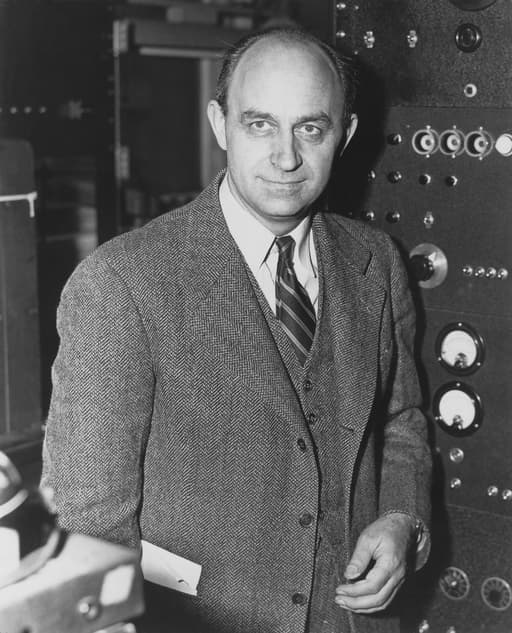
Enrico Fermi
PERSON
Italian–American physicist (1901–1954)
EP
Epicurus
PERSON
Name reference in documents

Eric Trump
PERSON
American businessman and reality television personality (born 1984)
EM
Ernest Marsden
PERSON
Name reference in documents
Ernest Rutherford
PERSON • 2 mentions
Person referenced in documents
EF
Eugene Feenberg
PERSON
Name reference in documents
Eugene Wigner
PERSON
Name reference in documents
FB
Felix Boehm
PERSON
Name reference in documents
Fermat
PERSON
Surname reference in documents
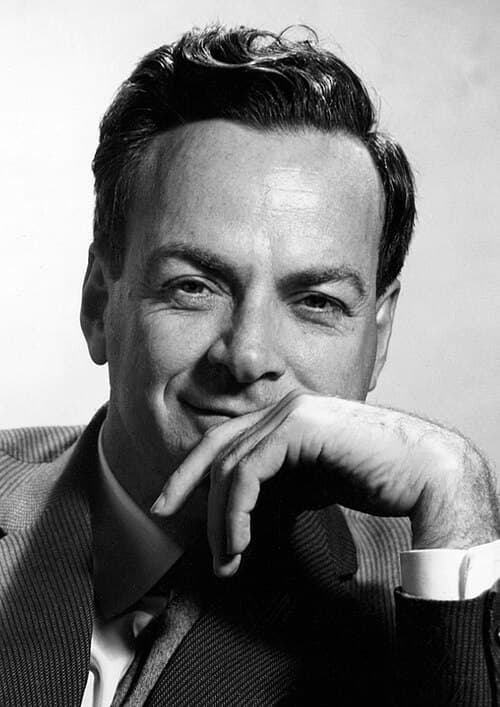
Feynman
PERSON
Surname reference in Epstein-related documents
FG
Feza Gursey
PERSON
Name reference in documents
FH
Following Heisenberg
PERSON
Name reference in documents
FR
Frederic
PERSON
Primarily refers to Frederic Fekkai (celebrity hairstylist) and Frederic Chaslin (conductor) in Epstein scheduling
Freeman Dyson
PERSON
Theoretical physicist and mathematician (1923–2020)
GE
Geiger
PERSON
Surname reference in documents
Gell-Mann
PERSON
American physicist (1929–2019)
GE
Gell-Mann's
PERSON
Surname or name fragment in documents
GS
George Sudarshan
PERSON
Name reference in documents

Ghislaine Maxwell
PERSON
British socialite and sex trafficker, daughter of Robert Maxwell, accomplice of Jeffrey Epstein
Glashow
PERSON
American theoretical physicist, winner of the Nobel Prize in Physics (1979)
GB
Gregory Breit
PERSON
Name reference in documents
HG
Hans Geiger
PERSON
Name reference in documents
Harvey Weinstein
PERSON
American film producer and sex offender (born 1952)
Heisenberg
PERSON • 2 mentions
German theoretical physicist and nobel prize winner (1901–1976)
HP
Heisenberg, Pauli
PERSON
Name reference in documents
HB
Henri Becquerel
PERSON
Name reference in documents
HB
Herbert Becker
PERSON
Name reference in documents
HW
Hermann Weyl
PERSON
Name reference in documents
HY
Hideki Yukawa
PERSON
Name reference in documents
Hilbert
PERSON
Surname reference in Epstein-related documents
HO
Hokin
PERSON
Surname or name fragment in documents
IR
I. I. Rabi
PERSON
Name reference in documents

Irene
PERSON
South Korean singer
JC
James Chadwick
PERSON
Name reference in documents
JF
Jerry Friedman
PERSON
Name reference in documents
JB
John Bardeen
PERSON
Name reference in documents
JS
Jonathan Swift
PERSON
Name reference in documents
JS
Julian Schwinger
PERSON
Name reference in documents
KO
Kamerlingh Onnes
PERSON
Name reference in documents
KR
Keanu Reeves
PERSON
Name reference in documents
LV
Le Verrier
PERSON
Name reference in documents
LE
Lederman
PERSON
Surname or name fragment in documents
LB
Leon Black
PERSON
American billionaire businessman (born 1951)
LC
Leon Cooper
PERSON
Name reference in documents
LL
Leon Lederman
PERSON
Name reference in documents
Lewis Carroll
PERSON
Person referenced in documents
MS
M. K. Sundaresan
PERSON
Name reference in documents
MA
Marie
PERSON
Primarily refers to Ann Marie Villafana (USAFLS prosecutor in Epstein case), extracted from partial name references
Marie Curie
PERSON
Name reference in documents
MA
Marshak
PERSON
Name reference in documents
MW
Martin Weinberg
PERSON
American attorney (born 1946)
MB
Marty Block
PERSON
Name reference in documents
MB
Max Born
PERSON
Name reference in documents
MP
Max Planck's
PERSON
Name reference in documents
MI
Mills
PERSON
Surname reference in Epstein-related documents

Mother Nature
PERSON
Personification of Earth's environment
Murray Gell-Mann
PERSON
American physicist (1929–2019)
Niels Bohr
PERSON
Person referenced in documents
NO
Noether
PERSON
Name reference in documents
OC
Occhialini
PERSON • 2 mentions
Name reference in documents
ON
Onnes
PERSON
Name reference in documents
PD
Paul Adrien Maurice Dirac
PERSON
Name reference in documents
PA
Pauli
PERSON • 2 mentions
Surname or name fragment in documents
PM
Pic du Midi
PERSON
Name reference in documents
Pierre de Fermat
PERSON
Name reference in documents
Plato
PERSON
4th-century BCE Greek philosopher
Richard Feynman
PERSON
American theoretical physicist (1918–1988)
RM
Robert Marshak
PERSON
Name reference in documents
RM
Robert Mills
PERSON
Name reference in documents
RS
Robert Schrieffer
PERSON
Name reference in documents
SB
Satyendra Nath Bose
PERSON
Name reference in documents
SC
Schrodinger
PERSON
Surname reference in Epstein-related documents
SD
Schrodinger, Heisenberg, Pauli, Dirac
PERSON
Name reference in documents
SC
Schwinger
PERSON • 3 mentions
Surname or name fragment in documents
SS
Scuola Normale Superiore
PERSON
Name reference in documents
SN
Seth Neddermeyer
PERSON
Name reference in documents
SH
Sheldon
PERSON
First name reference to multiple individuals in Epstein-related documents
Sheldon Glashow
PERSON
Person referenced in documents

Shelly
PERSON
First name reference to multiple individuals in Epstein-related documents
SC
Subrahmanyan Chandrasekhar
PERSON
Name reference in documents
TE
Teller
PERSON
Surname reference in Epstein-related documents
TG
Tommy Gold
PERSON • 2 mentions
Name reference in documents
TL
Tsung-Dao Lee
PERSON
Name reference in documents
US
Ussher
PERSON
Name reference in documents
VT
Val Telegdi
PERSON
Name reference in documents

Vicky Ward
PERSON
British investigative journalist
VW
Victor Weisskopf
PERSON
Name reference in documents
WE
Weisskopf
PERSON
Name reference in documents
Werner Heisenberg
PERSON
Name reference in documents
Wigner
PERSON
Hungarian-American physicist and mathematician (1902–1995)
WP
Wolfgang Pauli
PERSON
Name reference in documents
YN
Yoichiro Nambu
PERSON
Name reference in documents
YU
Yukawa
PERSON
Name reference in documents
Bose-Einstein
ORGANIZATION
Organization referenced in documents
Caltech
ORGANIZATION
California Institute of Technology
Chadwick's
ORGANIZATION
Organization referenced in documents
Democritus
ORGANIZATION
Organization referenced in documents
Einstein's
ORGANIZATION
Organization referenced in documents
Erlangen
ORGANIZATION
Organization referenced in documents
Faraday
ORGANIZATION
Organization referenced in documents
Fermi Problems
ORGANIZATION
Organization referenced in documents
Fourier
ORGANIZATION
Organization referenced in documents
Heisenberg or Pauli
ORGANIZATION
Organization referenced in documents
Institute for Advanced Study
ORGANIZATION
Organization referenced in documents
Joliot-Curie
ORGANIZATION
Organization referenced in documents
Kyoto University
ORGANIZATION
Organization referenced in documents
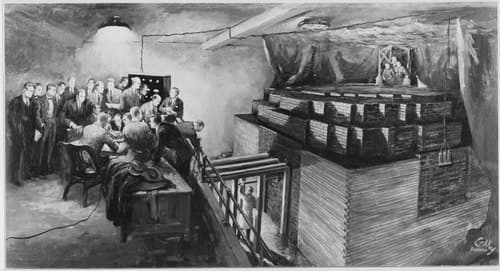
Manhattan Project
ORGANIZATION
Organization referenced in documents

National Science Foundation
ORGANIZATION
Organization referenced in documents
Neddermeyer
ORGANIZATION
Organization referenced in documents
Neptune
ORGANIZATION
Entity referenced in documents
Neutron
ORGANIZATION
Organization referenced in documents
Pauli's
ORGANIZATION
Organization referenced in documents
Planck
ORGANIZATION
Organization referenced in documents
Planck and Einstein
ORGANIZATION
Organization referenced in documents
Privatdozent
ORGANIZATION
Organization referenced in documents
Quantum
ORGANIZATION
Quantum Fund or entity referenced in documents

Royal Society
ORGANIZATION
Organization referenced in documents
Sin-Itiro Tomonaga
ORGANIZATION
Organization referenced in documents
Star Trek
ORGANIZATION
Organization referenced in documents
Sudarshan
ORGANIZATION • 2 mentions
Organization referenced in documents
the Joliot-Curies
ORGANIZATION
Organization referenced in documents
the Principle of Least Time
ORGANIZATION
Organization referenced in documents
the RAND Corporation
ORGANIZATION
Organization referenced in documents
the Swiss Federal Institute of Technology
ORGANIZATION
Organization referenced in documents

the University of Chicago
ORGANIZATION
University in Chicago
the University of Erlangen
ORGANIZATION
Organization referenced in documents
TITANS
ORGANIZATION
Organization referenced in documents

Trinity
ORGANIZATION
Church or educational institution
University of Gottingen
ORGANIZATION
Organization referenced in documents
Uranus
ORGANIZATION
Organization referenced in documents

US Navy
ORGANIZATION
Organization referenced in documents
Yang-Mills
ORGANIZATION • 2 mentions
Organization referenced in documents

Belgium
LOCATION
Country in western Europe
Berkeley
LOCATION
City in Alameda County, California, United States
Bristol
LOCATION
City in South West England, United Kingdom

Copenhagen
LOCATION
Capital and largest city of Denmark
Dirac
LOCATION
Location referenced in documents
Earth
LOCATION
Third planet from the Sun in the Solar System
Fermi
LOCATION
GPU microarchitecture designed by Nvidia
Gottingen
LOCATION
Large city in Lower Saxony, Germany
Kunming
LOCATION
Capital of Yunnan province, China
Leiden
LOCATION
Location referenced in documents
Los Alamos
LOCATION
Census-designated place in and county seat of Los Alamos County, New Mexico, United States

Rochester
LOCATION
City in New York
Rutherford
LOCATION • 2 mentions
Location referenced in documents
Schthdinger
LOCATION
Location referenced in documents

Siberia
LOCATION
Region of Asia

Stockholm
LOCATION
Capital and largest city of Sweden
the Torpedo Boat
LOCATION
Location referenced in documents
Voile
LOCATION
Location referenced in documents

Wisconsin
LOCATION
State of the United States of America

Zurich
LOCATION
Capital of the canton of Zurich, Switzerland
Statistics
Pages:100
Entities:180
Sponsored