HOUSE_OVERSIGHT_017088_sub_002 - HOUSE_OVERSIGHT_017287
Document Information
Bates Range
HOUSE_OVERSIGHT_017088_sub_002 - HOUSE_OVERSIGHT_017287
Pages
100
Source
House Oversight Committee
Original Filename
CURREN DRAFT 04.02.12.docx
Document Content
Page 101 - HOUSE_OVERSIGHT_017188
4.2.12 WC: 191694 Mr. DERSHOWITZ. It seems to me you have an interest but no right...I can understand how you would be offended by that. But one of the prices of living in a complex society, with freedom, is for you to have to simply tolerate the fact that you know that certain people are engaging in conduct that you don’t approve of. That was precisely the argument made by the State of Connecticut in the birth control [clinic] case.*° They said that people of the State of Connecticut are offended by knowing that this kind of immoral conduct is being engaged in by people, married people, all over the State. And the Supreme Court did say that this is something that members of the society must tolerate in a pluralistic society. There are a great many things which offend me, to know that they’re going on in peoples’ homes—I have an interest in that, but I don’t think I have a protected constitutional right [to be] disturbed about what’s going on. Judge Julian asked whether “that interest [should] be legally protected?” Mr. DERSHOWITZ. Now, there may be ways of protecting it, perhaps through zoning regulations... But if the issue is total banning on the one hand as against your interests being protected against knowing people are doing this kind of thing, I would submit that the Constitution has a clear answer to that. It must permit the film to be shown in a way to minimize your exposure to it and to permit you both fully to see and to avoid being exposed to the contents of the film. So I do submit that your Honor does have an interest and I can understand it. But I think you will realize that on balance this interest could be used to upset almost every kind of freedom that Americans ought to be at liberty to engage in.” Judge Aldrich seemed intrigued by our argument, while continuing to press me hard on its implications. At one point Judge Aldrich asked me what I would do if the Supreme Court ruled against my theory. “Will that be the end of the road...?” I responded: “Well, I, as an attorney, will continue to urge the Court to accept this principle because I think it’s the correct approach to the regulation of obscenity.” Following three days of intensive argument and questioning, the three judges issued a decision written by Judge Aldrich. He bought my argument totally. He began by accepting my assumption about the nature of the film: For purposes of this case we assume that the film is obscene by standards currently applied by the Massachusetts courts. He then went on to discuss the implications of the Stanley decision, which the prosecutor had argued was “irrelevant” to this case and which, at the beginning of my argument, thought was not relevant to movie theaters: 35 Griswold v. Conn 101 HOUSE_OVERSIGHT_017188
Page 102 - HOUSE_OVERSIGHT_017189
4.2.12 WC: 191694 In Stanley [the] Court held that in certain circumstances possession of a moving picture film is constitutionally protected even though by contemporary standards the film is obscene. We do not consider this irrelevant. The Court then went on to consider the state’s argument that an obscene film, even viewed in a restricted theater, can induce the viewer to commit rape. The question is, how far does Stanley go. Is the decision to be limited to the precise problem of “mere private possession of obscene material,” is it the high water mark of a past flood, or is it the precursor of a new one? Defendant points to the fact that the court in Stanley stated that Roth v. United States, was “not impaired by today’s holding, and in the course of its opinion recognized the state’s interest there upheld in prohibiting public distribution of obscenity. Yet, with due respect, Roth cannot remain intact, for the Court there had announced that “obscenity is not within the area of constitutionally protected speech or press,” whereas it held that Stanley’s interest was protected by the First Amendment, and that the fact that the film was “devoid of any ideological content” was irrelevant. Of necessity the Stanley court held that obscenity presented no clear and present danger to the adult viewer, or to the public as a result of his exposure. Obscenity may be offensive; it is not per se harmful. Had the Court considered obscenity harmful as such, the fact that the defendant possessed it privately in his home would have been of no consequence. The Court then rendered its conclusion: We confess that no oracle speaks to Karalexis unambiguously. Nonetheless, we think it probable that Roth remains intact only with respect to public distribution in the full sense, and that restricted distribution, adequately controlled, is no longer to be condemned. If a rich Stanley can view a film, or read a book, in his home, a poorer Stanley should be free to visit a protected theater or library. We see no reason for saying he must go alone. It was the first time in history that a court—any court—had ruled that the government had no power to ban or prosecute an “obscene” film that was shown to the public in a theater. I had achieved a total victory not only for my client, but for my novel approach to offensiveness under the First Amendment. It was a heck of a way to begin my career as a lawyer. The victory would, however, be short lived, at least in theory, if not in practice. Not surprisingly, the District Attorney appealed our victory to the Supreme Court, which accepted the case. I was asked to argue for Grove Press. And so, at the age of 31, I argued my first case before the High Court. 102 HOUSE_OVERSIGHT_017189
Page 103 - HOUSE_OVERSIGHT_017190
4.2.12 WC: 191694 I had prepared extensively for my oral argument. I expected to be questioned aggressively by the recently appointed Chief Justice Warren Burger, who I had known when I clerked for Judge Bazelon. Burger and Bazelon were arch enemies, both ideologically and personally. Burger knew I was close to Bazelon, and so I expected some tension, but I could not anticipate what awaited me. I had hardly reached the lectern to begin my argument, when Chief Justice Warren Burger asked if he could “interrupt” to inquire whether I thought a state had the power to prohibit a “bear-baiting contest.” I didn’t know exactly what a bear-baiting contest was, but I guessed that it must involve considerable cruelty to bears. I responded that the act of bear-baiting was not protected by the Constitution, since the states have the power to protect animals from suffering. I tried to get the argument back on the film in question: “I think the example would be better if it were a film of bear-baiting.” But the Chief Justice interrupted me once again: “Let’s stay on the live.” I drew a distinction between an act that harmed another creature and a film of consensual lovemaking that did not intrude upon the sensibilities of those who chose to view it. The Chief Justice shot back: [Y]our are saying that it’s all right to kill one bear and five dogs in the filming process, but it isn’t right to kill many more of them in live showings, is that a distinction.... I had no idea what he was getting at with his scripted questions, so I tried again: No I would say a state would have the right to prohibit the actual killing of dogs and bears whether for film or other purposes. The Chief Justice persisted in his obsession with bears! Let’s say 14 states didn’t have any statutes against bear-baiting, and 4.5 million had watched bear baiting or the filming of bear baiting. Would that have the slightest relevance in your judgment on whether the showing of bear baiting in Boston, Massachusetts, could or could not be stopped. ..? I tried to direct my answer away from bear-baiting and to the issue of whether the Constitution permitted a consenting adult to view an obscene film in the privacy of a restricted movie theater: No, the First Amendment protects the individual’s right to receive information necessary to satisfy his emotional and intellectual needs. The thrust of our [position would take prosecutors] from [inside] the theater—that is only attended by people who want to go—and would put them outside the theater to protect you and me from the intrusion on our sensibilities that would occur if movies...thrust advertisements or pictures on unwilling viewers. But the Chief Justice would still not be diverted from his bears. Though I had never mentioned a bear in my answer, he challenged me: Are you suggesting that it is a universal rule that everybody is offended by bear-baiting, for example? 103 HOUSE_OVERSIGHT_017190
Sponsored
Page 104 - HOUSE_OVERSIGHT_017191
4.2.12 WC: 191694 That, of course, was precisely my point: those who were not offended should be free to watch a film in which no one was hurt. Finally, the Chief Justice asked me about theaters: [H]ow about moving the bear-baiting into a theater and charging $5 admission for it? I don’t want to overwork you on the bear-baiting, but in order to have a film of bear- baiting, you’ve got to go through unlawful process in the first instance. With less than a minute before my time had expired, the Chief Justice asked whether I thought the analogy to the bear-baiting contest was “valid.” I politely told him what I thought: I think the analogy of bear-baiting is not valid [because it] is an illegal act which hurts animals. It is different from [lovemaking] presented on a screen to a public which has chosen to view it. By this point my time was nearly up. I quickly summarized my argument that under a functional definition of privacy A theater with its curtains drawn deserves [at least as much constitutional protection as] a home with its shades drawn up. The Chief Justice had monopolized the entire argument with his bear-baiting analogy. He 9or his law clerksO had apparently prepared a series of questions for me about bear baiting and Burger had simply gone down the list ignoring my answers. The other eight justices were unable to ask questions, though several of them seemed anxious to probe certain points. Some of them seemed embarrassed by their Chief’s performance. By the end of the argument, I finally understood what a bear-baiting contest must feel like—at least to the bear. It was not only the dumbest series of questions I have ever been asked during an oral argument—with at the possible exception of those put to me by a senile judge about the facts of the next case scheduled for argument. It was probably the stupidest conversation I’ve ever had with anyone about the First Amendment. But no one ever said that intelligence was a criterion for being a judge, or even a Chief Justice. What mattered to Warren Burger was that he looked like what a Chief Justice is supposed to look like! A few months later the Supreme Court rendered a 5 to 3 decision in the J Am Curious Yellow case that did not reach the broad issue decided by the district court (nor did it mention bear-baiting); instead, it decided the case on a narrow procedural ground. We eventually settled the case to the advantage of the defendants. The film was shown throughout the country and no one went to prison. Judge Aldrich’s opinion, suggesting that all censorship of the content of movies exhibited to adults in discreet settings was unconstitutional, remained the only court decision on that issue until June of 1973, when the Supreme Court changed the definition of obscenity in a case called Miller v. California and a series of companion decisions. In these cases Chief Justice Burger, writing for the majority, expressly and emphatically rejected the approach I had argued in the J Am Curious Yellow case. 104 HOUSE_OVERSIGHT_017191
Page 105 - HOUSE_OVERSIGHT_017192
4.2.12 WC: 191694 We categorically disapprove the theory...that obscene, pornographic films acquire constitutional immunity from state regulation simply because they are exhibited for consenting adults only... The States have a long-recognized legitimate interest in the quality of life and the total community environment, the tone of commerce in the great city centers, and, possibly, the public safety itself. But as I promised Judge Aldrich, I continued to press my principle in the court of public opinion and in a series of other obscenity cases over the next several decades. Ultimately my view would prevail, if not in law then certainly in practice, as we shall see. Chief Justice Burger may have won in the courthouse, but we won in theaters and on television sets throughout the nation, as sexually explicit films—far more explicit than J Am Curious Yellow—became pervasive and “legal” in fact if not in law. This disparity between the law, as set down in theory by the Supreme Court, and the law, as implemented in practice throughout the country, is an interesting story in itself. 105 HOUSE_OVERSIGHT_017192
Page 106 - HOUSE_OVERSIGHT_017193
4.2.12 WC: 191694 Deep Throat: Why I Chose Not to Watch It My initial victory in the Am Curious Yellow case—getting a three judge court to declare unconstitutional all obscenity laws that applied to adults-only theaters—made me something of a hero in the “adult film” industry—and something of a pariah in the radical feminist community. (More about the latter soon.) Many “obscenity” clients came my way, including the musical play Hair which was “banned in Boston” and several “soft core” films such as the very forgettable “Belinda’”** and the unforgettable hard core film, Deep Throat.*’ I’m told that Deep Throat is a very hard core and very bad movie. I can’t personally attest to these claims because, to this day, I have not seen it.** I avoided seeing the film not because I’m a prude—I enjoy a good erotic movie as much as the next guy—but rather because I wanted to make a point about the law of obscenity: the decision to watch or not to watch a particular film should be a matter of choice for every adult citizen. Just as I told the judges in the / Am Curious Yellow case that they didn’t have to view the film in order to rule that an adult had the constitutional right to view it in an adults-only theater, so too I had the right to argue that position without myself viewing Deep Throat. To paraphrase my earlier case, I was “curious” about Deep Throat, but cared more about the principle of choice. I also believed that my not viewing the film was a good tactic that helped to dramatize my point. I decided to use that tactic in two separate cases involving the Deep Throat case. The first was the prosecution of porno-actor Harry Reems for his role as an actor in the film. Reems was the first actor in history ever to be prosecuted for the crime of obscenity. He was charged with participating in a nation-wide conspiracy to transport an obscene film in interstate commerce. The United States government charged him with conspiracy because Reems himself had nothing to do with distributing the film in interstate commerce. As the prosecutor acknowledged: “[Reems] made the film, got his money and got out back in 1972, that is, he didn’t do anything else as a part of the conspiracy, he didn’t do any more overt acts, he didn’t participate any further, and the question arises why in the thunder does he wind up being charged [with acts that took place] four years later?” His answer was that “once a person joins a conspiracy, he is liable for everything that happens in that conspiracy until it is ended.” (Reems once asked me whether he could have been charged with murder under the prosecutor’s theory, if some strong-arm methods used by the distributors had resulted in a death years after the film had been completed. I told him that—under the prosecution theory—he could charged with that crime.) @ See The Best Defense pages 174-78. 37 T was also involved—either as a defense lawyer, consultant or commentator—in the defense of several magazines and books. See e.g. Dershowitz, Shouting Fire, pages : 38 During a preview of a film off Broadway about the Deep Throat controversy I saw some soft core excerpts. They were God awful. 106 HOUSE_OVERSIGHT_017193
Sponsored
Page 107 - HOUSE_OVERSIGHT_017194
4.2.12 WC: 191694 In order to get out of the conspiracy, according to the government, Reems was obliged “to take up affirmative actions to defeat and destroy the conspiracy.” But what could Reems have done? He could not have “exposed” the crime, as one might expose a secret conspiracy, since everyone knew that Deep Throat was being distributed throughout the world. He could not have prevented the distribution and exhibition of the film, since he retained no legal rights to it. The prosecutor apparently expected him to physically destroy the thousands of prints of Deep Throat that were then in theaters and on video. The jury, selected from residents of Memphis, a city proud of being called “the buckle of the Bible Belt,” convicted Reems and his co-conspirators and Harry went off in search of an appellate lawyer. Because of my involvement in the I Am Curious Yellow case, he called me. When we first met, Reems described himself to me as “a nice Jewish boy earning his livelihood by doing what lots of people would pay to do.” He was born in Scarsdale, New York, with the name Herbert Streicker, attended the University of Pittsburgh, dropped out, joined the Marines, and later set out to become a stage actor. He had performed with the La Mama troupe, the New York Theater Ensemble, and the National Shakespeare Company in New York City. He had even done a Wheaties commercial. During Christmas of 1969, “when things got rough and there was no work around...,a fellow said he knew where I could make $75 doing a stag film.” He nervously accepted and reported for work. His two female costars, both doctoral students in sociology at NYU, put him at ease, and he completed several “loops.” Streicher was successful, not so much because of his looks or size, but rather because of his extraordinary ability to perform repeatedly on cue. In a business where time is money and the major cause of delay is male incapacity, a porno actor capable of filming several sequences in one day’s shooting is in demand. Streicker told me how he ended up as the male star of Deep Throat. He had been hired—at $150 per day—as a sound and lighting technician for a sex film being shot near Miami, Florida, in January 1972. When the original male lead failed to appear, the director, Gerard Damiano, asked Streicker to fill in—at a $50 cut in salary. Since it took only one day to shoot the film’s sex shots, he earned only $100 for his performance. His contract did not call for royalties. When the filming was completed, Streicker’s role in the enterprise was over: he did not participate in the editing or distribution of the film—not to mention its enormous profits. Even his stage name “Harry Reems’—with some vague sexual allusion in mind—was picked by the director, without even consulting Streicker. He was pleased, of course, that the film was well-received and widely shown. He retained “Harry Reems” as his professional name, and performed in several other sex films. But his role in Deep Throat was over, or so he thought, until he was arrested two years later in his Greenwich Village apartment. An FBI agent handed him a warrant requiring his presence in Memphis, Tennessee, a city that Streicker had never even visited. The prosecuting attorney was a young Bible Belt fundamentalist named Larry Parrish. (The names of all the participants sounded like puns: Reems, Streicker, Lovelace, Parrish.) Parrish was dubbed by the press as “Mr. Clean,” “The Memphis Heat,” and “the Memphis Smut Raker.” A born-again Christian, and an elder in the First Evangelical Church, Parrish believed that pornography was the bane of modern America. He once told a reporter, “I’d rather see dope on the streets than these movies,” explaining that drugs could be cleansed from the body, but pornography’s damage was “permanent.” When asked why be became a prosecutor, Parrish cited 107 HOUSE_OVERSIGHT_017194
Page 108 - HOUSE_OVERSIGHT_017195
4.2.12 WC: 191694 the warning to evildoers in Romans 13:4, that God had appointed ministers on earth to carry out his wrath against them. He believed it was his mission to conduct “search and destroy” operations against the porno industry. As a prosecutor of pornography, he had already secured more than forty convictions. Many observers saw the decision to bring Reems to trial as evidence of Parrish’s creativity. Asa Memphis lawyer, familiar with Parrish, put it: “Parrish figured that putting an actor on trial was the way to get publicity [and] a man is less likely to pick up public sympathy than a woman.” Parrish acknowledged that his purpose in prosecuting Reems was to made it clear that no one involved with a porno film was immune from criminal liability. Reems came to see me after he had been convicted and was facing years in prison. He wanted me to argue his appeal. He told me he had no money and asked me to take his case on a pro bono basis. I agreed. I told him I preferred not to watch the film and explained to him my theory of “choice” and “externalities,” but assured him that I would make every argument that had any chance of freeing him. There’s an old saying that goes this way: “If you have the law on your side, bang on the law. If you have the facts on your side, bang on the facts. If you have neither the law nor the facts on your side, bang on the table.” I have never believed that, but I do believe in a variation on that theme: If you don’t have the law or legal facts on your side, argue your case in the court of public opinion. In the Reems case, the Memphis jury had rejected Reems’ factual defense, and the judge had rejected his legal defense. The Supreme Court had rejected my “choice” and “externality” approach. I continued to believe, however, that the broader general public, or at least the most influential segment of the public, would be sympathetic to my libertarian approach to obscenity and free speech, especially in the context of an actor who was being prosecuted. Reems, to be sure, was not Helen Hayes or Marlin Brando, but to make the point that the principle was the same, we adopted the following slogan: “Harry Reems today, Helen Hayes tomorrow.” We made a determined effort to elicit support from the mainstream entertainment industry and from the media. We succeeded in getting The New York Times to cover the case. Its initial story told how the Reems prosecution was first seen “as a joke,” but is now being understood “as a very serious issue”: With Mr. Dershowitz as the lead lawyer and the American Civil Liberties Union and other prominent groups and individual prepared to help, Mr. Reems has some of the country’s most impressive legal talent working on his appeal. He also has the support of some of the country’s best known entertainers: Colleen Dewhurst, Ben Gazzaza, Mike Nichols, Stephen Soundheim...Warren Beatty, Jack Nicholson and Gregory Peck. As Mr. Dershowitz interprets the Deep Throat case, “Any person who participates in any way in the creation, production, editing or distribution of a sexually explicit film, 108 HOUSE_OVERSIGHT_017195
Page 109 - HOUSE_OVERSIGHT_017196
4.2.12 WC: 191694 newspaper, book, painting or magazine can be hauled into a Federal court anywhere in the United States and charged with participating in a national conspiracy.” Shortly thereafter, Nat Hentoff wrote a long front-page analysis of the Village Voice. Hentoff warned his readers of the consequences of a government victory in the Reems case. Alan Dershowitz, a Harvard Law School professor and one of the nation’s preeminent constitutional lawyers, has never been known as an apocalyptic civil libertarian. Accordingly, when Professor Dershowitz speaks of the recent criminal convictions in a porno-film case as being so chilling as to ultimately also freeze the printed word, the warning is a weightier than if it had come from those who habitually clamor that the constitutional sky is falling... Should the verdict against Harry Reems be sustained, obscenity indictments throughout the country will pyramid. Hentoff explained that the implications of the Reems prosecution go well beyond obscenity. Ifa conspiracy charge like this one was to be upheld on appeal, the government could make dangerous use of that precedent in political cases involving, for example, antiwar activists. Hentoff then quoted my legal argument: “[H]ere was an actor who, on the one day he worked on Deep Throat, had no idea what the ultimate film was going to look like. He knew it was a sex film, but he had not seen any script in advance. There was no way he could know whether it was going to be soft core or hard core. And, in fact, Harry never even saw the film before it was released. Yet he’s convicted of a conspiracy to move the film, in the form it finally took, across state lines.” Following the publication of the Hentoff article had, hundreds of readers came forward and volunteered their assistance. It also generated numerous other stories—presenting our side of the case. KING OF THE PORNO ACTORS FINDS HIMSELF IN DEEP THROES IN TROUBLE UP TO HIS THROAT HOW HARRY GOT REAMED DEEP THREAT PORN’S DEEP GOAT REEMS SHAFTED IN BIBLE BELT Reems and I crisscrossed the country, speaking at universities, town halls and other venues. Our appearances were widely covered by the media. The New York Times described a joint appearance at the Harvard Law Forum: Harry stood with a portrait of Supreme Court Justice Felix Frankfurter beaming down on him. Besides him sat Alan Dershowitz, looking like a tweedy Marx Brother with his wild nimbus of ash-blond hair, saying that he felt Harry Reems’ trial was the most significant First Amendment conspiracy case since Dr. Spock. 109 HOUSE_OVERSIGHT_017196
Sponsored
Page 110 - HOUSE_OVERSIGHT_017197
4.2.12 WC: 191694 Dershowitz acted as a sort of kibitzer for Harry. He noted that the crew of the Glomar Explorer, [which] had been shown a videotape of Deep Throat, had more to do with transporting obscene material in interstate commerce than Harry Reems did. Would Larry Parrish prosecute them? When I asked Parrish, he said: “They’re not insulated against prosecution.” Not all the stories were flattering. Mike Royko complained in a syndicated article how depressing it was that after two hundred years of men like Jefferson, Paine, Debs, and Darrow, “we are now asked to fight for the right of Harry Reems to be a public creep... Anybody who contributes to his defense fund,” Royko concluded, “is a mental moonbeam.” But people contributed and Reems and I persisted in making our case in the court of public opinion. In time, the publicity had its intended effect on the public, on the Justice Department, and on the courts. We began to get the message that the Reems conviction was an embarrassment. This was exactly what we had hoped would happen. In the end, the Justice Department decided to drop the case. Reems’ conviction was vacated and his indictment was dismissed, over the strong objections of the Memphis prosecutor and judge. We did not have the law on our side, but we did have public opinion. We might have lost our case in the court of law (or won it on grounds other than my “choice”, “externality approach,”) but we had clearly won in the court of public opinion.*”? Harry Reems went free, retired from the porn business, became a born-again Christian and moved to Utah, where he sold real estate. As my legal “fee” for winning his freedom, he sent me a photograph of him with the following inscription: “To Alan Dershowitz who me everything I know.” The First Amendment was safe from the likes of Larry Parrish—at least for a time. My second encounter with Deep Throat presented a more daunting challenge to my theory. It took place on my home turf of Harvard, and the people urging criminal prosecution were Harvard students. The people who these students wanted to see prosecuted were other students, one of whom eventually became a founder of Microsoft. It all began with some drunken Harvard College students viewing the film Animal House and throwing beer cans at the screen and damaging it. The Quincy House Film Society was responsible for the screen. In order to raise the several hundred dollars needed for repair, they decided to show Deep Throat. Some women students who lived in Quincy House protested. “This is our home,” one complained. “We shouldn’t have to be subjected to abuse and degradation right in our own living room.” The uproar had caught the film society by surprise. The showing of Deep Throat had become a pre exam tradition at many colleges. My own nephew sponsored a showing at MIT. It was seen as a lark, an escape from the tensions of the tests. But feminists were beginning to take pornographic movies, especially Deep Throat, quite seriously. * T relate the other legal theories on which we might have won the case in The Best Defense pages 155-174. 110 HOUSE_OVERSIGHT_017197
Page 111 - HOUSE_OVERSIGHT_017198
4.2.12 WC: 191694 Several weeks prior to the scheduled showing, Gloria Steinem had written an article in Ms. magazine about Deep Throat and the exploitation of its female lead, Linda Lovelace. Pointing to the $60 million allegedly made on the film, Steinem characterized Deep Throat as “a national and international profit center and dirty joke.” At the heart of the joke was Linda Lovelace “whose innocent face offered movie-goers the titillating thought that even the girl-next-door might be the object of porn-style sex.” But, according to Steinem, it was a joke with widely felt consequences: “Literally millions seem to have been taken to Deep Throat by their boyfriends or husbands (not to mention prostitutes by pimps) so that each one might learn what a woman could do to please a man if she really wanted to.” Moreover, Linda Lovelace was now claiming that her innocent face had been a mask covering up a battered wife who had been imprisoned by her husband-pimp. Several years after the completion of Deep Throat was completed, Lovelace wrote an autobiography entitled Ordeal, in which she told a sordid story of how she had been compelled to perform her “sexual sword- swallower trick” at gunpoint. After reading Ordeal I called Reems and asked him whether his recollections of the filming of Deep Throat corroborated her claim that she had been forced into performing. Harry, who was then working off-Broadway in a stage play, laughed and said, “Are you kidding? Sure her husband, Chuck, was an asshole, but he was hardly around during the filming. Damiano sent him away because he would get jealous of how much she was enjoying the sex. She was really into it. We had a good relationship before and during the filming.” I told Harry that Lovelace had written that when “she saw how upset Chuck was, [she] decided [she] would pretend to enjoy it with Harry.” I asked whether it was possible that she was only acting. “Linda Lovelace acting?” Harry exclaimed. “Have you seen her in a film? She couldn’t even pretend to be acting.” Whether true or false, Lovelace’s account struck a responsive chord among many feminists. Gloria Steinem’s article presented a sympathetic portrait of Lovelace as the victim of everything the “sleazy pornocrats” had come to represent. Using Lovelace’s Ordeal as a symbol of sexist repression, many feminists declared all-out war against pornography. The movie Deep Throat came to symbolize the anti-women evils of the sex industry. And I became the symbol of the “pornocrat lawyer,” getting rich off the suffering of exploited women (even though I charged nothing for these cases). The organization through which Gloria Steinem spoke—Women Against Pornography—advocated boycotts as its primary weapons in the war on porn. The boycotts were directed not only against theaters and bookstores, but against lawyers who represented them on First Amendment grounds. When I and several friends opened a Kosher deli in Harvard Square, it was picketed with signs of saying “How can a porn pig serve Kosher food?” Although boycotts are themselves protected by the constitutional right of free expression, civil libertarians are appropriately concerned about the effect of overly broad boycotts, such as those 111 HOUSE_OVERSIGHT_017198
Page 112 - HOUSE_OVERSIGHT_017199
4.2.12 WC: 191694 directed against general bookstores. We remember that boycotts had been employed widely during the McCarthy period. The threat to boycott motion-picture studios and television stations that employed “red,” “pink,” or “suspect” actors, directors, or technicians, led to the notorious “black lists” and “red channels.” In an interview with Playboy magazine, I had expressed some of those concerns: “Take what [some of these] women are now doing and ask yourself the question. Would you favor it if their objection were to books about atheism or communism instead of pornography? If you would say no, then it seems to me that you can’t be in favor of a boycott against stores that sell Playboy and Penthouse, because they’re equally protected. The dispute between civil libertarians and feminists had split the ranks of some liberals, and the issue was achieving some notoriety in the media. I had, perhaps, added some fuel to the fire by my criticism of the “new feminist censors” in several articles and speeches. I did not deny that some pornography could be degrading to women, but I argued that it is precisely the function of the First Amendment to protect those whose speech offends and degrades. I pointed out that some of the most vocal opponents of pornography inadvertently provided the most compelling arguments for its constitutional protection by characterizing it as “Fascist propaganda.” (The Fascists, not surprisingly, used to call it “Communist propaganda.”) All propaganda is within the central core of the First Amendment. Nor did I dispute the claim that some pornography may contribute to an atmosphere of violence against women. But speech often causes undesirable consequences—political violence, riots, even revolutions. That should not, I argued, be a reason for suppressing speech itself. Some radical feminists went beyond boycotts, shooting bullets through a bookstore window in Harvard Square to protest its sale of Playboy Magazine. Some theaters showing Deep Throat received threats of violence, and at least one was firebombed after the patrons left. Some of the women of Quincy House who were opposed to Deep Throat were not content to protest. First they tried to cancel the showing by calling for a vote of the students who lived in the dormitory. They lost by a margin of three to one. Forty-nine percent of the women who voted opposed the showing; and forty-eight percent favored showing Deep Throat. Next they tried to get the Harvard University administration to forbid the scheduled showing. The Dean of Students wrote a letter to the Quincy House Film Society urging it not to show Deep Throat, but he would not ban it. The members of the film society, caught up in the adversary challenge by the feminists, voted to go forward with the event. The Quincy House women, with the assistance of other feminists, decided to picket the performances and to use the occasion to sensitize students to the evils of pornography. I supported their protest. Pamphlets were prepared presenting the feminist perspective on pornography. A slide show, graphically depicting the exploitive and sexist nature of pornography, was scheduled for presentation in an adjoining room an hour before the first showing of Deep Throat. Several prominent local feminist speakers had been asked to address the hundreds of protesters expected in front of Quincy House on the evening of the first scheduled performance. [12 HOUSE_OVERSIGHT_017199
Sponsored
Page 113 - HOUSE_OVERSIGHT_017200
4.2.12 WC: 191694 The First Amendment seemed to be in full bloom at Harvard. No one was being prevented from expressing his or her views. The Quincy House Film Society was going to show Deep Throat; the Harvard administration was expressing but not imposing its views; the feminists were preparing pamphlets, slide shows, and speakers to present theirs; and everyone was free to see and listen to all or none of these expressions. The feminists seemed to be making their point quite effectively: more students were expected on the picket lines and at the slide show than at the movie itself. Many in the Harvard community, while supporting the right of the Quincy House Film Society to show Deep Throat, now believed that the society had been insensitive to the feelings of their feminist housemates by exhibiting an offensive film in the dormitory that was home to them all. I shared that view. Then everything changed. Days before the scheduled showing, two women residents of Quincy House, not satisfied to protest and picket, called the local District Attorney’s office and asked the police to prevent the showing of Deep Throat and to arrest the students who were planning to show it. The local District Attorney was an elderly political hack named John Droney, who had repeatedly won reelection on an uncompromising law-and-order platform. When he learned that the twin evils of obscenity and Harvard might merge on that fateful night, he dispatched an assistant to court in an effort to secure an injunction against the scheduled showing. If there is anything more obnoxious to a civil libertarian than the punishment of speech after it has taken place, it is the issuance of a prior injunction to prevent speech in the first place. Prior restraint—as an injunction against speech has come to be known—s the purest form of censorship. It seeks to prevent the speech from ever reaching the public. Now, almost ten years after the Supreme Court had rebuffed efforts to enjoin publication of the Pentagon Papers, the District Attorney of Middlesex County was seeking to enjoin the showing of a dirty movie to a small group of students in a college dormitory at Harvard. Only hours before the scheduled performance, Carl Stork and Nathan J. Hagen—the co- presidents of the Quincy House Film Society—received telephone calls from the D.A.’s office directing them to be in Judge Charles R. Alberti’s courtroom at two o’clock for a hearing. Stork and Hagen tried to call me in my office. But I was at lunch, and my secretary couldn’t locate me. Stork and Hagen told her the story and requested that I come to the court to assist them as soon as possible. I returned from lunch at two-fifteen, to learn that I was expected in court—fifteen minutes earlier! I quickly borrowed a colleague’s ill-fitting jacket, dug an old brown tie out of my desk drawer, and drove to the courthouse in downtown Cambridge. Within minutes, I found myself before Judge Alberti, arguing against the injunction. With no books, cases, or statutes in my possession, I had to wing it. The judge was most understanding, asking the Assistant District Attorney to let me look over his shoulder at the relevant statute and cases. 113 HOUSE_OVERSIGHT_017200
Page 114 - HOUSE_OVERSIGHT_017201
4.2.12 WC: 191694 After some legal argument, Judge Alberti declared that he was ready to see Deep Throat to decide whether it was obscene. I argued that the judge need not view the film: no matter what its content, I said, it would be unconstitutional for him to enjoin the showing of any film. If the D.A. thought the film was obscene, he could wait until it was exhibited and then arrest those responsible for its being shown. Judge Alberti insisted, however, on having Deep Throat screened for him. As the equipment was being wheeled in the courtroom, I informed the judge that I had no intention of watching the film. I was preserving an important point for any jury trial that the students might have in the future. I would tell the jurors that I had never seen Deep Throat because I had chosen not to, and that they had never seen Deep Throat because they had chosen not to. I would argue that the right to choose not to see a film is just as important as the right to choose to see a film. Indeed, most countries that prevent their citizens from seeing certain films also require their citizens to see other films. I would remind the jurors that it was the District Attorney who was making them see a film they had chosen not to see, in order to have them decide whether other people, who have also chosen not to see would be offended if they were to see it. I hoped, by this argument, to point out the absurd nature of the jurors’ task in an obscenity prosecution, and to get them to focus on the important issue —namely, whether the outside of the movie theater, the only thing that the unwilling public may have to endure, is offensive to those who cannot avoid it. Judge Alberti excused me from watching Deep Throat, and Stork, Hagen and I left the courtroom while the judge, half a dozen assistant D.A.’s, and a few court house personnel watched Linda Lovelace and Harry Reems on a small video machine. After about forty minutes Judge Alberti abruptly stopped the videotape and summoned us back into court. “I’ve seen enough,” he declared with a disgusted look on his face. Then, turning to me, he said, “You’re the lucky one. I had to sit through that trash.” The judge then declined to issue an injunction against the scheduled showing of Deep Throat, because although he regarded it as degrading both to men and women, he found that it was not obscene under the relevant Massachusetts standards. The film would be shown that night. When IJ arrived at Quincy House shortly before eight o’clock, a circus atmosphere prevailed. Hundreds of pickets marched outside urging potential viewers to stay away. There was some pushing and shoving. Slogans were shouted: “Freedom of the Press is not Freedom to Molest.” “Pornography is an incitement to violence.” I walked past the pickets and spoke to the assembled viewers and protesters: Whether you folks like it or not, you are part of a rather important political event...I am not here to either encourage or discourage the students who decided to see this film...Were I not involved in this lawsuit, I would be out there defending the rights of those picketers to...persuade you not to see this film. 114 HOUSE_OVERSIGHT_017201
Page 115 - HOUSE_OVERSIGHT_017202
4.2.12 WC: 191694 Notwithstanding the judge’s ruling that the film was not obscene, the District Attorney decided to arrest Stork and Hagen. The Deep Throat case was so important to Droney that he pulled one state detective off a murder investigation to watch the film and make the arrest. I tried to secure a federal injunction against the arrest of my clients, by telephoning the emergency judge. But in the midst of our conference the first show ended and the officers arrested Stork and Hagen, confiscated the film, and seized the money the society had collected for the tickets. Amidst shouts of “Free the Quincy House Two,” Stork and Hagen were taken to Cambridge Police Headquarters and booked on charges of disseminating matter they knew to be obscene, despite the reality that they knew it not to be obscene, because the judge had so ruled. A band of students marched behind them and protested the arrest on the steps of the police station. Among the protesting students were some of the same women who earlier had organized the feminist demonstration. They were furious at the feminist students who were trying to put two of their fellow students in prison for exercising their freedom of expression. As I later described this irony: ...the minute the kids were arrested, the minute the law was invoked, everything changed—the women [who called the cops] became the goats, the kids [who were arrested] became the heroes. One lesson that we all learned was that the least effective way of delegitimizing this kind of speech is to invoke the law; it has the opposite effect. You get all the good people on the side of the bad acts. Several days after the arrest, we filed a civil rights action in Boston Federal Court charging District Attorney Droney with violating the rights of Stork and Hagen, as well as those of the audience members who were denied the right to attend the three scheduled showings that had to be canceled after the film was seized. Eventually all the charges against Stork and Hagen were dismissed, after the lawsuit forced the District Attorney to admit, under oath, that he had willfully defied the judicial determination that Deep Throat was not obscene under Massachusetts Law and that his goal was to serve as a “censor,” regardless of the law. The “Quincy House Two” were free and life returned to normal at Harvard. My encounters with fundamentalists, feminists and pornographers made clear to me the important, and often underestimated, relationship between the court of law and the court of public opinion. Ifa visitor from Mars, our even from Europe, were to read only the Supreme Court decisions on obscenity, he would come away with a totally false picture of the law of obscenity in action—or inaction. I once had a European student who wanted to study why there is so much censorship of erotic material in the United States. He had come to his erroneous conclusion from reading United States Supreme Court decisions. I told him that before he undertook his study, he should visit some video stores (this was several years ago) and adult-only movie theaters. He did and came 115 HOUSE_OVERSIGHT_017202
Sponsored
Page 116 - HOUSE_OVERSIGHT_017203
4.2.12 WC: 191694 back to me in shock. “They don’t follow the Supreme Court in the United States,” he exclaimed. “Now that’s a subject worthy of study,” I replied. It is important to remember that in a democracy, even a democracy in which the Supreme Court plays so central a role, that in the end the people decide. This is especially true in an area, like obscenity, where “community values” help define the law. Such values are ever-shifting and subject to influence. While the Supreme Court has insisted that the government has the power to punish (and otherwise regulate) the showing and viewing of “obscene” films in adult-only theaters (and on cable and “on demand” television), the people have voted the other way with their feet (and their remotes). The law in action today bears little resemblance to Chief Justice Berger’s “categorical...disapprov[al] of [my] theory that obscene, pornographic films acquire constitutional immunity from state regulation simply because they are exhibited for consenting adults only...” The law in action more closely resembles the approach I advocated in my first encounter with the law of obscenity back in 1969. I promised Judge Aldrich that if we lost in the Supreme Court, I would continue, as a lawyer, to continue to urge acceptance of the argument that the government has no business telling a consenting adult what he may or may not watch in a theater (or video or TV) from which children are excluded, so long as the “externalities” —that which appears in public view outside the theater—is not obscene. I have kept my promise, and despite the Supreme Court’s continued insistence—most recently in the violent video games case—that “obscenity” is not protected by the First Amendment, porn is widely available to consenting adults who choose to watch it without thrusting it upon unwilling viewers. That’s the law in action. Inevitably, the law, as articulated by the courts, will follow the law in action, lest it become irrelevantly anachronistic or patently hypocritical. Hypocrisy, it has been said, is the homage paid by vice to virtue. In the area of obscenity, hypocrisy functions to allow the courts to maintain a pretense of Puritanism in a world of prurience. A puritan, H.L. Menkin once remarked, is a person who spends his days worrying that somewhere, somehow, someone is having fun. T. B. Macaulay once observed that “The Puritan hated bear-baiting, not because it gave pain to the bear, but because it gave pleasure to the spectators.” Perhaps that’s why our “Puritan” former Chief Justice insisted on comparing adult films to bear-baiting. Some adults enjoy watching obscene films. Although some puritans and feminists hate this, there is no evidence that this activity causes the type of harm that government should be empowered to prevent by censorship.*° Most Americans seem to understand that pornography, while offensive to some, is not provably harmful to others. That’s why obscenity prosecutions have a relatively low rate of success. I have been involved in dozens of obscenity cases over the years and do not recall ever losing one. In addition to litigating many obscenity cases, I have written extensively on the subject. My article “Why Pornography?” set out to determine whether there is any actual relationship between “hard-core pornography” and violence against women. It began by disputing Justice Potter Stewart’s famous line that although he could never “define” hard core pornography, “I know it when I see it.” That may have been true before radical feminists targeted pornography as a major cause of rape and other violence against women. Now the radical feminist definition of hard-core pornography would be unrecognizable to Justice Stewart, as well as to social scientist who seek ‘0 Even if there were evidence that it harmed the viewer, that would not be a good enough reason for banning it, so long as there is no evidence it harms others. See Dershowitz, Shouting Fire, Why Pornography? pages 116 HOUSE_OVERSIGHT_017203
Page 117 - HOUSE_OVERSIGHT_017204
4.2.12 WC: 191694 to establish a causal connection between porn and rape. Here is the definition as set out in a model statute introduced in several state legislatures by radical feminists: Pornography is the graphic sexually explicit subordination of women, whether in pictures or in words, that also include one or more of the following: (1) women are presented dehumanized as sexual objects, things or commodities; or (11) women are presented as sexual objects who enjoy pain or humiliation; or (ili) women are presented as sexual objects who experience sexual pleasure in being raped; or (iv) women are presented as sexual objects tied up or cut up or mutilated or bruised or physically hurt; or (v) women are presented in postures of sexual submission, servility or display; or (vi) women’s body parts—including but not limited to vaginas, breast and buttocks—are exhibited, such that women are reduced to those parts; or (vii) women are presented as whores by nature; or (vili) women are presented as, or penetrated by, objects or animals; or (ix) women are presented in scenarios of degradation, injury, torture, shown as filthy or inferior, bleeding, bruised or hurt in a context that makes these conditions sexual. (emphasis added). 99 ce The italicized words—“subordination,” “dehumanized,” “objects,” “scenarios of degradation”—are so vague and subjective that they could apply to the writings of Shakespeare, Checkov, Roth, Hemingway, Mailer, DeSade, Miller and many others. The only element this new definition of pornography has in common with what Justice Stewart “knew” when he “saw” it is the requirement that the material be “sexually explicit.” Without this element, the government would have no historical basis for banning speech. I then went on to show that there was no correlation (to say nothing of causation) between the sexual explicitness of a film and the likelihood that it will induce violence by its viewer. Indeed the available evidence suggests that there may well be a negative correlation, since rape has gone down considerably in those societies in which sexually explicit films are pervasive, while rape has certainly not gone down in those societies that persist in censoring films with explicit sex. I argued therefore that “pornography is a red herring” and that in the absence of compelling evidence—of which there is none—that it causes actual harm beyond offending those who can choose not to see it, the government should get out of the business of censoring films and other media. There are, however, other types of speech that pose far greater potential dangers. These communications include the divulgence of state secrets, the dissemination of classified information and the publication of news stories that compromise the national interest and endanger citizens. The problem is that the censorship of such expression may also pose far greater risks to democracy and liberty than the censorship of obscenity. Put another way, democracy could survive the censorship of hard-core pornography, despite the “slippery slope” from “porn” to politics (or from Harry Reems to Helen Hayes.) A society that banned pornography would, perhaps, be less vibrant, less tolerant, less pluralistic, less committed to choice, than one that did not. It might also be more subject to sliding down the slope toward other forms of artistic censorship at the margins. But so long as core political discourse remained free and open—as long as political dissent continued to thrive—democracy could survive. The same could not confidently be said about the widespread censorship of expression regarded by the government as state secrets, classified information and “dangerous” news stories. These go to the very heart of L17 HOUSE_OVERSIGHT_017204
Page 118 - HOUSE_OVERSIGHT_017205
4.2.12 WC: 191694 our democratic system of checks and balances in which the ultimate check is an informed public. As James Madison cautioned nearly two centuries ago: “A popular government, without popular information, or the means of acquiring it, is but a prologue to a farce or a tragedy; or, perhaps both.” 118 HOUSE_OVERSIGHT_017205
Sponsored
Page 119 - HOUSE_OVERSIGHT_017206
4.2.12 WC: 191694 Chapter 7 Disclosure of Secrets: From Pentagon Papers to Wikileaks The conflict between national security and free expression is a real one. It must be confronted and resolved by every society committed to civil liberties yet concerned for its safety. In this respect, the situation is different from the alleged conflicts that motivate the censorship of supposedly obscene material: in most obscenity cases, the “conflict” is contrived and need not exist at all. There is ample room in a diverse and free society for accommodating the desires of those who get pleasure from porn and those who feel the need to be protected from the intrusion of offensive material. The guiding principle that “your right to swing your fist ends at the tip of my nose” suggests a workable approach to the regulation of merely offensive material. But there is no simple rule for the accommodation of free expression and national security, where the expression may expose our security to real danger. No reasonable person can dispute the reality that there are “necessary secrets,” like the names of spies, the movement of troops, the contents of codes and ciphers, the location of satellites and the nature of secret weapons. Nor can any student of history doubt that there are unnecessary secrets, like old and useless information that remains classified by bureaucratic inertia. There is also information kept secret under the pretext of national security but really in order to protect the reputation or electability of government officials. And then there is the most interesting category of secrets — those that are genuinely designed to protect national security in the short run, but whose disclosure may well serve the national interest in the long run. (An example of this last category, at least with the benefit of hindsight, was the decision by The New York Times to withhold publication of the Kennedy administration’s imminent intention to invade the Bay of Pigs in Cuba. Had it disclosed this information, the fiasco might have been called off, many lives saved and America’s reputation less tarnished.) The most controversial genre are secrets whose disclosure would, in the reasonable views of the government, endanger national security, but whose disclosure, in the equally reasonable view of the press, might ultimately serve the national interest. The real issue is not whether such secrets should be published, since that question will often be a close one about which well-intentioned people will disagree. The real issue, as it often is in a democracy, is who should be entrusted to make this real-time decision. The other difficult issue is not whether, but when to publish. In a democracy, there should be no permanent secrets, since history and accountability are paramount. The public must ultimately know everything its government has done in its name, but sometimes it is necessary to postpone publication until an immediate danger has passed, since in the modern world, there is no way of disclosing secrets to friends without also disclosing them to enemies. There is no “one size fits all” solution to this daunting conflict, but there are some useful guidelines in striking the proper balance. In the first place, the vast majority of c/aims that national security will be endangered by free expression are simply not true; most such claims are probably not even believed by the government officials who assert them. The talismanic phrase “national security” is often invoked as a transparent cover for convenience, for political advantage, and for protection from personal or political embarrassment. Every claim of national 119 HOUSE_OVERSIGHT_017206
Page 120 - HOUSE_OVERSIGHT_017207
4.2.12 WC: 191694 “security —or “corporate security” or “university security” or the security of any institution—should be subject to rigorous challenge, in an effort to separate the contrived from the authentic. But this will not eliminate all conflict. There will be some cases of real and intractable conflict between security and freedom. Our Constitution purports to resolve doubts in favor of freedom, but there are cases where even that presumption will not resolve the problem: where the authentic claims of national security will seem to outweigh the powerful presumption in favor of free expression. In those cases we need to develop adequate mechanisms for resolving the dispute. Resolution cannot be left entirely in the hands of those responsible for security, such as the executive or the military. Our experience in delegating decision-making authority to these institutions in times of crisis 1s discouraging. It has been indeed fortunate for the survival of our liberties that there have always been some Americans—often only a small group and sometimes not those directly affected—willing to challenge governmental high-handedness, even during periods of crisis. Under our constitutional system, it takes only a single person challenging the government to create a case or controversy suitable for judicial resolution. This is not to suggest that justice should remain blind to the existence of a real emergency endangering the survival of the nation. As Justice Arthur Goldberg once wrote: “While the Constitution protects against the invasion of individual rights, it is not a suicide pact.” But it is precisely during times of crisis—when the balance between momentary expediency and enduring safeguards often goes askew—that courts can perform their most critical function: to preserve or restore a sense of perspective. In the eternal struggle between liberty and security we have come to expect the executive and legislative branches to champion the latter. The judiciary—with its lifetime tenure, its tradition of independence, and its unique stewardship over our irrepealable rights—is the institution most able to resist the passing fears and passions of a dangerous moment. But liberty is not a commodity that can be obtained once and for all, and then passively held on to. The battle for civil liberties, as Roger Baldwin, the late founder of the ACLU, liked to say, “never stays won.” (A variation on the Biblical admonition that justice must be actively pursued, because it too “never stays won.”) The struggle must be endured by every new generation and in each new crisis. What Thomas Paine taught us on the eve of our own Revolution remains true today: “Those who expect to reap the blessings of freedom must. . . undergo the fatigue of supporting it.” The stakes on both sides are much higher when the government seeks to censor dangerous “leaks” than when it seeks to censor obscenity or other merely offensive or disturbing speech. The danger of publication is greater and the danger of repression is also greater. There are serious risks in not censoring, and there are serious risks in censoring. Striking the proper constitutional balance between these risks is a daunting challenge that every democracy must confront. Unfortunately it is a challenge that too few democracies—including our own—have confronted wisely and correctly.*! 120 HOUSE_OVERSIGHT_017207
Page 121 - HOUSE_OVERSIGHT_017208
4.2.12 WC: 191694 I was asked to help confront this challenge early in my career in several important cases pitting national security against the First Amendment. These early cases grew out of our disastrous experience in Vietnam, and I observed at close range the ravages of war on our freedoms at home. The first major Vietnam case was the conspiracy prosecution against Dr. Benjamin Spock, the Reverend William Sloan Coffin, and several other antiwar leaders. I played a consulting role in the defense of Dr. Spock and eventually wrote an article for the New York Times about the case after the convictions were reversed on appeal. The most publicized and notorious of the Vietnam protest cases was the conspiracy prosecution against the “Chicago 7” growing out of demonstrations during the 1968 Democratic Convention. After the trial of that case, the lead defense lawyer—William Kunstler—was held in contempt of court and sentenced to four years imprisonment. I was part of the legal team assembled to prepare the appeal of that contempt order. We won. Another major prosecution was against the Berrigan brothers and other radical leaders of the draft resistance movement. I was asked to work on the defense of that case, but was “fired” by one of the more militant defendants when he learned that I was a Zionist. The bitterness of the Vietnam War spread rapidly over college and university campuses. What began as peaceful teach-ins and protests soon turned to confrontations and violence. In 1969, there was an anti-war protest at Harvard that led to violence and several years of continuous turmoil on that venerable campus. These events led the university to attempt to suspend or dismiss numerous students. I represented several of these students against the university. One was accused of “giving the finger” to a speaker. Another was accused of shouting “no silence in the face of death,” when the speaker requested a moment of silence for soldiers killed in combat. We won both cases. At Stanford University the leader of the antiwar group was a professor of English literature named Bruce Franklin. He was a Maoist, a Stalinist, and an advocate and practitioner of direct action, including violence. As a result of several speeches he gave and activities in which he participated, the Stanford administration decided to strip him of tenure and fire him. It was the first political firmg of a tenured professor by a major university since the terrible days of McCarthyism. I took his case on behalf of the American Civil Liberties Union. As the war was winding down and the United States was deciding to withdraw from Vietnam, the CIA was given a major role in overseeing the American evacuation. One of the highest ranking CIA agents in charge of the operation was Frank Snepp. Snepp wrote an uncensored account of his experiences—taking care, however, not to disclose any classified material. He refused to submit his manuscript for prior “approval” by the CIA, as required in his employment contract. When his book entitled Decent Interval was published the CIA sued him, and the case eventually “! See Dershowitz, Stretch Points of Liberty 121 HOUSE_OVERSIGHT_017208
Sponsored
Page 122 - HOUSE_OVERSIGHT_017209
4.2.12 WC: 191694 was decided against him by the Supreme Court. I was one of his lawyers throughout the litigation. The release and publication of the Pentagon Papers in 1971 was perhaps the single most important event in turning American public opinion against the Vietnam War. While the New York Times and the Washington Post were fighting in court to continue publishing portions of the Papers, Senator Mike Gravel of Alaska was taking more direct action: he convened an emergency night-time meeting of his subcommittee on Buildings and Grounds—hard to imagine a committee less relevant to the Pentagon Papers—and placed the Papers in the public record. The “Gravel Edition” of the Pentagon Papers was then published by Beacon Press of Boston. I represented Beacon Press and, subsequently, Senator Gravel in litigation that eventually went to the United States Supreme Court. I also conferred with my teacher and dear friend Alexander Bickel, who was lead counsel for the Times in the Pentagon Papers case. Our cases shared a common constitutional approach and so we exchanged ideas and drafts. The difficulty of defending an absolutist view was well illustrated by an exchange between Justice Potter Stewart and Professor Bickel. Stewart asked Bickel about “a hypothetical case:” “Let us assume that when the members of the Court go back and open up this sealed record we find something there that absolutely convinces us that its disclosure would result in the sentencing to death of a hundred young men whose only offense had been that they were nineteen years old and had low draft numbers. What should we do?” Bickel fumbled: “T wish there were a statute that covered it.” (p. 46) Justice Stewart persisted: “You would say the Constitution requires that it be published, and that these men die, is that it? Finally, Bickel answered his hypothetical directly. “No, I’m afraid that my inclinations to humanity overcome the somewhat more abstract devotion to the First Amendment in a case of that sort.” The lawyer for the government, Solicitor General Erwin Griswold (former Dean of the Harvard Law School) did not regard Justice Stewart’s case as hypothetical. “T haven’t the slightest doubt myself that the material which has already been published and the publication of the other materials affects American lives and is a thoroughly serious matter.” [22 HOUSE_OVERSIGHT_017209
Page 123 - HOUSE_OVERSIGHT_017210
4.2.12 WC: 191694 Several years after the argument, Griswold expressed a rather different view: “T have never seen any trace of a threat to national security from the publication. Indeed, I have never seen it even suggested that there was such an actual threat. [He, of course, had suggested just that in his oral argument]...It quickly becomes apparent to any person who has considerable experience with classified material that there is massive overclassification and that the principal concern of the classifiers is not with national security, but rather with governmental embarrassment of one sort or another. There may be some basis for short-term classification while plans are being made, or negotiations are going on, but apart from details of weapons systems, there is very rarely any real risk to current national security from the publication of facts relating to transactions in the past, even the fairly recent past. This is the lesson of the Pentagon Papers experience, and it may be relevant now.””” The First Amendment emerged victorious in the Pentagon Papers case, as it did in most of the anti- war cases of the 1970s. But this was before the age of the internet. Everything would soon be different as technology changed the sounds and sights of expression—as well as the stakes involved in the debate over disseminating massive amounts of classified material throughout the world in the blink of an eye. Julian Assange and Wikileaks Important as it was as a First Amendment precedent, the Pentagon Papers case was First Amendment “child play” compared with the Wikileaks case and other current threats to national security posed by modern computer technology. The Pentagon Papers, after all, were to be published by “mainstream,” “responsible”*’ and “patriotic” media, such as The New York Times, The Washington Post and the Beacon Press, which would be “sensible” in what they exposed to public view. They would never publish the names of spies, informers or other people whose lives might be endangered by disclosure. (After all, they don’t even publish the names of alleged rape victims, though there are good arguments for doing so, at least in some cases.)“* 99 6¢ Moreover, these “established” media have permanent “addresses.” They can be found and held legally accountable if they violate the law. Moreover, they are “businesses” that need public support, and are therefore unlikely to take any actions that would alienate their paying readership and advertisers. These constraints provide some assurance that such established members of “the Fourth Estate” will not pose the worst kind of dangers to our national security. They serve as an informal “check and balance” on the excesses of journalistic freedom.” None of these assurances or checks are in place when it comes to the “hackers,” “cyber-thieves,” “anarchist” and other “outsiders”—many of whom are “anonymous”—who currently threaten to expose our deepest, most dangerous and most valuable “secrets.” ” Washington Post, February 15, 1989. Page A.25 “3 See Gabriel Shoenfeld, Necessary Secrets ( 2010) “4 See Dershowitz [column] S The checks don’t always work, as evidenced by the Murdock scandals. 123 HOUSE_OVERSIGHT_017210
Page 124 - HOUSE_OVERSIGHT_017211
4.2.12 WC: 191694 There are, of course, some historical low tech antecedents to the current high-tech dangers. During our pre-revolutionary, revolutionary and immediate post-revolutionary era, there were many “radical,” “irresponsible,” “anarchistic and “anonymous” “rabble-rousers” and even “whistle blowers,” “eavesdroppers” and “leakers” who were believed to be endangering the “security” of the government.** “Secret presses” published “anonymous” or pseudononymous screeds, some of which disclosed “secrets” or other “dangerous” information. 99 6¢ The language of the First Amendment would seem to protect these dissidents against any abridgement of their freedom of expression—at least from the United States Government. But our history in this regard has been checkered at best, especially in the context of fear of war. Less than a decade after the ratification of the First Amendment, Congress (the very Congress that was directed to “make no law abridging the freedom of speech) “made” the Alien and Sedition law, which expressly abridged the freedom of speech of dissidents and critics of the Adams Administration. The justification for this repressive legislation was the fear of war with France. During every war or threatened war since, there have been efforts, many quite successful, to abridge the speech of “disloyal,” “unpatriotic,” and “irresponsible” dissenters. The “retail” dangers posed by individual trouble-makers (or even by groups) was, of course, rather meager compared to the “wholesale” dangers currently posed by cyber-“trouble-makers,” such as Julian Assange and Wikileaks. Indeed, even Assange and Wikileaks are somewhat closer to established media than are some others who we know little or nothing about. After all, Wikileaks worked closely with established media, such as the New York Times, The Guardian and other mainstream media. There are generally several levels of vetting before anything is published. It can be argued that Wikileaks has served as a “filter” for material that might otherwise have been published directly on the internet, without any names or other such material having been removed. There are hackers out there who regard Assange as a “sell out” for “tampering with the truth” by excising anything. They would—and do if they can—publish everything they manage to hack. That is why the first line of defense against the disclosure of secrets is to protect the most important secrets from hacking or other means of accessing them by preventive steps. As Assange once told me, “the best way to keep a secret is not to know it.” The United States does a terrible job of protecting its secrets, often giving access to some of the most unstable and irresponsible individuals, while denying security clearance to perfectly loyal and cautious people. Inevitably some secrets will become known to those who have no stake in keeping them secret and an important stake in making them public. That’s why the rule of law, rather than the whim of government officials, is needed to strike the appropriate balance. I may have an opportunity to help strike that balance, because Julian Assange has asked me to consult with him and his British legal team regarding a possible indictment by the United States against him and others. I went to London in March of 2011 to meet with Assange and the lawyers who were then representing him. He was facing the immediate prospect of extradition to Sweden on sexual “6 See Finding Jefferson at pp. _. 124 HOUSE_OVERSIGHT_017211
Sponsored
Page 125 - HOUSE_OVERSIGHT_017212
4.2.12 WC: 191694 assault charges, but he also faced the possibility of being extradited to the United States to face charges that carried far more serious consequences than those in Sweden. It was the possible American prosecution that he wished to discuss with me. I first spent several hours with Assange and his legal team over the phone and by email. We worried about the security of our lawyer/client communications, which some might think ironic in light of Assange’s penchant for disclosure of secret communications, but he had little choice but to communicate about the legal issues. We decided that a face-to-face meeting was required and we met in his lawyer’s office. I found Assange to be an earnest person, deeply devoted to the principle of maximal transparency of governmental actions. He was, however, sensitive to the need to keep some secrets—if not from him, at least from the general public, which inevitably includes some very bad people determined to do some very bad things to innocent and perhaps not so innocent people. Assange insisted to me*’ that he was a journalist, in every relevant sense of that term. He published, and turned over to others to publish important and relevant material that others had provided to him anonymously. He and his colleagues had devised a technology for allowing “whistle blowers” to “drop” material to Wikileaks anonymously and with no possibility of it being traced to its source. This “dropbox” technology was the cyber manifestation that the best way to keep a secret is not to know it in the first place. He and his colleagues had devised a foolproof system, he believed, to keep them from learning who had “dropped” the material into “the box.” His job as a journalist was to authenticate the raw material, vet it for names and other life- threatening information which in his journalistic judgment should not be published (for example, the location of safe houses and the names of vulnerable people), and arrange for it to receive maximal reach by having it published by mainstream media outlets around the world, which would do further vetting to meet their own journalistic standards. When he finished explaining his journalistic modus operendi, two names immediately popped into my head: Seymour Hirsh of the New Yorker, and Bob Woodward of the Washington Post. Both are solid pillars of the journalistic establishment and both have made their reputations by publishing secrets the government—or at least some in the government—did not want to see in print. Hirsh specializes in publishing classified information about national security that has been provided to him by whistle blowers inside the government who disagree with particular governmental policies and want to see them exposed by someone who is believed to be sympathetic to their dissenting views. Some, if not most, of these whistleblowers are breaking the law by disclosing classified material to Hirsh. Hirsh and his publishers knew that they were publishing classified information before they published it. Yet neither he nor his publishers have been prosecuted. It is likely, moreover, that Hirsh has encouraged at least some of his more reluctant sources to become whistle blowers or, if they came to him without any prior encouragement, to continue to ‘7 T can only disclose material that is in the public record that he has given me permission to disclose. 125 HOUSE_OVERSIGHT_017212
Page 126 - HOUSE_OVERSIGHT_017213
4.2.12 WC: 191694 provide him with classified material. I do not know this to be a fact, but I have been told by several experienced investigative reporters that this is how it is done—that without some encouragement and promises of confidentiality and positive portrayal of the source, the leaks “dry up.” When I read books by these authors, I can often surmise who at least some of the sources are: they’re usually the ones who are portrayed positively in other parts of the book—dquid pro quo! In other words, authors like Seymour Hirsh not only report the classified information given to them by sources, they develop, encourage, and in other ways facilitate the continuing flow of information—information which they know is classified and hence being illegally turned over to them—from their “criminal” sources. An important difference is that Hirsh has a political agenda: he publishes only information that serves that agenda. Assange, on the other hand, seems willing to publish material equally critical of all governments. For engaging in such journalism, Hirsh wins Pulitzer Prizes, gets invited to White House dinners and to lecture at schools of journalism which teach these methods. Woodward is different in some respects and similar in others. Whereas Hirsh’s sources tend to be beauracratic dissidents, Woodward relies on high ranking members of the administration who want their “spin” on the story he is publishing to a very wide audience. Some of those politicians may be authorized to disclose the material, but certainly some are not, and much of the material is classified (though it probably shouldn’t be). Both authors recognize the reality that many, if not most “state” secrets are designed not to protect the security of the nation, but rather to protect (and enhance) the reputations of the incumbent officials. In this regard, I recall a joke that made the rounds of the Soviet dissident community when I represented several of them in the 1970s. It is set during the period of the Stalin Show trials, when a dissident is arrested for calling Stalin a “fool.” He wanted to defend himself by showing that Stalin was indeed a fool, but he was cut off by the judge who said: “If you were being charged with defamation, truth might be a defense. But it is not a defense to what you are being charged with.” The dissident was taken aback and asked the judge, “If I am not being charged with defaming Stalin for calling him a fool, what am I being charged with?” The judge responded solemnly: “You are being charged with revealing a state secret!” Many current state secrets are really secrets whose disclosure would embarrass—properly embarrass—office holders. Even the Solicitor General who argued for the Nixon Administration to prevent publication of the Pentagon Papers later acknowledged this reality. That’s why selective leaking and selective withholding of classified material is so damaging to truth, accountability and historical accuracy. And that’s also why it is so prevalent in every administration. Wikileaks is different precisely because Assange is not publishing selectively in order to tell a story favorable to one group or another. He has no political agenda. His goal is transparency for the sake of accountability. With the exception of some names and addresses, Wikileaks has let 126 HOUSE_OVERSIGHT_017213
Page 127 - HOUSE_OVERSIGHT_017214
4.2.12 WC: 191694 the leaked documents speak for themselves. He allowed the chips to fall where they may and they often fall on the head of the current office holders around the world. Prosecuting Wikileaks or its founder for “the crime” of publishing classified information, while at the same time rewarding -- with prizes, access, interviews, and status — “reputable” journalists and newspapers for doing essentially the same thing, would constitute selective prosecution. American law, as distinguished for example from German law, generally permits selective prosecution of criminals, on the ground that resources are limited and prosecutors must have some discretion in deciding how to expend their limited resources. In order to “get the most bang for the buck”, prosecutors are generally free to pick and choose among the many who violate broad, open-ended and often vague criminal statutes, such as tax, regulatory and criminal negligence laws. They are not free to exercise this discretion in a partisan manner: going after members of the opposing political party. Nor can they properly do so on the basis of race, religion or other protected categories. But they may select for prosecution the most visible or notorious offenders, since such prosecutions are likely to have the greatest deterrent effect on other potential law violators. For example, Leona Helmsley, one of the most famous women in America, was indicted for tax evasion on April 15™! One area in which it is dangerous and wrong to permit selective prosecution is the publication of classified information by the media. If the government can pick and choose the few it decides to prosecute among the many who publish classified information, it will have far too much power over the content of what the media reports.** The First Amendment recognizes no distinction between the patriotic and unpatriotic, the responsible and irresponsible, the favorable or unfavorable, media. It was precisely these improper distinctions that were employed by the John Adams administration when it selectively enforced the Alien and Sedition laws against “Jeffersonians”’, “Jacobins”, and other perceived enemies of the Federalists. It took more than a century and a half for the Supreme Court to declare that although “.. the Sedition Act was never tested in this court, the attack upon its validity has carried the day in the ‘court of history’, citing “a broad consensus that the act was inconsistent with the First Amendment”. (I was a law clerk when that opinion was issued in 1964.) ‘48 The Supreme Court has recognized, in the context of the First Amendment, that a law purporting to regulate speech or press, in order to survive the “strict scrutiny” standard of review required by the First Amendment, must not be overinclusive or underinclusive. See Brown v. Entertainment Merchants Assn.: “Underinclusiveness raises serious doubts about whether the government is in fact pursuing the interest it invokes, rather than disfavoring a particular speaker or viewpoint... And finally, the Act’s purported aid to parental authority is vastly overinclusive. Not all of the children who are forbidden to purchase violent video games on their own have parents who care whether they purchase violent video games. While some of the legislation’s effect may indeed be in support of what some parents of the restricted children actually want, its entire effect is only in support of what the State thinks parents ought to want. This is not the narrow tailoring to “assistant parents” that restriction of First Amendment rights requires...California’s legislation straddles the fence between (1) addressing a serious social problem and (2) helping concerned parents control their children. Both ends are legitimate, but when they affect First Amendment rights they must be pursued by means that are neither seriously underinclusive nor seriously overinclusive. See Church of Lukumi Babalu Aye, Inc. v. Hialeah, 508 U.S. 520, 546 (1993) As a means of protecting children from portrayals of violence, the legislation is seriously underinclusive, not only because it excludes portrayals other than video games, but also because it permits a parental or avuncular veto. And as a means of assisting concerned parents it is seriously overinclusive because it abridges the First Amendment rights of young people whose parents (and aunts and uncles) think violent video games are a harmless pastime. And the overbreadth in achieving one goal is not cured by the underbreadth in achieving the other. Legislation such as this, which is neither fish nor fowl, cannot survive strict scrutiny.” 127 HOUSE_OVERSIGHT_017214
Sponsored
Page 128 - HOUSE_OVERSIGHT_017215
4.2.12 WC: 191694 Not only has the verdict of history condemned the words of the Sedition Act, it has also condemned the selective manner in which it was enforced against certain journalists and newspapers but not others. If there are to be any restrictions of freedom in the press, they should be applied uniformly. Ifthe publication of classified material is to be prosecuted, then all who publish it should be prosecuted, not only the marginal, the powerless, the “irresponsible” and the unpatriotic --- in the eyes of the government . If all are prosecuted, there is the possibility of the self-correcting mechanism of democracy operating to change the law, by narrowing it to criminalize only those categories of currently classified information that truly endanger national security. If untrammeled prosecutorial discretion is permitted, then the law can be kept as broad and overinclusive as it currently is, without fear that the New York Times will be caught in its web. But if only the weak and the unpopular are selected for prosecution, the pressures for change will diminish. Moreover, selective prosecution of only certain journalists who violate broad statutes will encourage some in the media to curry favor with the government, and the government to curry favor with certain media. This is an unhealthy and dangerous relationship in a democracy in which the press is supposed to check the government and be independent of its control. The exercise of some discretion is necessary under the statutory scheme that currently criminalizes the publication of classified material. If all journalists who publish any classified material were to be prosecuted, there would be few left. The New York Times and its publishers, editors, and national security reporters would be convicted felons, since the current statutes are written in the broadest of terms that invite the exercise of discretion, which has always been employed to immunize the mainstream media. In a definitive history of this problem, the author, Gabriel Schoenfeld, argues that an appropriate balance must be struck and that neither the press nor Congress can be relied on to strike that balance. Surprisingly, and wrongly in my view, he places his greatest reliance on the exercise of prosecutorial discretion and in the common sense of juries. History has not vindicated this trust, especially in times of national turmoil and fear. For me, a better democratic answer is for the courts to demand that legislatures enact clear, precise and extremely limited prohibitions on the real-time disclosure of only the most necessary of secrets. These statutes must neither be overinclusive or underinclusive (as are current laws). They should be capable of uniform and universal application that constrain the power of the government to pick and choose. Precise codification is not a perfect solution to an intractable dilemma, but it would be a significant improvement over the unacceptable current situation. In vibrant democracies there will always be tensions between the government’s need to keep secrets and the news media’s need to reveal them. There will never be a perfect solution or an agreed-upon balance. This is as it should be. Constant tension between the government and the press is an essential requisite of our system of checks and balances. 128 HOUSE_OVERSIGHT_017215
Page 129 - HOUSE_OVERSIGHT_017216
4.2.12 WC: 191694 Speech Codes It is the great danger of top-down discretion in the area of regulating speech that led me to express one of the most controversial views a free speech advocate can hold: I favor precise and narrow “speech codes” on university campuses, for much the same reason I favor precise and narrow national security codification. As I will now explain, I favor such codes not because I want to see campus speech curtailed, but rather because I want to see it freer than it is today. My general views on free speech are well-known: I am as close to an absolutist against censorship as anyone can reasonably be. In my book Finding Jefferson I describe my position as “a presumptive absolutist”. “All speech should be presumed to be protected by the Constitution, and a heavy burden should be placed on those who would censor to demonstrate with relative certainty that the speech at issue, if not censored, would lead to irremediable and immediate serious harm. No one should be allowed — in the famous but often misused words of Justice Oliver Wendell Holmes Jr. — falsely to shout fire in a crowded theater, but anyone should be allowed to hand out leaflets in front of the theater urging people not to enter because of potential fire hazards.” I am particularly critical of the censorship of speech on university campuses in the name of “political correctness”. As I wrote in Shouting Fire: Though [students who seek to censor “offensive” speech] insist on being governed by the laws of the outside world when it comes to their personal lives, railing against visitor rules and curfews, they want their universities to adopt rules that restrict their First Amendment rights of free speech in order to shield them from the ugly realities of prejudice. Yet despite my strong opposition to censorship, I have surprised both my supporters and detractors by calling for precise and narrow “speech codes” on campuses. My reasoning is simple: censorship is inevitable on all university campuses in extreme situations; if a professor used the “N” word to call on an African-American student in class — or comparable taboo words to call on a woman, a Jew, a gay or lesbian, a Latino, or an Asian-American — that teacher would be fired (or at the very least disciplined). There are other forms of expression as well that would simply not be tolerated in a university, public or private. Precisely what those are we don’t know (recall Carlin’s 7 dirty words) but we will probably know it when we see it. (Recall Justice Stewart on hard core pornography.) Accordingly, there already exists a speech common-law (or more precisely a censorship common-law) at every university. The issue, therefore, is not whether there is or should be any censorship of expression by universities. We already know the answer to that question: there is and there should be in those kinds of extreme cases. I know of no responsible person or organization that would defend the right of a teacher to use the “N” word in calling on or routinely discussing African-American students. The remaining question is 129 HOUSE_OVERSIGHT_017216
Page 130 - HOUSE_OVERSIGHT_017217
4.2.12 WC: 191694 whether it is better to leave the decision as to which words in which contexts are prohibited to the after-the-fact discretion of an administrator, or to decide in advance on a list or category of prohibited expressions. In other words, is it more protective of freedom of expression to have a “censorship common-law” to be applied on an ad-hoc basis by a dean, or to have a “censorship code”’ debated and agreed upon in advance by the equivalent of the legislative branch of the university — a student or faculty senate or some other representative body. I strongly favor a narrow code to a potentially broad common-law, because it provides advanced fair warning and an opportunity to challenge the provisions of the code before they are enforced. (That’s why I also favor a narrow code criminalizing the publication of only the most dangerous state secrets). In 2002, there was an ugly racial incident at Harvard Law School that led to a campaign by some student groups for censorship of offensive speech. The dean appointed a committee to recommend an approach to this delicate problem. He put me on the committee because of my vocal opposition to censorship and my support for a maximalist position on freedom of speech. My fellow committee members were surprised when I proposed that we try to draft a speech code. “T thought you favored freedom of speech”, one of the libertarian student members said in frustration. “T do,” I replied. “That’s why I want a code. I don’t trust the dean — or anyone else — to decide which speech should be prohibited.” “No speech should be prohibited,” the student replied. I then gave my examples of the professor and the “N” word. “That’s different,” the student insisted. “Then let’s try to codify exactly what else may be ‘different’”, I responded. The committee spent more than a year trying to come up with a code of prohibited expressions, but it could not come to any agreement. The “N” word itself could not be prohibited because a black professor had written a brilliant book entitled “Nigger: The Strange Career of a Troublesome Word”. We tried to define the circumstances under which the “N” word could and could not be used, but we could not come to any agreement. (One person suggested that the “N” word could be used by Blacks but not Whites. Another suggested it could be used in a book but not in oral discussion.) Nor could we agree on other disputed forms of expression, such as opinions regarding negative characteristics associated with particular groups. At the end, we reported back that we could not come up with a code. It was a useful experiment in democracy and accountability. I would have preferred us to adopt a code limited to those instances of expression — such as a teacher calling a minority student by a negative racial or other term — which everyone agrees is unacceptable in a classroom setting. This would have sent a powerful message that no other type of speech, regardless of how offensive it might be to some, can be 130 HOUSE_OVERSIGHT_017217
Sponsored
Page 131 - HOUSE_OVERSIGHT_017218
4.2.12 WC: 191694 prohibited. Ifa particularly inappropriate expression that had not been included in the codification were then to be used, the committee could consider including it for future discipline, but it could not be the basis for imposing discipline for speech that took place prior to its inclusion in the codification. The virtue of a code is that it completely occupies the area of sanctions. It leaves no room for “common law crimes” or broad decanal discretion. The vice of a code is that it is often underinclusive—it excludes conduct (or, in this case, speech) that is novel, or that was not considered by the codifiers. In the area of freedom of expression, the virtue of such a limitation trumps its vice, at least in my view. It is far better to have rules regulating speech that are underinclusive than overinclusive. In 2007, I taught a university-wide course with Professor Steven Pinker on the issue of Taboo. The question posed by the course was whether there are any issues that are so delicate, sensitive, controversial, or disgusting that they should be treated as “taboos,” even on a university campus dedicated to open dialogue and the free exchange of views. Most Americans are brought up to believe in freedom of expression, but almost everyone has at least one type of speech that he/she would suppress. In our course, we searched for a theory of taboo — a description or prescription of genres of expression that lay outside the presumption of discussability and are, or should be, subject to suppression, censorship or tabooization. Professor Pinker presented some evolutionary and psychological arguments for the existence and utility of some taboos, while questioning many of the taboos that currently seem to exist on university campuses. I discussed the legal and moral arguments for and against any exceptions to the general presumption of free expression. In the end, there was little agreement, except that there is and should be a difference between societal taboos, enforceable only by social sanction, and official governmental censorship, enforceable by the power of the state through the law. We also agreed that notwithstanding the clear words of the First Amendment, Congress must have the power to make some laws banning the disclosure of some secrets for some time. Finally, we agreed that there will never be a perfect balance struck between the public’s need to know and the government’s need to keep our enemies from knowing certain information. The struggle to strike this delicate balance never stays won. What history seems to teach us is generally to err on the side of more disclosure rather than more censorship, even when it comes to national security. 131 HOUSE_OVERSIGHT_017218
Page 132 - HOUSE_OVERSIGHT_017219
4.2.12 WC: 191694 Chapter 8: Expressions that incite violence and disrupt speakers Pornography consumed in private does not require a balancing of rights—as explained in Chapter 6—because no one should have the right to tell an adult what to read, view or hear in his home or in an enclosed area, like a theater, where no one is forced to go. Disclosure by the media of national security secrets requires an exquisite, if not impossible, balancing of rights and interests, as explained in Chapter 7. Expressions that incite violence or disrupt speakers—the subject of this chapter—also require a difficult balance between the rights of the speaker, and the rights of the potential victims of the incited violence and those of the disrupted speaker. There are two basic types of expression that incite. The first is reacttve—that is, the speaker so deeply upsets or offends the person (or persons) to whom he is speaking that he reacts to the speech by attacking the speaker. This comes under the legal rubric of “fighting words”—words that cause the listener to fight back. The second is pro-active—that is, the speaker urges his listener (or listeners) to commit violence and the listener complies by committing violence against a third person (or persons or institutions). This comes under the legal rubric of “clear and present danger.” Early in my career I was involved in both of those types of cases. In the famous neo-Nazi march through Skokie, Illinois, the Nazi thugs deliberately decided to march—with anti-Semitic chants, signs and uniforms—through a Jewish community with a large number of Holocaust survivors. Their goal was to provoke a negative reaction from those they were trying to offend. The city banned the march on the ground that it would provoke a violent reaction from some survivors and others. The Nazis sued. To the surprise of many, and to the dismay of my mother, I urged the ACLU, on whose board I sat, to defend the right of the Nazis to march through Skokie and I urged the Jews to ignore them, in order not to give the Nazis the publicity they craved. I don’t believe in the “fighting words” exception to the First Amendment. I believe that the answer to deeply offensive speech is not violence, and that the law should not legitimate or justify violence by recognizing this exception. Experience demonstrates that when victims respond to such offensive provocations by violence or censorship, the provocateurs win in the court of public opinion. That’s what happened in Skokie. A small rag-tag band of Nazi thugs became the focus of worldwide attention as a result of being censored by Skokie. They were interviewed by the media, their numbers and influence grew and they received a degree of legitimacy they had never previously had. I fully understood why the Holocaust survivors would be deeply offended, even possibly traumatized, by being forced to re-experience the spectacle of brown shirted Nazi wearing Swastikas invading their neighborhood, but I worried about the implications of a judicial decision authorizing censorship. It could be used to justify the censorship of a march by the likes of Martin Luther King through a segregated community in the south; whose residents would be deeply offended by an integrated group marching through their community. It’s no answer to point out that King was good or right and the Nazis are bad and wrong, because the First Amendment must always be content-neutral and not prefer good and right speech over bad and wrong speech. That’s for the public to decide only after being presented with both sides without [32 HOUSE_OVERSIGHT_017219
Page 133 - HOUSE_OVERSIGHT_017220
4.2.12 WC: 191694 government interference. That’s how the marketplace of ideas is supposed to operate in a democracy. The government must protect bad, wrong and offensive speakers from those who would react violently. Speech, not violence, is protected by the First Amendment. Moreover, if a violent reaction to speech is deemed to justify the censoring of that speech, then the threat to commit violence empowers “the victims” of provocative speech to serve as censors. This “violence veto” should not be encouraged by the law. Hard as it may be to arrest these “victims” rather than the provokers, the First Amendment requires that the government side with the “bad” speakers, rather than the “good” violence-threateners. In the end, the Nazis “won” the encounter in Skokie because good and decent people in that community decided to try to censor, rather than ridicule or respond to them. My experience with “clear and present danger” incitement also took place in a small community—the beautiful campus of Stanford University. Shortly after arriving at Stanford in the fall of 1970 for what I expected would be a year of scholarly research as a fellow of the Center for Advanced Studies in the Behavioral Sciences, I was asked to represent a tenured English professor named Bruce Franklin, who was being fired for inciting students. He had spoken at an anti-war rally directed against the Stanford Computation Center, which was involved in war- related research. His speech including the following: “[W]hat we’re asking is for people to make that little tiny gesture to show that we’re willing to inconvenience ourselves a little bit and to begin to shut down the most obvious machinery of war, such as—and I think it is a good target—that Computation Center.” Following shouts of “Right on,” a group of listeners marched on the Computation Center and physically shut it down, causing some damage. Franklin did not join the demonstrators himself; he watched from a safe and discreet distance. The police eventually cleared the building and ordered the demonstrators to disperse. At this point, Franklin joined the crowd and protested the order. He walked up to the police, argued with them that the dispersal order was illegal, and urged the crowd to remain. Many did, and the police used force to affect their order. Minor injuries were sustained by some demonstrators. Later that night a rally was held on the campus at which Franklin gave the closing speech. In it he advocated “the methods of people’s war.” There was some dispute about whether he explained what he meant by this term. He claimed that he told the demonstrators that “people’s war meant that they should go back to the dormitories, organize people into small groups, and talk with them, or play football, or whatever, as late into the night as possible.” Within a few hours of Franklin’s speech there was more violence and this time several people were seriously hurt. The next day President Lyman announced that Professor Franklin would be fired from his tenured position on grounds of “substantial and manifest neglect of duty and a substantial impairment of his appropriate functions within the University community.” Franklin demanded a formal hearing, and a faculty advisory committee of seven full professors was convened to consider the charges and recommend an appropriate sanction. It was difficult to find seven professors who did not despise Franklin—and with good cause. 133 HOUSE_OVERSIGHT_017220
Sponsored
Page 134 - HOUSE_OVERSIGHT_017221
4.2.12 WC: 191694 I persuaded the local ACLU chapter to become involved but I, and my research assistant Joel Klein, took the lead in defending Franklin. Word quickly spread around the Stanford campus that I had gotten the ACLU into the case. I was criticized for my intrusion into the affairs of my host university. President Lyman went on the radio to attack me: It is a myth that all speech is constitutionally protected. No constitutional lawyer in the land—no, not even Mr. Dershowitz, the Harvard law professor come to Stanford to save us all from sin—not even Mr. Dershowitz could make such a sweeping claim. I responded with my own statement in the Stanford Daily: There are important civil liberties issues at stake in the Franklin firing. If Dr. Lyman wants to challenge my view of the Constitution or civil liberties—and those of the ACLU—I invite that challenge, on its merits. Lyman rejected my invitation to debate and continued to attack me—both personally and through his surrogates—in highly personal terms. The hostility toward me and toward the ACLU spread quickly among the established faculty. Not surprisingly, it soon reached the Faculty Committee that was considering the Franklin case. We filed a brief on behalf of the ACLU urging Stanford, which is a private university, to apply the spirit of the First Amendment to Franklin’s case. The committee agreed and said they were applying First Amendment standards, but it ruled, in a divided vote, that Franklin’s speeches violated those standards. They found that he “did intentionally write and urge” students and other to “occupy the computation center illegally,” to “disobey the order to disperse” and to “engage in conduct which would disrupt activities of the university and threaten injury to individuals and property.” Following the Franklin firing I gave a lecture on the implications of the case. I predicted that Franklin himself would soon be forgotten because his message would be rejected in the free marketplace of ideas. But the Committee’s decision would be long remembered as a leading precedent in the jurisprudence of universities. I concluded my lecture by pointing an accusing finger at some of the faculty who pretended that the Franklin case raised no important civil liberties issues: How often have I heard the absurd remark that Franklin is being fired for what he “did,” not for what he “said,” without a recognition that this quibble doesn’t’ hide the fact what he “did” was to make speeches. How often I have heard the statement that this case does not involve “academic freedom,” it is simply an employer firing an employee for disloyalty—as if a requirement of loyalty and academic freedom were compatible. [T]he true test of a genuine civil libertarian is how he responds to a crisis close at hand. 134 HOUSE_OVERSIGHT_017221
Page 135 - HOUSE_OVERSIGHT_017222
4.2.12 WC: 191694 Expressions that deliberately disrupt a speaker with whom one disagrees The Bruce Franklin case also included this alleged exception to the First Amendment—namely, that although there is a constitutional right to heckle speakers (at least in some context), there is no such right to silence a speaker by shouting him down. When Henry Cabot Lodge came to speak at Stanford in January 1971, he was shouted down with cries of “pig” and “war criminal,” and then drowned out by continuous chanting and clapping. Eventually, the program had to be canceled (just as a similar program had been canceled several years earlier at Harvard.) Franklin participated in the shouting but denied complicity in the chanting and clapping that brought the program to an untimely end. The ACLU brief that I filed vigorously disagreed with Franklin’s contention that there is a “right” to silence a speaker who is deemed to be a “war criminal”: “(If the Board concludes that Professor Franklin intentionally engaged in concerted activity designed to silence Ambassador Lodge—that is, to prevent him from speaking at all—then it is the Civil Liberties Union’s position that some discipline would be appropriate.” It defended, however, Franklin’s right to heckle, boo, and express displeasure at the speaker of disagreement with his views. If members of the audience may cheer and applaud approval, they must also have a coextensive right to demonstrate disapproval: “The rule of thumb [is] that the speaker’s entire address must be allowed to be heard, but it may be frequently interrupted, so long as he is permitted to continue a short time after each interruption. This rule does not make for the most comfortable or effective oratory, but the American Civil Liberties Union believes it to be the constitutionally required balance...” The Stanford Committee followed the ACLU guidelines and concluded that Franklin had not tried to prevent Lodge from speaking. Forty years later, I tried to get the Southern California branch of the ACLU to apply these same guidelines to another case involving the disruption of a speaker who had been invited by a university—this time the University of California at Irvine, a public university. But its leaders refused to do so, because they disapproved of the speaker and favored the politics of those who were trying to silence him. First, some background. There is a growing international campaign to prevent pro-Israel advocates, who have been invited to speak at universities, from delivering their speeches. The method used to silence these speakers and preclude their audiences from hearing their message is exemplified by what occurred at the University of California at Irvine. Michael Oren -- a distinguished scholar and writer, a moderate supporter of the two-state solution, and now Israel's Ambassador to the United States -- was invited to speak. The Muslim Student Union set out to prevent him from delivering his talk. Here is the way Erwin Chemerinksy, Dean of the law school, described what the students did: 135 HOUSE_OVERSIGHT_017222
Page 136 - HOUSE_OVERSIGHT_017223
4.2.12 WC: 191694 “The Muslim Student Union orchestrated a concerted effort to disrupt the speech. One student after another stood and shouted so that the ambassador could not be heard. Each student was taken away only to be replaced by another doing the same thing.” Chemerinsky understates what happened, as anyone can see by watching a video of the event, available online (http://www.youtube.com/watch?v=7w96UR79TBw). This was more than a "concerted effort to disrupt the speech." It was a concerted effort to stop it completely -- to censor Oren's right to speak and his audience's right to hear him. The efforts to disrupt succeeded; the effort to stop ultimately failed. Moreover, there is undisputed evidence that there was a well- planned conspiracy to censor Oren's talk. The students were disciplined by the university for their actions, though the nature and degree of the discipline has been kept confidential. Campus sources have characterized it as a "slap on the wrist." Since the students had to be arrested to prevent the speech from being drowned out, the District Attorney, quite understandably, commenced a criminal investigation. After learning of the careful planning that went into the concerted effort to prevent Oren from speaking, the DA filed misdemeanor charges against those who were involved. This decision resulted in an outcry by radicals, many of whom favor censorship of pro-Israel speakers. In a letter to the DA signed by many well-known anti-Israel zealots, as well as by the two leaders of the local ACLU, the incident was described as merely a protest: “the students non-violently and verbally protested a university-invited speaker. The students left the event peacefully ....”*° Then, in an effort to blame the victims, the letter pointed the finger at pro-Israel students who wanted to listen to Oren speak claiming -- quite falsely -- that the Muslim Student Union censors "conducted themselves in less of a disruptive manner than some of the counter-protestors..." Sounds as if the Muslim Student Union deserved a civil liberties award, while the students who came to listen to the invited speaker—“the counter-protestors”—deserve to be condemned. Ina more recent letter the ACLU leaders claim that “the students’ intent was not to censor the speaker...” The students themselves have been more honest about their intentions than the ACLU leaders. . For instance, one student leader refused to acknowledge that Mr. Oren had First Amendment rights of his own by interrupting him and shouting, “Propagating murder is not an expression of free speech!” (Shades of Bruce Franklin!) Another student was caught on video telling a crowd assembled outside the event that “we pretty much shut them down”. The fact that radical anti-Israel zealots would support censorship of a pro-Israel speaker comes as no surprise. But the fact that the letter of support was signed by two ACLU leaders should shock all civil libertarians and supporters of the ACLU. I have been a supporter of the ACLU for half a century and was a national board member. In addition to supporting the right of Nazis to march through Skokie, I have defended the right of the most virulent anti-Israel speakers to participate ” http://www. baitcal.com/UCIMuslimStudentUnion.html 136 HOUSE_OVERSIGHT_017223
Sponsored
Page 137 - HOUSE_OVERSIGHT_017224
4.2.12 WC: 191694 in the marketplace of ideas. The ACLU policy has always been to oppose concerted efforts to prevent speakers from delivering their remarks, as evidenced by the brief filed in its name in the Franklin case. While supporting sporadic heckling and jeering that merely demonstrates opposition to the content of the remarks, the ACLU has always condemned type set of concerted efforts to silence invited speakers that occurred at Irvine. Yet signatories of the letter -- which never once criticizes the censoring Muslim Union students while condemning those who wanted to hear the speaker -- include "Chuck Anderson," who identified himself as President ACLU Chapter, Orange County and Chair, The Peace and Freedom Party, Orange County;" (a hard left anti-Israel group), and "Hector Villagro," who identified himself as "Incoming Executive Director, ACLU of Southern California." Dean Chemerinsky, while opposing criminal prosecution, made a point to condemn the censoring students: “The students’ behavior was wrong and deserves punishment. There is no basis for the claim that the disruptive students were just exercising their First Amendment rights. There is no constitutional right to disrupt an event and keep a speaker from being heard. Otherwise, any speaker could be silenced by a heckler's veto. The Muslim students could have expressed their message in many other ways: picketing or handing out leaflets outside the auditortum where Ambassador Oren was speaking, making statements during the question and answer period, holding their own events on campus.” The ACLU leaders, on the other hand, seemed to justify the actions of the censoring students while limiting their condemnation to the pro-Israel students who wanted to hear the speaker. After being criticized for supporting censorship, Villagro sought to justify his signing the letter by the following "logic:" “The district attorney's action will undoubtedly intimidate students in Orange County and across the state and discourage them from engaging in any controversial speech or protest for fear of criminal charges.” The opposite is true. If these students had been let off with a slap on the wrist from the University, that would encourage other students around the nation and the world to continue with the efforts to prevent pro-Israel speakers from delivering their speeches. Indeed, even after these students were disciplined, other students tried to shut down several Israeli students, who had served in the Israeli Army, from recounting their experiences. Had the school administered appropriate discipline, I could understand an argument against piling on with a misdemeanor prosecution, but the red badge of courage given to them by the college only served to encourage repetition of their censorial conduct. [37 HOUSE_OVERSIGHT_017224
Page 138 - HOUSE_OVERSIGHT_017225
4.2.12 WC: 191694 The ACLU should be supporting a clear line between occasional heckling and outright censorship. The ACLU leaders who signed the letter are on the wrong side of that line and should not be speaking for the ACLU. The prosecution of those who tried to censor Ambassador Oren proceeded. The prosecutors asked me to testify on their behalf as an expert witness on the issues relating to freedom of expression in the campus context. I was tempted but ultimately decided it would be better for them to use a witness with less personal involvement in the matter: I too had been shouted down by anti-Israel groups—on that very campus and on others. The jury convicted the students and they were sentenced to probation and a fine. There were some who criticized the prosecutor for bringing these charges, but I defended him on the ground that prosecuting these student censors was his duty in protecting the First Amendment: It was imperative...that a public prosecutor apply the law to these students, because to do otherwise would be to tolerate, if not encourage, conduct that would undercut the constitutional rights of an invited speaker. This is especially true because the University of California is a state-run institution to which the First Amendment applies in full force. A prosecutor has the obligation to protect the First Amendment, especially if the university has imposed discipline that is inadequate to assure that censorial conduct will be deterred. Moreover, these students must be made to understand that their conduct is not only morally indefensible; it is criminal. The same would be true if Jewish students were to try to prevent an anti-Israel speaker from presenting the case against Israel. No student, no matter how strongly they feel that their view is the only correct one, has the right to prevent the open marketplace of ideas from operating on a university campus, as these ten students tried to do. The successful prosecution of the Irvine Ten will not “chill” free speech rights of hecklers. No one should or would be prosecuted for simply booing the content of a speech, leafleting a speaker, holding up signs in the back of the auditorium, conducting a counter event or demonstration. It was these young criminals who were trying to chill, indeed freeze, the constitutional rights of the speaker and those who came to hear him. They should not be treated as heroes by anyone who loves freedom and supports the First Amendment. It was a good day for the First Amendment when the prosecutor decided to apply the law to their censorial conduct. It was another good day for the First Amendment when the jury appropriately convicted them. Sometimes it takes tough measures to enforce the First Amendment against extremists who believe they own the only “truth” and who seek to silence other views. 138 HOUSE_OVERSIGHT_017225
Page 139 - HOUSE_OVERSIGHT_017226
4.2.12 WC: 191694 Chapter 9: The Right to Falsify History: Holocaust Denial and Academic Freedom In some European countries, (particularly Germany, Austria and France), it is a crime to deny the Holocaust. In other countries, such as Turkey, it is a crime to claim that the Turks engaged in genocide against the Armenians, even though it is an historical fact recognized by scholars around the world. Under our First Amendment, no one can be punished either for denying or proclaiming that an historical event occurred. Several years ago I became embroiled in a heated controversy with Professor Noam Chomsky over the issue of Holocaust denial and the proper role of a civil libertarian in defending the right of Holocaust deniers, without defending the substance of their claims. In the 1970s a Frenchman named Robert Faurisson, who was an obscure lecturer on French literature at the University of Lyon, began to dabble in Holocaust denial. He wrote a book—and gave talks—in which he mocked Holocaust victims and survivors as perpetrators of a hoax. The Holocaust, according to Faurisson, “never took place.” The “Hitler gas chambers” never existed. “The Jews” bear “responsibility” for World War II. Hitler acted reasonably and in self-defense when he rounded up the Jews and put them in “labor camps,” not death camps. The “massive lie” about genocide was a deliberate concoction begun by “American Zionists”—in context he obviously means Jews. The principal beneficiary of this hoax is “Israel,” which has encouraged this “enormous political and financial fraud.” The principal victims of this “fraud” have been “the German people” and the “Palestinian people.” Faurisson also called the diary of Anne Frank a “forgery.” Following the publication of Faurisson’s book, the lecturer received threats from irate survivors. The University of Lyon, claiming that it could not guarantee his safety, suspended him for a semester. Chomsky sprang to Faurisson’s defense, not only on the issue of free speech, but on the merits of his “scholarship” and of his “character.” Chomsky signed a petition that characterized Faurisson’s falsifications of history as “findings” and said that they were based on “extensive historical research.” I too defended Faurisson’s right to express his views, but I also checked his “historical research” and found it to be entirely faked. He made up phony diary entries, omitted others that disproved °° For example, Faurisson relies on an entry, dated October 18, 1942, from the diary of SS doctor Johann-Paul Kremer written during the three months he spent at Auschwitz in 1942. An eminent scholar checked Faurisson’s use of the entry, and demonstrated that Faurisson’s “research” was fraudulent. The diary entry read: “This Sunday morning in cold and humid weather I was present at the 11™ special action (Dutch). Atrocious scenes with three women who begged us to let them live.” 139 HOUSE_OVERSIGHT_017226
Sponsored
Page 140 - HOUSE_OVERSIGHT_017227
4.2.12 WC: 191694 his “research,” and distorted the historical record. *° I exposed Faurisson’s deceptions in my own writings, while continuing to defend his right to rewrite history. Chomsky wrote an essay that he allowed to be used as a foreword to Faurisson’s next book, about his career as a Holocaust denier! In this book, Faurisson again calls the gas chambers a lie and repeats his claims about the “hoax” of the Holocaust. Faurisson concludes that this passage proves (I) that a “special action” was nothing more than the sorting out by doctors of the sick from the healthy during a typhus epidemic; (2) that the “atrocious scenes” were “executions of persons who had been condemned to death, executions for which the doctor was obliged to be present”; (3) that “among the condemned were three women who had come in a convoy since the women were shot and not gassed (emphasis added). Faurisson, who said he had researched the trial, knew that his own source, Dr. Kremer, had testified that the gas chambers did exist. Yet he deliberately omitted that crucial item from his book, while including the fact that the women were shot. Faurisson also knew that the three women were “in good health.” Yet he led his readers to believe that Dr. Kremer had said they were selected on medical grounds during an epidemic. Finally, Faurisson states that those who were shot had been “condemned to death.” Yet he knew they were shot by the SS for refusing to enter the gas chambers. A French scholar named George Wellers analyzed this diary entry and the surrounding documentation for Le Monde. He did actual historical research, checking the Auschwitz record for October 18, 1942. His research disclosed that 1,710 Dutch Jews arrived that day. Of these, 1,594 were sent immediately to the gas chambers. The remaining 116 people, all women, were brought into the camp; the three women who were the subject of the Kremer diary must have been among them. The three women were, in fact, shot—as Faurisson concludes. But that fact appears nowhere in Kremer’s diary. How then did Faurisson learn it? Professor Wellers was able to find the answer with some simple research. He checked Dr. Kremer’s testimony at a Polish war crimes trial. This is what Kremer said at the trial: “Three Dutch women did not want to go into the gas chamber and begged to have their lives spared. They were young women, in good health, but in spite of that their prayer was not granted and the SS who were participating in the action shot them on the spot.” (emphasis added). That is not “extensive historical research.” It is not research at all. It is the fraudulent manufacturing of false antihistory. It is the kind of deception for which professors are rightly fired: not because their views are controversial, but because they are violating the most basic canons of historical scholarship. It is typical of Faurisson in particular, and of Holocaust denial “research” in general. Yet Chomsky was prepared to lend his academic legitimacy to Faurisson’s “extensive historical research.” 140 HOUSE_OVERSIGHT_017227
Page 141 - HOUSE_OVERSIGHT_017228
4.2.12 WC: 191694 A few years later, after it became unmistakably clear that Faurisson was consciously lending his name to all sorts of anti-Semitic and neo-Nazi groups, Chomsky repeated his character reference: “T see no anti-Semitic implications in denial of the existence of gas chambers, or even denial of the Holocaust. Nor would there be anti-Semitic implications, per se, in the claim that the Holocaust (whether one believes it took place or not) is being exploited, viciously so, by apologists for Israeli repression and violence. I see no hint of anti-Semitic implications in Faurisson’s work...” (emphasis added) [Add Mearsheimer] When this statement was quoted in the Boston Globe, I wrote the following letter to the editor: “While some may regard Chomsky as an eminent linguist, he does not understand the most obvious meaning of words in context. To fail to see any “hint of anti-Semitic implications” in Faurisson’s collective condemnation of the Jewish people as liars, is to be either a fool or a knave. Chomsky’s actions in defending the substance of Faurisson’s bigoted remarks against valid charges of anti-Semitism—as distinguished from defending Fuarisson’s right to publish such pernicious drivel—disqualify Chomsky from being considered an honorable defender of the “underdog.” The victims of the Holocaust, not its defenders or deniers, are the underdogs.” Chomsky responded by arguing that Faurisson was an anti-Zionist rather than an anti-Semite, because he denounced “Zionist lies.” Following this exchange, I challenged Chomsky to a public debate on the issue of whether it is anti-Semitic or anti-Jewish to deny the Holocaust. This was his answer: “It is so obvious that there is no point in debating it because nobody believes there in an anti-Semitic connotation to the denial of the Holocaust” (emphasis added). One is left to speculate about Chomsky’s motives—political and psychological—for becoming so embroiled in the substantive defense of the writings of a neo-Nazi Holocaust denier. The civil liberties-free speech rationale does not work for Chomsky: civil libertarians who defend the free speech of neo-Nazis do not get into bed with them by legitimating their false “findings” as having been based on “extensive historical research,” and by defending them—on the merits—against well-documented charges of anti-Semitism. Moreover, providing a forward for a book is joining with the author and publisher in an effort to sell the book. It is intended not merely to leave the marketplace of ideas open. It is intended to influence the marketplace substantively in favor of the author’s ideas. This is not the defense of free speech. It is the promotion of Holocaust denial. Several years after my encounter with Chomsky, I was asked to defend a neo-Nazi Holocaust denier named Matthew Hale, who was the head of an anti-Semitic group that called itself “The 141 HOUSE_OVERSIGHT_017228
Page 142 - HOUSE_OVERSIGHT_017229
4.2.12 WC: 191694 Church of the Creation”. He had been denied admission to the Illinois Bar because of his neo- Nazi views. Hale was invited to appear on the Today Show to be interviewed by Katie Couric. I was asked to explain why I would even consider representing such a horrible racist and anti-Semite. Couric began by asking Hale to describe his views “in a nutshell.” He went on about how non- Europeans—by which he means Blacks and Jews—were destroying the “white race” and how he was going to change that if he were admitted to the bar. Couric then asked me why I believed a man with Hale’s views should be allowed to become a lawyer. KC: Mr. Hale should be allowed to practice law...why? AD: Well first of all I am not a supporter of Mr. Hale. You asked about his views in a nutshell. That’s where his views belong, in a nutshell. They are despicable, revolting views. But what I’m concerned about is the precedential effect of giving character committees the right to determine who shall and who shall not have the right to practice law on the basis of ideology and belief. Remember character committees were invented to originally keep out Blacks, Jews, gays, women, leftists...I just don’t want to see a resurrection of character committees probing into the ideology of people like Mr. Hale. If I take his case, and he’s asked me to represent him, I told him this and he knows this. All the fees will be contributed to anti-racist organizations which will fight the ideology of bigots like him. I hope the American public listening to him would reject his ideas in the marketplace but not through censorship of the kind that the character committee is trying to practice. KC: But simply espousing these views, couldn’t that lead to violence, by other individuals? AD: Well there is no question how our Constitution strikes that balance. Reading the work of Marx can lead to incitement. Reading the Bible can lead to incitement. But we don’t draw the line at the espousal of views. We draw it at incitement or violence itself and we don’t want to have a different standard for racists than we do for other people. Couric then turned back to Hale: KC: Ok, you talk about your enemies, Mr. Hale, and among them are Jews. Do you see the irony that you hate Jews and yet you are calling on Mr. Dershowitz to help you? MH: Well the fact of the matter if having a “Dershowitz” in this equation has brought our church an incredible amount of publicity and as a minister in my church, it is my obligation to bring about as much publicity as possible. 142 HOUSE_OVERSIGHT_017229
Sponsored
Page 143 - HOUSE_OVERSIGHT_017230
4.2.12 WC: 191694 KC: But you are using a Jewish lawyer when it’s convenient and serves your purpose? MH: Well certainly its serving his purposes too and the ends justify the means. AD: My purposes are the purposes of the First Amendment. Mr. Hale, you will rue the day that you ever thought that I would give you publicity because I will not stop condemning your organization and you know that the only condition that I will accept your case is because you have given me the freedom to argue with you, to condemn you and to defeat you in the marketplace of ideas. MH: That’s fine. AD: The only publicity you will get from me is the most negative kind of publicity because I say, your ideas belong in a nutshell because they are nutty ideas, they are reprehensible ideas... MH: So are those of the Jews. AD: And I have faith in the American people that they will reject your ideas in the marketplace of ideas and you should not have the benefit of censorship so that you can stand up and proclaim your views. You know, if the character committee hadn’t kept him out, nobody would have heard of this despicable person. It is the character committee who has given him publicity just like the march in Skokie...you know the Nazis would have been able to march through Skokie, it would have been a one-day story, but for the censorship. Censorship creates publicity. What we are doing is hoping to give you the worst and most negative kind of publicity so people will reject your ideas. KC: So do you still want Mr. Dershowitz to represent you? MH: The fact of the matter is that we are confident that if people would consider our views, they will agree with them. AD: Nobody is afraid of your views. As long as you don’t violate the law your views will be defeated in the marketplace of ideas Ultimately, I did not represent Hale because he refused to allow me to donate his legal fee to the ADL, NAACP and other organizations that seek to combat his racist views in the marketplace of ideas. He lost his case and is now in prison for trying to arrange a “hit” on the judge who ruled against him. Following Hale’s imprisonment, I received a call from the FBI advising me that Hale may have put out a hit on me as well. For several weeks, FBI agents monitored and protected me. So much for Matthew Hale merely believing in freedom of speech! This was neither the first nor the 143 HOUSE_OVERSIGHT_017230
Page 144 - HOUSE_OVERSIGHT_017231
4.2.12 WC: 191694 last time I was physically threatened for what I believe. Free speech is anything but free in the real world of high passions and violent tempers. It is imperative that those of us who defend the rights of bigots and others to express horrible views go out of our way to challenge these bad views in the marketplace of ideas. It is a commonplace among civil Libertarians that the appropriate answer to bad speech is good speech, not censorship. We must provide that good speech as we defend the bad speech. I had the opportunity to do just that when the actress Vanessa Redgrave had a scheduled performance with the Boston Symphony Orchestra cancelled because of her controversial political views and activities. I defended her right to perform but challenged her to a debate about her outrageous political views. She declined because she was on the Central Committee of the Revolutionary Workers Party — a British Stalinist group — and the Party had to approve in advance everything she said in public. I then explained the hypocrisy of her complaints about being “blacklisted” for her political views and activities, while she herself, and her Party, advocated the blacklisting of others. In 1978, Redgrave had offered a resolution demanding that the British Actors Union blacklist Israeli artists and boycott Israeli audiences. The resolution included a “demand” that “all members working in Israel terminate their contacts and refuse all work in Israel.” Several years later, she justified as “entirely correct” the blacklisting of Zionist speakers at British universities. And she has praised the ultimate form of censorship: the political assassination of Israeli artists, because they “may well have been enlisted ... to do the work” of the Zionists. Redgrave herself has used her art “to do the work” of terrorists. In 1977, she made a film calling for the destruction of the Jewish state by armed struggle. She has personally received training in terrorism at camps from which terrorist raids were staged. She advocated the assassination of Nobel Peace Prize winner Anwar Sadat. After playing her controversial role as concentration camp survivor in Arthur Miller’s 1980 teledrama “Playing for Time” she traveled around the world arguing that her selection for the role constituted a propaganda victory against Israel. In 1982, the Boston Symphony Orchestra hired Redgrave to narrate several performances of Stravinsky’s opera-oratorio “Oedipus Rex”. There is some dispute over whether she was hired entirely because of her unquestionable acting ability or also because of her political “courage.” As soon as the decision was announced, there was outrage among some of the orchestra’s musicians, subscribers and board members. Some musicians suggested that they would exercise their own freedom of association by refusing to perform with a terrorist collaborator who justified assassination of artists. At the end, the orchestra decided — wrongly, in my view — to cancel the performances of “Oedipus Rex”. They offered to pay Redgrave the money she would have received if the show had gone on. Redgrave declined the offer and sued the orchestra for breach of contract, seeking $5 million in damages. She claimed that the effect of the cancellation was that she was “blacklisted” by the Boston Symphony Orchestra and could no longer find appropriate work. The orchestra board responded that Redgrave has earned more money since the cancellation than before it, and that if anyone has refused to hire her, it is because she has used her art to serve the 144 HOUSE_OVERSIGHT_017231
Page 145 - HOUSE_OVERSIGHT_017232
4.2.12 WC: 191694 political ends of terrorism. The board has also proved that Redgrave has turned down roles such as that of Andrei Sakharov’s wife in an HBO production because she believed the film might be seen as “anti-Communist propaganda”. Redgrave’s supporters threw a fundraiser for her. I prepared and distributed a leaflet that provided the facts to those attending and urged them to ask Redgrave “to explain her hypocrisy”. Several members of the audience were surprised to learn of her views on blacklisting Israeli artists. Others said they knew of Redgrave’s selective condemnation of blacklisting but didn’t care, because — as one woman put it — “anything is fair in the war against Zionism.””’ In the end, the case was settled and Redgrave persisted in her hypocrisy. I was comfortable in my role defending her rights while exposing her wrongs. Not everyone understands this distinction. My own mother insisted that I was “helping” Nazis and terrorists when I supported their right to speak, even while condemning what they were saying. Far better educated people than my mother also claimed not to understand. In a debate in Canada on laws criminalizing Holocaust denial, I took my usual position in favor of freedom of speech: I regret to say this, but I think that Holocaust denial speech is not even a close question. There is no persuasive argument that I can think of in logic, in law, in constitutionality, in policy, or in education, which should deny [anyone] who chooses to the right to take whatever position he wants on the Holocaust. The existence of the Holocaust, its extent, its fault, its ramifications, its political use are fair subjects for debate. I think it is despicable for anybody to deny the existence of the Holocaust. But I cannot sit in judgment over the level of despicability of anybody’s exercise of freedom of speech. Of course I agree that sticks and stones can break your bones, and words can harm you and maim you. That’s the price we pay for living in a democracy. It’s not that speech doesn’t matter. If speech didn’t matter, I wouldn’t devote my life to defending it. Speech matters. Speech can hurt. That’s not why those of us who defend free speech, particularly free speech of this kind, do it. We do it because we don’t trust government. In response, Judge Maxwell Cohen said that anyone who holds such views “ought not to be a law teacher.” I disagree. Professors must defend the right of those they disagree with to express wrongheaded views, while insisting on their own right—indeed obligation—to express disagreement with such views. When Yasser Arafat died in 2004, I was asked by Palestinian students at Harvard to represent them in the failed efforts to fly the Palestinian flag from a flagpole in the Harvard Yard. They knew my negative views of their hero—I had called Arafat’s death “untimely,” because if he had only died five years earlier, the Palestinian Authority might well have accepted the Clinton-Barak peace offer—but they also knew my views on freedom of speech. I agreed to represent them, as long as they understood that I would continue to criticize both Arafat and those who considered him a martyr. They agreed and we got Harvard to allow them to fly their flag. 5! Kevin P. Convey, Actress Redgrave defends her views, but lawyer Dershowitz steals the show. Boston Herald. Dershowitz: Redgrave Views on Censorship Hypocritical. 145 HOUSE_OVERSIGHT_017232
Sponsored
Page 146 - HOUSE_OVERSIGHT_017233
4.2.12 WC: 191694 Not everyone—even university professors—seem to understand this important distinction. I encountered this intellectual muddle-headedness in 2010 when I received an honorary doctorate from Tel Aviv University and was asked to deliver a talk on behalf of the honorees. In my talk, I defended the right of professors at the University of Tel Aviv to call for boycotts against Israeli universities. This is part of what I said: Israeli academics are free to challenge not only the legitimacy of the Jewish state but even, as one professor at this university has done, the authenticity of the Jewish people. Israeli academics are free to distort the truth, construct false analogies and teach their students theories akin to the earth being flat—and they do so with relish and with the shield of academic freedom. So long as these professors do not violate the rules of the academy, they have the precious right to be wrong, because we have learned the lesson of history that no one has a monopoly on truth and that the never-ending search for truth requires, to quote the title of one of Israel's founders' autobiographies, "trial and error." The answer to falsehood is not censorship; it is truth. The answer to bad ideas is not firing the teacher, but articulating better ideas which prevail in the marketplace. The academic freedom of the faculty is central to the mission of the university. After defending their right to freedom of expression, I exercised my own right to express my own views about the merits and demerits of their ideas: But academic freedom is not the province of the hard left alone. Academic freedom includes the right to agree with the government, to defend the government and to work for the government. Some of the same hard leftists who demand academic freedom for themselves and their ideological colleagues were among the leaders of those seeking to deny academic freedom to a distinguished law professor who had worked for the military advocate general and whose views they disagreed with. To its credit, Tel Aviv University rejected this attempt to limit academic freedom to those who criticized the government. Rules of academic freedom for professors must be neutral, applicable equally to right and left. Free speech for me but not for thee is the beginning of the road to tyranny. Following my talk a group of Tel Aviv professors accused me of McCarthyism and of advocating censorship. The Chronicle of Higher Education “reported” that I was pressuring the University to take action against professors who support boycotts against Israeli Universities. I responded: I continue to oppose any efforts by any university to punish academics for expressing anti- government views. But I insist on my right to criticize those with whom I disagree. Surely that is the true meaning of academic freedom. I urge your readers to read the full text of my controversial talk at Tel Aviv University.* Another example of the confusion between defending someone’s right to speak and reporting that person’s views on the merits of his speech arose in the context of efforts by Norman Finkelstein, a » http://www.haaretz.com/full-text-of-alan-dershowitz-s-tel-aviv-speech-1.289841 146 HOUSE_OVERSIGHT_017233
Page 147 - HOUSE_OVERSIGHT_017234
4.2.12 WC: 191694 failed academic who had been fired from several universities, to obtain tenure at De Paul University. Finkelstein had never published any scholarship. Moreover, he had been dismissed by Brooklyn College for abusing students who disagreed with his extremist views and had engaged in sexist behavior at DePaul. Not exactly a strong record for tenure. But he had something going for him. He was so vitriolically anti-Israel, that he had many radical supporters who cared more about his politics than his scholarship. He also argued that most people who claim to be victims of the Holocaust—including Elie Wiesel—were “frauds” and “liars” and that the Holocaust itself was being exaggerated for political and financial reasons. By falsely claiming that those opposed to his tenure were motivated by his political views on Israel and the Holocaust, rather than his lack of scholarship, he hoped to bestow on himself the mantle of victimhood to a conspiracy of Zionist-McCarthyites. I exposed his tactic in the Wall Street Journal by comparing it to the ploy used by Mary McCarthy’ fictionalized failed academic who, realizing he wouldn’t get tenure, became a communist so that he could claim that he was being denied tenure because he was a Red rather than a lousy scholar: “Facing tenure denial, Mr. Finkelstein opted for a tactic that fit the times. He expressed views so ad hominem, unscholarly and extreme that he could claim the decision was being made not on the basis of his scholarship, but rather on his politics.”** °> Mr. Finkelstein is supported by hard-leftists like Noam Chomsky and Alexander Cockburn. They regard him as a scholar in a class with Ward Churchill. He’s the Colorado professor who called the 9/11 victims “little Eichmanns” comparing Finkelstein to Churchill is a characterization with which I would not quarrel. Mr. Finkelstein does not do “scholarship” in any meaningful sense. Although his writings center on Israel (which he compares to Nazi Germany) and the Holocaust, he has never visited Israel and cannot read or speak German — precluding the possibility of original scholarship. Prof. Bartov characterized his work as an irrational Jewish “conspiracy theory.” The conspirators include Steven Spielberg, NBC and Leon Uris. The film “Schindler’s List,” Mr. Finkelstein argues, was designed to divert attention from our Mideast policy. “Give me a better reason! .. . Who profits? Basically, there are two beneficiaries from the dogmas [of Schindler's List]: American Jews and American administration.” NBC, he says, broadcast “Holocaust” to strengthen Israel’s position: “In 1978, NBC produced the series Holocaust. Do you believe, it was a coincidence, 1978? Just at this time, when peace negotiations between Israel and Egypt took place in Camp David?” He argues that Leon Uris, the author of “Exodus,” named his character “Ari” in order to promote Israel’s “Nazi” ideology: “[B]ecause Ari is the diminutive for Aryan. It is the whole admiration for this blond haired, blue eyed type.” (Ari is a traditional Hebrew name dating back to the Bible.) He has blamed Sept. 11 on the U.S., claiming that we “deserve the problem on our hands because some things Bin Laden says are true.”) He says that most alleged Holocaust survivors — including Elie Wiesel — have fabricated their past. Like other anti-Semites, Mr. Finkelstein generalizes about “the Jews”; for example: “Just as Israelis . . . courageously put unruly Palestinians in their place, so American Jews 147 HOUSE_OVERSIGHT_017234
Page 148 - HOUSE_OVERSIGHT_017235
4.2.12 WC: 191694 The final part of Mr. Finkelstein’s quest for tenure is to blame his tenure problems on “outsiders.” He claims that I intruded myself into the DePaul review process, neglecting to mention that I was specifically asked by the former chairman of DePaul’s political science department to “point [him] to the clearest and most egregious instances of dishonesty on Finkelstein’s part.” I responded by providing hard evidence of made-up quotes and facts — a pattern that should alone disqualify him from tenure... Like the character in the “Groves of Academe,” Mr. Finkelstein generated protests by students and outsiders. He has encouraged radical goons to email threatening messages; “Look forward to a visit from me,” reads one. “Nazis like [you] need to be confronted directly.” He has threatened to sue if he loses — while complaining about outside interference. No university should be afraid of truth — regardless of its source — especially when truth consists of Mr. Finkelstein’s own words. He did not receive tenure. I’m proud of the small role I played in helping to maintain academic standards at DePaul University by exposing Finkelstein’s lack of scholarship and the sordid tactic he tried to use to capitalize on that failing. My actions in exposing Finkelstein were completely consistent with my commitment to free speech and academic freedom. Finkelstein continues to lecture at universities around the world—including some that have refused to invite me—but he no longer has the academically undeserved imprimatur of DePaul University. Academic freedom is not limited to faculty. It extends to students as well, and no professor has the right to propagandize his captive classroom audience or to grade them down if they disagree with his political opinions. But it is sometimes difficult to distinguish between acceptable teaching and unacceptable prostheletizing. This too is an area where rights may be in conflict and a delicate balance, always skewed in favor of speech, is required. courageously put unruly Blacks in their place.” He says “the main fomenters of anti- Semitism “are ‘American Jewish elites’ who need to be stopped.” Normally, no one would take such claims seriously, but he boasts that he “can get away with things which nobody else can” because his parents were Holocaust survivors. And then, of course, there is me. In a recent article, “Should Alan Dershowitz Target Himself for Assassination?” Mr. Finkelstein commissioned a cartoon by a man who placed second in the Iranian Holocaust-denial cartoon contest. The Hustler-type cartoon portrayed me as masturbating in joy while viewing images of dead Lebanese on a TV set labeled “Israel peep show,” with a Star of David prominently featured. Mr. Finkelstein has accused me of not having written “The Case For Israel” but when I sent his publisher my handwritten draft, they made him remove that claim. He has accused virtually every pro-Israel writer, including me, of “plagiarism.” I asked Harvard to conduct an investigation of this absurd charge. Harvard rejected it, yet he persists. 148 HOUSE_OVERSIGHT_017235
Sponsored
Page 149 - HOUSE_OVERSIGHT_017236
4.2.12 WC: 191694 Chapter 10: Speech that Conflicts with Reputational and Privacy Rights Defamation: “He that filches from me my good name:” Whenever a Holocaust denier or defamer of the Jews spews out his poison, I get calls and emails demanding that I sue them for defaming the Jewish people or committing a “blood libel.” But under our First Amendment only an individual can be defamed. There is no such thing as group libel. In other words you can say all you want about “the Jews,” “the Democratic Party,” “the Blacks,” “the Gays,” and “the women’”—obnoxious as these generalizations might be. An anti- Semite is constitutionally free to spread the blood libel against the Jewish people or the Jewish religion, so long as he is careful not to accuse a specific individual of killing Christian children for their blood. This is not true in other countries that do have group libel laws and other rules prohibiting racist statements. Not so under our First Amendment. In addition to the defamatory statement being directed against a specific individual, it must also cast him in a negative light. That used to be easier to define than it is today. For example, when a newspaper in the segregated Deep South made a typographical error and described a white man as a “colored gentleman,” instead of a “cultured gentleman,” that error was defamatory, since describing a white person as colored clearly could damage his career and hurt his position. Today, no court would consider it defamatory to mistakenly report on someone’s race. It’s a little more complicated when it comes to sexual preference. Ifa newspaper were to characterize a heterosexual politician as gay, that might well hurt his electoral chances, but courts would be reluctant today to rule that being called “gay” is an insult. The same is true of other former words of opprobrium that have lost or decreased their negative connotations over the years. In addition to being damaging, a defamation must also be untrue. This wasn’t always the case, and Thomas Jefferson successfully fought to limit defamations to untruthful statements about an individual.** If the individual defamed is a public figure, such as a politician, celebrity or anyone else who has sought the limelight, yet another hurdle must now be overcome. Since the Supreme Court’s 1964 decision in New York Times v. Sullivan, a defamation action can be brought by a public figure only if the false statement was made with “actual malice—that is knowledge that it was false or with reckless disregard of whether it was false or not.” I was Justice Goldberg’s law clerk when the Supreme Court rendered that precedent-shattering decision. Goldberg told me that he was concerned that the daunting requirements of the case would make it open season on public figures and would lower the standards of journalistic ethics. He himself, as a public figure, had been defamed on several occasions and it had stung him. Nonetheless, he concurred in the decision and wrote the following stirring words about the freedom to criticize: “The theory of our Constitution is that every citizen may speak his mind and every newspaper express its view on matters of public concern, and may not be barred from speaking or publishing because those in control of government think that what is said or ™ See Finding Jefferson 149 HOUSE_OVERSIGHT_017236
Page 150 - HOUSE_OVERSIGHT_017237
4.2.12 WC: 191694 written is unwise, unfair, false, or malicious. In a democratic society, one who assumes to act for the citizens in an executive, legislative, or judicial capacity must expect that his official acts will be commented upon and criticized. Such criticism cannot, in my opinion, be muzzled or deterred by the courts at the instance of public officials under the label of libel.” Since I am a public figure under the law, I have been defamed on numerous occasions, especially on the internet. The libels and slanders have been both personal and political. Although these defamations were published with actual malice, I have not sued, though I have often been tempted. (I once threatened to sue when a journalist made up a false racist and sexist quotation and attributed it to me; the newspaper investigated, agreed with me and made a contribution to my favorite charity). Many years after New York Times v. Sullivan, I myself was charged with defamation—indeed criminal defamation—for exercising my own freedom of speech to criticize a judge for an opinion she wrote. This certainly made me appreciate our First Amendment. Here is the story: One day in my office I opened an envelope and saw a notice that an Italian prosecutor in the city of Turin had initiated a criminal investigation against me. I had no idea what she could be referring to. The letter stated that I had committed the alleged act in the city of Turin on January 27%, 2005. I checked my calendar and discovered that I was teaching students at Harvard Law School on that day and then attending a lecture by a prominent federal judge. I could not possibly have been in Turin or engaged in any criminal act there. Yet I soon discovered that I was being charged with criminal libel for statements I had made in an interview with an Italian journalist over the telephone. The journalist was in New York. I was sitting at my desk in Cambridge. But the interview was published by the newspaper La Stampa in Turin on January 25", 2005. Accordingly, the alleged criminal act had taken place in Turin, even though I had never set foot in that city. Nor had I engaged in any act other than responding to questions and expressing my heartfelt views about a judge who had written a foolish and dangerous judicial opinion that ruled that three men suspected of recruiting suicide bombers were “guerrillas” and therefore not terrorists, and not guilty. I characterized her opinion as a “Magna Carta for terrorism,” and instead of answering (or ignoring) me, she filed criminal charges with the prosecutor who decided to open an investigation. As far as I know, the charges against me are still pending in Italy. I have every intention to fight them if it comes to that. A variation on the theme of defamation is ridicule. Cartoons and drawings have long been used to ridicule the high and mighty. More recently photo-shopped pictures have superimposed the heads of public figures on the bodies of others to demean or insult them. In 1988, the Supreme Court ruled that the Reverend Jerry Falwell could not sue Hustler Magazine for publishing a parody of the well known Campari Liqueur ads in which a celebrity described “his first time.” The ad relies on the obvious double-entendre on the first sexual and drinking experience. In the parody, Falwell is shown drinking and having sex with his mother—pretty disgusting! But as the Supreme Court rightly observed: 150 HOUSE_OVERSIGHT_017237
Page 151 - HOUSE_OVERSIGHT_017238
4.2.12 WC: 191694 “Despite their sometimes caustic nature, from the early cartoon portraying George Washington as an ass down to the present day, graphic depictions and satirical cartoons have played a prominent role in public and political debate. Nast's castigation of the Tweed Ring, Walt McDougall's characterization of presidential candidate James G. Blaine's banquet with the millionaires at Delmonico's as "The Royal Feast of Belshazzar," and numerous other efforts have undoubtedly had an effect on the course and outcome of contemporaneous debate. Lincoln's tall, gangling posture, Teddy Roosevelt's glasses and teeth, and Franklin D. Roosevelt's jutting jaw and cigarette holder have been memorialized by political cartoons with an effect that could not have been obtained by the photographer or the portrait artist. From the viewpoint of history it is clear that our political discourse would have been considerably poorer without them.” It ruled that parodies and caricatures, even revolting ones, were protected by the First Amendment. Several years after this decision, a young man named David Heller called me. He had been sued by a 60 year old fellow employee, Sylvia Smith Bowman, who was running for the presidency of their local union. Here is how the court described what Heller did: “[W Jhile the plaintiff was on an approved leave to campaign in the union election, the defendant, David Heller, an employee in the plaintiff's office who supported the incumbent president, created two distinct photocopied representations of the plaintiff by superimposing a photograph of her face and name on two different photographs of women striking lewd or masturbatory poses. The photograph of the plaintiff's face was taken from a campaign card she had distributed to union members. The photographs on which the defendant superimposed the plaintiff's face were taken by the defendant from pornographic magazines. In one of the photographs, the model is nude from the waist down, except for garters, and is posed toward the camera with her legs wide apart as she holds a banana next to her exposed breast. In the other photograph, the model is entirely naked, and appears to be engaged in masturbation. The representations were crafted by the defendant during regular office hours and reproduced on photocopiers owned by the department. The defendant then distributed his handiwork to five coworkers in the Worcester office. Subsequently, the representations were reproduced by employees other than the defendant and distributed to a wider office audience.” Heller said that he had decided to create these parodies after Bowman had made what he regarded as crude and sexist statements against men, including calling them “dickheads.” The Supreme Judicial Court of Massachusetts eventually ruled, over a strong dissent, that Bowman was not a “public figure” because the union election was not “a public controversy.” The dissenting judges disagreed, arguing that “an election is the absolute paradigm of a public controversy.” My own view is that the majority, especially the woman who wrote the decision, 151 HOUSE_OVERSIGHT_017238
Sponsored
Page 152 - HOUSE_OVERSIGHT_017239
4.2.12 WC: 191694 was so deeply offended by the image at issue that it blinded them to the obvious public nature of a union election. It was a hard case that made bad law. Fortunately the bad law it made has not been followed in other cases involving less disturbing images. I understand how Bowman must have felt when several years later I was victimized by a cartoon that was similar to the one at issue in her case. It was commissioned by Norman Finkelstein and used to illustrate an article he wrote calling for my assassination. It was a full-color cartoon by a South American neo-Nazi portraying me as watching the Israeli Army kill Lebanese civilians. It had me sitting in front of the television and masturbating in ecstasy over the civilian bodies strewn on the ground. Since I am clearly a public figure, and since this was plainly a parody, it was protected speech under the First Amendment. To be a First Amendment lawyer requires developing thick skin. Privacy- The right to be left alone The right of the media to publish purely private though truthful information was the subject, more than 100 years ago, of a classic law review article co-authored by Louis Brandeis, who eventually became one of the “founding fathers” of the 20" Century rebirth of the First Amendment. As a young lawyer, Brandeis was concerned about how local tabloids were publishing gossip about prominent people, including members of his own partner’s family. He and his partner wrote “The Right to Privacy” in the Harvard Law Review (1890) in which they set out this new right to “be let alone,” which they analogized , at least superficially, to the law of defamation. Remarkably, especially in light of subsequent developments, Brandeis did not seem particularly sensitive to how his new right of privacy might conflict with the old right of the press to publish scandalous material. The conflict between privacy and publication becomes particularly sensitive when they privacy at issue relates to minors. I have been involved in several such cases. One of them pitted the right of Brook Shields to prevent the publication of nude photographs taken of her when she was 10 years old against the right of the man who “owned” the photos to publish them. When Brooke Shields was 10, her ambitious mother Teri signed a contract with an equally ambitious photographer to photograph Brooke naked, taking a bath. Brooke was paid $450 for the photo sessions by Playboy Press, and her mother signed a release giving the photographer the unlimited right to publish the photographs anywhere and at any time. Seven years later, as Brooke was about the enter Princeton as a freshman, the photographer decided to exploit her fame by producing a calendar featuring naked pictures of the 10 year old. Brooke was upset that any such calendar would circulate among her fellow students at Princeton and would cause her great embarrassment. She hired a former student of mine to try to negotiate with the photographer to buy back the rights, and if that failed, to try to prevent publication of the photographs. My former student sought my advice on the matter. I told him it would be an uphill fight to try to enjoin the publication of the pictures, because they were not obscene and because prior restraint is always disfavored by the law. 152 HOUSE_OVERSIGHT_017239
Page 153 - HOUSE_OVERSIGHT_017240
4.2.12 WC: 191694 The only theory on which I thought she could possibly succeed was that Brooke’s mother had no right to surrender her daughter’s privacy and that Brooke, now approaching adulthood, should have control over her own image. Ultimately the court ruled, in a bizarre opinion, that Brooke had essentially waived her right to privacy by allowing the photographs to be published earlier, and by pursuing a career in which she has relied on her sexuality for her success. The court put it this way: “Much of plaintiff's recent commercial activity upon which her fame is based has been far more sexually suggestive than the photographs which have been shown to the court. These photographs are not sexually suggestive, provocative or pornographic; they do not suggest promiscuity. They are photos of a prepubescent girl in innocent poses at her bath. In contrast, defense counsel have submitted numerous samples of sex-oriented publicity concerning plaintiff. Particularly notable is her widely televised sexually suggestive advertisement for blue jeans. Recent film appearances have been sexually provocative (e.g., “The Blue Lagoon”, “Endless Love”’.). Plaintiff's claim of harm is thus undermined to a substantial extent by the development of her career projecting a sexually provocative image. This reasoning fails to distinguish between a 17 year old and a 10 year old. The earlier photographs were taken of a 10 year old kid, whose mother controlled what she would do. Her later appearances were made by a near-adult and were far more within her own control. The court simply ignored the argument by the 10 year old should not be bound by foolish decisions made by an ambitious mother when Brooke was too young to say no. I believe that if this case were to come before a court today, in light of the new sensitivity toward child exploitation, the case would have been cited in favor of Brooke Shields. I had mixed feelings about the result because it was a victory for the First Amendment, but at a heavy cost to a young woman about to enter college. Eventually the case was settled and the calendar wasn’t distributed to Brooke’s Princeton classmates. Brooke Shields went on to a successful career as a multi-dimensional performer. Another conflict arose when a blogger posted a naked photograph of a famous athlete’s two year old son, and in the caption focused the viewer’s attention on the size of the boy’s penis. The issue I was asked to address was whether the blog met the criteria for child pornography, which is not protected by the First Amendment. This was an unusual request, since in most of my prior cases invoking charges of child pornography, I defended the person charged. In one such case, a medical student who had worked as a camp counselor had taken thousands of photographs of his campers, including several of them “skinny dipping.” The focus of the photographs was not on the genitals and we argued that they were no different, as a matter of law, from nude photographs taken by recognized artists such as Robert Mapplethorpe, Sally Mann and David Hamilton that were exhibited in museums. I won that case and several others like it. 133 HOUSE_OVERSIGHT_017240
Page 154 - HOUSE_OVERSIGHT_017241
4.2.12 WC: 191694 This situation was different; because the only purpose of publishing the child’s photograph was to call attention to his penis. Moreover, his parents had not consented their child to being photographed by a paparazzi on an isolated beach, and so the family’s privacy rights had been violated. Eventually, the matter was resolved by “the court of public opinion” and the “marketplace of ideas.” Viewers of the blog were so outraged and the person who posted it so roundly condemned, that the post was removed. Another area of conflict between the First Amendment and other provisions of the Bill of Rights arises in the context of criminal trials, when the media seeks to publish information—such as an excluded confession—that may prejudice a defendant’s right to a fair trial. A variation on this theme is the media’s refusal to publish the names of alleged rape victims, while publishing the names and mug shots of the defendant. This practice does not directly impinge on the First Amendment because the decision not to publish is made by the media, rather than the government. Indeed, the Supreme Court has struck down a statute that precluded the media from publishing the names of alleged crime victims. I have been involved in several cases that pitted the rights of the media under the free speech rights of the First Amendment, against the fair trial rights of criminal defendants under the Sixth Amendment. I have generally been on the side of the First Amendment, while sympathizing with the situation faced by defendants who would prefer to see the press muzzled when it came to their cases. One case in which I sided with the privacy rights of a public figure over the publication rights of the media was Chappaquiddick. I was part of the defense team organized by Senator Kennedy’s staff. Part of my job was to assure the confidentiality of the testimony given at the inquest concerning the death of Mary Jo Kopenche. The witnesses who were subpoenaed to testify at this secret inquest—especially the young women who shared the house for the weekend—were not offered the right to counsel or other rights available at an open proceeding. We argued with some success, that because the inquest was secret and lacked the usual legal safeguards of public hearings, the right of the witnesses to confidentiality trumped the right of the media to immediate disclosure. The First Amendment requires that the media and dissenters need breathing room and presumption should always be in favor of a maximalist view of free speech. But this presumption is not without significant risks to deservedly good reputations which can be damaged by defamatory or ridiculing speech. As with other potentially harmful types of expression, defamation and ridicule come with a heavy price—one we must be prepared to pay to keep the First Amendment vibrant. Not everyone is prepared to pay that price. 154 HOUSE_OVERSIGHT_017241
Sponsored
Page 155 - HOUSE_OVERSIGHT_017242
4.2.12 WC: 191694 Conclusion: The Future of Freedom of Speech Although most Americans support freedom of speech in the abstract, far fewer support speech that hurts them. Free speech for me but not for thee is a common limitation. Let me propose a test for my own readers to see whether you qualify to join “the First Amendment Club.” Do you really believe in the freedom of speech guaranteed by our First Amendment? Or do you just support the speech of those with whom you agree? Nearly two hundred years ago, the French philosopher Voltaire articulated the fundamental premise underlying true support for freedom of speech: “I disapprove of what you say, but I will defend to the death your right to say i, Defending “to the death” may be a bit strong and “disapprove” a bit weak, but the core of Voltaire’s point is crucial. It is easy, and rather self-serving, to rally ‘round the flag of the First Amendment on behalf of those whose speech you admire or enjoy. But unless you are prepared to defend the freedom to speak of those whom you despise—those who make your blood boil—you cannot count yourself as a member of that rather select club of true believers in freedom of expression. I call it a select club because most people, even most who claim adherence to the First Amendment, favor some censorship. Deep down, clearly everyone wants to censor something. I have Jewish friends who support freedom of expression for everyone—except for Nazis who want to march through Jewish neighborhoods like Skokie, Illinois. I have African-American friends who support freedom of speech for everyone—except those who would try to justify racism. I have women friends who support freedom of speech for everyone—except those who are in the business of selling sexist pornography. And the list goes on. When I spoke at a rally of artists, museum curators, and gallery owners protesting the prosecution of the Cincinnati museum curator who had exhibited the Mappelthorpe photographs of naked children and homosexual adults, it was a very self-serving rally. Of course, artists, museum curators, and gallery owners would protest the censorship of art! Art is their business, after all. When I represented the musical Hair, which had been “banned in Boston” back in the sixties, of course we got the support of the theater crowd. No one should be surprised that the leader of the rock band 2 Live Crew has become a First Amendment maven, since his rap lyrics have been censored. When the Palestine Liberation Organization (PLO) was prevented from opening an information office in Washington, it was predictable that Arab-American supporters of the PLO would cry “First Amendment foul.” It was not as predictable that many Jewish supporters of Israel followed my lead in opposing such censorship. And what about the classic of self-serving promotion of the Bill of Rights: The Philip Morris sponsorship of TV ads praising the First Amendment at a time when Congress was considering further limitations on cigarette advertising, or corporate support for the First Amendment right to make unlimited contributions to political campaigns. You do not have to be a supporter of freedom of speech to protest when the government tries to censor the speech of those who are goring your ox. 155 HOUSE_OVERSIGHT_017242
Page 156 - HOUSE_OVERSIGHT_017243
4.2.12 WC: 191694 Some examples from my personal Hall of Fame of true First Amendment believers: - Women against Pornography and Censorship is an organization that tries to educate the public about what they perceive to be the sexist evils of pornography. But at the same time, they try to educate about the evils of censorship, reminding their listeners that if the government is given the power to censor pornography today, then tomorrow it may demand the power to prohibit the publication of information about birth control and abortion. - Action for Children’s Television strongly opposed much of the daily fare to which our children are exposed on the boob tube, but they also oppose censorship of television by the Federal Communications Commission. - Those Jews, including some Holocaust survivors, who defended the rights of the Nazis to march through Skokie and who now defend the rights of hateful Holocaust deniers to publish their garbage. - Those pro-choice activists who refuse to call the cops when right-to-lifers picket in front of abortion clinics. One group that is in danger of being drummed out of the First Amendment Hall of Fame is the American Civil Liberties Union (ACLU). Until recently, it was a charter member. But in recent years some of its branches have gotten soft on the First Amendment when it comes to racist, sexist and homophobic speech on college campuses. The ACLU has refused to defend the rights of the CIA to recruit on campus. It was nowhere to be seen when Dartmouth University disciplined members of the right-wing Dartmouth Review for engaging in “vexatious,” “aggressive,” and “confrontational” speech against an African-American professor and as mentioned earlier, some of its leaders defended the right of pro-Palestinian students to shut down a pro-Israel speaker. As of now, the ACLU is still a member, but it is getting close to being placed on probation. If you want to join the First Amendment Club, you must attend at least one free speech rally in support of views that you thoroughly despise. I mean really hate! It is not enough to say, as some do about the Mappelthorpe photographs, “Well, that’s really not my taste, but I don’t see why others who enjoy that kind of thing shouldn’t be free to see it.” That’s cheating. You must find something that really disgusts, angers, or offends you to the core. Condemn the content, but go out and defend its right to be expressed. Then come and claim your First Amendment membership card. Too few Americans qualify for the card. Until more do, the First Amendment will always be at risk, because it is always being confronted with new and unanticipated challenges. 156 HOUSE_OVERSIGHT_017243
Page 157 - HOUSE_OVERSIGHT_017244
4.2.12 WC: 191694 The First Amendment has undergone more change in the past fifty years than it had in the first 170 years of its existence. Most of the changes have been for the better, such as the virtual elimination of offensiveness as a justification for censorship, and the severe limitations placed on defamation actions against public figures. I’m proud of the role I have played in helping bring about these positive changes. There are several areas, however, where the First Amendment remains in grave danger. One of them is the use of threatened violence to impose self-censorship, if not governmental censorship. Although the “fighting words” doctrine has always imposed a limitation on freedom of speech, it had been considerably weakened both in theory and in practice until the recent advent of radical Islam, with its threats to kill anyone who insults their religion or their prophet. These threats have been accompanied by murders in several parts of the world. As a result, publishing houses have been reluctant to include material that might give rise to threatened violence. Following the publication by several Scandinavian newspapers of cartoons that depicted Mohammad, there were threats of death and acts of violence. This led the Yale University Press to decide not to include these cartoons in an academic book about the controversy. This act of censorship was not brought about by any governmental pressure, since the First Amendment would clearly protect the publication of the cartoons. It was brought about by the self-censorship of the publishing house growing out of fear that publication would result in violence. This phenomenon gives those who threaten violence an effective veto over what can be published in the United States. The opposite side of the private self-censorship coin is the private circumvention of governmental censorship. Private hacking groups such as “Anonymous” will do everything in their power to thwart governmental censorship of any kind, including the use of unlawful means, even violence, to subvert or retaliate for legitimate restrictions on publication. This means that the future battles for freedom of speech are likely to be fought on private as well as governmental battlefields and may well involve violent actions on all sides. The future battlefields will also be international, since the internet respects no national boundaries. This new phenomenon has resulted in efforts to internationalize the censorship of material deemed offensive to Islam and other religions. Various agencies of the United Nations have proposed, in the name of “multiculturalism,” severe restrictions on the right to criticize controversial cultural and religious practices deemed sacred by some and offensive by others. Eternal vigilance is essential to the preservation of rights that many Americans take for granted. The struggle for freedom of speech—like the struggle for other liberties—never stays won. On balance, the First Amendment remains relatively healthy and vibrant in America and continues to serve as a model for many emerging democracies. The same cannot be said about our criminal justice system, to which I now turn. 157 HOUSE_OVERSIGHT_017244
Sponsored
Page 158 - HOUSE_OVERSIGHT_017245
4.2.12 WC: 191694 Part III: Criminal Justice: From Sherlock Holmes to Barry Scheck and CSI Chapter 11: “Death is different’°*: Challenging Capital Punishment From the beginning of my academic career, I taught classes involving the criminal justice system, but I had little practical experience as a criminal lawyer. My primary exposure to the criminal justice system had come during my clerkships, which focused on the death penalty and cases involving the interface of law and science. Not surprisingly, when I decided to obtain some practical experience, I was most comfortable beginning with such cases and causes. Cases involving death are different. I have litigated or consulted on more than three dozen cases involving the deaths or intended deaths of human beings. These cases fall into three categories: 1) Cases in which the defendant faced the death penalty; 2) cases in which the defendant was charged with killing someone; 3) cases in which the defendant was accused of attempting, intending or conspiring to kill. Whenever a defendant is at risk of losing his liberty, the stakes are high, but when he or she is at risk of losing life—when the death penalty is on the table—the stakes are the highest. Even in murder or attempted murder cases in which the death penalty is off the table, the life and death nature of the case makes it different both in kind and degree. I take the hardest cases, often with low prospects for success. Usually, though not always, I am called after the defendant has been convicted and is seeking an appeal or habeus corpus, where the prospects are even lower. Yet, I have won nearly all of the death cases in which I played a significant role. In no case has one of my clients been executed or died in prison. The reason I have won so many death cases has more to do with science than with law. Most of my death cases were centered on forensics and applied science. Even before the popularity of such television shows as CSI, Bones and Dexter, I had developed an expertise in the scientific aspects of homicide cases. My academic focus has been on the interface of law and science, and so it was natural for me to employ my expertise in the courtroom. Many of my death cases, particularly those involving science, have become the basis for film, television and books.*° Death is not only different. It is the stuff of drama. In addition to the individual cases involving death that I have litigated, I have also played a significant role in the campaign to abolish or limit the death penalty. This began more than a half century ago when I was a law clerk responsible for drafting the first judicial opinion challenging the constitutionality of the death penalty as “cruel and unusual punishment.” My role in challenging the constitutionality of capital punishment > Justice John Paul Stevens 6 Tison brothers, Miller, Borokova, Sybers, Murphy, Claus Von Bulow, O.J. Simpson, Seigel, Connolly, Davis, MacDonald, Kennedy, Rosier. [name films of books] 158 HOUSE_OVERSIGHT_017245
Page 159 - HOUSE_OVERSIGHT_017246
4.2.12 WC: 191694 As I previously mentioned, my initial assignment as Justice Goldberg’s law clerk was to write a memorandum on the possible unconstitutionality of the death penalty. Here is how [ find author] , in his book , describes the origins of this lifelong collaborative effort. [Justice Goldberg] called his law clerk Alan Dershowitz into his office and advanced the decidedly immodest idea of using the Constitution to end the death penalty in America. “The Eighth Amendment prohibits cruel and unusual punishment,” Goldberg told Dershowitz. “What could be more cruel than the deliberate decision by the state to take a human life?” Alan Dershowitz immediately understood the impudence of Goldberg’s proposal. It was Dershowitz’s very first day on the job and the young clerk, already brimming with energy and enthusiasm, was elated by the Justice’s proposed agenda. When Goldberg sat down with Dershowitz in the summer of 1963, not even the American Civil Liberties Union believed that capital punishment posed a potential violation of constitutional rights. Dershowitz made this point to Goldberg. “At the time the Eighth Amendment was enacted, the colonists were executing people all over the place. Certainly the framers of the Constitution did not regard the death penalty as unconstitutional.” “Therein lies the beauty of our Bill of Rights,” Goldberg said. “It’s an evolving document. It means something different today than it meant in 1792.” In Alan Dershowitz, Goldberg found a kindred spirit and a life story that was in many ways the New York parallel of his own Chicago childhood...Dershowitz had an aversion to capital punishment, which traced back to his childhood. Dershowitz argued against capital punishment as a member of his high school debating team. [I still have a handwritten card from my first high school debate in which I advocate the “abolision of C.P.” because “most murderers are products of invironment.”] In law school, he wrote a letter to the Prime Minister of Israel...arguing that the death penalty was inappropriate even for Adolf Eichmann. Goldberg’s choice of Dershowitz to write his capital punishment opinion was no coincidence. Goldberg passed on the issue during his first year on the bench in part because he did not feel that he had the right clerks. He inherited his first set of clerks from Felix Frankfurter. Though he had high regard for the retiring justice’s selections, he didn’t feel they were right for the job. They worked together through scholarship and advocacy against the death penalty for the remainder of Goldberg’s life. It is difficult to imagine that Goldberg could have found a more willing and able confederate than Alan Dershowitz. 159 HOUSE_OVERSIGHT_017246
Page 160 - HOUSE_OVERSIGHT_017247
4.2.12 WC: 191694 I set to work on the capital punishment project but found no suggestion in the case law that any court had ever considered the death penalty to be of questionable constitutionality. Just five years earlier, Chief Justice Earl Warren had written in Trop v. Dulles (1958) that “whatever the arguments may be against capital punishment, both on moral grounds and in terms of accomplishing the purposes of punishment—and they are forceful—the death penalty has been employed throughout our history, and, in a day when it is still widely accepted it cannot be said to violate the constitutional concept of cruelty.” I duly reported this to Justice Goldberg, suggesting that if even the liberal chief justice believed that the death penalty was constitutional, what chance did he have of getting a serious hearing for his view that the cruel and unusual punishment clause should now be construed to prohibit the imposition of capital punishment? Justice Goldberg asked me to talk to Justice Brennan and see what his views were. Unless Justice Brennan agreed to join, the entire project would be scuttled, since Justice Goldberg, the Court’s rookie, did not want to “be out there alone,” against the chief justice and the rest of the Court. I had previously met Justice Brennan several times over the preceding few years, since his son, Bill, was my classmate and moot-court partner at Yale Law School. I had also had lunch several times with the justice and his friend Judge David Bazelon. But none of our discussions had been substantive, and I nervously anticipated the task of discussing an important issue with one of my judicial heroes. I brought a rough draft of the memorandum I was working on to the meeting, but Justice Brennan did not want to look at it then. He asked me to describe the results of my research to him, promising to read the memorandum later. I stated the nascent constitutional case against the death penalty as best I could. I told him that Weems v. United States could be read as recognizing the following tests for whether punishment was “cruel and unusual”: (I) giving full weight to reasonable legislative findings, a punishment is cruel and unusual if a less severe one can as effectively achieve the permissible ends of punishment (that is, deterrence, isolation, rehabilitation, or whatever the contemporary society considers the permissible objectives of punishment); (2) regardless of its effectiveness in achieving the permissible ends of punishment, a punishment is cruel and unusual if it offends the contemporary sense of decency (for example, torture); (3) regardless of its effectiveness in achieving the permissible ends of punishment, a punishment is cruel and unusual if the evil it produces is disproportionally higher than the harm it seeks to prevent (for example, the death penalty for economic crimes). In addition to these abstract formulations, I also told Justice Brennan that my research had disclosed a widespread pattern of unequal application of the death penalty on racial grounds. I cited national prison statistics showing that between 1937 and 1951, 233 Blacks were executed for rape in the United States, while only 26 whites were executed for that crime, though Whites committed many more rapes than Blacks. Justice Brennan encouraged me to continue my research, without making any promise that he would join any action by Justice Goldberg. Several weeks later, Justice Goldberg told me that 160 HOUSE_OVERSIGHT_017247
Sponsored
Page 161 - HOUSE_OVERSIGHT_017248
4.2.12 WC: 191694 Justice Brennan had agreed to join a short dissent from the denial of certiorari in Rudolph v. Alabama (1963)—a case involving imposition of the death penalty on a black man who was convicted of raping a white woman. Justice William O. Douglas signed on as well. The dissenters invited the bar to address the following questions, which they deemed “relevant and worthy of argument and consideration”: 1. In light of the trend both in the country and throughout the world against punishing rape by death, does the imposition of the death penalty by those States which retain it for rape violate “evolving standards of decency that mark the progress of [our] maturing society,” or “standards of decency more or less universally accepted’? 2. Is the taking of human life to protect a value other than human life consistent with the constitutional proscription against “punishments which by their excessive...severity are greatly disproportional to the offenses charged’? 3. Can the permissible aims of punishment (e.g., deterrence, isolation, rehabilitation) be achieved as effectively by punishing rape less severely than by death (e.g., by life imprisonment); if so, does the imposition of the death penalty for rape constitute “unnecessary cruelty’? As soon as the dissent was published, there was an immediate reaction. Conservative journalists had a field day lambasting the very notion that a court could strike down as unconstitutional a long-standing punishment that is explicitly referred to in the Constitution. One extreme criticism appeared in the New Hampshire Union Leader under the banner headline “U.S. Supreme Court Trio Encourages Rape”: In a decision handed down last week three U.S. Supreme Court justices, Goldberg, Brennan, Douglas, raised the question of whether it was proper to condemn a man to death for the crime of rape if there has been no endangering of the life of the victim. This incredible opinion, of course, can serve only to encourage would-be rapists. These fiends, freed from the fear of the death penalty for their foul deed, . . .will be inclined to take a chance. Thus, not content with forbidding our schoolchildren to pray in school, not content with banishing Bible reading from our schools, and not content letting every type of filthy book be published, at least three members of the Supreme Court are now out to encourage rape. The editorial did not mention that New Hampshire had abolished the death penalty for rape generations ago and had one of the lowest rates of rape in the country—far lower than states that still executed convicted rapists. 161 HOUSE_OVERSIGHT_017248
Page 162 - HOUSE_OVERSIGHT_017249
4.2.12 WC: 191694 Several state courts, where rape by black men against white women were routinely punished by death, went out of their way to announce their rejection of the principal inherent in the dissenting opinion. This is what the Georgia Supreme Court said: With all due respect to the dissenting Justices we would question the judicial right of any American judge to construe the American Constitution contrary to its apparent meaning, the American history of the clause, and its construction by American courts, simply because the numerous nations and States have abandoned capital punishment for rape. First we believe the history of no nation will show the high values of woman’s virtue and purity that America has shown. We would regret to see the day when this freedom loving country would lower our respect for womanhood or lessen her legal protection for no better reason than that many or even all other countries have done so. She is entitled to every legal protection of her body, her decency, her purity and good name. The decision did not mention that Georgia, at that time, had one of the worst records in the nation with regard to women’s rights. There was scholarly criticism as well. In the Harvard Law Review, Professor Herbert Packer of Stanford wrote: If one may venture a guess, what Justice Goldberg may really be troubled about is not the death penalty for rape but the death penalty. The problem may not be one of proportionality but of mode of punishment, the problem that concerned the framers of the eighth amendment and to which its provisions still seem most relevant. The Supreme Court is obviously not about to declare that the death penalty simpliciter is so cruel and unusual as to be constitutionally intolerable. Other social forces will have to work us closer than we are now to the point at which a judicial coup de grace becomes more than mere fiat. Meanwhile, there may well be legitimate devices for judicial control of the administration of the death penalty... .[but] the device proposed by Justice Goldberg is not one of them. These were the short-term reactions. Far more important, however, was the long-term reaction of the bar, especially the American Civil Liberties Union and the NAACP, which combined forces to establish a death-penalty litigation project designed to take up the challenge of the dissenting opinion in Rudolph. The history of this project has been recounted brilliantly by Professor Michael Meltsner in his book Cruel and Unusual, and I could not possibly improve upon it here. But the results achieved were dramatic. Meltsner and the other members of the Legal Defense Fund, a group that included a number of talented and committed lawyers, litigated hundreds of cases on behalf of defendants sentenced to death and, in many of these cases, succeeded in holding the executioner at bay until the Supreme Court was ready to consider the constitutionality of the death penalty. I consulted on a number of these case, lending insights from my experience as the law clerk who had drafted the Rudolph opinion. 162 HOUSE_OVERSIGHT_017249
Page 163 - HOUSE_OVERSIGHT_017250
4.2.12 WC: 191694 The strategy was simple in outline: The Supreme Court should not be allowed the luxury of deciding the issue of capital punishment as an abstraction; instead, it must be confronted with the concrete responsibility of determining the immediate fates of many hundreds of condemned persons at the same time. In this way, the Court could not evade the issue, or lightly refuse to decide it if the Court’s refusal would result in the specter of mass executions of hundreds of convicts. However, the Court could decline to decide the ultimate issue — the constitutionality of capital punishment — if in doing so it could find some other way of keeping alive those on death row. And the legal team always provided the Court with this other way — a narrower issue, usually in the form of an irregularity in the procedure by which the death penalty was imposed or administered. Pursuant to this strategy, the Supreme Court decided a number of cases involving the administration of the death penalty; in each of these cases the Court declined to consider the ultimate issue, but it always ruled in favor of the doomed, thereby sparing their lives — at least for the moment. With the passage of each year, the number of those on death row increased and the stakes grew higher and higher. Then in 1971 the Court took its first turn toward the noose: In Mc-Gautha v. California, it held that a condemned person’s constitutional rights were not violated “by permitting the jury to impose the death penalty without any governing standards” or by permitting the imposition of the death penalty in “the same proceeding and verdict as determined the issue of guilt.” At that point it looked like the string might have been played out: there were no more “narrow” procedural grounds. The Court would have to confront the ultimate issue. But it was not the same Court that had been sitting when the strategy was originally devised; there were four new Nixon appointees, and it was clear that at least some of them believed the death penalty to be constitutional. The umpires — if not the rules — had been changed after the strategy of the game had been worked out and irretrievably put into action. Now there was no pulling back. The drama intensified. The Court let it be known that finally it was ready to decide the ultimate issue. Knowledgeable lawyers—counting noses on the Court—were predicting that the death penalty would be sustained by a narrow majority. Some thought that it might be struck down for rape but sustained for murder. Some predicted that the Court would once again find—or contrive—a reason for avoiding the ultimate issue. A few, of optimistic bent, kept the faith and expressed the belief that the Court—even this Court—would simply not send hundreds to their death. And then a major and unanticipated break. The California Supreme Court — perhaps the most influential state court in the nation —ruled that its constitution (which had substantially similar wordings as the federal Constitution) forbade the death penalty. Then, on the last day of the United States Supreme Court’s 1971 term, the decision was rendered in a case called Furman v. Georgia. The death penalty, as administered in this country, was unconstitutional. The argument proposed by Justice Goldberg on my first day as his law clerk had now been accepted by a majority of the Justices. Goldberg called me in joy, offering mutual congratulations and crediting me with implementing his idea. I was thrilled. 163 HOUSE_OVERSIGHT_017250
Sponsored
Page 164 - HOUSE_OVERSIGHT_017251
4.2.12 WC: 191694 This would not, unfortunately, be the High Court’s last word on the subject. Chief Justice Berger, in his dissenting opinion, provided the states with a roadmap as to how to draft death penalty statutes that might pass constitutional muster with a majority of the justices. What ensued was a constitutional ping pong match between proponents of capital punishment and abolitionists; the proponents would draft new statutes, and the abolitionist lawyers would challenge them in court. Justice Goldberg, now in private practice, and I continued to play a role in this back-and- forth life and death conflict by writing joint articles for newspapers and law reviews. Then I was given and opportunity to participate directly in the court battle, in a dramatic and controversial case called Tison v. Arizona, whose story I will now tell. 164 HOUSE_OVERSIGHT_017251
Page 165 - HOUSE_OVERSIGHT_017252
4.2.12 WC: 191694 Chapter 12: The death penalty for those who don’t kill: Ricky and Raymond Tison The story of the Tison case was the stuff of films and television dramas. It involved two families. The family of the killer consisted of the father, mother and three sons. The family of the victims consisted of a father, mother, baby and niece. They would meet, with horrendous consequences, on a dark, isolated road in Arizona. Beyond the tragic facts of the case was the important legal issue they presented, since neither Ricky nor his brother Raymond Tison actually killed anyone. Nor did they intend anyone to die when they helped their father Gary and his cellmate Randy Greenawalt escape from prison. But at least four innocent people—including a baby and a 15 year old girl—were brutally murdered by the prisoners whom the Tison brothers helped escape.*’ And for playing that role Ricky and Raymond Tison, who were teenagers, were sentenced to die in the Arizona gas chamber. As part of the overall challenge to the death penalty, abolitionists were focusing on the significant number of death row inmates who had neither killed nor intended to kill. Most of these non- triggermen had been convicted of murder on the basis of two legal fictions. The first was the law of conspiracy under which each member of a conspiracy is deemed to have committed every crime actually committed by any co-conspirator*’ (Remember Harry Reems.) The second legal fiction was the law of felony-murder under which anyone who intentionally commits a serious felony, such as breaking someone out of prison, is deemed to have “intended” any death that results from the felony, even if he actually intended that no one should die. The combined effect of these fictions was to deem Ricky and Raymond as guilty of intentional murder as Gary Tison and Randy Greenawalt who actually pulled the trigger and intended to kill the victims. The Tison case thus starkly presented an issue that had not clearly been resolved by the Supreme Court since the Furman case: Can conspirators who helped murderers escape from prison be sentenced to death for intentional murders committed by their co-conspirators, if the conspirators themselves neither killed nor intended to kill. I was first approached to help the Tison brothers by a journalist who was working on a book and film project about the case (eventually a film, called A Killer In the Family, was made starring Robert Mitchum as the father and James Spader—in his first cinemographic role—as one of the brothers.) I was asked to appeal their death sentence. Since they had no money, I agreed to prepare and argue the appeal without a fee. I know the appeal would be tough because the facts of the murders were horrible and the personnel on the Supreme Court was changing in a rightward direction. The strongest point in our favor were the facts of the case as they related directly to the brothers Tison. Their story was compelling. 57 Maybe also a honeymoon couple. 58 Pinkerton 165 HOUSE_OVERSIGHT_017252
Page 166 - HOUSE_OVERSIGHT_017253
4.2.12 WC: 191694 The brothers had never had a “home father.” They referred to Gary as their “prison father,” since he had spent most of his adult life behind bars, having been convicted of armed robbery and other predatory crimes. On the way back to prison from a court appearance, Gary had overpowered the guard, killed him, took his gun and escaped. He was soon recaptured, sentenced to life imprisonment and soon began to plan his next escape—this time across the border to Mexico, which was only a two hour drive from the prison. Before he could escape, Gary had to get himself removed from the “escape risk” list and maximum security—to establish a sense of trust in him by the prison officials. When some young prisoners acted up, Gary worked with the prison officials and helped to control them. He worked on the newspaper, television, and entertainment committee, earning him the right to have visits with his family in the outdoor recreation area. Gary used his time with his family to persuade them to help him escape. After much prodding, the boys agreed. On a summer visiting day in July of 1978, the three Tison brothers arrived at the Florence State Prison with their perennial picnic basket. Beneath the fried chicken were pistols and shotguns. The boys had arranged for a car to be parked in the lot of the local hospital. They knew there could be shooting. But Gary promised them that nobody would get hurt. “The more firepower you have,” he instructed them, “the less likely you’ll have to use it.” “We told Dad,” Raymond later said, “we’ll do this on one condition—that no one gets hurt.” Gary assured the boys, “We'll make it out without firing a shot or being fired at. And once outside, it will be clear sailing. I know how it works. I’ve been there before.” He had been there before, but it hadn’t worked. He had killed a guard and been recaptured. To the three boys, their father wasn’t a killer. A guard had been accidentally shot in a scuffle. It was not in cold blood. Their father was incapable of that. Gary told them that his criminal conduct had been a result of secret training he had received in the “Service.” It was “top secret.” They believed this fantasy like they believed everything else their father told them. “Nobody was going to get shot,” their father assured them. Gary’s prediction proved to be correct about the escape. Raymond went to meet his father in the picnic area. His brothers Ricky and Donny went into the waiting room with their picnic basket. A friend of Gary’s, Randy Greenawalt—also a convicted murderer—was in an adjoining control room. When the other visitors had left, the boys pulled out their shotguns and held the guards at bay. Raymond and Gary joined them. When additional guards appeared they were first ordered to lie down and then herded into a storage room. The door was locked and the power turned off. Then the five simply walked out the front door. Not a shot had been fired. 166 HOUSE_OVERSIGHT_017253
Sponsored
Page 167 - HOUSE_OVERSIGHT_017254
4.2.12 WC: 191694 Within minutes, the alarm was sounded and the manhunt was on. But the escapees were keeping to back roads in the old white Lincoln supplied by their Uncle Joe, a marijuana dealer. A tire went flat the next day and was replaced with a spare. Later that night, another went flat. There was no spare. At about the same time, a young marine named John Lyons was driving his family on a vacation. About an hour into their road trip, John saw a young man standing on the side of the road next to a white Lincoln waving his arms for assistance. At first John passed; then he stopped, backed up, and pulled next to the Lincoln. Four more men appeared out of the shadows with their guns drawn. One of them ordered the Lyonses out of the car and motioned them into the back seat of the Lincoln. Two of the men got in the car with them, and the others got into the Mazda. The Lincoln bumped along for several miles down the rocky dirt road, with the Mazda following behind. Gary stopped and the Lyonses were ordered out of the Lincoln while the men cleaned out the Mazda, put their guns in it, and loaded the Lyones’ suitcases into the Lincoln. Then Gary and Randy got into the Lincoln and drove it seventy yards farther into the desert. They shot some holes into the engine to disable it and told the boys to put the Lyones into the Lincoln. After the Lyoneses were transferred, Gary turned to Ricky and said, “You boys go back into the Mazda and get the water jug.” Raymond and Ricky were relieved that the Lyoneses would be left with enough water to survive until help arrived. Donny, Ricky and Ray retrieved the water jug from the Lyones’ Mazda and were on their way back when they heard the shotguns fire. They could see flashes of fire through the darkness. They stood transfixed. It seemed to last forever. Then it was quiet. As the boys came closer they could see the carnage their father and Randy had left behind. Their father had murdered an entire family—father, mother, baby and niece—for no apparent reason. They sat immobilized by horror as Randy Greenawalt drove them away in the orange Mazda. Soon thereafter the Arizona police found the Lyons family. Mother, baby and John were in or near the white Lincoln, shot to death. The niece was missing, raising the fear that she had been kidnapped by the Tisons. Several days later she was found: she had been shot once in the hip and had managed to drag herself toward the main road before bleeding to death. The family dog lay dead from dehydration a few feet away from her. The disclosure of this mass murder shocked the public, which had followed the news of the manhunt with a mixture of fear and admiration for the daring prison escape. Now revulsion replaced admiration. The crimes were characterized by the media as a “mad-dog murder spree,” and a “death orgy,” and a “ritualistic execution.” The killers were described as “crazed” and “desperate.” Some people refused to drive at night until the Tisons and Greenawalt were caught. Among the mothers who feared for their families was Sandra Day O’Connor, who was then serving as a Maricopa County Trial Judge. 167 HOUSE_OVERSIGHT_017254
Page 168 - HOUSE_OVERSIGHT_017255
4.2.12 WC: 191694 The largest manhunt in Arizona history was under way, involving patrol cars, helicopters, search dogs, roadblocks, and a sophisticated communications system. The Tisons were exhausted, and low on money. Gary decided that they had to make a run for the Mexican border, risky as that was. At 2:58 in the morning of August 11, a van approached a police roadblock. Suddenly shots rang out, putting two holes in one of the police cars. The van crashed through the roadblock. The police chased the van, traveling at close to a hundred miles an hour. They called in helicopters. They knew, but the Tison’s didn’t, that there was a second roadblock on the other side of the pass. For a moment, Gary, who was manning the gun out the rear window, thought they had made it. But Donny, the oldest brother who was driving, saw the second roadblock. He crashed through it, but not before several shots from the waiting police cars struck him in the head. The van swerved off the road and came to rest in the desert sand. Gary yelled, “Every man for himself,” and ran. Ricky, Ray and Randy threw themselves to the ground. Gary kept going. The police found Donny, slumped in the driver’s seat, unconscious from his head wounds. They handcuffed him, called an ambulance, and left him there after removing the guns from the back of the van. At 3:40, the ambulance arrived at the scene of the roadblock with lights flashing and sirens blaring. But the driver and medics were made to wait at the roadblock for over five hours. When they were finally allowed to go to Donny at 9:10, he was dead. The police then shoved a shotgun against the back of Ricky’s head and pistol barrel into his mouth. They cut his clothes off his body. He was pulled by his hair into a police car surrounded by three officers and interrogated—naked and shivering—for five hours. When he expressed reluctance to talk, he was asked, “Do you want to see your dying brother?” He believed he would be shot and left to die if he did not confess. “T don’t want to make a statement,” he said. The police continued the interrogation. Donny, bleeding and unconscious, would receive no medical attention until his brothers confessed. Finally, the two brothers confessed to their roles in the events following the breakout. For over a week no trace was found of Gary. Armed vigilantes combed every inch of desert near the scene of the shootout. A SWAT team was lowered into abandoned mines and caves. Police dogs were used. Rumors circulated about Gary’s whereabouts. He was reported in dozens of locations ranging from the Grand Canyon to southern Mexico. Several days later, a Papago Indian smelled something foul in the underbrush. It was a decomposing body. The remains were identified as Gary Tison. He had been hiding out in the desert, just a mile north of the roadblock. The August heat proved too much for him. His end came in the Papago Indian Reservation, lying amongst the brush with a sock full of cactus berries squeezed dry near his head. Underneath him, half buried in the sand, was John Lyons’ gun. 168 HOUSE_OVERSIGHT_017255
Page 169 - HOUSE_OVERSIGHT_017256
4.2.12 WC: 191694 Now that two of the culprits were dead, public outrage was focused on those who were still alive. The media presented the recurrent vision of the murdered toddler and expressed the view that “if they hadn’t gotten Gary Tison and Greenawalt out, none of this would have happened.” The press demanded the gas chamber. One editorial expressed chagrin that anyone had been captured alive. The two surviving brothers were tried and convicted of the murders, based on the account they had given the authorities. Under the laws of felony murder and conspiracy, they were as guilty of murdering the Lyons’ family as were the men who pulled the triggers. The judge employed the same legal fictions in sentencing them both to die in Arizona’s gas chamber. My job was to try to save their lives, since the evidence of their guilt—under the long established felony murder and conspiracy theories—could not reasonably be contested. After several unsuccessful appeals in the Arizona state courts, we decided to seek review in the Supreme Court. This decision was itself controversial within the anti-capital punishment legal community. The legal landscape had changed since the Supreme Court decided Furman and several other cases imposing restrictions on the use of the death penalty. In 1982, the justices had decided the case of Enmund v. Florida, reversing the death penalty of a defendant who drove the “getaway car in an armed robbery of a home in which Enmund’s accomplices killed the elderly couple they had robbed. The vote was 5 to 4. The majority reasoned that: “We are quite unconvinced, however, that the threat that the death penalty will be imposed for murder will measurably deter one who does not kill and has no intention or purpose that life will be taken. Instead, it seems likely that "capital punishment can serve as a deterrent only when murder is the result of premeditation and deliberation," for if a person does not intend that life be taken or contemplate that lethal force will be employed by others, the possibility that the death penalty will be imposed for vicarious felony murder will not "enter into the cold calculus that precedes the decision to act." It then went on to say that: “Tt would be very different if the likelihood of a killing in the course of a robbery were so substantial that one should share the blame for the killing if he somehow participated in the felony. But competent observers have concluded that there is no basis in experience for the notion that death so frequently occurs in the course of a felony for which killing is not an essential ingredient that the death penalty should be considered as a justifiable deterrent to the felony itself.” The Enmund decision seemed to apply to the facts of the Tison case. The problem was that there had been an important change of personnel in the High Court between the time Enmund was decided and the filing of our petition for review. Justice Antonin Scalia had joined the court and soon became its most outspoken critic of the campaign to abolish the death penalty. William Rehnquist, also a strong supporter of capital punishment and an Arizona resident who was aware of the Tison rampage was now the court’s Chief Justice. Finally, Justice Byron White, who had written the majority opinion in Enmund, seemed to be backtracking a bit in subsequent cases. 169 HOUSE_OVERSIGHT_017256
Sponsored
Page 170 - HOUSE_OVERSIGHT_017257
4.2.12 WC: 191694 Before we filed our petition, I had received several phone calls from anti-capital punishment lawyers imploring me not to file a petition for certiorari in the Tison case. “Count the noses,” one of them warned. “You may not have five any more.” He urged me to leave well enough alone: “We have Enmund. Most courts will follow Enmund and reverse felony-murder death sentences. But if the Supremes take your case and reverse or limit Enmund, people will die because of you. You have to go by the numbers.” I understood his reference to “the numbers” as meaning two different things: First the numbers on the Supreme Court, which now might be 5-4 against us. And the large number of condemned inmates who faced execution on a theory similar to that which had lead the sentencing judge in Arizona to sentence the Tison brothers to die even though they had not killed the Lyons family or intended their death. I respected the insights and judgments of the callers, but I had two clients on death row. I was their lawyer, not the lawyer for the many other death row inmates whose fates could be adversely determined by a negative ruling in our case. I cared deeply about the other inmates. I cared deeply about every inmate facing the death penalty. I cared deeply about the issue itself. But I could not allow these strong feelings to influence my decision regarding my clients. I was the only person between them and the canisters of death that stood ready to end their young lives. At that moment in time, I was not a “capital punishment lawyer” or a “cause” lawyer of any kind. I was Ricky and Raymond Tison’s lawyer. I had to put case before cause, client before campaign, the Tison brothers before the others on death row. It was an excruciating conflict, but not a difficult legal or ethical decision. I decided to file a petition for certiorari to the Supreme Court. Our hope was that the justices would not want to hear full argument on an issue they had so recently considered: namely the constitutionality of the death penalty for defendants—like Enmund—who had not been the actual triggerman in a crime that had resulted in the death of the victim. We hoped the justices would simply “remand the case for reconsideration in light of Enmund.” In other words, that they would send the case back to the Arizona courts so that those judges could apply the Enmund precedent to the facts of the Tison case. That would have been the best of all possible worlds. The Court would have reaffirmed Enmund as the binding precedent and sent a strong message to the state courts to be sure to follow that precedent. And it would have saved the lives of Ricky and Raymond. But it was not to be. To our disappointment and worry, the justices granted review and set the case down for full briefing and argument. Generally, lawyers are ecstatic when the High Court grants review of one of their cases. It means that they will have the privilege of arguing before the Supreme Court—a rare honor that few lawyers ever experience. It also means they will have an opportunity to influence the development of constitutional law—a knife that cuts both ways, since the influence may be positive or negative. In this case, I was far from ecstatic, since the granting of review so soon after the divided decision in Enmund signaled a desire on the part of at least some of the justices to reconsider and perhaps reverse or limit Enmund. The last thing I wanted to be was the vehicle by which the justices 170 HOUSE_OVERSIGHT_017257
Page 171 - HOUSE_OVERSIGHT_017258
4.2.12 WC: 191694 would shift the existing trend in favor of contracting the death penalty to a trend in favor of expanding it. I know that the stakes were enormous, both for the Tison brothers and for the many other death row inmates who had not been triggermen—as well as for the campaign against capital punishment, as I prepared my brief and argument for the case that was scheduled to be heard on November 3, 1986. I began my argument with a simple statement that I thought would be beyond any dispute: “The State of Arizona seeks to execute two young men who it acknowledges lacked the specific intent to kill, and did not, in fact, kill.” I was immediately interrupted by Justice White, the author of the Enmund majority opinion on which I was relying: “Did you say the state concedes what?” I repeated my point: “The state concedes that there was no specific intent to kill, and that there was no killing.” Justice White pressed me: “What do you mean by that?” I explained that no one has ever suggested that the brother specifically intended to kill the Lyons’ family. Indeed, it was clear from the record that they specifically intended not to kill and that Gary and Randy had to trick the brothers into going for water before opening fire. I also pointed to a finding by the Arizona Supreme Court that the murder of the Lyons’ family was not part of the original plan and was utterly “unnecessary” to the escape. I told the court that, “There is no evidence to support a finding for specific intent.” The justices immediately shot back, “Well, if that’s true, of course, that’s the end of the case.” I agreed with that assessment and was pleased by it: “That’s the end of the case. Your Honor, we think that’s the end of the case.” But it was far from the end of the case, at least in the minds of some of the justices. The recently appointed Antonin Scalia came after me with a hypothetical case, an exercise I was thoroughly 171 HOUSE_OVERSIGHT_017258
Page 172 - HOUSE_OVERSIGHT_017259
4.2.12 WC: 191694 familiar with, since it is the weapon of choice for law professors, of which Scalia had been one before ascending the bench. Scalia asked me what my position would be if one bank robber had a gun and the other one doesn’t and the one with the gun “throw[s] the gun to the trigger man, as the policeman’s approaching him, he says, ‘I need a gun,’ and I throw the gun to him...I don’t care whether he kills the policeman or not.” I had prepared for every likely question I might be asked by the justices, but the idea of a gun being throw by one robber to another had never occurred to me. I had to think quickly. In the classroom, a poor answer to a professor’s bizarre “hypo” might reduce a grade, but in the courtroom it could be a matter of life or death. I quickly recalled the facts of the Enmund case and reminded the justices that Enmund too had provided a gun to his co-conspirators who then killed the couple, and that there was no difference between “throwing” a gun, as in Scalia’s hypothetical, and “providing” the gun, as in the real facts of Enmund: “There is no difference between this case and Enmund, except that this case is far more compelling.” Scalia repeated his hypothetical: “Please, please. I don't understand your response to the second hypothetical I put to you. Never mind the trigger man. The person who tosses the gun to the trigger man. There is no way in which he has an intent to kill within the Constitutional rule; is that right?...he doesn’t care whether the policeman lives or dies. Scalia persisted: But the triggerman asks for a gun. “Toss me a gun.” He tosses him the gun. He says: “There is a policeman coming.” “Throw me a gun quick.” That wouldn’t be enough? 172 HOUSE_OVERSIGHT_017259
Sponsored
Page 173 - HOUSE_OVERSIGHT_017260
4.2.12 WC: 191694 I was reminded of Chief Justice Berger’s bear baiting hypothetical in the I Am Curious Yellow case, but this time the stakes were much higher. I answered the Justice’s question: No. That wouldn't be enough. And that is not this case in any event. This case is handing guns over, under an agreement that no shooting would take place. In Enmund the guns were provided. What Your Honor, Justice Scalia, is asking for, in a sense, is a return to the felony murder rule where guns are provided. Justice Scalia didn’t seem satisfied with my answer, so I threw a hypothetical back to him—law professor to law professor: And to throw a hypothetical back, which I'm not entitled to do, but I'll throw it back to myself...what if there were a statute saying, anyone who provides guns to an armed robber in the course of an armed robbery, whereby death results, is guilty of first-degree capital murder? That would be clearly within Enmund. That's what Enmund decided. Because the facts of Enmund were exactly that. The dialogue continued: Justice: In Enmund, had he provided the gun? Mr. Dershowitz: The state certainly argued that he had provided the gun in Enmund. The gun had belonged to his common law wife. He then disposed of the gun. Certainly, a reasonable judge and jury could conclude that he had provided the gun. It was an armed robbery. L73 HOUSE_OVERSIGHT_017260
Page 174 - HOUSE_OVERSIGHT_017261
4.2.12 WC: 191694 He was the one who planned the robbery. In this case, these young boys were brought into the robbery at the last minute. One of the codefendants, Greenawalt, directed what went on in the penitentiary. Their father directed what went on thereafter. There was never a time when they could have left their father's side, when the father left any of them alone, the three of them, so that they could leave. These are young kids under the control of their father. I concluded my opening argument by acknowledging the responsibility of the brothers for the prison escape, but insisting that they could not be executed for the unanticipated murders: Nobody is denying their responsibility for these serious crimes of kidnapping, breakout of prison. But then after the crime was completed, after the car was taken, the father then, without any necessity... as the courts found; no necessity at all; could have easily have left them there... the father and the other defendant, on their own, after sending the boys away, made a shocking and surprising decision to kill this family in cold blood. There are findings by the Arizona Supreme Court that it was not necessary, that it was spontaneous, it was not part of the original plan. This is just like Enmund. In Enmund there was spontaneity. It was not part of the original plan. After Enmund left the person to go into the house, something unexpected happened. In this case it was the father who did something unexpected. In the other case it was the gunman. A family was tragically killed in both cases. This Arizona case is an attempt to relitigate Enmund. And we will hear relitigation after relitigation in every state if this Court allows every state to redefine intent the way it chooses to redefine it. 174 HOUSE_OVERSIGHT_017261
Page 175 - HOUSE_OVERSIGHT_017262
4.2.12 WC: 191694 I sat down, satisfied that I had made the best possible argument for my clients. Now it was the State of Arizona’s time to argue. The Attorney General was hardly interrupted as he delivered his argument. After a while, he too was asked a hypothetical, but one much closer to the facts of this case: ... supposing right after they stopped the car with the family in it, the two boys instead of following along as they did, had just gone on a hike, walked away half a mile, and then the father... .killed the family? The Attorney General acknowledged that this “would be different,” and that the brothers “presence at the scene” is “essential,” but he insisted that they were “present,” even if not right next to the car in which the shootings occurred. He also conceded that “I can’t stand here today and tell you that [the brothers] knew. ..that at that time that the trigger would be pulled.” I had just a few minutes for my rebuttal. In light of the Attorney General’s concessions, I decided to point the Court to the record evidence that the brothers were not at the scene of the crime and did not foresee that their father and Randy would kill the Lyons’ family: First, there is a specific finding on page 336 that it was not essential to the defendants’ continued evasion of arrest that these persons be murdered. Second, ...there is not a single statement in this record by Ricky in which he does not consistently say that the boys, all three of them, were sent away to get water. The state concedes that it is essential to this case that they be present at the scene of the crime. Why is presence essential? Generally, presence is essential because it is evidentially relevant to the intent of the defendants. I then pointed out that the evidence in this case led overwhelmingly to the conclusion that they were not present and that they had deliberately been sent away to get water—been tricked into believing they would be kept alive—precisely because their father knew that they did not want anyone to die. I was satisfied that I had done the best I could with the facts and the law. If the court were to reaffirm the principles of Enmund, we would win. The justices seemed to acknowledge that if there was no evidence that Ricky and Raymond had the “specific intent” to kill the Lyons’ family “that’s the end of the case.” I was confident that when the justices reviewed the entire record of the case, they would find that there was no such evidence. And I was right—at least about that! 173 HOUSE_OVERSIGHT_017262
Sponsored
Page 176 - HOUSE_OVERSIGHT_017263
4.2.12 WC: 191694 The majority opinion began its analysis with the following acknowledgment: Petitioners argue strenuously that they did not "intend to kill" as that concept has been generally understood in the common law. We accept this as true. Traditionally, "one intends certain consequences when he desires that his acts cause those consequences or knows that those consequences are substantially certain to result from his acts."... As petitioners point out, there is no evidence that either Ricky or Raymond Tison took any act which he desired to, or was substantially certain would, cause death.*° When I read these words, I thought that we had surely won. That was precisely what I had argued. The Court had accepted my argument in full. It should have followed from this acceptance that, in the words of one of the justices, “that’s the end of the case.” But it was only the beginning. Justice Sandra Day O’Connor, who had dissented in Enmund but was now writing the majority opinion in the Tison case, then expressed dissatisfaction with the rule that had been established in Enmund: A narrow focus on the question of whether or not a given defendant "intended to kill," however, is a highly unsatisfactory means of definitively distinguishing the most culpable and dangerous of murderers. Many who intend to, and do, kill are not criminally liable at all — those who act in self defense or with other justification or excuse. Other intentional homicides, though criminal, are often felt undeserving of the death penalty — those that are the result of provocation. On the other hand, some nonintentional murderers may be among the most dangerous and inhumane of all — the person who tortures another not caring whether the victim lives or dies, or the robber who shoots someone in the course of the robbery, utterly indifferent to the fact that the desire to rob may have the unintended consequence of killing the victim as well as taking the victim's property. This reckless indifference to the value of human life may be every bit as shocking to the moral sense as an "intent to kill." °° The court then elaborated on its reasoning: The Arizona Supreme Court did not attempt to argue that the facts of this case supported an inference of "intent" in the traditional sense. Instead, the Arizona Supreme Court attempted to reformulate "intent to kill" as a species of foreseeability. The Arizona Supreme Court wrote: "Intend [sic] to kill includes the situation in which the defendant intended, contemplated, or anticipated that lethal force would or might be used or that life would or might be taken in accomplishing the underlying felony." This definition of intent is broader than that described by the Enmund Court. Participants in violent felonies like armed robberies can frequently "anticipat[e] that lethal force... might be used... in accomplishing the underlying felony." Enmund himself may well have so anticipated. Indeed, the possibility of bloodshed is inherent in the commission of any violent felony and this possibility is generally foreseeable and foreseen; it is one principal reason that felons arm themselves. The Arizona Supreme Court's attempted reformulation of intent to kill amounts to little more than a restatement of the felony-murder rule itself. Petitioners do not fall within the "intent to kill" category of felony murderers for which Enmund explicitly finds the death penalty permissible under the Eighth Amendment. 176 HOUSE_OVERSIGHT_017263
Page 177 - HOUSE_OVERSIGHT_017264
4.2.12 WC: 191694 She then went on to create a new category of crime that warranted execution even in the absence of a specific intent to kill: We hold that the reckless disregard for human life implicit in knowingly engaging in criminal activities known to carry a grave risk of death represents a highly culpable mental state, a mental state that may be taken into account in making a capital sentencing judgment when that conduct causes its natural, though also not inevitable, lethal result. This new category—killings by a triggerman that reflected a “reckless disregard” for life by the non triggerman—had not been the basis for the Arizona Courts’ decision. Nor had it been argued by the Arizona Attorney General. Neither had we been given an opportunity to argue against it, because the justices seemed to agree that if there was no intent to kill—which they now ruled there was not—that would be “the end of the case.” The majority had simply concocted a new tule out of whole cloth. They seemed determined to overrule Enmund, without appearing to be doing so. It was “judicial activism” to the extreme. But the court could not simply apply this new rule to the old facts of the Tison case, since the Arizona courts had not found that the condemned brothers had shown a “reckless disregard for human life.”@ The majority therefore, “vacated” the death penalty against my clients and remanded the case back to the Arizona courts “for determination” whether the Tison brothers met this new criteria. Had they “affirmed” the judgment—the death sentence—the case would have been over. But by “vacating” it, the justices gave us a new beginning. We were still alive, as so were Ricky and Raymond. Their fates would now be in the hands of the Arizona courts, which would have to make a finding that these boys had shown “reckless indifference” or “disregard” for human life. It was a bad day for the campaign against capital punishment, but a hopeful one for my clients Ricky and Raymond, who were no longer under sentence of death—at least for the moment. The state of Arizona continued to seek the death penalty and asked the trial court to find that the Tison brothers possessed a “reckless indifference to human life.” Without even conducting an evidentiary hearing, the trial court retmposed death sentences, concluding that the trial record itself demonstrated reckless indifference. He refused to allow us to introduce any evidence that might contradict this finding. We immediately appealed to the Arizona Supreme Court, which had affirmed the original death sentence. This time the court unanimously reversed the trial judge, vacated the death sentences and remanded it back to the trial judge, ordering him to give us an opportunity to introduce “additional evidence” relating to whether the boys were recklessly indifferent to human life. We relished the opportunity, confident that a full exploration of the facts would lead to the inescapable conclusion that Ricky and Raymond were anything but indifferent to the fate of the Lyons’ family. They wanted them to live. @ The majority sloppily used two different formulations: “reckless disregard” and “reckless indifference.” L¥7 HOUSE_OVERSIGHT_017264
Page 178 - HOUSE_OVERSIGHT_017265
4.2.12 WC: 191694 Eventually, after a long and torturous road through the Arizona courts, the death penalties against Ricky, and Raymond Tison were reversed. They would not be executed, despite the Supreme Courts green light. Once again, as with the issue of obscenity, the Highest Court did not get the last word. We refused to give up, and in the end we prevailed. Ricky and Raymond are now eligible for parole and may soon be free. Greenwalt, who was represented by other lawyers, was executed. Following the reversal of their death penalties, one of the brothers wrote me a letter saying that his minister had told him that Jews can’t go to heaven. My client pleaded with me to convert to Christianity so that we could spend eternity in the same place. I wrote him a nice letter back saying that Jews believe that they can go to heaven. He wrote back telling me that he had decided to become a Jew, because he wanted to be sure he would be in the same heaven that I was in. I replied assuring him that I had checked, and that Jews and Christians go to the same heaven, so that he didn’t have to convert.’ °! Another one of my clients, a far more sophisticated one, did convert to Judaism — on a weekly basis. He discovered that all the Jews in a particular federal prison were taken out every Friday night to have Shabbat dinner in the homes of local Jews where they were treated to wonderful home-cooked meals. He told me that since he had become a Jew, he had gotten to love “those balls made out of fish and the other balls that they put in the chicken soup.” I reminded him that he had always been a very religious Catholic, and he said, “Oh I’m still a religious catholic. My priest has given me permission to be a Jew on Friday night as long as I go back to being a Catholic for Sunday morning.” 178 HOUSE_OVERSIGHT_017265
Sponsored
Page 179 - HOUSE_OVERSIGHT_017266
4.2.12 WC: 191694 Chapter 13: Using Science, Law, Logic and Experience to Disprove Murder Introduction In 18__, Oliver Wendell Holmes, Jr. taught us that the life of the law has not been logic—it has been experience.” Recent experience has dramatically changed the way murders are prosecuted and defended. I have been part of that change, having been involved in some of the most significant homicide cases over the past half-century. The crime of murder is as old as human nature. Virtually every important work of fiction and non- fiction includes accounts of murder, or murder trials and of unsolved homicides. The Bible recounts the murder of Abel by Cain. That crime was solved by God questioning Cain: “Where is your brother Abel?” Cain’s evasive answer—“Am I my brother’s keeper?”—convinced God, and the reader, of Cain’s guilt. Shakespeare’s “perfect” murder is committed by Hamlet’s uncle pouring poison into the ear of the king. That crime too is solved by provoking the killer into demonstrating his guilty conscience. Both the Bible and Shakespeare also recount cases in which innocent people are framed by planted evidence: Potaphor’s wife frames Joseph; and Iago frames Desdemona. Dostoevsky creates an interrogator so subtle that Raskolnikov needs to confess. Sherlock Holmes solves murders through observation, deduction and primitive science. In 19" Century America, sheriffs would tell uneducated suspects that if the corpse bled in their presence, it proved their guilt. Then came the lie detector, ballistics testing, fingerprint matching, and other techniques that purported to be based on science. Throughout history, there has been extensive reliance on eyewitnesses, informers and accessories. Now we have DNA. DNA and other recent scientific developments have cast doubt upon all the previous techniques of solving homicide cases. Defendants who had been convicted on the basis of confessions, eye witness testimony, ballistics, fiber, hair, fingerprint, voice analysis, accomplice testimony and other “reliable” indicia of guilt have been exonerated by DNA and other recent scientific breakthroughs. Some who were not even suspected have now been convicted on the basis of this new science. The pervasive presence of surveillance cameras and other means of recording events has also contributed to the increasing accuracy of detecting homicides and other serious crimes, as has more sophisticated forensic testing and better crime laboratories, though problems with the latter persist. Every technique for solving homicides can also be used to defend against false charges of homicide. Every prosecutorial sword can become a shield in the hands of an astute criminal defense lawyer. ° Whether he knew it or not, Holmes was echoing the views of the 15" Century Jewish sage Isaac Abravanal who observed that “experience is more forceful than logic.” ° Porgy and Bess 179 HOUSE_OVERSIGHT_017266
Page 180 - HOUSE_OVERSIGHT_017267
4.2.12 WC: 191694 This chapter tells the story of some of the many murder and attempted murder cases I have litigated over the past 50 years. In many of them, I use science not only as a shield to protect my client, but also as a sword to prove misconduct on the part of the prosecution, police or laboratory technicians. Some of the cases are well known. Many are not. All of them are intriguing. Most of my cases have been appeals from convictions. I’ve done a few trials and I wish I could have done more, since I love developing evidence and arguing to juries, but my teaching commitments are far more conducive to arguing hour-long appeals than month-long trials. My emphasis on evidence, particularly scientific evidence, led me, early in my career to realize the traditional way of arguing appeals did not maximize the chances of success. The rules for an appeal provide that only errors made at trial and preserved as part of the trial record may be raised and argued on appeal. All other issues, such as newly discovered evidence, ineffective assistance of counsel, prosecutorial misconduct discovered after trial, must be raised on what is called “collateral attack” —by a writ of habeus corpus or other such procedures. I quickly came to realize that appellate judges, like all human beings, care more about whether a defendant is guilty or innocent than whether there was a technical mistake at the trial. This perception was solidified by the approach many judges, such as the well respected Henry Friendly, espoused: namely that innocence or guilt should play a greater role in reviewing convictions than what they called “technicalities.” Accordingly, I developed a technique, which has now been adopted by some other lawyers, under which I tried to combine the appeal and habeus corpus aspects of the case into one challenge to the conviction. As soon as I was retained to do an appeal, I gathered together a legal team that included investigators, law students and experts in other disciplines, such as medicine and forensics. I asked them to investigate the case from scratch. If the investigation then turned up new information suggestive of innocence, I would quickly file a habeus corpus petition and not wait for the outcome of the appeal. If the petition were denied, as they often were by the trial judge, I would then try to combine them into the appeal so that the appellate court would have a fuller view of the actual situation. I did this quite successfully in the Claus Von Bulow case. The court reversed that conviction not only because of errors made at trial, but because of new evidence of innocence that we had discovered after the trial. I have used this approach, often quite successfully, in many of my appeals, especially those involving homicides, where new evidence frequently emerges. I suspect that some of my clients, including some whose cases I have won, have been guilty. I believe that some have been innocent. As to the majority, I am not certain. There is a myth that criminal defense lawyers always know whether their clients are guilty or not guilty, because guilty clients confess their guilt in confidence. This has certainly not been my experience. Of all the homicide cases in which I have been involved, only one client has confessed his guilt to me. I won that case on the basis of constitutional issues. I have never had a case in which I have helped to free a guilty client who then killed again. I tell my clients that under no circumstances will I ever represent them a second time. 180 HOUSE_OVERSIGHT_017267
Page 181 - HOUSE_OVERSIGHT_017268
4.2.12 WC: 191694 5 Tn one case a client who was acquitted of murder was subsequently convicted of an entirely different type of crime. I did not represent him the second time. He was convicted. 181 HOUSE_OVERSIGHT_017268
Sponsored
Page 182 - HOUSE_OVERSIGHT_017269
4.2.12 WC: 191694 OJ Simpson and Claus Von Bulow My two most famous—infamous?—cases involved homicide: the OJ Simpson double murder prosecution; and the Claus Von Bulow assault with intent to kill (or attempted murder) prosecution. I have written books about both the Von Bulow and Simpson case, detailing how science was used to challenge the prosecution’s case.@ I will not repeat what I wrote in those books, except to highlight how important it is for lawyers, especially those involved in complex homicide cases, to master the science, to be able to question the other side’s scientific conclusions, and to accept nothing on face value. I agreed to join the OJ Simpson defense team, despite my earlier public statements that the evidence pointed to him as the killer. Among the reasons I took the case was that Simpson was facing the death penalty, and I have a policy of generally accepting capital cases. Eventually the District Attorney decided not to seek the death penalty. This was surprising, because if Simpson did, in fact, murder his wife and the man she was with, the death penalty would seem appropriate under the usual criteria for imposing it. The killings seemed to be in cold blood, especially brutal and there were two victims. The fact that the District Attorney opted against it, demonstrated, once again, the entirely arbitrary nature of decision-making as it relates to who is and who is not subjected to capital punishment. In any event, having agreed to join the team, I couldn’t abandon my client even though the death penalty was now off the table. Simpson still faced two sentences of life imprisonment without the possibility of parole—for some a fate worse than death. My special role in the case would be to prepare and argue complex legal motions and to help formulate the scientific, or forensic, defense. I would also argue the appeal in the event of a conviction. I recommended that Barry Scheck and Peter Neufeld, who were experts in the relatively new science of DNA, be added to the team. After extensive investigation, we were able to demonstrate, by means of sophisticated scientific evidence, that the police had planted O.J. Simpson’s blood, along with the blood of his alleged victims, on a sock found in Simpson’s bedroom after the crime. The blood on the sock had high levels of a chemical that are not found in human blood, but that are added to vials of blood to prevent it from coagulating. The bloodstains on the sock also proved that the blood had been dripped on it while it was lying flat, rather than splattered on it while it was being worn. There @ Reversal of Fortune and Reasonable Doubts. °° Sometimes the prosecutor seeks the death penalty simply to gain a tactical advantage at the guilt or innocence phase of the trial. This advantage derives from the fact that in death penalty cases, the prosecutor is entitled to a “death qualified” jury consisting of 12 people who have no conscientious objection to capital punishment and would be willing to sentence someone to death. Such jurors, according to jury experts, tend to be pro-prosecution in general and more likely to vote guilty at the trial. Prosecutors know this and ask for the death penalty even in cases not warranting it, simply to improve the chances of securing a conviction. Once they get their pro- prosecution jury, they sometimes decline to seek the death penalty. Early in my career, I was retained by F. Lee Bailey to prepare a petition for certiorari to the Supreme Court challenging this practice in the case of Miller v. California. The Supreme Court granted my petition for review, but then after oral argument by Bailey, the justices denied the review over a strong dissent. 182 HOUSE_OVERSIGHT_017269
Page 183 - HOUSE_OVERSIGHT_017270
4.2.12 WC: 191694 were mitror image round stains on all four surfaces, which means that the blood flowed through the flattened sock while it was not being worn. Had it been splattered while being worn, there would have been mirror image stains only on two surfaces—the outside and the inside of the part that was splattered, but not on the two other surfaces which would have been blocked by the wearer’s leg. The jurors were convinced by this and other evidence that the police had dripped the blood from vials onto the sock to make it appear that the sock Simpson was wearing during the murders had been splattered with blood at the crime scene. This led the jurors to believe that the police were trying to frame Simpson for a murder they honestly believed he had committed, and that the veracity of their testimony and other evidence could not be trusted. They acquitted Simpson of killings for which a subsequent civil jury (with different lawyers) found him financially liable. My expertise in the science of disproving murder had been at the center of my earlier famous case involving Claus Von Bulow. Von Bulow’s original trial lawyers were not able effectively to challenge the prosecution’s evidence that Sonny Von Bulow’s coma was caused by an injection of insulin, that high levels of insulin were found in Sonny’s blood, that traces of insulin were found on a needle in a bag that belonged to her husband Claus, and that a vial of injectable insulin had been found in Claus’ bag by Sonny’s maid. On appeal, and in a motion for new trial based on newly discovered evidence, we disproved each of these pillars of the prosecution case. We demonstrated through our own experts that Sonny’s coma was caused by the oral ingestion of barbiturates, rather than by an injection of insulin; that there were no high levels of insulin in Sonny’s blood; that the alleged traces of insulin on the needle was the result of a false positive reading; and that the maid could not have seen a vial of insulin in Claus’ bag. The Rhode Island Supreme Court reversed the conviction and ordered a new trial at which the jury, after hearing the new scientific evidence, quickly acquitted Claus Von Bulow. The book and film Reversal of Fortune had brought the issue of scientific defenses to a wide public audience, and I had become the “go to” lawyer in such cases. This reputation brought me several new cases, one of which bore an eerie resemblance to the Von Bulow case. 183 HOUSE_OVERSIGHT_017270
Page 184 - HOUSE_OVERSIGHT_017271
4.2.12 WC: 191694 “My father didn’t kill my mother”: the case of Dr. William Sybers The call came from a young woman pleading with me to take her father’s appeal. Her father had been convicted of killing her mother by injecting her with a drug that stops the heart from working. He was sentenced to life imprisonment. “It’s just like the Von Bulow case,” the daughter insisted. “My father didn’t kill my mother. He didn’t inject anything into her. She died of natural causes.” (No one seeking my help ever tells me their case is “just like” O.J. Simpson’s! ) When the daughter of an alleged murder victim is so certain the defendant is innocent, even when the defendant is her father, the case is certainly worthy of a hard second look. I agreed to provide that look and to argue the appeal—and a possible new trial motion—if I concluded there had been a possible injustice. My initial review of the evidence was not encouraging. There were needle marks on the victim’s arm that were consistent with an injection. Moreover, a subsequent lab test had revealed traces of the metabolite of a drug called succinylcholine—a paralytic agent capable of stopping the heart. Finally, the defendant was having an affair, and he was a medical doctor—indeed the medical examiner of his Florida county—and thus had the motive and knowledge necessary to stop his wife’s heart. All the classic components for homicide—motive, opportunity, means and scientific evidence—were present, and they pointed in the direction of guilt. I could easily understand why a jury could convict. In these respects, it was like the Von Bulow and Simpson cases, but in the Von Bulow case, the evidence, upon reexamination, pointed to innocence, and in the Simpson case, a major item of evidence—the bloody sock—had been planted by the police. There seemed to be no such elements of doubt here. At least not yet. The Sybers case had begun more than a decade before I was called. Kay Sybers had died suddenly in her sleep—or so it appeared—on May 30, 1991. She was 52 years old and in generally good health, though she had suffered from allergies for which she took medication. An autopsy was performed but no cause of death could be determined. One of the investigators did, however, think she saw a needle mark. The original death certificate read: “sudden unexpected death due to undetermined natural causes.” Rumors immediately began to circulate that Dr. Sybers was having an affair with a lab technician, and an investigation was begun. An investigator was dispatched to the Sybers home and the grieving husband was asked to describe his wife’s last night. Dr. Sybers told the investigator that at about 4AM his wife awoke with chest pains. She had taken some medication, so Dr. Sybers decided to draw some blood to give to her doctor the next day. He did not succeed in drawing the blood and he threw the syringe into the garbage. The syringe could not be found because the trash had already been collected. This all seemed very suspicious and so the investigation continued. After more than a year-long investigation, the State Attorney reported that he had found “no prosecutable case,” and that there was no physical evidence that Dr. Sybers had killed his wife. The case was closed—or so it seemed. But nearly two years after Kay’s death, and a year after the case against Bill was closed, their 27 year old son Tim killed himself on his mother’s birthday. Shortly before he shot himself, Tim was 184 HOUSE_OVERSIGHT_017271
Sponsored
Page 185 - HOUSE_OVERSIGHT_017272
4.2.12 WC: 191694 apparently talking on the phone with a friend about his mother’s death and the suspicions that his father may have killed her. Tim’s suicide resulted in a reopening of the investigation. The case was now on “the front burner.” It was also on the front pages of local newspapers. Investigators began to focus on the drug potassium, which in large enough doses can kill and which is difficult to detect in the dead body. It was a perfect murder weapon, especially for a sophisticated medical examiner with extensive experience in causes of death. Boning to pressure from the media, the Governor of Florida appointed a lawyer named Harry Shorstern—who was then the State Attorney in Jacksonville—to be a special prosecutor. He had only one job: to prove that Dr. William Sybers had murdered his wife. With the single-minded determination of an inspector Javert, Shorstein set out to get Dr. Sybers. On February 18, 1997, Shorstein had Sybers indicted for capital murder. The indictment alleged that he had murdered her with an “unknown substance.” There was no hard evidence of any such substance, but Shorstein was confident he could find it. It was an example of “indict first—and then search for the evidence.” Shorstein was convinced that Dr. Sybers had injected his wife with potassium and that a thorough analysis of her tissues, preserved from the autopsy, would prove that theory. The problem was Shorstein’s theory was based on “junk” science, not real evidence. A “test” that purported to show high concentrations of potassium in the tissues preserved from Kay’s autopsy was not scientifically valid. It could not be replicated by other scientists and the methodology had never been peer-approved. Accordingly, one court denied Shorstein’s petition for exhumation of Kay’s body, and another court ruled that the potassium evidence could not be presented to the jury. The theory that Dr. Sybers had used potassium as the murder weapon was now dead. Shorstein was left with a capital indictment, but no theory, no evidence and no weapon. So he set out to find a new murder weapon. He turned his attention to the drug “succinylcholine.” The paralytic drug itself quickly disappears from the human body, but a scientist assured him that a by- product of the drug—succinylmonocholine; or “SMC,” could be detected in tissues even years later by a sophisticated test. That test purportedly found traces of SMC. This time the test results could be replicated by the famous FBI lab, although with slight variations. Shorstein had his smoking gun—his murder weapon. And it had been certified by no less an authority than the Federal Bureau of Investigation. The same judge who had excluded the potassium theory as “junk science,” now concluded, after an extensive hearing, that the succinylcholine theory was based on real science and could be presented to the jury. Shorstein not only now had science on his side, he also had a sex motive that would surely grab the jury’s attention, even if it were to become bored by the highly technical scientific evidence. The state’s scientific case gave rise to the usual clash of experts. The two primary witnesses for the prosecution were Dr. Kevin Ballard, the scientist who had conducted the test, and Dr. Marc LeBeau, the FBI chemist who had replicated the test. The defense introduced experts who 185 HOUSE_OVERSIGHT_017272
Page 186 - HOUSE_OVERSIGHT_017273
4.2.12 WC: 191694 opined that since the body had been embalmed before autopsy, any chemical analysis could be contaminated by the embalming fluid. They also criticized Dr. Ballard for “sloppy” practices in his lab that could add to the contamination. The jury, after only a few minutes of deliberation, unanimously convicted Dr. Sybers of first degree murder. He could have been condemned to die, but instead he was sentenced to life imprisonment. His only hope of ever experiencing freedom was an appeal, or a new trial motion, which my brother and I were retained to prepare and argue. My brother Nathan, three and half years my junior, has long been my secret weapon. After graduating from NYU law school, he served as an appeals lawyer in the New York Legal Aid Society where he argued hundreds of criminal appeals. Then he worked in a large law firm and at the American Jewish Congress before starting his own boutique appellate law firm. His firm includes two other excellent appellate lawyers who are his partners, as well as several associates. I work on many of my most difficult cases with the firm—Dershowitz, Eiger and Adelson. Their work proved invaluable in the Sybers case, as it did in many others. We began by reviewing the scientific evidence, as we had in the Von Bulow and Simpson cases. Although appellate lawyers are supposed to focus only on the trial record, I have never followed that practice. I start over from scratch and revisit all the scientific and other evidence. The result is not only an appellate brief focusing on errors committed at the trial, but a motion for a new trial based on newly discovered evidence, which we almost always find. In this case we discovered massive incompetence and sloppiness on the part of the private lab that had “found” traces of SMC, and serious problems in the FBI lab as well. We were fortunate that among the three judges assigned to hear our appeal, one had had a degree in chemistry. He understood the principle, articulated by the courts over the years, that “novel scientific evidence” can be admitted at a criminal trial only if it is “sufficiently established to have gained general acceptance” by the scientific community. As he later put it: “a courtroom is not a laboratory, and as such is not the place to conduct scientific experiments,” and that “doubts as to admissibility” of such evidence should be resolved “in a manner that reduces the chance of a wrongful conviction.” With these salutary principles in mind, we set out to convince the appellate court that the “science” on which Sybers was convicted was not science at all, but was the result of an unscientific effort by an overzealous prosecutor to discover, or if necessary manufacture, “evidence” that would confirm his vendetta against Dr. Sybers. We were convinced, based on our research, that the “finding” of SMC in Kay’s tissues was the result of a classic false positive, based on contamination. We produced our new evidence of massive contamination in Dr. Ballard’s lab and of problems in the FBI lab. We presented this new evidence, along with the old evidence from the trial, to the appellate court. I argued the appeal. It turned into a seminar on the scientific method. I began as the “teacher” but soon became the “student” when I realized that the presiding judge knew at least as much about the science as I did. A few months later, the court published the decision reversing Sybers 186 HOUSE_OVERSIGHT_017273
Page 187 - HOUSE_OVERSIGHT_017274
4.2.12 WC: 191694 conviction, on the ground that the prosecution had failed to prove the scientific validity of its theory. We later learned that Harry Shorstein—who argued that appeal—had information that should have led him to know or at least suspect that the test results he had presented to the jury were at best highly questionable and at worst flat out false. Yet he never disclosed this information to the court or to the defense. We filed a complaint with the appropriate authorities, since such conduct on the part of the prosecutor raises grave ethical issues. Shorstein then filed a counter-complaint alleging—quite absurdly—that the very act of filing a complaint against him constituted misconduct. Shorstein’s tactic is only one of the ways overly aggressive prosecutors discourage lawyers from complaining about their ethical violations.°’ Nothing came of either complaint, but when President Obama was considering appointing Shorstein to become a United States Attorney in Florida, we notified the White House and the Senate Judiciary Committee of Shorstein’s ethical lapses and he was passed over for the job. Dr. Sybers and his wife of __ years now live in . 57 Other tactics that I have experienced include: 187 HOUSE_OVERSIGHT_017274
Sponsored
Page 188 - HOUSE_OVERSIGHT_017275
4.2.12 WC: 191694 The Binion case: murder or drug overdose? The classic “thriller” case is a “whodunit.” The fact of a murder is clear, as it was in the OJ Simpson case. The only question is who committed it. (Remember the “one armed killer” in The Fugitive!) Many of my homicide cases have not been who-dunits, but rather, was anything criminal done at all. Was the dead (or comatose) body the result of a criminal act, or the result of natural causes, self-induced harm, or accident? That was the issue in the Von Bulow and Sybers cases. It was also the question presented when Ted Binion, the owner of the famous Binion Casino in Las Vegas—the home of the World Series of Poker—was found dead in his home on September 17, 1998. Binion’s live-in fiancé, Sandra Murphy—a young, sometimes exotic dancer—and her equally young lover, Richard Tabish, were accused of murdering him, by an unusual means harking back to the days of Sherlock Holmes. Dr. Michael Baden, one of the world’s leading forensic pathologists (and a friend of mine) had concluded that Binion had been “burked” to death. The term “burke” derives from two notorious 19" Century Scottish murderers, who killed their victims in order to provide fresh cadavers to doctors and medical students for research. The case was so notorious that it became the subject of a short story, “The Body Snatchers” by Robert Louis Stevenson, and of several films including one by the same name that starred Borris Karloff and Bela Lugosi. Burke and colleague Hare, compressed the chest of their victims, thereby smothering them to death, without leaving any bruises on the body. Dr. Baden surmised that Sandra Murphy and her lover had done the same thing to Binion, so as to leave no trace of murder. And her diabolical plan—if there was such a plan—worked—at least for a while. Since it was well known that the high-living Ted Binion was a heroin addict, and since there was evidence that his regular drug supplier had delivered a large quantity of black tar heroin just before his body was found, the police concluded that this was just another Las Vegas drug overdose, albeit by one of the city’s most famous celebrities. Since no crime (other than those relating to the drugs) was suspected, the home was not declared a “crime scene,” but an autopsy the next day noted various marks on the body and the examiner photographed them. It was these marks that led Dr. Baden to conclude that Binion had been murdered—burked to death—and had not died of an overdose. Other medical experts also concluded that Binion had been murdered, but not by “burking.” Their theory was that he had been forced to swallow a deadly mixture of heroin, xanax and valium—a cocktail of death. In addition to the scientific evidence, there was testimony by Binion’s estate lawyer that on the day before his death, Binion had said to him: “Take Sandy [Sandra Murphy] out of the will if she doesn’t kill me tonight. If I’m dead, you’ll know what happened.” The prosecution thus had evidence of motive, means and opportunity and they charged Murphy and her lover with “murder by suffocation and/or poisoning.” At trial, they presented what I later characterized as a “multiple choice” prosecution: the jury could choose either suffocation or 188 HOUSE_OVERSIGHT_017275
Page 189 - HOUSE_OVERSIGHT_017276
4.2.12 WC: 191694 poisoning; they did not have to agree on the means used to murder Binion, as long as they all agreed that “his death was caused by a criminal agency,” that is by a murderous act attributable to the defendants. The jury deliberated for 8 days and found the defendants guilty. My brother and I were retained to prepare and argue the appeal and to file a motion for a new trial based on newly discovered evidence. We began our investigation by focusing on the burking theory. Since the jury could have convicted based on that theory alone, if we could undercut it, Murphy would have to be given a new trial.“ We would turn the prosecution’s “multiple choice” offense into an appellate defense. One important pillar of the burking theory was a “bruise” on Binion’s chest that had been photographed. Since Dr. Baden hadn’t examined Binion’s body, he had to rely on the photograph alone. He concluded that the bruise—which appeared consistent with the shape and size of Binion’s shirt button—had been caused by Binion being burked. We had the photograph enlarged and enhanced by the most sophisticated technology. We then showed it to one of the world’s most distinguished dermatologists who examined it, using every more sophisticated technology. His conclusion dealt a powerful blow to the burking theory: the mark on Binion’s body was not a bruise he could have gotten from being burked; instead, the structure of the blood vessels in the “bruise” proved that it was a benign skin tumor he had for years before his death. Additional field research further discredited both the burking and cocktail theories. We were now confident that if Murphy were to receive a new trial, a jury would acquit her. The prosecution’s “multiple choice” theory had become a “no choice” near certainty. Now all we needed was an opportunity to obtain a new trial. Our best chance of securing a second trial was to win the appeal, and the best issue on appeal—the safest and neatest—was the judge’s decision to allow Binion’s lawyer to testify that Binion had told him the day before his death that if he were found dead, Murphy would be his killer. This was a smoking gun that must have influenced the jury, since it was, in effect, testimony from the grave. The ghost of the dead man, as in Shakespeare’s Hamlet, was pointing to his killer. We did not believe that the conversation had ever occurred. Murphy told us that the lawyer, who hated her, had simply made it up after the fact to assure her conviction. But the jury had believed the lawyer, and we could not challenge his credibility on appeal, since credibility issues—who is telling the truth and who is lying—are for the jury to decide. But we could try to raise doubts about the credibility of the dead man—the man whose words were quoted by the lawyer. How could the jurors assess Binion’s credibility, since he was not in court to be cross-examined. His “testimony” from the grave was classic hearsay, and his unavailability denied Murphy the constitutional right to confront her accuser. °° The same was true with regard to the “cocktail of death” theory, since no one could know which theory formed the basis for the conviction, or if some jurors found the first, while others found the second. If either theory failed, there would have to be a new trial. 189 HOUSE_OVERSIGHT_017276
Page 190 - HOUSE_OVERSIGHT_017277
4.2.12 WC: 191694 The prosecution responded that the only reason he wasn’t in court was because my client had murdered him. Our argument, they claimed, paralleled the classic definition of “Chutzpah”: the young man who murders his parents and then demands mercy from the court on the ground that he is an orphan. But the conclusions that Murphy had, in fact, murdered Binion, of course, begged the question to be decided by the jury: did Murphy, in fact, murder him? Although hearsay statements—that is, in-court testimony by one person as to out-of-court statements made by another person—are generally not admitted at trial, there are numerous exceptions to this rule of exclusion. One of them is the “chutzpah” exception: a defendant can’t kill a witness and then seek to exclude testimony about what he would have said if he were alive. This exception has been created by the courts to discourage defendants from murdering witnesses. But to invoke that exception, it has to be clear that the defendant did, in fact, kill the witness. The prosecution could not meet that burden in this case without a full trial in which it relied on the very statement at issue. Another exception relates to “deathbed” confessions—statements made by a man who knows he’s dying and speaks in anticipation of his imminent death. The “science” behind this exception is the empirical assumption that no person will lie if he knows he is about to meet his maker. But this too is junk science, since there is no real evidence to support the assumption. Moreover, there was no evidence (aside from the challenged statement itself) that Binion actually anticipated death or that he was a religious man who feared meeting his maker with a recent lie on his lips. The final relevant exception is that an otherwise hearsay statement is admissible if it is relevant to the “then existing state of mind” of the dead person. For example, if Binion had told his lawyer that he was feeling depressed and was considering suicide, that statement could be heard by the jurors to help then decide whether his subsequent death was caused by suicide or some other means, such as murder. The prosecution argued that Binion’s “fear” of being murdered was evidence of his state of mind. It was also evidence that his death was not caused by suicide. The problem with this argument is that Binion’s statement was also evidence of Murphy’s allegedly murderous state of mind, and the jurors would not be able to limit its consideration of this explosive statement only to Binion’s state of mind. This was especially true since the judge had failed to give the jury what is called “limiting instruction,” namely that “you can consider the statement only to prove what Binion was thinking and not what Murphy was thinking.” Because of this serious and prejudicial error (as well as others), the Nevada Supreme Court reversed the murder convictions and ordered a new trial.” @ This is what the court ruled: “Assuming that the statement was relevant to rebut the defense theories, we conclude that the district court abused its discretion under Shults in admitting the statement without an appropriate limiting instruction. The prejudicial impact was great: the statement strongly implied Murphy killed Binion. Moreover, the relevance of the statement was equivocal, 190 HOUSE_OVERSIGHT_017277
Sponsored
Page 191 - HOUSE_OVERSIGHT_017278
4.2.12 WC: 191694 The jury at the second trial, having heard our new scientific evidence, acquitted Murphy of murder. They believed neither the burking nor the cocktail theory. The more like cause of death, they concluded, was a self-administered overdose of heroin. Murphy now lives in California, where she runs an art gallery. even though there was little other evidence of Binion's state of mind before his death. But if the statement was relevant to show Binion's state of mind at the time he made the statement, the exception still does not allow the statement to be used as evidence of the intent or conduct of anyone else-in this case, Murphy. The district court did not give a limiting instruction advising the jury that the statement was only admissible for the limited purpose of showing Binion's state of mind.” 19] HOUSE_OVERSIGHT_017278
Page 192 - HOUSE_OVERSIGHT_017279
4.2.12 WC: 191694 Assisting Mercy Suicide Another highly emotional case in which science was used to establish the immediate cause of death involved the mercy killing by a doctor of his cancer-ridden wife. Although the media characterized Patricia Rosier’s death as a “mercy killing,” it is more aptly described as a “mercy suicide,” because she alone made the decision to end her life. A mercy suicide, when committed by an adult of sound mind, is not a crime. Mercy killing—the taking of the life of another person who is suffering and usually no longer sentient—is different from mercy suicide in the eyes of the law. The letter of the law simply does not recognize mercy as a defense to murder: it regards all deliberate killings as murder, whether done in the name of love or hate. But suicide is not a crime, though in some religions, it is regarded as a sin. The line between mercy suicide and mercy killing is not always clear. Sometimes it is simply a function of timing or happenstance. When what was originally intended as an unassisted mercy suicide cannot be completed without the help of others, it becomes, in the eyes of a prosecutor, a criminal mercy killing.” What began as a clear case of mercy suicide by Patricia Rosier ended up with the trial of her husband, Peter, for first-degree murder, conspiracy to murder, and attempted murder. The prosecutor sought the death penalty, analogizing the crime to “a serialized gang murder.” The basic facts were not in dispute, but the legal consequences of those facts gave rise to one of the most contentious and emotional cases in Florida legal history. After being told she had incurable cancer and had only weeks to live in excruciating pain, Patricia made the fateful decision to pick the time and circumstances of her death, not wanting to leave it to the unpredictable clock of the cancer. When she told her husband of her decision, Peter said 7° There is a third category that combines mercy killings with mercy suicides. In another one of my cases, a mother engaged in the combined act of trying to kill her autistic and sexually abused son and trying to kill herself. She succeeded in the former and failed in the latter. She reasonably believed that the child’s biological father was repeatedly abusing the 8 year old autistic boy and that her former husband was planning to kill her, which would leave the child in the hands of his father. This phenomenon too has a name: altruistic filicide-suicide. At bottom it is a genre of mercy killing, although one with possible legal defenses of necessity (choice of evils) and justification (killing to protect her son). That case is pending as I write these words. 192 HOUSE_OVERSIGHT_017279
Page 193 - HOUSE_OVERSIGHT_017280
4.2.12 WC: 191694 that he would end his life with her. When the children learned of this, they pleaded with their father not to take his life. Peter relented. No one tried to talk Patricia out of her decision to commit suicide, for two reasons: first, she had made up her mind; second, it wasn’t really suicide, since her act would only hasten her imminent and painful demise by a few weeks. Patricia selected the day and time of her death and planned a formal farewell dinner for her family. Among those in attendance, in addition to her husband and children, were her stepfather and her two half brothers. There was wine and toasts. Patricia wore an elegant dress and had her nails polished. After dinner they watched the movie Harold and Maude, about an elderly woman who commits suicide to prevent herself from “growing old.” When it was over, Peter Rosier and his wife retired to the bedroom and made love. After bidding farewell to family members, Patricia Rosier took twenty pills that she had selected for her suicide. She quickly fell into a coma, from which she expected never to wake. Had her suicide succeeded, there would have been no case. But soon the coma began to lighten. Peter didn’t know what to do or what to think. Would she awaken or remain comatose? Would there be brain damage? Pain? Emotional turmoil? All Peter knew was that his wife did not want to awaken. What was his obligation to his comatose wife? Would he be breaking his final promise to her if he did not assist her in achieving her goal: a painless and dignified death? He could not ask her advice. The decision was his to make, but it was her decision—she had already made it and acted on it, albeit incompletely. Peter administered morphine, but it was not enough. While Peter was outside the house, pacing and crying, Patricia’s stepfather decided to end her life by suffocating her. He placed his hands over her nose and mouth. She died in her sleep. The stepfather and brothers simply informed Peter that Patricia had died, without providing any further details. For nearly a year, the circumstances surrounding Patricia’s death remained a family secret. Then Peter decided to do something foolhardy: he wrote a book about his late wife’s courage and gave an interview to a local television reporter in which he related what he believed were the circumstances of his wife’s death, still unaware that her stepfather had administered the coup de grace. As soon as the interview was aired, the local prosecutor began a murder investigation. They wanted to interview Patricia’s stepfather, but he demanded total immunity from prosecution for himself and his sons as a condition of being interviewed. That should have tipped off the authorities that he might have something to hide. But instead of asking for a “proffer” —a truthful outline of the facts—before deciding whether to grant immunity, the prosecutor simple agreed to his condition. The stepfather then disclosed for the first time that it was he who had caused Patricia’s death. The prosecutors had committed a blunder feared by every law-enforcement official: they gave the wrong person immunity. But they could not back out of their deal. Now the only possible target was Peter Rosier. Despite the certainty that Peter had not actually killed his wife, and that she wanted to take her own life, the prosecutor treated the loving husband as if he were indeed the triggerman in a 193 HOUSE_OVERSIGHT_017280
Sponsored
Page 194 - HOUSE_OVERSIGHT_017281
4.2.12 WC: 191694 serialized gang murder. Peter Rosier was indicted on charges of first-degree murder and conspiracy to murder. The prosecution’s theory was that the stepfather’s ultimate act was merely the final stage in a family conspiracy of which Peter was the architect and participant. Suddenly Peter Rosier found himself in jail, facing a possible death sentence in a state that has one of the highest execution rates in the country. Right wing commentators, such as Patrick Buchanan, compared what Peter did to what the Nazis had done under Hitler.’”’ Rosier called me from prison on the day of his arrest and asked me to help him. I worked with his local lawyer to get him out on bail and to formulate a trial strategy. In the event of his conviction, I was to be his appellate lawyer. First we had to establish through scientific evidence that suffocation, rather than morphine, was the immediate cause of death, since Rosier did not suffocate Patricia. (Cancer was, of course, the “but for” cause of death.) Second, we had to make the jurors wonder what they would have done under such excruciating circumstances and to conclude that the criminal law should not sit in judgment over loving family members who had to make a tragic choice between keeping a promise to a comatose loved one or abandoning her in a moment of crisis. Peter’s trial lawyer, Stanley Rosenblatt of Miami, did an excellent job persuading the jury that the murder statutes were put on the books not for loving husbands like Peter Rosier but for brutal killers like Charles Manson and Ted Bundy. He tried the case with emotion and empathy, inviting the jurors to put themselves in the unenviable situation Peter faced on that terrible night. The prosecutor, on the defensive for having given Patricia’s stepfather immunity before he knew the facts, played the avenging angel. He demanded that the jurors simply apply the law to the facts and not distinguish among murders on the basis of motive. The jury understood—even if the prosecutors and Pat Buchanan did not—the differences between love and hate, between a self-willed voluntary death and a death involuntarily imposed by others. After weeks of trial, it took the jury only a few hours to acquit Peter Rosier of all criminal liability. The prosecution had lost all credibility by asking the jury to treat Dr. Rosier as if he were the functional equivalent of a gangland killer. Had the prosecution charged Dr. Rosier with assisting the suicide of another—which is a crime under Florida law—it might have had a better shot at a conviction. But by overcharging him with first-degree murder, it made it difficult for the jury to take its case as anything but a vendetta. One important role the jury plays in our system of justice is to serve as the moral conscience of the community and as the common sense moderator of harsh general statutes. This Florida jury, which included several older people who themselves had living wills, decided that what Peter Rosier did, was not murder, even if the strict letter of the law did not authorize him to help his wife choose the time and manner of her imminent death. ” A strange analogy for Buchanan who has expressed admiration for Hitler and doubt that the Nazis gassed Jews during the Holocaust. 194 HOUSE_OVERSIGHT_017281
Page 195 - HOUSE_OVERSIGHT_017282
4.2.12 WC: 191694 The Suppression of Science: The Case of Jeffrey MacDonald A case in which science has not yet produced a victory—or, in my view, justice—is the 40 year old “whodunit” involving the murder of the family of Jeffrey MacDonald. Science could perhaps provide a definitive answer to this highly publicized case, but so far the doors of the courtroom have been shut to newly discovered scientific and other evidence that was suppressed by the prosecution. The courts in this case have placed the alleged need for “finality” above the search for truth. But history and science knows no finality. Nor should finality trump the desire for closure in a court of law, as long as a possibly innocent defendant remains convicted of a crime that science can prove he may not have committed. I had followed the Jeffrey MacDonald case in the media from its grisly inception on February 17, 1970, when the wounded Green Beret doctor told authorities that his pregnant wife, Colette, and his daughters, Kimberly, five, and Kristen, two, had been murdered by drug-crazed intruders. Like most Americans, I had my doubts about his story. It seemed so conveniently modeled on the notorious Manson murders that had occurred just __ years earlier. I knew that the statistics showed that wives are more likely to be killed by husbands than by strangers. I wondered why there was no hard evidence—no fibers, hairs, or fingerprints—left by the alleged intruders. My doubts were confirmed by reading Joe McGinniss's best-seller Fatal Vision, which concluded that MacDonald was indeed guilty, or by seeing the TV movie, which was even more persuasive of his guilt. Several times during the course of the lengthy legal proceedings, Jeffrey MacDonald had written and called me, pleading with me to help him. Each time I declined. But then, in 19 __, I went to Terminal Island Federal Prison in California to visit another inmate, and as I left the room in which lawyers confer with prisoners, a graying man quietly introduced himself. He was Jeffrey MacDonald, and he asked if he could have five minutes of my time to show me some documents. I agreed. What I learned that day—and afterward—convinced me that I had to try to help him. In one of the most dramatic scenes in the TV movie Fatal Vision, investigators dig up the graves of Colette, Kimberly, and Kristen MacDonald. The government's chief lawyer (played by Andy Griffith) explains to the grieving Freddie Kassab (played by Karl Maiden) why the bodies of his stepdaughter and grandchildren must be exhumed: We've got to know if the hair found in Colette's hand was her own, Jeff's, the kids’... [Freddie Kassab interjects] . . . or someone with a floppy hat. In the actual trial conducted in 1979, the prosecution's case against Jeffrey MacDonald relied heavily on this evidence: blonde hair found in the murdered Colette MacDonald's hand. It had already been found not to match Jeffrey MacDonald's hair. Thus, if it did not match Colette's own hair or the hair of the children, that finding would lend support to MacDonald's claim that there had been intruders - - including a woman with long, blonde hair who was wearing a floppy hat and boots - - in his home on the night of the attack. It would also indicate that at least one of these intruders had come in contact with Colette. 195 HOUSE_OVERSIGHT_017282
Page 196 - HOUSE_OVERSIGHT_017283
4.2.12 WC: 191694 By the time the victims' bodies were exhumed, a woman named Helena Stoeckley had told police and others that she and three friends had been in the MacDonald house on the night of the murders and that her friends had committed the crimes. Though Stoeckley's word alone may not have been worth very much—she was known to be a drug addict—she provided some details, which tended to corroborate her story and the story Jeffrey MacDonald had told the police. For example, she described a broken rocking horse like one found in Kristen's bedroom. At the time of the crime, she had owned a floppy hat, black clothing, boots, and a long blonde wig, all of which corresponded with MacDonald's description. And a woman fitting that description had been seen by a military policeman near the MacDonald home shortly after the crime. But the single hair in Colette's hand turned out to have come from her own head. The government investigators reported that they had found no other physical evidence—no hairs, no fibers, no skin, no blood—that could not be traced to the inhabitants of the MacDonald house. The prosecution could therefore argue to the jury that Jeffrey MacDonald was lying - - because if there had been intruders, they surely would have left some evidence behind: The absence of such evidence was evidence of the absence of intruders. Moreover, at the trial Helena Stoeckley claimed to have amnesia as to her whereabouts on the night of the murders. The defense was surprised by Stoeckley’s sudden inability to remember what she had previously described in such detail, but they could not effectively challenge her claim of amnesia, because they had no basis for suggesting that she had been pressured to forget what she actually remembered having done—namely participating in the murder of the MacDonald family. Now, however, in a shocking turn of events, Jeffrey MacDonald's legal team has discovered that, before the trial, the government had in its possession handwritten lab notes indicating that investigators had discovered long, blonde wig hairs at the scene of the crime that did not match anything in the MacDonald household. This evidence was already in the government's secret files before the graves of the victims were disturbed. Nor was this all the prosecution had in its secret files. The handwritten lab notes confirmed the presence of black wool fibers on the murder weapon used against Colette, and around her mouth. These fibers did not match any clothing belonging to Jeffrey MacDonald or to anyone else in the MacDonald household. (Helena Stoeckley, however, had said she often wore black clothing.) In addition, in the bedclothes of each victim—Colette, Kimberly, and Kristen—the government experts found other unmatched human hairs, which did not belong to any of the victims, or to Jeffrey MacDonald. But these hairs were never tested against Stoeckley or any members of her group. These lab notes were powerful evidence that an intruder wearing a long, blonde wig and black wool clothing was at the murder scene on the night of February 17, 1970. But Jeffrey MacDonald's lawyers were not aware of the notes' contents. Had they been, the entire trial would undoubtedly have unfolded differently. 196 HOUSE_OVERSIGHT_017283
Sponsored
Page 197 - HOUSE_OVERSIGHT_017284
4.2.12 WC: 191694 For example, Helena Stoeckley testified to the jury that she could not remember where she had been on the night of the murders. MacDonald's attorneys tried to introduce the testimony of six witnesses - - including a police officer - - to whom she had previously admitted that she was in the MacDonald house with her friends that night. Since testimony about Stoeckley's prior ad-missions would technically constitute "hearsay" - - that is, testimony by one witness about what another witness had said outside the courtroom - - the judge ruled that the jury could hear about Stoeckley's hearsay admissions only if [corroborating evidence showed] that they [were] ‘trustworthy.’ " The judge—who was also unaware of the handwritten lab notes—ruled that there was no "physical evidence" that corroborated Stoeckley's admissions; therefore, her admissions were not trustworthy. Had he been aware of this corroborating evidence, he would have been obligated to allow the hearsay admissions into evidence. Thus, the jury never learned that there was hard, scientific evidence of intruders in the house-or that a woman matching MacDonald's description of one of the intruders had actually admitted to six different people that she and her friends, not Jeffrey MacDonald, were the killers. Moreover, in 2005, the former Deputy Marshall, Jim Britt, who was in charge of escorting Helena Stoeckley to the courtroom came forward and told MacDonald’s lawyer the following: Jim Britt avers that he personally witnessed Helena Stoeckley state to James Blackburn [the prosecutor] that she and others were present in the MacDonald home on the night of the MacDonald murders and that they had gone there to acquire drugs; Jim Britt further avers that he witnessed and heard James Blackburn, upon hearing this, directly threaten Helena Stoeckley, telling her that if she so testified in court he would indict her for first degree murder. This threat caused her to change her testimony, as the next day, when called to the witness stand by the defense, Stoeckley claimed to have amnesia as to her whereabouts from midnight until 5 a.m. the night of the MacDonald murders -- the precise time-frame during which the crimes occurred. James Blackburn never disclosed to the court or defense counsel what Helena Stoeckley admitted to him in Jim Britt's presence. On the contrary, Blackburn, at a critical juncture in the trial, advised the court that Stoeckley, when he interviewed her, denied having any knowledge of the MacDonald family, the MacDonald home, or involvement in the MacDonald murders. Blackburn even went so far as to elicit from Stoeckley, through leading questions before the jury, testimony that was contrary to what she had told him during his interview of her the day before in the presence of Jim Britt. Finally new DNA and forensic testing has revealed three specimens that did not match any of the people in the house, as well as unidentified hairs under the fingernails of the victims. This new and suppressed evidence corroborates Stoeckley’s original account that she remembers being in the house and participating in the murders. Had the trial judge known about this corroboration, he would surely have allowed Stoeckley’s earlier statements to be heard by the jury. 197 HOUSE_OVERSIGHT_017284
Page 198 - HOUSE_OVERSIGHT_017285
4.2.12 WC: 191694 These dramatic revelations finally came to light because of Dr. Jeffrey MacDonald's search for evidence of his own innocence, which he has protested since the beginning of his case. Over many years, he and his lawyers filed requests under the Freedom of Information Act, seeking access to the government documents on the case—the documents that contained the facts that were not revealed during the trial. Slowly, they pieced together the amazing scientific and evidentiary story that the jury never heard. It is a story that raises the following disturbing questions; Why would the government suppress such critical evidence? It is impossible to know the mind- set of the chief government lawyer in the case: Brian Murtagh, whose responsibility it was to see that the defense received any evidence in the government's file, which could help the defense. We do, however, know that he was aware of the contents of the lab notes. Since he wrote a memo to a legal assistant asking him whether "the detailed data of a lab report; as distinguished from the conclusions of the report, (must) be disclosed (to the defense)." This question is significant, because the "detailed data" refers to the blonde wig hair, the black wool, and the human hairs, which were described in the handwritten lab notes but somehow not mentioned in the lab's final typed report. Murtagh has refused comment, except for a cryptic statement that "if there were fibers useful to the defense, MacDonald's original trial lawyers should have found them" among the crates of raw evidence to which they had access. Talk about needles in haystacks! How much more exculpatory evidence may be hidden in some government file—or may have been destroyed or lost—we will probably never know. For example, a fragment of human skin was found under one of Colette MacDonald's fingernails. Yet, unbelievable as it sounds, the government claims that it lost this singularly important item of evidence. Prosecutors in several other cases in which I’ve been involved have mysteriously “lost” evidence that could prove innocence. If that skin fragment were now available, it could prove conclusively—through DNA matching—whether or not Jeffrey MacDonald was the killer. Even without DNA testing (which was not available at the time of the original investigation) it could have cleared MacDonald. Will the new evidence finally get Jeffrey MacDonald the new trial he has been seeking since he was convicted in 1979? Ifthe government suppressed the lab notes and other evidence--and if this evidence was material to the issue of MacDonald's guilt or innocence—a new trial should certainly be granted. But several problems remain: First, most Americans who have read the book or seen the TV movie of Fatal Vision already "know" that Jeffrey MacDonald is guilty. They know it because the Jeffrey MacDonald portrayed in those one-sided presentations was guilty. On TV, the actor, Gary Cole, played him guilty. The evidence shown to the audience—like the evidence presented to the real-life jury—did not include the physical evidence that corroborates the Stoeckley confessions. Nor did it include the evidence that the prosecutor pressured Stoeckly to lie about her memory. 198 HOUSE_OVERSIGHT_017285
Page 199 - HOUSE_OVERSIGHT_017286
4.2.12 WC: 191694 The second problem is that current law makes it nearly impossible to reopen a closed case on a second or third writ of habeus corpus. The “great writ” has been severely restricted by Congress, and even compelling evidence of innocence does not guarantee a new trial. In fact, when I argued an appeal from the denial of a second petition for habeus corpus—my only courtroom involvement to date in this long case—one of the judges warned me not to bring any further petitions. I told him I would be obliged to bring a further petition, if the evidence warranted it. Such new evidence has now been found, and the Court of Appeals recently ordered the district court to consider all the new “evidence as a whole.” So the case is far from over. I continue to confer on the case with Harvey Silverglate, who was MacDonald’s classmate at Princeton and who was my co-counsel in the earlier Habeus Corpus appeal. Whatever happens, I believe that Jeffrey MacDonald has not yet received a fair trial. I believe he deserves one - - and the American people deserve to know the full story, not the abbreviated one presented at the trial or the biased on presented in the book and TV movie. [update] 199 HOUSE_OVERSIGHT_017286
Sponsored
Page 200 - HOUSE_OVERSIGHT_017287
4.2.12 WC: 191694 The science of eliciting false confessions: the case of Jonathan Doody Another murder case that never seems to end involves a man named Jonathan Doody, the son of a Thai mother and an American soldier, who was accused of the mass murder of nine Buddhist Monks and nuns in Arizona back in 1991. They were placed on the floor in a circle and systematically shot in the head, apparently by a group of armed robbers. Originally, a motorcycle gang was suspected of the crime. After a lengthy interrogation, four of them confessed, but it soon became clear to the police that they had been pressured into making false confessions and they were freed. Doody, who was 1_ at the time, was then arrested and subjected to a similarly pressured 12 hour interrogation. The police began by giving him his Miranda warnings: you have the right to counsel; you have the right to remain silent; and anything you say can and will be used against you in the court. They then proceeded, gradually, to “demirandize” him, by taking back everything they had originally said! You have a right to an attorney “if you were involved in [the murders]”; anything you “tell us” is “gonna stay right here” and not be used “in court;” and “you just have to open up” —that is confess—and we will keep you here until you do. Finally, the exhausted _ year old confessed to being involved with the motorcycle gang—which the police knew was untrue—and to participating in the killings. Based largely on this questionable confession, he was convicted and sentenced to life imprisonment. When I first became involved in the case, I decided to do my own investigation. The murder scene was near a United States Airbase and I learned that Russia was selling some of the Soviet Union’s old satellite photographs of the United States. I bought the photographs for the day and location of the murder in the hope that perhaps they might show evidence that people other than Doody were responsible for the crime. Unfortunately, the sky was overcast that day and the photographs were useless. We would have to limit ourselves to making arguments based on the record of the trial, with an emphasis on how the police had elicited the confession from Doody. I did extensive research on the “science”—or “art”—of eliciting confessions from reluctant suspects. I learned how the interrogators place objects from the crime scene in view of the suspect, how they suggest answers, how they create an atmosphere of intimidation and omniscience, and how they contrive to turn the Miranda warnings to their own advantage. I argued the initial appeal, along my brother Nathan’s office in 19__. The Arizona Supreme Court affirmed the conviction. My brother’s partner, Victoria Eiger, then took prime responsibility for preparing a federal writ of habeus corpus. My brother and I worked closely with her. The matter simply sat before the federal judge for ___ years, before she rendereda___ page decision denying relief. We then appealed the denial to a panel of the United States Court of Appeals for the 9" Circuit, which reversed Doody’s conviction in a 2-1 decision that ruled his confession involuntary and ordered him to be freed, unless the state granted him a new trial. The state then appealed the reversal to the entire 9" Circuit, which set the case down for argument before 11 judges. They also ruled in Doody’s favor by a vote of 9-3. Still the case was not over. The state sought a writ of certiorari from the Supreme Court which remanded the case back to the 9" Circuit for reconsideration in light of a recent Supreme Court decision. The 9" Circuit reconsidered and once again threw out Doody’s conviction on the ground that the confession was 200 HOUSE_OVERSIGHT_017287
Entities Mentioned
.W
.will
PERSON
Name reference in documents
Abraham Lincoln
PERSON
President of the United States from 1861 to 1865 (1809–1865)
Adolf Eichmann
PERSON
German-Austrian SS officer and one of the major organizers of the Holocaust (1906–1962)
Adolf Hitler
PERSON
Dictator of Germany from 1933 to 1945, main instigator of World War II and leader of the Holocaust (1889–1945)
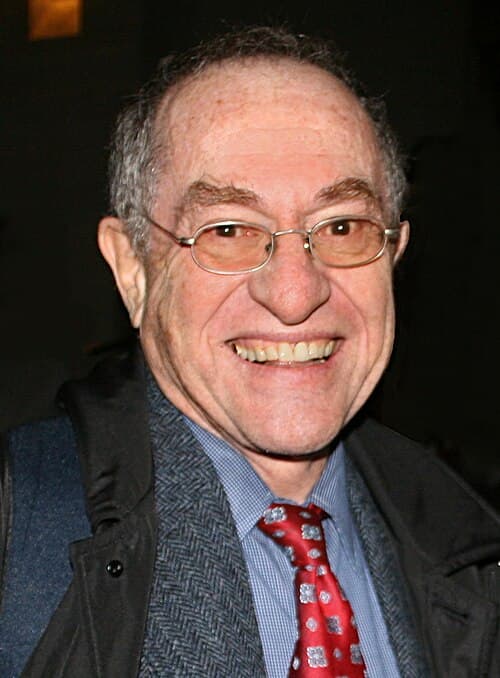
Alan Dershowitz
PERSON • 4 mentions
American lawyer, author, and art collector (born 1938)
Alan Dershowitz Target
PERSON
Name reference in documents
Alberti
PERSON
Spanish poet (1902–1999)
AL
Aldrich
PERSON
Surname reference in Epstein-related documents

Alec Baldwin
PERSON
American actor
AB
Alexander Bickel
PERSON
American legal scholar (1924–1974)
Andrei Sakharov
PERSON
Soviet nuclear physicist and human rights activist (1921–1989)

Anne Frank
PERSON
German-born Dutch Jewish diarist and Holocaust victim (1929–1945)
Antonin Scalia
PERSON
Associate Justice of the Supreme Court of the United States from 1986 to 2016
Anwar Sadat
PERSON
President of Egypt from 1970 to 1981
Arthur Goldberg
PERSON
American lawyer, politician and civil servant (1908-1990)
Arthur Miller’s
PERSON
Name reference in documents

Baden
PERSON
Surname reference in Epstein-related documents

Bailey
PERSON
Name reference in Epstein documents

Ballard
PERSON
Surname reference in documents
Barack Obama
PERSON • 2 mentions
President of the United States from 2009 to 2017
Barry Diller
PERSON
American businessman
Barry Scheck
PERSON
American lawyer and legal scholar
Bartov
PERSON
Name reference in documents
Bela Lugosi
PERSON
Name reference in documents

Belinda
PERSON
Mexican actress and singer
BG
Ben Gazzaza
PERSON
Name reference in documents
Benjamin Spock
PERSON
American pediatrician and author of Baby and Child Care (1903-1998)
BE
Berger
PERSON
Surname reference to multiple individuals: Bill Berger (victims attorney), Yvonne Berger (Brad Wechsler associate), and references in SEC whistleblower complaints
BI
Bickel
PERSON
Name reference in documents
Bill Clinton
PERSON
President of the United States from 1993 to 2001 (born 1946)
Bin Laden
PERSON
Al-Qaeda founder, referenced in Epstein-related media and news coverage documents
BI
Binion
PERSON
Name reference in documents

Blackburn
PERSON
Surname reference in Epstein-related documents
Bob Woodward
PERSON
American investigative journalist (born 1943)
BO
Borokova
PERSON
Name reference in documents

Borris Karloff
PERSON
Name reference in documents
BO
Bowman
PERSON
Surname reference in documents
BR
Brandeis
PERSON • 2 mentions
Surname reference in documents
BM
Brian Murtagh
PERSON
Name reference in documents
BR
Brooke
PERSON
First name reference to multiple individuals in Epstein documents
Brooke naked
PERSON
Name reference in documents

Brooke Shields
PERSON
American actress
Bruce Franklin
PERSON
American musician
Buchanan
PERSON
American professional wrestler
BU
Burger
PERSON
Surname reference in documents

Burke
PERSON
Surname reference in Epstein-related documents
Byron White
PERSON
Associate Justice of the Supreme Court of the United States and American football player (1917–2002)

Carl Stork
PERSON
Name reference in documents
Carlin
PERSON
Surname reference in documents
Chappaquiddick
PERSON
Surname or name fragment in documents
Charles Manson
PERSON
American criminal and cult leader (1934–2017)
Charles R. Alberti
PERSON
Spanish poet (1902–1999)
Checkov
PERSON
Name reference in documents
Chemerinsky
PERSON
Name reference in documents
CH
Chuck
PERSON
Ambiguous first name reference to multiple individuals in Epstein documents
CA
Chuck Anderson
PERSON
Name reference in documents
Claus
PERSON • 2 mentions
Swiss painter (-1422)
Claus Von Bulow
PERSON
Person referenced in documents
Colette
PERSON
First name reference in Epstein documents
CM
Colette MacDonald's
PERSON
Name reference in documents
CW
Courtney Wild
PERSON
American victim/survivor of Jeffrey Epstein who led legal battle for victims' rights

Cynthia Nixon
PERSON
American actress and politician
DA
Damiano
PERSON
Surname or name fragment in documents
DA
Darrow
PERSON
Surname or name fragment in documents
DB
David Bazelon
PERSON
Name reference in documents
David Copperfield
PERSON
American illusionist, one of the most commercially successful magicians in history, appeared in Epstein documents
David Hamilton
PERSON
British photographer and film director (1933–2016)
DH
David Heller
PERSON
Born:1922-08-10|died:1968-05-28|; Heller, David 1922-1968; Heller, David
Dean Chemerinsky
PERSON
Name reference in documents
Deep Throat
PERSON
Alias of Mark Felt, the whistleblower who exposed the Watergate scandal
DeSade
PERSON
Name reference in documents
Dexter Lee
PERSON
Assistant U.S. Attorney who argued for keeping Epstein non-prosecution agreement sealed
Donny
PERSON
First name reference to multiple individuals in the documents

Doody
PERSON
Name reference in documents
Dostoevsky
PERSON
Surname reference in documents
DB
Doug Band
PERSON
American presidential advisor
DR
Droney
PERSON
Name reference in documents
Earl Warren
PERSON
Person referenced in documents
Ehud Barak
PERSON
10th Prime Minister of Israel
EI
Eichmanns
PERSON
Name reference in documents

Eiger
PERSON
Surname reference in documents
Eleanor Roosevelt
PERSON
First Lady of the United States from 1933 to 1945 (1884–1962)
Elie Wiesel
PERSON
Romanian-born American writer, professor, political activist, Nobel laureate, and Holocaust survivor (1928-2016)
EN
Enmund
PERSON • 2 mentions
Name reference in documents
Erwin Griswold
PERSON
American lawyer (1904-1994)
EX
Exodus
PERSON
Surname reference in documents
Falwell
PERSON
Surname or name fragment in documents
Faurisson
PERSON
Name reference in documents
Felix Frankfurter
PERSON
Former Associate Justice of the United States Supreme Court (1882–1965)
Finkelstein
PERSON
American economist
Frank Snepp
PERSON
American journalist
Franklin D. Roosevelt's
PERSON
Name reference in documents
FK
Freddie Kassab
PERSON
Name reference in documents
FU
Furman
PERSON • 2 mentions
Surname reference in Epstein-related documents
GS
Gabriel Schoenfeld
PERSON
American writer
GT
Gary Tison
PERSON
Name reference in documents
George Wellers
PERSON
Name reference in documents
GD
Gerard Damiano
PERSON
American pornographic film director (1928-2008)

Ghislaine Maxwell
PERSON
British socialite and sex trafficker, daughter of Robert Maxwell, accomplice of Jeffrey Epstein

Gloria Steinem’s
PERSON
Name reference in documents

Gravel
PERSON
Surname reference in documents
GR
Greenawalt
PERSON
Name reference in documents
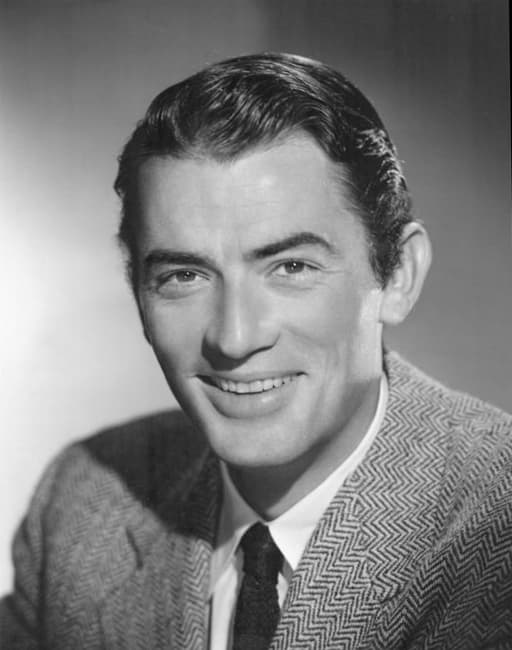
Gregory Peck
PERSON
American actor (1916–2003)
HC
Habeus Corpus
PERSON
Name reference in documents
Hamlet
PERSON
Tragedy by William Shakespeare
HM
Harold and Maude
PERSON
Name reference in documents
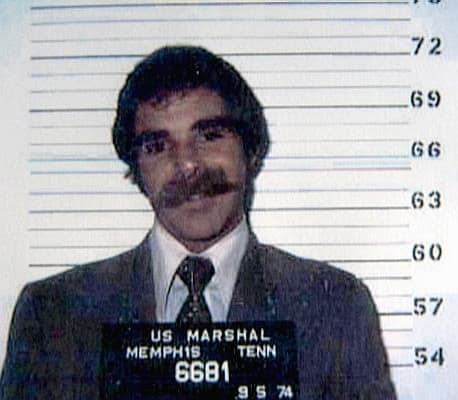
Harry Reems
PERSON
American pornographic actor (1947–2013)
HS
Harry Shorstein
PERSON
American lawyer
HS
Harvey Silverglate
PERSON
Attorney, co-founder, Foundation for Individual Rights in Education
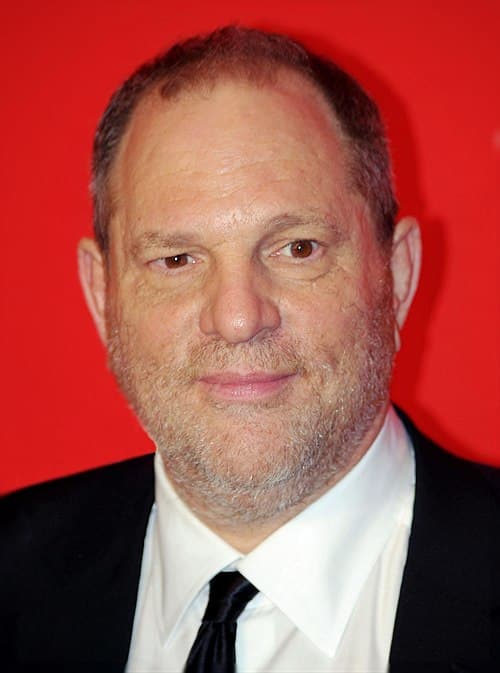
Harvey Weinstein
PERSON
American film producer and sex offender (born 1952)
HV
Hector Villagro
PERSON
Name reference in documents

Helen Hayes
PERSON
American actress (1900–1993)
HS
Helena Stoeckley
PERSON
Name reference in documents
HE
Heller
PERSON
Surname reference in Epstein-related documents
Hemingway
PERSON
Surname reference in Epstein-related documents
Henry Cabot Lodge
PERSON
American politician (1902–1985)
Henry Friendly
PERSON
Name reference in documents
HP
Herbert Packer
PERSON
Name reference in documents
HS
Herbert Streicker
PERSON
Name reference in documents
HI
Hirsh
PERSON
Surname or name fragment in documents
Holocaust
PERSON
Name reference in documents
HY
Hypocrisy
PERSON
Name reference in documents
IA
Isaac Abravanal
PERSON
Name reference in documents
JG
Jack Goldberger
PERSON • 2 mentions
American criminal defense attorney who represented Jeffrey Epstein, partner at Goldberger Weiss P.A. in West Palm Beach, Florida

Jacobins
PERSON
Name reference in documents
JB
James Blackburn
PERSON
Name reference in documents
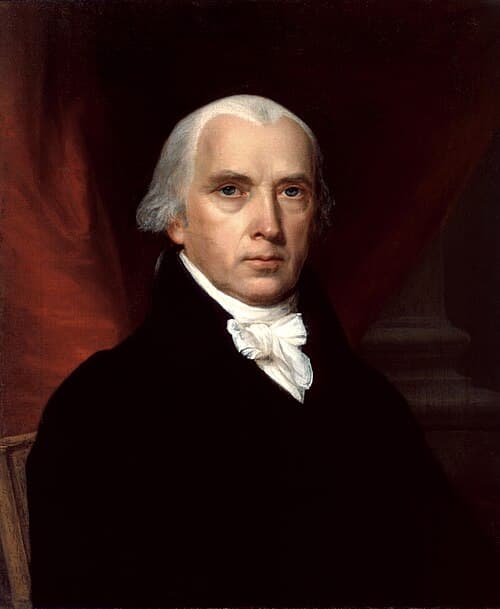
James Madison
PERSON
President of the United States from 1809 to 1817
James Spader
PERSON
American actor
JS
Javert, Shorstein
PERSON
Name reference in documents
Jeffrey Epstein
PERSON
American sex offender and financier (1953–2019)
Jerry Falwell
PERSON
American evangelical pastor, televangelist, and conservative political commentator
Jes Staley
PERSON • 2 mentions
American banker, chief executive officer of Barclays

Jim Britt's
PERSON
Name reference in documents
Joe Biden
PERSON
46th President of the United States (2021–2025)
Joe McGinniss's
PERSON
Name reference in documents
Johann-Paul Kremer
PERSON
American painter
John Brennan
PERSON
Director of the Central Intelligence Agency from 2013 to 2017
John Connolly
PERSON
American FBI agent and convicted criminal
JD
John Droney
PERSON
American politician
John F. Kennedy
PERSON
President of the United States from 1961 to 1963 (1917–1963)
John Lyons
PERSON
Name reference in documents
John Paul II
PERSON
264th pope of the Catholic Church (1978–2005)
JD
Jonathan Doody
PERSON
Name reference in documents
JU
Julian
PERSON
Ambiguous first name - refers to multiple people in Epstein documents
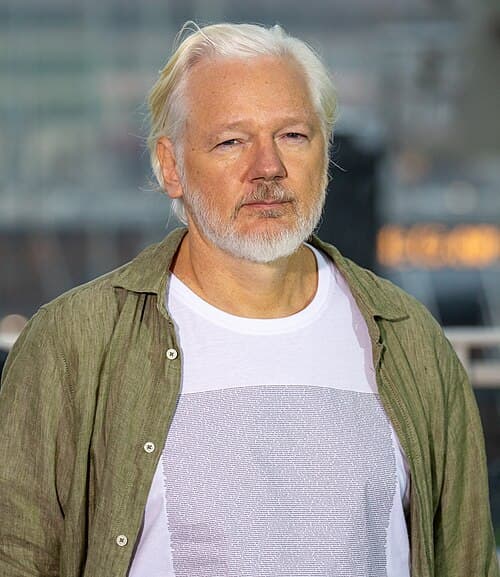
Julian Assange
PERSON
Australian editor, publisher, and activist (born 1971)

Julie K. Brown
PERSON
American journalist
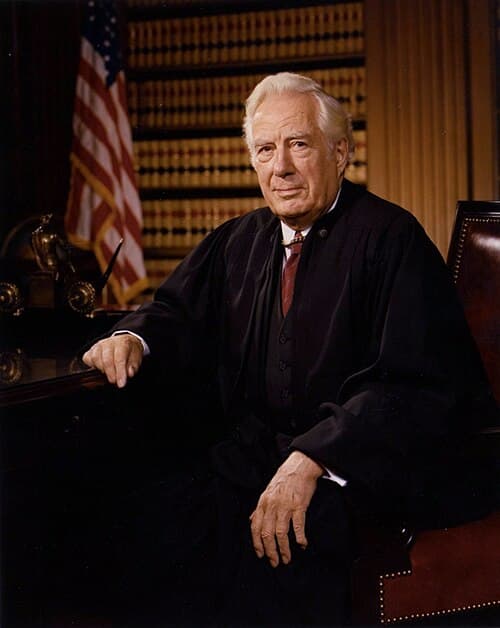
Justice Burger
PERSON
Name reference in documents
KM
Karl Maiden
PERSON
Name reference in documents

Katie Couric
PERSON • 2 mentions
American journalist, presenter, producer, and author
KS
Kay Sybers
PERSON
Name reference in documents
KB
Kevin Ballard
PERSON
Researcher ORCID ID = 0000-0001-7587-1220

Kevin P. Convey
PERSON
Name reference in documents
KI
Kimberly
PERSON
First name reference to multiple individuals in Epstein documents
Kremer
PERSON
American development economist
KR
Kristen
PERSON
First name reference to multiple individuals in Epstein-related documents
KM
Kristen MacDonald
PERSON
Name reference in documents
Larry Parrish
PERSON
American baseball player and coach
Leon Uris
PERSON
American author (1924–2003)
Leona Helmsley
PERSON
American hotel owner (1920–2007)
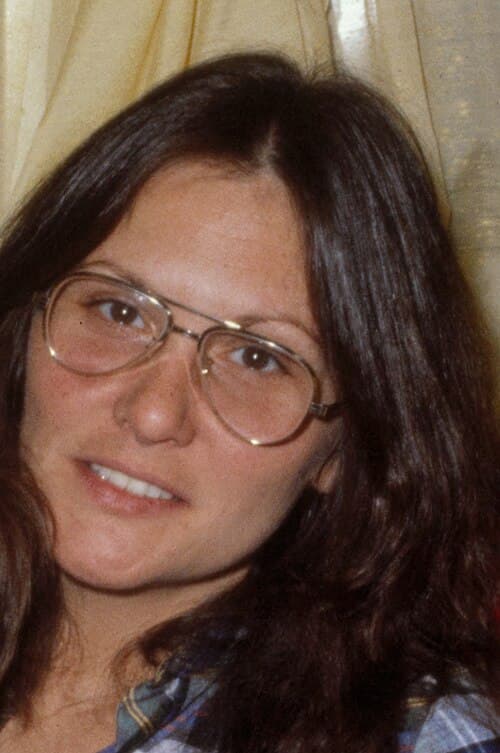
Linda Lovelace
PERSON
American pornographic actress, later anti-porn activist (1949–2002)
Louis Brandeis
PERSON
Holocaust victim (born 1902)
Lovelace
PERSON
Surname reference in Epstein-related documents
LY
Lyman
PERSON • 2 mentions
Surname reference in documents
Lyoneses
PERSON
Name reference in documents

Lyons
PERSON
City of France
MH
Maddie Hagen
PERSON
Person referenced in documents
MA
Mailer
PERSON
Individual employed to handle newspapers from the press to the truck
Manson
PERSON
1973 film by Laurence Merrick, Robert Hendrickson
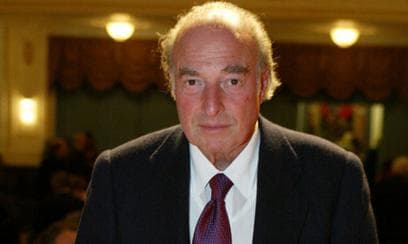
Marc Rich
PERSON
American commodities trader (1934–2013)
MB
Marlin Brando
PERSON
Name reference in documents

Martha Stewart
PERSON
American businesswoman, writer, TV personality (born 1941)
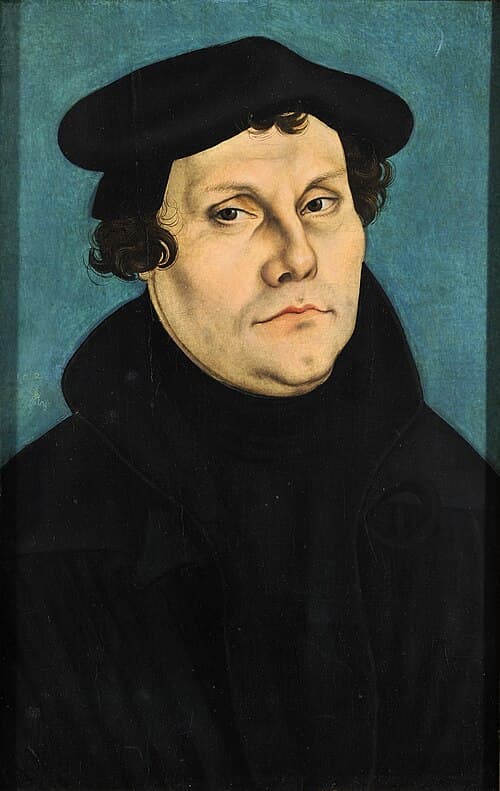
Martin Luther
PERSON
Name reference in Epstein documents, likely referring to Martin Luther King Jr.
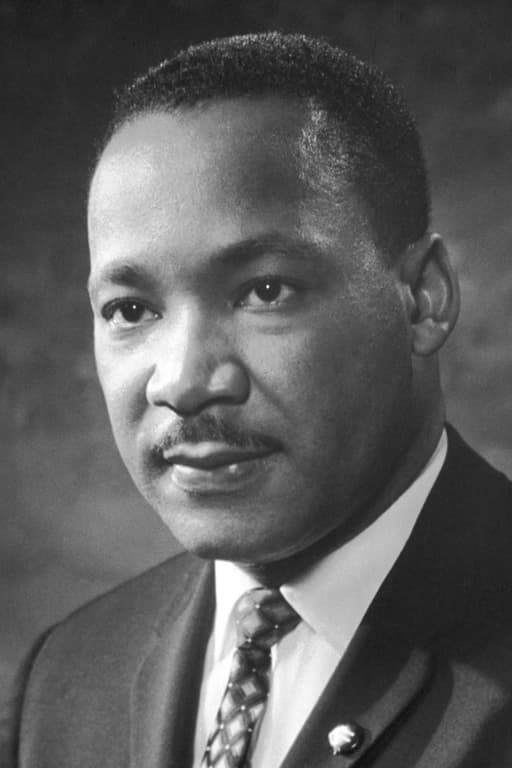
Martin Luther King
PERSON
American Baptist minister and civil rights leader (1929–1968)
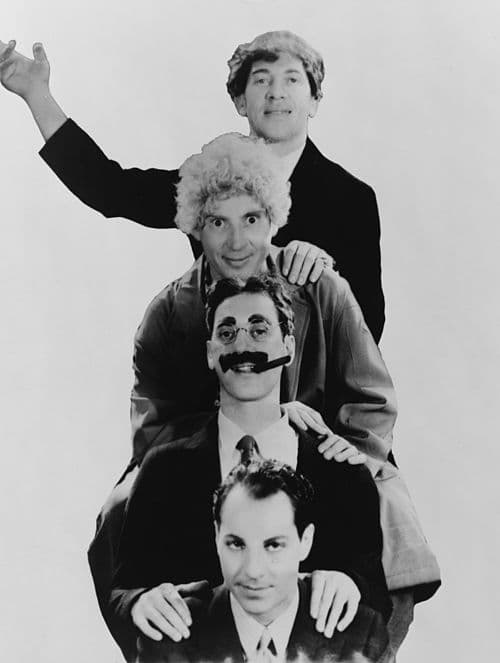
Marx Brother
PERSON
Name reference in documents
MK
Mary Jo Kopenche
PERSON
Name reference in documents
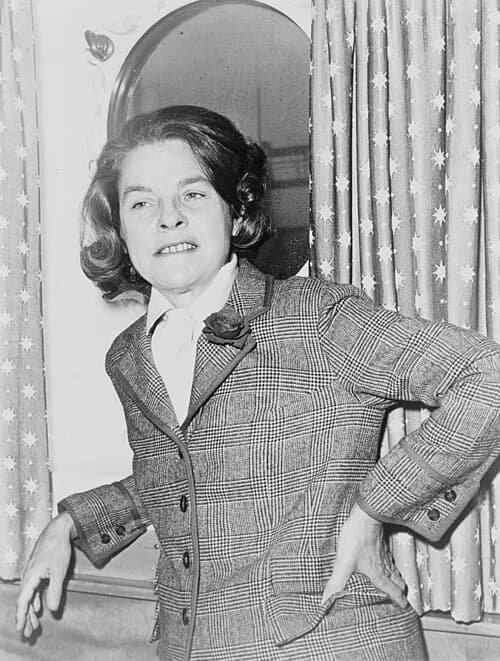
Mary McCarthy
PERSON
Name reference in documents
MH
Matthew Hale
PERSON
White separatist religious leader; (born 1971)
MC
Maxwell Cohen
PERSON
Canadian lawyer (1910-1998)
MM
Megan MacDonald
PERSON
Person referenced in documents
ME
Meltsner
PERSON
Name reference in documents
MB
Michael Baden
PERSON
American pathologist
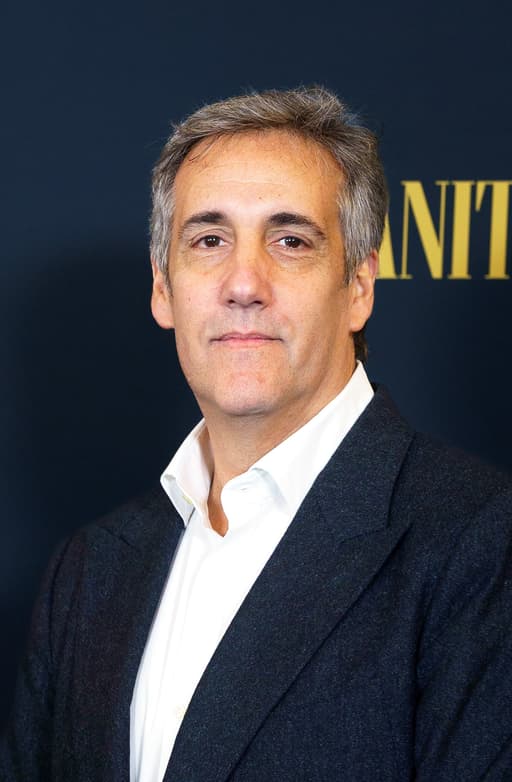
Michael Cohen
PERSON • 2 mentions
American former attorney and former Republican official
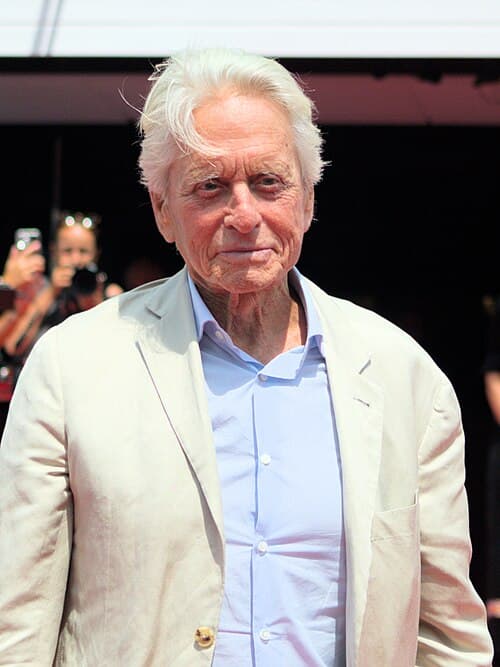
Michael Douglas
PERSON
American retired actor, producer and activist (born 1944)
MG
Mike Gravel
PERSON
Name reference in documents
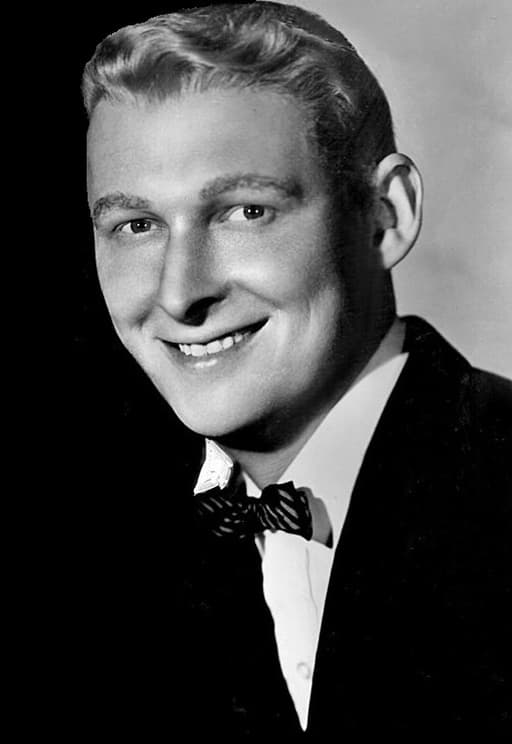
Mike Nichols
PERSON
American director and comedian (1931–2014)
MR
Mike Royko
PERSON
American writer and newspaper columnist (1932-1997)

Mohammad
PERSON
First name reference to multiple individuals in the documents

Murphy
PERSON
Ambiguous surname - refers to multiple people in Epstein documents
MU
Murtagh
PERSON
Name reference in documents
NH
Nat Hentoff
PERSON
American music critic, born 1925 (1925–2017)

Nathan J. Hagen
PERSON
Name reference in documents
neo-Nazis
PERSON
Surname or name fragment in documents
Noam Chomsky
PERSON • 2 mentions
American linguist and activist (born 1928)
Norman Finkelstein
PERSON
American political scientist (born 1953)
O.J. Simpson
PERSON • 3 mentions
Former American football player acquitted of murder, referenced in Epstein-related documents and media coverage
Oliver Wendell Holmes Jr.
PERSON
Name reference in documents
PA
Parrish
PERSON
Surname reference in documents
Pat Buchanan
PERSON
Person referenced in documents

Patricia
PERSON
Ambiguous first name - refers to multiple people in Epstein documents

Patricia Rosier’s
PERSON
Name reference in documents

Peter Mandelson
PERSON
British politician and life peer (born 1953)
Peter Neufeld
PERSON
American lawyer
PR
Peter Rosier
PERSON
Researcher

Porgy
PERSON
Surname reference in documents
PO
Potaphor
PERSON
Name reference in documents
Potter Stewart
PERSON
US Supreme Court justice from 1958 to 1981 (1915-1985)
Prince Charles
PERSON
King of the United Kingdom and other Commonwealth realms since 2022 (born 1948)
Quincy
PERSON
American record producer and composer (1933–2024)
Randy
PERSON
First name reference to multiple individuals including Randy (boat captain in USVI) and Randy Wright (The Wright Solution)
RG
Randy Greenawalt
PERSON
American serial killer
Raskolnikov
PERSON
Name reference in documents
Raymond
PERSON
Surname reference in Epstein-related documents
RT
Raymond Tison’s
PERSON
Name reference in documents
Redgrave
PERSON
Name reference in documents
Redgrave Views
PERSON
Name reference in documents
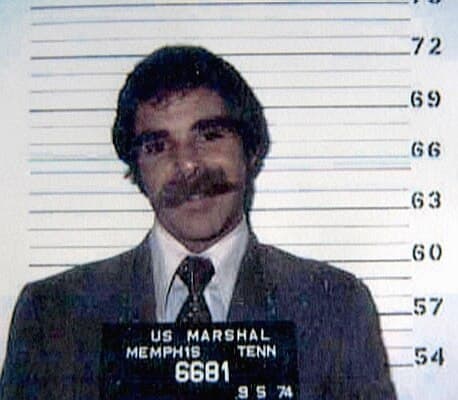
Reems
PERSON
Name reference in documents

Richard Tabish
PERSON
Name reference in documents
RI
Ricky
PERSON
First name reference to multiple individuals in Epstein-related documents
Robert Faurisson
PERSON
French academic and Holocaust denier (1929–2018)
RM
Robert Mapplethorpe
PERSON
American photographer (1946–1989)
Robert Mitchum
PERSON
American actor (1917–1997)
Roger Baldwin
PERSON
Badminton player
RO
Rosier
PERSON
Name reference in documents
RO
Royko
PERSON
Name reference in documents
RU
Rudolph
PERSON
First name reference to multiple individuals
Rupert Murdoch
PERSON
Australian-American business magnate (born 1931)
Sally Mann
PERSON
American photographer (born 1951)
Sandra Day O’Connor
PERSON
American lawyer and jurist (1930–2023)
SM
Sandra Murphy
PERSON
Name reference in documents
Scalia
PERSON
Surname reference in Epstein-related documents

Schindler
PERSON
Surname reference in documents

Seymour Hirsh
PERSON
Name reference in documents
Sherlock Holmes
PERSON
Fictional character (consulting detective) created by Sir Arthur Conan Doyle
Shorstein
PERSON
Name reference in documents
SF
Shouting Fire
PERSON
Name reference in documents
SI
Simpson
PERSON
Surname reference in Epstein-related documents
SN
Snepp
PERSON
Name reference in documents
SO
Sonny
PERSON
First name reference to multiple individuals
SB
Sonny Von Bulow’s
PERSON
Name reference in documents
Spock
PERSON
Surname or name fragment in documents
SR
Stanley Rosenblatt
PERSON
Name reference in documents

Steinem
PERSON • 2 mentions
Surname or name fragment in documents
Stephen Hawking
PERSON
British theoretical physicist, cosmologist and author (1942–2018)
SS
Stephen Soundheim
PERSON
Name reference in documents

Steven Pinker
PERSON • 2 mentions
Canadian-American cognitive psychologist, linguist, and author, an advocate of evolutionary psychology and the computational theory of the mind
Steven Spielberg
PERSON
American filmmaker (born 1946)
ST
Stevens
PERSON
Artist
ST
Stoeckley
PERSON
Surname or name fragment in documents

Stork
PERSON • 2 mentions
Brand of margarine
Stravinsky
PERSON
Surname reference in documents
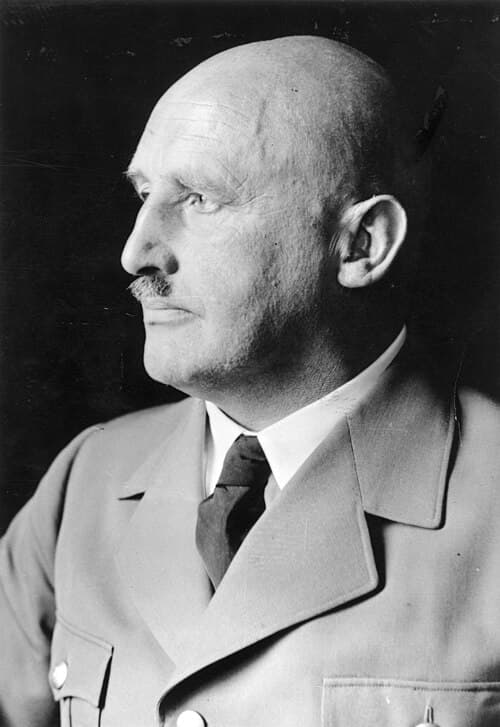
Streicher
PERSON
Name reference in documents
SU
Sullivan
PERSON
Surname reference in Epstein documents

Sybers
PERSON • 2 mentions
Name reference in documents
Sylvia Smith Bowman
PERSON
Name reference in documents
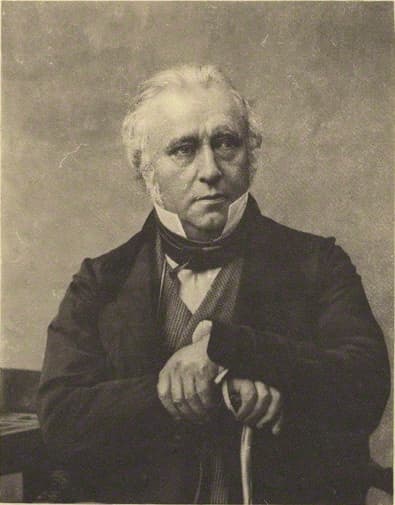
T. B. Macaulay
PERSON
Name reference in documents
TB
Ted Binion
PERSON
American poker player (1943-1998)
Ted Bundy
PERSON
American serial killer (1946–1989)
Teddy Roosevelt's
PERSON
Name reference in documents
the Von Bulow
PERSON
Name reference in documents
Thomas Jefferson
PERSON • 2 mentions
President of the United States from 1801 to 1809
Thomas Paine
PERSON
Person referenced in documents
TI
Tison
PERSON
Name reference in documents

Vanessa Redgrave
PERSON
British actress and activist (born 1937)

Vicky Ward
PERSON
British investigative journalist
VE
Victoria Eiger
PERSON
Name reference in documents
VI
Villagro
PERSON
Name reference in documents
Voltaire
PERSON
Surname reference in documents
Von Bulow
PERSON
Name reference in documents
Walt McDougall's
PERSON
Name reference in documents
Ward Churchill
PERSON
Political activist
Warren Beatty
PERSON
American actor and filmmaker
Warren Burger
PERSON
Chief justice of the United States from 1969 to 1986 (1907–1995)
WE
Weems
PERSON
Surname reference in Epstein-related documents

Wellers
PERSON
Name reference in documents
William Kunstler
PERSON
American lawyer and civil rights activist (1919-1995)
William O. Douglas
PERSON
Name reference in documents
William Shakespeare
PERSON
English playwright and poet (1564–1616)
WC
William Sloan Coffin
PERSON
Name reference in documents
William Sybers
PERSON
Name reference in documents
Winston Churchill
PERSON
British statesman, soldier and writer (1874–1965)
WO
Woodward
PERSON
Surname reference in Epstein-related documents
Yasser Arafat
PERSON • 2 mentions
Palestinian political leader (1929–2004) and Former President of the Palestinian National Authority (1994-2004)
Adams Administration
ORGANIZATION
Organization referenced in documents
Advanced Studies
ORGANIZATION
Organization referenced in documents
Animal House
ORGANIZATION
Organization referenced in documents
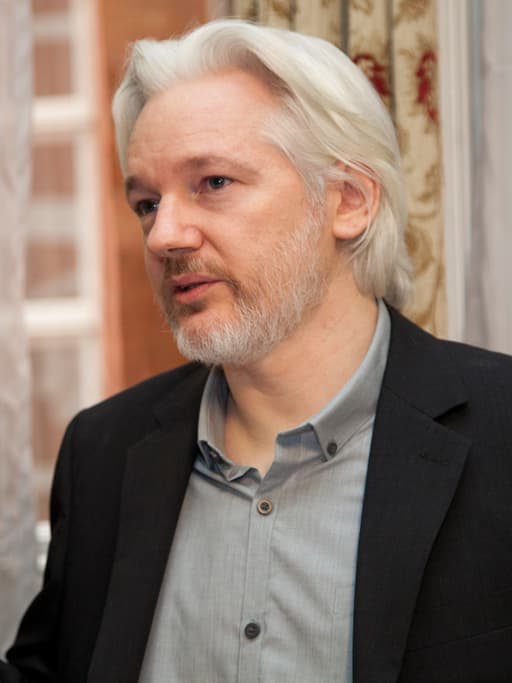
Assange
ORGANIZATION
Australian editor, publisher, and activist (born 1971)
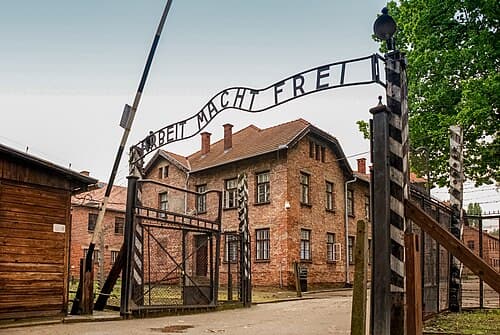
Auschwitz
ORGANIZATION
Nazi concentration and extermination camp
Beacon Press of Boston
ORGANIZATION
Organization referenced in documents

Binion Casino
ORGANIZATION
Organization referenced in documents
Boston Federal Court
ORGANIZATION
Current federal Canadian trial court
Boston Herald
ORGANIZATION
US newspaper
Brooklyn College
ORGANIZATION
Senior college of the City University of New York, located in Brooklyn
C.P.
ORGANIZATION
Organization referenced in documents
Campari Liqueur
ORGANIZATION
Alcoholic liqueur originating in Italy
Church of the Creation
ORGANIZATION
Organization referenced in documents
Chutzpah
ORGANIZATION
Quality of audacity, of Yiddish origin into English
D.A.
ORGANIZATION • 2 mentions
Organization referenced in documents
Dartmouth Review
ORGANIZATION
Private university in Hanover, New Hampshire, US
Dartmouth University
ORGANIZATION
Defunct institution in New Hampshire which existed from 1817 to 1819
degradation”—are
ORGANIZATION
Organization referenced in documents
DePaul
ORGANIZATION
Organization referenced in documents
Faculty Committee
ORGANIZATION
Organization referenced in documents
Fatal Vision
ORGANIZATION
Organization referenced in documents
Griswold v. Conn
ORGANIZATION
Organization referenced in documents
Grove Press
ORGANIZATION
American publishing house

Harvard College
ORGANIZATION
Undergraduate college of Harvard University in Cambridge, Massachusetts
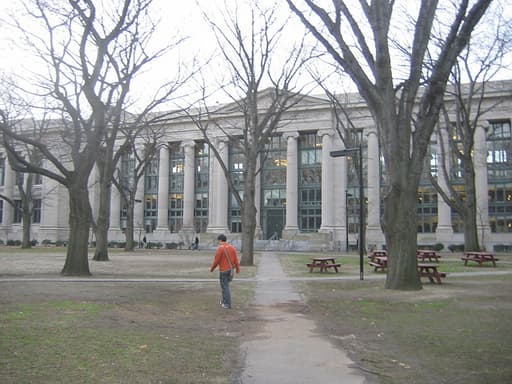
Harvard Law School
ORGANIZATION
Law school of Harvard University in Cambridge, Massachusetts
High Court
ORGANIZATION
Organization referenced in documents

Hustler
ORGANIZATION
Organization referenced in documents
Hustler Magazine
ORGANIZATION
American pornographic magazine
Israeli Navy
ORGANIZATION
Organization referenced in documents
J Am Curious Yellow
ORGANIZATION
Organization referenced in documents
Judaism
ORGANIZATION
Abrahamic monotheistic ethnic religion of the Jews
Kosher
ORGANIZATION
Organization referenced in documents
La Stampa
ORGANIZATION
Italian daily newspaper (founded 1867)
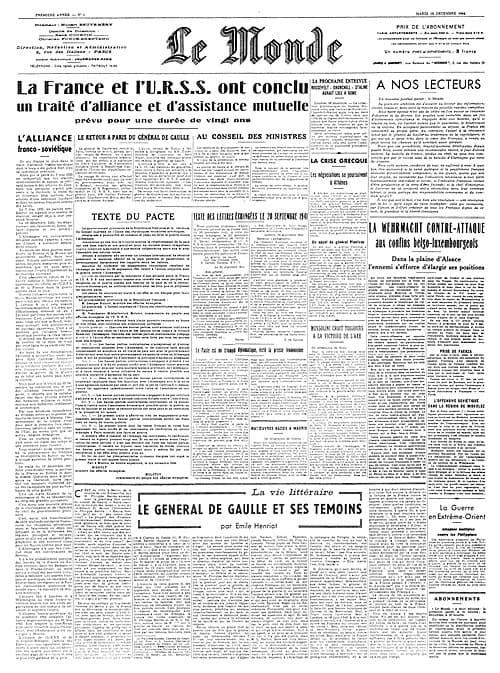
Le Monde
ORGANIZATION
French daily newspaper founded in 1944

Mazda
ORGANIZATION
Japanese multinational automaker
Mc-Gautha
ORGANIZATION
Organization referenced in documents
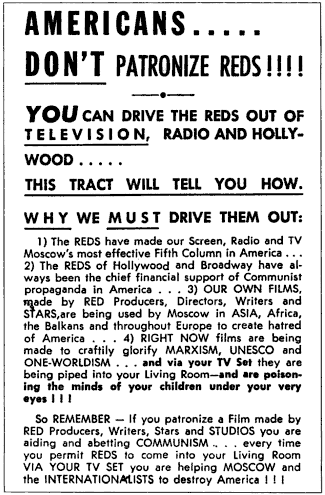
McCarthyism
ORGANIZATION
Phenomenon in the United States of making accusations of subversion or treason without proper regard for evidence, named after Senator Joseph McCarthy
Muslim Union
ORGANIZATION
Organization referenced in documents

NAACP
ORGANIZATION
Civil rights organization
Nixon Administration
ORGANIZATION
Organization referenced in documents
Paine, Debs
ORGANIZATION
Organization referenced in documents
Papago Indian
ORGANIZATION
Organization referenced in documents
Pentagon Papers
ORGANIZATION
Organization referenced in documents
Penthouse
ORGANIZATION
Americanvideos erotic magazine

Philip Morris
ORGANIZATION
American global cigarette and tobacco company
Playboy Press
ORGANIZATION
American men's lifestyle and entertainment magazine
Poker
ORGANIZATION
Organization referenced in documents
Quincy House
ORGANIZATION • 2 mentions
Organization referenced in documents
REEMS SHAFTED
ORGANIZATION
Organization referenced in documents
Revolutionary Workers Party
ORGANIZATION
Organization referenced in documents
See Church of Lukumi Babalu Aye
ORGANIZATION
Organization referenced in documents
Supreme Court
ORGANIZATION
Highest court of jurisdiction in the US
Supremes
ORGANIZATION
Organization referenced in documents

Tel Aviv University
ORGANIZATION
University in Tel Aviv, Israel
the “Chicago 7”
ORGANIZATION
Organization referenced in documents
the “N
ORGANIZATION
Organization referenced in documents
The “Quincy House
ORGANIZATION
Organization referenced in documents
the “Service
ORGANIZATION
Organization referenced in documents

the American Civil Liberties Union
ORGANIZATION
American Civil Liberties Union
the American Jewish Congress
ORGANIZATION
Organization referenced in documents
the Arizona Courts’
ORGANIZATION
Organization referenced in documents
the Beacon Press
ORGANIZATION
Organization referenced in documents
the Behavioral Sciences
ORGANIZATION
Organization referenced in documents
the Boston Symphony Orchestra
ORGANIZATION
Organization referenced in documents
the British Actors Union
ORGANIZATION
Organization referenced in documents
The California Supreme Court
ORGANIZATION
Organization referenced in documents
the Central Committee
ORGANIZATION
Organization referenced in documents
The Chronicle of Higher Education
ORGANIZATION
Organization referenced in documents
the Civil Liberties Union’s
ORGANIZATION
Organization referenced in documents
the Court of Appeals
ORGANIZATION
Organization referenced in documents

the Democratic Party
ORGANIZATION
Organization referenced in documents
the Enmund Court
ORGANIZATION
Organization referenced in documents
the First Amendment Club
ORGANIZATION
Organization referenced in documents
the First Evangelical Church
ORGANIZATION
Organization referenced in documents
The Future of Freedom of Speech
ORGANIZATION
Organization referenced in documents
the Georgia Supreme Court
ORGANIZATION
Organization referenced in documents
the Harvard Law Forum
ORGANIZATION
Organization referenced in documents
the Harvard Law Review
ORGANIZATION
Organization referenced in documents
the Highest Court
ORGANIZATION
Organization referenced in documents
the Illinois Bar
ORGANIZATION
Organization referenced in documents
the Legal Defense Fund
ORGANIZATION
Organization referenced in documents
The Muslim Student Union
ORGANIZATION
Organization referenced in documents
the National Shakespeare Company
ORGANIZATION
Organization referenced in documents
the Nevada Supreme Court
ORGANIZATION
Organization referenced in documents
the New Hampshire Union
ORGANIZATION
Organization referenced in documents
the Palestine Liberation Organization
ORGANIZATION
Organization referenced in documents
the Palestinian Authority
ORGANIZATION
Palestinian National Authority
The Quincy House Film Society
ORGANIZATION
Organization referenced in documents
the Senate Judiciary Committee of Shorstein
ORGANIZATION
Organization referenced in documents
The Stanford Committee
ORGANIZATION
Organization referenced in documents
the Stanford Computation Center
ORGANIZATION
Organization referenced in documents
The Supreme Judicial Court
ORGANIZATION
Organization referenced in documents

the United States Government
ORGANIZATION
United States federal government
the United States Supreme Court
ORGANIZATION
U.S. Supreme Court

the University of California at Irvine
ORGANIZATION
Organization referenced in documents
the University of Lyon
ORGANIZATION
Organization referenced in documents
the University of Tel Aviv
ORGANIZATION
Organization referenced in documents
the Village Voice
ORGANIZATION
Organization referenced in documents
the Yale University Press
ORGANIZATION
Organization referenced in documents
Tisons
ORGANIZATION
Organization referenced in documents
Trop v. Dulles
ORGANIZATION
Organization referenced in documents
Tweed Ring
ORGANIZATION
Organization referenced in documents
Underinclusiveness
ORGANIZATION
Organization referenced in documents

University of California
ORGANIZATION
University system in California, United States
Wheaties
ORGANIZATION
Brand of cereal by General Mills

Yale Law School
ORGANIZATION
Law school of Yale University

Alaska
LOCATION
State of the United States of America
Century America
LOCATION
Location referenced in documents
Cincinnati
LOCATION
City in Ohio, United States; county seat of Hamilton County

Colorado
LOCATION
State of the United States of America
Deep South
LOCATION
Location referenced in documents

Greenwich Village
LOCATION
Neighborhood in Manhattan, New York City, New York, United States
Griswold
LOCATION
Town in Connecticut, United States
Hialeah
LOCATION
City in Miami-Dade County, Florida, United States

Jacksonville
LOCATION
City in Duval County, and largest city in State of Florida, United States

Las Vegas
LOCATION
City of Clark County, and largest city in state of Nevada, United States
Maricopa County
LOCATION
County in Arizona, United States

Memphis
LOCATION
City in and county seat of Shelby County, Tennessee, United States
Middlesex County
LOCATION
County in Massachusetts, United States

New Hampshire
LOCATION
State of the United States of America
Orange County
LOCATION
County in California, United States
Scarsdale
LOCATION
Town and village in Westchester County, New York, United States, suburb of NYC

Skokie
LOCATION
Village in Cook County, Illinois, United States

Southern California
LOCATION
Geographic and cultural region

Tel Aviv
LOCATION
City in Israel
the “Groves of Academe
LOCATION
Location referenced in documents
the Bay of Pigs
LOCATION
Location referenced in documents

the Grand Canyon
LOCATION
Location referenced in documents
the Papago Indian Reservation
LOCATION
Location referenced in documents
the State of Connecticut
LOCATION
Location referenced in documents
Turin
LOCATION
City and commune in Italy
Uncle Joe
LOCATION
Location referenced in documents

Vietnam
LOCATION
Country in Southeast Asia
Worcester
LOCATION
County seat city in Worcester County, Massachusetts, United States
Statistics
Pages:100
Entities:416
Avg. OCR:95.4%
Sponsored