EFTA00191587_email_011
Document Information
Bates Range
EFTA00191587_email_011
Pages
40
Original Filename
EFTA00191587.pdf (email 11: RE: Appointment of counsel for victims?)
Document Content
Page 1 - EFTA00191587_672
Viltafana, Ann Marie C. (USAFLS) From: Peters, Jim (USAID) Sent: Wednesday, March 12, 2008 10:39 AM To: Villafana, Ann Marie C. (USAFLS) Subject: RE: Appointment of counsel for victims? We have had GAL's appointed pre-indictment. Here are a couple of examples. Neither was over 18, however. If they were minors at the time of the crime, I'd give it a run and see if the court raises the issue. 111 Young.Guardian Young.GALdeclar Duncan.Guardia Duncan.GALded Duncan.GALMoti Order.wpd arion.wpd nOrder.wpd aration.wpd on.wpd From: Villafana, Ann Marie C. (USAFLS) sent: Wednesday, March 12, 2008 6:27 AM To: USAEO-PSC-Coordinators Subject: Appointment of counsel for victims? Good morning, everyone. Sorry to bother. I am investigating a child exploitation case with a large number of victims. They were teenagers when they were victims and many are now over the age of 18. Investigators for the defense are following them around, showing up on campus, and making visits to their parents' homes. (Many victims' parents do not know about the conduct under investigation.) The victims have told the investigators that they do not want to talk, but they continue to be harassed. The case has not yet been indicted, so I can't simply ask the assigned district judge to rein in the defense. Does anyone have any experience or advice on getting counsel appointed for such victims? The guardian ad litem statute seems to be limited to victims who are currently minors and the material witness statute seems to be limited to situations where there is a strong possibility of flight. Any help and samples would be greatly appreciated. Thank you all. A. Marie Villafatia Assistant U.S. Attorney 500 S. Australian Ave, Suite 400 West Palm Beach, FL 33401 Phone 561 209-1047 Fax 561 820-8777 1 EFTA00192258
Page 2 - EFTA00191587_673
Harold Lee BATIELL, Appellant, UNITED STATES of America, Appellee (two cases). Nos. 18945, 19344. United States Court of Appeals Eighth Circuit. Nov. 19, 1968. Certiorari Denied Feb. 24,1969. See 89 S.Ct 865. Prosecution for having persuaded, induced, enticed, and caused woman to go from one state to another for immoral purposes. The United States District Court for the District of Minnesota, Earl R. Larson, J., rendered judgment, and defendant appealed. The Court of Appeals, Vogel, Circuit Judge, held that refusal to respond to jury's request for further definition of word "induces", other than to state that words were to be given their common usage, was not error. Affirmed. L Prostitution 4=4 Word "induces" in second section of Mann Act is one of common usage and meaning and requires no explanation or definition. 18 U.S.C.A. § 2422. See publication Words and Phrases for other Judicial constructions and R. Criminal Law 4=4038(1) Defendant may not assign as error any inaccuracy in instructions without first having called attention of trial court thereto, thus giving it opportunity of making correction. Fed.Rules Crim.Proc. rule 30, 18 U.S.C.A. 3. Criminal Law 4=1038 Trial court's failure to respond to jury's request for further definition of word "induces" in Mann Act was not plain error. Fed.Rules Crim.Proc. rule 52(b), 18 U.S.C.A.; 18 U.S.C.A. § 2422. 4. Criminal Law 41=883(3) Trial court's refusal, in prosecution for having persuaded, Induced, enticed and caused woman to go in interstate a at l BATSELL STATES latal commerce for immoral purposes, to re- spond to jury's request for further defi- nition of word "induces", other than to state that words were to be given their common usage, was not error. 18 U.S. C.A. § 2422. 8. Criminal Law 4=1173(10 That jury returned verdict of not guilty under first section of Mann Act and guilty under second section did not indicate that. jury, which had unsuccess- fully requested further definition of words "inducement" or "induces", was confused as to the meaning of these terms in second section. 18 U.S.C.A. $§ 2421, 2422. 8. Prostitution 4=8 Jury could properly return verdiet of not guilty under first section of Mann Act and guilty under second section even though evidence would have justified finding of guilty under both sections. 18 U.S.C.A. H 2421, 2422. 7. Prostitution 4=1 Offenses prescribed by first and sec- ond sections of Mann Act are separate and distinct. 18 U.S.C.A. §§ 2421, 2422. 395 8. Crhninal Law 4=633(1) In presiding over jury trial, judge must exercise discretion in many ways, including determination of time to be allowed for argument length of direct and cross-examination, keeping of open- ing statements within proper bounds, proper conduct of parties, witnesses and counsel, excluding of witnesses, etc. 9. CriMillti Law o=.711 Limiting of counsel to one hour of argument on each side, in case which was neither complex nor protracted, was not abuse of discretion, and defendant with not denied fair trial by limitation, court. having in fact allowed defense counsel' one hour and 40 minutes. 10. Prostitution 0:v4 Evidence sustained conviction for having persuaded, induced, enticed and caused woman to go from one state to another for immoral purposes. 18 U.S. C.A. § 2422. EFTA00192259
Page 3 - EFTA00191587_674
396 403 FEDERAL REPORTER. 24 SERIES 11. Witnesses 04=283 Trial court's statement when defense counsel, after lengthy cross-examination of prosecution witness, said that he might like to recall witness, that if there were to be more cross-examinations counsel should continue now, whereupon cross- examination was continued and defense counsel concluded with "no further qua- tons", was not improper although wit- ness had been recalled four times by prosecution at earlier trial at which she claimed loss of memory. 12. Criminal Law Q=912(2) New trial motion based upon alleged recantation of material witness should be viewed with disfavor. Fsd.Rules Crim.Proc. rule 83, 18 U.S.C.A. 13. Criminal Law 4=942(2), 1136(3) New trial motions based on alleged recantation of material witness are gen- erally addressed to sound judicial discre- tion of trial court and there will be no reversal except for clear abuse. Fed. Rules Crim.Proc. rule 33, 18 U.S.C.A. 14. Criminal Law C-'942(2) Denial of new trial sought on ground of alleged recantation of material wit- ness who, at hearing on motion, main- tained that her testimony at trial had been truthful and testified that recanta- tion had been due to fear and threats. was not abuse of discretion. Fed.Rules Crim.Proc. rule 33, 18 U.S.C.A. Ellis Olkon, Minneapolis. Minn., for appellant, and Sheldon J. Eviden, Min- neapolis, Minn., on the briefs. I. The exact wording of the tint iallet• meat is: -The United States Grand Jury charges: 'That on or about the 22nd day of May. 1966, In the District of Minnesota, Fourth Division. IIAROLD LEE RATSF.LL did knowingly procure nod obtain an airline passenger ticket from Northwest Airlines. Inc., a common carrier in interstate commerce, said airline pas- senger ticket to be used by Gloria J. Earl Cutid, Act. U. S. Atty., Min- neapolis, Minn., for appellee, Patrick J. Foley, U. S. Atty., and Nell P. Convery, Asst. U. S. Atty., Minneapolis, Minn.. on the brief. Before VOGEL, LAY and BRIGHT, Circuit Judges. VOGEL, Circuit Judge. We are concerned here with two sepa- rate appeals in a criminal conviction. The first appeal is from a judgment of conviction entered against appellant-de- fendant, Harold Lee Bated!, for violation of Section 2422 of the Mann Act, 18 § 2421 et seq. The second ap- peal is from the District Court's denial of defendant's motion, pursuant to Rule 33, Federal Rules of Criminal Procedure, 18 U.S.C.A.. for a new trial on the ground of newly discovered evidence. In each case we affirm. The issues in the appeal from the judgment of conviction will be considered first. The defendant was indicted in the District of Minnesota under 18 U.S.C.A. § 2421 for having procured interstate transportation for one Gloria Jean Hull (hereinafter "Miss Hull") from Min- neapolis, Minnesota to New York City "for the purpose of prostitution, de- bauchery and other immoral purposes, and with intent on the part of (defend- ant] to induce, entice, and compel (Miss Hull] to give herself up to the practice of prostitution and debauchery and other immoral practices", and under 18 U.S. C.A. I 2422 for having persuaded. in- duced, enticed and caused Miss Hull to go from Minneapolis to New York for the aforesaid purposes' Joan flail for travel in Interstate coin. mew* from .Minneapolis-St. Paul Inter- national Airport. Weld Chamberlain Field, District of Minnesota. to New York City, State of New York. for the purpose of prostitution, debauchery and other immoral Perimists, and with in- tent on the part of Herold Lee sateen to Unlace, entice, and compel the said Gloria Jean Hull to give hermit on to the practice of prostitution and debauchery and other Immoral prac• tires, whereby the said Gloria Jean EFTA00192260
Sponsored
Page 4 - EFTA00191587_675
The two indictments were consolidated for trial.. What is hereinafter referred to as the first trial was commenced in the United States District Court in Min- neapolis, Minnesota, before the Honor- able Earl R. Larson and a Jury on March 20, 1967. On March 27, 1967, after considerable testimony had been taken. the court granted defendant's motion for a • The second trial, also before Judge Larson and a Jury, commenced in St. Paul, Minnesota, on June 6, 1967. This trial resulted in defendant's acquittal of the charge. under 18 U.S.C.A. § 2421 (the first. indictment) and defendant's conviction .for violation of 18 U.S.C-A. § 2422 (the second indictment). The defendant relies generally on three grounds in his appeal from the Judgment of conviction: "I. "The defendant was denied a fair trial because the Jury's confusion as to the word 'inducement' in the statute 18 U.S.C. § 2422 was never clarified even after the Jury requested clarifi- cation and the confusion was manifest in the inconsistent verdicts returned by the Jury. "II. "In view of completely contradictory stories told by complaining witness, [the] evidence was insufficient to sus- tain conviction. "III. "Refusal of the court to allow de- fendant to recall Gloria Jean Hull, the Hall was transported in interstate com- merce la violation of Title 18 U.S.C. 2421." The second indictment states: "The United States •Grand Jury charges: "That on or about the 22nd day of May, 1988, In the District of Minnesota.. Fourth Division, HAROLD LEE RATSELL did knowingly persuade, induce and en- tice a woman, that is, Gloria Jean Hull, to go from Minneapolis, County of Hennepin, State and District of /din- newts. to New York City, State of New SATSELL r, UNITED STATES ate asses rid X6 need key prosecution witness after the pros- ecution had been allowed to recall her on four separate occasions, constituted reversible error." In order to properly resolve defendant's contentions, it is necessary to analyze in some detail the proceedings of the first and second trials. During the first trial, Miss Hull, the alleged victim of the unlawful act charg- ed against the defendant, suffered a "memory lase" until recalled by the prose- cution for the fourth time. Upon being recalled the fourth time, she testified, after stating that her memory had re- turned, that she made the trip from Minneapolis to New York without in- ducement, enticement or persuasion by the defendant; that she went to New York to run away from her problems; that she did not know what she would be doing in New York; that although she did have sexual adventures in New York. she did so of her own free accord; that she boarded the airplane in Minneapolis with the defendant; and that defendant purchased her plane ticket At this point defendant's motion for a mistrial was granted. The second trial was delayed until Miss Hull, who disappeared after the first trial, could be located by the FBI and confined as a material witness under a 310,000 bond. At this trial, Miss Hull testified that she was 18 years of age et the time of the alleged unlawful acts; that she first met defendant when she was 14 or 16; that she attended a reform school for girls at Sauk Center, Minne- sota; that the night before the trip to 397 York, for the purpose of proetitution and debauchery and for other immoral purposes and with the Intent and pur- pose on the part of Harold Lee /lat- een that Gloria Jean Hull should en- gage In the practice of prostitution and debauchery and other Immoral prem. dm, and Harold Lee Batten did there- by knowingly cense Gloria Jean Hull to go and to be carded and transported as a passenger upon the line and route of Northwest Orient Airlines, a common carder in interstate commerce, in violation of Title 18, United State. Code, Section 2422." EFTA00192261
Page 5 - EFTA00191587_676
398 403 FEDERAL REPORTER, 2d SERIES New York she stayed at the defendant's father's home in Minneapolis, although her mother's residence was also in Minne- apolis; that she was driven to the air- port accompanied by the defendant's sister, the sisters boy friend, and the defendant; that she went to New York voluntarily after having been persuaded by the defendant; that it was "under- stood" that what she would be doing in New York would be prostitution; that after the defendant "persuaded" her to go to New York, she went voluntarily; that defendant purchased her airplane ticket; and that defendant boarded the plane with her. She further testified that the defendant drove her from the New York airport to the Park Sheraton Hotel, where they met Nancy Ubcl (who later became defendant's wife); that de- fendant then took her to the Taft Hotel, where she registered after receiving S20 from him; that he took her to her first "trick" the next morning; and that he subsequently took her to two or three other "tricks". During her sojourn in New York she continued to earn money as a prostitute, giving most of it to Nancy Ubel and to the defendant. Miss Hull's testimony with reference to the trip from Minneapolis to New York, the fact that the defendant accompanied her on the trip, her activities in New York as a prostitute, and the defendant's ac- quaintance and relationship with her there is substantially corroborated by the testimony of other witnesses. The defendant himself did not testify. The record indicates that the case was submitted to the jury in the early after- noon of June 8, 1967. At 4:45 p. m. the jury returned to the courtroom and the following transpired: "THE COURT: I have this written note from the Foreman of the jury: 'Please reread the final instructions to the jury including a definition of terms, especially inducement and in- tent; also, the specific four points on each indictment.' This is signed by Mr. Cherrier, your Foreman. Do you want me to read all of the instruc- tions? "JURY FOREMAN: There seemed to be some confusion on our part es- pecially on the term 'inducement' and also in the instructions on the four points that had to do with each in- dictment. This is what we got hung up on. "THE COURT -. I didn't give you ar.y definition in my instructions of inducement or persuasion or entice- ment, which are the terms that are used in the instructions. I didn't give you any definitions of those terms because I assumed that these are terms in common usage. On the matter of 'intent,' I did give you three instruc- tions which might have some applica- tion on each of the two indictments. I listed the essential elements, which are four in number. Do you want me to reread all of the instructions? Do you want me to reread the instructions as they go to the matter of 'intent' and also the essential elements for each indictment? "JURY FOREMAN: I think so." After reiterating the essential ele- ments for the ¢ 2421 indictment, the court stated: "With respect to Title 18, U.S.C., Section 2422, I instructed you as fol- lows: "The essential elements required to be proved in order to establish the offense charged under Title 18, Section 2422, are these: "1. The act of inducing, enticing or persuading a woman or girl, in this case Gloria Jean Hull, to travel in interstate commerce. "2. Doing such act with the intent or purpose that the woman or girl would engage in prostitution or other immoral practices. "3. Causing the interstate trans- portation of a woman or girl, in this case Gloria Jean Hull, by common carrier for the immoral purpose. "4. Doing such act or acts know- ingly and wilfully. EFTA00192262
Page 6 - EFTA00191587_677
"The burden Is on the prosecution to prove all of the essential elements beyond a reasonable doubt "(I will reread these four essential elements.) "(The four essential elements were reread.) "JURY FOREMAN: One other point that you brought out earlier had to do with a person going on a common carrier with or without—I believe it was wilfully inducing—for the purpose of inducing an illegal act. I believe that was one of the four points on the intent "TIlE COURT: You are talking about these four points in the essential elements? "JURY FOREMAN: Yea. "THE COURT: I will reread the essential elements in 2421. • • • • . • "The other section, Section 2422, the four elements are: "1. The act of inducing, enticing or persuading a woman or girl, in this ease Gloria Jean Hull, to travel in interstate commerce. "2. Doing such act with the intent I purpose that the woman or girl uld engage in prostitution or other Immoral practice. "3. Causing the interstate trans- portation of the woman or girl by common carrier for the immoral pur- pose. "4. Doing such act or acts know- ingly and wilfully. "Perhaps this might be sufficient for your purposes now." The jurors thereafter appeared satis- fied with the court's explanation and defendant's counsel took no exception and made no request On the following day, June 9, 1967, the jurors returned their verdict of not guilty as to § 2421 and guilty as to § 2422. Upon defendant's request, the jurors were polled. Each answered in the affirmative as to the two verdicts. HATBELL LIMITED /MATHS 399 ate as PIA at (110) As noted, defendant contends on appeal that be was denied a fair trial because the jury's alleged confusion as to the meaning of the word "inducement" in § 2422 "was never clarified even after the jury requested clarification • • •." In response to the jurors' written re- quest, the trial court did not substitute or use a synonym for the term "induce- ment" as used in the instruction or the words "induce" or "induces" as used in the statutes. Instead the court made it perfectly clear that the words "induce- ment", "persuasion" and "enticement" were to be given their common usage and had not acquired • special legal meaning. The jurors, and defendant's counsel, ap- peared satisfied with such explanation. Furthermore, the court carefully and meticulously set out the elements of the offenses under §§ 2421 and 2422. (1-4) The word "induces" in § 2422 is one of common usage and meaning and requires no explanation or definition. In the first Mann Act case fore the Supreme Court, Caminetti United States, 1917, 242 U.S. 470, a 485-486, 37 S.Ct. 192, at 194, 61 L.Ed. 442, the court stated: "It is elementary that the meaning of a statute must, in the first instance, be sought in the language in which the act is framed, and if that is plain, and if the law is within the constitutional authority of the law-making body which passed it, the sole function of the courts is to enforce it according to its terms. [Citations omitted.] "Where the language is plain and ad- mits of no more than one meaning the duty of interpretation does not arise and the rulea which are to aid doubt- ful ! mean' ga need no discussion. Hamilton Rathbone, 175 U.S. 414, 421 (20 .Ct. 165, 44 L.Ed. 219). There is no ambiguity in the terms of this act. It is specifically made an offense to knowingly transport or cause to be transported, etc., fa inter- state commerce, any woman or girl for the purpose of prostitution or de- bauchery, or for 'any other Immoral purpose,' or with the intent and pur- EFTA00192263
Sponsored
Page 7 - EFTA00191587_678
400 409 FEDERAL REPORTER. >td SERIES pose to induce any such woman or girl to become a prostitute or to give her- self up to debauchery, or to engage in any other immoral practice. "Statutory words are uniformly pre- sumed, unless the contrary appears, to be used in their ordinary and usual sense, and with the meaning commonly attributed to them. • • • " (Em- phasis supplied.) This court said through Judge Garda' in Terminal R. Asa'n of St. Louis Howell, 8 Cir., 1948, 165 F.2d 135, 140: "It would be strange indeed if it could be said to be error to lay down the law in the exact language of the statute upon which the action is based." Furthermore, we said in Williams I United States, 8 Cir., 1964, 328 F. 256, 262, cert. denied, 1964, 377 U.S. 969, 84 S.Ct. 1651, 12 LEd2d 739: "A court may and generally should, where the law governing a case is ex- pressed in a statute, employ the lan- guage of the statute in its inetructio Terminal R. Amen of St Louis Howell, Cir., 165 F.2d 135, 14 Maynard United States, 94 U.S.App. D.C. 347, 15 F.2d 336, 339. Except where the statute is complex or not expressed in ordinary language— which is not the situation here—any amplification which a party may desire to have made must be the subject of a requested instruc 'on by him." See, also, Caldwell United States, I 8 Cir., 1964, 338 F 385, 391, cert. denied, 1964, 380 U.S. 984, 85 S.Ct. 1354, 14 L.Ed.2d 277. In addition, Rule 30, Federal Rules of Criminal Procedure, 18 U.S.C.A., precludes the assignment as error of any inaccuracy In the instruc- tions without first having called the attention of the trial court thereto, thus giving it the opportunity of making cor- rection. No objection or exception was taken here and most certainly this is not a plain ror situation under Rule 62(b). Singer United States, 1965, 380 U.S. i 24, 38, 5 S.Ct. 783, 13 L.Ed.2d 630; Jones v. United States, 8 Cir., 1968, 396 F.2d 66, 67-68; Rimerman I United States, 8 Cir., 1967, 374 F.2d 51, 255. cert. denied, 1961, 387 U.S. 931 87 S.Ct. 2053. 18 L.Ed.2d 992; Aggers I United States, 8 Cir., 1966, I8 F.2d 44, 748, cart denied, Coates United States, 1967, 385 U.S. 1010, 7 S.Ct 719, 17 L.Ed.2d 548. We find no error, plain or otherwise, in the court's failure to fur- ther elucidate the meaning of the words "inducement" or "induces". [5-7) The defendant contends that the fact that the jury returned a verdict of not guilty under § 2421 and guilty under § 2422 indicates its confusion as to the meaning of "inducement" or "in- duces". We do not agree. It was en- tirely within the province of the jury to find as it did. Even though it must be conceded that the evidence offered by the government would fully have justi- fied a jury finding of guilty under both § 2421 and § 2422, the offenses r pro- scribed by these secti are separate and distinct LePage United States, 8 Cir., 1945, 146 F.2d 63 , 587, 166 A.L.R. 965. Even if it could be said that the verdicts were inconsistent, this court has held that the inconsistency of verdicts up- on separate counts of an indictment does not entitle the defendant to a reversal of the judgment upon the counts for which he was convicted. Jones 1. United y States, ir., 1968, 396 F.2d 6 , 67-68; Aggers United States, 8 Cir., 1966, 11 6 F. 744, 748, cert denied, Coates United States, 1967, 385 U.S. 1010. 7 S.Ct. 719, 17 L.Ed2d 648. Under the defendant's general asser- tion that he was denied a fair trial is the claim that the time for defense counsel's summation was unreasonably limited by the trial court After both sides had rested and the attorneys were about to commence their arguments to the jury, the court suggested that counsel should limit themselves to not more than one hour on a side. After defense counsel had argued for more than an hour, he was interrupted by the court and his attention called to the matter of time. He was, however, granted another thirty minutes. In all, defendant's counsel EFTA00192264
Page 8 - EFTA00191587_679
BATSELL v. UNITED STATES 401 attas403 Fad IN (1969) used one hour and forty minutes for perienced and trying his first felony his argument. case in federal court. We find no error. [8, 9] In presiding over a jury trial, a judge is required to exercise his dis- cretion in many ways, including the de- termination of the time to be allowed for argument to the jury on each side, the length of direct and cross-examination of witnesses, the keeping of opening statements within proper bounds, the proper conduct of parties, witnesses and counsel, the excluding of witnesses from the courtroom during the examination of other witnesses, etc. This case was neither complex nor protracted in extent. Defense counsel succeeded in obtaining one hour and forty minutes for his sum- mation, despite the court's previous sug- gestion that each side limit itself to one hour. At the close of defense counsel's argument, he made no complaint to the court and at no time did he point out any issues or facts which he had not had time to discuss with the jury. At no time did counsel object to the original one-hour limitation given by the trial court. Judge Mattheispeaking for this court, said in Butler United States, 8 Cir:, 1963, 317 F2d 249, 257, 6 A.L.R.3d 582, 594: "It is axiomatic that the limitation of time for arguments of counsel is within the sound discretion of the trial judge. "A reversal may be required where counsel is restricted within unreason- able bounds so that he is unable to fully and fairly present his case." See, also. United States Mills, 6 Ci 1966, 366 F.2d 512; nited States i Roviaro, Cir., 1967, 379 F.2d 911; Barnard United States, 9 Cir., 1965, 842 F2d 9, cert. denied, 1966, 382 U.S. 948. 86 S.Ct. 403, 15 L.Ed.2d 366, re- hearing denied, 1966, 382 U.S. 1002, 86 S.Ct. 667, 16 L.Ed2d 491. Here, the limiting of counsel to one hour of argu- ment on each side was not, in our opin- ion, an abuse of discretion. In granting additional time thereafter, the court ex- ercised substantial liberality with de- fense counsel, who claimed to be inex- 403 F.20--14 [10] Appellant's next contention is that the evidence was insufficient to sus- tain conviction because of the contra- dictory stories told by Miss Hull, the prosecution's main witness. The conflict between Miss Hull's testimony at the first and second trials was substantially and repetitiously brought to the jurors' attention during her extensive cross-ex- amination. It was the function of the jury to evaluate this testimony and sepa- rate fact from fiction. Evidence is not necessarily insufficient merely because a witness' testimony has been contradic- tory and the explanations therefor diffi- cult of belief. We also note that Miss Hull's testimony concerning defendant's persuasion of her to travel from Minne- apolis to New York City accompanied by the defendant and for the purposes of prostitution is substantially corroborated by other testimony. We find no insuffi- ciency here. Defendant's last claim of error in his appeal from the judgment of conviction is that the trial court refused to allow him to recall Miss Hull after the prosecution had been allowed to recall her on four separate occasions during the first trial. Be that as it may, Miss Hull was called by the prosecution but once during the second trial, which is the trial which re- stilted in defendant's conviction and with which we are here concerned. Miss Hull's alleged loss of memory during the first trial and her inconsistent state- ments were well gone over in cross- examination; an examination of the transcript reveals that 88 pages thereof were utilized by government counsel in direct examination of Miss Hull, whereas defense counsel's cross-examination ex- tends over 78 pages. As defense counsel approached the termination of his cross- examination, the following colloquy oc- curred: "Q [By Mr. Olkon] What I am con- cerned with, Gloria, is when you are telling the truth. Are you telling the truth now? "A Yes, I am telling the truth now. EFTA00192265
Page 9 - EFTA00191587_680
402 409 FEDERAL REPORTER, 24 smuts "Q Are you certain that tomorrow you will not have a new story? "A I am certain I will not have a new story. "Q Then why for a day and one- half did you tell the Honorable Court and the ladies and gentlemen of th jury that you couldn't remember an thing—a simple fact of whether y ever boarded a plane? "A I told you that answer a million times already. "THE COURT: This is repetitious, Mr. Olken. "MR. OLKON: No further ques- tions. "MR. CONVERT: No further ques- tions. "THE COURT: You may be ex- cused, Miss Hull. "MR. OLKON: Your Honor, I would like to possibly recall her. "THE COURT: The direct examina- tion was one hour and eight minutes and you have had one hour and 45 minutes of cross-examination. If there is more cross-examination you will con- tinue it right now. "MR. OLKON: Okay, there is more cross-examination." Cross-examination then continued for three more pages, after which defense counsel said, "No further questions." [11] We find no abuse of discretion upon the part of the trial court. An ex- amination of the entire record indicates complete fairness by the court In all rulings and in granting defendant's re- quests. The trial court did not limit the cross-examination of Miss Hull, but directed only that if there was to be further cross-examination, it was to be completed at that time. As noted, after defense counsel continued with cross- examination for some time, he ended with the statement, "No further questions." A thorough examination of the entire record convinces us that defendant had a fair trial and that no error was com- mitted. We turn now to defendant's appeal from the District Court's denial of de- fendant's motion, pursuant to Rule 33. Federal Rules of Criminal Procedure, for a new trial on the ground of newly dis- covered evidence. While defendant's ap- peal from his judgment of conviction was pending in this court, he filed the above motion on the basis that Miss Hull, on March 6, 1968, had repudiated her testi- mony and claimed that the defendant did not induce, persuade or entice her to go from Minneapolis to New York in viola- tion of the Mann Act. This court then stayed disposition of the appeal and di- rected that the District Court consider the motion for new trial. On April 17, 1968, the District Court held a hearing at which Miss Hull (then Mrs. Harpole) testified. She maintained that her testi- mony at the second trial was the truth. In denying the motion for a new trial on the grounds of newly discovered evidence, the trial court stated: "On April 17, 1968, Mrs. Harpole (Miss Hull] testified that before March 6. 1968, she had knowledge of a threat from a younger brother of a friend of defendant that if the defend- ant was convicted she would be killed. She testified also that on or about March 6 that she was afraid of her safety and the safety of her family. It should be noted here that during the first trial the victim's mother had been assaulted by persons considered by the mother to be friends of the defendant "Again, it. has to be emphasized that the victim testified on April 17, 1968, that she told the truth at the second trial. She has not, therefore, recanted her testimony. The threats the vic- tim describes to her person are real. The threats or coercion defendant's counsel describes are in his mind as indicated in the March 6, 1968, tran- I ript and his questions. The affida- ta of the F.B.I. agents refute any aim of threats or coercion. • • • " [12,13] The trial court denied the motion, pointing out that motions for new trial on the grounds of newly die- EFTA00192266
Sponsored
Page 10 - EFTA00191587_681
FLEISCHER v. O. L R. 403 ate.. 403 FS 403 (INS) covered evidence based upon recantation of a material witness should be viewed with disfavor and that the-five elements necessary to the granting oh a motion for a new trial on the ground of newly dis- covered evidence were lacking herein. We agree with Judge Larson that mo- tions based upon the alleged recantation of a material witness should be viewed with disfavor. We also find that such motions are generally addressed to the sound judicial discretion of the trial court and that there will be no reversal on appeal except for a clear a se of that ir discretion. United States Johnson, 1946, 327 U.S. 1( , 66 S.Ct. 4 4, 90 L.Ed. 3 562; Connelly United States, 8 Cir., ( 9, 271 F.2d , cert. denied, Caudle United States, 1958, 356 U.S. 921, S.Ct. 700, 2 LEd.2d 716, rehearing denied, 1958, 366 U.S. 964, 78 S.Ct. 991, 2 L.Ed.2d 1072. J United States, 896, 897, we [14] In McCroskey 8 Cir., 1965, 339 F. stated: "Thirty-f' years I in Johnson United States, 32 F2d 127, 130 (8 ir. 1929), listed five re- quirements generally recognized for the granting of a new trial for newly discovered evidence: the evidence must in fact be newly discovered since the trial; facts must be alleged from which the court may infer diligence; the evidence must not be merely cumu- lative or impeaching; it must be ma- terial: and it must be such that, on a new trial, it 'would probably pro- duce an acquittal'. We have repeated- ly rcco nized these in recent cases. ) Ferina United States, sup , p. 107 of 302 .2d [95]; Connelly United States. supral . 335 of 1 F.2d [333] ; Edgar Finley, supra, p. 537 of 312 F.2d [ ]." The guide lines for passing on a motion for a new trial on the ground of newly discovered evidence as set forth in Johnson have been consistently applied by 8 court since. See, also, Ander- son United States, 8 Cir., 1966, 369 F.2d 1, 19, cert. denied, 1967, 386 U.S. 976, 87 S.Ct. 1171, 18 L.Ed.2d 136; ago, this court. Edwards United States. 8 Cir., 1966, 361 F.2d 32, 734. The District Court in this case found that these elements were lacking: *e art in complete ac- cord. There was no . abuse of discre- tion in the denial of defendant's motion. These cases are in all things affirmed. Nathan FLEISCHER, Petitioner, COMMISSIONER OF INTERNAL REV- ENUE, Respondent Nos. 219-220, Dockets 31638-91639. United States Court of Appeals Second Circuit. Argued April 9, 1968. Deckled Oct. 31, 1968. Proceedings on petition for review of decision and order of Tax Court that taxpayer's deductions for educational ex- penditures were not permissible. The Court of Appeals, Waterman, Circuit Judge, held that evidence sustained find- ings that taxpayer, who was employed as an entertainer to provide hotel guests with hypnotic demonstrations and lec- tures, did not undertake his work towards a doctorate in psychology primarily to maintain or to improve skills required by his employment or to meet express re- quirements of his employer and that his educational expenditures were not de- ductible. Affirmed. I. Internal Revenue 6=5661 Purpose of regulations pertaining to deductions of expenses for education is to differentiate between expenditures for education which constitute ordinary and necessary expenses paid or incurred in EFTA00192267
Page 11 - EFTA00191587_682
478 979 FEDERAL REPORTER, 2d SERIES like the state courts of California where certain discretion lies with the trial court judge to strike "priors," or find them proved or not proved, this discretion does not exist under the law the Con- gress has seen fit to enact for the guid- ance of federal court judges. We debate the merits of the matter, but `• cannot legislate. No cases are cited by appellant on this point, and we find no merit in it. The judgment of conviction is affirmed. Catherine Louise HARMS and Ruth Twin dale Consists, Appellants, v. UNITED STATES of America, Appellee. No. 1913. United States Court of Appeals Fourth Circuit Argued Oct. 7, 1959. Decided Nov. 20, 1959. Prosecutions for violations of White Slave Traffic Act. The United States District Court for the Eastern District of Virginia, at Norfolk, Walter E. Hoff- man, J., entered judgment of conviction as to one defendant on three counts and judgment of conviction as to the other defendant on one count and they ap- pealed. The Court of Appeals, Field, District Judge, held that evidence was sufficient to sustain conviction of one defendant on count of inducing a woman to go from one place to another in inter- state commerce for purpose of proetitu- tion, but that evidence was insufficient to sustain a conviction of defendants with respect to an alleged conspiracy to commit offenses in violation of White Slave Traffic Act Affirmed in part, reversed in part and remanded. L Prostitution dm4 Evidence was sufficient to sustain conviction of a defendant for violation of statute prohibiting the inducing of a woman to go from one place to another in interstate commerce for purpose of prostitution. 18 U.S.C.A. § 2422. S. Prostitutioa etoa Fact that woman had previously ex- pressed to operator of a house of prosti- tution her desire to return to such house or fact that such person paid her own fare in traveling in interstate commerce by common carrier to return to house after operator thereof had phoned and requested her to come back was imma- terial, in view of other evidence, with respect to prosecution of operator for knowingly inducing a woman to go from one place to another in interstate com- merce for purpose of prostitution. 18 U.S.C.A. § 2422. S. Prostitution 474 Where person operating a house of prostitution made a phone call to a wom- an she had previously known to induce such woman to return to work for oper- ator, it was not essential that govern- ment, in prosecuting operator for viola- tion of White Slave Traffic Act, show that operator directed or knew that other woman would travel by interstate com- merce, and having shown the knowing inducement or persuasion of woman to come from one state to another and her resultant trip by interstate carrier, gov- ernment covered essential elements nec- essary to justify conviction of operator for knowingly inducing a woman to go from one place to another in interstate commerce for purpose of prostitution. 18 U.S.C.A. § 2422. 4. Prostitution 4=4 Under statute making it a criminal offense for any person knowingly to in- duce or coerce any woman or girl to go from one place to another in Interstate commerce for purpose of prostitution, requisite inducement is any offer Mt. dent to cause woman to respond. 18 U.S.C.A. § 2422. EFTA00192268
Page 12 - EFTA00191587_683
6. Prostitution 4=4 Evidence was insufficient to sustain conviction of operator of house of pros- titution for violation of White Slave Traffic Act where operatoi, not knowing either of the women Involved prior to their time of arrival, agreed to allow such women to come to work at opera- tor's house after such women had tele- phoned operator who was not shown to have known that call came from out of state. 18 U.S.CA. § 2422. 6. Prostitution f1=D1 Under statute making it criminal offense for anybody knowingly to per- suade, Induce, entice or coerce any wore- an to go from one place to another in interstate commerce for purpose of pros- titution, gravamen of offense is the in- ducement or persuasion to travel in inter- state commerce for immoral purposes, since the immoral acts or pursuits in themselves are exclusively the subject of regulation under police power of state where they are committed, and statute makes intent to transport women in in- terstate commerce for such immoral pur- poses an element of the crime, and gov- ernment must present evidence showing intent of defendant in regard to inter- state aspect of offense and this intent must necessarily exist prior to or con- current with the interstate trip of vic- tim. 18 U.S.C.A. § 2422. 7. Conspiracy 4=47 Evidence was insufficient to sustain conviction of defendants, who were sis- ters, for conspiracy to violate White Slave Traffic Act. 18 U.S.C.A. §§ 371, 2422. 8. Conspiracy fi=f47 Proof of overt acts in themselves is not sufficient to prove a conspiracy for it must be established that a conspiracy or agreement, which is charged to have existed and which is the gist of the of- fense, had been formed before and was existing at the time of the commission of the overt act or acts. 9. Conspiracy (M,47 While agreement of conspiracy may be established by circumstantial evi- HAP.Idli v. UNITED STATES mass 212 F2d 475 dente, and even though it is not neces- sary that such circumstantial evidence exclude every reasonable hypothesis con- sistent with innocence, evidence should be sufficient to prove this element of crime beyond a reasonable doubt. 479 Conspiracy eine A party cannot conspire with him• self. IL Criminal Law 4=,I177 Where trial court found defendant guilty on three counts and imposed a gen- eral sentence and fine jointly upon the counts, and on appeal it was found that defendant was improperly convicted on two of the counts but the penalty im- posed on her did not exceed that which might have been imposed on the one re- maining count bad it stood alone, con- viction of defendant must be afilrmed. Robert G. Doumar and Frederick T. Stant, Norfolk, Va., for appellants. John M. Hollis, U. S. Atty., Norfolk, Va., for appellee. Before HAYNSWORTH and BORE- MAN, Circuit Judges, and FIELD, Dis- trict Judge. FIELD, District Judge. Appellants, Harms and Cousins, who are sisters, along with one, Connie Jean Day, were named as defendants in a five count indictment charging violations of the White Slave Traffic Act. Harms was charged in each of the first four counts with substantive offenses, the first count charging her with violation of 18 U.S.C. 2423, involving a minor female, Sandra Lee Ulrich. The second count charged her with a violation of 18 U.S.C. § 2422, alleging .the inducement of Josephine Bruno. The third and fourth counts charged similar violations of 18 U.S.C. § 2422, involving Linda Fay Pond. a woman named therein as Ann respectively. The fifth count which named Cousins and Day, along with Harms, as defend- ants, charged a conspiracy under 18 U.S. EFTA00192269
Sponsored
Page 13 - EFTA00191587_684
480 271 FEDERAL REPORTER. 24 SERIES C. § 371 to commit offenses in violation of the sections above referred to covering the period from November, 1955, to the date of the indictment. At the trial, the Court acquitted the defendant Harms on the first count of the indictment upon the motion of the Government At the conclusion of the Government's evidence, the Court grant- ed defendant's motion for judgment of acquittal as to the fourth count as well as the motion for acquittal of the third defendant, Connie Jean Day, on the fifth count. The jury returned a verdict of guilty on the second, third and fifth counts as to the defendant, Harms, and a verdict of guilty on the fifth count as to the defendant, Cousins. The Court denied appellant's motion to set aside the verdict and entered judgment of conviction of both defendants from which they have appealed. With reference to the conviction of the appellant Harms on the second count, it is contended that there was not sufficient evidence to show that Harms knowingly exercised the requisite persuasion or in- ducement of Bruno to travel in interstate commerce. It Is further contended that it was essential that the Government show that Harms either directed or knew that the victim, Bruno, would travel by common carrier. The evidence indicated that Bruno and Harms had become ac- quainted in 1956 and from that time up until January, 1957, Bruno had worked as a prostitute for Harms in Norfolk on several occasions. In November, 1956, Bruno left Norfolk to return to New Jersey with the understanding that she might return to Norfolk to resume her work there in January. On January 2 or 3, 1957, Harms made a telephone call to Bruno in Atlantic City, New Jersey, asking her to return to Norfolk and it was agreed that Bruno would come to Norfolk on January 7, 1957. On that date, Bruno traveled to Norfolk by inter- state air line carrier, and, after her ar- rival, engaged in acts of prostitution in establishments maintained by Harms. [1, 2) Under this evidence, we feel that the conviction of Harms on the sec- ond count unquestionably should be af- firmed. The evidence set out above of the telephone invitation from Harms to Bruno and her response in making the interstate trip was sufficient to sustain the jury's finding that Harms effectually induced or persuaded Bruno to make the trip. McGuire v. United States, 8 Cir., 162 P.24 677; La Page v. United States, 8 Cir., 146 F.24:1 636, 166 A.L.B. 965. The fact that Bruno had previously ex- pressed the desire to return to Norfolk or that she paid her own fare, is imma- terial in view of the other evidence and the Ts finding thereon. United States Reed, 2 Cir., 96 F.2d 785. (3) Nor do we feel that it was essen- tial that the Government show that Harms directed or knew that Bruno would travel by interstate carrier. Hav- ing shown the knowing inducement or persuasion of Bruno to come from New Jersey to Virginia and the fact of the resultant trip by interstate carrier, the Government had covered the essential elements necessary to justify a convic- tion under Section 2422. It was not nec- essary for the Government to go further and attempt to show that Harms know- ingly caused the victim to travel by com- mon carrier either by direction or knowl- edge that the victim, Bruno, would use that mode of transportation. "Cause" is • word of very broad import and its k meaning i generally known. See Unit- ed States Kenofakey, 243 U.S. 440, 37 S.Ct. 438, 1 L.Ed. 836. The knowing persuasion to make the interstate trip, of course, must be shown with some de- gree of particularity, but once the know- ing persuasion hes been shown, if the trip by interstate carrier follows, the offense is complete. In considering the comparable statute (18 U.S.C. I 399) prior to the revision of the Crimi Code in the case of United States Saledonis, 2 Cir., 93 F.2d 302, 304, Court stated: "It is also suggested that there must be some direct act showing an intent on the part of the inducer EFTA00192270
Page 14 - EFTA00191587_685
HARMS v. Cu that the transportation shall be by common carrier. This section does not say so, but plainly says that one who induces and who shall 'thereby knowingly cause' interstate com- merce by common carrier is guilty of the offense if such transporta- tion follows: An affirmative direc- tive act is not involved. The induce- ment in and of itself, without con- sideration of intent and with no fur- ther direct act, is the moving cause of what follows. _The inducement may be any offer sufficient to cause the woman to respond. The induce- ment sets In motion -the successive acts that constitute the crime. It is unnecessary to show control of the medium of transportation by the in- ducer. It is sufficient if the accused knows or should have known that interstate transportation by com- mon carrier would reasonably re- sult and if it does." [4] We agree with the above lan- guage to the effect that the requisite_ in- ducement is any offer sufficient to cause The woman to rupsna, anrulat since the appellant knowingly induced or per- suaded Bruno to make the trip then she "knowingly caused" Bruno to travel by interstate carrier within the meaning of the statute. The evidence with respect to the third count involving Linda Fay Ponder pre- sents a different situation. As to this count the evidence shows that sometime prior to January 21, 1957, Ponder made a call from Detroit, Michigan, to Harms in Norfolk, asking Harms if she could come to Norfolk to work for her as a prostitute. After questioning her in re- gard to her age and appearance, Harms agreed that she would have a place for Ponder. Ponder Lt ed Harms again, asking if Ann could come with her, to • Harms agreed. Both Ponder and traveled to Norfolk by interstate air ne carrier on January 21, 1957. Upon their arrival at the Norfolk Airport, Ponder called Harms and pur- suant to that call a meeting place was arranged and thereafter both Ponder ITS F.14-31 UNITED STATES 481 as 172 rtes and engaged in acts of prostitu- tion n arms' establishment [5, 6] The evidence indicated that Harms knew neither of these women pri- or to the time of their arrival in Norfolk. The evidence also shows that both tele- phone calls were initiated by Ponder and that • s her suggestion that both she and iii come to work for Harms. The evidence ails to show that Harms knew that Ponder was making the call from any point outside of the State of Vir- ginia. While we do not know that Harms would have been deterred or acted other- wise than a • had she known that Ponder and were calling from De- troit, neve e ea we feel that the ab- sence of evidence of such knowledge on the part of Harms has an important bear- ing on the validity of the conviction on this third count. The constitutionality of the White Slave Traffic Act has been upheld as a proper exercise of the powers of Congress solely under the commerce clause of the Fedel Constitution, art. 1, § 8, cl. 3. Hoke United States, 227 U.S. 808, 83 S.Ct. 281, 57 L.Ed. 523. Accordingly, the gravamen of the offense is the inducement or persuasion to travel in interstate commerce for the immoral purposes set forth in the Act. The im- moral acts or pursuits in themselves are exclusively the subject of regulation un- der the police power of the state where they are committed. The statute makes the intent to transport the woman in interstate commerce for such immoral purposes element of the crime. Unit- ed Stir ) Grace, 2 Cir., 73 F.2d 294; Sloan Dated States, 8 Cir., 287 F. 91. It seems clear that the Government must present evidence showing the intent of the defendant in regard to the interstate aspect of the offense. This intent of the defendant must necessarily exist prior to, or concurrent with the terstate L trip of the victim. Alpert United tee, 2 Cir., 12 F.2d 352; Un States rit' Grace, supra. With respect to the d count, there is no evidence which would show that Harms had knowledge that she was inducing or persuading Pon- der to make an interstate trip to take EFTA00192271
Page 15 - EFTA00191587_686
4f32 272 FEIDEJIAI. RI:PORTER, 2d IiIEBIE8 her place in the admittedly illegal estab- lishment of Harms. The record shows that the District Judge granted a mo- tion for judgment of acquittal with re- spect to the fourth count involving Ann Miller, and it is our opinion that the Court should likewise have granted the motion for judgment of acquittal on the third count for the reason set forth above. [7] With respect to the fifth count charging Hanna, Cousins and Day with conspiracy, as we have already noted the District Court granted a motion for judgment of acquittal as to the defend- ant, Day. While the indictment in the conspiracy count specified the period from November, 1955, to the date of the indictment, as a result of the disposition of the first count, the District Judge in his his charge to th ry indicated that the conspiracy, if , did not take place until shortly pr to January 7. 1957. We think the Court acted correctly in so waning the period of the alleged con- spiracy and the question before us is whether the evidence supports the jury's verdict on the conspiracy count pursuant to such charge. The evidence shows that Harms and Cousins are sisters and were together in a house of prostitution in Norfolk in 1954. However, Cousins moved to Flor- ida in the early part of 1955, and with the exception of "two or three visits a year," did not return to Norfolk until sometime after January 1, 1957. The evidence further shows that whenever she came to Norfolk during that period she stayed at the residence of her sister, Harms. Unquestionably, Cousins evidenced the same lack of moral fibre as her sister, and was a willing helper to her sister in running her establishments when the occasion demanded. Her assistance in a number of instances is clearly shown by the evidence. It is equally clear, how- ever, that Harms was the "madam" and controlled both the purse and policy of the business. The maid, Rebbie Knight, in speaking of Cousins' activities, stated, "Well, she would maybe try to give her sister a hand, but it was her sister's business." Undoubtedly, there was a sufficiency of evidence to convict Cousins of conspiracy to maintain a house of prostitution, but it does not necessarily follow that the evidence was sufficient on the charge of conspiracy to violate the White Slave Act in this case. Concededly, Cousins was absent from active participation on the Norfolk scene from early 1956 until after January 2, 1957. The government agent who had Harms under surveillance during that period testified that he had never seen Cousins during that entire time nor until sometime after January, 1957. She was not in Norfolk at the time of the call from Harms to Bruno. Under the circumstances, it would ap- pear on the evidence that the conspiracy necessarily had to come into being, if at all, subsequent to the telephone call to Bruno and prior to her arrival at Nor- folk Airport on January 7th. There is no direct evidence of any agreement be- tween Cousins and Hanna, and, accord- ingly, the conviction of Harms on the alleged conspiracy rests solely on infer- ences drawn from her overt acts together with the other evidence presented in this a [8, 9] The overt acts of Cousins placed her under a high degree of sus- picion. However, proof of overt acts in themselves is not sufficient, for it must be established that the conspiracy or agreement which is charged to have ex- isted and which is the gist of the offense had been formed before and was existing j at the time of the commies' of the overt act or acts. Dahly United States, 8 Cir., 60 F.2d 8 United States v. Grossman, D.C, 55 F.2d 408. There must be proof of the unlawful agreement, either expressed or implied, in and participation with owledge of the agreement. Davidson United States, 8 Cir., 61 F.2d 260. e agreement of conspiracy may, of course, be proven and established by circumstantial evidence. Glasser v. United States, 815 U.S. 60, 62 S.Ct. 467, 86 LEd. 680; Clune I United States, 169 U.S. 590, 16 S.Ct. 125, 40 EFTA00192272
Sponsored
Page 16 - EFTA00191587_687
BUTORD v. min= STATES 4&3 Own MS Tie On L.Ed. 269. Even though It is not nee- we must rm the conviction of Harms. exclude every reasonable hypothesis con- 12 S.Ct. 9, 65 L.Ed. 966; Whitfield f essary that such circumstantial evidence Claassen United States, 142 U.S. 1 . sistent with innocence? nevertheless, State of Ohio, 297 U.S. 431, 66 S.Ct. 582, the evidence should be sufficient to prove 80 L.Ed. 778. this element of the crime beyond a rea- Affirmed in part, reversed in part and r sable doubt. As was stated in Dahly remanded. United States, supra, "circumstantial evidence Is equally available with direct evidence to prove the conspiracy, but suspicion or conjecture cannot take the place of evidence. Guilt must be estab- lished beyond a reasonable doubt, and, where the evidence is as consistent with innocence as with guilt, no conviction can properly be had." [50 F.2d 43.] [10] When the evidence with respect Travis SIT Appellant, to Cousins is appraised in this light, it UNITED STATES of America, occurs to us that it is not of such con- Appellee. tinting degree as to warrant more than No. 16405. a mere probability or conjecture of guilt. With a total absence of direct proof of United States Court of Appeals the essential agreement between Cousins Ninth Circuit and Harms, we feel that the inference Nov. 2, 1959. drawn from the evidence with regard to Rehearing Denied Dec.10, 1959. Cousins on the fifth count is "so tenuous as to cunt to mere speculation." See Call n United States, 4 Cir., 266 F.2d Defendant was convicted of two sub- 167, f 3. We do not believe that the sum stantive violations of narcotics laws and of the circumstantial elements in the rec- conspiracy. The United States District ord in this case is sufficient to support Court for the Northern District of Call- the conviction of the defendant Cousins fognia, Southern Division, Michael J. on the conspiracy count; and since a per- Roche, J., rendered judgment, and de- son cannot conspire with himself or her- fendant appealed. The Court of Appeals, self, it necessarily follows that the mo- Healy, Circuit Judge, held that where in- tion of both defendants as to the fifth former had visited defendant's barber count should have been granted. shop while equipped with radio trans- [11] Our conclusion requires the re- mitter and narcotics agent stated that venal of the conviction of Cousins and he passed by barber shop's entrance after i her discharge from further proceedings. informer had gone in, saw defendant and Harms, however, received a general sen- heard her make certain statement, at fence of thirty months and a line of $1,- same time agent listening to radio re- 000.00 imposed jointly upon counts two, ceiver heard same statement, and defend- three a and five. We have found that she ant subsequently admitted that it was was improperly convicted on counts three her conversation with informer to which government agent had listened on radio and five. However, the penalty imposed upon her does not exceed that which transmitter device, defendant's voice was might have been imposed under the sec- identified sufficiently to allow in evidence and count had it stood alone. The con- the admissions overheard by federal ;Fiction on the second count being suffi- agents. dent In itself to support the sentence, Affirmed. t. Holland I. Caked States, 348116.121. 75 8.Ot. 127.90 LEd. 150. EFTA00192273
Page 17 - EFTA00191587_688
EGE • IS Edward Raymond EGE, Joseph Boyd and Joseph Victor luio, Appellants, UNITED STATES of America, Appellee. No. 14955. United States Court of Appeals Ninth Circuit April 1, 1957. Rehearing Denied May 15, 1957. One defendant was convicted of transporting woman front California to Arizona for purposes of prostitution and inch defendant and remaining two de- fendants were convicted of conspiring to transport women between California, Arizona, and Nevada for purposes of prostitution. The United States Dis- trict Court for the Northern District of California, Southern Division, Edward P. Murphy, J., entered judgment, and defendants appealed. The Court of Ap- peals, Chambers, Circuit Judge, held that, where the one defendant gave prostitute $50 for her expenses in travel- ing from San Francisco to house of prostitution in Arizona and made ar- rangements for the prostitute with an- other prostitute who was driving to the same destination, defendant persuaded and induced the prostitute to make the trip for purposes of prostitution in vio- lation of the Mann Act, and that evi- dence sustained conviction of two of the alleged conspirators but not conviction of the third. Judgment affirmed in part and re- versed in part- 1. Prostitution ir 01 Where defendant gave prostitute ;50 for her expenses in traveling from San Francisco to house of prostitution in Arizona and made arrangements for prostitute with another prostitute who was driving to the same destination, de- fendant persuaded and induced prosti- tute to make the trip for purposes of prostitution in violation of the Mann Act. 18 U.S.C.A. §§ 2421, 2422. STATES 879 ale 2. Conspiracy 4=047 In prosecution for conspiring to transport women between several states for purposes of prostitution, evidence sustained conviction as to two of the al- leged conspirators but not as to the third. 18 U.S.C.A. 55 371, 2421 et seq„ 2422. 3. Criminal Law 4=8211(1) In prosecution for conspiring to transport women between certain states for purposes of prostitution, requested instruction that jurors would have to agree on at least one of the overt acts was proper, but refusal to so charge was not reversible error, in view of fact that instructions given, when properly inter- preted, gave jury such requirement of unanimity. 18 U.S.CA. 55 371, 2421 et seq., 2422. 4. Criminal Law cM,1044 If defendant does not move for di- rected verdict, he is not entitled to a review of the sufficiency of evidence. Walter M. Campbell, Lillie & Bryant, Los Angeles, Cal., Robert B. McMillan, Leo R. Friedman and George T. Davis, San Francisco, Cal., for appellants. Lloyd H. Burke, U. S. Atty., Richard H. Foster, Ant. U. S. Atty., San Fran- cisco, Cat, for appellee. Before STEPHENS, CHAMBERS and BARNES, Circuit Judges. CHAMBERS, Circuit Judge. Ege, Boyd and Bruno have run afoul of the Mann Act.' A young California girl who had renamed herself Cindy was their pawn. As a child through the normal school years, Cindy had been moved from one foster home to another. After nine years of school, she started to work. She was employed as a clerk by three San Francisco concerns, each in rapid succession. She then graduated to the chorus line of the burlesque follies. She seems to have been an habitue of the I. Sas 18 O.3.C.A. 1 2421 et en. EFTA00192274
Page 18 - EFTA00191587_689
880 242 FEDERAL )LEPORTER, 2d SERIES Sarong Club in San Francisco. At least in 1953 that dub had among its clientele persona like the defendants Ege and Boyd who had commercial use for young women willing to accept their manage- ment in the prostitution field. Ere maintained in San Francisco sort of a supply house of women (of whom Cindy became one) and Boyd and Bruno operated houses of prostitution where and when they could find local law re- laxed. Eventually, Cindy and Ege ar- gued. In the vernacular, "they fell out." And that seems to have given the fed- eral agents their chance to make a case. During her career, Cindy was sent by Ege to Scottsdale, near Phoenix, Arizona, where she worked In Boyd's "house" which operated there awhile. Then she returned to California where she came under the direct control of Bruno at his "house" at Delano, some thirty miles north of Bakersfield. During the end of her circuit she plied her trade a day or two at Las Vegas, Nevada. There had been intermediate stops for her in brothels at Suisun, Sacramento and Barstow, under the aegis of Ege. It is around the necessary crossing of state lines by Cindy that the government found the required "commerce among the states" and thus the applicability of the Mann Act. It asserted that Ege, Boyd and Bruno all had a hand in the op- eration. Ege was indicted for transporting Cindy from San Francisco to Scottsdale for the purposes of prostitution. See 18 U.S.C.A. § 2421. A second count charged that Ege, Boyd and Bruno in violation of IS U.S.C.A. § 371 did con• spire together to commit an offense in that they and each of them did conspire in violation of 18 U.S.C.A. § 2421 know- ingly "to transport women between Cali- fornia and Arizona and California and Nevada for the purposes of prostitu- tion." The indictment then related a list of fourteen overt acts• mainly incident to shuttling Cindy about the country. There was further amplification of the overt acts in a bill of particulars. A jury found Ege guilty on the first count which was his alone. On the sec- ond or conspiracy count, Ege, Boyd and Bruno were all found guilty. Each was sentenced to five years on the conspiracy charge and Ege was given an additional five years on his single count. Ege's sentences run consecutively. The single count against Ego (13 Ege's sole claim here concerning the first count is that the evidence of the government only showed that Ege may have "persuaded or induced" Cindy to go to Arizona from San Francisco in violation of § 2422 of Title 18, but that it was not shown that he "caused her to be transported," a violation o(§ 2421. Reliance is placed upon LePage United States, 8 Cir., 146 F.2d 536, 1 A.L.R. 965. In that can, a woman WAS on va- cation in Minneapolis from her employ- ment as an inmate in a brothel in Fargo, North Dakota. The keeper of the house telephoned her and requested that she return. It was understood that she would resume her old employment in Fargo. The woman returned as request- ed, but paid her own way. Of course, in a loose sense LePage did cause the woman to be transported in interstate commerce. But we assume that § 2421 requires a little more "causing" beyond just "persuading and inducing." Here Ege made the arrangements for Cindy with another woman in the trade, one Judy, (or he pointed to the arrange- ments) who was driving to the same Phoenix-Scottsdale destination. (Judy also was in the group of women con- trolled by Ege.) Ege gave Cindy $50.00 for her expenses to Phoenix, including share-the-ride expenses with Judy. This seems to have been no different than if he had presented Cindy with a plane or train ticket and told her to go. It is the same as if he handed Cindy the money and had taken her to the ticket window to make the purchase of a trans- portation ticket to Phoenix. Such con- duct goes, we hold, beyond men persuad- ing or inducing. We hold that when the man puts up the money in advance, when EFTA00192275
Sponsored
Page 19 - EFTA00191587_690
ME M STATES • a . Erre it is used for the interstate trip by the woman in accordance with his plan, when he has persuaded and induced her to make the trip for the purposes of prosti- tution, he has also caused the woman to be transported in violation of § 2421. Thus, we distinguish LaPage's case. The sufficiency of the evidence against Ege and Boyd on the conspiracy count Ege, the small booking agent and man- ager of prostitutes, operated from a home in San Francisco on which he had assumed the lease of Boyd. Boyd was in Arizona at Scottsdale near Phoenix operating his brothel in September-Octo- ber, 1953. [2] Ege took the witness stand in defense. Boyd and Bruno did not. They rested when the government closed its case in chief. We think within the lim- its of Dyer v. 3facDo all, 2 Cir., 201 F.2d 265, and Bennett . United States, i 9 Cir., 234 F.2d 675, e jury was en- titled to draw many affirmative infer- ences from the improbabilities of Ege's story. Tnese, when added to the evi- dence in chief, make hollow any claim by Ege that there was insufficient evi- dence of conspiracy as to him. And as to Boyd, we have the follow- ing: 1. The fact that before Cindy went with Judy in 1953 to Arizona Boyd and Ege knew each other. 2. Efforts of Ege in September, 1953, to "place" Cindy somewhere. 3. Ege dispatches Cindy, transporta- tion prepaid, to Scottsdale along with the above-mentioned Judy. 4. Boyd at Scottsdale received Cindy and puts her to work for a week or two in the trade at his brothel. 6. Boyd's verbal act at Scottsdale in soliciting customers for his house when he stated that he was bringing over two women from California. 2. During Cindy's stay at Boyd's "house" in Scottsdale there seem to have teen three girls serving the trade there. The origin of one girl le not shown. But On- 112 881 6. The quick appearance thereafter of Cindy at Scottsdale along with Judy straight from Ege's quarters in San Francisco' 7. Evidence that Boyd did make many calls to San Francisco from his motel late in September, 1953, and in October. 8. Boyd's subsequent admissions that he had telephoned Ege at San Francisco from Phoenix or Scottsdale, apparently around the time Cindy was going to and she was working for him in his house at Scottsdale. Out of the foregoing, the jury was en- titled to infer from the circumstances that there a conspiracy had been formed in September, 1953, between Ege and Boyd to transport Cindy to Arizona from California for Mann Act purposes and to infer that it was executed. There is no shortage of evidence of at least one overt act, as charged, and of the com- mencement of the act in the Northern District of California, and thus proper venue. Bruno and the conspiracy Bruno appears to have been an old and experienced operator in the brothel field. We have little doubt that as such he probably knew when he ordered a woman from Ege that she would be one whom Ege was shuttling here and there and over interstate lines. We strongly suspect that Bruno made the arrange- ments with Ege for Cindy to fly from Phoenix to Bakersfield via Los Angeles before she rode with him from Bakers- field to Delano, there to work at her new profession and thus profit Ege and Bruno. But the evidence is just too weak to hold Bruno for a violation of the Mann Act on the record here. Backtracking for a moment, the evi- dence amounts to this: Apparently, without Boyd's knowledge,' Cindy at Scottsdale in October, 1953, talked on the dy end Judy were "two girls from Cali. fornia.- 3. That is, there are no facts in evidence that Boyd knew in advance, or simulume- EFTA00192276
Page 20 - EFTA00191587_691
882 242 FEDERAL REPORTER, 24 SERIES telephone to Ege at San Francisco. Ege told her to promptly fly to Bakersfield from Phoenix and to go to work at Dela- no for Bruno. She followed instructions. Ege directed that when she reached the transfer stop at Los Angeles en route from Phoenix she should telephone Bru- no at a Delano number. This she did, but she refused to state positively that she talked to Bruno when she made the call. Upon her arrival at the Bakersfield airport, Bruno meets her In his Cadillac. He takes her to Delano where she works in the trade for him. We only know from evidence inadmissible against Bru- no that Boyd and Bruno knew each other. Undoubtedly, Ege and Bruno knew each other. We think there is a permissible weak legitimate inference that Bruno and Ege had formed a conspiracy. It would have been stronger if Cindy had testified she telephoned and talked to Bruno on the telephone upon arrival at Los Angeles. There is nothing that shows that Bruno lc ever knew fr whence Cindy came to Los Angeles here she made the tele- phone call to runo's number. Cindy was not asked if Bruno knew from whence she came. She was not asked if Bruno said anything indicating he knew she was under Ege's exclusive manage- meat, or if Bruno had said anything about arrangements with Ege. Perhaps, It would have been futile to ask. It is obvious that Cindy's testimony disap- pointed the government. It seems ob- vious she was scared. While a conspiracy shown to exist is ordinarily presumed to continue (and it probably did), yet here the strongest inference under the evidence is that the original one started by En and Boyd stopped when Cindy left Boyd's place. There is no showing that Boyd helped her on her way to Bruno—no transporta- tion of Cindy to the Phoenix airport on departure or final conversations with Boyd. No witnesses testified to any admissions by Bruno. Then just is not enough competent evidence on Bruno as oualy with the telephone call that Ege wile pulling Cindy away from Boyd and sending her to Bruno. If any inference to the formation of a new conspiracy be- tween Ege and Bruno, or a continuation of the old Boyd-Ege conspiracy. Thus, we do not reach the contentions spin- ning around the claim that we have here a charge of one conspiracy and proof of two. Specifications affecting all conspiracy defendants It is specified that the court erred in not instructing the jury that the jurors must all agree on at least one of the overt acts. With much force the defend- ant Boyd argues, in effect, each juror might have selected his own overt act to the exclusion of others:- that the jurors may have "tacked" overt acts without all actually agreeing on any one. At first impression, it seems a powerful argument. We reject it nonetheless. The jury instructions included: 1. "You must find • • • Fourth, that one of the conspirators (after the formation of the con- spiracy] knowingly committed at least one of the overt acts charged in the indictment;" 2. "Since the burden is upon the prosecution to prove the accused guilty beyond a reasonable doubt of every essential element of the crime charged, the defendant has the right to rely upon a failure of the prose- cution to establish such proof." 3. "You must consider each count separately as though each was set forth in a separate indictment, and in order to convict or acquit the defendant on any count, you must reach a unanimous verdict as to each count. It will take all twelve of you to convict or acquit, as the case may be, on each count." 4. "It is not necessary, as I have indicated, that all the overt acts charged be proved, but it is neces- sary that at least one of these be proved and that it be shown to have been in furtherance of the object of the conspiracy. Other overt acts is permiselble It Is that Boyd did not know. EFTA00192277
Page 21 - EFTA00191587_692
ant's request for the highly specific in4 struction on unanimity should have been granted. And it is easy to say, "The requested instruction would be a correct one. Why not give it? It would do no harm." Yet if each juror selected his own overt act from the list, that would be a misconstruction of the instructions as given. . There is no positive insurance against a jury-going "haywire." Those of us who believe in the jury system, be- lieve that the jury usually does not get mixed up. We believe the margin for error is less in simple instructions. [3] In the preparation of instruc- tions, it is always a question of balance. If every instruction is granted that is not improper, either at the request of the defense or the government, the skein can get so twisted, snarled and knotted that the opportunity for jury error in- creases. If sufficient and not wrong, brevity should be a fetish. More even justice will be done when simplicity is achieved, assuming adequacy is accom- plished. The requested instruction was proper. We think Its refusal was not error; at least not reversible error. Anent this point, Boyd has argued that in the absence of an express in- structr for unanimity on one overt-act there as error in the absence of a spe- cial verdict which was not submitted. Above we have given our answer. Akin to this question is Bruno's contention that a special verdict should have been submitted to the jury on the overt acts. The treason eases of Cramer v. U. S., 325 U.S. 1,C S.Ct. 918, 89 L.Ed. 1441, and Haupt U. S., 330 U.S. 631, 67 S. Ct. 874, 91 Ed. 1145 are cited. First, we can say that the overt act of the crime of treason of Article III, § of the Constitution is a substantial part of the crime. Insubstantial overt acts may qualify to move a garden variety of BOB' IIIIITED STATES 883 • as SO Irad ifte than those charged may be given in conspiracy agreement into the zone of evidence, but proof of one of those crime and away from "talking" and charged in the indictment is indis- "thinking." Yet such overt acts may pensable." fall short of the substance required for Ones first impression is that defend- a treasonable overt act. Thus, in a way, treason is sui generic. Second, here no objection was made to the submission to the jury of some overt acts upon which the evidence failed. Really the substantial question for the jury's consideration here was whether a conspiracy existed at all. Assuming the conspiracy, a claim that there was no overt act is ra hollow. Nonetheless, the defendants crc enti- tled to have the jury (not the isi court, not this court) determine originally the question of the existence of an overt act. But the court's failure on its own mo- tion (even yet not excepted to) to with- draw certain overt acts from the jury must be viewed in the light of the fact that the proof shows almost conclusively the existence of an overt act. The Cramer case we do not regard as a harbinger of a holding that conspiracy cases require a special verdict on the overt acts. We believe that the decision there would have been affirmed if there had been sufficient proof for a jury issue on each overt act. Doubtless the sub- mission of each overt act was thorough- ly objected to and the objection over- ruled. Here in Boyd's and Ege's case no objection was made on submitting to the jury the full list of alleged overt acts. Treason is a crime that gets special treatment almost all of the way. [4) At the trial, attorneys (other than those severally representing the de- fendants now) made their defense main- ly on the ground of no conspiracy. Ad- ditionally, they offered to the district judge the rejected instruction on unanim- ity on one overt act. As we have indi- cated above, we think the instructions as given, properly interpreted, gave the jury this requirement of unanimity. If a defendant does not move for a directed verdict (these defendants did), he is not entitled to a review of the sufficiency of evidence. We think it of far less con- sequence to a defendant to hold, as we EFTA00192278
Sponsored
Page 22 - EFTA00191587_693
884 242 FEDERAL REPORTER. 2d SERIES do here, that it was not error to remove from the Jury's consideration some stray overt act, when it was never requested that such be done. Not having request- ed the withdrawal of certain alleged overt acts, we thus find complaints are made that "unanimity on one overt act was not required" and "there should have been a special verdict" These, we hold to be without merit. The judgment is affirmed as to Ege and Boyd and reversed as to Bruno. sylvan LEMAIRE, on behalf of himself and all other bondholders of Kentucky and Indiana Terminal Railroad Cow pang, similarly situated, Plaintiff•Ap. pellant, I. KENTUCKY AND INDIANA TERM. NAL RAILROAD COMPANY, The Bal. timore and Ohio Railroad Company, Chicago, Indianapolis O Louisville Rail- way Company and Southern Railway Company, Defendants-Appellees. No. 177, Docket 24204. United States Court of Appeals Second Circuit. Argued Jan. 22, 1957. Decided April 2, 1951. Class action by bondholder to ob- Min judgment declaring amount of prin- cipal and interest payable on bonds which were Issued by American corporation in England and which were designated as gold coupon bonds. The United States District Court for the Southern District of New York, John M. Caehin, J., 140 F.Supp. 82, rendered judgment declaring that they were payable in current British tender; the bondholder appealed. The Court of Appeals, Clark, Chief Judge, held that under "coupon gold" bonds, properly construed, issuer did not un- dertake to make bondholders whole in event Great Britain went off gold stand- ard, and bonds were payable in current British legal tender rather than at gold value. Affirmed. 1. Courts 4=359 In case tried in Federal Court sit- ting in New York. New York law as to choice of law was controlling. 2. Bonds 41:149, 103 Under New York law, questions of construction and performance of bond agreement payable in England would be governed by English law. 3 Payment 0=t2(1) Under English law, "gold" in a pay- ment clause may have three possible meanings: (1) to prescribe commodity in which payment must be made; (2) to prescribe that payment shall be made at gold value; (3) to prescribe nothing, but to describe composition of currency pres- ently lawful in country of payment. Seo publiettioo Words and Phrases. for other judklal COOlitrUCti011s and dad. Melons of "Gold". 4. Payment 0=12(5) Under "coupon gold" bonds which were issued by American corporation in Great Britain in 1911 and which con- tained promise to pay bearer £100 ster- ling money of Great Britain at London with interest payable in gold, properly construed, issuer did not undertake to make bondholders whole in event Great Britain went off gold standard and bonds were payable in current British legal tender rather than at gold value. Milton Pollack, New York City (Sam- uel N. Greenspoon, New York City, on the brief), for plaintiff-ap Ralph M. Carson, of Polk, Wardwell, Sunderland & to , New York City (Thomas O'G of Pol . • ibbon * and Francis W. Phillis, p k, Wardwell, Sunderland & len , New EFTA00192279
Page 23 - EFTA00191587_694
816 202 FEDERAL SUPPLEMENT 28 U.S.C. § 1402(b) (1952) plainly it re- late to venue and not o jurisdiction • • "." Abramovitch United States Lines, 174 F.Supp. 587 591-592 (S.D. N.Y.1959) ; cf. Hoiness I United States. 335 U.S. 297, 301-302, 69 S.Ct. 70, 93 L.Ed. 16 (1948). This issue need not be resolved here. for even if transfer were available, plain• tiff has not shown where such transfer would be in the interests of justice. Plaintiff is not barred from recom- mencing this action against the United States in the appropriate district. The accident which forms the basis of this action occurred on December 16, 1960. Plaintiff is thus well within the two-year statute of limitations. 28 U.S.C. § 2401 (b). Since plaintiff is neither a resident of this district, nor has she persuaded this court that an act or omission oc- curred in this district. she has failed to comply with 28 U.S.C. § 1402(b). Ac- cordingly, the motion of the United States to dismiss is granted. Settle order on notice within ten (10) days. UNITED STATES of America William 3Iichael AUMW also known as Bill Harold Sapperstein and Anne Sapper:lain. Grim. No. 24648. United States District Court D. Maryland. Feb. 26, 1962. The defendant was charged in a four-count indictment with violations of the White Slave Traffic Act. The Dis- trict Court, Northrop, .J., held that evi- dence warranted convictions under all four counts, and that conversations be- tween defendant's co-defendants and two of the victims prior to transportation of victims, to show corroboration between the defendant and co-defendants, the in- tentions of the defendant, and the pur- pose of the transportation, were admis- sible, though the conversations took place outside the presence of the defendant. Defendant convicted. L Criminal Law C=304(16) Federal District Court could take judicial notice of opinion of Chief Judge of District Court in prior prosecution in which defendant's co-defendants were found guilty. 2. Prostitution C=3 There was no fatal variance between first and second counts of indictment charging transportation of girls in inter- state commerce for immoral purposes and evidence. 18 U.S.C.A. § 2421. 3. Indictment and Information C=71 Indictment need only furnish ac- cused with such description of charge against him as will enable him to make his defense and as will protect him against double jeopardy. 4. Criminal Law C=429(I) Birth certificate of girl, who was al- legedly transported in interstate com- merce for immoral purposes, was admis- sible to show that she was under eight- een, though girl's first and middle names were transposed on birth certificate, where it was properly sealed and certi- fied. 18 U.S.C.A. § 2423. 5. Criminal Law C=.421(3) Under exception to hearsay rule, tes- timony of one as to his age is sufficient to establish his age. 6 Prostitution C=4 Birth certificate of girl who was al- legedly under age of 18 years, and who was allegedly transported in interstate EFTA00192280
Page 24 - EFTA00191587_695
commerce for immoral purposes, was suf- ficient to corroborate girl's own testi- mony as to her age, though birth certifi- cate had her first and middle names re- versed. 18 U.S.C.A. § 2423. 7. Criminal Law C=438 Telephone and telegraph company records were admissible to establish in- timate involvement of defendant, who was charged with violations of White Slave Traffic Act, with co-defendants' en- listment of girls in another state. 18 U.S.C.A. §§ 2.2421-2423. & Criminal Law C=423(1) Where several persons are jointly indicted for commission of crime, and it is proved that they acted in concert to ac- complish their end, evidence of declara- tions and acts of each, in furtherance of their criminal design, is admissible against all, even though conspiracy is not formally charged in indictment. 18 U.S. C.A. § 2. 9. Criminal Law C=k423(2), 424(1) Conversations between co-defend- ants of defendant, who was charged with violations of White Slave Traffic Act, and victims before transportation of victims were admissible to show cooperation be- tween defendant and co-defendants, in- tentions of defendant, and purpose of transportation, though conversations took place outside presence of defendant, but testimony concerning statements and actions of co-defendants after transpor- tation of victims was required to be stricken. 18 U.S.C.A. §§ 2, 2421-2423. 10. Prostitution 2=4 Act of defendant, who is charged with violations of White Slave Traffic Act, in furnishing money used by victim in accordance with plan of defendant is sufficient to establish element of induce- ment. 18 U.S.C.A. §§ 2421-2423. 11. Prostitution C=1 Violation of Mann Act is complete when defendant knowingly induces inter- state transportation of victim, and victim crosses state boundary, if defendant had intent that victim engage in immoral practice. 18 U.S.C.A. § 2421. 202 V Su00.-52 UNITED STATES AUSTREW Ole as 202 F Supp 816 (IOC) 12. Prostitution C=.4 Intent of defendant, who is charged with violation of Mann Act, that victim is to engage in immoral practice may bo inferred from character of environment and subsequent conduct of parties. 18 U.S.C.A. § 2421. 817 13. Prostitution C=.4 Evidence warranted conviction for violation of Mann Act. 18 U.S.C.A. § 2421. 14. Prostitution .2=t1. It was not necessary, in order to Jus- tify conviction of defendant .for procur- ing girl in interstate commerce for im- moral purposes and for inducing girl to travel in interstate commerce for immor- al purposes, to prove that girl actually en- gaged in prostitution after being trans- ported. 18 U.S.C.A. § 2422. 13. Prostitution 0=4 Evidence warranted conviction of defendant for inducing girl, who had not attained her 18th birthday, to go in inter- state commerce for purpose of engaging in immoral practices. 18 U.S.C.A. § 2423. 16. Prostitution C=4 Evidence warranted conviction of de- fendant charged with inducing girls to ga in interstate commerce for purpose of en- gaging in immoral practices. 18 U.S. C.A. § 2422. Joseph D. Tydings, U. S. Atty., John G. Underwood, and Carl J. Lorenz, Jr., Asst. U. S. Attys., Baltimore, hid, for plaintiff. Nathan M. Cohen, Chicago, Ill., for defendant Austrew. William F. Mosner, Towson, Md., for defendants Sapperstein. NORTHROP, District Judge. The defends Siam Michael Aus- trew. alias Rill , together with Har- old Sapperstein an Anne Sapperstein, his wife, is charged in a four count in- EFTA00192281
Sponsored
Page 25 - EFTA00191587_696
818 202 FEDERAL SUPPLEMENT dictment 1 with violations of the White Slave Traffic Act, 18 U.S.C.A. §§ 2421, I. The Indictment reads as follows: "FIRST COUNT: The Grand Jury for the District of Maryland charges: "On or about the 13th day of July, 1057. In the District of Maryland. WILLIAM MICHAEL AU also known as BILL HAROLD SAPPERSTEIN, awl ANNE SAPPERSTEIN did knowingly procure and obtain Capital Airlines tickets to be used by certain girls, to wit. • • • Shirley Monroe, and Gladys Germaine Moyers, also known as Betty. McLean. in interstate commerce, in going to Calumet City. Illinois, for the purpose of prostitution. debauchery, and other immoral purposes, and with the intent and purpose on the part of the sok' WILLIAM MICHAEL AUSTREW, also known as BILL DAVIS, HAROLD SAPPERSTEIN and ANNE SAI.l'Elt• STEIN, to induce, entice and compel the maid girls to give themselves up to the practice of prostitution and to give them• selves wp to debauchery and other ini• moral practices, whereby the said girls were transported in interstate commerce. "SECOND COUNT: And the Grand Iti• ry for the District of Maryland further charges: "On or about the 13th day of July, 1037. WILLIAM :MICHAEL AUSTREW, also known as BILL DAVIS, HAROLD SAPPERSTEIN, and ANNE SAPPERSTEIN did knowingly persuade, Induce, entice and coerce certain girls. to wit. • • • Shirley Monroe, and Cindy. Germaine Moyers. also known as Betty McLean, each of whom had not then attained her eighteenth birthday, to go from Friend- ship Airport. in the State and Dis. Diet of Maryland. to 31ilwaiskee. Wiscon- sin, by common carrier, to wit. Capital Airlines. in interstate commerce, with in- tent that the said girls be induced and coerced to engage in prostitution, de- bauchery, and other immoral practices. "THIRD COUNT: And the Grand Ju• ry for the District of Maryland further charges: "On or about the 11th day of July, 1957. In the District of Maryland. WILLIAM MICHAEL AU.. also known as BILL HAROLD SAPPERSTEIN, and ANNE SAPPERSTEIN dill knowingly procure and obtain a Capital Airlines ticket to be used b7 a 2422 and 2423 2; also, all of the named defendants are charged in all of the certain girl, to wit, Dora Estelle Heath• cote, also known as Laura Anderson, also known as Sandra Lester, in Inter• state commerce, in going to Calumet City, Illinois, for the purpose of prostitution. debauchery, and other immoral purposes, and with the intent nwl purpose on the part of the said WILLIAM MICHAEL AUSTREW, also known as RILL DAVIS, HAROLD SAPPERSTEIN. and ANNE SAPPERSTEIN, to Induce, entice, and compel the said girl to Rive herself up to the practice of prostitution, and to give herself up to debauchery and other immoral practices, whereby the said girl was transported in interstate commerce. " URTH COUNT: And the Grand Ju- r fur the District of Maryland further c i. "On or about the 11th day of July, 1937. WILLIAM 31ICHAEL AUSTREW, also known as BILL DAVIS, HAROLD SAPPERSTEIN, and ANNE SAPPERSTEIN did knowingly persuade, induce, entice, and coerce a certain girl, to wit, Dora Es• tette Hesthcote, also known as Laura Anderson, also known as Sandra Lester, to go from Friendship Airport, in the State and District of Maryland, to Chl• cage. Illinois. in interstate commerce, for the purpose of prostitution and debauch• ery and for other immoral purposes, and with the intent and Purpose on the part of the said WILLIAM MICUAE - THEW. also known al BILL HAROLD SAPPERSTEIN and SAPPERSTEIN, that the said girl should engage in the practice of prostitution and debauchery and other immoral practices. and thereby the said WILLIAM MI. CHAEL AUSTREW, also known as BILL DAVIS, HAROLD SAPPER- STEIN. sod ANNE SAPPERSTEIN, did knowingly cause the said girl to go and to be carried and transported as a pas- senger upon the lines and routes of com• mon carriers in interstate commerce• to wit. National Airlines and Capital Air. lints." 2. Chapter 117—White Slave Traffic 1 2421. Transportation generally "Whoever knowingly transports in In• terstate or foreign commerce, or in the District of Columbia or in any Terri- tory or Possession of the United States, any woman or girl for the purpose of prostitution or debauchery, or for any other immoral purpose. or with the intent and purpose to induce, entice, or men. EFTA00192282
Page 26 - EFTA00191587_697
UNITED STATES I. AUSTREW 819 Cite as 202 P. Sum Sae °sem counts as principals under the Aiding and Chicago, the Derby Club provides an out- Abetting Section, 18 U.S.C.A. § 2. let for its patrons' taste for alcohol, strip- A motion for separate trials, made on dancing, sexual intercourse, and other behalf of Austrew, was granted on Sep- illicit low-life activities. Though there tember 26, 1961, and the Sappersteins was some conflict in the evidence on this were tried before Chief Judge Thomsen point, it is reasonably clear that there of this court and comic d on all four was a cot in a rear room of this club, counts. United States Sapperstein, 1 where patrons and prostitutes in the em- 198 F.Supp. 147 (D.Md.1 1). ployment of Austrew engaged in sexual intercourse. Some time prior to the pe- riod with which we now are concerned, Anne Sapperstein worked at the Derby Club, where her principal activities were pocket-picking and B-drinking, that is, soliciting drinks from customers. Austrew was tried without a jury com- mencing on October 25, 1961. At the conclusion of the evidence and upon the request of counsel on both sides, permis- sion was granted for all argument and re- buttal to be made in the form of written memoranda; this accounts for much of In July of 1957, Anne Sapperstein and the delay in the rendition of this opinion her husband, Harold, came to Baltimore. and verdict. Shortly after their arrival in this city, they met one of the alleged victims, Dora Heathcote, to whom they offered employ- ment as a barmaid at the Derby Club. Heathcote accepted, and the Sappersteins then obtained money for her trip to Calu- ment City at the Baltimore office of the Western Union Telegraph Company. FINDING OF FACTS Austrew is the manager and lessee of a night club owned by Amos Amadio, known as the Derby Club, in Calumet City, Illinois. One of apparently many such clubs in this town just outside of pet such woman or girl to become a pros• titute or to give herself up to de- bauchery, or to engage in any other im- moral practice; or "Whoever knowingly procures or ob- tains any ticket or tickets, or any form of transportation or evidence of the right thereto, to be used by any woman or girl in interstate or foreign commerce, or in the District of Columbia or any Terri- tory or Possession of the United States, in going to any place for the purpose of prostitution or debauchery, or for any other immoral purpose, or with the intent or purpose on the part of such person to induce, entice, or compel her to give her- self up to the practice of prostitution. or to give herself up to debauchery. or any other immoral practice, whereby any such woman or girl shall be transported in Interstate or foreign commerce, or in the District of Columbia or any Territory or ion of the United States— "Shall be fined not more than $3,000 or imprisoned not more than five years, or both." "I 2422. Coercion or enticement of fe- male "Whoever knowingly persuades, in- duces, entices, or coerces any women or girl to go from one place to another in in- terstate or foreign commerce, or in the District of Columbia or in any Territory or Possession of the United States, for the purpose of prostitution or debatieh• ery, or for any other immoral PurPose, or with the intent and purpose on the part of such person that such woman or girl shall engage in the practice of prostitution or debauchery. or any other immoral practice. whether with or with- out her consent, and thereby knowingly causes such woman or girl to go and to be carried or transported as a pas- senger upon the line or route of any common carrier or carriers in interstate or foreign commerce, or in the District of Columbia or in any Territory or Pos- session of the United States• shall be fined not more than $5.000 or imprisoned not more then five years, or both." 2423. Coercion or enticement of nii• nor female "Whoever knowingly persuades, in- duces. entices. or coerce. any woman or girl who has not attained her eighteenth birthday, to go front one place to another by common carrier, in interstate com- merce or within the District of Columbia or any Territory or P • fon of the United States, with intent that she be induced or coerced to engage in prosti- tution, debauchery, or other immoral practice, shall be fined not more than $10,000 or imprisoned not more than ten years, or both." EFTA00192283
Page 27 - EFTA00191587_698
820 202 FEDERAL SUPPLEMENT This money was sent to the Sappersteins by Austrew, pursuant to two collect tele- phone conversations between them. There can be no doubt about this trans- action and Austrew's part in it, for it is firmly established by the records of the telephone and telegraph companies and by Austrew's own testimony. Part of the money sent by Austrew was used to purchase an airline ticket for Heathcote in the name of Laura Ander- son. With at least a portion of the bal- ance the Sappersteins bought the victim a set of luggage, helped her pack, and drove her to the airport; there they gave her Austrew's name and description, sup- plied her with the telephone number of the Derby Club, and put her on the plane. This was a National Airlines flight, which took her to Washington, D. C., where she boarded a Capital Airlines plane bound for Chicago. ed.' On Friday, July 11. Heathcote arrived in Chicago and was met at Midway Air- port by Austrew, who drove her to Calu- met City and the Derby Club. During this drive and for some time after they reached the club, Austrew and the victim engaged in a conversation in which he in- formed her that there were no barmaid positions available, as they were all filled by men, but that she "could either dance, B-drink, or hustle." Although the de- fense has suggested that by "hustle" was meant "hustle drinks", the only reason- able interpretation of this remark is that Austrew was asking Hlhcote to engage in prostitution. Setae!! United States, 217 F.2d 257, at p. 262 (8th Cir.1954). By her spontaneous use of the disjunc- tive in relating her conversation from the witness stand, Heathcote indicated that she was confronted with not just two, but three. alternatives. This was her under- standing and it must have been Atn- trew's intention. At this same time Heathcote voiced displeasure with the prospects confront- ing her at the Derby Club, but, at Aus- trew's insistence, she agreed to wait un- til the Tuesday following her arrival be- fore leaving. Austrew gave two reasons for requesting her to stay: first, so that he could confront the Sappersteins, upon their return from Baltimore, with her misunderstanding of the nature of her employment; and second, so that she would have a greater exposure to the ac- tivities of the club, which it was hoped would entice her to at least participate in the strip-dancing. In the following few days Heathcote observed life at the Der- by Club, including B-drinking and nude dancing. But she was not altogether pas- sive; during her brief stay in Calumet City, she herself danced upon at least two occasions, stripping to the nude each time. In Baltimore, on Sunday, July 13. 1957, the Sappersteins met Shirley Monroe, a girl who was then but fourteen years of age. By a sequence of events similar to those which led to Ileathcote's arrival in Calumet City, Monroe and a third victim. Gladys Moyers, were enticed into making the same trip, both traveling under as- sumed names. However, while Heath- cote had been told that she was to be a barmaid, Monroe and Moyers were told Hurt they were to be strip-dancers. Also,. their flight to Chicago was diverted to Milwaukee because of poor weather con- ditions. Austrew, who testified that he had known the names of the two girls beforehand, eventually arrived at the Milwaukee airport, found the girls asleep there, and took them by car to Calumet City. Once in Calumet City, Austrew took Monroe about the town. During the early morning hours, in a room over another Calumet City bar. the Four Aces Club, these two engaged in sexual inter- course. This fact, testified to by Mon- roe, was controverted by the defendant; furthermore, the defense contended that her testimony was contradicted also by that of a disinterested witness, Andrew Rambush. The court is of the opinion that Monroe is more credible on this point than Austrew. Also, there is noth- ing in Rambush's testimony that would contradict Monroe's version of the facts. Rambush testified that Austrew and Monroe arrived at his home, where she was to stay, some time after four o'clock EFTA00192284
Sponsored
Page 28 - EFTA00191587_699
• ; EFTA00192285
Page 29 - EFTA00191587_700
PO ctiSCLA,444.51-, eireski )1 UNITED STATES v. At/STREW ate as 202 F.Supp. Ale 1190) in the morning and that Austrew left immediately thereafter; on the other hand, the victim testified that she had had intercourse with the defendant be- fore—and not after—reaching Ram- bush's house. There is no inconsistency between these two statements. The day after her arrival in Calumet City, Monroe left and went to Chicago, only to return to the Derby Club five or six days later. Either upon her first arrival in Calumet City or upon her re- turn from Chicago—although the former alternative appears the more likely, the precise time is unclear—Austrew told her of her duties at the club; she was to strip-dance, B-drink, and "turn tricks in the back room." The victim testified that she understood the quoted phrase to mean that she was to prostitute her- self with customers at the bar, the only reasonable interpretation to which this crude expression lends itself. United States v. Marks, 274 F.2d 15, at p. 17 (7th Cir.1959). In any event, there was an agreement between Monroe and Aus- trew whereby she was to turn over to him or to whoever was tending the bar the proceeds of her prostitution, a por- tion of which was to be returned to her on a percentage basis. Pursuant to this plan, she in fact did engage in prostitu- tion for at least two nights, turned over the proceeds to Austrew, and re- ceived from him a percentage. Also, she once again had sexual relations with the defendant. In addition to these activities, Monroe explored every phase of the debauched world that was the Derby Club. In par- ticular, on several occasions she per- formed a strip-dance of a character too vulgar to relate. Such depravity, if it needs corroboration to bring it from the realm of degenerate fantasy into the realm of plausibility, was verified by a disinterested witness, William Zachare- 3. la making this objection. defense coun- sel did not refer to another opinion in this ease, renderedoly Judge Watkins. See United States Austrew. 100 P. seep. ea2 (1).51€1.1 ). rich, who frequented during this period. After a few days in Austrew's em- ployment, Monroe left the Derby Club and went to work at another Calumet City night spot, the Cadillac Club. She stayed there for but one night and even- tually returned to Baltimore. CONCLUSIONS OF LAW Before reaching the substantive law of this case, we must consider first sev- eral objections made by the defense on which rulings were reserved until this time. [1] First, at the outset of the trial of this defendant, defense counsel ob- jected to the court's taking judicial no- tice of Chief Judge Thomsen's earlier opinion in this case, in which the Sap- perstei were found guilty.' United A States Sapperstein, 198 F.Supp. 147 (D.Md.1 61). This objection is wholly unmeritorious. McCormick, Evidence, § 326, at p. 695 (1954). Of course, while the court is cognizant of the law as it is expounded in that opinion, the factual determinations made there have not in any way influenced those made here. [2,3] A further objection alleges a fatal variance between the first and sec- ond counts of the indictment, both of which deal with the transportation of Monroe and Moyers, and the proof.' The first count charges the defendant with knowingly procuring airline tickets for the use of these girls "in interstate commerce, in going to Calumet City, Illinois, for the purpose of prostitution." On the face of it, this count allows two inferences: that the tickets were for the entire journey to Calumet City, or that they were for but a part of the journey. The latter inference is the more likely and conforms with the proof. The second count charges the defendant with know- ingly persuading, inducing, enticing and coercing the victims "to go from Friend- 821 the Derby Club 4. The Indictment is set out In full above. See No. 1. EFTA00192286
Page 30 - EFTA00191587_701
822 202 FEDERAL SUPPLEMENT ship Airport, in the State of Maryland. to Milwaukee, Wisconsin, by common car- rier." This charge does give the cor- rect termini of the interstate transporta- tion; but. in a technical and strict sense. it does not otherwise conform with the proof. If the defendant did induce Monroe and Moyers to travel, he did not induce them to travel to Milwaukee. but to Calumet City. However, slight variances such as this—if here there can be said to be a variance at all—consis- tently ave been held not to be fatal. Hoke United States, 227 U.S. 308, 33 S.Ct. 81, 57 L.Ed. 523 (1913); Ben- nett United States, 227 U.S. 333, 33 i .Ct. 88, 57 L.Ed. 531 (1913); Mellor United States, 160 F.2d 757 (8th Cir. 947), cert. denied 331 U.S. 848, 67 S.Ct. 1734, 91 L.Ed. 1858 (1947). An indict- ment need only furnish the accused with such a description of the charge against him as will enable him to make his defense and as will protect him against double jeopardy. Under this sensible view, indictments have been upheld in which the transaction involved has been characterized broadly only as one in i terstate commerce. United States Austrew, 190 F.Supp. 632. at p. 36 (1. Md.1961); also United States Hunt, 120 F.2d 592 (7th Cir.1941), cert. denied 314 U.S. 625, 62 S.Ct. 7. 86 L.Ed. 502 1 (1941); and Hughes United States, 114 F.2d 285 (6th Cir.1 40). An indict- ment such as this should not be set aside where its specificity is greater than that which the law requires—and certainly not where the alleged variance is so very trivial. [4-6) Third, objection was made to the admissibility of a birth certificate, offered to prove the age of Shirley Mon- roe. The objection was based upon two grounds: first, that the certificate was improperly certified; and second, that there was no evidence to show that the person named in the certificate was the same as the prosecuting witness, cs the certificate reverses her first and middle names. The objection is overruled. First, the document ant properly sealed and certified. Hilliard ■United States, 121 F.2d 992, at pp. 995-996 (4th Cir. 1941), cert. denied 314 U.S. 627, 62 S.Ct. 111, 86 L.Ed. 503 (1941). Second, de- spite the transposition of names, the wit- ness correctly stated every other fact contained in the certificate. and this she apparently did without having seen it. The transposition is understandable; while it weakens the document's evi- dentiary value, it is not believed that such a defect makes it altogether inad- missible. Even if this were not so, un- der an exception to the hearsay rule of great antiquity, one's own testimony as to his age is sufficient. McCormick, Evi- dence. § 297, at p. 621 (1954); 5 Wig- more, Evidence, § 1493 (3rd ed. 1940). The birth certificate is deemed to be ad- missible for whatever probative value it might possess; it carries sufficient weight to corroborate the witness' own testimony as to her age. [7] Fourth, objection was made to the admissibility of telephone and tele- graph company records, submitted to es- tablish Austrew's intimate involvement with the Sappersteins' enlistment pro- gram in Baltimore. This objection was based upon lack of relevancy and surely must be overruled. Even if the docu- mentary evidence had not been prof- fered, Austrew's own testimony estab- lishes the same fact; he admitted know- ing of the Sappersteins' recruitments and sending them the money with which the victims were to travel from Baltimore to Calumet City. Also, Austrew ad- mitted that he knew the names of these victims prior to meeting them at the two airports. [8, 9) The fifth and final objection relates to the admissibility of conversa- tions between the co-defendants Sapper- steins and the two victim-witnesses, Heathcote and Monroe. All of these con- versations took place outside the pre.- ence of the defendant and were per- seined to show cooperation between Aus- trew- and the Baltimore procurers, the intentions of Austrew, and the purpose of the transportation. When, as here, several persons are jointly indicted for the commission of a crime and it is EFTA00192287
Sponsored
Page 31 - EFTA00191587_702
UNITED STATES I AUSTREW 823 l'It••• :CC F. Rupp. RIO (MI proved that they acted in concert to ac- complish their end, evidence of the dec- larations and acts of each, in the fur- therance of their criminal design, is ad- missible against all; and, this is true even though conspiracy is not formal charged in the indictment. Carpenter United States, 264 F.2d 565, at p. 5 (4th Cir.1959), cert. denied 360 U.S. 1 936, 79 S.Ct. 59, 3 L.Ed.2d 1548 (1959); Hilliard United States, supr 121 F.2d at p. 99 (dicta); Sprinkle United States, 141 F. 811 (4th Cir.1905 . Austrew's own admissions and the cor- roborative records of the telephone and telegraph companies have provided that quantum of proof necessary to establish the fact that he and the Sappersteins acted in concert; therefore, the prin- ciple just stated is clearly applicable. However, under this same principle, all testimony concerning statements and ac- tions of the Sappersteins subsequent to the trap rtation must be stricken. Hilliard United States, supra. As the state nts of the Sappersteins prior to the transportation are deemed ad- missible only to show a state of mind, the exclusionary hearsay rule is quite ir- relevant. McCormick, Evidence, § 228, at pp. 465-467 (1954); 6 Wigmore, Evidence, §§ 1766, 1770, 1772, and 1789 (3rd ed. 1940). It might be added that, even if all of the testimony to which this objection has been made were ex- cluded in foto, the remaining evidence nonetheless is sufficient to sustain the facts and conclusions contained in this opinion. Now, having disposed of these ob- jections, we may reach the substantive law of this case. [10) First, the interstate transporta- tion is here well established in fact; this point need not be belabored, as it is admitted by the defense. And, it is well established in law that one need only to have provided the necessary money for the transportation to be deemed to have procured the tickets and the transportation oneself. Further- more, the act of furnishing this money, which is used for the trip in accordance with the plan of the one supplying it, 1. _ is sufficient to establis the element of inducement. Williams United States, 271 F.2d 703, at . 7 707 (4th Cir. 1959), citing Ege United States, 242 F.2d 879 (9th Cir. 957). So, Austrew directly and principally—not merely by imputation—procured the tickets and induced the victims to go to Calumet City, regardless of the involvement of the Sappersteins and regardless of the applicability of the aiding and abetting section. That he did not send the money to these girls directly, but used the aiding and abetting Sapperateins as a conduit. does not agitate against this conclusion. Williams United States, supra. He clearly knew those for whom the money was intended, but even this knowledge is not essential to sustain th applica- tion I of this principle. Pine United States, 195 F.2d 363 (6th Cir.1 3), cert. denied 320 U.S. 740, 64 S.Ct. 40, 88 L.Ed. 439 (1943). (11, 12) Under the Mann Act, the of- fense is complete when it is shown, as has been done here, that the defendant knowingly induced the interstate trans- portation and that the victim crossed a state boundary. However, this is true only where it is shown also that the de- fendant had the requisite intent and purpose that the victim "give herself up to the practice of prostitution, or * • • give herself up to debauchery, 1 or any other immoral actice." 18 U. S.C.A. § 2421; Harms United States, 272 F.2d 478 (4th Cir.1 9), cert. denied 361 U.S. 961, 80 S.Ct. 590, 4 L.Ed.2d 543 (1960). While the intention must exist prior to or concurrently with the transportation, it may be inferred from the character of the environment and the subsequ t conduct of the parties. Athanasaw United States, 227 U.S. 326, 33 S.Ct. 285, 57 L.Ed. 528 (1913): United States v. Boyette, No. 8248, 299 I January F.2d 92 ( h Cir., 6, 1962): Van Pelt United States. 2 F. 346 t (4th Cir.1 7) United States Marks. supra: Pine United State l, supra. The wisdom of is rule is obvious; for, were the contrary true, all evidence re- EFTA00192288
Page 32 - EFTA00191587_703
824 lating to matters after the crossing of the state line and relating to the charac- ter of the destination would be excluded, with the undesirable result that an exist- ing intent seldom would be established. Subjective facts are difficult to prove, because it is the rare case in which the party whose state of mind is the sub- ject of inquiry has spoken. Typically. then, triers of fact must make reasonable inferences from the conduct of the party in question and the surrounding circum- stances. (13) From the facts in this ease it is abundantly clear that Austrew, at all times, intended that these girls live a life of prostitution and debauchery. The degenerate character of the Derby Club. with its B-drinkers, pick pockets, strip- dancers, and one-bed brothel in the rear room; the use of assumed names; Aus- trew's substantial financial investment It these girls, somewhat in excess of ( .1 8300.00; their inexperience with respect to the more innocuous activities for which Austrew claimed he wanted them; his telling Heathcote that she was to "hustle" and Monroe that she was to "turn tricks in the back room"; Heath- cote's dancing in the nude: Austrew's engaging in sexual intercourse with Mon- roe upon her first night in Calumet City and after her return from Chicago: his successful attempt to induce her to pros- titute herself; his financial arrangement with her, which was consummated; and Monroe's disgusting dance, performed more than once and with Austrew's ap- parent knowledge and approbation: all this establishes, beyond a reasonable doubt, Austrew's criminal intent. His dominant motive was that these iris i engage in activities proscribed b) the statute? Any other conclusion wou d be frivolous and unmindful of the weight of the evidence. With respect to the second count of the indictment, it is sufficient that only one of the two victims named therein be proved to have been under the statutory 5. See the diseusuion of Mortensen United States. 322 U.S. 300, 04 S.J. 1037, 55 L.Ed. 1391 (1044). 57 71tdinsta, 202 FEDERAL SUPPLEMENT age of eighteen. Bennett' United States, supra. (14) With respect to the third and fourth counts, the government was not required to prove that Heathcote ac- tually engaged in prostitution. It is not an essential element of the offense that the defendant succeed in achiting his iniquitous end. United States Marks, supra. Indeed, it is enough to prove that the environment into which the victim is brought "'would necessarily and naturally lead to a life of debauchery of a carnal nature relating to sexual in- tercourse blween man and woman:" Athanasaw United States, supra, 227 U.S. 326. at p. 333, 33 S.Ct. 286, at p. 287. This has been proven here. [IS, 16] For the aforegoing reasons, the defendant, Will' ichael Austrew, also known as Bill must be found guilty on all four counts. BREVEL PRODUCTS CORP., Plaintiff, H S B AMERICAN CORPORATION, Sel. delhuber Steel Rolling Mill Corp., Big Boy Manufacturing Co. and Masters, Inc., Defendants. United States District Court S. D. New York. Feb. 28, 1962. Patent infringement action, in which one defendant moved to dismiss com- plaint on ground of improper venue. The District Court, Dawson, J., held that California manufacturer, which, as non- corporate subsidiary of Washington cor- poration, maintained no manufacturing facilities, offices, warehouses, or sales force in New York. and which solicited Chief Judge. in United Sumps LSapper- stein. 198 F.Supp. 147 (D.9Id. 1). EFTA00192289
Page 33 - EFTA00191587_704
US. I GOETZKE 1231 Cligen494 F.3(1 1231 19th Cir. 2007) to ensure(J proper notice so a defendant is able to challenge the information ... (and] make an informed decision about whether or not to plead guilty." Ante, at 1226 (alterations in original) (internal quotation marks omitted). While I be- lieve the majority imprudently relies on that purported purpose of the statute to trump the plain meaning of its language, even under such approach the govern- ment's statement after trial is irrelevant because it surely could not influence Sperow's decision to plead guilty or to proceed to trial. Finally, contrary to the majority's as- sertion, I do not take the position that once the government files § 851 notice that satisfies the statutory requirements, it cannot later amend or withdraw that notice. But I simply cannot accept the majority's "apparent withdrawal" doctrine in this case, which has no basis in our precedents. Ante, at 1228. The majori- ty's novel contraption, with little explana- tion or justification, places a new burden on the government of ensuring until the end of the proceedings that an objectively reasonable person would conclude that the government continues to seek an enhanced sentence based on a prior conviction. But such notion cannot be found in the stet- ute.$ Section 851 requires notice, "before trial, or before entry of a plea of guilty," of "the previous conviction to be relied upon" for the sentencing enhancement. And Sperow got it. The government's la- ter amendment to the indictment (but not the § 851 notice) and its misstatement during trial were simply insufficient to op- S. In light of the majority's "apparent with- drawal" invention. a prosecutor may be wise in the future to file a terse notice containing only two sentences: (I) "The government seeks an enhanced sentence for the &fen- dant.% prior conviction for (identify prior con- viction)"; and (2) "This notice is effective unless and until the government expressly erate as a withdrawal of the statutorily sufficient § 851 notice in this case. III In sum, I would affirm the district court's determination that the govern- ment's § 851 notice satisfied the statutory requirements. The government gave Sperow "fair notice of which prior convic- tion the government had in mind for seek- ing a sentence enhancement" and it did not withdraw that notice. Severino, 316 F.3d at 944. Accordingly, I must respectfully dissent. UNITED STATES of America, Plaintiff-Appellee, I David Anthony GOETZKE, Defendant-Appellant. No. 05-30267. United States Court of Appeals, Ninth Circuit. Argued and Submitted May 7, 2007. Filed Aug. 1, 2007. Background: Defendant was convicted in the United States District Court for the District of Montana, Jack D. Shanstrom, J., of attempting to persuade, induce, en- amends or withdraws such notice in writing and signed by (name)." With such provision, no defendant could maintain a reasonable belief that the government apparently with. drew the previously filed § 851 notice based on a later amendment to the indictment or a slip of the tongue during the trial. EFTA00192290
Sponsored
Page 34 - EFTA00191587_705
1232 494 FEDERAL REPORTER, 3d SERIES tice, or coerce a minor to engage in unlaw- ful sexual activity, and he appealed. Holding: The Court of Appeals held that evidence was sufficient to support convic- tion. Affirmed. 1. Infanta 4=.20 The evidence that the defendant in- tended to violate the statute and took a substantial step in completing the violation was sufficient to support a conviction for attempting to persuade, induce, entice, or coerce a minor to engage in unlawful sexu- al activity; the defendant sent letters to a ten-year-old boy he had met when he and the boy were staying as guests in the same home, he made advances of a sexual nature to the boy in the letters, flattered him, described sex acts he wanted to perform on the boy, encouraged the boy to return to the home where they had met, which was in another state from the boy's resi- dence, and promised him a motorcycle if he returned. 18 U.S.C.A. 9 2422(b). 2. Criminal Law e=-44 To constitute a substantial step to- ward the commission of a crime, for pur- poses of a conviction for attempt to commit a crime, the defendant's conduct must (1) advance the criminal purpose charged, and (2) provide some verification of the exis- tence of that purpose. 3. Criminal law e=414 To constitute a substantial step to- ward the commission of a crime, for pur- poses of a conviction for attempt to commit a crime, a defendant's actions must cross the line between preparation and attempt by unequivocally demonstrating that the crime will take place unless interrupted by independent circumstances. •The Honorable John S. Rhoades. Sr., Senior United States District Judge for the Southern 4. Infants a13 When a defendant initiates conversa- tion with a minor, describes the sexual acts that he would like to perform on the mi- nor, and proposes a rendezvous to perform those acts, he has crossed the line toward persuading, inducing, enticing, or coercing a minor to engage in unlawful sexual activ- ity, as required for a conviction for at- tempting to persuade, induce, entice, or coerce a minor to engage in unlawful sexu- al activity. 18 U.S.C.A. 4 2422(b). Mark T. Errebo, Errebo Law Offices, Billings, MT, for the defendant-appellant. Marcia Hurd, Assistant United States Attorney, Billings, MT, for the plaintiff- appellee. Appeal from the United States District Court for the District of Montana; Jack D. Shanstrom, District Judge, Presiding. D.C. No. CR-04-00129-JDS. Before: PAMELA ANN RYMER and SUSAN P. GRABER, Circuit Judges, and JOHN S. RHOADES, SR.,• District Judge. PER CURIAM: A jury found David Anthony Goetzke guilty of attempting to persuade, induce, entice, or coerce a minor, W, to engage in unlawful sexual activity in violation of 18 U.S.C. 2422(b). In this timely appeal. Goetzke argues that the evidence present- ed at trial was insufficient to support a finding of guilt beyond a reasonable doubt. The facts are not in dispute. The issue is whether a rational jury could have found that Goetzke's conduct demonstrated an District of California. sitting by designation. EFTA00192291
Page 35 - EFTA00191587_706
U.S. I GOETZKE 1233 Clic es 494 F.3d 1231 Mbar. 20071 intent to violate the statute and that he took a "substantial step" toward complet- ing the crime. We conclude that a rational jury could, and we affirm. I In the summer of 2003, AG lived in Louisiana with her 10-year-old son W, who was developmentally disabled. At the suggestion of her husband, who was then working in Kuwait, AG sent W to a Mon- tana ranch owned by a family friend, Ray Fettig, so that W might spend the summer in the great outdoors as his father had done as a child. Five or six days into the trip, AG learned that Goetzke, a registered sex offender whose sexual preference is young boys, was staying with Fettig. At her request, a social worker removed W from Fettig's residence and put him on a plane to Louisiana. Later in the fall, Goetzke began tele- phoning W. He left messages calling W "little brother" and saying that he missed him. AG permitted Goetzke to speak to W one time while she listened on another line. Nothing untoward was said. Goetzke sent W a letter from Montana in early February 2004, which AG inter- cepted. It included pictures, taken during W's visit in Montana, of W riding horses and motorcycles. Goetzke asked for a pic- ture of W in the pants he wore while in Montana, and offered to take pictures and send them to W. The letter also told W that I don't know if you will understand, but I am gay, meaning I like guys more than I do girls. I hope you won't hate me. I have always wanted to tell you you have a nice butt, but I hope you won't tell anyone because it could get me into trouble, but I trust you to keep it be- tween us. The letter expressed Goetzke's "wish [that WI could come up here (to Montana) so that we could go horseback riding." Goetzke then wrote that I miss wrestling around with you. That was always fun. And giving you a back rub. I miss doing that. I like giving people a back rub, even when they don't have any clothes on. Then I can rub their butt. I hope it ain't bothering you about me talking about sex, being you're young, but I just wanted to tell you that you have a nice butt and am sure a nice peter. Goetzke expressed his belief that W "was a cute young man." He also wrote about his new video games, telling W that "I got some new games for my Nintendo 64. I've got Turok Rage Wars, Mario Party 3, and Star Wars. I ant to the last level. ..." Goetzke told W that he had gone to see W's grandfather and that "I have known your grandpa since I was your age." He then wrote that "I liked talking to you on the phone, but I miss you even more, and I think about you all the time and wonder how you're doing. I really do hope you will write back. Please. It would mean a lot to me to have you write back." Goetzke signed off with "Love You Little Brother." AG turned the letter over to the authori- ties who, posing as W and mimicking his writing style, responded. In March 2004, Goetzke sent a much more sexually explicit letter, which AG again intercepted. In the letter, Goetzke confirmed that "you do have a nice butt" He explained: The reason you wake up and your peter is sticking out is because that means you're horny and you are growing into a young man, and in a couple years, you will start to have sex. You know when you were here and I gave you a back nib, I wanted to rub your butt because you have a nice butt, and I wanted to put your peter in my mouth if you would have let me. But the next time your EFTA00192292
Page 36 - EFTA00191587_707
1234 494 FEDERAL REPORTER, 3d SERIES peter gets hard, sticking out, play with it. Put it in your hand and move your hand up and down, and you will like the way it feels. It will tickle. But anytime you don't know why about your body, you tell me, and I will help you under- stand. I really miss you. If you can, will you send me a picture of you? Goetzke told W that soon school will be out. Are you ever going to come to Montana again? Maybe this summer? It sure would be nice to have you here, as I had a lot of fun when you were here. But if you ever do come to Montana again, would you let me see your butt naked and let me put your peter in my mouth? I would like that. And I hope you will keep writing to me. I like hearing from you and talking to you on the phone. I like the sound of your voice. But please don't tell anyone what we say in our letters. It could get me into a lot of trouble. Goetzke further explained that, "(wlhen you wake up with your peter sticking out, that is called a hard-on, where your peter is hard and stiff." He then wrote: I have rode my horse a couple times on the weekend, and I hope someday you can come to Montana so then we could go riding together and go fishing like we did when you were here and ride my bike. And if you come back to Montana, I would get you a motorcycle of your own. Then we could ride and have fun. But I was real happy to hear from you. Thank you, Little Brother. Is it okay if I call you my little brother? Because I had a lot of fun with you, and I think about you a lot and wish you were here. But I really do think you have a nice butt. And thank you for not being mad at me for saying you have a nice butt, because you really do have a nice butt. And when you get older, people are going to see your butt the same way I do. Goetzke asked W, "[Its your peter long or short when it's sticking out?" He then told IV that "I have a picture of you in a baseball uniform. I have it at the head of my bed. I wish Ray would have let you sleep upstairs." Goetzke signed off with "Love and miss you. Love always, Dave." An undercover agent wrote a response for IV, to which Goetzke did not reply. The last phone call was in March or April of 2004 when Goetzke called at 1:00 a.m. and AG told him to stop. On October 26, 2004, a grand jury re- turned an indictment charging Goetzke with an attempt to persuade a minor to engage in sexual activity in violation of §r 2422(b). During the one-day trial, AG testified regarding the phone calls, and an agent read the letters into evidence. Goetzke did not put on a defense. At the close of the evidence, Goetzke moved for an acquittal pursuant to Federal Rule of Criminal Procedure 29. Relying on Unit- ed Stales a Meek, 366 F.3d 705 (9th Cir. 2004), the district court denied the motion. The jury convicted Goetzke. Goetzke's appeal challenges the suffi- ciency of the evidence. To it, we apply the familiar standard articulated in Jackson v. M, 443 U.S. 307, 319, 99 S.Ct. 2781, 61 L.Ed2d 560 (1979), and ask whether, "after viewing the evidence in the light most favorable to the prosecution, any ra- tional trier of fact could have found the essential elements of the crime beyond a reasonable doubt" II 111 The elements that the government had to prove to convict Goetzke are that he knowingly (1) attempted to (2) persuade, induce, entice, or coerce (3) a person under 18 years of age (4) to engage in sexual EFTA00192293
Sponsored
Page 37 - EFTA00191587_708
US. I GOETZKE Oita 494 F.3d 1231 19th C4. 2007) activity that would constitute a criminal offense.' Meek, 366 F.3d at 718. The government prosecuted Goetzke for an at- tempt to persuade, induce, entice, or coerce, rather than actually doing so, be- cause W never received the letters due to his mother's interception of them. An at- tempt conviction requires evidence that the defendant "intended to violate the stat- ute and took a substantial step toward completing the violation." Id. at 720 (in- ternal quotation marks omitted). A rational juror could well have found that Goetzke knowingly tried to persuade, induce, entice, or coerce W to engage in prohibited sexual activity. He knew that W was underage, and Montana criminal- izes oral sex when the victim is younger than 16.2 Goetzke specifically directed his letters to W. In his letters, Goetzke made advances of a sexual nature—telling W that he was a "cute young man," suggest- ing an exchange of pictures, describing how he liked giving IV a backrub and wanted to rub his "nice butt," advising W how to stimulate himself, and expressing the desire to see W naked and to "put your peter in my mouth." Redolent of the fun they had together riding horses, fishing, and being massaged, the letters were crafted to appeal to W, flatter him, impress him, and encourage him to come back to Montana "maybe this summer" 1. Title 18 U.S.C. § 2422(b) provides: Whoever, using the mail or any facility or means of interstate or foreign commerce. or within the special maritime and territorial jurisdiction of the United States knowingly persuades, induces. entices, or coerces any individual who has not attained the age of 18 years, to engage in prostitution or any sexual activity for which any person can be charged with a criminal offense, or at- tempts to do so, shall be fined under this title and imprisoned not less than 10 years or for life. 2. Montana Code Annotated section 45-5-503 punishes an individual "who knowingly has sexual intercourse without consent with an. 1235 when school was out, by promising the same kind of fun and a motorcycle of W's own. The letters essentially began to "groom" W for a sexual encounter in the event he returned to Montana. See Unit- ed States v. Brand, 467 F.3d 179, 203 (2d Cir.2006) ("'Child sexual abuse is often effectuated following a period of "groom- ing" and the sexualization of the relation- ship.'" (quoting Sana Loue, Legal and Epidemiological Aspects of Child Mal- treatment, 19 J. Legal Med. 471, 479 (1998))), cert. denied, — U.S. 127 S.Ct, 2150, 167 L.Ed.2d 878 (2007). Be- cause of the allure of the recreational ac- tivities and the prospect of a motorcycle, the letters fit neatly within the common understanding of persuade, induce, or en- tice.' See United States v. Dhingra, 371 F.3d 557, 562 (9th Cir.2004) (indicating that these terms are to be given their plain and ordinary meaning). Conse- quently, the evidence was sufficient to find that Goetzke intended to persuade, induce, entice, or coerce W to engage in unlawful sexual activity. (21 A rational trier of fact also could find that Goetzke took a substantial step toward completing the crime. "To consti- tute a substantial step toward the commis- sion of a crime, the defendant's conduct other." Section 45-5-501(1X1s)fiv) defines "without consent" to mean, "the victim is incapable of consent because the victim is ... less than 16 years old." Under Montana law. sexual intercourse includes "penetration of the vulva. anus, or mouth of one person by the penis of another person." Mont.Code Ann.§ 45-2-101(68Xa). 3. To "persuade" is "to induce by argument. entreaty, or expostulation into some mental position"; to "induce" is "to move and lead (as by persuasion or influence)"; and to "en- tice" is "to draw on by arousing hope or desire." Webster's Third New International Dictionary 757, 1154. 1687 (unabridged ed.1993). EFTA00192294
Page 38 - EFTA00191587_709
1236 494 FEDERAL REPORTER, 3d SERIES must (1) advance the criminal purpose charged, and (2) provide some verification of the existence of that purpose." Walters v. Maass, 45 F.3d 1355, 1358-59 (9th Cir. 1995) (internal quotation marks omitted). Goetzke mailed letters to W that flattered him, described the sex acts that Goetzke wanted to perform on him, and encouraged him to return to Montana. Those acts both advanced and verified the existence of Goetzke's purpose to persuade W to en- gage in sexual activity with him. Goetzke argues that, because he was not in a position to have physical contact with W—they were thousands of miles apart when he sent W the letters—he cannot be guilty of violating § 2422(b). But Goetzke was charged with attempting to persuade, induce entice, or coerce W to engage in sexual activity with him—not with at- tempting to engage in sexual activity with W. The latter is an attempt to achieve the physical act of sex, for which physical proximity is integral. But the former is an attempt to achieve the mental act of as- sent, for which physical proximity can be probative but is not required. See Dhin- gra, 371 F.3d at 562 (emphasizing that the statute focuses on the actor and the intent of his actions to persuade, induce, or en- tice); Brand, 467 F.3d at 202 (holding that a conviction under § 2422(b) requires a finding only of an intent to entice, not an intent to perform the sexual act following the persuasion); United States v. Murrell. 368 F.3d 1283, 1286 (11th Cir2004) (stat- ing that the underlying conduct that 2422(b) criminalizes is the persuasion of the minor, rather than the sexual act it- self); United States v. Bailey, 228 F.3d 637, 639 (6th Cir2000) (observing that "Congress has made a clear choice to crim- inalize persuasion and the attempt to per- suade, not the performance of the sexual acts themselves"). Similarly, travel by a defendant to meet a potential victim is probative, but not required, to advance and verify an intent to persuade, induce, entice, or coerce. In Meek, 366 F.3d at 720, we found the defen- dant's "extensivelonlinel sexual dialog, transmission of a sexually-suggestive pho- tograph, repeated sexual references as to what [the defendant] would do when he met the boy, and his travel to meet the minor at a local school" sufficient to evi- dence his guilt under § 2422(b). Accord Brand, 467 F.3d at 202-04 (holding that the defendant's initiating contact, sexual advances, grooming behavior, and sexually explicit conversations provided overwhelm- ing evidence of an attempt to entice, and that his traveling to a prearranged meet- ing place was a final substantial step); United Stales v. Blank, 431 F.3d 1104, 1106-07 (8th Cir.) (holding that the jury could find intent to entice a minor based on explicitly sexual talks followed by travel to a prearranged meeting place), cert. de- nied, 547 U.S. 1082, 126 S.Ct 1800, 164 L.Ed.2d 538 (2006); United States v. Pat- ten, 397 F.3d 1100, 1102-03 (8th Cir.2005) (holding that evidence of internet chats, a phone call arranging a meeting, and travel to the prearranged meeting place were sufficient); United States v. Munro, 394 F.3d 865, 869 (10th Cir.2005) (holding that the evidence was sufficient where the de- fendant initiated sexual conversations, tried to entice the victim by representa- tions about his car, house, and money, and went to a prearranged meeting place); Murrell, 368 F.3d at 1288 (holding that the evidence was sufficient where the defen- dant traveled two hours to meet a minor for sex in exchange for money, carrying a teddy bear, cash, and condoms). But no- where in Meek did we hold, or even hint, that physical proximity or travel is neces- sary to constitute a substantial step under § 2422(b). EFTA00192295
Page 39 - EFTA00191587_710
U.S.' GOETZKE 1237 as434 P-Id 1231 itth Qr. 2007) (3, 41 To constitute a substantial step, a defendant's "actions must cross the line between preparation and attempt by un- equivocally demonstrating that the crime will take place unless interrupted by inde- pendent circumstances." United Slates v. Nelson, 66 FM 1036, 1042 (9th Cir.1995) (internal quotation marks omitted). We agree with the Third, Sixth, and Tenth Circuits that, when a defendant initiates conversation with a minor, describes the sexual acts that he would like to perform on the minor, and proposes a rendezvous to perform those acts, he has crossed the line toward persuading, inducing, enticing, or coercing a minor to engage in unlawful sexual activity. See United Stales v. Ty- /earthy, 446 FM 458, 469 (3d Cir2006) (concluding that instant messages arrang- ing a meeting and appearing at the prear- ranged meeting place each provided suffi- cient evidence of a substantial step toward persuading or inducing a minor); United Stales v. Thomas, 410 F.3d 1295, 1245-46 (10th Cir.2005) (holding that the defen- dant's initiation of sexual conversation, writing insistent messages, and attempting to make arrangements to meet were a substantial step); Bailey, 228 F.3d at 639- 40 (holding that the defendant's attempts to schedule meetings with minors consti- tuted a substantial step). Unlike a bank robber who has yet to move toward a bank,' such a defendant will succeed in his persuasion, inducement, enticement, or coercion, unless interrupted by the fortui- tousness of a circumstance independent from him, such as intercession by a parent 4. In United States Buffington, 815 F.2d 1292. 1303 (9th Cir. 987), we held that the evidence of an attempted bank robbery was insufficient to constitute a substantial step because the defendants did "not take a single step toward the bank, they displayed no weapons and no indication that they were about to make an entry." Here, of course. the crime is persuasion. inducement, entice- ment. or coercion—not performing a physical or law enforcement officer (as happened here), or refusal by the minor. Goetzke did more than merely think about sexual activity with a minor or re- duce his thoughts to a diary. He sent W letters replete with compliments, efforts to impress, affectionate emotion, sexual ad- vances, and dazzling incentives to return to Montana, and proposed that W return dur- ing the upcoming summer.' In short, Goetzke made his move. Indeed, given their prior relationship and what Goetzke knew of W and their circumstances, the most substantial steps he realistically could take were to communicate his affec- tions and carefully-crafted incentives to W by telephone and mail, which he did. Ac- cordingly, a rational juror could conclude beyond a reasonable doubt that Goetzke intended, and advanced and verified his intention, to persuade, induce, entice, or coerce W to engage in unlawful sexual activity. AFFIRMED. act. Even so, analogically. the "movement" toward completing the crime was Goetzke s mailing the letters to W. 5. Because Goctzke's letters proposed that W return to Montana, we need not decide whether an attempt to arrange a meeting is required to constitute a substantial step under § 2422(b). EFTA00192296
Sponsored
Page 40 - EFTA00191587_711
1 . . • EFTA00192297
Entities Mentioned
A. Marie Villafana
PERSON • 2 mentions
Former Assistant U.S. Attorney, lead federal prosecutor in the 2008 Epstein case
AG
Aggers
PERSON
Name reference in documents
AB
al BILL
PERSON
Name reference in documents
AA
Amos Amadio
PERSON
Name reference in documents
AS
ANNE SAI.l'Elt•
PERSON
Name reference in documents
AS
Anne Sapper
PERSON
Name reference in documents
AB
Arizona Boyd
PERSON
Name reference in documents
AU
Austrew
PERSON • 2 mentions
Name reference in documents

Bailey
PERSON
Name reference in Epstein documents

Bennett
PERSON
Historically black liberal arts college for women in North Carolina, USA
BE
Betty
PERSON
First name reference to multiple individuals in Epstein-related documents
BM
Betty McLean
PERSON
Name reference in documents
BD
BILL DAVIS
PERSON
Name reference in documents
BO
Boyd-Ege
PERSON
Name reference in documents
Bradley Edwards
PERSON
American attorney who represented Epstein victims, author of Relentless Pursuit
BR
Bruno
PERSON • 2 mentions
Ambiguous first name - refers to multiple people in Epstein documents
BH
Bruno and Harms
PERSON
Name reference in documents
BU
Buffington
PERSON
Surname or name fragment in documents
CL
Carl J. Lorenz
PERSON
Name reference in documents

Carpenter
PERSON
Ambiguous surname - refers to multiple people in Epstein documents
CH
Catherine Louise HARMS
PERSON
Name reference in documents
CH
Cherrier
PERSON
Name reference in documents
CI
Cindy
PERSON • 2 mentions
Ambiguous first name - refers to multiple people in Epstein documents

Clark
PERSON
Surname reference in Epstein documents
CO
Cousins
PERSON • 2 mentions
Name reference in documents
CR
Cramer
PERSON
Surname reference in Epstein-related documents
CR
Crimi
PERSON
Name reference in documents
DA
Dahly
PERSON
Name reference in documents
DG
David Anthony GOETZKE
PERSON
Name reference in documents

Dawson
PERSON
Surname reference in Epstein-related documents
DE
Delano
PERSON • 2 mentions
Ambiguous name reference in Epstein documents, includes Franklin Delano Roosevelt references
DH
Dhingra
PERSON
Surname or name fragment in documents
DE
Dora Estelle
PERSON
Name reference in documents
DB
Doug Band
PERSON
American presidential advisor
EL
Earl R. Larson
PERSON
Name reference in documents
EE
Edward Raymond EGE
PERSON
Name reference in documents
FR
F. Rupp
PERSON
Name reference in documents
FE
Fettig
PERSON
Surname or name fragment in documents

Foreman
PERSON
Surname reference in Epstein documents
FP
Francis W. Phillis
PERSON
Name reference in documents
GD
GALdeclar Duncan
PERSON
Name reference in documents
GD
GALded Duncan
PERSON
Name reference in documents
GD
George T. Davis
PERSON
Name reference in documents
George W. Bush
PERSON • 2 mentions
President of the United States from 2001 to 2009
GM
Gladys Germaine Moyers
PERSON
Name reference in documents
GM
Gladys Moyers
PERSON
Name reference in documents
Glasser
PERSON
American musician
Gloria
PERSON
First name reference to multiple individuals in Epstein documents
GJ
Gloria Jean
PERSON
Name reference in documents
GO
Goetzke
PERSON
Name reference in documents
Grace
PERSON
Short Christian prayer said before or after eating; artistic theme
GR
Grossman
PERSON
Surname reference in Epstein-related documents
GD
Guardia Duncan
PERSON
Name reference in documents
HA
Hanna
PERSON
Surname reference in Epstein-related documents
HA
Harms
PERSON
Name reference in documents
HA
Harold
PERSON
First name reference to multiple individuals in the documents
HB
Harold Lee BATIELL
PERSON
Name reference in documents
HA
Harpole
PERSON
Name reference in documents
HE
Heathcote
PERSON • 2 mentions
Name reference in documents
HL
Herold Lee
PERSON
Name reference in documents
HS
Hilliard ■United States
PERSON
Name reference in documents
JC
John M. Caehin
PERSON
Name reference in documents
JH
John M. Hollis
PERSON
Name reference in documents
JR
John S. Rhoades
PERSON
Name reference in documents
JB
Joseph Boyd
PERSON
Name reference in documents
JT
Joseph D. Tydings
PERSON
Name reference in documents
JL
Joseph Victor luio
PERSON
Name reference in documents
LA
LaPage
PERSON
Name reference in documents

Larson
PERSON
Surname reference in Epstein-related documents
LA
Laura Ander-
PERSON
Name reference in documents
LF
Leo R. Friedman
PERSON
Name reference in documents
LP
Linda Fay Ponder
PERSON
Name reference in documents
LB
Lloyd H. Burke
PERSON
Name reference in documents
MA
Maass
PERSON
Surname reference in Epstein-related documents
Marc Rich
PERSON
American commodities trader (1934–2013)
MH
Marcia Hurd
PERSON
Name reference in documents
ME
Mark T. Errebo
PERSON
Name reference in documents

Marks
PERSON
Ambiguous surname - refers to multiple people in Epstein documents
MA
Masters
PERSON
Surname reference in documents
MA
Mattheispeaking
PERSON
Name reference in documents
Maynard
PERSON
Surname reference in documents

McCormick
PERSON
Surname reference in Epstein-related documents
McGuire
PERSON
Surname reference in Epstein-related documents

McLean
PERSON
Surname reference in Epstein-related documents
MA
MICHAEL AUSTREW
PERSON
Name reference in documents

Michael Cohen
PERSON
American former attorney and former Republican official
MJ
Michael J.
PERSON
Physicist
Michael Jackson
PERSON
American singer, songwriter, record producer, and dancer (1958–2009)
MP
Milton Pollack
PERSON
Name reference in documents

Monroe
PERSON • 2 mentions
Parish seat of Ouachita Parish, Louisiana, United States
MO
Moyers
PERSON
Name reference in documents
MU
Murrell
PERSON • 2 mentions
Surname reference in Epstein-related documents
NU
Nancy Ubcl
PERSON
Name reference in documents

Naomi Campbell
PERSON
English supermodel
NF
Nathan FLEISCHER
PERSON
Name reference in documents
NC
Nathan M. Cohen
PERSON
Name reference in documents
NC
Nell P. Convery
PERSON
Name reference in documents
Nelson
PERSON
First name/surname reference to multiple individuals including Justin D. Nelson (attorney) and Nelson Peitz
OL
Olken
PERSON
Surname reference in documents
OL
Olkon
PERSON
Name reference in documents
PS
P. Sum Sae
PERSON
Name reference in documents
PR
PAMELA ANN RYMER
PERSON
Name reference in documents

Prince Andrew
PERSON
Third child of Queen Elizabeth II and Prince Philip, Duke of Edinburgh (born 1960)
PU
PurPose
PERSON
Name reference in documents
RC
Ralph M. Carson
PERSON
Name reference in documents
RA
Rambush
PERSON
Name reference in documents
RK
Rebbie Knight
PERSON
Name reference in documents
RI
Rimerman
PERSON
Name reference in documents
RM
Robert B. McMillan
PERSON
Name reference in documents
RD
Robert G. Doumar
PERSON
Name reference in documents
RT
Ruth Twin
PERSON
Name reference in documents
SP
S. Prostitutioa
PERSON
Name reference in documents
SL
Sana Loue
PERSON
Name reference in documents
SL
Sandra Lester
PERSON
Name reference in documents
SA
Sappersteins
PERSON • 2 mentions
Name reference in documents

Scarlett Johansson
PERSON
American actress (born 1984)
SE
Severino
PERSON
Surname or name fragment in documents
SE
Sheldon J. Eviden
PERSON
Name reference in documents
SM
Shirley Monroe
PERSON
Name reference in documents
SM
Siam Michael
PERSON
Name reference in documents
SL
Sloan
PERSON
Ambiguous surname reference in Epstein documents
Stephen Hawking
PERSON
British theoretical physicist, cosmologist and author (1942–2018)
SG
SUSAN P. GRABER
PERSON
Name reference in documents
SL
sylvan LEMAIRE
PERSON
Name reference in documents
TH
tette Hesthcote
PERSON
Name reference in documents
TH
Thomsen
PERSON
Surname or name fragment in documents
TN
Tnese
PERSON
Name reference in documents
TR
Travis
PERSON
First name reference to multiple individuals in Epstein-related documents
UA
U. S. Attys
PERSON
Name reference in documents
UG
uel N. Greenspoon
PERSON
Name reference in documents
VP
Van Pelt
PERSON
Name reference in documents

Vicky Ward
PERSON
British investigative journalist
Vince Foster
PERSON
American lawyer (1945-1993)

Virginia Giuffre
PERSON
Advocate for sex trafficking victims (1983–2025)
WE
Walter E.
PERSON
Name reference in documents
WC
Walter M. Campbell
PERSON
Name reference in documents
Walters
PERSON
Surname reference in Epstein-related documents
Watkins
PERSON
Surname reference in Epstein-related documents
WE
Webster
PERSON
Ambiguous surname reference in Epstein documents
WH
Whitfield
PERSON
Surname or name fragment in documents

Wigmore
PERSON
Surname or name fragment in documents
WM
William F. Mosner
PERSON
Name reference in documents
WM
WILLIAM MI
PERSON
Name reference in documents
WM
WILLIAM MICUAE
PERSON
Name reference in documents
WZ
William Zachare-
PERSON
Name reference in documents
Aiding
ORGANIZATION
Organization referenced in documents
Appellant
ORGANIZATION
Organization referenced in documents

Barneys New York
ORGANIZATION
American chain of luxury department stores
Boy Manufacturing Co.
ORGANIZATION
Organization referenced in documents
BREVEL PRODUCTS CORP.
ORGANIZATION
Organization referenced in documents
BUTORD
ORGANIZATION
Organization referenced in documents
Calumet
ORGANIZATION
Organization referenced in documents
Capital Air
ORGANIZATION
Organization referenced in documents
CHAMBERS
ORGANIZATION
Organization referenced in documents
Chambers, Circuit
ORGANIZATION
Organization referenced in documents
Cindy at Scottsdale
ORGANIZATION
Organization referenced in documents
Circuit Judges
ORGANIZATION
Organization referenced in documents
Conversations
ORGANIZATION
Organization referenced in documents
D.9Id
ORGANIZATION
Organization referenced in documents
Derby Club
ORGANIZATION
Organization referenced in documents
Diet of Maryland
ORGANIZATION
Organization referenced in documents
Ellis Olkon
ORGANIZATION
Organization referenced in documents
Epidemiological Aspects of Child
ORGANIZATION
Organization referenced in documents
Errebo Law Offices
ORGANIZATION
Organization referenced in documents
F.3(1 1231 19th Cir.
ORGANIZATION
Organization referenced in documents

Fargo
ORGANIZATION
Organization referenced in documents
Federal Court
ORGANIZATION
Current federal Canadian trial court
Federal District Court
ORGANIZATION
U.S. federal district court
FEIDEJIAI
ORGANIZATION
Organization referenced in documents
Fourth Circuit
ORGANIZATION
Organization referenced in documents
Fourth Division
ORGANIZATION
Organization referenced in documents
H S B AMERICAN CORPORATION
ORGANIZATION
Organization referenced in documents
Hanna, Cousins and Day
ORGANIZATION
Organization referenced in documents
HAROLD SAPPERSTEIN
ORGANIZATION
Organization referenced in documents
HATBELL LIMITED
ORGANIZATION
Organization referenced in documents
HAYNSWORTH
ORGANIZATION
Organization referenced in documents
Hlhcote
ORGANIZATION
Organization referenced in documents
I. Internal Revenue
ORGANIZATION
Organization referenced in documents
I. Sas
ORGANIZATION
Organization referenced in documents
IIAROLD
ORGANIZATION
Organization referenced in documents
IIIIITED
ORGANIZATION
Organization referenced in documents
Ileathcote
ORGANIZATION
Organization referenced in documents
INTERNAL
ORGANIZATION
Organization referenced in documents
Interstate
ORGANIZATION • 2 mentions
Organization referenced in documents
J. Legal Med
ORGANIZATION
Organization referenced in documents
Kenofakey
ORGANIZATION
Organization referenced in documents
know-
ORGANIZATION
Organization referenced in documents
LePage
ORGANIZATION
Organization referenced in documents
Lillie & Bryant
ORGANIZATION
Organization referenced in documents
NAL RAILROAD COMPANY
ORGANIZATION
Organization referenced in documents
National Airlines
ORGANIZATION
Organization referenced in documents
Ninth Circuit
ORGANIZATION
U.S. federal appeals court
Northrop
ORGANIZATION
Organization referenced in documents
Northwest Orient Airlines
ORGANIZATION
Organization referenced in documents
Ohio Railroad Company
ORGANIZATION
Organization referenced in documents
OLKON
ORGANIZATION
Organization referenced in documents
Phoenix-Scottsdale
ORGANIZATION
Organization referenced in documents
Possession of the United States
ORGANIZATION
Organization referenced in documents
Reliance
ORGANIZATION
Indian conglomerate or entity
RILL DAVIS
ORGANIZATION
Organization referenced in documents

Roche
ORGANIZATION
Pharmaceutical company
S. D. New York
ORGANIZATION
Organization referenced in documents
Saledonis
ORGANIZATION
Organization referenced in documents
Second Circuit
ORGANIZATION
U.S. Court of Appeals for the Second Circuit
Southern Division
ORGANIZATION
Organization referenced in documents
Sperow
ORGANIZATION
Organization referenced in documents
Steel Rolling Mill Corp.
ORGANIZATION
Organization referenced in documents
Tax Court
ORGANIZATION
Organization referenced in documents
the Cadillac Club
ORGANIZATION
Organization referenced in documents
The Court of Appeals, Field
ORGANIZATION
Organization referenced in documents
the Derby Club
ORGANIZATION
Organization referenced in documents
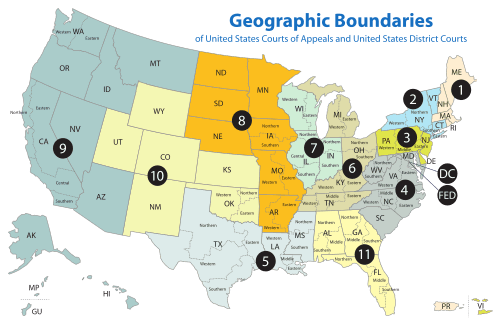
the United States District Court
ORGANIZATION
U.S. federal trial court with jurisdiction over federal cases
tor's
ORGANIZATION
Organization referenced in documents
United States Court of Appeals
ORGANIZATION
U.S. appeals court
Unlace
ORGANIZATION
Organization referenced in documents
USAEO-PSC-Coordinators
ORGANIZATION
Organization referenced in documents

USAID
ORGANIZATION
Organization referenced in documents
VOGEL
ORGANIZATION
Organization referenced in documents
Vogel, Circuit
ORGANIZATION
Organization referenced in documents
Wardwell
ORGANIZATION
Organization referenced in documents
Waterman, Circuit
ORGANIZATION
Organization referenced in documents
White Slave
ORGANIZATION
Organization referenced in documents
Airport
LOCATION
Location referenced in documents

Atlantic City
LOCATION
City in Atlantic County, New Jersey, United States
Bakersfield
LOCATION
Location referenced in documents

Baltimore
LOCATION
City in Maryland, United States
Barstow
LOCATION
Location referenced in documents
Billings
LOCATION
Location referenced in documents
Calumet City
LOCATION
Location referenced in documents
Claassen
LOCATION
Location referenced in documents
Der-
LOCATION
Location referenced in documents

Detroit
LOCATION
City in and county seat of Wayne County, and largest city in State of Michigan, United States
District of Columbia
LOCATION
Federal district, capital of the United States
Eastern District
LOCATION
Federal judicial district

Germany
LOCATION
Country in Central Europe
Heathcote ac-
LOCATION
Location referenced in documents
Hennepin
LOCATION
Location referenced in documents

India
LOCATION
State of the United States of America

Indianapolis
LOCATION
Capital city of the U.S. state of Indiana and the seat of Marion County

Kentucky
LOCATION
State of the United States of America

Kuwait
LOCATION
Sovereign state in Western Asia
L Prostitution
LOCATION
Location referenced in documents
La Page
LOCATION
Location referenced in documents

Las Vegas
LOCATION
City of Clark County, and largest city in state of Nevada, United States

Louisiana
LOCATION
State of the United States of America

Louisville
LOCATION
County seat of Jefferson County, Kentucky, United States
McCroskey
LOCATION
Location referenced in documents

Michigan
LOCATION
State of the United States of America

Milwaukee
LOCATION
City in and county seat of Milwaukee County, and largest city in State of Wisconsin, United States
min= STATES
LOCATION
Location referenced in documents

Minneapolis
LOCATION
City in and seat of Hennepin County, and largest city in State of Minnesota, United States

Montana
LOCATION
State of the United States of America

New Jersey
LOCATION
State of the United States of America

New York
LOCATION • 2 mentions
Most populous city in the United States
Norfolk
LOCATION
Independent city in Virginia, United States

North Dakota
LOCATION
State of the United States of America

Phoenix
LOCATION
Seat of Maricopa County, largest city in, and capital of, the State of Arizona, United States

Sacramento
LOCATION
Capital city of the U.S. state of California and seat of Sacramento County

San Francisco
LOCATION
Consolidated city and county in California, United States

Scottsdale
LOCATION
City in Maricopa County, Arizona, United States
Shirley
LOCATION
Location referenced in documents
Southern District
LOCATION
Federal judicial district in New York City
Suisun
LOCATION
Location referenced in documents
Sunderland &
LOCATION
Location referenced in documents
the District of Columbia
LOCATION
Federal district, capital of the United States
the District of Maryland
LOCATION
Location referenced in documents
the District of Montana
LOCATION
Location referenced in documents
the Northern District
LOCATION
Federal judicial district
the State of Maryland
LOCATION
Location referenced in documents
Third New International
LOCATION
Location referenced in documents
Towson
LOCATION
Location referenced in documents

United Kingdom
LOCATION
Country in north-west Europe

United States
LOCATION • 10 mentions
Country located primarily in North America
Washington D.C.
LOCATION
Capital city of the United States of America
Weld Chamberlain
LOCATION
Location referenced in documents
Wisconsin
LOCATION
State of the United States of America
Statistics
Pages:40
Entities:276
Sponsored