DOJ-COURT-516
Document DOJ-COURT-516 is a legal document from the Department of Justice's first production, specifically a motion to dismiss filed by Jeffrey Epstein's counsel in the case of Jane Doe No. 103.
This 15-page document contains Jeffrey Epstein's motion to dismiss Count Six of the plaintiff's complaint, arguing a failure to state a cause of action. It also includes a request for a more definite statement regarding the plaintiff's date of birth, as her being a minor is significant to the claims. The document references principles of statutory interpretation and cites several legal cases to support its arguments.
Key Highlights
- •Jeffrey Epstein moves to dismiss Count Six of Jane Doe No. 103's complaint.
- •The motion argues that the predicate act relied upon by the Plaintiff did not come into effect until after the alleged conduct occurred.
- •The document requests a more definite statement regarding Jane Doe No. 103's date of birth.
Frequently Asked Questions
Books for Further Reading
Perversion of Justice
Julie K. Brown
Investigative journalism that broke the case open

Filthy Rich
James Patterson
Bestselling account of Epstein's crimes
Glenn M. Anderson, Lyle Cook, Jack Goldberger, et al., Appellants, v. Frank M. Jordan, as Secretary of State of the State of California. U.S. Supreme ... of Record with Supporting Pleadings
Document Information
Bates Range
DOJ-COURT-516
Pages
15
Source
DOJ First Production
Original Filename
516.pdf
Document Content
Page 1 - DOJ-COURT-516_p1
Case 9:10-cv-80309-WJZ Document 14 Entered on FLSD Docket 04/05/2010
Page 2 - DOJ-COURT-516_p2
Page 1 of 15 Case 9:08-cv-80119-KAM Document 516 Entered on FLSD Docket 04/06/2010
Page 3 - DOJ-COURT-516_p3
Page 1 of 15 UNITED STATES DISTRICT COURT SOUTHERN DISTRICT OF FLORIDA CASE NO. 10-80309-CIV- JANE DOE No. 103, Plaintiff, vs. JEFFERY EPSTEIN, Defendant. ------------~/ DEFENDANT EPSTEIN'S MOTION TO DISMISS.COUNT VI & FOR MORE DEFINITE STATEMENT & TO STRIKE DIRECTED TO PLAINTIFF JANE DOE NO. 103'S COMPLAINT (dated 2/23/2010) Defendant, JEFFREY EPSTEIN, ("EPSTEIN"), by and through his undersigned counsel, moves to dismiss Count Six of Plaintiff JANE DOE 103's Complaint for failure to state a cause of action, as specified herein. Rule 12(b)(6), Fed.R.Civ.P. (2009); Local Gen. Rule 7.1 (S.D. Fla. 2009). Defendant further moves for More Definite Statement and to Strike. Rule 12( e) and (f), In support of his motion, Defendant states: The Complaint attempts to allege 6 counts, all of which are purportedly brought pursuant to 18 U.S.C. §2255-Civil Remedies for Personal Injuries. Count Six is subject to dismissal because the predicate act relied upon by Plaintiff for her claims did not come into effect until July 27, 2006, well after the conduct alleged by Plaintiff occurred. The More Definite Statement requested is for Plaintiff to allege her date of birth in that her being a minor has significance in the claims she alleges. 1 Case 9:10-cv-80309-WJZ Document 14 Entered on FLSD Docket 04/05/2010
Sponsored
Page 4 - DOJ-COURT-516_p4
Page 2 of 15 Case 9:08-cv-80119-KAM Document 516 Entered on FLSD Docket 04/06/2010
Page 5 - DOJ-COURT-516_p5
Page 2 of 15 Supporting Memorandum of Law Principles of Statutory Interpretation It is well settled that in interpreting a statute, the court's inquiry begins with the plain and unambiguous language of the statutory text. CBS, Inc. v. Prime Time 24 Venture, 245 F.3d 1217 (I I th Cir. 2001); U.S. v. Castroneves, 2009 WL 528251, *3 (S.D. Fla. 2009), citing Reeves v. Astrue, 526 F.3d 732, 734 (11 th Cir. 2008); and Smith v. Husband, 376 F.Supp.2d at 610 ("When interpreting a statute, [a court's] inquiry begins with the text."). "The Court must first look to the plain meaning of the words, and scrutinize the statute's 'language, structure, and purpose."' Id. In addition, in construing a statute, a court is to presume that the legislature said what it means and means what it said, and not add language or give some absurd or strained interpretation. As stated in CBS, Inc., supra at 1228 - "Those who ask courts to give effect to perceived legislative intent by interpreting statutory language contrary to its plain and unambiguous meaning are in effect asking courts to alter that language, and ' [ c ]ourts have no authority to alter statutory language .... We cannot add to the terms of [the] provision what Congress left out.' Merritt, 120 F.3d at 1187." See also Dodd v. U.S., 125 S.Ct. 2478 (2005); 73 Am.Jur.2d Statutes§ 124. Title 18 of the U.S.C. is entitled "Crimes and Criminal Procedure." §2255 is contained in "Part I. Crimes, Chap. 110. Sexual Exploitation and Other Abuse of Children." 18 U.S.C. §2255 (2002)1, is entitled Civil remedy for personal injuries, and provides: (a) Any minor who is a victim ofa violation of section 224l(c), 2242, 2243, 2251, 2251A, 2252, 2252A, 2260, 2421, 2422, or 2423 of this title and who suffers 1 The above quoted version of 18 U.S.C. §2255 was the same beginning in 1999 until amended in 2006, effective July 27, 2006. 2 Case 9:10-cv-80309-WJZ Document 14 Entered on FLSD Docket 04/05/2010
Page 6 - DOJ-COURT-516_p6
Page 3 of 15 Case 9:08-cv-80119-KAM Document 516 Entered on FLSD Docket 04/06/2010
Sponsored
Page 7 - DOJ-COURT-516_p7
Page 3 of 15 personal injury as a result of such violation may sue in any appropriate United States District Court and shall recover the actual damages such minor sustains and the cost of the suit, including a reasonable attorney's fee. Any minor as described in the preceding sentence shall be deemed to have sustained damages of no less than $50,000 in value. (b) Any action commenced under this section shall be barred unless the complaint is filed within six years after the right of action first accrues or in the case of a person under a legal disability, not later than three years after the disability. See endnote 1 hereto for statutory text as amended in 2006, effective July 27, 2006. Prior to the 2006 amendments, the version of the statute quoted above was in effect beginning in 1999 .1 All of Plaintiffs allegations of abuse occurred between January 2004 and May 2005 (par. 18), well prior to 18 U.S.C. §2255 being amended. Motion to Dismiss Plaintiff's reliance on the amended version of 18 U.S.C. §2255, snch reliance is improper. The version of Defendant's position that 18 U.S.C. §2255 in effect prior to the 2006 amendments applies to this action, and therefore Count Six is required to be dismissed as it relies on a predicate act that was not in effect at the time of the alleged conduct.23 Plaintiff does not specifically allege in her Complaint on which version of 18 U.S.C. §2255 she is relying. However, in Count Six of her Complaint, ~50, she alleges that Defendant "knowingly engaged in a child exploitation enterprise, as defined in 18 U.S.C. §2252A(g)(2), in violation of 18 U.S.C. §2252A(g)(l)." §2252A is one of the specified predicate acts under 18 U.S.C. §2255. However, subsection (g) of §2252 was 2 Points (2) and (3) are addressed together as the legal arguments overlap. 3 In other §2255 actions filed against Defendant, Defendant has previously asserted the position that 18 U.S.C. §2255's creates a single cause of action on behalf of a plaintiff against a defendant, as opposed to multiple causes of action on a per violation basis or as opposed to an allowance of a multiplication of the statutory presumptive minimum damages or "actual damages." EPSTEIN asserts his position regarding the single recovery of damages in order to properly preserve all issues pertaining to the proper application of §2255 for appeal. EPSTEIN will fully honor his obligations as set forth in the Non-Prosecution Agreement with the United States Attorney's Office; principally, as related to the claims made in this case by Jane Doe 103, the obligations as set forth in paragraph 8 of that Agreement. In particular, EPSTEIN will not contest the allegation that he committed at least one predicate offense as alleged by Jane Doe 103. 3 Case 9:10-cv-80309-WJZ Document 14 Entered on FLSD Docket 04/05/2010
Page 8 - DOJ-COURT-516_p8
Page 4 of 15 Case 9:08-cv-80119-KAM Document 516 Entered on FLSD Docket 04/06/2010
Page 9 - DOJ-COURT-516_p9
Page 4 of 15 not added to the statute until 2006. Thus, to the extent that Plaintiff is relying on the amended version of 18 U.S.C. §2255, such reliance is improper and Count Six is required to be dismissed as it relies on a statutory predicate act that did not exist at the time of the alleged conduct. The statute in effect during the time the alleged conduct occurred is 18 U.S.C. §2255 (2005) - the version in effect prior to the 2006 amendment, eff. Jul. 27, 2006, ( quoted above), and having an effective date of 1999 through July 26, 2006. See endnote 1 hereto. Plaintiff's Complaint alleges that Defendant's conduct occurred during the time period from the age of 17, January 2004 until approximately May 2005. Complaint, 1117, 18. Thus, the version in effect in 2004-2005 of 18 U.S.C. §2255 applies. It is an axiom of law that "retroactivity is not favored in the law." Bowen, 488 U.S., at 208, 109 S.Ct., at 471 (1988). As eloquently stated in Landgraf v. USI Film Products, 114 S.Ct. 1483, 1497, 511 U.S. 244, 265-66 (1994): . . . the presumption against retroactive legislation is deeply rooted in our jurisprudence, and embodies a legal doctrine centuries older than our Republic. Elementary considerations of fairness dictate that individuals should have an opportunity to know what the law is and to conform their conduct accordingly; settled expectations should not be lightly disrupted.FNI& For that reason, the "principle that the legal effect of conduct should ordinarily be assessed under the law that existed when the conduct took place has timeless and universal appeal." Kaiser, 494 U.S., at 855, 110 S.Ct., at 1586 (SCALIA, J., concurring). In a free, dynamic society, creativity in both commercial and artistic endeavors is fostered by a rule of law that gives people confidence about the legal consequences of their actions. FN18. See General Motors Corp. v. Romein, 503 U.S. 181, 191, 112 S.Ct. 1105, 1112, 117 L.Ed.2d 328 (1992) ("Retroactive legislation presents problems of unfairness that are more serious than those posed by prospective legislation, because it can deprive citizens of legitimate expectations and upset settled transactions"); [Further citations omitted]. It is therefore not surprising that the antiretroactivity principle finds expression in several provisions of our Constitution. The Ex Post Facto Clause flatly prohibits retroactive application of penal legislation.FN19 Article I, § 10, cl. I, prohibits States 4 Case 9:10-cv-80309-WJZ Document 14 Entered on FLSD Docket 04/05/2010
Sponsored
Page 10 - DOJ-COURT-516_p10
Page 5 of 15 Case 9:08-cv-80119-KAM Document 516 Entered on FLSD Docket 04/06/2010
Page 11 - DOJ-COURT-516_p11
Page 5 of 15 from passing another type of retroactive legislation, laws "impairing the Obligation of Contracts." The Fifth Amendment's Takings Clause prevents the Legislature ( and other government actors) from depriving private persons of vested property rights except for a "public use" and upon payment of ''.just compensation." The prohibitions on "Bills of Attainder" in Art. I, § § 9-10, prohibit legislatures from singling out disfavored persons and meting out summary punishment for past conduct. See, e.g., United States v. Brown, 381 U.S. 437, 456-462, 85 S.Ct. 1707, 1719-1722, 14 L.Ed.2d 484 (1965). The Due Process Clause also protects the interests in fair notice and repose that may be compromised by retroactive legislation; a justification sufficient to validate a statute's prospective application under the Clause "may not suffice" to warrant its retroactive application. Usery v. Turner Elkhorn Mining Co., 428 U.S. 1, 17, 96 S.Ct. 2882, 2893, 49 L.Ed.2d 752 (1976). FN19. Article I contains two Ex Post Facto Clauses, one directed to Congress(§ 9, cl. 3), the other to the States (§ 10, cl. I). We have construed the Clauses as applicable only to penal legislation. See Calder v. Bull, 3 Dall. 386, 390-391, I L.Ed. 648 (1798) (opinion of Chase, J.). These provisions demonstrate that retroactive statutes raise particular concerns. The Legislature's unmatched powers allow it to sweep away settled expectations suddenly and without individualized consideration. Its responsivity to political pressures poses a risk that it may be tempted to use retroactive legislation as a means of retribution against unpopular groups or individuals. As Justice Marshall observed in his opinion for **1498 the Comt in Weaver v. Graham, 450 U.S. 24, 101 S.Ct. 960, 67 L.Ed.2d 17 (1981), the Ex Post Facto Clause not only ensures that individuals have "fair warning" about the effect of criminal statutes, but also "restricts governmental power by restraining arbitrary and potentially vindictive legislation." Id., at 28-29, 101 S.Ct., at 963-964 ( citations omitted). FN2D FN20. See Richmond v. J. A. Croson Co., 488 U.S. 469, 513-514, 109 S.Ct. 706, 732, 102 L.Ed.2d 854 (1989) ("Legislatures are primarily policymaking bodies that promulgate rules to govern future conduct. The constitutional prohibitions against the enactment of ex post facto laws and bills of attainder reflect a valid concern about the use of the political process to punish or characterize past conduct of private citizens. It is the judicial system, rather than the legislative process, that is best equipped to identify past wrongdoers and to fashion remedies that will create the conditions that presumably would have existed had no wrong been committed") (STEVENS, J., concurring in part and concurring in judgment); James v. United States, 366 U.S. 213, 247, n. 3, 81 S.Ct. 1052, 1052, n. 3, 6 L.Ed.2d 246 (1961) (retroactive punitive measures may reflect "a purpose not to prevent dangerous conduct generally but to impose by legislation a penalty against specific persons or classes of persons"). These well entrenched constitutional protections and presumptions against retroactive application of legislation establish that 18 U.S.C. §2255 (2005) in effect at the time of the alleged conduct applies to the instant action, and not the amended version. 5 Case 9:10-cv-80309-WJZ Document 14 Entered on FLSD Docket 04/05/2010
Page 12 - DOJ-COURT-516_p12
Page 6 of 15 Case 9:08-cv-80119-KAM Document 516 Entered on FLSD Docket 04/06/2010
Sponsored
Page 13 - DOJ-COURT-516_p13
Page 6 of 15 Not only is there no clear express intent stating that the statute is to apply retroactively, but applying the current version of the statute, as amended in 2006, would be in clear violation of the Ex Post Facto Clause of the United States Constitution as it would be applied to events occurring before its enactment and would increase the penalty or punishment for the alleged crime. U.S. Const. Art. 1, §9, cl. 3, §10, cl. I. U.S. v. Seigel, 153 F.3d 1256 (11 th Cir. 1998); U.S. v. Edwards, 162 F.3d 87 (3d Cir. 1998); and generally, Calder v. Bull, 3 U.S. 386, 390, 1 L.Ed. 648, 1798 WL 587 (Calder) (1798). The United States Constitution provides that "[ n Jo Bill of Attainder or ex post facto Law shall be passed" by Congress. U.S. Const. art. I, § 9, cl. 3. A law violates the Ex Post Facto Clause if it" 'appli[es] to events occurring before its enactment ... [and] disadvantage[s] the offender affected by it' by altering the definition of criminal conduct or increasing the punishment for the crime." Lynce v. Mathis, 519 U.S. 433, 117 S.Ct. 891, 137 L.Ed.2d 63 (1997) (quoting Weaver v. Graham, 450 U.S. 24, 29, 101 S.Ct. 960, 67 L.Ed.2d 17 (1981)). U.S. v. Siegel,153 F.3d 1256, 1259 (11 th Cir. 1998). The statute, as amended in 2006, contains no language stating that the application is to be retroactive. Thus, there is no manifest intent that the statute is to apply retroactively, and, accordingly, the statute in effect during the time of the alleged conduct is to apply. Landgraf v. USI Film Products, supra, at 1493, ("A statement that a statute will become effective on a certain date does not even arguably suggest that it has any application to conduct that occurred at an earlier date."). This statute was enacted as part of the Federal Criminal Statutes targeting sexual predators and sex crimes against children. H.R. 3494, "Child Protection and Sexual Predator Punishment Act of 1998;" House Report No. 105-557, 11, 1998 U.S.C.A.N. 678, 679 (1998). Quoting from the "Background and Need For Legislation" portion of the House Report No. 105-557, 11-16, H.R. 3494, of which 18 U.S.C. §2255 is included, 6 Case 9:10-cv-80309-WJZ Document 14 Entered on FLSD Docket 04/05/2010
Page 14 - DOJ-COURT-516_p14
Page 7 of 15 Case 9:08-cv-80119-KAM Document 516 Entered on FLSD Docket 04/06/2010
Page 15 - DOJ-COURT-516_p15
Page 7 of 15 is described as "the most comprehensive package of new crimes and increased penalties ever developed in response to crimes against children, particularly assaults facilitated by computers." Further showing that §2255 was enacted as a criminal penalty or punishment, "Title II - Punishing Sexual Predators," Sec. 206, from House Report No. 105-557, 5-6, specifically includes reference to the remedy created under §2255 as an additional means of punishing sexual predators, along with other penalties and punishments. Senatorial Comments in amending §2255 in 2006 confirm that the creation of the presumptive minimum damage amount is meant as an additional penalty against those who sexually exploit or abuse children. 2006 WL 2034118, 152 Cong. Rec. S8012- 02. Senator Kerry refers to the statutorily imposed damage amount as "penalties." Id. The cases of U.S. v. Siegel, supra (11 th Cir. 1998), and U.S. v. Edwards, supra (3d Cir. 1998), also support Defendant's position that application of the current version of 18 U.S.C. §2255 would be in clear violation of the Ex Post Facto Clause. In Siegel, the Eleventh Circuit found that the Ex Post Facto Clause barred application of the Mandatory Victim Restitution Act of 1996 (MVRA) to the defendant whose criminal conduct occurred before the effective date of the statute, 18 U.S.C. §3664(f)(l)(A), even though the guilty plea and sentencing proceeding occurred after the effective date of the statute. On July 19, 1996, the defendant Siegel pleaded guilty to various charges under 18 U.S.C. §371 and §1956(a)(l)(A), (conspiracy to commit mail and wire fraud, bank fraud, and laundering of money instruments; and money laundering). He was sentenced on March 7, 1997. As part of his sentence, Siegel was ordered to pay $1,207,000.00 in restitution under the MVRA which became effective on April 24, I 996. Pub.L. No. I 04-132, 110 Stat. 1214, 1229-1236. The 1996 amendments to MVRA required that the district court 7 Case 9:10-cv-80309-WJZ Document 14 Entered on FLSD Docket 04/05/2010
Entities Mentioned
AS
Astrue
PERSON
Name reference in documents

Bowen
PERSON
Surname reference in Epstein-related documents

Bradley Edwards
PERSON
American attorney who represented Epstein victims, author of Relentless Pursuit
CA
Castroneves
PERSON
Brazilian racecar driver
JG
Jack Goldberger
PERSON • 2 mentions
American criminal defense attorney who represented Jeffrey Epstein, partner at Goldberger Weiss P.A. in West Palm Beach, Florida
JD
Jane Doe
PERSON
Pseudonym for anonymous victims/witnesses in Epstein legal proceedings
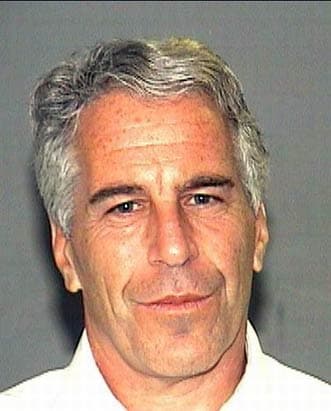
Jeffrey Epstein
PERSON • 4 mentions
American sex offender and financier (1953–2019)

John Kerry
PERSON
American politician and diplomat (born 1943)
KE
Katherine W. Ezell
PERSON
Person referenced in documents

Merritt
PERSON
Surname reference in Epstein-related documents
MP
Michael J. Pike
PERSON
Person referenced in Epstein-related documents
RE
Reeves
PERSON
Surname reference in Epstein-related documents
RJ
Robert C. Josefsberg
PERSON
Florida criminal defense attorney, appeared in Epstein legal proceedings
SE
Seigel
PERSON
Montserratian footballer
US
Usery
PERSON
Surname reference in documents
WE
Weaver
PERSON
Surname reference in Epstein-related documents
Atterbury Goldberger & Weiss
ORGANIZATION
Law firm based in Florida
CBS, Inc.
ORGANIZATION
Organization referenced in documents
D.C. Circuits
ORGANIZATION
Organization referenced in documents
District Court for the Southern District of New York
ORGANIZATION
U.S. District Court for the Southern District of New York
General Motors Corp.
ORGANIZATION
Organization referenced in documents
J. A. Croson Co.
ORGANIZATION
Organization referenced in documents

Legislature
ORGANIZATION
State legislature
Prime Time 24
ORGANIZATION
Organization referenced in documents
the Court of Appeals
ORGANIZATION
Organization referenced in documents
The New York Court
ORGANIZATION
Organization referenced in documents

the United States Supreme Court
ORGANIZATION
U.S. Supreme Court
Turner Elkhorn Mining Co.
ORGANIZATION
Organization referenced in documents

United States District Court
ORGANIZATION
U.S. federal trial court
USI Film
ORGANIZATION
Organization referenced in documents
USI Film Products
ORGANIZATION
American manufacturer of specialty packaging films
S.Ct.
LOCATION
Location referenced in documents
Statistics
Pages:15
Entities:32
Sponsored