DOJ-COURT-245
Document DOJ-COURT-245 is a court document filed in the Southern District of Florida, pertaining to multiple cases against Jeffrey Epstein.
This document contains multiple case numbers related to lawsuits filed against Jeffrey Epstein by several Jane Does and C.M.A. The cases appear to be filed between 2008 and 2009. The document also includes an emergency motion for a protective order regarding the depositions of Susan Pope and Dr. Serge Thys, filed by the Plaintiff, C.M.A.
Key Highlights
- •The document is associated with multiple cases against Jeffrey Epstein in the Southern District of Florida.
- •Plaintiffs include Jane Does 2, 3, 4, 5, 6, 7, 101, 102, and individuals identified as C.M.A. and DOE II.
- •The document includes an emergency motion related to depositions of Susan Pope and Dr. Serge Thys.
Frequently Asked Questions
Books for Further Reading
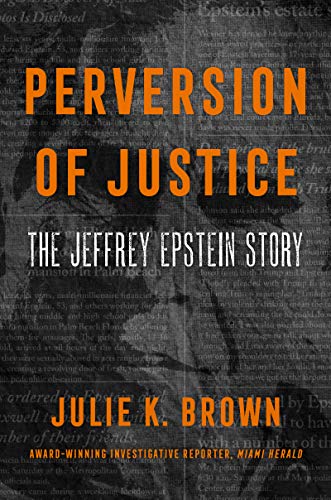
Perversion of Justice
Julie K. Brown
Investigative journalism that broke the case open

Filthy Rich
James Patterson
Bestselling account of Epstein's crimes
Glenn M. Anderson, Lyle Cook, Jack Goldberger, et al., Appellants, v. Frank M. Jordan, as Secretary of State of the State of California. U.S. Supreme ... of Record with Supporting Pleadings
Document Information
Bates Range
DOJ-COURT-245
Pages
50
Source
DOJ First Production
Original Filename
245.pdf
Document Content
Page 1 - DOJ-COURT-245_p1
Case 9:08-cv-80119-KAM Document 245 Entered on FLSD Docket 08/05/2009
Page 2 - DOJ-COURT-245_p2
Page 1 of 50 UNITED STATES DISTRICT COURT SOUTHERN DISTRICT OF FLORIDA / JANE DOE NO. 2, Plaintiff, vs. JEFFREY EPSTEIN, Defendant. I ------------ JANE DOE NO. 3, Plaintiff, vs. JEFFREY EPSTEIN, Defendant. ___________ __;/ JANE DOE NO. 4, Plaintiff, vs. JEFFREY EPSTEIN, Defendant. ____________ / JANE DOE NO. 5, Plaintiff, vs. JEFFREY EPSTEIN, Defendant. ___________ __;/ CASE NO.: 08-CV-80119-MARRA/JOHNSON. CASE NO.: 08-CV-80232-MARRA/JOHNSON CASE NO.: 08-CV-80380-MARRA/JOHNSON CASE NO.: 08-CV-80381-MARRA/JOHNSON FILED by ___ D.C. AUG O 4 2009 Case 9:08-cv-80119-KAM Document 245 Entered on FLSD Docket 08/05/2009
Page 3 - DOJ-COURT-245_p3
Page 2 of 50 JANE DOE NO. 6, Plaintiff, vs. JEFFREY EPSTEIN, Defendant. JANE DOE NO. 7, Plaintiff, vs. JEFFREY EPSTEIN, Defendant. C.M.A., Plaintiff, vs. JEFFREY EPSTEIN, Defendant. JANE DOE, Plaintiff, vs. JEFFREY EPSTEIN, Defendant. CASE NO.: 08-CV-80994-MARRA/JOHNSON I CASE NO.: 08-CV-80993-MARRA/JOHNSON I CASE NO.: 08-CV-80811-MARRA/JOHNSON I CASE NO.: 08-CV-80893-MARRA/JOHNSON I 2 Case 9:08-cv-80119-KAM Document 245 Entered on FLSD Docket 08/05/2009
Sponsored
Page 4 - DOJ-COURT-245_p4
Page 3 of 50 DOE II, Plaintiff, vs. JEFFREY EPSTEIN, Defendant. I ------------ JANE DOE NO. 101, Plaintiff, vs. JEFFREY EPSTEIN, Defendant. I ------------ JANE DOE NO. 102, Plaintiff, vs. JEFFREY EPSTEIN, Defendant. ------------'' CASE NO.: 09-CV-80469-MARRA/JOHNSON CASE NO.: 09-CV-80591-MARRA/JOHNSON CASE NO.: 09-CV-80656-MARRA/JOHNSON PLAINTIFF, C.M.A.'S, EMERGENCY MOTION FOR PROTECTIVE ORDER REGARDING THE DEPOSITIONS OF SUSAN POPE AND DR. SERGE THYS AND INCORPORATED MEMORANDUM OF LAW Plaintiff, C.M.A., by and through her undersigned attorneys, hereby files her Emergency Motion for Protective Order Regarding the Depositions of Susan Pope and Dr. Serge Thys and Incorporated Memorandum of Law, and in support there of states as follows: 3 Case 9:08-cv-80119-KAM Document 245 Entered on FLSD Docket 08/05/2009
Page 5 - DOJ-COURT-245_p5
Page 4 of 50 1. This is an action to recover money damages against Defendant, JEFFREY EPSTEIN, for acts of sexual abuse and prostitution committed upon the then- minor, C.M.A. 2. On Friday, July 31, 2009, Defendant unilaterally scheduled the deposition of Susan Pope for Thursday, August 6, 2009, at 10:00 a.m., and the deposition of Dr. Serge Thys on August 31, 2009, at 3:15 p.m. (Attached hereto as Exhibits "A" and "8'')1 Ms. Pope is a mental health therapist and Dr. Thys is a psychiatrist. 3. Plaintiff has plead thirty separate counts against EPSTEIN for separate incidences of abuse committed by EPSTEIN against Plaintiff pursuant to 18 U.S.C. §2255. 18 U.S.C. §2255, entitled "Civil remedy for personal injuries", creates a private right of action for minor children who were the victims of certain enumerated sex offenses. 18 U.S.C. §2255 also creates a statutory floor for the amount of damages a victim can recover for a violation of same. Plaintiff has also alleged a single count of Sexual Battery against EPSTEIN. 4. There presently exists between the Plaintiff and EPSTEIN a disagreement as to whether the statutory damage floor established in 18 U.S.C. §2255 is recoverable for each commission of an enumerated sex offenses listed in 18 U.S.C. §2255, or whether the statutory damage floor can only be enforced once, regardless of how many times a defendant perpetrates an enumerated sex offense against a minor victim. 5. This disagreement between the parties is properly the subject of Defendant's Motion to Dismiss First Amended Complaint For Failure to State a Cause 1 Although Defendant's Certificate of Service states that the Notices were sent via email and U.S. Mail on July 30, they were not e-mailed to undersigned until the following day, July 31 st. 4 Case 9:08-cv-80119-KAM Document 245 Entered on FLSD Docket 08/05/2009
Page 6 - DOJ-COURT-245_p6
Page 5 of 50 of Action, and Motion For More Definite Statement; Motion to Strike, and Supporting Memorandum of Law (Attached hereto as Exhibit "C") which is currently pending before this Court. 6. In the event that the Court rules that Plaintiff can recover the statutory damage floor established in 18 U.S.C. §2255 for each proven incident of abuse committed by EPSTEIN upon her, Plaintiff intends to rely exclusively on the statutory damages, rather than those damages which are available at common law. (See Plaintiff, C.M.A.'s Conditional Notice of Intent to Exclusively Rely on Statutory Damages Provided by 18 U.S.C. §2255 attached hereto as Exhibit "D"). If however, the Court rules that the statutory floor applies only one time, regardless of the number of times EPSTEIN committed an enumerated sexual offense against her, Plaintiff will be pursuing all damages available to her at both common law and by statute. 7. Given Plaintiff's intent to rely exclusively on the statutory damages available to her under 18 U.S.C. §2255 as outline above, Plaintiff will not be presenting any evidence of the extent of her physical, emotional, or pecuniary injuries, beyond evidence that she was the victim of sexual contact to which she was legally incapable of consenting by virtue of her age (including, pain and suffering, emotional distress, psychological trauma, mental anguish, humiliation, embarrassment, loss of self-esteem, loss of dignity, invasion of her privacy, and loss of the capacity to enjoy life). Accordingly, any testimony and/or discovery regarding those types of damages would not be relevant to any material issue pending in this case. 5 Case 9:08-cv-80119-KAM Document 245 Entered on FLSD Docket 08/05/2009
Sponsored
Page 7 - DOJ-COURT-245_p7
Page 6 of 50 8. Presently pending before the Court is Defendant EPSTEIN's Motion to Compel Plaintiff C.M.A. to Respond to Defendant's First Request to Produce and Answer Defendant's First Set of Interrogatories, and to Overrule Objections, and For an Award of Defendant's Reasonable Expenses (Attached hereto as Exhibit "E"). EPSTEIN is seeking from Plaintiff the production of certain treatment records of hers from the Susan Pope/Parent-Child Center, Inc., Dr. Serge Thys, a psychiatrist, Dominique Hyppolite/School District of Palm Beach County, Good Samaritan Hospital, St. Mary's Hospital, Florida Atlantic University and Gloria C. Hakkarainen, M.D. 9. Also pending before the Court is Plaintiff, Carolyn Margaret Andriano's Motion for Protective Order Regarding Treatment Records From Parent-Child Center, Inc. (Susan Pope), Dr. Serge Thys, Records of Dominique Hyppolite/School District of Palm Beach County, Good Samaritan Hospital, St. Mary's Hospital, Florida Atlantic University and Gloria C. Hakkareinen, M.D., With Incorporated Memorandum of Law (DE 207) (Attached hereto as Exhibit "F"). 10. Rather than allow the Court to rule on the pending motions regarding whether C.M.A, as a victim of repeated sexual offenses at the hands of EPSTEIN, should be subjected to further humiliation, embarrassment, and victimization, EPSTEIN has apparently decided to forge ahead without waiting for the Court's rulings regarding the scope of permissible discovery in this case. 11. Neither the testimony of Susan Pope/Parent-Child Center, Inc. or Dr. Serge Thys will have any relevance whatsoever in the event that Plaintiff pursues only those statutory damages available to her under 18 U.S.C. §2255. To the contrary, the 6 Case 9:08-cv-80119-KAM Document 245 Entered on FLSD Docket 08/05/2009
Page 8 - DOJ-COURT-245_p8
Page 7 of 50 testimony from these providers regarding the confidential and private treatment would only serve to further humiliate, embarrass, and victimize C.M.A. 12. Furthermore, C.M.A., the information sought by the Defendant is protected by the psychotherapist-patient privilege pursuant to the Supreme Court's decision in Jaffee v. Redmond, 518 U.S. 1, 116 S.Ct. 1923 (1996)("AII agree that a psychotherapist privilege covers confidential communications made to licensed psychiatrists and psychologists. We have no hesitation in concluding in this case that the federal privilege should also extend to confidential communications made to licensed social workers in the course of psychotherapy.") Ordinarily, a plaintiff does not place her mental condition in controversy merely by requesting damages for mental anguish or "garden variety" emotional distress. In order to place a party's mental condition in controversy the party must allege a specific mental or psychiatric disorder or intend to offer expert testimony to support their claim of emotional distress. Turner v Imperial Stores, 161 F.R.D. 89 (S.D.Cal. 1995). The evidence sought is also protected under the substantive privacy rights recognized in Florida Statute §§90.503. 13. Accordingly, Plaintiff respectfully moves for the entry of a protective order pursuant to Fed. R. Civ. Pro. 26(c) preventing the depositions of Susan Pope and Dr. Serge Thys. More particularly, Plaintiff requests the entry of an order precluding the depositions of Susan Pope and Dr. Serge Thys until such time as the Court rules on the issue regarding whether the statutory damage floor as contained in 18 U.S.C. §2255 applies to each proven commission of an enumerated sexual offense by EPSTEIN against CMA. Should the Court rule that 18 U.S.C. §2255 provides a per incident 7 Case 9:08-cv-80119-KAM Document 245 Entered on FLSD Docket 08/05/2009
Page 9 - DOJ-COURT-245_p9
Page 8 of 50 damage floor, the testimony would have absolutely no relevance whatsoever. In the event that the Court rules that the damage floor applies only once, the parties can then further brief the Court as to whether C.M.A has placed her mental condition "in controversy" such that it operates as a waiver of the psychotherapist-patient privilege. WHEREFORE, Plaintiff, C.M.A., respectfully requests that this Court enter a protective order preventing the depositions of Susan Pope and Dr. Serge until such time as the Court decides whether the statutory damages pursuant to 18 U.S.C. §2255 are available to a victim of an enumerated sexual offense on a per incident basis. CERTIFICATE OF COMPLIANCE WITH LOCAL RULE 7 .1 Counsel for the movant has conferred via e-mail with counsel for the Defendant regarding his position on Plaintiff's Emergency Motion for Protective Order Regarding the Depositions of Susan Pope and Dr. Serge and Incorporated Memorandum of Law and has advised the undersigned that he objects to the relief requested herein. /s/ Jack P. Hill 8 Case 9:08-cv-80119-KAM Document 245 Entered on FLSD Docket 08/05/2009
Sponsored
Page 10 - DOJ-COURT-245_p10
Page 9 of 50 CERTIFICATE OF SERVICE I HEREBY CERTIFY that on the 4rd day of August, 2009, I filed the foregoing with the Clerk of the Court and send copies to al'. coil of record via e-mail. Jack Sc ala Florida Bar No.: 169440 Jack P. Hill Florida Bar No.: 0547808 Searcy Denney Scarola Barnhart & Shipley, P.A. 2139 Palm Beach Lakes Boulevard West Palm Beach, Florida 33409 Phone: (561) 686-6300 Fax: (561) 383-9424 Attorneys for Plaintiff 9 Case 9:08-cv-80119-KAM Document 245 Entered on FLSD Docket 08/05/2009
Page 11 - DOJ-COURT-245_p11
Page 10 of 50 Richard H. Willits, Esquire Richard H. Willits, P.A. 2290 10th Avenue North, Suite 404 Lake Worth, FL 33461 Phone: (561) 582-7600 Fax: (561) 588-8819 Robert Critton, Esquire COUNSEL LIST Burman Critton Luttier & Coleman LLP 515 North Flagler Drive, Suite 400 West Palm Beach, FL 33414 Phone: (561) 842-2820 Fax: (561) 844-6929 Jack A. Goldberger, Esquire Atterbury, Goldberger & Weiss, P.A. 250 Australian Avenue South West Palm Beach, FL 33401 Phone: (561) 863-9100 Bruce E. Reinhart, Esquire Bruce E. Reinhart, P.A. 250 South Australian Avenue Suite 1400 West Palm Beach, FL 33401 Phone: (561) 202-6360 Fax: (561) 828-0983 Case 9:08-cv-80119-KAM Document 245 Entered on FLSD Docket 08/05/2009
Page 12 - DOJ-COURT-245_p12
Page 11 of 50 UNITED STATES DISTRICT COURT SOUTHERN DISTRICT OF FLORIDA CASE NO.: 08-CIV-80811-MARRA/JOHNSON CAROLYN MARGARET ANDRIANO Plaintiff, V. JEFFREY EPSTEIN and SARAH KELLEN, Defendants, NOTICE OF TAKING DEPOSITION PLEASE TAKE NOTICE that the undersigned attorney will take the deposition duces tecum of: DEPONENT Susan Pope 2001 W. Blue Heron Blvd. Riviera Beach, FL 33401 DATE & TIME LOCATION OF DEPOSITION Thursday August6,2009 10:00 a.m. Burman Critton Luttier & Coleman LLP 515 N. Flagler Drive, Suite 400 West Palm Beach, FL 33401 upon oral examination, before U.S. Legal Support, a Notary Public, or any other officer authorized by law to take depositions in the State of Florida. The oral examination is being taken for the purpose of discovery, for use at trial, or for such other purposes as are permitted under the applicable Statutes of Rules~ Robert D. Critton, Jr. Attorney for Defendant Epstein Certificate of Service I HEREBY CERTIFY that a true copy of the foregoing document is being served this day on all counsel of record identified on the following Service List via email and U.S. Mail on this 30th day of~ 2009 EXHIBIT I ~ Case 9:08-cv-80119-KAM Document 245 Entered on FLSD Docket 08/05/2009
Sponsored
Page 13 - DOJ-COURT-245_p13
Page 12 of 50 C.M.A. v. Epstein, et al. Page2 Richard Horace Willits, Esq. Richard H. Willits, P.A. 2290 10th Avenue North Suite 404 Lake Worth, FL 33461 561-582-7600 Fax: 561-588-8819 Counsel for Plaintiff C.M.A. [email protected] Jack Scarola, Esq. Jack P. Hill, Esq. Jack Alan Goldberger, Esq. Atterbury Goldberger & Weiss, P.A. 250 Australian Avenue South Suite 1400 West Palm Beach, FL 33401-5012 561-659-8300 Fax: 561-835-8691 [email protected] Counsel tor Defendant Jeffrey Epstein Searcy Denney Scarola Barnhart & Shipley, P.A. Bruce Reinhart, Esq. Bruce E. Reinhart, P.A. 250 S. Australian Avenue Suite 1400 2139 Palm Beach Lakes Boulevard West Palm Beach, FL 33409 561-686-6300 Fax: 561-383-9424 [email protected] iph @searcylaw.com Co-Counsel for Plaintiff B: West Palm Beach, FL 33401 561-202-6360 Fax: 561-828-0983 [email protected] Counsel for Defendant Sarah Kellen .=__,;;=-------- ROBERT D. CRITTON, JR., ESQ. Florida Bar No. 224162 [email protected] MICHAEL J. PIKE, ESQ. Florida Bar #617296 [email protected] BURMAN, CRITTON, LUTTIER & COLEMAN 515 N. Flagler Drive, Suite 400 West Palm Beach, FL 33401 561/842-2820 Phone 561/515-3148 Fax ( Counsel for Defendant Jeffrey Epstein) Case 9:08-cv-80119-KAM Document 245 Entered on FLSD Docket 08/05/2009
Page 14 - DOJ-COURT-245_p14
Page 13 of 50 UNITED STATES DISTRICT COURT SOUTHERN DISTRICT OF FLORIDA CASE NO.: 08-CIV-80811-MARRA/JOHNSON CAROLYN MARGARET ANDRIANO Plaintiff, V. JEFFREY EPSTEIN and SARAH KELLEN, Defendants, ------------~' NOTICE OF TAKING DEPOSITION PLEASE TAKE NOTICE that the undersigned attorney will take the deposition duces tecum of: DEPONENT Dr. Serge Thys 2151 45th Street West Palm Beach, FL 33401 DATE & TIME LOCATION OF DEPOSITION Monday Burman Critton Luttier & Coleman LLP August 31, 2009 303 Banyan Blvd., Suite 400 3:15 p.m. West Palm Beach, FL 33401 upon oral examination, before U.S. Legal Support, a Notary Public, or any other officer authorized by law to take depositions in the State of Florida. The oral examination is being taken for the purpose of discovery, for use at trial, or for such other purposes as are permitted under the applicable Statutes of Rules of Court. Robert D. Critton, Jr. Attorney for Defendant Epstein Certificate of Service I HEREBY CERTIFY that a true copy of the foregoing document is being served this day on all counsel of record identified on the following Service List via email and U.S. Mail on this 30th day of~ 2009 EXHIBIT I Case 9:08-cv-80119-KAM Document 245 Entered on FLSD Docket 08/05/2009
Page 15 - DOJ-COURT-245_p15
Page 14 of 50 C.M.A. v. Epstein, et al. Page2 Richard Horace Willits, Esq. Richard H. Willits, P.A. 2290 10th Avenue North Suite 404 Lake Worth, FL 33461 561-582-7600 Fax: 561-588-8819 Counsel for Plaintiff C.M.A. [email protected] Jack Scarola, Esq. Jack P. Hill, Esq. Jack Alan Goldberger, Esq. Atterbury Goldberger & Weiss, P.A. 250 Australian Avenue South Suite 1400 West Palm Beach, FL 33401-5012 561-659-8300 Fax: 561-835-8691 [email protected] Counsel for Defendant Jeffrey Epstein Searcy Denney Scarola Barnhart & Shipley, P.A. Bruce Reinhart, Esq. Bruce E. Reinhart, P.A. 250 S. Australian Avenue Suite 1400 2139 Palm Beach Lakes Boulevard West Palm Beach, FL 33409 561-686-6300 Fax: 561-383-9424 [email protected] [email protected] Co-Counsel tor Plaintiff West Palm Beach, FL 33401 561-202-6360 Fax: 561-828-0983 [email protected] Counsel for Defendant Sarah Kellen BY,,,-::'~~.::::_ ___ _:::=;--- BE D. CRITTON, JR., ESQ. orida Bar No. 224162 [email protected] MICHAEL J. PIKE, ESQ. Florida Bar #617296 [email protected] BURMAN, CRITTON, LUTTIER & COLEMAN 515 N. Flagler Drive, Suite 400 West Palm Beach, FL 33401 561/842-2820 Phone 561/515-3148 Fax ( Counsel for Defendant Jeffrey Epstein) Case 9:08-cv-80119-KAM Document 245 Entered on FLSD Docket 08/05/2009
Sponsored
Page 16 - DOJ-COURT-245_p16
Page 15 of 50 Case 9:08-cv-80811-KAM document 47 Entered on FLSD Docket 03/12/2009
Page 17 - DOJ-COURT-245_p17
Page 1 of 21 UNITED STATES DISTRICT COURT SOUTHERN DISTRICT OF FLORIDA CASE NO.: 08-CV-80811-MARRA/JOHNSON C.M.A., Plaintiff, V. JEFFREY EPSTEIN and SARAH KELLEN, Defendants, I -------------- DEFENDANT JEFFREY EPSTEIN'S MOTION TO DISMISS FIRST AMENDED COMPLAINT FOR FAILURE TO STATE A CAUSE OF ACTION, AND MOTION FOR MORE DEFINITE STATEMENT: MOTION TO STRIKE, AND SUPPORTING MEMORANDUM OF LAW Defendant, JEFFREY EPSTEIN, ("EPSTEIN"), by and through his undersigned counsel, moves to dismiss Count I through XXXI of Plaintiff's First Amended Complaint for failure to state a cause of action, and for more definite statement, or to strike, as specified herein. Rule 12(b)(6), (e) and (f), Fed.R.Civ.P. (2008); Local Gen. Rule 7.1 (S.D. Fla. 2008). In support of dismissal, Defendant states: The First Amended Complaint attempts to allege 32 counts. Counts I through XXX are purportedly brought pursuant to 18 U.S.C. §2255 - Civil Remedies for Personal Injuries; Count XXXI is entitled "Sexual Battery," and Count XXXII is entitled "Conspiracy to Commit Tortious Assault only against Defendant, Sarah Kellen." Under the heading "Factual Allegations" of the First Amended Complaint, Plaintiff also references numerous federal and state criminal statutes, but fails to allege whether or not she is attempting to assert claims based on these statutes. (,I15, 1st Am. Comp.). EXHIBIT Case 9:08-cv-80119-KAM Document 245 Entered on FLSD Docket 08/05/2009
Page 18 - DOJ-COURT-245_p18
Page 16 of 50 Case 9:08-cv-80811-KAM Document 47 Entered on FLSD Docket'03/12/2009
Sponsored
Page 19 - DOJ-COURT-245_p19
Page 2 of 21 C.M.A. v. Epstein, et al. Page2 Dismissal is required on the following grounds: (1) A review of the complaint allegations establishes that Plaintiff has failed to state the 30 causes of action under 18 U.S.C.A. 2255. As discussed more fully below herein, this statute does not allow for the Plaintiff to allege 30 separate causes of action; rather, the statute allows for the Plaintiff to attempt to assert one claim. In addition, Plaintiff has failed to allege a violation of the requisite predicate act as identified in 18 U.S.C. §2255 in order to state a cause of action. Thus, Counts I through XXX against EPSTEIN are required to be dismissed. Rule 12(b)(6), Fla.R.Civ.P. (2) Count XXXI - Sexual Battery is also required to be dismissed for failure to state a cause of action as Plaintiff has failed to allege the requisite elements of such claim. The count fails to sufficiently allege whether it is being brought pursuant to common or statutory law. Further, in Count XXXI, Plaintiff reincorporates in their entirety Counts I through XXX; such pleading is improper and requires dismissal under the applicable Federal Rules of Civil Procedure. Supporting Memorandum of Law I. Motion To Dismiss Standard As established by the Supreme Court in Bell Atlantic Corp. V. Twombly, 127 S.Ct. 1955 (2007), a motion to dismiss should be granted if the plaintiff does not plead "enough facts to state a claim to relief that is plausible on its face." Id, at 1974. Although the complaint need not provide detailed factual allegations, the basis for relief in the complaint must state "more than labels and conclusions, and a formulaic recitation of the elements of a cause of action will not do." Id, at 1965. Further, "[f]actual allegations must be enough to raise a right to relief above the speculative level ... on the Case 9:08-cv-80119-KAM Document 245 Entered on FLSD Docket 08/05/2009
Page 20 - DOJ-COURT-245_p20
Page 17 of 50 Case 9:08-cv-80811-KAM Document 47 Entered on FLSD Docke(03/12/2009
Page 21 - DOJ-COURT-245_p21
Page 3 of 21 C.M.A. v. Epstein, et al. Page 3 assumption that all the allegations in the complaint are true (even if doubtful in fact)." Id. On a motion to dismiss, the well pleaded allegations of plaintiff's complaint are taken as true and construed in the light most favorable to the plaintiff. M.T.V. v. DeKalb County Sch. Dist., 446 F.3d 1153, 1156 (11th Cir.2006). Significantly, the Supreme Court in Bell Atlantic Corp. V. Twombly abrogated the often cited observation that "a complaint should not be dismissed for failure to state a claim unless it appears beyond doubt that the plaintiff can prove no set of facts in support of his claim that would entitle him to relief." Id, (abrogating and quoting Conley v. Gibson, 355 U.S. 41, 45-46, 78 S.Ct. 99, 102, 2 L.Ed.2d 80 (1957)). The Supreme Court rejected the notion that "a wholly conclusory statement of claim [can] survive a motion to dismiss whenever the pleadings le[ave] open the possibility that a plaintiff might later establish some 'set of [undisclosed] facts' to support recovery." !.g. As explained by the Supreme Court in Bell Atlantic Corp., supra at 1664-65: While a complaint attacked by a Rule 12(b)(6) motion to dismiss does not need detailed factual allegations, ibid.; Sanjuan v. American Bd. of Psychiatry and Neurology, Inc., 40 F.3d 247, 251 (C.A.7 1994), a plaintiff's obligation to provide the "grounds" of his "entitle[ment] to relief' requires more than labels and conclusions, and a formulaic recitation of the elements of a cause of action will not do, see Papasan v. Allain, 478 U.S. 265, 286, 106 S.Ct. 2932, 92 L.Ed.2d 209 (1986) (on a motion to dismiss, courts "are not bound to accept as true a legal conclusion couched as a factual allegation"). Factual allegations must be enough to raise a right to relief above the speculative level, see 5 C. Wright & A. Miller, Federal Practice and Procedure § 1216, pp. 235-236 (3d ed.2004) (hereinafter Wright & Miller) ("[T]he pleading must contain something more ... than ... a statement of facts that merely creates a suspicion [of] a legally cognizable right of action"), on the assumption that all the allegations in the complaint are true (even if doubtful in fact), see, e.g., Swierkiewicz v. Sorema N. A., 534 U.S. 506, 508, n. 1, 122 S.Ct. 992, 152 L.Ed.2d 1 (2002); Neitzke v. Williams, 490 U.S. 319, 327, 109 S.Ct. 1827, 104 L.Ed.2d 338 (1989) (" Rule 12(b)(6) does not countenance ... dismissals based on a judge's disbelief of a complaint's Case 9:08-cv-80119-KAM Document 245 Entered on FLSD Docket 08/05/2009
Sponsored
Page 22 - DOJ-COURT-245_p22
Page 18 of 50 Case 9:08-cv-80811-KAM Document 47 Entered on FLSD Dock'e(03/12/2009
Page 23 - DOJ-COURT-245_p23
Page 4 of 21 C.M.A. v. Epstein, et al. Page 4 factual allegations"); Scheuer v. Rhodes, 416 U.S. 232, 236, 94 S.Ct. 1683, 40 L.Ed.2d 90 (1974) (a well-pleaded complaint may proceed even if it appears "that a recovery is very remote and unlikely"). In discussing Twombly. the Eleventh Circuit in Watts v. Fla. International Univ., 495 F.3d 1289, 1295 (11 th Cir. 2007), noted - "The Supreme Court's most recent formulation of the pleading specificity standard is that 'stating such a claim requires a complaint with enough factual matter (taken as true) to suggest' the required element." In order to sufficiently allege the claim, the complaint is required to identify "facts that are suggestive enough to render [the element] plausible." Watts, 495 F.3d at 1296 (quoting Twombly, 127 S.Ct. at 1965). II. Standard for More Definite Statement, Pleading, & Motion to Strike Pursuant to Rule 12(e), a party may move for more definite statement of a pleading to which a responsive pleading is allowed where the pleading "is so vague or ambiguous that the party cannot reasonably frame a response." The motion is required to point out the defects and the desired details. !Q. As to the general rules and form of pleading, Rules 8 and 10, a claim for relief must contain "a short plain statement of the claim showing that the pleader is entitled to relief;" Rule 8(a)(3); and may contain alternative claims within a count or as many separate claims. Rule 10(d)(2) and (3). Pursuant to Rule 12(f) - Motion to Strike, "the court may strike from a pleading an insufficient defense or any redundant, immaterial, impertinent, or scandalous matter." Ill. Counts I through XXX, 18 U.S.C. §22551 are required to be dismissed. A. 18 U.S.C. §2255 creates a single civil remedy or cause of action on behalf of a minor plaintiff against a defendant. The civil remedy afforded is not on a "per violation" basis. Case 9:08-cv-80119-KAM Document 245 Entered on FLSD Docket 08/05/2009
Page 24 - DOJ-COURT-245_p24
Page 19 of 50 Case 9:08-cv-80811-KAM Document 47 Entered on FLSD Dock~e(03/12/2009
Sponsored
Page 25 - DOJ-COURT-245_p25
Page 5 of 21 C.M.A. v. Epstein, et al. Page 5 Contrary to Plaintiff's attempted assertion of 30 separate counts pursuant to 18 U.S.C.A. §2255 - Civil Remedy for Personal Injuries, this statute creates a single federal cause of action or "civil remedy" for a minor victim of sexual, abuse, molestation and exploitation. Under the plain meaning of the statutory text, §2255 does not create separate causes of action on behalf of a minor against a defendant on a "per violation" basis. No where in the statutory text is there any reference to the civil remedy afforded by this statute as being on a "per violation" basis. 18 U.S.C. 2255(a) creates a civil remedy for "a minor who is a victim of a violation of section 2241(c), 2242, 2243, 2251, 2251A, 2252, 2252A, 2260, 2421, 2422, or 2423 of this title and who suffers personal injury as a result of such violation .... " See Smith v. Husband, 428 F.Supp.2d 432 (E.D. Va. 2006); Smith v. Husband, 376 F.Supp.2d 603 (E.D. Va. 2006); Doe v. Liberatore, 478 F.Supp.2d 742, 754 (M.D. Pa. 2007); and the recent cases in front of this court on Defendant's Motions to Dismiss and For More Definite Statement - Doe No. 2 v. Epstein, 2009 WL 383332 (S.D. Fla. Feb. 12, 2009); Doe No. 3 v. Epstein, 2009 WL 383330 (S.D. Fla. Feb. 12, 2009); Doe No. 4 v. Epstein, 2009 WL 383286 (S.D. Fla. Feb. 12, 2009); and Doe No. 5 v. Epstein, 2009 WL 383383 (S.D. Fla. Feb. 12, 2009). There is no reported case supporting Plaintiff's tortured and nonsensical interpretation of §2255. In all of these cases (cited above), each of the Plaintiffs brought a single count or cause of action attempting to allege numerous violations of the "predicate acts" specifically identified in §2255. "18 U.S.C. §2255 gives victims of sexual conduct who are minors a private right of action." Martinez v. White, 492 Case 9:08-cv-80119-KAM Document 245 Entered on FLSD Docket 08/05/2009
Page 26 - DOJ-COURT-245_p26
Page 20 of 50 Case 9:08-cv-80811-KAM Document 47 Entered on FLSD Docke(03/12/2009
Page 27 - DOJ-COURT-245_p27
Page 6 of 21 C.M.A. v. Epstein, et al. Page 6 F.Supp.2d 1186, 1188 (N.D. Cal. 2007), (emphasis added). 18 U.S.C.A. §2255 "merely provides a cause of action for damages in 'any appropriate United States District Court."' Id, at 1189. See also Tilton v. Playboy Entertainment Group, Inc., 554 F.3d 1371 (11th Cir. Jan. 15, 2009)(District Court granted plaintiff "the minimum 'actual damages' prescribed by §2255(a)," wherein plaintiff alleged that defendants had violated three of the statutory predicate acts). In improperly attempting to bring 30 separate counts pursuant to §2255, Plaintiff's complaint alleges in part that "beginning in approximately late May or early June of 2002, and continuing until approximately August of 2003, the Defendant coerced and enticed the impressionable, vulnerable, and economically deprived then minor Plaintiff to commit various acts of sexual misconduct. These acts occurred, on average, one to three times per week from late may or early June of 2002 until August 2003. At a bare minimum these acts occurred twice a month from June 2002 until August of 2003." Am. Complaint, ,I13. Plaintiff then claims the identical damages in each of the 30 §2255 counts. See ,I,I25, 31, 37, 43, 49, 55, 61, 67, 73, 79, 85, 91, 97, 103, 109, 115, 121, 127, 133, 139, 145, 151, 157, 163, 169, 175, 181, 187, 193, and 199. As well, in Count XXXI, entitled "Sexual Battery," Plaintiff claims the identical "actual damages" in that she realleges and incorporates each and every of the 199 allegations in the 30 prior counts. It is well settled that in interpreting a statute, the court's inquiry begins with the plain and unambiguous language of the statutory text. CBS, Inc. v. Prime Time 24 Venture, 245 F.3d 1217 (11 th Cir. 2001); U.S. v. Castroneves, 2009 WL 528251, *3 (S.D. Fla. 2009), citing Reeves v. Astrue, 526 F.3d 732, 734 (11 th Cir. 2008); and Smith Case 9:08-cv-80119-KAM Document 245 Entered on FLSD Docket 08/05/2009
Sponsored
Page 28 - DOJ-COURT-245_p28
Page 21 of 50 ;;;• Case 9:08-cv-80811-KAM Document 47 Entered on FLSD Docket 03/12/2009
Page 29 - DOJ-COURT-245_p29
Page 7 of 21 C.M.A. v. Epstein, et al. Page 7 v. Husband, 376 F.Supp.2d at 610 ("When interpreting a statute, [a court's] inquiry begins with the text."). "The Court must first look to the plain meaning of the words, and scrutinize the statute's 'language, structure, and purpose."' Id. In addition, in construing a statute, a court is to presume that the legislature said what it means and means what it said, and not add language or give some absurd or strained interpretation. As stated in CBS, Inc., supra at 1228 - "Those who ask courts to give effect to perceived legislative intent by interpreting statutory language contrary to its plain and unambiguous meaning are in effect asking courts to alter that language, and '[c]ourts have no authority to alter statutory language .... We cannot add to the terms of [the] provision what Congress left out.' Merritt, 120 F.3d at 1187." See also Dodd v. U.S., 125 S.Ct. 2478 (2005); 73 Am.Jur.2d Statutes §124. Title 18 of the U.S.C .. is entitled "Crimes and Criminal Procedure." §2255 is contained in "Part I. Crimes, Chap. 110. Sexual Exploitation and Other Abuse of Children." 18 U.S.C. §2255 (2003), is entitled Civil remedy for personal injuries, and provides: (a) Any minor who is a victim of a violation of section 2241(c), 2242, 2243, 2251, 2251A, 2252, 2252A, 2260, 2421, 2422, or 2423 of this title and who suffers personal injury as a result of such violation may sue in any appropriate United States District Court and shall recover the actual damages such minor sustains and the cost of the suit, including a reasonable attorney's fee. Any minor as described in the preceding sentence shall be deemed to have sustained damages of no less than $50,000 in value. (b) Any action commenced under this section shall be barred unless the complaint is filed within six years after the right of action first accrues or in the case of a person under a legal disability, not later than three years after the disability. Reading the entire statute in context, no where is there any language indicating that a minor plaintiff has a private right of action against a defendant "per violation." Case 9:08-cv-80119-KAM Document 245 Entered on FLSD Docket 08/05/2009
Page 30 - DOJ-COURT-245_p30
Page 22 of 50 Case 9:08-cv-80811-KAM Document 47 Entered on FLSD Docket 03/12/2009
Sponsored
Page 31 - DOJ-COURT-245_p31
Page 8 of 21 C.M.A. v. Epstein, et al. Page 8 Under the statutory rules of construction, had the legislature intended to give a plaintiff multiple causes of action against a defendant on a per violation basis, the statute would have included such language. Had Congress wanted to create such a remedy as Plaintiff attempts to bring, it could have easily included language of "per violation" after the presumptive damages amount in subsection (a). By its own terms, the statute provides for the recovery of "actual damages the minor sustains and the cost of the suit, including attorney's fees." There is absolutely no language that allows for a plaintiff to multiply the specified or presumptive damages recoverable on a "per violation" basis. The Plaintiff's position on §2255 puts a strained interpretation with an absurd result. The absurdity of Plaintiff's position is further evidenced by Count XXXI - "Sexual Battery" where Plaintiff reincorporates each of the 30 counts and seeks the identical "actual damages." In Martinez v. White, supra, the defendants sought to dismiss plaintiffs' 18 U.S.C. §2255 action based on forum non conveniens. The Northern District of California Court, relying on the rules of statutory construction, rejected plaintiffs' argument that Congress had intended to abrogate the forum non conveniens doctrine in a §2255 action; the District Court noted that the statute does not contain a mandatory venue provision. Had Congress wanted to get rid of the forum non-conveniens doctrine, it would have said so in the statute. Also, in Smith v. Husband, 428 F.Supp. 432; and 376 F.Supp.2d 603, the plaintiff invoked "the accompanying civil remedy for these criminal violations, stating that she has sustained and continues to sustain physical and mental damages, humiliation, and embarrassment as a result of Defendant's criminal acts." In other words, she Case 9:08-cv-80119-KAM Document 245 Entered on FLSD Docket 08/05/2009
Page 32 - DOJ-COURT-245_p32
Page 23 of 50 Case 9:08-cv-80811-KAM Document 47 Entered on FLSD Docket 03/12/2009
Page 33 - DOJ-COURT-245_p33
Page 9 of 21 C.M.A. v. Epstein, et al. Page 9 brought a single cause of action, based on allegations of multiple violations of the §2255 predicate acts. Furthermore, the court refused to add a venue interpretation that simply was not written into the statutory text. See other §2255 cases cited herein. For an example of a statute wherein the legislature included the language "for each violation" in assessing a "civil penalty," see 18 U.S.C. §216, entitled "Penalties and injunctions," of Chapter 11 - "Bribery, Graft, and Conflict of Interests," also contained in Title 18 - "Crimes and Criminal Procedure." Subsection (b) of §216 gives the United States Attorney General the power to bring a "civil action . . . against any person who engages in conduct constituting an offense under" specified sections of the bribery, graft, and conflicts of interest statutes. The statute further provides in relevant part that "upon proof of such conduct by a preponderance of the evidence, such person shall be subject to a civil penalty of not more than $50,000 for each violation or the amount of compensation which the person received or offered for the prohibited conduct, which ever amount is greater." As noted, 18 U.S.C. §2255 does not include such language. Accordingly, Plaintiff's multiple counts brought pursuant to §2255 are required to be dismissed for failure to state multiple causes of action. B. Also requiring dismissal Plaintiff has failed to sufficiently allege the requisite §2255 predicate acts. Also requiring dismissal of Plaintiff's purported §2255 claim(s) is Plaintiff's failure to sufficiently allege any violation of a requisite predicate act as specifically identified in subsection (a) of the statute quoted above. Relevant to Plaintiff's complaint, 18 U.S.C. 2255(a) creates a civil remedy for "a minor who is a victim of a violation of section 2241 (c), 2242, 2243, 2251, 2251A, 2252, 2252A, 2260, 2421, 2422, or 2423 of this title Case 9:08-cv-80119-KAM Document 245 Entered on FLSD Docket 08/05/2009
Sponsored
Page 34 - DOJ-COURT-245_p34
Page 24 of 50 Case 9:08-cv-80811-KAM Document 47 Entered on FLSD Docket 03/12/2009
Page 35 - DOJ-COURT-245_p35
Page 10 of 21 C.M.A. v. Epstein, et al. Page 10 and who suffers personal injury as a result of such violation .... " See cases cited above herein. Plaintiff has failed to plead any factual allegations whatsoever pertaining to violations of the specified "predicate acts." In paragraph 15, Plaintiff makes reference by citation only to the following federal statutes - "18 U.S.C. §§2241, 2242, 2243, 2421, and 2423." See endnote following the Certificate of Service herein for the complete statutory text. i First, Plaintiff's reliance on 18 U.S.C. §2241 in its entirety as a predicate act is improper; it is a violation of subsection §2241 (c) that is a designated predicate act. A reading of the text of the other referenced federal statutes shows that no where in Plaintiff's Amended Complaint are there any allegations setting forth the requisite elements of the cited predicate act. Further, any attempted reliance by Plaintiff on other federal or state statutes not specifically identified in 18 U.S.C. §2255 is improper and fails to state a cause of action. See ,I15 of Am. Complaint wherein Plaintiff references by citation additional Florida State statutes and thereafter incorporates such reference into her §2255 claim(s). See Smith v. Husband, 376 F.Supp.2d, and 428 Supp.2d, supra, requiring allegations/evidence to establish predicate act under 18 U.S.C. §2255 in order to be afforded civil remedy. Plaintiff appears to be relying solely on an "agreement with the Federal Government" as a basis for imposing liability under 18 U.S.C. §2255. See ,I,I17, 18, and 19 of 1st Am. Complaint. There is nothing in Plaintiff's allegations that would allow for a §2255 claim to go forward without specifying the statutory predicate act and factual allegations pertaining to a violation of the requisite predicate act(s). Accordingly, under Case 9:08-cv-80119-KAM Document 245 Entered on FLSD Docket 08/05/2009
Page 36 - DOJ-COURT-245_p36
Page 25 of 50 Case 9:08-cv-80811-KAM [>'ocument 47 Entered on FLSD Docke(03/12/2009
Sponsored
Page 37 - DOJ-COURT-245_p37
Page 11 of 21 C.M.A. v. Epstein, et al. Page 11 the standard of pleading as established in Twombly, supra, Plaintiff has failed to sufficiently allege the requisite elements of a §2255 claim, thus requiring dismissal; for failure to state a cause of action. C. 18 U.S.C. §2255 does not allow for the recovery of punitive damages. Thus, Plaintiff's request for punitive damages under §2255 is required to be dismissed or stricken. In each of the improperly asserted Counts I through XXX, Plaintiff also seeks punitive damages. A plain reading of 18 U.S.C. §2255, quoted above herein, establishes that the statute does not allow for the recovery of punitive damages. Had Congress wanted to allow for such a recovery, it could have easily written such language into the damages provision of the statute. The legislative body chose not to write a punitive damages component into §2255 as it has done in other statutes affording civil remedies. In relevant part, §2255 reads - Any minor who is a victim of a violation of section . . . of this title and who suffers personal injury as a result of such violation may sue in any appropriate United States District Court and shall recover the actual damages such minor sustains and the cost of the suit, including a reasonable attorney's fee. Any minor as described in the preceding sentence shall be deemed to have sustained damages of no less than $50,000 in value." See discussion of rules of statutory construction in part Ill.A. herein. See subsection (f)(2) of 18 U.S.C. §2252A, entitled Certain activities relating to material constituting or containing child pornography, also contained in Chapter 110, Part I, Crimes, within which specific reference is made to "compensatory and punitive damages" in setting forth the relief which may be afforded to a plaintiff in bringing a civil action under §2252A(f). Case 9:08-cv-80119-KAM Document 245 Entered on FLSD Docket 08/05/2009
Page 38 - DOJ-COURT-245_p38
Page 26 of 50 Case 9:08-cv-80811-KAM document 47 Entered on FLSD Docket 03/12/2009
Page 39 - DOJ-COURT-245_p39
Page 12 of 21 C.M.A. v. Epstein, et al. Page 12 Accordingly, Plaintiffs claims for punitive damages are required to be dismissed with prejudice or stricken. D. In the alternative, pursuant to constitutional law principles of statutory interpretation, 18 U.S.C. §2255 is required to be interpreted as creating a single "civil remedy" or cause of action on behalf of a minor plaintiff against a defendant. The "civil remedy" afforded is not on a "per violation" basis. As set forth above, it is Defendant's position that the text of 18 U.S.C. §2255 does not allow a Plaintiff, such as C.M.A., to pursue the civil remedy and the damages afforded under the statute on a "per violation" basis. See part Ill.A. above. In the alternative, simply for the sake of argument, if one were to assume that the language of §2255 were vague or ambiguous, under the constitutional based protections of due process, judicial restraint, and the rule of lenity applied in construing a statute, Defendant's position as to the meaning of the statute would prevail over Plaintiffs view. See United States v. Santos, 128 S.Ct. 2020, 2025 (2008). As summarized by the United States Supreme Court in Santos, supra, at 2025: ... The rule of lenity requires ambiguous criminal laws to be interpreted in favor of the defendants subjected to them. See United States v. Gradwell, 243 U.S. 476, 485, 37 S.Ct. 407, 61 L.Ed. 857 (1917); McBoyle v. United States, 283 U.S. 25, 27, 51 S.Ct. 340, 75 L.Ed. 816 (1931); United States v. Bass, 404 U.S. 336, 347-349, 92 S.Ct. 515, 30 L.Ed.2d 488 (1971). This venerable rule not only vindicates the fundamental principle that no citizen should be held accountable for a violation of a statute whose commands are uncertain, or subjected to punishment that is not clearly prescribed. It also places the weight of inertia upon the party that can best induce Congress to speak more clearly and keeps courts from making criminal law in Congress's stead .... In Santos, the Court was faced with the interpretation of the term "proceeds" in the federal money laundering statute, 18 U.S.C. §1956. "The federal money-laundering Case 9:08-cv-80119-KAM Document 245 Entered on FLSD Docket 08/05/2009
Sponsored
Page 40 - DOJ-COURT-245_p40
Page 27 of 50 Case 9:08-cv-80811-KAM Document 47 Ent~red on FLSD Docket 03/12/2009
Page 41 - DOJ-COURT-245_p41
Page 13 of 21 C.M.A. v. Epstein, et al. Page 13 statute prohibits a number of activities involving criminal 'proceeds."' Id, at 2023. Noting that the term "proceeds" was not defined in the statute, the Supreme Court stated the well settled principle that "when a term is undefined, we give it its ordinary meaning." Id, at 2024. Under the ordinary meaning principle, the government's position was that proceeds meant "receipts," while the defendant's position was that proceeds meant "profits." The Supreme Court recognized that under either of the proffered "ordinary meanings," the provisions of the federal money-laundering statute were still coherent, not redundant, and the statute was not rendered "utterly absurd." Under such a situation, citing to a long line of cases and the established rule of lenity, "the tie must go to the defendant." Id, at 2025. See portion of Court's opinion quoted above. "Because the 'profits' definition of 'proceeds' is always more defendant friendly that the 'receipts' definition, the rule of lenity dictates that it should be adopted." Id. Plaintiff's position would subject Defendant EPSTEIN to a punishment that is not clearly prescribed - an unwritten multiplier of the "actual damages" or the presumptive damages. The rule of lenity requires that Defendant's interpretation of the remedy afforded under §2255 be adopted. In addition, under the Due Process Clause's basic principle of fair warning - ... a criminal statute must give fair warning of the conduct that it makes a crime .... As was said in United States v. Harriss, 347 U.S. 612, 617, 74 S.Ct. 808, 812, 98 L.Ed. 989, 'The constitutional requirement of definiteness is violated by a criminal statute that fails to give a person of ordinary intelligence fair notice that his contemplated conduct is forbidden by the statute. The underlying principle is that no man shall be held criminally responsible for conduct which he could not reasonably understand to be proscribed.' Case 9:08-cv-80119-KAM Document 245 Entered on FLSD Docket 08/05/2009
Page 42 - DOJ-COURT-245_p42
Page 28 of 50 Case 9:08-cv-80811-KAM Document 47 Entered on FLSD Docket 03/12/2009
Sponsored
Page 43 - DOJ-COURT-245_p43
Page 14 of 21 C.M.A. v. Epstein, et al. Page 14 Thus we have struck down a [state] criminal statute under the Due Process Clause where it was not 'sufficiently explicit to inform those who are subject to it what conduct on their part will render them liable to its penalties.' Connally v. General Const. Co., 269 U.S. 385, 391, 46 S.Ct. 126, 127, 70 L.Ed. 322. We have recognized in such cases that 'a statute which either forbids or requires the doing of an act in terms so vague that men of common intelligence must necessarily guess at its meaning and differ as to its application violates the first essential of due process of law,' ibid., and that 'No one may be required at peril of life, liberty or property to speculate as to the meaning of penal statutes. All are entitled to be informed as to what the State commands or forbids.' Lanzetta v. New Jersey, 306 U.S. 451, 453, 59 S.Ct. 618, 619, 83 L.Ed. 888. Thus, applying these well-entrenched constitutional principles of statutory interpretation and application, Plaintiff's 30 separate counts brought under 18 U.S.C. §2255 are required to be dismissed. IV. Count XXXI - "Sexual Battery" is required to be dismissed for failure to state a cause of action. In the alternative, Plaintiff should be required to more definitely state whether she is attempting to allege a claim under Florida common or statutory law, or some federal law. and further allege the required elements and factual allegations. In Count XXXI, although entitled "Sexual Battery," Plaintiff improperly realleges and incorporates each and every allegation and each and every count (30) which she previously attempted to allege, resulting in a count that is 204 paragraphs long and includes reference to Federal and Florida statutory law, while also including language sounding in common law. The count is such a hodgepodge of legal allegations that Plaintiff fails to state a legally recognizable or viable cause of action. In ,115, Plaintiff alleges that "the acts referenced in paragraphs 9 through 14, committed by Defendant against the then minor Plaintiff, C.M.A., were committed in violation of numerous criminal State and Federal statutes ... , including but not limited to, those crimes designated in 18 U.S.C. §§2241, 2242, 2243, 2421, and 2423, criminal Case 9:08-cv-80119-KAM Document 245 Entered on FLSD Docket 08/05/2009
Page 44 - DOJ-COURT-245_p44
Page 29 of 50 Case 9:08-cv-80811-KAM Document 47 Entered on FLSD Docket 03/12/2009
Page 45 - DOJ-COURT-245_p45
Page 15 of 21 C.M.A. v. Epstein, et al. Page 15 offenses outlined in Chapter 800 of the Federal Codes, as well as those designated in Florida Statutes §796.03, §796.07, §796.045, §796.04, §39.01; and §827.04." In 11203 Plaintiff also alleges that Defendant's "tortious commission of sexual battery upon C.M.A. were (sic) done willfully and maliciously." Supporting Defendant's position that Plaintiff has failed to state a cause of action in Count XXXI, 18 U.S.C. §§2241(c), not §2241 in its entirety, as discussed above, is one of the predicate acts, along with 2242, 2243, 2421, and 2423, designated in the federal civil remedy statute - 18 U.S.C. §2255. Plaintiff attempted and failed to allege such a claim in the previous counts. Defendant can find no criminal offenses in any "Chapter 800 of the Federal Codes" which give rise to a civil cause of action. The same is true for Plaintiff's reference to the Florida Statutes. Not one of the statutes referenced creates a private cause of action or affords a civil remedy on behalf of the alleged victim of the criminal offense. 1 (Except for Florida Statute §39.01, all of the statutes referenced by Plaintiff are contained Title XL VI. Crimes of the Florida Statutes). The referenced criminal statutes set forth acts subject to criminal prosecution and the criminal penalties therefor, if proven. See generally, Am. Home Assurance Co. v. Plaza Materials Corp., 908 So.2d 360, 374 (Fla. 2005)("not every statutory violation carries a civil remedy"); Miami Herald Pub. Co. v. Ferre, 636 F.Supp. 970 (S.D. Fla. 1985)(violation of Florida's criminal extortion statute does not give rise to civil cause of 1 Florida Statutes §§796.03 - Procuring person under age 18 for prostitution; 796.04 - Forcing, compelling, or coercing another to become a prostitute; 796.045 (which did not become effective until Oct. 1, 2004)- Sex trafficking; penalties; 796.07 - Prohibiting prostitution, etc.; evidence; penalties; definitions; and §39.01, entitled "Definitions," is contained in Title V - Judicial Branch, Chapter 39 - "Proceedings relating to Children." Case 9:08-cv-80119-KAM Document 245 Entered on FLSD Docket 08/05/2009
Sponsored
Page 46 - DOJ-COURT-245_p46
Page 30 of 50 Case 9:08-cv-80811-KAM Document 47 Entered on FLSD Docket 03/12/2009
Page 47 - DOJ-COURT-245_p47
Page 16 of 21 C.M.A. v. Epstein, et al. Page 16 action for damages); Mantooth v. Richards, 557 So.2d 646 (Fla. 4th DCA 1990), per curiam, (Dismissal of plaintiff's civil complaint affirmed where parental kidnapping statutes concerned only criminal violations and did not create a civil remedy). As well, the Count XXXI allegations make absolutely no reference to any viable common law cause of action; Defendant should not be required to guess or speculate as to the nature of Plaintiff's cause of action. Even if Defendant were to speculate as to the supposed cause of action, these causes of action (common law or otherwise) have not been sufficiently alleged. On its face, in accordance with the pleading requirements annunciated in Twombly, supra, Count XXXI is completely lacking as to any common law elements or the underlying factual allegations to support each element, and thus, Count XXXI is required to be dismissed for failure to state a cause of action. In the alternative, Plaintiff should be required to more definitely state whether her claim is being brought pursuant to federal or Florida statutory law, specifically identify the statute it is being brought under, or whether her claim is being asserted under common law. Once Plaintiff identifies the nature of her claim, she is required to sufficiently allege in accordance with Twombly, the requisite elements of the identified claim, along with sufficient factual allegations supporting the elements. Conclusion Pursuant to applicable law, Counts I through XXXI of Plaintiff's First Amended Complaint are required to be dismissed for failure to state a cause of action. 18 U.S.C. does not allow for the Plaintiff C.M.A. to allege separate causes of action against Case 9:08-cv-80119-KAM Document 245 Entered on FLSD Docket 08/05/2009
Page 48 - DOJ-COURT-245_p48
Page 31 of 50 Case 9:08-cv-80811-KAM Document 47 Entered on FLSD Docket 03/12/2009
Sponsored
Page 49 - DOJ-COURT-245_p49
Page 17 of 21 C.M.A. v. Epstein, et al. Page 17 Defendant EPSTEIN, but rather allows Plaintiff to attempt to assert a single civil remedy if she can prove a violation of any of the statutory enumerated predicate acts. Further, Plaintiff has failed to sufficiently allege a requisite predicate act under §2255. In addition, §2255 does not allow for recovery of punitive damages. Count XXXI is also subject to dismissal with prejudice for failure to state a cause of action, as Plaintiff has failed to allege a legally viable or recognizable cause of action. WHEREFORE, Defendant requests that this Court grant his motion to dismiss Counts I through XXXI, or alternative motion for more definite statement, and motion to strike. Certificate of Service I HEREBY CERTIFY that a true copy of the foregoing was electronically filed with the Clerk of the Court using CM/ECF. I also certify that the foregoing document is being served this day on all counsel of reco,fB identified on the following Service List in the manner specified by CM/ECF on this~ day of March , 2009: Richard Horace Willits, Esq. Richard H. Willits, P.A. 2290 10th Avenue North Suite 404 Lake Worth, FL 33461 561-582-7600 Fax: 561-588-8819 Counsel for Plaintiff C. M.A. [email protected] Jack Scarola, Esq. Jack P. Hill, Esq. Searcy Denney Scarola Barnhart & Shipley, P.A. 2139 Palm Beach Lakes Boulevard West Palm Beach, FL 33409 561-686-6300 Fax: 561-383-9424 Jack Alan Goldberger, Esq. Atterbury Goldberger & Weiss, P.A. 250 Australian Avenue South Suite 1400 West Palm Beach, FL 33401-5012 561-659-8300 Fax: 561-835-8691 [email protected] Counsel for Defendants Jeffrey Epstein and Sarah Kellen Bruce Reinhart, Esq. Bruce E. Reinhart, P.A. 250 S. Australian Avenue Suite 1400 West Palm beach, FL 33401 561-202-6360 Fax: 561-828-0983 Case 9:08-cv-80119-KAM Document 245 Entered on FLSD Docket 08/05/2009
Page 50 - DOJ-COURT-245_p50
Page 32 of 50 Case 9:08-cv-80811-KAM Ducument 47 Entered on FLSD Docket 03/12/2009
Entities Mentioned
AL
Allain
PERSON
Surname or name fragment in documents
AS
Astrue
PERSON
Name reference in documents
BR
Bruce E. Reinhart
PERSON
Federal magistrate judge in Southern District of Florida, presided over Epstein case proceedings
CA
Castroneves
PERSON
Brazilian racecar driver
CO
Connally
PERSON
Surname reference in documents
DO
Donahay
PERSON
Surname reference in documents
FE
Ferre
PERSON
Surname reference in documents
GI
Gibson
PERSON
American guitar manufacturer
GH
Gloria C. Hakkarainen
PERSON
Name reference in documents
GR
Gradwell
PERSON
Surname reference in documents
HA
Harriss
PERSON
Surname reference in documents
JG
Jack Goldberger
PERSON • 2 mentions
American criminal defense attorney who represented Jeffrey Epstein, partner at Goldberger Weiss P.A. in West Palm Beach, Florida
JH
Jack Patrick Hill
PERSON
Attorney at Searcy Denney law firm, appeared in Epstein-related legal proceedings
JS
Jack Scarola
PERSON • 2 mentions
American attorney who represented Jeffrey Epstein victims, partner at Searcy Denney Scarola Barnhart & Shipley
JA
Jaffee
PERSON
Surname reference in Epstein-related documents
JD
Jane Doe
PERSON
Pseudonym for anonymous victims/witnesses in Epstein legal proceedings

Jeffrey Epstein
PERSON • 4 mentions
American sex offender and financier (1953–2019)
LA
Lanzetta
PERSON
Surname or name fragment in documents
MA
Mantooth
PERSON
Surname reference in documents
MC
McBoyle
PERSON
Surname reference in documents
Merritt
PERSON
Surname reference in Epstein-related documents
MP
Michael J. Pike
PERSON
Person referenced in Epstein-related documents
NE
Neitzke
PERSON
German association football referee
PH
P Hill
PERSON
Sociologist in Australia
PA
Papasan
PERSON
Surname or name fragment in documents
Redmond
PERSON
Surname reference in Epstein-related documents
RE
Reeves
PERSON
Surname reference in Epstein-related documents
Rhodes
PERSON
Ambiguous surname reference in Epstein documents
RW
Richard Horace Willits
PERSON
Lawyer and former federal prosecutor, represented Epstein in NPA negotiations
RI
Richards
PERSON
Surname or name fragment in documents
RC
Robert D. Critton
PERSON • 2 mentions
Individual referenced in Epstein legal documents
SA
Sanjuan
PERSON
Name reference in documents
Santos
PERSON
Ambiguous surname - refers to multiple people in Epstein documents

Sarah Kellen
PERSON • 2 mentions
American assistant to Jeffrey Epstein, named as unindicted co-conspirator in 2008 non-prosecution agreement
SC
Scheuer
PERSON
Surname reference in documents
SE
Serge
PERSON
Surname reference in Epstein-related documents
ST
Serge Thys
PERSON
Person referenced in documents
SP
Susan Pope
PERSON
American politician in Massachusetts (born 1942)

Swierkiewicz
PERSON
Surname reference in documents
TI
Tilton
PERSON
Surname reference in documents
TW
Twombly
PERSON
Ambiguous - references to Cy Twombly artwork and legal citation Bell Atlantic v. Twombly in Epstein documents

Watts
PERSON
Surname reference in Epstein-related documents
WR
Wright
PERSON
Surname reference in Epstein documents
Atterbury, Goldberger & Weiss
ORGANIZATION
Law firm
Bell Atlantic Corp. V.
ORGANIZATION
Organization referenced in documents
Burman Critton Luttier & Coleman LLP
ORGANIZATION
Law firm
Dominique Hyppolite/School District
ORGANIZATION
Organization referenced in documents
Florida Atlantic
ORGANIZATION
Organization referenced in documents
Florida Atlantic University
ORGANIZATION
Organization referenced in documents
Good Samaritan Hospital
ORGANIZATION
Organization referenced in documents
Imperial
ORGANIZATION
Organization referenced in documents
Plaintlff
ORGANIZATION
Organization referenced in documents
Playboy Entertainment Group, Inc.
ORGANIZATION
Organization referenced in documents
Plaza Materials Corp.
ORGANIZATION
Organization referenced in documents
St. Mary's Hospital
ORGANIZATION
Organization referenced in documents
Stores
ORGANIZATION
Organization referenced in documents
the Eleventh Circuit
ORGANIZATION
U.S. Court of Appeals for the Eleventh Circuit
the Susan Pope/Parent-Child Center, Inc.
ORGANIZATION
Organization referenced in documents
U.S. Legal Support
ORGANIZATION
Organization referenced in documents
C.M.A.'S
LOCATION
Location referenced in documents
Lake Worth
LOCATION
City in Palm Beach County, Florida, United States
Palm Beach Lakes
LOCATION
Hamlet in Palm Beach County, Florida, United States
Palm Beach Lakes Boulevard
LOCATION
Boulevard in West Palm Beach, Florida
Riviera Beach
LOCATION
City in Palm Beach County, Florida, United States

United States
LOCATION
Country located primarily in North America

West Palm Beach
LOCATION
County seat of Palm Beach County, Florida, United States
Statistics
Pages:50
Entities:66
Sponsored