DOJ-COURT-038
Document DOJ-COURT-038 is Jeffrey Epstein's reply in support of a motion to stay filed in the United States District Court for the Southern District of Florida. It relates to civil cases filed against Epstein by Jane Does and discusses a deferred-prosecution agreement.
This legal document, filed on August 12, 2008, pertains to multiple cases (08-80119-CIV-KAM, 08-80232-CIV-KAM, 08-80380-CIV-KAM, 08-80381-CIV-KAM) against Jeffrey Epstein. The document references a deferred-prosecution agreement between the United States Attorney's Office and Epstein, which involved him pleading guilty to certain obligations in exchange for the deferral of a Federal Criminal Action. The motion is filed under seal due to a confidentiality clause within the deferred-prosecution agreement.
Key Highlights
- •The document is Jeffrey Epstein's reply in support of motion to stay.
- •Mentions a deferred-prosecution agreement between Jeffrey Epstein and the United States Attorney's Office.
- •Refers to a Federal Grand Jury investigation into allegations against Jeffrey Epstein.
- •The document is filed under seal due to confidentiality concerns.
Frequently Asked Questions
Books for Further Reading
Perversion of Justice
Julie K. Brown
Investigative journalism that broke the case open

Filthy Rich
James Patterson
Bestselling account of Epstein's crimes
Glenn M. Anderson, Lyle Cook, Jack Goldberger, et al., Appellants, v. Frank M. Jordan, as Secretary of State of the State of California. U.S. Supreme ... of Record with Supporting Pleadings
Document Information
Bates Range
DOJ-COURT-038
Pages
13
Source
DOJ First Production
Original Filename
038.pdf
Document Content
Page 1 - DOJ-COURT-038_p1
Case 9:08-cv-80119-KAM Document 38 Entered on FLSD Docket 08/12/2008
Page 2 - DOJ-COURT-038_p2
Page 1 of 13 JANE DOE NO. 2, vs JEFFREY EPSTEIN. I JANE DOE NO. 3, vs. JEFFREY EPSTEIN. I JANE DOE NO. 4, vs. JEFFREY EPSTEIN. I JANE DOE NO. 5, vs. JEFFREY EPSTEIN. I UNITED STATES DISTRICT COURT SOUTHERN DISTRICT OF FLORIDA CASE NO.: 08-80119-CI~~LR / FILEOb --~ -DC./ i JUL 2 8 2008 / I STEVEN M I / CLERK US LAD l~IMORE •• SD o l~T CT - ·---~..£..FLA MIAM CASE NO.: 08-80232-CIV-KAM-otr·----L .. _, CASE NO.: 08-80380-CIV-KAM-LRJ CASE NO.: 08-80381-CIV-KAM-LRJ FILED UNDER SEAL* EPSTEIN'S REPLY IN SUPPORT OF MOTION TO STAY ' This motion is filed under seal because the deferred-prosecution agreement between the United States Attorney's Office and Mr. Epstein. discussed herein, contains a confidentiality clause. A motion to seal has been filed contemporaneously. Case 9:08-cv-80119-KAM Document 38 Entered on FLSD Docket 08/12/2008
Page 3 - DOJ-COURT-038_p3
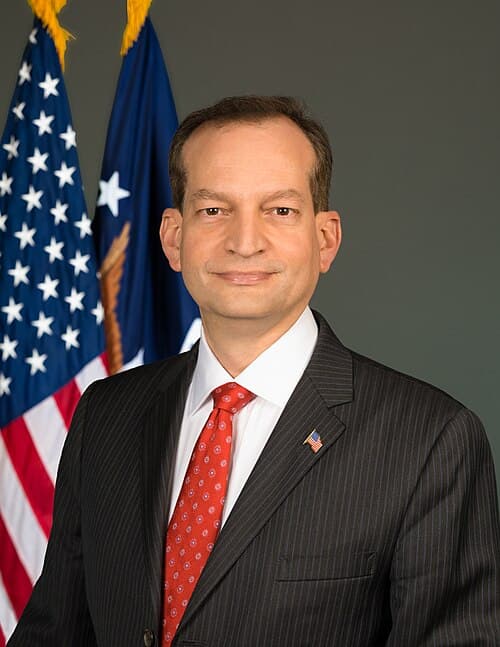
Page 2 of 13 The Pending Federal Criminal Action In 2006, a Florida state grand jury indicted Jeffrey Epstein on allegations similar to those in the instant actions (State of Florida v. Jeffrey Epstein, Case No. 2006 CF 09454, Fifteenth Judicial Circuit. Palm Beach County) (the "Florida Criminal Action"). 1 Shortly thereafter, the United States Attorney's Office for the Southern District of Florida (the "USAO") began a federal grand-jury investigation into allegations arising out of the same incidents alleged in the instant actions (Grand Jury No. 07-103 (WPB),2 United States District Court for the Southern District of Florida) (the "Federal Criminal Action"). In September 2007, the USAO and Mr. Epstein entered into a highly unusual and unprecedented deferred-prosecution agreement (the "Agreement"), in which the USAO agreed to defer (not dismiss or close) the Federal Criminal Action on the condition that Mr. Epstein continue to comply with numerous obligations, the first of which was pleading guilty to certain state charges in the Florida Criminal Action. The Agreement itself uses the term "deferred'' (rather than "dismissed" or ''closed") to describe the status of the Federal Criminal Action: THEREFORE, on the authority of R. Alexander Acosta, United States Attorney for the Southern District of Florida, prosecution in this District for these offenses shall be deferred in favor of prosecution by the State of Florida, provided that Epstein abides by the following conditions and the requirements of this Agreement .... Agreement, at 2. By no stretch did the USAO finalize, close, complete, dismiss or abandon the Federal Criminal Action. Indeed, as the lead federal prosecutor recently explained, the USAO merely 1 Since the filing of the motion to stay, Mr. Epstein has pied guilty and been sentenced in the Florida Criminal Action. See Notice Concerning Motion to Stay (7/1/08). Accordingly, the Florida Criminal Action is no longer a basis for this stay. Epstein relies exclusively on the pending Federal Criminal Action for this motion and therefore here provides additional background information relating to that action. 2 At the USAO's reques1:, we wish to clarify a minor issue regarding the form of a citation in Epstein's initial memorandum supporting his motion to stay. That memorandum cites to the Federal Criminal Action as "In re Grand Jury No. 07-103 (WPB),'' rather than citing it simply as "Grand Jury No. 107-103 (WPB)." See Motion to Stay, at 2 (6/20/08). Technically, a citation to "In re Grand Jury No. 07-103 (WPB)" could be interpreted as referring to litigation arising from Epstein's motion to quash a subpoena previously issued by ''Grand Jury No. 07-103 (WPB)," which subpoena, according to the terms of the deferred-prosecution agreement between Epstein and the USAO described infra at 1-3, the USAO is presently holding in abeyance. Accordingly, we hereby clarify that our citation on Page 2 of our motion to stay denoted the grand-jury investigation itself, not litigation arising from that grand-jury im estigation. Case 9:08-cv-80119-KAM Document 38 Entered on FLSD Docket 08/12/2008
Sponsored
Page 4 - DOJ-COURT-038_p4
Page 3 of 13 "agreed to defer federal prosecution in favor of prosecution by the State of Florida .... " See In re. Jane Doe, Case No. 08-80736-CIV-Marra/Johnson (S.D. Fla.) (DE 14), Deel. of AUSA Villafana, 07/09/08, ,i 5, attached hereto as Exhibit "A" (emphasis added). Under the Agreement, the USAO presently retains the continuing right to indict Mr. Epstein - - or to unseal "any" already-existing federal "charges" that may already have been handed up by the federal grand jury and sealed - - should he breach any of its provisions. Agreement, at 2. The period of the deferral continues until three months after Mr. Epstein completes service of his sentence in the Florida Criminal Action. Id. Indeed, the final three months of the Agreement's term constitute an extended period during which the USAO expressly retains the ability to evaluate whether Epstein committed any breaches of his numerous obligations under the Agreement while he was serving his state sentence, and, if it so determines, reserves the right to indict ( or unseal an existing indictment against) Mr. Epstein - - even after he has completed serving his entire state sentence. The Agreement further provides that upon Epstein's execution of a plea agreement in the State Criminal Case, the Federal Criminal Action "will be suspended" and all pending grand-jury subpoenas ';will be held in abeyance unless and until the defendant violates any term of this agreement." Agreement, at 5 (emphasis added). The Agreement directs the USAO and Epstein to "maintain their evidence, specifically evidence requested by or directly related to the grand jury subpoenas that have been issued,'" and to maintain such evidence ;.inviolate." Id. (emphasis added). It also expressly provides that the grand-jury subpoenas continue to remain "outstanding" until ''the successful completion of the terms of this agreement." Id. (emphasis added). Finally, the Agreement provides that the USAO's declination of prosecution for certain enumerated offenses and dismissal of any existing (sealed) charges will not occur until 90 days following the completion of his state sentence: If the United States Attorney s_hould determine, based on reliable evidence, that, during the period of the Agreement, Epstein willfully violated any of the conditions of this Agreement, then the United States Attorney may, within ninety (90) days following the expiration of the term of home confinement discussed below, provide Epstein with timely notice specifying the condition(s) of the Agreement that he has 2 Case 9:08-cv-80119-KAM Document 38 Entered on FLSD Docket 08/12/2008
Page 5 - DOJ-COURT-038_p5
Page 4 of 13 violated, and shall initiate its prosecution on any offense within sixty (60) days' of [sic] giving notice of the violation. Any notice provided to Epstein pursuant to this paragraph shall be provided within 60 days of the United States learning of facts which may provide a basis for a determination of a breach of the Agreement. After timely fulfilling all the terms and conditions of the Agreement, no prosecution for the offenses set out on pages 1 and 2 of this Agreement, nor any other offenses that have been the subject of the joint investigation by the Federal Bureau of Investigation and the United States Attorney's Office, nor any offenses that arose from the Federal Grand Jury investigation will be instituted in this District, and the charges against Epstein, if any, will be dismissed. Agreement, at 2. Consistent with the Agreement and its position that the Federal Criminal Action continues to remain pending, tbe USAO recently sent letters to attorneys for people that the USAO has designated as "victims." In those letters, the USAO asked, "[I]f you do file a claim under 18 U .S.C. § 2255 and Mr. Epstein denies that your client is a victim of an enumerated offense, please provide notice of that denial to the undersigned [AUSA]." See Deel. of AUSA Villafana, Exhs. 6 & 7, at 2 (July 9, 2008). The clear implication of the USAO's request (by which the USAO appears to involve itself in the instant litigation, despite advising the recipients that it cannot "take part in or otherwise assist in civil litigation," id.), is that the USAO believes that such denial might breach the Agreement. Accordingly, the Federal Criminal Action remains "pending." Discussion I. Section 3509(k) Applies to Investigations, Not Just Indictments. While there is no unsealed indicted criminal case against Mr. Epstein, the government's criminal investigation against him remains open. Section 3509(k) clearly applies to stay civil cases during the pendency, not only of indicted criminal cases, but also of yet-to-be-closed investigations. The term "criminal action .. is not expressly defined in § 3509(k). It is defined, however, by a closely related statute. Title 18, U.S.C. § 1595 provides a civil remedy for "forced labor" and ''sex trafficking" violations, but stays such actions "during the pendency of any criminal action arising out of the same occurrence in which the claimant is the victim." (A copy of § 1595 is 3 Case 9:08-cv-80119-KAM Document 38 Entered on FLSD Docket 08/12/2008
Page 6 - DOJ-COURT-038_p6
Page 5 of 13 attached hereto as Exhibit "B"). In enacting § 1595, Congress specifically intended that the term "criminal action" would be applied extremely broadly. Accordingly, Congress took pains to ensure that courts would give it the broadest possible construction and, for that reason, specified in the definition provision that "criminal action" also "includes investigation." 18 U.S.C. § I 595(b)(2). The only reported decision addressing this provision interpreted it according to its plain language. See Ara v. Khan, No. CV 07-1251, 2007 WL 1726456, *2 (E.D.N.Y. June 14, 2007) ( ordering "all proceedings in this case stayed pending the conclusion of the government's criminal investigation of the defendants and of any resulting criminal prosecution") (emphasis added). Given that the USAO's Agreement w~th Epstein indicates that: • the grand-jury's subpoenas remain "outstanding" (Agreement, at 5); • the subpoenas are "held in abeyance" (id.); • the subpoenas are not "withdrawn" (id.); • the parties :c11ust "maintain their evidence" (id.) ( which would be entirely unnecessary if the investigation against Epstein were closed); • "any" existing "charges" will not "be dismissed" until after Epstein has "timely fulfill[ed] all the terms and conditions of the [A]greement" (id. at 2); and • "prosecution in this District ... shall be deferred'' (id) (but not closed or dismissed), - - then, the only reasonable conclusion is that the Federal Criminal Action remains "pending." 3 The plaintiffs argue that a § 3509(k) stay would be "inconsistent with Mr. Epstein's Agreement with the U.S. Attorney" which the plaintiffs claim is reproduced in the lead 3 The ordinary meaning of the adjective --pending" is ''[r]emaining undecided; awaiting decision .... " Black's Law Dictiona,y 1154 (8th ed. 2004 ). The United States Court of Appeals for the Eleventh Circuit routinely relies on Black's Law Dictionary for the definition of statutory terms, including in criminal cases. See e.g., United States , •. Young, 528 F.3d 1294, 1297 n.3 (I Ith Cir. 2008) (definitions of criminal "complaint" and "indictment"); United Stares v. Brown, 526 F.3cl 691, 705 (11th Cir. 2008) (definition of "knowingly'' in criminal statute). A Westlaw search revealed that in 2008 alone, the Eleventh Circuit has already published eight opinions relying on Black's Law Dictionary for definitions. See also, White v. Klitzkie, 281 F.3d 920, 928 (9th Cir. 2002) (relying on Black's Law Die tionary, in the contexi: of a criminal case, for the definition of ''pending" as ··awaiting decision"); Swartz v. Meyers, 204 F.3d 417, 421 (3d Cir. 2000) (relying on Black's Law Dictionary for the definition of "pending,'' expressly because '"pendi :1g' is not defined in the statute"). Any common-sense reading of the Agreement and the USAO's recent sworn construction of it, is consonant with the Federal Criminal Action's ''remaining undecided" and "awaiting decision." See Unified Gov 't of Athens-Clarke County v. Athens Newspapers, LLC, No. S07G 1133, _S.E.2d _, 2008 WL 2579238, *3 (Ga. June 30, 2008) (reviewing a public-records request against Georgia's ·'pending investigation" exception to its open-records law, and holding that ''a seemingly inactive investigation which has not 1et resulted in a prosecution logically --remains undecided," and is therefore ··pending," until it •'is concluded and the file closed") (emphasis added). 4 Case 9:08-cv-80119-KAM Document 38 Entered on FLSD Docket 08/12/2008
Sponsored
Page 7 - DOJ-COURT-038_p7
Page 6 of 13 prosecutor's July 10 letter to their counsel (attached to Plaintiffs' responses as Exhibit A). Apparently, on July 10, the lead prosecutor sent a letter to the plaintiffs' lawyer stating that "[o]ne ... condition to which Epstein has agreed" is that each plaintiff "will have the same rights to proceed under Section 2255 as she would have had, if Mr. Epstein had been tried federally and convicted of an enumerated offense." See Response Memo, at 5 & Ex. A, at 1-2 (emphasis added). This argument warrants absolutely no consideration, however, since the plaintiffs have not pied any claims under 18 U.S.C. § 2255. II. Section 3509(k) Applies Even After a Plaintiff Turns 18. Without citing to a single case, the plaintiffs argue that § 3509(k) does not apply to plaintiffs over the age of 18. An examination of the legislative history and related statutes shows that this unsupported argument must be rejected. The parallel stay provision in § 1595, discussed supra at 3-4, mandates, without exception, that any civil action brought under that section for violations of § 1591 (prohibiting transportation of minors for prostitution) "shall be stayed during the pendency of any criminal action arising out of the same occurrence in which the claimant is the victim." 18 U.S.C. § 159l(b)(l). Whether the§ 1595 plaintiff has turned 18 does not vitiate the efficacy of this mandatory stay. An example illustrates why the stay provided in § 3509(k) has the same broad scope as the stay provided in § 1591 (b )(1 ). As discussed above, § 3509(k) stays any civil suit for injury to a minor, arising out of the same occurrence as a pending criminal action. One type of civil suit falling within § 3509(k)'s ambit is a suit seeking redress for a violation of 18 U.S.C. § 2423(a). Section 2423(a) - - just like § 1591 - - prohibits transportation of minors for prostitution. The elements of both statutes are identical. There would simply be no legitimate basis for Congress to differentiate between the consequences attached to violating these two sections. Thus, just as Congress mandated under § 1595(b )(1) that civil discovery shall be stayed when there is an ongoing federal investigation under § 1591 ( even after the victim turns 18), the identical treatment should apply under§ 3509(k) to civil actions brought for the identical violation of§ 2423(a). 5 Case 9:08-cv-80119-KAM Document 38 Entered on FLSD Docket 08/12/2008
Page 8 - DOJ-COURT-038_p8
Page 7 of 13 Logic compels a rule requiring continued application of the § 3509(k) stay to a putative victim who has since turned 18. Consider again the example of § 2243(a). Assume that the USAO is investigating a § 2243(a) violator with two alleged victims: one who is now 17, and one who has turned 19. Assume further that both decide to sue the alleged offender while the USAO is still in the process of conducting its criminal investigation. Why would Congress prohibit the defendant from conducting civil discovery in the 17-year-old's lawsuit, but permit him to conduct full discovery in the 19-year-old's lawsuit, including taking the depositions of both the 19- and the 1 7-year-old, the federal investigating agents and all the grand-jury witnesses? This could not have been Congress' intent. The legislative history to a statute resembling § 1595 is also instructive. When Congress enacted 18 U.S.C. § 2255, it provided a civil remedy to any "minor ... victim" of enumerated federal sex offenses. See Child Abuse Victims' Rights Act of 1986, Pub. L. No. 99-500, l 00 Stat. 1783, § 703 (1986). In 2006, Congress amended the statute to clarify that the civil cause of action was available not just while the victim was a minor, but even after she or he turned 18. See Pub. L. 109-248, 120 Stat. 650, § 707 (b)(l)(A) (amending§ 2255 to permit suit by adults who were victims of enumerated federal offenses when they were minors, by deleting "Any minor who is [ a victim]" and adding "Any person, who, while a minor, was [a victim]"). Meanwhile, the stay provisions of § 3509(k) remained unchanged. There is no reason to think that Congress would afford prosecutors protection for their investigations while the victims were minors, but completely eliminate those protections the moment one of the victims turned 18. The District Court for the Northern District of Florida confirmed this position and specifically rejected the plaintiffs' contrary argument. See Doe v. Francis, No. 5:03 CV 260, 2005 WL 950623, at *2 (N.D. Fla. 2005). The plaintiffs there argued that "the stay should be lifted due to the fact that the minor Plaintiffs have now reached the age of majority during the pendency of the state criminal case." Id. The court found this argument "unavailing ... given the victims' minor status at the time of the events giving rise to the underlying claims." Id. (Interestingly, the arguments made by Jane Doe Nos. 2-5 in their oppositions to Epstein's motion to stay presently 6 Case 9:08-cv-80119-KAM Document 38 Entered on FLSD Docket 08/12/2008
Page 9 - DOJ-COURT-038_p9
Page 8 of 13 pending before this Court, are literally lifted4 from the plaintiffs' brief submitted to, and rejected by, the Northern District of New York in Francis.) The court specifically held that "because the victims were minors at the time of the Defendants' actions alleged in both [the civil and criminal] cases,§ 3509(k) applies.'' Id. (emphasis added). The United States Department of Justice has itself emphatically embraced the interpretation of § 3509(k) as applying to stay all civil actions relating to sex offenses against minors, pending the completion of a parallel criminal action, without regard to whether the plaintiff has turned J 8 during her civil lawsuit: The subsection should stay all pending civil actions in the wake of a criminal prosecution. Notably, in the context of 18 USC § 2255 ("civil remedy for personal injuries"), all civil actions are stayed pending the completion of a criminal action. See also 18 LSC § 3509(k). H.R. Rep. 108-264(11), 108th Cong., 1st Sess. (2003), reprinted at 2003 WL 22272907, at * 16-17 ('·agency view" by the Department of Justice on bill later codified at 18 U.S.C. § 1595). The Department specifically argued to Congress in the clearest terms: "We believe that prosecutions should take priority over civil redress and that prosecutions should be complete prior to going forward with civil suits." Id. at 17 (emphasis added). Nowhere did the Department remotely suggest - - as the plaintiffs have implied - - that pending prosecutions warrant less protection (i.e., should be "hinder[ ed]") simply because a particular civil plaintiff happens to reach his or her 18th birthday. Ill. A Stay is Mandatory Despite Resulting "Delay" to Civil Lawsuits. Inherent in any § 3509(k) stay is delay to the progress ( discovery, trial, appeal) of all related civil lawsuits. Congress recognized this in enacting the stay provision, which necessarily prioritized the interests of completing a criminal investigation and prosecution over the interests of a pai1icular plaintiff in seeking personal pecuniary damages. Based on this reasoning, the Francis •1 Compare Doe v. Froncis, Case No. 5:03cv260-MCR-WCS (N.D. Fla.), Memorandum in Support of Plaintiffs' \!lotion to Reconsider Plaintiffs' Motion to Lift Stay and for Status Conference (DE 92, available on PACER), with Plaintiffs Memorandum of Law in Response to Defendant's Motion to Stay, filed in Case Nos. 08-cv-80119-KAM 1 Doe No. 2, DE 25), 08-cv-80232-KAM (Doe No. 3, DE 20), 08-cv-80380-KAM (Doe No. 4, DE 31 ), and 08-cv- 80381-KAM (Doe No. 5, DE 29). 7 Case 9:08-cv-80119-KAM Document 38 Entered on FLSD Docket 08/12/2008
Sponsored
Page 10 - DOJ-COURT-038_p10
Page 9 of 13 court specifically refosed to provide any relief to plaintiffs "simply because the state [criminal] matter is not progressing as fast as they would hope." 2005 WL 950623, at *2. The court made this detennination despite the plaintiffs' complaints about the "frustrating delay" and that "the state criminal case 'has languished for almost two years with no end in sight,"' finding that this "is a matter to be addressed in state [criminal] court." Id. Accordingly, the anticipated delay in this case, attendant to the term of the deferred-prosecution agreement, does not change the clear command of§ 3509(k). According to their own pleadings, the plaintiffs waited between three and six years before filing these lawsuits,s and so cannot rightfully claim prejudice from additional temporary delay. IV. Section 3509 Aside, a Discretionary Stay is Warranted. Even, arguendo, were this Court not to apply the mandate of§ 3509, a discretionary stay should still be entered during the pendency of the Federal Criminal Action. SEC v. Healthsouth Corp .. 261 F. Supp. 2d 1298, 1326 (N.D. Ala. 2003) ("No question exists that this court has the power to stay a civil proceeding due to an active, parallel criminal investigation."). Other federal statutes support such a stay -- particularly when the criminal action may be adversely affected by the civil litigation. For example, under 18 U.S.C. § 2712(e)(l), "the court shall stay any action commenced [ against the United States] if the court determines that civil discovery will adversely affect the ability of the Government to conduct a related investigation or prosecution of a related criminal case." Allowing these lawsuits to progress while Epstein remains subject to the Federal Criminal Action will prejudice him irrevocably and irreparably. As provided below, there are several adverse effects to allowing the civil litigation to proceed while the Federal Criminal Action remains pending. In these lawsuits, Epstein has a right to defend himself. In the Federal Criminal Action, Epstein has a right against self-incrimination.6 Without a stay, Epstein will be immediately forced to abandon one of these rights. ' Jane Does No. 2 and No. 3 allege that their claims arose "[i]n or about 2004-2005;" Jane Does No. 4 and No. 5 allege that their claims arose "[i]n or about 2002-2003." Complaints,, 8. 8 Case 9:08-cv-80119-KAM Document 38 Entered on FLSD Docket 08/12/2008
Page 11 - DOJ-COURT-038_p11
Page 10 of 13 Should he choose his Fifth Amendment rights, he will expose himself to an adverse inference at the summary-judgment stage and at trial. See generally, Wehling v. Columbia Broad Sys., 611 F.2d 1026, 1027 (5th Cir. 1980) (observing that "invocation of the privilege would be subject to the drawing of an adverse inference by the trier of fact"). On the other hand, should Epstein choose his right to defend himself in these lawsuits, the USAO will be able to use his responses at every stage of the discovery and trial process (e.g., his Answer, responses to document requests, responses to requests for admissions, sworn answers to interrogatories, ans"Wers to deposition questions, and trial testimony) to his detriment in the Federal Criminal Action. 7 In these lawsuits, even before civil discovery begins, under the Initial Disclosures required by Fed. R. Civ. P. 26 and S.D. Fla. Local Rule 26.1, Epstein "must" disclose the identities of all the witnesses he would call in his defense to the Federal Criminal Action (Rule 26(a)(l )(A)(i)), copies of ·'all documents" he "may use to support [his] defenses" (Rule 26(a)(l)(A)(ii)), as well as the identity of "any" expert witness he "may use at trial," along with mandatory disclosure of "a written report" containing "a complete statement of all opinions the [expert] will express and the basis and reasons for them'' (Rule 26(a)(2)(A) and (B)(i)). In contrast, in the pending Federal Criminal Action, which is governed exclusively by the Federal Rules of Criminal Procedure, the USAO would not be entitled to compel pre-trial production of any of this information. See Fed. R. Cr. P. 16(b)(l)(A), (C), and 16(b)(2); United States v. Argomaniz, 925 F.2d 1349, 1355-56 (11th Cir. 1991) (explaining act-of-production privilege). Thus, absent a stay of this civil action, the USAO would receive fundamentally unfair access to defense information and highly prejudicial advance insight into criminal defense 6 The privilege applies in •'instances where the witness has reasonable cause to apprehend danger" of criminal liability. Hoffman v. United States, 341 U.S. 479,486 (1951). 7 This could give the USAO a tremendous advantage in prosecuting Epstein in the Federal Criminal Action. See Comment, Using Equitable Powers to Coordinate Parallel Civil and Criminal Actions, 98 Harv. L. Rev. I 023, I 030 ( 1985) ( observing that '·the prosecutor may have access to detailed civil depositions of the accused witnesses, while the rules of criminal procedure bar the accused from deposing the prosecutor's witnesses"). 9 Case 9:08-cv-80119-KAM Document 38 Entered on FLSD Docket 08/12/2008
Page 12 - DOJ-COURT-038_p12
Page 11 of 13 strategy. See Comment, 98 Harv. L. Rev. at 1030 ("To the extent that a prosecutor acquires evidence that was elicited from the accused in a parallel civil proceeding, the criminal process becomes less adversarial."). Without a stay in place, discovery will proceed, including against third parties. Mr. Epstein will have no alternative but to issue subpoenas seeking evidence from state and federal law-enforcement officers. For example, Epstein is clearly entitled to discover evidence of prior statements (including inconsistent statements) given by witnesses whom law-enforcement has previously interviewed. See, e.g., Cox v. Treadway, 75 F.3d 230, 239 (6th Cir. 1996) (holding that district court properly admitted testimony of prosecutor about prior inconsistent statements that witness made to the prosecutor). Likewise, Epstein may be entitled to discovery of relevant evidence that is in the present possession of the grand jury or other law-enforcement agencies. See, e.g., Simpson v. Hines, 729 F. Supp. 526, 527 (E.D. Tex. 1989) ("The grand jury has concluded its deliberations .... The need for secrecy of these specific tapes no longer outweighs other concerns."); Golden Quality Ice Cream Co., Inc. v. Deerfield Specialty Papers, Inc., 87 F.R.D. 53, 59 (E.D. Pa. 1980) ("[W]here, as here, the grand jury has completed its work and all that is sought are those documents turned over to the grand jury by the corporations which are defendants in the civil case, the considerations ... militating against disclosure are beside the point.") (citing Douglas Oil Co. of Calif v. Petrol Stops Nw., 441 U.S. 211 (1979)). In response to such third-party subpoenas to law-enforcement witnesses, we anticipate that it will be the government, not Mr. Epstein, who will object to discovery in these civil cases, until the final conclusion of the Federal Criminal Action. Conclusion Because these lawsuits arise from the same allegations as the Federal Criminal Action, this Court should stay these cases until that criminal action is no longer pending. Case 9:08-cv-80119-KAM Document 38 Entered on FLSD Docket 08/12/2008
Sponsored
Page 13 - DOJ-COURT-038_p13
Page 12 of 13 By: Respectfully submitted, LEWIS TEIN, P.L. 3059 Grand Avenue, Suite 340 Coconut Grove, Florida 33133 Tel: 305 442 1101 Fax: 305 442 6744 GU'l'd.~ Fla. Bar No. 623740 [email protected] MICHAEL R. TEIN Fla. Bar No. 993522 [email protected] ATTERBURY, GOLDBERGER & WEISS, P.A. 250 Australian Avenue South, Suite 1400 West Palm Beach, Florida 33401 Tel. 561 659 8300 Fax. 561 835 8691 By: Jack A. Goldberger Fla. Bar No. 262013 [email protected] Attorneys for Defendant Jeffrey Epstein CERTIFICATE OF COMPLIANCE WITH LOCAL RULE 7.1.A.3 While defense counsel admittedly did not confer with plaintiffs' counsel prior to filing the motion to stay, it was by no means in willful disregard of the Local Rule. Shortly after the filing of the motion and before plaintiffs filed their response memoranda suggesting that no conference had taken place, the parties did confer in a good-faith and specific attempt to resolve the motion and were unable to do so, because plaintiffs' counsel would not agree to a stay. Accordingly, the brief delay in conducting the Rule 7.1 conference did not prejudice the plaintiffs at all or result in unnecessary judicial intervention. It is perhaps worth noting that, contrary to their Rule 7.1 certificate, plaintiffs did not confer prior to filing their motion to extend time to file their response memoranda (which extension defendant did not oppose anyway, including on the basis of failure to comply with Rule 7 .1 ). Further information on the reasons the Rule 7 .1 conference for the instant motion to stay was conducted after filing the motion to stay will be provided to the Court upon its request, preferably ex parte in order to avoid disclosure of privileged information. The defendant respectfully requests the opportunity to make such an ex parte disclosure in the event that the Court considers denying the motion under Local Rule 7.1.A.3. In any event, we apologize to the Court for non-ccmpliance with the pre-filing requirement of the Rule, would have conferred even sooner had plaintiffs pointed the issue out immediately upon receipt of our motion, did confer with plaintiffs' counsel prior to filing the motion to seal this reply, and commit to precise compliance with the Rule for the remainder of this litigation. 'LUfA~• Jack Goldberger, Michael Tein 11 Case 9:08-cv-80119-KAM Document 38 Entered on FLSD Docket 08/12/2008
Entities Mentioned
A. Marie Villafana
PERSON
Former Assistant U.S. Attorney, lead federal prosecutor in the 2008 Epstein case
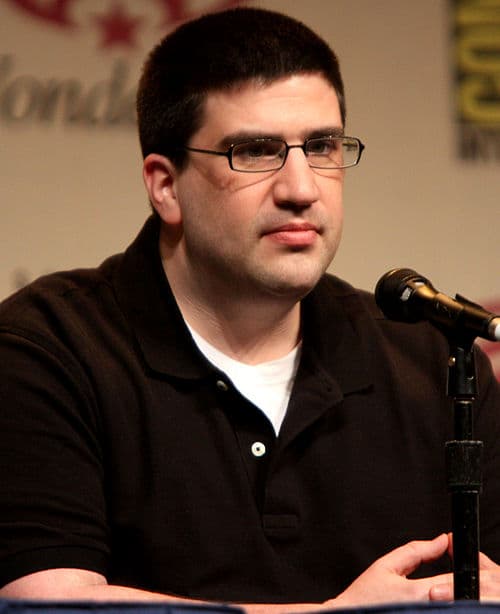
Adam D. Horowitz
PERSON
American attorney specializing in sexual abuse cases, represented multiple Epstein victims
Alexander Acosta
PERSON • 2 mentions
American attorney and politician, 27th U.S. Secretary of Labor (born 1969)
AR
Argomaniz
PERSON
Surname reference in documents
DH
David T. Hines
PERSON
Person referenced in documents
JG
Jack Goldberger
PERSON • 2 mentions
American criminal defense attorney who represented Jeffrey Epstein, partner at Goldberger Weiss P.A. in West Palm Beach, Florida
JD
Jane Doe
PERSON
Pseudonym for anonymous victims/witnesses in Epstein legal proceedings

Jeffrey Epstein
PERSON • 4 mentions
American sex offender and financier (1953–2019)
Jeffrey Marc Herman
PERSON
Attorney representing victims in the Jeffrey Epstein case
Kenneth Marra
PERSON
American judge
KL
Klitzkie
PERSON
Name reference in documents
LB
Leon Black
PERSON
American billionaire businessman (born 1951)

Lewis Tein
PERSON
Attorney and legal professional in Epstein case
ME
Meyers
PERSON
Surname reference in Epstein-related documents
MT
Michael R. Tein
PERSON
Attorney and legal professional, referenced in Epstein case

Pope Francis
PERSON
266th pope of the Catholic Church (2013–2025)
SI
Simpson
PERSON
Surname reference in Epstein-related documents
SM
Stuart S. Mermelstein
PERSON
Attorney involved in Jeffrey Epstein legal matters.
SW
Swartz
PERSON
Surname or name fragment in documents
TR
Treadway
PERSON
Surname reference in documents
WE
Wehling
PERSON
Name reference in documents
Athens Newspapers, LLC
ORGANIZATION
Organization referenced in documents
Atterbury, Goldberger & Weiss
ORGANIZATION
Law firm
AUSA Villafana
ORGANIZATION
Organization referenced in documents
Columbia Broad
ORGANIZATION
Organization referenced in documents
Deerfield Specialty Papers, Inc.
ORGANIZATION
Organization referenced in documents
District Court for the Southern District of New York
ORGANIZATION
U.S. District Court for the Southern District of New York
Douglas Oil Co. of Calif
ORGANIZATION
Organization referenced in documents
FBI
ORGANIZATION
Federal Bureau of Investigation, domestic intelligence and security service of the United States
Golden Quality Ice Cream Co., Inc.
ORGANIZATION
Organization referenced in documents
Healthsouth
ORGANIZATION
Organization referenced in documents
Herman & Mermelstein
ORGANIZATION
Law firm
The District Court for the Northern District of Florida
ORGANIZATION
Organization referenced in documents
the Eleventh Circuit
ORGANIZATION
U.S. Court of Appeals for the Eleventh Circuit
the Federal Criminal Action
ORGANIZATION
Organization referenced in documents
the United States Court of Appeals
ORGANIZATION
U.S. federal appeals court
U.S. Attorney's Office
ORGANIZATION
U.S. federal prosecutors office
Unified Gov 't of Athens-Clarke County
ORGANIZATION
Organization referenced in documents

United States Department of Justice
ORGANIZATION
United States Department of Justice

Westlaw
ORGANIZATION
Organization referenced in documents
Coconut Grove
LOCATION
Neighborhood of Miami in Miami-Dade County, Florida, USA

United States
LOCATION • 2 mentions
Country located primarily in North America
Statistics
Pages:13
Entities:42
Sponsored