Back to Network


















6
Shared Docs
5
Same-Page
10 / 6
Mentions
Document Mentions (6 shared documents)
3 mentions1 same-page
Page ?Same page
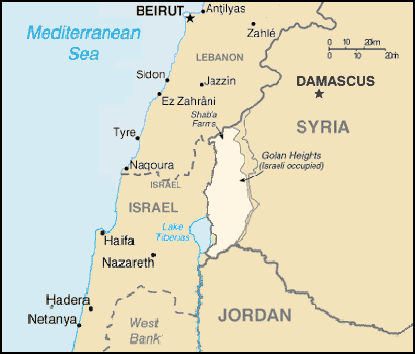
our position was that, assuming all our own negotiating concerns were addressed, we accepted that peace with Syria would include withdrawing from the Golan. The formula was agreed in a meeting in Israel between Rabin and the Clinton Administration’s Middle East negotiator, Dennis Ross. Rabin didn’t tell
or the promise, or maybe only the hope, of peace. It was the same problem Yitzhak had faced over the Americans’ misuse of our “pocket deposit” on the Golan. I realized that, having come this far with Oslo, neither he nor the government was likely to back away from approving the Gaza-Jericho accord. But h
n groups grounded not in nationalism, but fundamentalist Islam: Hamas in Gaza, which opposed Israel’s presence on any part of “Muslim Palestine,” and Islamic Jihad on the West Bank. And in Lebanon, we were confronting the Iranian-backed Shi’ ite militia fighters of Hizbollah. Each of us in the small group on wh
3 mentions1 same-page
Page ?Same page
Bibi what successive Israeli leaders had learned: a deal might be possible, but only if Israel was willing to commit in advance to pulling out of the Golan. Assad told Lauder to come back to him with a detailed map setting out Bibi’s view on delineating the Israeli-Syrian border under a peace agreement.
outbursts, and they won’t do you any good.” He challenged Bibi to just “look me in the eye” and admit what he really thought about the future of the Golan. The media verdict was unanimous. Mordechai had won. Which meant I had won. Though my American and British brains’ trust had little input into our d
w if we could, however difficult or reluctant Arafat was as a negotiating partner. If we waited, we’d end up having to deal with Islamists: Hamas and Islamic Jihad. Oded Eran, the career diplomat whom I'd put in charge of frustrating, formal talks with the Palestinians in the months preceding the summit , said h
3 mentions1 same-page
Page ?Same page
our position was that, assuming all our own negotiating concerns were addressed, we accepted that peace with Syria would include withdrawing from the Golan. The formula was agreed in a meeting in Israel between Rabin and the Clinton Administration's Middle East negotiator, Dennis Ross. Rabin didn't tell
or the promise, or maybe only the hope, of peace. It was the same problem Yitzhak had faced over the Americans' misuse of our "pocket deposit" on the Golan. I realized that, having come this far with Oslo, neither he nor the government was likely to back away from approving the Gaza-Jericho accord But he
n groups grounded not in nationalism, but fundamentalist Islam: Hamas in Gaza, which opposed Israel's presence on any part of "Muslim Palestine," and Islamic Jihad on the West Bank. And in Lebanon, we were confronting the Iranian-backed Shi'ite militia fighters of Hizbollah. Each of us in the small group on whom
Sponsored
3 mentions1 same-page
Page ?Same page
Bibi what successive Israeli leaders had learned: a deal might be possible, but only if Israel was willing to commit in advance to pulling out of the Golan. Assad told Lauder to come back to him with a detailed map setting out Bibi's view on delineating the Israeli-Syrian border under a peace agreement.
outbursts, and they won't do you any good." He challenged Bibi to just "look me in the eye" and admit what he really thought about the future of the Golan. The media verdict was unanimous. Mordechai had won. Which meant I had won. Though my American and British brains' trust had little input into our da
w if we could, however difficult or reluctant Arafat was as a negotiating partner. If we waited, we'd end up having to deal with Islamists: Hamas and Islamic Jihad. Oded Eran, the career diplomat whom I'd put in charge of frustrating, formal talks with the Palestinians in the months preceding the summit, said he
2 mentions1 same-page
Page ?Same page
ld necessarily be a clean break in those relationships: an end to the Syrian alliance with Hezbollah and Iran. Otherwise Israel would be giving the Golan, in effect, to Iran—a suicidal act. No Israeli government would do it, which suggests that negotiations with Assad would have no purpose. Assad ma
world as a whole, and among Palestinians in particular. Prior to 1987, there was hardly any Islamic factor in Palestinian resistance. The Hamas and Islamic Jihad groups were established after the 1987 intifada. From this we deduce that extremism on the Israeli side led to the same on the Palestinian side, an
Page HOUSE_OVERSIGHT_031837
ould necessarily be a clean break in those relationships: an end to the Syrian alliance with Hezbollah and Iran. Otherwise Israel would be giving the Golan, in effect, to Iran—a suicidal act. No Israeli government would do it, which suggests that negotiations with Assad would have no purpose. Assad may i
Page: HOUSE_OVERSIGHT_031837 →Page HOUSE_OVERSIGHT_031839
m world as a whole, and among Palestinians in particular. Prior to 1987, there was hardly any Islamic factor in Palestinian resistance. The Hamas and Islamic Jihad groups were established after the 1987 intifada. From this we deduce that extremism on the Israeli side led to the same on the Palestinian side, and
Page: HOUSE_OVERSIGHT_031839 →Sponsored
Mutual Connections (626)
Entities connected to both Golan and Islamic Jihad
Bill Clinton
PERSON31 w/ Golan·13 w/ Islamic
George W. Bush
PERSON22 w/ Golan·15 w/ Islamic
Bashar al-Assad
PERSON18 w/ Golan·18 w/ Islamic
Lebanon
LOCATION19 w/ Golan·14 w/ Islamic
Jerusalem
LOCATION14 w/ Golan·17 w/ Islamic
Benjamin Netanyahu
PERSON15 w/ Golan·15 w/ Islamic
Barack Obama
PERSON15 w/ Golan·15 w/ Islamic
United States
LOCATION14 w/ Golan·15 w/ Islamic
Damascus
LOCATION15 w/ Golan·14 w/ Islamic
Jeffrey Epstein
PERSON22 w/ Golan·6 w/ Islamic
Fatah
ORGANIZATION12 w/ Golan·16 w/ Islamic
Prince Andrew
PERSON21 w/ Golan·7 w/ Islamic
Sinai
LOCATION13 w/ Golan·13 w/ Islamic
Yasser Arafat
PERSON12 w/ Golan·13 w/ Islamic
Saddam Hussein
PERSON12 w/ Golan·13 w/ Islamic
the Golan Heights
LOCATION16 w/ Golan·8 w/ Islamic
Hosni Mubarak
PERSON12 w/ Golan·12 w/ Islamic
Tehran
LOCATION11 w/ Golan·12 w/ Islamic
Marc Rich
PERSON11 w/ Golan·11 w/ Islamic
Michael Cohen
PERSON13 w/ Golan·9 w/ Islamic