Back to Network


















10
Shared Docs
10
Same-Page
14 / 10
Mentions
Document Mentions (10 shared documents)
3 mentions1 same-page
Page ?Same page
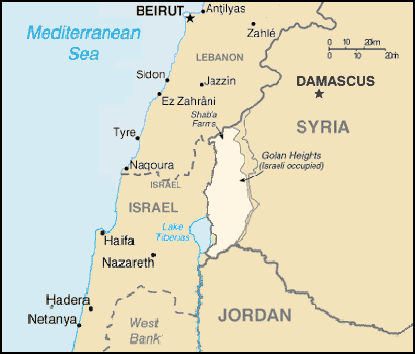
our position was that, assuming all our own negotiating concerns were addressed, we accepted that peace with Syria would include withdrawing from the Golan. The formula was agreed in a meeting in Israel between Rabin and the Clinton Administration’s Middle East negotiator, Dennis Ross. Rabin didn’t tell
or the promise, or maybe only the hope, of peace. It was the same problem Yitzhak had faced over the Americans’ misuse of our “pocket deposit” on the Golan. I realized that, having come this far with Oslo, neither he nor the government was likely to back away from approving the Gaza-Jericho accord. But h
I began by welcoming the constellation of changes which seemed to offer at least an opportunity for stability, security and peace: the unravelling of the Soviet Union; the Oslo Agreement; the peace treaty with Jordan and the continuing talks with the Syrians. As long as we had partners committed to reaching an agre
3 mentions1 same-page
Page ?Same page
Bibi what successive Israeli leaders had learned: a deal might be possible, but only if Israel was willing to commit in advance to pulling out of the Golan. Assad told Lauder to come back to him with a detailed map setting out Bibi’s view on delineating the Israeli-Syrian border under a peace agreement.
outbursts, and they won’t do you any good.” He challenged Bibi to just “look me in the eye” and admit what he really thought about the future of the Golan. The media verdict was unanimous. Mordechai had won. Which meant I had won. Though my American and British brains’ trust had little input into our d
ies in the interior, Jerusalem as well, not to mention 312 HOUSE_OVERSIGHT_011783 / BARAK / 27 the settlements on the West Bank. Since the fall of the Soviet Union, hundreds of thousands of Russians had also flowed into Israel. Most were Jewish in culture more than religious observance, but they were instinctive
3 mentions1 same-page
Page ?Same page
our position was that, assuming all our own negotiating concerns were addressed, we accepted that peace with Syria would include withdrawing from the Golan. The formula was agreed in a meeting in Israel between Rabin and the Clinton Administration's Middle East negotiator, Dennis Ross. Rabin didn't tell
or the promise, or maybe only the hope, of peace. It was the same problem Yitzhak had faced over the Americans' misuse of our "pocket deposit" on the Golan. I realized that, having come this far with Oslo, neither he nor the government was likely to back away from approving the Gaza-Jericho accord But he
I began by welcoming the constellation of changes which seemed to offer at least an opportunity for stability, security and peace: the unravelling of the Soviet Union; the Oslo Agreement; the peace treaty with Jordan and the continuing talks with the Syrians. As long as we had partners committed to reaching an agre
Sponsored
3 mentions1 same-page
Page ?Same page
Bibi what successive Israeli leaders had learned: a deal might be possible, but only if Israel was willing to commit in advance to pulling out of the Golan. Assad told Lauder to come back to him with a detailed map setting out Bibi's view on delineating the Israeli-Syrian border under a peace agreement.
outbursts, and they won't do you any good." He challenged Bibi to just "look me in the eye" and admit what he really thought about the future of the Golan. The media verdict was unanimous. Mordechai had won. Which meant I had won. Though my American and British brains' trust had little input into our da
ties in the interior, Jerusalem as well, not to mention 312 HOUSE _OVERSIGHT_028160 / BARAK / 27 the settlements on the West Bank. Since the fall of the Soviet Union, hundreds of thousands of Russians had also flowed into Israel. Most were Jewish in culture more than religious observance, but they were instinctive
2 mentions1 same-page
Page ?Same page
v Kochavi last month told the Knesset that unnamed `global jihad' groups (Israeli code for al-Qaeda) had begun operating on the Syrian side of the Golan, from which the Assad regime had pulled thousands of troops for deployment against the rebellion. "The EFTA_R1_00537937 EFTA02029056 Golan area
sn't the lead, but he was absolutely critical and instrumental in our getting German unification accomplished, and we did it over the objections of the Soviet Union," Baker said. On China, Baker defended the George H.W. Bush administration's reaction to the 1989 Tiananmen Square massacre, which has been widel
2 mentions1 same-page
Page ?Same page
is somehow part of its campaign of resistance, the group may try to draw Israel into sporadic and contained exchanges along the Lebanese or Syrian (Golan) borders. With a focus on Lebanon's Sunnis and Shiites, David Schenker explains that while the two constituencies have shown remarkable restraint s
The reassertion of France's world role was the primary concern of Charles de Gaulle. It was a goal he pursued in many ways, from early outreach to the Soviet Union to withdrawal of French troops from NATO. He wove a strong relationship with Israel during the Algerian war, at a time when the United States was p
Sponsored
2 mentions1 same-page
Page ?Same page
ld necessarily be a clean break in those relationships: an end to the Syrian alliance with Hezbollah and Iran. Otherwise Israel would be giving the Golan, in effect, to Iran—a suicidal act. No Israeli government would do it, which suggests that negotiations with Assad would have no purpose. Assad ma
r. The opening to China is a story Kissinger has told before: how he and Nixon had discerned that country could become a strategic counterweight to the Soviet Union; how he secretly flew to China after feigning illness in Pakistan; how he and Premier Zhou Enlai hammered out the diplomatic basis for EFTA_R1_020
2 mentions1 same-page
Page ?Same page
em but divided over what to do with its newfound gains. Israel withdrew from the Sinai in 1982 and from Gaza in 2007, and no one is discussing the Golan these days due to Syria's internal crisis. But the future of Jerusalem and the West Bank remains a matter of intense international -- including Ame
domestic affairs of another country for reasons of state. He merely cannot abide reasons of conscience. "And if they put Jews into gas chambers in the Soviet Union," he remarked to Richard Nixon in 1973, "it is not an American concern. Maybe a humanitarian concern." Yeah, maybe. IT IS NOT ONLY because of Houl
2 mentions1 same-page
Page ?Same page
the 1967 war, before going off to university. He’d taken a bullet in the elbow while helping to rescue one of his soldiers behind Syrian lines on the Golan. “He wants to return to the army, and he’s exactly the kind of officer you want,” Bibi said. I brought Yoni in for a chat. Over the next several yea
sands of tanks. Hundreds of fighter jets. Other, much larger nations had endured months, even years, of hell before prevailing in such circumstances: the Soviet Union, for instance, with its huge strategic depth, or France, rescued by its American-led allies, during World War Two. But any pride in having prevailed
Sponsored
2 mentions1 same-page
Page ?Same page
the 1967 war, before going off to university. He'd taken a bullet in the elbow while helping to rescue one of his soldiers behind Syrian lines on the Golan. "He wants to return to the army, and he's exactly the kind of officer you want," Bibi said. I brought Yoni in for a chat. Over the next several year
sands of tanks. Hundreds of fighter jets. Other, much larger nations had endured months, even years, of hell before prevailing in such circumstances: the Soviet Union, for instance, with its huge strategic depth, or France, rescued by its American-led allies, during World War Two. But any pride in having prevailed
Sponsored
Mutual Connections (1,130)
Entities connected to both Golan and the Soviet Union
Bill Clinton
PERSON31 w/ Golan·72 w/ the
Barack Obama
PERSON15 w/ Golan·88 w/ the
George W. Bush
PERSON22 w/ Golan·80 w/ the
United States
LOCATION14 w/ Golan·86 w/ the
Jeffrey Epstein
PERSON22 w/ Golan·63 w/ the
Lebanon
LOCATION19 w/ Golan·51 w/ the
LB
Leon Black
PERSON8 w/ Golan·61 w/ the
Prince Andrew
PERSON21 w/ Golan·48 w/ the
Bashar al-Assad
PERSON18 w/ Golan·51 w/ the
Marc Rich
PERSON11 w/ Golan·57 w/ the
Benjamin Netanyahu
PERSON15 w/ Golan·52 w/ the
Michael Cohen
PERSON13 w/ Golan·50 w/ the
Joe Biden
PERSON7 w/ Golan·55 w/ the
John F. Kennedy
PERSON12 w/ Golan·48 w/ the
Jerusalem
LOCATION14 w/ Golan·43 w/ the
Vladimir Putin
PERSON6 w/ Golan·51 w/ the
Middle East
LOCATION9 w/ Golan·47 w/ the
Saddam Hussein
PERSON12 w/ Golan·41 w/ the
Department of Justice
ORGANIZATION3 w/ Golan·50 w/ the
Tehran
LOCATION11 w/ Golan·41 w/ the