Back to Network









10
Shared Docs
9
Same-Page
10 / 10
Mentions
Document Mentions (10 shared documents)
2 mentions1 same-page
Page ?Same page
ry day. It was intolerable." After six days of war, a cease-fire was agreed. However, at that time our troops had not yet succeeded in surrounding Beirut. So Sharon broke the cease-fire to cut the vital Beirut-Damascus highway. The present crisis in the "peace process" was caused by the Israeli gove
incidents there, in order to annex the so- EFTA00718140 called "demilitarized zones". Still later, the memory of these incidents was used to annex the Golan Heights. The start of Lebanon War I was a direct violation of the cease-fire arranged a year earlier by American diplomats. The pretext was flimsy as usual
2 mentions1 same-page
Page ?Same page
t stretched from the borders of Anatolia to Egypt, from the Iraqi desert to the Mediterranean. They divided it into EFTA00660805 three provinces: Beirut, Aleppo, and Damascus. Imperial power ebbed and flowed, and the cities were ruled by notables—political and religious elites, landholders who lived
highest of praise, they said he had changed Syria from a plaything in the region to a player. EFTA00660807 He could never surmount the blame that the Golan Heights were lost to Israel in the Six-Day War on his watch, when he was defense minister. Unable to recover the Golan, he did the next best thing: he all
2 mentions1 same-page
Page ?Same page
dly Beirut Blast. EFTA00160711 ABC World News TonigntVi (8/4, story 4, 2:05, Muir, 7.19M) reported on Tuesday's "massive and deadly explosion" in Beirut that killed "at least 60 dead" and injured "more than 3,000. ... President Trump said this looked like a 'terrible attack,' in his words." ABC's Ian
sed for observation, intelligence gathering, and communication." The moves "came a day following a thwarted Hezbollah attack in a contested area in the Golan Heights." Family: Iran Abducted California Man While Visiting Dubai. The AP (8/4, Gambrell) reports that a "California-based member of an Iranian militant
Sponsored
2 mentions1 same-page
Page ?Same page
ted plan — a raid by helicopter into a Fatah-dominated area in southeastern Lebanon, during one of Arafat’s intermittent, morale-boosting visits from Beirut — to assassinate him. My immediate superior, the army’s head of operations, was all for our doing it. But the chief of military intelligence said no.
ldiers crossed the border on an intelligence mission. It had happened in 1954, and it ended in a failure even more serious than Rotem. The target was the Golan Heights, inside Syria. The special technology unit attached to military intelligence had developed a bugging device designed to be placed on a telephone pole
2 mentions1 same-page
Page ?Same page
te within a state” and deliberately weakening his government. Now, they were doing much the same in Lebanon. Their headquarters buildings in southern Beirut were spawning hiyackings or terror attacks. From bases in southern Lebanon, the Palestinians were also firing Katyusha rockets into Israel. One of t
urprise attacks by Syria and Egypt — armies we’d not just defeated, but humiliated, six years earlier — had pinned down and pushed back our forces on the Golan Heights and in the Sinai. Without any advance call-up, many reservists were only now reaching the front lines. As hundreds of people pressed for seats on th
2 mentions1 same-page
Page ?Same page
d itself in a fierce firefight with the Syrians, and lost eleven men. We were now just three hours from the cease-fire. We did advance nearer to the Beirut-Damascus road. An hour before noon, our dedicated anti-tank unit destroyed 20 of Assad’s top-tier tanks, Soviet-made T-72s. Under different circumsta
ade with him. The substance in any agreement, though politically difficult, was also more straightforward. We knew what Assad wanted: the recovery of the Golan Heights, in return for the absolute minimum level of political normalization with Israel. We knew what we wanted: security guarantees and assurances regardin
Sponsored
2 mentions1 same-page
Page ?Same page
ted plan — a raid by helicopter into a Fatah-dominated area in southeastern Lebanon, during one of Arafat’s intermittent, morale-boosting visits from Beirut — to assassinate him. My immediate superior, the army’s head of operations, was all for our doing it. But the chief of military intelligence said no.
ldiers crossed the border on an intelligence mission. It had happened in 1954, and it ended in a failure even more serious than Rotem. The target was the Golan Heights, inside Syria. The special technology unit attached to military intelligence had developed a bugging device designed to be placed on a telephone pole
2 mentions1 same-page
Page ?Same page
te within a state" and deliberately weakening his government. Now, they were doing much the same in Lebanon. Their headquarters buildings in southern Beirut were spawning hijackings or terror attacks. From bases in southern Lebanon, the Palestinians were also firing Katyusha rockets into Israel. One of th
urprise attacks by Syria and Egypt - armies we'd not just defeated, but humiliated, six years earlier - had pinned down and pushed back our forces on the Golan Heights and in the Sinai. Without any advance call-up, many reservists were only now reaching the front lines. As hundreds of people pressed for seats on the
2 mentions1 same-page
Page ?Same page
nd itself in a fierce firefight with the Syrians, and lost eleven men. We were now just three hours from the cease-fire. We did advance nearer to the Beirut-Damascus road. An hour before noon, our dedicated anti-tank unit destroyed 20 of Assad's top-tier tanks, Soviet-made T-72s. Under different circumsta
ade with him. The substance in any agreement, though politically difficult, was also more straightforward. We knew what Assad wanted: the recovery of the Golan Heights, in return for the absolute minimum level of political normalization with Israel. We knew what we wanted: security guarantees and assurances regardin
Sponsored
Page HOUSE_OVERSIGHT_023151
the Sinai peninsula and Gaza Strip from Egypt, the West Bank and East Jerusalem from Jordan, and about 1,150 square kilometres of Syrian territory on the Golan Heights. 1 September 1967 Khartoum Resolution of the three ‘Noes’. 22 November 1967 UN Security Council Resolution 242. 21 March 1968 The battle of Karame
Page: HOUSE_OVERSIGHT_023151 →Page HOUSE_OVERSIGHT_023159
graphic Definition of the Shebaa Farms Area. 27 November 2007 Annapolis Joint Understanding. 7 May 2008 Hezbollah militants take control of areas of Beirut. 21 May 2008 Doha agreement between Lebanese leaders brokered by Qatar. 21 May 2008 Israel and Syria announce holding indirect talks through Turkis
Page: HOUSE_OVERSIGHT_023159 →Sponsored
Mutual Connections (1,213)
Entities connected to both Beirut and the Golan Heights
Lebanon
LOCATION77 w/ Beirut·26 w/ the
Jeffrey Epstein
PERSON87 w/ Beirut·7 w/ the
Barack Obama
PERSON62 w/ Beirut·26 w/ the
Bashar al-Assad
PERSON48 w/ Beirut·29 w/ the
George W. Bush
PERSON50 w/ Beirut·26 w/ the
Benjamin Netanyahu
PERSON47 w/ Beirut·27 w/ the
United States
LOCATION52 w/ Beirut·20 w/ the
Damascus
LOCATION44 w/ Beirut·23 w/ the
Bill Clinton
PERSON41 w/ Beirut·24 w/ the
Tehran
LOCATION44 w/ Beirut·20 w/ the
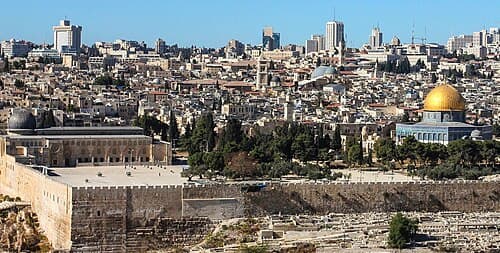
Jerusalem
LOCATION32 w/ Beirut·24 w/ the
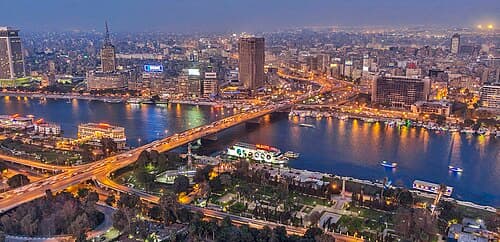
Cairo
LOCATION41 w/ Beirut·15 w/ the
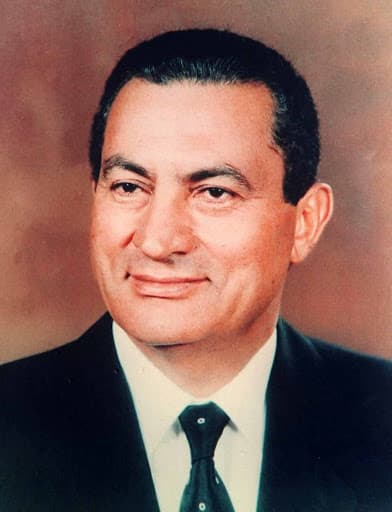
Hosni Mubarak
PERSON32 w/ Beirut·23 w/ the
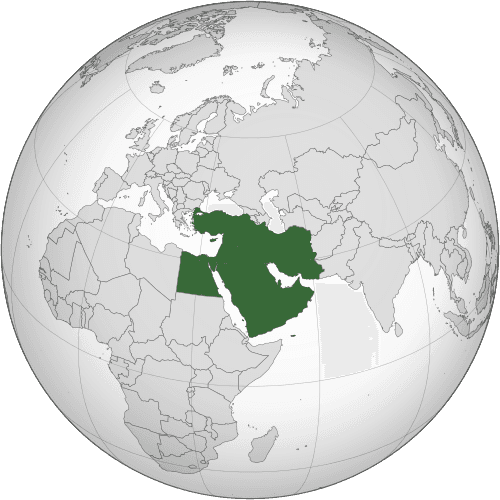
Middle East
LOCATION34 w/ Beirut·15 w/ the
Vladimir Putin
PERSON37 w/ Beirut·10 w/ the
Fatah
ORGANIZATION24 w/ Beirut·20 w/ the
LB
Leon Black
PERSON34 w/ Beirut·10 w/ the
Marc Rich
PERSON34 w/ Beirut·10 w/ the
Yemen
LOCATION26 w/ Beirut·17 w/ the
Michael Cohen
PERSON28 w/ Beirut·15 w/ the