Back to Network



















9
Shared Docs
7
Same-Page
9 / 9
Mentions
Document Mentions (9 shared documents)
2 mentions1 same-page
Page ?Same page
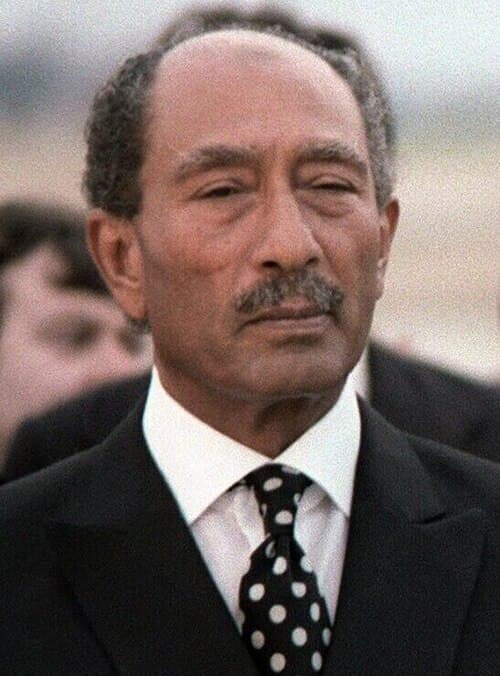
r Sadat as Egyptian President, the Soviet-Egyptian relationship quickly deteriorated. The KGB then resorted to active measures to try to undermine Sadat's rule, including portraying the president's 30-year-old son-in-law and Foreign Minister, Ashraf Marwan, as a CIA agent, an embezzler and the man r
in Egypt. Any KGB officer worth his epaulettes won't have forgotten the loss to Washington of what was EFTA00706388 once a highly valued prize in North Africa. The unraveling of the Arab Spring made that prize attainable again. As Georgy Mirsky, a pro-Kremlin Arabist, told the Financial Times: "Our gover
2 mentions1 same-page
Page ?Same page
r 2011. It is a great deceit to deny an entire nation's right to exist. Let me narrate a strange story of American deceit. When Henry Kissinger met Sadat and introduced his six-point plan as a `Kissinger plan,' Sadat told him: "Never forget, Dr. Kissinger, I am making this agreement with the United S
— and dangerous. If, as Mr. Obama said recently at the United Nations, he believes that it is in America's best interest "to see a Middle East and North Africa that is peaceful and prosperous," he needs to make sure the Arabs are part of, and don't lose from, any future bargain with Iran. Marwan Bishara i
2 mentions1 same-page
Page ?Same page
in an unprecedented phase of strong bilateral cooperation between the two former enemies, but it was also a major cause of the unpopularity of both Sadat and Mubarak. Israel benefited from the cold peace by neutralizing the most powerful conventional force in the Arab world. It even coordinated close
alal 2011-06-21 -- AMMAN — There seem to be a thousand and one interpretations of the changes sweeping across the countries of the Middle East and North Africa. One response that is often heard is a note of cautious optimism, captured in US President Barack Obama recent speech at the State Department when
Sponsored
2 mentions1 same-page
Page ?Same page
e patronage and will of h=s predecessor, Anwar Sadat. Mubarak had not been imaginative or brave—and that was what recommended him to the f=amboyant Sadat. Where Sadat had been unabashedly open in his identificatio= with American power, the new man would be more discreet. Where Sadat had =een a trailbl
tt/=011/02/24/AB9dIXN_page.html> February 10,2013 -= As President Obama ponders his second-term foreign policy, he faces jihad=sts spreading across North Africa, Syria dissolving into chaos, Israelis a=d Palestinians further apart than ever, Ira= trending toward civil war <http://www.washingtonpost.com/world
2 mentions1 same-page
Page ?Same page
ithout an air force capable of breaching our defences and striking towns and cities deep inside Israel. No one pressed the alternative scenario: that Sadat might strike with more limited territorial objectives and, under cover of his SAM batteries on the other side of the Suez Canal, advance into the Sin
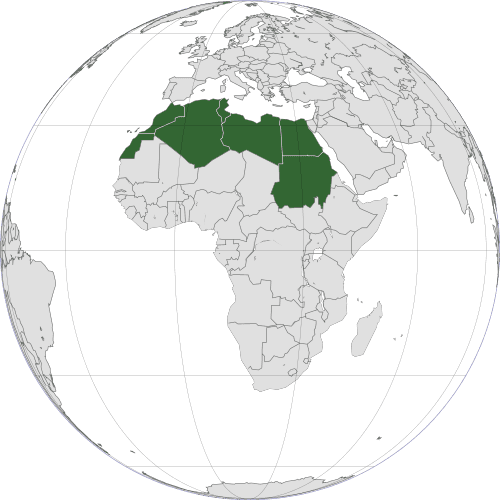
kers” in Sharm al- Sheikh with the participation not just of an equally concerned King Hussein, and of course Arafat, but leaders of Arab states from North Africa to Saudi Arabia and the Gulf. The only significant holdout was Syria’s Hafez al-Assad. He objected because he said the conference was too focused on
2 mentions1 same-page
Page ?Same page
ithout an air force capable of breaching our defences and striking towns and cities deep inside Israel. No one pressed the alternative scenario: that Sadat might strike with more limited territorial objectives and, under cover of his SAM batteries on the other side of the Suez Canal, advance into the Sin
kers" in Sharm al- Sheikh with the participation not just of an equally concerned King Hussein, and of course Arafat, but leaders of Arab states from North Africa to Saudi Arabia and the Gulf. The only significant holdout was Syria's Hafez al-Assad. He objected because he said the conference was too focused on
Sponsored
2 mentions1 same-page
Page ?Same page
untry. Maybe a trip for medical treatment? Mubarak dismissed the idea. He’d seen worse, he reminded Wisner. Mubarak had been sitting inches away from Sadat on that fateful October day in 1981. He himself had survived six assassination attempts. In fact, he said he intended to go on television again that
en Tripoli. Then Damascus. You watch as the anger, moving on once-invisible technological lines of video and text, demolishes the stability of all of North Africa. Over the next two years leaders are pushed from power in Egypt, Tunisia, Libya, and Yemen: their names, instead of being symbols of stability, insta
Page HOUSE_OVERSIGHT_023147
is the author of Talking to Arab Youth: Revolution and Counterrevolution in Egypt and Tunisia. Nur focuses on the transitions in the Middle East and North Africa, the Israeli-Palestinian conflict and issues related to US foreign policy. She has worked as a senior policy analyst at the International Peace Inst
Page: HOUSE_OVERSIGHT_023147 →Page HOUSE_OVERSIGHT_023153
moved to Tunis. HOUSE_OVERSIGHT_023152 --- PAGE BREAK --- OUP CORRECTED PROOE - FINAL, 12/9/2014, SPi Chronology xxi 10 December 1978 President Sadat and Prime Minister Begin are awarded jointly in Oslo the Nobel Peace Prize. 16 January 1979 Shah Mohamed Reza Pahlavi leaves Iran after months of do
Page: HOUSE_OVERSIGHT_023153 →Page HOUSE_OVERSIGHT_030160
n Talal 2011-06-21 -- AMMAN - There seem to be a thousand and one interpretations of the changes sweeping across the countries of the Middle East and North Africa. One response that is often heard is a note of cautious optimism, captured in US President Barack Obama recent speech at the State Department when he
Page: HOUSE_OVERSIGHT_030160 →Page HOUSE_OVERSIGHT_030173
d in an unprecedented phase of strong bilateral cooperation between the two former enemies, but it was also a major cause of the unpopularity of both Sadat and Mubarak. Israel benefited from the cold peace by neutralizing the most powerful conventional force in the Arab world. It even coordinated closely
Page: HOUSE_OVERSIGHT_030173 →Sponsored
Mutual Connections (518)
Entities connected to both Sadat and North Africa
Barack Obama
PERSON16 w/ Sadat·52 w/ North
George W. Bush
PERSON19 w/ Sadat·45 w/ North
United States
LOCATION13 w/ Sadat·50 w/ North
Jeffrey Epstein
PERSON5 w/ Sadat·55 w/ North
Bashar al-Assad
PERSON18 w/ Sadat·39 w/ North
Marc Rich
PERSON6 w/ Sadat·49 w/ North
Lebanon
LOCATION15 w/ Sadat·38 w/ North
Benjamin Netanyahu
PERSON17 w/ Sadat·35 w/ North
Bill Clinton
PERSON16 w/ Sadat·35 w/ North
Yemen
LOCATION15 w/ Sadat·30 w/ North
Tehran
LOCATION12 w/ Sadat·32 w/ North
Hosni Mubarak
PERSON18 w/ Sadat·26 w/ North
Middle East
LOCATION11 w/ Sadat·33 w/ North
Tunisia
LOCATION10 w/ Sadat·33 w/ North
Cairo
LOCATION15 w/ Sadat·28 w/ North
Damascus
LOCATION12 w/ Sadat·27 w/ North
Jerusalem
LOCATION14 w/ Sadat·22 w/ North
Saddam Hussein
PERSON10 w/ Sadat·25 w/ North
Fatah
ORGANIZATION11 w/ Sadat·21 w/ North
Bahrain
LOCATION6 w/ Sadat·25 w/ North