Back to Network

















9
Shared Docs
7
Same-Page
9 / 9
Mentions
Document Mentions (9 shared documents)
2 mentions1 same-page
Page ?Same page
. Secular and religious. Rich and poor. Center and periphery. Old and new. This is dangerous. The late Tunisian President Bourguiba (and later on Sadat in his debates with Assad just before the peace treaty with Israel) made the argument that there's no need to defeat Israel by force. Give them t
he settlement blocs, a number of strategic sites on mountain ridge, a security zone east of Ben Gurion Airport and long-term military presence on the Jordan River. EFTA00683736 The real threat to the future of the • Zionist Project — is not the security constraints of the "two-state solution" but rather
2 mentions1 same-page
Page ?Same page
hter jets, Golda contacted the Americans to propose a cease-fire in the south. But having retaken the Suez Canal and pushed into the Sinai, President Sadat was in no mood to call a halt to the fighting. The only way we were going to end the war was to retake the canal and defeat the even larger Egyptian
assignment was to block the southern entrance to Karameh as the Israeli armored force advanced. But we got bogged down in mud as we made our way from the Jordan River. By the time we arrived, hundreds of Arafat’s men had already fled the area. Arafat, too, had escaped, on the back of a motorcycle. By the time the
2 mentions1 same-page
Page ?Same page
ithout an air force capable of breaching our defences and striking towns and cities deep inside Israel. No one pressed the alternative scenario: that Sadat might strike with more limited territorial objectives and, under cover of his SAM batteries on the other side of the Suez Canal, advance into the Sin
f fire in the late 1950s were provoked by Israel.” I didn’t respond directly, though I did note it was the Syrians who had tried to divert water from the Jordan River in the early fifties. “You did it first,” he retorted. So it continued. Only later did we learn that while Muallem had sent back a generally encourag
Sponsored
2 mentions1 same-page
Page ?Same page
were not willing or ready to make peace. We might, initially at least, have to settle for a more incremental step. “Right here in Camp David, Begin, Sadat and Carter couldn’t complete the process,” I pointed out. “They signed a “framework agreement’ and it took months of further diplomacy to reach a pea
st Jerusalem, I expected to be able to retain Israeli sovereignty over the city. The third principle was that there would be “no foreign army west of the Jordan River.” In other words, if we did hand back at least the major part of the West Bank, it would be demilitarized and we would have security control over the
2 mentions1 same-page
Page ?Same page
hter jets, Golda contacted the Americans to propose a cease-fire in the south. But having retaken the Suez Canal and pushed into the Sinai, President Sadat was in no mood to call a halt to the fighting. The only way we were going to end the war was to retake the canal and defeat the even larger Egyptian
assignment was to block the southern entrance to Karameh as the Israeli armored force advanced. But we got bogged down in mud as we made our way from the Jordan River. By the time we arrived, hundreds of Arafat's men had already fled the area. Arafat, too, had escaped, on the back of a motorcycle. By the time the f
2 mentions1 same-page
Page ?Same page
ithout an air force capable of breaching our defences and striking towns and cities deep inside Israel. No one pressed the alternative scenario: that Sadat might strike with more limited territorial objectives and, under cover of his SAM batteries on the other side of the Suez Canal, advance into the Sin
f fire in the late 1950s were provoked by Israel." I didn't respond directly, though I did note it was the Syrians who had tried to divert water from the Jordan River in the early fifties. "You did it first," he retorted. So it continued. Only later did we learn that while Muallem had sent back a generally encourag
Sponsored
2 mentions1 same-page
Page ?Same page
were not willing or ready to make peace. We might, initially at least, have to settle for a more incremental step. "Right here in Camp David, Begin, Sadat and Carter couldn't complete the process," I pointed out. "They signed a "framework agreement' and it took months of further diplomacy to reach a pea
st Jerusalem, I expected to be able to retain Israeli sovereignty over the city. The third principle was that there would be "no foreign army west of the Jordan River." In other words, if we did hand back at least the major part of the West Bank, it would be demilitarized and we would have security control over the
Page HOUSE_OVERSIGHT_028908
rabs. Secular and religious. Rich and poor. Center and periphery. Old and new. This is dangerous. The late Tunisian President Bourguiba (and later on Sadat in his debates with Assad just before the peace treaty with Israel) made the argument that there's no need to defeat Israel by force. Give them the o
Page: HOUSE_OVERSIGHT_028908 →Page HOUSE_OVERSIGHT_028916
es the settlement blocs, a number of strategic sites on mountain ridge, a security zone east of Ben Gurion Airport and long-term military presence on the Jordan River. • The real threat to the future of the HOUSE _OVERSIGHT_028915 --- PAGE BREAK --- Zionist Project - is not the security constraints of the "two-st
Page: HOUSE_OVERSIGHT_028916 →Page HOUSE_OVERSIGHT_029383
rabs. Secular and religious. Rich and poor. Center and periphery. Old and new. This is dangerous. The late Tunisian President Bourguiba (and later on Sadat in his debates with Assad just before the peace treaty with Israel) made the argument that there's no need to defeat Israel by force. Give them the o
Page: HOUSE_OVERSIGHT_029383 →Page HOUSE_OVERSIGHT_029393
es the settlement blocs, a number of strategic sites on mountain ridge, a security zone east of Ben Gurion Airport and long-term military presence on the Jordan River. • The real threat to the future of the Zionist Project - is not the security constraints of the "two-state solution" but rather a slippery slope lea
Page: HOUSE_OVERSIGHT_029393 →Sponsored
Mutual Connections (811)
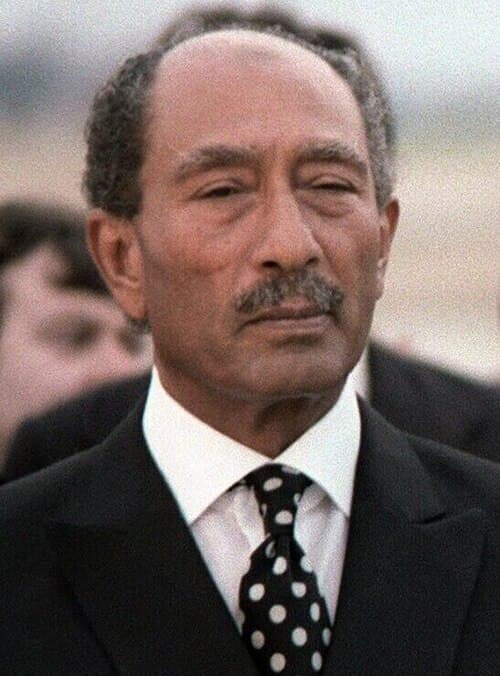
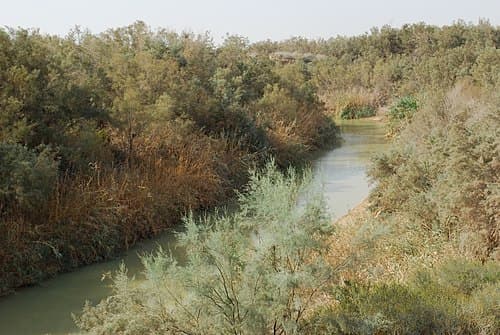
Entities connected to both Sadat and the Jordan River
George W. Bush
PERSON19 w/ Sadat·21 w/ the
Benjamin Netanyahu
PERSON17 w/ Sadat·23 w/ the
Bashar al-Assad
PERSON18 w/ Sadat·19 w/ the
Barack Obama
PERSON16 w/ Sadat·20 w/ the
Lebanon
LOCATION15 w/ Sadat·20 w/ the
Jerusalem
LOCATION14 w/ Sadat·20 w/ the
Hosni Mubarak
PERSON18 w/ Sadat·15 w/ the
Bill Clinton
PERSON16 w/ Sadat·14 w/ the
Fatah
ORGANIZATION11 w/ Sadat·18 w/ the
United States
LOCATION13 w/ Sadat·15 w/ the
Damascus
LOCATION12 w/ Sadat·15 w/ the
Yasser Arafat
PERSON11 w/ Sadat·15 w/ the
Yemen
LOCATION15 w/ Sadat·11 w/ the
the West Bank
LOCATION11 w/ Sadat·14 w/ the
Cairo
LOCATION15 w/ Sadat·10 w/ the
Likud
ORGANIZATION12 w/ Sadat·12 w/ the
Shimon Peres
PERSON11 w/ Sadat·13 w/ the
Tehran
LOCATION12 w/ Sadat·12 w/ the
Rabin
PERSON10 w/ Sadat·14 w/ the
Mediterranean
LOCATION9 w/ Sadat·15 w/ the