Back to Network














5
Shared Docs
5
Same-Page
5 / 5
Mentions
Document Mentions (5 shared documents)
2 mentions1 same-page
Page ?Same page
inistration regarded Egypt's new leaders as potentially important allies in confronting the Soviet Union. The U.S. embassy in Cairo cultivated both Nasser and Muhammad Naguib, who had been the Free Officers' front man. At the same time, Washington began helping Cairo develop its own clandestine intel
om his handpicked minister of war, General Muhammad Sadiq, due to differences over war planning. But after sacking Sadiq and successfully crossing the Suez Canal in 1973, Sadat became his EFTA_R1_00298265 EFTA01883846 own man. From then on, he was able to initiate fundamental changes to Cairo's foreign po
2 mentions1 same-page
Page ?Same page
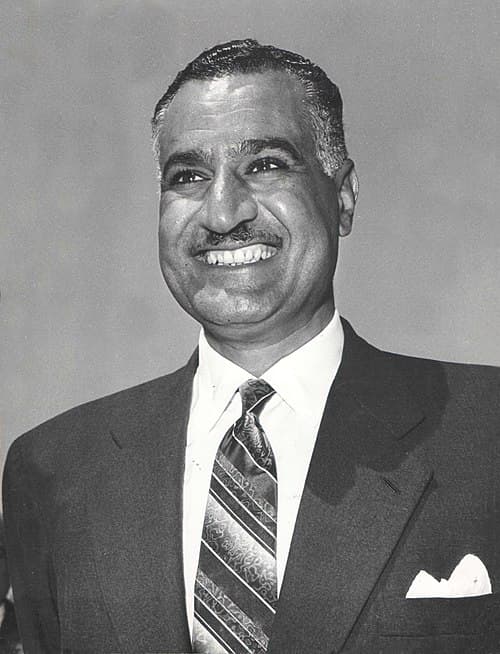
he fedayeen in Gaza, but arming and training them and helping organize cross-border attacks. Then, in 38 HOUSE_OVERSIGHT_011509 the summer of 1956, Nasser nationalized the Suez Canal, which had been owned by the British and French. Ben-Gurion was emboldened to go war by the fact that both Britain and F
but arming and training them and helping organize cross-border attacks. Then, in 38 HOUSE_OVERSIGHT_011509 the summer of 1956, Nasser nationalized the Suez Canal, which had been owned by the British and French. Ben-Gurion was emboldened to go war by the fact that both Britain and France wanted to retake the c
2 mentions1 same-page
Page ?Same page
ns of the Egyptians’ increased anti-aircraft capability — even though we’d begun losing planes and pilots to the new surface-to-air missile batteries Nasser had received from the Soviets. And I 108 HOUSE_OVERSIGHT_011579 could see that a similar myopia, or denial, was affecting the armored corps. On pat
t of the intelligence base our military engineers had built after the war into a 2,400-feet-high mountain called Gebel Um-Hashiba, 20 miles back from the Suez Canal. When I radioed in to tell him I’d decided to abandon the operation, I could hear the surprise in his voice, and what seemed reluctance as well. “If
Sponsored
2 mentions1 same-page
Page ?Same page
he fedayeen in Gaza, but arming and training them and helping organize cross-border attacks. Then, in 38 HOUSE_OVERSIGHT_027886 the summer of 1956, Nasser nationalized the Suez Canal, which had been owned by the British and French. Ben-Gurion was emboldened to go war by the fact that both Britain and F
but arming and training them and helping organize cross-border attacks. Then, in 38 HOUSE_OVERSIGHT_027886 the summer of 1956, Nasser nationalized the Suez Canal, which had been owned by the British and French. Ben-Gurion was emboldened to go war by the fact that both Britain and France wanted to retake the c
2 mentions1 same-page
Page ?Same page
ns of the Egyptians' increased anti-aircraft capability - even though we'd begun losing planes and pilots to the new surface-to-air missile batteries Nasser had received from the Soviets. And I 108 HOUSE _OVERSIGHT_027956 could see that a similar myopia, or denial, was affecting the armored corps. On pat
t of the intelligence base our military engineers had built after the war into a 2,400-feet-high mountain called Gebel Um-Hashiba, 20 miles back from the Suez Canal. When I radioed in to tell him I'd decided to abandon the operation, I could hear the surprise in his voice, and what seemed reluctance as well. "If
Sponsored
Mutual Connections (663)
Entities connected to both Nasser and the Suez Canal
Hosni Mubarak
PERSON17 w/ Nasser·20 w/ the
Lebanon
LOCATION19 w/ Nasser·18 w/ the
Barack Obama
PERSON19 w/ Nasser·15 w/ the
Bashar al-Assad
PERSON17 w/ Nasser·17 w/ the
George W. Bush
PERSON17 w/ Nasser·16 w/ the
Benjamin Netanyahu
PERSON18 w/ Nasser·14 w/ the
United States
LOCATION15 w/ Nasser·15 w/ the
Damascus
LOCATION14 w/ Nasser·15 w/ the
Cairo
LOCATION15 w/ Nasser·14 w/ the
Bill Clinton
PERSON14 w/ Nasser·13 w/ the
Saddam Hussein
PERSON13 w/ Nasser·14 w/ the
Tunisia
LOCATION13 w/ Nasser·13 w/ the
Sinai
LOCATION13 w/ Nasser·12 w/ the
Middle East
LOCATION9 w/ Nasser·14 w/ the
Yemen
LOCATION11 w/ Nasser·9 w/ the
Tehran
LOCATION11 w/ Nasser·9 w/ the
Fatah
ORGANIZATION9 w/ Nasser·11 w/ the
Ehud Barak
PERSON9 w/ Nasser·10 w/ the
the West Bank
LOCATION8 w/ Nasser·11 w/ the
Marc Rich
PERSON6 w/ Nasser·11 w/ the