Back to Network













11
Shared Docs
11
Same-Page
11 / 11
Mentions
Document Mentions (11 shared documents)
2 mentions1 same-page
Page HOUSE_OVERSIGHT_023156Same page
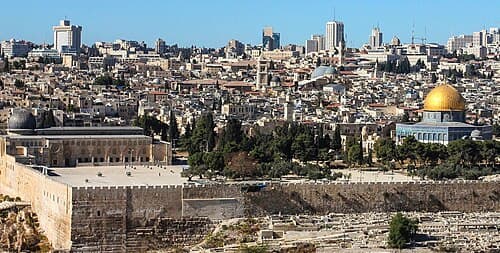
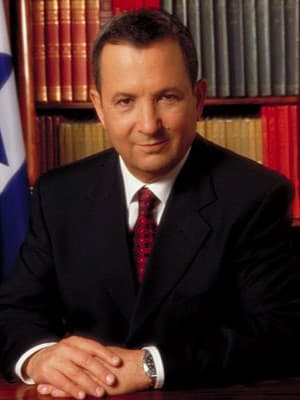
11-25 July 2000 Camp David II negotiations between Ehud Barak and Yasir Arafat. 25 July 2000 Camp David Statement. 28 September 2000 Likud leader Ariel Sharon’s visit to the Temple Mount/Haram al-Sharif, prompting major Palestinian riots. Second Palestinian uprising (al-Aqsa Intifadah) begins. 7 October 20
Page: HOUSE_OVERSIGHT_023156 →e referendum. 11-25 July 2000 Camp David II negotiations between Ehud Barak and Yasir Arafat. 25 July 2000 Camp David Statement. 28 September 2000 Likud leader Ariel Sharon’s visit to the Temple Mount/Haram al-Sharif, prompting major Palestinian riots. Second Palestinian uprising (al-Aqsa Intifadah) b
Page: HOUSE_OVERSIGHT_023156 →2 mentions1 same-page
Page ?Same page
bor Party prime minister, whose government approved three times more new houses in small settlements in 2000 than Netanyahu did last year. In 2002, Ariel Sharon's government approved the construction of 960 new units — more than Netanyahu's 908 in 2013 — not long before Sharon decided to evacuate Gaza. Measu
u can't publicly admit this policy because it would alienate his right-leaning political base. The settler lobby, which has a strong footing in the Likud Party, constantly criticizes Netanyahu for not permitting "sufficient" construction. To placate them, it appears that Netanyahu's government has b
2 mentions1 same-page
Page ?Same page
As the flames mounted, Barak's electoral coalition, much of which he had alienated through careless and dictatorial management, began to crumble. Ariel Sharon, another former war hero who then led the Likud Party, offered to form a national unity government. Barak refused, deciding to take his chances in
overnment. EFTA00693045 Then, in 2008, Olmert was forced to resign because of corruption allegations, and new elections brought Netanyahu and the Likud back to power. This development proved awkward for Barak, who had promised during the campaign not to join a Netanyahu government. But in one of th
Sponsored
2 mentions1 same-page
Page ?Same page
From: Mitchell Bard < Sent: Monday, August 28, 2017 10:35 AM To: [email protected] Subject: AICE Update: Did Ariel Sharon's Temple Mount Visit Spark the Palestinian War? <=iv id="rootDiv"> <http://r20.rs6.net/on.jsp?a=1100921190510&==3&c=c4a253f0-3297-11e3-9696- d4ae5292c
6axqr8TTpq.lp3EmNA==&c=ZVElY_=7Kr_l UZU MvISOeCNyisbXPxEx2gObxBSR99h4Kxzvzzhaw==& ch=i6y1nArt8u0eWAO=KNOVZRIkrQrSc- _r9cgQ8U_obWA6ntEtjn-9eA==> ) by Likud <http://r20.rs6.net/tn.jsp?f=001u1SHQqhPqrT=zhx00emx8AWf2GESSEIeqlVBqDQZINKgqv.I4aQn7SaYX6uSmJQiAcWtI6TIV FXRoO2KwU I0JaaN l=bVF_Glq Kuh M2JqOluxo4
2 mentions1 same-page
Page ?Same page
spairing of any possibility for productive negotiations while Yasir Arafat led the PLO, but under heavy pressure to make some move, Prime Minister Ariel Sharon turned to Gaza, which the old general viewed as a military burden rather than as an Israeli asset. After a grueling political battle that extended
alf of 2005, a resolute Sharon carried out his plan to remove Israeli settlements and military bases from Gaza in August 2005, breaking up his own Likud party over it. This political move, which resulted in the creation of the Kadima party, would hardly have made sense had Gaza been Sharon's final
2 mentions1 same-page
Page ?Same page
bu Razaq was appointed Director General of the Ministry of Interior, the first Arab citizen to become chief executive of a key government ministry. Ariel Sharon's original cabinet included the first Arab minister, Salah Tarif, a Druze who served as a minister without portfolio. An Arab is also a Supreme
ls featured Naomi Chazan, a left-of-center academic and former MK, and Zalman Shoval, a right-of-center former ambassador to the United States. The Likud was in power and Chazan urged American Jews to be more openly critical of the Israeli government to which Shoval responded that she didn't feel tha
Sponsored
2 mentions1 same-page
Page ?Same page
GHT_011477 A decade later, the idea would suddenly resurface. In my first meeting, as a newly promoted Major General, with our then Defence Minister Ariel Sharon, Sharon turned to me and the army’s Chief of Staff, Rafael Eitan, and said: “Tell me. Why the hell is Arafat still alive?” He looked first at Raful,
not to do so, I decided to return to government in 2007 as Defence Minister. I remained in that role for six years: mostly in the current, right-wing Likud government of my onetime Sayeret Matkal charge, Bibi Netanyahu. Much of what I say in this book about war and peace, security and Israel’s future ch
2 mentions1 same-page
Page ?Same page
rs in the cabinet: Shamir, who was about to take his turn as Prime Minister in October 1986; Misha, now a minister without portfolio; and most of all Arik Sharon. In an astonishing demonstration of resilience and determination, not only had Arik remained as a minister without portfolio when Shamir succeeded Me
losing their jobs. Israel’s next election, the first since the Lebanon war, was due in July. Just as the trauma of the 1973 war had helped Begin end Likud’s three decades in opposition, the polls and the pundits were now suggesting that Shimon Peres might bring Labor back to power. There was no prospect
2 mentions1 same-page
Page ?Same page
itiative was underway, Bibi realized that before sending back the map Assad wanted, he would need to tell the two senior ministers directly affected: Arik Sharon, who had replaced David Levy as Foreign Minister; and Yitzhik Mordechai. Both of them said no, with Yitzhik pointing out that a signed map would inev
he left. Right after Yitzhak’s murder, I’d gone to see Zevulun Hammer, the leader of the National Religious Party. It had been part of both Labor and Likud governments ever since 1948, though not Rabin’s. The NRP, too, had been drifting steadily rightward. But it still basically subscribed the idea of a
Sponsored
2 mentions1 same-page
Page ?Same page
GHT_027854 A decade later, the idea would suddenly resurface. In my first meeting, as a newly promoted Major General, with our then Defence Minister Ariel Sharon, Sharon turned to me and the army’s Chief of Staff, Rafael Eitan, and said: “Tell me. Why the hell is Arafat still alive?” He looked first at Raful,
not to do so, I decided to return to government in 2007 as Defence Minister. I remained in that role for six years: mostly in the current, right-wing Likud government of my onetime Sayeret Matkal charge, Bibi Netanyahu. Much of what I say in this book about war and peace, security and Israel’s future ch
Sponsored
Mutual Connections (749)
Entities connected to both Ariel Sharon and Likud
Benjamin Netanyahu
PERSON27 w/ Ariel·43 w/ Likud
Barack Obama
PERSON20 w/ Ariel·36 w/ Likud
Jerusalem
LOCATION26 w/ Ariel·29 w/ Likud
George W. Bush
PERSON16 w/ Ariel·35 w/ Likud
Lebanon
LOCATION20 w/ Ariel·26 w/ Likud
Bill Clinton
PERSON20 w/ Ariel·25 w/ Likud
Bashar al-Assad
PERSON17 w/ Ariel·27 w/ Likud
Ehud Barak
PERSON17 w/ Ariel·24 w/ Likud
West Bank
LOCATION19 w/ Ariel·21 w/ Likud
Damascus
LOCATION19 w/ Ariel·21 w/ Likud
United States
LOCATION17 w/ Ariel·23 w/ Likud
Knesset
ORGANIZATION11 w/ Ariel·27 w/ Likud
Hosni Mubarak
PERSON17 w/ Ariel·20 w/ Likud
Fatah
ORGANIZATION18 w/ Ariel·18 w/ Likud
Cairo
LOCATION14 w/ Ariel·21 w/ Likud
Tehran
LOCATION11 w/ Ariel·24 w/ Likud
Yasser Arafat
PERSON16 w/ Ariel·17 w/ Likud
Shimon Peres
PERSON13 w/ Ariel·20 w/ Likud
Saddam Hussein
PERSON14 w/ Ariel·18 w/ Likud
Terje Rod-Larsen
PERSON16 w/ Ariel·14 w/ Likud