Back to Network



















5
Shared Docs
4
Same-Page
5 / 5
Mentions
Document Mentions (5 shared documents)
2 mentions1 same-page
Page ?Same page
is likely never to be -- owned by the left. From Israeli premiers Menachem Begin to Yitzhak Rabin (breaker of bones during the first Intifada) to Ariel Sharon and Benjamin Netanyahu, the story of the Arab-Israeli negotiations is one of tough guys whose calculations were reshaped by necessity and self-inte
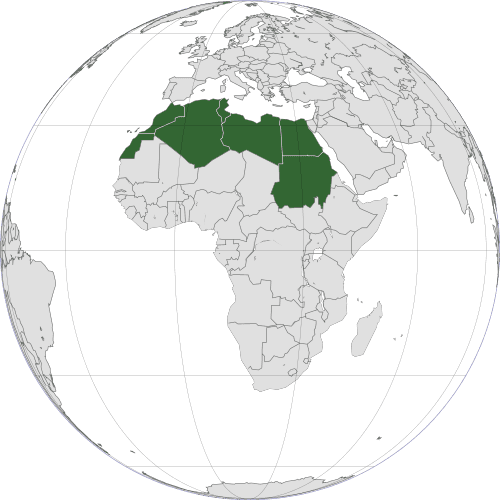
d to offer brief hope that Hamas would reposition itself away from the "resistance" camp in the region and toward the camp of Islamist movements in North Africa that were dedicated to making political Islam the basis of a practicable governing system. That would have required taking reconciliation with Isr
2 mentions1 same-page
Page ?Same page
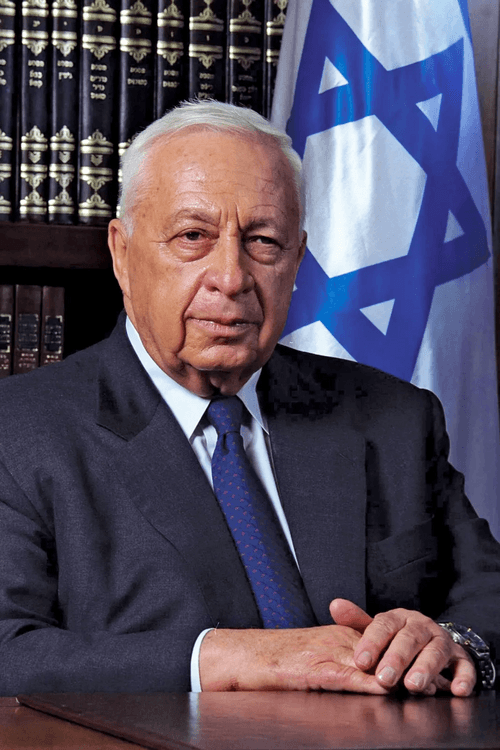
spairing of any possibility for productive negotiations while Yasir Arafat led the PLO, but under heavy pressure to make some move, Prime Minister Ariel Sharon turned to Gaza, which the old general viewed as a military burden rather than as an Israeli asset. After a grueling political battle that extended
nce over a Middle East peace agreement, even as the Administration continued to try to manage the post- revolution transitions across the region and North Africa. Obama doesn't believe that there is much he can do to change EFTA_R1_02204192 EFTA02720663 the status quo in North Korea. Meanwhile, the situat
2 mentions1 same-page
Page ?Same page
rs in the cabinet: Shamir, who was about to take his turn as Prime Minister in October 1986; Misha, now a minister without portfolio; and most of all Arik Sharon. In an astonishing demonstration of resilience and determination, not only had Arik remained as a minister without portfolio when Shamir succeeded Me
kers” in Sharm al- Sheikh with the participation not just of an equally concerned King Hussein, and of course Arafat, but leaders of Arab states from North Africa to Saudi Arabia and the Gulf. The only significant holdout was Syria’s Hafez al-Assad. He objected because he said the conference was too focused on
Sponsored
2 mentions1 same-page
Page ?Same page
rs in the cabinet: Shamir, who was about to take his turn as Prime Minister in October 1986; Misha, now a minister without portfolio; and most of all Arik Sharon. In an astonishing demonstration of resilience and determination, not only had Arik remained as a minister without portfolio when Shamir succeeded Me
kers" in Sharm al- Sheikh with the participation not just of an equally concerned King Hussein, and of course Arafat, but leaders of Arab states from North Africa to Saudi Arabia and the Gulf. The only significant holdout was Syria's Hafez al-Assad. He objected because he said the conference was too focused on
Page HOUSE_OVERSIGHT_023147
is the author of Talking to Arab Youth: Revolution and Counterrevolution in Egypt and Tunisia. Nur focuses on the transitions in the Middle East and North Africa, the Israeli-Palestinian conflict and issues related to US foreign policy. She has worked as a senior policy analyst at the International Peace Inst
Page: HOUSE_OVERSIGHT_023147 →Page HOUSE_OVERSIGHT_023156
11-25 July 2000 Camp David II negotiations between Ehud Barak and Yasir Arafat. 25 July 2000 Camp David Statement. 28 September 2000 Likud leader Ariel Sharon’s visit to the Temple Mount/Haram al-Sharif, prompting major Palestinian riots. Second Palestinian uprising (al-Aqsa Intifadah) begins. 7 October 20
Page: HOUSE_OVERSIGHT_023156 →Sponsored
Mutual Connections (538)
Entities connected to both Ariel Sharon and North Africa
Barack Obama
PERSON20 w/ Ariel·52 w/ North
United States
LOCATION17 w/ Ariel·50 w/ North
Benjamin Netanyahu
PERSON27 w/ Ariel·35 w/ North
George W. Bush
PERSON16 w/ Ariel·45 w/ North
Jeffrey Epstein
PERSON6 w/ Ariel·55 w/ North
Marc Rich
PERSON10 w/ Ariel·49 w/ North
Lebanon
LOCATION20 w/ Ariel·38 w/ North
Bashar al-Assad
PERSON17 w/ Ariel·39 w/ North
Bill Clinton
PERSON20 w/ Ariel·35 w/ North
Tunisia
LOCATION15 w/ Ariel·33 w/ North
Jerusalem
LOCATION26 w/ Ariel·22 w/ North
Damascus
LOCATION19 w/ Ariel·27 w/ North
Hosni Mubarak
PERSON17 w/ Ariel·26 w/ North
Tehran
LOCATION11 w/ Ariel·32 w/ North
Middle East
LOCATION9 w/ Ariel·33 w/ North
Cairo
LOCATION14 w/ Ariel·28 w/ North
Terje Rod-Larsen
PERSON16 w/ Ariel·24 w/ North
Mahmoud Abbas
PERSON19 w/ Ariel·20 w/ North
Saddam Hussein
PERSON14 w/ Ariel·25 w/ North
Fatah
ORGANIZATION18 w/ Ariel·21 w/ North