Back to Network

















11
Shared Docs
11
Same-Page
12 / 11
Mentions
Document Mentions (11 shared documents)
3 mentions1 same-page
Page ?Same page
plenty of cause for frustration. The case against Barak usually starts with his abandonment of Labor -- even though other Israeli leaders (such as Sharon and Olmert) have ditched their parties and not suffered for it. It then moves on to his strategic blunders -- although here, too, he is hardly alon
en it works, it's brilliant. When it fails, it collapses horribly" -- as did Barak's grand peace overtures, his decision as prime minister to spurn Sharon's offer and seek early elections, and his move to split Labor. Barak's history also reveals a profound lack of concern for ideological consistency
o Germany, was even a private guest at Merkel's weekend house in the Uckermark region northeast of Berlin. EFTA00693039 In a 2008 address to the Knesset, Merkel declared Israel's security "part of my country's raison d'être." Even more spectacular was the statement that followed: "And if that is so,
2 mentions1 same-page
Page HOUSE_OVERSIGHT_023140Same page
r 1998) 356 Sharm el-Sheikh Memorandum (4 September 1999) 358 Protocol Concerning Safe Passage between West Bank and Gaza Strip (5 October 1999) 363 Sharon Address at Fourth Herzliya Conference (18 December 2003) 371 Exchange of Letters between PM Sharon and President Bush (14 April 2004) 376 Disengage
Page: HOUSE_OVERSIGHT_023140 →ease-Fires (18 January 2009) 410 Gaza War II: Cease-Fire Agreement (21 November 2012) 416 Part II. Peace Proposals and Ideas Prime Minister Begin’s Knesset Speech on Home Rule (28 December 1977) 419 Fahd Plan (7 August 1981) 422 Reagan Plan (1 September 1982) 423 Fez Peace Initiative (9 September 1982) 4
Page: HOUSE_OVERSIGHT_023140 →2 mentions1 same-page
Page ?Same page
was intolerable." After six days of war, a cease-fire was agreed. However, at that time our troops had not yet succeeded in surrounding Beirut. So Sharon broke the cease-fire to cut the vital Beirut-Damascus highway. The present crisis in the "peace process" was caused by the Israeli government's br
an nation really exists. Golda Meir famously declared: "There is no such thing as a Palestinian people." I am rather proud of my reply to her, in a Knesset debate: "Mrs. Prime Minister, perhaps you are right. Perhaps a Palestinian people really does not exist. But if millions of people mistakenly belie
Sponsored
2 mentions1 same-page
Page ?Same page
decade later, the idea would suddenly resurface. In my first meeting, as a newly promoted Major General, with our then Defence Minister Ariel Sharon, Sharon turned to me and the army’s Chief of Staff, Rafael Eitan, and said: “Tell me. Why the hell is Arafat still alive?” He looked first at Raful, then at
oth were furious over the obviously pre-arranged seizure of Sinai, Gaza and the canal. It took a while for the message to sink in. In a speech to the Knesset after the conquest was complete, Ben-Gurion declared the post- 1948 armistice null and void, and said Israel would never again allow “foreign forces”
2 mentions1 same-page
Page ?Same page
7. So during the last, decisive 10 days of the war, I would witness first-hand the tension among our top commanders in the Sinai, especially between Sharon and Gorodish, since Arik wasted few opportunities to suggest, rightly but not always helpfully, that his successor was woefully out of his depth. I w
e travelled to Jerusalem, the capital of a country which neither Egypt nor any other Arab country even recognized. He met Begin, and he addressed the Knesset with a call for peace. It is impossible to convey to Israelis who did not live through the birth of the state, and our tumultuous early decades, the
2 mentions1 same-page
Page ?Same page
med to agree. Notably, Yitzhak Rabin. He was no longer in government, nor even in charge of Labor. But he had always had a soft spot for Arik, as did Sharon for him. With uneasiness, questions and outright criticism of the siege building both internationally and inside Israel, Arik got Rabin to helicopter
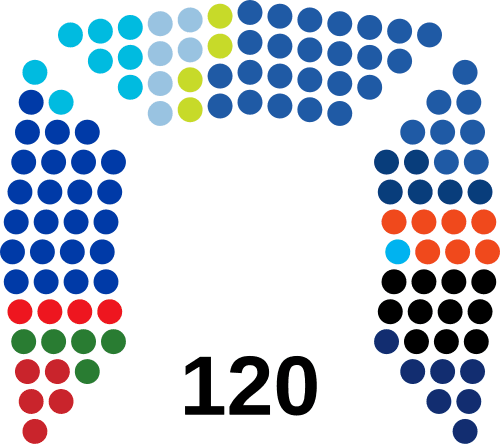
he pundits were now suggesting that Shimon Peres might bring Labor back to power. There was no prospect he’d win an outright majority in the 120-seat Knesset. No one had ever done that, not even Ben-Gurion in his political heyday. From 1948, Israel’s political landscape had been populated by at least a doz
Sponsored
2 mentions1 same-page
Page ?Same page
ons be imposed, and Shlomo agreed. The first was that the visit not occur on a Friday, when the mosques would be full of worshipers; the second, that Sharon not set foot in either of the mosques on the Haram. Our chief of police informed Sharon that if he didn’t accept the conditions, we’d deny him permis
quitting. He said it would be a waste of time to stay in the cabinet if it was going to bring the peace process to a halt. I warned Bibi, both in the Knesset and in a series of speeches, about the alternative on the Palestinian side if those who wanted a negotiated peace had nothing but stalemate to show f
2 mentions1 same-page
Page ?Same page
decade later, the idea would suddenly resurface. In my first meeting, as a newly promoted Major General, with our then Defence Minister Ariel Sharon, Sharon turned to me and the army’s Chief of Staff, Rafael Eitan, and said: “Tell me. Why the hell is Arafat still alive?” He looked first at Raful, then at
oth were furious over the obviously pre-arranged seizure of Sinai, Gaza and the canal. It took a while for the message to sink in. In a speech to the Knesset after the conquest was complete, Ben-Gurion declared the post- 1948 armistice null and void, and said Israel would never again allow “foreign forces”
2 mentions1 same-page
Page ?Same page
67. So during the last, decisive 10 days of the war, I would witness first-hand the tension among our top commanders in the Sinai, especially between Sharon and Gorodish, since Arik wasted few opportunities to suggest, rightly but not always helpfully, that his successor was woefully out of his depth. I w
e travelled to Jerusalem, the capital of a country which neither Egypt nor any other Arab country even recognized. He met Begin, and he addressed the Knesset with a call for peace. It is impossible to convey to Israelis who did not live through the birth of the state, and our tumultuous early decades, the
Sponsored
2 mentions1 same-page
Page ?Same page
med to agree. Notably, Yitzhak Rabin. He was no longer in government, nor even in charge of Labor. But he had always had a soft spot for Arik, as did Sharon for him. With uneasiness, questions and outright criticism of the siege building both internationally and inside Israel, Arik got Rabin to helicopter
he pundits were now suggesting that Shimon Peres might bring Labor back to power. There was no prospect he'd win an outright majority in the 120-seat Knesset. No one had ever done that, not even Ben-Gurion in his political heyday. From 1948, Israel's political landscape had been populated by at least a doz
Sponsored
Mutual Connections (1,164)
Entities connected to both Sharon and Knesset
Jeffrey Epstein
PERSON91 w/ Sharon·24 w/ Knesset
Benjamin Netanyahu
PERSON20 w/ Sharon·53 w/ Knesset
George W. Bush
PERSON32 w/ Sharon·41 w/ Knesset
Barack Obama
PERSON17 w/ Sharon·45 w/ Knesset
Jerusalem
LOCATION18 w/ Sharon·42 w/ Knesset
Bill Clinton
PERSON26 w/ Sharon·33 w/ Knesset
United States
LOCATION21 w/ Sharon·34 w/ Knesset
Marc Rich
PERSON29 w/ Sharon·20 w/ Knesset
Bashar al-Assad
PERSON12 w/ Sharon·36 w/ Knesset
Lebanon
LOCATION16 w/ Sharon·32 w/ Knesset
LB
Leon Black
PERSON22 w/ Sharon·22 w/ Knesset
Ehud Barak
PERSON20 w/ Sharon·24 w/ Knesset
Chris Christie
PERSON35 w/ Sharon·9 w/ Knesset
Likud
ORGANIZATION13 w/ Sharon·27 w/ Knesset
West Bank
LOCATION13 w/ Sharon·25 w/ Knesset
Damascus
LOCATION14 w/ Sharon·24 w/ Knesset
Michael Cohen
PERSON14 w/ Sharon·22 w/ Knesset
Fatah
ORGANIZATION16 w/ Sharon·20 w/ Knesset
Donald Trump
PERSON18 w/ Sharon·18 w/ Knesset
John F. Kennedy
PERSON16 w/ Sharon·19 w/ Knesset