Back to Network



7
Shared Docs
6
Same-Page
7 / 7
Mentions
Document Mentions (7 shared documents)
2 mentions1 same-page
Page ?Same page
decade later, the idea would suddenly resurface. In my first meeting, as a newly promoted Major General, with our then Defence Minister Ariel Sharon, Sharon turned to me and the army’s Chief of Staff, Rafael Eitan, and said: “Tell me. Why the hell is Arafat still alive?” He looked first at Raful, then at
ter Israel had defeated the armies of our three main Arab enemies — Egypt, Syria and Jordan. Israeli forces were advancing on a Jordanian town called Karameh, across the 5 HOUSE_OVERSIGHT_011476 Jordan River from the West Bank, from which a fledgling group called Fatah, under the command of Arafat, had b
2 mentions1 same-page
Page ?Same page
7. So during the last, decisive 10 days of the war, I would witness first-hand the tension among our top commanders in the Sinai, especially between Sharon and Gorodish, since Arik wasted few opportunities to suggest, rightly but not always helpfully, that his successor was woefully out of his depth. I w
ct, form of confrontation with the “Zionist enemy.” Arafat had set up camp with nearly a thousand men just across the Jordan River, in a town called Karameh. From early 1968, they had been launching hit- and-run raids, not just on the West Bank but into the Negev. Eshkol’s cabinet was initially divided on
2 mentions1 same-page
Page ?Same page
med to agree. Notably, Yitzhak Rabin. He was no longer in government, nor even in charge of Labor. But he had always had a soft spot for Arik, as did Sharon for him. With uneasiness, questions and outright criticism of the siege building both internationally and inside Israel, Arik got Rabin to helicopter
ut. My own hope was that the nod would go to any even closer friend of mine: Dan Shomron. I had first got to know Dan well in the late sixties after Karameh, Israel’s costly standoff with Arafat, when Fatah’s influence was in its infancy. We exchanged impressions on what had gone wrong, and why? When I be
Sponsored
2 mentions1 same-page
Page ?Same page
decade later, the idea would suddenly resurface. In my first meeting, as a newly promoted Major General, with our then Defence Minister Ariel Sharon, Sharon turned to me and the army’s Chief of Staff, Rafael Eitan, and said: “Tell me. Why the hell is Arafat still alive?” He looked first at Raful, then at
ter Israel had defeated the armies of our three main Arab enemies — Egypt, Syria and Jordan. Israeli forces were advancing on a Jordanian town called Karameh, across the 5 HOUSE_OVERSIGHT_027853 Jordan River from the West Bank, from which a fledgling group called Fatah, under the command of Arafat, had b
2 mentions1 same-page
Page ?Same page
67. So during the last, decisive 10 days of the war, I would witness first-hand the tension among our top commanders in the Sinai, especially between Sharon and Gorodish, since Arik wasted few opportunities to suggest, rightly but not always helpfully, that his successor was woefully out of his depth. I w
ect, form of confrontation with the "Zionist enemy." Arafat had set up camp with nearly a thousand men just across the Jordan River, in a town called Karameh. From early 1968, they had been launching hit- and-run raids, not just on the West Bank but into the Negev. Eshkol's cabinet was initially divided on
2 mentions1 same-page
Page ?Same page
med to agree. Notably, Yitzhak Rabin. He was no longer in government, nor even in charge of Labor. But he had always had a soft spot for Arik, as did Sharon for him. With uneasiness, questions and outright criticism of the siege building both internationally and inside Israel, Arik got Rabin to helicopter
rut. My own hope was that the nod would go to any even closer friend of mine: Dan Shomron. I had first got to know Dan well in the late sixties after Karameh, Israel's costly standoff with Arafat, when Fatah's influence was in its infancy. We exchanged impressions on what had gone wrong, and why? When I be
Sponsored
Page HOUSE_OVERSIGHT_023140
r 1998) 356 Sharm el-Sheikh Memorandum (4 September 1999) 358 Protocol Concerning Safe Passage between West Bank and Gaza Strip (5 October 1999) 363 Sharon Address at Fourth Herzliya Conference (18 December 2003) 371 Exchange of Letters between PM Sharon and President Bush (14 April 2004) 376 Disengage
Page: HOUSE_OVERSIGHT_023140 →Page HOUSE_OVERSIGHT_023152
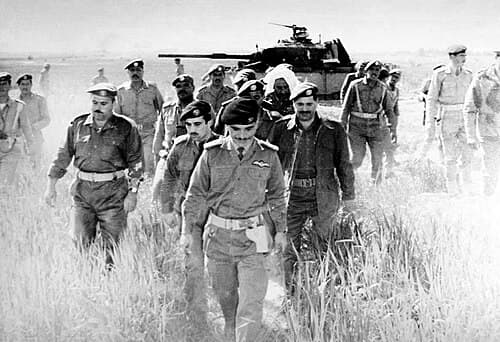
eights. 1 September 1967 Khartoum Resolution of the three ‘Noes’. 22 November 1967 UN Security Council Resolution 242. 21 March 1968 The battle of Karameh between Israel and Fatah and Jordanian forces. First direct military confrontation between Israeli and Palestinian forces. 17 July 1968 The Palestini
Page: HOUSE_OVERSIGHT_023152 →Sponsored
Mutual Connections (790)
Entities connected to both Sharon and Karameh
George W. Bush
PERSON32 w/ Sharon·5 w/ Karameh
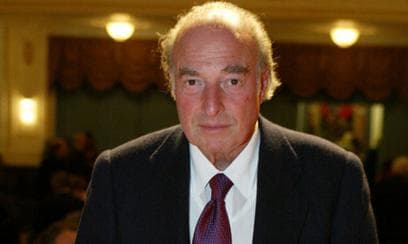
Marc Rich
PERSON29 w/ Sharon·2 w/ Karameh
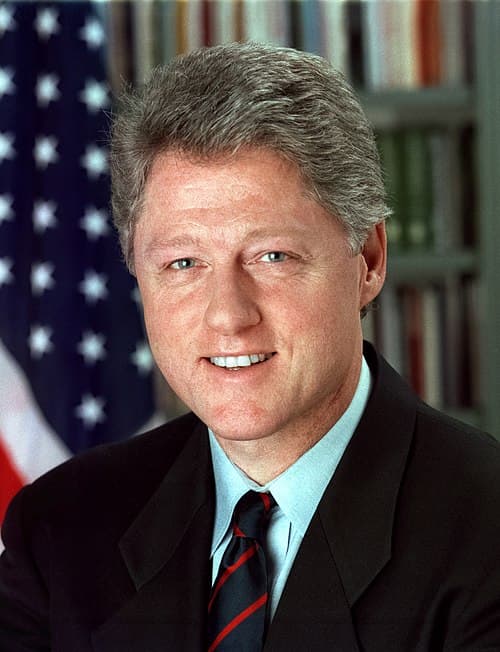
Bill Clinton
PERSON26 w/ Sharon·5 w/ Karameh
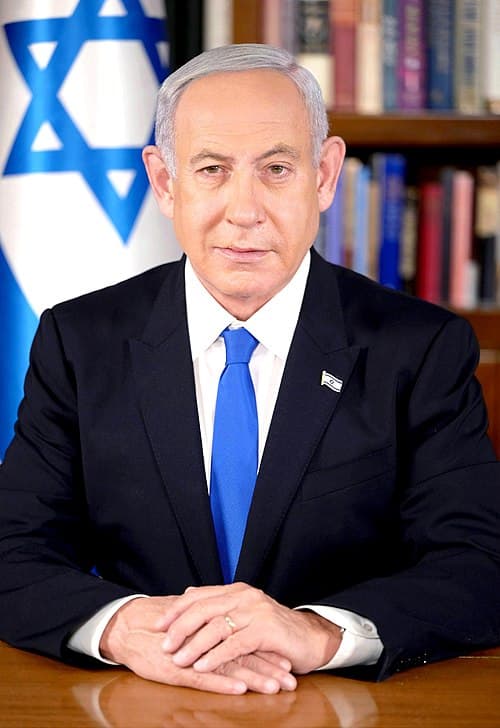
Benjamin Netanyahu
PERSON20 w/ Sharon·7 w/ Karameh
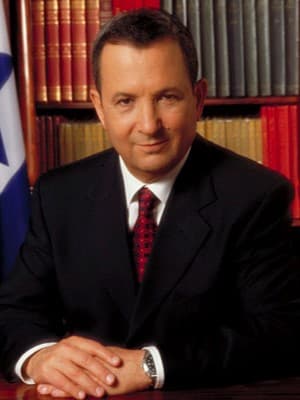
Ehud Barak
PERSON20 w/ Sharon·7 w/ Karameh
LB
Leon Black
PERSON22 w/ Sharon·5 w/ Karameh
Jerusalem
LOCATION18 w/ Sharon·9 w/ Karameh
Fatah
ORGANIZATION16 w/ Sharon·9 w/ Karameh
Yasser Arafat
PERSON15 w/ Sharon·9 w/ Karameh
United States
LOCATION21 w/ Sharon·3 w/ Karameh
Lebanon
LOCATION16 w/ Sharon·7 w/ Karameh
Ariel Sharon
PERSON16 w/ Sharon·5 w/ Karameh
Damascus
LOCATION14 w/ Sharon·7 w/ Karameh
Shimon Peres
PERSON13 w/ Sharon·7 w/ Karameh
Barack Obama
PERSON17 w/ Sharon·3 w/ Karameh
Mossad
ORGANIZATION13 w/ Sharon·7 w/ Karameh
Likud
ORGANIZATION13 w/ Sharon·7 w/ Karameh
Michael Cohen
PERSON14 w/ Sharon·6 w/ Karameh
the West Bank
LOCATION12 w/ Sharon·7 w/ Karameh
Sinai
LOCATION12 w/ Sharon·7 w/ Karameh